


13309 Résultats
Classification:
livres
livres

Actions:
Prix:
$15.00
(disponible sur commande)
Résumé:
How are you involved in the art world? Are you related to any specific scene? What would be the most productive place to present your work? What kind of curators do you like to work with, and why? What does the art market mean for your work? These are some of the questions that have been presented to every artist who has worked with Witte de With, the respected Rotterdam(...)
$15.00
(disponible sur commande)
Résumé:
How are you involved in the art world? Are you related to any specific scene? What would be the most productive place to present your work? What kind of curators do you like to work with, and why? What does the art market mean for your work? These are some of the questions that have been presented to every artist who has worked with Witte de With, the respected Rotterdam(...)
Publication:
mars 2008, Rotterdam
mars 2008, Rotterdam
Titre:
Changing roles artists' personal views and wishes
Actions:
Prix:
$15.00
(disponible sur commande)
Résumé:
How are you involved in the art world? Are you related to any specific scene? What would be the most productive place to present your work? What kind of curators do you like to work with, and why? What does the art market mean for your work? These are some of the questions that have been presented to every artist who has worked with Witte de With, the respected Rotterdam contemporary art center, over the past two years. This publication reflects on the ideas behind the works that the center has shown, and allows artists to voice concerns that are rarely discussed as part of a public initiative. The participants' answers serve as a model, suggesting what roles they need institutions, curators and programs to play. Contributors include Jesper Just, Erik van Lieshout, Sarah Morris and Robin Rhode. Liam Gillick was born in Aylesbury, Great Britain, in 1964 and studied at Hertfordshire College of Art, and Goldsmiths College, London. Often combining text and installation, Gillickis work frequently investigates economics and aesthetics in modern society. A finalist for the Turner Prize in 2002, his work has appeared at Documenta in 1997 and at The Museum of Modern Art, New York in 2003, as well as in numerous solo shows worldwide. He lives and works in London and New York.
Changing roles artists' personal views and wishes
Actions:
Prix:
$15.00
(disponible sur commande)
Résumé:
How are you involved in the art world? Are you related to any specific scene? What would be the most productive place to present your work? What kind of curators do you like to work with, and why? What does the art market mean for your work? These are some of the questions that have been presented to every artist who has worked with Witte de With, the respected Rotterdam contemporary art center, over the past two years. This publication reflects on the ideas behind the works that the center has shown, and allows artists to voice concerns that are rarely discussed as part of a public initiative. The participants' answers serve as a model, suggesting what roles they need institutions, curators and programs to play. Contributors include Jesper Just, Erik van Lieshout, Sarah Morris and Robin Rhode. Liam Gillick was born in Aylesbury, Great Britain, in 1964 and studied at Hertfordshire College of Art, and Goldsmiths College, London. Often combining text and installation, Gillickis work frequently investigates economics and aesthetics in modern society. A finalist for the Turner Prize in 2002, his work has appeared at Documenta in 1997 and at The Museum of Modern Art, New York in 2003, as well as in numerous solo shows worldwide. He lives and works in London and New York.
Classification:
livres
livres
Publication:
mars 2008, Rotterdam
mars 2008, Rotterdam
Classification:
livres
livres
Actions:
Exemplaires:
Description:
227 pages : illustrations (chiefly color) ; 27 cm + 1 workbook (15 pages ; 25 cm)
Description:
227 pages : illustrations (chiefly color) ; 27 cm + 1 workbook (15 pages ; 25 cm)
Auteur:
Sujet:
Publication:
Santa Fe, NM : Radius Books, [2024], New York : D.A.P./Distributed Art Publishers, Minneapolis, MN : Available through Consortium Book Sales & Distribution, ©2024
Santa Fe, NM : Radius Books, [2024], New York : D.A.P./Distributed Art Publishers, Minneapolis, MN : Available through Consortium Book Sales & Distribution, ©2024
Titre:
Publish your photography book / Darius D. Himes & Mary Virginia Swanson.
Actions:
Exemplaires:
Description:
227 pages : illustrations (chiefly color) ; 27 cm + 1 workbook (15 pages ; 25 cm)
Publish your photography book / Darius D. Himes & Mary Virginia Swanson.
Actions:
Exemplaires:
Description:
227 pages : illustrations (chiefly color) ; 27 cm + 1 workbook (15 pages ; 25 cm)
Classification:
livres
livres
Publication:
Santa Fe, NM : Radius Books, [2024], New York : D.A.P./Distributed Art Publishers, Minneapolis, MN : Available through Consortium Book Sales & Distribution, ©2024
Santa Fe, NM : Radius Books, [2024], New York : D.A.P./Distributed Art Publishers, Minneapolis, MN : Available through Consortium Book Sales & Distribution, ©2024
Auteur:
Sujet:
Classification:
livres
livres
Titre:
Colour after Klein
Colour after Klein
Actions:
Prix:
$53.95
(disponible sur commande)
Résumé:
As suggested by the work of Yves Klein, this book is not about colour rules or colour theory; instead it takes pleasure in the oscillation between the aesthetic and the conceptual, materiality and immateriality, the object and the void, purification and mystification, and between erasure and colouring in. Colour is celebrated for its immanence, its quality of being in the(...)
$53.95
(disponible sur commande)
Résumé:
As suggested by the work of Yves Klein, this book is not about colour rules or colour theory; instead it takes pleasure in the oscillation between the aesthetic and the conceptual, materiality and immateriality, the object and the void, purification and mystification, and between erasure and colouring in. Colour is celebrated for its immanence, its quality of being in the(...)
Titre:
Colour after Klein
Actions:
Prix:
$53.95
(disponible sur commande)
Résumé:
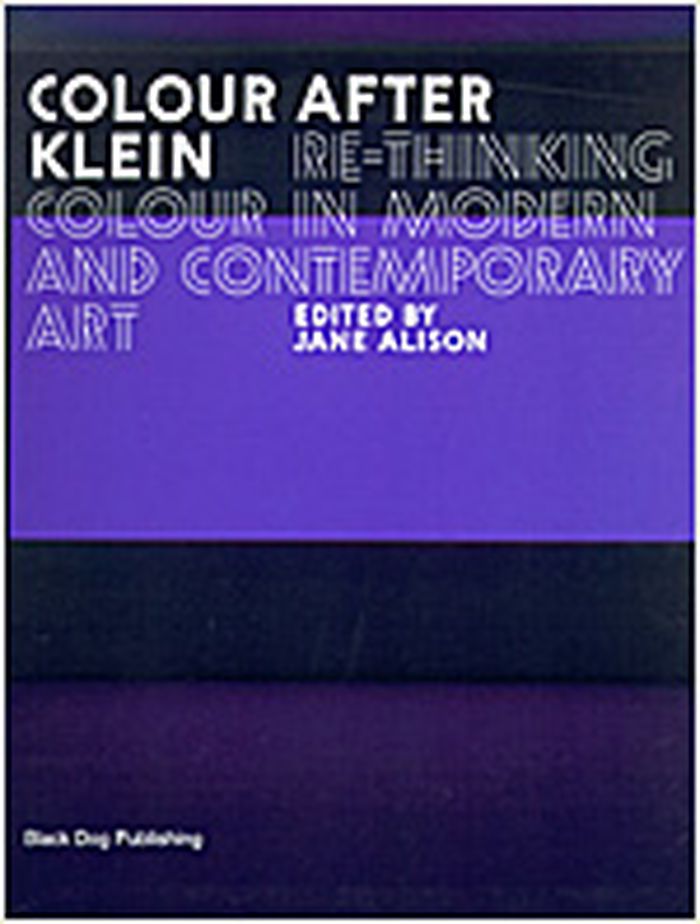
As suggested by the work of Yves Klein, this book is not about colour rules or colour theory; instead it takes pleasure in the oscillation between the aesthetic and the conceptual, materiality and immateriality, the object and the void, purification and mystification, and between erasure and colouring in. Colour is celebrated for its immanence, its quality of being in the world, but also the potential it has to open up a psychic space, a world of lost feeling; with literally the power to take us over, colour us in. "Colour after Klein" explores the significance of colour as it emerges in the work of 20 of some influential artists of the twentieth and twenty-first centuries, including Yves Klein, Donald Judd, Bruce Nauman, Louise Bourgeois, Andy Warhol and James Turrell. Featuring an introduction by curator Jane Alison, an essay that explores the place of colour in the work of Yves Klein by art historian Nuit Banai, and profiles of each of the contributing artists, this book provides a new perspective on key works of Modern and contemporary art. Also included in the book are artists' writings on the subject of colour, with pieces by Klein, Judd and Hélio Oiticica. This book accompanies the exhibition "Colour after Klein" at the Barbican Art Gallery, London, 27 May to 11 September 2005.
Colour after Klein
Actions:
Prix:
$53.95
(disponible sur commande)
Résumé:
As suggested by the work of Yves Klein, this book is not about colour rules or colour theory; instead it takes pleasure in the oscillation between the aesthetic and the conceptual, materiality and immateriality, the object and the void, purification and mystification, and between erasure and colouring in. Colour is celebrated for its immanence, its quality of being in the world, but also the potential it has to open up a psychic space, a world of lost feeling; with literally the power to take us over, colour us in. "Colour after Klein" explores the significance of colour as it emerges in the work of 20 of some influential artists of the twentieth and twenty-first centuries, including Yves Klein, Donald Judd, Bruce Nauman, Louise Bourgeois, Andy Warhol and James Turrell. Featuring an introduction by curator Jane Alison, an essay that explores the place of colour in the work of Yves Klein by art historian Nuit Banai, and profiles of each of the contributing artists, this book provides a new perspective on key works of Modern and contemporary art. Also included in the book are artists' writings on the subject of colour, with pieces by Klein, Judd and Hélio Oiticica. This book accompanies the exhibition "Colour after Klein" at the Barbican Art Gallery, London, 27 May to 11 September 2005.
Classification:
livres
livres
Publication:
septembre 2005, London
septembre 2005, London
Classification:
livres
livres

Actions:
Prix:
$47.00
(disponible sur commande)
Résumé:
After the success of the recent touring exhibition "My Complement, My Enemy, My Oppressor, My Love", Kara Walker's silhouetted cut-out figures are a now-familiar but still pungent presence in contemporary art, reenacting uncomfortable, often violent episodes in American race relations and reprising, in their formal simplicity, the ways in which marginalized identities are(...)
$47.00
(disponible sur commande)
Résumé:
After the success of the recent touring exhibition "My Complement, My Enemy, My Oppressor, My Love", Kara Walker's silhouetted cut-out figures are a now-familiar but still pungent presence in contemporary art, reenacting uncomfortable, often violent episodes in American race relations and reprising, in their formal simplicity, the ways in which marginalized identities are(...)
Titre:
Kara Walker : bureau of refugees
Actions:
Prix:
$47.00
(disponible sur commande)
Résumé:
After the success of the recent touring exhibition "My Complement, My Enemy, My Oppressor, My Love", Kara Walker's silhouetted cut-out figures are a now-familiar but still pungent presence in contemporary art, reenacting uncomfortable, often violent episodes in American race relations and reprising, in their formal simplicity, the ways in which marginalized identities are reduced and distorted into readily legible, caricatured forms. Walker's art continues, in other words, to pose awkward questions straightforwardly. Her imagery derives from the visual language of the antebellum South and the tradition of the minstrel show, which she directs to more disquieting ends. Where her source material parodied African-American culture with a terrifyingly casual jocularity - permitting white Americans to vicariously transgress their own taboos by depicting social chaos and unbridled sexuality - Walker applies that jocularity to her depictions of violence against African-Americans, lending them a hollow, almost slapstick character that is very much at odds with their original function. This latest book features work from a new series that addresses, among other themes, the atrocities committed against former slaves after the Emancipation Proclamation of 1863 and the Reconstruction program implemented by Congress between 1866 and 1877. These narratives are elaborated into or against geometric scenarios more abstract and compacted than previous sequences by Walker, and with a more extensive use of color.
Kara Walker : bureau of refugees
Actions:
Prix:
$47.00
(disponible sur commande)
Résumé:
After the success of the recent touring exhibition "My Complement, My Enemy, My Oppressor, My Love", Kara Walker's silhouetted cut-out figures are a now-familiar but still pungent presence in contemporary art, reenacting uncomfortable, often violent episodes in American race relations and reprising, in their formal simplicity, the ways in which marginalized identities are reduced and distorted into readily legible, caricatured forms. Walker's art continues, in other words, to pose awkward questions straightforwardly. Her imagery derives from the visual language of the antebellum South and the tradition of the minstrel show, which she directs to more disquieting ends. Where her source material parodied African-American culture with a terrifyingly casual jocularity - permitting white Americans to vicariously transgress their own taboos by depicting social chaos and unbridled sexuality - Walker applies that jocularity to her depictions of violence against African-Americans, lending them a hollow, almost slapstick character that is very much at odds with their original function. This latest book features work from a new series that addresses, among other themes, the atrocities committed against former slaves after the Emancipation Proclamation of 1863 and the Reconstruction program implemented by Congress between 1866 and 1877. These narratives are elaborated into or against geometric scenarios more abstract and compacted than previous sequences by Walker, and with a more extensive use of color.
Classification:
livres
livres
Publication:
septembre 2008, Milano
septembre 2008, Milano
Classification:
livres
livres
Titre:
Displaying the marvelous : Marcel Duchamp, Salvador Dali, and Surrealist exhibition installations
Displaying the marvelous : Marcel Duchamp, Salvador Dali, and Surrealist exhibition installations
Actions:
Prix:
$52.50
(disponible sur commande)
Résumé:
Surrealism in its late phase often abandoned neutral exhibition spaces in favor of environments that embodied subjective ideologies. These exhibitions offered startled viewers an early version of installation art before the form existed as such. In Displaying the (...)
$52.50
(disponible sur commande)
Résumé:
Surrealism in its late phase often abandoned neutral exhibition spaces in favor of environments that embodied subjective ideologies. These exhibitions offered startled viewers an early version of installation art before the form existed as such. In Displaying the (...)
Titre:
Displaying the marvelous : Marcel Duchamp, Salvador Dali, and Surrealist exhibition installations
Actions:
Prix:
$52.50
(disponible sur commande)
Résumé:
Surrealism in its late phase often abandoned neutral exhibition spaces in favor of environments that embodied subjective ideologies. These exhibitions offered startled viewers an early version of installation art before the form existed as such. In Displaying the Marvelous, Lewis Kachur explores this development by analyzing three elaborate Surrealist installations created between 1938 and 1942. The first two, the "Exposition Internationale du Surréalisme" (1938) and the "Dream of Venus" at the New York World's Fair (1939), dealt with the fetishization of the female body. The third, "First Papers of Surrealism" (1942), focused not on the figure but on the entire expanse of the exhibition space, thus contributing to the development of nonfigurative art in New York. Kachur presents a full visual and verbal reconstruction of each of the exhibitions, evoking the sequence that the contemporary viewer would have encountered. The book considers Marcel Duchamp and Salvador Dalí, two artists who are not usually compared, within a common framework. Duchamp specialized in frustrating the spectator, using his ironic wit to call into question the definition of the work of art. Dalí was a master at disorienting the senses by establishing and then undermining everyday spatial and object properties. The Surrealist challenge, as voiced by André Breton, was to evoke the marvelous. Duchamp and Dalí extended that challenge to the physical and commercial realm of the exhibition installation.
Displaying the marvelous : Marcel Duchamp, Salvador Dali, and Surrealist exhibition installations
Actions:
Prix:
$52.50
(disponible sur commande)
Résumé:
Surrealism in its late phase often abandoned neutral exhibition spaces in favor of environments that embodied subjective ideologies. These exhibitions offered startled viewers an early version of installation art before the form existed as such. In Displaying the Marvelous, Lewis Kachur explores this development by analyzing three elaborate Surrealist installations created between 1938 and 1942. The first two, the "Exposition Internationale du Surréalisme" (1938) and the "Dream of Venus" at the New York World's Fair (1939), dealt with the fetishization of the female body. The third, "First Papers of Surrealism" (1942), focused not on the figure but on the entire expanse of the exhibition space, thus contributing to the development of nonfigurative art in New York. Kachur presents a full visual and verbal reconstruction of each of the exhibitions, evoking the sequence that the contemporary viewer would have encountered. The book considers Marcel Duchamp and Salvador Dalí, two artists who are not usually compared, within a common framework. Duchamp specialized in frustrating the spectator, using his ironic wit to call into question the definition of the work of art. Dalí was a master at disorienting the senses by establishing and then undermining everyday spatial and object properties. The Surrealist challenge, as voiced by André Breton, was to evoke the marvelous. Duchamp and Dalí extended that challenge to the physical and commercial realm of the exhibition installation.
Classification:
livres
livres
Publication:
juin 2001, Cambridge, Mass.
juin 2001, Cambridge, Mass.
Classification:
livres
livres
Titre:
Doris Salcedo
Doris Salcedo
Actions:
Prix:
$59.95
(disponible sur commande)
Résumé:
Colombian artist Doris Salcedo (b.1958) is one of today's most internationally respected South American sculptors. Inspired as much by poetry and philosophy as by the affecting material qualities of sculpture, Salcedo subtly and painstakingly transforms everyday household objects and garments - symbols of a vanished existence and of the human tragedies that are its(...)
$59.95
(disponible sur commande)
Résumé:
Colombian artist Doris Salcedo (b.1958) is one of today's most internationally respected South American sculptors. Inspired as much by poetry and philosophy as by the affecting material qualities of sculpture, Salcedo subtly and painstakingly transforms everyday household objects and garments - symbols of a vanished existence and of the human tragedies that are its(...)
Publication:
janvier 2000, London
janvier 2000, London
Titre:
Doris Salcedo
Actions:
Prix:
$59.95
(disponible sur commande)
Résumé:
Colombian artist Doris Salcedo (b.1958) is one of today's most internationally respected South American sculptors. Inspired as much by poetry and philosophy as by the affecting material qualities of sculpture, Salcedo subtly and painstakingly transforms everyday household objects and garments - symbols of a vanished existence and of the human tragedies that are its cause. In Atrabiliaros (1991-6) abandoned shoes of "disappeared" Colombian people, half-concealed behind membranes of animal fibre, become ghost-like symbols of mourning. In Salcedo's ongoing untitled works, wooden furnishings, worn by long use and filled with concrete, mutely evoke the lives they once served. American art critic Nancy Princenthal surveys Salcedo's work in terms of the universal themes it evokes, contextualized in discussion of contemporary scultural practice. New York-based poet and curator Carlos Basualdo discusses with the artist her formative influences, which range from the art of precedecessors such as Joseph Beuys to the writings of philosophers and poets. German literary critic Andreas Huyssen focuses on Salcedo's sculpture Unland: The Orphan's Tunic (1997). For the "Arist's Choice", Salcedo has selected two texts: an extract from "Otherwise than being" (1974) by philosopher Emmanuel Levinas, and poems by Paul Celan. The Doris Salcedo's observations on the human condition and its reflection in the work of poets, novelists and thinkers are discussed in conversation with art historian Charles Merewether.
Doris Salcedo
Actions:
Prix:
$59.95
(disponible sur commande)
Résumé:
Colombian artist Doris Salcedo (b.1958) is one of today's most internationally respected South American sculptors. Inspired as much by poetry and philosophy as by the affecting material qualities of sculpture, Salcedo subtly and painstakingly transforms everyday household objects and garments - symbols of a vanished existence and of the human tragedies that are its cause. In Atrabiliaros (1991-6) abandoned shoes of "disappeared" Colombian people, half-concealed behind membranes of animal fibre, become ghost-like symbols of mourning. In Salcedo's ongoing untitled works, wooden furnishings, worn by long use and filled with concrete, mutely evoke the lives they once served. American art critic Nancy Princenthal surveys Salcedo's work in terms of the universal themes it evokes, contextualized in discussion of contemporary scultural practice. New York-based poet and curator Carlos Basualdo discusses with the artist her formative influences, which range from the art of precedecessors such as Joseph Beuys to the writings of philosophers and poets. German literary critic Andreas Huyssen focuses on Salcedo's sculpture Unland: The Orphan's Tunic (1997). For the "Arist's Choice", Salcedo has selected two texts: an extract from "Otherwise than being" (1974) by philosopher Emmanuel Levinas, and poems by Paul Celan. The Doris Salcedo's observations on the human condition and its reflection in the work of poets, novelists and thinkers are discussed in conversation with art historian Charles Merewether.
Classification:
livres
livres
Publication:
janvier 2000, London
janvier 2000, London
Classification:
livres
livres
Prix:
$34.50
(disponible sur commande)
Résumé:
"Transmission: the art of Matta and Gordon Matta-Clark" presents the first comprehensive examination of the overlapping spheres of art and architecture in the work of two pioneering father and son artists: the Surrealist painter Matta (Roberto Sebastin Antonio Matta Echaurren) (1912-2002) and the multifaceted urban Conceptualist Gordon Matta-Clark (1943-1978). Organized(...)
$34.50
(disponible sur commande)
Résumé:
"Transmission: the art of Matta and Gordon Matta-Clark" presents the first comprehensive examination of the overlapping spheres of art and architecture in the work of two pioneering father and son artists: the Surrealist painter Matta (Roberto Sebastin Antonio Matta Echaurren) (1912-2002) and the multifaceted urban Conceptualist Gordon Matta-Clark (1943-1978). Organized(...)
Titre:
Transmission : the art of Matta and Gordon Matta-Clark
Actions:
Prix:
$34.50
(disponible sur commande)
Résumé:
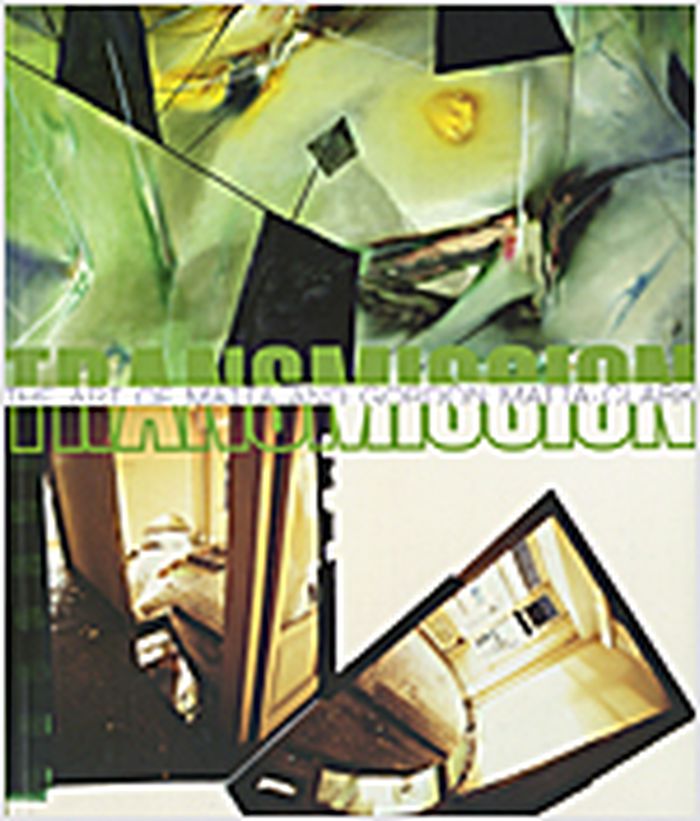
"Transmission: the art of Matta and Gordon Matta-Clark" presents the first comprehensive examination of the overlapping spheres of art and architecture in the work of two pioneering father and son artists: the Surrealist painter Matta (Roberto Sebastin Antonio Matta Echaurren) (1912-2002) and the multifaceted urban Conceptualist Gordon Matta-Clark (1943-1978). Organized by Betti-Sue Hertz, "Transmission" offers new perspectives on the impact of Matta's role in the development of late Surrealism and Matta-Clark's influence on the 1970s SoHo art scene. Both artists were originally trained as architects, and though they ostensibly rejected the profession in favor of art, each relied strongly on concepts of architectural space as they forged new practices in art. This illustrated publication compares Matta's metaphysical concepts and gestural pictorial practice with Matta-Clark's conceptually driven drawings and cut buildings; illustrates how aspects of Surrealism, especially as filtered through the work of Marcel Duchamp, were adopted by Matta-Clark and his circle; and explores the commonalities and differences in Matta's depictions of interior mindscapes and Matta-Clark's physical actions on buildings in the urban milieu. The catalogue presents essays and research by art historian Briony Fer, art critic Justo Pastor Mellado, architectural theorist Anthony Vidler, and the San Diego Museum of Art's curator of contemporary art, Betti-Sue Hertz.
Transmission : the art of Matta and Gordon Matta-Clark
Actions:
Prix:
$34.50
(disponible sur commande)
Résumé:
"Transmission: the art of Matta and Gordon Matta-Clark" presents the first comprehensive examination of the overlapping spheres of art and architecture in the work of two pioneering father and son artists: the Surrealist painter Matta (Roberto Sebastin Antonio Matta Echaurren) (1912-2002) and the multifaceted urban Conceptualist Gordon Matta-Clark (1943-1978). Organized by Betti-Sue Hertz, "Transmission" offers new perspectives on the impact of Matta's role in the development of late Surrealism and Matta-Clark's influence on the 1970s SoHo art scene. Both artists were originally trained as architects, and though they ostensibly rejected the profession in favor of art, each relied strongly on concepts of architectural space as they forged new practices in art. This illustrated publication compares Matta's metaphysical concepts and gestural pictorial practice with Matta-Clark's conceptually driven drawings and cut buildings; illustrates how aspects of Surrealism, especially as filtered through the work of Marcel Duchamp, were adopted by Matta-Clark and his circle; and explores the commonalities and differences in Matta's depictions of interior mindscapes and Matta-Clark's physical actions on buildings in the urban milieu. The catalogue presents essays and research by art historian Briony Fer, art critic Justo Pastor Mellado, architectural theorist Anthony Vidler, and the San Diego Museum of Art's curator of contemporary art, Betti-Sue Hertz.
Classification:
livres
livres
Publication:
octobre 2006, San Diego
octobre 2006, San Diego
Classification:
livres
livres
Titre:
Bourgeois and aristocratic cultural encounters in garden art, 1550-1850 / edited by Michel Conan.
Bourgeois and aristocratic cultural encounters in garden art, 1550-1850 / edited by Michel Conan.
Actions:
Exemplaires:
Description:
vi, 384 pages : black and white illustrations ; 26 cm.
Description:
vi, 384 pages : black and white illustrations ; 26 cm.
Auteur:
Sujet:
Publication:
Washington, D.C. : Dumbarton Oaks Research Library and Collection, [2002], ©2002
Washington, D.C. : Dumbarton Oaks Research Library and Collection, [2002], ©2002
Titre:
Bourgeois and aristocratic cultural encounters in garden art, 1550-1850 / edited by Michel Conan.
Actions:
Exemplaires:
Description:
vi, 384 pages : black and white illustrations ; 26 cm.
Bourgeois and aristocratic cultural encounters in garden art, 1550-1850 / edited by Michel Conan.
Actions:
Exemplaires:
Description:
vi, 384 pages : black and white illustrations ; 26 cm.
Classification:
livres
livres
Publication:
Washington, D.C. : Dumbarton Oaks Research Library and Collection, [2002], ©2002
Washington, D.C. : Dumbarton Oaks Research Library and Collection, [2002], ©2002
Auteur:
Sujet:
Classification:
livres
livres
Actions:
Exemplaires:
Description:
320 pages : color illustrations, facsimiles, map, plans, portraits ; 26 cm
Description:
320 pages : color illustrations, facsimiles, map, plans, portraits ; 26 cm
Auteur:
Sujet:
Publication:
Weil am Rhein, Germany : Vitra Design Museum, [2020], Altenburg, Germany : DZA Druckerei zu Altenburg GmbH, ©2020
Weil am Rhein, Germany : Vitra Design Museum, [2020], Altenburg, Germany : DZA Druckerei zu Altenburg GmbH, ©2020
Titre:
Home stories : 100 years, 20 visionary interiors / editors, Mateo Kries, Jochen Eisenbrand.
Actions:
Exemplaires:
Description:
320 pages : color illustrations, facsimiles, map, plans, portraits ; 26 cm
Home stories : 100 years, 20 visionary interiors / editors, Mateo Kries, Jochen Eisenbrand.
Actions:
Exemplaires:
Description:
320 pages : color illustrations, facsimiles, map, plans, portraits ; 26 cm
Classification:
livres
livres
Publication:
Weil am Rhein, Germany : Vitra Design Museum, [2020], Altenburg, Germany : DZA Druckerei zu Altenburg GmbH, ©2020
Weil am Rhein, Germany : Vitra Design Museum, [2020], Altenburg, Germany : DZA Druckerei zu Altenburg GmbH, ©2020
Auteur:
Sujet:
Classification:
livres
livres
Titre:
Conversations
Conversations
Actions:
Prix:
$25.95
(disponible sur commande)
Résumé:
Ai Weiwei is one of the world’s most acclaimed artists and dissidents. This book presents him in conversation with theorists, critics, journalists, and curators about key moments in his life and career. These wide-ranging conversations flow between topics such as his relationship with China, the meaning of citizenship, moving his studio to Lesbos to be on the front lines(...)
$25.95
(disponible sur commande)
Résumé:
Ai Weiwei is one of the world’s most acclaimed artists and dissidents. This book presents him in conversation with theorists, critics, journalists, and curators about key moments in his life and career. These wide-ranging conversations flow between topics such as his relationship with China, the meaning of citizenship, moving his studio to Lesbos to be on the front lines(...)
Titre:
Conversations
Actions:
Prix:
$25.95
(disponible sur commande)
Résumé:
Ai Weiwei is one of the world’s most acclaimed artists and dissidents. This book presents him in conversation with theorists, critics, journalists, and curators about key moments in his life and career. These wide-ranging conversations flow between topics such as his relationship with China, the meaning of citizenship, moving his studio to Lesbos to be on the front lines of the migrant crisis, how to make art, and technology as a tool for freedom or oppression. Ai opens up about his relationship to his father as a poet and as a dissident forced into hard labor in a small village after the Cultural Revolution. He shares his thoughts on formal education and the importance of finding your own way as an artist. New York- both the city and its people- were formative for Ai Weiwei, and he speaks eloquently about how these experiences continue to influence him. Ai conjures up scenes from his long relationship with the city: dropping out of Parsons School of Design because he couldn’t afford tuition, making portraits in Washington Square Park as an undocumented immigrant in the 1980s, taking photos for the New York Times at demonstrations in Tompkins Square Park, and returning to set up the ''Good Fences Make Good Neighbors'' project across the city. These candid, spontaneous conversations reveal why Ai Weiwei has become such a major force in contemporary art and political life.
Conversations
Actions:
Prix:
$25.95
(disponible sur commande)
Résumé:
Ai Weiwei is one of the world’s most acclaimed artists and dissidents. This book presents him in conversation with theorists, critics, journalists, and curators about key moments in his life and career. These wide-ranging conversations flow between topics such as his relationship with China, the meaning of citizenship, moving his studio to Lesbos to be on the front lines of the migrant crisis, how to make art, and technology as a tool for freedom or oppression. Ai opens up about his relationship to his father as a poet and as a dissident forced into hard labor in a small village after the Cultural Revolution. He shares his thoughts on formal education and the importance of finding your own way as an artist. New York- both the city and its people- were formative for Ai Weiwei, and he speaks eloquently about how these experiences continue to influence him. Ai conjures up scenes from his long relationship with the city: dropping out of Parsons School of Design because he couldn’t afford tuition, making portraits in Washington Square Park as an undocumented immigrant in the 1980s, taking photos for the New York Times at demonstrations in Tompkins Square Park, and returning to set up the ''Good Fences Make Good Neighbors'' project across the city. These candid, spontaneous conversations reveal why Ai Weiwei has become such a major force in contemporary art and political life.
Classification:
livres
livres
Publication:
février 2021
février 2021


