


951 Résultats
Classification:
livres
livres
Prix:
$21.00
(disponible sur commande)
Résumé:
Taking Henri Lefebvres 1967 essay, The Right to the City, as his jumping-off point, Harvey (Social Justice and the City) examines real estate booms and busts and predation on vulnerable populations; commodification of culture; neo-liberal capitalist dominance; and urban uprisings, from the Paris Commune to the massive 2006 protest against U.S. anti-immigrant policies to(...)
$21.00
(disponible sur commande)
Résumé:
Taking Henri Lefebvres 1967 essay, The Right to the City, as his jumping-off point, Harvey (Social Justice and the City) examines real estate booms and busts and predation on vulnerable populations; commodification of culture; neo-liberal capitalist dominance; and urban uprisings, from the Paris Commune to the massive 2006 protest against U.S. anti-immigrant policies to(...)
Titre:
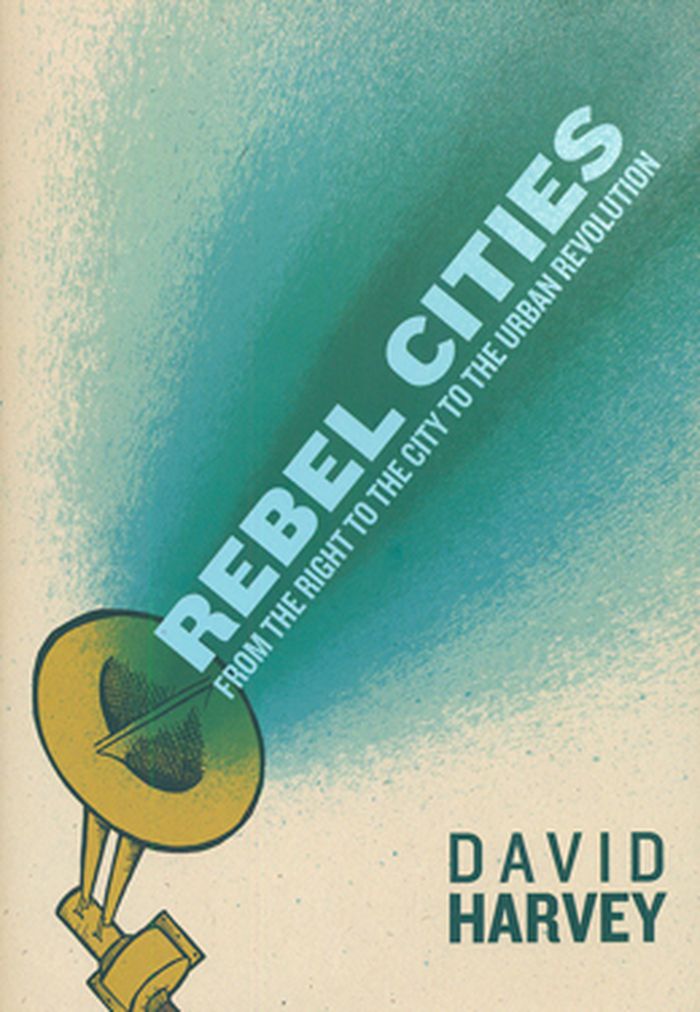
Rebel cities : from the right to the city to the urban revolution
Actions:
Prix:
$21.00
(disponible sur commande)
Résumé:
Taking Henri Lefebvres 1967 essay, The Right to the City, as his jumping-off point, Harvey (Social Justice and the City) examines real estate booms and busts and predation on vulnerable populations; commodification of culture; neo-liberal capitalist dominance; and urban uprisings, from the Paris Commune to the massive 2006 protest against U.S. anti-immigrant policies to urbanized peasants and mineworkers in El Alto, Bolivia, who organized themselves and instigated a progressive Bolivian government. He asks: Is there something about the urban process and the urban experience... under capitalism, that, in itself, has the potential to ground anti-capitalist struggles?
Rebel cities : from the right to the city to the urban revolution
Actions:
Prix:
$21.00
(disponible sur commande)
Résumé:
Taking Henri Lefebvres 1967 essay, The Right to the City, as his jumping-off point, Harvey (Social Justice and the City) examines real estate booms and busts and predation on vulnerable populations; commodification of culture; neo-liberal capitalist dominance; and urban uprisings, from the Paris Commune to the massive 2006 protest against U.S. anti-immigrant policies to urbanized peasants and mineworkers in El Alto, Bolivia, who organized themselves and instigated a progressive Bolivian government. He asks: Is there something about the urban process and the urban experience... under capitalism, that, in itself, has the potential to ground anti-capitalist struggles?
Classification:
livres
livres
Publication:
avril 2012
avril 2012
Sujet:
Théorie de l’urbanisme
Théorie de l’urbanisme
Classification:
livres
livres

Titre:
Oil culture
Oil culture
Actions:
Prix:
$44.00
(disponible sur commande)
Résumé:
The contributors to this volume examine the oil culture nexus, beginning with the whale oil culture it replaced and analyzing literature and films such as Giant, Sundown, Bernardo Bertolucci’s La Via del Petrolio, and Ben Okri’s “What the Tapster Saw”; corporate art, museum installations, and contemporary photography; and in apocalyptic visions of environmental disaster(...)
$44.00
(disponible sur commande)
Résumé:
The contributors to this volume examine the oil culture nexus, beginning with the whale oil culture it replaced and analyzing literature and films such as Giant, Sundown, Bernardo Bertolucci’s La Via del Petrolio, and Ben Okri’s “What the Tapster Saw”; corporate art, museum installations, and contemporary photography; and in apocalyptic visions of environmental disaster(...)
Titre:
Oil culture
Actions:
Prix:
$44.00
(disponible sur commande)
Résumé:
The contributors to this volume examine the oil culture nexus, beginning with the whale oil culture it replaced and analyzing literature and films such as Giant, Sundown, Bernardo Bertolucci’s La Via del Petrolio, and Ben Okri’s “What the Tapster Saw”; corporate art, museum installations, and contemporary photography; and in apocalyptic visions of environmental disaster and science fiction. By considering oil as both a natural resource and a trope, the authors show how oil’s dominance is part of culture rather than an economic or physical necessity. Oil Culture sees beyond oil capitalism to alternative modes of energy production and consumption.
Oil culture
Actions:
Prix:
$44.00
(disponible sur commande)
Résumé:
The contributors to this volume examine the oil culture nexus, beginning with the whale oil culture it replaced and analyzing literature and films such as Giant, Sundown, Bernardo Bertolucci’s La Via del Petrolio, and Ben Okri’s “What the Tapster Saw”; corporate art, museum installations, and contemporary photography; and in apocalyptic visions of environmental disaster and science fiction. By considering oil as both a natural resource and a trope, the authors show how oil’s dominance is part of culture rather than an economic or physical necessity. Oil Culture sees beyond oil capitalism to alternative modes of energy production and consumption.
Classification:
livres
livres
Publication:
octobre 2014
octobre 2014
Sujet:
Théorie de l’architecture
Théorie de l’architecture
Classification:
livres
livres
Actions:
Prix:
$56.95
(disponible sur commande)
Résumé:
In Outlaw Territories, Felicity Scott traces the relation of architecture and urbanism to human unsettlement and territorial insecurity during the 1960s and 1970s. Investigating a set of responses to the growing urban unrest in the developed and developing worlds, Scott revisits an era when the discipline of architecture staked out a role in global environmental(...)
$56.95
(disponible sur commande)
Résumé:
In Outlaw Territories, Felicity Scott traces the relation of architecture and urbanism to human unsettlement and territorial insecurity during the 1960s and 1970s. Investigating a set of responses to the growing urban unrest in the developed and developing worlds, Scott revisits an era when the discipline of architecture staked out a role in global environmental(...)
Titre:
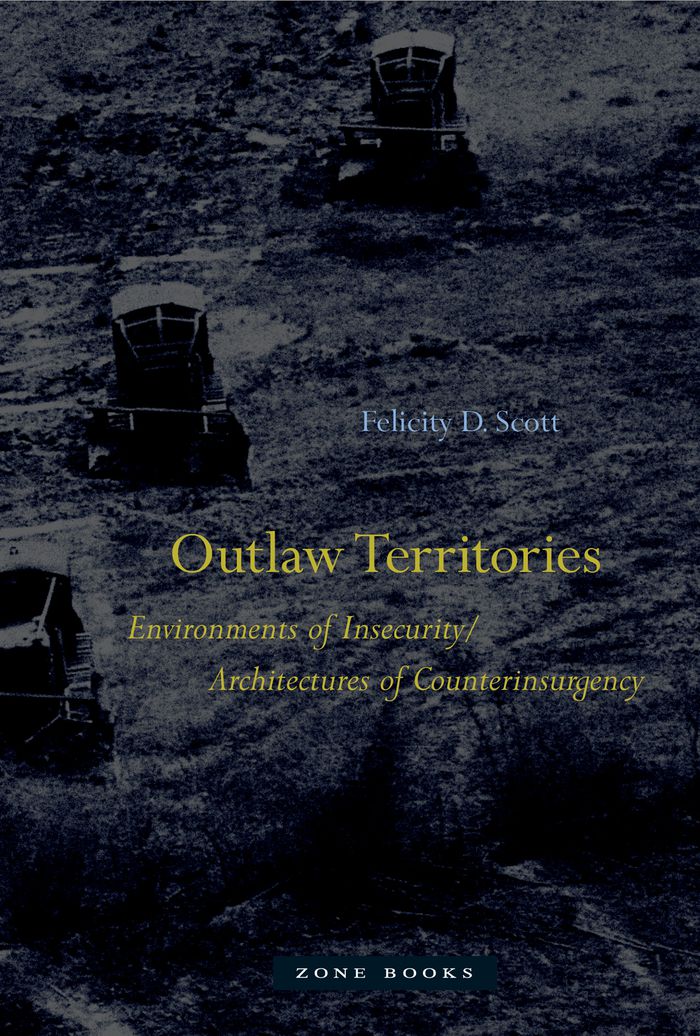
Outlaw Territories: Environments of Insecurity/ Architectures of Counterinsurgency
Actions:
Prix:
$56.95
(disponible sur commande)
Résumé:
In Outlaw Territories, Felicity Scott traces the relation of architecture and urbanism to human unsettlement and territorial insecurity during the 1960s and 1970s. Investigating a set of responses to the growing urban unrest in the developed and developing worlds, Scott revisits an era when the discipline of architecture staked out a role in global environmental governance and the biopolitical management of populations. She describes architecture’s response to the displacement of persons brought on by migration, urbanization, environmental catastrophe, and warfare, and she traces architecture’s relationship to the material, environmental, psychological, and geopolitical transformations brought on by postindustrial technologies and neoliberal capitalism after World War II. At the height of the U.S.-led war in Vietnam and Cambodia, with ongoing decolonization struggles in many parts of the world, architecture not only emerged as a target of political agitation because of its inherent normativity but also became heavily enmeshed with military, legal, and humanitarian apparatuses, participating in scientific and technological research dedicated to questions of international management and security. Once architecture became aligned with a global matrix of forces concerned with the environment, economic development, migration, genocide, and war, its role shifted at times toward providing strategic expertise for institutions born of neoliberal capitalism. Scott investigates this nexus and questions how and to what ends architecture and the environment came to be intimately connected to the expanded exercise of power within the shifting geopolitical frameworks at this time.
Outlaw Territories: Environments of Insecurity/ Architectures of Counterinsurgency
Actions:
Prix:
$56.95
(disponible sur commande)
Résumé:
In Outlaw Territories, Felicity Scott traces the relation of architecture and urbanism to human unsettlement and territorial insecurity during the 1960s and 1970s. Investigating a set of responses to the growing urban unrest in the developed and developing worlds, Scott revisits an era when the discipline of architecture staked out a role in global environmental governance and the biopolitical management of populations. She describes architecture’s response to the displacement of persons brought on by migration, urbanization, environmental catastrophe, and warfare, and she traces architecture’s relationship to the material, environmental, psychological, and geopolitical transformations brought on by postindustrial technologies and neoliberal capitalism after World War II. At the height of the U.S.-led war in Vietnam and Cambodia, with ongoing decolonization struggles in many parts of the world, architecture not only emerged as a target of political agitation because of its inherent normativity but also became heavily enmeshed with military, legal, and humanitarian apparatuses, participating in scientific and technological research dedicated to questions of international management and security. Once architecture became aligned with a global matrix of forces concerned with the environment, economic development, migration, genocide, and war, its role shifted at times toward providing strategic expertise for institutions born of neoliberal capitalism. Scott investigates this nexus and questions how and to what ends architecture and the environment came to be intimately connected to the expanded exercise of power within the shifting geopolitical frameworks at this time.
Classification:
livres
livres
Publication:
février 2016
février 2016
Sujet:
Théorie de l’architecture
Théorie de l’architecture
Classification:
livres
livres
Actions:
Prix:
$49.95
(disponible en magasin)
Résumé:
Point Saint-Charles, a historically white working-class neighbourhood with a strong Irish and French presence, and Little Burgundy, a multiracial neighbourhood that is home to the city’s English-speaking Black community, face each other across Montreal’s Lachine Canal, once an artery around which work and industry in Montreal were clustered and by which these two(...)
$49.95
(disponible en magasin)
Résumé:
Point Saint-Charles, a historically white working-class neighbourhood with a strong Irish and French presence, and Little Burgundy, a multiracial neighbourhood that is home to the city’s English-speaking Black community, face each other across Montreal’s Lachine Canal, once an artery around which work and industry in Montreal were clustered and by which these two(...)
Titre:
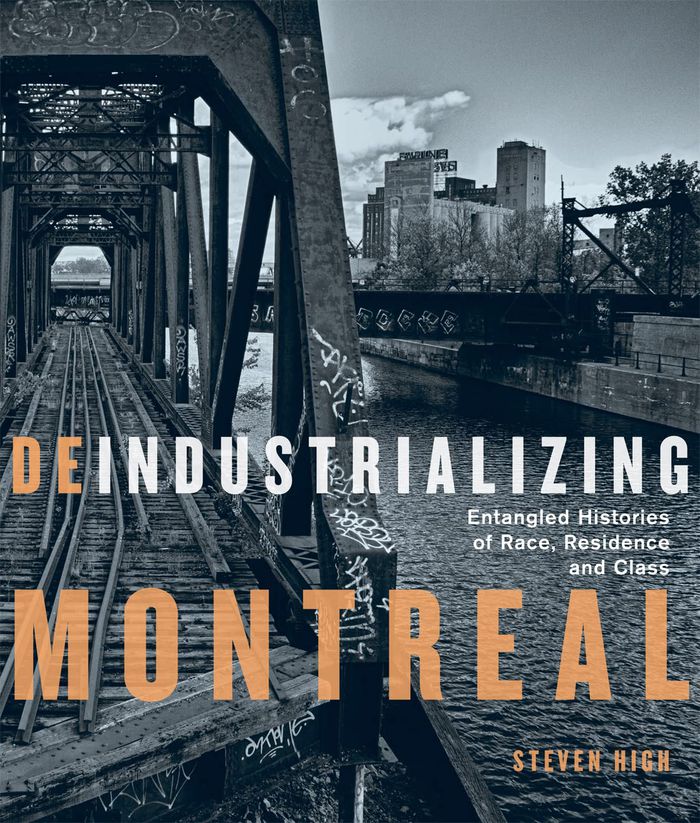
Deindustrializing Montreal: entangled histories of race, residence, and class
Actions:
Prix:
$49.95
(disponible en magasin)
Résumé:
Point Saint-Charles, a historically white working-class neighbourhood with a strong Irish and French presence, and Little Burgundy, a multiracial neighbourhood that is home to the city’s English-speaking Black community, face each other across Montreal’s Lachine Canal, once an artery around which work and industry in Montreal were clustered and by which these two communities were formed and divided. ''Deindustrializing Montreal'' challenges the deepening divergence of class and race analysis by recognizing the intimate relationship between capitalism, class struggles, and racial inequality. Fundamentally, deindustrialization is a process of physical and social ruination as well as part of a wider political project that leaves working-class communities impoverished and demoralized. The structural violence of capitalism occurs gradually and out of sight, but it doesn’t play out the same for everyone. Point Saint-Charles was left to rot until it was revalorized by gentrification, whereas Little Burgundy was torn apart by urban renewal and highway construction. This historical divergence had profound consequences in how urban change has been experienced, understood, and remembered. Drawing extensive interviews, a massive and varied archive of imagery, and original photography by David Lewis into a complex chorus, Steven High brings these communities to life, tracing their history from their earliest years to their decline and their current reality. He extends the analysis of deindustrialization, often focused on single-industry towns, to cities that have seemingly made the post-industrial transition.
Deindustrializing Montreal: entangled histories of race, residence, and class
Actions:
Prix:
$49.95
(disponible en magasin)
Résumé:
Point Saint-Charles, a historically white working-class neighbourhood with a strong Irish and French presence, and Little Burgundy, a multiracial neighbourhood that is home to the city’s English-speaking Black community, face each other across Montreal’s Lachine Canal, once an artery around which work and industry in Montreal were clustered and by which these two communities were formed and divided. ''Deindustrializing Montreal'' challenges the deepening divergence of class and race analysis by recognizing the intimate relationship between capitalism, class struggles, and racial inequality. Fundamentally, deindustrialization is a process of physical and social ruination as well as part of a wider political project that leaves working-class communities impoverished and demoralized. The structural violence of capitalism occurs gradually and out of sight, but it doesn’t play out the same for everyone. Point Saint-Charles was left to rot until it was revalorized by gentrification, whereas Little Burgundy was torn apart by urban renewal and highway construction. This historical divergence had profound consequences in how urban change has been experienced, understood, and remembered. Drawing extensive interviews, a massive and varied archive of imagery, and original photography by David Lewis into a complex chorus, Steven High brings these communities to life, tracing their history from their earliest years to their decline and their current reality. He extends the analysis of deindustrialization, often focused on single-industry towns, to cities that have seemingly made the post-industrial transition.
Classification:
livres
livres
Publication:
mai 2022
mai 2022
Sujet:
Architecture de Montréal
Architecture de Montréal
Classification:
livres
livres
Actions:
Exemplaires:
Description:
189 pages : illustrations (chiefly color) ; 18 cm
Description:
189 pages : illustrations (chiefly color) ; 18 cm
Auteur:
Sujet:
Publication:
Paris : Parigramme, [2023], ©2023
Paris : Parigramme, [2023], ©2023
Titre:
Architectures industrielles : Paris et environs : 100 bâtiments remarquables / Marie Françoise Laborde.
Actions:
Exemplaires:
Description:
189 pages : illustrations (chiefly color) ; 18 cm
Architectures industrielles : Paris et environs : 100 bâtiments remarquables / Marie Françoise Laborde.
Actions:
Exemplaires:
Description:
189 pages : illustrations (chiefly color) ; 18 cm
Classification:
livres
livres
Publication:
Paris : Parigramme, [2023], ©2023
Paris : Parigramme, [2023], ©2023
Auteur:
Sujet:
Classification:
livres
livres
Actions:
Exemplaires:
Description:
495 pages, 1 unnumbered page : illustrations (chiefly color), plans (chiefly color), portraits (some color) ; 30 cm
Description:
495 pages, 1 unnumbered page : illustrations (chiefly color), plans (chiefly color), portraits (some color) ; 30 cm
Auteur:
Sujet:
Publication:
New York, NY : Columbia University, [2020], [New York, New York] : Distributed by Columbia University Press., ©2020
New York, NY : Columbia University, [2020], [New York, New York] : Distributed by Columbia University Press., ©2020
Titre:
Superpowers of scale / Andrés Jaque / Office for Political Innovation.
Actions:
Exemplaires:
Description:
495 pages, 1 unnumbered page : illustrations (chiefly color), plans (chiefly color), portraits (some color) ; 30 cm
Superpowers of scale / Andrés Jaque / Office for Political Innovation.
Actions:
Exemplaires:
Description:
495 pages, 1 unnumbered page : illustrations (chiefly color), plans (chiefly color), portraits (some color) ; 30 cm
Classification:
livres
livres
Publication:
New York, NY : Columbia University, [2020], [New York, New York] : Distributed by Columbia University Press., ©2020
New York, NY : Columbia University, [2020], [New York, New York] : Distributed by Columbia University Press., ©2020
Auteur:
Sujet:
Classification:
livres
livres
Titre:
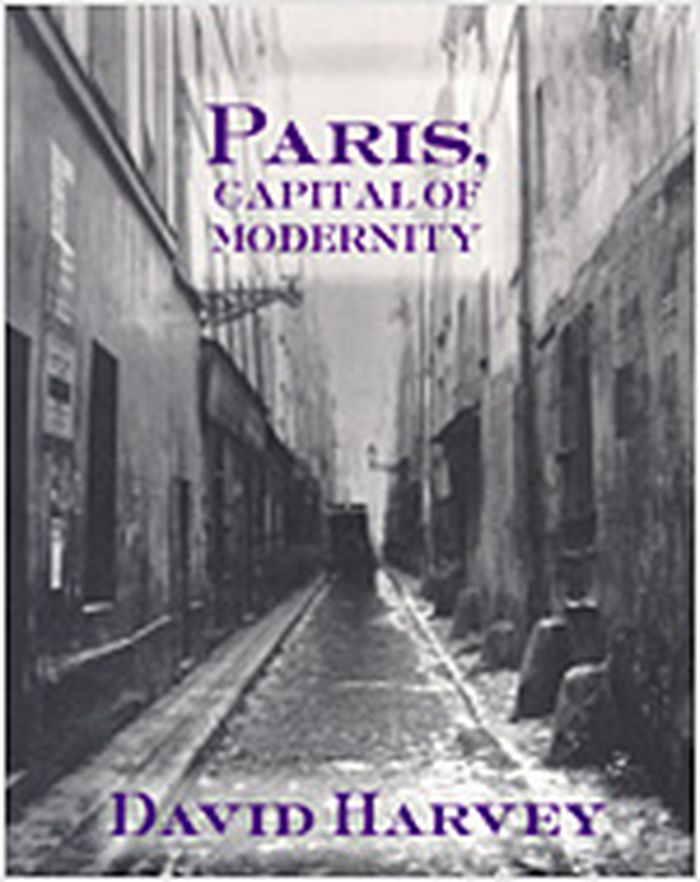
Paris, capital of modernity
Paris, capital of modernity
Actions:
Prix:
$58.95
(disponible sur commande)
Résumé:
In Paris, capital of modernity, Harvey presents an account of the city in a remarkably turbulent era, framed by two failed revolutions. His key concern is how a new form of finance capitalism combined with a new type of planning vision to produce the prototypical modern city. Also, there are insights throughout about subjects such as the birth of the consumerist(...)
$58.95
(disponible sur commande)
Résumé:
In Paris, capital of modernity, Harvey presents an account of the city in a remarkably turbulent era, framed by two failed revolutions. His key concern is how a new form of finance capitalism combined with a new type of planning vision to produce the prototypical modern city. Also, there are insights throughout about subjects such as the birth of the consumerist(...)
Titre:
Paris, capital of modernity
Actions:
Prix:
$58.95
(disponible sur commande)
Résumé:
In Paris, capital of modernity, Harvey presents an account of the city in a remarkably turbulent era, framed by two failed revolutions. His key concern is how a new form of finance capitalism combined with a new type of planning vision to produce the prototypical modern city. Also, there are insights throughout about subjects such as the birth of the consumerist spectacle on the Parisian boulevards; the creative visions of Balzac, Baudelaire, and Zola; and the reactionary cultural politics of the bombastic Sacré Coeur, the Catholic monument erected to efface all memory of the revolutionary Paris Commune that arose briefly when the empire collapsed.
Paris, capital of modernity
Actions:
Prix:
$58.95
(disponible sur commande)
Résumé:
In Paris, capital of modernity, Harvey presents an account of the city in a remarkably turbulent era, framed by two failed revolutions. His key concern is how a new form of finance capitalism combined with a new type of planning vision to produce the prototypical modern city. Also, there are insights throughout about subjects such as the birth of the consumerist spectacle on the Parisian boulevards; the creative visions of Balzac, Baudelaire, and Zola; and the reactionary cultural politics of the bombastic Sacré Coeur, the Catholic monument erected to efface all memory of the revolutionary Paris Commune that arose briefly when the empire collapsed.
Classification:
livres
livres
Publication:
novembre 2005, New York
novembre 2005, New York
Classification:
livres
livres

Actions:
Prix:
$28.00
(disponible en magasin)
Résumé:
"A tree," is about vegetal agency, plant knowledge, and the interaction between plants and people, with a specific focus on trees. This book comprises a variety of contributions that take a multitude of approaches to tree life, from sensory to ancestral, intimate to speculative. Taking the time to think about trees through imagination, art, music, storytelling, poetry,(...)
$28.00
(disponible en magasin)
Résumé:
"A tree," is about vegetal agency, plant knowledge, and the interaction between plants and people, with a specific focus on trees. This book comprises a variety of contributions that take a multitude of approaches to tree life, from sensory to ancestral, intimate to speculative. Taking the time to think about trees through imagination, art, music, storytelling, poetry,(...)
Titre:
A tree: A reader on arboreal kinship
Actions:
Prix:
$28.00
(disponible en magasin)
Résumé:
"A tree," is about vegetal agency, plant knowledge, and the interaction between plants and people, with a specific focus on trees. This book comprises a variety of contributions that take a multitude of approaches to tree life, from sensory to ancestral, intimate to speculative. Taking the time to think about trees through imagination, art, music, storytelling, poetry, and images, the works in this reader share the aim of nurturing and furthering dialogue that exercises arboreal kinship. Moreover, the contributions inspire us to move beyond large systems of oppression and towards exorcizing anthropocentrism, capitalism, individualism, heteronormativity, and coloniality, by learning from and with tree time.
A tree: A reader on arboreal kinship
Actions:
Prix:
$28.00
(disponible en magasin)
Résumé:
"A tree," is about vegetal agency, plant knowledge, and the interaction between plants and people, with a specific focus on trees. This book comprises a variety of contributions that take a multitude of approaches to tree life, from sensory to ancestral, intimate to speculative. Taking the time to think about trees through imagination, art, music, storytelling, poetry, and images, the works in this reader share the aim of nurturing and furthering dialogue that exercises arboreal kinship. Moreover, the contributions inspire us to move beyond large systems of oppression and towards exorcizing anthropocentrism, capitalism, individualism, heteronormativity, and coloniality, by learning from and with tree time.
Classification:
livres
livres
Publication:
juillet 2025
juillet 2025
Sujet:
Théorie de l’art
Théorie de l’art
Classification:
livres
livres

Titre:
Bog Myrtle
Bog Myrtle
Actions:
Prix:
$22.99
(disponible en magasin)
Résumé:
Two sisters, one stubbornly cheerful (Beatrice) and one relentlessly grumpy (Magnolia), live in a drafty old house with a family of helpful spiders. When Beatrice is gifted magic yarn from a giant forest spider obsessed with sustainability named Bog Myrtle, she and the spiders set to work knitting up a perfectly warm sweater. But greedy Magnolia sees only the opportunity(...)
$22.99
(disponible en magasin)
Résumé:
Two sisters, one stubbornly cheerful (Beatrice) and one relentlessly grumpy (Magnolia), live in a drafty old house with a family of helpful spiders. When Beatrice is gifted magic yarn from a giant forest spider obsessed with sustainability named Bog Myrtle, she and the spiders set to work knitting up a perfectly warm sweater. But greedy Magnolia sees only the opportunity(...)
Titre:
Bog Myrtle
Actions:
Prix:
$22.99
(disponible en magasin)
Résumé:
Two sisters, one stubbornly cheerful (Beatrice) and one relentlessly grumpy (Magnolia), live in a drafty old house with a family of helpful spiders. When Beatrice is gifted magic yarn from a giant forest spider obsessed with sustainability named Bog Myrtle, she and the spiders set to work knitting up a perfectly warm sweater. But greedy Magnolia sees only the opportunity for profit, and quickly converts the old house into a magic sweater factory. The exhausted spiders are driven to strike, and Bog Myrtle is not pleased . . . "Bog Myrtle" is a witty modern folktale that touches on themes of capitalism, environmentalism, labor rights, and being a nice person.
Bog Myrtle
Actions:
Prix:
$22.99
(disponible en magasin)
Résumé:
Two sisters, one stubbornly cheerful (Beatrice) and one relentlessly grumpy (Magnolia), live in a drafty old house with a family of helpful spiders. When Beatrice is gifted magic yarn from a giant forest spider obsessed with sustainability named Bog Myrtle, she and the spiders set to work knitting up a perfectly warm sweater. But greedy Magnolia sees only the opportunity for profit, and quickly converts the old house into a magic sweater factory. The exhausted spiders are driven to strike, and Bog Myrtle is not pleased . . . "Bog Myrtle" is a witty modern folktale that touches on themes of capitalism, environmentalism, labor rights, and being a nice person.
Classification:
livres
livres
Publication:
octobre 2024
octobre 2024
Sujet:
Littérature jeunesse
Littérature jeunesse
Classification:
livres
livres
Actions:
Prix:
$35.00
(disponible sur commande)
Résumé:
The works of Mies van der Rohe are often described as silent, or as withdrawal or negation, as the last line of resistance against the forces of technology and capitalism, precisely because they interiorize these forces, but thereby also allow us to reflect on them. This essay attempts to understand the unavoidable plurality of this silence, to unearth its philosophical(...)
$35.00
(disponible sur commande)
Résumé:
The works of Mies van der Rohe are often described as silent, or as withdrawal or negation, as the last line of resistance against the forces of technology and capitalism, precisely because they interiorize these forces, but thereby also allow us to reflect on them. This essay attempts to understand the unavoidable plurality of this silence, to unearth its philosophical(...)
Titre:
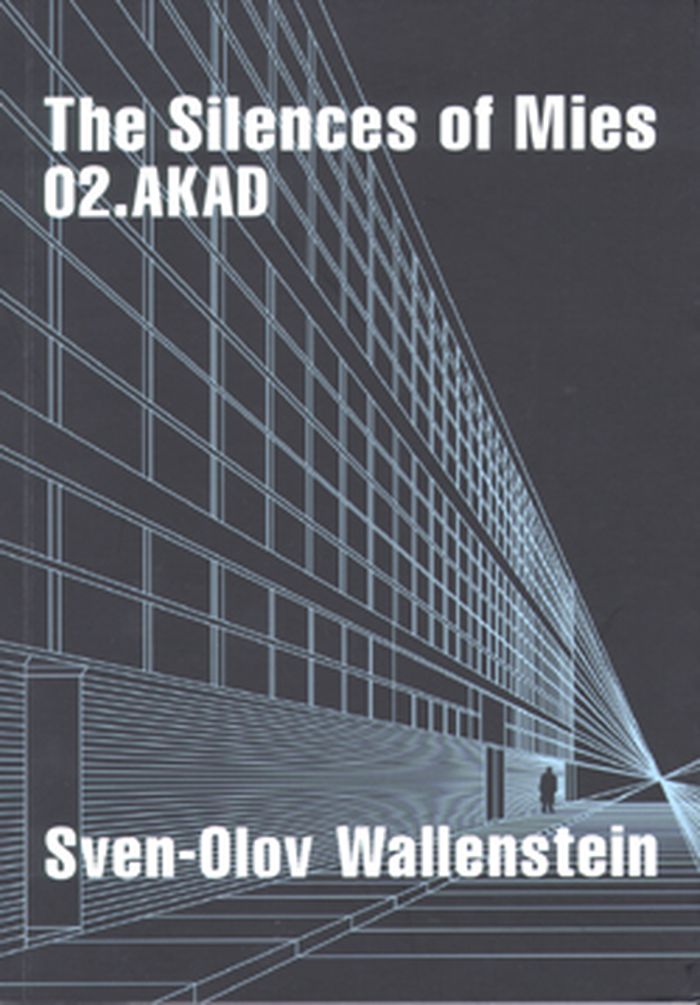
The silences of Mies: 02.AKAD
Actions:
Prix:
$35.00
(disponible sur commande)
Résumé:
The works of Mies van der Rohe are often described as silent, or as withdrawal or negation, as the last line of resistance against the forces of technology and capitalism, precisely because they interiorize these forces, but thereby also allow us to reflect on them. This essay attempts to understand the unavoidable plurality of this silence, to unearth its philosophical genealogy, and to connect it to the present moment, when the possibility and very sense of criticality as a strategy of negativity seem more questinable than ever. Sven-Olov Wallenstein teaches philosophy and aesthetics at the University College of Södertörn in Stockholm, and is the editor-in-chief of Site magazine.
The silences of Mies: 02.AKAD
Actions:
Prix:
$35.00
(disponible sur commande)
Résumé:
The works of Mies van der Rohe are often described as silent, or as withdrawal or negation, as the last line of resistance against the forces of technology and capitalism, precisely because they interiorize these forces, but thereby also allow us to reflect on them. This essay attempts to understand the unavoidable plurality of this silence, to unearth its philosophical genealogy, and to connect it to the present moment, when the possibility and very sense of criticality as a strategy of negativity seem more questinable than ever. Sven-Olov Wallenstein teaches philosophy and aesthetics at the University College of Södertörn in Stockholm, and is the editor-in-chief of Site magazine.
Classification:
livres
livres
Publication:
janvier 1900, Stockholm
janvier 1900, Stockholm
Sujet:
Théorie de l’architecture
Théorie de l’architecture


