


864 Résultats
Classification:
livres
livres
Prix:
$29.95
(disponible sur commande)
Résumé:
Our global thirst for energy and raw materials is increasing all the time. Year after year, humanity exhausts large quantities of mineral resources; the areas of the world in which we drill and dig for oil, gas, coal, gravel, clay and ore are becoming more and more remote, and the range of resources demanded is expanding constantly. Lusitania is a prime example of this(...)
$29.95
(disponible sur commande)
Résumé:
Our global thirst for energy and raw materials is increasing all the time. Year after year, humanity exhausts large quantities of mineral resources; the areas of the world in which we drill and dig for oil, gas, coal, gravel, clay and ore are becoming more and more remote, and the range of resources demanded is expanding constantly. Lusitania is a prime example of this(...)
Titre:
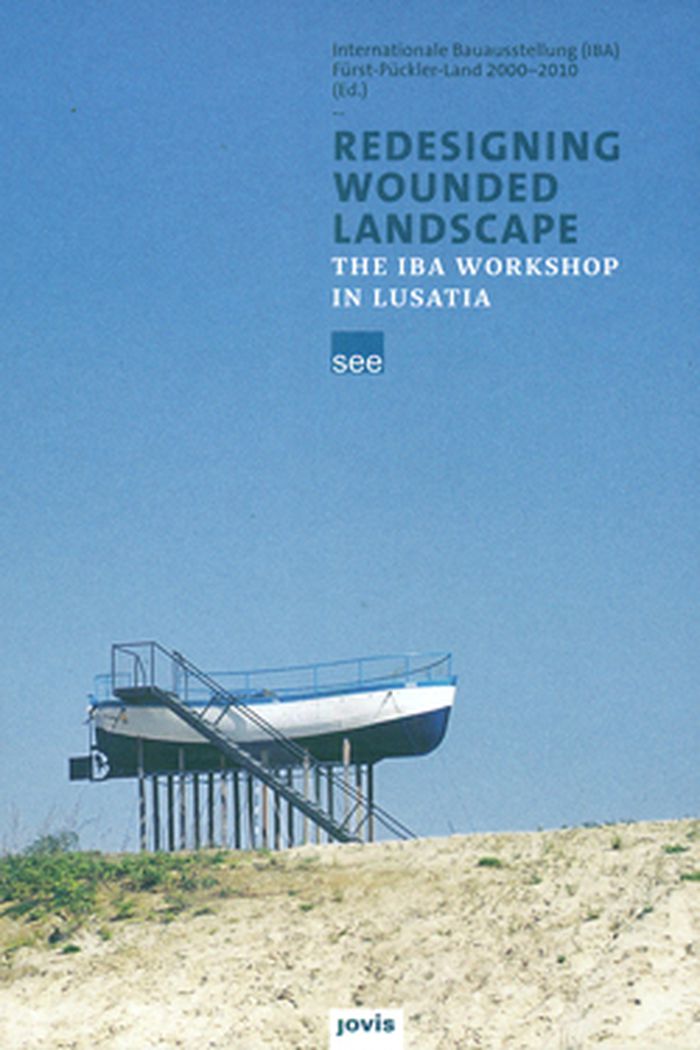
Redesigning wounded landscape : the IBA workshop of Lusatia
Actions:
Prix:
$29.95
(disponible sur commande)
Résumé:
Our global thirst for energy and raw materials is increasing all the time. Year after year, humanity exhausts large quantities of mineral resources; the areas of the world in which we drill and dig for oil, gas, coal, gravel, clay and ore are becoming more and more remote, and the range of resources demanded is expanding constantly. Lusitania is a prime example of this kind of resource depletion. Unrestrained open-pit mining during the nineteenth and twentieth centuries has devastated the region, and ten years ago this "wounded landscape" became the subject of an International Building Exhibition dedicated to providing creative designs for a post-mining landscape. What are the possibilities of such landscapes? What methods and processes may be applied in regions beyond Lusatia? In Redesigning Wounded Landscapes, ten authors explore these questions, looking at the region and the project from a wide range of perspectives.
Redesigning wounded landscape : the IBA workshop of Lusatia
Actions:
Prix:
$29.95
(disponible sur commande)
Résumé:
Our global thirst for energy and raw materials is increasing all the time. Year after year, humanity exhausts large quantities of mineral resources; the areas of the world in which we drill and dig for oil, gas, coal, gravel, clay and ore are becoming more and more remote, and the range of resources demanded is expanding constantly. Lusitania is a prime example of this kind of resource depletion. Unrestrained open-pit mining during the nineteenth and twentieth centuries has devastated the region, and ten years ago this "wounded landscape" became the subject of an International Building Exhibition dedicated to providing creative designs for a post-mining landscape. What are the possibilities of such landscapes? What methods and processes may be applied in regions beyond Lusatia? In Redesigning Wounded Landscapes, ten authors explore these questions, looking at the region and the project from a wide range of perspectives.
Classification:
livres
livres
Publication:
novembre 2012
novembre 2012
Sujet:
Architecture contemporaine
Architecture contemporaine
Classification:
livres
livres

Titre:
Taewon jang : stained ground
Taewon jang : stained ground
Actions:
Prix:
$55.00
(disponible sur commande)
Résumé:
Ominous, overwhelming, and harshly lit at night—Korean photographer Taewon Jang (1976 in Seoul) puts industrial plants at the center of his work. He documented abandoned steel factories, nuclear reactors, cooling towers, storage containers, or briskly working oil refineries to depict the traces of humans’ effort to survive in modern era. Residential buildings seem tiny(...)
$55.00
(disponible sur commande)
Résumé:
Ominous, overwhelming, and harshly lit at night—Korean photographer Taewon Jang (1976 in Seoul) puts industrial plants at the center of his work. He documented abandoned steel factories, nuclear reactors, cooling towers, storage containers, or briskly working oil refineries to depict the traces of humans’ effort to survive in modern era. Residential buildings seem tiny(...)
Titre:
Taewon jang : stained ground
Actions:
Prix:
$55.00
(disponible sur commande)
Résumé:
Ominous, overwhelming, and harshly lit at night—Korean photographer Taewon Jang (1976 in Seoul) puts industrial plants at the center of his work. He documented abandoned steel factories, nuclear reactors, cooling towers, storage containers, or briskly working oil refineries to depict the traces of humans’ effort to survive in modern era. Residential buildings seem tiny in comparison, and the overall scale has obviously shifted. Jang prefers to show us these industrial landscapes in the gray of the dawn, or the red of dusk, by moonlight, in fog or snow; sometimes he shifts a gnarled tree into the foreground, but despite—or perhaps precisely because of—these potentially romantic, idyllic topoi, the viewer senses an uncanny, apocalyptic mood. Large, apparently deserted industrial plants dominate the horizon, yet moving backhoes, cranes, and conveyor belts give the impression they might have a hazardous life of their own.
Taewon jang : stained ground
Actions:
Prix:
$55.00
(disponible sur commande)
Résumé:
Ominous, overwhelming, and harshly lit at night—Korean photographer Taewon Jang (1976 in Seoul) puts industrial plants at the center of his work. He documented abandoned steel factories, nuclear reactors, cooling towers, storage containers, or briskly working oil refineries to depict the traces of humans’ effort to survive in modern era. Residential buildings seem tiny in comparison, and the overall scale has obviously shifted. Jang prefers to show us these industrial landscapes in the gray of the dawn, or the red of dusk, by moonlight, in fog or snow; sometimes he shifts a gnarled tree into the foreground, but despite—or perhaps precisely because of—these potentially romantic, idyllic topoi, the viewer senses an uncanny, apocalyptic mood. Large, apparently deserted industrial plants dominate the horizon, yet moving backhoes, cranes, and conveyor belts give the impression they might have a hazardous life of their own.
Classification:
livres
livres
Publication:
août 2014
août 2014
Sujet:
Monographies photo
Monographies photo
Classification:
livres
livres
Prix:
$35.00
(disponible sur commande)
Résumé:
In the late 1960s the world was faced with impending disaster: the height of the Cold War, the end of oil and the decline of great cities throughout the world. Out of this crisis came a new generation that hoped to build a better future, influenced by visions of geodesic domes, walking cities and a meaningful connection with nature. In this brilliant work of cultural(...)
$35.00
(disponible sur commande)
Résumé:
In the late 1960s the world was faced with impending disaster: the height of the Cold War, the end of oil and the decline of great cities throughout the world. Out of this crisis came a new generation that hoped to build a better future, influenced by visions of geodesic domes, walking cities and a meaningful connection with nature. In this brilliant work of cultural(...)
Publication:
octobre 2015
octobre 2015
Titre:
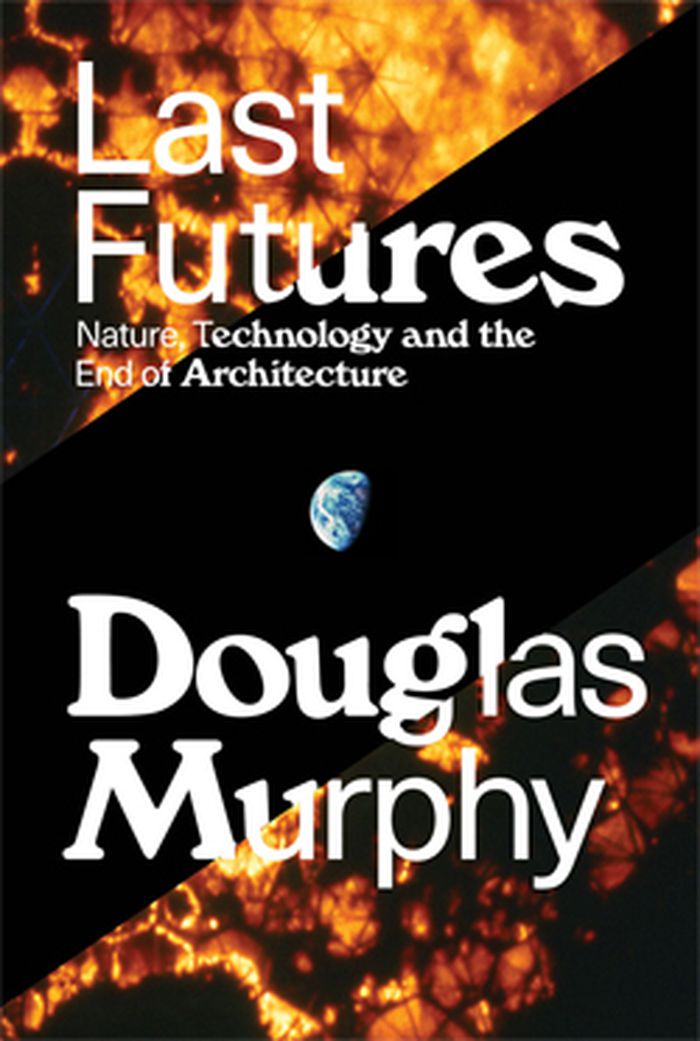
Last futures : nature, technology and the end of architecture
Actions:
Prix:
$35.00
(disponible sur commande)
Résumé:
In the late 1960s the world was faced with impending disaster: the height of the Cold War, the end of oil and the decline of great cities throughout the world. Out of this crisis came a new generation that hoped to build a better future, influenced by visions of geodesic domes, walking cities and a meaningful connection with nature. In this brilliant work of cultural history, architect Douglas Murphy traces the lost archeology of the present day through the works of thinkers and designers such as Buckminster Fuller, the ecological pioneer Stewart Brand, the Archigram architects who envisioned the Plug-In City in the ’60s, as well as co-operatives in Vienna, communes in the Californian desert and protesters on the streets of Paris. In this mind-bending account of the last avant-garde, we see not just the source of our current problems but also some powerful alternative futures.
Last futures : nature, technology and the end of architecture
Actions:
Prix:
$35.00
(disponible sur commande)
Résumé:
In the late 1960s the world was faced with impending disaster: the height of the Cold War, the end of oil and the decline of great cities throughout the world. Out of this crisis came a new generation that hoped to build a better future, influenced by visions of geodesic domes, walking cities and a meaningful connection with nature. In this brilliant work of cultural history, architect Douglas Murphy traces the lost archeology of the present day through the works of thinkers and designers such as Buckminster Fuller, the ecological pioneer Stewart Brand, the Archigram architects who envisioned the Plug-In City in the ’60s, as well as co-operatives in Vienna, communes in the Californian desert and protesters on the streets of Paris. In this mind-bending account of the last avant-garde, we see not just the source of our current problems but also some powerful alternative futures.
Classification:
livres
livres
Publication:
octobre 2015
octobre 2015
Classification:
livres
livres
Actions:
Prix:
$25.95
(disponible sur commande)
Résumé:
An energizing case for hope about the climate, from Rebecca Solnit ("the voice of the resistance"—New York Times), climate activist Thelma Young Lutunatabua, and a chorus of voices calling on us to rise to the moment. "Not too late" brings strong climate voices from around the world to address the political, scientific, social, and emotional dimensions of the most(...)
$25.95
(disponible sur commande)
Résumé:
An energizing case for hope about the climate, from Rebecca Solnit ("the voice of the resistance"—New York Times), climate activist Thelma Young Lutunatabua, and a chorus of voices calling on us to rise to the moment. "Not too late" brings strong climate voices from around the world to address the political, scientific, social, and emotional dimensions of the most(...)
Titre:
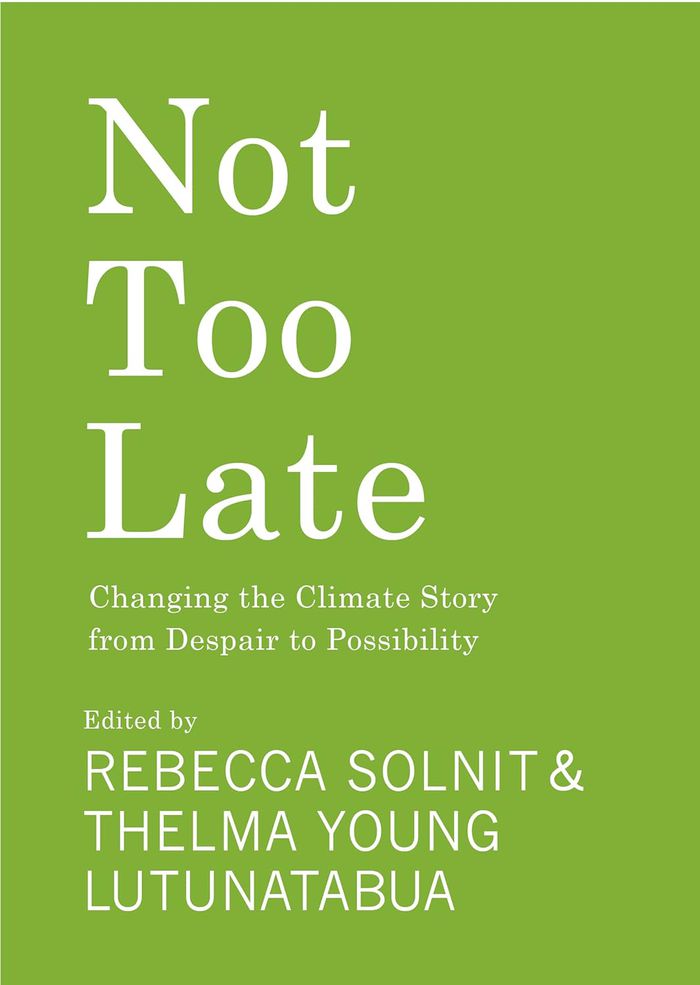
Not too late: Changing the climate Story from Despair to Possibility
Actions:
Prix:
$25.95
(disponible sur commande)
Résumé:
An energizing case for hope about the climate, from Rebecca Solnit ("the voice of the resistance"—New York Times), climate activist Thelma Young Lutunatabua, and a chorus of voices calling on us to rise to the moment. "Not too late" brings strong climate voices from around the world to address the political, scientific, social, and emotional dimensions of the most urgent issue human beings have ever faced. Accessible, encouraging, and engaging, it's an invitation to everyone to understand the issue more deeply, participate more boldly, and imagine the future more creatively. In concise, illuminating essays and interviews, "Not too late" features the voices of Indigenous activists, such as Guam-based attorney and writer Julian Aguon; climate scientists, among them Jacquelyn Gill and Edward Carr; artists, such as Marshall Islands poet and activist Kathy Jeñtil-Kijiner; and longtime organizers, including "The Tyranny of Oil" author Antonia Juhasz and Emergent Strategy author adrienne maree brown.
Not too late: Changing the climate Story from Despair to Possibility
Actions:
Prix:
$25.95
(disponible sur commande)
Résumé:
An energizing case for hope about the climate, from Rebecca Solnit ("the voice of the resistance"—New York Times), climate activist Thelma Young Lutunatabua, and a chorus of voices calling on us to rise to the moment. "Not too late" brings strong climate voices from around the world to address the political, scientific, social, and emotional dimensions of the most urgent issue human beings have ever faced. Accessible, encouraging, and engaging, it's an invitation to everyone to understand the issue more deeply, participate more boldly, and imagine the future more creatively. In concise, illuminating essays and interviews, "Not too late" features the voices of Indigenous activists, such as Guam-based attorney and writer Julian Aguon; climate scientists, among them Jacquelyn Gill and Edward Carr; artists, such as Marshall Islands poet and activist Kathy Jeñtil-Kijiner; and longtime organizers, including "The Tyranny of Oil" author Antonia Juhasz and Emergent Strategy author adrienne maree brown.
Classification:
livres
livres
Publication:
avril 2023
avril 2023
Classification:
livres
livres

Actions:
Prix:
$75.00
(disponible en magasin)
Résumé:
The artist Sandra Schlipkoeter (b. Solingen, Germany, 1979; lives and works in Berlin) uses the concept of interference as an umbrella term for her extensive oeuvre, which spans the media of painting, sculpture, and installation art. She studied at the Düsseldorf Academy of Fine Art with Eberhard Havekost, who had a profound influence on her as she devised her own(...)
$75.00
(disponible en magasin)
Résumé:
The artist Sandra Schlipkoeter (b. Solingen, Germany, 1979; lives and works in Berlin) uses the concept of interference as an umbrella term for her extensive oeuvre, which spans the media of painting, sculpture, and installation art. She studied at the Düsseldorf Academy of Fine Art with Eberhard Havekost, who had a profound influence on her as she devised her own(...)
Titre:
Sandra Schlipkoeter: Interferenzen
Actions:
Prix:
$75.00
(disponible en magasin)
Résumé:
The artist Sandra Schlipkoeter (b. Solingen, Germany, 1979; lives and works in Berlin) uses the concept of interference as an umbrella term for her extensive oeuvre, which spans the media of painting, sculpture, and installation art. She studied at the Düsseldorf Academy of Fine Art with Eberhard Havekost, who had a profound influence on her as she devised her own photorealistic visual language. Interferences of natural and digital light she engenders using photography and then reproduces by painterly means have been central to her work since 2012; she translates them into oil paintings, cut-outs made from fabric-like structures, and installations. Experimenting with the diverse manifestations of light and variously cutting up, superimposing, and contorting materials such as mirror foil or paper, she creates visual universes that brim with energy. The monograph "Interferenzen" presents her output of the past ten years. With essays by Gisela Elbracht-Iglhaut and Thomas Kuhn and a conversation with the artist by Anna Matzek.
Sandra Schlipkoeter: Interferenzen
Actions:
Prix:
$75.00
(disponible en magasin)
Résumé:
The artist Sandra Schlipkoeter (b. Solingen, Germany, 1979; lives and works in Berlin) uses the concept of interference as an umbrella term for her extensive oeuvre, which spans the media of painting, sculpture, and installation art. She studied at the Düsseldorf Academy of Fine Art with Eberhard Havekost, who had a profound influence on her as she devised her own photorealistic visual language. Interferences of natural and digital light she engenders using photography and then reproduces by painterly means have been central to her work since 2012; she translates them into oil paintings, cut-outs made from fabric-like structures, and installations. Experimenting with the diverse manifestations of light and variously cutting up, superimposing, and contorting materials such as mirror foil or paper, she creates visual universes that brim with energy. The monograph "Interferenzen" presents her output of the past ten years. With essays by Gisela Elbracht-Iglhaut and Thomas Kuhn and a conversation with the artist by Anna Matzek.
Classification:
livres
livres
Publication:
octobre 2023
octobre 2023
Classification:
livres
livres
Prix:
$65.99
(disponible sur commande)
Résumé:
Despite the intolerable costs of climate change and inevitably declining oil, natural gas and uranium reserves, the vast majority of cities and urban communities are planned and managed as if such existential crises did not exist. Hence the transition from fossil fuel dominated cities to an urban future marked by a radically new, renewable energy infrastructure requires(...)
$65.99
(disponible sur commande)
Résumé:
Despite the intolerable costs of climate change and inevitably declining oil, natural gas and uranium reserves, the vast majority of cities and urban communities are planned and managed as if such existential crises did not exist. Hence the transition from fossil fuel dominated cities to an urban future marked by a radically new, renewable energy infrastructure requires(...)
Titre:
Renewable city : a comprehensive guide to an urban revolution
Actions:
Prix:
$65.99
(disponible sur commande)
Résumé:
Despite the intolerable costs of climate change and inevitably declining oil, natural gas and uranium reserves, the vast majority of cities and urban communities are planned and managed as if such existential crises did not exist. Hence the transition from fossil fuel dominated cities to an urban future marked by a radically new, renewable energy infrastructure requires entirely new tools and frames of decision-making. This is an original guide to an entirely unprecedented urban transformation, to cities and towns powered by renewable energy. Squarely focused on action, it supports design, planning and management decisions and serves as a practical guide to practitioners, academics and political leaders in communities and cities worldwide, as a useful and well-structured reference text. It is built on the most successful of past and present urban sustainability trends and emerging infrastructure directions, presenting renewable energy applications as offering new and inevitable approaches to urban infrastructure planning and the design of cities.
Renewable city : a comprehensive guide to an urban revolution
Actions:
Prix:
$65.99
(disponible sur commande)
Résumé:
Despite the intolerable costs of climate change and inevitably declining oil, natural gas and uranium reserves, the vast majority of cities and urban communities are planned and managed as if such existential crises did not exist. Hence the transition from fossil fuel dominated cities to an urban future marked by a radically new, renewable energy infrastructure requires entirely new tools and frames of decision-making. This is an original guide to an entirely unprecedented urban transformation, to cities and towns powered by renewable energy. Squarely focused on action, it supports design, planning and management decisions and serves as a practical guide to practitioners, academics and political leaders in communities and cities worldwide, as a useful and well-structured reference text. It is built on the most successful of past and present urban sustainability trends and emerging infrastructure directions, presenting renewable energy applications as offering new and inevitable approaches to urban infrastructure planning and the design of cities.
Classification:
livres
livres
Publication:
janvier 2007, Chichester
janvier 2007, Chichester
Sujet:
Architecture écologique
Architecture écologique
Classification:
livres
livres
Actions:
Prix:
$45.00
(disponible sur commande)
Résumé:
Ever since anonymous spray-can art began appearing on city walls in New York and Philadelphia in the late 1960s, graffiti has been a ubiquitous presence in the urban landscape, its artists largely unsung heroes. As hip-hop culture spread from America, graffiti became a worldwide phenomenon, emerging in the 1980s as the symbolic artistic language of young people everywhere(...)
$45.00
(disponible sur commande)
Résumé:
Ever since anonymous spray-can art began appearing on city walls in New York and Philadelphia in the late 1960s, graffiti has been a ubiquitous presence in the urban landscape, its artists largely unsung heroes. As hip-hop culture spread from America, graffiti became a worldwide phenomenon, emerging in the 1980s as the symbolic artistic language of young people everywhere(...)
Publication:
octobre 2004, New York
octobre 2004, New York
Titre:
Graffiti world : street art from five continents
Actions:
Prix:
$45.00
(disponible sur commande)
Résumé:
Ever since anonymous spray-can art began appearing on city walls in New York and Philadelphia in the late 1960s, graffiti has been a ubiquitous presence in the urban landscape, its artists largely unsung heroes. As hip-hop culture spread from America, graffiti became a worldwide phenomenon, emerging in the 1980s as the symbolic artistic language of young people everywhere and one of the most potent influences on youth-oriented marketing and design. With more than 2,000 illustrations by over 150 artists from all over the world and interviews with many of them, this book is the most comprehensive survey of graffiti art ever published. Today's young graffiti artists incorporate a variety of mediums—including stickers, stencils, oils, acrylics, and oil-based chalk—as well as an ever-expanding range of social commentary. This evolution in style and subject matter has earned graffiti the respect of the art world and guaranteed its long-lasting influence on art, graphic design, and style around the world.
Graffiti world : street art from five continents
Actions:
Prix:
$45.00
(disponible sur commande)
Résumé:
Ever since anonymous spray-can art began appearing on city walls in New York and Philadelphia in the late 1960s, graffiti has been a ubiquitous presence in the urban landscape, its artists largely unsung heroes. As hip-hop culture spread from America, graffiti became a worldwide phenomenon, emerging in the 1980s as the symbolic artistic language of young people everywhere and one of the most potent influences on youth-oriented marketing and design. With more than 2,000 illustrations by over 150 artists from all over the world and interviews with many of them, this book is the most comprehensive survey of graffiti art ever published. Today's young graffiti artists incorporate a variety of mediums—including stickers, stencils, oils, acrylics, and oil-based chalk—as well as an ever-expanding range of social commentary. This evolution in style and subject matter has earned graffiti the respect of the art world and guaranteed its long-lasting influence on art, graphic design, and style around the world.
Classification:
livres
livres
Publication:
octobre 2004, New York
octobre 2004, New York
Classification:
livres
livres
Prix:
$19.95
(disponible sur commande)
Résumé:
The stirring speech given by Peter Sloterdijk in Lucerne in October 2022. From time immemorial, humanity has had to organize their "metabolism with nature." For Marx, the most important factor in this process was labor. When Prometheus, according to the myth, brought fire to earth, another crucial input was added. Fire has been used to cook food and harden tools for(...)
$19.95
(disponible sur commande)
Résumé:
The stirring speech given by Peter Sloterdijk in Lucerne in October 2022. From time immemorial, humanity has had to organize their "metabolism with nature." For Marx, the most important factor in this process was labor. When Prometheus, according to the myth, brought fire to earth, another crucial input was added. Fire has been used to cook food and harden tools for(...)
Titre:
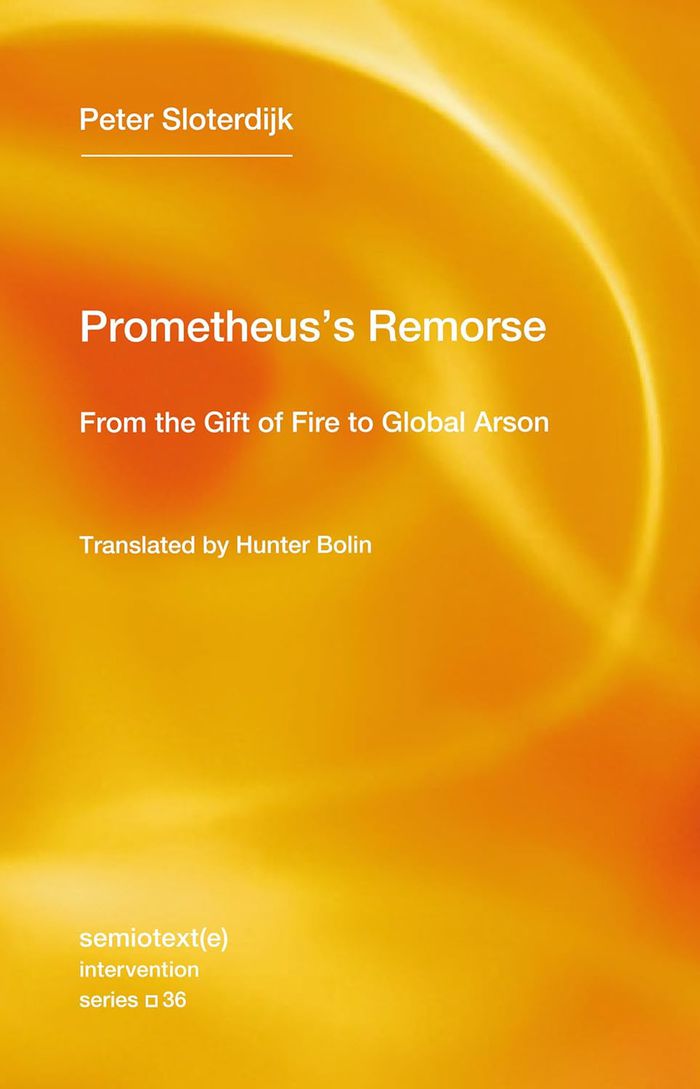
Prometheus's remorse: From the gift of fire to global arson
Actions:
Prix:
$19.95
(disponible sur commande)
Résumé:
The stirring speech given by Peter Sloterdijk in Lucerne in October 2022. From time immemorial, humanity has had to organize their "metabolism with nature." For Marx, the most important factor in this process was labor. When Prometheus, according to the myth, brought fire to earth, another crucial input was added. Fire has been used to cook food and harden tools for hundreds of thousands of years. In this sense, it can be said that all history implies the history of the uses of fire. But whereas trees could only be burnt once, labor and fire shifted with the discovery of underground deposits of coal and oil. Modern humanity, according to Peter Sloterdijk, can be considered a collective of arsonists who set fire to the underground forests and moors. If Prometheus were to return to earth today, he might regret his gift; after all, what looms is nothing less than Ekpyrosis, the demise of the world in fire. And only a new, energetic pacifism can prevent this catastrophe.
Prometheus's remorse: From the gift of fire to global arson
Actions:
Prix:
$19.95
(disponible sur commande)
Résumé:
The stirring speech given by Peter Sloterdijk in Lucerne in October 2022. From time immemorial, humanity has had to organize their "metabolism with nature." For Marx, the most important factor in this process was labor. When Prometheus, according to the myth, brought fire to earth, another crucial input was added. Fire has been used to cook food and harden tools for hundreds of thousands of years. In this sense, it can be said that all history implies the history of the uses of fire. But whereas trees could only be burnt once, labor and fire shifted with the discovery of underground deposits of coal and oil. Modern humanity, according to Peter Sloterdijk, can be considered a collective of arsonists who set fire to the underground forests and moors. If Prometheus were to return to earth today, he might regret his gift; after all, what looms is nothing less than Ekpyrosis, the demise of the world in fire. And only a new, energetic pacifism can prevent this catastrophe.
Classification:
livres
livres
Publication:
mars 2024
mars 2024
Sujet:
Théorie/ philosophie
Théorie/ philosophie
Classification:
livres
livres
Titre:
BorderLine
BorderLine
Actions:
Prix:
$31.95
(disponible sur commande)
Résumé:
"BorderLine" highlights a particularly troubled site in Europe, the town and harbor of Kraljevica, just south of Rijeka, Croatia, where the failing ship-building industry and pollution from a large oil refinery threaten both the ecology and the prospects (...)
$31.95
(disponible sur commande)
Résumé:
"BorderLine" highlights a particularly troubled site in Europe, the town and harbor of Kraljevica, just south of Rijeka, Croatia, where the failing ship-building industry and pollution from a large oil refinery threaten both the ecology and the prospects (...)
Sujet:
Théorie de l’architecture
Théorie de l’architecture
Publication:
septembre 1998, Vienna
septembre 1998, Vienna
Titre:
BorderLine
Actions:
Prix:
$31.95
(disponible sur commande)
Résumé:
"BorderLine" highlights a particularly troubled site in Europe, the town and harbor of Kraljevica, just south of Rijeka, Croatia, where the failing ship-building industry and pollution from a large oil refinery threaten both the ecology and the prospects of tourism. Drawing on the results of a workshop organized, funded and conducted by the Research Institute for Experimental Architecture (RIEA) in the Frankopan Castle in Kraljevica, "BorderLine" presents essays and projects by leading thinkers and architects addressing the contemporary problems such regions have within rapidly evolving European and global landscapes. "BorderLine" includes essays by Lebbeus Woods, Gabriela Seifert, Manuel Delanda, Aleksandra Wagner, Heinz Foerster, and Ekkehard Rehfeld; it also includes architectural projects and conceptual proposals by Lebbeus Woods, Peter Cook, Will Alsop, Per Kartredt, Masihiko Yendo, and Guy Lafranchi . This title is the first in the RIEAconcepts series, edited by Lebbeus Woods. These books will present innovative research and experimental projects initiated and implemented by both RIEA and individual architects.
BorderLine
Actions:
Prix:
$31.95
(disponible sur commande)
Résumé:
"BorderLine" highlights a particularly troubled site in Europe, the town and harbor of Kraljevica, just south of Rijeka, Croatia, where the failing ship-building industry and pollution from a large oil refinery threaten both the ecology and the prospects of tourism. Drawing on the results of a workshop organized, funded and conducted by the Research Institute for Experimental Architecture (RIEA) in the Frankopan Castle in Kraljevica, "BorderLine" presents essays and projects by leading thinkers and architects addressing the contemporary problems such regions have within rapidly evolving European and global landscapes. "BorderLine" includes essays by Lebbeus Woods, Gabriela Seifert, Manuel Delanda, Aleksandra Wagner, Heinz Foerster, and Ekkehard Rehfeld; it also includes architectural projects and conceptual proposals by Lebbeus Woods, Peter Cook, Will Alsop, Per Kartredt, Masihiko Yendo, and Guy Lafranchi . This title is the first in the RIEAconcepts series, edited by Lebbeus Woods. These books will present innovative research and experimental projects initiated and implemented by both RIEA and individual architects.
Classification:
livres
livres
Publication:
septembre 1998, Vienna
septembre 1998, Vienna
Sujet:
Théorie de l’architecture
Théorie de l’architecture
Classification:
livres
livres
Titre:
Ciao ciao petrolio
Ciao ciao petrolio
Actions:
Prix:
$19.00
(disponible sur commande)
Résumé:
Tags: Libri per Bambini Illustrati Il petrolio, si sa, è una risorsa non rinnovabile. Ma da dove viene? Come si produce? E se dovesse finire? Ciao ciao petrolio è l’ultimo libro illustrato di Harriet Russell e presenta la questione del risparmio energetico e delle fonti rinnovabili al pubblico dei bambini. Dalla raccolta differenziata all’isolamento termico, dal(...)
$19.00
(disponible sur commande)
Résumé:
Tags: Libri per Bambini Illustrati Il petrolio, si sa, è una risorsa non rinnovabile. Ma da dove viene? Come si produce? E se dovesse finire? Ciao ciao petrolio è l’ultimo libro illustrato di Harriet Russell e presenta la questione del risparmio energetico e delle fonti rinnovabili al pubblico dei bambini. Dalla raccolta differenziata all’isolamento termico, dal(...)
Titre:
Ciao ciao petrolio
Actions:
Prix:
$19.00
(disponible sur commande)
Résumé:
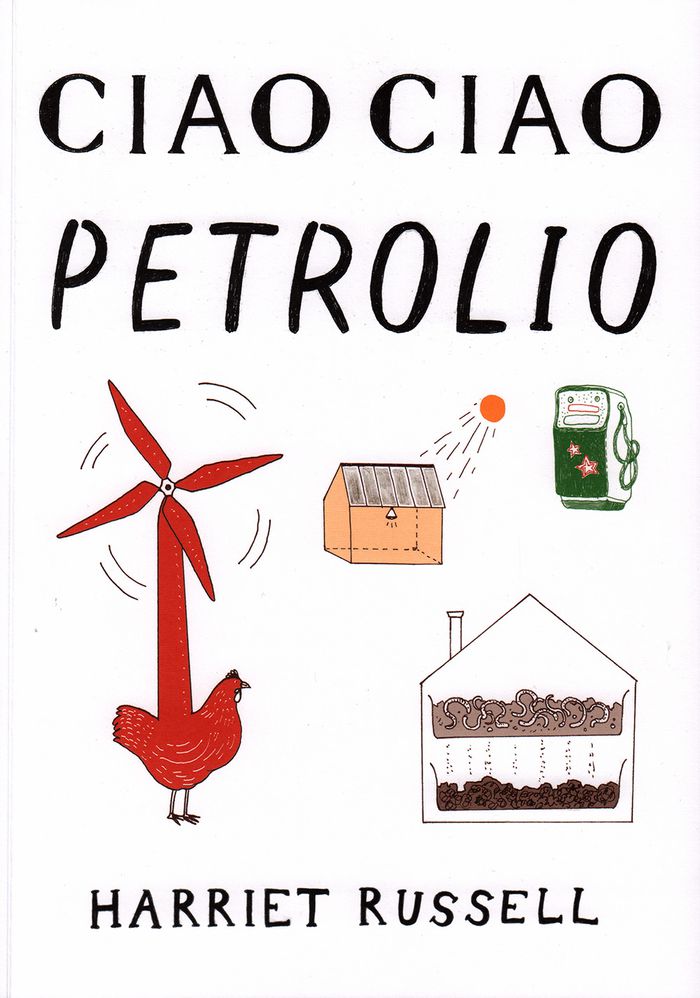
Tags: Libri per Bambini Illustrati Il petrolio, si sa, è una risorsa non rinnovabile. Ma da dove viene? Come si produce? E se dovesse finire? Ciao ciao petrolio è l’ultimo libro illustrato di Harriet Russell e presenta la questione del risparmio energetico e delle fonti rinnovabili al pubblico dei bambini. Dalla raccolta differenziata all’isolamento termico, dal riciclo alla riduzione dell’inquinamento; la Russell ci racconta che non è vero che non si può cambiare il mondo, perché ognuno nel suo piccolo può fare la differenza. Un modo per parlare anche ai più piccoli di sostenibilità e delle problematiche ambientali di oggi, in maniera semplice e ironica, per crescere generazioni più consapevoli che abbiano a cuore il destino di questo pianeta. Una precedente versione di questo racconto è stata pubblicata con il titolo "An endagered species" in Sorry, out of gas: Architecture's Response to the 1973 Oil Crisis – pubblicato da CCA e Corraini Edizioni nel 2007. destino di questo pianeta.
Ciao ciao petrolio
Actions:
Prix:
$19.00
(disponible sur commande)
Résumé:
Tags: Libri per Bambini Illustrati Il petrolio, si sa, è una risorsa non rinnovabile. Ma da dove viene? Come si produce? E se dovesse finire? Ciao ciao petrolio è l’ultimo libro illustrato di Harriet Russell e presenta la questione del risparmio energetico e delle fonti rinnovabili al pubblico dei bambini. Dalla raccolta differenziata all’isolamento termico, dal riciclo alla riduzione dell’inquinamento; la Russell ci racconta che non è vero che non si può cambiare il mondo, perché ognuno nel suo piccolo può fare la differenza. Un modo per parlare anche ai più piccoli di sostenibilità e delle problematiche ambientali di oggi, in maniera semplice e ironica, per crescere generazioni più consapevoli che abbiano a cuore il destino di questo pianeta. Una precedente versione di questo racconto è stata pubblicata con il titolo "An endagered species" in Sorry, out of gas: Architecture's Response to the 1973 Oil Crisis – pubblicato da CCA e Corraini Edizioni nel 2007. destino di questo pianeta.
Classification:
livres
livres
Publication:
avril 2018
avril 2018
Sujet:
Publications du CCA
Publications du CCA


