


8791 Résultats
Classification:
livres
livres

Actions:
Prix:
$53.95
(disponible sur commande)
Résumé:
"Two minds" is a major volume exploring and critiquing the subject of collaboration between artists and architects. Interest and activity in this field is growing rapidly, making this book a timely consideration of an important phenomenon. The book documents 18 projects funded through the RSA Art for Architecture scheme and focuses on work by internationally renowned(...)
$53.95
(disponible sur commande)
Résumé:
"Two minds" is a major volume exploring and critiquing the subject of collaboration between artists and architects. Interest and activity in this field is growing rapidly, making this book a timely consideration of an important phenomenon. The book documents 18 projects funded through the RSA Art for Architecture scheme and focuses on work by internationally renowned(...)
Titre:
Two minds : artists and architects in collaboration
Actions:
Prix:
$53.95
(disponible sur commande)
Résumé:
"Two minds" is a major volume exploring and critiquing the subject of collaboration between artists and architects. Interest and activity in this field is growing rapidly, making this book a timely consideration of an important phenomenon. The book documents 18 projects funded through the RSA Art for Architecture scheme and focuses on work by internationally renowned figures such as Mark Dion, Chris Ofili, David Adjaye and Herzog & de Meuron, alongside that of emerging practitioners. As well as containing in depth case studies, "Two minds" features commissioned essays by Philip Ursprung and Cara Mullio which explore key issues surrounding collaborative practice. A range of topics are discussed, including the high level of support for art and architecture schemes in German speaking areas of Europe, the recent move of many so-called ‘gallery’ artists into the public domain and new ways of working that are opened up through collaboration.
Two minds : artists and architects in collaboration
Actions:
Prix:
$53.95
(disponible sur commande)
Résumé:
"Two minds" is a major volume exploring and critiquing the subject of collaboration between artists and architects. Interest and activity in this field is growing rapidly, making this book a timely consideration of an important phenomenon. The book documents 18 projects funded through the RSA Art for Architecture scheme and focuses on work by internationally renowned figures such as Mark Dion, Chris Ofili, David Adjaye and Herzog & de Meuron, alongside that of emerging practitioners. As well as containing in depth case studies, "Two minds" features commissioned essays by Philip Ursprung and Cara Mullio which explore key issues surrounding collaborative practice. A range of topics are discussed, including the high level of support for art and architecture schemes in German speaking areas of Europe, the recent move of many so-called ‘gallery’ artists into the public domain and new ways of working that are opened up through collaboration.
Classification:
livres
livres
Publication:
décembre 2005, London
décembre 2005, London
Sujet:
Théorie de l’architecture
Théorie de l’architecture
Classification:
livres
livres
Titre:
Spirit & place
Spirit & place
Actions:
Prix:
$57.50
(disponible sur commande)
Résumé:
Built environment surrounds us for 90% of our lives but only now are we realising its influence on the environment, our health, and how we think, feel and behave both individually and socially. "Spirit & place" shows how to work towards a sustainable environment through socially inclusive processes of placemaking, and how to create places that are nourishing(...)
$57.50
(disponible sur commande)
Résumé:
Built environment surrounds us for 90% of our lives but only now are we realising its influence on the environment, our health, and how we think, feel and behave both individually and socially. "Spirit & place" shows how to work towards a sustainable environment through socially inclusive processes of placemaking, and how to create places that are nourishing(...)
Sujet:
Architecture écologique
Architecture écologique
Publication:
janvier 1900, Oxford, Burlington
janvier 1900, Oxford, Burlington
Titre:
Spirit & place
Actions:
Prix:
$57.50
(disponible sur commande)
Résumé:
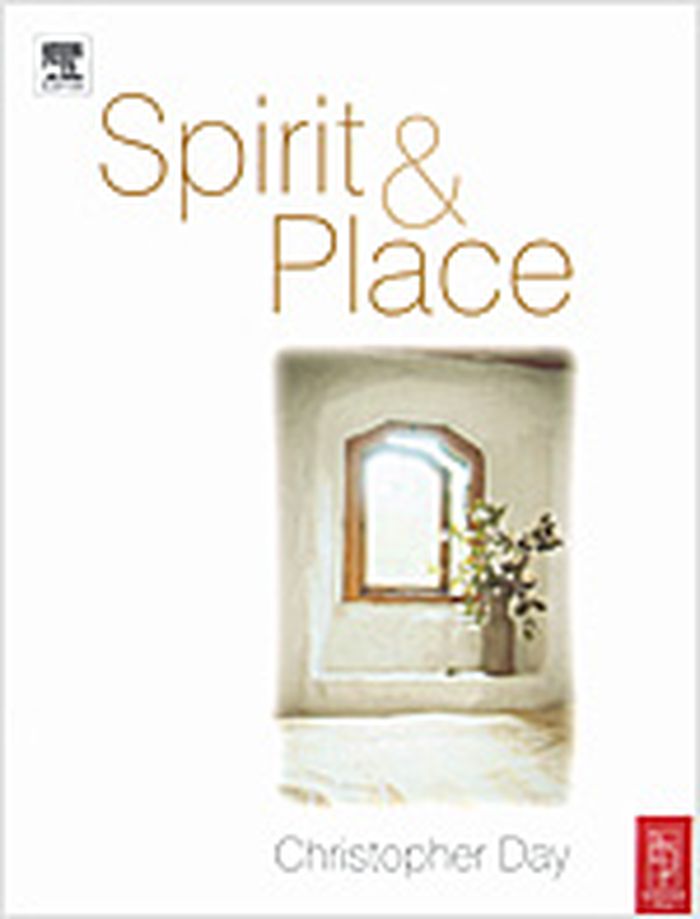
Built environment surrounds us for 90% of our lives but only now are we realising its influence on the environment, our health, and how we think, feel and behave both individually and socially. "Spirit & place" shows how to work towards a sustainable environment through socially inclusive processes of placemaking, and how to create places that are nourishing psychologically and physically, to soul and spirit as well as body. This book's arguments identify important, but often unrecognised, principles and illustrate their applicability in a wide range of situations, price-ranges and climates. It shows how to reconcile the apparently incompatible demands of environmental, economic and social sustainability; how to moderate climate to make places of delight, and realign social pressures so places both support society and maximise economic viability. Thought provoking and easy to understand, Christopher Day uses everyday examples to relate his theories to practice and our experience.
Spirit & place
Actions:
Prix:
$57.50
(disponible sur commande)
Résumé:
Built environment surrounds us for 90% of our lives but only now are we realising its influence on the environment, our health, and how we think, feel and behave both individually and socially. "Spirit & place" shows how to work towards a sustainable environment through socially inclusive processes of placemaking, and how to create places that are nourishing psychologically and physically, to soul and spirit as well as body. This book's arguments identify important, but often unrecognised, principles and illustrate their applicability in a wide range of situations, price-ranges and climates. It shows how to reconcile the apparently incompatible demands of environmental, economic and social sustainability; how to moderate climate to make places of delight, and realign social pressures so places both support society and maximise economic viability. Thought provoking and easy to understand, Christopher Day uses everyday examples to relate his theories to practice and our experience.
Classification:
livres
livres
Publication:
janvier 1900, Oxford, Burlington
janvier 1900, Oxford, Burlington
Sujet:
Architecture écologique
Architecture écologique
Classification:
livres
livres
Actions:
Prix:
$29.95
(disponible en magasin)
Résumé:
Straightforward photography, a restrained color scheme, simple texts set in a functional typeface: these are the formal elements that German graphic designer Michael Engelmann drew on to create an unmistakable pictorial language for posters. Engelmann came to advertising self-taught, with a background in American advertising practice. In the 1950s, he set about expunging(...)
$29.95
(disponible en magasin)
Résumé:
Straightforward photography, a restrained color scheme, simple texts set in a functional typeface: these are the formal elements that German graphic designer Michael Engelmann drew on to create an unmistakable pictorial language for posters. Engelmann came to advertising self-taught, with a background in American advertising practice. In the 1950s, he set about expunging(...)
Titre:
Poster collection 10 : Michael Engelmann
Actions:
Prix:
$29.95
(disponible en magasin)
Résumé:
Straightforward photography, a restrained color scheme, simple texts set in a functional typeface: these are the formal elements that German graphic designer Michael Engelmann drew on to create an unmistakable pictorial language for posters. Engelmann came to advertising self-taught, with a background in American advertising practice. In the 1950s, he set about expunging any trace of empty bourgeois enthusiasm for advertising by applying a strictly conceptual working approach. In his posters for Pirelli, The Philadelphia Enquirer, Renault, or Roth Händle, images and ideas came together in a way as simple as it was compelling, creating signs of great associative force. His was a highly regarded contribution to graphic design's breakthrough into the age of mass communication; it introduced wit and a sense of using resources economically. "Poster Collection 10" brings together numerous posters created by Engelmann, who died prematurely at the age of 38.
Poster collection 10 : Michael Engelmann
Actions:
Prix:
$29.95
(disponible en magasin)
Résumé:
Straightforward photography, a restrained color scheme, simple texts set in a functional typeface: these are the formal elements that German graphic designer Michael Engelmann drew on to create an unmistakable pictorial language for posters. Engelmann came to advertising self-taught, with a background in American advertising practice. In the 1950s, he set about expunging any trace of empty bourgeois enthusiasm for advertising by applying a strictly conceptual working approach. In his posters for Pirelli, The Philadelphia Enquirer, Renault, or Roth Händle, images and ideas came together in a way as simple as it was compelling, creating signs of great associative force. His was a highly regarded contribution to graphic design's breakthrough into the age of mass communication; it introduced wit and a sense of using resources economically. "Poster Collection 10" brings together numerous posters created by Engelmann, who died prematurely at the age of 38.
Classification:
livres
livres
Publication:
octobre 2004, Baden
octobre 2004, Baden
Classification:
livres
livres
Actions:
Prix:
$79.00
(disponible sur commande)
Résumé:
Life in the digital economy of information and images enriches us but often induces a sense of being overwhelmed. ''Sensing the Future: Moholy-Nagy, Media and the Arts'' considers the impact of technology by exploring ways it was addressed in the practice of the Hungarian polymath artist László Moholy-Nagy (1895-1946), a prominent professor at the Bauhaus and a key figure(...)
$79.00
(disponible sur commande)
Résumé:
Life in the digital economy of information and images enriches us but often induces a sense of being overwhelmed. ''Sensing the Future: Moholy-Nagy, Media and the Arts'' considers the impact of technology by exploring ways it was addressed in the practice of the Hungarian polymath artist László Moholy-Nagy (1895-1946), a prominent professor at the Bauhaus and a key figure(...)
Titre:
Sensing the future: Moholy-Nagy, media and the arts.Revised edition
Actions:
Prix:
$79.00
(disponible sur commande)
Résumé:
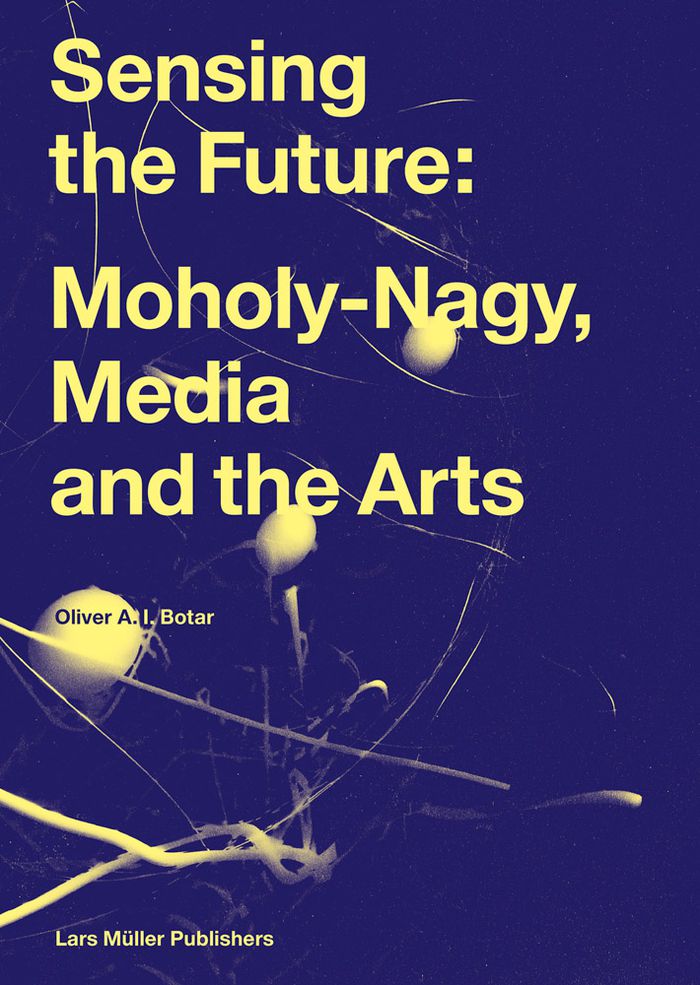
Life in the digital economy of information and images enriches us but often induces a sense of being overwhelmed. ''Sensing the Future: Moholy-Nagy, Media and the Arts'' considers the impact of technology by exploring ways it was addressed in the practice of the Hungarian polymath artist László Moholy-Nagy (1895-1946), a prominent professor at the Bauhaus and a key figure in the history of Modernism. Moholy-Nagy felt that people needed guidance to cope with the onslaught of sensory input in an increasingly technologized, mediatized, hyper-stimulating environment. His ideas informed media theorists such as Walter Benjamin, John Cage, Sigfried Giedion, and Marshall McLuhan, who anticipated digital culture as it emerged. Should we then regard Moholy-Nagy as a pioneer of the digital? His aesthetic engagement with the technology/body problematic broached the notions of immersion, interactivity and bodily participation, innately offering a critique of today’s disembodiment.
Sensing the future: Moholy-Nagy, media and the arts.Revised edition
Actions:
Prix:
$79.00
(disponible sur commande)
Résumé:
Life in the digital economy of information and images enriches us but often induces a sense of being overwhelmed. ''Sensing the Future: Moholy-Nagy, Media and the Arts'' considers the impact of technology by exploring ways it was addressed in the practice of the Hungarian polymath artist László Moholy-Nagy (1895-1946), a prominent professor at the Bauhaus and a key figure in the history of Modernism. Moholy-Nagy felt that people needed guidance to cope with the onslaught of sensory input in an increasingly technologized, mediatized, hyper-stimulating environment. His ideas informed media theorists such as Walter Benjamin, John Cage, Sigfried Giedion, and Marshall McLuhan, who anticipated digital culture as it emerged. Should we then regard Moholy-Nagy as a pioneer of the digital? His aesthetic engagement with the technology/body problematic broached the notions of immersion, interactivity and bodily participation, innately offering a critique of today’s disembodiment.
Classification:
livres
livres
Publication:
novembre 2023
novembre 2023
Classification:
périodiques
périodiques
Titre:
OASE 114: Optimism or bust?
OASE 114: Optimism or bust?
Actions:
Prix:
$58.00
(disponible sur commande)
Résumé:
Despite climate catastrophes, increasing inequality and growing geopolitical instability, architecture remains stubbornly optimistic about the future. More than this: it usually sees itself as the discipline best capable of showing society a way out of disaster. Optimism seems to be a genuine "strategy" that strongly shapes architectural and urban design practice. We can(...)
$58.00
(disponible sur commande)
Résumé:
Despite climate catastrophes, increasing inequality and growing geopolitical instability, architecture remains stubbornly optimistic about the future. More than this: it usually sees itself as the discipline best capable of showing society a way out of disaster. Optimism seems to be a genuine "strategy" that strongly shapes architectural and urban design practice. We can(...)
Titre:
OASE 114: Optimism or bust?
Actions:
Prix:
$58.00
(disponible sur commande)
Résumé:
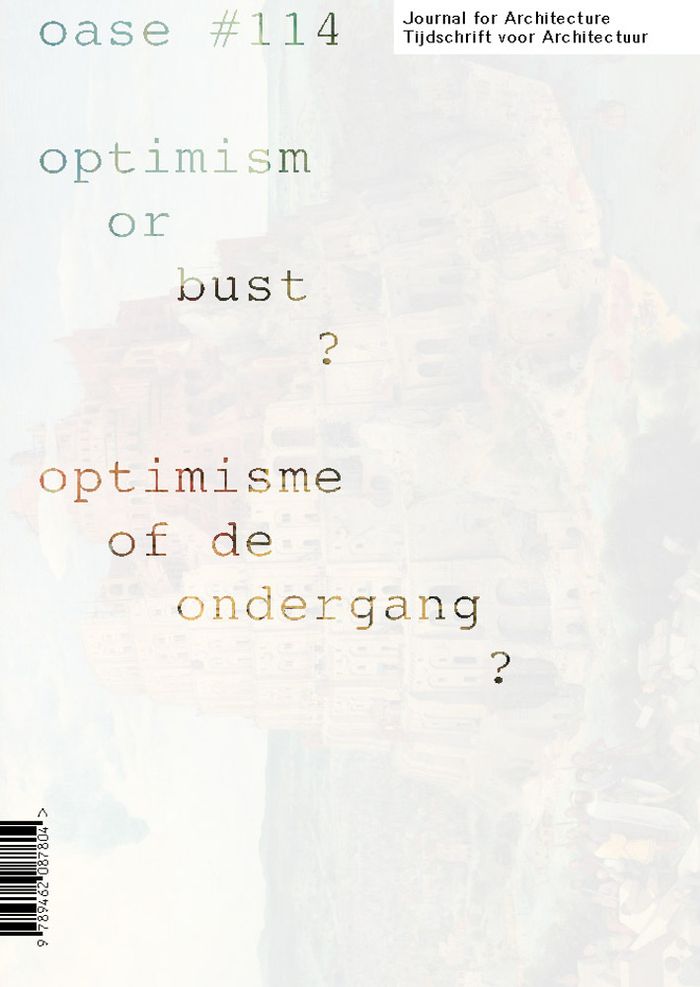
Despite climate catastrophes, increasing inequality and growing geopolitical instability, architecture remains stubbornly optimistic about the future. More than this: it usually sees itself as the discipline best capable of showing society a way out of disaster. Optimism seems to be a genuine "strategy" that strongly shapes architectural and urban design practice. We can hardly imagine a different – and hopefully better – built future if we are not optimistic about it and believe in it ourselves. This issue of OASE focuses on the specific position of optimism in architecture and urban design. Where in the design and construction process is it hiding? In what circumstances does it rear its head? What causes it to be sidelined? How do design practices change under the yoke of optimism? How do boldly optimistic choices manifest in projects? And how persistent is this ever-good-natured optimism in the face of a fickle reality?
OASE 114: Optimism or bust?
Actions:
Prix:
$58.00
(disponible sur commande)
Résumé:
Despite climate catastrophes, increasing inequality and growing geopolitical instability, architecture remains stubbornly optimistic about the future. More than this: it usually sees itself as the discipline best capable of showing society a way out of disaster. Optimism seems to be a genuine "strategy" that strongly shapes architectural and urban design practice. We can hardly imagine a different – and hopefully better – built future if we are not optimistic about it and believe in it ourselves. This issue of OASE focuses on the specific position of optimism in architecture and urban design. Where in the design and construction process is it hiding? In what circumstances does it rear its head? What causes it to be sidelined? How do design practices change under the yoke of optimism? How do boldly optimistic choices manifest in projects? And how persistent is this ever-good-natured optimism in the face of a fickle reality?
Classification:
périodiques
périodiques
Publication:
septembre 2023
septembre 2023
Sujet:
Revues
Revues
Classification:
livres
livres
Actions:
Prix:
$66.99
(disponible en magasin)
Résumé:
Nina Mö ntmann's timely book extends the decolonisation debate to the institutions of contemporary art. In a thoughtfully articulated text, illustrated with pertinent examples of best practice, she argues that museums and galleries of contemporary art have a responsibility to "decenter" their institutions, removing from their collections, exhibition policies and(...)
$66.99
(disponible en magasin)
Résumé:
Nina Mö ntmann's timely book extends the decolonisation debate to the institutions of contemporary art. In a thoughtfully articulated text, illustrated with pertinent examples of best practice, she argues that museums and galleries of contemporary art have a responsibility to "decenter" their institutions, removing from their collections, exhibition policies and(...)
Titre:
Decentring the museum: Contemporary art institutions and colonial legacies
Actions:
Prix:
$66.99
(disponible en magasin)
Résumé:
Nina Mö ntmann's timely book extends the decolonisation debate to the institutions of contemporary art. In a thoughtfully articulated text, illustrated with pertinent examples of best practice, she argues that museums and galleries of contemporary art have a responsibility to "decenter" their institutions, removing from their collections, exhibition policies and infrastructures a deeply embedded Euro-centric cultural focus with roots in the history of colonialism. In this, she argues, they can learn from the example both of anthropological museums (such as the Humboldt Forum in Berlin and the British Museum), which are engaged in debates about the colonial histories of their collections, and of small-scale art spaces (such as La Colonie in Paris or Savvy Contemporary in Berlin), which have the flexibility to initiate different kinds of conversation – for example, by programming exhibitions and events in collaboration with local diasporic communities from the global south.
Decentring the museum: Contemporary art institutions and colonial legacies
Actions:
Prix:
$66.99
(disponible en magasin)
Résumé:
Nina Mö ntmann's timely book extends the decolonisation debate to the institutions of contemporary art. In a thoughtfully articulated text, illustrated with pertinent examples of best practice, she argues that museums and galleries of contemporary art have a responsibility to "decenter" their institutions, removing from their collections, exhibition policies and infrastructures a deeply embedded Euro-centric cultural focus with roots in the history of colonialism. In this, she argues, they can learn from the example both of anthropological museums (such as the Humboldt Forum in Berlin and the British Museum), which are engaged in debates about the colonial histories of their collections, and of small-scale art spaces (such as La Colonie in Paris or Savvy Contemporary in Berlin), which have the flexibility to initiate different kinds of conversation – for example, by programming exhibitions and events in collaboration with local diasporic communities from the global south.
Classification:
livres
livres
Publication:
décembre 2023
décembre 2023
Sujet:
Muséologie
Muséologie
Classification:
livres
livres
Actions:
Prix:
$59.00
(disponible en magasin)
Résumé:
In 1946 Ove Arup, a leading engineer of the twentieth century, founded a firm of consulting engineers that brought to fruition such iconic structures as the Sydney Opera House, the Olympic Village in Beijing, London’s Millennium Bridge, the Beaubourg Centre in Paris, the Channel Tunnel Rail Link, and Kansai Airport in Japan among many others. Devoted to a “commonsense”(...)
$59.00
(disponible en magasin)
Résumé:
In 1946 Ove Arup, a leading engineer of the twentieth century, founded a firm of consulting engineers that brought to fruition such iconic structures as the Sydney Opera House, the Olympic Village in Beijing, London’s Millennium Bridge, the Beaubourg Centre in Paris, the Channel Tunnel Rail Link, and Kansai Airport in Japan among many others. Devoted to a “commonsense”(...)
Titre:
Ove Arup : masterbuilder of the twentieth century
Actions:
Prix:
$59.00
(disponible en magasin)
Résumé:
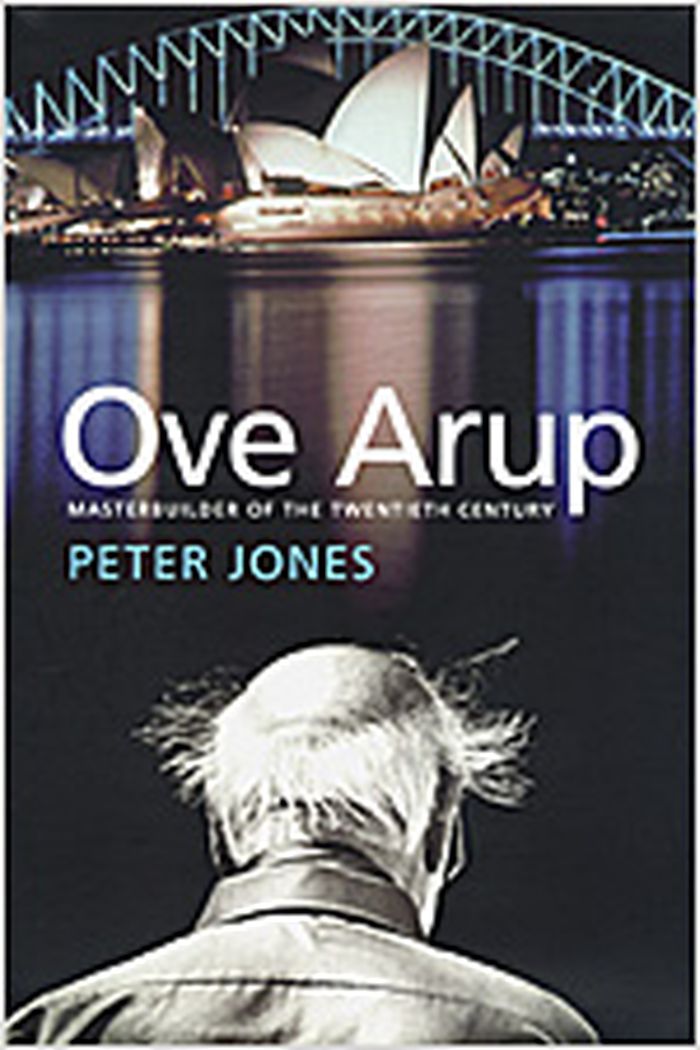
In 1946 Ove Arup, a leading engineer of the twentieth century, founded a firm of consulting engineers that brought to fruition such iconic structures as the Sydney Opera House, the Olympic Village in Beijing, London’s Millennium Bridge, the Beaubourg Centre in Paris, the Channel Tunnel Rail Link, and Kansai Airport in Japan among many others. Devoted to a “commonsense” reform of engineering and architectural practice, Arup (1895-1988) pioneered the way for modern architects and engineers to collaborate successfully and responsibly on large projects. Peter Jones, the first researcher to have full access to the vast private Arup archives, tells the story of Ove Arup’s extraordinary life, his social, aesthetic, and environmental concerns, and his practical contributions during a period of political and technological upheaval. Jones also offers a revelatory new account of the Sydney Opera House and the character of those involved in its complex construction.
Ove Arup : masterbuilder of the twentieth century
Actions:
Prix:
$59.00
(disponible en magasin)
Résumé:
In 1946 Ove Arup, a leading engineer of the twentieth century, founded a firm of consulting engineers that brought to fruition such iconic structures as the Sydney Opera House, the Olympic Village in Beijing, London’s Millennium Bridge, the Beaubourg Centre in Paris, the Channel Tunnel Rail Link, and Kansai Airport in Japan among many others. Devoted to a “commonsense” reform of engineering and architectural practice, Arup (1895-1988) pioneered the way for modern architects and engineers to collaborate successfully and responsibly on large projects. Peter Jones, the first researcher to have full access to the vast private Arup archives, tells the story of Ove Arup’s extraordinary life, his social, aesthetic, and environmental concerns, and his practical contributions during a period of political and technological upheaval. Jones also offers a revelatory new account of the Sydney Opera House and the character of those involved in its complex construction.
Classification:
livres
livres
Publication:
octobre 2006, New Haven / London
octobre 2006, New Haven / London
Sujet:
Architecture, monographies
Architecture, monographies
Classification:
livres
livres
Titre:
1100 architect
1100 architect
Actions:
Prix:
$65.00
(disponible en magasin)
Résumé:
For more than twenty years, David Piscuskas and Juergen Riehm, principals of 1100 Architect, have honed a distinctive architecture informed by proportion, materiality, light, and detail. The firm's designs do not adhere to any specific stylistic codes but do share an understated architectural signature: an elegance of proportion, an innovative yet direct use of materials,(...)
$65.00
(disponible en magasin)
Résumé:
For more than twenty years, David Piscuskas and Juergen Riehm, principals of 1100 Architect, have honed a distinctive architecture informed by proportion, materiality, light, and detail. The firm's designs do not adhere to any specific stylistic codes but do share an understated architectural signature: an elegance of proportion, an innovative yet direct use of materials,(...)
Sujet:
Architecture, monographies
Architecture, monographies
Publication:
octobre 2006, New York
octobre 2006, New York
Titre:
1100 architect
Actions:
Prix:
$65.00
(disponible en magasin)
Résumé:
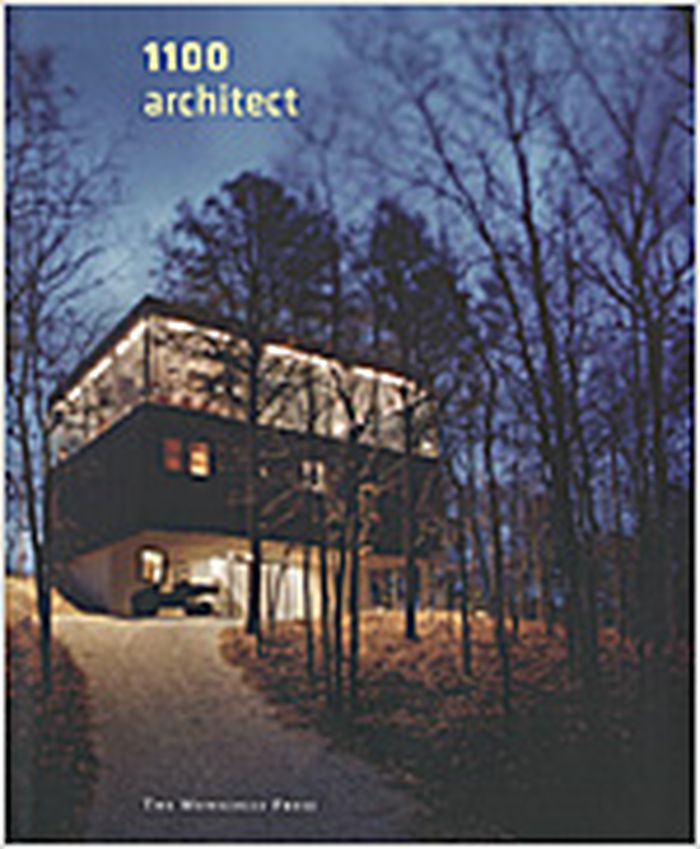
For more than twenty years, David Piscuskas and Juergen Riehm, principals of 1100 Architect, have honed a distinctive architecture informed by proportion, materiality, light, and detail. The firm's designs do not adhere to any specific stylistic codes but do share an understated architectural signature: an elegance of proportion, an innovative yet direct use of materials, a meticulous execution. A sequel to "1100 Architect" (1997), this new monograph includes more than twenty recent buildings and projects, notably Little Red School House and Elisabeth Irwin High School and the Irish Hunger Memorial, both in New York City, and the Naha City Gallery and Apartment House, in Japan. The firm’s work encompasses cultural, institutional, residential, and commercial work. In addition to a perceptive essay by a long-time observer of the firm’s work, the partners discuss five design elements essential to their practice: detail, materiality, effortlessness, permeability, and recognition.
1100 architect
Actions:
Prix:
$65.00
(disponible en magasin)
Résumé:
For more than twenty years, David Piscuskas and Juergen Riehm, principals of 1100 Architect, have honed a distinctive architecture informed by proportion, materiality, light, and detail. The firm's designs do not adhere to any specific stylistic codes but do share an understated architectural signature: an elegance of proportion, an innovative yet direct use of materials, a meticulous execution. A sequel to "1100 Architect" (1997), this new monograph includes more than twenty recent buildings and projects, notably Little Red School House and Elisabeth Irwin High School and the Irish Hunger Memorial, both in New York City, and the Naha City Gallery and Apartment House, in Japan. The firm’s work encompasses cultural, institutional, residential, and commercial work. In addition to a perceptive essay by a long-time observer of the firm’s work, the partners discuss five design elements essential to their practice: detail, materiality, effortlessness, permeability, and recognition.
Classification:
livres
livres
Publication:
octobre 2006, New York
octobre 2006, New York
Sujet:
Architecture, monographies
Architecture, monographies
Classification:
livres
livres
Titre:
Renzo Piano museums
Renzo Piano museums
Actions:
Prix:
$69.00
(disponible sur commande)
Résumé:
Creating space for the display of works of art has intrigued Renzo Piano throughout his thirty-five years of architectural practice. Today he is acknowledged the pre-eminent designer in this field, entrusted with the collections of the most distinguished art institutions in the world. Renzo Piano Museums presents a portfolio of eighteen museum projects, beginning with the(...)
$69.00
(disponible sur commande)
Résumé:
Creating space for the display of works of art has intrigued Renzo Piano throughout his thirty-five years of architectural practice. Today he is acknowledged the pre-eminent designer in this field, entrusted with the collections of the most distinguished art institutions in the world. Renzo Piano Museums presents a portfolio of eighteen museum projects, beginning with the(...)
Sujet:
Architecture, monographies
Architecture, monographies
Publication:
octobre 2007, New York
octobre 2007, New York
Titre:
Renzo Piano museums
Actions:
Prix:
$69.00
(disponible sur commande)
Résumé:
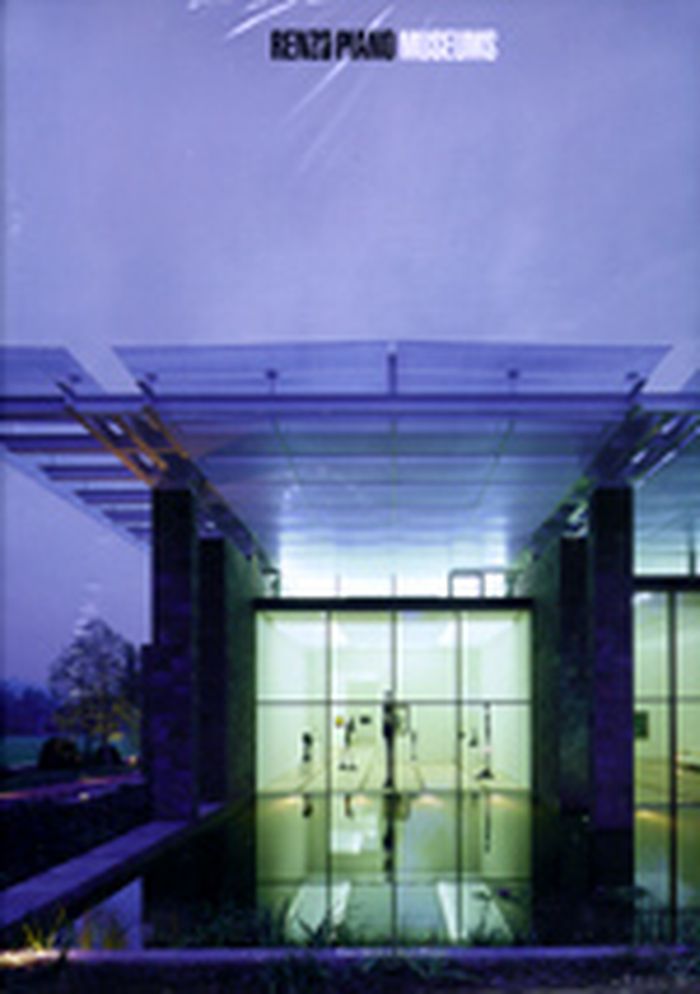
Creating space for the display of works of art has intrigued Renzo Piano throughout his thirty-five years of architectural practice. Today he is acknowledged the pre-eminent designer in this field, entrusted with the collections of the most distinguished art institutions in the world. Renzo Piano Museums presents a portfolio of eighteen museum projects, beginning with the revolutionary Pompidou Center in Paris and continuing to the most current designs for the Los Angeles County Museum of Art, the Art Institute of Chicago, and the Museum of Contemporary Art in Sarajevo. Featured are the Menil Collection in Houston, the Fondation Beyeler on the outskirts of Basel, Switzerland, the Nasher Sculpture Center in Dallas, the High Museum of Art in Atlanta, and the Morgan Library and Museum in New York. Lush color photographs and handsome presentation drawings and plans convey the form and detail of these extraordinary buildings.
Renzo Piano museums
Actions:
Prix:
$69.00
(disponible sur commande)
Résumé:
Creating space for the display of works of art has intrigued Renzo Piano throughout his thirty-five years of architectural practice. Today he is acknowledged the pre-eminent designer in this field, entrusted with the collections of the most distinguished art institutions in the world. Renzo Piano Museums presents a portfolio of eighteen museum projects, beginning with the revolutionary Pompidou Center in Paris and continuing to the most current designs for the Los Angeles County Museum of Art, the Art Institute of Chicago, and the Museum of Contemporary Art in Sarajevo. Featured are the Menil Collection in Houston, the Fondation Beyeler on the outskirts of Basel, Switzerland, the Nasher Sculpture Center in Dallas, the High Museum of Art in Atlanta, and the Morgan Library and Museum in New York. Lush color photographs and handsome presentation drawings and plans convey the form and detail of these extraordinary buildings.
Classification:
livres
livres
Publication:
octobre 2007, New York
octobre 2007, New York
Sujet:
Architecture, monographies
Architecture, monographies
Classification:
périodiques
périodiques
Titre:
Open 12 : Freedom of culture
Open 12 : Freedom of culture
Actions:
Prix:
$42.00
(disponible sur commande)
Résumé:
The contemporary public domain, the "free" space where culture is produced and exchanged, is under pressure. The exchange and distribution of cultural products ("content" in the form of music, image or text) is easier in digital society, but increasingly hemmed in by corresponding moves towards greater regulation and control, new copyright laws and intellectual property(...)
$42.00
(disponible sur commande)
Résumé:
The contemporary public domain, the "free" space where culture is produced and exchanged, is under pressure. The exchange and distribution of cultural products ("content" in the form of music, image or text) is easier in digital society, but increasingly hemmed in by corresponding moves towards greater regulation and control, new copyright laws and intellectual property(...)
Titre:
Open 12 : Freedom of culture
Actions:
Prix:
$42.00
(disponible sur commande)
Résumé:
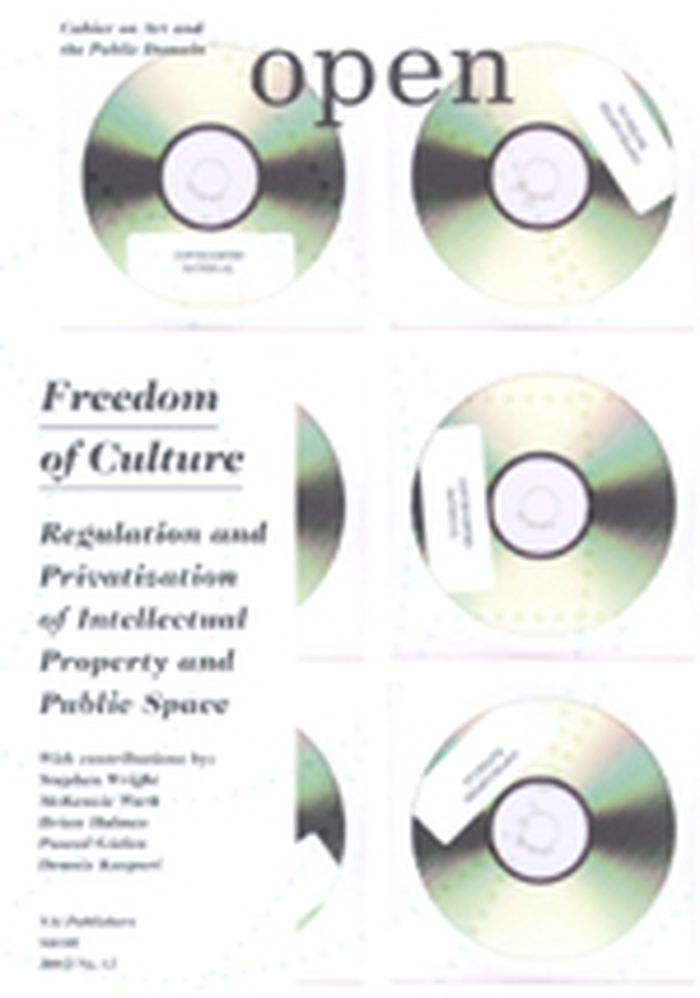
The contemporary public domain, the "free" space where culture is produced and exchanged, is under pressure. The exchange and distribution of cultural products ("content" in the form of music, image or text) is easier in digital society, but increasingly hemmed in by corresponding moves towards greater regulation and control, new copyright laws and intellectual property policy. Instead of enjoying a "free culture," we are watching the emergence of what Lawrence Lessig calls "a permission culture." Simultaneously, as an aspect of broader privatization and regulation processes, private entities are appropriating more and more of public culture, and deciding what is made available or publicly accessible. This issue of the Dutch architectural journal, Open, investigates the root causes of these developments, how they interrelate and what the implications are for the "free" production and practice of culture, as well as for the internal dynamics and balance of power in the public domain.
Open 12 : Freedom of culture
Actions:
Prix:
$42.00
(disponible sur commande)
Résumé:
The contemporary public domain, the "free" space where culture is produced and exchanged, is under pressure. The exchange and distribution of cultural products ("content" in the form of music, image or text) is easier in digital society, but increasingly hemmed in by corresponding moves towards greater regulation and control, new copyright laws and intellectual property policy. Instead of enjoying a "free culture," we are watching the emergence of what Lawrence Lessig calls "a permission culture." Simultaneously, as an aspect of broader privatization and regulation processes, private entities are appropriating more and more of public culture, and deciding what is made available or publicly accessible. This issue of the Dutch architectural journal, Open, investigates the root causes of these developments, how they interrelate and what the implications are for the "free" production and practice of culture, as well as for the internal dynamics and balance of power in the public domain.
Classification:
périodiques
périodiques
Publication:
août 2007, Rotterdam
août 2007, Rotterdam
Sujet:
Revues
Revues


