


873 Résultats
Classification:
livres
livres
Actions:
Prix:
$29.95
(disponible en magasin)
Résumé:
''Spatializing justice'' calls for architects and urban designers to do more than design buildings and physical systems. Architects should take a position against inequality and practice accordingly. With these thirty short, manifesto-like texts—building blocks for a new kind of architecture—Spatializing Justice offers a practical handbook for confronting social and(...)
$29.95
(disponible en magasin)
Résumé:
''Spatializing justice'' calls for architects and urban designers to do more than design buildings and physical systems. Architects should take a position against inequality and practice accordingly. With these thirty short, manifesto-like texts—building blocks for a new kind of architecture—Spatializing Justice offers a practical handbook for confronting social and(...)
Publication:
octobre 2022
octobre 2022
Titre:
Spatializing justice: Building blocks
Actions:
Prix:
$29.95
(disponible en magasin)
Résumé:
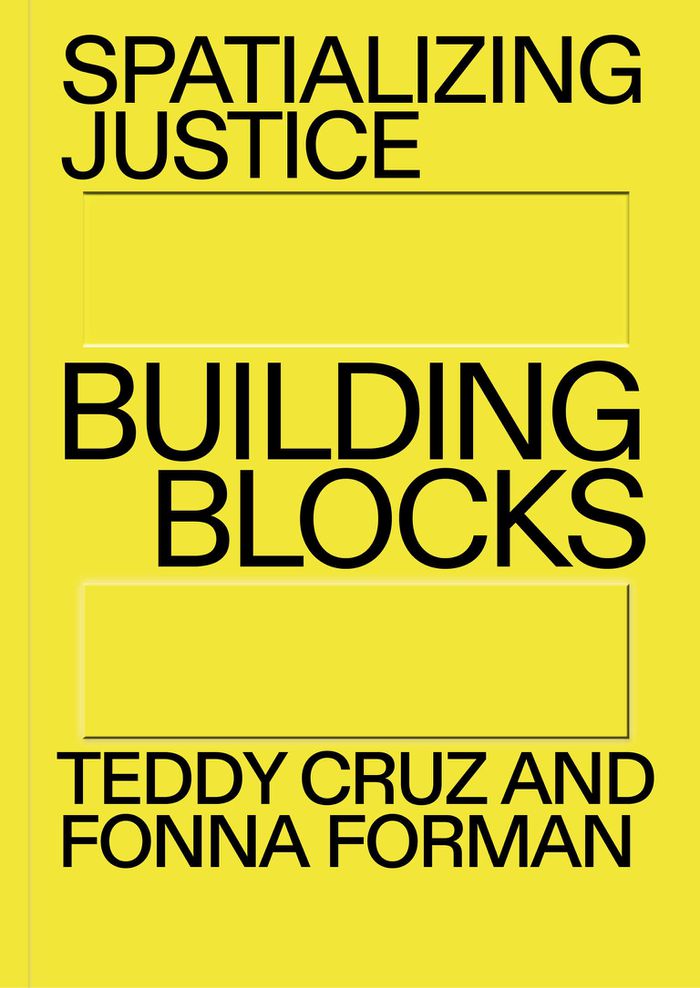
''Spatializing justice'' calls for architects and urban designers to do more than design buildings and physical systems. Architects should take a position against inequality and practice accordingly. With these thirty short, manifesto-like texts—building blocks for a new kind of architecture—Spatializing Justice offers a practical handbook for confronting social and economic inequality and uneven urban growth in architectural and planning practice, urging practitioners to adopt approaches that range from redefining infrastructure to retrofitting McMansions. These building blocks call for expanded modes of practice, through which architects can imagine new spatial procedures, political and economic strategies, and modalities of sociability. Challenging existing exclusionary policies can advance a more experimental architecture not bound by formal parameters. Architects must think of themselves as designers not only of things but of civic processes, complicate the ideas of ownership and property, and imagine new sites of research, pedagogy, and intervention. As one of the texts advises, ''The questions must be different questions if we want different answers.''
Spatializing justice: Building blocks
Actions:
Prix:
$29.95
(disponible en magasin)
Résumé:
''Spatializing justice'' calls for architects and urban designers to do more than design buildings and physical systems. Architects should take a position against inequality and practice accordingly. With these thirty short, manifesto-like texts—building blocks for a new kind of architecture—Spatializing Justice offers a practical handbook for confronting social and economic inequality and uneven urban growth in architectural and planning practice, urging practitioners to adopt approaches that range from redefining infrastructure to retrofitting McMansions. These building blocks call for expanded modes of practice, through which architects can imagine new spatial procedures, political and economic strategies, and modalities of sociability. Challenging existing exclusionary policies can advance a more experimental architecture not bound by formal parameters. Architects must think of themselves as designers not only of things but of civic processes, complicate the ideas of ownership and property, and imagine new sites of research, pedagogy, and intervention. As one of the texts advises, ''The questions must be different questions if we want different answers.''
Classification:
livres
livres
Publication:
octobre 2022
octobre 2022
Classification:
livres
livres
Prix:
$49.95
(disponible sur commande)
Résumé:
Fragments of Wilderness City reviews the work of renowned architect Brian Avery. This publication presents perspectives from academics and architecture historians, exploring projects in India and the Middle East; major cultural commissions such as the National Film Theatre, the Museum of the Moving Image, London Transport Museum, and the Royal Academy of the Dramatic(...)
$49.95
(disponible sur commande)
Résumé:
Fragments of Wilderness City reviews the work of renowned architect Brian Avery. This publication presents perspectives from academics and architecture historians, exploring projects in India and the Middle East; major cultural commissions such as the National Film Theatre, the Museum of the Moving Image, London Transport Museum, and the Royal Academy of the Dramatic(...)
Titre:
Fragments of wilderness city: the work of Bryan Avery
Actions:
Prix:
$49.95
(disponible sur commande)
Résumé:
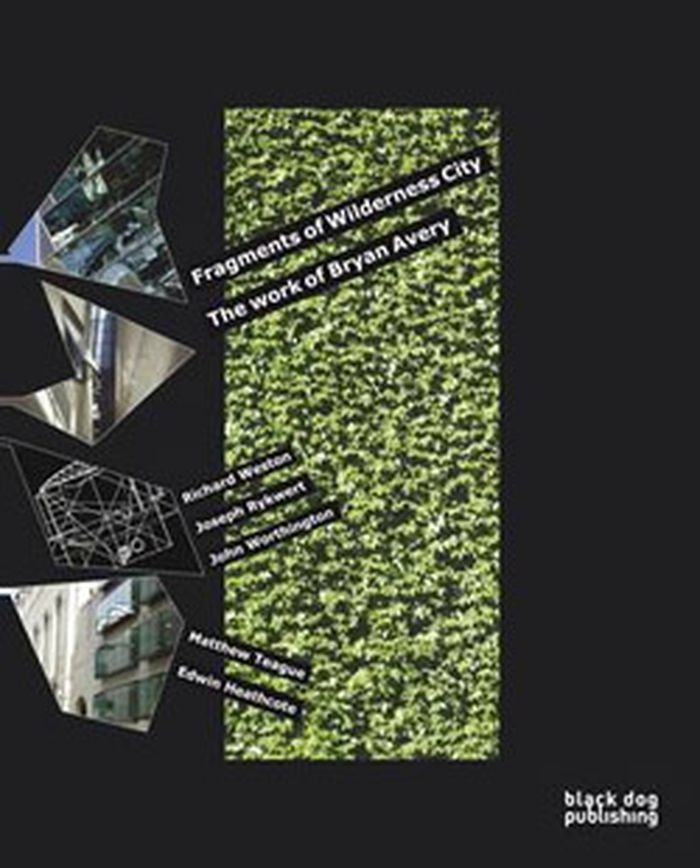
Fragments of Wilderness City reviews the work of renowned architect Brian Avery. This publication presents perspectives from academics and architecture historians, exploring projects in India and the Middle East; major cultural commissions such as the National Film Theatre, the Museum of the Moving Image, London Transport Museum, and the Royal Academy of the Dramatic Arts' headquarters in Bloomsbury, London; masterplanning work for Oxford Street in London, The Horniman Museum, and the Avenue of the Emirates in Abu Dhabi. Alongside profiles of their innovative work in product design and within the workplace is an essay by director Bryan Avery, providing insights into his notion of the sustainable 'wilderness city'. This manifesto sets out a vision of an accountable architectural and planning approach to the contemporary city, situated in a natural landscape and taking on board references to both the walled cities of the medieval period and the self-contained urban environments of the twentieth century 'new towns'.
Fragments of wilderness city: the work of Bryan Avery
Actions:
Prix:
$49.95
(disponible sur commande)
Résumé:
Fragments of Wilderness City reviews the work of renowned architect Brian Avery. This publication presents perspectives from academics and architecture historians, exploring projects in India and the Middle East; major cultural commissions such as the National Film Theatre, the Museum of the Moving Image, London Transport Museum, and the Royal Academy of the Dramatic Arts' headquarters in Bloomsbury, London; masterplanning work for Oxford Street in London, The Horniman Museum, and the Avenue of the Emirates in Abu Dhabi. Alongside profiles of their innovative work in product design and within the workplace is an essay by director Bryan Avery, providing insights into his notion of the sustainable 'wilderness city'. This manifesto sets out a vision of an accountable architectural and planning approach to the contemporary city, situated in a natural landscape and taking on board references to both the walled cities of the medieval period and the self-contained urban environments of the twentieth century 'new towns'.
Classification:
livres
livres
Publication:
mai 2012
mai 2012
Sujet:
Architecture, monographies
Architecture, monographies
Classification:
livres
livres
Actions:
Prix:
$50.00
(disponible en magasin)
Résumé:
Pigeon languages our cities. When a speckled grey pigeon is trapped by artists and spray-painted in a miniature car wash, and released as an ultramarine green pigeon streaking through a public space, what happens to the "flying rat"? How do we really know we have seen what we think we have seen? How is our perception always trapped and released? "Some pigeons are more(...)
$50.00
(disponible en magasin)
Résumé:
Pigeon languages our cities. When a speckled grey pigeon is trapped by artists and spray-painted in a miniature car wash, and released as an ultramarine green pigeon streaking through a public space, what happens to the "flying rat"? How do we really know we have seen what we think we have seen? How is our perception always trapped and released? "Some pigeons are more(...)
Publication:
juillet 2015
juillet 2015
Titre:
Some pigeons are more equal than others
Actions:
Prix:
$50.00
(disponible en magasin)
Résumé:
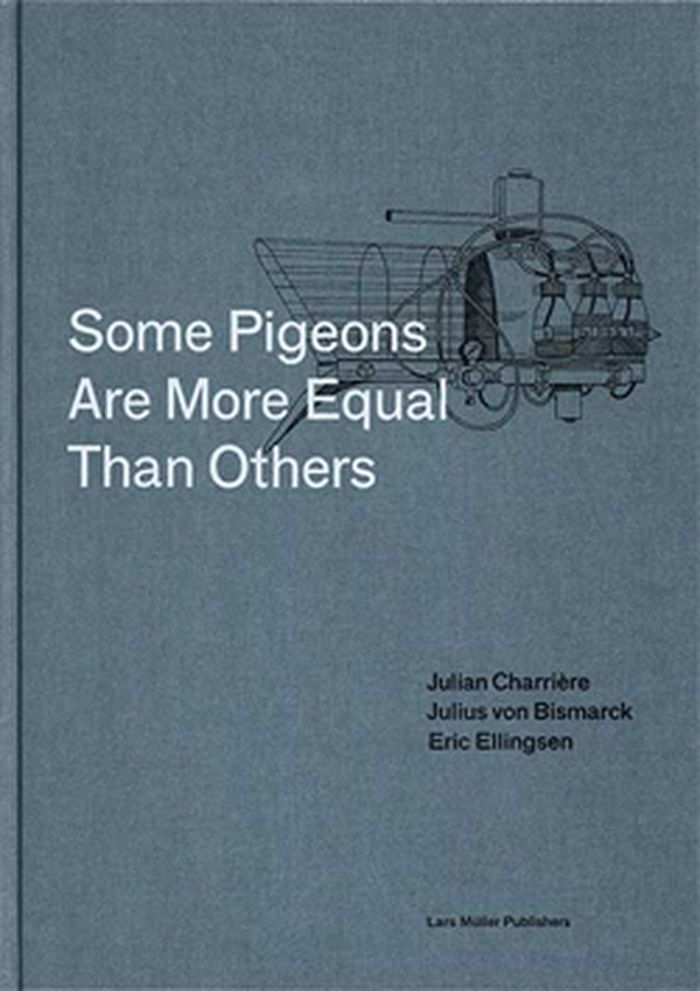
Pigeon languages our cities. When a speckled grey pigeon is trapped by artists and spray-painted in a miniature car wash, and released as an ultramarine green pigeon streaking through a public space, what happens to the "flying rat"? How do we really know we have seen what we think we have seen? How is our perception always trapped and released? "Some pigeons are more equal than others" began as an artwork by Julius von Bismarck and Julian Charrière and is now a book which treats the on-going art work as a place of contact with poets, philosophers, historians, architects, and other species. This book examines our relationship to the world and history in a non-human-centered way; an urban manifesto evolving ideas on the role of public domains and the encounter with contemporary art today. With contributions by Ben Marcus, CA Conrad, Craig Dworkin, Lyn Hejinian, Marjorie Welish, Juliana Spahr, Ian Bogost, David Graham Burnett, Claudia Roden, Olafur Eliasson, and others.
Some pigeons are more equal than others
Actions:
Prix:
$50.00
(disponible en magasin)
Résumé:
Pigeon languages our cities. When a speckled grey pigeon is trapped by artists and spray-painted in a miniature car wash, and released as an ultramarine green pigeon streaking through a public space, what happens to the "flying rat"? How do we really know we have seen what we think we have seen? How is our perception always trapped and released? "Some pigeons are more equal than others" began as an artwork by Julius von Bismarck and Julian Charrière and is now a book which treats the on-going art work as a place of contact with poets, philosophers, historians, architects, and other species. This book examines our relationship to the world and history in a non-human-centered way; an urban manifesto evolving ideas on the role of public domains and the encounter with contemporary art today. With contributions by Ben Marcus, CA Conrad, Craig Dworkin, Lyn Hejinian, Marjorie Welish, Juliana Spahr, Ian Bogost, David Graham Burnett, Claudia Roden, Olafur Eliasson, and others.
Classification:
livres
livres
Publication:
juillet 2015
juillet 2015
Classification:
livres
livres
Actions:
Prix:
$27.95
(disponible en magasin)
Résumé:
This book is a sub-urbanist manifesto. Its author, Sébastien Marot, challenges the dominant role of the programme in regulating the design project, and argues that instead attention should be redirected towards the site – the site read in depth, with an active regard for memory. Exploring this analysis, he considers in turn Frances Yates’ book ''The Art of Memory'',(...)
$27.95
(disponible en magasin)
Résumé:
This book is a sub-urbanist manifesto. Its author, Sébastien Marot, challenges the dominant role of the programme in regulating the design project, and argues that instead attention should be redirected towards the site – the site read in depth, with an active regard for memory. Exploring this analysis, he considers in turn Frances Yates’ book ''The Art of Memory'',(...)
Titre:
Sub-urbanism and the art of memory
Actions:
Prix:
$27.95
(disponible en magasin)
Résumé:
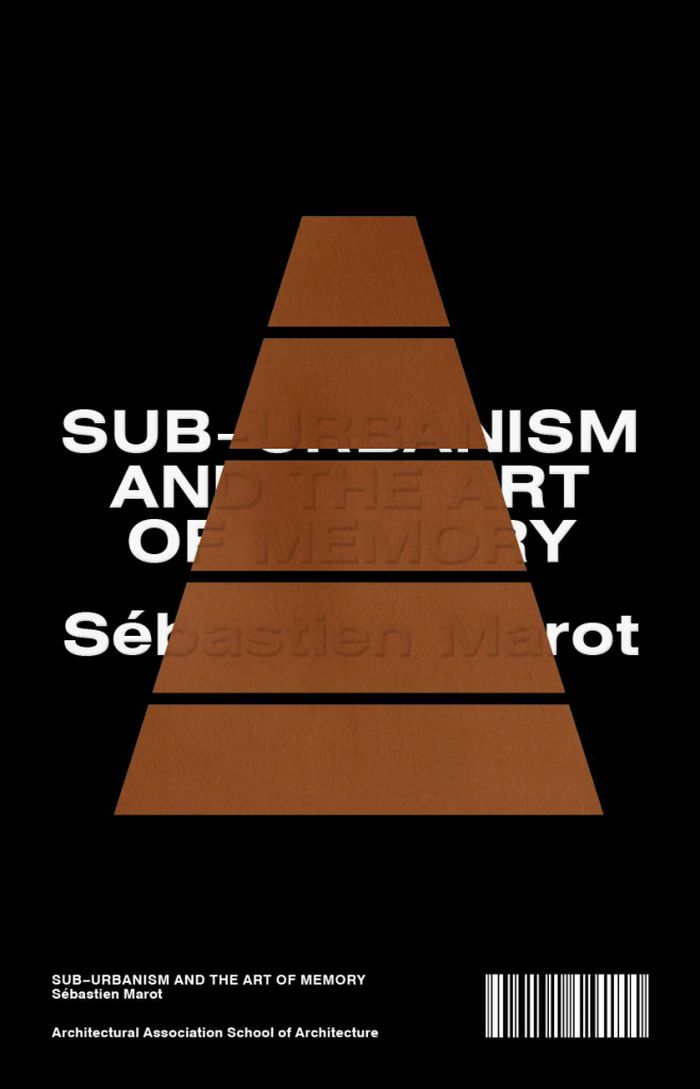
This book is a sub-urbanist manifesto. Its author, Sébastien Marot, challenges the dominant role of the programme in regulating the design project, and argues that instead attention should be redirected towards the site – the site read in depth, with an active regard for memory. Exploring this analysis, he considers in turn Frances Yates’ book ''The Art of Memory'', Sigmund Freud’s analogy between the past of a city and the workings of memory, Robert Smithson’s account of a tour of his suburban birthplace and Georges Descombes’ design for a small park in the Geneva suburb where he spent his childhood. Marot’s conclusion brings these different strands together and highlights, in memory, a precept that is essential to the renewal of current architecture. This AA Documents publication is a re-edition of Sébastien Marot’s Sub-Urbanism and the Art of Memory, originally edited by Pamela Johnston and published by AA Publications in 2003. It is based on a 1999 text by Marot, translated from the French by Brian Holmes.
Sub-urbanism and the art of memory
Actions:
Prix:
$27.95
(disponible en magasin)
Résumé:
This book is a sub-urbanist manifesto. Its author, Sébastien Marot, challenges the dominant role of the programme in regulating the design project, and argues that instead attention should be redirected towards the site – the site read in depth, with an active regard for memory. Exploring this analysis, he considers in turn Frances Yates’ book ''The Art of Memory'', Sigmund Freud’s analogy between the past of a city and the workings of memory, Robert Smithson’s account of a tour of his suburban birthplace and Georges Descombes’ design for a small park in the Geneva suburb where he spent his childhood. Marot’s conclusion brings these different strands together and highlights, in memory, a precept that is essential to the renewal of current architecture. This AA Documents publication is a re-edition of Sébastien Marot’s Sub-Urbanism and the Art of Memory, originally edited by Pamela Johnston and published by AA Publications in 2003. It is based on a 1999 text by Marot, translated from the French by Brian Holmes.
Classification:
livres
livres
Publication:
mai 2023
mai 2023
Sujet:
Théorie de l’architecture
Théorie de l’architecture
Classification:
livres
livres
Titre:
Living in Lisbon
Living in Lisbon
Actions:
Prix:
$54.95
(disponible sur commande)
Résumé:
Lisbon is being ravaged by an unprecedented housing crisis. The exponential increase of prices, the combined outcome of the financialisation of housing and the lack of continued investment of public policies, means that every Portuguese person is, or knows someone who is, affected by the crisis. There is a restless public debate, but little has been told about the(...)
$54.95
(disponible sur commande)
Résumé:
Lisbon is being ravaged by an unprecedented housing crisis. The exponential increase of prices, the combined outcome of the financialisation of housing and the lack of continued investment of public policies, means that every Portuguese person is, or knows someone who is, affected by the crisis. There is a restless public debate, but little has been told about the(...)
Titre:
Living in Lisbon
Actions:
Prix:
$54.95
(disponible sur commande)
Résumé:
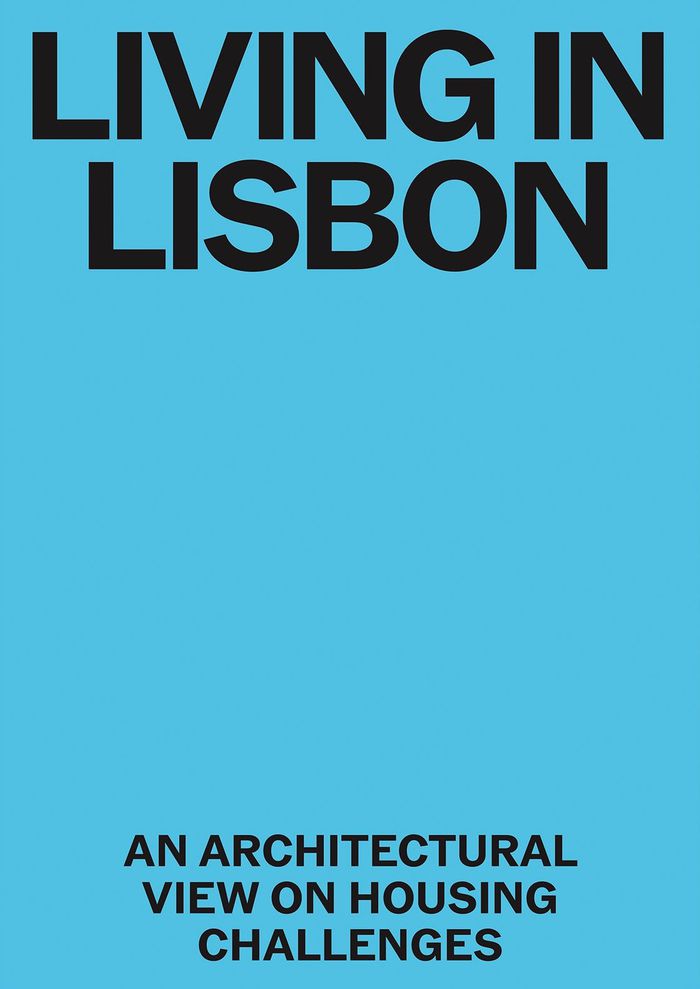
Lisbon is being ravaged by an unprecedented housing crisis. The exponential increase of prices, the combined outcome of the financialisation of housing and the lack of continued investment of public policies, means that every Portuguese person is, or knows someone who is, affected by the crisis. There is a restless public debate, but little has been told about the buildings that will give shape to the political strategies that are being conceived and implemented. Which city do we wish to build to face the problem? What can be the role of architecture in this context? "Living in Lisbon" concisely presents the conjecture and possibilities of action to think about the building of the city. The book includes an overview of the most charismatic architectures resulting from public housing policies that have been built in Lisbon over the course of 50 years of democracy, describes the main projects that are currently on the table, presents analytical visions of the present situation and freely envisions plans for the future in the form of dialogue, essay or manifesto.
Living in Lisbon
Actions:
Prix:
$54.95
(disponible sur commande)
Résumé:
Lisbon is being ravaged by an unprecedented housing crisis. The exponential increase of prices, the combined outcome of the financialisation of housing and the lack of continued investment of public policies, means that every Portuguese person is, or knows someone who is, affected by the crisis. There is a restless public debate, but little has been told about the buildings that will give shape to the political strategies that are being conceived and implemented. Which city do we wish to build to face the problem? What can be the role of architecture in this context? "Living in Lisbon" concisely presents the conjecture and possibilities of action to think about the building of the city. The book includes an overview of the most charismatic architectures resulting from public housing policies that have been built in Lisbon over the course of 50 years of democracy, describes the main projects that are currently on the table, presents analytical visions of the present situation and freely envisions plans for the future in the form of dialogue, essay or manifesto.
Classification:
livres
livres
Publication:
janvier 2024
janvier 2024
Classification:
livres
livres
Titre:
Rhythm in architecture
Rhythm in architecture
Actions:
Prix:
$29.95
(disponible sur commande)
Résumé:
"Rhythm in Architecture" is the first ever translation into English of a key early Modernist text, written by the celebrated Soviet Constructivist architect Moisei Ginzburg and first published in Russian as Ritm v Arkhitekture in 1923. Ginzburg is most famous for his Narkomfin Building in Moscow, completed in 1932, which he described as a “social-condenser”: a radical(...)
$29.95
(disponible sur commande)
Résumé:
"Rhythm in Architecture" is the first ever translation into English of a key early Modernist text, written by the celebrated Soviet Constructivist architect Moisei Ginzburg and first published in Russian as Ritm v Arkhitekture in 1923. Ginzburg is most famous for his Narkomfin Building in Moscow, completed in 1932, which he described as a “social-condenser”: a radical(...)
Titre:
Rhythm in architecture
Actions:
Prix:
$29.95
(disponible sur commande)
Résumé:
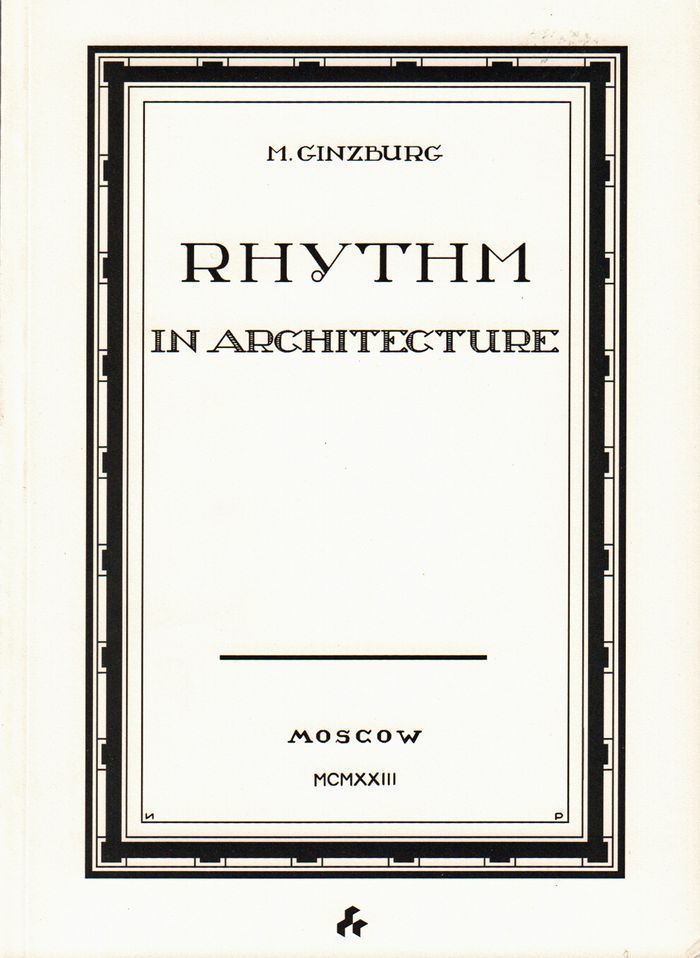
"Rhythm in Architecture" is the first ever translation into English of a key early Modernist text, written by the celebrated Soviet Constructivist architect Moisei Ginzburg and first published in Russian as Ritm v Arkhitekture in 1923. Ginzburg is most famous for his Narkomfin Building in Moscow, completed in 1932, which he described as a “social-condenser”: a radical experiment in communal living. While Ginzburg’s second book Style and Epoch, published in 1924, is often seen as the manifesto for Russian Constructivism, Rhythm in Architecture?which preceded it?can be seen as his attempt to create a synthesis in thinking about architecture as a whole, seeking to show how “the true essence of all works of architecture” are ”inspired by the laws of rhythm”. "Rhythm in Architecture" is republished in cooperation with the Ginzburg Design Practice run by Moisei Ginzburg’s grandson, Aleksey and his partner Natalia Shilova. It is the first of a planned series of reprints of Ginzburg’s four books, Home, 1934 and Industrialising Housing Construction, 1937 as well as Style and Epoch, 1924?the only one previously available in English.
Rhythm in architecture
Actions:
Prix:
$29.95
(disponible sur commande)
Résumé:
"Rhythm in Architecture" is the first ever translation into English of a key early Modernist text, written by the celebrated Soviet Constructivist architect Moisei Ginzburg and first published in Russian as Ritm v Arkhitekture in 1923. Ginzburg is most famous for his Narkomfin Building in Moscow, completed in 1932, which he described as a “social-condenser”: a radical experiment in communal living. While Ginzburg’s second book Style and Epoch, published in 1924, is often seen as the manifesto for Russian Constructivism, Rhythm in Architecture?which preceded it?can be seen as his attempt to create a synthesis in thinking about architecture as a whole, seeking to show how “the true essence of all works of architecture” are ”inspired by the laws of rhythm”. "Rhythm in Architecture" is republished in cooperation with the Ginzburg Design Practice run by Moisei Ginzburg’s grandson, Aleksey and his partner Natalia Shilova. It is the first of a planned series of reprints of Ginzburg’s four books, Home, 1934 and Industrialising Housing Construction, 1937 as well as Style and Epoch, 1924?the only one previously available in English.
Classification:
livres
livres
Publication:
janvier 2017
janvier 2017
Sujet:
Théorie de l’architecture
Théorie de l’architecture
Classification:
livres
livres
Actions:
Prix:
$61.00
(disponible sur commande)
Résumé:
In the early decades of the twentieth century, European artists, poets, and designers called for the destruction of outdated assumptions about vision and language. Numerous manifestos resulted, demanding new artistic forms. None of these manifestos was more aggressive and poetic, or wider in scope than Filippo Tomasso Marinetti’s Futurist Manifesto of 1909. Painting,(...)
$61.00
(disponible sur commande)
Résumé:
In the early decades of the twentieth century, European artists, poets, and designers called for the destruction of outdated assumptions about vision and language. Numerous manifestos resulted, demanding new artistic forms. None of these manifestos was more aggressive and poetic, or wider in scope than Filippo Tomasso Marinetti’s Futurist Manifesto of 1909. Painting,(...)
Titre:
Futurist typography and the liberated text
Actions:
Prix:
$61.00
(disponible sur commande)
Résumé:
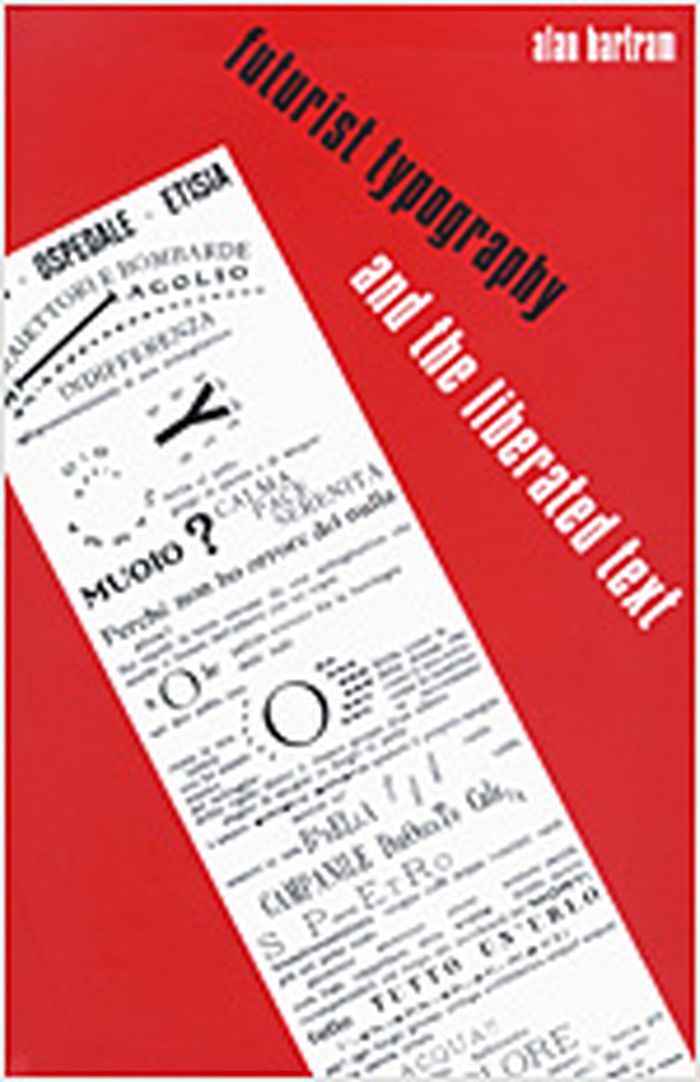
In the early decades of the twentieth century, European artists, poets, and designers called for the destruction of outdated assumptions about vision and language. Numerous manifestos resulted, demanding new artistic forms. None of these manifestos was more aggressive and poetic, or wider in scope than Filippo Tomasso Marinetti’s Futurist Manifesto of 1909. Painting, sculpture, literature, architecture, theatre, cinema, and music were all caught up in its net. Typography—until then a distant relative in the arts—also played a major role in Marinetti’s program. Written by Alan Bartram, this book examines the rise and evolution of the Futurists’ approach to typography and graphic design, placing it within the context of contemporary artistic and literary movements. The volume features examples of some eighty Futurist books or other designs for print, many of them relatively unknown or previously unpublished, accompanied by new translations of over twenty of the featured texts. Bartram illuminates the complicated meanings of the Futurist designers’ graphic works in order to provide a new understanding of their extraordinary and influential visual language.
Futurist typography and the liberated text
Actions:
Prix:
$61.00
(disponible sur commande)
Résumé:
In the early decades of the twentieth century, European artists, poets, and designers called for the destruction of outdated assumptions about vision and language. Numerous manifestos resulted, demanding new artistic forms. None of these manifestos was more aggressive and poetic, or wider in scope than Filippo Tomasso Marinetti’s Futurist Manifesto of 1909. Painting, sculpture, literature, architecture, theatre, cinema, and music were all caught up in its net. Typography—until then a distant relative in the arts—also played a major role in Marinetti’s program. Written by Alan Bartram, this book examines the rise and evolution of the Futurists’ approach to typography and graphic design, placing it within the context of contemporary artistic and literary movements. The volume features examples of some eighty Futurist books or other designs for print, many of them relatively unknown or previously unpublished, accompanied by new translations of over twenty of the featured texts. Bartram illuminates the complicated meanings of the Futurist designers’ graphic works in order to provide a new understanding of their extraordinary and influential visual language.
Classification:
livres
livres
Publication:
mars 2006, London
mars 2006, London
Classification:
livres
livres
Actions:
Prix:
$79.00
(disponible sur commande)
Résumé:
Research on multifamily housing and its impact on the daily lives of ordinary people, from a leading Canadian architectural firm. These four slipcased volumes build on 5468796 Architecture’s housing manifesto "Add via Edit: A Decade in Housing", the symposium "platform.MIDDLE: Architecture for Housing the 99%" hosted at Illinois Institute of Technology and examples by(...)
$79.00
(disponible sur commande)
Résumé:
Research on multifamily housing and its impact on the daily lives of ordinary people, from a leading Canadian architectural firm. These four slipcased volumes build on 5468796 Architecture’s housing manifesto "Add via Edit: A Decade in Housing", the symposium "platform.MIDDLE: Architecture for Housing the 99%" hosted at Illinois Institute of Technology and examples by(...)
Sujet:
Architecture, monographies
Architecture, monographies
Publication:
février 2024
février 2024
Titre:
5468796 Architecture: Platform. MIDDLE
Actions:
Prix:
$79.00
(disponible sur commande)
Résumé:
Research on multifamily housing and its impact on the daily lives of ordinary people, from a leading Canadian architectural firm. These four slipcased volumes build on 5468796 Architecture’s housing manifesto "Add via Edit: A Decade in Housing", the symposium "platform.MIDDLE: Architecture for Housing the 99%" hosted at Illinois Institute of Technology and examples by practice-related offices. The work and research of the Winnipeg-based firm 5468796 Architecture (described as "one of the most talented young design firms worldwide") has focused on "missing middle" and midrise housing in its many forms and ownership models, from refugee and social housing to market-rate condominiums. With the condominium boom taking hold across North America, the number of residential units passing across architects’ desks is unprecedented. As a result of the typology’s inherent repetition and potentially banal program—as well as the private sector’s pursuit of profit, often at the expense of quality and livability—the margin in which architecture can operate is very narrow. Architects must respond to the challenges of this typology with the rigor it deserves.
5468796 Architecture: Platform. MIDDLE
Actions:
Prix:
$79.00
(disponible sur commande)
Résumé:
Research on multifamily housing and its impact on the daily lives of ordinary people, from a leading Canadian architectural firm. These four slipcased volumes build on 5468796 Architecture’s housing manifesto "Add via Edit: A Decade in Housing", the symposium "platform.MIDDLE: Architecture for Housing the 99%" hosted at Illinois Institute of Technology and examples by practice-related offices. The work and research of the Winnipeg-based firm 5468796 Architecture (described as "one of the most talented young design firms worldwide") has focused on "missing middle" and midrise housing in its many forms and ownership models, from refugee and social housing to market-rate condominiums. With the condominium boom taking hold across North America, the number of residential units passing across architects’ desks is unprecedented. As a result of the typology’s inherent repetition and potentially banal program—as well as the private sector’s pursuit of profit, often at the expense of quality and livability—the margin in which architecture can operate is very narrow. Architects must respond to the challenges of this typology with the rigor it deserves.
Classification:
livres
livres
Publication:
février 2024
février 2024
Sujet:
Architecture, monographies
Architecture, monographies
Classification:
livres
livres
Actions:
Prix:
$29.00
(disponible sur commande)
Résumé:
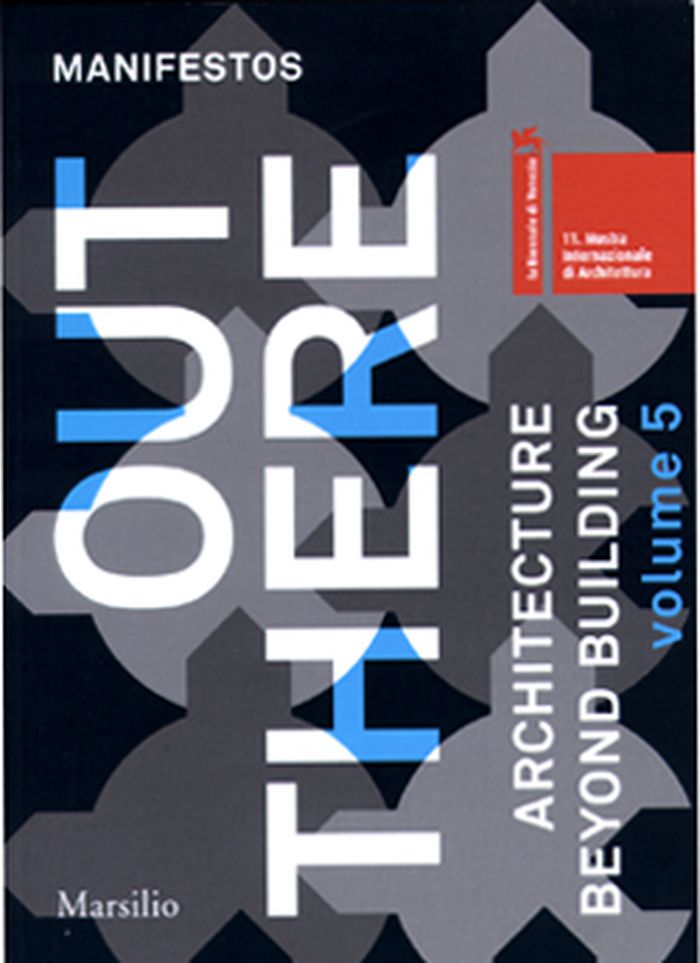
Exclusively available in single volumes at the CCA Bookstore. Atelier Bow-Wow / Aaron Betsky / Coop Himelb(l)au / Diller Scofidio + Renfro / Droog & Kesselskramer / Massimiliano Fuksas / Frank Gehry / Vincente Guallart / Greg Lynn / Winy Maas (MVRDV) / Philippe Rahm / Ben van Berkel, Caroline Bos (UNStudio) and more.
$29.00
(disponible sur commande)
Résumé:
Exclusively available in single volumes at the CCA Bookstore. Atelier Bow-Wow / Aaron Betsky / Coop Himelb(l)au / Diller Scofidio + Renfro / Droog & Kesselskramer / Massimiliano Fuksas / Frank Gehry / Vincente Guallart / Greg Lynn / Winy Maas (MVRDV) / Philippe Rahm / Ben van Berkel, Caroline Bos (UNStudio) and more.
Titre:
Out there: architecture beyond building, volume 5: manifestos. La Biennale di Venezia, 11. Mostra Internazionale die Architettura
Actions:
Prix:
$29.00
(disponible sur commande)
Résumé:
Exclusively available in single volumes at the CCA Bookstore. Atelier Bow-Wow / Aaron Betsky / Coop Himelb(l)au / Diller Scofidio + Renfro / Droog & Kesselskramer / Massimiliano Fuksas / Frank Gehry / Vincente Guallart / Greg Lynn / Winy Maas (MVRDV) / Philippe Rahm / Ben van Berkel, Caroline Bos (UNStudio) and more.
Out there: architecture beyond building, volume 5: manifestos. La Biennale di Venezia, 11. Mostra Internazionale die Architettura
Actions:
Prix:
$29.00
(disponible sur commande)
Résumé:
Exclusively available in single volumes at the CCA Bookstore. Atelier Bow-Wow / Aaron Betsky / Coop Himelb(l)au / Diller Scofidio + Renfro / Droog & Kesselskramer / Massimiliano Fuksas / Frank Gehry / Vincente Guallart / Greg Lynn / Winy Maas (MVRDV) / Philippe Rahm / Ben van Berkel, Caroline Bos (UNStudio) and more.
Classification:
livres
livres
Publication:
septembre 2008, Venice
septembre 2008, Venice
Classification:
livres
livres
Actions:
Prix:
$54.95
(disponible sur commande)
Résumé:
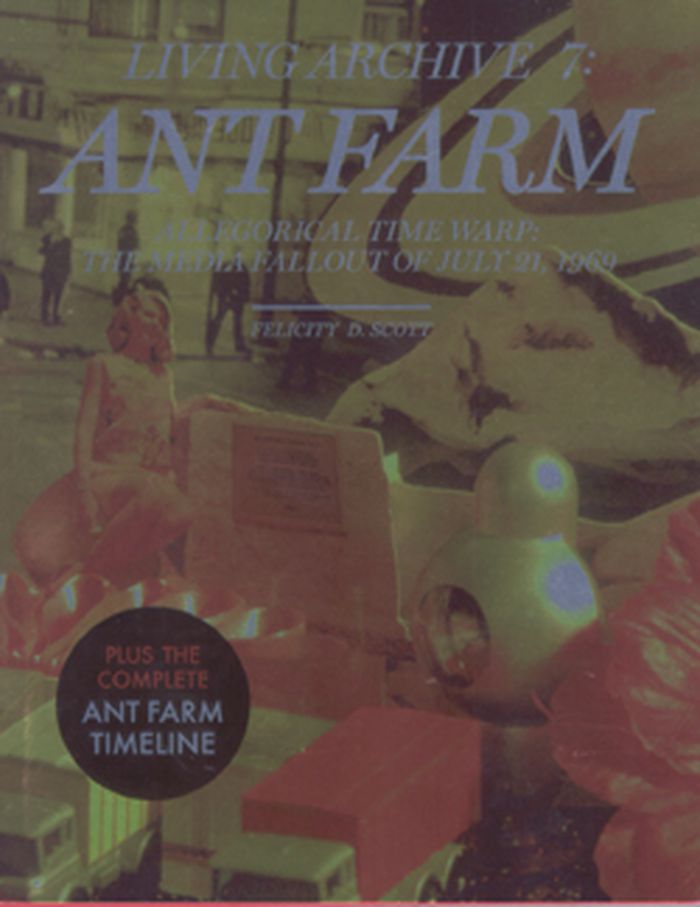
Ant Farm manifesto No. 853 bears the title 'Allegorical Time Warp': '... AMERICA, IN AN ALLEGORICAL TIME WARP / USING PRE ELECTRONIC, PRINT AGE TECHNIQUES / WELCOMES RETURNING SPACE HEROES / TICKER TAPE PARADE DOWN FIFTH AVENUE. / ALL I WANT TO DO IS EXPAND MY MIND ...' This book brings together two books bound within a single cover: 'Ant Farm Timeline' and 'Allegorical(...)
$54.95
(disponible sur commande)
Résumé:
Ant Farm manifesto No. 853 bears the title 'Allegorical Time Warp': '... AMERICA, IN AN ALLEGORICAL TIME WARP / USING PRE ELECTRONIC, PRINT AGE TECHNIQUES / WELCOMES RETURNING SPACE HEROES / TICKER TAPE PARADE DOWN FIFTH AVENUE. / ALL I WANT TO DO IS EXPAND MY MIND ...' This book brings together two books bound within a single cover: 'Ant Farm Timeline' and 'Allegorical(...)
Sujet:
Architecture, monographies
Architecture, monographies
Publication:
janvier 2008, New York/Barcelona
janvier 2008, New York/Barcelona
Titre:
Living archive 7: Ant Farm: allegorical time warp: the media fallout of July 21, 1969
Actions:
Prix:
$54.95
(disponible sur commande)
Résumé:
Ant Farm manifesto No. 853 bears the title 'Allegorical Time Warp': '... AMERICA, IN AN ALLEGORICAL TIME WARP / USING PRE ELECTRONIC, PRINT AGE TECHNIQUES / WELCOMES RETURNING SPACE HEROES / TICKER TAPE PARADE DOWN FIFTH AVENUE. / ALL I WANT TO DO IS EXPAND MY MIND ...' This book brings together two books bound within a single cover: 'Ant Farm Timeline' and 'Allegorical Time Warp: The Media Fallout of July 21, 1969'. In addition, the publication includes a small dossier of archival material related to Ant Farm's Truckstop Network project (1970-72). Introduced by Chip Lord, the timeline tells the story of Ant Farm's multifaceted experimental work over 114 pages, in as many full page illustrations of original material. The 'Allegorical Time Warp' by Felicity D. Scott, focused on the period from 1969 to 1972, tracks the transformations of an architectural project articulated simultaneously in open-ended media systems and closed life-support systems. The work of Ant Farm has been an archetype for a younger generation of artist's collectives. This publication offers to be the long awaited source for the material that surviced the fire of the collective's studio in august 1978.
Living archive 7: Ant Farm: allegorical time warp: the media fallout of July 21, 1969
Actions:
Prix:
$54.95
(disponible sur commande)
Résumé:
Ant Farm manifesto No. 853 bears the title 'Allegorical Time Warp': '... AMERICA, IN AN ALLEGORICAL TIME WARP / USING PRE ELECTRONIC, PRINT AGE TECHNIQUES / WELCOMES RETURNING SPACE HEROES / TICKER TAPE PARADE DOWN FIFTH AVENUE. / ALL I WANT TO DO IS EXPAND MY MIND ...' This book brings together two books bound within a single cover: 'Ant Farm Timeline' and 'Allegorical Time Warp: The Media Fallout of July 21, 1969'. In addition, the publication includes a small dossier of archival material related to Ant Farm's Truckstop Network project (1970-72). Introduced by Chip Lord, the timeline tells the story of Ant Farm's multifaceted experimental work over 114 pages, in as many full page illustrations of original material. The 'Allegorical Time Warp' by Felicity D. Scott, focused on the period from 1969 to 1972, tracks the transformations of an architectural project articulated simultaneously in open-ended media systems and closed life-support systems. The work of Ant Farm has been an archetype for a younger generation of artist's collectives. This publication offers to be the long awaited source for the material that surviced the fire of the collective's studio in august 1978.
Classification:
livres
livres
Publication:
janvier 2008, New York/Barcelona
janvier 2008, New York/Barcelona
Sujet:
Architecture, monographies
Architecture, monographies


