


853 Résultats
Classification:
audio
audio
Description:
1 online resource.
Auteur:
Sujet:
Publication:
[Place of publication not identified] : Lateral Addition, 2018.
[Place of publication not identified] : Lateral Addition, 2018.
Titre:
June 21, 2018 : Listening for Southwest Key in San Diego.
Actions:
Description:
1 online resource.
June 21, 2018 : Listening for Southwest Key in San Diego.
Actions:
Description:
1 online resource.
Classification:
audio
audio
Publication:
[Place of publication not identified] : Lateral Addition, 2018.
[Place of publication not identified] : Lateral Addition, 2018.
Auteur:
Sujet:
Classification:
livres
livres
Actions:
Prix:
$63.95
(disponible sur commande)
Résumé:
This book investigates the state of panoptic art at a time when issues of security and civil liberties are on many people’s minds. Traditional imaging and tracking systems have given way to infinitely more powerful “dataveillance” technologies, as an evolving arsenal of surrogate eyes and ears in our society shifts its focus from military to domestic space. Taking as its(...)
$63.95
(disponible sur commande)
Résumé:
This book investigates the state of panoptic art at a time when issues of security and civil liberties are on many people’s minds. Traditional imaging and tracking systems have given way to infinitely more powerful “dataveillance” technologies, as an evolving arsenal of surrogate eyes and ears in our society shifts its focus from military to domestic space. Taking as its(...)
Publication:
mars 2002, Karlsruhe, Germany / Cambridge, Massachusett
mars 2002, Karlsruhe, Germany / Cambridge, Massachusett
Titre:
CTRL (space) : rhetorics of surveillance from Bentham to big brother
Actions:
Prix:
$63.95
(disponible sur commande)
Résumé:
This book investigates the state of panoptic art at a time when issues of security and civil liberties are on many people’s minds. Traditional imaging and tracking systems have given way to infinitely more powerful “dataveillance” technologies, as an evolving arsenal of surrogate eyes and ears in our society shifts its focus from military to domestic space. Taking as its point of departure an architectural drawing by Jeremy Bentham that became the model for an entire social regime, CTRL [SPACE] looks at the shifting relationships between design and power, imaging and oppression, from the eighteenth to the twenty-first centuries. From the photographs taken with hidden cameras by Walker Evans and Paul Strand in the early twentieth century to the appropriation of military satellite technology by Marko Peljhan a hundred years later, the works of a wide range of artists have explored the dynamics of watching and being watched. The artists whose panoptical preoccupations are featured include, among others, Sophie Calle, Diller + Scofidio, Dan Graham, Pierre Huyghe, Michael Klier, Rem Koolhaas, Bruce Nauman, Yoko Ono, Thomas Ruff, Julia Scher, Andy Warhol, and Peter Weibel. This book, along with the exhibition it accompanies, is the first state-of-the-art survey of panopticism--in digital culture, architecture, television, video, cinema, painting, photography, conceptual art, installation work, robotics, and satellite imaging.
CTRL (space) : rhetorics of surveillance from Bentham to big brother
Actions:
Prix:
$63.95
(disponible sur commande)
Résumé:
This book investigates the state of panoptic art at a time when issues of security and civil liberties are on many people’s minds. Traditional imaging and tracking systems have given way to infinitely more powerful “dataveillance” technologies, as an evolving arsenal of surrogate eyes and ears in our society shifts its focus from military to domestic space. Taking as its point of departure an architectural drawing by Jeremy Bentham that became the model for an entire social regime, CTRL [SPACE] looks at the shifting relationships between design and power, imaging and oppression, from the eighteenth to the twenty-first centuries. From the photographs taken with hidden cameras by Walker Evans and Paul Strand in the early twentieth century to the appropriation of military satellite technology by Marko Peljhan a hundred years later, the works of a wide range of artists have explored the dynamics of watching and being watched. The artists whose panoptical preoccupations are featured include, among others, Sophie Calle, Diller + Scofidio, Dan Graham, Pierre Huyghe, Michael Klier, Rem Koolhaas, Bruce Nauman, Yoko Ono, Thomas Ruff, Julia Scher, Andy Warhol, and Peter Weibel. This book, along with the exhibition it accompanies, is the first state-of-the-art survey of panopticism--in digital culture, architecture, television, video, cinema, painting, photography, conceptual art, installation work, robotics, and satellite imaging.
Classification:
livres
livres
Publication:
mars 2002, Karlsruhe, Germany / Cambridge, Massachusett
mars 2002, Karlsruhe, Germany / Cambridge, Massachusett
Classification:
livres
livres
Actions:
Prix:
$45.95
(disponible sur commande)
Résumé:
In his new book, critical theorist Mark Neocleous engages in a sustained critique of the theory and practice of pacification. Combining philosophical analysis with historical detail, Neocleous analyses the development of pacification as a key concept through which capitalist modernity has been organised, offering readers the first book that treats pacification as an(...)
$45.95
(disponible sur commande)
Résumé:
In his new book, critical theorist Mark Neocleous engages in a sustained critique of the theory and practice of pacification. Combining philosophical analysis with historical detail, Neocleous analyses the development of pacification as a key concept through which capitalist modernity has been organised, offering readers the first book that treats pacification as an(...)
Titre:
Pacification: Social war and the power of police
Actions:
Prix:
$45.95
(disponible sur commande)
Résumé:
In his new book, critical theorist Mark Neocleous engages in a sustained critique of the theory and practice of pacification. Combining philosophical analysis with historical detail, Neocleous analyses the development of pacification as a key concept through which capitalist modernity has been organised, offering readers the first book that treats pacification as an important concept in the history of state power and capitalism. Neocleous’s approach is fourfold, examining pacification as social warfare carried out through the ideology of peace; as a form of social police carried out through mechanisms of security; as law and order exercised through the permanent wars of class society; and as the myriad practices of power designed to counter insurgency. Making use of official documents of state, the writings of counterinsurgency thinkers and the ideas perpetuated by practitioners of counterrevolution, the book unravels the complex ways through which pacification generates new forms of social war and new modes of policing that reproduce capitalist order and fabricate obedient subjects. Through expansive accounts of war and police, and engaging with a range of topics from debt to death, from stasis to civil war, and from the police kettle to the politics of fear, the book offers a provocative analysis of the ways in which state and capital combine to build a pacified social order.
Pacification: Social war and the power of police
Actions:
Prix:
$45.95
(disponible sur commande)
Résumé:
In his new book, critical theorist Mark Neocleous engages in a sustained critique of the theory and practice of pacification. Combining philosophical analysis with historical detail, Neocleous analyses the development of pacification as a key concept through which capitalist modernity has been organised, offering readers the first book that treats pacification as an important concept in the history of state power and capitalism. Neocleous’s approach is fourfold, examining pacification as social warfare carried out through the ideology of peace; as a form of social police carried out through mechanisms of security; as law and order exercised through the permanent wars of class society; and as the myriad practices of power designed to counter insurgency. Making use of official documents of state, the writings of counterinsurgency thinkers and the ideas perpetuated by practitioners of counterrevolution, the book unravels the complex ways through which pacification generates new forms of social war and new modes of policing that reproduce capitalist order and fabricate obedient subjects. Through expansive accounts of war and police, and engaging with a range of topics from debt to death, from stasis to civil war, and from the police kettle to the politics of fear, the book offers a provocative analysis of the ways in which state and capital combine to build a pacified social order.
Classification:
livres
livres
Publication:
février 2025
février 2025
Sujet:
Social
Social
Classification:
livres
livres
Actions:
Prix:
$43.95
(disponible sur commande)
Résumé:
Written by an architect who has been designing and building affordable housing for thirty years, this well-illustrated book is both a call to create well-designed places for the homeless and a review of innovative and successful building designs that now serve diverse communities across the United States. Sam Davis argues for safe and functional architectural designs and(...)
$43.95
(disponible sur commande)
Résumé:
Written by an architect who has been designing and building affordable housing for thirty years, this well-illustrated book is both a call to create well-designed places for the homeless and a review of innovative and successful building designs that now serve diverse communities across the United States. Sam Davis argues for safe and functional architectural designs and(...)
Titre:
Designing for the homeless : architecture that works
Actions:
Prix:
$43.95
(disponible sur commande)
Résumé:
Written by an architect who has been designing and building affordable housing for thirty years, this well-illustrated book is both a call to create well-designed places for the homeless and a review of innovative and successful building designs that now serve diverse communities across the United States. Sam Davis argues for safe and functional architectural designs and programs that symbolically reintegrate the homeless into society in buildings that offer beauty, security, and hope to those most in need. Davis presents a new perspective, considering the personal concerns of the homeless, the social costs of homelessness, and organizational and design issues. He examines problems of community fit and site planning, building design and orga-nization, and interior layout and suggests how to weigh costs and optimize expenditures. He asks and answers a range of challenging questions: What is possible and desirable when designing a new facility for the homeless? Should it be elegant or unassuming? What types of spaces should be included? How should it look and what should it feel like? Should it be more like a house or more like a dormitory? What is the proper balance between function, quality of construction, and architectural delight? Designing for the Homeless recounts how various communities have addressed the problem of housing the homeless, beginning with one of the most ambitious plans, the St. Vincent de Paul Village in San Diego, which opened in 1987. Davis vividly recounts the plight of those who become homeless.
Designing for the homeless : architecture that works
Actions:
Prix:
$43.95
(disponible sur commande)
Résumé:
Written by an architect who has been designing and building affordable housing for thirty years, this well-illustrated book is both a call to create well-designed places for the homeless and a review of innovative and successful building designs that now serve diverse communities across the United States. Sam Davis argues for safe and functional architectural designs and programs that symbolically reintegrate the homeless into society in buildings that offer beauty, security, and hope to those most in need. Davis presents a new perspective, considering the personal concerns of the homeless, the social costs of homelessness, and organizational and design issues. He examines problems of community fit and site planning, building design and orga-nization, and interior layout and suggests how to weigh costs and optimize expenditures. He asks and answers a range of challenging questions: What is possible and desirable when designing a new facility for the homeless? Should it be elegant or unassuming? What types of spaces should be included? How should it look and what should it feel like? Should it be more like a house or more like a dormitory? What is the proper balance between function, quality of construction, and architectural delight? Designing for the Homeless recounts how various communities have addressed the problem of housing the homeless, beginning with one of the most ambitious plans, the St. Vincent de Paul Village in San Diego, which opened in 1987. Davis vividly recounts the plight of those who become homeless.
Classification:
livres
livres
Publication:
novembre 2004, Berkeley
novembre 2004, Berkeley
Sujet:
Logements collectifs
Logements collectifs
Classification:
livres
livres
Actions:
Prix:
$43.95
(disponible sur commande)
Résumé:
More than twenty years ago, a New Jersey artist started a project for the Philadelphia Anti-Graffiti Network that encouraged young people to paint murals on a few buildings around the city. Jane Golden could not have known that the Mural Arts Program (MAP) would become the nation's largest public art program and a model for programs throughout the country. With more than(...)
$43.95
(disponible sur commande)
Résumé:
More than twenty years ago, a New Jersey artist started a project for the Philadelphia Anti-Graffiti Network that encouraged young people to paint murals on a few buildings around the city. Jane Golden could not have known that the Mural Arts Program (MAP) would become the nation's largest public art program and a model for programs throughout the country. With more than(...)
Sujet:
Espaces Public
Espaces Public
Publication:
octobre 2006, Philadelphia
octobre 2006, Philadelphia
Titre:
More Philadelphia murals and the story they tell
Actions:
Prix:
$43.95
(disponible sur commande)
Résumé:
More than twenty years ago, a New Jersey artist started a project for the Philadelphia Anti-Graffiti Network that encouraged young people to paint murals on a few buildings around the city. Jane Golden could not have known that the Mural Arts Program (MAP) would become the nation's largest public art program and a model for programs throughout the country. With more than 2600 murals throughout Philadelphia, the program has brightened the lives of countless residents and tourists while providing a creative outlet for an astounding array of artists. MAP now works with more than 3000 students around the city, engaging them in a curriculum that teaches not only artistic skills but civic engagement and personal responsibility. "More Philadelphia murals and the stories they tell", a sequel to "Philadelphia murals and the stories they tell", shares with the earlier work its beautiful color photography, along with profiles of the artists. Featured here is the remarkable story of an unlikely artistic collaboration — between boys who live in a residential facility, a community in the Kensington section of Philadelphia, and men who are incarcerated in a maximum-security state correctional facility. The 1/8 of a mile long mural they created, about balanced and restorative justice, was intended to help the young men give something back to a community they had harmed and help the community wrestle with issues around crime and violence. In the process of creating the mural, it became a life-changing experience for all involved.
More Philadelphia murals and the story they tell
Actions:
Prix:
$43.95
(disponible sur commande)
Résumé:
More than twenty years ago, a New Jersey artist started a project for the Philadelphia Anti-Graffiti Network that encouraged young people to paint murals on a few buildings around the city. Jane Golden could not have known that the Mural Arts Program (MAP) would become the nation's largest public art program and a model for programs throughout the country. With more than 2600 murals throughout Philadelphia, the program has brightened the lives of countless residents and tourists while providing a creative outlet for an astounding array of artists. MAP now works with more than 3000 students around the city, engaging them in a curriculum that teaches not only artistic skills but civic engagement and personal responsibility. "More Philadelphia murals and the stories they tell", a sequel to "Philadelphia murals and the stories they tell", shares with the earlier work its beautiful color photography, along with profiles of the artists. Featured here is the remarkable story of an unlikely artistic collaboration — between boys who live in a residential facility, a community in the Kensington section of Philadelphia, and men who are incarcerated in a maximum-security state correctional facility. The 1/8 of a mile long mural they created, about balanced and restorative justice, was intended to help the young men give something back to a community they had harmed and help the community wrestle with issues around crime and violence. In the process of creating the mural, it became a life-changing experience for all involved.
Classification:
livres
livres
Publication:
octobre 2006, Philadelphia
octobre 2006, Philadelphia
Sujet:
Espaces Public
Espaces Public
Classification:
livres
livres
Actions:
Prix:
$41.95
(disponible sur commande)
Résumé:
Propaganda art—whether a depiction of joyous workers in the style of socialist realism or a film directed by Steve Bannon—delivers a message. But, as Jonas Staal argues in this illuminating and timely book, propaganda does not merely make a political point; it aims to construct reality itself. Political regimes have shaped our world according to their interests and(...)
$41.95
(disponible sur commande)
Résumé:
Propaganda art—whether a depiction of joyous workers in the style of socialist realism or a film directed by Steve Bannon—delivers a message. But, as Jonas Staal argues in this illuminating and timely book, propaganda does not merely make a political point; it aims to construct reality itself. Political regimes have shaped our world according to their interests and(...)
Titre:
Propaganda art in the 21st century
Actions:
Prix:
$41.95
(disponible sur commande)
Résumé:
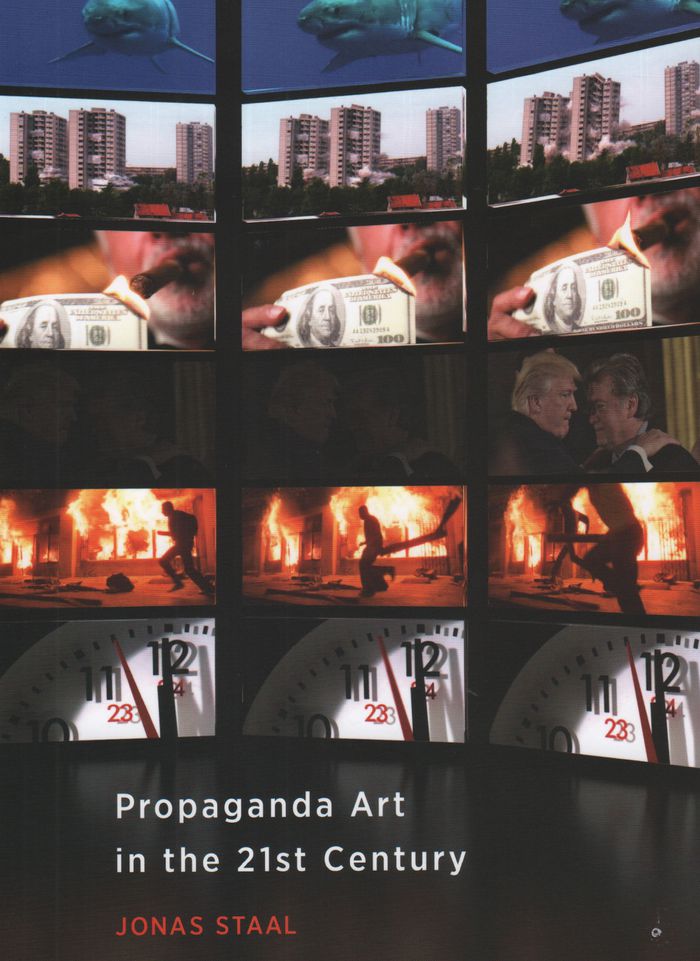
Propaganda art—whether a depiction of joyous workers in the style of socialist realism or a film directed by Steve Bannon—delivers a message. But, as Jonas Staal argues in this illuminating and timely book, propaganda does not merely make a political point; it aims to construct reality itself. Political regimes have shaped our world according to their interests and ideology; today, popular mass movements push back by constructing other worlds with their own propagandas. Staal shows that propaganda is not a relic of a totalitarian past but occurs today even in liberal democracies. He considers different historical forms of propaganda art, from avant-garde to totalitarian and modernist, and he investigates the us versus them dichotomy promoted in War on Terror propaganda art—describing, among other things, a fictional scenario from the Department of Homeland Security, acted out in real time, and military training via videogame. He discusses artistic and cultural productions developed by such popular mass movements of the twenty-first century as the Occupy, activism by and in support of undocumented migrants and refugees, and struggles for liberation in such countries as Mali and Syria. Staal, both a scholar of propaganda and a self-described propaganda artist, proposes a new model of emancipatory propaganda art—one that acknowledges the relation between art and power and takes both an aesthetic and a political position in the practice of world-making.
Propaganda art in the 21st century
Actions:
Prix:
$41.95
(disponible sur commande)
Résumé:
Propaganda art—whether a depiction of joyous workers in the style of socialist realism or a film directed by Steve Bannon—delivers a message. But, as Jonas Staal argues in this illuminating and timely book, propaganda does not merely make a political point; it aims to construct reality itself. Political regimes have shaped our world according to their interests and ideology; today, popular mass movements push back by constructing other worlds with their own propagandas. Staal shows that propaganda is not a relic of a totalitarian past but occurs today even in liberal democracies. He considers different historical forms of propaganda art, from avant-garde to totalitarian and modernist, and he investigates the us versus them dichotomy promoted in War on Terror propaganda art—describing, among other things, a fictional scenario from the Department of Homeland Security, acted out in real time, and military training via videogame. He discusses artistic and cultural productions developed by such popular mass movements of the twenty-first century as the Occupy, activism by and in support of undocumented migrants and refugees, and struggles for liberation in such countries as Mali and Syria. Staal, both a scholar of propaganda and a self-described propaganda artist, proposes a new model of emancipatory propaganda art—one that acknowledges the relation between art and power and takes both an aesthetic and a political position in the practice of world-making.
Classification:
livres
livres
Publication:
septembre 2019
septembre 2019
Sujet:
Théorie de l’art
Théorie de l’art
Classification:
livres
livres
Actions:
Prix:
$56.95
(disponible sur commande)
Résumé:
In Outlaw Territories, Felicity Scott traces the relation of architecture and urbanism to human unsettlement and territorial insecurity during the 1960s and 1970s. Investigating a set of responses to the growing urban unrest in the developed and developing worlds, Scott revisits an era when the discipline of architecture staked out a role in global environmental(...)
$56.95
(disponible sur commande)
Résumé:
In Outlaw Territories, Felicity Scott traces the relation of architecture and urbanism to human unsettlement and territorial insecurity during the 1960s and 1970s. Investigating a set of responses to the growing urban unrest in the developed and developing worlds, Scott revisits an era when the discipline of architecture staked out a role in global environmental(...)
Titre:
Outlaw Territories: Environments of Insecurity/ Architectures of Counterinsurgency
Actions:
Prix:
$56.95
(disponible sur commande)
Résumé:
In Outlaw Territories, Felicity Scott traces the relation of architecture and urbanism to human unsettlement and territorial insecurity during the 1960s and 1970s. Investigating a set of responses to the growing urban unrest in the developed and developing worlds, Scott revisits an era when the discipline of architecture staked out a role in global environmental governance and the biopolitical management of populations. She describes architecture’s response to the displacement of persons brought on by migration, urbanization, environmental catastrophe, and warfare, and she traces architecture’s relationship to the material, environmental, psychological, and geopolitical transformations brought on by postindustrial technologies and neoliberal capitalism after World War II. At the height of the U.S.-led war in Vietnam and Cambodia, with ongoing decolonization struggles in many parts of the world, architecture not only emerged as a target of political agitation because of its inherent normativity but also became heavily enmeshed with military, legal, and humanitarian apparatuses, participating in scientific and technological research dedicated to questions of international management and security. Once architecture became aligned with a global matrix of forces concerned with the environment, economic development, migration, genocide, and war, its role shifted at times toward providing strategic expertise for institutions born of neoliberal capitalism. Scott investigates this nexus and questions how and to what ends architecture and the environment came to be intimately connected to the expanded exercise of power within the shifting geopolitical frameworks at this time.
Outlaw Territories: Environments of Insecurity/ Architectures of Counterinsurgency
Actions:
Prix:
$56.95
(disponible sur commande)
Résumé:
In Outlaw Territories, Felicity Scott traces the relation of architecture and urbanism to human unsettlement and territorial insecurity during the 1960s and 1970s. Investigating a set of responses to the growing urban unrest in the developed and developing worlds, Scott revisits an era when the discipline of architecture staked out a role in global environmental governance and the biopolitical management of populations. She describes architecture’s response to the displacement of persons brought on by migration, urbanization, environmental catastrophe, and warfare, and she traces architecture’s relationship to the material, environmental, psychological, and geopolitical transformations brought on by postindustrial technologies and neoliberal capitalism after World War II. At the height of the U.S.-led war in Vietnam and Cambodia, with ongoing decolonization struggles in many parts of the world, architecture not only emerged as a target of political agitation because of its inherent normativity but also became heavily enmeshed with military, legal, and humanitarian apparatuses, participating in scientific and technological research dedicated to questions of international management and security. Once architecture became aligned with a global matrix of forces concerned with the environment, economic development, migration, genocide, and war, its role shifted at times toward providing strategic expertise for institutions born of neoliberal capitalism. Scott investigates this nexus and questions how and to what ends architecture and the environment came to be intimately connected to the expanded exercise of power within the shifting geopolitical frameworks at this time.
Classification:
livres
livres
Publication:
février 2016
février 2016
Sujet:
Théorie de l’architecture
Théorie de l’architecture
Classification:
livres
livres
Actions:
Prix:
$26.95
(disponible en magasin)
Résumé:
In 2006, even though he could barely type, China's most famous artist started blogging. For more than three years, Ai Weiwei turned out a steady stream of scathing social commentary, criticism of government policy, thoughts on art and architecture, and autobiographical writings. He wrote about the Sichuan earthquake (and posted a list of the schoolchildren who died(...)
$26.95
(disponible en magasin)
Résumé:
In 2006, even though he could barely type, China's most famous artist started blogging. For more than three years, Ai Weiwei turned out a steady stream of scathing social commentary, criticism of government policy, thoughts on art and architecture, and autobiographical writings. He wrote about the Sichuan earthquake (and posted a list of the schoolchildren who died(...)
Titre:
Ai Weiwei's blog : writings, interviews, and digital rants, 2006-2009
Actions:
Prix:
$26.95
(disponible en magasin)
Résumé:
In 2006, even though he could barely type, China's most famous artist started blogging. For more than three years, Ai Weiwei turned out a steady stream of scathing social commentary, criticism of government policy, thoughts on art and architecture, and autobiographical writings. He wrote about the Sichuan earthquake (and posted a list of the schoolchildren who died because of the government’s "tofu-dregs engineering"), reminisced about Andy Warhol and the East Village art scene, described the irony of being investigated for "fraud" by the Ministry of Public Security, made a modest proposal for tax collection. Then, on June 1, 2009, Chinese authorities shut down the blog. This book offers a collection of Ai's online writings translated into English - the most complete, public documentation of the original Chinese blog available in any language. The New York Times has called Ai "a figure of Warholian celebrity." He is a leading figure on the international art scene, a regular in museums and biennials, but in China he is a manifold and controversial presence : artist, architect, curator, social critic, justice-seeker. He was a consultant on the design of the famous "Bird’s Nest" stadium but called for an Olympic boycott; he received a Chinese Contemporary Art "lifetime achievement award" in 2008 but was beaten by the police in connection with his "citizen investigation" of earthquake casualties in 2009. This publication documents Ai's passion, his genius, his hubris, his righteous anger, and his vision for China.
Ai Weiwei's blog : writings, interviews, and digital rants, 2006-2009
Actions:
Prix:
$26.95
(disponible en magasin)
Résumé:
In 2006, even though he could barely type, China's most famous artist started blogging. For more than three years, Ai Weiwei turned out a steady stream of scathing social commentary, criticism of government policy, thoughts on art and architecture, and autobiographical writings. He wrote about the Sichuan earthquake (and posted a list of the schoolchildren who died because of the government’s "tofu-dregs engineering"), reminisced about Andy Warhol and the East Village art scene, described the irony of being investigated for "fraud" by the Ministry of Public Security, made a modest proposal for tax collection. Then, on June 1, 2009, Chinese authorities shut down the blog. This book offers a collection of Ai's online writings translated into English - the most complete, public documentation of the original Chinese blog available in any language. The New York Times has called Ai "a figure of Warholian celebrity." He is a leading figure on the international art scene, a regular in museums and biennials, but in China he is a manifold and controversial presence : artist, architect, curator, social critic, justice-seeker. He was a consultant on the design of the famous "Bird’s Nest" stadium but called for an Olympic boycott; he received a Chinese Contemporary Art "lifetime achievement award" in 2008 but was beaten by the police in connection with his "citizen investigation" of earthquake casualties in 2009. This publication documents Ai's passion, his genius, his hubris, his righteous anger, and his vision for China.
Classification:
livres
livres
Publication:
mars 2011
mars 2011
Classification:
livres
livres
Titre:
The case for open borders
The case for open borders
Actions:
Prix:
$30.95
(disponible sur commande)
Résumé:
Because of restrictive borders, human beings suffer and die. Closed borders force migrants seeking safety and dignity to journey across seas, trudge through deserts, and clamber over barbed wire. In the last five years alone, at least 60,000 people have died or gone missing while attempting to cross a border. As we deny, cast out, and crack down, we have stripped borders(...)
$30.95
(disponible sur commande)
Résumé:
Because of restrictive borders, human beings suffer and die. Closed borders force migrants seeking safety and dignity to journey across seas, trudge through deserts, and clamber over barbed wire. In the last five years alone, at least 60,000 people have died or gone missing while attempting to cross a border. As we deny, cast out, and crack down, we have stripped borders(...)
Titre:
The case for open borders
Actions:
Prix:
$30.95
(disponible sur commande)
Résumé:
Because of restrictive borders, human beings suffer and die. Closed borders force migrants seeking safety and dignity to journey across seas, trudge through deserts, and clamber over barbed wire. In the last five years alone, at least 60,000 people have died or gone missing while attempting to cross a border. As we deny, cast out, and crack down, we have stripped borders of their creative potential — as lines of contact, catalyst, and blend — turning our thresholds into barricades. Brilliant and provocative, ''The Case for Open Borders'' deflates the mythology of national security through border lockdowns by revisiting their historical origins; it counters the conspiracies of immigration’s economic consequences; it urgently considers the challenges of climate change beyond the boundaries of narrow national identities. This book grounds its argument in the experiences and thinking of those on the frontlines of the crisis, spanning the world to do so. In each chapter, through detailed reporting, journalist and translator John Washington profiles a character impacted by borders. He adds to those portraits provocative analyses of the economics and ethics of bordering, concluding that if we are to seek justice or sustainability we must fight for open borders. In recent years, important thinkers have begun to urge a profoundly different approach to migration, but no book has made the argument as accessible or as compelling. Washington’s case shines with the multitudinous voices of people on the move, a portrait in miniature of what a world with open borders will give to our common future.
The case for open borders
Actions:
Prix:
$30.95
(disponible sur commande)
Résumé:
Because of restrictive borders, human beings suffer and die. Closed borders force migrants seeking safety and dignity to journey across seas, trudge through deserts, and clamber over barbed wire. In the last five years alone, at least 60,000 people have died or gone missing while attempting to cross a border. As we deny, cast out, and crack down, we have stripped borders of their creative potential — as lines of contact, catalyst, and blend — turning our thresholds into barricades. Brilliant and provocative, ''The Case for Open Borders'' deflates the mythology of national security through border lockdowns by revisiting their historical origins; it counters the conspiracies of immigration’s economic consequences; it urgently considers the challenges of climate change beyond the boundaries of narrow national identities. This book grounds its argument in the experiences and thinking of those on the frontlines of the crisis, spanning the world to do so. In each chapter, through detailed reporting, journalist and translator John Washington profiles a character impacted by borders. He adds to those portraits provocative analyses of the economics and ethics of bordering, concluding that if we are to seek justice or sustainability we must fight for open borders. In recent years, important thinkers have begun to urge a profoundly different approach to migration, but no book has made the argument as accessible or as compelling. Washington’s case shines with the multitudinous voices of people on the move, a portrait in miniature of what a world with open borders will give to our common future.
Classification:
livres
livres
Publication:
février 2024
février 2024
Sujet:
Social
Social
Classification:
livres
livres
Actions:
Prix:
$29.99
(disponible sur commande)
Résumé:
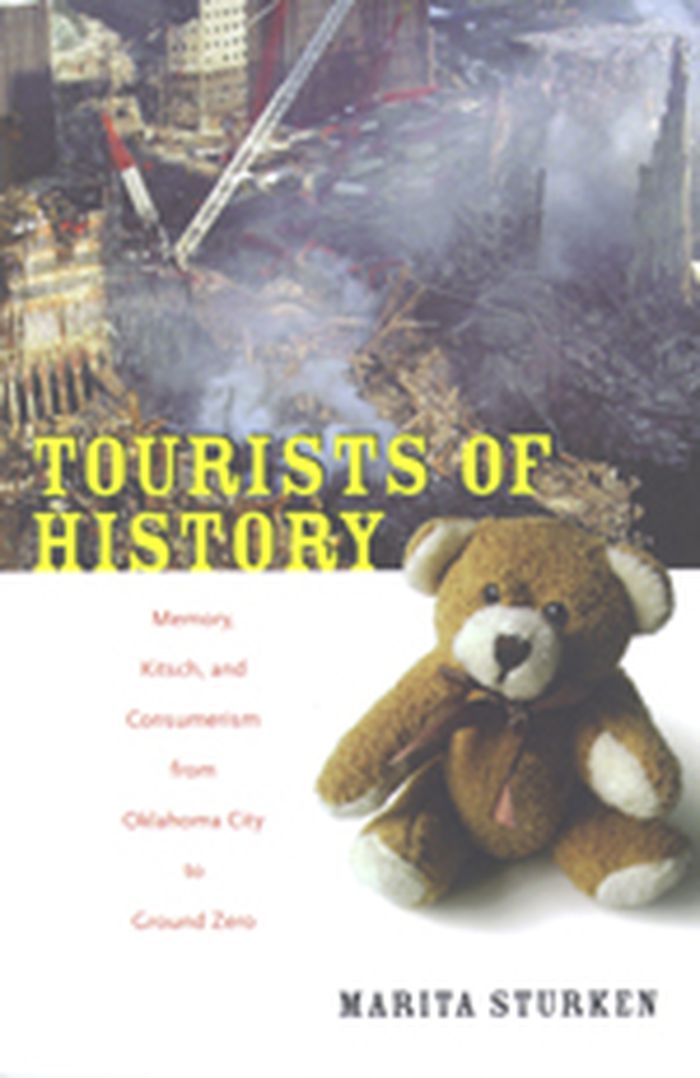
In this book the cultural critic Marita Sturken argues that over the past two decades, Americans have responded to national trauma through consumerism, kitsch sentiment, and tourist practices in ways that reveal a tenacious investment in the idea of America’s innocence. Sturken investigates the consumerism that followed from the September 11th attacks; the contentious,(...)
$29.99
(disponible sur commande)
Résumé:
In this book the cultural critic Marita Sturken argues that over the past two decades, Americans have responded to national trauma through consumerism, kitsch sentiment, and tourist practices in ways that reveal a tenacious investment in the idea of America’s innocence. Sturken investigates the consumerism that followed from the September 11th attacks; the contentious,(...)
Titre:
Tourists of History: memory, kitsch, and consumerism from Oklahoma City to Ground Zero
Actions:
Prix:
$29.99
(disponible sur commande)
Résumé:
In this book the cultural critic Marita Sturken argues that over the past two decades, Americans have responded to national trauma through consumerism, kitsch sentiment, and tourist practices in ways that reveal a tenacious investment in the idea of America’s innocence. Sturken investigates the consumerism that followed from the September 11th attacks; the contentious, ongoing debates about memorials and celebrity-architect designed buildings at Ground Zero; and two outcomes of the bombing of the Alfred P. Murrah Federal Building in Oklahoma City: the Oklahoma City National Memorial and the execution of Timothy McVeigh. Sturken contends that a consumer culture of comfort objects such as World Trade Center snow globes, FDNY teddy bears, and Oklahoma City Memorial t-shirts and branded water, as well as reenactments of traumatic events in memorial and architectural designs, enables a national tendency to see U.S. culture as distant from both history and world politics. A kitsch comfort culture contributes to a “tourist” relationship to history: Americans can feel good about visiting and buying souvenirs at sites of national mourning without having to engage with the economic, social, and political causes of the violent events. While arguing for the importance of remembering tragic losses of life, Sturken is urging attention to a dangerous confluence—of memory, tourism, consumerism, paranoia, security, and kitsch—that promulgates fear to sell safety, offers prepackaged emotion at the expense of critical thought, contains alternative politics, and facilitates public acquiescence in the federal government’s repressive measures at home and its aggressive political and military policies abroad.
Tourists of History: memory, kitsch, and consumerism from Oklahoma City to Ground Zero
Actions:
Prix:
$29.99
(disponible sur commande)
Résumé:
In this book the cultural critic Marita Sturken argues that over the past two decades, Americans have responded to national trauma through consumerism, kitsch sentiment, and tourist practices in ways that reveal a tenacious investment in the idea of America’s innocence. Sturken investigates the consumerism that followed from the September 11th attacks; the contentious, ongoing debates about memorials and celebrity-architect designed buildings at Ground Zero; and two outcomes of the bombing of the Alfred P. Murrah Federal Building in Oklahoma City: the Oklahoma City National Memorial and the execution of Timothy McVeigh. Sturken contends that a consumer culture of comfort objects such as World Trade Center snow globes, FDNY teddy bears, and Oklahoma City Memorial t-shirts and branded water, as well as reenactments of traumatic events in memorial and architectural designs, enables a national tendency to see U.S. culture as distant from both history and world politics. A kitsch comfort culture contributes to a “tourist” relationship to history: Americans can feel good about visiting and buying souvenirs at sites of national mourning without having to engage with the economic, social, and political causes of the violent events. While arguing for the importance of remembering tragic losses of life, Sturken is urging attention to a dangerous confluence—of memory, tourism, consumerism, paranoia, security, and kitsch—that promulgates fear to sell safety, offers prepackaged emotion at the expense of critical thought, contains alternative politics, and facilitates public acquiescence in the federal government’s repressive measures at home and its aggressive political and military policies abroad.
Classification:
livres
livres
Publication:
novembre 2007, Durham
novembre 2007, Durham


