


8791 Résultats
Classification:
livres
livres
Actions:
Prix:
$87.00
(disponible sur commande)
Résumé:
When Swedish artist Hilma af Klint died in 1944 at the age of 81, she left behind more than 1,000 paintings and works on paper that she had kept largely private during her lifetime. Believing the world was not yet ready for her art, she stipulated that it should remain unseen for another 20 years. But only in recent decades has the public had a chance to reckon with af(...)
$87.00
(disponible sur commande)
Résumé:
When Swedish artist Hilma af Klint died in 1944 at the age of 81, she left behind more than 1,000 paintings and works on paper that she had kept largely private during her lifetime. Believing the world was not yet ready for her art, she stipulated that it should remain unseen for another 20 years. But only in recent decades has the public had a chance to reckon with af(...)
Titre:
Hilma af Klint: paintings for the future
Actions:
Prix:
$87.00
(disponible sur commande)
Résumé:
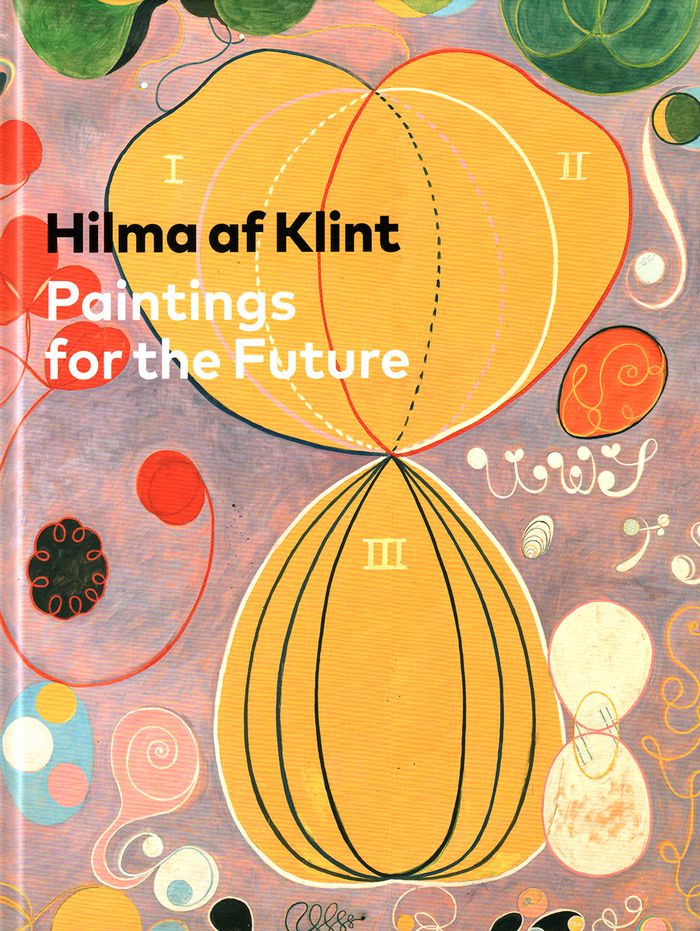
When Swedish artist Hilma af Klint died in 1944 at the age of 81, she left behind more than 1,000 paintings and works on paper that she had kept largely private during her lifetime. Believing the world was not yet ready for her art, she stipulated that it should remain unseen for another 20 years. But only in recent decades has the public had a chance to reckon with af Klint's radically abstract painting practice — one which predates the work of Vasily Kandinsky and other artists widely considered trailblazers of modernist abstraction. Accompanying the first major survey exhibition of the artist's work in the United States, 'Hilma af Klint: Paintings for the Future' represents her groundbreaking painting series while expanding recent scholarship to present the fullest picture yet of her life and art. Essays explore the social, intellectual and artistic context of af Klint's 1906 break with figuration and her subsequent development, placing her in the context of Swedish modernism and folk art traditions, contemporary scientific discoveries, and spiritualist and occult movements.
Hilma af Klint: paintings for the future
Actions:
Prix:
$87.00
(disponible sur commande)
Résumé:
When Swedish artist Hilma af Klint died in 1944 at the age of 81, she left behind more than 1,000 paintings and works on paper that she had kept largely private during her lifetime. Believing the world was not yet ready for her art, she stipulated that it should remain unseen for another 20 years. But only in recent decades has the public had a chance to reckon with af Klint's radically abstract painting practice — one which predates the work of Vasily Kandinsky and other artists widely considered trailblazers of modernist abstraction. Accompanying the first major survey exhibition of the artist's work in the United States, 'Hilma af Klint: Paintings for the Future' represents her groundbreaking painting series while expanding recent scholarship to present the fullest picture yet of her life and art. Essays explore the social, intellectual and artistic context of af Klint's 1906 break with figuration and her subsequent development, placing her in the context of Swedish modernism and folk art traditions, contemporary scientific discoveries, and spiritualist and occult movements.
Classification:
livres
livres
Publication:
octobre 2018
octobre 2018
Classification:
livres
livres
Prix:
$44.95
(disponible sur commande)
Résumé:
The objects of architecture are not simply inert assemblies of material - they are complex entities that unfold their potential agencies (whether political, social, or environmental) in equally complex ways. Exploring these forms of architectural agency has in recent years been a central aspect of the work of Andrés Jaque and the Office for Political Innovation, who, in(...)
$44.95
(disponible sur commande)
Résumé:
The objects of architecture are not simply inert assemblies of material - they are complex entities that unfold their potential agencies (whether political, social, or environmental) in equally complex ways. Exploring these forms of architectural agency has in recent years been a central aspect of the work of Andrés Jaque and the Office for Political Innovation, who, in(...)
Titre:
Superpowers of scale: Office for Political Innovation
Actions:
Prix:
$44.95
(disponible sur commande)
Résumé:
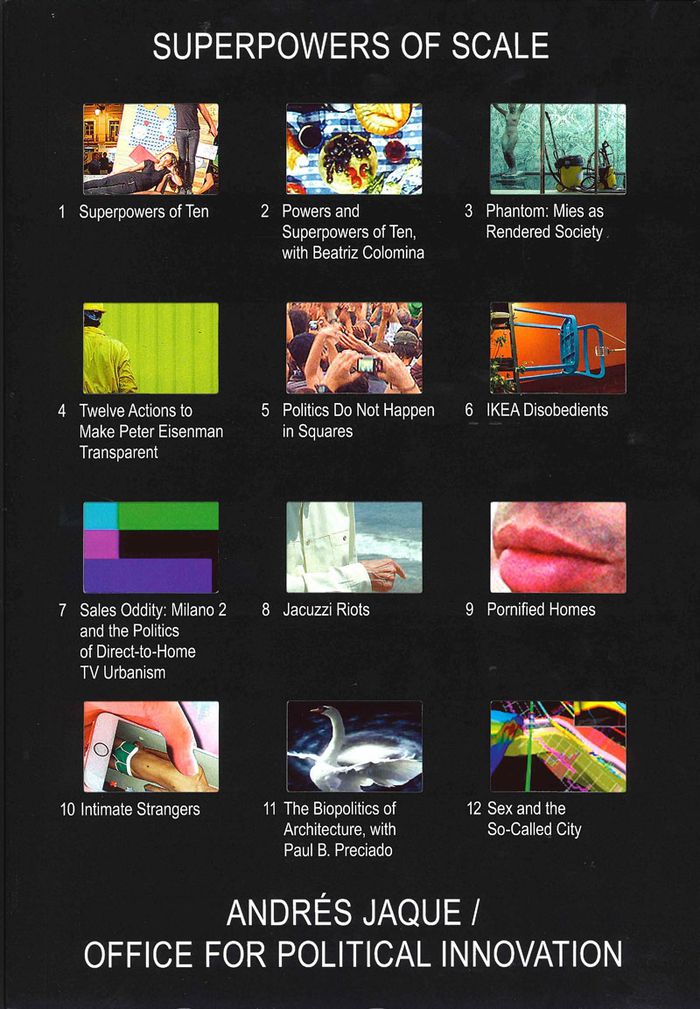
The objects of architecture are not simply inert assemblies of material - they are complex entities that unfold their potential agencies (whether political, social, or environmental) in equally complex ways. Exploring these forms of architectural agency has in recent years been a central aspect of the work of Andrés Jaque and the Office for Political Innovation, who, in addition to their built works, pursue a research practice through the many other media of architectural production. Their projects are reactive, intervening on what already exists to demonstrate how design, politics, and criticality operate across different scales and at the intersection of multiple realities. Jaque’s performances, videos, and installations—and this book, which collects a range of recent research projects—bring new subjects into the fold of architecture, focusing on alternative actors, distributions of power and representation, and the sociocultural effects of architecture. These episodes address ideas like genetic manipulation, the necessary requeering of dequeered spaces of online interaction, and the selling of modern architectural comforts in order to subvert the field from within and to contest capitalism's flattening-out of public life.
Superpowers of scale: Office for Political Innovation
Actions:
Prix:
$44.95
(disponible sur commande)
Résumé:
The objects of architecture are not simply inert assemblies of material - they are complex entities that unfold their potential agencies (whether political, social, or environmental) in equally complex ways. Exploring these forms of architectural agency has in recent years been a central aspect of the work of Andrés Jaque and the Office for Political Innovation, who, in addition to their built works, pursue a research practice through the many other media of architectural production. Their projects are reactive, intervening on what already exists to demonstrate how design, politics, and criticality operate across different scales and at the intersection of multiple realities. Jaque’s performances, videos, and installations—and this book, which collects a range of recent research projects—bring new subjects into the fold of architecture, focusing on alternative actors, distributions of power and representation, and the sociocultural effects of architecture. These episodes address ideas like genetic manipulation, the necessary requeering of dequeered spaces of online interaction, and the selling of modern architectural comforts in order to subvert the field from within and to contest capitalism's flattening-out of public life.
Classification:
livres
livres
Publication:
mars 2020
mars 2020
Sujet:
Architecture, monographies
Architecture, monographies
Classification:
livres
livres
Titre:
Rhythm in architecture
Rhythm in architecture
Actions:
Prix:
$29.95
(disponible sur commande)
Résumé:
"Rhythm in Architecture" is the first ever translation into English of a key early Modernist text, written by the celebrated Soviet Constructivist architect Moisei Ginzburg and first published in Russian as Ritm v Arkhitekture in 1923. Ginzburg is most famous for his Narkomfin Building in Moscow, completed in 1932, which he described as a “social-condenser”: a radical(...)
$29.95
(disponible sur commande)
Résumé:
"Rhythm in Architecture" is the first ever translation into English of a key early Modernist text, written by the celebrated Soviet Constructivist architect Moisei Ginzburg and first published in Russian as Ritm v Arkhitekture in 1923. Ginzburg is most famous for his Narkomfin Building in Moscow, completed in 1932, which he described as a “social-condenser”: a radical(...)
Titre:
Rhythm in architecture
Actions:
Prix:
$29.95
(disponible sur commande)
Résumé:
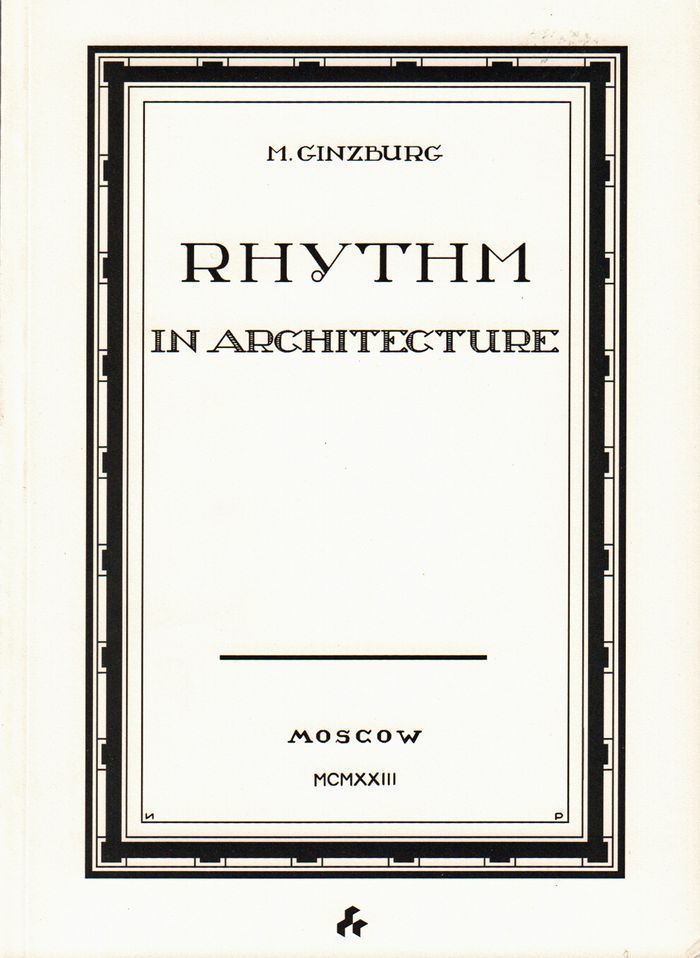
"Rhythm in Architecture" is the first ever translation into English of a key early Modernist text, written by the celebrated Soviet Constructivist architect Moisei Ginzburg and first published in Russian as Ritm v Arkhitekture in 1923. Ginzburg is most famous for his Narkomfin Building in Moscow, completed in 1932, which he described as a “social-condenser”: a radical experiment in communal living. While Ginzburg’s second book Style and Epoch, published in 1924, is often seen as the manifesto for Russian Constructivism, Rhythm in Architecture?which preceded it?can be seen as his attempt to create a synthesis in thinking about architecture as a whole, seeking to show how “the true essence of all works of architecture” are ”inspired by the laws of rhythm”. "Rhythm in Architecture" is republished in cooperation with the Ginzburg Design Practice run by Moisei Ginzburg’s grandson, Aleksey and his partner Natalia Shilova. It is the first of a planned series of reprints of Ginzburg’s four books, Home, 1934 and Industrialising Housing Construction, 1937 as well as Style and Epoch, 1924?the only one previously available in English.
Rhythm in architecture
Actions:
Prix:
$29.95
(disponible sur commande)
Résumé:
"Rhythm in Architecture" is the first ever translation into English of a key early Modernist text, written by the celebrated Soviet Constructivist architect Moisei Ginzburg and first published in Russian as Ritm v Arkhitekture in 1923. Ginzburg is most famous for his Narkomfin Building in Moscow, completed in 1932, which he described as a “social-condenser”: a radical experiment in communal living. While Ginzburg’s second book Style and Epoch, published in 1924, is often seen as the manifesto for Russian Constructivism, Rhythm in Architecture?which preceded it?can be seen as his attempt to create a synthesis in thinking about architecture as a whole, seeking to show how “the true essence of all works of architecture” are ”inspired by the laws of rhythm”. "Rhythm in Architecture" is republished in cooperation with the Ginzburg Design Practice run by Moisei Ginzburg’s grandson, Aleksey and his partner Natalia Shilova. It is the first of a planned series of reprints of Ginzburg’s four books, Home, 1934 and Industrialising Housing Construction, 1937 as well as Style and Epoch, 1924?the only one previously available in English.
Classification:
livres
livres
Publication:
janvier 2017
janvier 2017
Sujet:
Théorie de l’architecture
Théorie de l’architecture
Classification:
livres
livres
Prix:
$45.95
(disponible sur commande)
Résumé:
In 1968, Robert Smithson reacted to Michael Fried’s influential essay “Art and Objecthood” with a series of works called non-sites. While Fried described the spectator’s connection with a work of art as a momentary visual engagement, Smithson’s non-sites asked spectators to do something more: to take time looking, walking, seeing, reading, and thinking about the(...)
$45.95
(disponible sur commande)
Résumé:
In 1968, Robert Smithson reacted to Michael Fried’s influential essay “Art and Objecthood” with a series of works called non-sites. While Fried described the spectator’s connection with a work of art as a momentary visual engagement, Smithson’s non-sites asked spectators to do something more: to take time looking, walking, seeing, reading, and thinking about the(...)
Titre:
Beyond objecthood: the exhibition as a critical form since 1968
Actions:
Prix:
$45.95
(disponible sur commande)
Résumé:
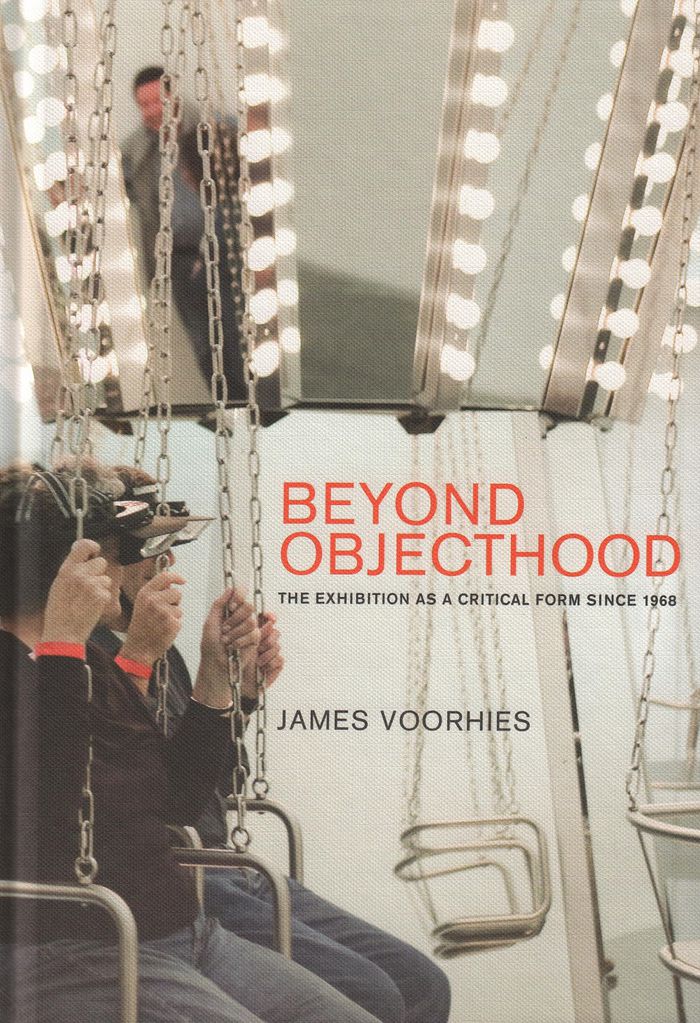
In 1968, Robert Smithson reacted to Michael Fried’s influential essay “Art and Objecthood” with a series of works called non-sites. While Fried described the spectator’s connection with a work of art as a momentary visual engagement, Smithson’s non-sites asked spectators to do something more: to take time looking, walking, seeing, reading, and thinking about the combination of objects, images, and texts installed in a gallery. In Beyond Objecthood, James Voorhies traces a genealogy of spectatorship through the rise of the exhibition as a critical form—and artistic medium. Artists like Smithson, Group Material, and Michael Asher sought to reconfigure and expand the exhibition and the museum into something more active, open, and democratic, by inviting spectators into new and unexpected encounters with works of art and institutions. This practice was sharply critical of the ingrained characteristics long associated with art institutions and conventional exhibition-making; and yet, Voorhies finds, over time the critique has been diluted by efforts of the very institutions that now gravitate to the “participatory.”
Beyond objecthood: the exhibition as a critical form since 1968
Actions:
Prix:
$45.95
(disponible sur commande)
Résumé:
In 1968, Robert Smithson reacted to Michael Fried’s influential essay “Art and Objecthood” with a series of works called non-sites. While Fried described the spectator’s connection with a work of art as a momentary visual engagement, Smithson’s non-sites asked spectators to do something more: to take time looking, walking, seeing, reading, and thinking about the combination of objects, images, and texts installed in a gallery. In Beyond Objecthood, James Voorhies traces a genealogy of spectatorship through the rise of the exhibition as a critical form—and artistic medium. Artists like Smithson, Group Material, and Michael Asher sought to reconfigure and expand the exhibition and the museum into something more active, open, and democratic, by inviting spectators into new and unexpected encounters with works of art and institutions. This practice was sharply critical of the ingrained characteristics long associated with art institutions and conventional exhibition-making; and yet, Voorhies finds, over time the critique has been diluted by efforts of the very institutions that now gravitate to the “participatory.”
Classification:
livres
livres
Publication:
février 2017
février 2017
Sujet:
Muséologie
Muséologie
Classification:
livres
livres
Actions:
Prix:
$74.00
(disponible sur commande)
Résumé:
In recent years, an extensive collection of drawings was discovered in Andy Warhol’s estate. Dating from the 1950s, the artist’s early years in New York, the drawings took as their inspiration magazine photographs and illustrations—many from LIFE magazine—and provide further insight into Warhol’s unique working method. Andy Warhol: The “LIFE” Years 1949–1959 publishes(...)
$74.00
(disponible sur commande)
Résumé:
In recent years, an extensive collection of drawings was discovered in Andy Warhol’s estate. Dating from the 1950s, the artist’s early years in New York, the drawings took as their inspiration magazine photographs and illustrations—many from LIFE magazine—and provide further insight into Warhol’s unique working method. Andy Warhol: The “LIFE” Years 1949–1959 publishes(...)
Titre:
Andy Warhol: the “LIFE” years 1949–1959
Actions:
Prix:
$74.00
(disponible sur commande)
Résumé:
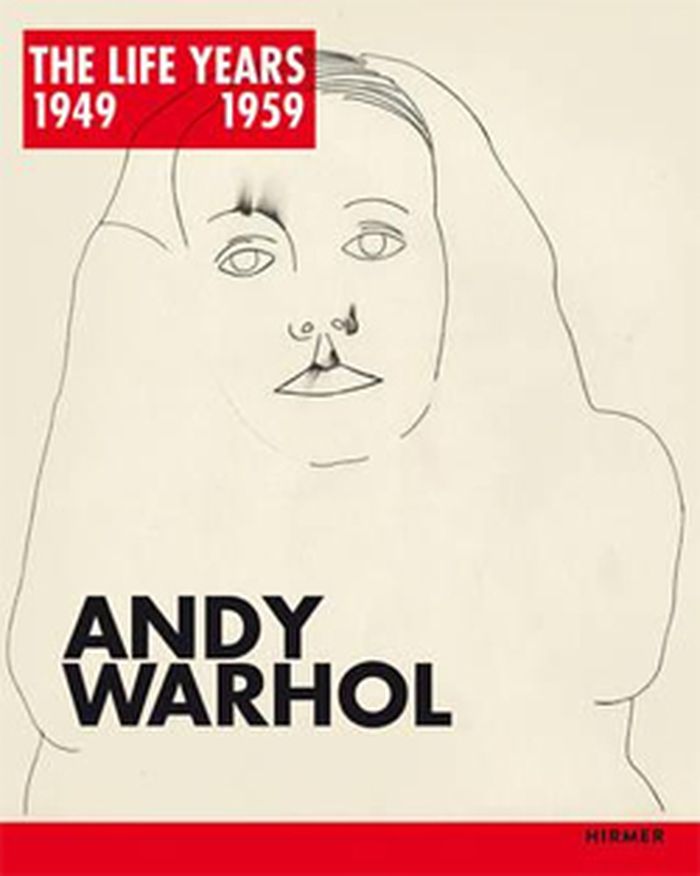
In recent years, an extensive collection of drawings was discovered in Andy Warhol’s estate. Dating from the 1950s, the artist’s early years in New York, the drawings took as their inspiration magazine photographs and illustrations—many from LIFE magazine—and provide further insight into Warhol’s unique working method. Andy Warhol: The “LIFE” Years 1949–1959 publishes a selection of these newly discovered drawings alongside the original photographs and illustrations. Drawing was an important part of Warhol’s early practice, and he was particularly inspired by the rich visual language found in LIFE and its contemporaries. Many of his drawings were copied with his trademark “blotted line” technique, a basic method of printmaking in which Warhol traced projected photographic images onto paper and then blotting the inked figures to create variations on a theme. Presenting more than one hundred of these drawings, including many that have never before been published, the book also offers an informative and accessible discussion of Warhol’s working method and the cultural setting in which he created the drawings.
Andy Warhol: the “LIFE” years 1949–1959
Actions:
Prix:
$74.00
(disponible sur commande)
Résumé:
In recent years, an extensive collection of drawings was discovered in Andy Warhol’s estate. Dating from the 1950s, the artist’s early years in New York, the drawings took as their inspiration magazine photographs and illustrations—many from LIFE magazine—and provide further insight into Warhol’s unique working method. Andy Warhol: The “LIFE” Years 1949–1959 publishes a selection of these newly discovered drawings alongside the original photographs and illustrations. Drawing was an important part of Warhol’s early practice, and he was particularly inspired by the rich visual language found in LIFE and its contemporaries. Many of his drawings were copied with his trademark “blotted line” technique, a basic method of printmaking in which Warhol traced projected photographic images onto paper and then blotting the inked figures to create variations on a theme. Presenting more than one hundred of these drawings, including many that have never before been published, the book also offers an informative and accessible discussion of Warhol’s working method and the cultural setting in which he created the drawings.
Classification:
livres
livres
Publication:
décembre 2015
décembre 2015
Classification:
livres
livres
Actions:
Prix:
$94.95
(disponible sur commande)
Résumé:
Paradigms in Computing: Making, Machines, and Models for Design Agency in Architecture brings together critical, theoretical, and practical research and design that illustrates the plurality of computing approaches within the broad spectrum of design and mediated practices. It is an interrogation of our primary field of architecture through the lens of computing, and yet(...)
$94.95
(disponible sur commande)
Résumé:
Paradigms in Computing: Making, Machines, and Models for Design Agency in Architecture brings together critical, theoretical, and practical research and design that illustrates the plurality of computing approaches within the broad spectrum of design and mediated practices. It is an interrogation of our primary field of architecture through the lens of computing, and yet(...)
Sujet:
Architecture contemporaine
Architecture contemporaine
Publication:
décembre 2015
décembre 2015
Titre:
Paradigms in computing: making, machines and models for design agency in architecture
Actions:
Prix:
$94.95
(disponible sur commande)
Résumé:
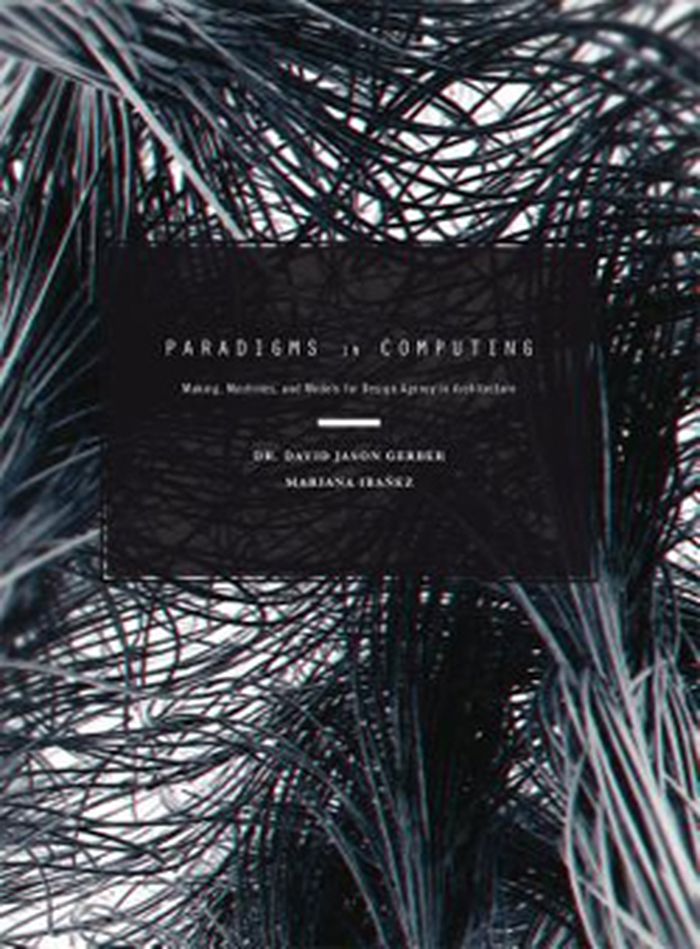
Paradigms in Computing: Making, Machines, and Models for Design Agency in Architecture brings together critical, theoretical, and practical research and design that illustrates the plurality of computing approaches within the broad spectrum of design and mediated practices. It is an interrogation of our primary field of architecture through the lens of computing, and yet one that realizes a productive expanding of our métier’s definition and boundaries. It is a compilation that purposefully promotes architecture’s disciplinary reach and incorporations beyond the design and construction of buildings and cities. The book offers a glimpse into the wide range of positions and experiences that are shaping practice and discourse today. The work included in Paradigms in Computing is evidence that models for enquiry are many and proliferating. As digitalization and computation continue to infuse our processes with new tools and new design environments, some of the trends collected in this book will continue to be central to the production and speculation of architecture, and others will, in retrospect, be recognized as the seeds of new, or perhaps multiple, paradigms.
Paradigms in computing: making, machines and models for design agency in architecture
Actions:
Prix:
$94.95
(disponible sur commande)
Résumé:
Paradigms in Computing: Making, Machines, and Models for Design Agency in Architecture brings together critical, theoretical, and practical research and design that illustrates the plurality of computing approaches within the broad spectrum of design and mediated practices. It is an interrogation of our primary field of architecture through the lens of computing, and yet one that realizes a productive expanding of our métier’s definition and boundaries. It is a compilation that purposefully promotes architecture’s disciplinary reach and incorporations beyond the design and construction of buildings and cities. The book offers a glimpse into the wide range of positions and experiences that are shaping practice and discourse today. The work included in Paradigms in Computing is evidence that models for enquiry are many and proliferating. As digitalization and computation continue to infuse our processes with new tools and new design environments, some of the trends collected in this book will continue to be central to the production and speculation of architecture, and others will, in retrospect, be recognized as the seeds of new, or perhaps multiple, paradigms.
Classification:
livres
livres
Publication:
décembre 2015
décembre 2015
Sujet:
Architecture contemporaine
Architecture contemporaine
Classification:
archives
archives
Actions:
Exemplaires:
Description:
143,342 digital files (517.39 GB), 24.24 linear meters of textual records, 17,086 photographic materials, 1125 drawings, 195 ephemera, 59 périodiques, 50 audio cassettes,...
Description:
143,342 digital files (517.39 GB), 24.24 linear meters of textual records, 17,086 photographic materials, 1125 drawings, 195 ephemera, 59 périodiques, 50 audio cassettes,...
Auteur:
Sujet:
Titre:
Jean-Louis Cohen fonds, 1968-2023
Actions:
Exemplaires:
Description:
143,342 digital files (517.39 GB), 24.24 linear meters of textual records, 17,086 photographic materials, 1125 drawings, 195 ephemera, 59 périodiques, 50 audio cassettes,...
Jean-Louis Cohen fonds, 1968-2023
Actions:
Exemplaires:
Description:
143,342 digital files (517.39 GB), 24.24 linear meters of textual records, 17,086 photographic materials, 1125 drawings, 195 ephemera, 59 périodiques, 50 audio cassettes,...
Classification:
archives
archives
Auteur:
Sujet:
Classification:
livres
livres
Prix:
$54.00
(disponible en magasin)
Résumé:
The term 'style' has fallen spectacularly out of fashion in architectural circles. Once a conceptual key to understanding architecture’s inner workings, today style seems to be associated with superficiality, formalism, and obsolete periodization. But how did style—once defined by German sociologist Georg Simmel as a place where one is 'no longer alone'—in architecture(...)
$54.00
(disponible en magasin)
Résumé:
The term 'style' has fallen spectacularly out of fashion in architectural circles. Once a conceptual key to understanding architecture’s inner workings, today style seems to be associated with superficiality, formalism, and obsolete periodization. But how did style—once defined by German sociologist Georg Simmel as a place where one is 'no longer alone'—in architecture(...)
Titre:
Style and solitude: The history of an architectural problem
Actions:
Prix:
$54.00
(disponible en magasin)
Résumé:
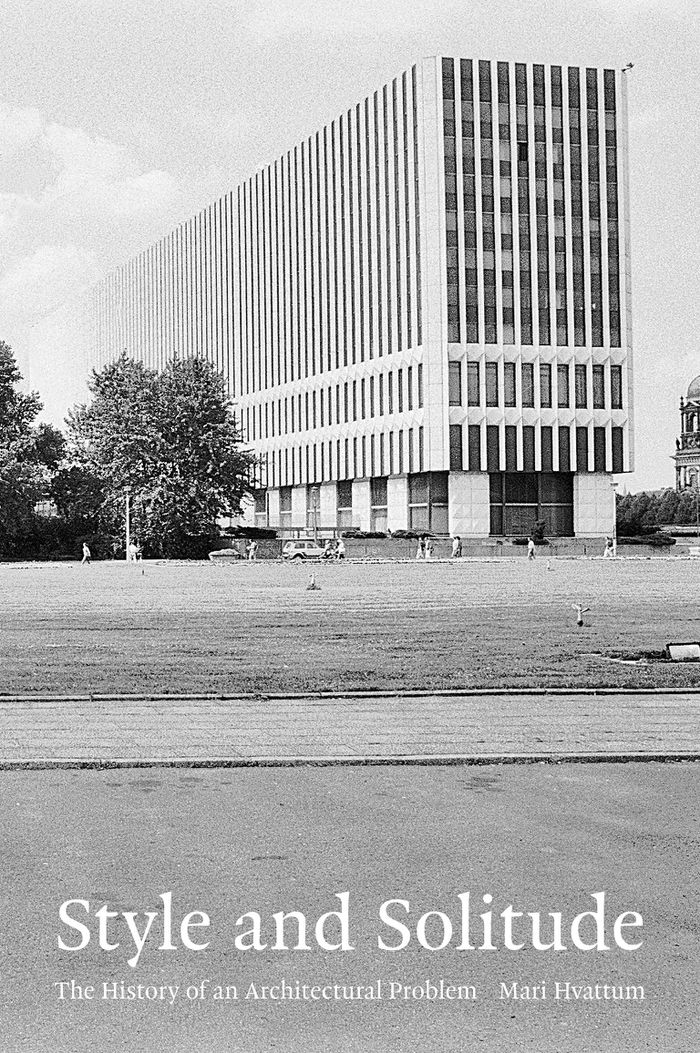
The term 'style' has fallen spectacularly out of fashion in architectural circles. Once a conceptual key to understanding architecture’s inner workings, today style seems to be associated with superficiality, formalism, and obsolete periodization. But how did style—once defined by German sociologist Georg Simmel as a place where one is 'no longer alone'—in architecture actually work? How was it used and what did it mean? In ''Style and solitude,'' Mari Hvattum seeks to understand the apparent death of style, returning to its birthplace in the late eighteenth century, and charting how it grew to influence modern architectural discourse and practice. As Hvattum explains, German thinkers of the eighteenth and nineteenth century offered competing ideas of what style was and how it should be applied in architecture. From Karl Friedrich Schinkel’s thoughtful eclecticism to King Maximilian II’s attempt to capture the zeitgeist in an architectural competition, style was at the center of fascinating experiments and furious disputes. Starting with Johann Joachim Winckelmann’s invention of the period style and ending a century later with Gottfried Semper’s generative theory of style, Hvattum explores critical debates that are still ongoing today.
Style and solitude: The history of an architectural problem
Actions:
Prix:
$54.00
(disponible en magasin)
Résumé:
The term 'style' has fallen spectacularly out of fashion in architectural circles. Once a conceptual key to understanding architecture’s inner workings, today style seems to be associated with superficiality, formalism, and obsolete periodization. But how did style—once defined by German sociologist Georg Simmel as a place where one is 'no longer alone'—in architecture actually work? How was it used and what did it mean? In ''Style and solitude,'' Mari Hvattum seeks to understand the apparent death of style, returning to its birthplace in the late eighteenth century, and charting how it grew to influence modern architectural discourse and practice. As Hvattum explains, German thinkers of the eighteenth and nineteenth century offered competing ideas of what style was and how it should be applied in architecture. From Karl Friedrich Schinkel’s thoughtful eclecticism to King Maximilian II’s attempt to capture the zeitgeist in an architectural competition, style was at the center of fascinating experiments and furious disputes. Starting with Johann Joachim Winckelmann’s invention of the period style and ending a century later with Gottfried Semper’s generative theory of style, Hvattum explores critical debates that are still ongoing today.
Classification:
livres
livres
Publication:
juin 2023
juin 2023
Sujet:
Théorie de l’architecture
Théorie de l’architecture
Classification:
livres
livres
Actions:
Prix:
$45.95
(disponible sur commande)
Résumé:
Dials, knobs, microphones, clocks; heads, hands, breath, voices. Ernst Schoen joined Frankfurt Radio in the 1920s as programmer and accelerated the potentials of this collision of bodies and technologies. As with others of his generation, Schoen experienced crisis after crisis, from the violence of war, the suicide of friends, economic collapse, and a brief episode of(...)
$45.95
(disponible sur commande)
Résumé:
Dials, knobs, microphones, clocks; heads, hands, breath, voices. Ernst Schoen joined Frankfurt Radio in the 1920s as programmer and accelerated the potentials of this collision of bodies and technologies. As with others of his generation, Schoen experienced crisis after crisis, from the violence of war, the suicide of friends, economic collapse, and a brief episode of(...)
Titre:
Dissonant waves: Ernst Schoen and experimental sound in the 20th century
Actions:
Prix:
$45.95
(disponible sur commande)
Résumé:
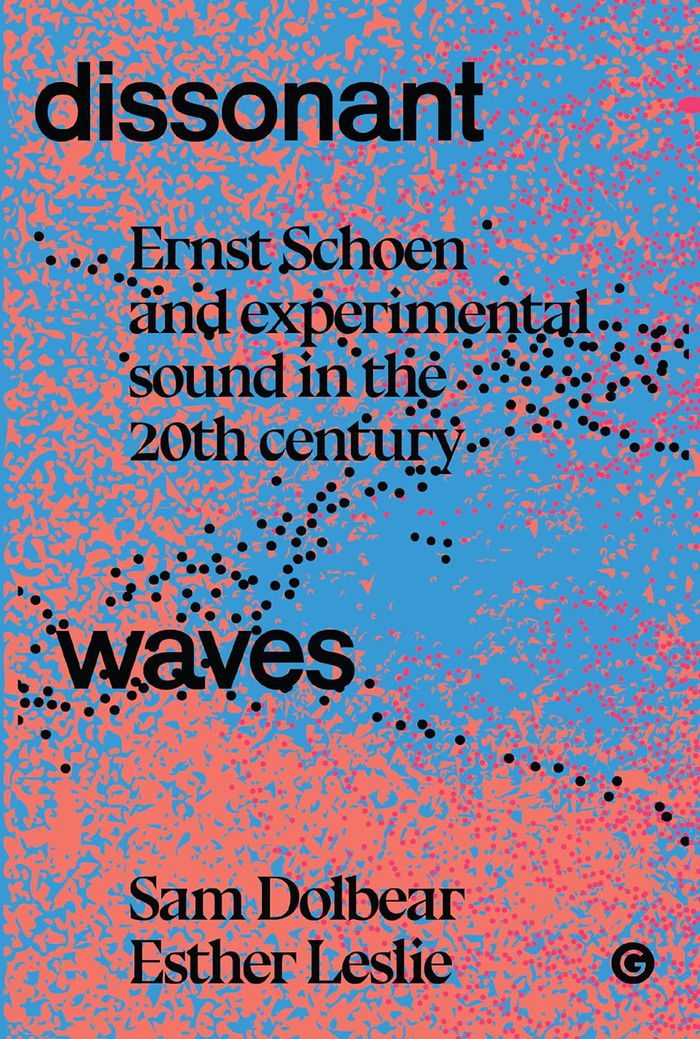
Dials, knobs, microphones, clocks; heads, hands, breath, voices. Ernst Schoen joined Frankfurt Radio in the 1920s as programmer and accelerated the potentials of this collision of bodies and technologies. As with others of his generation, Schoen experienced crisis after crisis, from the violence of war, the suicide of friends, economic collapse, and a brief episode of permitted experimentalism under the Weimar Republic for those who would foster aesthetic, technical, and political revolution. The counterreaction was Nazism—and Schoen and his milieux fell victim to it, found ways out of it, or hit against it with all their might. ''Dissonant waves'' tracks the life of Ernst Schoen—poet, composer, radio programmer, theorist, and best friend of Walter Benjamin from childhood—as he moves between Frankfurt, Berlin, Paris, and London. It casts radio history and practice into concrete spaces, into networks of friends and institutions, into political exigencies and domestic plights, and into broader aesthetic discussions of the politicization of art and the aestheticization of politics. Through friendship and comradeship, a position in state-backed radio, imprisonment, exile, networking in a new country, re-emigration, ill-treatment, neglect, Schoen suffers the century and articulates its broken promises.
Dissonant waves: Ernst Schoen and experimental sound in the 20th century
Actions:
Prix:
$45.95
(disponible sur commande)
Résumé:
Dials, knobs, microphones, clocks; heads, hands, breath, voices. Ernst Schoen joined Frankfurt Radio in the 1920s as programmer and accelerated the potentials of this collision of bodies and technologies. As with others of his generation, Schoen experienced crisis after crisis, from the violence of war, the suicide of friends, economic collapse, and a brief episode of permitted experimentalism under the Weimar Republic for those who would foster aesthetic, technical, and political revolution. The counterreaction was Nazism—and Schoen and his milieux fell victim to it, found ways out of it, or hit against it with all their might. ''Dissonant waves'' tracks the life of Ernst Schoen—poet, composer, radio programmer, theorist, and best friend of Walter Benjamin from childhood—as he moves between Frankfurt, Berlin, Paris, and London. It casts radio history and practice into concrete spaces, into networks of friends and institutions, into political exigencies and domestic plights, and into broader aesthetic discussions of the politicization of art and the aestheticization of politics. Through friendship and comradeship, a position in state-backed radio, imprisonment, exile, networking in a new country, re-emigration, ill-treatment, neglect, Schoen suffers the century and articulates its broken promises.
Classification:
livres
livres
Publication:
septembre 2023
septembre 2023
Sujet:
Acoustique
Acoustique
Classification:
livres
livres
Titre:
The lives of documents
The lives of documents
Actions:
Prix:
$45.00
(disponible en magasin)
Résumé:
How do photographers select, order, and display their images to make visual arguments about built and natural environments? Conceived as part of a long-term project at the CCA to examine the contemporary role of photography in the study and practice of architecture, The Lives of Documents — Photography as Project prompts reflections on the idea of the documentary as an(...)
$45.00
(disponible en magasin)
Résumé:
How do photographers select, order, and display their images to make visual arguments about built and natural environments? Conceived as part of a long-term project at the CCA to examine the contemporary role of photography in the study and practice of architecture, The Lives of Documents — Photography as Project prompts reflections on the idea of the documentary as an(...)
Titre:
The lives of documents
Actions:
Prix:
$45.00
(disponible en magasin)
Résumé:
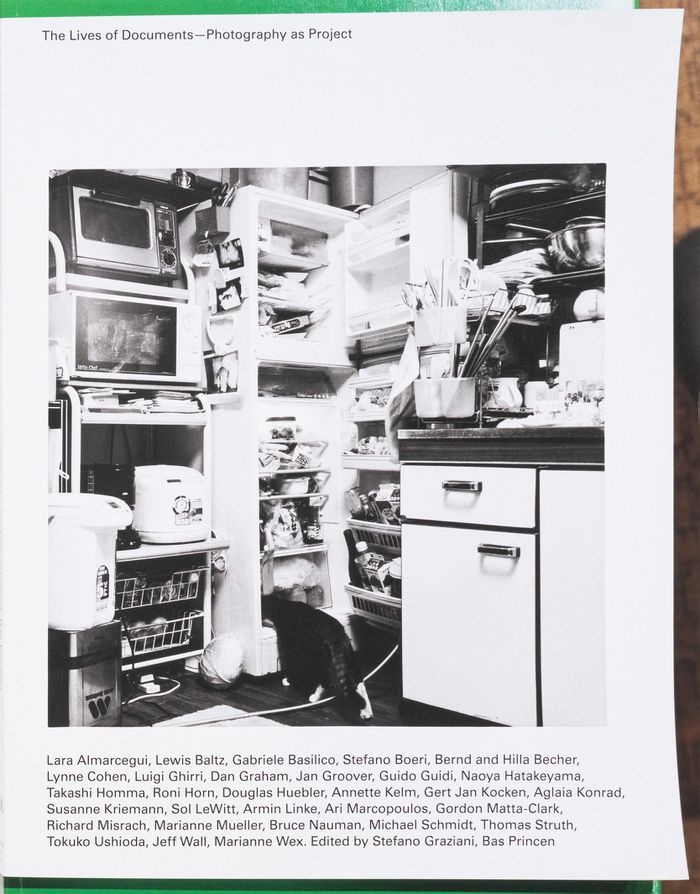
How do photographers select, order, and display their images to make visual arguments about built and natural environments? Conceived as part of a long-term project at the CCA to examine the contemporary role of photography in the study and practice of architecture, The Lives of Documents — Photography as Project prompts reflections on the idea of the documentary as an embedded quality of photography. Tracing the research materials, archiving practices, and production processes of diverse authors, photographers Bas Princen and Stefano Graziani highlight a selection of photographic projects that model our visible world by investigating notions of landscape and its destruction, global infrastructure, intimacy and interiority, and conditions of urban and domestic space and life. This publication follows Princen and Graziani’s travels to understand how artists use photography as a tool for their artistic research and how they conceive of their projects as evolving and expanding explorations. Bringing together studio visit images, artist interviews, and Princen and Graziani’s own reproduction of photographic projects, it emphasizes how photography reveals and expresses lived and built realities in ways that traditional architectural tools fail to represent or communicate.
The lives of documents
Actions:
Prix:
$45.00
(disponible en magasin)
Résumé:
How do photographers select, order, and display their images to make visual arguments about built and natural environments? Conceived as part of a long-term project at the CCA to examine the contemporary role of photography in the study and practice of architecture, The Lives of Documents — Photography as Project prompts reflections on the idea of the documentary as an embedded quality of photography. Tracing the research materials, archiving practices, and production processes of diverse authors, photographers Bas Princen and Stefano Graziani highlight a selection of photographic projects that model our visible world by investigating notions of landscape and its destruction, global infrastructure, intimacy and interiority, and conditions of urban and domestic space and life. This publication follows Princen and Graziani’s travels to understand how artists use photography as a tool for their artistic research and how they conceive of their projects as evolving and expanding explorations. Bringing together studio visit images, artist interviews, and Princen and Graziani’s own reproduction of photographic projects, it emphasizes how photography reveals and expresses lived and built realities in ways that traditional architectural tools fail to represent or communicate.
Classification:
livres
livres
Publication:
juin 2023
juin 2023
Sujet:
Publications du CCA
Publications du CCA


