


1059 Résultats
Classification:
livres
livres
Titre:
Tokyo vertigo: extreme-city
Tokyo vertigo: extreme-city
Actions:
Prix:
$27.00
(disponible sur commande)
Résumé:
From the narrow alleyways of the Golden Gai to the flashing ads and jumbotrons of the Shibuya street crossings to the skyscrapers of Shinjuku and the cartoon billboards of the Akiba, Tokyo is an intensely visual and mesmerizing city. In Tokyo Vertigo, Stephen Barber focuses upon filmic, photographic, and media cultures as well as its urban history of destruction and(...)
$27.00
(disponible sur commande)
Résumé:
From the narrow alleyways of the Golden Gai to the flashing ads and jumbotrons of the Shibuya street crossings to the skyscrapers of Shinjuku and the cartoon billboards of the Akiba, Tokyo is an intensely visual and mesmerizing city. In Tokyo Vertigo, Stephen Barber focuses upon filmic, photographic, and media cultures as well as its urban history of destruction and(...)
Titre:
Tokyo vertigo: extreme-city
Actions:
Prix:
$27.00
(disponible sur commande)
Résumé:
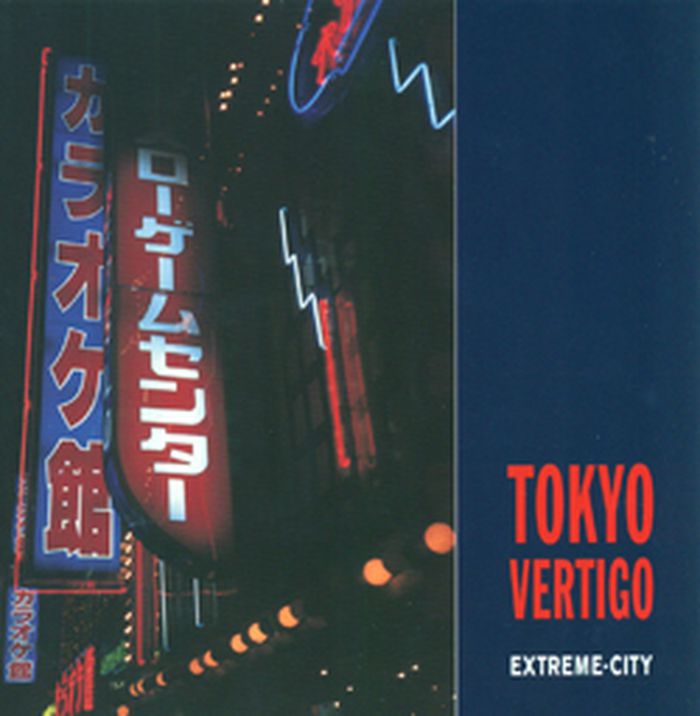
From the narrow alleyways of the Golden Gai to the flashing ads and jumbotrons of the Shibuya street crossings to the skyscrapers of Shinjuku and the cartoon billboards of the Akiba, Tokyo is an intensely visual and mesmerizing city. In Tokyo Vertigo, Stephen Barber focuses upon filmic, photographic, and media cultures as well as its urban history of destruction and reconfiguration. Dividing his analysis into three parts, Barber first interrogates the disparate urban zones of Tokyo, from the districts of Shinjuku and Shibuya to the desolate peripheries where the megalopolis falls apart. He then examines Tokyo's sexual and media cultures, through which the city's compulsive fascinations and obsessions exert their power. Finally, he looks at the ways in which European culture collides with Tokyo's urban formations, often generating unprecedented hybrid images and texts. An anti-guidebook that intimately reveals the visual culture of this city in constant flux, Tokyo Vertigo includes original photographs by Romain Slocombe and a range of photographic art-works from the 1950s to the 2010s that exemplify the intensity and spectacle of the city.
Tokyo vertigo: extreme-city
Actions:
Prix:
$27.00
(disponible sur commande)
Résumé:
From the narrow alleyways of the Golden Gai to the flashing ads and jumbotrons of the Shibuya street crossings to the skyscrapers of Shinjuku and the cartoon billboards of the Akiba, Tokyo is an intensely visual and mesmerizing city. In Tokyo Vertigo, Stephen Barber focuses upon filmic, photographic, and media cultures as well as its urban history of destruction and reconfiguration. Dividing his analysis into three parts, Barber first interrogates the disparate urban zones of Tokyo, from the districts of Shinjuku and Shibuya to the desolate peripheries where the megalopolis falls apart. He then examines Tokyo's sexual and media cultures, through which the city's compulsive fascinations and obsessions exert their power. Finally, he looks at the ways in which European culture collides with Tokyo's urban formations, often generating unprecedented hybrid images and texts. An anti-guidebook that intimately reveals the visual culture of this city in constant flux, Tokyo Vertigo includes original photographs by Romain Slocombe and a range of photographic art-works from the 1950s to the 2010s that exemplify the intensity and spectacle of the city.
Classification:
livres
livres
Publication:
septembre 2011
septembre 2011
Sujet:
Théorie de l’urbanisme
Théorie de l’urbanisme
Classification:
livres
livres

Actions:
Prix:
$54.95
(disponible sur commande)
Résumé:
Following the formation of the German National Socialist Party in the 1920s, various forms of sound (popular music, voice, noise and silence) and media technology (radio and loudspeaker systems) were configured as useful to the party's political programme. Focusing on the urban "soundscape" of Düsseldorf, the author makes a persuasive case for investigating such sound(...)
$54.95
(disponible sur commande)
Résumé:
Following the formation of the German National Socialist Party in the 1920s, various forms of sound (popular music, voice, noise and silence) and media technology (radio and loudspeaker systems) were configured as useful to the party's political programme. Focusing on the urban "soundscape" of Düsseldorf, the author makes a persuasive case for investigating such sound(...)
Titre:
Nazi soundscapes : sound, technology and urban space in Germany, 1933-1945
Actions:
Prix:
$54.95
(disponible sur commande)
Résumé:
Following the formation of the German National Socialist Party in the 1920s, various forms of sound (popular music, voice, noise and silence) and media technology (radio and loudspeaker systems) were configured as useful to the party's political programme. Focusing on the urban "soundscape" of Düsseldorf, the author makes a persuasive case for investigating such sound events and technological devices in their specific contexts of production and reception. Nazi Soundscapes identifies strategies for controlling space and reworking identity patterns, but also the ongoing difficulties in manipulating mediated sounds and the spaces of listening reception, whether in the home, workplace, the cinema, public rituals or with wartime siren systems. The study revises visualist notions of social control, and reveals the disciplinary functions of listening (as eavesdropping) as well as the sonic dimensions to exclusion and violence during Nazism. An essential title for everyone interested in the links between German political culture, audiovisual media and urban history,Nazi Soundscapes provides a fascinating analysis of the cultural significance of sound between the 1920s and early 1940s.
Nazi soundscapes : sound, technology and urban space in Germany, 1933-1945
Actions:
Prix:
$54.95
(disponible sur commande)
Résumé:
Following the formation of the German National Socialist Party in the 1920s, various forms of sound (popular music, voice, noise and silence) and media technology (radio and loudspeaker systems) were configured as useful to the party's political programme. Focusing on the urban "soundscape" of Düsseldorf, the author makes a persuasive case for investigating such sound events and technological devices in their specific contexts of production and reception. Nazi Soundscapes identifies strategies for controlling space and reworking identity patterns, but also the ongoing difficulties in manipulating mediated sounds and the spaces of listening reception, whether in the home, workplace, the cinema, public rituals or with wartime siren systems. The study revises visualist notions of social control, and reveals the disciplinary functions of listening (as eavesdropping) as well as the sonic dimensions to exclusion and violence during Nazism. An essential title for everyone interested in the links between German political culture, audiovisual media and urban history,Nazi Soundscapes provides a fascinating analysis of the cultural significance of sound between the 1920s and early 1940s.
Classification:
livres
livres
Publication:
septembre 2012
septembre 2012
Sujet:
Théorie de l’architecture
Théorie de l’architecture
Classification:
livres
livres
Prix:
$38.95
(disponible sur commande)
Résumé:
Beautiful Data is both a history of big data and interactivity, and a sophisticated meditation on ideas about vision and cognition in the second half of the twentieth century. Contending that our forms of attention, observation, and truth are contingent and contested, Orit Halpern historicizes the ways that we are trained, and train ourselves, to observe and analyze the(...)
$38.95
(disponible sur commande)
Résumé:
Beautiful Data is both a history of big data and interactivity, and a sophisticated meditation on ideas about vision and cognition in the second half of the twentieth century. Contending that our forms of attention, observation, and truth are contingent and contested, Orit Halpern historicizes the ways that we are trained, and train ourselves, to observe and analyze the(...)
Titre:
Beautiful data: a history of vision and reason since 1945
Actions:
Prix:
$38.95
(disponible sur commande)
Résumé:
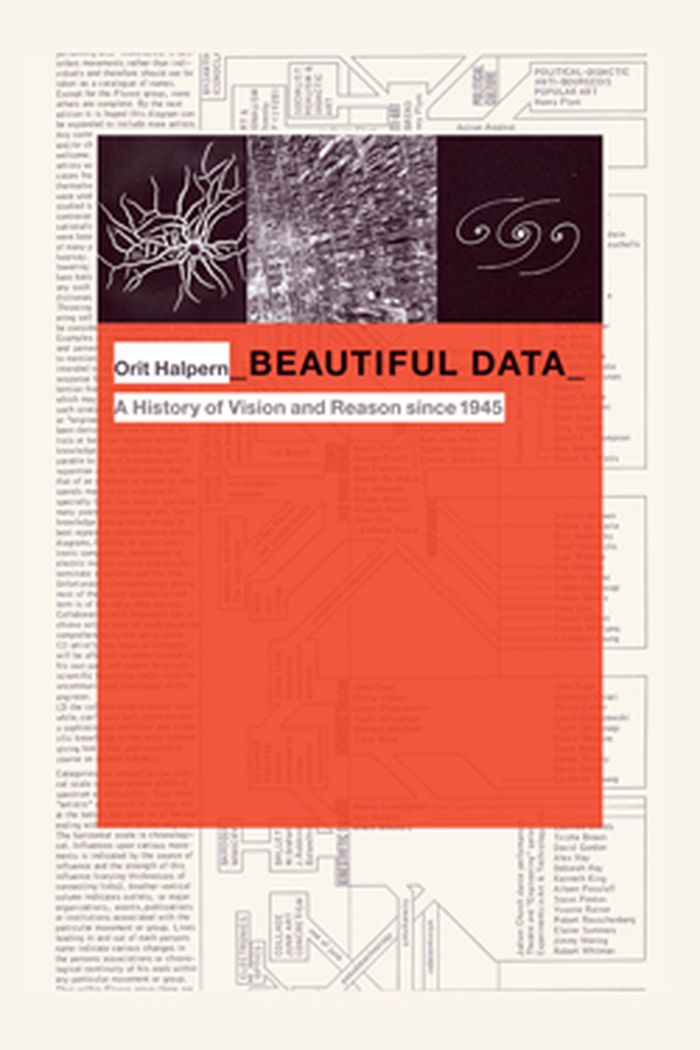
Beautiful Data is both a history of big data and interactivity, and a sophisticated meditation on ideas about vision and cognition in the second half of the twentieth century. Contending that our forms of attention, observation, and truth are contingent and contested, Orit Halpern historicizes the ways that we are trained, and train ourselves, to observe and analyze the world. Tracing the postwar impact of cybernetics and the communication sciences on the social and human sciences, design, arts, and urban planning, she finds a radical shift in attitudes toward recording and displaying information. These changed attitudes produced what she calls communicative objectivity: new forms of observation, rationality, and economy based on the management and analysis of data. Halpern complicates assumptions about the value of data and visualization, arguing that changes in how we manage and train perception, and define reason and intelligence, are also transformations in governmentality. She also challenges the paradoxical belief that we are experiencing a crisis of attention caused by digital media, a crisis that can be resolved only through intensified media consumption.
Beautiful data: a history of vision and reason since 1945
Actions:
Prix:
$38.95
(disponible sur commande)
Résumé:
Beautiful Data is both a history of big data and interactivity, and a sophisticated meditation on ideas about vision and cognition in the second half of the twentieth century. Contending that our forms of attention, observation, and truth are contingent and contested, Orit Halpern historicizes the ways that we are trained, and train ourselves, to observe and analyze the world. Tracing the postwar impact of cybernetics and the communication sciences on the social and human sciences, design, arts, and urban planning, she finds a radical shift in attitudes toward recording and displaying information. These changed attitudes produced what she calls communicative objectivity: new forms of observation, rationality, and economy based on the management and analysis of data. Halpern complicates assumptions about the value of data and visualization, arguing that changes in how we manage and train perception, and define reason and intelligence, are also transformations in governmentality. She also challenges the paradoxical belief that we are experiencing a crisis of attention caused by digital media, a crisis that can be resolved only through intensified media consumption.
Classification:
livres
livres
Publication:
août 2014
août 2014
Sujet:
Théorie de l’architecture
Théorie de l’architecture
Classification:
livres
livres
Actions:
Prix:
$48.95
(disponible sur commande)
Résumé:
Decoys and Disruptions is the first comprehensive collection of writings by American artist and critic Martha Rosler. Best known for her videos and photography, Rosler has also been an original and influential cultural critic and theorist for over twenty-five years. The writings collected here address such key topics as documentary photography, feminist art, video,(...)
$48.95
(disponible sur commande)
Résumé:
Decoys and Disruptions is the first comprehensive collection of writings by American artist and critic Martha Rosler. Best known for her videos and photography, Rosler has also been an original and influential cultural critic and theorist for over twenty-five years. The writings collected here address such key topics as documentary photography, feminist art, video,(...)
Titre:
Decoys and disruptions : selected writings 1975-2001
Actions:
Prix:
$48.95
(disponible sur commande)
Résumé:
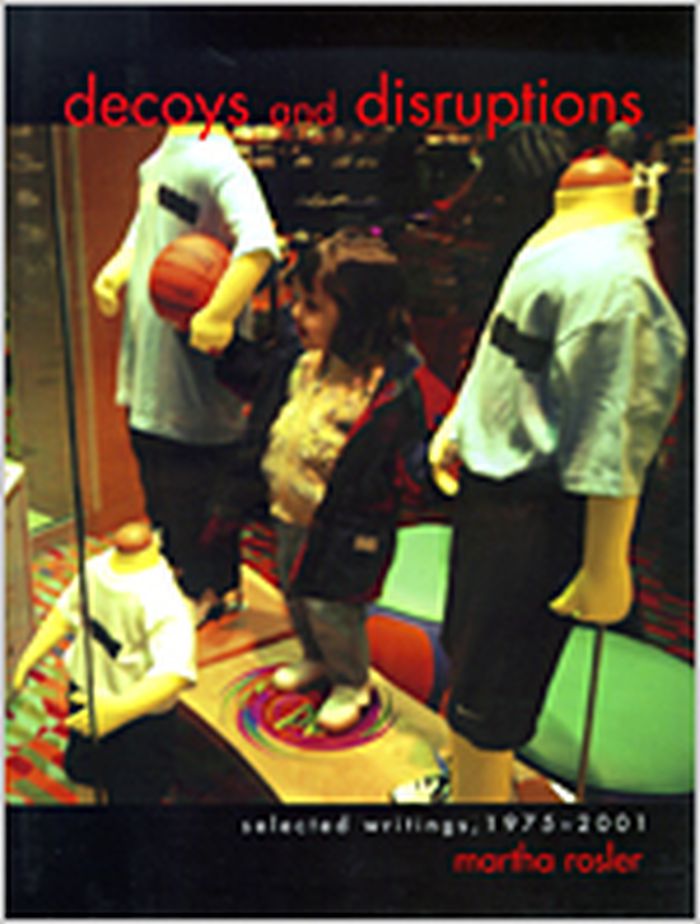
Decoys and Disruptions is the first comprehensive collection of writings by American artist and critic Martha Rosler. Best known for her videos and photography, Rosler has also been an original and influential cultural critic and theorist for over twenty-five years. The writings collected here address such key topics as documentary photography, feminist art, video, government patronage of the arts, censorship, and the future of digitally based photographic media.
Decoys and disruptions : selected writings 1975-2001
Actions:
Prix:
$48.95
(disponible sur commande)
Résumé:
Decoys and Disruptions is the first comprehensive collection of writings by American artist and critic Martha Rosler. Best known for her videos and photography, Rosler has also been an original and influential cultural critic and theorist for over twenty-five years. The writings collected here address such key topics as documentary photography, feminist art, video, government patronage of the arts, censorship, and the future of digitally based photographic media.
Classification:
livres
livres
Publication:
juin 2004, Cambridge
juin 2004, Cambridge
Sujet:
Théorie de l’art
Théorie de l’art
Classification:
livres
livres
Titre:
Rebel video: the video movement of the 1970s amd 1980s. London -- Bern -- Lausanne -- Basel -- Zuric
Rebel video: the video movement of the 1970s amd 1980s. London -- Bern -- Lausanne -- Basel -- Zuric
Actions:
Prix:
$61.95
(disponible sur commande)
Résumé:
"Rebel Video" portrays protagonists of this activist movement in London, Basel, Berne, Lausanne, and Zurich. It documents the topics and concerns these creative rowdies picked up and the lasting effect their work has until today. Richly illustrated and fleshed out with brief essays by expert authors on specific aspects of film documentary and video art, the book(...)
$61.95
(disponible sur commande)
Résumé:
"Rebel Video" portrays protagonists of this activist movement in London, Basel, Berne, Lausanne, and Zurich. It documents the topics and concerns these creative rowdies picked up and the lasting effect their work has until today. Richly illustrated and fleshed out with brief essays by expert authors on specific aspects of film documentary and video art, the book(...)
Titre:
Rebel video: the video movement of the 1970s amd 1980s. London -- Bern -- Lausanne -- Basel -- Zuric
Actions:
Prix:
$61.95
(disponible sur commande)
Résumé:
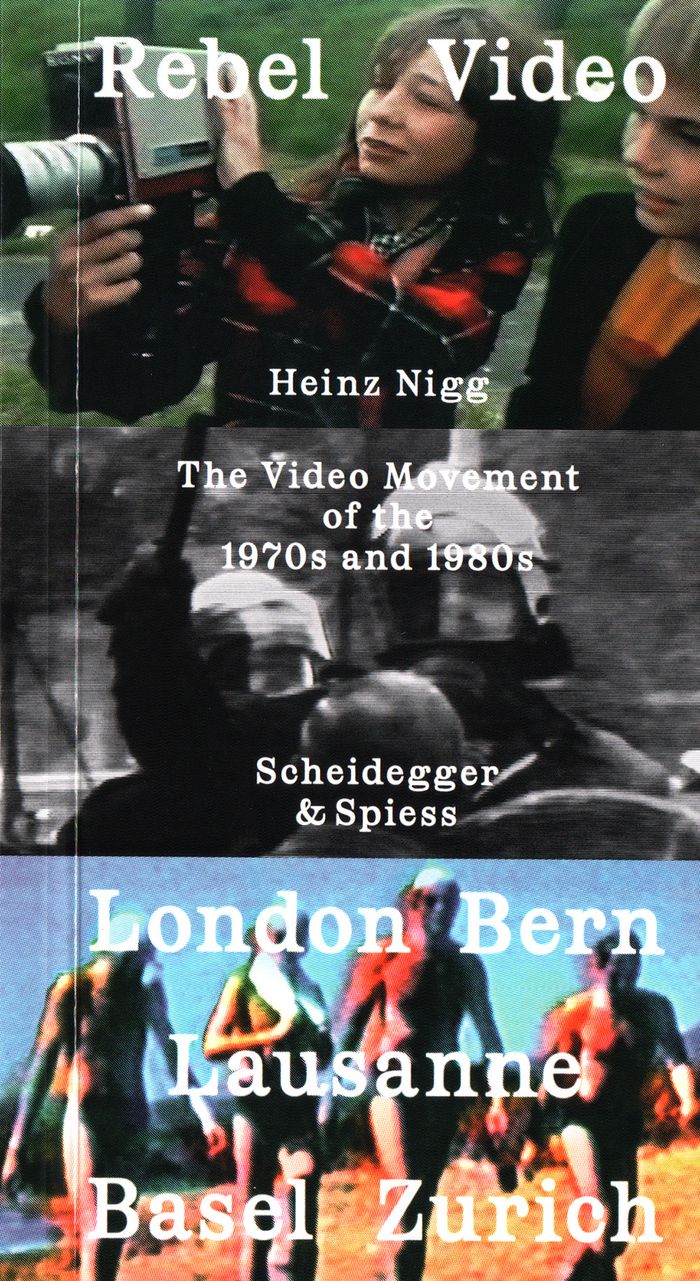
"Rebel Video" portrays protagonists of this activist movement in London, Basel, Berne, Lausanne, and Zurich. It documents the topics and concerns these creative rowdies picked up and the lasting effect their work has until today. Richly illustrated and fleshed out with brief essays by expert authors on specific aspects of film documentary and video art, the book demonstrates and illuminates the significance and manifold facets of the community media movement.
Rebel video: the video movement of the 1970s amd 1980s. London -- Bern -- Lausanne -- Basel -- Zuric
Actions:
Prix:
$61.95
(disponible sur commande)
Résumé:
"Rebel Video" portrays protagonists of this activist movement in London, Basel, Berne, Lausanne, and Zurich. It documents the topics and concerns these creative rowdies picked up and the lasting effect their work has until today. Richly illustrated and fleshed out with brief essays by expert authors on specific aspects of film documentary and video art, the book demonstrates and illuminates the significance and manifold facets of the community media movement.
Classification:
livres
livres
Publication:
février 2018
février 2018
Sujet:
Théorie de l’art
Théorie de l’art
Classification:
livres
livres

Titre:
Unsitely aesthetics
Unsitely aesthetics
Actions:
Prix:
$22.00
(disponible sur commande)
Résumé:
The book aims to theorize current dynamics in media and sound art practice, and includes interviews and conversations with Barbara Campbell, Linda Carroli, Hugh Davies, Bec Dean, Renate Ferro, John Craig Freeman, Jo-Anne Green, Teri Hoskin, Lucas Ihlein, Yao Jui-Chung, kanarinka (a.k.a. Catherine D'Ignazio), Scott Kildall, Deborah Kelly, Natalie Loveless, Michael Takeo(...)
$22.00
(disponible sur commande)
Résumé:
The book aims to theorize current dynamics in media and sound art practice, and includes interviews and conversations with Barbara Campbell, Linda Carroli, Hugh Davies, Bec Dean, Renate Ferro, John Craig Freeman, Jo-Anne Green, Teri Hoskin, Lucas Ihlein, Yao Jui-Chung, kanarinka (a.k.a. Catherine D'Ignazio), Scott Kildall, Deborah Kelly, Natalie Loveless, Michael Takeo(...)
Titre:
Unsitely aesthetics
Actions:
Prix:
$22.00
(disponible sur commande)
Résumé:
The book aims to theorize current dynamics in media and sound art practice, and includes interviews and conversations with Barbara Campbell, Linda Carroli, Hugh Davies, Bec Dean, Renate Ferro, John Craig Freeman, Jo-Anne Green, Teri Hoskin, Lucas Ihlein, Yao Jui-Chung, kanarinka (a.k.a. Catherine D'Ignazio), Scott Kildall, Deborah Kelly, Natalie Loveless, Michael Takeo Magruder, Timothy Conway Murray, Norie Neumark, Victoria Scott, Brooke Singer, Igor Štromajer, Helen Thorington and Darren Tofts.
Unsitely aesthetics
Actions:
Prix:
$22.00
(disponible sur commande)
Résumé:
The book aims to theorize current dynamics in media and sound art practice, and includes interviews and conversations with Barbara Campbell, Linda Carroli, Hugh Davies, Bec Dean, Renate Ferro, John Craig Freeman, Jo-Anne Green, Teri Hoskin, Lucas Ihlein, Yao Jui-Chung, kanarinka (a.k.a. Catherine D'Ignazio), Scott Kildall, Deborah Kelly, Natalie Loveless, Michael Takeo Magruder, Timothy Conway Murray, Norie Neumark, Victoria Scott, Brooke Singer, Igor Štromajer, Helen Thorington and Darren Tofts.
Classification:
livres
livres
Publication:
janvier 2013
janvier 2013
Sujet:
Théorie de l’art
Théorie de l’art
Classification:
livres
livres
Actions:
Prix:
$33.95
(disponible sur commande)
Résumé:
The French philosopher Felix Guattari frequently visited Japan during the 1980s and organized exchanges between French and Japanese artists and intellectuals. His immersion into the "machinic eros" of Japanese culture put him into contact with media theorists such as Tetsuo Kogawa and activists within the mini-FM community (Radio Home Run), documentary filmmakers (Mitsuo(...)
$33.95
(disponible sur commande)
Résumé:
The French philosopher Felix Guattari frequently visited Japan during the 1980s and organized exchanges between French and Japanese artists and intellectuals. His immersion into the "machinic eros" of Japanese culture put him into contact with media theorists such as Tetsuo Kogawa and activists within the mini-FM community (Radio Home Run), documentary filmmakers (Mitsuo(...)
Titre:
Machinic Eros: writings on Japan
Actions:
Prix:
$33.95
(disponible sur commande)
Résumé:
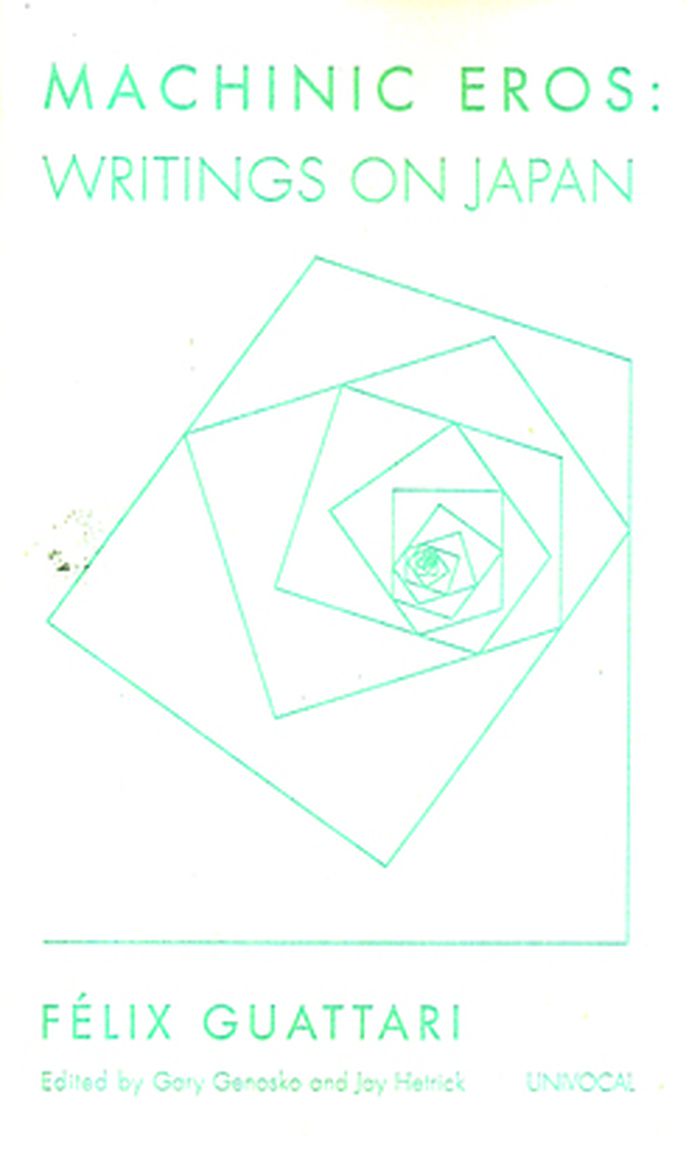
The French philosopher Felix Guattari frequently visited Japan during the 1980s and organized exchanges between French and Japanese artists and intellectuals. His immersion into the "machinic eros" of Japanese culture put him into contact with media theorists such as Tetsuo Kogawa and activists within the mini-FM community (Radio Home Run), documentary filmmakers (Mitsuo Sato), photographers (Keiichi Tahara), novelists (Kobo Abe), internationally recognized architects (Shin Takamatsu), and dancers (Min Tanaka).
Machinic Eros: writings on Japan
Actions:
Prix:
$33.95
(disponible sur commande)
Résumé:
The French philosopher Felix Guattari frequently visited Japan during the 1980s and organized exchanges between French and Japanese artists and intellectuals. His immersion into the "machinic eros" of Japanese culture put him into contact with media theorists such as Tetsuo Kogawa and activists within the mini-FM community (Radio Home Run), documentary filmmakers (Mitsuo Sato), photographers (Keiichi Tahara), novelists (Kobo Abe), internationally recognized architects (Shin Takamatsu), and dancers (Min Tanaka).
Classification:
livres
livres
Publication:
avril 2015
avril 2015
Sujet:
Théorie/ philosophie
Théorie/ philosophie
Classification:
livres
livres

Titre:
Total identity
Total identity
Actions:
Prix:
$112.00
(disponible sur commande)
Résumé:
A broadly-based, high-standard publication on corporate identity has been awaited. "Total Identity" is comprised of four parts, innovatively approaching which every aspect of an organizations’ identity. Part 1 describes the theory behind branding and corporate identity programmes. Part 2 highlights total identity case studies. Part 3 focuses on communications media and(...)
$112.00
(disponible sur commande)
Résumé:
A broadly-based, high-standard publication on corporate identity has been awaited. "Total Identity" is comprised of four parts, innovatively approaching which every aspect of an organizations’ identity. Part 1 describes the theory behind branding and corporate identity programmes. Part 2 highlights total identity case studies. Part 3 focuses on communications media and(...)
Publication:
mars 2004, Amsterdam
mars 2004, Amsterdam
Titre:
Total identity
Actions:
Prix:
$112.00
(disponible sur commande)
Résumé:
A broadly-based, high-standard publication on corporate identity has been awaited. "Total Identity" is comprised of four parts, innovatively approaching which every aspect of an organizations’ identity. Part 1 describes the theory behind branding and corporate identity programmes. Part 2 highlights total identity case studies. Part 3 focuses on communications media and how design enhances their effectiveness. Part 4 discusses the building blocks of design, such as type, colour, and so on, and how and to what effect they can be implemented. "Total Identity" is conceived by the designers of one of Holland's most famous identity agencies Total Design - recently renamed "Total Identity" - and draws from their expertise and project experience. "Total Identity" is a picture book and a thought-provoking study of a discipline in constant motion.
Total identity
Actions:
Prix:
$112.00
(disponible sur commande)
Résumé:
A broadly-based, high-standard publication on corporate identity has been awaited. "Total Identity" is comprised of four parts, innovatively approaching which every aspect of an organizations’ identity. Part 1 describes the theory behind branding and corporate identity programmes. Part 2 highlights total identity case studies. Part 3 focuses on communications media and how design enhances their effectiveness. Part 4 discusses the building blocks of design, such as type, colour, and so on, and how and to what effect they can be implemented. "Total Identity" is conceived by the designers of one of Holland's most famous identity agencies Total Design - recently renamed "Total Identity" - and draws from their expertise and project experience. "Total Identity" is a picture book and a thought-provoking study of a discipline in constant motion.
Classification:
livres
livres
Publication:
mars 2004, Amsterdam
mars 2004, Amsterdam
Classification:
livres
livres
Actions:
Prix:
$40.00
(disponible sur commande)
Résumé:
Susanne Kriemann's artist’s book "P(ech) B(lende), library for radioactive afterlife" looks at the political and actual invisibility of the highly radioactive mineral pitchblende (uraninite). From 1946 to 1989 pitchblende was mined in the Erzgebirge (Ore) Mountains in an area contained within the former GDR and was an important component in the USSR’s nuclear arsenal. The(...)
$40.00
(disponible sur commande)
Résumé:
Susanne Kriemann's artist’s book "P(ech) B(lende), library for radioactive afterlife" looks at the political and actual invisibility of the highly radioactive mineral pitchblende (uraninite). From 1946 to 1989 pitchblende was mined in the Erzgebirge (Ore) Mountains in an area contained within the former GDR and was an important component in the USSR’s nuclear arsenal. The(...)
Titre:
Susanne Kriemann: P(ech) B(blende). Library for radioactive afterlife
Actions:
Prix:
$40.00
(disponible sur commande)
Résumé:
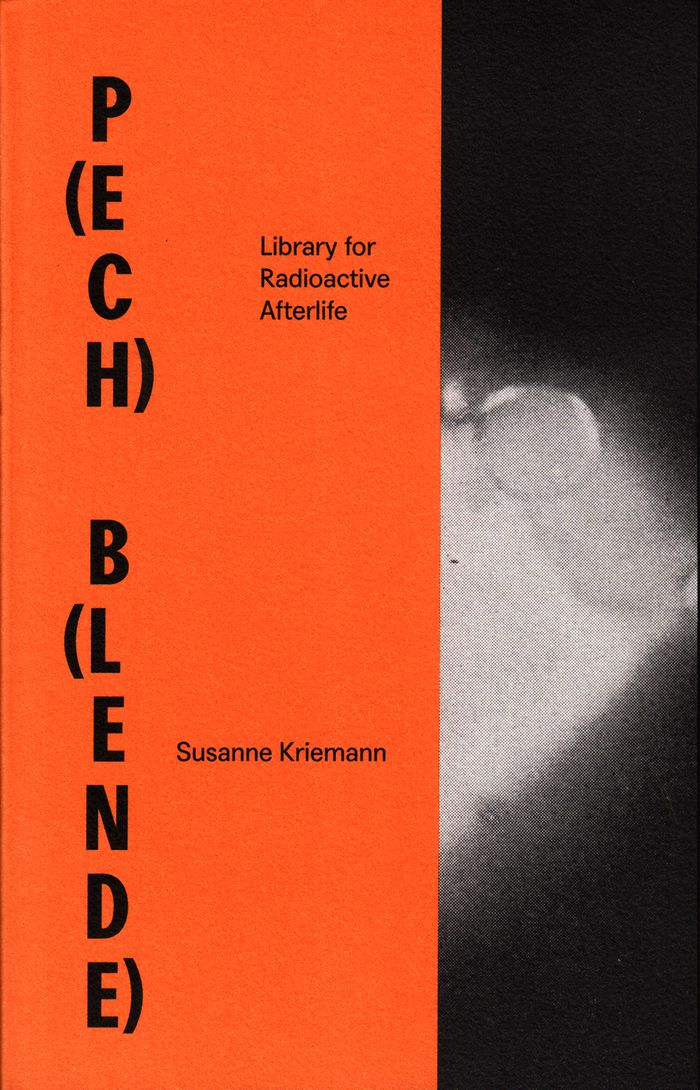
Susanne Kriemann's artist’s book "P(ech) B(lende), library for radioactive afterlife" looks at the political and actual invisibility of the highly radioactive mineral pitchblende (uraninite). From 1946 to 1989 pitchblende was mined in the Erzgebirge (Ore) Mountains in an area contained within the former GDR and was an important component in the USSR’s nuclear arsenal. The publication brings together seven texts viewing the subject with a literary eye through the lens of media theory. All the texts deal with the documentation of radioactive materials, their effects, and afterlife. The book P(ech) B(lende) ties in with Kriemann’s exhibition Pechblende (Chapter 1) at the Ernst Schering Foundation in Berlin (17, March to 5, June 2016). The work was previously on show at Prefix ICA in Toronto under the title Pechblende (Prologue).
Susanne Kriemann: P(ech) B(blende). Library for radioactive afterlife
Actions:
Prix:
$40.00
(disponible sur commande)
Résumé:
Susanne Kriemann's artist’s book "P(ech) B(lende), library for radioactive afterlife" looks at the political and actual invisibility of the highly radioactive mineral pitchblende (uraninite). From 1946 to 1989 pitchblende was mined in the Erzgebirge (Ore) Mountains in an area contained within the former GDR and was an important component in the USSR’s nuclear arsenal. The publication brings together seven texts viewing the subject with a literary eye through the lens of media theory. All the texts deal with the documentation of radioactive materials, their effects, and afterlife. The book P(ech) B(lende) ties in with Kriemann’s exhibition Pechblende (Chapter 1) at the Ernst Schering Foundation in Berlin (17, March to 5, June 2016). The work was previously on show at Prefix ICA in Toronto under the title Pechblende (Prologue).
Classification:
livres
livres
Publication:
octobre 2017
octobre 2017
Sujet:
Monographies photo
Monographies photo
Classification:
livres
livres
Prix:
$39.95
(disponible sur commande)
Résumé:
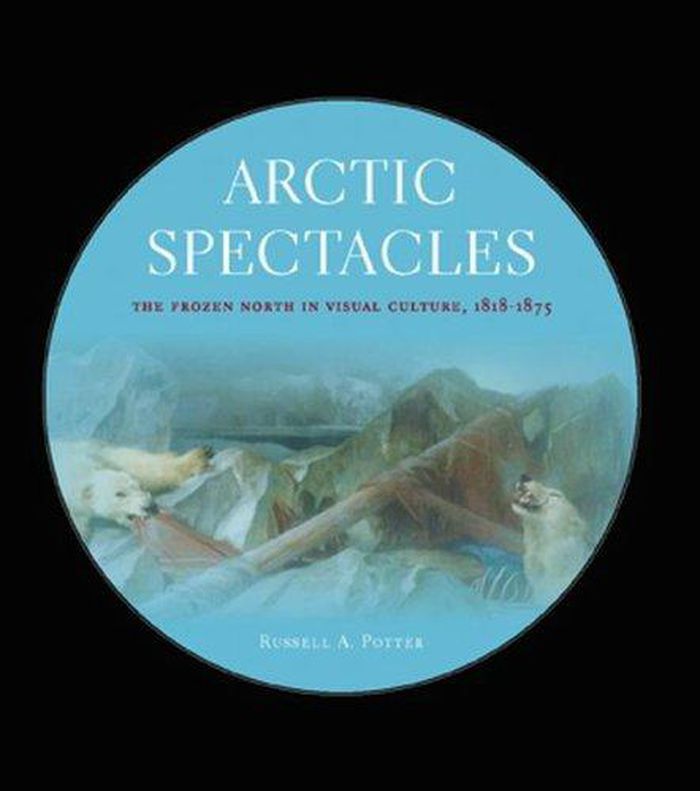
Arctic Spectacles: The Frozen North in Visual Culture, 1818-1875 illuminates the nineteenth-century fascination with visual representations of the Arctic, weaving together a narrative of the major Arctic expeditions with an account of their public reception through art and mass media.
$39.95
(disponible sur commande)
Résumé:
Arctic Spectacles: The Frozen North in Visual Culture, 1818-1875 illuminates the nineteenth-century fascination with visual representations of the Arctic, weaving together a narrative of the major Arctic expeditions with an account of their public reception through art and mass media.
Publication:
septembre 2007, Montreal, Kingston
septembre 2007, Montreal, Kingston
Titre:
Arctic spectacles : The frozen north in visual culture, 1818-1875
Actions:
Prix:
$39.95
(disponible sur commande)
Résumé:
Arctic Spectacles: The Frozen North in Visual Culture, 1818-1875 illuminates the nineteenth-century fascination with visual representations of the Arctic, weaving together a narrative of the major Arctic expeditions with an account of their public reception through art and mass media.
Arctic spectacles : The frozen north in visual culture, 1818-1875
Actions:
Prix:
$39.95
(disponible sur commande)
Résumé:
Arctic Spectacles: The Frozen North in Visual Culture, 1818-1875 illuminates the nineteenth-century fascination with visual representations of the Arctic, weaving together a narrative of the major Arctic expeditions with an account of their public reception through art and mass media.
Classification:
livres
livres
Publication:
septembre 2007, Montreal, Kingston
septembre 2007, Montreal, Kingston


