


951 Résultats
Classification:
livres
livres
Actions:
Exemplaires:
Description:
252 pages : illustrations (chiefly color), facsimile, portrait ; 24 cm
Description:
252 pages : illustrations (chiefly color), facsimile, portrait ; 24 cm
Auteur:
Sujet:
Publication:
[Montréal] : Galerie Leonard & Bina Ellen Art Gallery, [2021], ©2021
[Montréal] : Galerie Leonard & Bina Ellen Art Gallery, [2021], ©2021
Titre:
Aller à, faire avec, passer pareil = Going to, making do, passing just the same / sous la direction de Edith Brunette et François Lemieux.
Actions:
Exemplaires:
Description:
252 pages : illustrations (chiefly color), facsimile, portrait ; 24 cm
Aller à, faire avec, passer pareil = Going to, making do, passing just the same / sous la direction de Edith Brunette et François Lemieux.
Actions:
Exemplaires:
Description:
252 pages : illustrations (chiefly color), facsimile, portrait ; 24 cm
Classification:
livres
livres
Publication:
[Montréal] : Galerie Leonard & Bina Ellen Art Gallery, [2021], ©2021
[Montréal] : Galerie Leonard & Bina Ellen Art Gallery, [2021], ©2021
Auteur:
Sujet:
Classification:
livres
livres
Titre:
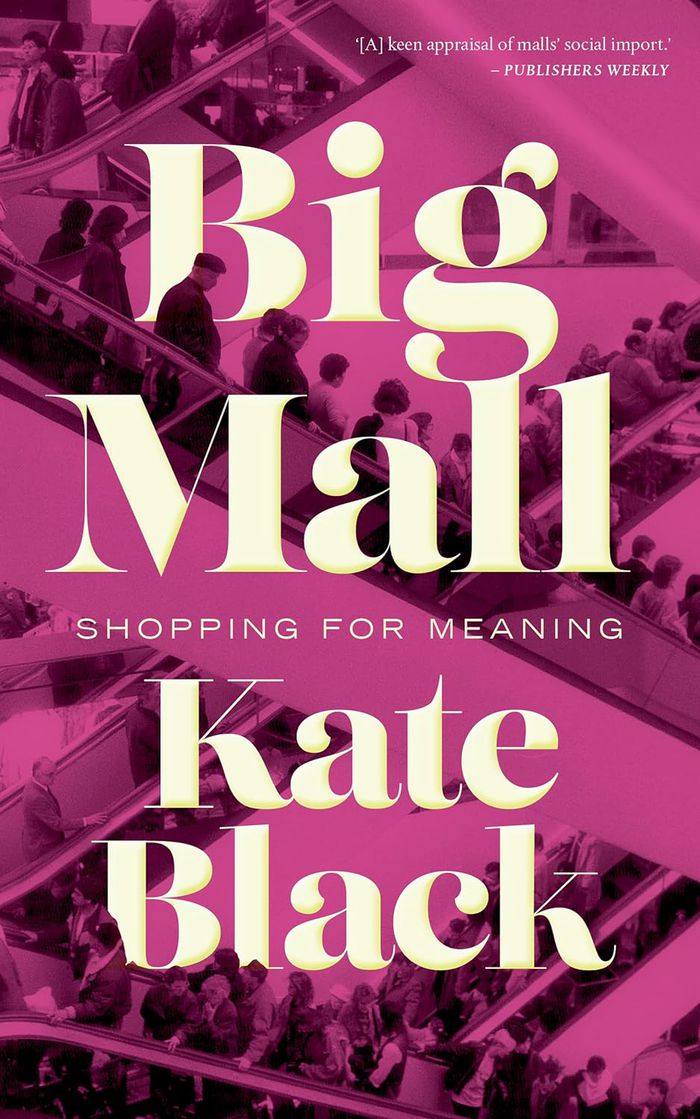
Big mall
Big mall
Actions:
Prix:
$23.95
(disponible sur commande)
Résumé:
A phenomenology of the mall: If the mall makes us feel bad, why do we keep going back? In a world poisoned by capitalism, is shopping what makes life worth living? Kate Black grew up in West Edmonton Mall – a mall on steroids, notorious for its indoor waterpark, deadly roller coaster, and controversial dolphin shows. But everyone has a favourite mall, or a mall that is(...)
$23.95
(disponible sur commande)
Résumé:
A phenomenology of the mall: If the mall makes us feel bad, why do we keep going back? In a world poisoned by capitalism, is shopping what makes life worth living? Kate Black grew up in West Edmonton Mall – a mall on steroids, notorious for its indoor waterpark, deadly roller coaster, and controversial dolphin shows. But everyone has a favourite mall, or a mall that is(...)
Titre:
Big mall
Actions:
Prix:
$23.95
(disponible sur commande)
Résumé:
A phenomenology of the mall: If the mall makes us feel bad, why do we keep going back? In a world poisoned by capitalism, is shopping what makes life worth living? Kate Black grew up in West Edmonton Mall – a mall on steroids, notorious for its indoor waterpark, deadly roller coaster, and controversial dolphin shows. But everyone has a favourite mall, or a mall that is their own personal memory palace. It's a place people love to hate and hate to love – a site of pleasure and pain, of death and violence, of (sub)urban legend. Blending a history of shopping with a story of coming of age in North America's largest and strangest mall, "Big mall" investigates how these structures have become the ultimate symbol of late-capitalist dread – and, surprisingly, a subversive site of hope.
Big mall
Actions:
Prix:
$23.95
(disponible sur commande)
Résumé:
A phenomenology of the mall: If the mall makes us feel bad, why do we keep going back? In a world poisoned by capitalism, is shopping what makes life worth living? Kate Black grew up in West Edmonton Mall – a mall on steroids, notorious for its indoor waterpark, deadly roller coaster, and controversial dolphin shows. But everyone has a favourite mall, or a mall that is their own personal memory palace. It's a place people love to hate and hate to love – a site of pleasure and pain, of death and violence, of (sub)urban legend. Blending a history of shopping with a story of coming of age in North America's largest and strangest mall, "Big mall" investigates how these structures have become the ultimate symbol of late-capitalist dread – and, surprisingly, a subversive site of hope.
Classification:
livres
livres
Publication:
février 2024
février 2024
Classification:
livres
livres
Prix:
$37.95
(disponible sur commande)
Résumé:
In ''Camera Geologica'' Siobhan Angus tells the history of photography through the minerals upon which the medium depends. Challenging the emphasis on immateriality in discourses on photography, Angus focuses on the inextricable links between image-making and resource extraction, revealing how the mining of bitumen, silver, platinum, iron, uranium, and rare earth elements(...)
$37.95
(disponible sur commande)
Résumé:
In ''Camera Geologica'' Siobhan Angus tells the history of photography through the minerals upon which the medium depends. Challenging the emphasis on immateriality in discourses on photography, Angus focuses on the inextricable links between image-making and resource extraction, revealing how the mining of bitumen, silver, platinum, iron, uranium, and rare earth elements(...)
Titre:
Camera Geologica: An Elemental History of Photography
Actions:
Prix:
$37.95
(disponible sur commande)
Résumé:
In ''Camera Geologica'' Siobhan Angus tells the history of photography through the minerals upon which the medium depends. Challenging the emphasis on immateriality in discourses on photography, Angus focuses on the inextricable links between image-making and resource extraction, revealing how the mining of bitumen, silver, platinum, iron, uranium, and rare earth elements is a precondition of photography. Photography, Angus contends, begins underground and, in photographs of mines and mining, frequently returns there. Through a materials-driven analysis of visual culture, she illustrates histories of colonization, labor, and environmental degradation to expose the ways in which photography is enmeshed within and enables global extractive capitalism. Angus places nineteenth-century photography in dialogue with digital photography and its own entangled economies of extraction, demonstrating the importance of understanding photography’s complicity in the economic, geopolitical, and social systems that order the world.
Camera Geologica: An Elemental History of Photography
Actions:
Prix:
$37.95
(disponible sur commande)
Résumé:
In ''Camera Geologica'' Siobhan Angus tells the history of photography through the minerals upon which the medium depends. Challenging the emphasis on immateriality in discourses on photography, Angus focuses on the inextricable links between image-making and resource extraction, revealing how the mining of bitumen, silver, platinum, iron, uranium, and rare earth elements is a precondition of photography. Photography, Angus contends, begins underground and, in photographs of mines and mining, frequently returns there. Through a materials-driven analysis of visual culture, she illustrates histories of colonization, labor, and environmental degradation to expose the ways in which photography is enmeshed within and enables global extractive capitalism. Angus places nineteenth-century photography in dialogue with digital photography and its own entangled economies of extraction, demonstrating the importance of understanding photography’s complicity in the economic, geopolitical, and social systems that order the world.
Classification:
livres
livres
Publication:
juillet 2024
juillet 2024
Sujet:
Théorie de la photographie
Théorie de la photographie
Classification:
livres
livres

Actions:
Prix:
$55.00
(disponible sur commande)
Résumé:
In Sweden, the Facit brand is as well known as IBM or Olivetti. Based in Atvidaberg, the company produced mechanical calculators, typewriters and office furniture between 1922 and 1998. By the 1970s, the company had grown from a local family business into one of the world’s leading manufacturers. The company-sponsored football team AFF was playing in the first division.(...)
$55.00
(disponible sur commande)
Résumé:
In Sweden, the Facit brand is as well known as IBM or Olivetti. Based in Atvidaberg, the company produced mechanical calculators, typewriters and office furniture between 1922 and 1998. By the 1970s, the company had grown from a local family business into one of the world’s leading manufacturers. The company-sponsored football team AFF was playing in the first division.(...)
Titre:
The Facit Model: Globalism, Localism, Identity
Actions:
Prix:
$55.00
(disponible sur commande)
Résumé:
In Sweden, the Facit brand is as well known as IBM or Olivetti. Based in Atvidaberg, the company produced mechanical calculators, typewriters and office furniture between 1922 and 1998. By the 1970s, the company had grown from a local family business into one of the world’s leading manufacturers. The company-sponsored football team AFF was playing in the first division. But a few years later the Facit organization had disappeared—worn down by global capitalism. ''The Facit Model: Globalism, Localism, Identity'' looks at this peculiar example of corporate modernism through the printed matter produced in Facit’s in-house print shops, culled from FACIT’s archives. Type specimens, manuals, advertising leaflets and product catalogs bear witness to a culture which feels increasingly distant, and yet helped to define many of the codes and forms familiar to us from today’s world of work.
The Facit Model: Globalism, Localism, Identity
Actions:
Prix:
$55.00
(disponible sur commande)
Résumé:
In Sweden, the Facit brand is as well known as IBM or Olivetti. Based in Atvidaberg, the company produced mechanical calculators, typewriters and office furniture between 1922 and 1998. By the 1970s, the company had grown from a local family business into one of the world’s leading manufacturers. The company-sponsored football team AFF was playing in the first division. But a few years later the Facit organization had disappeared—worn down by global capitalism. ''The Facit Model: Globalism, Localism, Identity'' looks at this peculiar example of corporate modernism through the printed matter produced in Facit’s in-house print shops, culled from FACIT’s archives. Type specimens, manuals, advertising leaflets and product catalogs bear witness to a culture which feels increasingly distant, and yet helped to define many of the codes and forms familiar to us from today’s world of work.
Classification:
livres
livres
Publication:
mai 2025
mai 2025
Sujet:
Design industriel
Design industriel
Classification:
livres
livres
Actions:
Prix:
$57.95
(disponible sur commande)
Résumé:
Nomeda and Gediminas Urbonas produce interactive projects exploring the conflicts and contradictions of former Soviet republics and their recent transition to capitalism. Born in Lithuania and now living in Vilnius, these artists use the city as a catalyst and a starting point for their analysis of the various impacts caused by a new economic, social and political model(...)
$57.95
(disponible sur commande)
Résumé:
Nomeda and Gediminas Urbonas produce interactive projects exploring the conflicts and contradictions of former Soviet republics and their recent transition to capitalism. Born in Lithuania and now living in Vilnius, these artists use the city as a catalyst and a starting point for their analysis of the various impacts caused by a new economic, social and political model(...)
Publication:
mai 2008, Barcelone
mai 2008, Barcelone
Titre:
Nomeda and Gediminas: devices for action
Actions:
Prix:
$57.95
(disponible sur commande)
Résumé:
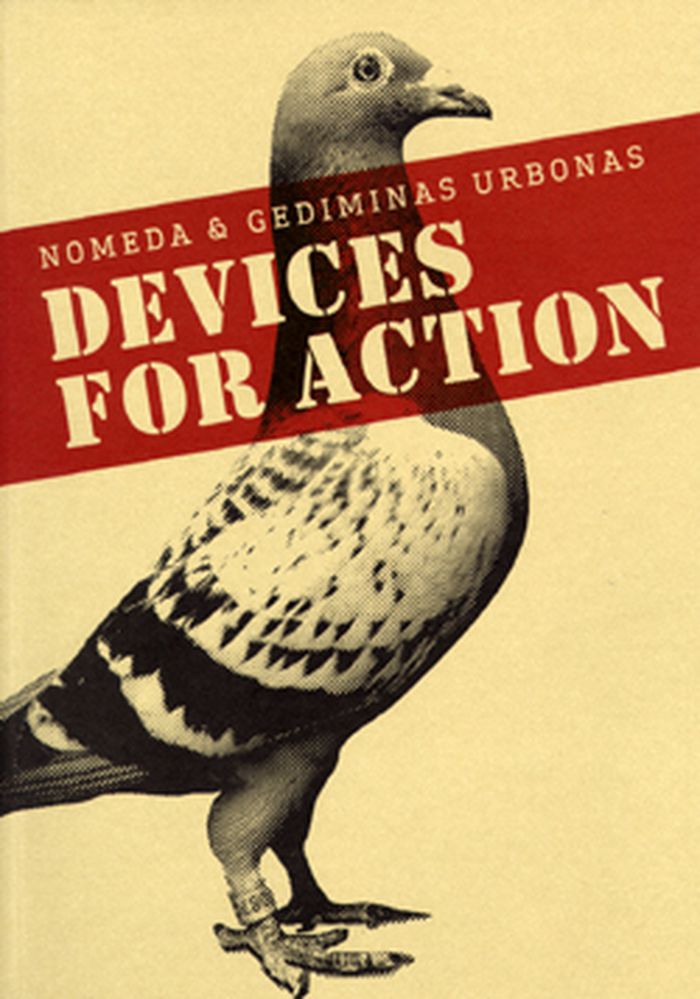
Nomeda and Gediminas Urbonas produce interactive projects exploring the conflicts and contradictions of former Soviet republics and their recent transition to capitalism. Born in Lithuania and now living in Vilnius, these artists use the city as a catalyst and a starting point for their analysis of the various impacts caused by a new economic, social and political model on different sectors and generations in society. Developping over different stages, their projects are characterised by the key role played by the idea of the archive, the engagement of experts in different fields (design, music, architecture), and the participation of diverse communities and collective actions. This catalogue of their recently held first retrospective documents all their projects up to date, includes two essays by Bartomeu Mari and Lars Bang Larsen, a biography, and a list of works in the exhibition.
Nomeda and Gediminas: devices for action
Actions:
Prix:
$57.95
(disponible sur commande)
Résumé:
Nomeda and Gediminas Urbonas produce interactive projects exploring the conflicts and contradictions of former Soviet republics and their recent transition to capitalism. Born in Lithuania and now living in Vilnius, these artists use the city as a catalyst and a starting point for their analysis of the various impacts caused by a new economic, social and political model on different sectors and generations in society. Developping over different stages, their projects are characterised by the key role played by the idea of the archive, the engagement of experts in different fields (design, music, architecture), and the participation of diverse communities and collective actions. This catalogue of their recently held first retrospective documents all their projects up to date, includes two essays by Bartomeu Mari and Lars Bang Larsen, a biography, and a list of works in the exhibition.
Classification:
livres
livres
Publication:
mai 2008, Barcelone
mai 2008, Barcelone
Classification:
livres
livres

Titre:
Banksy: Wall and piece
Banksy: Wall and piece
Actions:
Prix:
$29.95
(disponible sur commande)
Résumé:
Artistic genius, political activist, painter and decorator, mythic legend or notorious graffiti artist? The work of Banksy is unmistakable, except maybe when it’s squatting inthe Tate or New York’s Metropolitan Museum. Banksy is responsible for decorating the streets, walls, bridges and zoos of towns and cites throughout the world. Witty and subversive, his stencils(...)
$29.95
(disponible sur commande)
Résumé:
Artistic genius, political activist, painter and decorator, mythic legend or notorious graffiti artist? The work of Banksy is unmistakable, except maybe when it’s squatting inthe Tate or New York’s Metropolitan Museum. Banksy is responsible for decorating the streets, walls, bridges and zoos of towns and cites throughout the world. Witty and subversive, his stencils(...)
Titre:
Banksy: Wall and piece
Actions:
Prix:
$29.95
(disponible sur commande)
Résumé:
Artistic genius, political activist, painter and decorator, mythic legend or notorious graffiti artist? The work of Banksy is unmistakable, except maybe when it’s squatting inthe Tate or New York’s Metropolitan Museum. Banksy is responsible for decorating the streets, walls, bridges and zoos of towns and cites throughout the world. Witty and subversive, his stencils show monkeys with weapons of mass destruction, policeman with smiley faces, rats with drills and umbrellas.If you look hard enough you’ll find your own. His statements, incitements, ironies and epigrams are by turns intelligent and cheeky comments on everything from the monarchy and capitalism to the war in Iraq and farm animals. His identity remains unknown, but his work is prolific. And now for the first time, he’s putting together the best of his work – old and new in a fully illustrated colour volume.
Banksy: Wall and piece
Actions:
Prix:
$29.95
(disponible sur commande)
Résumé:
Artistic genius, political activist, painter and decorator, mythic legend or notorious graffiti artist? The work of Banksy is unmistakable, except maybe when it’s squatting inthe Tate or New York’s Metropolitan Museum. Banksy is responsible for decorating the streets, walls, bridges and zoos of towns and cites throughout the world. Witty and subversive, his stencils show monkeys with weapons of mass destruction, policeman with smiley faces, rats with drills and umbrellas.If you look hard enough you’ll find your own. His statements, incitements, ironies and epigrams are by turns intelligent and cheeky comments on everything from the monarchy and capitalism to the war in Iraq and farm animals. His identity remains unknown, but his work is prolific. And now for the first time, he’s putting together the best of his work – old and new in a fully illustrated colour volume.
Classification:
livres
livres
Publication:
juin 2007, London
juin 2007, London
Sujet:
Espaces Public
Espaces Public
Classification:
livres
livres
Actions:
Prix:
$34.99
(disponible sur commande)
Résumé:
Nothing is harder to do these days than nothing. But in a world where our value is determined by our 24/7 data productivity, doing nothing may be our most important form of resistance. So argues artist and critic Jenny Odell in this field guide to doing nothing (at least as capitalism defines it). Odell sees our attention as the most precious—and overdrawn—resource we(...)
$34.99
(disponible sur commande)
Résumé:
Nothing is harder to do these days than nothing. But in a world where our value is determined by our 24/7 data productivity, doing nothing may be our most important form of resistance. So argues artist and critic Jenny Odell in this field guide to doing nothing (at least as capitalism defines it). Odell sees our attention as the most precious—and overdrawn—resource we(...)
Titre:
How to do nothing: resisting the attention economy
Actions:
Prix:
$34.99
(disponible sur commande)
Résumé:
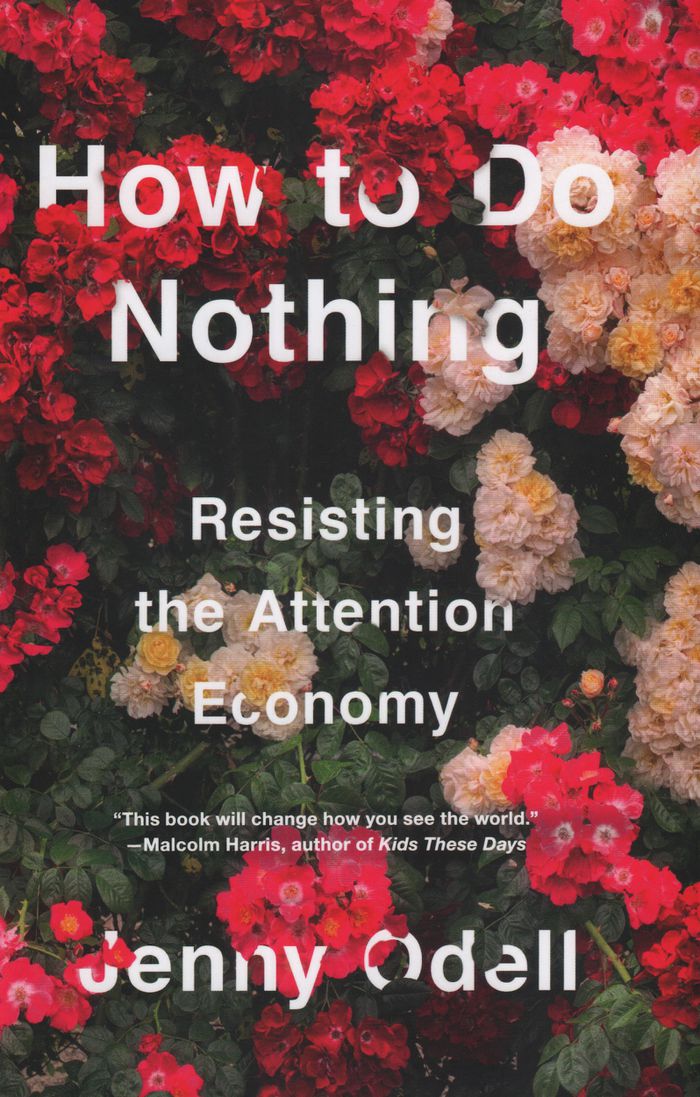
Nothing is harder to do these days than nothing. But in a world where our value is determined by our 24/7 data productivity, doing nothing may be our most important form of resistance. So argues artist and critic Jenny Odell in this field guide to doing nothing (at least as capitalism defines it). Odell sees our attention as the most precious—and overdrawn—resource we have. Once we can start paying a new kind of attention, she writes, we can undertake bolder forms of political action, reimagine humankind’s role in the environment, and arrive at more meaningful understandings of happiness and progress. Far from the simple anti-technology screed, or the back-to-nature meditation we read so often, ''How to do nothing'' is an action plan for thinking outside of capitalist narratives of efficiency and techno-determinism.
How to do nothing: resisting the attention economy
Actions:
Prix:
$34.99
(disponible sur commande)
Résumé:
Nothing is harder to do these days than nothing. But in a world where our value is determined by our 24/7 data productivity, doing nothing may be our most important form of resistance. So argues artist and critic Jenny Odell in this field guide to doing nothing (at least as capitalism defines it). Odell sees our attention as the most precious—and overdrawn—resource we have. Once we can start paying a new kind of attention, she writes, we can undertake bolder forms of political action, reimagine humankind’s role in the environment, and arrive at more meaningful understandings of happiness and progress. Far from the simple anti-technology screed, or the back-to-nature meditation we read so often, ''How to do nothing'' is an action plan for thinking outside of capitalist narratives of efficiency and techno-determinism.
Classification:
livres
livres
Publication:
avril 2019
avril 2019
Sujet:
Théorie/ philosophie
Théorie/ philosophie
Classification:
livres
livres

Titre:
Manifest 2: Kingdoms of God
Manifest 2: Kingdoms of God
Actions:
Prix:
$31.50
(disponible sur commande)
Résumé:
Issue #2 of Manifest takes a stab in one of the most common, yet contested subjects that underline the Americas: religion. What is the role individual and organized faith play in the creation of American space? How do spirituality and capitalism walk together? Did anything really change since European colonizers set foot in the Kingdom of God? Contributors include:(...)
$31.50
(disponible sur commande)
Résumé:
Issue #2 of Manifest takes a stab in one of the most common, yet contested subjects that underline the Americas: religion. What is the role individual and organized faith play in the creation of American space? How do spirituality and capitalism walk together? Did anything really change since European colonizers set foot in the Kingdom of God? Contributors include:(...)
Titre:
Manifest 2: Kingdoms of God
Actions:
Prix:
$31.50
(disponible sur commande)
Résumé:
Issue #2 of Manifest takes a stab in one of the most common, yet contested subjects that underline the Americas: religion. What is the role individual and organized faith play in the creation of American space? How do spirituality and capitalism walk together? Did anything really change since European colonizers set foot in the Kingdom of God? Contributors include: Jorge Silvetti and Graciela Silvestri, Tatiana Bilbao, Marlon Blackwell, Kathleen John-Alder, Ian Quate and Colleen Tuite (GRNASFCK), Antonio Petrov, Andrew Chesnut, Brett Culbert, Lynnette Widder and John Caserta, Sergio Galaz, Austin Granger, Molly Hunker, Andrew Kovacs, Assaf Evron, Nicola Pezolet, Mark Hogan, Mara Lepere-Schloop, Jaffer Kolb and Ang Li, Jacob Boswell. With a special feature including works by Aidlin Darling Design, Alfonso Architects, Frank Harmon, McCoy Architects, Riccardo Tossani Architecture, Daniel Bonilla Arquitectos, Ross Barney Architects, Brian Healy Architects, and BNKR Arquitectura.
Manifest 2: Kingdoms of God
Actions:
Prix:
$31.50
(disponible sur commande)
Résumé:
Issue #2 of Manifest takes a stab in one of the most common, yet contested subjects that underline the Americas: religion. What is the role individual and organized faith play in the creation of American space? How do spirituality and capitalism walk together? Did anything really change since European colonizers set foot in the Kingdom of God? Contributors include: Jorge Silvetti and Graciela Silvestri, Tatiana Bilbao, Marlon Blackwell, Kathleen John-Alder, Ian Quate and Colleen Tuite (GRNASFCK), Antonio Petrov, Andrew Chesnut, Brett Culbert, Lynnette Widder and John Caserta, Sergio Galaz, Austin Granger, Molly Hunker, Andrew Kovacs, Assaf Evron, Nicola Pezolet, Mark Hogan, Mara Lepere-Schloop, Jaffer Kolb and Ang Li, Jacob Boswell. With a special feature including works by Aidlin Darling Design, Alfonso Architects, Frank Harmon, McCoy Architects, Riccardo Tossani Architecture, Daniel Bonilla Arquitectos, Ross Barney Architects, Brian Healy Architects, and BNKR Arquitectura.
Classification:
livres
livres
Publication:
septembre 2015
septembre 2015
Sujet:
Revues
Revues
Classification:
livres
livres

Titre:
Against architecture
Against architecture
Actions:
Prix:
$16.95
(disponible sur commande)
Résumé:
With insight into the human side of architecture, this critical assessment displays the shortcomings of modern urban planning as an acclaimed architect issues a passionate charge against the celebrities of the current architectural world: the “archistars.” Francesco La Clecla argues that architecture has lost its way and its true function, as the archistars mold(...)
$16.95
(disponible sur commande)
Résumé:
With insight into the human side of architecture, this critical assessment displays the shortcomings of modern urban planning as an acclaimed architect issues a passionate charge against the celebrities of the current architectural world: the “archistars.” Francesco La Clecla argues that architecture has lost its way and its true function, as the archistars mold(...)
Titre:
Against architecture
Actions:
Prix:
$16.95
(disponible sur commande)
Résumé:
With insight into the human side of architecture, this critical assessment displays the shortcomings of modern urban planning as an acclaimed architect issues a passionate charge against the celebrities of the current architectural world: the “archistars.” Francesco La Clecla argues that architecture has lost its way and its true function, as the archistars mold cityscapes to build their brand with no regard for the public good. More than a diatribe against the trade, the author makes a call to rethink urban space and take the cities back from “casino capitalism” that has left a string of failed urban projects, such as the Sagrera of Barcelona and the expansion of Columbia University in New York City. Recounting his travels across the globe, La Cecla provides insights to aid in resisting the planners and to find the spirit of a place.
Against architecture
Actions:
Prix:
$16.95
(disponible sur commande)
Résumé:
With insight into the human side of architecture, this critical assessment displays the shortcomings of modern urban planning as an acclaimed architect issues a passionate charge against the celebrities of the current architectural world: the “archistars.” Francesco La Clecla argues that architecture has lost its way and its true function, as the archistars mold cityscapes to build their brand with no regard for the public good. More than a diatribe against the trade, the author makes a call to rethink urban space and take the cities back from “casino capitalism” that has left a string of failed urban projects, such as the Sagrera of Barcelona and the expansion of Columbia University in New York City. Recounting his travels across the globe, La Cecla provides insights to aid in resisting the planners and to find the spirit of a place.
Classification:
livres
livres
Publication:
décembre 2011
décembre 2011
Sujet:
Théorie de l’architecture
Théorie de l’architecture
Classification:
livres
livres

Actions:
Prix:
$38.50
(disponible sur commande)
Résumé:
During the last decades architecture has been largely characterized by a lack of strong positions. A form of neoliberal indifference has become endemic, something that can be attributed to the fact that modernism has lost its claim to be both emancipatory and educational. More recently though, one can again observe attitudes that claim to address architecture and urbanism(...)
$38.50
(disponible sur commande)
Résumé:
During the last decades architecture has been largely characterized by a lack of strong positions. A form of neoliberal indifference has become endemic, something that can be attributed to the fact that modernism has lost its claim to be both emancipatory and educational. More recently though, one can again observe attitudes that claim to address architecture and urbanism(...)
Titre:
Positions on emancipation: architecture between aesthetics and politics
Actions:
Prix:
$38.50
(disponible sur commande)
Résumé:
During the last decades architecture has been largely characterized by a lack of strong positions. A form of neoliberal indifference has become endemic, something that can be attributed to the fact that modernism has lost its claim to be both emancipatory and educational. More recently though, one can again observe attitudes that claim to address architecture and urbanism as more engaged with the social and political effects of global capitalism. This book relays a passionate debate between some of the most outstanding theoreticians and eloquent protagonists of this new attitude, leaving us with an overview of such postulated ambitions. Against the liberal “anything goes” and the revival of architectural autonomy, these attitudes believe less in the possibility for even the most experimental architectural object to have a changing effect on society. Their approaches instead vary from activism to the construction of new critical narratives.
Positions on emancipation: architecture between aesthetics and politics
Actions:
Prix:
$38.50
(disponible sur commande)
Résumé:
During the last decades architecture has been largely characterized by a lack of strong positions. A form of neoliberal indifference has become endemic, something that can be attributed to the fact that modernism has lost its claim to be both emancipatory and educational. More recently though, one can again observe attitudes that claim to address architecture and urbanism as more engaged with the social and political effects of global capitalism. This book relays a passionate debate between some of the most outstanding theoreticians and eloquent protagonists of this new attitude, leaving us with an overview of such postulated ambitions. Against the liberal “anything goes” and the revival of architectural autonomy, these attitudes believe less in the possibility for even the most experimental architectural object to have a changing effect on society. Their approaches instead vary from activism to the construction of new critical narratives.
Classification:
livres
livres
Publication:
mai 2018
mai 2018
Sujet:
Théorie de l’architecture
Théorie de l’architecture


