


12361 Résultats
Classification:
livres
livres

Actions:
Prix:
$23.95
(disponible sur commande)
Résumé:
This guide provides basic tips and hints to help students make the most of their work. Advice ranges from the practical (how to orient a building on a site) to the thought-provoking (notions of taste) to just plain fun (how to dress, or not to dress, like an architect). All accompanied by the author's illustrations.
$23.95
(disponible sur commande)
Résumé:
This guide provides basic tips and hints to help students make the most of their work. Advice ranges from the practical (how to orient a building on a site) to the thought-provoking (notions of taste) to just plain fun (how to dress, or not to dress, like an architect). All accompanied by the author's illustrations.
Titre:
The architecture school survival guide
Actions:
Prix:
$23.95
(disponible sur commande)
Résumé:
This guide provides basic tips and hints to help students make the most of their work. Advice ranges from the practical (how to orient a building on a site) to the thought-provoking (notions of taste) to just plain fun (how to dress, or not to dress, like an architect). All accompanied by the author's illustrations.
The architecture school survival guide
Actions:
Prix:
$23.95
(disponible sur commande)
Résumé:
This guide provides basic tips and hints to help students make the most of their work. Advice ranges from the practical (how to orient a building on a site) to the thought-provoking (notions of taste) to just plain fun (how to dress, or not to dress, like an architect). All accompanied by the author's illustrations.
Classification:
livres
livres
Publication:
août 2015
août 2015
Classification:
livres
livres
Actions:
Prix:
$55.95
(disponible sur commande)
Résumé:
This book argues, boredom shares an intimate relationship with architecture-one that has been seldom explored in architectural history and theory. Christian Parreno investigates that relationship, showing how an understanding of boredom affords us a new way of looking at and understanding the modern experience. The author reconstructs a series of episodes in architectural(...)
$55.95
(disponible sur commande)
Résumé:
This book argues, boredom shares an intimate relationship with architecture-one that has been seldom explored in architectural history and theory. Christian Parreno investigates that relationship, showing how an understanding of boredom affords us a new way of looking at and understanding the modern experience. The author reconstructs a series of episodes in architectural(...)
Titre:
Boredom, architecture and spatial experience
Actions:
Prix:
$55.95
(disponible sur commande)
Résumé:
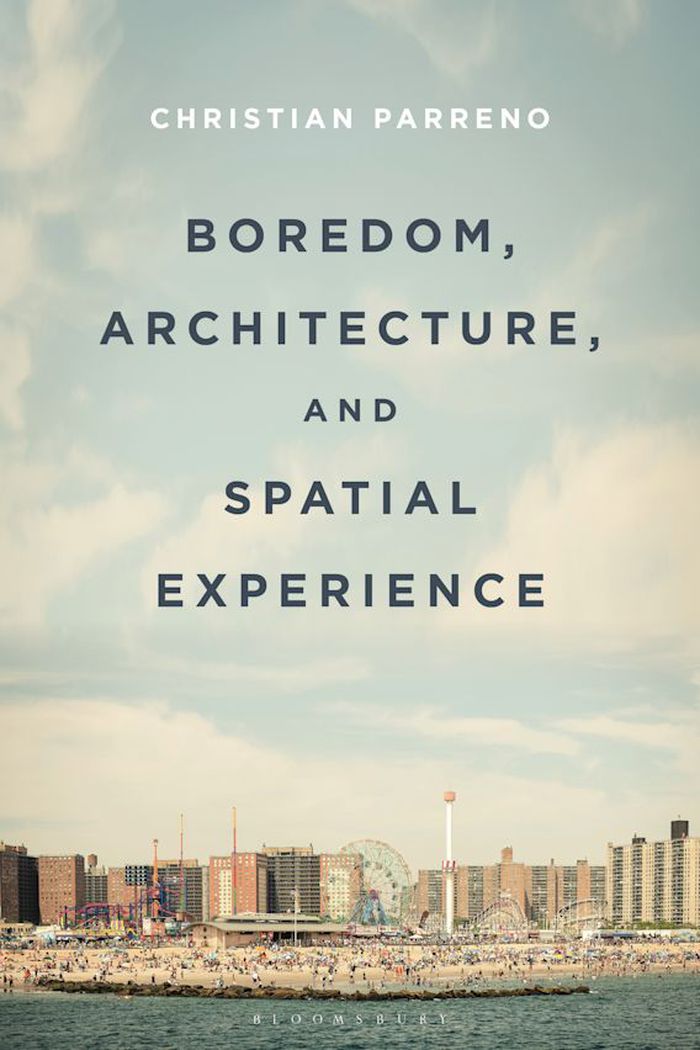
This book argues, boredom shares an intimate relationship with architecture-one that has been seldom explored in architectural history and theory. Christian Parreno investigates that relationship, showing how an understanding of boredom affords us a new way of looking at and understanding the modern experience. The author reconstructs a series of episodes in architectural history, from the 19th century to the present, to survey how boredom became a normalized component of the everyday, how it infiltrated into the production and reception of architecture, and how it serves to diagnose moments of crisis in the continuous transformations of the built environment. Erudite and innovative, the work moves deftly from architectural theory and philosophy to literature and psychology to make its case.
Boredom, architecture and spatial experience
Actions:
Prix:
$55.95
(disponible sur commande)
Résumé:
This book argues, boredom shares an intimate relationship with architecture-one that has been seldom explored in architectural history and theory. Christian Parreno investigates that relationship, showing how an understanding of boredom affords us a new way of looking at and understanding the modern experience. The author reconstructs a series of episodes in architectural history, from the 19th century to the present, to survey how boredom became a normalized component of the everyday, how it infiltrated into the production and reception of architecture, and how it serves to diagnose moments of crisis in the continuous transformations of the built environment. Erudite and innovative, the work moves deftly from architectural theory and philosophy to literature and psychology to make its case.
Classification:
livres
livres
Publication:
septembre 2022
septembre 2022
Sujet:
Théorie de l’architecture
Théorie de l’architecture
Classification:
livres
livres

Actions:
Prix:
$34.95
(disponible sur commande)
Résumé:
Samuel Quiccheberg’s Inscriptiones, first published in Latin in 1565, is an ambitious effort to demonstrate the pragmatic value of curiosity cabinets, or Wunderkammern, to princely collectors in sixteenth-century Europe and, by so doing, inspire them to develop their own such collections. Quiccheberg shows how the assembly and display of physical objects offered nobles a(...)
$34.95
(disponible sur commande)
Résumé:
Samuel Quiccheberg’s Inscriptiones, first published in Latin in 1565, is an ambitious effort to demonstrate the pragmatic value of curiosity cabinets, or Wunderkammern, to princely collectors in sixteenth-century Europe and, by so doing, inspire them to develop their own such collections. Quiccheberg shows how the assembly and display of physical objects offered nobles a(...)
Sujet:
Théorie de l’architecture
Théorie de l’architecture
Publication:
janvier 2014
janvier 2014
Titre:
The first treatise on museums: Samuel Quiccheberg's Inscriptiones, 1565
Actions:
Prix:
$34.95
(disponible sur commande)
Résumé:
Samuel Quiccheberg’s Inscriptiones, first published in Latin in 1565, is an ambitious effort to demonstrate the pragmatic value of curiosity cabinets, or Wunderkammern, to princely collectors in sixteenth-century Europe and, by so doing, inspire them to develop their own such collections. Quiccheberg shows how the assembly and display of physical objects offered nobles a powerful means to expand visual knowledge, allowing them to incorporate empirical and artisanal expertise into the realm of the written word. But in mapping out the collectability of the material world, Quiccheberg did far more than create a taxonomy. Rather, he demonstrated how organizing objects made their knowledge more accessible; how objects, when juxtaposed or grouped, could tell a story; and how such strategies could enhance the value of any single object.
The first treatise on museums: Samuel Quiccheberg's Inscriptiones, 1565
Actions:
Prix:
$34.95
(disponible sur commande)
Résumé:
Samuel Quiccheberg’s Inscriptiones, first published in Latin in 1565, is an ambitious effort to demonstrate the pragmatic value of curiosity cabinets, or Wunderkammern, to princely collectors in sixteenth-century Europe and, by so doing, inspire them to develop their own such collections. Quiccheberg shows how the assembly and display of physical objects offered nobles a powerful means to expand visual knowledge, allowing them to incorporate empirical and artisanal expertise into the realm of the written word. But in mapping out the collectability of the material world, Quiccheberg did far more than create a taxonomy. Rather, he demonstrated how organizing objects made their knowledge more accessible; how objects, when juxtaposed or grouped, could tell a story; and how such strategies could enhance the value of any single object.
Classification:
livres
livres
Publication:
janvier 2014
janvier 2014
Sujet:
Théorie de l’architecture
Théorie de l’architecture
Classification:
livres
livres

Actions:
Prix:
$49.95
(disponible sur commande)
Résumé:
Today the human impact on our planet can hardly be underestimated. Climate change, population explosion, genetic manipulation, digital networks, plastic islands floating in the oceans. This book explores our changing notion of nature. How nature has become one of the most successful products of our time, much of what we perceive as nature is merely a simulation(...)
$49.95
(disponible sur commande)
Résumé:
Today the human impact on our planet can hardly be underestimated. Climate change, population explosion, genetic manipulation, digital networks, plastic islands floating in the oceans. This book explores our changing notion of nature. How nature has become one of the most successful products of our time, much of what we perceive as nature is merely a simulation(...)
Titre:
Next nature: nature changes along with us
Actions:
Prix:
$49.95
(disponible sur commande)
Résumé:
Today the human impact on our planet can hardly be underestimated. Climate change, population explosion, genetic manipulation, digital networks, plastic islands floating in the oceans. This book explores our changing notion of nature. How nature has become one of the most successful products of our time, much of what we perceive as nature is merely a simulation although a romanticized idea of a balanced, harmonic, inherently good and threatened entity. How evolution continues nonetheless. How technology - traditionally created to protect us from the forces of nature - gives rise to a next nature, that is just as wild, cruel, unpredictable and threatening as ever. How we are playing with fire again and again. How we should be careful in doing so, yet how this is also what makes us human.
Next nature: nature changes along with us
Actions:
Prix:
$49.95
(disponible sur commande)
Résumé:
Today the human impact on our planet can hardly be underestimated. Climate change, population explosion, genetic manipulation, digital networks, plastic islands floating in the oceans. This book explores our changing notion of nature. How nature has become one of the most successful products of our time, much of what we perceive as nature is merely a simulation although a romanticized idea of a balanced, harmonic, inherently good and threatened entity. How evolution continues nonetheless. How technology - traditionally created to protect us from the forces of nature - gives rise to a next nature, that is just as wild, cruel, unpredictable and threatening as ever. How we are playing with fire again and again. How we should be careful in doing so, yet how this is also what makes us human.
Classification:
livres
livres
Publication:
mai 2011
mai 2011
Sujet:
Théorie du paysage
Théorie du paysage
Classification:
livres
livres
Actions:
Prix:
$18.00
(disponible sur commande)
Résumé:
Treating cities as laboratories of the modern world, Infrastructures of the Urban examines how they are made and how they should be remade. The contributors— scholars and practitioners from architects and sociologists to physicists— bring to bear empirical analysis, ethnography, eyewitness reflections, cultural critique, and manifestos to explore how improving our(...)
$18.00
(disponible sur commande)
Résumé:
Treating cities as laboratories of the modern world, Infrastructures of the Urban examines how they are made and how they should be remade. The contributors— scholars and practitioners from architects and sociologists to physicists— bring to bear empirical analysis, ethnography, eyewitness reflections, cultural critique, and manifestos to explore how improving our(...)
Publication:
février 2013
février 2013
Titre:
Public Culture 70: Infrastructures of the urban
Actions:
Prix:
$18.00
(disponible sur commande)
Résumé:
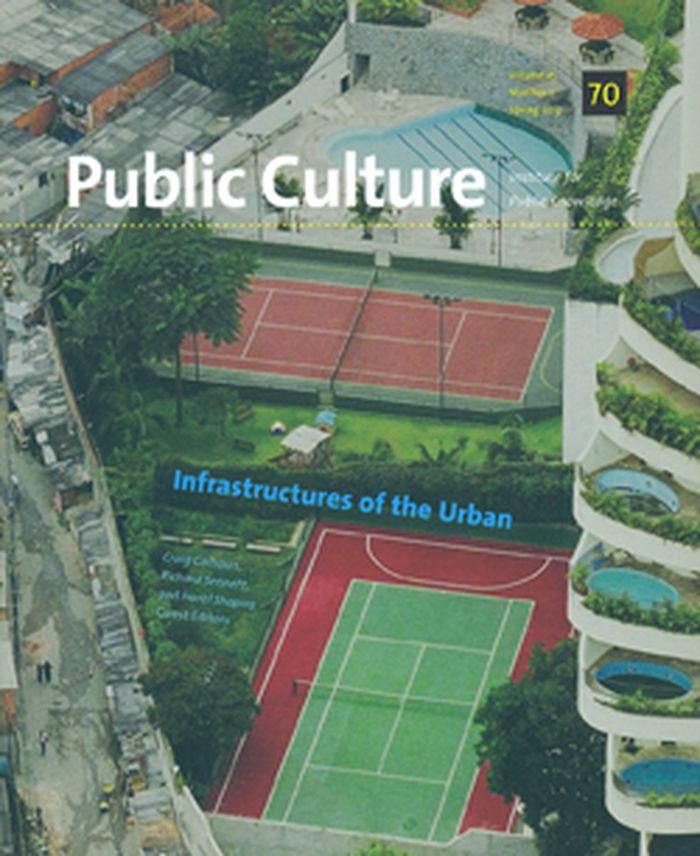
Treating cities as laboratories of the modern world, Infrastructures of the Urban examines how they are made and how they should be remade. The contributors— scholars and practitioners from architects and sociologists to physicists— bring to bear empirical analysis, ethnography, eyewitness reflections, cultural critique, and manifestos to explore how improving our material and cultural infrastructure can produce a better society. Topics include the World Trade Center memorial, the planning of the London Olympics, the informal redesign of shanty housing by slum residents in Mumbai and Mozambique, and the more formalized construction of highways and “tech-cities” like Sondgu, South Korea. The contributors show how cities are made and remade daily, as well as how the diverse, unexpected agents involved in the process break down the distinction between experts and laypeople.
Public Culture 70: Infrastructures of the urban
Actions:
Prix:
$18.00
(disponible sur commande)
Résumé:
Treating cities as laboratories of the modern world, Infrastructures of the Urban examines how they are made and how they should be remade. The contributors— scholars and practitioners from architects and sociologists to physicists— bring to bear empirical analysis, ethnography, eyewitness reflections, cultural critique, and manifestos to explore how improving our material and cultural infrastructure can produce a better society. Topics include the World Trade Center memorial, the planning of the London Olympics, the informal redesign of shanty housing by slum residents in Mumbai and Mozambique, and the more formalized construction of highways and “tech-cities” like Sondgu, South Korea. The contributors show how cities are made and remade daily, as well as how the diverse, unexpected agents involved in the process break down the distinction between experts and laypeople.
Classification:
livres
livres
Publication:
février 2013
février 2013
Classification:
livres
livres
Titre:
Where stuff comes from
Where stuff comes from
Actions:
Prix:
$34.95
(disponible sur commande)
Résumé:
How toasters, toilets, cars, computers, and many other things come to be as they are. From the designer to the manufacturer to the business owner to the consumer, Molotch guides us through the worlds of technology, design, corporate culture and popular culture, giving us a sense of how and why we want stuff.
$34.95
(disponible sur commande)
Résumé:
How toasters, toilets, cars, computers, and many other things come to be as they are. From the designer to the manufacturer to the business owner to the consumer, Molotch guides us through the worlds of technology, design, corporate culture and popular culture, giving us a sense of how and why we want stuff.
Titre:
Where stuff comes from
Actions:
Prix:
$34.95
(disponible sur commande)
Résumé:
How toasters, toilets, cars, computers, and many other things come to be as they are. From the designer to the manufacturer to the business owner to the consumer, Molotch guides us through the worlds of technology, design, corporate culture and popular culture, giving us a sense of how and why we want stuff.
Where stuff comes from
Actions:
Prix:
$34.95
(disponible sur commande)
Résumé:
How toasters, toilets, cars, computers, and many other things come to be as they are. From the designer to the manufacturer to the business owner to the consumer, Molotch guides us through the worlds of technology, design, corporate culture and popular culture, giving us a sense of how and why we want stuff.
Classification:
livres
livres
Publication:
avril 2003, New York / London
avril 2003, New York / London
Sujet:
Théorie du design
Théorie du design
Classification:
livres
livres
Actions:
Prix:
$27.95
(disponible en magasin)
Résumé:
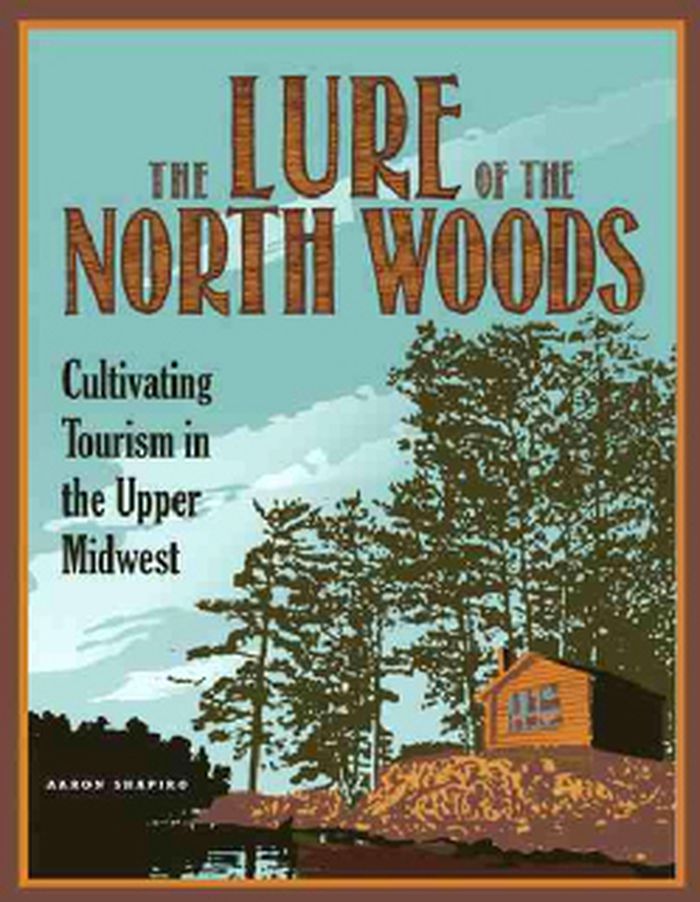
This book tells the story of how northern Minnesota, northern Wisconsin, and Michigan’s Upper Peninsula became a tourist paradise. Aaron Shapiro describes how residents and visitors reshaped the region from a landscape of exploitation to a vacationland and reveals how leisure - and tourism in particular - has shaped modern America.
$27.95
(disponible en magasin)
Résumé:
This book tells the story of how northern Minnesota, northern Wisconsin, and Michigan’s Upper Peninsula became a tourist paradise. Aaron Shapiro describes how residents and visitors reshaped the region from a landscape of exploitation to a vacationland and reveals how leisure - and tourism in particular - has shaped modern America.
Titre:
The lure of the north woods : cultivating tourism in the Upper Midwest
Actions:
Prix:
$27.95
(disponible en magasin)
Résumé:
This book tells the story of how northern Minnesota, northern Wisconsin, and Michigan’s Upper Peninsula became a tourist paradise. Aaron Shapiro describes how residents and visitors reshaped the region from a landscape of exploitation to a vacationland and reveals how leisure - and tourism in particular - has shaped modern America.
The lure of the north woods : cultivating tourism in the Upper Midwest
Actions:
Prix:
$27.95
(disponible en magasin)
Résumé:
This book tells the story of how northern Minnesota, northern Wisconsin, and Michigan’s Upper Peninsula became a tourist paradise. Aaron Shapiro describes how residents and visitors reshaped the region from a landscape of exploitation to a vacationland and reveals how leisure - and tourism in particular - has shaped modern America.
Classification:
livres
livres
Publication:
avril 2013
avril 2013
Classification:
livres
livres
Actions:
Prix:
$44.95
(disponible sur commande)
Résumé:
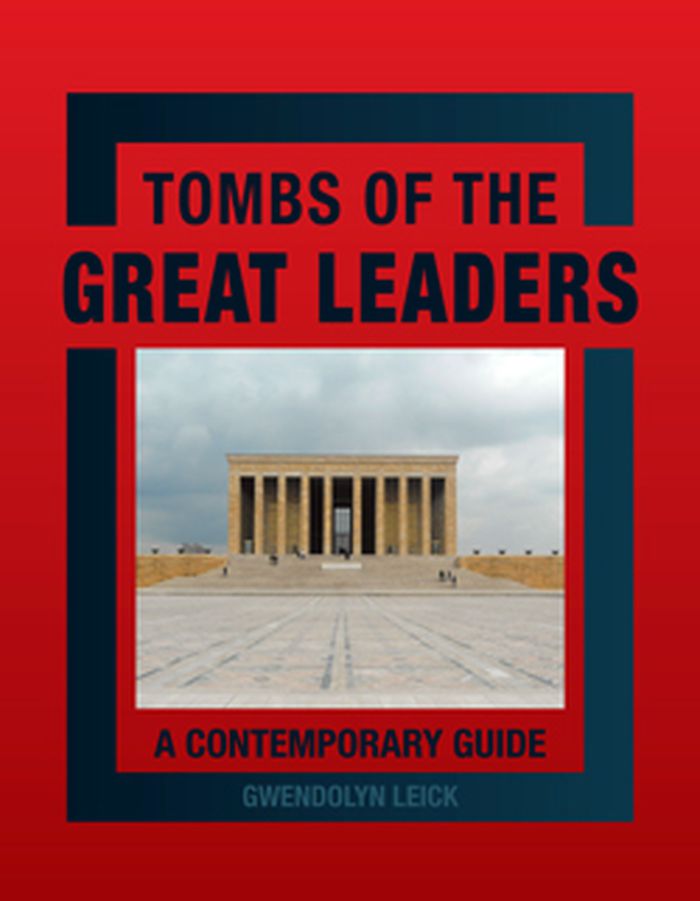
Tracing the development of the political burial places since the Bronze Age tumuli, Tombs of the Great Leaders explores what attracts pilgrimages to these sites, how politics play out in these locations, how they convey meaning and safeguard a person’s immortality, and how history is commemorated through these structures.
$44.95
(disponible sur commande)
Résumé:
Tracing the development of the political burial places since the Bronze Age tumuli, Tombs of the Great Leaders explores what attracts pilgrimages to these sites, how politics play out in these locations, how they convey meaning and safeguard a person’s immortality, and how history is commemorated through these structures.
Titre:
Tombs of the great leaders : a contemporary guide
Actions:
Prix:
$44.95
(disponible sur commande)
Résumé:
Tracing the development of the political burial places since the Bronze Age tumuli, Tombs of the Great Leaders explores what attracts pilgrimages to these sites, how politics play out in these locations, how they convey meaning and safeguard a person’s immortality, and how history is commemorated through these structures.
Tombs of the great leaders : a contemporary guide
Actions:
Prix:
$44.95
(disponible sur commande)
Résumé:
Tracing the development of the political burial places since the Bronze Age tumuli, Tombs of the Great Leaders explores what attracts pilgrimages to these sites, how politics play out in these locations, how they convey meaning and safeguard a person’s immortality, and how history is commemorated through these structures.
Classification:
livres
livres
Publication:
novembre 2013
novembre 2013
Sujet:
Théorie de l’architecture
Théorie de l’architecture
Classification:
livres
livres
Actions:
Prix:
$38.50
(disponible en magasin)
Résumé:
In ''Arborama'', Lisa Voisard submerses readers in the marvellous world of trees: how they reproduce and grow from tiny seeds into the largest plants on earth, how they make our life possible, and how they even communicate with one another. Over more than 200 lavishing-illustrated pages, readers will learn to identify more than 30 key North American trees—and come to(...)
$38.50
(disponible en magasin)
Résumé:
In ''Arborama'', Lisa Voisard submerses readers in the marvellous world of trees: how they reproduce and grow from tiny seeds into the largest plants on earth, how they make our life possible, and how they even communicate with one another. Over more than 200 lavishing-illustrated pages, readers will learn to identify more than 30 key North American trees—and come to(...)
Titre:
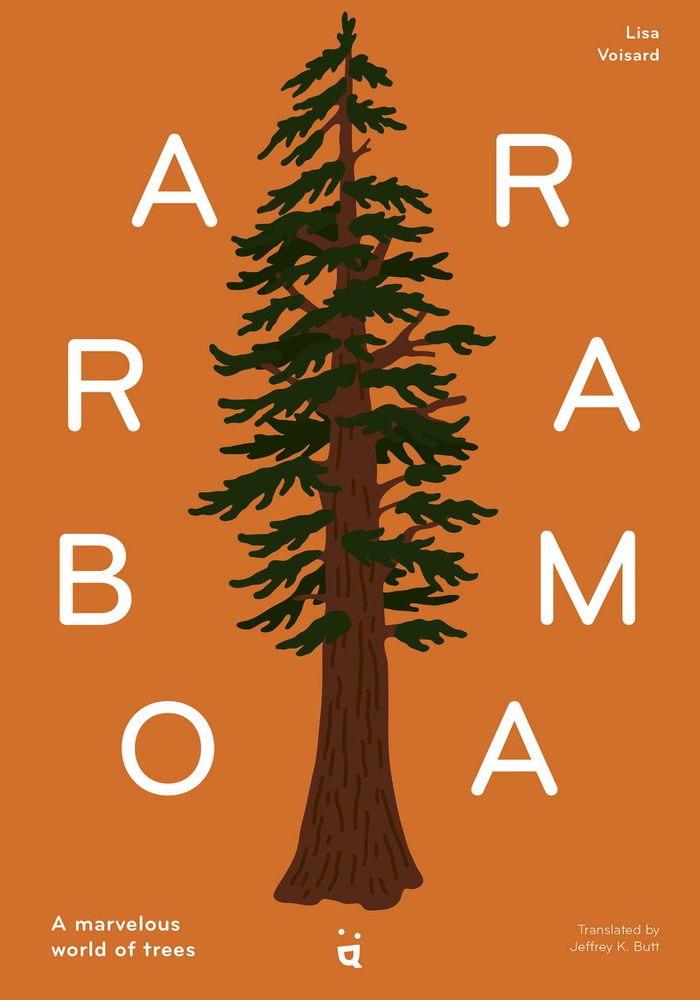
Arborama: The marvelous world of trees
Actions:
Prix:
$38.50
(disponible en magasin)
Résumé:
In ''Arborama'', Lisa Voisard submerses readers in the marvellous world of trees: how they reproduce and grow from tiny seeds into the largest plants on earth, how they make our life possible, and how they even communicate with one another. Over more than 200 lavishing-illustrated pages, readers will learn to identify more than 30 key North American trees—and come to appreciate the miraculous world of trees all around them.
Arborama: The marvelous world of trees
Actions:
Prix:
$38.50
(disponible en magasin)
Résumé:
In ''Arborama'', Lisa Voisard submerses readers in the marvellous world of trees: how they reproduce and grow from tiny seeds into the largest plants on earth, how they make our life possible, and how they even communicate with one another. Over more than 200 lavishing-illustrated pages, readers will learn to identify more than 30 key North American trees—and come to appreciate the miraculous world of trees all around them.
Classification:
livres
livres
Publication:
mai 2023
mai 2023
Sujet:
Littérature jeunesse
Littérature jeunesse
Classification:
livres
livres
Prix:
$11.95
(disponible sur commande)
Résumé:
Landscapes are all around us, but most of us know very little about how they have developed, what goes on in them, and how they react to changing climates, tectonics, and human activities. Examining what landscape is, and how we use a range of ideas and techniques to study it, Andrew Goudie and Heather Viles demonstrate how scientists have built on classic(...)
$11.95
(disponible sur commande)
Résumé:
Landscapes are all around us, but most of us know very little about how they have developed, what goes on in them, and how they react to changing climates, tectonics, and human activities. Examining what landscape is, and how we use a range of ideas and techniques to study it, Andrew Goudie and Heather Viles demonstrate how scientists have built on classic(...)
Titre:
Landscape and geomorphology: A very short Introduction
Actions:
Prix:
$11.95
(disponible sur commande)
Résumé:
Landscapes are all around us, but most of us know very little about how they have developed, what goes on in them, and how they react to changing climates, tectonics, and human activities. Examining what landscape is, and how we use a range of ideas and techniques to study it, Andrew Goudie and Heather Viles demonstrate how scientists have built on classic methods--pioneered by the great researchers of the nineteenth century--to shed new light on our planet. Using examples from around the world, including New Zealand, the Tibetan Plateau, and the deserts of the Middle East, they examine some of the key controls on landscape today such as tectonics and climate, as well as humans and the living world. They also discuss some major "landscape detectives" from the past, including Charles Darwin, who did some important, but often overlooked, research on landscape. Concluding with the cultural importance of landscape, and exploring how this has led to the conservation of much "earth heritage," they delve into the future and look at how we can predict the response of landscapes to the projected climate change.
Landscape and geomorphology: A very short Introduction
Actions:
Prix:
$11.95
(disponible sur commande)
Résumé:
Landscapes are all around us, but most of us know very little about how they have developed, what goes on in them, and how they react to changing climates, tectonics, and human activities. Examining what landscape is, and how we use a range of ideas and techniques to study it, Andrew Goudie and Heather Viles demonstrate how scientists have built on classic methods--pioneered by the great researchers of the nineteenth century--to shed new light on our planet. Using examples from around the world, including New Zealand, the Tibetan Plateau, and the deserts of the Middle East, they examine some of the key controls on landscape today such as tectonics and climate, as well as humans and the living world. They also discuss some major "landscape detectives" from the past, including Charles Darwin, who did some important, but often overlooked, research on landscape. Concluding with the cultural importance of landscape, and exploring how this has led to the conservation of much "earth heritage," they delve into the future and look at how we can predict the response of landscapes to the projected climate change.
Classification:
livres
livres
Publication:
septembre 2010
septembre 2010
Sujet:
Théorie du paysage
Théorie du paysage


