


960 Résultats
Classification:
livres
livres
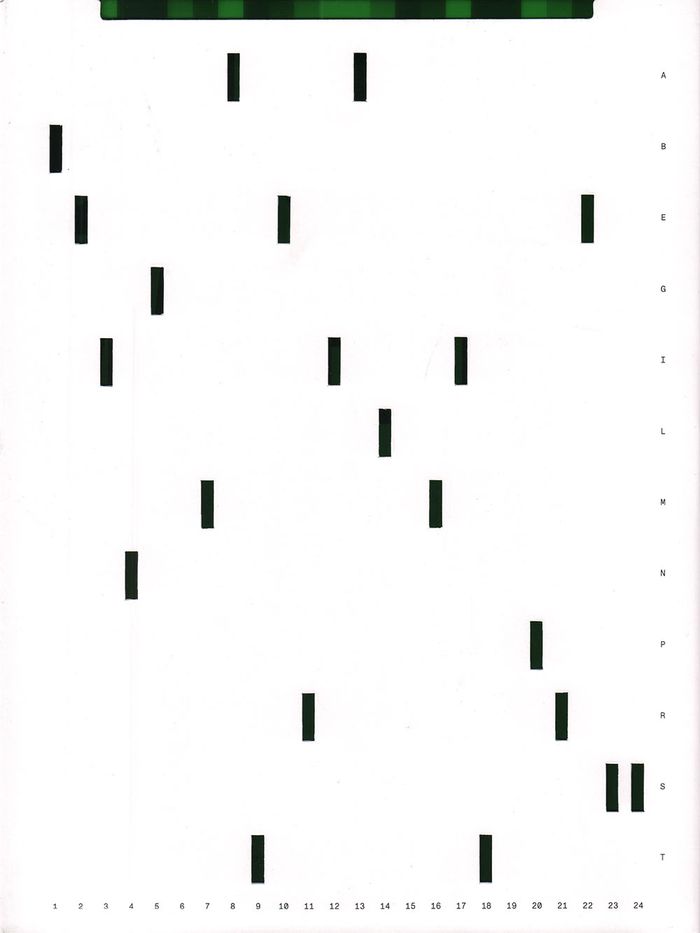
Titre:
Being material
Being material
Actions:
Prix:
$55.95
(disponible sur commande)
Résumé:
In 'Being Material', artists and technologists explore the relationship of the digital to the material, demonstrating that processes that seem wholly immaterial function within material constraints. Digital technologies themselves, they remind us, are material things—constituted by atoms of gold, silver, silicon, copper, tin, tungsten, and more.
$55.95
(disponible sur commande)
Résumé:
In 'Being Material', artists and technologists explore the relationship of the digital to the material, demonstrating that processes that seem wholly immaterial function within material constraints. Digital technologies themselves, they remind us, are material things—constituted by atoms of gold, silver, silicon, copper, tin, tungsten, and more.
Publication:
octobre 2019
octobre 2019
Titre:
Being material
Actions:
Prix:
$55.95
(disponible sur commande)
Résumé:
In 'Being Material', artists and technologists explore the relationship of the digital to the material, demonstrating that processes that seem wholly immaterial function within material constraints. Digital technologies themselves, they remind us, are material things—constituted by atoms of gold, silver, silicon, copper, tin, tungsten, and more.
Being material
Actions:
Prix:
$55.95
(disponible sur commande)
Résumé:
In 'Being Material', artists and technologists explore the relationship of the digital to the material, demonstrating that processes that seem wholly immaterial function within material constraints. Digital technologies themselves, they remind us, are material things—constituted by atoms of gold, silver, silicon, copper, tin, tungsten, and more.
Classification:
livres
livres
Publication:
octobre 2019
octobre 2019
Classification:
livres
livres

Actions:
Prix:
$27.95
(disponible sur commande)
Résumé:
Philippe Artières s'adresse au public.Revêtu d'une blouse grise, assis derrière un bureau en carton confectionné pour l'occasion, il attend ses futurs interlocuteurs. Il recueille leur parole, leurs souvenirs et parfois même des documents. Autant de témoignages intimes, de microhistoires qu'il collecte précieusement et qui constituent une archive sur le lien sensible(...)
$27.95
(disponible sur commande)
Résumé:
Philippe Artières s'adresse au public.Revêtu d'une blouse grise, assis derrière un bureau en carton confectionné pour l'occasion, il attend ses futurs interlocuteurs. Il recueille leur parole, leurs souvenirs et parfois même des documents. Autant de témoignages intimes, de microhistoires qu'il collecte précieusement et qui constituent une archive sur le lien sensible(...)
Titre:
Le Bureau des archives populaires
Actions:
Prix:
$27.95
(disponible sur commande)
Résumé:
Philippe Artières s'adresse au public.Revêtu d'une blouse grise, assis derrière un bureau en carton confectionné pour l'occasion, il attend ses futurs interlocuteurs. Il recueille leur parole, leurs souvenirs et parfois même des documents. Autant de témoignages intimes, de microhistoires qu'il collecte précieusement et qui constituent une archive sur le lien sensible entre le Centre Pompidou et ses visiteurs, sur le lien personnel que ceux-ci entretiennent avec l'art et la culture.
Le Bureau des archives populaires
Actions:
Prix:
$27.95
(disponible sur commande)
Résumé:
Philippe Artières s'adresse au public.Revêtu d'une blouse grise, assis derrière un bureau en carton confectionné pour l'occasion, il attend ses futurs interlocuteurs. Il recueille leur parole, leurs souvenirs et parfois même des documents. Autant de témoignages intimes, de microhistoires qu'il collecte précieusement et qui constituent une archive sur le lien sensible entre le Centre Pompidou et ses visiteurs, sur le lien personnel que ceux-ci entretiennent avec l'art et la culture.
Classification:
livres
livres
Publication:
mai 2019
mai 2019
Classification:
livres
livres

Titre:
Architectures de mémoire
Architectures de mémoire
Actions:
Prix:
$45.00
(disponible sur commande)
Résumé:
La situation de transition que nous connaissons et qui fait cohabiter une culture du livre avec une culture de l'écran nous fait peu à peu basculer d'une raison graphique à une raison computationnelle. De la même manière que l'écriture a permis d'engendrer un mode particulier de pensée, où les listes, les tableaux et les formules ont joué un rôle primordial dans la(...)
$45.00
(disponible sur commande)
Résumé:
La situation de transition que nous connaissons et qui fait cohabiter une culture du livre avec une culture de l'écran nous fait peu à peu basculer d'une raison graphique à une raison computationnelle. De la même manière que l'écriture a permis d'engendrer un mode particulier de pensée, où les listes, les tableaux et les formules ont joué un rôle primordial dans la(...)
Titre:
Architectures de mémoire
Actions:
Prix:
$45.00
(disponible sur commande)
Résumé:
La situation de transition que nous connaissons et qui fait cohabiter une culture du livre avec une culture de l'écran nous fait peu à peu basculer d'une raison graphique à une raison computationnelle. De la même manière que l'écriture a permis d'engendrer un mode particulier de pensée, où les listes, les tableaux et les formules ont joué un rôle primordial dans la modélisation des connaissances, avec le numérique s'inventent d'autres systèmes de mise en forme de l'information et de sa transmission. En effet, le développement du réseau, d'un vaste cyberespace, induit une rationalité particulière reposant sur le calcul plutôt que sur l'écriture, ce qui est la seule façon de le rendre intelligible. On comprend dès lors que les architectures de mémoire, dans leur actualisation contemporaine, essentiellement numérique, sont au coeur d'une transformation de l'esprit humain. Il est encore trop tôt pour déterminer exactement ce qu'il en est de cette transformation, mais il importe dès maintenant de tracer les contours de cette situation et d'explorer des pistes qui peuvent en baliser certains des aspects les plus saillants.
Architectures de mémoire
Actions:
Prix:
$45.00
(disponible sur commande)
Résumé:
La situation de transition que nous connaissons et qui fait cohabiter une culture du livre avec une culture de l'écran nous fait peu à peu basculer d'une raison graphique à une raison computationnelle. De la même manière que l'écriture a permis d'engendrer un mode particulier de pensée, où les listes, les tableaux et les formules ont joué un rôle primordial dans la modélisation des connaissances, avec le numérique s'inventent d'autres systèmes de mise en forme de l'information et de sa transmission. En effet, le développement du réseau, d'un vaste cyberespace, induit une rationalité particulière reposant sur le calcul plutôt que sur l'écriture, ce qui est la seule façon de le rendre intelligible. On comprend dès lors que les architectures de mémoire, dans leur actualisation contemporaine, essentiellement numérique, sont au coeur d'une transformation de l'esprit humain. Il est encore trop tôt pour déterminer exactement ce qu'il en est de cette transformation, mais il importe dès maintenant de tracer les contours de cette situation et d'explorer des pistes qui peuvent en baliser certains des aspects les plus saillants.
Classification:
livres
livres
Publication:
octobre 2019
octobre 2019
Classification:
livres
livres

Prix:
$19.95
(disponible sur commande)
Résumé:
Depuis plusieurs années, il ne se passe guère de mois sans qu’un étudiant ou une étudiante ne vienne à la Fabrique pour nous poser des questions sur l’édition indépendante, « engagée » comme ils disent. Ils sont en fin de licence ou en maîtrise, souvent dans la filière « métiers du livre » ou bien en science politique ou en histoire. Le projet de ce livre, c’est d’elles(...)
$19.95
(disponible sur commande)
Résumé:
Depuis plusieurs années, il ne se passe guère de mois sans qu’un étudiant ou une étudiante ne vienne à la Fabrique pour nous poser des questions sur l’édition indépendante, « engagée » comme ils disent. Ils sont en fin de licence ou en maîtrise, souvent dans la filière « métiers du livre » ou bien en science politique ou en histoire. Le projet de ce livre, c’est d’elles(...)
Titre:
Pour aboutir à un livre : la fabrique d’une maison d’édition
Actions:
Prix:
$19.95
(disponible sur commande)
Résumé:
Depuis plusieurs années, il ne se passe guère de mois sans qu’un étudiant ou une étudiante ne vienne à la Fabrique pour nous poser des questions sur l’édition indépendante, « engagée » comme ils disent. Ils sont en fin de licence ou en maîtrise, souvent dans la filière « métiers du livre » ou bien en science politique ou en histoire. Le projet de ce livre, c’est d’elles et eux qu’il vient, de leur intérêt, leur questionnement et leurs doutes.– Comment fonder une maison d’édition à partir de rien – combien d’argent faut-il, dans quel local, avec quel imprimeur, quel banquier, quel distributeur ?– Ensuite, comment s’y prendre pour ébaucher un catalogue, pour le développer, quelle relation avec quels auteurs, quel travail sur les textes ?– Sans négliger les questions matérielles : établir le budget des livres, tenir un plan de trésorerie, un budget annuel… L’éditeur doit marcher sur ses deux jambes, mener de front la partie intellectuelle et la partie matérielle du métier, qui se complètent et se renforcent mutuellement.– Les livres une fois imprimés, il faut les faire connaître – à la fois aux médias, aux libraires, dont le soutien est décisif, et pour finir aux lecteurs, en utilisant les moyens les plus traditionnels (contact direct et par les représentants) et les autres (site internet, newsletters, etc.). Et puis il faut les vendre ! Ce livre est mené sous forme d’un dialogue avec Ernest Moret, étudiant en philosophie qui connaît bien la Fabrique où il a été stagiaire. Cette forme a permis de mêler des notions d’ordre général et des idées et des anecdotes tirées de l’expérience personnelle d’Eric Hazan, dans l’édition d’art puis à la Fabrique. Sans compter les suggestions et critiques issues de l’équipe même de la Fabrique – car ce qui ressort clairement de ce livre, c’est que l’édition est avant tout un travail collectif.
Pour aboutir à un livre : la fabrique d’une maison d’édition
Actions:
Prix:
$19.95
(disponible sur commande)
Résumé:
Depuis plusieurs années, il ne se passe guère de mois sans qu’un étudiant ou une étudiante ne vienne à la Fabrique pour nous poser des questions sur l’édition indépendante, « engagée » comme ils disent. Ils sont en fin de licence ou en maîtrise, souvent dans la filière « métiers du livre » ou bien en science politique ou en histoire. Le projet de ce livre, c’est d’elles et eux qu’il vient, de leur intérêt, leur questionnement et leurs doutes.– Comment fonder une maison d’édition à partir de rien – combien d’argent faut-il, dans quel local, avec quel imprimeur, quel banquier, quel distributeur ?– Ensuite, comment s’y prendre pour ébaucher un catalogue, pour le développer, quelle relation avec quels auteurs, quel travail sur les textes ?– Sans négliger les questions matérielles : établir le budget des livres, tenir un plan de trésorerie, un budget annuel… L’éditeur doit marcher sur ses deux jambes, mener de front la partie intellectuelle et la partie matérielle du métier, qui se complètent et se renforcent mutuellement.– Les livres une fois imprimés, il faut les faire connaître – à la fois aux médias, aux libraires, dont le soutien est décisif, et pour finir aux lecteurs, en utilisant les moyens les plus traditionnels (contact direct et par les représentants) et les autres (site internet, newsletters, etc.). Et puis il faut les vendre ! Ce livre est mené sous forme d’un dialogue avec Ernest Moret, étudiant en philosophie qui connaît bien la Fabrique où il a été stagiaire. Cette forme a permis de mêler des notions d’ordre général et des idées et des anecdotes tirées de l’expérience personnelle d’Eric Hazan, dans l’édition d’art puis à la Fabrique. Sans compter les suggestions et critiques issues de l’équipe même de la Fabrique – car ce qui ressort clairement de ce livre, c’est que l’édition est avant tout un travail collectif.
Classification:
livres
livres
Publication:
octobre 2016
octobre 2016
Classification:
livres
livres

Titre:
The digital condition
The digital condition
Actions:
Prix:
$27.95
(disponible sur commande)
Résumé:
Our daily lives, our culture, and our politics are now shaped by the digital condition, in which greater numbers of people are engaged in negotiating meaning in ever more dimensions of life, from the trivial to the profound. They are making use of a complex communication infrastructure, currently dominated by social mass media such as Twitter and Facebook, on which they(...)
$27.95
(disponible sur commande)
Résumé:
Our daily lives, our culture, and our politics are now shaped by the digital condition, in which greater numbers of people are engaged in negotiating meaning in ever more dimensions of life, from the trivial to the profound. They are making use of a complex communication infrastructure, currently dominated by social mass media such as Twitter and Facebook, on which they(...)
Titre:
The digital condition
Actions:
Prix:
$27.95
(disponible sur commande)
Résumé:
Our daily lives, our culture, and our politics are now shaped by the digital condition, in which greater numbers of people are engaged in negotiating meaning in ever more dimensions of life, from the trivial to the profound. They are making use of a complex communication infrastructure, currently dominated by social mass media such as Twitter and Facebook, on which they have come to depend.Amidst a confusing plurality, Felix Stalder argues that there are three key constituents of this condition: the use of existing cultural materials for one’s own production, the way in which new meaning is established as a collective endeavor, and the underlying role of algorithms and automated decision-making processes that give shape to massive volumes of data. These three characteristics define what Stalder calls “the digital condition.”
The digital condition
Actions:
Prix:
$27.95
(disponible sur commande)
Résumé:
Our daily lives, our culture, and our politics are now shaped by the digital condition, in which greater numbers of people are engaged in negotiating meaning in ever more dimensions of life, from the trivial to the profound. They are making use of a complex communication infrastructure, currently dominated by social mass media such as Twitter and Facebook, on which they have come to depend.Amidst a confusing plurality, Felix Stalder argues that there are three key constituents of this condition: the use of existing cultural materials for one’s own production, the way in which new meaning is established as a collective endeavor, and the underlying role of algorithms and automated decision-making processes that give shape to massive volumes of data. These three characteristics define what Stalder calls “the digital condition.”
Classification:
livres
livres
Publication:
décembre 2017
décembre 2017
Classification:
livres
livres

Titre:
Fantasies of the library
Fantasies of the library
Actions:
Prix:
$24.50
(disponible sur commande)
Résumé:
''Fantasies of the Library'' imagines, and enacts, the library as both keeper of books and curator of ideas as a platform of the future. The book includes an essay on the institutional ordering principles of book collections; a conversation with the proprietors of the Prelinger Library in San Francisco; reflections on the role of cultural memory and the archive; and a(...)
$24.50
(disponible sur commande)
Résumé:
''Fantasies of the Library'' imagines, and enacts, the library as both keeper of books and curator of ideas as a platform of the future. The book includes an essay on the institutional ordering principles of book collections; a conversation with the proprietors of the Prelinger Library in San Francisco; reflections on the role of cultural memory and the archive; and a(...)
Publication:
août 2018
août 2018
Titre:
Fantasies of the library
Actions:
Prix:
$24.50
(disponible sur commande)
Résumé:
''Fantasies of the Library'' imagines, and enacts, the library as both keeper of books and curator of ideas as a platform of the future. The book includes an essay on the institutional ordering principles of book collections; a conversation with the proprietors of the Prelinger Library in San Francisco; reflections on the role of cultural memory and the archive; and a dialogue with a new media theorist about experiments at the intersection of curatorial practice and open-source ebooks. The reader emerges from this book-as-exhibition with the growing conviction that the library is not only a curatorial space but a bibliological imaginary, ripe for the exploration of consequential paginated affairs. The physicality of the book- and this book- ''resists the digital,'' argues coeditor Etienne Turpin, ''but not in a nostalgic way.''
Fantasies of the library
Actions:
Prix:
$24.50
(disponible sur commande)
Résumé:
''Fantasies of the Library'' imagines, and enacts, the library as both keeper of books and curator of ideas as a platform of the future. The book includes an essay on the institutional ordering principles of book collections; a conversation with the proprietors of the Prelinger Library in San Francisco; reflections on the role of cultural memory and the archive; and a dialogue with a new media theorist about experiments at the intersection of curatorial practice and open-source ebooks. The reader emerges from this book-as-exhibition with the growing conviction that the library is not only a curatorial space but a bibliological imaginary, ripe for the exploration of consequential paginated affairs. The physicality of the book- and this book- ''resists the digital,'' argues coeditor Etienne Turpin, ''but not in a nostalgic way.''
Classification:
livres
livres
Publication:
août 2018
août 2018
Classification:
livres
livres
Actions:
Prix:
$56.00
(disponible sur commande)
Résumé:
À l'ère numérique, le code est au coeur de notre quotidien, il modifie notre rapport au monde et aux autres. « Coder le monde » présente un état de la création digitale contemporaine dans différentes disciplines. Revenant sur l'histoire du code numérique et la manière dont les artistes s'en sont emparés depuis l'avènement de l'ordinateur dans les années 1960, ce livre(...)
$56.00
(disponible sur commande)
Résumé:
À l'ère numérique, le code est au coeur de notre quotidien, il modifie notre rapport au monde et aux autres. « Coder le monde » présente un état de la création digitale contemporaine dans différentes disciplines. Revenant sur l'histoire du code numérique et la manière dont les artistes s'en sont emparés depuis l'avènement de l'ordinateur dans les années 1960, ce livre(...)
Titre:
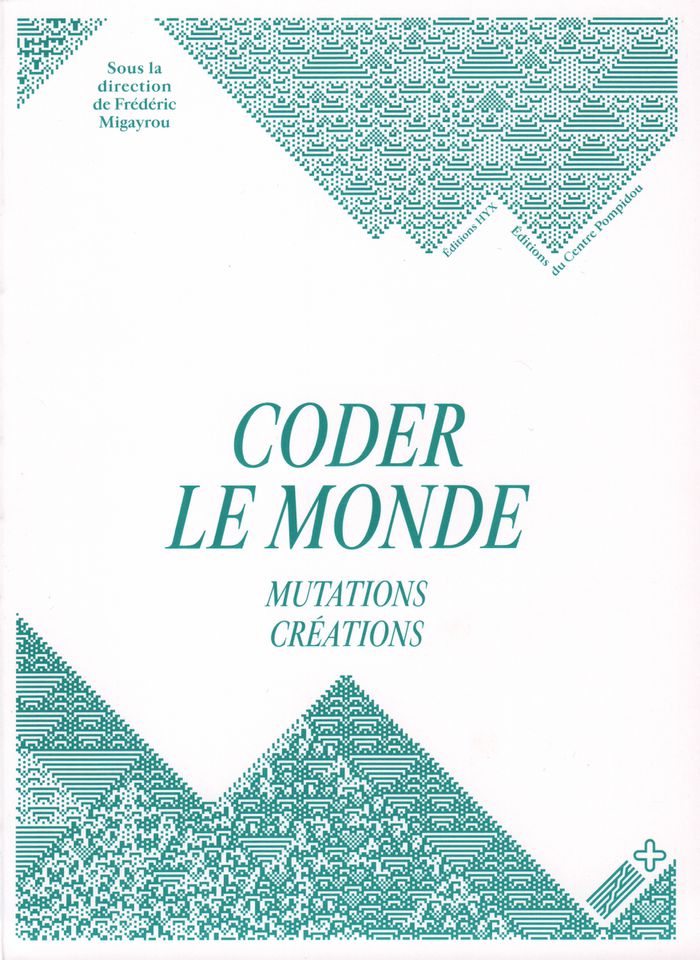
Coder le monde : mutations créations
Actions:
Prix:
$56.00
(disponible sur commande)
Résumé:
À l'ère numérique, le code est au coeur de notre quotidien, il modifie notre rapport au monde et aux autres. « Coder le monde » présente un état de la création digitale contemporaine dans différentes disciplines. Revenant sur l'histoire du code numérique et la manière dont les artistes s'en sont emparés depuis l'avènement de l'ordinateur dans les années 1960, ce livre fait apparaître un univers esthétique et critique commun qui questionne notre quotidien entièrement irrigué par les logiques numériques. Les artistes, les musiciens, les écrivains, les architectes, les créateurs de toutes disciplines ont en effet été les prescripteurs et les inventeurs d'une approche alternative du code.
Coder le monde : mutations créations
Actions:
Prix:
$56.00
(disponible sur commande)
Résumé:
À l'ère numérique, le code est au coeur de notre quotidien, il modifie notre rapport au monde et aux autres. « Coder le monde » présente un état de la création digitale contemporaine dans différentes disciplines. Revenant sur l'histoire du code numérique et la manière dont les artistes s'en sont emparés depuis l'avènement de l'ordinateur dans les années 1960, ce livre fait apparaître un univers esthétique et critique commun qui questionne notre quotidien entièrement irrigué par les logiques numériques. Les artistes, les musiciens, les écrivains, les architectes, les créateurs de toutes disciplines ont en effet été les prescripteurs et les inventeurs d'une approche alternative du code.
Classification:
livres
livres
Publication:
décembre 2018
décembre 2018
Classification:
livres
livres
Titre:
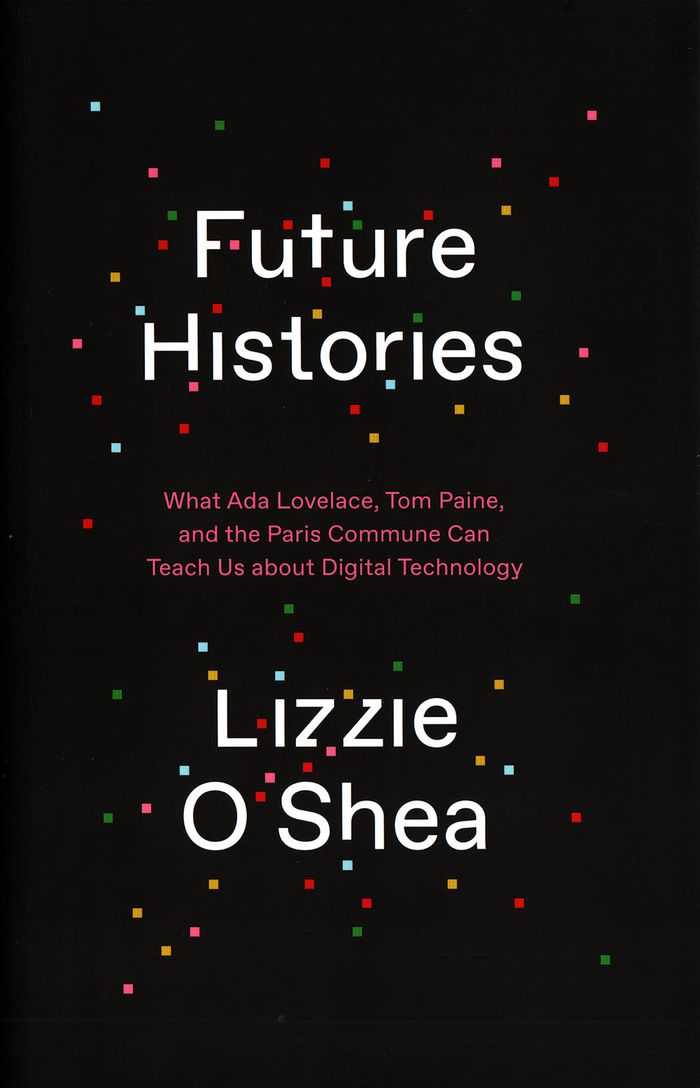
Future histories: What Ada Lovelace, Tom Paine, and the Paris Commune can teach us about digital
Future histories: What Ada Lovelace, Tom Paine, and the Paris Commune can teach us about digital
Actions:
Prix:
$36.95
(disponible sur commande)
Résumé:
When we talk about technology we always talk about tomorrow and the future - which makes it hard to figure out how to even get there. In "Future Histories", public interest lawyer and digital specialist Lizzie O'Shea argues that we need to stop looking forward and start looking backwards. Weaving together histories of computing and progressive social movements with modern(...)
$36.95
(disponible sur commande)
Résumé:
When we talk about technology we always talk about tomorrow and the future - which makes it hard to figure out how to even get there. In "Future Histories", public interest lawyer and digital specialist Lizzie O'Shea argues that we need to stop looking forward and start looking backwards. Weaving together histories of computing and progressive social movements with modern(...)
Titre:
Future histories: What Ada Lovelace, Tom Paine, and the Paris Commune can teach us about digital
Actions:
Prix:
$36.95
(disponible sur commande)
Résumé:
When we talk about technology we always talk about tomorrow and the future - which makes it hard to figure out how to even get there. In "Future Histories", public interest lawyer and digital specialist Lizzie O'Shea argues that we need to stop looking forward and start looking backwards. Weaving together histories of computing and progressive social movements with modern theories of the mind, society, and self, O'Shea constructs a "usable past" that can help us determine our digital future.
Future histories: What Ada Lovelace, Tom Paine, and the Paris Commune can teach us about digital
Actions:
Prix:
$36.95
(disponible sur commande)
Résumé:
When we talk about technology we always talk about tomorrow and the future - which makes it hard to figure out how to even get there. In "Future Histories", public interest lawyer and digital specialist Lizzie O'Shea argues that we need to stop looking forward and start looking backwards. Weaving together histories of computing and progressive social movements with modern theories of the mind, society, and self, O'Shea constructs a "usable past" that can help us determine our digital future.
Classification:
livres
livres
Publication:
mai 2019
mai 2019
Classification:
livres
livres

Actions:
Prix:
$38.50
(disponible sur commande)
Résumé:
Over the past fifty years, preservation policy has evolved very little, despite escalating accusations that landmarking and historic districting can inhibit affordable housing, economic development, and socioeconomic diversity. The potential to understand these dynamics and effect positive change is hindered by a lack of data and evidence-based research to better(...)
$38.50
(disponible sur commande)
Résumé:
Over the past fifty years, preservation policy has evolved very little, despite escalating accusations that landmarking and historic districting can inhibit affordable housing, economic development, and socioeconomic diversity. The potential to understand these dynamics and effect positive change is hindered by a lack of data and evidence-based research to better(...)
Titre:
Preservation and the new data landscape
Actions:
Prix:
$38.50
(disponible sur commande)
Résumé:
Over the past fifty years, preservation policy has evolved very little, despite escalating accusations that landmarking and historic districting can inhibit affordable housing, economic development, and socioeconomic diversity. The potential to understand these dynamics and effect positive change is hindered by a lack of data and evidence-based research to better understand these impacts. One of the biggest barriers to preservation research has been the lack of data sets that can be used for geospatial, evidence-based, and longitudinal analyses. This first book in the series ''Issues in Preservation Policy'' explores the ways that enhancing the collection, accuracy, and management of data can serve a critical role in identifying vulnerable neighborhoods, understanding the role of older buildings in economic vitality and community resilience, planning sustainable growth, and more.
Preservation and the new data landscape
Actions:
Prix:
$38.50
(disponible sur commande)
Résumé:
Over the past fifty years, preservation policy has evolved very little, despite escalating accusations that landmarking and historic districting can inhibit affordable housing, economic development, and socioeconomic diversity. The potential to understand these dynamics and effect positive change is hindered by a lack of data and evidence-based research to better understand these impacts. One of the biggest barriers to preservation research has been the lack of data sets that can be used for geospatial, evidence-based, and longitudinal analyses. This first book in the series ''Issues in Preservation Policy'' explores the ways that enhancing the collection, accuracy, and management of data can serve a critical role in identifying vulnerable neighborhoods, understanding the role of older buildings in economic vitality and community resilience, planning sustainable growth, and more.
Classification:
livres
livres
Publication:
mars 2019
mars 2019
Classification:
livres
livres
Actions:
Prix:
$34.95
(disponible sur commande)
Résumé:
En plein air — painting outdoors — traditionally describes the impressionist revolt against the studio. This book compiles texts by media scholars, scientists, artists, anthropologists and theorists exploring the concept of en plein air in terms of the digital, a realm with ever-evolving boundaries.
$34.95
(disponible sur commande)
Résumé:
En plein air — painting outdoors — traditionally describes the impressionist revolt against the studio. This book compiles texts by media scholars, scientists, artists, anthropologists and theorists exploring the concept of en plein air in terms of the digital, a realm with ever-evolving boundaries.
Titre:
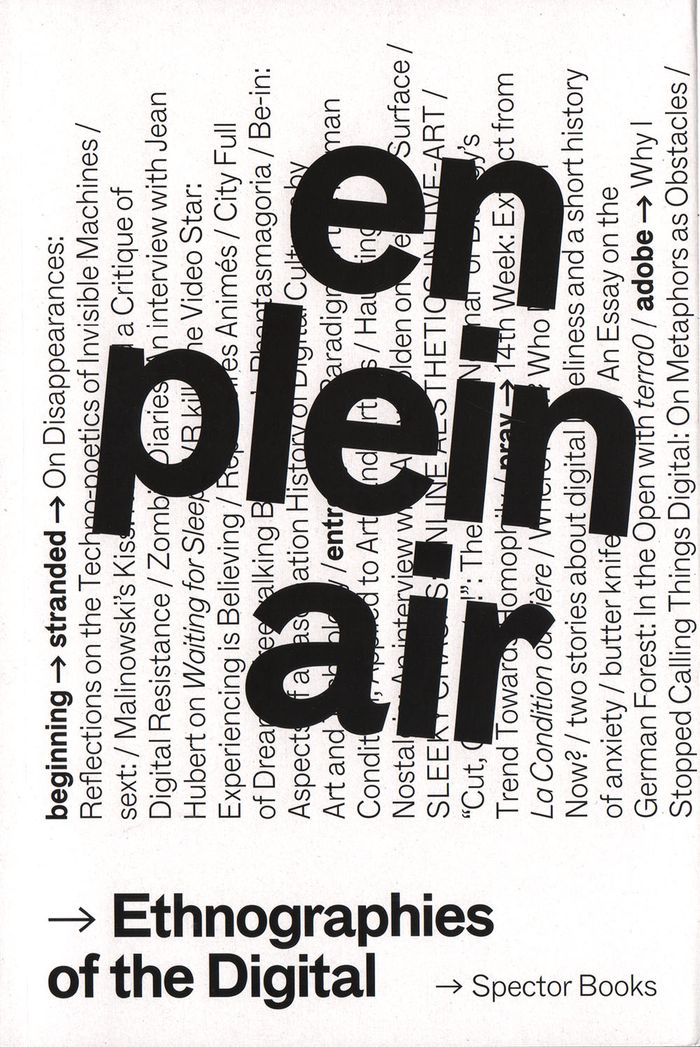
En plein air: ethnographies of the digital
Actions:
Prix:
$34.95
(disponible sur commande)
Résumé:
En plein air — painting outdoors — traditionally describes the impressionist revolt against the studio. This book compiles texts by media scholars, scientists, artists, anthropologists and theorists exploring the concept of en plein air in terms of the digital, a realm with ever-evolving boundaries.
En plein air: ethnographies of the digital
Actions:
Prix:
$34.95
(disponible sur commande)
Résumé:
En plein air — painting outdoors — traditionally describes the impressionist revolt against the studio. This book compiles texts by media scholars, scientists, artists, anthropologists and theorists exploring the concept of en plein air in terms of the digital, a realm with ever-evolving boundaries.
Classification:
livres
livres
Publication:
avril 2019
avril 2019


