


929 Résultats
Classification:
livres
livres

Titre:
The witch studies reader
The witch studies reader
Actions:
Prix:
$38.95
(disponible en magasin)
Résumé:
Stories about witches are by their nature stories about the most basic and profound of human experiences—healing, sex, violence, tragedies, aging, death, and encountering the mystery and magic of the unknown. It is no surprise, then, that witches loom large in our cultural imaginations. In academia, studies of witches rarely emerge from scholars who are themselves witches(...)
$38.95
(disponible en magasin)
Résumé:
Stories about witches are by their nature stories about the most basic and profound of human experiences—healing, sex, violence, tragedies, aging, death, and encountering the mystery and magic of the unknown. It is no surprise, then, that witches loom large in our cultural imaginations. In academia, studies of witches rarely emerge from scholars who are themselves witches(...)
Titre:
The witch studies reader
Actions:
Prix:
$38.95
(disponible en magasin)
Résumé:
Stories about witches are by their nature stories about the most basic and profound of human experiences—healing, sex, violence, tragedies, aging, death, and encountering the mystery and magic of the unknown. It is no surprise, then, that witches loom large in our cultural imaginations. In academia, studies of witches rarely emerge from scholars who are themselves witches and/or embedded in communities of witchcraft practitioners. ''The Witch Studies Reader'' brings together a diverse group of scholars, practitioners, and scholar-practitioners who examine witchcraft from a critical decolonial feminist perspective that decenters Europe and departs from exoticizing and pathologizing writing on witchcraft in the global South. The authors show how witches are keepers of suppressed knowledges, builders of new futures, exemplars of praxis, and theorists in their own right. Throughout, they account for the vastly different national, political-economic, and cultural contexts in which “the witch” is currently being claimed and repudiated. Offering a pathbreaking transnational feminist examination of witches and witchcraft that upends white supremacist, colonial, patriarchal knowledge regimes, this volume brings into being the interdisciplinary field of feminist witch studies.
The witch studies reader
Actions:
Prix:
$38.95
(disponible en magasin)
Résumé:
Stories about witches are by their nature stories about the most basic and profound of human experiences—healing, sex, violence, tragedies, aging, death, and encountering the mystery and magic of the unknown. It is no surprise, then, that witches loom large in our cultural imaginations. In academia, studies of witches rarely emerge from scholars who are themselves witches and/or embedded in communities of witchcraft practitioners. ''The Witch Studies Reader'' brings together a diverse group of scholars, practitioners, and scholar-practitioners who examine witchcraft from a critical decolonial feminist perspective that decenters Europe and departs from exoticizing and pathologizing writing on witchcraft in the global South. The authors show how witches are keepers of suppressed knowledges, builders of new futures, exemplars of praxis, and theorists in their own right. Throughout, they account for the vastly different national, political-economic, and cultural contexts in which “the witch” is currently being claimed and repudiated. Offering a pathbreaking transnational feminist examination of witches and witchcraft that upends white supremacist, colonial, patriarchal knowledge regimes, this volume brings into being the interdisciplinary field of feminist witch studies.
Classification:
livres
livres
Publication:
juin 2025
juin 2025
Sujet:
Social
Social
Classification:
livres
livres

Titre:
Photographie et écologie
Photographie et écologie
Actions:
Prix:
$41.95
(disponible sur commande)
Résumé:
Dès son essor, la photographie est inextricablement liée à l'écologie – par sa matérialité et par ce qu'elle donne à voir. Ce livre présente quinze artistes qui tissent des liens avec des écosystèmes en mouvement. À travers cinq chapitres organisés autour de registres émotionnels, l'autrice met en perspective ces pratiques artistiques contemporaines avec l'histoire du(...)
$41.95
(disponible sur commande)
Résumé:
Dès son essor, la photographie est inextricablement liée à l'écologie – par sa matérialité et par ce qu'elle donne à voir. Ce livre présente quinze artistes qui tissent des liens avec des écosystèmes en mouvement. À travers cinq chapitres organisés autour de registres émotionnels, l'autrice met en perspective ces pratiques artistiques contemporaines avec l'histoire du(...)
Titre:
Photographie et écologie
Actions:
Prix:
$41.95
(disponible sur commande)
Résumé:
Dès son essor, la photographie est inextricablement liée à l'écologie – par sa matérialité et par ce qu'elle donne à voir. Ce livre présente quinze artistes qui tissent des liens avec des écosystèmes en mouvement. À travers cinq chapitres organisés autour de registres émotionnels, l'autrice met en perspective ces pratiques artistiques contemporaines avec l'histoire du médium photographique. Elle propose une entrée en matière, une invitation au dialogue, une mise en relation sensible et critique des images et de l'écologie. La collection « Superscripte » propose des textes introductifs et synthétiques sur des pratiques photographiques contemporaines dans toutes leur diversité, par le prisme d'une notion unique – l'exposition, la violence ou l'image-objet. En conjuguant des ouvrages écrits par des artistes, des chercheurs et chercheuses ou des critiques, il s'agit de valoriser les subjectivités personnelles et les compétences qui découlent des différentes manières de penser les images. Imaginée pour les photographes, les historien·ne·s de l'art ou un public amateur, cette série souhaite donner les clés pour appréhender certaines thématiques ou formes photographiques, omniprésentes dans la culture visuelle d'aujourd'hui.
Photographie et écologie
Actions:
Prix:
$41.95
(disponible sur commande)
Résumé:
Dès son essor, la photographie est inextricablement liée à l'écologie – par sa matérialité et par ce qu'elle donne à voir. Ce livre présente quinze artistes qui tissent des liens avec des écosystèmes en mouvement. À travers cinq chapitres organisés autour de registres émotionnels, l'autrice met en perspective ces pratiques artistiques contemporaines avec l'histoire du médium photographique. Elle propose une entrée en matière, une invitation au dialogue, une mise en relation sensible et critique des images et de l'écologie. La collection « Superscripte » propose des textes introductifs et synthétiques sur des pratiques photographiques contemporaines dans toutes leur diversité, par le prisme d'une notion unique – l'exposition, la violence ou l'image-objet. En conjuguant des ouvrages écrits par des artistes, des chercheurs et chercheuses ou des critiques, il s'agit de valoriser les subjectivités personnelles et les compétences qui découlent des différentes manières de penser les images. Imaginée pour les photographes, les historien·ne·s de l'art ou un public amateur, cette série souhaite donner les clés pour appréhender certaines thématiques ou formes photographiques, omniprésentes dans la culture visuelle d'aujourd'hui.
Classification:
livres
livres
Publication:
janvier 2026
janvier 2026
Sujet:
Photographie- collections
Photographie- collections
Classification:
livres
livres

Actions:
Prix:
$34.95
(disponible sur commande)
Résumé:
Construire une maison au bord de la mer est un pari très intéressant tant pour l'architecte que pour le client, car c'est une perspective qui répond au besoin fondamental de l'humanité d'être conforme à la nature. Ces conditions naturelles, défis d'architecture exaltants, forment la trame des projets présentés dans ce livre. Le souci de respecter l'environnement naturel(...)
$34.95
(disponible sur commande)
Résumé:
Construire une maison au bord de la mer est un pari très intéressant tant pour l'architecte que pour le client, car c'est une perspective qui répond au besoin fondamental de l'humanité d'être conforme à la nature. Ces conditions naturelles, défis d'architecture exaltants, forment la trame des projets présentés dans ce livre. Le souci de respecter l'environnement naturel(...)
Titre:
Contemporary seaside houses : Maisons modernes de bord de mer : Traumhauser am meer
Actions:
Prix:
$34.95
(disponible sur commande)
Résumé:
Construire une maison au bord de la mer est un pari très intéressant tant pour l'architecte que pour le client, car c'est une perspective qui répond au besoin fondamental de l'humanité d'être conforme à la nature. Ces conditions naturelles, défis d'architecture exaltants, forment la trame des projets présentés dans ce livre. Le souci de respecter l'environnement naturel d'un milieu aussi spectaculaire que celui-ci a conduit les professionnels à rechercher des solutions architecturales extrêmes élever la construction sur pilotis, élargir les ouvertures au maximum dans les zones à faible ensoleillement ou fermer une maison et l'envelopper sur elle-même pour la protéger de la violence des vents. Néanmoins, il en résulte essentiellement une composition fragmentée qui engendre une multitude de volumes et d'espaces externes, en quête d'une relation idéale avec l'environnement extérieur, sans nuire à l'indépendance des différentes zones qui composent le projet. Pour offrir au lecteur un large éventail de cette architecture exceptionnelle, cet ouvrage réunit une sélection de projets d'architectes renommés du monde entier, où chacun d'entre eux fait apparaître un dialogue unique entre l'architecture et la mer.
Contemporary seaside houses : Maisons modernes de bord de mer : Traumhauser am meer
Actions:
Prix:
$34.95
(disponible sur commande)
Résumé:
Construire une maison au bord de la mer est un pari très intéressant tant pour l'architecte que pour le client, car c'est une perspective qui répond au besoin fondamental de l'humanité d'être conforme à la nature. Ces conditions naturelles, défis d'architecture exaltants, forment la trame des projets présentés dans ce livre. Le souci de respecter l'environnement naturel d'un milieu aussi spectaculaire que celui-ci a conduit les professionnels à rechercher des solutions architecturales extrêmes élever la construction sur pilotis, élargir les ouvertures au maximum dans les zones à faible ensoleillement ou fermer une maison et l'envelopper sur elle-même pour la protéger de la violence des vents. Néanmoins, il en résulte essentiellement une composition fragmentée qui engendre une multitude de volumes et d'espaces externes, en quête d'une relation idéale avec l'environnement extérieur, sans nuire à l'indépendance des différentes zones qui composent le projet. Pour offrir au lecteur un large éventail de cette architecture exceptionnelle, cet ouvrage réunit une sélection de projets d'architectes renommés du monde entier, où chacun d'entre eux fait apparaître un dialogue unique entre l'architecture et la mer.
Classification:
livres
livres
Publication:
janvier 2007, Koln
janvier 2007, Koln
Sujet:
Architecture résidentielle
Architecture résidentielle
Classification:
livres
livres

Actions:
Prix:
$28.00
(disponible en magasin)
Résumé:
As Angela Y. Davis has proposed, the ''path to prison,'' which so disproportionately affects communities of colour, is most acutely guided by the conditions of daily life. Architecture, then, as fundamental to shaping these conditions of civil existence, must be interrogated for its involvement along this diffuse and mobile path. ''Paths to prison: on the architectures of(...)
$28.00
(disponible en magasin)
Résumé:
As Angela Y. Davis has proposed, the ''path to prison,'' which so disproportionately affects communities of colour, is most acutely guided by the conditions of daily life. Architecture, then, as fundamental to shaping these conditions of civil existence, must be interrogated for its involvement along this diffuse and mobile path. ''Paths to prison: on the architectures of(...)
Titre:
Paths to prison: on the architecture of carcerality
Actions:
Prix:
$28.00
(disponible en magasin)
Résumé:
As Angela Y. Davis has proposed, the ''path to prison,'' which so disproportionately affects communities of colour, is most acutely guided by the conditions of daily life. Architecture, then, as fundamental to shaping these conditions of civil existence, must be interrogated for its involvement along this diffuse and mobile path. ''Paths to prison: on the architectures of carcerality'' aims to expand the ways the built environment’s relationship to and participation in the carceral state is understood in architecture. The collected essays in this book implicate architecture in the more longstanding and pervasive legacies of racialized coercion in the United States- and follow the premise that to understand how the prison enacts its violence in the present one must shift the epistemological frame elsewhere: to places, discourses, and narratives assumed to be outside of the sphere of incarceration. ''Paths to prison: on the architectures of carcerality'' offers not a fixed or inexorable account of how things are but rather a set of starting points and methodologies for reevaluating the architecture of carceral society and for undoing it altogether.
Paths to prison: on the architecture of carcerality
Actions:
Prix:
$28.00
(disponible en magasin)
Résumé:
As Angela Y. Davis has proposed, the ''path to prison,'' which so disproportionately affects communities of colour, is most acutely guided by the conditions of daily life. Architecture, then, as fundamental to shaping these conditions of civil existence, must be interrogated for its involvement along this diffuse and mobile path. ''Paths to prison: on the architectures of carcerality'' aims to expand the ways the built environment’s relationship to and participation in the carceral state is understood in architecture. The collected essays in this book implicate architecture in the more longstanding and pervasive legacies of racialized coercion in the United States- and follow the premise that to understand how the prison enacts its violence in the present one must shift the epistemological frame elsewhere: to places, discourses, and narratives assumed to be outside of the sphere of incarceration. ''Paths to prison: on the architectures of carcerality'' offers not a fixed or inexorable account of how things are but rather a set of starting points and methodologies for reevaluating the architecture of carceral society and for undoing it altogether.
Classification:
livres
livres
Publication:
septembre 2020
septembre 2020
Sujet:
Théorie de l’architecture
Théorie de l’architecture
Classification:
livres
livres
Actions:
Prix:
$24.95
(disponible en magasin)
Résumé:
Il n’est pas question ici d’épidémiologie, ni de virologie, ni de quelque « logie » que ce soit car c’est de philosophie qu’il s’agit. Du reste, Donatella Di Cesare enseigne cette discipline dans la plus ancienne institution universitaire d’Europe, La Sapienza à Rome. Que penser d’une démocratie immunitaire où les experts ont acquis des places de gouvernants et où l’état(...)
$24.95
(disponible en magasin)
Résumé:
Il n’est pas question ici d’épidémiologie, ni de virologie, ni de quelque « logie » que ce soit car c’est de philosophie qu’il s’agit. Du reste, Donatella Di Cesare enseigne cette discipline dans la plus ancienne institution universitaire d’Europe, La Sapienza à Rome. Que penser d’une démocratie immunitaire où les experts ont acquis des places de gouvernants et où l’état(...)
Titre:
Un virus souverain : l'asphyxie capitaliste
Actions:
Prix:
$24.95
(disponible en magasin)
Résumé:
Il n’est pas question ici d’épidémiologie, ni de virologie, ni de quelque « logie » que ce soit car c’est de philosophie qu’il s’agit. Du reste, Donatella Di Cesare enseigne cette discipline dans la plus ancienne institution universitaire d’Europe, La Sapienza à Rome. Que penser d’une démocratie immunitaire où les experts ont acquis des places de gouvernants et où l’état d’exception est permanent? Que dire de la « distanciation sociale » sinon qu’elle est l’élargissement du fossé entre les riches et ceux qui n’ont rien? Comment qualifier un virus capable d’annuler l’idée même de frontière? Comment qualifier les relations où chacun vit caché derrière son masque et où personne n’ose se toucher? Le virus a rendu manifeste la brutalité du capitalisme qui nous emporte dans sa spirale dévastatrice. « Ce qui se passe n’est pas une crise mais bien une catastrophe au ralenti. Le virus a bloqué le dispositif. Ce que l’on voit, c’est une convulsion planétaire, le spasme produit par la violence fébrile, l’accélération sans fin autre qu’elle-même qui a inexorablement atteint son point d’inertie. C’est une tétanisation du monde. » Est-ce un dernier signal d’alarme?
Un virus souverain : l'asphyxie capitaliste
Actions:
Prix:
$24.95
(disponible en magasin)
Résumé:
Il n’est pas question ici d’épidémiologie, ni de virologie, ni de quelque « logie » que ce soit car c’est de philosophie qu’il s’agit. Du reste, Donatella Di Cesare enseigne cette discipline dans la plus ancienne institution universitaire d’Europe, La Sapienza à Rome. Que penser d’une démocratie immunitaire où les experts ont acquis des places de gouvernants et où l’état d’exception est permanent? Que dire de la « distanciation sociale » sinon qu’elle est l’élargissement du fossé entre les riches et ceux qui n’ont rien? Comment qualifier un virus capable d’annuler l’idée même de frontière? Comment qualifier les relations où chacun vit caché derrière son masque et où personne n’ose se toucher? Le virus a rendu manifeste la brutalité du capitalisme qui nous emporte dans sa spirale dévastatrice. « Ce qui se passe n’est pas une crise mais bien une catastrophe au ralenti. Le virus a bloqué le dispositif. Ce que l’on voit, c’est une convulsion planétaire, le spasme produit par la violence fébrile, l’accélération sans fin autre qu’elle-même qui a inexorablement atteint son point d’inertie. C’est une tétanisation du monde. » Est-ce un dernier signal d’alarme?
Classification:
livres
livres
Publication:
novembre 2020
novembre 2020
Sujet:
Théorie/ philosophie
Théorie/ philosophie
Classification:
livres
livres
Actions:
Prix:
$33.95
(disponible sur commande)
Résumé:
The ubiquitous nature and political attraction of the concept of order has to be understood in conjunction with the idea of police. Since its first publication, this book has been one of the most powerful and wide-ranging critiques of the police power. Neocleous argues for an expanded concept of police, able to account for the range of institutions through which(...)
$33.95
(disponible sur commande)
Résumé:
The ubiquitous nature and political attraction of the concept of order has to be understood in conjunction with the idea of police. Since its first publication, this book has been one of the most powerful and wide-ranging critiques of the police power. Neocleous argues for an expanded concept of police, able to account for the range of institutions through which(...)
Titre:
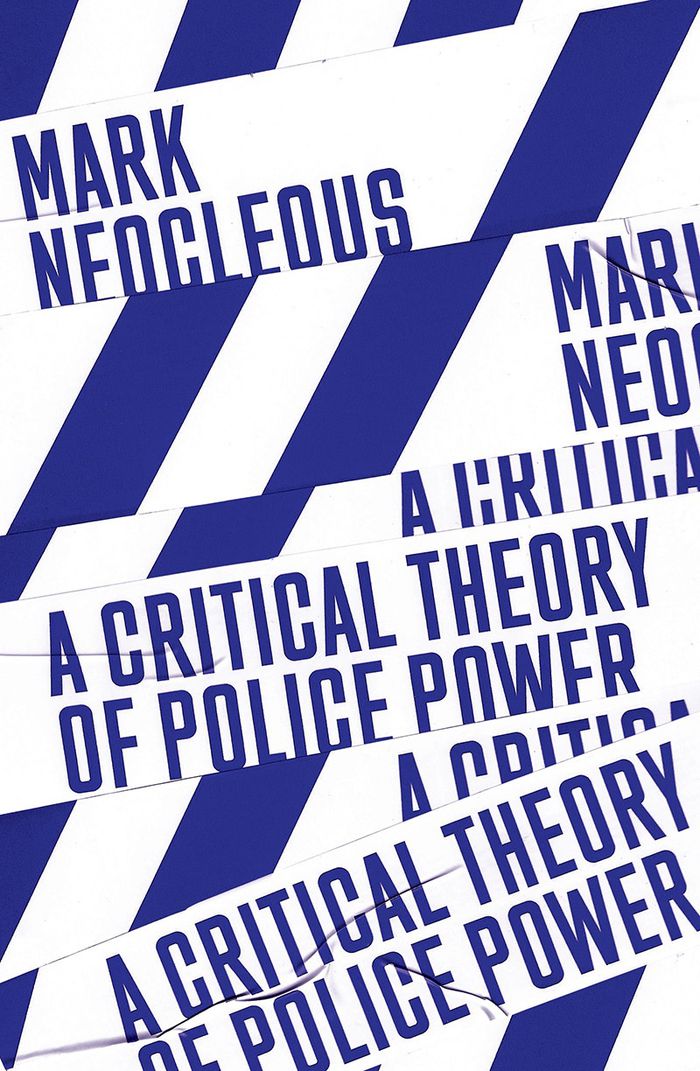
A critical theory of police power
Actions:
Prix:
$33.95
(disponible sur commande)
Résumé:
The ubiquitous nature and political attraction of the concept of order has to be understood in conjunction with the idea of police. Since its first publication, this book has been one of the most powerful and wide-ranging critiques of the police power. Neocleous argues for an expanded concept of police, able to account for the range of institutions through which policing takes place. These institutions are concerned not just with the maintenance and reproduction of order, but with its very fabrication, especially the fabrication of a social order founded on wage labour. By situating the police power in relation to both capital and the state and at the heart of the politics of security, the book opens up into an understanding of the ways in which the state administers civil society and fabricates order through law and the ideology of crime. The discretionary violence of the police on the street is thereby connected to the wider administrative powers of the state, and the thud of the truncheon to the dull compulsion of economic relations.
A critical theory of police power
Actions:
Prix:
$33.95
(disponible sur commande)
Résumé:
The ubiquitous nature and political attraction of the concept of order has to be understood in conjunction with the idea of police. Since its first publication, this book has been one of the most powerful and wide-ranging critiques of the police power. Neocleous argues for an expanded concept of police, able to account for the range of institutions through which policing takes place. These institutions are concerned not just with the maintenance and reproduction of order, but with its very fabrication, especially the fabrication of a social order founded on wage labour. By situating the police power in relation to both capital and the state and at the heart of the politics of security, the book opens up into an understanding of the ways in which the state administers civil society and fabricates order through law and the ideology of crime. The discretionary violence of the police on the street is thereby connected to the wider administrative powers of the state, and the thud of the truncheon to the dull compulsion of economic relations.
Classification:
livres
livres
Publication:
janvier 2021
janvier 2021
Sujet:
Social
Social
Classification:
livres
livres

Titre:
Shame! and masculinity
Shame! and masculinity
Actions:
Prix:
$44.00
(disponible sur commande)
Résumé:
Multigenre perspectives on shame and male self-esteem post-MeToo. Since the ascent of the MeToo movement, male sexual abuse and abuse of power has come under necessary scrutiny, thereby impacting perceptions of male sexuality and the self-esteem of many men. While plenty of male abusers seem to experience no shame, some do, as do men who have not transgressed, but who(...)
$44.00
(disponible sur commande)
Résumé:
Multigenre perspectives on shame and male self-esteem post-MeToo. Since the ascent of the MeToo movement, male sexual abuse and abuse of power has come under necessary scrutiny, thereby impacting perceptions of male sexuality and the self-esteem of many men. While plenty of male abusers seem to experience no shame, some do, as do men who have not transgressed, but who(...)
Titre:
Shame! and masculinity
Actions:
Prix:
$44.00
(disponible sur commande)
Résumé:
Multigenre perspectives on shame and male self-esteem post-MeToo. Since the ascent of the MeToo movement, male sexual abuse and abuse of power has come under necessary scrutiny, thereby impacting perceptions of male sexuality and the self-esteem of many men. While plenty of male abusers seem to experience no shame, some do, as do men who have not transgressed, but who may now be negotiating shame in relation to their gender and sexuality. Hybrid in genre, combining scholarly essays with short stories, personal testimonies and provocative and intimate artist’s contributions, ''Shame! and masculinity'' looks at the representation of male sexuality, fatherhood, violence, rape, fascism and virility, men and war. It shows works of art that deal with the intricacies and contradictions of these socio-cultural constructs and realities, and stimulates reflection on shame in collusion with masculinity, from male as well as female perspectives, with visual contributions by Jeanette Christensen, Marlene Dumas, Arnoud Holleman, Hans Hovy, Natasja Kensmil, Nalini Malani, Lotte Schröder, Artur Žmijjewski and Ina van Zyl.
Shame! and masculinity
Actions:
Prix:
$44.00
(disponible sur commande)
Résumé:
Multigenre perspectives on shame and male self-esteem post-MeToo. Since the ascent of the MeToo movement, male sexual abuse and abuse of power has come under necessary scrutiny, thereby impacting perceptions of male sexuality and the self-esteem of many men. While plenty of male abusers seem to experience no shame, some do, as do men who have not transgressed, but who may now be negotiating shame in relation to their gender and sexuality. Hybrid in genre, combining scholarly essays with short stories, personal testimonies and provocative and intimate artist’s contributions, ''Shame! and masculinity'' looks at the representation of male sexuality, fatherhood, violence, rape, fascism and virility, men and war. It shows works of art that deal with the intricacies and contradictions of these socio-cultural constructs and realities, and stimulates reflection on shame in collusion with masculinity, from male as well as female perspectives, with visual contributions by Jeanette Christensen, Marlene Dumas, Arnoud Holleman, Hans Hovy, Natasja Kensmil, Nalini Malani, Lotte Schröder, Artur Žmijjewski and Ina van Zyl.
Classification:
livres
livres
Publication:
février 2021
février 2021
Sujet:
Social
Social
Classification:
livres
livres
Actions:
Prix:
$23.95
(disponible sur commande)
Résumé:
First observed in 1950s London, and theorised by leading thinkers such as Ruth Glass, Jane Jacobs and Sharon Zukin, the devastating process of displacement now can be found in every city and most neighbourhoods and impacts the most vulnerable communities. Leslie Kern proposes an intersectional way at looking at the crisis that seek to reveal the violence based on class,(...)
$23.95
(disponible sur commande)
Résumé:
First observed in 1950s London, and theorised by leading thinkers such as Ruth Glass, Jane Jacobs and Sharon Zukin, the devastating process of displacement now can be found in every city and most neighbourhoods and impacts the most vulnerable communities. Leslie Kern proposes an intersectional way at looking at the crisis that seek to reveal the violence based on class,(...)
Titre:
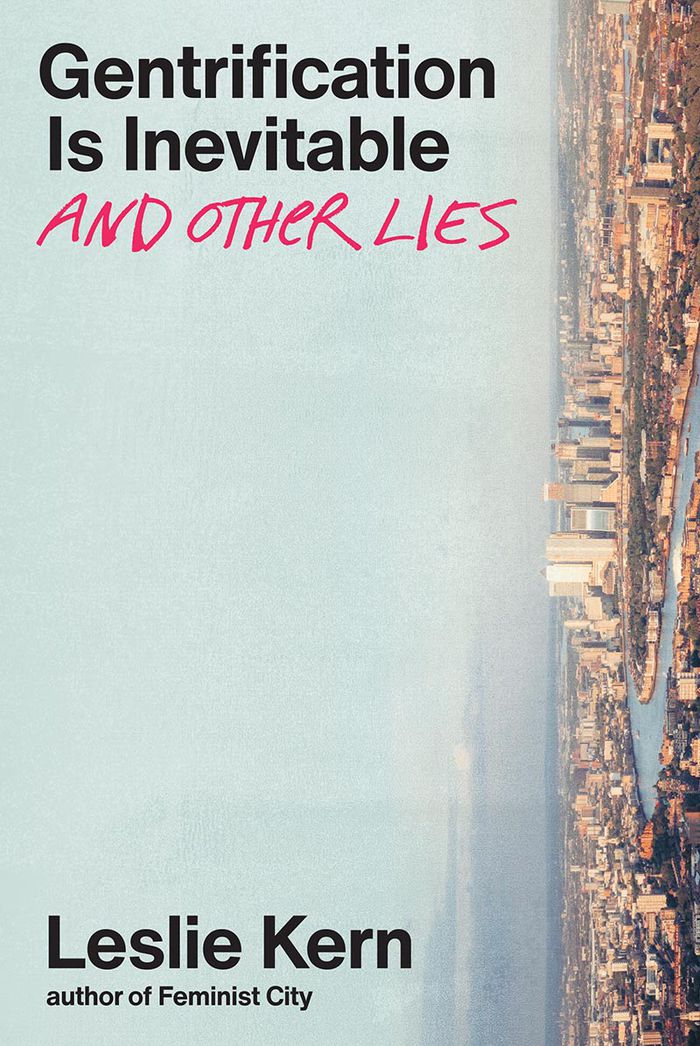
Gentrification is inevitable, and other lies
Actions:
Prix:
$23.95
(disponible sur commande)
Résumé:
First observed in 1950s London, and theorised by leading thinkers such as Ruth Glass, Jane Jacobs and Sharon Zukin, the devastating process of displacement now can be found in every city and most neighbourhoods and impacts the most vulnerable communities. Leslie Kern proposes an intersectional way at looking at the crisis that seek to reveal the violence based on class, race, gender and sexuality. She argues that gentrification is not natural That it can not be understood in economics terms, or by class. That it is not a question of taste. That it can only be measured only by the physical displacement of certain people. Rather, she argues, it is an continuation of the setter colonial project that removed natives from their land. And it can be seen today is rising rents and evictions, transformed retail areas, increased policing and broken communities. Kern proposes a genuinely decolonial, feminist, queer, anti-gentrification. One that demands the right to the city for everyone and the return of land and reparations for those who have been displaced.
Gentrification is inevitable, and other lies
Actions:
Prix:
$23.95
(disponible sur commande)
Résumé:
First observed in 1950s London, and theorised by leading thinkers such as Ruth Glass, Jane Jacobs and Sharon Zukin, the devastating process of displacement now can be found in every city and most neighbourhoods and impacts the most vulnerable communities. Leslie Kern proposes an intersectional way at looking at the crisis that seek to reveal the violence based on class, race, gender and sexuality. She argues that gentrification is not natural That it can not be understood in economics terms, or by class. That it is not a question of taste. That it can only be measured only by the physical displacement of certain people. Rather, she argues, it is an continuation of the setter colonial project that removed natives from their land. And it can be seen today is rising rents and evictions, transformed retail areas, increased policing and broken communities. Kern proposes a genuinely decolonial, feminist, queer, anti-gentrification. One that demands the right to the city for everyone and the return of land and reparations for those who have been displaced.
Classification:
livres
livres
Publication:
octobre 2022
octobre 2022
Sujet:
L'humain et la ville
L'humain et la ville
Classification:
livres
livres
Actions:
Prix:
$29.95
(disponible sur commande)
Résumé:
Berlin's history of conflict, violence, and transformation has created an arena of particular urban surfaces, from which the present-day city and its layered, wounded past are projected simultaneously. In this publication, cultural historian Stephen Barber explores the intimate connections between those surfaces and the works of art and film that have both incised(...)
$29.95
(disponible sur commande)
Résumé:
Berlin's history of conflict, violence, and transformation has created an arena of particular urban surfaces, from which the present-day city and its layered, wounded past are projected simultaneously. In this publication, cultural historian Stephen Barber explores the intimate connections between those surfaces and the works of art and film that have both incised(...)
Titre:
The walls of Berlin: urban surfaces, art, film
Actions:
Prix:
$29.95
(disponible sur commande)
Résumé:
Berlin's history of conflict, violence, and transformation has created an arena of particular urban surfaces, from which the present-day city and its layered, wounded past are projected simultaneously. In this publication, cultural historian Stephen Barber explores the intimate connections between those surfaces and the works of art and film that have both incised Berlin's urban screens and been inspired by them. Drawing on a vast range of material - from the first films of Berlin in the 1890s to the city's place in contemporary digital art - this book takes the form of a series of image-propelled journeys across the face of Berlin and through its urban histories, excavating the ricochets among the city, art, and film. In Barber's hands, Berlin's walls become apertures that mediate the city's preoccupations and manias, damage and scars, strata and outgrowths, sexual obsessions, and urban vanishings. The Walls of Berlin is a cultural history of the city's memories-as well as its acts of forgetting-that illuminates overlooked spaces and the sensory presences that inhabit them.
The walls of Berlin: urban surfaces, art, film
Actions:
Prix:
$29.95
(disponible sur commande)
Résumé:
Berlin's history of conflict, violence, and transformation has created an arena of particular urban surfaces, from which the present-day city and its layered, wounded past are projected simultaneously. In this publication, cultural historian Stephen Barber explores the intimate connections between those surfaces and the works of art and film that have both incised Berlin's urban screens and been inspired by them. Drawing on a vast range of material - from the first films of Berlin in the 1890s to the city's place in contemporary digital art - this book takes the form of a series of image-propelled journeys across the face of Berlin and through its urban histories, excavating the ricochets among the city, art, and film. In Barber's hands, Berlin's walls become apertures that mediate the city's preoccupations and manias, damage and scars, strata and outgrowths, sexual obsessions, and urban vanishings. The Walls of Berlin is a cultural history of the city's memories-as well as its acts of forgetting-that illuminates overlooked spaces and the sensory presences that inhabit them.
Classification:
livres
livres
Publication:
juin 2011
juin 2011
Classification:
livres
livres

Actions:
Prix:
$54.95
(disponible sur commande)
Résumé:
Following the formation of the German National Socialist Party in the 1920s, various forms of sound (popular music, voice, noise and silence) and media technology (radio and loudspeaker systems) were configured as useful to the party's political programme. Focusing on the urban "soundscape" of Düsseldorf, the author makes a persuasive case for investigating such sound(...)
$54.95
(disponible sur commande)
Résumé:
Following the formation of the German National Socialist Party in the 1920s, various forms of sound (popular music, voice, noise and silence) and media technology (radio and loudspeaker systems) were configured as useful to the party's political programme. Focusing on the urban "soundscape" of Düsseldorf, the author makes a persuasive case for investigating such sound(...)
Titre:
Nazi soundscapes : sound, technology and urban space in Germany, 1933-1945
Actions:
Prix:
$54.95
(disponible sur commande)
Résumé:
Following the formation of the German National Socialist Party in the 1920s, various forms of sound (popular music, voice, noise and silence) and media technology (radio and loudspeaker systems) were configured as useful to the party's political programme. Focusing on the urban "soundscape" of Düsseldorf, the author makes a persuasive case for investigating such sound events and technological devices in their specific contexts of production and reception. Nazi Soundscapes identifies strategies for controlling space and reworking identity patterns, but also the ongoing difficulties in manipulating mediated sounds and the spaces of listening reception, whether in the home, workplace, the cinema, public rituals or with wartime siren systems. The study revises visualist notions of social control, and reveals the disciplinary functions of listening (as eavesdropping) as well as the sonic dimensions to exclusion and violence during Nazism. An essential title for everyone interested in the links between German political culture, audiovisual media and urban history,Nazi Soundscapes provides a fascinating analysis of the cultural significance of sound between the 1920s and early 1940s.
Nazi soundscapes : sound, technology and urban space in Germany, 1933-1945
Actions:
Prix:
$54.95
(disponible sur commande)
Résumé:
Following the formation of the German National Socialist Party in the 1920s, various forms of sound (popular music, voice, noise and silence) and media technology (radio and loudspeaker systems) were configured as useful to the party's political programme. Focusing on the urban "soundscape" of Düsseldorf, the author makes a persuasive case for investigating such sound events and technological devices in their specific contexts of production and reception. Nazi Soundscapes identifies strategies for controlling space and reworking identity patterns, but also the ongoing difficulties in manipulating mediated sounds and the spaces of listening reception, whether in the home, workplace, the cinema, public rituals or with wartime siren systems. The study revises visualist notions of social control, and reveals the disciplinary functions of listening (as eavesdropping) as well as the sonic dimensions to exclusion and violence during Nazism. An essential title for everyone interested in the links between German political culture, audiovisual media and urban history,Nazi Soundscapes provides a fascinating analysis of the cultural significance of sound between the 1920s and early 1940s.
Classification:
livres
livres
Publication:
septembre 2012
septembre 2012
Sujet:
Théorie de l’architecture
Théorie de l’architecture


