


8791 Résultats
Classification:
livres
livres
Titre:
Manifestos
Manifestos
Actions:
Prix:
$39.95
(disponible sur commande)
Résumé:
"Manifestos" brings together for the first time in English the manifestos written by Édouard Glissant and Patrick Chamoiseau between 2000 and 2009. Composed in part in the aftermath of Barack Obama’s election in 2008, the texts resonate with the current context of divided identities and criticisms of multiculturalism. The individual texts grapple with concrete historical(...)
$39.95
(disponible sur commande)
Résumé:
"Manifestos" brings together for the first time in English the manifestos written by Édouard Glissant and Patrick Chamoiseau between 2000 and 2009. Composed in part in the aftermath of Barack Obama’s election in 2008, the texts resonate with the current context of divided identities and criticisms of multiculturalism. The individual texts grapple with concrete historical(...)
Publication:
septembre 2022
septembre 2022
Titre:
Manifestos
Actions:
Prix:
$39.95
(disponible sur commande)
Résumé:
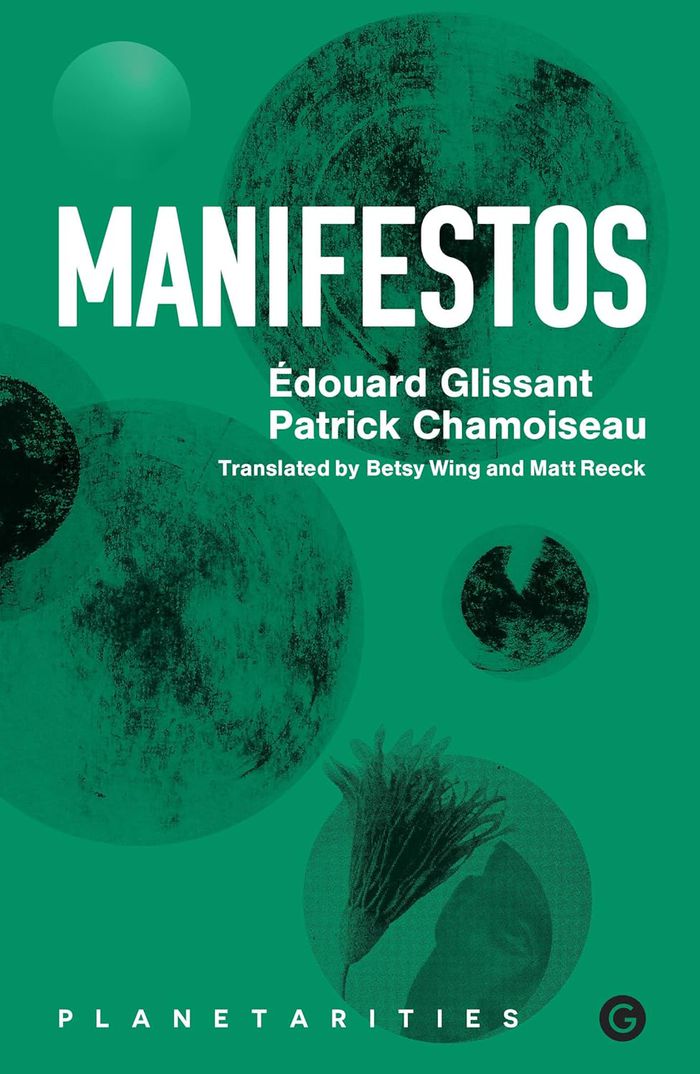
"Manifestos" brings together for the first time in English the manifestos written by Édouard Glissant and Patrick Chamoiseau between 2000 and 2009. Composed in part in the aftermath of Barack Obama’s election in 2008, the texts resonate with the current context of divided identities and criticisms of multiculturalism. The individual texts grapple with concrete historical and political moments in France, the Caribbean, and North America. Across the manifestos, as well as two collectively signed op-eds, the authors engage with socio-political aspects of climate catastrophe, resource extraction, toxicity, and neocolonialism. Throughout the collection, Glissant and Chamoiseau engage with key themes articulated through their poetic vocabulary, including Relation, globalization, globality (mondialité), anti-universalism, métissage, the tout-monde ("whole-world") and the tout-vivant ("all-living," including the relationship of humans to each other and "nature"), créolité and the creolization of the world, and the liberation from community assignations in response to individualism and neoliberal societies. Translated as the first volume in the Planetarities series with Goldsmiths Press, the themes of "Manifestos" resonate with the planetary as they work in response to contemporary forms of (economic) globalization, western capitalism, identity politics, and urban, digital and cosmic ecosystems, as well as the role of the poet-writer. A distinguishing feature of this publication is its interventional aspect, which prioritizes engaged scholarship and practice while demonstrating the relevance of the poetic in response to the urgencies of planetary crisis.
Manifestos
Actions:
Prix:
$39.95
(disponible sur commande)
Résumé:
"Manifestos" brings together for the first time in English the manifestos written by Édouard Glissant and Patrick Chamoiseau between 2000 and 2009. Composed in part in the aftermath of Barack Obama’s election in 2008, the texts resonate with the current context of divided identities and criticisms of multiculturalism. The individual texts grapple with concrete historical and political moments in France, the Caribbean, and North America. Across the manifestos, as well as two collectively signed op-eds, the authors engage with socio-political aspects of climate catastrophe, resource extraction, toxicity, and neocolonialism. Throughout the collection, Glissant and Chamoiseau engage with key themes articulated through their poetic vocabulary, including Relation, globalization, globality (mondialité), anti-universalism, métissage, the tout-monde ("whole-world") and the tout-vivant ("all-living," including the relationship of humans to each other and "nature"), créolité and the creolization of the world, and the liberation from community assignations in response to individualism and neoliberal societies. Translated as the first volume in the Planetarities series with Goldsmiths Press, the themes of "Manifestos" resonate with the planetary as they work in response to contemporary forms of (economic) globalization, western capitalism, identity politics, and urban, digital and cosmic ecosystems, as well as the role of the poet-writer. A distinguishing feature of this publication is its interventional aspect, which prioritizes engaged scholarship and practice while demonstrating the relevance of the poetic in response to the urgencies of planetary crisis.
Classification:
livres
livres
Publication:
septembre 2022
septembre 2022
Classification:
livres
livres
Actions:
Prix:
$45.00
(disponible sur commande)
Résumé:
This book proposes two goals: to analyze the innovations that the twenty-first century is introducing to the world of design, to the passage from the strong and concentrated modernity of the twentieth century to the weak and diffuse current one, and to investigate whether there is, in this passage, the possibility of imagining a future for non-figurative architecture. An(...)
$45.00
(disponible sur commande)
Résumé:
This book proposes two goals: to analyze the innovations that the twenty-first century is introducing to the world of design, to the passage from the strong and concentrated modernity of the twentieth century to the weak and diffuse current one, and to investigate whether there is, in this passage, the possibility of imagining a future for non-figurative architecture. An(...)
Titre:
Weak and diffuse modernity : the world of projects at the beginning of the 21st century
Actions:
Prix:
$45.00
(disponible sur commande)
Résumé:
This book proposes two goals: to analyze the innovations that the twenty-first century is introducing to the world of design, to the passage from the strong and concentrated modernity of the twentieth century to the weak and diffuse current one, and to investigate whether there is, in this passage, the possibility of imagining a future for non-figurative architecture. An architecture that becomes an urban semiosphere, surpassing its constructing limits and becoming a producer of immaterial qualities that change over time. […] Today’s urban condition is made up of services, information technologies networks, product systems, environmental componential practice, microclimates, commercial information, and above all perceptive structures that produce systems of sensorial and intelligent tunnels that are contained within architecture, but cannot be represented by architecture’s figurative codes. […] It’s not the first time that architecture attempts to go ‘beyond architecture’, but in the twenty-first century this utopia seems to be for the most part realized within the contemporary city.” This is a long essay comprising a decade of reflections and designs, in an attempt to reconcile conceptual reflections on architecture and the contemporary city, with a constant inclination towards a vision for the future. With this text, Andrea Branzi gives us a courageous act of faith and optimism towards an architecture that is still capable of listening to the city’s heart, while at the same time giving never-before-seen answers for the future of living together.
Weak and diffuse modernity : the world of projects at the beginning of the 21st century
Actions:
Prix:
$45.00
(disponible sur commande)
Résumé:
This book proposes two goals: to analyze the innovations that the twenty-first century is introducing to the world of design, to the passage from the strong and concentrated modernity of the twentieth century to the weak and diffuse current one, and to investigate whether there is, in this passage, the possibility of imagining a future for non-figurative architecture. An architecture that becomes an urban semiosphere, surpassing its constructing limits and becoming a producer of immaterial qualities that change over time. […] Today’s urban condition is made up of services, information technologies networks, product systems, environmental componential practice, microclimates, commercial information, and above all perceptive structures that produce systems of sensorial and intelligent tunnels that are contained within architecture, but cannot be represented by architecture’s figurative codes. […] It’s not the first time that architecture attempts to go ‘beyond architecture’, but in the twenty-first century this utopia seems to be for the most part realized within the contemporary city.” This is a long essay comprising a decade of reflections and designs, in an attempt to reconcile conceptual reflections on architecture and the contemporary city, with a constant inclination towards a vision for the future. With this text, Andrea Branzi gives us a courageous act of faith and optimism towards an architecture that is still capable of listening to the city’s heart, while at the same time giving never-before-seen answers for the future of living together.
Classification:
livres
livres
Publication:
septembre 2006, Milan
septembre 2006, Milan
Classification:
livres
livres
Titre:
Claus en Kaan building
Claus en Kaan building
Actions:
Prix:
$100.95
(disponible sur commande)
Résumé:
Building - for all its simplicity the title of this book speaks volumes about the work of Claus and Kaan. It reduces architecture to what they see as the essence of their profession. Kees Kaan and Felix Claus once claimed that their ambition was to extinguish the schism between low practice and high theory, between architecture that serves its immediate objective and(...)
$100.95
(disponible sur commande)
Résumé:
Building - for all its simplicity the title of this book speaks volumes about the work of Claus and Kaan. It reduces architecture to what they see as the essence of their profession. Kees Kaan and Felix Claus once claimed that their ambition was to extinguish the schism between low practice and high theory, between architecture that serves its immediate objective and(...)
Titre:
Claus en Kaan building
Actions:
Prix:
$100.95
(disponible sur commande)
Résumé:
Building - for all its simplicity the title of this book speaks volumes about the work of Claus and Kaan. It reduces architecture to what they see as the essence of their profession. Kees Kaan and Felix Claus once claimed that their ambition was to extinguish the schism between low practice and high theory, between architecture that serves its immediate objective and architecture that speaks over the heads of its users to colleagues and critics. Severity and repose are hallmarks of Claus and Kaan's oeuvre and these qualities are often found in it simultaneously. For even at its most Spartan, their architecture is never harsh. Although one can hardly describe Claus and Kaan's architecture as postmodern, their stance does owe something to postmodernism. This can be seen in their free handling of references, such as Marcel Breuer's Whitney Museum or Mies van der Rohe's Barcelona Pavilion, and in their undogmatically broad range of interest, spanning from Heinrich Tessenow to Gordon Bunshaft and from Auguste Perret to I.M. Pei. For them there is no essential contradiction between modernity and classical values. This first comprehensive monograph on Claus and Kaan gives a complete overview of all their projects (250 or so), including those yet to be realized. Of this total, fifty are exhaustively documented and illustrated. With essays by Rafael Moneo, David Chipperfield, Andrea Deplazes, Christoph Grafe, Han Michel, and Felix Claus and Kees Kaan themselves. The book is designed by Karel Martens and Jaap van Triest.
Claus en Kaan building
Actions:
Prix:
$100.95
(disponible sur commande)
Résumé:
Building - for all its simplicity the title of this book speaks volumes about the work of Claus and Kaan. It reduces architecture to what they see as the essence of their profession. Kees Kaan and Felix Claus once claimed that their ambition was to extinguish the schism between low practice and high theory, between architecture that serves its immediate objective and architecture that speaks over the heads of its users to colleagues and critics. Severity and repose are hallmarks of Claus and Kaan's oeuvre and these qualities are often found in it simultaneously. For even at its most Spartan, their architecture is never harsh. Although one can hardly describe Claus and Kaan's architecture as postmodern, their stance does owe something to postmodernism. This can be seen in their free handling of references, such as Marcel Breuer's Whitney Museum or Mies van der Rohe's Barcelona Pavilion, and in their undogmatically broad range of interest, spanning from Heinrich Tessenow to Gordon Bunshaft and from Auguste Perret to I.M. Pei. For them there is no essential contradiction between modernity and classical values. This first comprehensive monograph on Claus and Kaan gives a complete overview of all their projects (250 or so), including those yet to be realized. Of this total, fifty are exhaustively documented and illustrated. With essays by Rafael Moneo, David Chipperfield, Andrea Deplazes, Christoph Grafe, Han Michel, and Felix Claus and Kees Kaan themselves. The book is designed by Karel Martens and Jaap van Triest.
Classification:
livres
livres
Publication:
mai 2002, Rotterdam
mai 2002, Rotterdam
Sujet:
Architecture, monographies
Architecture, monographies
Classification:
livres
livres
Prix:
$39.95
(disponible sur commande)
Résumé:
"Substance over Spectacle" presents the best and brightest architectural work in Canada in the last ten years, providing a representative sample of Canadian architectural practice since the early nineties, and demonstrating a specific Canadian sensibility that is unlike any architectural trend elsewhere in the world. The book also explores issues of viability,(...)
$39.95
(disponible sur commande)
Résumé:
"Substance over Spectacle" presents the best and brightest architectural work in Canada in the last ten years, providing a representative sample of Canadian architectural practice since the early nineties, and demonstrating a specific Canadian sensibility that is unlike any architectural trend elsewhere in the world. The book also explores issues of viability,(...)
Titre:
Substance over spectacle : contemporary Canadian architecture
Actions:
Prix:
$39.95
(disponible sur commande)
Résumé:
"Substance over Spectacle" presents the best and brightest architectural work in Canada in the last ten years, providing a representative sample of Canadian architectural practice since the early nineties, and demonstrating a specific Canadian sensibility that is unlike any architectural trend elsewhere in the world. The book also explores issues of viability, sustainability, community, and utility as they relate to the Canadian architectural experience. Included is the work of twenty-five architects from every area of the country, each represented by an installation of their own design and construction. In addition to photographs of the finished projects, "Substance over Spectacle" also features images of models and architectural drawings, together with analytical/critical text demonstrating the architectural ideas embedded in the work. Five essays deal with different aspects of contemporary Canadian architecture, written by some of Canada’s leading thinkers on architecture: George Baird, Sherry McKay, Marco Polo, Georges Adamczyk, and Andrew Gruft. Publication of the book coincides with an exhibition of the same name mounted by the Morris and Helen Belkin Art Gallery at the University of British Columbia, in April 2005, during the international conference of the Society of Architectural Historians, which is taking place at UBC. "Substance over Spectacle", the first national critical overview of Canadian architecture in some eighteen years, offers fresh new perspectives on how our architecture defines us as we approach the first mid-decade of the new century.
Substance over spectacle : contemporary Canadian architecture
Actions:
Prix:
$39.95
(disponible sur commande)
Résumé:
"Substance over Spectacle" presents the best and brightest architectural work in Canada in the last ten years, providing a representative sample of Canadian architectural practice since the early nineties, and demonstrating a specific Canadian sensibility that is unlike any architectural trend elsewhere in the world. The book also explores issues of viability, sustainability, community, and utility as they relate to the Canadian architectural experience. Included is the work of twenty-five architects from every area of the country, each represented by an installation of their own design and construction. In addition to photographs of the finished projects, "Substance over Spectacle" also features images of models and architectural drawings, together with analytical/critical text demonstrating the architectural ideas embedded in the work. Five essays deal with different aspects of contemporary Canadian architecture, written by some of Canada’s leading thinkers on architecture: George Baird, Sherry McKay, Marco Polo, Georges Adamczyk, and Andrew Gruft. Publication of the book coincides with an exhibition of the same name mounted by the Morris and Helen Belkin Art Gallery at the University of British Columbia, in April 2005, during the international conference of the Society of Architectural Historians, which is taking place at UBC. "Substance over Spectacle", the first national critical overview of Canadian architecture in some eighteen years, offers fresh new perspectives on how our architecture defines us as we approach the first mid-decade of the new century.
Classification:
livres
livres
Publication:
mai 2005, Vancouver
mai 2005, Vancouver
Sujet:
Architecture du Canada
Architecture du Canada
Classification:
livres
livres
Actions:
Prix:
$23.95
(disponible sur commande)
Résumé:
More than ever, architectural design is seen as a means to promote commercial goals rather than as an end in itself. Frank Gehry’s Guggenheim Museum in Bilbao, for example, simply cannot be considered apart from its intended role as a catalyst for the economic revitalization of Bilbao and its ability to attract tourist dollars, regardless of its architectural merits. A(...)
$23.95
(disponible sur commande)
Résumé:
More than ever, architectural design is seen as a means to promote commercial goals rather than as an end in itself. Frank Gehry’s Guggenheim Museum in Bilbao, for example, simply cannot be considered apart from its intended role as a catalyst for the economic revitalization of Bilbao and its ability to attract tourist dollars, regardless of its architectural merits. A(...)
Sujet:
Théorie de l’architecture
Théorie de l’architecture
Publication:
novembre 2005, Minneapolis, London
novembre 2005, Minneapolis, London
Titre:
Commodification and spectacle in architecture
Actions:
Prix:
$23.95
(disponible sur commande)
Résumé:
More than ever, architectural design is seen as a means to promote commercial goals rather than as an end in itself. Frank Gehry’s Guggenheim Museum in Bilbao, for example, simply cannot be considered apart from its intended role as a catalyst for the economic revitalization of Bilbao and its ability to attract tourist dollars, regardless of its architectural merits. A built environment intended to seduce consumers is more likely to offer instant gratification than to invite independent thought and reflection. But how harmful, if at all, is this unprecedented commercialization of architecture? Framed with an introduction by Kenneth Frampton, the contributions to "Commodification and spectacle in architecture" stake out a variety of positions in the debate over the extent to which it is possible—or desirable—to escape from, resist, or suggest plausible alternatives to the dominant culture of consumer capitalism. Rejecting any dreamy nostalgia for an idealized present or past in which design is completely divorced from commerce—and, in some cases, celebrating the pleasures of spectacle—the individual essays range from indictments of particular architects and critiques of the profession to broader concerns about what the phenomenon of commodification means for the practice of democracy and the health of society. Bringing together an impressive and varied group of critics and practitioners, "Commodification and spectacle in architecture" will help to sharpen the discussion of how design can respond to our hypercommodified culture.
Commodification and spectacle in architecture
Actions:
Prix:
$23.95
(disponible sur commande)
Résumé:
More than ever, architectural design is seen as a means to promote commercial goals rather than as an end in itself. Frank Gehry’s Guggenheim Museum in Bilbao, for example, simply cannot be considered apart from its intended role as a catalyst for the economic revitalization of Bilbao and its ability to attract tourist dollars, regardless of its architectural merits. A built environment intended to seduce consumers is more likely to offer instant gratification than to invite independent thought and reflection. But how harmful, if at all, is this unprecedented commercialization of architecture? Framed with an introduction by Kenneth Frampton, the contributions to "Commodification and spectacle in architecture" stake out a variety of positions in the debate over the extent to which it is possible—or desirable—to escape from, resist, or suggest plausible alternatives to the dominant culture of consumer capitalism. Rejecting any dreamy nostalgia for an idealized present or past in which design is completely divorced from commerce—and, in some cases, celebrating the pleasures of spectacle—the individual essays range from indictments of particular architects and critiques of the profession to broader concerns about what the phenomenon of commodification means for the practice of democracy and the health of society. Bringing together an impressive and varied group of critics and practitioners, "Commodification and spectacle in architecture" will help to sharpen the discussion of how design can respond to our hypercommodified culture.
Classification:
livres
livres
Publication:
novembre 2005, Minneapolis, London
novembre 2005, Minneapolis, London
Sujet:
Théorie de l’architecture
Théorie de l’architecture
Classification:
livres
livres
Titre:
Charles Rose, architect
Charles Rose, architect
Actions:
Prix:
$52.00
(disponible sur commande)
Résumé:
Charles Rose embraces the vast and varied panorama of the American landscape. Sensitive to his sites, the architect recognizes the poetry of every locale and uses his fascination with place as a central character in his designs. Regionalism, a term at times used to underrate architecture that is seen as too parochial or that eschews universal "truths" (most often those of(...)
$52.00
(disponible sur commande)
Résumé:
Charles Rose embraces the vast and varied panorama of the American landscape. Sensitive to his sites, the architect recognizes the poetry of every locale and uses his fascination with place as a central character in his designs. Regionalism, a term at times used to underrate architecture that is seen as too parochial or that eschews universal "truths" (most often those of(...)
Titre:
Charles Rose, architect
Actions:
Prix:
$52.00
(disponible sur commande)
Résumé:
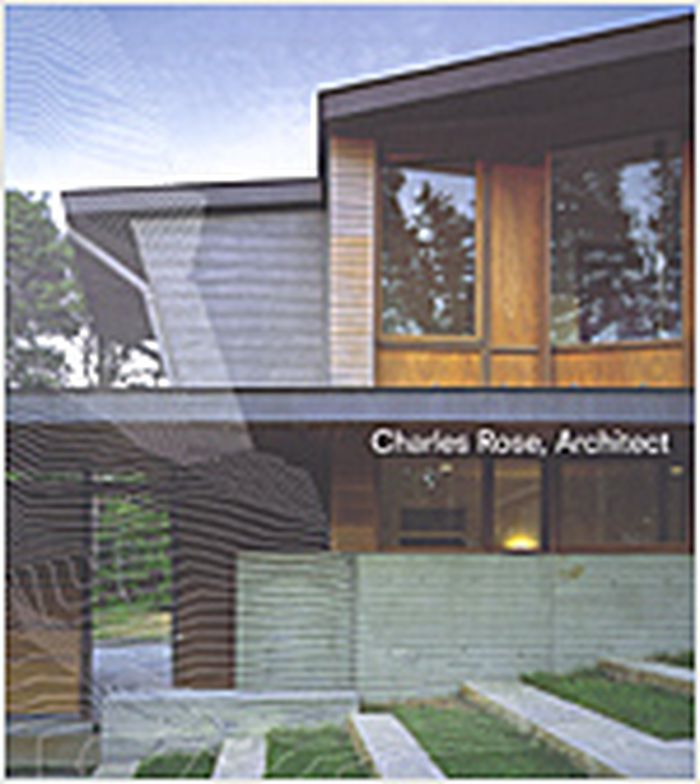
Charles Rose embraces the vast and varied panorama of the American landscape. Sensitive to his sites, the architect recognizes the poetry of every locale and uses his fascination with place as a central character in his designs. Regionalism, a term at times used to underrate architecture that is seen as too parochial or that eschews universal "truths" (most often those of modernism) in favor of a local style, becomes a practice of the highest order in the hands of Rose, one of America's most accomplished young architects. With both the rigor of geometry and a commitment to ecosensitivity, his work is as attuned to the dense urban fabric of New York City as it is to the rural outback of Wyoming. The profile of his award-winning Camp Paint Rock in Hyattville, Wyoming, follows the contours of a nearby canyon; Roses's adaptive reuse of an industrial structure in New York City's Chelsea neighborhood preserves the existing streetscape while creating a seamless flow between inside and out; and the shape of his United States Port of Entry project in Del Rio, Texas, was determined by the scorching Texan sun and features sustainable landscapes. With surprising use of volumes, materials, and geometries, agile movement of spaces, and an active language of planes and lines, Rose creates dynamic, expressive architecture that reminds us that buildings can be both sensitive to their locale and embrace the timeless principles of geometry, material, light, and shadow.
Charles Rose, architect
Actions:
Prix:
$52.00
(disponible sur commande)
Résumé:
Charles Rose embraces the vast and varied panorama of the American landscape. Sensitive to his sites, the architect recognizes the poetry of every locale and uses his fascination with place as a central character in his designs. Regionalism, a term at times used to underrate architecture that is seen as too parochial or that eschews universal "truths" (most often those of modernism) in favor of a local style, becomes a practice of the highest order in the hands of Rose, one of America's most accomplished young architects. With both the rigor of geometry and a commitment to ecosensitivity, his work is as attuned to the dense urban fabric of New York City as it is to the rural outback of Wyoming. The profile of his award-winning Camp Paint Rock in Hyattville, Wyoming, follows the contours of a nearby canyon; Roses's adaptive reuse of an industrial structure in New York City's Chelsea neighborhood preserves the existing streetscape while creating a seamless flow between inside and out; and the shape of his United States Port of Entry project in Del Rio, Texas, was determined by the scorching Texan sun and features sustainable landscapes. With surprising use of volumes, materials, and geometries, agile movement of spaces, and an active language of planes and lines, Rose creates dynamic, expressive architecture that reminds us that buildings can be both sensitive to their locale and embrace the timeless principles of geometry, material, light, and shadow.
Classification:
livres
livres
Publication:
février 2006, New York
février 2006, New York
Sujet:
livres soldés
livres soldés
Classification:
livres
livres
Actions:
Prix:
$24.95
(disponible sur commande)
Résumé:
What begins as a meditation on "the museum" becomes, in this book, a far-reaching critical examination of how art history and museums have guided and controlled not only the way we look at art but the ways in which we understand modernity itself. Originally delivered as the 2001 Slade Lectures in the Fine Arts at Oxford University, the book makes its deeply complex(...)
$24.95
(disponible sur commande)
Résumé:
What begins as a meditation on "the museum" becomes, in this book, a far-reaching critical examination of how art history and museums have guided and controlled not only the way we look at art but the ways in which we understand modernity itself. Originally delivered as the 2001 Slade Lectures in the Fine Arts at Oxford University, the book makes its deeply complex(...)
Titre:
Brain of the earth's body : art, museums and the phantasms of modernity
Actions:
Prix:
$24.95
(disponible sur commande)
Résumé:
What begins as a meditation on "the museum" becomes, in this book, a far-reaching critical examination of how art history and museums have guided and controlled not only the way we look at art but the ways in which we understand modernity itself. Originally delivered as the 2001 Slade Lectures in the Fine Arts at Oxford University, the book makes its deeply complex argument remarkably accessible and powerfully clear. Concentrating on a period from the beginning of the nineteenth century to the beginning of the twentieth, Donald Preziosi presents case studies of major institutions that, he argues, have defined--and are still defining--the possible limits of museological and art historical theory and practice. These include Sir John Soane's Museum in London, preserved in its 1837 state; the Crystal Palace Exhibition of 1851; and four museums founded by Europeans in Egypt in the late nineteenth century, which divided up that country's history into "ethnically marked" aesthetic hierarchies and genealogies that accorded with Europe's construction of itself as the present of the world's past, and the "brain of the earth's body." Through this epistemological and institutional archaeology, Preziosi unearths the outlines of the more radical Enlightenment project that academic art history, professional museology, and art criticism have rendered marginal or invisible. Finally, he sketches a new theory about art, artifice, and visual signification in the cracks and around the margins of the "secular theologisms" of the globalized imperial capital called modernity.
Brain of the earth's body : art, museums and the phantasms of modernity
Actions:
Prix:
$24.95
(disponible sur commande)
Résumé:
What begins as a meditation on "the museum" becomes, in this book, a far-reaching critical examination of how art history and museums have guided and controlled not only the way we look at art but the ways in which we understand modernity itself. Originally delivered as the 2001 Slade Lectures in the Fine Arts at Oxford University, the book makes its deeply complex argument remarkably accessible and powerfully clear. Concentrating on a period from the beginning of the nineteenth century to the beginning of the twentieth, Donald Preziosi presents case studies of major institutions that, he argues, have defined--and are still defining--the possible limits of museological and art historical theory and practice. These include Sir John Soane's Museum in London, preserved in its 1837 state; the Crystal Palace Exhibition of 1851; and four museums founded by Europeans in Egypt in the late nineteenth century, which divided up that country's history into "ethnically marked" aesthetic hierarchies and genealogies that accorded with Europe's construction of itself as the present of the world's past, and the "brain of the earth's body." Through this epistemological and institutional archaeology, Preziosi unearths the outlines of the more radical Enlightenment project that academic art history, professional museology, and art criticism have rendered marginal or invisible. Finally, he sketches a new theory about art, artifice, and visual signification in the cracks and around the margins of the "secular theologisms" of the globalized imperial capital called modernity.
Classification:
livres
livres
Publication:
juillet 2003, Minneapolis
juillet 2003, Minneapolis
Sujet:
Muséologie
Muséologie
Classification:
livres
livres
Actions:
Prix:
$46.95
(disponible sur commande)
Résumé:
Hans Haacke’s art articulates the interdependence of multiple elements. An artwork is not merely an object but is also its context—the economic, social, and political conditions of the art world and the world at large. Among his best-known works are MoMA-Poll (1970), which polled museumgoers on their opinions about Nelson Rockefeller and the Nixon administration’s(...)
$46.95
(disponible sur commande)
Résumé:
Hans Haacke’s art articulates the interdependence of multiple elements. An artwork is not merely an object but is also its context—the economic, social, and political conditions of the art world and the world at large. Among his best-known works are MoMA-Poll (1970), which polled museumgoers on their opinions about Nelson Rockefeller and the Nixon administration’s(...)
Titre:
Working conditions: the writings of Hans Haacke
Actions:
Prix:
$46.95
(disponible sur commande)
Résumé:
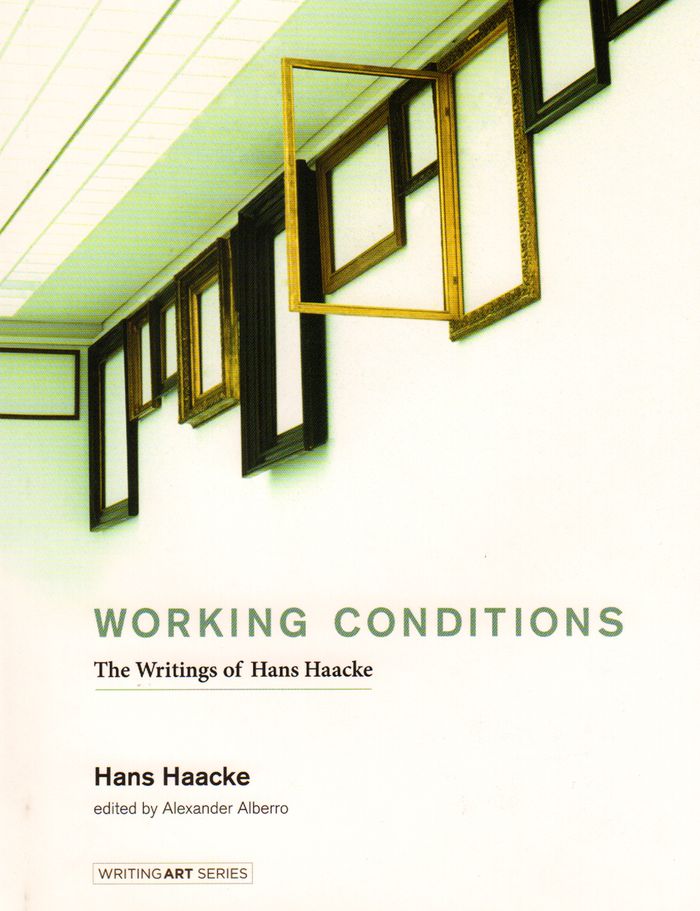
Hans Haacke’s art articulates the interdependence of multiple elements. An artwork is not merely an object but is also its context—the economic, social, and political conditions of the art world and the world at large. Among his best-known works are MoMA-Poll (1970), which polled museumgoers on their opinions about Nelson Rockefeller and the Nixon administration’s Indochina policy; Gallery-Goers’ Birthplace and Residence Profile (1969), which canvassed visitors to the Howard Wise Gallery in Manhattan; and the famously canceled 1971 solo exhibition at the Guggenheim Museum, which was meant to display, among other things, works on two New York real estate empires. This volume collects writings by Haacke that explain and document his practice. The texts, some of which have never before been published, run from straightforward descriptions to wide-ranging reflections and full-throated polemics. They include correspondence with MoMA and the Guggenheim and a letter refusing to represent the United States at the 1969 São Paulo Biennial; the title piece, “Working Conditions,” which discusses corporate influence on the art world; Haacke’s thinking about “real-time social systems”; and texts written for museum catalogs on various artworks, including GERMANIA, in the German Pavilion of the 1993 Venice Biennial; DER BEVÖLKERUNG (To the Population) of 2000 at the Berlin Reichstag; Mixed Messages, an exhibition of objects from the Victoria and Albert Museum (2001); and Gift Horse, unveiled on the fourth plinth in Trafalgar Square in 2015.
Working conditions: the writings of Hans Haacke
Actions:
Prix:
$46.95
(disponible sur commande)
Résumé:
Hans Haacke’s art articulates the interdependence of multiple elements. An artwork is not merely an object but is also its context—the economic, social, and political conditions of the art world and the world at large. Among his best-known works are MoMA-Poll (1970), which polled museumgoers on their opinions about Nelson Rockefeller and the Nixon administration’s Indochina policy; Gallery-Goers’ Birthplace and Residence Profile (1969), which canvassed visitors to the Howard Wise Gallery in Manhattan; and the famously canceled 1971 solo exhibition at the Guggenheim Museum, which was meant to display, among other things, works on two New York real estate empires. This volume collects writings by Haacke that explain and document his practice. The texts, some of which have never before been published, run from straightforward descriptions to wide-ranging reflections and full-throated polemics. They include correspondence with MoMA and the Guggenheim and a letter refusing to represent the United States at the 1969 São Paulo Biennial; the title piece, “Working Conditions,” which discusses corporate influence on the art world; Haacke’s thinking about “real-time social systems”; and texts written for museum catalogs on various artworks, including GERMANIA, in the German Pavilion of the 1993 Venice Biennial; DER BEVÖLKERUNG (To the Population) of 2000 at the Berlin Reichstag; Mixed Messages, an exhibition of objects from the Victoria and Albert Museum (2001); and Gift Horse, unveiled on the fourth plinth in Trafalgar Square in 2015.
Classification:
livres
livres
Publication:
octobre 2016
octobre 2016
Sujet:
Théorie de l’art
Théorie de l’art
Classification:
périodiques
périodiques
Titre:
ARCH+ : Release architecture
ARCH+ : Release architecture
Actions:
Prix:
$39.95
(disponible en magasin)
Résumé:
An architecture biennale can be more than a place to simply represent and celebrate the status quo in architectural production. Exhibitions are increasingly becoming a place for researching and producing an experimental and critical architectural practice: a place not for the presentation of finished products, but for the production of content. This calls into question(...)
$39.95
(disponible en magasin)
Résumé:
An architecture biennale can be more than a place to simply represent and celebrate the status quo in architectural production. Exhibitions are increasingly becoming a place for researching and producing an experimental and critical architectural practice: a place not for the presentation of finished products, but for the production of content. This calls into question(...)
Titre:
ARCH+ : Release architecture
Actions:
Prix:
$39.95
(disponible en magasin)
Résumé:
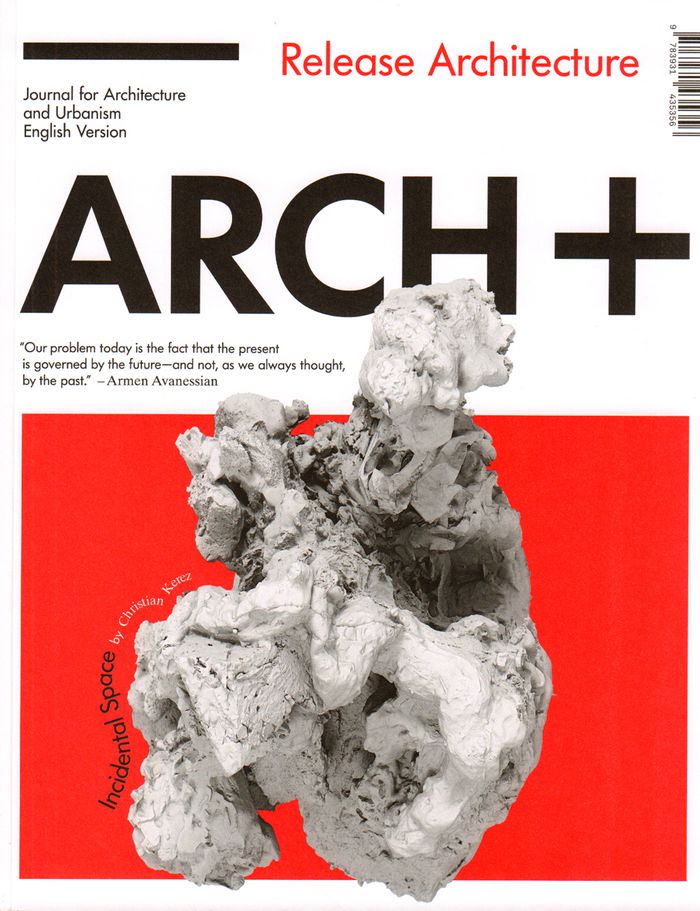
An architecture biennale can be more than a place to simply represent and celebrate the status quo in architectural production. Exhibitions are increasingly becoming a place for researching and producing an experimental and critical architectural practice: a place not for the presentation of finished products, but for the production of content. This calls into question the supposed boundary between architecture and exhibition. Inquiry becomes a form of display. Christian Kerez’s Incidental Space, exhibited in the Swiss Pavilion at the 2016 Architecture Biennale in Venice, attempts to inquire into the outer limits of what can be achieved in architecture today—in terms of both technical feasibility and the limits of our own imagination. How can you use the medium of architecture to contemplate an architectural space that is entirely abstract and as complex as possible? How could this kind of imaginary space even be visualized, and how could it be produced? Conceived in close collaboration with Sandra Oehy, the curator of the Swiss Pavilion, and Christian Kerez, the Swiss Pavilion architect, this issue of ARCH+ delves into the questions posed by Kerez’s “speculative space.” Contributors like Philip Ursprung, Mario Carpo, Armen Avanessian, and Timothy Morton consider how the object stands in relation to the subject in a world where the capacity for technological and digital reproduction increasingly renders the distinction between depiction and reality moot. Where is the space for architectural autonomy in this? How can we “Release Architecture”? A report from architecture’s speculative front.
ARCH+ : Release architecture
Actions:
Prix:
$39.95
(disponible en magasin)
Résumé:
An architecture biennale can be more than a place to simply represent and celebrate the status quo in architectural production. Exhibitions are increasingly becoming a place for researching and producing an experimental and critical architectural practice: a place not for the presentation of finished products, but for the production of content. This calls into question the supposed boundary between architecture and exhibition. Inquiry becomes a form of display. Christian Kerez’s Incidental Space, exhibited in the Swiss Pavilion at the 2016 Architecture Biennale in Venice, attempts to inquire into the outer limits of what can be achieved in architecture today—in terms of both technical feasibility and the limits of our own imagination. How can you use the medium of architecture to contemplate an architectural space that is entirely abstract and as complex as possible? How could this kind of imaginary space even be visualized, and how could it be produced? Conceived in close collaboration with Sandra Oehy, the curator of the Swiss Pavilion, and Christian Kerez, the Swiss Pavilion architect, this issue of ARCH+ delves into the questions posed by Kerez’s “speculative space.” Contributors like Philip Ursprung, Mario Carpo, Armen Avanessian, and Timothy Morton consider how the object stands in relation to the subject in a world where the capacity for technological and digital reproduction increasingly renders the distinction between depiction and reality moot. Where is the space for architectural autonomy in this? How can we “Release Architecture”? A report from architecture’s speculative front.
Classification:
périodiques
périodiques
Publication:
mai 2016
mai 2016
Sujet:
Revues
Revues
Classification:
livres
livres
Actions:
Prix:
$78.00
(disponible sur commande)
Résumé:
Curious about how Alsop Architects managed to construct that flying, translucent rectangle at the Ontario College of Art and Design? Wonder about the sustainability of the Genzyme Building? The saying "the truth is in the details" reveals an essential quality of architectural design. How a staircase curves, a roof seemingly floats, or a concrete wall illuminates are(...)
$78.00
(disponible sur commande)
Résumé:
Curious about how Alsop Architects managed to construct that flying, translucent rectangle at the Ontario College of Art and Design? Wonder about the sustainability of the Genzyme Building? The saying "the truth is in the details" reveals an essential quality of architectural design. How a staircase curves, a roof seemingly floats, or a concrete wall illuminates are(...)
Publication:
décembre 2006, New York
décembre 2006, New York
Titre:
Details in contemporary architecture
Actions:
Prix:
$78.00
(disponible sur commande)
Résumé:
Curious about how Alsop Architects managed to construct that flying, translucent rectangle at the Ontario College of Art and Design? Wonder about the sustainability of the Genzyme Building? The saying "the truth is in the details" reveals an essential quality of architectural design. How a staircase curves, a roof seemingly floats, or a concrete wall illuminates are critical questions for architects looking at or creating new work. You might forgive designers for closely guarding their signature techniques. Fortunately, editors Christine Killory and René Davids culled an amazing collection of the best trade secrets in "Details in contemporary architecture". By looking at the best work of the past two years, the book demonstrates how complicated design problems have been handled by architects to achieve beautiful, functional, innovative, sustainable, and, where necessary, economical results. Including work by David Chipperfield, Herzog and de Meuron, Morphosis, ShoP, and many other well-known firms, "Details in contemporary architecture" extensively explores the common as well as more exotic architectural detailing (screens and walls, doors and windows, roofs, bridges, and stairs) that so often gets lost in the pages and photographs of the design media. "Details in contemporary architecture" is the first volume of a new series entitled "AsBuilt". AsBuilt features details from a representative range of building types and materials of recent built work in America. The series seeks to ground both practice and theory more deeply while fostering a better understanding of the relationships between architectural form and technology.
Details in contemporary architecture
Actions:
Prix:
$78.00
(disponible sur commande)
Résumé:
Curious about how Alsop Architects managed to construct that flying, translucent rectangle at the Ontario College of Art and Design? Wonder about the sustainability of the Genzyme Building? The saying "the truth is in the details" reveals an essential quality of architectural design. How a staircase curves, a roof seemingly floats, or a concrete wall illuminates are critical questions for architects looking at or creating new work. You might forgive designers for closely guarding their signature techniques. Fortunately, editors Christine Killory and René Davids culled an amazing collection of the best trade secrets in "Details in contemporary architecture". By looking at the best work of the past two years, the book demonstrates how complicated design problems have been handled by architects to achieve beautiful, functional, innovative, sustainable, and, where necessary, economical results. Including work by David Chipperfield, Herzog and de Meuron, Morphosis, ShoP, and many other well-known firms, "Details in contemporary architecture" extensively explores the common as well as more exotic architectural detailing (screens and walls, doors and windows, roofs, bridges, and stairs) that so often gets lost in the pages and photographs of the design media. "Details in contemporary architecture" is the first volume of a new series entitled "AsBuilt". AsBuilt features details from a representative range of building types and materials of recent built work in America. The series seeks to ground both practice and theory more deeply while fostering a better understanding of the relationships between architectural form and technology.
Classification:
livres
livres
Publication:
décembre 2006, New York
décembre 2006, New York


