


8791 Résultats
Classification:
livres
livres
Actions:
Prix:
$48.00
(disponible sur commande)
Résumé:
Errata Editions' "Books on Books" series is an ongoing publishing project dedicated to making rare and out-of-print photography books accessible to students and photobook enthusiasts. These are not reprints or facsimiles but complete studies of the original books. Each volume in the series presents the entire content, page for page, of an original master bookwork which,(...)
$48.00
(disponible sur commande)
Résumé:
Errata Editions' "Books on Books" series is an ongoing publishing project dedicated to making rare and out-of-print photography books accessible to students and photobook enthusiasts. These are not reprints or facsimiles but complete studies of the original books. Each volume in the series presents the entire content, page for page, of an original master bookwork which,(...)
Titre:
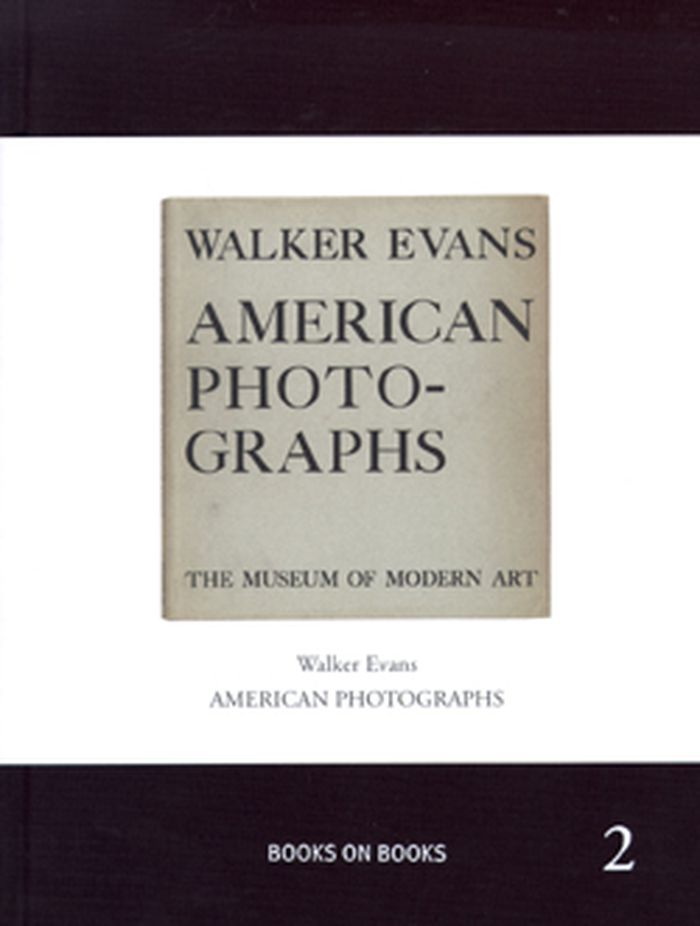
Walker Evans : American photographs
Actions:
Prix:
$48.00
(disponible sur commande)
Résumé:
Errata Editions' "Books on Books" series is an ongoing publishing project dedicated to making rare and out-of-print photography books accessible to students and photobook enthusiasts. These are not reprints or facsimiles but complete studies of the original books. Each volume in the series presents the entire content, page for page, of an original master bookwork which, up until now, has been too rare or expensive for most to experience. Through a mix of classic and contemporary titles, this series spans the breadth of photographic practice as it has appeared on the printed page and allows further study of the creation and meanings of these great works of art. Each volume in the series contains illustrations of every page in the original photobook, a new essay by an established writer on photography, production notes about the creation of the original edition and biographical and bibliographical information about each artist. Walker Evans' American Photographs, originally conceived as a catalogue to accompany Evan's one-man show at The Museum of Modern Art in 1938, it has been out of print for many long stretches of time. Books on Books 2 presents the original 1938 edition with the 87 legendary black-and-white photographs that defined the documentary-style aesthetic. This volume also reproduces Lincoln Kirstein's great original essay as well as a contemporary piece by John T. Hill, the author of many books on Evans, including Lyric Documentary, published by Steidl in 2006.
Walker Evans : American photographs
Actions:
Prix:
$48.00
(disponible sur commande)
Résumé:
Errata Editions' "Books on Books" series is an ongoing publishing project dedicated to making rare and out-of-print photography books accessible to students and photobook enthusiasts. These are not reprints or facsimiles but complete studies of the original books. Each volume in the series presents the entire content, page for page, of an original master bookwork which, up until now, has been too rare or expensive for most to experience. Through a mix of classic and contemporary titles, this series spans the breadth of photographic practice as it has appeared on the printed page and allows further study of the creation and meanings of these great works of art. Each volume in the series contains illustrations of every page in the original photobook, a new essay by an established writer on photography, production notes about the creation of the original edition and biographical and bibliographical information about each artist. Walker Evans' American Photographs, originally conceived as a catalogue to accompany Evan's one-man show at The Museum of Modern Art in 1938, it has been out of print for many long stretches of time. Books on Books 2 presents the original 1938 edition with the 87 legendary black-and-white photographs that defined the documentary-style aesthetic. This volume also reproduces Lincoln Kirstein's great original essay as well as a contemporary piece by John T. Hill, the author of many books on Evans, including Lyric Documentary, published by Steidl in 2006.
Classification:
livres
livres
Publication:
janvier 2009, New York
janvier 2009, New York
Sujet:
Monographies photo
Monographies photo
Classification:
livres
livres
Actions:
Prix:
$97.50
(disponible sur commande)
Résumé:
In 1919 the Social Democrat city council of Vienna initiated a radical program of reforms designed to reshape the city's infrastructure along socialist lines. The centrepiece and most enduring achievement of "Red" Vienna was the construction of the Wiener (...)
$97.50
(disponible sur commande)
Résumé:
In 1919 the Social Democrat city council of Vienna initiated a radical program of reforms designed to reshape the city's infrastructure along socialist lines. The centrepiece and most enduring achievement of "Red" Vienna was the construction of the Wiener (...)
Titre:
The architecture of red Vienna 1919-1934
Actions:
Prix:
$97.50
(disponible sur commande)
Résumé:
In 1919 the Social Democrat city council of Vienna initiated a radical program of reforms designed to reshape the city's infrastructure along socialist lines. The centrepiece and most enduring achievement of "Red" Vienna was the construction of the Wiener Gemeindebauten, 400 communal housing blocks, distributed throughout the city, in which workers' dwellings were incorporated with kindergartens, libraries, medical clinics, theaters, cooperative stores, and other public facilities. The 64,000 units housed one tenth of the city's population. Throughout this socialist building campaign, however, Austria was ruled by a conservative, clerical, and antisocialist political majority. Thus the architecture of Red Vienna took shape in the midst of highly charged, and often violent, political conflict between left and right. In this book, Eve Blau looks at how that ideological conflict shaped the buildings of Red Vienna--in terms of their programme, spatial conception, language, and use--as well as how political meaning itself is manifested in architecture. She shows how the architecture of Red Vienna constructed meaning in relation to the ideological conflicts that defined Austrian politics in the interwar period--how it was shaped by the conditions of its making, and how it engaged its own codes, practices, and history to stake out a political position in relation to those conditions. Her investigation sheds light both on the complex relationship among political program, architectural practice, and urban history in interwar Vienna, and on the process by which architecture can generate a collective discourse that includes all members of society.
The architecture of red Vienna 1919-1934
Actions:
Prix:
$97.50
(disponible sur commande)
Résumé:
In 1919 the Social Democrat city council of Vienna initiated a radical program of reforms designed to reshape the city's infrastructure along socialist lines. The centrepiece and most enduring achievement of "Red" Vienna was the construction of the Wiener Gemeindebauten, 400 communal housing blocks, distributed throughout the city, in which workers' dwellings were incorporated with kindergartens, libraries, medical clinics, theaters, cooperative stores, and other public facilities. The 64,000 units housed one tenth of the city's population. Throughout this socialist building campaign, however, Austria was ruled by a conservative, clerical, and antisocialist political majority. Thus the architecture of Red Vienna took shape in the midst of highly charged, and often violent, political conflict between left and right. In this book, Eve Blau looks at how that ideological conflict shaped the buildings of Red Vienna--in terms of their programme, spatial conception, language, and use--as well as how political meaning itself is manifested in architecture. She shows how the architecture of Red Vienna constructed meaning in relation to the ideological conflicts that defined Austrian politics in the interwar period--how it was shaped by the conditions of its making, and how it engaged its own codes, practices, and history to stake out a political position in relation to those conditions. Her investigation sheds light both on the complex relationship among political program, architectural practice, and urban history in interwar Vienna, and on the process by which architecture can generate a collective discourse that includes all members of society.
Classification:
livres
livres
Publication:
décembre 1998, Cambridge, Mass.
décembre 1998, Cambridge, Mass.
Sujet:
Modernisme
Modernisme
Classification:
livres
livres
Titre:
Lost architectures
Lost architectures
Actions:
Prix:
$55.50
(disponible sur commande)
Résumé:
This book stands in opposition to the popular notion that the best architecture is built on compromise. Rather, Neil Spiller argues, the most original and brave products of the architectural mind are often to be found in those projects which, for whatever reason, never came to fruition. (...)
$55.50
(disponible sur commande)
Résumé:
This book stands in opposition to the popular notion that the best architecture is built on compromise. Rather, Neil Spiller argues, the most original and brave products of the architectural mind are often to be found in those projects which, for whatever reason, never came to fruition. (...)
Publication:
janvier 2001, Great Britain
janvier 2001, Great Britain
Titre:
Lost architectures
Actions:
Prix:
$55.50
(disponible sur commande)
Résumé:
This book stands in opposition to the popular notion that the best architecture is built on compromise. Rather, Neil Spiller argues, the most original and brave products of the architectural mind are often to be found in those projects which, for whatever reason, never came to fruition. "Lost Architectures" presents an array of such projects from the last decades of the twentieth century, consituting the unrealised dreams of some of the most inspirational architects working in the period. Most of the projects featured here have seldom, if ever, been published before, and some represent the last hand-drawn work of their creators before the age of the computer finally came into full force. Whilst they do not follow any specific style, these projects embody a spirit defined by Spiller as New Romanticism - a spirit which combines elements of aesthetic decadence and a certain camp mannerism with a love of angularity and mechanised ritual. Some of the architects in question are still in practice, with a great deal of high-profile built work behind them; others have never been recognised as they perhaps should have been. In both cases, this book is an invaluable resource of information and inspiration for students of architecture, as well as for theorists, historians and lay readers. It provides essential exposure for a range of work of great vitality which might otherwise risk being lost in the course of time.
Lost architectures
Actions:
Prix:
$55.50
(disponible sur commande)
Résumé:
This book stands in opposition to the popular notion that the best architecture is built on compromise. Rather, Neil Spiller argues, the most original and brave products of the architectural mind are often to be found in those projects which, for whatever reason, never came to fruition. "Lost Architectures" presents an array of such projects from the last decades of the twentieth century, consituting the unrealised dreams of some of the most inspirational architects working in the period. Most of the projects featured here have seldom, if ever, been published before, and some represent the last hand-drawn work of their creators before the age of the computer finally came into full force. Whilst they do not follow any specific style, these projects embody a spirit defined by Spiller as New Romanticism - a spirit which combines elements of aesthetic decadence and a certain camp mannerism with a love of angularity and mechanised ritual. Some of the architects in question are still in practice, with a great deal of high-profile built work behind them; others have never been recognised as they perhaps should have been. In both cases, this book is an invaluable resource of information and inspiration for students of architecture, as well as for theorists, historians and lay readers. It provides essential exposure for a range of work of great vitality which might otherwise risk being lost in the course of time.
Classification:
livres
livres
Publication:
janvier 2001, Great Britain
janvier 2001, Great Britain
Classification:
livres
livres
Titre:
AD Space architecture
AD Space architecture
Actions:
Prix:
$54.99
(disponible en magasin)
Résumé:
This Architectural Design title poses a unique challenge to architects. It incites designers to respond to the limitless potential that outer space presents at the beginning of the third millennium. No longer man's final frontier restricted to the activities of government space agencies, the extraterrestial environment is soon to be opened up by private enterprises and(...)
$54.99
(disponible en magasin)
Résumé:
This Architectural Design title poses a unique challenge to architects. It incites designers to respond to the limitless potential that outer space presents at the beginning of the third millennium. No longer man's final frontier restricted to the activities of government space agencies, the extraterrestial environment is soon to be opened up by private enterprises and(...)
Titre:
AD Space architecture
Actions:
Prix:
$54.99
(disponible en magasin)
Résumé:
This Architectural Design title poses a unique challenge to architects. It incites designers to respond to the limitless potential that outer space presents at the beginning of the third millennium. No longer man's final frontier restricted to the activities of government space agencies, the extraterrestial environment is soon to be opened up by private enterprises and individuals. Featured work, by those such as WAT, Shimizu Systems and the X-Prize contenders, prove that entrepreneurial companies are already producing independent pioneering designs for the first tourists. Contributing specialists from a wide range of disciplines endorse these developments: the engineer David Ashford describes the viability of developing commercial passenger planes for space tourism within decades and the economist Patrick Collins analyses the commercial rewards to be reaped from outer space. The social, legal and scientific effects of creating what could ultimately be an unlimited ecological zone beyond Earth are explored further. Just how far reaching the effects will be for the practice of architecture is suggested both by John Zukowsky's comprehensive overview of space architecture and Ted Krueger, who organised an architectural workshop with NASA. This is not, however, to overlook space's artistic impact on architectural design in the latter 20th century. Space Architecture also recognises the seductive power that high-technology space imagery has had for contemporary architects and their debt to film and TV, as well as cult figures such as David Bowie.
AD Space architecture
Actions:
Prix:
$54.99
(disponible en magasin)
Résumé:
This Architectural Design title poses a unique challenge to architects. It incites designers to respond to the limitless potential that outer space presents at the beginning of the third millennium. No longer man's final frontier restricted to the activities of government space agencies, the extraterrestial environment is soon to be opened up by private enterprises and individuals. Featured work, by those such as WAT, Shimizu Systems and the X-Prize contenders, prove that entrepreneurial companies are already producing independent pioneering designs for the first tourists. Contributing specialists from a wide range of disciplines endorse these developments: the engineer David Ashford describes the viability of developing commercial passenger planes for space tourism within decades and the economist Patrick Collins analyses the commercial rewards to be reaped from outer space. The social, legal and scientific effects of creating what could ultimately be an unlimited ecological zone beyond Earth are explored further. Just how far reaching the effects will be for the practice of architecture is suggested both by John Zukowsky's comprehensive overview of space architecture and Ted Krueger, who organised an architectural workshop with NASA. This is not, however, to overlook space's artistic impact on architectural design in the latter 20th century. Space Architecture also recognises the seductive power that high-technology space imagery has had for contemporary architects and their debt to film and TV, as well as cult figures such as David Bowie.
Classification:
livres
livres
Publication:
mars 2000
mars 2000
Classification:
livres
livres

Actions:
Prix:
$29.95
(disponible sur commande)
Résumé:
Moving the critical debate about photography away from its current Euro-American centre of gravity, "Photography’s Other Histories" breaks with the notion that photographic history is best seen as the explosion of a Western technology advanced by the work of singular individuals. This collection presents a different account, describing photography as a globally(...)
$29.95
(disponible sur commande)
Résumé:
Moving the critical debate about photography away from its current Euro-American centre of gravity, "Photography’s Other Histories" breaks with the notion that photographic history is best seen as the explosion of a Western technology advanced by the work of singular individuals. This collection presents a different account, describing photography as a globally(...)
Sujet:
Théorie de la photographie
Théorie de la photographie
Publication:
mars 2003, Durham, N.C.
mars 2003, Durham, N.C.
Titre:
Photography's other histories
Actions:
Prix:
$29.95
(disponible sur commande)
Résumé:
Moving the critical debate about photography away from its current Euro-American centre of gravity, "Photography’s Other Histories" breaks with the notion that photographic history is best seen as the explosion of a Western technology advanced by the work of singular individuals. This collection presents a different account, describing photography as a globally disseminated and locally appropriated medium. Essays firmly grounded in photographic practice — in the actual making of pictures — suggest the extraordinary diversity of nonwestern photography "Photography’s Other Histories" explores from a variety of geographic, cultural, and historic perspectives the role of photography in raising historical consciousness. It includes two first-person pieces by indigenous Australians and one by a Seminole/Muskogee/Diné artist. Some of the essays analyze representations of colonial subjects—from the limited ways Westerners have depicted Navajos to Japanese photos recording the occupation of Manchuria and from the changing nature of the "contract" between Aboriginal subjects and photographers to the surprising range of cultural influences evident in the photographs colonialist F. R. Barton took in New Guinea in the late 1800s and early 1900s. Focusing on photographic self-fashioning and the development of vernacular modernisms, other essays highlight the visionary quality of much popular photography. Case studies centered in early-twentieth-century Peru and contemporary India, Kenya, and Nigeria chronicle the diverse practices that have flourished in postcolonial societies. "Photography’s Other Histories" recasts popular photography around the world, as not simply reproducing culture but creating it.
Photography's other histories
Actions:
Prix:
$29.95
(disponible sur commande)
Résumé:
Moving the critical debate about photography away from its current Euro-American centre of gravity, "Photography’s Other Histories" breaks with the notion that photographic history is best seen as the explosion of a Western technology advanced by the work of singular individuals. This collection presents a different account, describing photography as a globally disseminated and locally appropriated medium. Essays firmly grounded in photographic practice — in the actual making of pictures — suggest the extraordinary diversity of nonwestern photography "Photography’s Other Histories" explores from a variety of geographic, cultural, and historic perspectives the role of photography in raising historical consciousness. It includes two first-person pieces by indigenous Australians and one by a Seminole/Muskogee/Diné artist. Some of the essays analyze representations of colonial subjects—from the limited ways Westerners have depicted Navajos to Japanese photos recording the occupation of Manchuria and from the changing nature of the "contract" between Aboriginal subjects and photographers to the surprising range of cultural influences evident in the photographs colonialist F. R. Barton took in New Guinea in the late 1800s and early 1900s. Focusing on photographic self-fashioning and the development of vernacular modernisms, other essays highlight the visionary quality of much popular photography. Case studies centered in early-twentieth-century Peru and contemporary India, Kenya, and Nigeria chronicle the diverse practices that have flourished in postcolonial societies. "Photography’s Other Histories" recasts popular photography around the world, as not simply reproducing culture but creating it.
Classification:
livres
livres
Publication:
mars 2003, Durham, N.C.
mars 2003, Durham, N.C.
Sujet:
Théorie de la photographie
Théorie de la photographie
Classification:
livres
livres

Prix:
$79.95
(disponible sur commande)
Résumé:
This book reveals that historic sites and buildings have much to tell us about women's history. It documents women's contributions to the historic preservation movement at places such as Mount Vernon and explores women's history at several existing landmarks such as historic homes, as wells as in a wider array of cultural landscapes ranging from nurses' residences in(...)
$79.95
(disponible sur commande)
Résumé:
This book reveals that historic sites and buildings have much to tell us about women's history. It documents women's contributions to the historic preservation movement at places such as Mount Vernon and explores women's history at several existing landmarks such as historic homes, as wells as in a wider array of cultural landscapes ranging from nurses' residences in(...)
Sujet:
Théorie de l’architecture
Théorie de l’architecture
Publication:
novembre 2002, Baltimore
novembre 2002, Baltimore
Titre:
Restoring womens' history through historic preservation
Actions:
Prix:
$79.95
(disponible sur commande)
Résumé:
This book reveals that historic sites and buildings have much to tell us about women's history. It documents women's contributions to the historic preservation movement at places such as Mount Vernon and explores women's history at several existing landmarks such as historic homes, as wells as in a wider array of cultural landscapes ranging from nurses' residences in Montreal to prostitutes' quarters in Los Angeles. The book includes essays on six exemplary projects that have advanced the integration of women's history into historic preservation and closes with three perspectives on preservation policy and practice. National in scope but applicable in any locality, Restoring Women's History through Historic Preservation combines the most important recently published information with the best new research and covers many national, state, and local initiatives of the past decade. It collects in one volume the seminal work of twenty academic historians, preservationists, and professionals at parks and monuments throughout the country who examine practical ways to represent women's history through historic preservation programs. Over the past several decades, work in the areas of women's history and historic preservation has done much to change not only how we regard history but also how we might broaden the very notion of what we consider historical. This volume reflects a growing commitment to historic preservation and shows how practitioners in both fields can benefit from an exchange of insights and create more effective public history.
Restoring womens' history through historic preservation
Actions:
Prix:
$79.95
(disponible sur commande)
Résumé:
This book reveals that historic sites and buildings have much to tell us about women's history. It documents women's contributions to the historic preservation movement at places such as Mount Vernon and explores women's history at several existing landmarks such as historic homes, as wells as in a wider array of cultural landscapes ranging from nurses' residences in Montreal to prostitutes' quarters in Los Angeles. The book includes essays on six exemplary projects that have advanced the integration of women's history into historic preservation and closes with three perspectives on preservation policy and practice. National in scope but applicable in any locality, Restoring Women's History through Historic Preservation combines the most important recently published information with the best new research and covers many national, state, and local initiatives of the past decade. It collects in one volume the seminal work of twenty academic historians, preservationists, and professionals at parks and monuments throughout the country who examine practical ways to represent women's history through historic preservation programs. Over the past several decades, work in the areas of women's history and historic preservation has done much to change not only how we regard history but also how we might broaden the very notion of what we consider historical. This volume reflects a growing commitment to historic preservation and shows how practitioners in both fields can benefit from an exchange of insights and create more effective public history.
Classification:
livres
livres
Publication:
novembre 2002, Baltimore
novembre 2002, Baltimore
Sujet:
Théorie de l’architecture
Théorie de l’architecture
Classification:
livres
livres
Titre:
One-way street
One-way street
Actions:
Prix:
$19.95
(disponible sur commande)
Résumé:
One-Way Street is a thoroughfare unlike anything else in literature?by turns exhilarating and bewildering, requiring mental agility and a special kind of urban literacy. Presented here in a new edition with expanded notes, this genre-defying meditation on the semiotics of late-1920s Weimar culture offers a fresh opportunity to encounter Walter Benjamin at his most(...)
$19.95
(disponible sur commande)
Résumé:
One-Way Street is a thoroughfare unlike anything else in literature?by turns exhilarating and bewildering, requiring mental agility and a special kind of urban literacy. Presented here in a new edition with expanded notes, this genre-defying meditation on the semiotics of late-1920s Weimar culture offers a fresh opportunity to encounter Walter Benjamin at his most(...)
Titre:
One-way street
Actions:
Prix:
$19.95
(disponible sur commande)
Résumé:
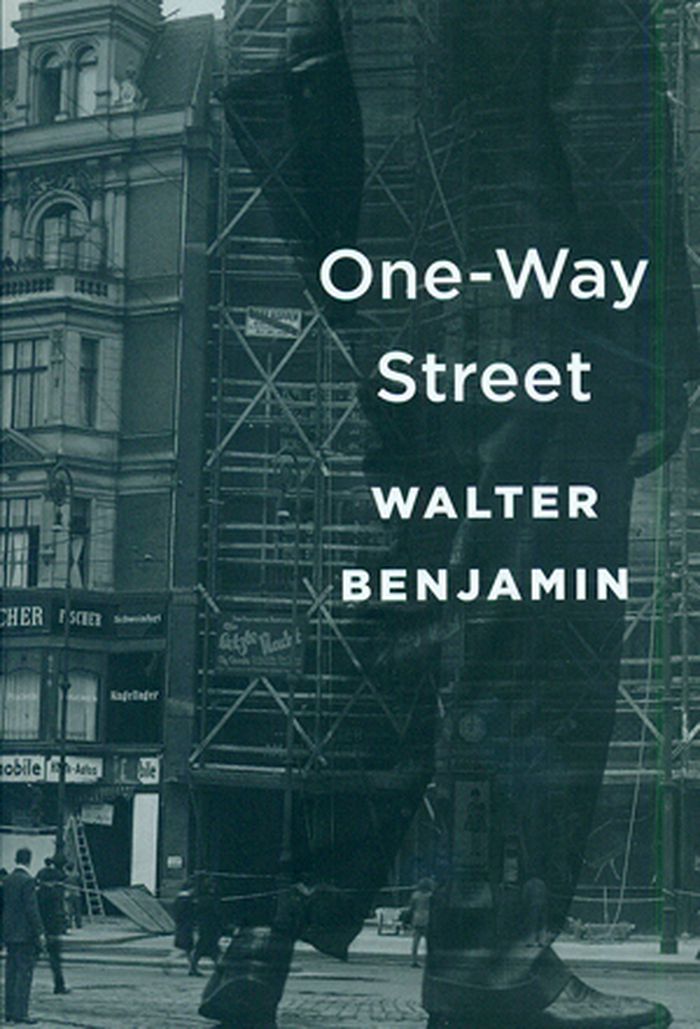
One-Way Street is a thoroughfare unlike anything else in literature?by turns exhilarating and bewildering, requiring mental agility and a special kind of urban literacy. Presented here in a new edition with expanded notes, this genre-defying meditation on the semiotics of late-1920s Weimar culture offers a fresh opportunity to encounter Walter Benjamin at his most virtuosic and experimental, writing in a vein that anticipates later masterpieces such as “On the Concept of History” and The Arcades Project. Composed of sixty short prose pieces that vary wildly in style and theme, One-Way Street evokes a dense cityscape of shops, cafes, and apartments, alive with the hubbub of social interactions and papered over with public inscriptions of all kinds: advertisements, signs, posters, slogans. Benjamin avoids all semblance of linear narrative, enticing readers with a seemingly random sequence of aphorisms, reminiscences, jokes, off-the-cuff observations, dreamlike fantasias, serious philosophical inquiries, apparently unserious philosophical parodies, and trenchant political commentaries. Providing remarkable insight into the occluded meanings of everyday things, Benjamin time and again proves himself the unrivalled interpreter of what he called “the soul of the commodity.” Despite the diversity of its individual sections, Benjamin’s text is far from formless. Drawing on the avant-garde aesthetics of Dada, Constructivism, and Surrealism, its unusual construction implies a practice of reading that cannot be reduced to simple formulas. Still refractory, still radical, One-Way Street is a work in perpetual progress.
One-way street
Actions:
Prix:
$19.95
(disponible sur commande)
Résumé:
One-Way Street is a thoroughfare unlike anything else in literature?by turns exhilarating and bewildering, requiring mental agility and a special kind of urban literacy. Presented here in a new edition with expanded notes, this genre-defying meditation on the semiotics of late-1920s Weimar culture offers a fresh opportunity to encounter Walter Benjamin at his most virtuosic and experimental, writing in a vein that anticipates later masterpieces such as “On the Concept of History” and The Arcades Project. Composed of sixty short prose pieces that vary wildly in style and theme, One-Way Street evokes a dense cityscape of shops, cafes, and apartments, alive with the hubbub of social interactions and papered over with public inscriptions of all kinds: advertisements, signs, posters, slogans. Benjamin avoids all semblance of linear narrative, enticing readers with a seemingly random sequence of aphorisms, reminiscences, jokes, off-the-cuff observations, dreamlike fantasias, serious philosophical inquiries, apparently unserious philosophical parodies, and trenchant political commentaries. Providing remarkable insight into the occluded meanings of everyday things, Benjamin time and again proves himself the unrivalled interpreter of what he called “the soul of the commodity.” Despite the diversity of its individual sections, Benjamin’s text is far from formless. Drawing on the avant-garde aesthetics of Dada, Constructivism, and Surrealism, its unusual construction implies a practice of reading that cannot be reduced to simple formulas. Still refractory, still radical, One-Way Street is a work in perpetual progress.
Classification:
livres
livres
Publication:
mai 2016
mai 2016
Sujet:
Théorie/ philosophie
Théorie/ philosophie
Classification:
périodiques
périodiques
Titre:
Cabinet 61: Calendars
Cabinet 61: Calendars
Actions:
Prix:
$15.00
(disponible sur commande)
Résumé:
This description of "Cabinet issue 61" was written on 1 September 2015. Which also happens to be 17 Dhu al-Qada 1436. And 17 Elul 5775. And 19 Wu 4713. The passage of time may be immutable, but the innumerable systems (Gregorian, Islamic, Hebrew and Chinese, respectively, above) that have been used to order our experience of Earth’s transit through the solar system(...)
$15.00
(disponible sur commande)
Résumé:
This description of "Cabinet issue 61" was written on 1 September 2015. Which also happens to be 17 Dhu al-Qada 1436. And 17 Elul 5775. And 19 Wu 4713. The passage of time may be immutable, but the innumerable systems (Gregorian, Islamic, Hebrew and Chinese, respectively, above) that have been used to order our experience of Earth’s transit through the solar system(...)
Titre:
Cabinet 61: Calendars
Actions:
Prix:
$15.00
(disponible sur commande)
Résumé:
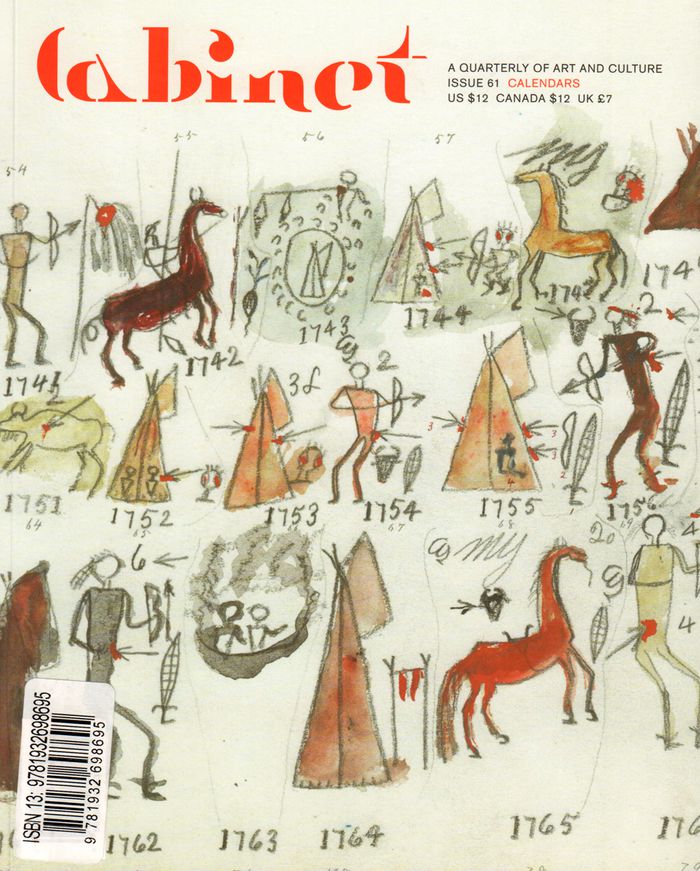
This description of "Cabinet issue 61" was written on 1 September 2015. Which also happens to be 17 Dhu al-Qada 1436. And 17 Elul 5775. And 19 Wu 4713. The passage of time may be immutable, but the innumerable systems (Gregorian, Islamic, Hebrew and Chinese, respectively, above) that have been used to order our experience of Earth’s transit through the solar system suggest that our methods of measuring it are not. With its roots in the Latin kalendae—meaning "the called," the word refers to the practice of Roman priests "calling" the first day of each Roman month—the calendar has long had a profound relationship to the state’s economic, religious and political power. And the common trajectory of calendars’ development during mid- to late antiquity, from empirical, flexible systems to schematic, fixed ones, also has telling parallels with shifts in broader social, scientific and technological attitudes. "Cabinet issue 61", with a special section on "Calendars," includes Sebastian Lunefeld on why so many radical political movements have tried to institute calendar reform; Joanna Dopico on 19th-century French sociologist August Comte’s positivist calendar; and Gordon Landon on why some cultures developed, and continue to use, lunar calendars. Elsewhere in the issue: David Serlin on the long history of battlefield bandages with instructions printed on them; Tom Levin on early "voicemail," messages recorded on vinyl and mailed to loved ones; and Christopher Turner on the rise and fall of scratch-and-sniff films.
Cabinet 61: Calendars
Actions:
Prix:
$15.00
(disponible sur commande)
Résumé:
This description of "Cabinet issue 61" was written on 1 September 2015. Which also happens to be 17 Dhu al-Qada 1436. And 17 Elul 5775. And 19 Wu 4713. The passage of time may be immutable, but the innumerable systems (Gregorian, Islamic, Hebrew and Chinese, respectively, above) that have been used to order our experience of Earth’s transit through the solar system suggest that our methods of measuring it are not. With its roots in the Latin kalendae—meaning "the called," the word refers to the practice of Roman priests "calling" the first day of each Roman month—the calendar has long had a profound relationship to the state’s economic, religious and political power. And the common trajectory of calendars’ development during mid- to late antiquity, from empirical, flexible systems to schematic, fixed ones, also has telling parallels with shifts in broader social, scientific and technological attitudes. "Cabinet issue 61", with a special section on "Calendars," includes Sebastian Lunefeld on why so many radical political movements have tried to institute calendar reform; Joanna Dopico on 19th-century French sociologist August Comte’s positivist calendar; and Gordon Landon on why some cultures developed, and continue to use, lunar calendars. Elsewhere in the issue: David Serlin on the long history of battlefield bandages with instructions printed on them; Tom Levin on early "voicemail," messages recorded on vinyl and mailed to loved ones; and Christopher Turner on the rise and fall of scratch-and-sniff films.
Classification:
périodiques
périodiques
Publication:
février 2017
février 2017
Sujet:
Revues
Revues
Classification:
livres
livres
Actions:
Prix:
$24.00
(disponible sur commande)
Résumé:
In recent years, Marcel Dzama (born 1974) has expanded his widely acclaimed drawing practice to incorporate theatrical realizations of his magical, myth-laden cosmology in three-dimensional dioramas and films. This publication provides a kind of sketchbook companion or dossier on the making of his latest film, A Game of Chess . This work draws on the importance of chess(...)
$24.00
(disponible sur commande)
Résumé:
In recent years, Marcel Dzama (born 1974) has expanded his widely acclaimed drawing practice to incorporate theatrical realizations of his magical, myth-laden cosmology in three-dimensional dioramas and films. This publication provides a kind of sketchbook companion or dossier on the making of his latest film, A Game of Chess . This work draws on the importance of chess(...)
Titre:
Marcel Dzama : behind every curtain
Actions:
Prix:
$24.00
(disponible sur commande)
Résumé:
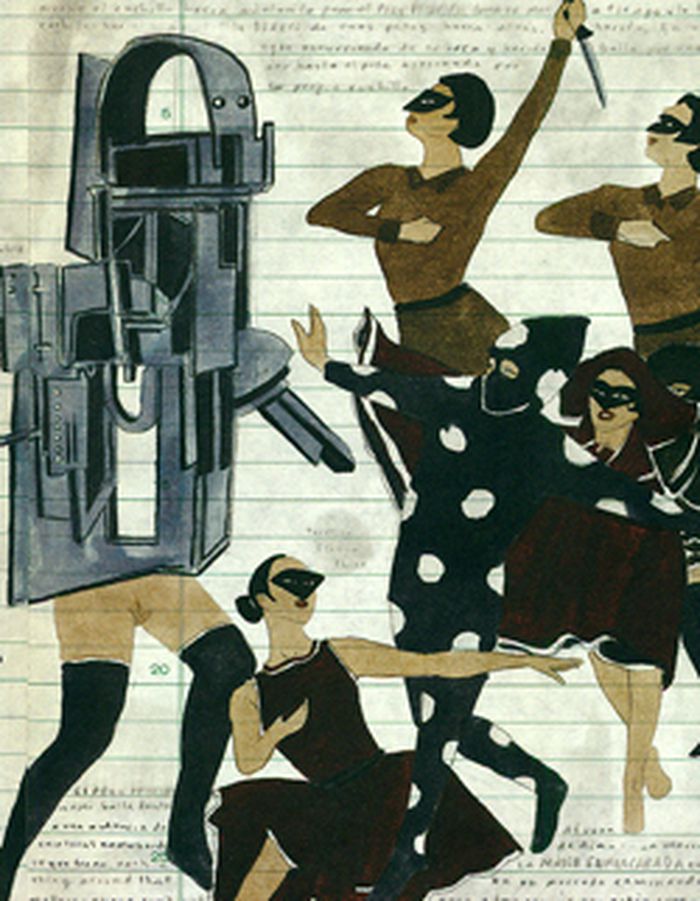
In recent years, Marcel Dzama (born 1974) has expanded his widely acclaimed drawing practice to incorporate theatrical realizations of his magical, myth-laden cosmology in three-dimensional dioramas and films. This publication provides a kind of sketchbook companion or dossier on the making of his latest film, A Game of Chess . This work draws on the importance of chess for the early twentieth-century avant-garde (Man Ray, Duchamp, Picabia) and the game's curious overlap with dance, in films and ballets by René Clair and - of especial significance for Dzama - Oskar Schlemmer, whose 1922 Triadic Ballet included puppet-like masked figures performing on a checkered surface. In Dzama's film, characters based on chess pieces, clad in costumes made from papier-mâché, plaster and fiberglass and wearing elaborate masks, dance across a checkered board to engage their opponents in fatal skirmishes. Distinctions between reality and fiction collapse as both costumed and “real-life” characters in the film are killed. The filming and the creation of the costumes for A Game of Chess were carried out in Guadalajara, Mexico, and the influence of local crafts and religious traditions can also be felt throughout this body of work. Published on the occasion of Dzama's sixth solo exhibition at David Zwirner, this artist's book is packed with full-bleed drawings, sculptures, dioramas and film and production stills that give vivid testimony to the craft and thoroughness of his immensely popular art.
Marcel Dzama : behind every curtain
Actions:
Prix:
$24.00
(disponible sur commande)
Résumé:
In recent years, Marcel Dzama (born 1974) has expanded his widely acclaimed drawing practice to incorporate theatrical realizations of his magical, myth-laden cosmology in three-dimensional dioramas and films. This publication provides a kind of sketchbook companion or dossier on the making of his latest film, A Game of Chess . This work draws on the importance of chess for the early twentieth-century avant-garde (Man Ray, Duchamp, Picabia) and the game's curious overlap with dance, in films and ballets by René Clair and - of especial significance for Dzama - Oskar Schlemmer, whose 1922 Triadic Ballet included puppet-like masked figures performing on a checkered surface. In Dzama's film, characters based on chess pieces, clad in costumes made from papier-mâché, plaster and fiberglass and wearing elaborate masks, dance across a checkered board to engage their opponents in fatal skirmishes. Distinctions between reality and fiction collapse as both costumed and “real-life” characters in the film are killed. The filming and the creation of the costumes for A Game of Chess were carried out in Guadalajara, Mexico, and the influence of local crafts and religious traditions can also be felt throughout this body of work. Published on the occasion of Dzama's sixth solo exhibition at David Zwirner, this artist's book is packed with full-bleed drawings, sculptures, dioramas and film and production stills that give vivid testimony to the craft and thoroughness of his immensely popular art.
Classification:
livres
livres
Publication:
juillet 2011
juillet 2011
Classification:
livres
livres
Actions:
Prix:
$41.95
(disponible sur commande)
Résumé:
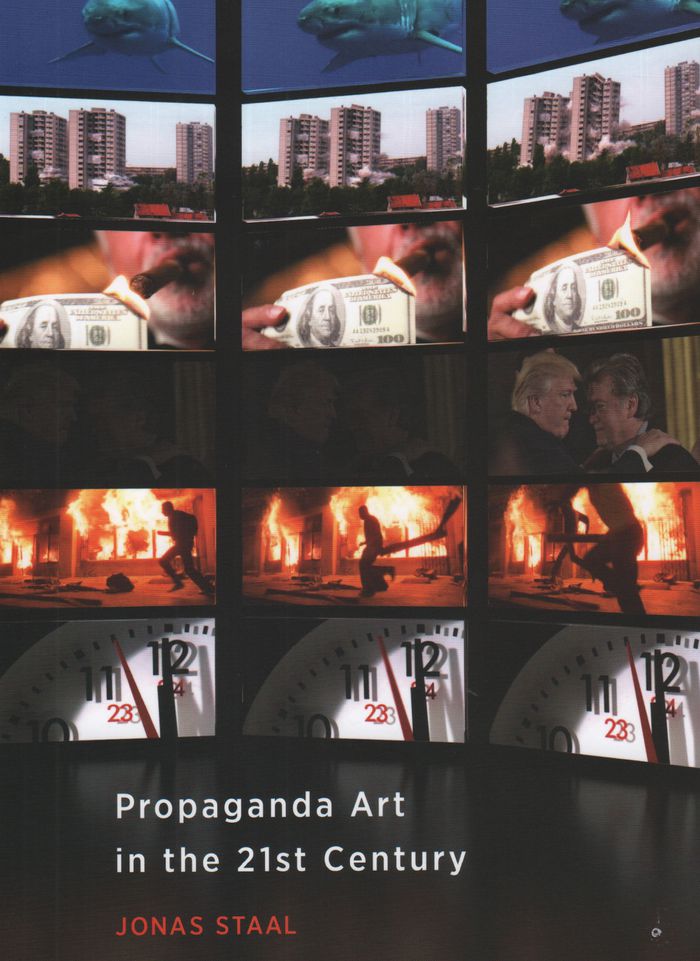
Propaganda art—whether a depiction of joyous workers in the style of socialist realism or a film directed by Steve Bannon—delivers a message. But, as Jonas Staal argues in this illuminating and timely book, propaganda does not merely make a political point; it aims to construct reality itself. Political regimes have shaped our world according to their interests and(...)
$41.95
(disponible sur commande)
Résumé:
Propaganda art—whether a depiction of joyous workers in the style of socialist realism or a film directed by Steve Bannon—delivers a message. But, as Jonas Staal argues in this illuminating and timely book, propaganda does not merely make a political point; it aims to construct reality itself. Political regimes have shaped our world according to their interests and(...)
Titre:
Propaganda art in the 21st century
Actions:
Prix:
$41.95
(disponible sur commande)
Résumé:
Propaganda art—whether a depiction of joyous workers in the style of socialist realism or a film directed by Steve Bannon—delivers a message. But, as Jonas Staal argues in this illuminating and timely book, propaganda does not merely make a political point; it aims to construct reality itself. Political regimes have shaped our world according to their interests and ideology; today, popular mass movements push back by constructing other worlds with their own propagandas. Staal shows that propaganda is not a relic of a totalitarian past but occurs today even in liberal democracies. He considers different historical forms of propaganda art, from avant-garde to totalitarian and modernist, and he investigates the us versus them dichotomy promoted in War on Terror propaganda art—describing, among other things, a fictional scenario from the Department of Homeland Security, acted out in real time, and military training via videogame. He discusses artistic and cultural productions developed by such popular mass movements of the twenty-first century as the Occupy, activism by and in support of undocumented migrants and refugees, and struggles for liberation in such countries as Mali and Syria. Staal, both a scholar of propaganda and a self-described propaganda artist, proposes a new model of emancipatory propaganda art—one that acknowledges the relation between art and power and takes both an aesthetic and a political position in the practice of world-making.
Propaganda art in the 21st century
Actions:
Prix:
$41.95
(disponible sur commande)
Résumé:
Propaganda art—whether a depiction of joyous workers in the style of socialist realism or a film directed by Steve Bannon—delivers a message. But, as Jonas Staal argues in this illuminating and timely book, propaganda does not merely make a political point; it aims to construct reality itself. Political regimes have shaped our world according to their interests and ideology; today, popular mass movements push back by constructing other worlds with their own propagandas. Staal shows that propaganda is not a relic of a totalitarian past but occurs today even in liberal democracies. He considers different historical forms of propaganda art, from avant-garde to totalitarian and modernist, and he investigates the us versus them dichotomy promoted in War on Terror propaganda art—describing, among other things, a fictional scenario from the Department of Homeland Security, acted out in real time, and military training via videogame. He discusses artistic and cultural productions developed by such popular mass movements of the twenty-first century as the Occupy, activism by and in support of undocumented migrants and refugees, and struggles for liberation in such countries as Mali and Syria. Staal, both a scholar of propaganda and a self-described propaganda artist, proposes a new model of emancipatory propaganda art—one that acknowledges the relation between art and power and takes both an aesthetic and a political position in the practice of world-making.
Classification:
livres
livres
Publication:
septembre 2019
septembre 2019
Sujet:
Théorie de l’art
Théorie de l’art


