


951 Résultats
Classification:
livres
livres
Actions:
Exemplaires:
Description:
182 pages ; 21 cm
Description:
182 pages ; 21 cm
Auteur:
Sujet:
Publication:
[Montréal] : Éditions Somme toute, [2024]
[Montréal] : Éditions Somme toute, [2024]
Titre:
11 brefs essais pour la justice climatique / sous la direction de Zoyanne Côté et Sandrine Giérula ; préface de Martine Delvaux et Éléonore Delvaux-Beaudoin.
Actions:
Exemplaires:
Description:
182 pages ; 21 cm
11 brefs essais pour la justice climatique / sous la direction de Zoyanne Côté et Sandrine Giérula ; préface de Martine Delvaux et Éléonore Delvaux-Beaudoin.
Actions:
Exemplaires:
Description:
182 pages ; 21 cm
Classification:
livres
livres
Publication:
[Montréal] : Éditions Somme toute, [2024]
[Montréal] : Éditions Somme toute, [2024]
Auteur:
Sujet:
Classification:
livres
livres

Prix:
$39.00
(disponible sur commande)
Résumé:
Based on an exhibition of the same title, this book focus on self-confident, non-conformist feminist positions, and points out that new role models and strategies are being requested. In her essay, Amelia Jones contests the notion of a current post-feminism and, using the example of Pipilotti Rist's works, develops a model of parafeminism. Refering to Mary Beth Edelson(...)
$39.00
(disponible sur commande)
Résumé:
Based on an exhibition of the same title, this book focus on self-confident, non-conformist feminist positions, and points out that new role models and strategies are being requested. In her essay, Amelia Jones contests the notion of a current post-feminism and, using the example of Pipilotti Rist's works, develops a model of parafeminism. Refering to Mary Beth Edelson(...)
Titre:
It's time for action (there's no option) - about feminism
Actions:
Prix:
$39.00
(disponible sur commande)
Résumé:
Based on an exhibition of the same title, this book focus on self-confident, non-conformist feminist positions, and points out that new role models and strategies are being requested. In her essay, Amelia Jones contests the notion of a current post-feminism and, using the example of Pipilotti Rist's works, develops a model of parafeminism. Refering to Mary Beth Edelson and Annie Sprinkle, Maria Elena Buszek compares two generations and their respective strategies, and Katy Deepwell questions the role of female artists within art history. Mercedes Bunz looks at femininism in relation to flexibilized capitalism and diagnoses a new form of oppression. The exhibition's curator, Heike Munder, presents a survey of the exhibition's different positions and makes an appeal for new role models. With contributions by artists such as Anat Ben-David, Patty Chang, Mary Beth Edelson, Cosey Fanni Tutti, Manon, Yoko Ono, Pipilotti Rist, Katharina Sieverding, Annie Sprinkle, and Mathilde ter Heijne. Published with the Migros Museum für Gegenwartskunst, Zurich.
It's time for action (there's no option) - about feminism
Actions:
Prix:
$39.00
(disponible sur commande)
Résumé:
Based on an exhibition of the same title, this book focus on self-confident, non-conformist feminist positions, and points out that new role models and strategies are being requested. In her essay, Amelia Jones contests the notion of a current post-feminism and, using the example of Pipilotti Rist's works, develops a model of parafeminism. Refering to Mary Beth Edelson and Annie Sprinkle, Maria Elena Buszek compares two generations and their respective strategies, and Katy Deepwell questions the role of female artists within art history. Mercedes Bunz looks at femininism in relation to flexibilized capitalism and diagnoses a new form of oppression. The exhibition's curator, Heike Munder, presents a survey of the exhibition's different positions and makes an appeal for new role models. With contributions by artists such as Anat Ben-David, Patty Chang, Mary Beth Edelson, Cosey Fanni Tutti, Manon, Yoko Ono, Pipilotti Rist, Katharina Sieverding, Annie Sprinkle, and Mathilde ter Heijne. Published with the Migros Museum für Gegenwartskunst, Zurich.
Classification:
livres
livres
Publication:
janvier 2008, Zürich
janvier 2008, Zürich
Sujet:
Expositions collectives
Expositions collectives
Classification:
livres
livres
Titre:
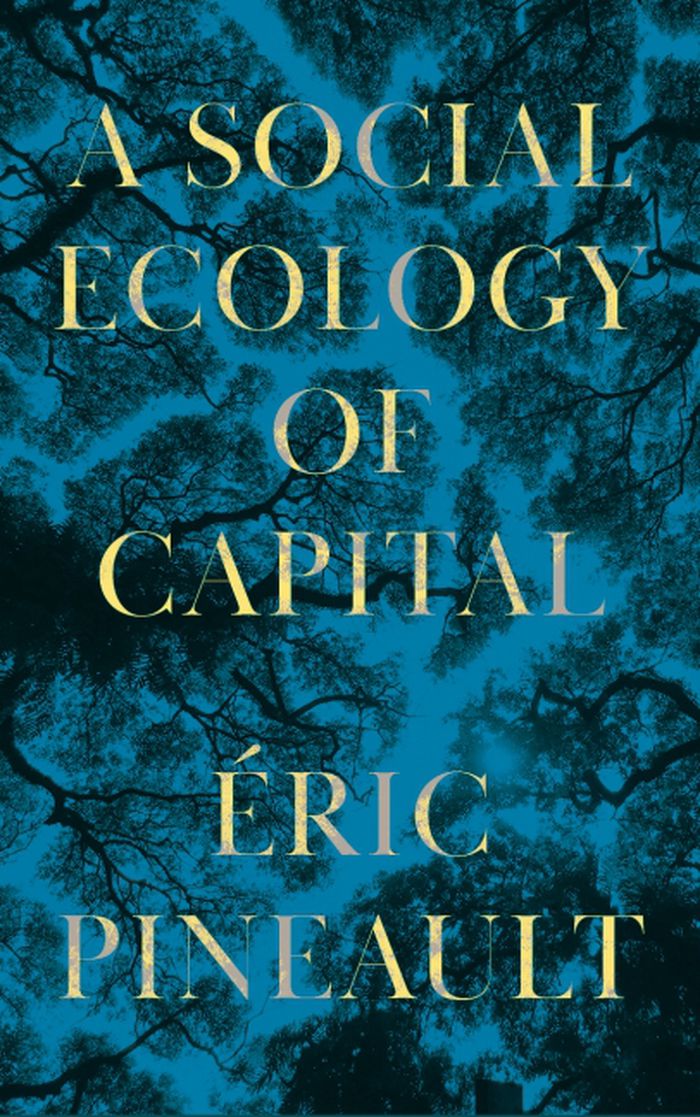
A social ecology of capital
A social ecology of capital
Actions:
Prix:
$37.95
(disponible en magasin)
Résumé:
Faced with an ecological crisis of existential proportions, the economic relations of capitalism have only fanned the flames. The transformation of property relations is an urgent necessity, but not, in itself, enough to save us. Enter 'degrowth': a concept that radically challenges contemporary life, culture and economics as we know it. Through an impressive synthesis of(...)
$37.95
(disponible en magasin)
Résumé:
Faced with an ecological crisis of existential proportions, the economic relations of capitalism have only fanned the flames. The transformation of property relations is an urgent necessity, but not, in itself, enough to save us. Enter 'degrowth': a concept that radically challenges contemporary life, culture and economics as we know it. Through an impressive synthesis of(...)
Titre:
A social ecology of capital
Actions:
Prix:
$37.95
(disponible en magasin)
Résumé:
Faced with an ecological crisis of existential proportions, the economic relations of capitalism have only fanned the flames. The transformation of property relations is an urgent necessity, but not, in itself, enough to save us. Enter 'degrowth': a concept that radically challenges contemporary life, culture and economics as we know it. Through an impressive synthesis of the traditions of eco-Marxism and feminist ecological economics, Éric Pineault presents a well-rounded critique of contemporary capitalist growth and its socio-ecological contradictions, in which growth is understood as both a biophysical and accumulation process. The book provides fresh answers to key questions of current socio-ecological debates: Why does capitalist society depend on accelerating growth? Why is the constant upscaling of its economic process necessary for its social stability? How does this deepen the ecological contradictions that humanity now faces? And what can we learn from this for our understanding of emancipatory futures?
A social ecology of capital
Actions:
Prix:
$37.95
(disponible en magasin)
Résumé:
Faced with an ecological crisis of existential proportions, the economic relations of capitalism have only fanned the flames. The transformation of property relations is an urgent necessity, but not, in itself, enough to save us. Enter 'degrowth': a concept that radically challenges contemporary life, culture and economics as we know it. Through an impressive synthesis of the traditions of eco-Marxism and feminist ecological economics, Éric Pineault presents a well-rounded critique of contemporary capitalist growth and its socio-ecological contradictions, in which growth is understood as both a biophysical and accumulation process. The book provides fresh answers to key questions of current socio-ecological debates: Why does capitalist society depend on accelerating growth? Why is the constant upscaling of its economic process necessary for its social stability? How does this deepen the ecological contradictions that humanity now faces? And what can we learn from this for our understanding of emancipatory futures?
Classification:
livres
livres
Publication:
février 2023
février 2023
Classification:
livres
livres

Titre:
Hot questions - Cold storage: Architecture from Austria. The permanent exhibition at the Az W
Hot questions - Cold storage: Architecture from Austria. The permanent exhibition at the Az W
Actions:
Prix:
$85.00
(disponible sur commande)
Résumé:
The new permanent display of Architekturzentrum Wien’s (Az W) collection is a milestone in the presentation of architecture and its social dimensions. ''Hot questions—cold storage'' is published alongside this comprehensive exhibition on Austrian architecture of the twentieth and twenty-first centuries, featuring color images of all exhibits, concise texts, and thematic(...)
$85.00
(disponible sur commande)
Résumé:
The new permanent display of Architekturzentrum Wien’s (Az W) collection is a milestone in the presentation of architecture and its social dimensions. ''Hot questions—cold storage'' is published alongside this comprehensive exhibition on Austrian architecture of the twentieth and twenty-first centuries, featuring color images of all exhibits, concise texts, and thematic(...)
Publication:
mai 2023
mai 2023
Titre:
Hot questions - Cold storage: Architecture from Austria. The permanent exhibition at the Az W
Actions:
Prix:
$85.00
(disponible sur commande)
Résumé:
The new permanent display of Architekturzentrum Wien’s (Az W) collection is a milestone in the presentation of architecture and its social dimensions. ''Hot questions—cold storage'' is published alongside this comprehensive exhibition on Austrian architecture of the twentieth and twenty-first centuries, featuring color images of all exhibits, concise texts, and thematic essays. This book reexamines the country’s architectural culture of the last 150 years, situating it in its cultural, social, and political contexts. Each chapter is prefaced by a question, asking, for example, about the impact of capitalism on our cities and villages or about the contribution architecture can make to our survival on the planet. These ''Hot questions'' bring to life the ''Cold storage''—the silent repository of the collection’s holdings. This book offers a multi-perspective narrative that presents Austria’s building history with all the developments, ideologies, and institutions it comprises. The social relevance of objects and documents is revealed through questioning and visualization, in connecting research and the museum’s mission to collect.
Hot questions - Cold storage: Architecture from Austria. The permanent exhibition at the Az W
Actions:
Prix:
$85.00
(disponible sur commande)
Résumé:
The new permanent display of Architekturzentrum Wien’s (Az W) collection is a milestone in the presentation of architecture and its social dimensions. ''Hot questions—cold storage'' is published alongside this comprehensive exhibition on Austrian architecture of the twentieth and twenty-first centuries, featuring color images of all exhibits, concise texts, and thematic essays. This book reexamines the country’s architectural culture of the last 150 years, situating it in its cultural, social, and political contexts. Each chapter is prefaced by a question, asking, for example, about the impact of capitalism on our cities and villages or about the contribution architecture can make to our survival on the planet. These ''Hot questions'' bring to life the ''Cold storage''—the silent repository of the collection’s holdings. This book offers a multi-perspective narrative that presents Austria’s building history with all the developments, ideologies, and institutions it comprises. The social relevance of objects and documents is revealed through questioning and visualization, in connecting research and the museum’s mission to collect.
Classification:
livres
livres
Publication:
mai 2023
mai 2023
Classification:
livres
livres
Prix:
$53.95
(disponible sur commande)
Résumé:
Dependent on the extractive practices of fossil-fueled industrial capitalism, chemical photography’s emulsions and films were highly sensitive to polluted atmospheres, and photographic companies had to work hard to control this sensitivity. Drawing on histories of empire, coal, and chemistry and from the archives of British photographic manufacturer Ilford Limited,(...)
$53.95
(disponible sur commande)
Résumé:
Dependent on the extractive practices of fossil-fueled industrial capitalism, chemical photography’s emulsions and films were highly sensitive to polluted atmospheres, and photographic companies had to work hard to control this sensitivity. Drawing on histories of empire, coal, and chemistry and from the archives of British photographic manufacturer Ilford Limited,(...)
Titre:
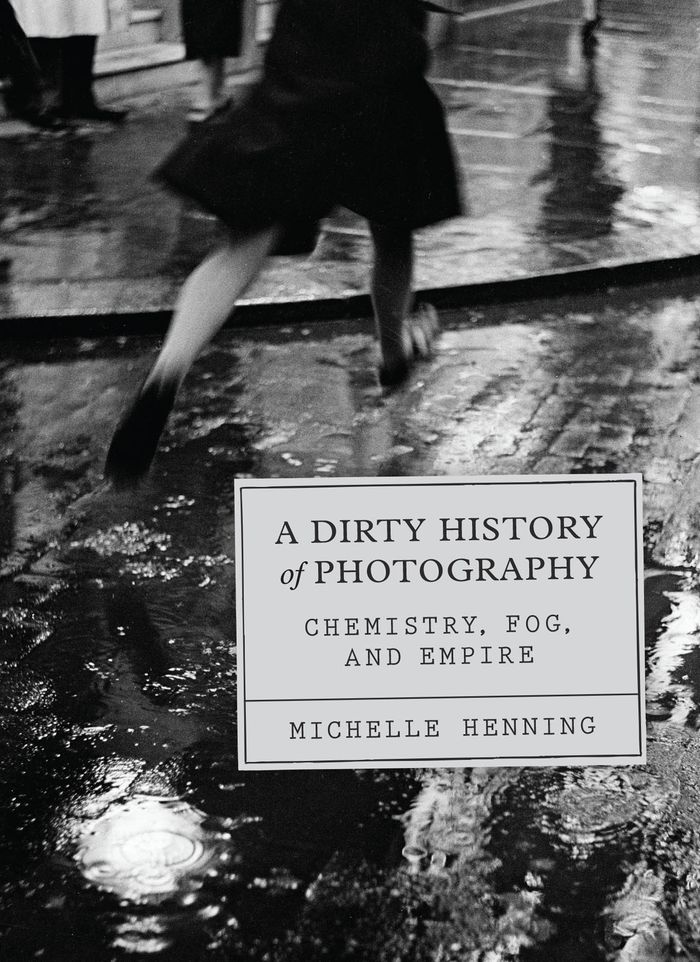
A dirty history of photography: Chemistry, fog, and empire
Actions:
Prix:
$53.95
(disponible sur commande)
Résumé:
Dependent on the extractive practices of fossil-fueled industrial capitalism, chemical photography’s emulsions and films were highly sensitive to polluted atmospheres, and photographic companies had to work hard to control this sensitivity. Drawing on histories of empire, coal, and chemistry and from the archives of British photographic manufacturer Ilford Limited, Michelle Henning exposes the ways photography shaped how we see and understand the atmosphere while leaving its toxic residues in the air, soil, and water. Structured as thirty-six short chapters and with over seventy illustrations, this innovative book begins in interwar London, follows the supply of Ilford products to photographers on the West African coast, and considers photography as a military technology linked to the development of chemical warfare. Combining close readings of photographs with discussions of low-light, tropical, and aerial photography, Henning examines the extraction and development of photographic materials, their role in the current environmental crisis, and how they have shaped experiences of time and the environment.
A dirty history of photography: Chemistry, fog, and empire
Actions:
Prix:
$53.95
(disponible sur commande)
Résumé:
Dependent on the extractive practices of fossil-fueled industrial capitalism, chemical photography’s emulsions and films were highly sensitive to polluted atmospheres, and photographic companies had to work hard to control this sensitivity. Drawing on histories of empire, coal, and chemistry and from the archives of British photographic manufacturer Ilford Limited, Michelle Henning exposes the ways photography shaped how we see and understand the atmosphere while leaving its toxic residues in the air, soil, and water. Structured as thirty-six short chapters and with over seventy illustrations, this innovative book begins in interwar London, follows the supply of Ilford products to photographers on the West African coast, and considers photography as a military technology linked to the development of chemical warfare. Combining close readings of photographs with discussions of low-light, tropical, and aerial photography, Henning examines the extraction and development of photographic materials, their role in the current environmental crisis, and how they have shaped experiences of time and the environment.
Classification:
livres
livres
Publication:
janvier 2026
janvier 2026
Sujet:
Monographies photo
Monographies photo
Classification:
livres
livres
Actions:
Prix:
$41.90
(disponible sur commande)
Résumé:
The work of Gilles Deleuze and Felix Guattari has been inspirational for architects and architectural theorists in recent years. It has influenced the design work of architects as diverse as Greg Lynn and David Chipperfield, and is regularly cited by avant-gardist architects and by students, but usually without being well understood. The first collaboration between(...)
$41.90
(disponible sur commande)
Résumé:
The work of Gilles Deleuze and Felix Guattari has been inspirational for architects and architectural theorists in recent years. It has influenced the design work of architects as diverse as Greg Lynn and David Chipperfield, and is regularly cited by avant-gardist architects and by students, but usually without being well understood. The first collaboration between(...)
Sujet:
Théorie de l’architecture
Théorie de l’architecture
Publication:
octobre 2007, Abingdon, New York
octobre 2007, Abingdon, New York
Titre:
Deleuze & Guattari for Architects
Actions:
Prix:
$41.90
(disponible sur commande)
Résumé:
The work of Gilles Deleuze and Felix Guattari has been inspirational for architects and architectural theorists in recent years. It has influenced the design work of architects as diverse as Greg Lynn and David Chipperfield, and is regularly cited by avant-gardist architects and by students, but usually without being well understood. The first collaboration between Deleuze and Guattari was Anti-Oedipus: Capitalism and Schizophrenia, which was taken up as a manifesto for the post-structuralist life, and was associated with the spirit of the student revolts of 1968. Their ideas promote creativity and innovation, and their work is wide-ranging, complex and endlessly stimulating. They range across politics, psychoanalysis, physics, art and literature, changing preconceptions along the way. Deleuze & Guattari for Architects is a perfect introduction for students of architecture in design studio at all levels, students of architecture pursuing undergraduate and postgraduate courses in architectural theory, academics and interested architectural practitioners.
Deleuze & Guattari for Architects
Actions:
Prix:
$41.90
(disponible sur commande)
Résumé:
The work of Gilles Deleuze and Felix Guattari has been inspirational for architects and architectural theorists in recent years. It has influenced the design work of architects as diverse as Greg Lynn and David Chipperfield, and is regularly cited by avant-gardist architects and by students, but usually without being well understood. The first collaboration between Deleuze and Guattari was Anti-Oedipus: Capitalism and Schizophrenia, which was taken up as a manifesto for the post-structuralist life, and was associated with the spirit of the student revolts of 1968. Their ideas promote creativity and innovation, and their work is wide-ranging, complex and endlessly stimulating. They range across politics, psychoanalysis, physics, art and literature, changing preconceptions along the way. Deleuze & Guattari for Architects is a perfect introduction for students of architecture in design studio at all levels, students of architecture pursuing undergraduate and postgraduate courses in architectural theory, academics and interested architectural practitioners.
Classification:
livres
livres
Publication:
octobre 2007, Abingdon, New York
octobre 2007, Abingdon, New York
Sujet:
Théorie de l’architecture
Théorie de l’architecture
Classification:
livres
livres
Prix:
$50.00
(disponible sur commande)
Résumé:
A new world is emerging in China, with urbanization and the wholesale globalization of daily life moving at unprecedented speed. The Communist Party line has been replaced by maxims about working together to build a modern, economically resilient country. Cities are being rigorously adapted to fit this new vision, with disastrous consequences for existing structures and(...)
$50.00
(disponible sur commande)
Résumé:
A new world is emerging in China, with urbanization and the wholesale globalization of daily life moving at unprecedented speed. The Communist Party line has been replaced by maxims about working together to build a modern, economically resilient country. Cities are being rigorously adapted to fit this new vision, with disastrous consequences for existing structures and(...)
Publication:
septembre 2006, Rotterdam
septembre 2006, Rotterdam
Titre:
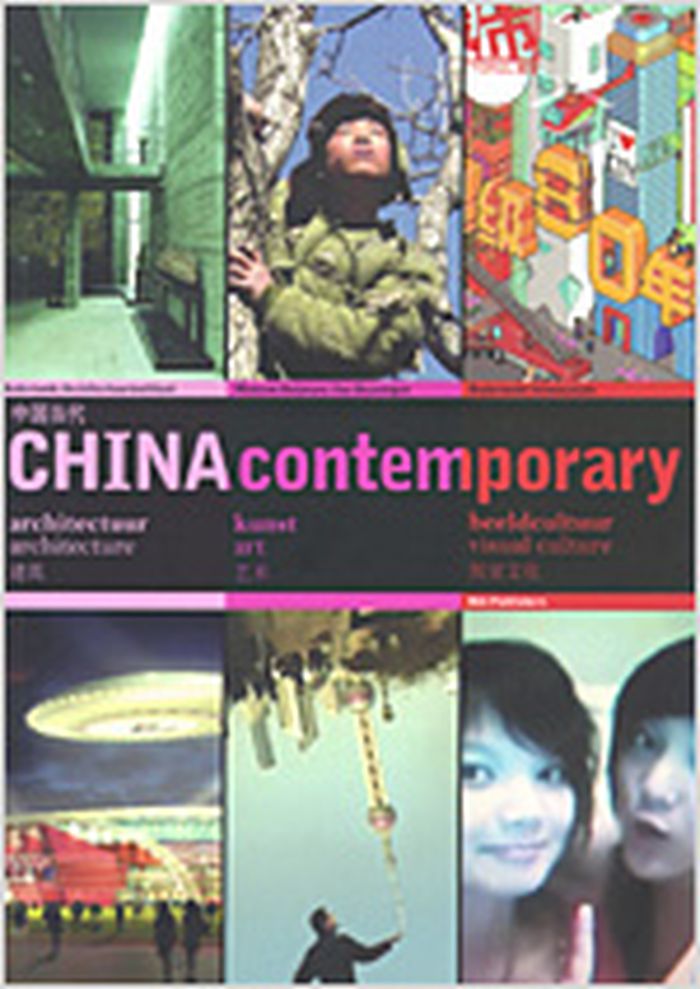
China contemporary : architecture, art, visual culture
Actions:
Prix:
$50.00
(disponible sur commande)
Résumé:
A new world is emerging in China, with urbanization and the wholesale globalization of daily life moving at unprecedented speed. The Communist Party line has been replaced by maxims about working together to build a modern, economically resilient country. Cities are being rigorously adapted to fit this new vision, with disastrous consequences for existing structures and neighborhoods. Social and societal balances have been swiftly, radically altered. Can Chinese identity survive in a consumer society and a radically transformed urban environment, both conceived on a Western model? This first interdisciplinary overview of the country’s contemporary arts, architecture, urban planning and visual culture--including television, photography, newspapers, games and blogs - offers the work of some 20 Chinese artists considering these issues, and projects by some 10 Chinese architectural firms. "China contemporary" finds that a mix of long standing tradition, decades of Communism and hurriedly translated Western capitalism have resulted in an exciting visual and formal idiom.
China contemporary : architecture, art, visual culture
Actions:
Prix:
$50.00
(disponible sur commande)
Résumé:
A new world is emerging in China, with urbanization and the wholesale globalization of daily life moving at unprecedented speed. The Communist Party line has been replaced by maxims about working together to build a modern, economically resilient country. Cities are being rigorously adapted to fit this new vision, with disastrous consequences for existing structures and neighborhoods. Social and societal balances have been swiftly, radically altered. Can Chinese identity survive in a consumer society and a radically transformed urban environment, both conceived on a Western model? This first interdisciplinary overview of the country’s contemporary arts, architecture, urban planning and visual culture--including television, photography, newspapers, games and blogs - offers the work of some 20 Chinese artists considering these issues, and projects by some 10 Chinese architectural firms. "China contemporary" finds that a mix of long standing tradition, decades of Communism and hurriedly translated Western capitalism have resulted in an exciting visual and formal idiom.
Classification:
livres
livres
Publication:
septembre 2006, Rotterdam
septembre 2006, Rotterdam
Classification:
livres
livres
Actions:
Prix:
$31.95
(disponible sur commande)
Résumé:
Under capitalism, economic growth is seen as the key to collective well-being. In "Self-Devouring Growth" Julie Livingston upends this notion, showing that while consumption-driven growth may seem to benefit a particular locale, it produces a number of unacknowledged, negative consequences that ripple throughout the wider world. Structuring the book as a parable in which(...)
$31.95
(disponible sur commande)
Résumé:
Under capitalism, economic growth is seen as the key to collective well-being. In "Self-Devouring Growth" Julie Livingston upends this notion, showing that while consumption-driven growth may seem to benefit a particular locale, it produces a number of unacknowledged, negative consequences that ripple throughout the wider world. Structuring the book as a parable in which(...)
Publication:
septembre 2019
septembre 2019
Titre:
Self-devouring growth: a planetary fable as told from southern Africa
Actions:
Prix:
$31.95
(disponible sur commande)
Résumé:
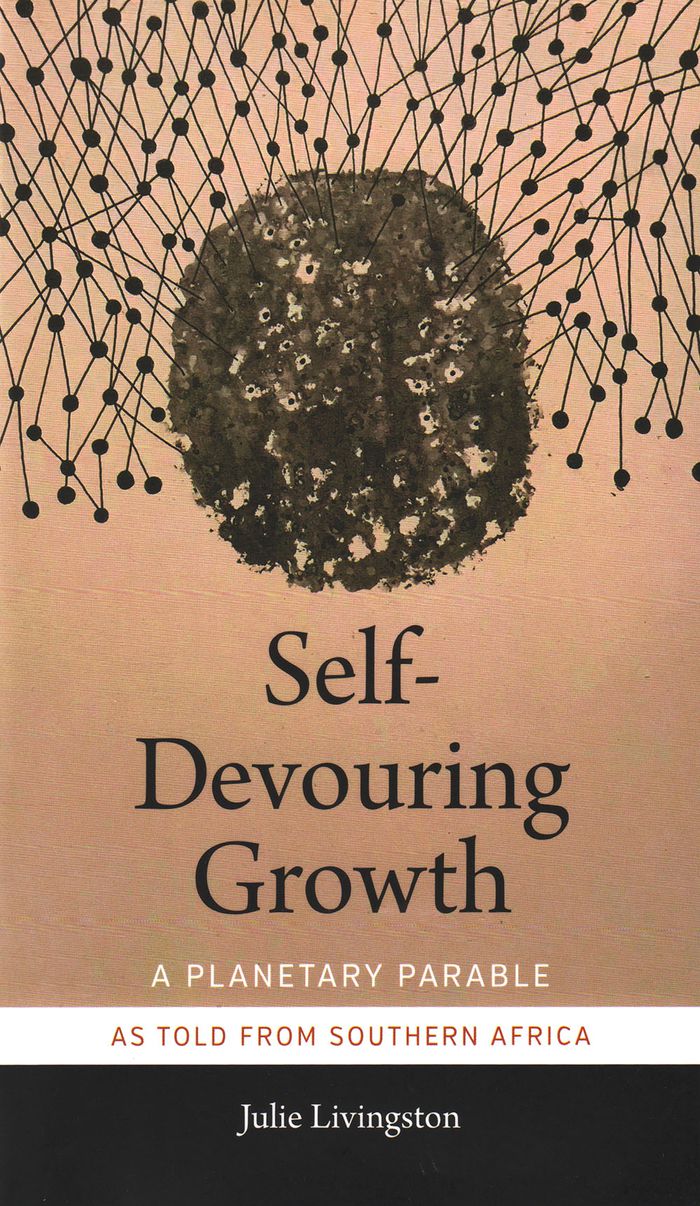
Under capitalism, economic growth is seen as the key to collective well-being. In "Self-Devouring Growth" Julie Livingston upends this notion, showing that while consumption-driven growth may seem to benefit a particular locale, it produces a number of unacknowledged, negative consequences that ripple throughout the wider world. Structuring the book as a parable in which the example of Botswana has lessons for the rest of the globe, Livingston shows how fundamental needs for water, food, and transportation become harnessed to what she calls self-devouring growth: an unchecked and unsustainable global pursuit of economic growth that threatens catastrophic environmental destruction. As Livingston notes, improved technology alone cannot stave off such destruction; what is required is a greater accounting of the web of relationships between humans, nonhuman beings, plants, and minerals that growth entails. Livingston contends that by failing to understand these relationships and the consequences of self-devouring growth, we may be unknowingly consuming our future.
Self-devouring growth: a planetary fable as told from southern Africa
Actions:
Prix:
$31.95
(disponible sur commande)
Résumé:
Under capitalism, economic growth is seen as the key to collective well-being. In "Self-Devouring Growth" Julie Livingston upends this notion, showing that while consumption-driven growth may seem to benefit a particular locale, it produces a number of unacknowledged, negative consequences that ripple throughout the wider world. Structuring the book as a parable in which the example of Botswana has lessons for the rest of the globe, Livingston shows how fundamental needs for water, food, and transportation become harnessed to what she calls self-devouring growth: an unchecked and unsustainable global pursuit of economic growth that threatens catastrophic environmental destruction. As Livingston notes, improved technology alone cannot stave off such destruction; what is required is a greater accounting of the web of relationships between humans, nonhuman beings, plants, and minerals that growth entails. Livingston contends that by failing to understand these relationships and the consequences of self-devouring growth, we may be unknowingly consuming our future.
Classification:
livres
livres
Publication:
septembre 2019
septembre 2019
Classification:
livres
livres
Actions:
Prix:
$39.00
(disponible sur commande)
Résumé:
How we deal with land has far-reaching implications for architecture and urban development. The last decade has seen a dramatic rise in the privatization of urban land and in speculation. Many European cities that today find themselves under extreme development pressure have virtually no land left to build on. In view of the acute housing shortage, the question of who(...)
$39.00
(disponible sur commande)
Résumé:
How we deal with land has far-reaching implications for architecture and urban development. The last decade has seen a dramatic rise in the privatization of urban land and in speculation. Many European cities that today find themselves under extreme development pressure have virtually no land left to build on. In view of the acute housing shortage, the question of who(...)
Titre:
Architecture on common ground: positions and models on the land property issue
Actions:
Prix:
$39.00
(disponible sur commande)
Résumé:
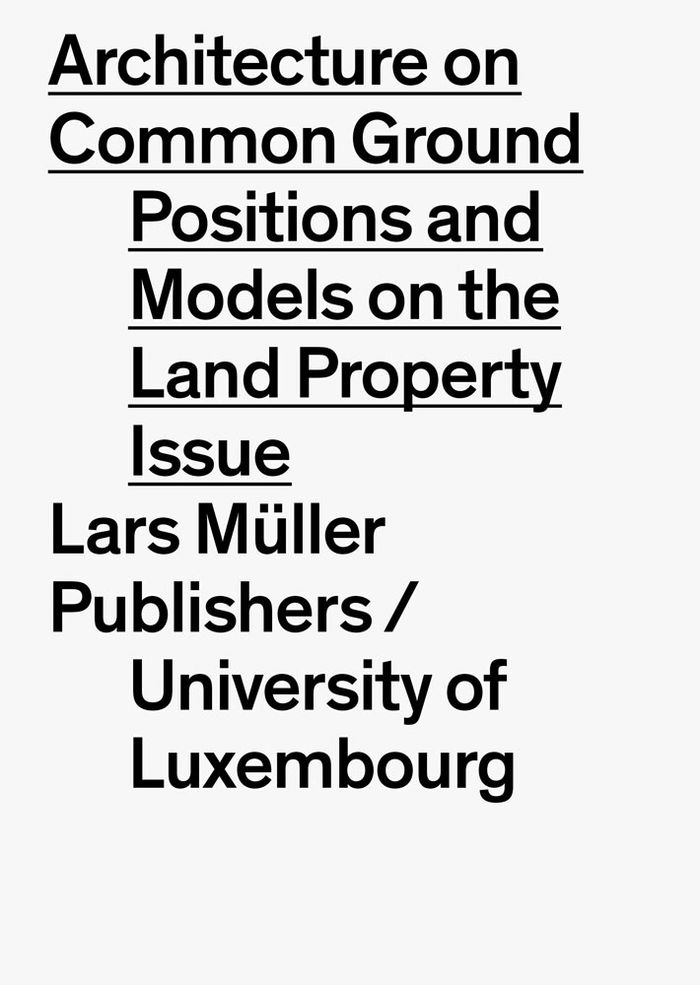
How we deal with land has far-reaching implications for architecture and urban development. The last decade has seen a dramatic rise in the privatization of urban land and in speculation. Many European cities that today find themselves under extreme development pressure have virtually no land left to build on. In view of the acute housing shortage, the question of who owns the land is therefore more relevant than ever. To what extent are we able to treat the land as a common good and guard it from the excesses of capitalism? ''Architecture on common ground'' provides a historical overview of land property from Henry George to the present. Interviews with stakeholders in global models provide insights into the current handling of the land issue. The book presents outstanding projects based on either a legal or spatial distribution of land and thus makes a valuable contribution to the current discussion on sustainable land policy.
Architecture on common ground: positions and models on the land property issue
Actions:
Prix:
$39.00
(disponible sur commande)
Résumé:
How we deal with land has far-reaching implications for architecture and urban development. The last decade has seen a dramatic rise in the privatization of urban land and in speculation. Many European cities that today find themselves under extreme development pressure have virtually no land left to build on. In view of the acute housing shortage, the question of who owns the land is therefore more relevant than ever. To what extent are we able to treat the land as a common good and guard it from the excesses of capitalism? ''Architecture on common ground'' provides a historical overview of land property from Henry George to the present. Interviews with stakeholders in global models provide insights into the current handling of the land issue. The book presents outstanding projects based on either a legal or spatial distribution of land and thus makes a valuable contribution to the current discussion on sustainable land policy.
Classification:
livres
livres
Publication:
avril 2021
avril 2021
Sujet:
Théorie de l’urbanisme
Théorie de l’urbanisme
Classification:
livres
livres
Actions:
Prix:
$49.95
(disponible sur commande)
Résumé:
''Ulaanbaatar: beyond water and grass'' is the first book in the English language that takes the visitors to an in-depth exploration of the capital of Mongolia. In the first section of the book, M. A. Aldrich paints a detailed portrait of the history, religion, and architecture of Ulaanbaatar with reference to how the city evolved from a monastic settlement to a(...)
$49.95
(disponible sur commande)
Résumé:
''Ulaanbaatar: beyond water and grass'' is the first book in the English language that takes the visitors to an in-depth exploration of the capital of Mongolia. In the first section of the book, M. A. Aldrich paints a detailed portrait of the history, religion, and architecture of Ulaanbaatar with reference to how the city evolved from a monastic settlement to a(...)
Titre:
Ulaanbaatar: beyond Water and Grass
Actions:
Prix:
$49.95
(disponible sur commande)
Résumé:
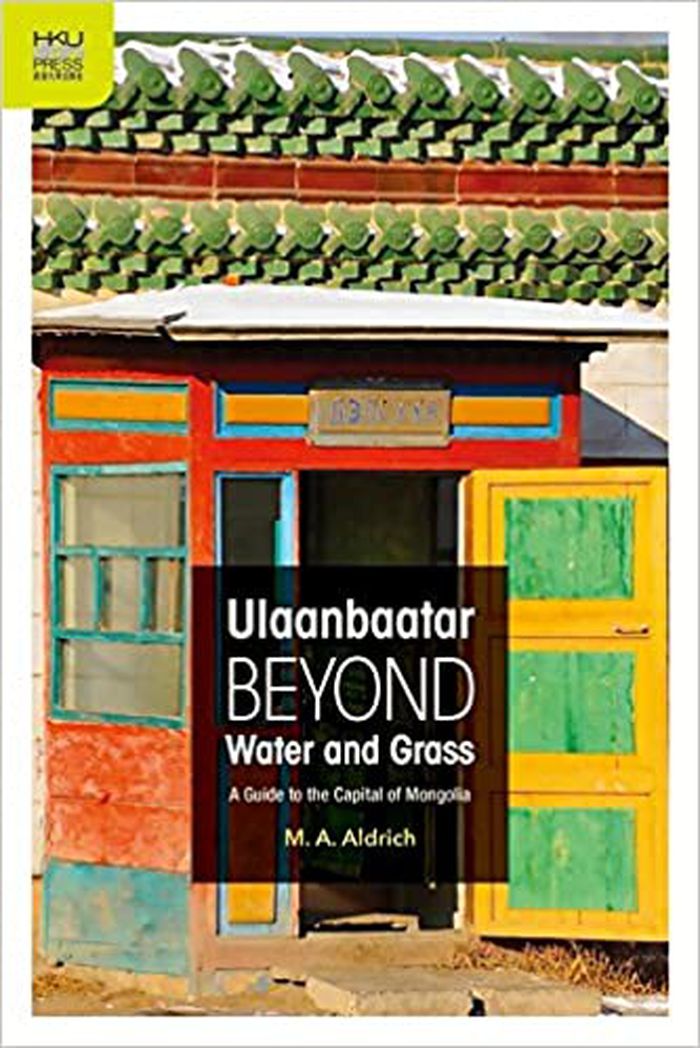
''Ulaanbaatar: beyond water and grass'' is the first book in the English language that takes the visitors to an in-depth exploration of the capital of Mongolia. In the first section of the book, M. A. Aldrich paints a detailed portrait of the history, religion, and architecture of Ulaanbaatar with reference to how the city evolved from a monastic settlement to a communist-inspired capital and finally to a major city of free-wheeling capitalism and Tammany Hall politics. The second section of the book offers the reader a tour of different sites within the city and beyond, bringing back to life the human dramas that have played themselves out on the stage of Ulaanbaatar. Where most guide books often lightly discuss the capital, this book reveals much that remains hidden from the temporary visitor and even from the long-term resident. Writing in a quirky, idiosyncratic style, the author shares his appreciation and delight in this unique urban setting- indeed, in all things Mongolian.
Ulaanbaatar: beyond Water and Grass
Actions:
Prix:
$49.95
(disponible sur commande)
Résumé:
''Ulaanbaatar: beyond water and grass'' is the first book in the English language that takes the visitors to an in-depth exploration of the capital of Mongolia. In the first section of the book, M. A. Aldrich paints a detailed portrait of the history, religion, and architecture of Ulaanbaatar with reference to how the city evolved from a monastic settlement to a communist-inspired capital and finally to a major city of free-wheeling capitalism and Tammany Hall politics. The second section of the book offers the reader a tour of different sites within the city and beyond, bringing back to life the human dramas that have played themselves out on the stage of Ulaanbaatar. Where most guide books often lightly discuss the capital, this book reveals much that remains hidden from the temporary visitor and even from the long-term resident. Writing in a quirky, idiosyncratic style, the author shares his appreciation and delight in this unique urban setting- indeed, in all things Mongolian.
Classification:
livres
livres
Publication:
mars 2018
mars 2018
Sujet:
Expositions en cours
Expositions en cours


