


9177 Résultats
Classification:
livres
livres
Actions:
Exemplaires:
Description:
xxv, 414 pages, 13 unnumbered pages of plates (one folded) : color illustrations, color maps ; 27 cm
Description:
xxv, 414 pages, 13 unnumbered pages of plates (one folded) : color illustrations, color maps ; 27 cm
Auteur:
Sujet:
Publication:
Durham ; London : Duke University Press, 2024.
Durham ; London : Duke University Press, 2024.
Titre:
A view of Venice : portrait of a Renaissance city / Kristin Love Huffman, editor.
Actions:
Exemplaires:
Description:
xxv, 414 pages, 13 unnumbered pages of plates (one folded) : color illustrations, color maps ; 27 cm
A view of Venice : portrait of a Renaissance city / Kristin Love Huffman, editor.
Actions:
Exemplaires:
Description:
xxv, 414 pages, 13 unnumbered pages of plates (one folded) : color illustrations, color maps ; 27 cm
Classification:
livres
livres
Publication:
Durham ; London : Duke University Press, 2024.
Durham ; London : Duke University Press, 2024.
Auteur:
Sujet:
Classification:
livres
livres
Actions:
Prix:
$20.95
(disponible sur commande)
Résumé:
Chris Carlsson, executive director of the multimedia history project "Shaping San Francisco," is a writer, publisher, editor, and community organizer. He has edited four collections of political and historical essays. He helped launch the monthly bike-ins known as Critical Mass, and was the longtime editor of "Processed World" magazine.
$20.95
(disponible sur commande)
Résumé:
Chris Carlsson, executive director of the multimedia history project "Shaping San Francisco," is a writer, publisher, editor, and community organizer. He has edited four collections of political and historical essays. He helped launch the monthly bike-ins known as Critical Mass, and was the longtime editor of "Processed World" magazine.
Publication:
mai 2008, Edinburgh, Oakland, West Virginia
mai 2008, Edinburgh, Oakland, West Virginia
Titre:
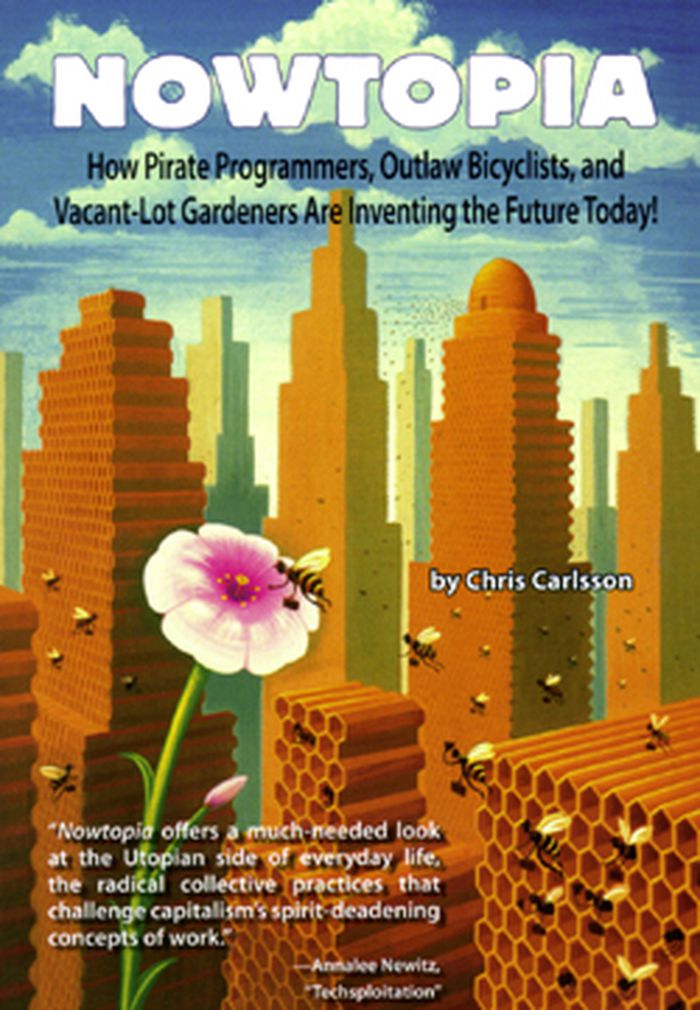
Nowtopia: how pirate programmers, outlaw bicyclists, and vacant-lot gardeners are inventing the future today!
Actions:
Prix:
$20.95
(disponible sur commande)
Résumé:
Chris Carlsson, executive director of the multimedia history project "Shaping San Francisco," is a writer, publisher, editor, and community organizer. He has edited four collections of political and historical essays. He helped launch the monthly bike-ins known as Critical Mass, and was the longtime editor of "Processed World" magazine.
Nowtopia: how pirate programmers, outlaw bicyclists, and vacant-lot gardeners are inventing the future today!
Actions:
Prix:
$20.95
(disponible sur commande)
Résumé:
Chris Carlsson, executive director of the multimedia history project "Shaping San Francisco," is a writer, publisher, editor, and community organizer. He has edited four collections of political and historical essays. He helped launch the monthly bike-ins known as Critical Mass, and was the longtime editor of "Processed World" magazine.
Classification:
livres
livres
Publication:
mai 2008, Edinburgh, Oakland, West Virginia
mai 2008, Edinburgh, Oakland, West Virginia
Classification:
livres
livres
Actions:
Exemplaires:
Description:
xx, 270 pages : illustrations ; 24 cm
Description:
xx, 270 pages : illustrations ; 24 cm
Auteur:
Sujet:
Publication:
Cambridge, Mass. : MIT Press, ©1995.
Cambridge, Mass. : MIT Press, ©1995.
Titre:
Nature and the Idea of a Man-Made World : An Investigation Into the Evolutionary Roots of Form and Order in the Built Environment / Norman Crowe.
Actions:
Exemplaires:
Description:
xx, 270 pages : illustrations ; 24 cm
Nature and the Idea of a Man-Made World : An Investigation Into the Evolutionary Roots of Form and Order in the Built Environment / Norman Crowe.
Actions:
Exemplaires:
Description:
xx, 270 pages : illustrations ; 24 cm
Classification:
livres
livres
Publication:
Cambridge, Mass. : MIT Press, ©1995.
Cambridge, Mass. : MIT Press, ©1995.
Auteur:
Sujet:
Classification:
livres
livres
Actions:
Prix:
$77.00
(disponible sur commande)
Résumé:
Inspired by Chekhov's short stories--and by his own contagious joy in the book form--photographer Paul Graham has created A Shimmer of Possibility, comprised of 12 individual books, each a photographic short story of everyday life. Some are simple and linear--a man smokes a cigarette while he waits for a bus in Las Vegas, or the camera tracks an autumn walk in Boston.(...)
$77.00
(disponible sur commande)
Résumé:
Inspired by Chekhov's short stories--and by his own contagious joy in the book form--photographer Paul Graham has created A Shimmer of Possibility, comprised of 12 individual books, each a photographic short story of everyday life. Some are simple and linear--a man smokes a cigarette while he waits for a bus in Las Vegas, or the camera tracks an autumn walk in Boston.(...)
Titre:
Paul Graham: a shimmer of possibility
Actions:
Prix:
$77.00
(disponible sur commande)
Résumé:
Inspired by Chekhov's short stories--and by his own contagious joy in the book form--photographer Paul Graham has created A Shimmer of Possibility, comprised of 12 individual books, each a photographic short story of everyday life. Some are simple and linear--a man smokes a cigarette while he waits for a bus in Las Vegas, or the camera tracks an autumn walk in Boston. Some entwine two, three or four scenes--while a couple carry their shopping home in Texas, a small child dances with a plastic bag in a garden. Some watch a quiet narrative break unexpectedly into a sublime moment--as a man cuts the grass in Pittsburgh it begins to rain, until the low sun breaks through and illuminates each drop. Graham's filmic haikus shun any forceful summation or tidy packaging. Instead, they create the impression of life flowing around and past us while we stand and stare, and make it hard not to share the artist's quiet astonishment with its beauty and grace. The 12 books gathered here are identical in trim size, but vary in length from just a single photograph to 60 pages of images made at one street corner. Paul Graham's work has been widely exhibited and published for 25 years, most recently in the book American Night.
Paul Graham: a shimmer of possibility
Actions:
Prix:
$77.00
(disponible sur commande)
Résumé:
Inspired by Chekhov's short stories--and by his own contagious joy in the book form--photographer Paul Graham has created A Shimmer of Possibility, comprised of 12 individual books, each a photographic short story of everyday life. Some are simple and linear--a man smokes a cigarette while he waits for a bus in Las Vegas, or the camera tracks an autumn walk in Boston. Some entwine two, three or four scenes--while a couple carry their shopping home in Texas, a small child dances with a plastic bag in a garden. Some watch a quiet narrative break unexpectedly into a sublime moment--as a man cuts the grass in Pittsburgh it begins to rain, until the low sun breaks through and illuminates each drop. Graham's filmic haikus shun any forceful summation or tidy packaging. Instead, they create the impression of life flowing around and past us while we stand and stare, and make it hard not to share the artist's quiet astonishment with its beauty and grace. The 12 books gathered here are identical in trim size, but vary in length from just a single photograph to 60 pages of images made at one street corner. Paul Graham's work has been widely exhibited and published for 25 years, most recently in the book American Night.
Classification:
livres
livres
Publication:
janvier 2009
janvier 2009
Sujet:
Monographies photo
Monographies photo
Classification:
livres
livres
Titre:
Devotion
Devotion
Actions:
Prix:
$26.95
(disponible sur commande)
Résumé:
A work of creative brilliance may seem like magic—its source a mystery, its impact unexpectedly stirring. How does an artist accomplish such an achievement, connecting deeply with an audience never met? In this groundbreaking book, one of our culture’s beloved artists offers a detailed account of her own creative process, inspirations, and unexpected connections. Patti(...)
$26.95
(disponible sur commande)
Résumé:
A work of creative brilliance may seem like magic—its source a mystery, its impact unexpectedly stirring. How does an artist accomplish such an achievement, connecting deeply with an audience never met? In this groundbreaking book, one of our culture’s beloved artists offers a detailed account of her own creative process, inspirations, and unexpected connections. Patti(...)
Titre:
Devotion
Actions:
Prix:
$26.95
(disponible sur commande)
Résumé:
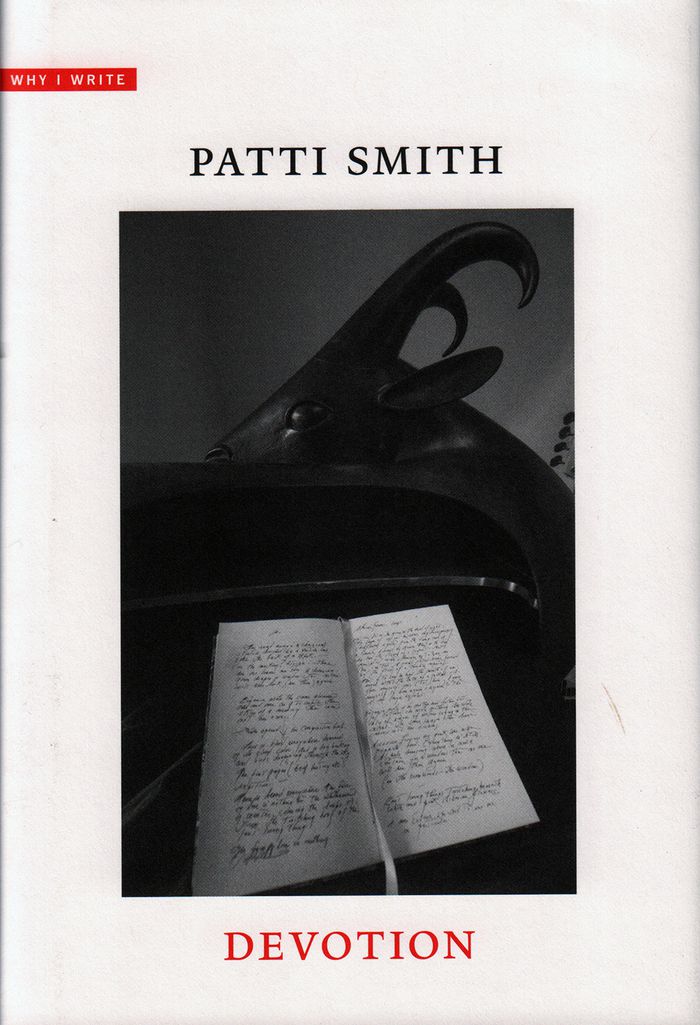
A work of creative brilliance may seem like magic—its source a mystery, its impact unexpectedly stirring. How does an artist accomplish such an achievement, connecting deeply with an audience never met? In this groundbreaking book, one of our culture’s beloved artists offers a detailed account of her own creative process, inspirations, and unexpected connections. Patti Smith first presents an original and beautifully crafted tale of obsession—a young skater who lives for her art, a possessive collector who ruthlessly seeks his prize, a relationship forged of need both craven and exalted. She then takes us on a second journey, exploring the sources of her story. We travel through the South of France to Camus’s house, and visit the garden of the great publisher Gallimard where the ghosts of Mishima, Nabokov, and Genet mingle. Smith tracks down Simone Weil’s grave in a lonely cemetery, hours from London, and winds through the nameless Paris streets of Patrick Modiano’s novels. Whether writing in a café or a train, Smith generously opens her notebooks and lets us glimpse the alchemy of her art and craft in this arresting and original book on writing. "The why I write" series is based on the Windham-Campbell Lectures, delivered annually to commemorate the awarding of the Donald Windham-Sandy M. Campbell Literature Prizes at Yale University.
Devotion
Actions:
Prix:
$26.95
(disponible sur commande)
Résumé:
A work of creative brilliance may seem like magic—its source a mystery, its impact unexpectedly stirring. How does an artist accomplish such an achievement, connecting deeply with an audience never met? In this groundbreaking book, one of our culture’s beloved artists offers a detailed account of her own creative process, inspirations, and unexpected connections. Patti Smith first presents an original and beautifully crafted tale of obsession—a young skater who lives for her art, a possessive collector who ruthlessly seeks his prize, a relationship forged of need both craven and exalted. She then takes us on a second journey, exploring the sources of her story. We travel through the South of France to Camus’s house, and visit the garden of the great publisher Gallimard where the ghosts of Mishima, Nabokov, and Genet mingle. Smith tracks down Simone Weil’s grave in a lonely cemetery, hours from London, and winds through the nameless Paris streets of Patrick Modiano’s novels. Whether writing in a café or a train, Smith generously opens her notebooks and lets us glimpse the alchemy of her art and craft in this arresting and original book on writing. "The why I write" series is based on the Windham-Campbell Lectures, delivered annually to commemorate the awarding of the Donald Windham-Sandy M. Campbell Literature Prizes at Yale University.
Classification:
livres
livres
Publication:
septembre 2017
septembre 2017
Sujet:
Littérature et poésie
Littérature et poésie
Classification:
livres
livres
Actions:
Prix:
$34.50
(disponible sur commande)
Résumé:
The new ARCAM POCKET, Amsterdam Architecture 2003-06 gives an overview of the projects built in Amsterdam in the period 2003-2006. A jury, comprising development adviser Eric Amory, architect Madeleine Maaskant and architectural theorist Roemer van Toorn, visited all of the buildings realized in this period and has selected 38. Successful insertion projects in existing(...)
$34.50
(disponible sur commande)
Résumé:
The new ARCAM POCKET, Amsterdam Architecture 2003-06 gives an overview of the projects built in Amsterdam in the period 2003-2006. A jury, comprising development adviser Eric Amory, architect Madeleine Maaskant and architectural theorist Roemer van Toorn, visited all of the buildings realized in this period and has selected 38. Successful insertion projects in existing(...)
Titre:
Amsterdam architecture, 2003-2006
Actions:
Prix:
$34.50
(disponible sur commande)
Résumé:
The new ARCAM POCKET, Amsterdam Architecture 2003-06 gives an overview of the projects built in Amsterdam in the period 2003-2006. A jury, comprising development adviser Eric Amory, architect Madeleine Maaskant and architectural theorist Roemer van Toorn, visited all of the buildings realized in this period and has selected 38. Successful insertion projects in existing urban areas such as the nineteenth-century ring, the Westelijke Tuinsteden (western garden suburbs), the Bijlmer and North Amsterdam alternate with projects in new urban areas such as IJburg, the Zuidas (South Axis) and Oostelijke Handelskade. What is striking is the diversity of the projects, ranging from the bridge Nesciobrug (Wilkinson Eyre) to IJburg, the new head office of DWR (Architectuurstudio Hertzberger), the Finish House near Bosbaan (Mecanoo) and the operating station Westerkeersluis (LUX Architecten), to housing complexes by well-known firms such as FARO Architekten, Claus en Kaan Architects, De Architekten Cie. and UN Studio. But also projects by Dedato, Evelo Vandenberg and Jef Reintjens. In an introduction, Roemer van Toorn describes what struck the jury during its tour of Amsterdam's latest buildings: the introverted residential environments, neo-historicism, gadget architecture, monumentality and the return of the urban block. The book contains a handy map and route descriptions for those who wish to go and judge the projects for themselves.
Amsterdam architecture, 2003-2006
Actions:
Prix:
$34.50
(disponible sur commande)
Résumé:
The new ARCAM POCKET, Amsterdam Architecture 2003-06 gives an overview of the projects built in Amsterdam in the period 2003-2006. A jury, comprising development adviser Eric Amory, architect Madeleine Maaskant and architectural theorist Roemer van Toorn, visited all of the buildings realized in this period and has selected 38. Successful insertion projects in existing urban areas such as the nineteenth-century ring, the Westelijke Tuinsteden (western garden suburbs), the Bijlmer and North Amsterdam alternate with projects in new urban areas such as IJburg, the Zuidas (South Axis) and Oostelijke Handelskade. What is striking is the diversity of the projects, ranging from the bridge Nesciobrug (Wilkinson Eyre) to IJburg, the new head office of DWR (Architectuurstudio Hertzberger), the Finish House near Bosbaan (Mecanoo) and the operating station Westerkeersluis (LUX Architecten), to housing complexes by well-known firms such as FARO Architekten, Claus en Kaan Architects, De Architekten Cie. and UN Studio. But also projects by Dedato, Evelo Vandenberg and Jef Reintjens. In an introduction, Roemer van Toorn describes what struck the jury during its tour of Amsterdam's latest buildings: the introverted residential environments, neo-historicism, gadget architecture, monumentality and the return of the urban block. The book contains a handy map and route descriptions for those who wish to go and judge the projects for themselves.
Classification:
livres
livres
Publication:
avril 2006, Amsterdam
avril 2006, Amsterdam
Sujet:
Guides des villes
Guides des villes
Classification:
livres
livres
Prix:
$39.95
(disponible sur commande)
Résumé:
This book shows how, even in the most difficult conditions–forced displacement, trauma, and struggle–design can help create a life worth living. ''Design to live'' documents designs, inventions, and artworks created by Syrian refugees living in the Azraq Refugee Camp in Jordan. Through these ingenious and creative innovations–including the vertical garden, an arrangement(...)
$39.95
(disponible sur commande)
Résumé:
This book shows how, even in the most difficult conditions–forced displacement, trauma, and struggle–design can help create a life worth living. ''Design to live'' documents designs, inventions, and artworks created by Syrian refugees living in the Azraq Refugee Camp in Jordan. Through these ingenious and creative innovations–including the vertical garden, an arrangement(...)
Publication:
octobre 2021
octobre 2021
Titre:
Design to live: Everyday inventions from a refugee camp
Actions:
Prix:
$39.95
(disponible sur commande)
Résumé:
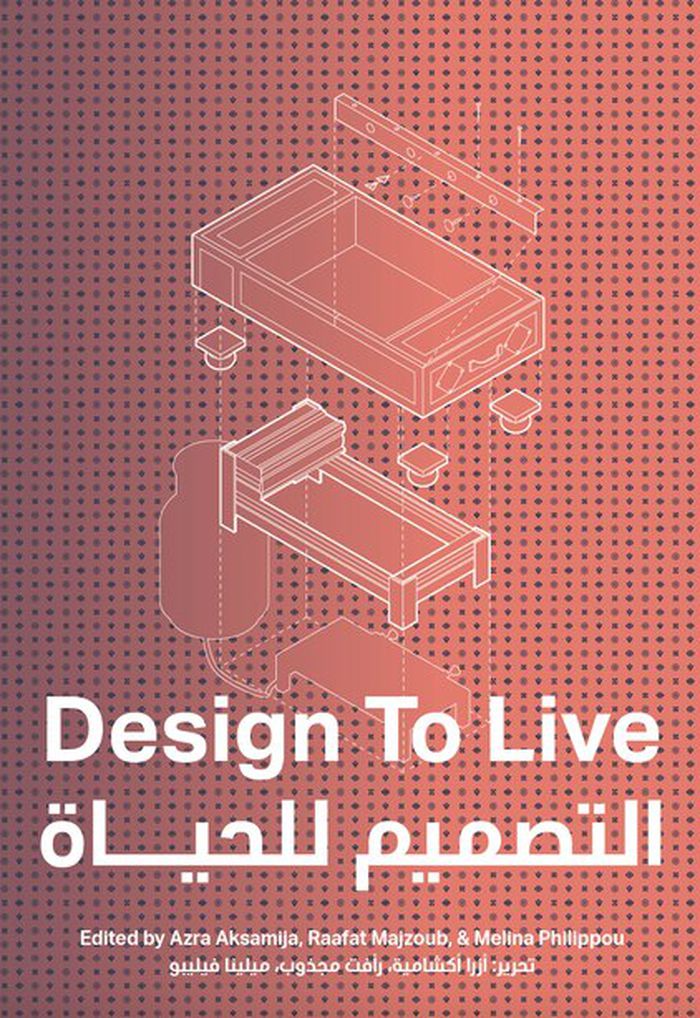
This book shows how, even in the most difficult conditions–forced displacement, trauma, and struggle–design can help create a life worth living. ''Design to live'' documents designs, inventions, and artworks created by Syrian refugees living in the Azraq Refugee Camp in Jordan. Through these ingenious and creative innovations–including the vertical garden, an arrangement necessitated by regulations that forbid planting in the ground; a front hall, fashioned to protect privacy; a baby swing made from recycled desks; and a chess set carved from a broomstick–refugees defy the material scarcity, unforgiving desert climate, and cultural isolation of the camp. Written in close collaboration with the residents of the camp, with text in both English and Arabic, ''Design to live,'' reflects two perspectives on the camp: people living and working in Azraq and designers reflecting on humanitarian architecture within the broader field of socially engaged art and design. Architectural drawings, illustrations, photographs, narratives, and stories offer vivid testimony to the imaginative and artful ways that residents alter and reconstruct the standardized humanitarian design of the camp–and provide models that can be replicated elsewhere. The book is the product of a three-year project undertaken by MIT Future Heritage Lab, researchers and students with Syrian refugees at the Azraq Refugee Camp, CARE, Jordan, and the German-Jordanian University.
Design to live: Everyday inventions from a refugee camp
Actions:
Prix:
$39.95
(disponible sur commande)
Résumé:
This book shows how, even in the most difficult conditions–forced displacement, trauma, and struggle–design can help create a life worth living. ''Design to live'' documents designs, inventions, and artworks created by Syrian refugees living in the Azraq Refugee Camp in Jordan. Through these ingenious and creative innovations–including the vertical garden, an arrangement necessitated by regulations that forbid planting in the ground; a front hall, fashioned to protect privacy; a baby swing made from recycled desks; and a chess set carved from a broomstick–refugees defy the material scarcity, unforgiving desert climate, and cultural isolation of the camp. Written in close collaboration with the residents of the camp, with text in both English and Arabic, ''Design to live,'' reflects two perspectives on the camp: people living and working in Azraq and designers reflecting on humanitarian architecture within the broader field of socially engaged art and design. Architectural drawings, illustrations, photographs, narratives, and stories offer vivid testimony to the imaginative and artful ways that residents alter and reconstruct the standardized humanitarian design of the camp–and provide models that can be replicated elsewhere. The book is the product of a three-year project undertaken by MIT Future Heritage Lab, researchers and students with Syrian refugees at the Azraq Refugee Camp, CARE, Jordan, and the German-Jordanian University.
Classification:
livres
livres
Publication:
octobre 2021
octobre 2021
Classification:
livres
livres
Prix:
$49.95
(disponible sur commande)
Résumé:
Un-volumetric architecture expresses a new condition acquired in dealing with and designing open and public space from the nineties to today. This volume is therefore intended to offer a theoretical reflection conducted through 100 construction projects worldwide that have faced the difficult challenge of delineating and building a new identity for that transient and(...)
$49.95
(disponible sur commande)
Résumé:
Un-volumetric architecture expresses a new condition acquired in dealing with and designing open and public space from the nineties to today. This volume is therefore intended to offer a theoretical reflection conducted through 100 construction projects worldwide that have faced the difficult challenge of delineating and building a new identity for that transient and(...)
Sujet:
Théorie de l’urbanisme
Théorie de l’urbanisme
Publication:
janvier 1900, Milan
janvier 1900, Milan
Titre:
Contemporary public space : un-volumetric architecture
Actions:
Prix:
$49.95
(disponible sur commande)
Résumé:
Un-volumetric architecture expresses a new condition acquired in dealing with and designing open and public space from the nineties to today. This volume is therefore intended to offer a theoretical reflection conducted through 100 construction projects worldwide that have faced the difficult challenge of delineating and building a new identity for that transient and continually metamorphosing category that is the contemporary open space. The considerable creative freedom, the low budget, the sophisticated relationship with the landscape and geography, the dialogue with new metropolitan realities, the possibility of offering temporary solutions, all make these projects among the richest, freest and most stimulating collections currently available, through the work of major protagonists and many emerging authors on the international scene. The volume is divided into 10 sections: Surfaces, Vertical, Enclosures, Design, Shelters, Environment, Earthworks, Figures, Technique and Events, which attempt to accompany the reader around a complex world of solutions and projects ranging from the traditional public space to the landscape, from the rock concert to the provisional space for cultural and artistic events, from the design of infrastructures to the most sophisticated garden. Each section is introduced by a small essay, written by such important authors on the contemporary scene as Denise Scott Brown, James Wines, Pippo Ciorra, Wes Jones, Enrico Morteo, Alberto Ferlenga, Ilhyun Kim, Kengo Kuma, Arie Graafland, Juan Purcell and Bernardo Secchi, who attempt to tackle the theme of the contemporary open space, offering stimuli for theoretical reflection.
Contemporary public space : un-volumetric architecture
Actions:
Prix:
$49.95
(disponible sur commande)
Résumé:
Un-volumetric architecture expresses a new condition acquired in dealing with and designing open and public space from the nineties to today. This volume is therefore intended to offer a theoretical reflection conducted through 100 construction projects worldwide that have faced the difficult challenge of delineating and building a new identity for that transient and continually metamorphosing category that is the contemporary open space. The considerable creative freedom, the low budget, the sophisticated relationship with the landscape and geography, the dialogue with new metropolitan realities, the possibility of offering temporary solutions, all make these projects among the richest, freest and most stimulating collections currently available, through the work of major protagonists and many emerging authors on the international scene. The volume is divided into 10 sections: Surfaces, Vertical, Enclosures, Design, Shelters, Environment, Earthworks, Figures, Technique and Events, which attempt to accompany the reader around a complex world of solutions and projects ranging from the traditional public space to the landscape, from the rock concert to the provisional space for cultural and artistic events, from the design of infrastructures to the most sophisticated garden. Each section is introduced by a small essay, written by such important authors on the contemporary scene as Denise Scott Brown, James Wines, Pippo Ciorra, Wes Jones, Enrico Morteo, Alberto Ferlenga, Ilhyun Kim, Kengo Kuma, Arie Graafland, Juan Purcell and Bernardo Secchi, who attempt to tackle the theme of the contemporary open space, offering stimuli for theoretical reflection.
Classification:
livres
livres
Publication:
janvier 1900, Milan
janvier 1900, Milan
Sujet:
Théorie de l’urbanisme
Théorie de l’urbanisme
Classification:
livres
livres
Prix:
$52.50
(disponible en magasin)
Résumé:
Soon after its inception in 1928, as part of Public Works, the Department of Physical Planning began work on Van Eesteren's General Extension Plan for Amsterdam (AUP). Issued in 1934, the AUP can be regarded as Amsterdam's first master plan. It fixed the broad lines of city policy on spatial development in a vision statement on the city. Vision statements and the plans(...)
$52.50
(disponible en magasin)
Résumé:
Soon after its inception in 1928, as part of Public Works, the Department of Physical Planning began work on Van Eesteren's General Extension Plan for Amsterdam (AUP). Issued in 1934, the AUP can be regarded as Amsterdam's first master plan. It fixed the broad lines of city policy on spatial development in a vision statement on the city. Vision statements and the plans(...)
Publication:
janvier 2004, Rotterdam
janvier 2004, Rotterdam
Titre:
Planning Amsterdam : scenarios for urban development, 1928-2003
Actions:
Prix:
$52.50
(disponible en magasin)
Résumé:
Soon after its inception in 1928, as part of Public Works, the Department of Physical Planning began work on Van Eesteren's General Extension Plan for Amsterdam (AUP). Issued in 1934, the AUP can be regarded as Amsterdam's first master plan. It fixed the broad lines of city policy on spatial development in a vision statement on the city. Vision statements and the plans they spawn are necessarily centred on the future, but with hindsight such master plans tell us more about the time when they were made. This certainly holds true for the eight such plans that were to follow the AUP. The most recent, 'Opting for Urbanity', was completed in 2003, by the Physical Planning Department. Something new, whether this is a residential estate or a business park, is invariably at the expense of something existing. Seventy-five years after the AUP was issued, the fitting out of urban space for dwelling, working, traffic and recreation is still a subject of discussion. How the space is filled in determines the urban dynamic. This book is not just about the Amsterdam masterplans but more particularly about three-quarters of a century of spatial development in that city. Words, images and a series of maps specially made for the occasion clearly show what has been happening in the inner areas and garden city suburbs of Amsterdam, the urban expansions and consolidations, the plans for traffic and transport, and for greenspace and recreation.
Planning Amsterdam : scenarios for urban development, 1928-2003
Actions:
Prix:
$52.50
(disponible en magasin)
Résumé:
Soon after its inception in 1928, as part of Public Works, the Department of Physical Planning began work on Van Eesteren's General Extension Plan for Amsterdam (AUP). Issued in 1934, the AUP can be regarded as Amsterdam's first master plan. It fixed the broad lines of city policy on spatial development in a vision statement on the city. Vision statements and the plans they spawn are necessarily centred on the future, but with hindsight such master plans tell us more about the time when they were made. This certainly holds true for the eight such plans that were to follow the AUP. The most recent, 'Opting for Urbanity', was completed in 2003, by the Physical Planning Department. Something new, whether this is a residential estate or a business park, is invariably at the expense of something existing. Seventy-five years after the AUP was issued, the fitting out of urban space for dwelling, working, traffic and recreation is still a subject of discussion. How the space is filled in determines the urban dynamic. This book is not just about the Amsterdam masterplans but more particularly about three-quarters of a century of spatial development in that city. Words, images and a series of maps specially made for the occasion clearly show what has been happening in the inner areas and garden city suburbs of Amsterdam, the urban expansions and consolidations, the plans for traffic and transport, and for greenspace and recreation.
Classification:
livres
livres
Publication:
janvier 2004, Rotterdam
janvier 2004, Rotterdam
Classification:
livres
livres
Prix:
$24.95
(disponible sur commande)
Résumé:
Industrialization created cities of Dickensian squalor that were crowded, smoky, dirty, and disease-ridden. By the beginning of the twentieth century, urban visionaries were looking for ways to improve living and working conditions in industrial cities. In "Invented Edens", Robert Kargon and Arthur Molella trace the arc of one form of urban design, which they term the(...)
$24.95
(disponible sur commande)
Résumé:
Industrialization created cities of Dickensian squalor that were crowded, smoky, dirty, and disease-ridden. By the beginning of the twentieth century, urban visionaries were looking for ways to improve living and working conditions in industrial cities. In "Invented Edens", Robert Kargon and Arthur Molella trace the arc of one form of urban design, which they term the(...)
Sujet:
Architecture écologique
Architecture écologique
Publication:
octobre 2005, Cambridge (MA), London
octobre 2005, Cambridge (MA), London
Titre:
Invented Edens : techno-cities of the twentieth century
Actions:
Prix:
$24.95
(disponible sur commande)
Résumé:
Industrialization created cities of Dickensian squalor that were crowded, smoky, dirty, and disease-ridden. By the beginning of the twentieth century, urban visionaries were looking for ways to improve living and working conditions in industrial cities. In "Invented Edens", Robert Kargon and Arthur Molella trace the arc of one form of urban design, which they term the techno-city : a planned city developed in conjunction with large industrial or technological enterprises, blending the technological and the pastoral, the mill town and the garden city. Techno-cities of the twentieth century range from factory towns in Mussolini's Italy to the Disney creation of Celebration, Florida. Kargon and Molella show that the techno-city represents an experiment in integrating modern technology into the world of ideal life. Techno-cities mirror society's understanding of current technologies and, at the same time, seek to regain the lost virtues of the edenic pre-industrial village. The idea of the techno-city transcended ideologies, crossed national borders, and spanned the entire twentieth century. Kargon and Molella map the concept through a series of exemplars. These include Norris, Tennessee, home to the Tennessee Valley Authority; Torviscosa, Italy, built by Italy's Fascist government to accommodate synthetic textile manufacturing (and featured in an early short by Michelangelo Antonioni); Ciudad Guayana, Venezuela, planned by a team from MIT and Harvard; and, finally, Disney's Celebration - perhaps the ultimate techno-city, a fantasy city reflecting an era in which virtual experiences are rapidly replacing actual ones.
Invented Edens : techno-cities of the twentieth century
Actions:
Prix:
$24.95
(disponible sur commande)
Résumé:
Industrialization created cities of Dickensian squalor that were crowded, smoky, dirty, and disease-ridden. By the beginning of the twentieth century, urban visionaries were looking for ways to improve living and working conditions in industrial cities. In "Invented Edens", Robert Kargon and Arthur Molella trace the arc of one form of urban design, which they term the techno-city : a planned city developed in conjunction with large industrial or technological enterprises, blending the technological and the pastoral, the mill town and the garden city. Techno-cities of the twentieth century range from factory towns in Mussolini's Italy to the Disney creation of Celebration, Florida. Kargon and Molella show that the techno-city represents an experiment in integrating modern technology into the world of ideal life. Techno-cities mirror society's understanding of current technologies and, at the same time, seek to regain the lost virtues of the edenic pre-industrial village. The idea of the techno-city transcended ideologies, crossed national borders, and spanned the entire twentieth century. Kargon and Molella map the concept through a series of exemplars. These include Norris, Tennessee, home to the Tennessee Valley Authority; Torviscosa, Italy, built by Italy's Fascist government to accommodate synthetic textile manufacturing (and featured in an early short by Michelangelo Antonioni); Ciudad Guayana, Venezuela, planned by a team from MIT and Harvard; and, finally, Disney's Celebration - perhaps the ultimate techno-city, a fantasy city reflecting an era in which virtual experiences are rapidly replacing actual ones.
Classification:
livres
livres
Publication:
octobre 2005, Cambridge (MA), London
octobre 2005, Cambridge (MA), London
Sujet:
Architecture écologique
Architecture écologique


