


9177 Résultats
Classification:
livres
livres
Actions:
Prix:
$22.50
(disponible en magasin)
Résumé:
When architect Rafael Vinoly was commissioned to design a major new centre for the arts at Duke University, he set about creating his first museum in North America and the first stand-alone museum in Duke's eighty-year history. The resulting 65,000-square-foot building has changed the cultural landscape of the university and indeed the Southeast. This book(...)
$22.50
(disponible en magasin)
Résumé:
When architect Rafael Vinoly was commissioned to design a major new centre for the arts at Duke University, he set about creating his first museum in North America and the first stand-alone museum in Duke's eighty-year history. The resulting 65,000-square-foot building has changed the cultural landscape of the university and indeed the Southeast. This book(...)
Sujet:
Architecture, monographies
Architecture, monographies
Publication:
octobre 2005, Durham, North Carolina
octobre 2005, Durham, North Carolina
Titre:
The Nasher Museum of Art at Duke University : Rafael Vinoly Architects
Actions:
Prix:
$22.50
(disponible en magasin)
Résumé:
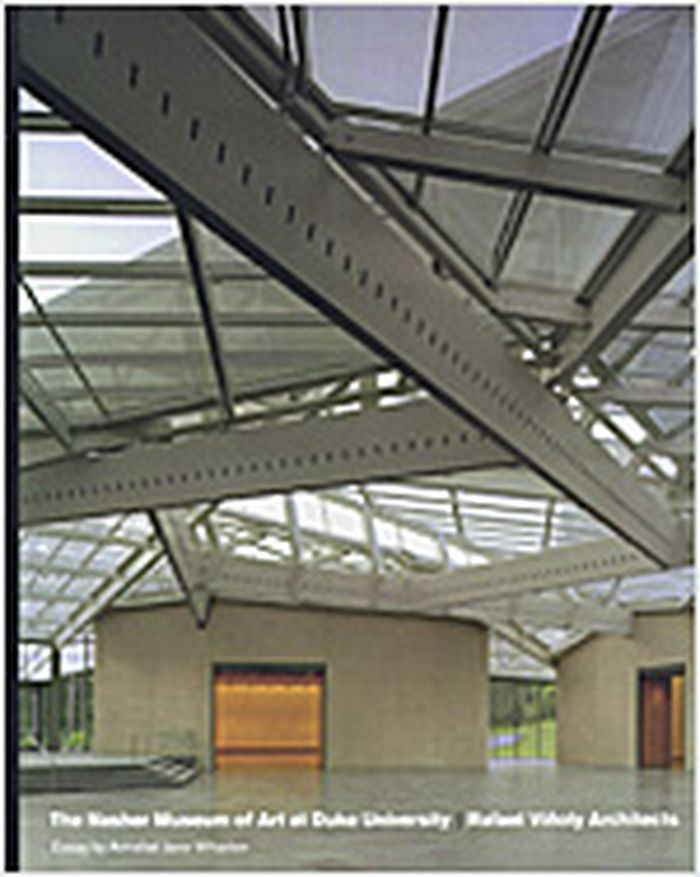
When architect Rafael Vinoly was commissioned to design a major new centre for the arts at Duke University, he set about creating his first museum in North America and the first stand-alone museum in Duke's eighty-year history. The resulting 65,000-square-foot building has changed the cultural landscape of the university and indeed the Southeast. This book documents the genesis and design of the new museum, which opens on October 2, 2005. The building is named in honor of the family of Raymond D. Nasher, an internationally prominent art collector who graduated from Duke in 1943. The brilliant core of the Nasher at Duke is a 13,000-square-foot glass and steel canopy rising to a height of 45 feet above the central gallery space. The faceted roof soars above the irregular pentagonal great hall, where five concrete pavilions fan out at different angles. The pavilions will house three large gallery spaces, an auditorium, offices, university and community classrooms, a museum shop, and a café with outdoor seating overlooking a sculpture garden. Set in the forest on Duke's campus, the museum's full-height glass walls and green slate floor connect the pavilions and further blur the division between building and nature. With an essay by art historian Annabel Jane Wharton, a design statement by architect Rafael Vinoly, a foreword by museum namesake Raymond D. Nasher, and photographs by Brad Feinknopf and Jerry Blow, this book documents the building that will become a cornerstone for cultural activities for the university and the public.
The Nasher Museum of Art at Duke University : Rafael Vinoly Architects
Actions:
Prix:
$22.50
(disponible en magasin)
Résumé:
When architect Rafael Vinoly was commissioned to design a major new centre for the arts at Duke University, he set about creating his first museum in North America and the first stand-alone museum in Duke's eighty-year history. The resulting 65,000-square-foot building has changed the cultural landscape of the university and indeed the Southeast. This book documents the genesis and design of the new museum, which opens on October 2, 2005. The building is named in honor of the family of Raymond D. Nasher, an internationally prominent art collector who graduated from Duke in 1943. The brilliant core of the Nasher at Duke is a 13,000-square-foot glass and steel canopy rising to a height of 45 feet above the central gallery space. The faceted roof soars above the irregular pentagonal great hall, where five concrete pavilions fan out at different angles. The pavilions will house three large gallery spaces, an auditorium, offices, university and community classrooms, a museum shop, and a café with outdoor seating overlooking a sculpture garden. Set in the forest on Duke's campus, the museum's full-height glass walls and green slate floor connect the pavilions and further blur the division between building and nature. With an essay by art historian Annabel Jane Wharton, a design statement by architect Rafael Vinoly, a foreword by museum namesake Raymond D. Nasher, and photographs by Brad Feinknopf and Jerry Blow, this book documents the building that will become a cornerstone for cultural activities for the university and the public.
Classification:
livres
livres
Publication:
octobre 2005, Durham, North Carolina
octobre 2005, Durham, North Carolina
Sujet:
Architecture, monographies
Architecture, monographies
Classification:
livres
livres
Actions:
Prix:
$30.00
(disponible sur commande)
Résumé:
Amidst city concrete and suburban sprawl, Americans are discovering new ways to reconnect with the natural world. From community gardens in New York's Lower East Side to homeless shelters in California, the search for a more sustainable future has led grassroots groups to a profound reconnection to place and to the natural world. Studies of the health consequences of(...)
$30.00
(disponible sur commande)
Résumé:
Amidst city concrete and suburban sprawl, Americans are discovering new ways to reconnect with the natural world. From community gardens in New York's Lower East Side to homeless shelters in California, the search for a more sustainable future has led grassroots groups to a profound reconnection to place and to the natural world. Studies of the health consequences of(...)
Titre:
Urban place : reconnecting with the natural world
Actions:
Prix:
$30.00
(disponible sur commande)
Résumé:
Amidst city concrete and suburban sprawl, Americans are discovering new ways to reconnect with the natural world. From community gardens in New York's Lower East Side to homeless shelters in California, the search for a more sustainable future has led grassroots groups to a profound reconnection to place and to the natural world. Studies of the health consequences of renewing a connection with nature support the urgency of providing green surroundings as cities expand and the majority of the earth's population lives in urban areas. Medical research results, from groups as diverse as healthy volunteers, surgery patients, and heart attack survivors, suggest that contact with nature may improve health and well-being. Engagement with nearby natural places also provides restoration from mental fatigue and support for more resilient and cooperative behavior. Aspects of stronger community life are fostered by access to nature, suggesting that there are significant social as well as physical and psychological benefits from connection with the natural world. This volume brings together research from anthropology, sociology, public health, psychology, and landscape architecture to highlight how awareness of locale and a meaningful renewal of attachment with the earth are connected to delight in learning about nature as well as to civic action and new forms of community. Community garden coalitions, organic market advocates, and greenspace preservationists resist the power of global forces, enacting visions of a different future. Their creative efforts tell a story of a constructive and dynamic middle ground between private plots and public action, between human health and ecosystem health, between individual attachment and urban sustainability.
Urban place : reconnecting with the natural world
Actions:
Prix:
$30.00
(disponible sur commande)
Résumé:
Amidst city concrete and suburban sprawl, Americans are discovering new ways to reconnect with the natural world. From community gardens in New York's Lower East Side to homeless shelters in California, the search for a more sustainable future has led grassroots groups to a profound reconnection to place and to the natural world. Studies of the health consequences of renewing a connection with nature support the urgency of providing green surroundings as cities expand and the majority of the earth's population lives in urban areas. Medical research results, from groups as diverse as healthy volunteers, surgery patients, and heart attack survivors, suggest that contact with nature may improve health and well-being. Engagement with nearby natural places also provides restoration from mental fatigue and support for more resilient and cooperative behavior. Aspects of stronger community life are fostered by access to nature, suggesting that there are significant social as well as physical and psychological benefits from connection with the natural world. This volume brings together research from anthropology, sociology, public health, psychology, and landscape architecture to highlight how awareness of locale and a meaningful renewal of attachment with the earth are connected to delight in learning about nature as well as to civic action and new forms of community. Community garden coalitions, organic market advocates, and greenspace preservationists resist the power of global forces, enacting visions of a different future. Their creative efforts tell a story of a constructive and dynamic middle ground between private plots and public action, between human health and ecosystem health, between individual attachment and urban sustainability.
Classification:
livres
livres
Publication:
janvier 1900, Cambridge, London
janvier 1900, Cambridge, London
Sujet:
Théorie de l’urbanisme
Théorie de l’urbanisme
Classification:
livres
livres
Actions:
Prix:
$34.95
(disponible sur commande)
Résumé:
Offers an innovative approach to understanding the cultural history of Tel Aviv by exploring the mythical dimension and texture of the city. Founded in 1909 as a "garden suburb" of the Mediterranean port of Jaffa, Tel Aviv soon became a model of Jewish self-rule and was celebrated as a jewel in the crown of Hebrew revival. Over time the city has transformed into a(...)
$34.95
(disponible sur commande)
Résumé:
Offers an innovative approach to understanding the cultural history of Tel Aviv by exploring the mythical dimension and texture of the city. Founded in 1909 as a "garden suburb" of the Mediterranean port of Jaffa, Tel Aviv soon became a model of Jewish self-rule and was celebrated as a jewel in the crown of Hebrew revival. Over time the city has transformed into a(...)
Publication:
octobre 2006, New York
octobre 2006, New York
Titre:
Tel Aviv : mythography of a city
Actions:
Prix:
$34.95
(disponible sur commande)
Résumé:
Offers an innovative approach to understanding the cultural history of Tel Aviv by exploring the mythical dimension and texture of the city. Founded in 1909 as a "garden suburb" of the Mediterranean port of Jaffa, Tel Aviv soon became a model of Jewish self-rule and was celebrated as a jewel in the crown of Hebrew revival. Over time the city has transformed into a lively metropolis, renowned for its architecture and culture, openness and vitality. A young city about to celebrate its 100th anniversity, the mythic Tel Aviv continues to represent a fundamental idea that transcends the physical texture of the city and the everyday experiences of its residents. Combining historical research and cultural analysis, Maoz Azaryahu explores the different myths that have been part of the vernacular and perception of the city. He relates Tel Aviv’s mythology to its physicality through buildings, streets, personal experiences, and municipal policies. With critical insight, he evaluates specific myths and their propagation in the spheres of both official and popular culture. Azaryahu explores three distinct stages in the history of the mythic Tel Aviv: "The First Hebrew City" assesses Tel Aviv as Zionist vision and seed of the actual city; "Non-Stop City" depicts trendy, global post-Zionist Tel Aviv; and "The White City" describes Tel Aviv’s architectural landscape, created in the 1930s and imbued with nostalgia and local prestige. Tel Aviv: Mythography of a City will appeal to urban geographers, cultural historians, scholars of myth, and students of Israeli society and culture.
Tel Aviv : mythography of a city
Actions:
Prix:
$34.95
(disponible sur commande)
Résumé:
Offers an innovative approach to understanding the cultural history of Tel Aviv by exploring the mythical dimension and texture of the city. Founded in 1909 as a "garden suburb" of the Mediterranean port of Jaffa, Tel Aviv soon became a model of Jewish self-rule and was celebrated as a jewel in the crown of Hebrew revival. Over time the city has transformed into a lively metropolis, renowned for its architecture and culture, openness and vitality. A young city about to celebrate its 100th anniversity, the mythic Tel Aviv continues to represent a fundamental idea that transcends the physical texture of the city and the everyday experiences of its residents. Combining historical research and cultural analysis, Maoz Azaryahu explores the different myths that have been part of the vernacular and perception of the city. He relates Tel Aviv’s mythology to its physicality through buildings, streets, personal experiences, and municipal policies. With critical insight, he evaluates specific myths and their propagation in the spheres of both official and popular culture. Azaryahu explores three distinct stages in the history of the mythic Tel Aviv: "The First Hebrew City" assesses Tel Aviv as Zionist vision and seed of the actual city; "Non-Stop City" depicts trendy, global post-Zionist Tel Aviv; and "The White City" describes Tel Aviv’s architectural landscape, created in the 1930s and imbued with nostalgia and local prestige. Tel Aviv: Mythography of a City will appeal to urban geographers, cultural historians, scholars of myth, and students of Israeli society and culture.
Classification:
livres
livres
Publication:
octobre 2006, New York
octobre 2006, New York
Classification:
livres
livres

Prix:
$18.95
(disponible sur commande)
Résumé:
Why is it so hard to make up our minds? Adam and Eve set the template : do we or don’t we eat the apple? They chose, half-heartedly, and nothing was ever the same again. With this book, Kenneth Weisbrode offers an introduction to the age-old struggle with ambivalence. Ambivalence results from a basic desire to have it both ways. This is only natural - although(...)
$18.95
(disponible sur commande)
Résumé:
Why is it so hard to make up our minds? Adam and Eve set the template : do we or don’t we eat the apple? They chose, half-heartedly, and nothing was ever the same again. With this book, Kenneth Weisbrode offers an introduction to the age-old struggle with ambivalence. Ambivalence results from a basic desire to have it both ways. This is only natural - although(...)
Titre:
On ambivalence : the problems and pleasures of having it both ways
Actions:
Prix:
$18.95
(disponible sur commande)
Résumé:
Why is it so hard to make up our minds? Adam and Eve set the template : do we or don’t we eat the apple? They chose, half-heartedly, and nothing was ever the same again. With this book, Kenneth Weisbrode offers an introduction to the age-old struggle with ambivalence. Ambivalence results from a basic desire to have it both ways. This is only natural - although insisting upon it against all reason often results not in "both" but in the disappointing "neither." Ambivalence has insinuated itself into our culture as a kind of obligatory reflex, or default position, before practically every choice we make. It affects not only individuals; organizations, societies, and cultures can also be ambivalent. How often have we asked the scornful question, "Are we the Hamlet of nations"? How often have we demanded that our leaders appear decisive, judicious, and stalwart? And how eager have we been to censure them when they hesitate or waver? Weisbrode traces the concept of ambivalence, from the Garden of Eden to Freud and beyond. The Obama era, he says, may be America’s own era of ambivalence: neither red nor blue but a multicolored kaleidoscope. Ambivalence, he argues, need not be destructive. We must learn to distinguish it from its symptoms - selfishness, ambiguity, and indecision - and accept that frustration, guilt, and paralysis felt by individuals need not lead automatically to a collective pathology. Drawing upon examples from philosophy, history, literature, and the social sciences, On Ambivalence is a pocket-sized portrait of a complex human condition.
On ambivalence : the problems and pleasures of having it both ways
Actions:
Prix:
$18.95
(disponible sur commande)
Résumé:
Why is it so hard to make up our minds? Adam and Eve set the template : do we or don’t we eat the apple? They chose, half-heartedly, and nothing was ever the same again. With this book, Kenneth Weisbrode offers an introduction to the age-old struggle with ambivalence. Ambivalence results from a basic desire to have it both ways. This is only natural - although insisting upon it against all reason often results not in "both" but in the disappointing "neither." Ambivalence has insinuated itself into our culture as a kind of obligatory reflex, or default position, before practically every choice we make. It affects not only individuals; organizations, societies, and cultures can also be ambivalent. How often have we asked the scornful question, "Are we the Hamlet of nations"? How often have we demanded that our leaders appear decisive, judicious, and stalwart? And how eager have we been to censure them when they hesitate or waver? Weisbrode traces the concept of ambivalence, from the Garden of Eden to Freud and beyond. The Obama era, he says, may be America’s own era of ambivalence: neither red nor blue but a multicolored kaleidoscope. Ambivalence, he argues, need not be destructive. We must learn to distinguish it from its symptoms - selfishness, ambiguity, and indecision - and accept that frustration, guilt, and paralysis felt by individuals need not lead automatically to a collective pathology. Drawing upon examples from philosophy, history, literature, and the social sciences, On Ambivalence is a pocket-sized portrait of a complex human condition.
Classification:
livres
livres
Publication:
janvier 2012
janvier 2012
Sujet:
Théorie/ philosophie
Théorie/ philosophie
Classification:
livres
livres
Titre:
Créer son jardin
Créer son jardin
Actions:
Prix:
$49.95
(disponible sur commande)
Résumé:
Selon l'endroit où se trouve votre jardin (jardin de campagne très étendu, petit jardin de ville entouré de murs, jardin de bord de mer...) et selon l'architecture de votre maison, vous devrez le concevoir différemment en comptant avec le climat et le sol. Une fois votre plan établi, laissez parler votre imagination ! Structure, style, végétaux, matériaux ou mobilier :(...)
$49.95
(disponible sur commande)
Résumé:
Selon l'endroit où se trouve votre jardin (jardin de campagne très étendu, petit jardin de ville entouré de murs, jardin de bord de mer...) et selon l'architecture de votre maison, vous devrez le concevoir différemment en comptant avec le climat et le sol. Une fois votre plan établi, laissez parler votre imagination ! Structure, style, végétaux, matériaux ou mobilier :(...)
Titre:
Créer son jardin
Actions:
Prix:
$49.95
(disponible sur commande)
Résumé:
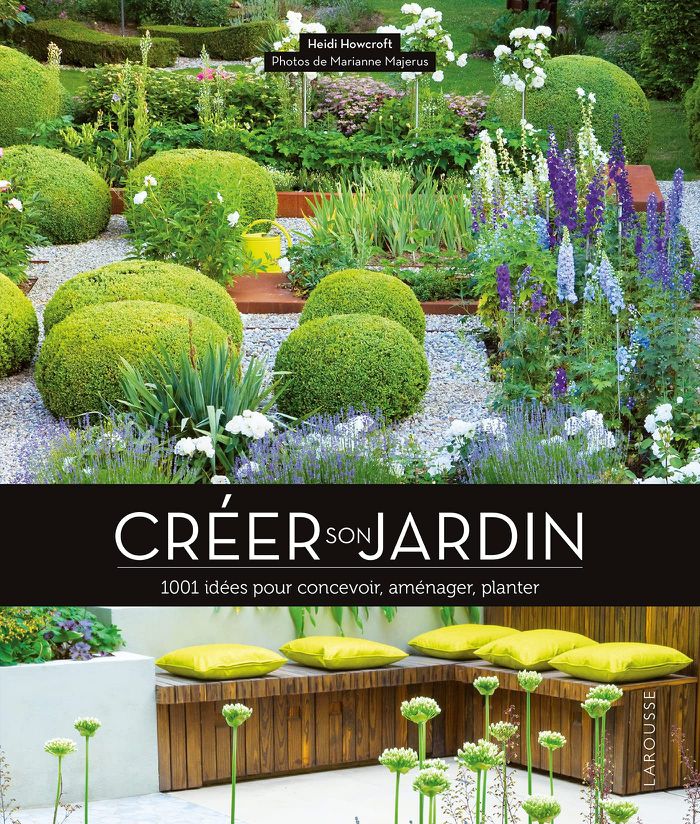
Selon l'endroit où se trouve votre jardin (jardin de campagne très étendu, petit jardin de ville entouré de murs, jardin de bord de mer...) et selon l'architecture de votre maison, vous devrez le concevoir différemment en comptant avec le climat et le sol. Une fois votre plan établi, laissez parler votre imagination ! Structure, style, végétaux, matériaux ou mobilier : ce livre illustré de plus de 600 photographies prises dans des jardins d’exception est une source d'inspiration inépuisable. Vous y découvrirez des centaines d'idées d’aménagement et les études cas vous donneront toutes les clés pour faire de votre jardin un espace de vie et de détente unique.
Créer son jardin
Actions:
Prix:
$49.95
(disponible sur commande)
Résumé:
Selon l'endroit où se trouve votre jardin (jardin de campagne très étendu, petit jardin de ville entouré de murs, jardin de bord de mer...) et selon l'architecture de votre maison, vous devrez le concevoir différemment en comptant avec le climat et le sol. Une fois votre plan établi, laissez parler votre imagination ! Structure, style, végétaux, matériaux ou mobilier : ce livre illustré de plus de 600 photographies prises dans des jardins d’exception est une source d'inspiration inépuisable. Vous y découvrirez des centaines d'idées d’aménagement et les études cas vous donneront toutes les clés pour faire de votre jardin un espace de vie et de détente unique.
Classification:
livres
livres
Publication:
février 2023
février 2023
Sujet:
Jardins
Jardins
Classification:
livres
livres

Actions:
Prix:
$48.95
(disponible sur commande)
Résumé:
« L’Empire de la nature » est une histoire des jardins botaniques établis dans les colonies européennes des Caraïbes, d’Asie et d’Afrique entre la fin du XVIIIe siècle. En tous lieux, ces jardins, enclaves de nature ordonnée, symboles d’une sauvagerie domptée, donnent à voir la maîtrise du monde naturel et sont institués comme des outils de la domination coloniale. Lieux(...)
$48.95
(disponible sur commande)
Résumé:
« L’Empire de la nature » est une histoire des jardins botaniques établis dans les colonies européennes des Caraïbes, d’Asie et d’Afrique entre la fin du XVIIIe siècle. En tous lieux, ces jardins, enclaves de nature ordonnée, symboles d’une sauvagerie domptée, donnent à voir la maîtrise du monde naturel et sont institués comme des outils de la domination coloniale. Lieux(...)
Titre:
L'empire de la nature : Une histoire des jardins botaniques coloniaux
Actions:
Prix:
$48.95
(disponible sur commande)
Résumé:
« L’Empire de la nature » est une histoire des jardins botaniques établis dans les colonies européennes des Caraïbes, d’Asie et d’Afrique entre la fin du XVIIIe siècle. En tous lieux, ces jardins, enclaves de nature ordonnée, symboles d’une sauvagerie domptée, donnent à voir la maîtrise du monde naturel et sont institués comme des outils de la domination coloniale. Lieux de savoir botanique, pépinières de vente de plantes pour la colonie, espaces de contact pour les sociétés coloniales, les jardins botaniques sont envisagés dans leur dimension savante globale, leur fonction politique et leurs usages économiques. Aux mises en réseau entre les institutions métropolitaines et les jardins coloniaux répond une microhistoire de sites dont les destinées varient en fonction des empires et des territoires.
L'empire de la nature : Une histoire des jardins botaniques coloniaux
Actions:
Prix:
$48.95
(disponible sur commande)
Résumé:
« L’Empire de la nature » est une histoire des jardins botaniques établis dans les colonies européennes des Caraïbes, d’Asie et d’Afrique entre la fin du XVIIIe siècle. En tous lieux, ces jardins, enclaves de nature ordonnée, symboles d’une sauvagerie domptée, donnent à voir la maîtrise du monde naturel et sont institués comme des outils de la domination coloniale. Lieux de savoir botanique, pépinières de vente de plantes pour la colonie, espaces de contact pour les sociétés coloniales, les jardins botaniques sont envisagés dans leur dimension savante globale, leur fonction politique et leurs usages économiques. Aux mises en réseau entre les institutions métropolitaines et les jardins coloniaux répond une microhistoire de sites dont les destinées varient en fonction des empires et des territoires.
Classification:
livres
livres
Publication:
avril 2023
avril 2023
Sujet:
Jardins
Jardins
Classification:
livres
livres

Titre:
Jardinier tout naturellement
Jardinier tout naturellement
Actions:
Prix:
$29.95
(disponible sur commande)
Résumé:
Rédigé de façon claire et accessible par deux horticultrices, ce guide offre une foule d'informations et de conseils pratiques sur les plantes d'intérieur et d'extérieur. Mais plus encore : ce livre est une véritable initiation au jardinage écologique reposant sur des actions durables, le rejet d'intrants chimiques et le respect de la biodiversité. On y trouve notamment(...)
$29.95
(disponible sur commande)
Résumé:
Rédigé de façon claire et accessible par deux horticultrices, ce guide offre une foule d'informations et de conseils pratiques sur les plantes d'intérieur et d'extérieur. Mais plus encore : ce livre est une véritable initiation au jardinage écologique reposant sur des actions durables, le rejet d'intrants chimiques et le respect de la biodiversité. On y trouve notamment(...)
Titre:
Jardinier tout naturellement
Actions:
Prix:
$29.95
(disponible sur commande)
Résumé:
Rédigé de façon claire et accessible par deux horticultrices, ce guide offre une foule d'informations et de conseils pratiques sur les plantes d'intérieur et d'extérieur. Mais plus encore : ce livre est une véritable initiation au jardinage écologique reposant sur des actions durables, le rejet d'intrants chimiques et le respect de la biodiversité. On y trouve notamment une liste de fleurs pour les butineurs, des suggestions de plantes locales et indigènes, des trucs pour démarrer son propre compost, des astuces pour cultiver de façon responsable, des techniques de rempotage et une cinquantaine de fiches botaniques. Un guide pratique qui intéressera toute personne souhaitant ajouter des fleurs, des comestibles et de la verdure à son quotidien, peu importe la taille de son balcon ou l'étendue de son jardin.
Jardinier tout naturellement
Actions:
Prix:
$29.95
(disponible sur commande)
Résumé:
Rédigé de façon claire et accessible par deux horticultrices, ce guide offre une foule d'informations et de conseils pratiques sur les plantes d'intérieur et d'extérieur. Mais plus encore : ce livre est une véritable initiation au jardinage écologique reposant sur des actions durables, le rejet d'intrants chimiques et le respect de la biodiversité. On y trouve notamment une liste de fleurs pour les butineurs, des suggestions de plantes locales et indigènes, des trucs pour démarrer son propre compost, des astuces pour cultiver de façon responsable, des techniques de rempotage et une cinquantaine de fiches botaniques. Un guide pratique qui intéressera toute personne souhaitant ajouter des fleurs, des comestibles et de la verdure à son quotidien, peu importe la taille de son balcon ou l'étendue de son jardin.
Classification:
livres
livres
Publication:
avril 2023
avril 2023
Sujet:
Jardins
Jardins
Classification:
livres
livres

Actions:
Prix:
$49.95
(disponible sur commande)
Résumé:
Un livre pour toutes vos envies de jardin : potager, havre de paix, refuge pour la faune, espace de convivialité, jardin de passionné, sans entretien, etc. Des explications étape par étape et des astuces d’experts pour toutes les activités du jardin. Des photos, des dessins, des focus et des pas-à-pas pour expliquer les techniques. Un catalogue pour choisir les plantes(...)
$49.95
(disponible sur commande)
Résumé:
Un livre pour toutes vos envies de jardin : potager, havre de paix, refuge pour la faune, espace de convivialité, jardin de passionné, sans entretien, etc. Des explications étape par étape et des astuces d’experts pour toutes les activités du jardin. Des photos, des dessins, des focus et des pas-à-pas pour expliquer les techniques. Un catalogue pour choisir les plantes(...)
Titre:
L'essentiel du jardinier débutant : Le guide indispensable pour apprendre à semer, planter et cultiver votre jardin 100 % bio
Actions:
Prix:
$49.95
(disponible sur commande)
Résumé:
Un livre pour toutes vos envies de jardin : potager, havre de paix, refuge pour la faune, espace de convivialité, jardin de passionné, sans entretien, etc. Des explications étape par étape et des astuces d’experts pour toutes les activités du jardin. Des photos, des dessins, des focus et des pas-à-pas pour expliquer les techniques. Un catalogue pour choisir les plantes en fonction du sol et du style de jardin souhaité.
L'essentiel du jardinier débutant : Le guide indispensable pour apprendre à semer, planter et cultiver votre jardin 100 % bio
Actions:
Prix:
$49.95
(disponible sur commande)
Résumé:
Un livre pour toutes vos envies de jardin : potager, havre de paix, refuge pour la faune, espace de convivialité, jardin de passionné, sans entretien, etc. Des explications étape par étape et des astuces d’experts pour toutes les activités du jardin. Des photos, des dessins, des focus et des pas-à-pas pour expliquer les techniques. Un catalogue pour choisir les plantes en fonction du sol et du style de jardin souhaité.
Classification:
livres
livres
Publication:
mai 2023
mai 2023
Sujet:
Jardins
Jardins
Classification:
livres
livres
Actions:
Prix:
$21.95
(disponible sur commande)
Résumé:
Jardins ouvriers, jardins familiaux, schrebergärten, kleigärten, quatre dénominations désignant le même phénomène : une petite parcelle qu'une association chargée de gérer des terrains appartenant à un particulier, à une municipalité ou à l'État, alloue contre le paiement d'une minime redevance annuelle, à un citoyen méritant ou en détresse. Menacés par l'urbanisation et(...)
$21.95
(disponible sur commande)
Résumé:
Jardins ouvriers, jardins familiaux, schrebergärten, kleigärten, quatre dénominations désignant le même phénomène : une petite parcelle qu'une association chargée de gérer des terrains appartenant à un particulier, à une municipalité ou à l'État, alloue contre le paiement d'une minime redevance annuelle, à un citoyen méritant ou en détresse. Menacés par l'urbanisation et(...)
Titre:
Des jardiniers, hors la ville, dans la cité? / Kleingärtner - grün für alle?
Actions:
Prix:
$21.95
(disponible sur commande)
Résumé:
Jardins ouvriers, jardins familiaux, schrebergärten, kleigärten, quatre dénominations désignant le même phénomène : une petite parcelle qu'une association chargée de gérer des terrains appartenant à un particulier, à une municipalité ou à l'État, alloue contre le paiement d'une minime redevance annuelle, à un citoyen méritant ou en détresse. Menacés par l'urbanisation et par l'élévation du niveau de vie, ces jardins ont-ils encore une raison d'être? Apporteraient-ils un fragment de réponse en ouvrant ces lieux de convivialité, ainsi qu'un autre type de solution en proposant le "vert utile"?
Des jardiniers, hors la ville, dans la cité? / Kleingärtner - grün für alle?
Actions:
Prix:
$21.95
(disponible sur commande)
Résumé:
Jardins ouvriers, jardins familiaux, schrebergärten, kleigärten, quatre dénominations désignant le même phénomène : une petite parcelle qu'une association chargée de gérer des terrains appartenant à un particulier, à une municipalité ou à l'État, alloue contre le paiement d'une minime redevance annuelle, à un citoyen méritant ou en détresse. Menacés par l'urbanisation et par l'élévation du niveau de vie, ces jardins ont-ils encore une raison d'être? Apporteraient-ils un fragment de réponse en ouvrant ces lieux de convivialité, ainsi qu'un autre type de solution en proposant le "vert utile"?
Classification:
livres
livres
Publication:
janvier 1900, Paris
janvier 1900, Paris
Sujet:
Jardins
Jardins
Classification:
livres
livres
Titre:
Jardins de la Méditerranée
Jardins de la Méditerranée
Actions:
Prix:
$85.00
(disponible sur commande)
Résumé:
C'est en Italie, à la Renaissance, que se fixent les premières images du jardin européen : compositions géométriques, arbres taillés, parterres de fleurs, intégration au paysage. Cet héritage de Rome, sublimé par des dizaines de réalisations dans toutes les principautés d'Italie, donnera naissance aux jardins classiques de Provence, d'Espagne, de Grèce ou de Turquie. La(...)
$85.00
(disponible sur commande)
Résumé:
C'est en Italie, à la Renaissance, que se fixent les premières images du jardin européen : compositions géométriques, arbres taillés, parterres de fleurs, intégration au paysage. Cet héritage de Rome, sublimé par des dizaines de réalisations dans toutes les principautés d'Italie, donnera naissance aux jardins classiques de Provence, d'Espagne, de Grèce ou de Turquie. La(...)
Titre:
Jardins de la Méditerranée
Actions:
Prix:
$85.00
(disponible sur commande)
Résumé:
C'est en Italie, à la Renaissance, que se fixent les premières images du jardin européen : compositions géométriques, arbres taillés, parterres de fleurs, intégration au paysage. Cet héritage de Rome, sublimé par des dizaines de réalisations dans toutes les principautés d'Italie, donnera naissance aux jardins classiques de Provence, d'Espagne, de Grèce ou de Turquie. La colonisation entraîne la naissance de jardins de plantes acclimatées qui envahissnet rapidement la Côte d'Azur puis les rivieras italienne et espagnole. Le paysage en est radicalement bouleversé. L'époque contemporaine ne fait que prolonger ce mouvement de mélange, d'échanges d'idées et de formes, de métissage. Grenade, Florence, Rome, Nice, Tel-Aviv, Aix-en-Provence, Marrakech, Palerme, Tunis, Cordoue, Lisbonne, Monte-Carlo sont quelques-unes des étapes de cette aventure des jardins de la Méditerranée.
Jardins de la Méditerranée
Actions:
Prix:
$85.00
(disponible sur commande)
Résumé:
C'est en Italie, à la Renaissance, que se fixent les premières images du jardin européen : compositions géométriques, arbres taillés, parterres de fleurs, intégration au paysage. Cet héritage de Rome, sublimé par des dizaines de réalisations dans toutes les principautés d'Italie, donnera naissance aux jardins classiques de Provence, d'Espagne, de Grèce ou de Turquie. La colonisation entraîne la naissance de jardins de plantes acclimatées qui envahissnet rapidement la Côte d'Azur puis les rivieras italienne et espagnole. Le paysage en est radicalement bouleversé. L'époque contemporaine ne fait que prolonger ce mouvement de mélange, d'échanges d'idées et de formes, de métissage. Grenade, Florence, Rome, Nice, Tel-Aviv, Aix-en-Provence, Marrakech, Palerme, Tunis, Cordoue, Lisbonne, Monte-Carlo sont quelques-unes des étapes de cette aventure des jardins de la Méditerranée.
Classification:
livres
livres
Publication:
avril 2002, Ivry-sur-Seine
avril 2002, Ivry-sur-Seine
Sujet:
Jardins
Jardins


