


9193 Résultats
Classification:
livres
livres
Actions:
Prix:
$19.50
(disponible sur commande)
Résumé:
The virtues of being open to new and transformative experiences are rhapsodized but not really illuminated in this discursive and somewhat gauzy set of linked essays. Cultural historian Solnit, an NBCC award winner for River of Shadows: Eadweard Muybridge and the Technological Wild West, allows the subject of getting lost to lead her where it will, from early American(...)
$19.50
(disponible sur commande)
Résumé:
The virtues of being open to new and transformative experiences are rhapsodized but not really illuminated in this discursive and somewhat gauzy set of linked essays. Cultural historian Solnit, an NBCC award winner for River of Shadows: Eadweard Muybridge and the Technological Wild West, allows the subject of getting lost to lead her where it will, from early American(...)
Sujet:
Théorie de l’architecture
Théorie de l’architecture
Publication:
janvier 1900, New York, Toronto
janvier 1900, New York, Toronto
Titre:
A field guide to getting lost
Actions:
Prix:
$19.50
(disponible sur commande)
Résumé:
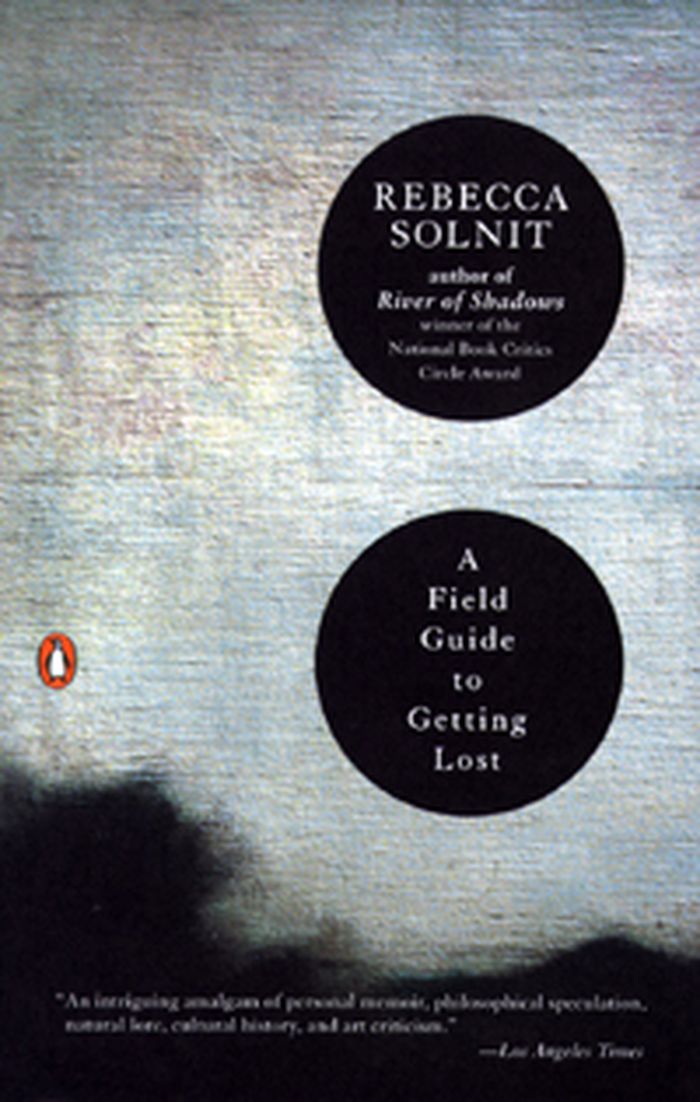
The virtues of being open to new and transformative experiences are rhapsodized but not really illuminated in this discursive and somewhat gauzy set of linked essays. Cultural historian Solnit, an NBCC award winner for River of Shadows: Eadweard Muybridge and the Technological Wild West, allows the subject of getting lost to lead her where it will, from early American captivity narratives to the avant-garde artist Yves Klein. She interlaces personal and familial histories of disorientation and reinvention, writing of her Russian Jewish forebears' arrival in the New World, her experiences driving around the American west and listening to country music, and her youthful immersion in the punk rock demimonde. Unfortunately, the conceit of embracing the unknown is not enough to impart thematic unity to these essays; one piece ties together the author's love affair with a reclusive man, desert fauna, Hitchcock's Vertigo and the blind seer Tiresias in ways that will indeed leave readers feeling lost. Solnit's writing is as abstract and intangible as her subject, veering between oceanic lyricism ("Blue is the color of longing for the distance you never arrive in") and pensées about the limitations of human understanding ("Between words is silence, around ink whiteness, behind every map's information is what's left out, the unmapped and unmappable") that seem profound but are actually banal once you think about them.
A field guide to getting lost
Actions:
Prix:
$19.50
(disponible sur commande)
Résumé:
The virtues of being open to new and transformative experiences are rhapsodized but not really illuminated in this discursive and somewhat gauzy set of linked essays. Cultural historian Solnit, an NBCC award winner for River of Shadows: Eadweard Muybridge and the Technological Wild West, allows the subject of getting lost to lead her where it will, from early American captivity narratives to the avant-garde artist Yves Klein. She interlaces personal and familial histories of disorientation and reinvention, writing of her Russian Jewish forebears' arrival in the New World, her experiences driving around the American west and listening to country music, and her youthful immersion in the punk rock demimonde. Unfortunately, the conceit of embracing the unknown is not enough to impart thematic unity to these essays; one piece ties together the author's love affair with a reclusive man, desert fauna, Hitchcock's Vertigo and the blind seer Tiresias in ways that will indeed leave readers feeling lost. Solnit's writing is as abstract and intangible as her subject, veering between oceanic lyricism ("Blue is the color of longing for the distance you never arrive in") and pensées about the limitations of human understanding ("Between words is silence, around ink whiteness, behind every map's information is what's left out, the unmapped and unmappable") that seem profound but are actually banal once you think about them.
Classification:
livres
livres
Publication:
janvier 1900, New York, Toronto
janvier 1900, New York, Toronto
Sujet:
Théorie de l’architecture
Théorie de l’architecture
Classification:
livres
livres
Prix:
$64.99
(disponible sur commande)
Résumé:
This publication combines traditional natural materials and modern construction methods. From adobe to straw bales, traditional building materials are being adapted to meet code-required standards for health and safety in contemporary buildings around the world. Not only are they cost effective and environmentally friendly, but, when used correctly, these natural(...)
$64.99
(disponible sur commande)
Résumé:
This publication combines traditional natural materials and modern construction methods. From adobe to straw bales, traditional building materials are being adapted to meet code-required standards for health and safety in contemporary buildings around the world. Not only are they cost effective and environmentally friendly, but, when used correctly, these natural(...)
Sujet:
Architecture écologique
Architecture écologique
Publication:
avril 2005, Chichester
avril 2005, Chichester
Titre:
Alternative construction : contemporary natural building methods
Actions:
Prix:
$64.99
(disponible sur commande)
Résumé:
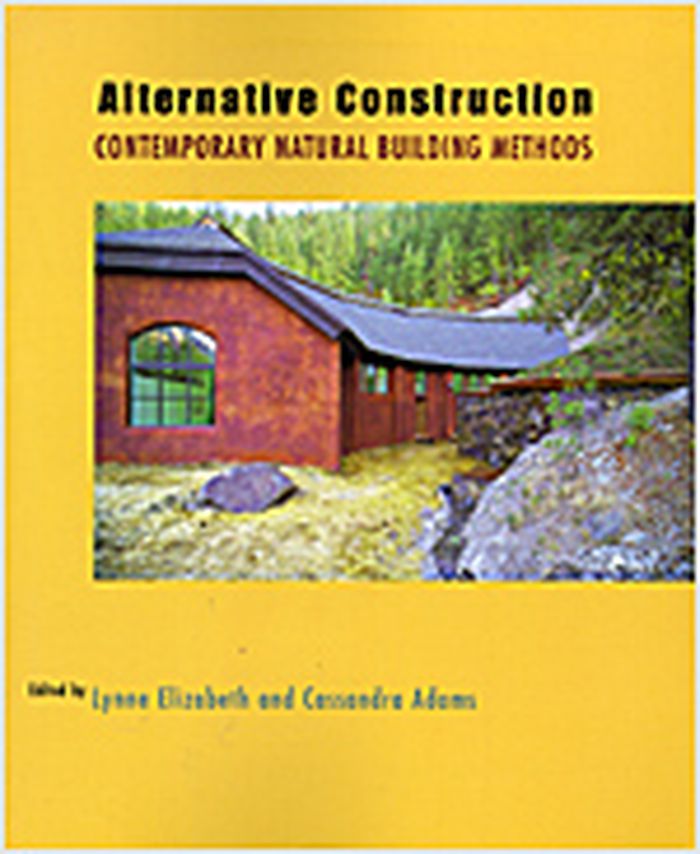
This publication combines traditional natural materials and modern construction methods. From adobe to straw bales, traditional building materials are being adapted to meet code-required standards for health and safety in contemporary buildings around the world. Not only are they cost effective and environmentally friendly, but, when used correctly, these natural alternatives match the strength and durability of many mainstream construction materials. This book examines a broad range of traditional and modern natural construction methods, including straw-bale, light-clay, cob, adobe, rammed earth and pisé, earthbag, earth-sheltered, bamboo, and hybrid systems. It also covers key ecological design principles, as well as current engineering and building code requirements. Experts on each building system have contributed core chapters that explore the history, development, climatic appropriateness, environmental benefits, performance characteristics, construction techniques, and structural design principles for each method. More than 200 visuals depict both construction processes and completed structures. An extensive resource guide shows where to go for further information, training, and research. In an increasingly resource-conscious era, alternative construction is truly an idea whose time has come. Whether you're an architect, designer, student, or homeowner, this book will help you to combine indigenous building materials with modern construction systems and design standards to create low-impact, high-quality buildings that meet the highest levels of comfort, health, and safety.
Alternative construction : contemporary natural building methods
Actions:
Prix:
$64.99
(disponible sur commande)
Résumé:
This publication combines traditional natural materials and modern construction methods. From adobe to straw bales, traditional building materials are being adapted to meet code-required standards for health and safety in contemporary buildings around the world. Not only are they cost effective and environmentally friendly, but, when used correctly, these natural alternatives match the strength and durability of many mainstream construction materials. This book examines a broad range of traditional and modern natural construction methods, including straw-bale, light-clay, cob, adobe, rammed earth and pisé, earthbag, earth-sheltered, bamboo, and hybrid systems. It also covers key ecological design principles, as well as current engineering and building code requirements. Experts on each building system have contributed core chapters that explore the history, development, climatic appropriateness, environmental benefits, performance characteristics, construction techniques, and structural design principles for each method. More than 200 visuals depict both construction processes and completed structures. An extensive resource guide shows where to go for further information, training, and research. In an increasingly resource-conscious era, alternative construction is truly an idea whose time has come. Whether you're an architect, designer, student, or homeowner, this book will help you to combine indigenous building materials with modern construction systems and design standards to create low-impact, high-quality buildings that meet the highest levels of comfort, health, and safety.
Classification:
livres
livres
Publication:
avril 2005, Chichester
avril 2005, Chichester
Sujet:
Architecture écologique
Architecture écologique
Classification:
livres
livres
Actions:
Prix:
$75.00
(disponible sur commande)
Résumé:
The grand exhibitions of the Victorian and Edwardian eras are the lens through which Peter Hoffenberg examines the economic, cultural, and social forces that helped define Britain and the British Empire. He focuses on major exhibitions in England, Australia, and India between the Great Exhibition of 1851 and the Festival of Empire sixty years later, taking special(...)
$75.00
(disponible sur commande)
Résumé:
The grand exhibitions of the Victorian and Edwardian eras are the lens through which Peter Hoffenberg examines the economic, cultural, and social forces that helped define Britain and the British Empire. He focuses on major exhibitions in England, Australia, and India between the Great Exhibition of 1851 and the Festival of Empire sixty years later, taking special(...)
Publication:
janvier 1900, Berkeley
janvier 1900, Berkeley
Titre:
An empire on display : English, Indian, and Australian exhibitions from the Crystal Palace to the Great War
Actions:
Prix:
$75.00
(disponible sur commande)
Résumé:
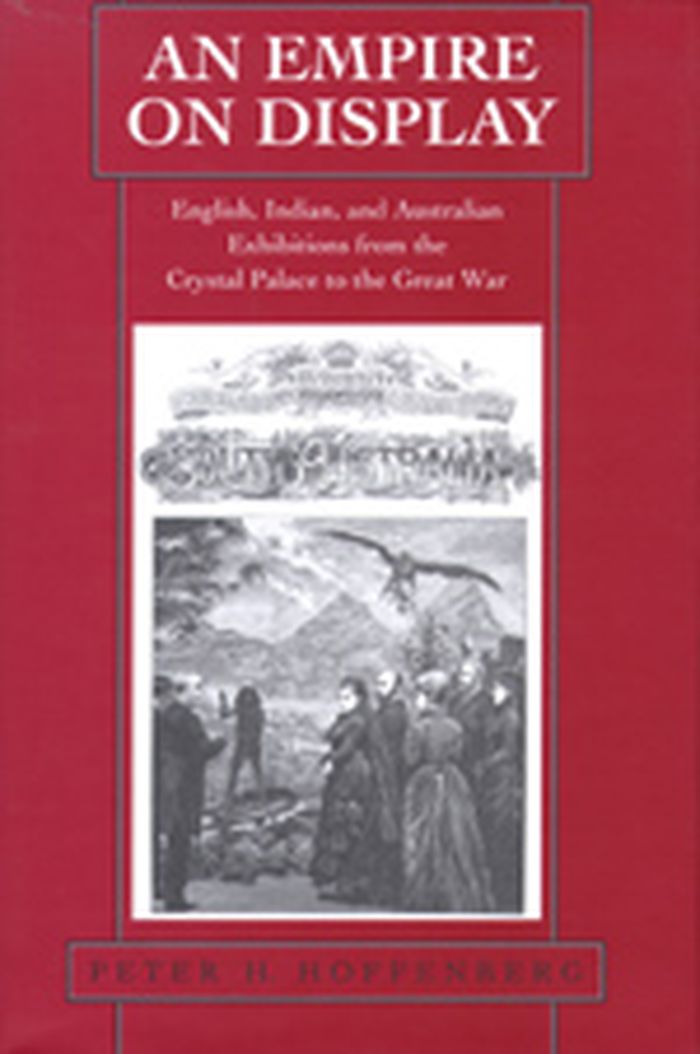
The grand exhibitions of the Victorian and Edwardian eras are the lens through which Peter Hoffenberg examines the economic, cultural, and social forces that helped define Britain and the British Empire. He focuses on major exhibitions in England, Australia, and India between the Great Exhibition of 1851 and the Festival of Empire sixty years later, taking special interest in the interactive nature of the exhibition experience, the long-term consequences for the participants and host societies, and the ways in which such popular gatherings revealed dissent as well as celebration. Hoffenberg shows how exhibitions shaped culture and society within and across borders in the transnational working of the British Empire. The exhibitions were central to establishing and developing a participatory imperial world, and each polity in that world provided distinctive information, visitors, and exhibits. Among the displays were commercial goods, working machines, and ethnographic scenes. Exhibits were intended to promote external commonwealth and internal nationalism. The imperial overlay did not erase significant differences but explained and used them in economic and cultural terms. The exhibitions in cities such as London, Sydney, and Calcutta were living and active public inventories of the Empire and its national political communities. The process of building and consuming such inventories persists today in the cultural bureaucracies, museums, and festivals of modern nation-states, the appeal to tradition and social order, and the actions of transnational bodies.
An empire on display : English, Indian, and Australian exhibitions from the Crystal Palace to the Great War
Actions:
Prix:
$75.00
(disponible sur commande)
Résumé:
The grand exhibitions of the Victorian and Edwardian eras are the lens through which Peter Hoffenberg examines the economic, cultural, and social forces that helped define Britain and the British Empire. He focuses on major exhibitions in England, Australia, and India between the Great Exhibition of 1851 and the Festival of Empire sixty years later, taking special interest in the interactive nature of the exhibition experience, the long-term consequences for the participants and host societies, and the ways in which such popular gatherings revealed dissent as well as celebration. Hoffenberg shows how exhibitions shaped culture and society within and across borders in the transnational working of the British Empire. The exhibitions were central to establishing and developing a participatory imperial world, and each polity in that world provided distinctive information, visitors, and exhibits. Among the displays were commercial goods, working machines, and ethnographic scenes. Exhibits were intended to promote external commonwealth and internal nationalism. The imperial overlay did not erase significant differences but explained and used them in economic and cultural terms. The exhibitions in cities such as London, Sydney, and Calcutta were living and active public inventories of the Empire and its national political communities. The process of building and consuming such inventories persists today in the cultural bureaucracies, museums, and festivals of modern nation-states, the appeal to tradition and social order, and the actions of transnational bodies.
Classification:
livres
livres
Publication:
janvier 1900, Berkeley
janvier 1900, Berkeley
Classification:
livres
livres
Actions:
Prix:
$58.50
(disponible en magasin)
Résumé:
Over 60 years on from its inception, the celebrated Fun Palace civic project – developed in the 1960s by the radical theatre director Joan Littlewood and the architect Cedric Price – continues to capture the architectural imagination. Despite the building itself never being realized, much of the previous analysis of the Fun Palace has been devoted to Price and his(...)
$58.50
(disponible en magasin)
Résumé:
Over 60 years on from its inception, the celebrated Fun Palace civic project – developed in the 1960s by the radical theatre director Joan Littlewood and the architect Cedric Price – continues to capture the architectural imagination. Despite the building itself never being realized, much of the previous analysis of the Fun Palace has been devoted to Price and his(...)
Titre:
Architecture, media, archives: The fun palace of Joan Littlewood and Cedric Price as a cultural project
Actions:
Prix:
$58.50
(disponible en magasin)
Résumé:
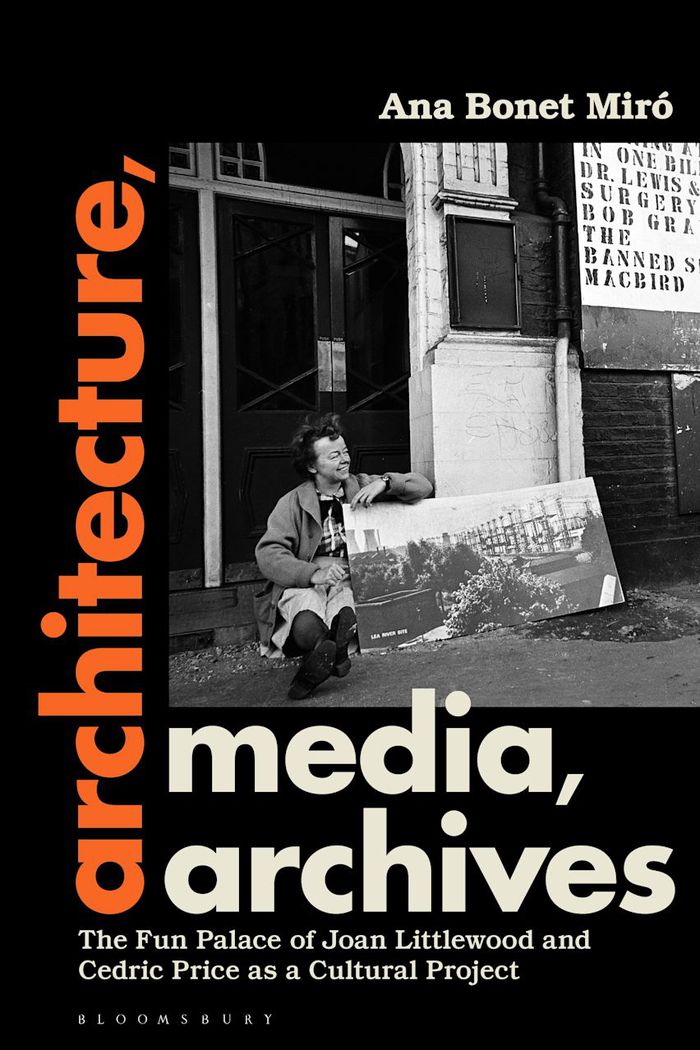
Over 60 years on from its inception, the celebrated Fun Palace civic project – developed in the 1960s by the radical theatre director Joan Littlewood and the architect Cedric Price – continues to capture the architectural imagination. Despite the building itself never being realized, much of the previous analysis of the Fun Palace has been devoted to Price and his drawings. The critical role that Littlewood played, however, remains largely unrecognized by architectural scholarship, and a whole area of the project's cultural agenda remains overlooked. ''Architecture, Media, Archives'' is the first serious study of the complex relations between Littlewood and Price, reframing the Fun Palace as an extended media project and positioning Littlewood more clearly as co-designer. Drawing on extensive archival material, the book considers how, due to a lack of institutional support, the aims of the Fun Palace – to transform the passive mass-audiences of post-war consumer society into active citizens, through forms of self-directed, pleasure-led and open exchange – were realized through different 'sites of information' throughout the 1960s. From broadsheets, pamphlets and journals to films and press news, the book addresses the conditions of production, circulation, storage and reception of these 'sites' and reveals how they not only recorded the transformation of the project, but also fundamentally enhanced and informed its meaning in specific ways.
Architecture, media, archives: The fun palace of Joan Littlewood and Cedric Price as a cultural project
Actions:
Prix:
$58.50
(disponible en magasin)
Résumé:
Over 60 years on from its inception, the celebrated Fun Palace civic project – developed in the 1960s by the radical theatre director Joan Littlewood and the architect Cedric Price – continues to capture the architectural imagination. Despite the building itself never being realized, much of the previous analysis of the Fun Palace has been devoted to Price and his drawings. The critical role that Littlewood played, however, remains largely unrecognized by architectural scholarship, and a whole area of the project's cultural agenda remains overlooked. ''Architecture, Media, Archives'' is the first serious study of the complex relations between Littlewood and Price, reframing the Fun Palace as an extended media project and positioning Littlewood more clearly as co-designer. Drawing on extensive archival material, the book considers how, due to a lack of institutional support, the aims of the Fun Palace – to transform the passive mass-audiences of post-war consumer society into active citizens, through forms of self-directed, pleasure-led and open exchange – were realized through different 'sites of information' throughout the 1960s. From broadsheets, pamphlets and journals to films and press news, the book addresses the conditions of production, circulation, storage and reception of these 'sites' and reveals how they not only recorded the transformation of the project, but also fundamentally enhanced and informed its meaning in specific ways.
Classification:
livres
livres
Publication:
avril 2026
avril 2026
Sujet:
Théorie de l’architecture
Théorie de l’architecture
Classification:
livres
livres
Actions:
Prix:
$24.95
(disponible sur commande)
Résumé:
" Unboxed : engagements in social space " is a collection of critical essays about and by artists who work across the borders of art, architecture and performance. This collection is loosely based upon the lecture series that Gallery 101 and the Carleton University School of Architecture co-hosted throughout the fall and winter of 2002-2003. The goal of that series(...)
$24.95
(disponible sur commande)
Résumé:
" Unboxed : engagements in social space " is a collection of critical essays about and by artists who work across the borders of art, architecture and performance. This collection is loosely based upon the lecture series that Gallery 101 and the Carleton University School of Architecture co-hosted throughout the fall and winter of 2002-2003. The goal of that series(...)
Titre:
Unboxed : engagements in social space
Actions:
Prix:
$24.95
(disponible sur commande)
Résumé:
" Unboxed : engagements in social space " is a collection of critical essays about and by artists who work across the borders of art, architecture and performance. This collection is loosely based upon the lecture series that Gallery 101 and the Carleton University School of Architecture co-hosted throughout the fall and winter of 2002-2003. The goal of that series (entitled "unboxed : dialogues on art & architecture") was, in part, to engage both architecture students and practicing visual artists with this vital yet under-explored arena of interstitial practices. The anthology, which is an attempt to further broaden the audience for this work and thereby increase the number of potential participants, includes transcriptions of lectures by international artists : Vito Acconci, Lucy Orta, Jan-Erik Andersson and Marko Peljhan, as well as commissioned essays by Canadian artists: Ana Rewakowicz, Eduardo Aquino, Marie-Paule Macdonald, Jean-François Prost, Luc Lévesque, Steve Topping, and Adrian Blackwell. Each text adds a mode of thinking about notions of space; directing us to consider the local and social connections between individuals and environments and, in their variety, they mirror the various ways we move in and around communities, rural and urban. Together, forming a challenging, engaging and accessible anthology that enlightens our way of seeing and our sense of being. It provides rare and exceptional information on interdisciplinary practices for students in art and architecture departments everywhere.
Unboxed : engagements in social space
Actions:
Prix:
$24.95
(disponible sur commande)
Résumé:
" Unboxed : engagements in social space " is a collection of critical essays about and by artists who work across the borders of art, architecture and performance. This collection is loosely based upon the lecture series that Gallery 101 and the Carleton University School of Architecture co-hosted throughout the fall and winter of 2002-2003. The goal of that series (entitled "unboxed : dialogues on art & architecture") was, in part, to engage both architecture students and practicing visual artists with this vital yet under-explored arena of interstitial practices. The anthology, which is an attempt to further broaden the audience for this work and thereby increase the number of potential participants, includes transcriptions of lectures by international artists : Vito Acconci, Lucy Orta, Jan-Erik Andersson and Marko Peljhan, as well as commissioned essays by Canadian artists: Ana Rewakowicz, Eduardo Aquino, Marie-Paule Macdonald, Jean-François Prost, Luc Lévesque, Steve Topping, and Adrian Blackwell. Each text adds a mode of thinking about notions of space; directing us to consider the local and social connections between individuals and environments and, in their variety, they mirror the various ways we move in and around communities, rural and urban. Together, forming a challenging, engaging and accessible anthology that enlightens our way of seeing and our sense of being. It provides rare and exceptional information on interdisciplinary practices for students in art and architecture departments everywhere.
Classification:
livres
livres
Publication:
janvier 1900, Ottawa
janvier 1900, Ottawa
Sujet:
Théorie de l’urbanisme
Théorie de l’urbanisme
Classification:
livres
livres
Titre:
Mythologies
Mythologies
Actions:
Prix:
$17.00
(disponible sur commande)
Résumé:
"No denunciation without its proper instrument of close analysis," Roland Barthes wrote in his preface to Mythologies. There is no more proper instrument of analysis of our contemporary myths than this book—one of the most significant works in French theory, and one that has transformed the way readers and philosophers view the world around them. Our age is a triumph(...)
$17.00
(disponible sur commande)
Résumé:
"No denunciation without its proper instrument of close analysis," Roland Barthes wrote in his preface to Mythologies. There is no more proper instrument of analysis of our contemporary myths than this book—one of the most significant works in French theory, and one that has transformed the way readers and philosophers view the world around them. Our age is a triumph(...)
Sujet:
Théorie/ philosophie
Théorie/ philosophie
Publication:
novembre 2013
novembre 2013
Titre:
Mythologies
Actions:
Prix:
$17.00
(disponible sur commande)
Résumé:
"No denunciation without its proper instrument of close analysis," Roland Barthes wrote in his preface to Mythologies. There is no more proper instrument of analysis of our contemporary myths than this book—one of the most significant works in French theory, and one that has transformed the way readers and philosophers view the world around them. Our age is a triumph of codification. We own devices that bring the world to the command of our fingertips. We have access to boundless information and prodigious quantities of stuff. We decide to like or not, to believe or not, to buy or not. We pick and choose. We think we are free. Yet all around us, in pop culture, politics, mainstream media, and advertising, there are codes and symbols that govern our choices. They are the fabrications of consumer society. They express myths of success, well-being, or happiness. As Barthes sees it, these myths must be carefully deciphered, and debunked. What Barthes discerned in mass media, the fashion of plastic, and the politics of postcolonial France applies with equal force to today's social networks, the iPhone, and the images of 9/11. This new edition of Mythologies, complete and beautifully rendered by the Pulitzer Prize–winning poet, critic, and translator Richard Howard, is a consecration of Barthes's classic—a lesson in clairvoyance that is more relevant now than ever.
Mythologies
Actions:
Prix:
$17.00
(disponible sur commande)
Résumé:
"No denunciation without its proper instrument of close analysis," Roland Barthes wrote in his preface to Mythologies. There is no more proper instrument of analysis of our contemporary myths than this book—one of the most significant works in French theory, and one that has transformed the way readers and philosophers view the world around them. Our age is a triumph of codification. We own devices that bring the world to the command of our fingertips. We have access to boundless information and prodigious quantities of stuff. We decide to like or not, to believe or not, to buy or not. We pick and choose. We think we are free. Yet all around us, in pop culture, politics, mainstream media, and advertising, there are codes and symbols that govern our choices. They are the fabrications of consumer society. They express myths of success, well-being, or happiness. As Barthes sees it, these myths must be carefully deciphered, and debunked. What Barthes discerned in mass media, the fashion of plastic, and the politics of postcolonial France applies with equal force to today's social networks, the iPhone, and the images of 9/11. This new edition of Mythologies, complete and beautifully rendered by the Pulitzer Prize–winning poet, critic, and translator Richard Howard, is a consecration of Barthes's classic—a lesson in clairvoyance that is more relevant now than ever.
Classification:
livres
livres
Publication:
novembre 2013
novembre 2013
Sujet:
Théorie/ philosophie
Théorie/ philosophie
Classification:
livres
livres
Actions:
Prix:
$64.95
(disponible sur commande)
Résumé:
Cet ouvrage questionne une histoire récente du design où la notion d’ornement se donne au cœur de nouvelles logiques de conception et de production. Avec l’avènement du numérique et la redéfinition du rôle de l’ornement, la forme ornementale se donne à présent dans une dimension calculée de morphogenèse : sa dynamique s’ancre dans les processus de croissance de la nature.(...)
$64.95
(disponible sur commande)
Résumé:
Cet ouvrage questionne une histoire récente du design où la notion d’ornement se donne au cœur de nouvelles logiques de conception et de production. Avec l’avènement du numérique et la redéfinition du rôle de l’ornement, la forme ornementale se donne à présent dans une dimension calculée de morphogenèse : sa dynamique s’ancre dans les processus de croissance de la nature.(...)
Titre:
Design et merveilleux : de la nature de l'ornement / Design and the wondrous: on the nature of ornament
Actions:
Prix:
$64.95
(disponible sur commande)
Résumé:
Cet ouvrage questionne une histoire récente du design où la notion d’ornement se donne au cœur de nouvelles logiques de conception et de production. Avec l’avènement du numérique et la redéfinition du rôle de l’ornement, la forme ornementale se donne à présent dans une dimension calculée de morphogenèse : sa dynamique s’ancre dans les processus de croissance de la nature. Dans toutes ces réalisations, la dimension générative de la nature a conféré à l’ornement un rôle structurel nouveau. S'appuyant sur une sélection d'œuvres de plus de cinquante artistes, , quatre essais (Marie-Ange Brayer, Spyros Papapetros, Martine Dancer-Mourès et Sophie Fétro), nous donnent à lire et comprendre, l'évolution du design et de l'ornement, à l'ère du numérique. / This volume presents a new narrative of design, situated somewhere between plant life and ornament, nature and artifice. Through essays by several authors it explores the ornament’s role with respect to morphogenesis, by which the object is continually transformed through an evolving dynamic of forms. With the arrival of the digital age, the ornament’s role in design has been greatly modified. No longer a simple motif, it is used as an animated form. At the intersection of information sciences and biology, designers utilise 3D printing to create carefully calculated objects based on organic growth. With contributions by Spyros Papapetros, Marie-Ange Brayer, and others.
Design et merveilleux : de la nature de l'ornement / Design and the wondrous: on the nature of ornament
Actions:
Prix:
$64.95
(disponible sur commande)
Résumé:
Cet ouvrage questionne une histoire récente du design où la notion d’ornement se donne au cœur de nouvelles logiques de conception et de production. Avec l’avènement du numérique et la redéfinition du rôle de l’ornement, la forme ornementale se donne à présent dans une dimension calculée de morphogenèse : sa dynamique s’ancre dans les processus de croissance de la nature. Dans toutes ces réalisations, la dimension générative de la nature a conféré à l’ornement un rôle structurel nouveau. S'appuyant sur une sélection d'œuvres de plus de cinquante artistes, , quatre essais (Marie-Ange Brayer, Spyros Papapetros, Martine Dancer-Mourès et Sophie Fétro), nous donnent à lire et comprendre, l'évolution du design et de l'ornement, à l'ère du numérique. / This volume presents a new narrative of design, situated somewhere between plant life and ornament, nature and artifice. Through essays by several authors it explores the ornament’s role with respect to morphogenesis, by which the object is continually transformed through an evolving dynamic of forms. With the arrival of the digital age, the ornament’s role in design has been greatly modified. No longer a simple motif, it is used as an animated form. At the intersection of information sciences and biology, designers utilise 3D printing to create carefully calculated objects based on organic growth. With contributions by Spyros Papapetros, Marie-Ange Brayer, and others.
Classification:
livres
livres
Publication:
mai 2019
mai 2019
Sujet:
Théorie du design
Théorie du design
Classification:
livres
livres
Actions:
Prix:
$47.95
(disponible sur commande)
Résumé:
For thousands of years, architects have used models to invent, experiment and communicate. A world in miniature, such models are even more varied in their purposes and materials than their full-scale counterparts. This elegant book explores the fascinating nature of the architectural model through 26 illustrated essays, one for each letter of the alphabet. Unbound by the(...)
$47.95
(disponible sur commande)
Résumé:
For thousands of years, architects have used models to invent, experiment and communicate. A world in miniature, such models are even more varied in their purposes and materials than their full-scale counterparts. This elegant book explores the fascinating nature of the architectural model through 26 illustrated essays, one for each letter of the alphabet. Unbound by the(...)
Titre:
An alphabet of architectural models
Actions:
Prix:
$47.95
(disponible sur commande)
Résumé:
For thousands of years, architects have used models to invent, experiment and communicate. A world in miniature, such models are even more varied in their purposes and materials than their full-scale counterparts. This elegant book explores the fascinating nature of the architectural model through 26 illustrated essays, one for each letter of the alphabet. Unbound by the practicalities of life-size construction, models allow architects the flexibility and freedom to think in three dimensions. Whether made for purely speculative exercises or to solve a specific problem, they are aids to the imagination. Equally, they can be used as detailed representations of particular places, either built or as yet unrealized, in order to convey information to patrons or the public. Models also have a vibrant life outside the architect’s office, including as souvenirs, architectural fragments displayed in museums, and toys for children and adults alike. Written by architects, model-makers, curators, conservators and scholars, the texts in this absorbing ''Alphabet'' explore such fundamental issues as modelling materials and techniques, scale, and the role of the model in the design process. They also go beyond conventional accounts to look at models under the X-ray machine, their use in film, and edible models. The result is a wide-ranging, original account of the multiple lives of the architectural model.
An alphabet of architectural models
Actions:
Prix:
$47.95
(disponible sur commande)
Résumé:
For thousands of years, architects have used models to invent, experiment and communicate. A world in miniature, such models are even more varied in their purposes and materials than their full-scale counterparts. This elegant book explores the fascinating nature of the architectural model through 26 illustrated essays, one for each letter of the alphabet. Unbound by the practicalities of life-size construction, models allow architects the flexibility and freedom to think in three dimensions. Whether made for purely speculative exercises or to solve a specific problem, they are aids to the imagination. Equally, they can be used as detailed representations of particular places, either built or as yet unrealized, in order to convey information to patrons or the public. Models also have a vibrant life outside the architect’s office, including as souvenirs, architectural fragments displayed in museums, and toys for children and adults alike. Written by architects, model-makers, curators, conservators and scholars, the texts in this absorbing ''Alphabet'' explore such fundamental issues as modelling materials and techniques, scale, and the role of the model in the design process. They also go beyond conventional accounts to look at models under the X-ray machine, their use in film, and edible models. The result is a wide-ranging, original account of the multiple lives of the architectural model.
Classification:
livres
livres
Publication:
octobre 2019
octobre 2019
Sujet:
Maquettes
Maquettes
Classification:
livres
livres
Actions:
Prix:
$44.00
(disponible sur commande)
Résumé:
"A mathematician, like a painter or poet, is a maker of patterns," wrote the British mathematician G. H. Hardy. In "Do not erase," photographer Jessica Wynne presents remarkable examples of this idea through images of mathematicians’ chalkboards. While other fields have replaced chalkboards with whiteboards and digital presentations, mathematicians remain loyal to chalk(...)
$44.00
(disponible sur commande)
Résumé:
"A mathematician, like a painter or poet, is a maker of patterns," wrote the British mathematician G. H. Hardy. In "Do not erase," photographer Jessica Wynne presents remarkable examples of this idea through images of mathematicians’ chalkboards. While other fields have replaced chalkboards with whiteboards and digital presentations, mathematicians remain loyal to chalk(...)
Titre:
Do not erase: mathematicians and their chalkboards
Actions:
Prix:
$44.00
(disponible sur commande)
Résumé:
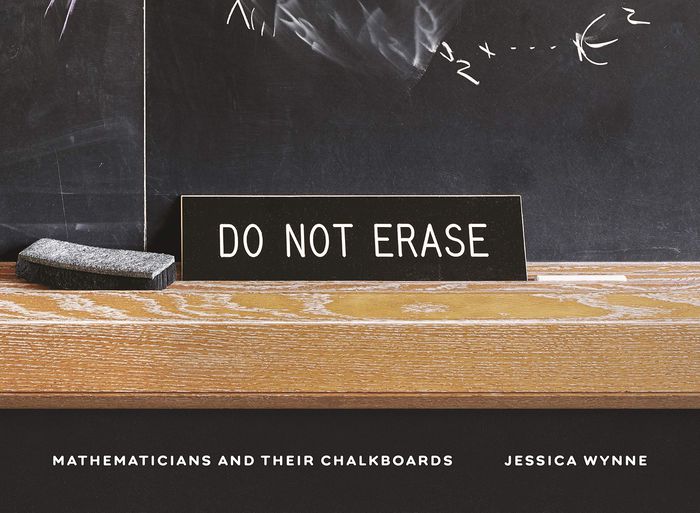
"A mathematician, like a painter or poet, is a maker of patterns," wrote the British mathematician G. H. Hardy. In "Do not erase," photographer Jessica Wynne presents remarkable examples of this idea through images of mathematicians’ chalkboards. While other fields have replaced chalkboards with whiteboards and digital presentations, mathematicians remain loyal to chalk for puzzling out their ideas and communicating their research. Wynne offers more than one hundred photographs of these chalkboards, gathered from a diverse group of mathematicians around the world. The photographs are accompanied by essays from each mathematician, reflecting on their work and processes. Together, pictures and words provide an illuminating meditation on the unique relationships among mathematics, art, and creativity. The mathematicians featured in this collection comprise exciting new voices alongside established figures, including Sun-Yung Alice Chang, Alain Connes, Misha Gromov, Andre Neves, Kasso Okoudjou, Peter Shor, Christina Sormani, Terence Tao, Claire Voisin, and many others. The companion essays give insights into how the chalkboard serves as a special medium for mathematical expression. The volume also includes an introduction by the author, an afterword by New Yorker writer Alec Wilkinson, and biographical information for each contributor. "Do not erase" is a testament to the myriad ways that mathematicians use their chalkboards to reveal the conceptual and visual beauty of their discipline- shapes, figures, formulas, and conjectures created through imagination, argument, and speculation.
Do not erase: mathematicians and their chalkboards
Actions:
Prix:
$44.00
(disponible sur commande)
Résumé:
"A mathematician, like a painter or poet, is a maker of patterns," wrote the British mathematician G. H. Hardy. In "Do not erase," photographer Jessica Wynne presents remarkable examples of this idea through images of mathematicians’ chalkboards. While other fields have replaced chalkboards with whiteboards and digital presentations, mathematicians remain loyal to chalk for puzzling out their ideas and communicating their research. Wynne offers more than one hundred photographs of these chalkboards, gathered from a diverse group of mathematicians around the world. The photographs are accompanied by essays from each mathematician, reflecting on their work and processes. Together, pictures and words provide an illuminating meditation on the unique relationships among mathematics, art, and creativity. The mathematicians featured in this collection comprise exciting new voices alongside established figures, including Sun-Yung Alice Chang, Alain Connes, Misha Gromov, Andre Neves, Kasso Okoudjou, Peter Shor, Christina Sormani, Terence Tao, Claire Voisin, and many others. The companion essays give insights into how the chalkboard serves as a special medium for mathematical expression. The volume also includes an introduction by the author, an afterword by New Yorker writer Alec Wilkinson, and biographical information for each contributor. "Do not erase" is a testament to the myriad ways that mathematicians use their chalkboards to reveal the conceptual and visual beauty of their discipline- shapes, figures, formulas, and conjectures created through imagination, argument, and speculation.
Classification:
livres
livres
Publication:
juin 2021
juin 2021
Sujet:
Monographies photo
Monographies photo
Classification:
livres
livres
Titre:
London: Being in the library
London: Being in the library
Actions:
Prix:
$48.00
(disponible sur commande)
Résumé:
Daniela Keiser ranks among the most renowned contemporary artists in Switzerland. In 2017 she was awarded the Swiss national art prize Prix Meret Oppenheim as well as a studio grant from Landis & Gyr Stiftung that enabled her to embark on an extended stay in London’s East End. There she discovered the Idea Store, the public library on Whitechapel Road built by British(...)
$48.00
(disponible sur commande)
Résumé:
Daniela Keiser ranks among the most renowned contemporary artists in Switzerland. In 2017 she was awarded the Swiss national art prize Prix Meret Oppenheim as well as a studio grant from Landis & Gyr Stiftung that enabled her to embark on an extended stay in London’s East End. There she discovered the Idea Store, the public library on Whitechapel Road built by British(...)
Sujet:
Monographies photo
Monographies photo
Publication:
août 2021
août 2021
Titre:
London: Being in the library
Actions:
Prix:
$48.00
(disponible sur commande)
Résumé:
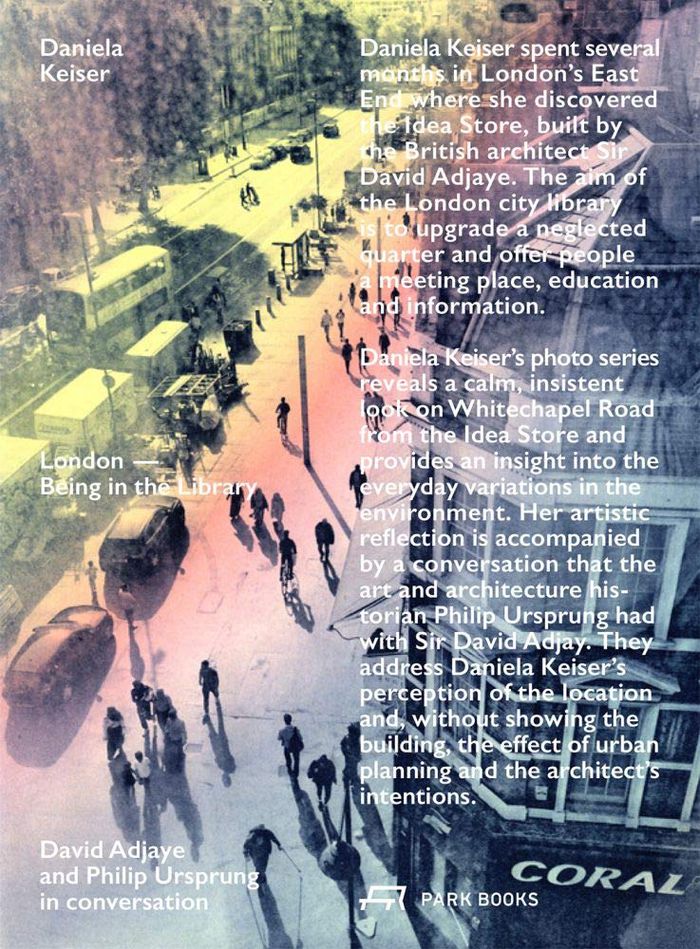
Daniela Keiser ranks among the most renowned contemporary artists in Switzerland. In 2017 she was awarded the Swiss national art prize Prix Meret Oppenheim as well as a studio grant from Landis & Gyr Stiftung that enabled her to embark on an extended stay in London’s East End. There she discovered the Idea Store, the public library on Whitechapel Road built by British architect David Adjaye. Upon its opening to the public, this institution quickly became a meeting place for a broad spectrum of society, including socially disadvantaged people. The goal of the Idea Stores—eight of them have been opened in various London boroughs since 2005— is to enhance formerly neglected neighborhoods and offer a low-threshold source of education and information. From that initial Idea Store on Whitechapel Road, Daniela Keiser began to take pictures of the goings-on in the street outside. Her "Library—Idea Store, 321 Whitechapel Rd, Shadwell, London E1 1BU series" reveals a calm, repetitive, but insistent image of the city and offers insight into the small everyday variations of the surrounding world. This book pairs her photographic reflections with a conversation between David Adjaye and art and architecture historian Philip Ursprung. They talk about Keiser’s perception of the site and—without actually showing the building—the impact of urban design and the architect’s intentions.
London: Being in the library
Actions:
Prix:
$48.00
(disponible sur commande)
Résumé:
Daniela Keiser ranks among the most renowned contemporary artists in Switzerland. In 2017 she was awarded the Swiss national art prize Prix Meret Oppenheim as well as a studio grant from Landis & Gyr Stiftung that enabled her to embark on an extended stay in London’s East End. There she discovered the Idea Store, the public library on Whitechapel Road built by British architect David Adjaye. Upon its opening to the public, this institution quickly became a meeting place for a broad spectrum of society, including socially disadvantaged people. The goal of the Idea Stores—eight of them have been opened in various London boroughs since 2005— is to enhance formerly neglected neighborhoods and offer a low-threshold source of education and information. From that initial Idea Store on Whitechapel Road, Daniela Keiser began to take pictures of the goings-on in the street outside. Her "Library—Idea Store, 321 Whitechapel Rd, Shadwell, London E1 1BU series" reveals a calm, repetitive, but insistent image of the city and offers insight into the small everyday variations of the surrounding world. This book pairs her photographic reflections with a conversation between David Adjaye and art and architecture historian Philip Ursprung. They talk about Keiser’s perception of the site and—without actually showing the building—the impact of urban design and the architect’s intentions.
Classification:
livres
livres
Publication:
août 2021
août 2021
Sujet:
Monographies photo
Monographies photo


