


10595 Résultats
Classification:
livres
livres

Prix:
$38.99
(disponible sur commande)
Résumé:
Robertson’s unconventional history of the origins of the information age posits the filing cabinet as an information storage container, an 'automatic memory' machine that contributed to a new type of information labor privileging manual dexterity over mental deliberation. Gendered assumptions about women’s nimble fingers helped to naturalize the changes that brought(...)
$38.99
(disponible sur commande)
Résumé:
Robertson’s unconventional history of the origins of the information age posits the filing cabinet as an information storage container, an 'automatic memory' machine that contributed to a new type of information labor privileging manual dexterity over mental deliberation. Gendered assumptions about women’s nimble fingers helped to naturalize the changes that brought(...)
Titre:
The filing cabinet: a vertical history of information
Actions:
Prix:
$38.99
(disponible sur commande)
Résumé:
Robertson’s unconventional history of the origins of the information age posits the filing cabinet as an information storage container, an 'automatic memory' machine that contributed to a new type of information labor privileging manual dexterity over mental deliberation. Gendered assumptions about women’s nimble fingers helped to naturalize the changes that brought women into the workforce as low-level clerical workers. The filing cabinet emerges from this unexpected account as a sophisticated piece of information technology and a site of gendered labor that with its folders, files, and tabs continues to shape how we interact with information and data in today’s digital world.
The filing cabinet: a vertical history of information
Actions:
Prix:
$38.99
(disponible sur commande)
Résumé:
Robertson’s unconventional history of the origins of the information age posits the filing cabinet as an information storage container, an 'automatic memory' machine that contributed to a new type of information labor privileging manual dexterity over mental deliberation. Gendered assumptions about women’s nimble fingers helped to naturalize the changes that brought women into the workforce as low-level clerical workers. The filing cabinet emerges from this unexpected account as a sophisticated piece of information technology and a site of gendered labor that with its folders, files, and tabs continues to shape how we interact with information and data in today’s digital world.
Classification:
livres
livres
Publication:
mai 2021
mai 2021
Sujet:
Théorie du design
Théorie du design
Classification:
livres
livres

Actions:
Prix:
$46.95
(disponible sur commande)
Résumé:
In 'The Topography of Wellness', Sara Jensen Carr offers a chronological narrative of how six epidemics transformed the American urban landscape, reflecting changing views of the power of design, pathology of disease, and the epidemiology of the environment. From the infectious diseases of cholera and tuberculosis, to so-called social diseases of idleness and crime, to(...)
$46.95
(disponible sur commande)
Résumé:
In 'The Topography of Wellness', Sara Jensen Carr offers a chronological narrative of how six epidemics transformed the American urban landscape, reflecting changing views of the power of design, pathology of disease, and the epidemiology of the environment. From the infectious diseases of cholera and tuberculosis, to so-called social diseases of idleness and crime, to(...)
Titre:
The topography of wellness: how health and disease shaped the American landscape
Actions:
Prix:
$46.95
(disponible sur commande)
Résumé:
In 'The Topography of Wellness', Sara Jensen Carr offers a chronological narrative of how six epidemics transformed the American urban landscape, reflecting changing views of the power of design, pathology of disease, and the epidemiology of the environment. From the infectious diseases of cholera and tuberculosis, to so-called social diseases of idleness and crime, to the more complicated origins of today’s chronic diseases, each illness and its associated combat strategies has left its mark on our surroundings. While each solution succeeded in eliminating the disease on some level, sweeping environmental changes often came with significant social and physical consequences. Even more unexpectedly, some adaptations inadvertently incubated future epidemics. From the Industrial Revolution to present day, this book illuminates the constant evolution of our relationship to wellness and the environment by documenting the shifting grounds of illness and the urban landscape.
The topography of wellness: how health and disease shaped the American landscape
Actions:
Prix:
$46.95
(disponible sur commande)
Résumé:
In 'The Topography of Wellness', Sara Jensen Carr offers a chronological narrative of how six epidemics transformed the American urban landscape, reflecting changing views of the power of design, pathology of disease, and the epidemiology of the environment. From the infectious diseases of cholera and tuberculosis, to so-called social diseases of idleness and crime, to the more complicated origins of today’s chronic diseases, each illness and its associated combat strategies has left its mark on our surroundings. While each solution succeeded in eliminating the disease on some level, sweeping environmental changes often came with significant social and physical consequences. Even more unexpectedly, some adaptations inadvertently incubated future epidemics. From the Industrial Revolution to present day, this book illuminates the constant evolution of our relationship to wellness and the environment by documenting the shifting grounds of illness and the urban landscape.
Classification:
livres
livres
Publication:
octobre 2021
octobre 2021
Sujet:
Théorie de l’urbanisme
Théorie de l’urbanisme
Classification:
livres
livres
Actions:
Prix:
$42.00
(disponible en magasin)
Résumé:
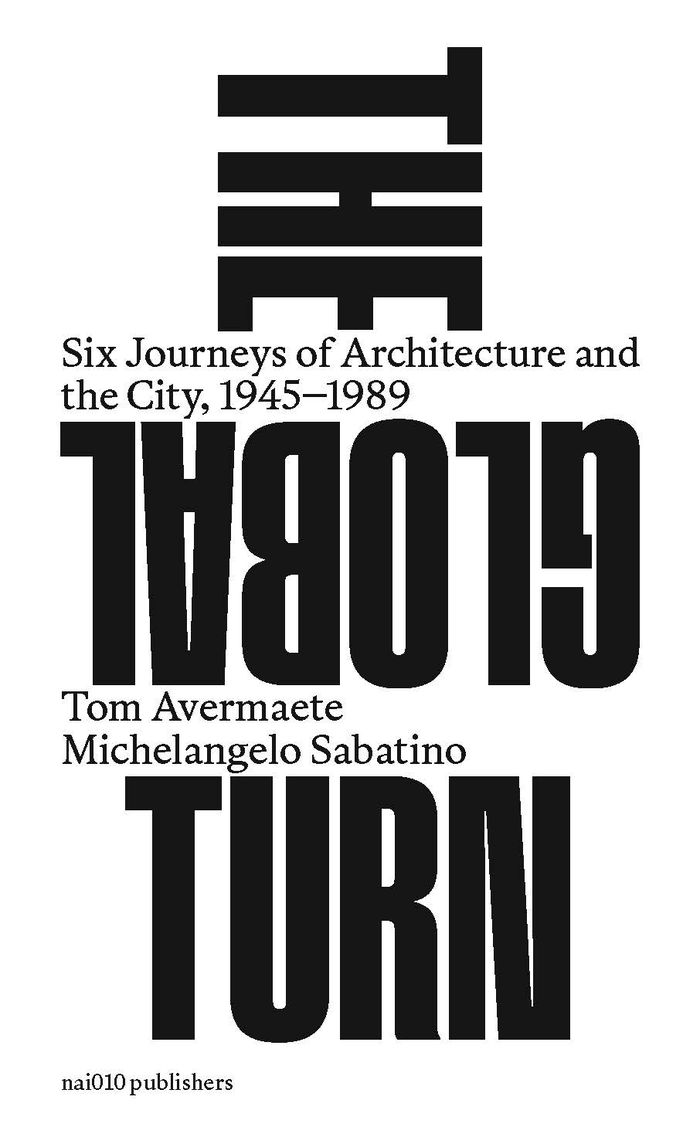
To what extent did the circulation of people, commodities and knowledge affect architecture and urban design between World War II and the fall of the Berlin Wall in 1989? Swiss urban studies professor Tom Avermaete teams up with Chicago-based architect Michelangelo Sabatino to interrogate the influence of globalization on postwar architecture. Globalization is a complex(...)
$42.00
(disponible en magasin)
Résumé:
To what extent did the circulation of people, commodities and knowledge affect architecture and urban design between World War II and the fall of the Berlin Wall in 1989? Swiss urban studies professor Tom Avermaete teams up with Chicago-based architect Michelangelo Sabatino to interrogate the influence of globalization on postwar architecture. Globalization is a complex(...)
Titre:
The global turn: six journeys of architecture and the city, 1945-1989
Actions:
Prix:
$42.00
(disponible en magasin)
Résumé:
To what extent did the circulation of people, commodities and knowledge affect architecture and urban design between World War II and the fall of the Berlin Wall in 1989? Swiss urban studies professor Tom Avermaete teams up with Chicago-based architect Michelangelo Sabatino to interrogate the influence of globalization on postwar architecture. Globalization is a complex phenomenon that has profoundly affected the practice of designers and engineers in the postwar era as it simultaneously expands and shrinks the world in which we live. Avermaete and Sabatino arrive at several conclusions through a diligent analysis of spatial, political and social geographies, from airports and hotels to construction materials and labor. ''The Global Turn'' presents their findings in a series of six short essays, providing a fresh viewpoint on a new worldwide environment that gives as much as it takes.
The global turn: six journeys of architecture and the city, 1945-1989
Actions:
Prix:
$42.00
(disponible en magasin)
Résumé:
To what extent did the circulation of people, commodities and knowledge affect architecture and urban design between World War II and the fall of the Berlin Wall in 1989? Swiss urban studies professor Tom Avermaete teams up with Chicago-based architect Michelangelo Sabatino to interrogate the influence of globalization on postwar architecture. Globalization is a complex phenomenon that has profoundly affected the practice of designers and engineers in the postwar era as it simultaneously expands and shrinks the world in which we live. Avermaete and Sabatino arrive at several conclusions through a diligent analysis of spatial, political and social geographies, from airports and hotels to construction materials and labor. ''The Global Turn'' presents their findings in a series of six short essays, providing a fresh viewpoint on a new worldwide environment that gives as much as it takes.
Classification:
livres
livres
Publication:
juin 2025
juin 2025
Sujet:
Théorie de l’architecture
Théorie de l’architecture
Classification:
livres
livres
Prix:
$34.50
(disponible sur commande)
Résumé:
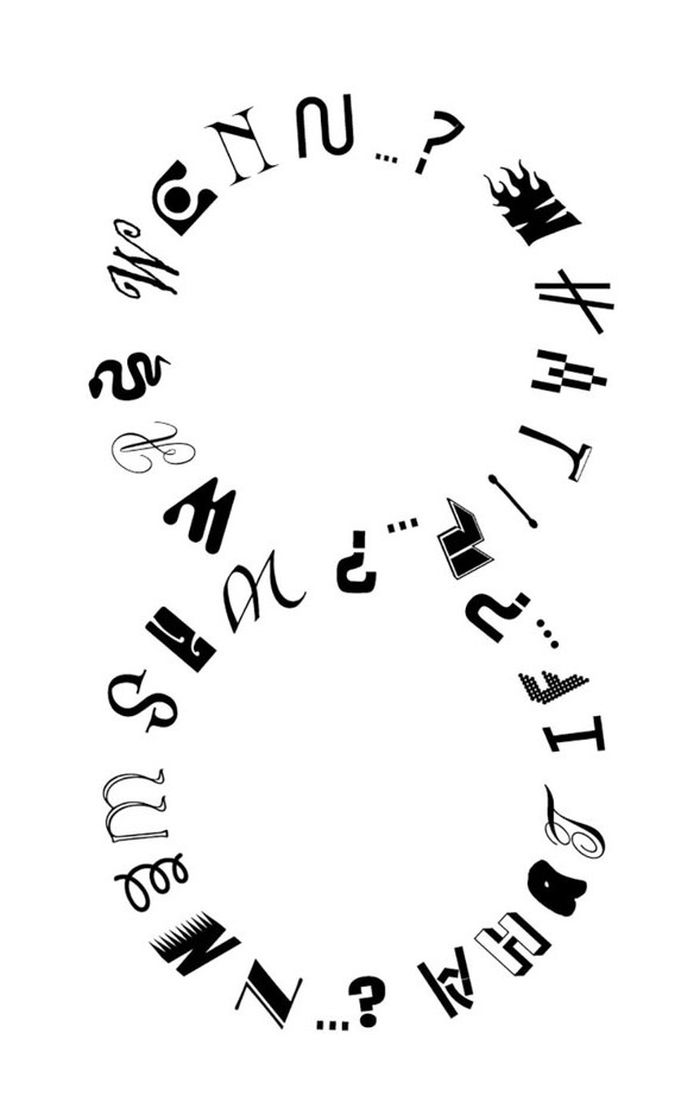
With more than 30 artists and designers who investigate the utopian, this book compiles photographs, films, drawings, architectural models and more by Joseph Beuys, Böhler & Orendt, Cao Fei, Céline Condorelli, Dunne & Raby, European Democracy Lab, Peter Fischli & David Weiss, and more...
$34.50
(disponible sur commande)
Résumé:
With more than 30 artists and designers who investigate the utopian, this book compiles photographs, films, drawings, architectural models and more by Joseph Beuys, Böhler & Orendt, Cao Fei, Céline Condorelli, Dunne & Raby, European Democracy Lab, Peter Fischli & David Weiss, and more...
Titre:
What if...? On the utopian in art, architecture, and design
Actions:
Prix:
$34.50
(disponible sur commande)
Résumé:
With more than 30 artists and designers who investigate the utopian, this book compiles photographs, films, drawings, architectural models and more by Joseph Beuys, Böhler & Orendt, Cao Fei, Céline Condorelli, Dunne & Raby, European Democracy Lab, Peter Fischli & David Weiss, and more...
What if...? On the utopian in art, architecture, and design
Actions:
Prix:
$34.50
(disponible sur commande)
Résumé:
With more than 30 artists and designers who investigate the utopian, this book compiles photographs, films, drawings, architectural models and more by Joseph Beuys, Böhler & Orendt, Cao Fei, Céline Condorelli, Dunne & Raby, European Democracy Lab, Peter Fischli & David Weiss, and more...
Classification:
livres
livres
Publication:
avril 2021
avril 2021
Sujet:
Théorie de l’architecture
Théorie de l’architecture
Classification:
livres
livres
Prix:
$40.00
(disponible sur commande)
Résumé:
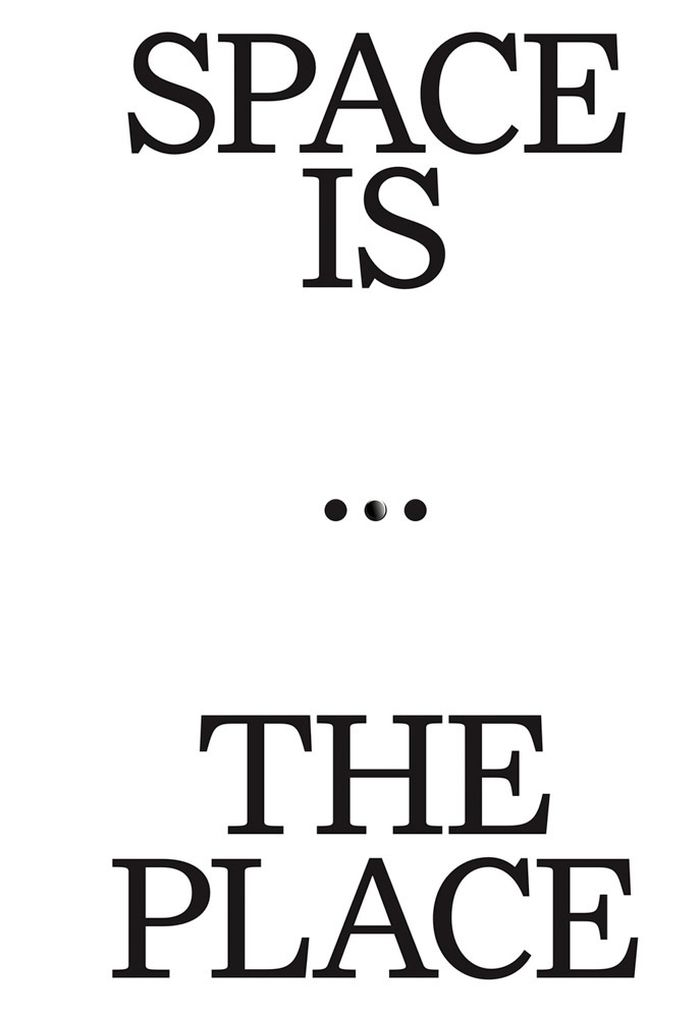
Space and place as topics of playful investigation and serious reflection This book looks at art that relates playfully to architecture, with contributions from artists, architects, designers and scholars including Franz Xaver Baier, Beatriz Colomina, Olafur Eliasson, Andrea Fraser, Bruce Nauman, Tom Sachs and more.
$40.00
(disponible sur commande)
Résumé:
Space and place as topics of playful investigation and serious reflection This book looks at art that relates playfully to architecture, with contributions from artists, architects, designers and scholars including Franz Xaver Baier, Beatriz Colomina, Olafur Eliasson, Andrea Fraser, Bruce Nauman, Tom Sachs and more.
Titre:
Space is the place: current reflections on art and architecture
Actions:
Prix:
$40.00
(disponible sur commande)
Résumé:
Space and place as topics of playful investigation and serious reflection This book looks at art that relates playfully to architecture, with contributions from artists, architects, designers and scholars including Franz Xaver Baier, Beatriz Colomina, Olafur Eliasson, Andrea Fraser, Bruce Nauman, Tom Sachs and more.
Space is the place: current reflections on art and architecture
Actions:
Prix:
$40.00
(disponible sur commande)
Résumé:
Space and place as topics of playful investigation and serious reflection This book looks at art that relates playfully to architecture, with contributions from artists, architects, designers and scholars including Franz Xaver Baier, Beatriz Colomina, Olafur Eliasson, Andrea Fraser, Bruce Nauman, Tom Sachs and more.
Classification:
livres
livres
Publication:
février 2021
février 2021
Sujet:
Théorie de l’architecture
Théorie de l’architecture
Classification:
livres
livres
Actions:
Prix:
$12.00
(disponible sur commande)
Résumé:
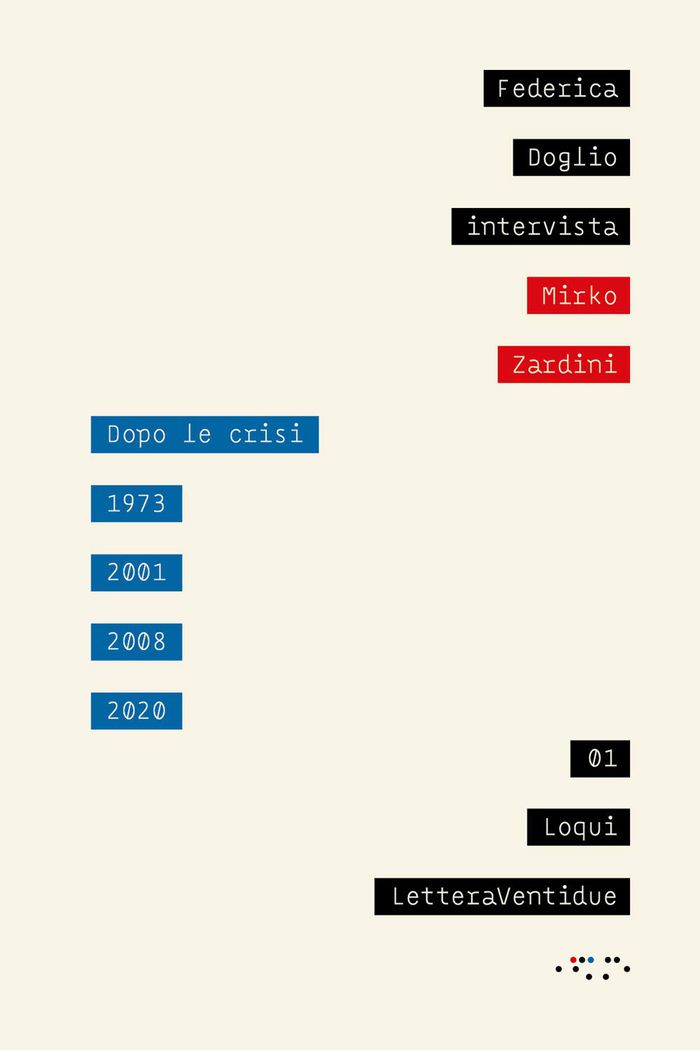
Federica Doglio e Mirko Zardini dialogano di città, architettura, ambiente e istituzioni in una serie di conversazioni iniziate durante l’estate 2020. Un percorso che dalla crisi odierna risale fino agli anni Settanta, delineando quella che appare una lunga crisi climatico-ambientale, energetica, sanitaria, che riguarda anche le istituzioni, le professioni e lo stesso(...)
$12.00
(disponible sur commande)
Résumé:
Federica Doglio e Mirko Zardini dialogano di città, architettura, ambiente e istituzioni in una serie di conversazioni iniziate durante l’estate 2020. Un percorso che dalla crisi odierna risale fino agli anni Settanta, delineando quella che appare una lunga crisi climatico-ambientale, energetica, sanitaria, che riguarda anche le istituzioni, le professioni e lo stesso(...)
Titre:
Dopo le crisi: 1973, 2001, 2008, 2020
Actions:
Prix:
$12.00
(disponible sur commande)
Résumé:
Federica Doglio e Mirko Zardini dialogano di città, architettura, ambiente e istituzioni in una serie di conversazioni iniziate durante l’estate 2020. Un percorso che dalla crisi odierna risale fino agli anni Settanta, delineando quella che appare una lunga crisi climatico-ambientale, energetica, sanitaria, che riguarda anche le istituzioni, le professioni e lo stesso progetto moderno. L’ambiente, lo spazio pubblico, quello del dissenso, il controllo dei dati, l’università, il ruolo dell’architetto, sono alcune tra le questioni affrontate in questo libro-intervista.
Dopo le crisi: 1973, 2001, 2008, 2020
Actions:
Prix:
$12.00
(disponible sur commande)
Résumé:
Federica Doglio e Mirko Zardini dialogano di città, architettura, ambiente e istituzioni in una serie di conversazioni iniziate durante l’estate 2020. Un percorso che dalla crisi odierna risale fino agli anni Settanta, delineando quella che appare una lunga crisi climatico-ambientale, energetica, sanitaria, che riguarda anche le istituzioni, le professioni e lo stesso progetto moderno. L’ambiente, lo spazio pubblico, quello del dissenso, il controllo dei dati, l’università, il ruolo dell’architetto, sono alcune tra le questioni affrontate in questo libro-intervista.
Classification:
livres
livres
Publication:
janvier 2021
janvier 2021
Sujet:
Théorie de l’architecture
Théorie de l’architecture
Classification:
livres
livres
Actions:
Prix:
$19.95
(disponible sur commande)
Résumé:
"When a work reaches its maximum intensity," wrote Le Corbusier, "a phenomenon of ineffable space occurs." The ultimate quality of architecture would reside, therefore, in the resistance to its description. However, to tell us this, and much more, the Swiss master has published more than seventy books and his so compelling formula in supporting the ineffable also shows(...)
$19.95
(disponible sur commande)
Résumé:
"When a work reaches its maximum intensity," wrote Le Corbusier, "a phenomenon of ineffable space occurs." The ultimate quality of architecture would reside, therefore, in the resistance to its description. However, to tell us this, and much more, the Swiss master has published more than seventy books and his so compelling formula in supporting the ineffable also shows(...)
Titre:
Sayable space: narrative practices in architecture
Actions:
Prix:
$19.95
(disponible sur commande)
Résumé:
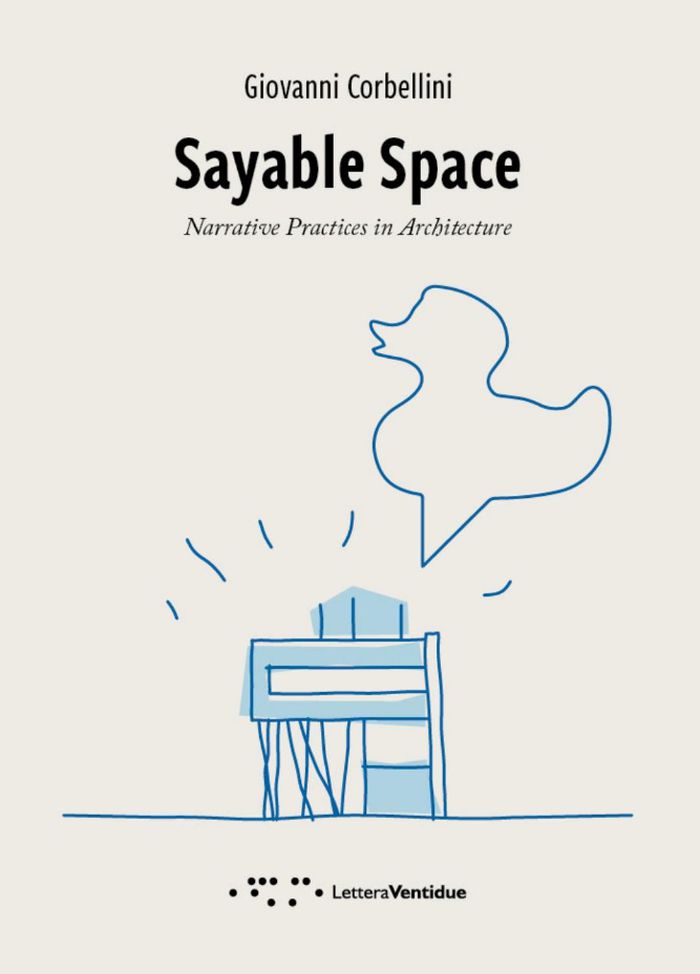
"When a work reaches its maximum intensity," wrote Le Corbusier, "a phenomenon of ineffable space occurs." The ultimate quality of architecture would reside, therefore, in the resistance to its description. However, to tell us this, and much more, the Swiss master has published more than seventy books and his so compelling formula in supporting the ineffable also shows how words are able to grasp it. This brief essay investigates the multiple intersections between discourse and design: the way buildings try to ‘talk’ with their own specific means; how architects are trying to remain relevant without building; the paradoxes of architecture description after its completion; the modes of communication during the project processes; the capacity of narrative to act before the project operations start and infiltrate the collective perception, making possible innovative approaches...
Sayable space: narrative practices in architecture
Actions:
Prix:
$19.95
(disponible sur commande)
Résumé:
"When a work reaches its maximum intensity," wrote Le Corbusier, "a phenomenon of ineffable space occurs." The ultimate quality of architecture would reside, therefore, in the resistance to its description. However, to tell us this, and much more, the Swiss master has published more than seventy books and his so compelling formula in supporting the ineffable also shows how words are able to grasp it. This brief essay investigates the multiple intersections between discourse and design: the way buildings try to ‘talk’ with their own specific means; how architects are trying to remain relevant without building; the paradoxes of architecture description after its completion; the modes of communication during the project processes; the capacity of narrative to act before the project operations start and infiltrate the collective perception, making possible innovative approaches...
Classification:
livres
livres
Publication:
février 2021
février 2021
Sujet:
Théorie de l’architecture
Théorie de l’architecture
Classification:
livres
livres
Prix:
$19.95
(disponible sur commande)
Résumé:
What is the actual difference between architectural and interior design? To answer the question, this book looks into the actions of interior disciplines, to understand what they do, not only what they are. In doing so, it studies them through intersection, to identify the essential principles that characterise this kind of design. From typology to topology, from context(...)
$19.95
(disponible sur commande)
Résumé:
What is the actual difference between architectural and interior design? To answer the question, this book looks into the actions of interior disciplines, to understand what they do, not only what they are. In doing so, it studies them through intersection, to identify the essential principles that characterise this kind of design. From typology to topology, from context(...)
Titre:
From within: between interior architecture and design
Actions:
Prix:
$19.95
(disponible sur commande)
Résumé:
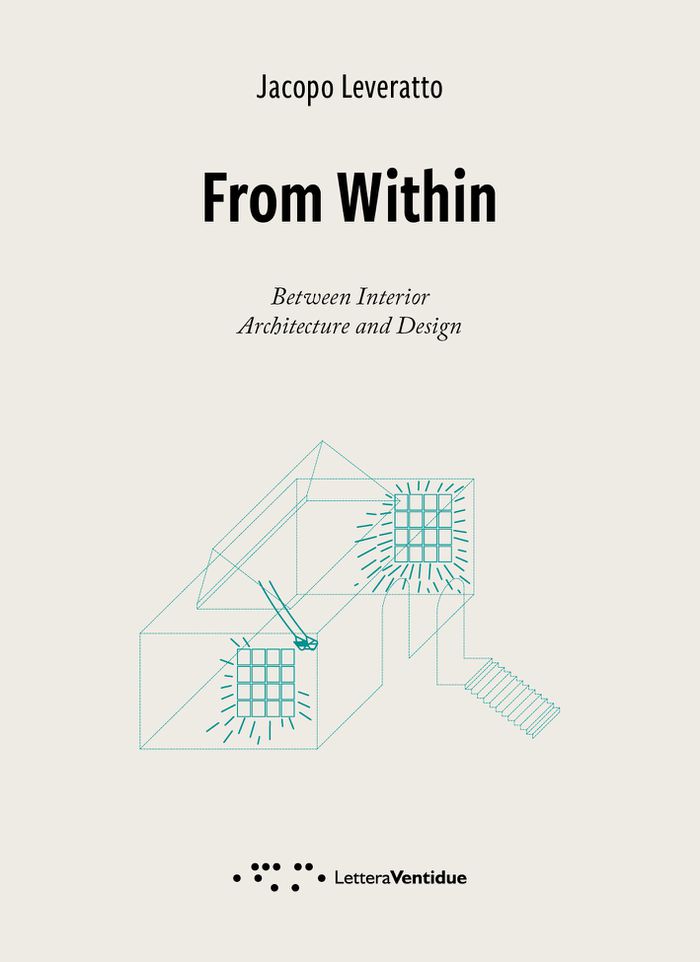
What is the actual difference between architectural and interior design? To answer the question, this book looks into the actions of interior disciplines, to understand what they do, not only what they are. In doing so, it studies them through intersection, to identify the essential principles that characterise this kind of design. From typology to topology, from context to palimpsest, from space to place, the result is a story – particularly focused on the Italian tradition – of the ideas and projects that defined a particular design sensibility that knows no limits of context or scale.
From within: between interior architecture and design
Actions:
Prix:
$19.95
(disponible sur commande)
Résumé:
What is the actual difference between architectural and interior design? To answer the question, this book looks into the actions of interior disciplines, to understand what they do, not only what they are. In doing so, it studies them through intersection, to identify the essential principles that characterise this kind of design. From typology to topology, from context to palimpsest, from space to place, the result is a story – particularly focused on the Italian tradition – of the ideas and projects that defined a particular design sensibility that knows no limits of context or scale.
Classification:
livres
livres
Publication:
décembre 2020
décembre 2020
Sujet:
Théorie de l’architecture
Théorie de l’architecture
Classification:
livres
livres
Actions:
Prix:
$126.95
(disponible en magasin)
Résumé:
This publication offers a selection of contributions that originally appeared in the journal "archithese," accompanied by critical essays by contemporary authors. Themes range from historicism, realism, urbanism, and user-oriented approaches, to interest in informal and spontaneous building. Arranged in five chapters, the articles illustrate an examination of the evolving(...)
$126.95
(disponible en magasin)
Résumé:
This publication offers a selection of contributions that originally appeared in the journal "archithese," accompanied by critical essays by contemporary authors. Themes range from historicism, realism, urbanism, and user-oriented approaches, to interest in informal and spontaneous building. Arranged in five chapters, the articles illustrate an examination of the evolving(...)
Titre:
Archithese reader: Critical position sin search of postmodernity 1971-1976
Actions:
Prix:
$126.95
(disponible en magasin)
Résumé:
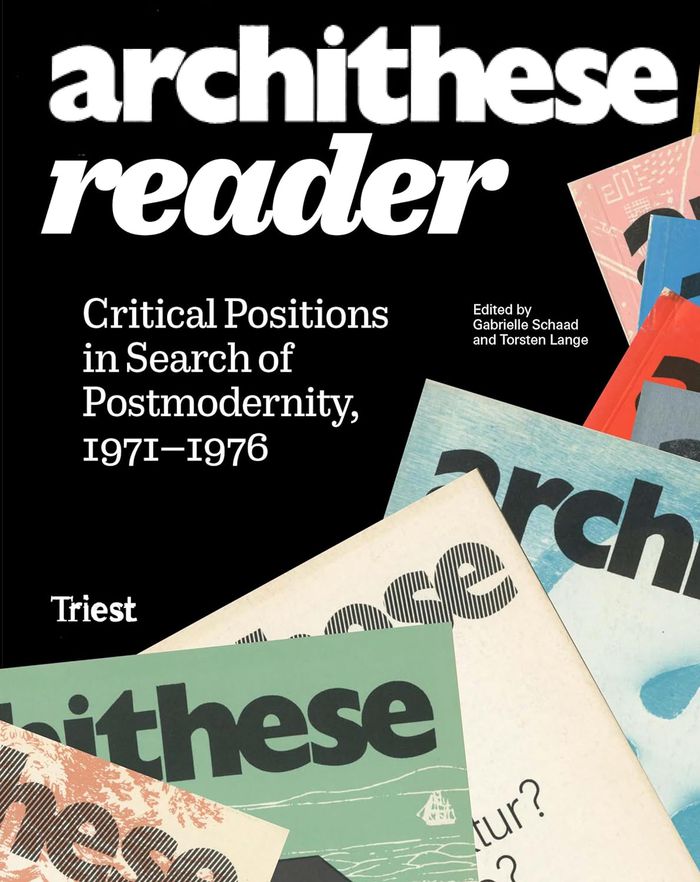
This publication offers a selection of contributions that originally appeared in the journal "archithese," accompanied by critical essays by contemporary authors. Themes range from historicism, realism, urbanism, and user-oriented approaches, to interest in informal and spontaneous building. Arranged in five chapters, the articles illustrate an examination of the evolving postmodernism and, due to their multifaceted nature, point far beyond a pure concept of style. The contributors include Irina Davidovici, Samia Henni, Torsten Lange, and others, representing positions that are exemplary of the pluralist approach and thematic openness characteristic of the journal in its founding phase.
Archithese reader: Critical position sin search of postmodernity 1971-1976
Actions:
Prix:
$126.95
(disponible en magasin)
Résumé:
This publication offers a selection of contributions that originally appeared in the journal "archithese," accompanied by critical essays by contemporary authors. Themes range from historicism, realism, urbanism, and user-oriented approaches, to interest in informal and spontaneous building. Arranged in five chapters, the articles illustrate an examination of the evolving postmodernism and, due to their multifaceted nature, point far beyond a pure concept of style. The contributors include Irina Davidovici, Samia Henni, Torsten Lange, and others, representing positions that are exemplary of the pluralist approach and thematic openness characteristic of the journal in its founding phase.
Classification:
livres
livres
Publication:
mai 2024
mai 2024
Sujet:
Théorie de l’architecture
Théorie de l’architecture
Classification:
livres
livres
Prix:
$38.95
(disponible en magasin)
Résumé:
Comment, dans un paysage politique en ruines, reconstituer la vérité des faits ? La réponse d'Eyal Weizman tient en une formule-programme: "l'architecture forensique". Approche novatrice au carrefour de plusieurs disciplines, cette sorte d'architecture se soucie moins de construire des bâtiments que d'analyser des traces que porte le bâti afin de rétablir des vérités(...)
$38.95
(disponible en magasin)
Résumé:
Comment, dans un paysage politique en ruines, reconstituer la vérité des faits ? La réponse d'Eyal Weizman tient en une formule-programme: "l'architecture forensique". Approche novatrice au carrefour de plusieurs disciplines, cette sorte d'architecture se soucie moins de construire des bâtiments que d'analyser des traces que porte le bâti afin de rétablir des vérités(...)
Titre:
La vérité en ruines : Manifeste pour une architecture forensique
Actions:
Prix:
$38.95
(disponible en magasin)
Résumé:
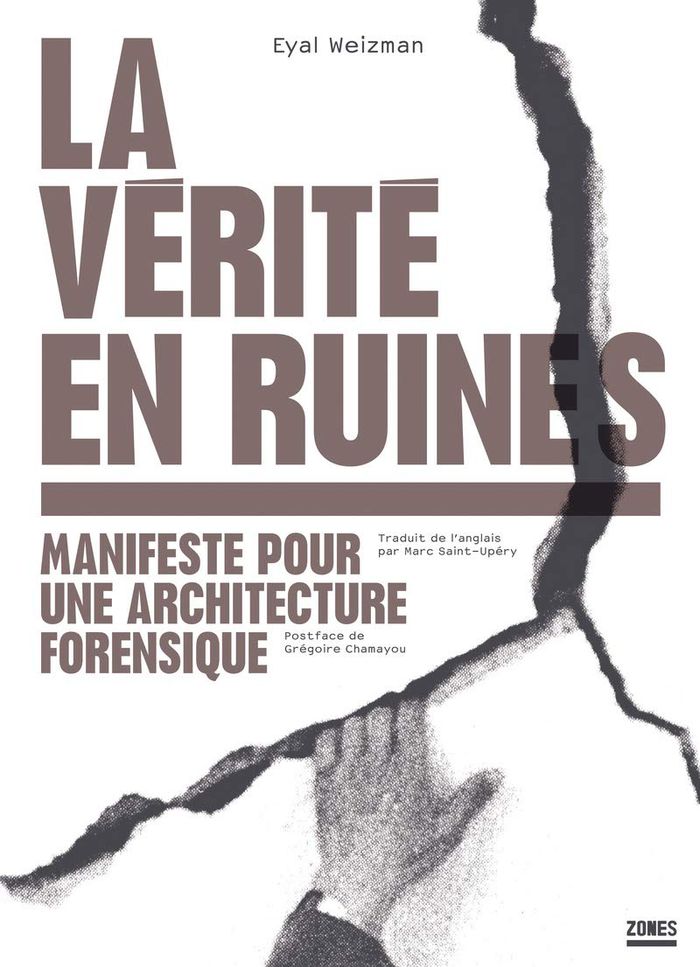
Comment, dans un paysage politique en ruines, reconstituer la vérité des faits ? La réponse d'Eyal Weizman tient en une formule-programme: "l'architecture forensique". Approche novatrice au carrefour de plusieurs disciplines, cette sorte d'architecture se soucie moins de construire des bâtiments que d'analyser des traces que porte le bâti afin de rétablir des vérités menacées. Impacts de balles, trous de missiles, ombres projetées sur les murs de corps annihilés par le souffle d'une explosion : l'architecture forensique consiste à faire parler ces indices. Si elle mobilise à cette fin des techniques en partie héritées de la médecine légale et de la police scientifique, c'est en les retournant contre la violence d'État, ses dénis et ses "fake news". Il s'agit donc d'une "contre-forensique" qui tente de se réapproprier les moyens de la preuve dans un contexte d'inégalité structurelle d'accès aux moyens de la manifestation de la vérité. Au fil des pages, cet ouvrage illustré offre un panorama saisissant des champs d'application de cette démarche, depuis le cas des frappes de drone au Pakistan, en Afghanistan et à Gaza, jusqu'à celui de la prison secrète de Saidnaya en Syrie, en passant par le camp de Staro Sajmiste, dans la région de Belgrade.
La vérité en ruines : Manifeste pour une architecture forensique
Actions:
Prix:
$38.95
(disponible en magasin)
Résumé:
Comment, dans un paysage politique en ruines, reconstituer la vérité des faits ? La réponse d'Eyal Weizman tient en une formule-programme: "l'architecture forensique". Approche novatrice au carrefour de plusieurs disciplines, cette sorte d'architecture se soucie moins de construire des bâtiments que d'analyser des traces que porte le bâti afin de rétablir des vérités menacées. Impacts de balles, trous de missiles, ombres projetées sur les murs de corps annihilés par le souffle d'une explosion : l'architecture forensique consiste à faire parler ces indices. Si elle mobilise à cette fin des techniques en partie héritées de la médecine légale et de la police scientifique, c'est en les retournant contre la violence d'État, ses dénis et ses "fake news". Il s'agit donc d'une "contre-forensique" qui tente de se réapproprier les moyens de la preuve dans un contexte d'inégalité structurelle d'accès aux moyens de la manifestation de la vérité. Au fil des pages, cet ouvrage illustré offre un panorama saisissant des champs d'application de cette démarche, depuis le cas des frappes de drone au Pakistan, en Afghanistan et à Gaza, jusqu'à celui de la prison secrète de Saidnaya en Syrie, en passant par le camp de Staro Sajmiste, dans la région de Belgrade.
Classification:
livres
livres
Publication:
juin 2021
juin 2021
Sujet:
Théorie de l’architecture
Théorie de l’architecture


