


9272 Résultats
Classification:
livres
livres
Titre:
The language of landscape
The language of landscape
Actions:
Prix:
$25.95
(disponible sur commande)
Résumé:
Offering examples that range across thousands of years and five continents, Spirn examines urban, rural, and natural landscapes. She discusses the thought of renowned landscape authors--Thomas Jefferson, Frank Lloyd Wright, Frederick Law Olmsted, Lawrence Halprin--and of less well known pioneers, including Australian architect Glenn Murcutt and Danish landscape artist C.(...)
$25.95
(disponible sur commande)
Résumé:
Offering examples that range across thousands of years and five continents, Spirn examines urban, rural, and natural landscapes. She discusses the thought of renowned landscape authors--Thomas Jefferson, Frank Lloyd Wright, Frederick Law Olmsted, Lawrence Halprin--and of less well known pioneers, including Australian architect Glenn Murcutt and Danish landscape artist C.(...)
Titre:
The language of landscape
Actions:
Prix:
$25.95
(disponible sur commande)
Résumé:
Offering examples that range across thousands of years and five continents, Spirn examines urban, rural, and natural landscapes. She discusses the thought of renowned landscape authors--Thomas Jefferson, Frank Lloyd Wright, Frederick Law Olmsted, Lawrence Halprin--and of less well known pioneers, including Australian architect Glenn Murcutt and Danish landscape artist C. Th. Sørensen. She discusses instances of great landscape designers using landscape fluently, masterfully, and sometimes cynically. And, in a probing analysis of the many meanings of landscape, Spirn shows how one person’s ideal landscape may be another’s nightmare, how Utopian landscapes can be dark. There is danger when we lose the connection between a place and our understanding of it, Spirn warns, and she calls for change in the way we shape our environment, based on the notions of nature as a set of ideas and landscape as the expression of action and ideas in place.
The language of landscape
Actions:
Prix:
$25.95
(disponible sur commande)
Résumé:
Offering examples that range across thousands of years and five continents, Spirn examines urban, rural, and natural landscapes. She discusses the thought of renowned landscape authors--Thomas Jefferson, Frank Lloyd Wright, Frederick Law Olmsted, Lawrence Halprin--and of less well known pioneers, including Australian architect Glenn Murcutt and Danish landscape artist C. Th. Sørensen. She discusses instances of great landscape designers using landscape fluently, masterfully, and sometimes cynically. And, in a probing analysis of the many meanings of landscape, Spirn shows how one person’s ideal landscape may be another’s nightmare, how Utopian landscapes can be dark. There is danger when we lose the connection between a place and our understanding of it, Spirn warns, and she calls for change in the way we shape our environment, based on the notions of nature as a set of ideas and landscape as the expression of action and ideas in place.
Classification:
livres
livres
Publication:
mai 2000, New haven
mai 2000, New haven
Sujet:
Théorie du paysage
Théorie du paysage
Classification:
livres
livres
Titre:
Shigeru Ban
Shigeru Ban
Actions:
Prix:
$48.95
(disponible sur commande)
Résumé:
Shigeru Ban may be best known for his evocative Curtain Wall House in Tokyo----a highlight of the Museum of Modern Art's 1999 Un-Private House exhibit----but few know the range of this Japanese architect's work. In this first English-language monograph on Ban, 30 built (...)
$48.95
(disponible sur commande)
Résumé:
Shigeru Ban may be best known for his evocative Curtain Wall House in Tokyo----a highlight of the Museum of Modern Art's 1999 Un-Private House exhibit----but few know the range of this Japanese architect's work. In this first English-language monograph on Ban, 30 built (...)
Titre:
Shigeru Ban
Actions:
Prix:
$48.95
(disponible sur commande)
Résumé:
Shigeru Ban may be best known for his evocative Curtain Wall House in Tokyo----a highlight of the Museum of Modern Art's 1999 Un-Private House exhibit----but few know the range of this Japanese architect's work. In this first English-language monograph on Ban, 30 built projects reveal his inventiveness and humanitarianism. Ban's primary objectives in his work are the use of low-cost materials and the dissolution of the boundaries between interior and exterior spaces. His paper tube designs, which he first created as emergency housing for victims of Rwanda's civil war, were later reconfigured for earthquake victims in Kobe and were incorporated in Ban's Japanese Pavilion at Hannover Expo 2000. Influenced by the Japanese tradition of linking the home with the surrounding environment, Ban has created buildings such as Hanegi Forest and Walls-less House that invite nature to coexist with design.
Shigeru Ban
Actions:
Prix:
$48.95
(disponible sur commande)
Résumé:
Shigeru Ban may be best known for his evocative Curtain Wall House in Tokyo----a highlight of the Museum of Modern Art's 1999 Un-Private House exhibit----but few know the range of this Japanese architect's work. In this first English-language monograph on Ban, 30 built projects reveal his inventiveness and humanitarianism. Ban's primary objectives in his work are the use of low-cost materials and the dissolution of the boundaries between interior and exterior spaces. His paper tube designs, which he first created as emergency housing for victims of Rwanda's civil war, were later reconfigured for earthquake victims in Kobe and were incorporated in Ban's Japanese Pavilion at Hannover Expo 2000. Influenced by the Japanese tradition of linking the home with the surrounding environment, Ban has created buildings such as Hanegi Forest and Walls-less House that invite nature to coexist with design.
Classification:
livres
livres
Publication:
décembre 2000, New York
décembre 2000, New York
Sujet:
Architecture, monographies
Architecture, monographies
Classification:
livres
livres

Actions:
Prix:
$34.00
(disponible en magasin)
Résumé:
This cookbook by Taiwanese artist Pei-Ying Lin (born 1986) is an illustrated guide that showcases how ever-changing viruses affect our sense of taste. The core concept of ''Virophilia'' involves experiencing the viruses in food. Her performances combine different selections of recipes that use the viruses in different ways. The audience eats while listening to stories(...)
$34.00
(disponible en magasin)
Résumé:
This cookbook by Taiwanese artist Pei-Ying Lin (born 1986) is an illustrated guide that showcases how ever-changing viruses affect our sense of taste. The core concept of ''Virophilia'' involves experiencing the viruses in food. Her performances combine different selections of recipes that use the viruses in different ways. The audience eats while listening to stories(...)
Titre:
Pei-Ying Lin: Virophilia, 2070 revised edition of the postnatural cookbook
Actions:
Prix:
$34.00
(disponible en magasin)
Résumé:
This cookbook by Taiwanese artist Pei-Ying Lin (born 1986) is an illustrated guide that showcases how ever-changing viruses affect our sense of taste. The core concept of ''Virophilia'' involves experiencing the viruses in food. Her performances combine different selections of recipes that use the viruses in different ways. The audience eats while listening to stories about the viruses. Since 2055, viruses have become an important part of our everyday food culture. Those born before 2015 may still remember the fear of the natural order that the coronavirus brought us, but since 2055 we have known that such fear is also irresistibly tasty. Viruses that were once exclusive to the research and medical realms are now constitutive of our natural habitat. Pei-Ying Lin, currently based in the Netherlands, has recently been focusing on boundaries (invisible/visible, living/nonliving) and building tools and methods that facilitate their exploration.
Pei-Ying Lin: Virophilia, 2070 revised edition of the postnatural cookbook
Actions:
Prix:
$34.00
(disponible en magasin)
Résumé:
This cookbook by Taiwanese artist Pei-Ying Lin (born 1986) is an illustrated guide that showcases how ever-changing viruses affect our sense of taste. The core concept of ''Virophilia'' involves experiencing the viruses in food. Her performances combine different selections of recipes that use the viruses in different ways. The audience eats while listening to stories about the viruses. Since 2055, viruses have become an important part of our everyday food culture. Those born before 2015 may still remember the fear of the natural order that the coronavirus brought us, but since 2055 we have known that such fear is also irresistibly tasty. Viruses that were once exclusive to the research and medical realms are now constitutive of our natural habitat. Pei-Ying Lin, currently based in the Netherlands, has recently been focusing on boundaries (invisible/visible, living/nonliving) and building tools and methods that facilitate their exploration.
Classification:
livres
livres
Publication:
novembre 2023
novembre 2023
Classification:
livres
livres
Titre:
Churches
Churches
Actions:
Prix:
$54.00
(disponible sur commande)
Résumé:
The churches in this book demonstrate the diverse range of denominations and sects that form the Charismatic Evangelical movement today. Materially and architecturally, the buildings reflect a Spiritualist church movement reacting against secular Material Rationalism and consumerism. They feature none of the monumental architecture or symbols of status and power of the(...)
$54.00
(disponible sur commande)
Résumé:
The churches in this book demonstrate the diverse range of denominations and sects that form the Charismatic Evangelical movement today. Materially and architecturally, the buildings reflect a Spiritualist church movement reacting against secular Material Rationalism and consumerism. They feature none of the monumental architecture or symbols of status and power of the(...)
Titre:
Churches
Actions:
Prix:
$54.00
(disponible sur commande)
Résumé:
The churches in this book demonstrate the diverse range of denominations and sects that form the Charismatic Evangelical movement today. Materially and architecturally, the buildings reflect a Spiritualist church movement reacting against secular Material Rationalism and consumerism. They feature none of the monumental architecture or symbols of status and power of the historically dominant denominations like Roman Catholicism. The buildings were never designed to be churches, and this random collection of architectural structures is the result of numerous acts of faith. Often temporary, semi-permanent or unconsecrated, they are sometimes anonymous and almost invisible. They are usually located where we would least expect to find them: in industrial estates, shopping malls, houses, garages, cinemas, above commercial properties and even pubs. Spero's work acknowledges that the divine may exist in the most unlikely places, and testifies to our enduring need to seek out a state of grace.
Churches
Actions:
Prix:
$54.00
(disponible sur commande)
Résumé:
The churches in this book demonstrate the diverse range of denominations and sects that form the Charismatic Evangelical movement today. Materially and architecturally, the buildings reflect a Spiritualist church movement reacting against secular Material Rationalism and consumerism. They feature none of the monumental architecture or symbols of status and power of the historically dominant denominations like Roman Catholicism. The buildings were never designed to be churches, and this random collection of architectural structures is the result of numerous acts of faith. Often temporary, semi-permanent or unconsecrated, they are sometimes anonymous and almost invisible. They are usually located where we would least expect to find them: in industrial estates, shopping malls, houses, garages, cinemas, above commercial properties and even pubs. Spero's work acknowledges that the divine may exist in the most unlikely places, and testifies to our enduring need to seek out a state of grace.
Classification:
livres
livres
Publication:
janvier 2007, Göttingen
janvier 2007, Göttingen
Sujet:
Monographies photo
Monographies photo
Classification:
livres
livres
Titre:
A philosophy of gardens
A philosophy of gardens
Actions:
Prix:
$54.00
(disponible sur commande)
Résumé:
David Cooper identifies garden appreciation as a special human phenomenon distinct from both from the appreciation of art and the appreciation of nature. He explores the importance of various 'garden-practices' and shows how not only gardening itself, but activities to which the garden especially lends itself, including social and meditative activities, contribute to the(...)
$54.00
(disponible sur commande)
Résumé:
David Cooper identifies garden appreciation as a special human phenomenon distinct from both from the appreciation of art and the appreciation of nature. He explores the importance of various 'garden-practices' and shows how not only gardening itself, but activities to which the garden especially lends itself, including social and meditative activities, contribute to the(...)
Titre:
A philosophy of gardens
Actions:
Prix:
$54.00
(disponible sur commande)
Résumé:
David Cooper identifies garden appreciation as a special human phenomenon distinct from both from the appreciation of art and the appreciation of nature. He explores the importance of various 'garden-practices' and shows how not only gardening itself, but activities to which the garden especially lends itself, including social and meditative activities, contribute to the good life. And he distinguishes the many kinds of meanings that gardens may have, from representation of nature to emotional expression, from historical significance to symbolization of a spiritual relationship to the world. Building on the familiar observation that, among human beings' creations, the garden is peculiarly dependent on the co-operation of nature, Cooper argues that the garden matters as an epiphany of an intimate co-dependence between human creative activity in the world and the 'mystery' that allows there to be a world for them at all.
A philosophy of gardens
Actions:
Prix:
$54.00
(disponible sur commande)
Résumé:
David Cooper identifies garden appreciation as a special human phenomenon distinct from both from the appreciation of art and the appreciation of nature. He explores the importance of various 'garden-practices' and shows how not only gardening itself, but activities to which the garden especially lends itself, including social and meditative activities, contribute to the good life. And he distinguishes the many kinds of meanings that gardens may have, from representation of nature to emotional expression, from historical significance to symbolization of a spiritual relationship to the world. Building on the familiar observation that, among human beings' creations, the garden is peculiarly dependent on the co-operation of nature, Cooper argues that the garden matters as an epiphany of an intimate co-dependence between human creative activity in the world and the 'mystery' that allows there to be a world for them at all.
Classification:
livres
livres
Publication:
janvier 2006, Oxford
janvier 2006, Oxford
Sujet:
Théorie du paysage
Théorie du paysage
Classification:
périodiques
périodiques

Actions:
Prix:
$15.00
(disponible sur commande)
Résumé:
"With every step forward we leave a backward trace. A footprint in wet sand is ephemeral but photographs fill a drawer and linger and haunt us; letters and journals call out to be read. We don’t really want our lives and the activities and objects that filled them to be lost and forgotten. Not really. It is our sop against oblivion, and out of our desire to be in the(...)
$15.00
(disponible sur commande)
Résumé:
"With every step forward we leave a backward trace. A footprint in wet sand is ephemeral but photographs fill a drawer and linger and haunt us; letters and journals call out to be read. We don’t really want our lives and the activities and objects that filled them to be lost and forgotten. Not really. It is our sop against oblivion, and out of our desire to be in the(...)
Titre:
Bordercrossings 167: the archive
Actions:
Prix:
$15.00
(disponible sur commande)
Résumé:
"With every step forward we leave a backward trace. A footprint in wet sand is ephemeral but photographs fill a drawer and linger and haunt us; letters and journals call out to be read. We don’t really want our lives and the activities and objects that filled them to be lost and forgotten. Not really. It is our sop against oblivion, and out of our desire to be in the company of others that we store and sort and arrange the material evidence of our having been here. The ordering of these artifacts brings sense and coherence to lives that seem fleeting and without conclusive purpose. Our collections—whatever it is that composes them—take an almost imitative corporeal form that we feel may represent us as we are and have been. I am here; this is what I have done; my accomplishments have been assembled and are shown. An Archive."
Bordercrossings 167: the archive
Actions:
Prix:
$15.00
(disponible sur commande)
Résumé:
"With every step forward we leave a backward trace. A footprint in wet sand is ephemeral but photographs fill a drawer and linger and haunt us; letters and journals call out to be read. We don’t really want our lives and the activities and objects that filled them to be lost and forgotten. Not really. It is our sop against oblivion, and out of our desire to be in the company of others that we store and sort and arrange the material evidence of our having been here. The ordering of these artifacts brings sense and coherence to lives that seem fleeting and without conclusive purpose. Our collections—whatever it is that composes them—take an almost imitative corporeal form that we feel may represent us as we are and have been. I am here; this is what I have done; my accomplishments have been assembled and are shown. An Archive."
Classification:
périodiques
périodiques
Publication:
mai 2025
mai 2025
Sujet:
Revues
Revues
Classification:
livres
livres
Actions:
Prix:
$50.00
(disponible sur commande)
Résumé:
a+u’s March issue interrogates sacredness and how it manifests in architectural space. Taking examples from religious works of architecture in different parts of the globe, such as Saint Pius Church in Switzerland and Bait Ur Rouf mosque in Bangladesh, this issue endeavors to establish a language of light and shadow, materiality, and scale. The notion of "sacred space" is(...)
$50.00
(disponible sur commande)
Résumé:
a+u’s March issue interrogates sacredness and how it manifests in architectural space. Taking examples from religious works of architecture in different parts of the globe, such as Saint Pius Church in Switzerland and Bait Ur Rouf mosque in Bangladesh, this issue endeavors to establish a language of light and shadow, materiality, and scale. The notion of "sacred space" is(...)
Titre:
A+U 654 25:03 Reinterpretations of Sacredness Generative AI within Architecture
Actions:
Prix:
$50.00
(disponible sur commande)
Résumé:
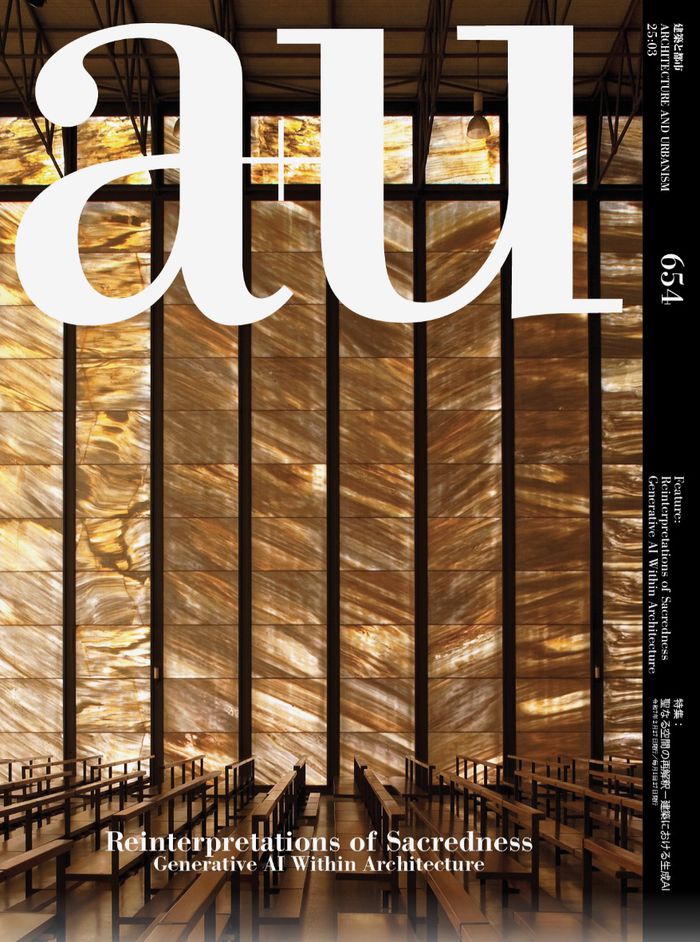
a+u’s March issue interrogates sacredness and how it manifests in architectural space. Taking examples from religious works of architecture in different parts of the globe, such as Saint Pius Church in Switzerland and Bait Ur Rouf mosque in Bangladesh, this issue endeavors to establish a language of light and shadow, materiality, and scale. The notion of "sacred space" is further complicated by the introduction of AI. Guest editor Erwin Viray, using the theme of "sacred space," introduces generative AI tools that not only illuminate the direction that architectural design may take, but also confront human sensibilities and shared ideas about architectural space. Continuing this exploration, 14 nonreligious projects, such as Luis Barragán’s Barragán House, Álvaro Siza’s Tidal Pools of Leça da Palmeira, and Anne Holtrop’s Pearl Museum, ponder how this sense of sacredness, feelings of awe and serenity, can be introduced into our everyday lives.
A+U 654 25:03 Reinterpretations of Sacredness Generative AI within Architecture
Actions:
Prix:
$50.00
(disponible sur commande)
Résumé:
a+u’s March issue interrogates sacredness and how it manifests in architectural space. Taking examples from religious works of architecture in different parts of the globe, such as Saint Pius Church in Switzerland and Bait Ur Rouf mosque in Bangladesh, this issue endeavors to establish a language of light and shadow, materiality, and scale. The notion of "sacred space" is further complicated by the introduction of AI. Guest editor Erwin Viray, using the theme of "sacred space," introduces generative AI tools that not only illuminate the direction that architectural design may take, but also confront human sensibilities and shared ideas about architectural space. Continuing this exploration, 14 nonreligious projects, such as Luis Barragán’s Barragán House, Álvaro Siza’s Tidal Pools of Leça da Palmeira, and Anne Holtrop’s Pearl Museum, ponder how this sense of sacredness, feelings of awe and serenity, can be introduced into our everyday lives.
Classification:
livres
livres
Publication:
mars 2025
mars 2025
Sujet:
Revues
Revues
Classification:
livres
livres
Actions:
Prix:
$52.00
(disponible en magasin)
Résumé:
Building in existing fabric conserves resources, saves energy, and reduces carbon emissions – good reasons to choose conversion over new build. Yet there is another, less tangible dimension: time. With additions and adaptations, patina and cracks, it leaves its mark and stores memories in the buildings. To carry these stories forward requires sensitivity to materials,(...)
$52.00
(disponible en magasin)
Résumé:
Building in existing fabric conserves resources, saves energy, and reduces carbon emissions – good reasons to choose conversion over new build. Yet there is another, less tangible dimension: time. With additions and adaptations, patina and cracks, it leaves its mark and stores memories in the buildings. To carry these stories forward requires sensitivity to materials,(...)
Titre:
Detail 11 2025 : Building in existing contexts
Actions:
Prix:
$52.00
(disponible en magasin)
Résumé:
Building in existing fabric conserves resources, saves energy, and reduces carbon emissions – good reasons to choose conversion over new build. Yet there is another, less tangible dimension: time. With additions and adaptations, patina and cracks, it leaves its mark and stores memories in the buildings. To carry these stories forward requires sensitivity to materials, spaces, and histories. Deciding what remains and what is replaced demands careful judgment. Some interventions are so discreet that only trained eyes notice them, often compared by architects to the restoration of a classic car. Others are more radical: ceiling panels titled and set diagonally into a room, or large atriums cut into the existing architecture. At times, we may need to rethink our ingrained aesthetics and ask whether materials with a problematic reputation – such as fibre cement panels (Eternit) – can still be used, or whether cut edges might be left uncovered.
Detail 11 2025 : Building in existing contexts
Actions:
Prix:
$52.00
(disponible en magasin)
Résumé:
Building in existing fabric conserves resources, saves energy, and reduces carbon emissions – good reasons to choose conversion over new build. Yet there is another, less tangible dimension: time. With additions and adaptations, patina and cracks, it leaves its mark and stores memories in the buildings. To carry these stories forward requires sensitivity to materials, spaces, and histories. Deciding what remains and what is replaced demands careful judgment. Some interventions are so discreet that only trained eyes notice them, often compared by architects to the restoration of a classic car. Others are more radical: ceiling panels titled and set diagonally into a room, or large atriums cut into the existing architecture. At times, we may need to rethink our ingrained aesthetics and ask whether materials with a problematic reputation – such as fibre cement panels (Eternit) – can still be used, or whether cut edges might be left uncovered.
Classification:
livres
livres
Publication:
novembre 2025
novembre 2025
Sujet:
Revues
Revues
Classification:
périodiques
périodiques
Titre:
OASE 120: Quality settings
OASE 120: Quality settings
Actions:
Prix:
$43.00
(disponible en magasin)
Résumé:
'‘Quality'’ is an all-pervasive concept in contemporary architectural practice, yet it is also a somewhat vague notion that can be used for many very different valuations. Talking or thinking about a high-quality built environment opens up new opportunities for critical interpretation and for new social or ecological endeavours. By the same token, the concept of quality(...)
$43.00
(disponible en magasin)
Résumé:
'‘Quality'’ is an all-pervasive concept in contemporary architectural practice, yet it is also a somewhat vague notion that can be used for many very different valuations. Talking or thinking about a high-quality built environment opens up new opportunities for critical interpretation and for new social or ecological endeavours. By the same token, the concept of quality(...)
Titre:
OASE 120: Quality settings
Actions:
Prix:
$43.00
(disponible en magasin)
Résumé:
'‘Quality'’ is an all-pervasive concept in contemporary architectural practice, yet it is also a somewhat vague notion that can be used for many very different valuations. Talking or thinking about a high-quality built environment opens up new opportunities for critical interpretation and for new social or ecological endeavours. By the same token, the concept of quality may limit the arena for the evaluation and legitimization of architecture to expert opinions. This issue of OASE considers contemporary processes and environments in which the quality of (public) architecture is negotiated. How do state or city architects, urban quality commissions or design competitions ensure the quality of regional planning? What is the importance of the exchanges and negotiations between designers, experts, mediators and other stakeholders? And how do these ‘settings’ fit into the evolving frameworks of architectural culture, urban or infrastructural policy and the political economy?
OASE 120: Quality settings
Actions:
Prix:
$43.00
(disponible en magasin)
Résumé:
'‘Quality'’ is an all-pervasive concept in contemporary architectural practice, yet it is also a somewhat vague notion that can be used for many very different valuations. Talking or thinking about a high-quality built environment opens up new opportunities for critical interpretation and for new social or ecological endeavours. By the same token, the concept of quality may limit the arena for the evaluation and legitimization of architecture to expert opinions. This issue of OASE considers contemporary processes and environments in which the quality of (public) architecture is negotiated. How do state or city architects, urban quality commissions or design competitions ensure the quality of regional planning? What is the importance of the exchanges and negotiations between designers, experts, mediators and other stakeholders? And how do these ‘settings’ fit into the evolving frameworks of architectural culture, urban or infrastructural policy and the political economy?
Classification:
périodiques
périodiques
Publication:
décembre 2025
décembre 2025
Sujet:
Revues
Revues
Classification:
livres
livres
Actions:
Prix:
$48.95
(disponible sur commande)
Résumé:
From its foundation in 1957 to its self-dissolution in 1972, the Situationist International established itself as one of the most radical revolutionary organisations of the twentieth century. This book brings together leading researchers on the SI to provide a comprehensive critical analysis of the group's key concepts and contexts, from its relationship to earlier(...)
$48.95
(disponible sur commande)
Résumé:
From its foundation in 1957 to its self-dissolution in 1972, the Situationist International established itself as one of the most radical revolutionary organisations of the twentieth century. This book brings together leading researchers on the SI to provide a comprehensive critical analysis of the group's key concepts and contexts, from its relationship to earlier(...)
Titre:
The Situationist International: A critical handbook
Actions:
Prix:
$48.95
(disponible sur commande)
Résumé:
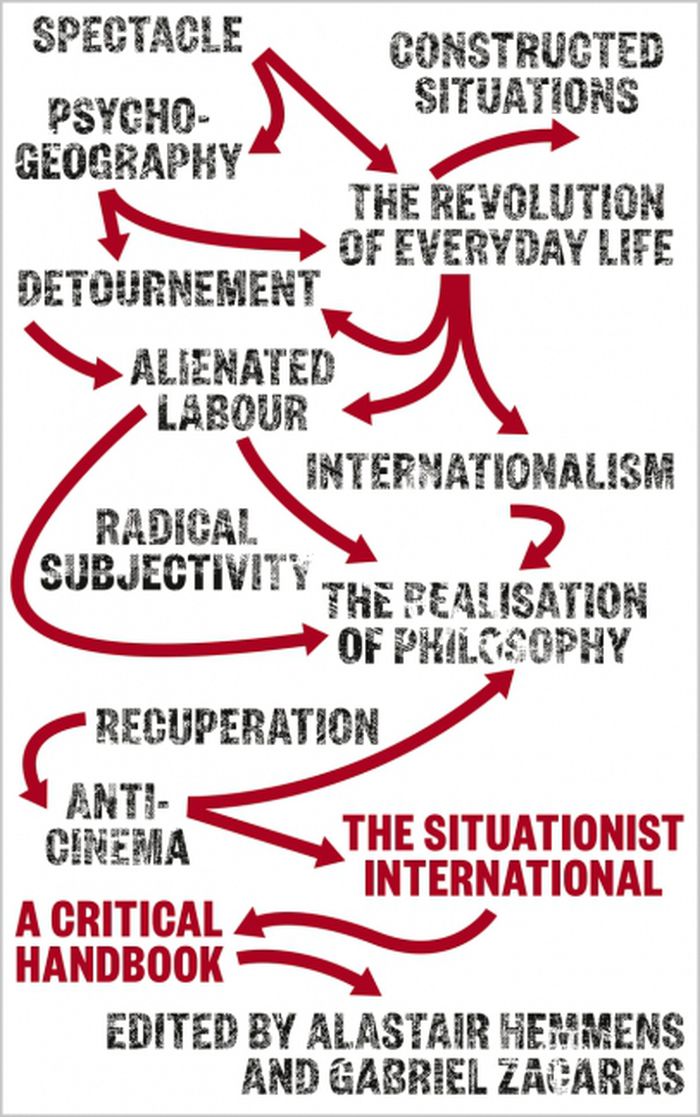
From its foundation in 1957 to its self-dissolution in 1972, the Situationist International established itself as one of the most radical revolutionary organisations of the twentieth century. This book brings together leading researchers on the SI to provide a comprehensive critical analysis of the group's key concepts and contexts, from its relationship to earlier artistic avant-gardes, romanticism, Hegelianism, the history of the workers' movement and May '68 to the concepts and practices of 'spectacle', 'constructed situations', 'everyday life' and 'detournement'. The volume also considers historically underexamined areas of the SI, including the situation of women in the group and its opposition to colonialism and racism. With contributions from a broad range of thinkers including Anselm Jappe and Michael Loewy, this account takes a fresh look at the complex workings of a group that has come to define radical politics and culture in the post-war period.
The Situationist International: A critical handbook
Actions:
Prix:
$48.95
(disponible sur commande)
Résumé:
From its foundation in 1957 to its self-dissolution in 1972, the Situationist International established itself as one of the most radical revolutionary organisations of the twentieth century. This book brings together leading researchers on the SI to provide a comprehensive critical analysis of the group's key concepts and contexts, from its relationship to earlier artistic avant-gardes, romanticism, Hegelianism, the history of the workers' movement and May '68 to the concepts and practices of 'spectacle', 'constructed situations', 'everyday life' and 'detournement'. The volume also considers historically underexamined areas of the SI, including the situation of women in the group and its opposition to colonialism and racism. With contributions from a broad range of thinkers including Anselm Jappe and Michael Loewy, this account takes a fresh look at the complex workings of a group that has come to define radical politics and culture in the post-war period.
Classification:
livres
livres
Publication:
avril 2020
avril 2020
Sujet:
Théorie/ philosophie
Théorie/ philosophie


