


10595 Résultats
Classification:
livres
livres

Actions:
Prix:
$33.95
(disponible sur commande)
Résumé:
This reader, edited and introduced by noted art historian and critic Gilda Williams, gathers the key critical writings across the artist’s essential works as explored through the lens of art history, post-colonial theory, film analysis, and more. Catalogue essays and exhibition reviews on individual works are set alongside Tan’s own substantial body of writing: essays,(...)
$33.95
(disponible sur commande)
Résumé:
This reader, edited and introduced by noted art historian and critic Gilda Williams, gathers the key critical writings across the artist’s essential works as explored through the lens of art history, post-colonial theory, film analysis, and more. Catalogue essays and exhibition reviews on individual works are set alongside Tan’s own substantial body of writing: essays,(...)
Titre:
Fiona Tan: With the other hand
Actions:
Prix:
$33.95
(disponible sur commande)
Résumé:
This reader, edited and introduced by noted art historian and critic Gilda Williams, gathers the key critical writings across the artist’s essential works as explored through the lens of art history, post-colonial theory, film analysis, and more. Catalogue essays and exhibition reviews on individual works are set alongside Tan’s own substantial body of writing: essays, letters, scripts, project notes, as well as discussions of other artists’ work, from Chantal Akerman to Jeff Wall.
Fiona Tan: With the other hand
Actions:
Prix:
$33.95
(disponible sur commande)
Résumé:
This reader, edited and introduced by noted art historian and critic Gilda Williams, gathers the key critical writings across the artist’s essential works as explored through the lens of art history, post-colonial theory, film analysis, and more. Catalogue essays and exhibition reviews on individual works are set alongside Tan’s own substantial body of writing: essays, letters, scripts, project notes, as well as discussions of other artists’ work, from Chantal Akerman to Jeff Wall.
Classification:
livres
livres
Publication:
avril 2021
avril 2021
Sujet:
Théorie de l’art
Théorie de l’art
Classification:
livres
livres

Actions:
Prix:
$22.95
(disponible en magasin)
Résumé:
In ''Remember to dream!'', celebrated curator Hans Ulrich Obrist collects an abundance of thoughts for the day, dreams, drawings, musings, jokes, quotations, questions, answers, poems and puns from some of the world’s greatest contemporary artists, musicians and more, handwritten on Post-it notes (and other scraps).
$22.95
(disponible en magasin)
Résumé:
In ''Remember to dream!'', celebrated curator Hans Ulrich Obrist collects an abundance of thoughts for the day, dreams, drawings, musings, jokes, quotations, questions, answers, poems and puns from some of the world’s greatest contemporary artists, musicians and more, handwritten on Post-it notes (and other scraps).
Titre:
Remember to dream! 100 artists, 100 notes
Actions:
Prix:
$22.95
(disponible en magasin)
Résumé:
In ''Remember to dream!'', celebrated curator Hans Ulrich Obrist collects an abundance of thoughts for the day, dreams, drawings, musings, jokes, quotations, questions, answers, poems and puns from some of the world’s greatest contemporary artists, musicians and more, handwritten on Post-it notes (and other scraps).
Remember to dream! 100 artists, 100 notes
Actions:
Prix:
$22.95
(disponible en magasin)
Résumé:
In ''Remember to dream!'', celebrated curator Hans Ulrich Obrist collects an abundance of thoughts for the day, dreams, drawings, musings, jokes, quotations, questions, answers, poems and puns from some of the world’s greatest contemporary artists, musicians and more, handwritten on Post-it notes (and other scraps).
Classification:
livres
livres
Publication:
juin 2021
juin 2021
Sujet:
Théorie de l’art
Théorie de l’art
Classification:
livres
livres

Prix:
$75.00
(disponible sur commande)
Résumé:
A room’s acoustic character seems at once the most technical and the most mystical of concerns. Since the early Enlightenment, European architects have systematically endeavored to represent and control the propagation of sound in large interior spaces. Their work has been informed by the science of sound but has also been entangled with debates on style, visualization(...)
$75.00
(disponible sur commande)
Résumé:
A room’s acoustic character seems at once the most technical and the most mystical of concerns. Since the early Enlightenment, European architects have systematically endeavored to represent and control the propagation of sound in large interior spaces. Their work has been informed by the science of sound but has also been entangled with debates on style, visualization(...)
Titre:
Echo's chambers: architecture and the idea of acoustic space
Actions:
Prix:
$75.00
(disponible sur commande)
Résumé:
A room’s acoustic character seems at once the most technical and the most mystical of concerns. Since the early Enlightenment, European architects have systematically endeavored to represent and control the propagation of sound in large interior spaces. Their work has been informed by the science of sound but has also been entangled with debates on style, visualization techniques, performance practices, and the expansion of the listening public. Echo’s Chambers explores how architectural experimentation from the seventeenth through the mid-twentieth centuries laid the groundwork for concepts of acoustic space that are widely embraced in contemporary culture. It focuses on the role of echo and reverberation in the architecture of Pierre Patte, Claude-Nicolas Ledoux, Carl Ferdinand Langhans, and Le Corbusier, as well as the influential acoustic ideas of Athanasius Kircher, Richard Wagner, and Marshall McLuhan. Drawing on interdisciplinary theories of media and auditory culture, Joseph L. Clarke reveals how architecture has impacted the ways we continue to listen to, talk about, and creatively manipulate sound in the physical environment.
Echo's chambers: architecture and the idea of acoustic space
Actions:
Prix:
$75.00
(disponible sur commande)
Résumé:
A room’s acoustic character seems at once the most technical and the most mystical of concerns. Since the early Enlightenment, European architects have systematically endeavored to represent and control the propagation of sound in large interior spaces. Their work has been informed by the science of sound but has also been entangled with debates on style, visualization techniques, performance practices, and the expansion of the listening public. Echo’s Chambers explores how architectural experimentation from the seventeenth through the mid-twentieth centuries laid the groundwork for concepts of acoustic space that are widely embraced in contemporary culture. It focuses on the role of echo and reverberation in the architecture of Pierre Patte, Claude-Nicolas Ledoux, Carl Ferdinand Langhans, and Le Corbusier, as well as the influential acoustic ideas of Athanasius Kircher, Richard Wagner, and Marshall McLuhan. Drawing on interdisciplinary theories of media and auditory culture, Joseph L. Clarke reveals how architecture has impacted the ways we continue to listen to, talk about, and creatively manipulate sound in the physical environment.
Classification:
livres
livres
Publication:
juin 2021
juin 2021
Sujet:
Théorie de l’architecture
Théorie de l’architecture
Classification:
livres
livres
Actions:
Prix:
$70.00
(disponible sur commande)
Résumé:
Inspired by the rise of environmental psychology and increasing support for behavioral research after the Second World War, new initiatives at the federal, state, and local levels looked to influence the human psyche through form, or elicit desired behaviors with environmental incentives, implementing what Joy Knoblauch calls 'psychological functionalism.' Recruited by(...)
$70.00
(disponible sur commande)
Résumé:
Inspired by the rise of environmental psychology and increasing support for behavioral research after the Second World War, new initiatives at the federal, state, and local levels looked to influence the human psyche through form, or elicit desired behaviors with environmental incentives, implementing what Joy Knoblauch calls 'psychological functionalism.' Recruited by(...)
Titre:
The architecture of good behaviour
Actions:
Prix:
$70.00
(disponible sur commande)
Résumé:
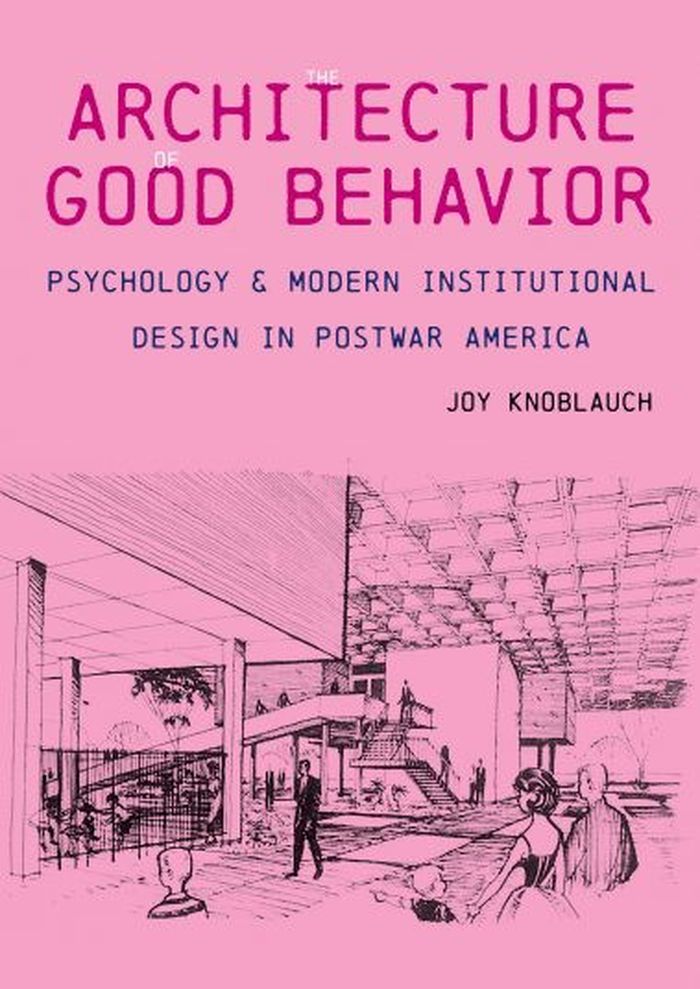
Inspired by the rise of environmental psychology and increasing support for behavioral research after the Second World War, new initiatives at the federal, state, and local levels looked to influence the human psyche through form, or elicit desired behaviors with environmental incentives, implementing what Joy Knoblauch calls 'psychological functionalism.' Recruited by federal construction and research programs for institutional reform and expansion — which included hospitals, mental health centers, prisons, and public housing—architects theorized new ways to control behavior and make it more functional by exercising soft power, or power through persuasion, with their designs. In the 1960s – 1970s era of anti-institutional sentiment, they hoped to offer an enlightened, palatable, more humane solution to larger social problems related to health, mental health, justice, and security of the population by applying psychological expertise to institutional design. In turn, Knoblauch argues, architects gained new roles as researchers, organizers, and writers while theories of confinement, territory, and surveillance proliferated. 'The Architecture of Good Behavior' explores psychological functionalism as a political tool and the architectural projects funded by a postwar nation in its efforts to govern, exert control over, and ultimately pacify its patients, prisoners, and residents.
The architecture of good behaviour
Actions:
Prix:
$70.00
(disponible sur commande)
Résumé:
Inspired by the rise of environmental psychology and increasing support for behavioral research after the Second World War, new initiatives at the federal, state, and local levels looked to influence the human psyche through form, or elicit desired behaviors with environmental incentives, implementing what Joy Knoblauch calls 'psychological functionalism.' Recruited by federal construction and research programs for institutional reform and expansion — which included hospitals, mental health centers, prisons, and public housing—architects theorized new ways to control behavior and make it more functional by exercising soft power, or power through persuasion, with their designs. In the 1960s – 1970s era of anti-institutional sentiment, they hoped to offer an enlightened, palatable, more humane solution to larger social problems related to health, mental health, justice, and security of the population by applying psychological expertise to institutional design. In turn, Knoblauch argues, architects gained new roles as researchers, organizers, and writers while theories of confinement, territory, and surveillance proliferated. 'The Architecture of Good Behavior' explores psychological functionalism as a political tool and the architectural projects funded by a postwar nation in its efforts to govern, exert control over, and ultimately pacify its patients, prisoners, and residents.
Classification:
livres
livres
Publication:
juin 2020
juin 2020
Sujet:
Théorie de l’architecture
Théorie de l’architecture
Classification:
livres
livres
Titre:
Responsive environments. An Interdisciplinary Manifesto on Design, Technology and the Human Experien
Responsive environments. An Interdisciplinary Manifesto on Design, Technology and the Human Experien
Actions:
Prix:
$54.95
(disponible sur commande)
Résumé:
The entanglement of physical contexts with digital environments is constantly changing our relationship with the surrounding space and creating new hybrid experiences. These transformations pose complex design challenges and yet offer novel opportunities for the understanding and development of human-centered built environments. Drawing from a 5-year design research(...)
$54.95
(disponible sur commande)
Résumé:
The entanglement of physical contexts with digital environments is constantly changing our relationship with the surrounding space and creating new hybrid experiences. These transformations pose complex design challenges and yet offer novel opportunities for the understanding and development of human-centered built environments. Drawing from a 5-year design research(...)
Titre:
Responsive environments. An Interdisciplinary Manifesto on Design, Technology and the Human Experien
Actions:
Prix:
$54.95
(disponible sur commande)
Résumé:
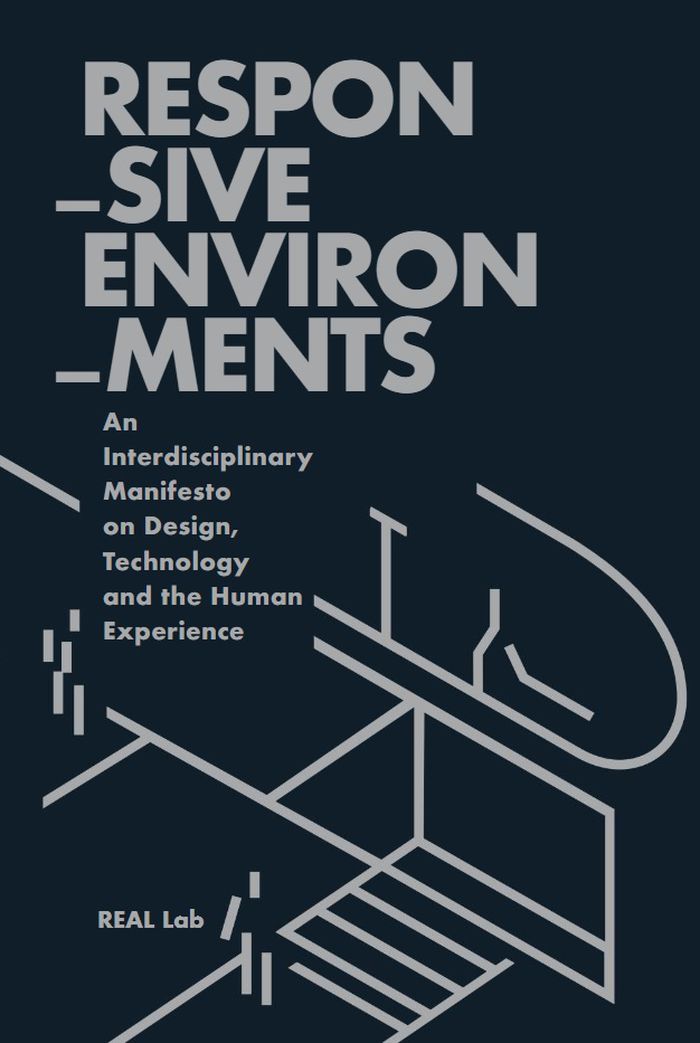
The entanglement of physical contexts with digital environments is constantly changing our relationship with the surrounding space and creating new hybrid experiences. These transformations pose complex design challenges and yet offer novel opportunities for the understanding and development of human-centered built environments. Drawing from a 5-year design research collaboration between the REAL Lab at Harvard GSD and the University of Bergamo, this book unfolds the experiential facets of our technologically-mediated relationship with space in the fields of architecture, urbanism and art. The book attempts to describe what makes an environment "responsive" in the form of a design manifesto, introducing ten attributes or principles at both methodological and experiential levels. Critically articulated from the perspective of leading experts, scholars and professionals, the ideas explored are unpacked through speculative urban visions and design concepts at different timeframes, contexts and scales ranging from smart artifacts to smart cities.
Responsive environments. An Interdisciplinary Manifesto on Design, Technology and the Human Experien
Actions:
Prix:
$54.95
(disponible sur commande)
Résumé:
The entanglement of physical contexts with digital environments is constantly changing our relationship with the surrounding space and creating new hybrid experiences. These transformations pose complex design challenges and yet offer novel opportunities for the understanding and development of human-centered built environments. Drawing from a 5-year design research collaboration between the REAL Lab at Harvard GSD and the University of Bergamo, this book unfolds the experiential facets of our technologically-mediated relationship with space in the fields of architecture, urbanism and art. The book attempts to describe what makes an environment "responsive" in the form of a design manifesto, introducing ten attributes or principles at both methodological and experiential levels. Critically articulated from the perspective of leading experts, scholars and professionals, the ideas explored are unpacked through speculative urban visions and design concepts at different timeframes, contexts and scales ranging from smart artifacts to smart cities.
Classification:
livres
livres
Publication:
août 2021
août 2021
Sujet:
Théorie de l’architecture
Théorie de l’architecture
Classification:
livres
livres
Actions:
Prix:
$66.95
(disponible en magasin)
Résumé:
L’hypothèse est que l’histoire de l’habitat se situe dans un temps long, une longue durée anthropologique, et que les évolutions sont lentes. C’est pourquoi il est nécessaire de s’interroger sur la dimension vernaculaire de l’habitat et, aujourd’hui, sur les relations entre un contexte local et un monde global qui tend précisément à effacer les différences. En Europe,(...)
$66.95
(disponible en magasin)
Résumé:
L’hypothèse est que l’histoire de l’habitat se situe dans un temps long, une longue durée anthropologique, et que les évolutions sont lentes. C’est pourquoi il est nécessaire de s’interroger sur la dimension vernaculaire de l’habitat et, aujourd’hui, sur les relations entre un contexte local et un monde global qui tend précisément à effacer les différences. En Europe,(...)
Titre:
Habiter: ville et architecture
Actions:
Prix:
$66.95
(disponible en magasin)
Résumé:
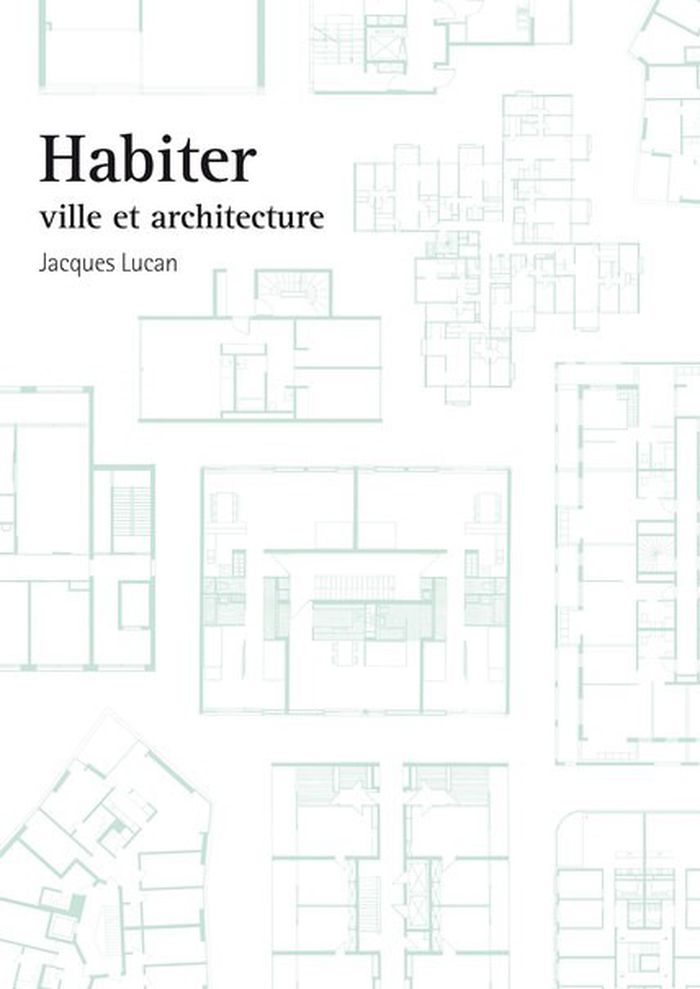
L’hypothèse est que l’histoire de l’habitat se situe dans un temps long, une longue durée anthropologique, et que les évolutions sont lentes. C’est pourquoi il est nécessaire de s’interroger sur la dimension vernaculaire de l’habitat et, aujourd’hui, sur les relations entre un contexte local et un monde global qui tend précisément à effacer les différences. En Europe, depuis le début du XXe siècle, les caractéristiques des logements se sont établies et généralisées. Comment cette généralisation s’est-elle opérée? Les réponses apportées à cette question permettent de décrire une évolution dans laquelle le présent se situe. Cependant, avec le mode de vie urbain ou métropolitain qui s’est développé et tend à devenir dominant, des formes de l’habitat ont été conçues et réalisées, correspondant à de nouvelles exigences. Il s’agit d’analyser ces formes, en particulier du point de vue de l’idée de communauté qu’elles proposent, et du point de vue de ce que l’on considère être le confort contemporain.
Habiter: ville et architecture
Actions:
Prix:
$66.95
(disponible en magasin)
Résumé:
L’hypothèse est que l’histoire de l’habitat se situe dans un temps long, une longue durée anthropologique, et que les évolutions sont lentes. C’est pourquoi il est nécessaire de s’interroger sur la dimension vernaculaire de l’habitat et, aujourd’hui, sur les relations entre un contexte local et un monde global qui tend précisément à effacer les différences. En Europe, depuis le début du XXe siècle, les caractéristiques des logements se sont établies et généralisées. Comment cette généralisation s’est-elle opérée? Les réponses apportées à cette question permettent de décrire une évolution dans laquelle le présent se situe. Cependant, avec le mode de vie urbain ou métropolitain qui s’est développé et tend à devenir dominant, des formes de l’habitat ont été conçues et réalisées, correspondant à de nouvelles exigences. Il s’agit d’analyser ces formes, en particulier du point de vue de l’idée de communauté qu’elles proposent, et du point de vue de ce que l’on considère être le confort contemporain.
Classification:
livres
livres
Publication:
mai 2021
mai 2021
Sujet:
Théorie de l’urbanisme
Théorie de l’urbanisme
Classification:
livres
livres

Titre:
Walden X : essai paysagiste
Walden X : essai paysagiste
Actions:
Prix:
$42.00
(disponible sur commande)
Résumé:
S'inscrivant dans la veine de "Walden ou la vie dans les bois" de Henry David Thoreau nourrit non pas de 2 ans 2 mois et 2 jours mais de 20 ans d'expérience, "Walden X" offre un panorama très accessible sur l'art du paysage baignade publique aménagée sur les bords du lac de Zurich en proposant une digression continue du Bad Utoquai vers l'île de Naoshima au Japon, le Silo(...)
$42.00
(disponible sur commande)
Résumé:
S'inscrivant dans la veine de "Walden ou la vie dans les bois" de Henry David Thoreau nourrit non pas de 2 ans 2 mois et 2 jours mais de 20 ans d'expérience, "Walden X" offre un panorama très accessible sur l'art du paysage baignade publique aménagée sur les bords du lac de Zurich en proposant une digression continue du Bad Utoquai vers l'île de Naoshima au Japon, le Silo(...)
Titre:
Walden X : essai paysagiste
Actions:
Prix:
$42.00
(disponible sur commande)
Résumé:
S'inscrivant dans la veine de "Walden ou la vie dans les bois" de Henry David Thoreau nourrit non pas de 2 ans 2 mois et 2 jours mais de 20 ans d'expérience, "Walden X" offre un panorama très accessible sur l'art du paysage baignade publique aménagée sur les bords du lac de Zurich en proposant une digression continue du Bad Utoquai vers l'île de Naoshima au Japon, le Silo District à Cape Town, le bas Clichy ou encore l'aire de jeux de Belleville.
Walden X : essai paysagiste
Actions:
Prix:
$42.00
(disponible sur commande)
Résumé:
S'inscrivant dans la veine de "Walden ou la vie dans les bois" de Henry David Thoreau nourrit non pas de 2 ans 2 mois et 2 jours mais de 20 ans d'expérience, "Walden X" offre un panorama très accessible sur l'art du paysage baignade publique aménagée sur les bords du lac de Zurich en proposant une digression continue du Bad Utoquai vers l'île de Naoshima au Japon, le Silo District à Cape Town, le bas Clichy ou encore l'aire de jeux de Belleville.
Classification:
livres
livres
Publication:
janvier 2019
janvier 2019
Sujet:
Théorie du paysage
Théorie du paysage
Classification:
livres
livres
Actions:
Prix:
$19.95
(disponible sur commande)
Résumé:
'From Gardens Where We Feel Secure' is gardener and writer Susanna Grant's exploration of her thinking on history, value and meaning of nature in the city. Examining the premise that naming species allows us to expand our understanding, our interest, our ways of looking at the world around us, and the idea of plant-blindness-our tendency not to see what we can't name in(...)
$19.95
(disponible sur commande)
Résumé:
'From Gardens Where We Feel Secure' is gardener and writer Susanna Grant's exploration of her thinking on history, value and meaning of nature in the city. Examining the premise that naming species allows us to expand our understanding, our interest, our ways of looking at the world around us, and the idea of plant-blindness-our tendency not to see what we can't name in(...)
Titre:
From gardens where we feel secure
Actions:
Prix:
$19.95
(disponible sur commande)
Résumé:
'From Gardens Where We Feel Secure' is gardener and writer Susanna Grant's exploration of her thinking on history, value and meaning of nature in the city. Examining the premise that naming species allows us to expand our understanding, our interest, our ways of looking at the world around us, and the idea of plant-blindness-our tendency not to see what we can't name in the nature that surrounds us-she throws a spotlight on five of her favourite wildflowers with accompanying images by photographer Rowan Spray. These stories are interspersed with reflections on Grant's own countryside childhood and her work in London's community gardens.
From gardens where we feel secure
Actions:
Prix:
$19.95
(disponible sur commande)
Résumé:
'From Gardens Where We Feel Secure' is gardener and writer Susanna Grant's exploration of her thinking on history, value and meaning of nature in the city. Examining the premise that naming species allows us to expand our understanding, our interest, our ways of looking at the world around us, and the idea of plant-blindness-our tendency not to see what we can't name in the nature that surrounds us-she throws a spotlight on five of her favourite wildflowers with accompanying images by photographer Rowan Spray. These stories are interspersed with reflections on Grant's own countryside childhood and her work in London's community gardens.
Classification:
livres
livres
Publication:
juin 2021
juin 2021
Sujet:
Théorie du paysage
Théorie du paysage
Classification:
livres
livres

Titre:
Poetics of the oriental rug
Poetics of the oriental rug
Actions:
Prix:
$19.95
(disponible en magasin)
Résumé:
‘Poetics of the Oriental Rug’ is published as a supplement to 'MacGuffin Magazine 9: The Rug'. It is the transcript of a seminal lecture entitled Poetica del tappeto orientale and delivered at the University of Padua in the early 1960s by Italian art historian Sergio Bettini (1905–1986).
$19.95
(disponible en magasin)
Résumé:
‘Poetics of the Oriental Rug’ is published as a supplement to 'MacGuffin Magazine 9: The Rug'. It is the transcript of a seminal lecture entitled Poetica del tappeto orientale and delivered at the University of Padua in the early 1960s by Italian art historian Sergio Bettini (1905–1986).
Titre:
Poetics of the oriental rug
Actions:
Prix:
$19.95
(disponible en magasin)
Résumé:
‘Poetics of the Oriental Rug’ is published as a supplement to 'MacGuffin Magazine 9: The Rug'. It is the transcript of a seminal lecture entitled Poetica del tappeto orientale and delivered at the University of Padua in the early 1960s by Italian art historian Sergio Bettini (1905–1986).
Poetics of the oriental rug
Actions:
Prix:
$19.95
(disponible en magasin)
Résumé:
‘Poetics of the Oriental Rug’ is published as a supplement to 'MacGuffin Magazine 9: The Rug'. It is the transcript of a seminal lecture entitled Poetica del tappeto orientale and delivered at the University of Padua in the early 1960s by Italian art historian Sergio Bettini (1905–1986).
Classification:
livres
livres
Publication:
juin 2021
juin 2021
Sujet:
Théorie du design
Théorie du design
Classification:
livres
livres
Prix:
$19.95
(disponible sur commande)
Résumé:
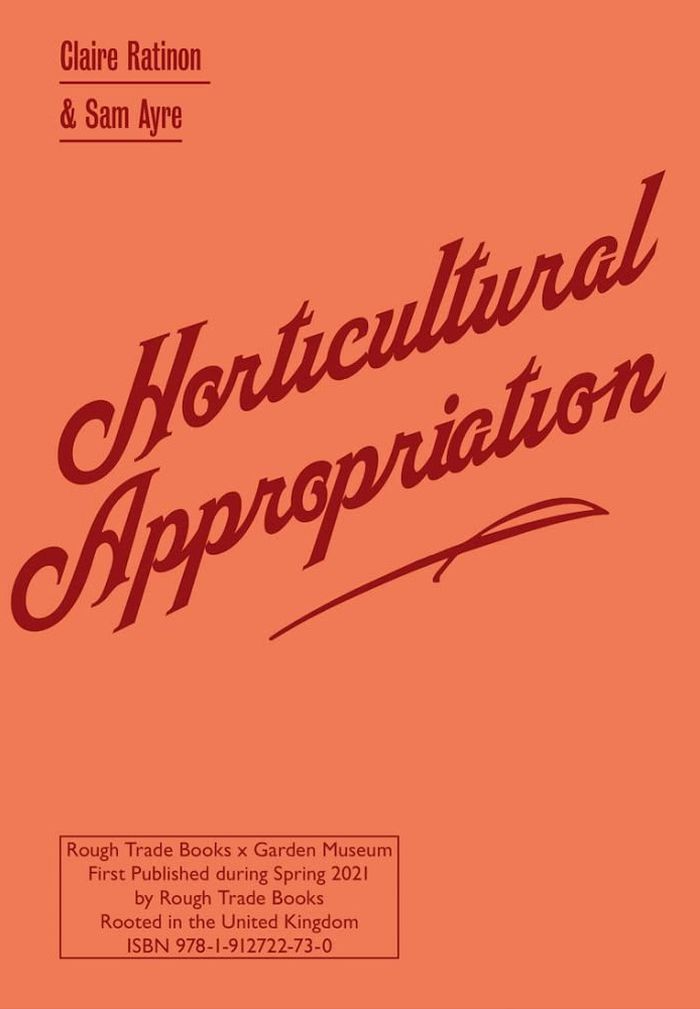
'Horticultural Appropriation' is a conversation between an organic food grower and an artist about the possibility and necessity of bringing a decolonial lens to the practice of horticulture. Taking place within West Dean Art College and Gardens, the exchange explores how attempts to decolonise collections and spaces currently happening in arts and cultural institutions(...)
$19.95
(disponible sur commande)
Résumé:
'Horticultural Appropriation' is a conversation between an organic food grower and an artist about the possibility and necessity of bringing a decolonial lens to the practice of horticulture. Taking place within West Dean Art College and Gardens, the exchange explores how attempts to decolonise collections and spaces currently happening in arts and cultural institutions(...)
Titre:
Horticultural appropriation: why horticulture needs decolonising
Actions:
Prix:
$19.95
(disponible sur commande)
Résumé:
'Horticultural Appropriation' is a conversation between an organic food grower and an artist about the possibility and necessity of bringing a decolonial lens to the practice of horticulture. Taking place within West Dean Art College and Gardens, the exchange explores how attempts to decolonise collections and spaces currently happening in arts and cultural institutions might inform the interrogation of the colonial history at the heart of Britain's gardens and gardening.
Horticultural appropriation: why horticulture needs decolonising
Actions:
Prix:
$19.95
(disponible sur commande)
Résumé:
'Horticultural Appropriation' is a conversation between an organic food grower and an artist about the possibility and necessity of bringing a decolonial lens to the practice of horticulture. Taking place within West Dean Art College and Gardens, the exchange explores how attempts to decolonise collections and spaces currently happening in arts and cultural institutions might inform the interrogation of the colonial history at the heart of Britain's gardens and gardening.
Classification:
livres
livres
Publication:
juin 2021
juin 2021
Sujet:
Théorie du paysage
Théorie du paysage


