


12370 Résultats
Classification:
livres
livres
Titre:
The House at Capo d'Orso
The House at Capo d'Orso
Actions:
Prix:
$33.95
(disponible en magasin)
Résumé:
How does a house shape experience? How does architecture establish a practice of living? Architect Sebastiano Brandolini invites readers on a meditative tour of his family’s house on the Sardinian coast, describing everything from the geology of the rocks beneath, to the history of the surrounding villages, to the way the shifting light measures the day. More than the(...)
$33.95
(disponible en magasin)
Résumé:
How does a house shape experience? How does architecture establish a practice of living? Architect Sebastiano Brandolini invites readers on a meditative tour of his family’s house on the Sardinian coast, describing everything from the geology of the rocks beneath, to the history of the surrounding villages, to the way the shifting light measures the day. More than the(...)
Titre:
The House at Capo d'Orso
Actions:
Prix:
$33.95
(disponible en magasin)
Résumé:
How does a house shape experience? How does architecture establish a practice of living? Architect Sebastiano Brandolini invites readers on a meditative tour of his family’s house on the Sardinian coast, describing everything from the geology of the rocks beneath, to the history of the surrounding villages, to the way the shifting light measures the day. More than the story of a single summer home written by an accomplished architect, this is a study of how place, the built environment, and daily practice make up our lives, at the most minute level of detail. Recalling the essays of Walter Benjamin, Bill Bryson, Rebecca Solnit, and Lawrence Weschler, Brandolini’s writing weaves literature, art history, and the transformation of Sardinia since the 1960s into a single fabric. "The House at Capo d’Orso" is not only a study of architecture and life in the built environment, but of family life, and the way the Brandolini family adapted themselves to the house they built.
The House at Capo d'Orso
Actions:
Prix:
$33.95
(disponible en magasin)
Résumé:
How does a house shape experience? How does architecture establish a practice of living? Architect Sebastiano Brandolini invites readers on a meditative tour of his family’s house on the Sardinian coast, describing everything from the geology of the rocks beneath, to the history of the surrounding villages, to the way the shifting light measures the day. More than the story of a single summer home written by an accomplished architect, this is a study of how place, the built environment, and daily practice make up our lives, at the most minute level of detail. Recalling the essays of Walter Benjamin, Bill Bryson, Rebecca Solnit, and Lawrence Weschler, Brandolini’s writing weaves literature, art history, and the transformation of Sardinia since the 1960s into a single fabric. "The House at Capo d’Orso" is not only a study of architecture and life in the built environment, but of family life, and the way the Brandolini family adapted themselves to the house they built.
Classification:
livres
livres
Publication:
mai 2023
mai 2023
Sujet:
Théorie de l’architecture
Théorie de l’architecture
Classification:
livres
livres
Actions:
Prix:
$20.95
(disponible sur commande)
Résumé:
A glimpse into the genesis of Harun Farocki’s film Images of the World and the Inscription of War (1988), which evolved from the unrealized project ''On the history of labor'' between 1985 and 1988. The booklet contains the project draft that Farocki wrote to apply for funding in the spring of 1986, a letter to Radio Free Berlin (SFB) editors Jürgen Tomm and Bernd(...)
$20.95
(disponible sur commande)
Résumé:
A glimpse into the genesis of Harun Farocki’s film Images of the World and the Inscription of War (1988), which evolved from the unrealized project ''On the history of labor'' between 1985 and 1988. The booklet contains the project draft that Farocki wrote to apply for funding in the spring of 1986, a letter to Radio Free Berlin (SFB) editors Jürgen Tomm and Bernd(...)
Titre:
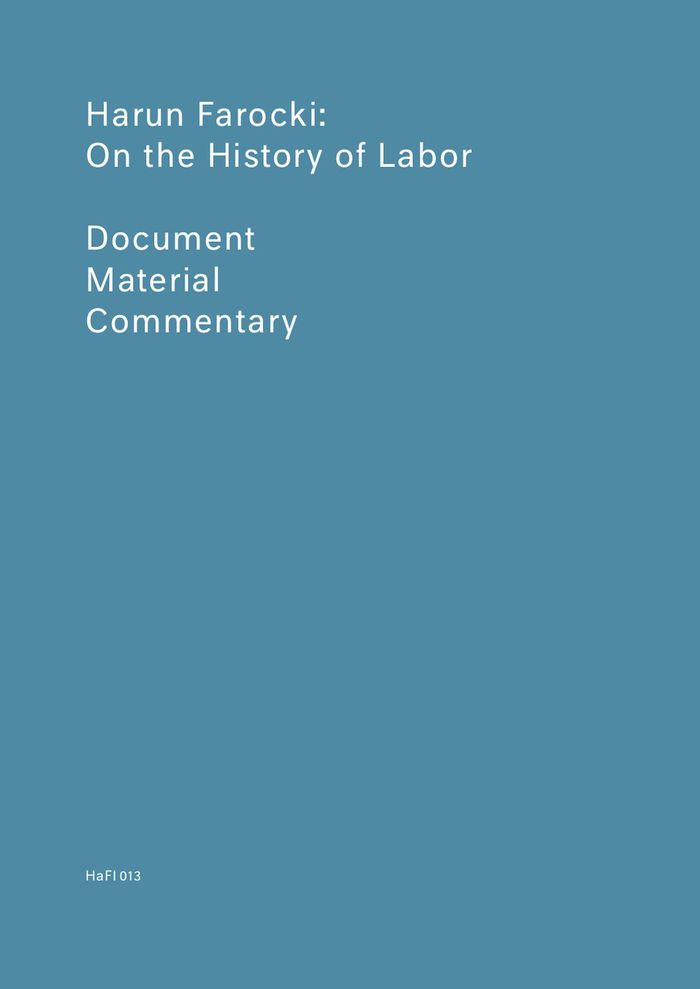
HaFI 013 - Harun Farocki: On the history of labor
Actions:
Prix:
$20.95
(disponible sur commande)
Résumé:
A glimpse into the genesis of Harun Farocki’s film Images of the World and the Inscription of War (1988), which evolved from the unrealized project ''On the history of labor'' between 1985 and 1988. The booklet contains the project draft that Farocki wrote to apply for funding in the spring of 1986, a letter to Radio Free Berlin (SFB) editors Jürgen Tomm and Bernd Schauer, a list of research locations, a short report to ''Filmbüro NRW'' (Film office North Rhine-Westphalia), a newspaper article by Farocki on the ''Technology of vision'', and a research bibliography that Farocki drew on during this period. A commentary by Volker Pantenburg outlines how ''On the history of labor'' evolved into ''Images / History'', then Images-War (1987) and finally Images of the World. Stills from Images of the World and from unused footage make palpable how the focus of the project shifted and how, in the process, the 1944 aerial photographs of Auschwitz-Birkenau taken by the Allies increasingly attracted Farocki’s attention.
HaFI 013 - Harun Farocki: On the history of labor
Actions:
Prix:
$20.95
(disponible sur commande)
Résumé:
A glimpse into the genesis of Harun Farocki’s film Images of the World and the Inscription of War (1988), which evolved from the unrealized project ''On the history of labor'' between 1985 and 1988. The booklet contains the project draft that Farocki wrote to apply for funding in the spring of 1986, a letter to Radio Free Berlin (SFB) editors Jürgen Tomm and Bernd Schauer, a list of research locations, a short report to ''Filmbüro NRW'' (Film office North Rhine-Westphalia), a newspaper article by Farocki on the ''Technology of vision'', and a research bibliography that Farocki drew on during this period. A commentary by Volker Pantenburg outlines how ''On the history of labor'' evolved into ''Images / History'', then Images-War (1987) and finally Images of the World. Stills from Images of the World and from unused footage make palpable how the focus of the project shifted and how, in the process, the 1944 aerial photographs of Auschwitz-Birkenau taken by the Allies increasingly attracted Farocki’s attention.
Classification:
livres
livres
Publication:
janvier 2020
janvier 2020
Sujet:
Social
Social
Classification:
livres
livres
Titre:
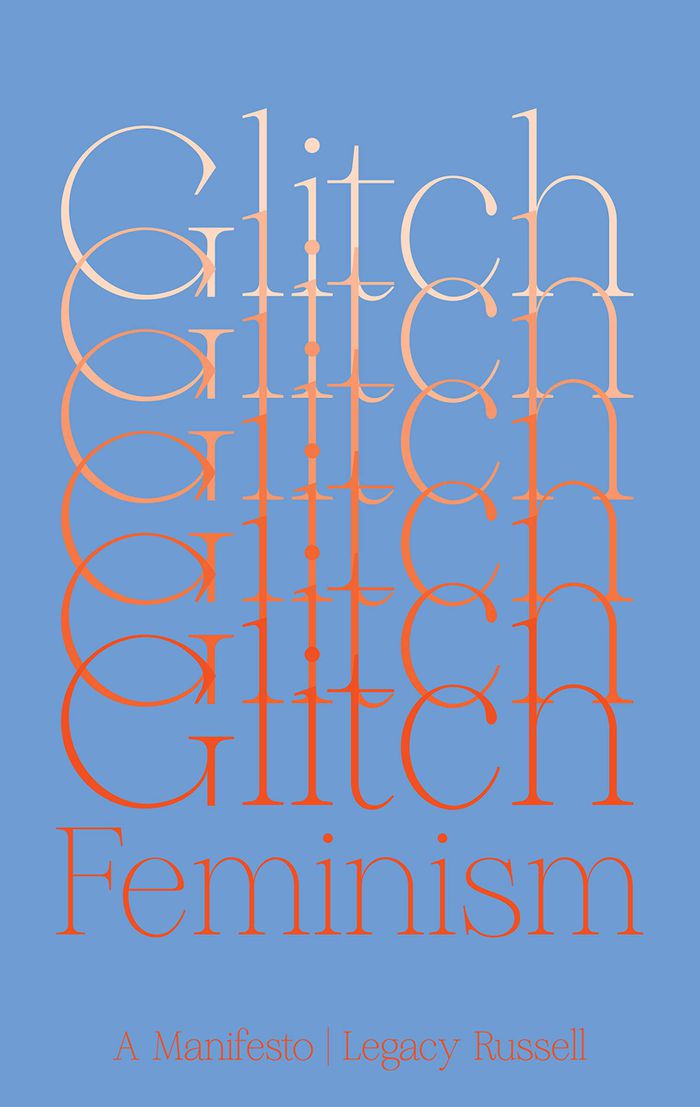
Glitch feminism: A manifesto
Glitch feminism: A manifesto
Actions:
Prix:
$25.95
(disponible en magasin)
Résumé:
A new manifesto for cyberfeminism: finding liberation in the glitch between body, gender, and technology The divide between the digital and the real world no longer exists. We are connected all the time. How do we find out who we are in this digital era? Where do we create the space to explore our identity? How can we come together in solidarity? A glitch is(...)
$25.95
(disponible en magasin)
Résumé:
A new manifesto for cyberfeminism: finding liberation in the glitch between body, gender, and technology The divide between the digital and the real world no longer exists. We are connected all the time. How do we find out who we are in this digital era? Where do we create the space to explore our identity? How can we come together in solidarity? A glitch is(...)
Titre:
Glitch feminism: A manifesto
Actions:
Prix:
$25.95
(disponible en magasin)
Résumé:
A new manifesto for cyberfeminism: finding liberation in the glitch between body, gender, and technology The divide between the digital and the real world no longer exists. We are connected all the time. How do we find out who we are in this digital era? Where do we create the space to explore our identity? How can we come together in solidarity? A glitch is normally thought of as an error, a faulty overlaying, but, as Legacy Russell shows, liberation can be found within the fissures between gender, technology, and the body. The glitch offers an opportunity for us to perform and transform ourselves in an infinite variety of identities. In Glitch Feminism, Russell makes a series of radical demands through memoir, art, and critical theory, as well as the work of contemporary artists—including Juliana Huxtable, Sondra Perry, boychild, Victoria Sin, and Kia LaBeija—who have travelled through the glitch in their work. Timely and provocative, ''Glitch feminism'' shows how error can lead to revolution.
Glitch feminism: A manifesto
Actions:
Prix:
$25.95
(disponible en magasin)
Résumé:
A new manifesto for cyberfeminism: finding liberation in the glitch between body, gender, and technology The divide between the digital and the real world no longer exists. We are connected all the time. How do we find out who we are in this digital era? Where do we create the space to explore our identity? How can we come together in solidarity? A glitch is normally thought of as an error, a faulty overlaying, but, as Legacy Russell shows, liberation can be found within the fissures between gender, technology, and the body. The glitch offers an opportunity for us to perform and transform ourselves in an infinite variety of identities. In Glitch Feminism, Russell makes a series of radical demands through memoir, art, and critical theory, as well as the work of contemporary artists—including Juliana Huxtable, Sondra Perry, boychild, Victoria Sin, and Kia LaBeija—who have travelled through the glitch in their work. Timely and provocative, ''Glitch feminism'' shows how error can lead to revolution.
Classification:
livres
livres
Publication:
octobre 2020
octobre 2020
Sujet:
Social
Social
Classification:
livres
livres

Actions:
Prix:
$54.95
(disponible sur commande)
Résumé:
This thought-provoking collection of photographic landscapes explores the connection between land and national identity.Is Europe a union in name only? How does the land we live on contribute to our culture? How does it divide or unite a collection of cultures? These important questions are at the root of this pictorial examination of Europe’s heterogeneous landscape.(...)
$54.95
(disponible sur commande)
Résumé:
This thought-provoking collection of photographic landscapes explores the connection between land and national identity.Is Europe a union in name only? How does the land we live on contribute to our culture? How does it divide or unite a collection of cultures? These important questions are at the root of this pictorial examination of Europe’s heterogeneous landscape.(...)
Titre:
European landscape photography
Actions:
Prix:
$54.95
(disponible sur commande)
Résumé:
This thought-provoking collection of photographic landscapes explores the connection between land and national identity.Is Europe a union in name only? How does the land we live on contribute to our culture? How does it divide or unite a collection of cultures? These important questions are at the root of this pictorial examination of Europe’s heterogeneous landscape. This book brings together images from 27 European Union nations and from prominent artists such as Olafur Eliasson (Denmark), Andreas Gursky (Germany), Carl De Keyzer (Belgium), Massimo Vitali (Italy), and Celine Clanet (France). The book shows how landscape photography in particular offers critical insights into the characteristics of a place, inviting viewers, through a subjective lens, to form their own feelings toward that place. Organized into three broad geographic zones, it offers depictions of Europe’s wonderfully varied geography — shorelines and fjords, mountains and plains, farmland and urban centers — as it seeks to understand the source of the continent’s diversity and unity.
European landscape photography
Actions:
Prix:
$54.95
(disponible sur commande)
Résumé:
This thought-provoking collection of photographic landscapes explores the connection between land and national identity.Is Europe a union in name only? How does the land we live on contribute to our culture? How does it divide or unite a collection of cultures? These important questions are at the root of this pictorial examination of Europe’s heterogeneous landscape. This book brings together images from 27 European Union nations and from prominent artists such as Olafur Eliasson (Denmark), Andreas Gursky (Germany), Carl De Keyzer (Belgium), Massimo Vitali (Italy), and Celine Clanet (France). The book shows how landscape photography in particular offers critical insights into the characteristics of a place, inviting viewers, through a subjective lens, to form their own feelings toward that place. Organized into three broad geographic zones, it offers depictions of Europe’s wonderfully varied geography — shorelines and fjords, mountains and plains, farmland and urban centers — as it seeks to understand the source of the continent’s diversity and unity.
Classification:
livres
livres
Publication:
septembre 2012
septembre 2012
Sujet:
Photographie- collections
Photographie- collections
Classification:
livres
livres
Prix:
$33.95
(disponible sur commande)
Résumé:
Judith Butler’s new book shows how an ethic of nonviolence must be connected to a broader political struggle for social equality. Further, it argues that nonviolence is often misunderstood as a passive practice that emanates from a calm region of the soul, or as an individualist ethical relation to existing forms of power. But, in fact, nonviolence is an ethical position(...)
$33.95
(disponible sur commande)
Résumé:
Judith Butler’s new book shows how an ethic of nonviolence must be connected to a broader political struggle for social equality. Further, it argues that nonviolence is often misunderstood as a passive practice that emanates from a calm region of the soul, or as an individualist ethical relation to existing forms of power. But, in fact, nonviolence is an ethical position(...)
Titre:
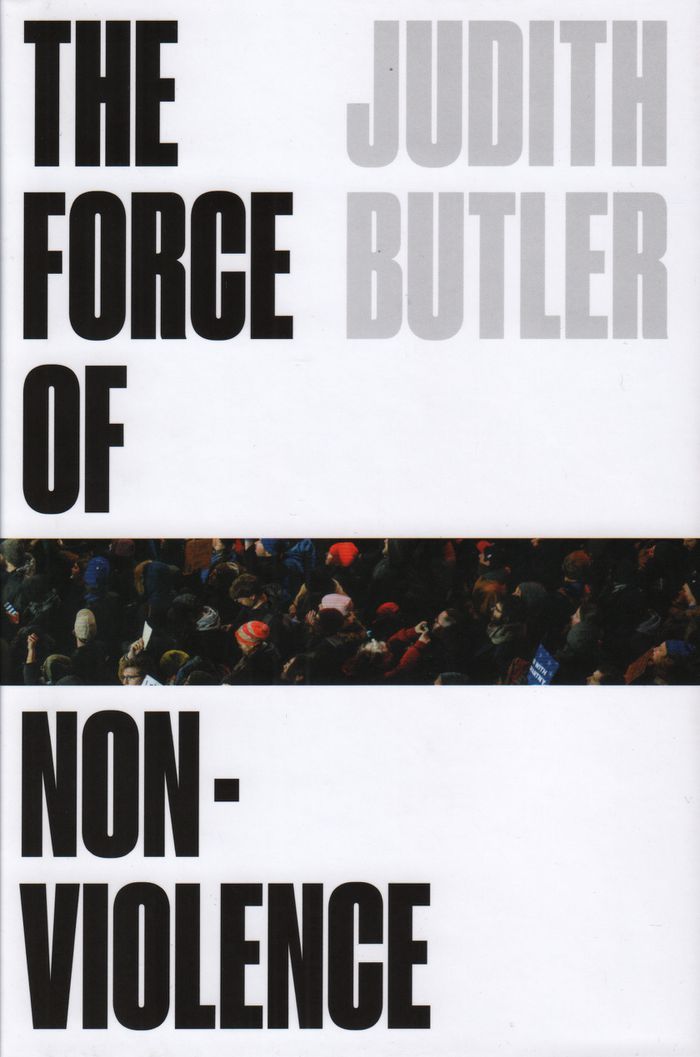
The force of non violence: the ethical in the political
Actions:
Prix:
$33.95
(disponible sur commande)
Résumé:
Judith Butler’s new book shows how an ethic of nonviolence must be connected to a broader political struggle for social equality. Further, it argues that nonviolence is often misunderstood as a passive practice that emanates from a calm region of the soul, or as an individualist ethical relation to existing forms of power. But, in fact, nonviolence is an ethical position found in the midst of the political field. An aggressive form of nonviolence accepts that hostility is part of our psychic constitution, but values ambivalence as a way of checking the conversion of aggression into violence. One contemporary challenge to a politics of nonviolence points out that there is a difference of opinion on what counts as violence and nonviolence. The distinction between them can be mobilized in the service of ratifying the state’s monopoly on violence. Considering nonviolence as an ethical problem within a political philosophy requires a critique of individualism as well as an understanding of the psychosocial dimensions of violence. Butler draws upon Foucault, Fanon, Freud, and Benjamin to consider how the interdiction against violence fails to include lives regarded as ungrievable. By considering how “racial phantasms” inform justifications of state and administrative violence, Butler tracks how violence is often attributed to those who are most severely exposed to its lethal effects. The struggle for nonviolence is found in movements for social transformation that reframe the grievability of lives in light of social equality and whose ethical claims follow from an insight into the interdependency of life as the basis of social and political equality.
The force of non violence: the ethical in the political
Actions:
Prix:
$33.95
(disponible sur commande)
Résumé:
Judith Butler’s new book shows how an ethic of nonviolence must be connected to a broader political struggle for social equality. Further, it argues that nonviolence is often misunderstood as a passive practice that emanates from a calm region of the soul, or as an individualist ethical relation to existing forms of power. But, in fact, nonviolence is an ethical position found in the midst of the political field. An aggressive form of nonviolence accepts that hostility is part of our psychic constitution, but values ambivalence as a way of checking the conversion of aggression into violence. One contemporary challenge to a politics of nonviolence points out that there is a difference of opinion on what counts as violence and nonviolence. The distinction between them can be mobilized in the service of ratifying the state’s monopoly on violence. Considering nonviolence as an ethical problem within a political philosophy requires a critique of individualism as well as an understanding of the psychosocial dimensions of violence. Butler draws upon Foucault, Fanon, Freud, and Benjamin to consider how the interdiction against violence fails to include lives regarded as ungrievable. By considering how “racial phantasms” inform justifications of state and administrative violence, Butler tracks how violence is often attributed to those who are most severely exposed to its lethal effects. The struggle for nonviolence is found in movements for social transformation that reframe the grievability of lives in light of social equality and whose ethical claims follow from an insight into the interdependency of life as the basis of social and political equality.
Classification:
livres
livres
Publication:
février 2020
février 2020
Sujet:
Social
Social
Classification:
livres
livres
Actions:
Prix:
$35.95
(disponible sur commande)
Résumé:
Does it ever feel like you have no free time? You come home after work and instead of finding a space of rest and relaxation, you’re confronted by a pile of new tasks to complete – cooking, cleaning, looking after the kids, and so on. In this book, Helen Hester and Nick Srnicek lay out how unpaid work in our homes has come to take up an ever-increasing portion of our(...)
$35.95
(disponible sur commande)
Résumé:
Does it ever feel like you have no free time? You come home after work and instead of finding a space of rest and relaxation, you’re confronted by a pile of new tasks to complete – cooking, cleaning, looking after the kids, and so on. In this book, Helen Hester and Nick Srnicek lay out how unpaid work in our homes has come to take up an ever-increasing portion of our(...)
Titre:
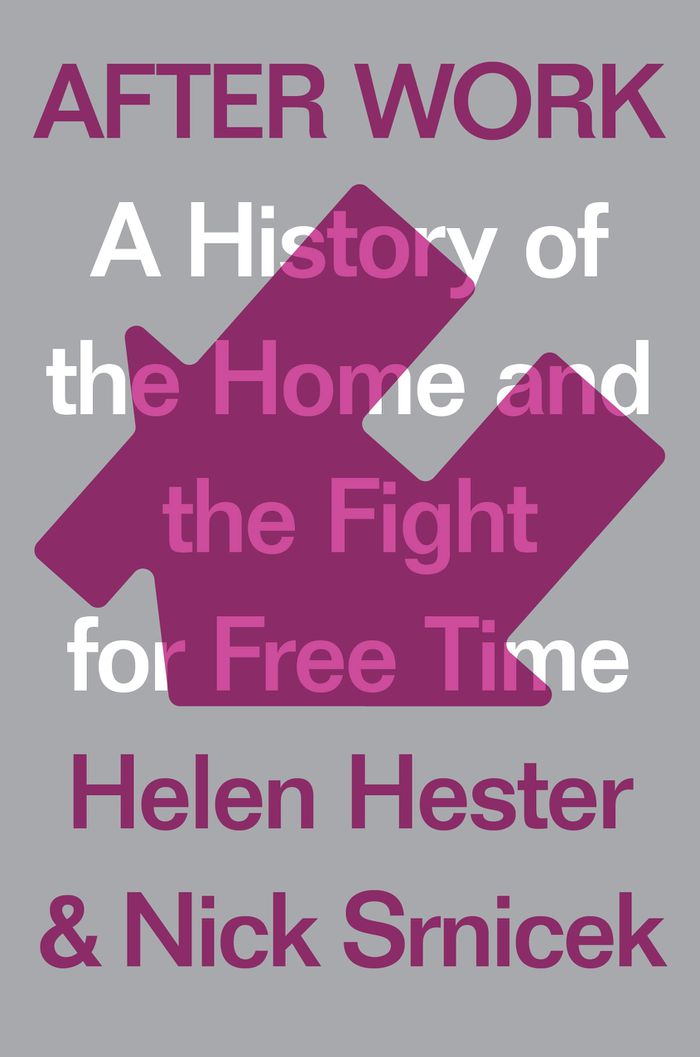
After work: The fight for free time
Actions:
Prix:
$35.95
(disponible sur commande)
Résumé:
Does it ever feel like you have no free time? You come home after work and instead of finding a space of rest and relaxation, you’re confronted by a pile of new tasks to complete – cooking, cleaning, looking after the kids, and so on. In this book, Helen Hester and Nick Srnicek lay out how unpaid work in our homes has come to take up an ever-increasing portion of our lives – how the vacuum of free time has been taken up by vacuuming. Examining the history of the home over the past century – from running water to white goods to smart homes – they show how repeated efforts to reduce the burden of this work have faced a variety of barriers, challenges, and reversals. Charting the trajectory of our domestic spaces over the past century, Hester and Srnicek consider new possibilities for the future, uncovering the abandoned ideas of anti-housework visionaries and sketching out a path towards real free time for all, where everyone is at liberty to pursue their passions, or do nothing at all. It will require rethinking our living arrangements, our expectations and our cities.
After work: The fight for free time
Actions:
Prix:
$35.95
(disponible sur commande)
Résumé:
Does it ever feel like you have no free time? You come home after work and instead of finding a space of rest and relaxation, you’re confronted by a pile of new tasks to complete – cooking, cleaning, looking after the kids, and so on. In this book, Helen Hester and Nick Srnicek lay out how unpaid work in our homes has come to take up an ever-increasing portion of our lives – how the vacuum of free time has been taken up by vacuuming. Examining the history of the home over the past century – from running water to white goods to smart homes – they show how repeated efforts to reduce the burden of this work have faced a variety of barriers, challenges, and reversals. Charting the trajectory of our domestic spaces over the past century, Hester and Srnicek consider new possibilities for the future, uncovering the abandoned ideas of anti-housework visionaries and sketching out a path towards real free time for all, where everyone is at liberty to pursue their passions, or do nothing at all. It will require rethinking our living arrangements, our expectations and our cities.
Classification:
livres
livres
Publication:
juillet 2023
juillet 2023
Sujet:
Social
Social
Classification:
livres
livres
Actions:
Prix:
$29.99
(disponible sur commande)
Résumé:
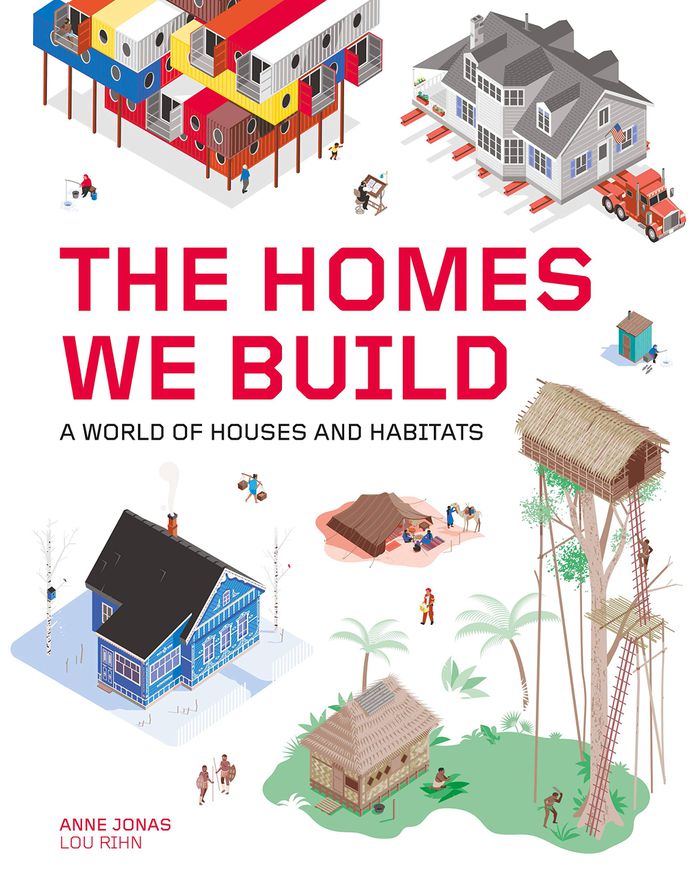
Learn how humans have built dwellings to suit all kinds of habitats. Adapting themselves to all kinds of landscapes and climates, over the centuries humans have used their architectural ingeniousness to build amazing dwellings: find them here, from houses on stilts and igloos to tree houses and skyscrapers.
$29.99
(disponible sur commande)
Résumé:
Learn how humans have built dwellings to suit all kinds of habitats. Adapting themselves to all kinds of landscapes and climates, over the centuries humans have used their architectural ingeniousness to build amazing dwellings: find them here, from houses on stilts and igloos to tree houses and skyscrapers.
Titre:
The homes we build: a world of houses and habitats
Actions:
Prix:
$29.99
(disponible sur commande)
Résumé:
Learn how humans have built dwellings to suit all kinds of habitats. Adapting themselves to all kinds of landscapes and climates, over the centuries humans have used their architectural ingeniousness to build amazing dwellings: find them here, from houses on stilts and igloos to tree houses and skyscrapers.
The homes we build: a world of houses and habitats
Actions:
Prix:
$29.99
(disponible sur commande)
Résumé:
Learn how humans have built dwellings to suit all kinds of habitats. Adapting themselves to all kinds of landscapes and climates, over the centuries humans have used their architectural ingeniousness to build amazing dwellings: find them here, from houses on stilts and igloos to tree houses and skyscrapers.
Classification:
livres
livres
Publication:
août 2020
août 2020
Sujet:
Littérature jeunesse
Littérature jeunesse
Classification:
livres
livres
Titre:
Deborah Stevenson : the city
Deborah Stevenson : the city
Actions:
Prix:
$24.95
(disponible sur commande)
Résumé:
This book examines the social meanings of cities - as places of work, leisure, night-life, danger, creativity, etc. - to contribute to understand how our lives are changing as more than half of the world's population now lives in cities.
$24.95
(disponible sur commande)
Résumé:
This book examines the social meanings of cities - as places of work, leisure, night-life, danger, creativity, etc. - to contribute to understand how our lives are changing as more than half of the world's population now lives in cities.
Titre:
Deborah Stevenson : the city
Actions:
Prix:
$24.95
(disponible sur commande)
Résumé:
This book examines the social meanings of cities - as places of work, leisure, night-life, danger, creativity, etc. - to contribute to understand how our lives are changing as more than half of the world's population now lives in cities.
Deborah Stevenson : the city
Actions:
Prix:
$24.95
(disponible sur commande)
Résumé:
This book examines the social meanings of cities - as places of work, leisure, night-life, danger, creativity, etc. - to contribute to understand how our lives are changing as more than half of the world's population now lives in cities.
Classification:
livres
livres
Publication:
novembre 2012
novembre 2012
Sujet:
Théorie de l’urbanisme
Théorie de l’urbanisme
Classification:
livres
livres
Actions:
Prix:
$39.95
(disponible en magasin)
Résumé:
Exploring the interaction between art and the public in Canadian cities, Urban Encounters features writing by artists, architects, curators, anthropologists, geographers, and urban studies specialists. They show how people and places affect the structure and content of public artworks, what kinds of urban spaces and socialities are generated through art, and how to(...)
$39.95
(disponible en magasin)
Résumé:
Exploring the interaction between art and the public in Canadian cities, Urban Encounters features writing by artists, architects, curators, anthropologists, geographers, and urban studies specialists. They show how people and places affect the structure and content of public artworks, what kinds of urban spaces and socialities are generated through art, and how to(...)
Titre:
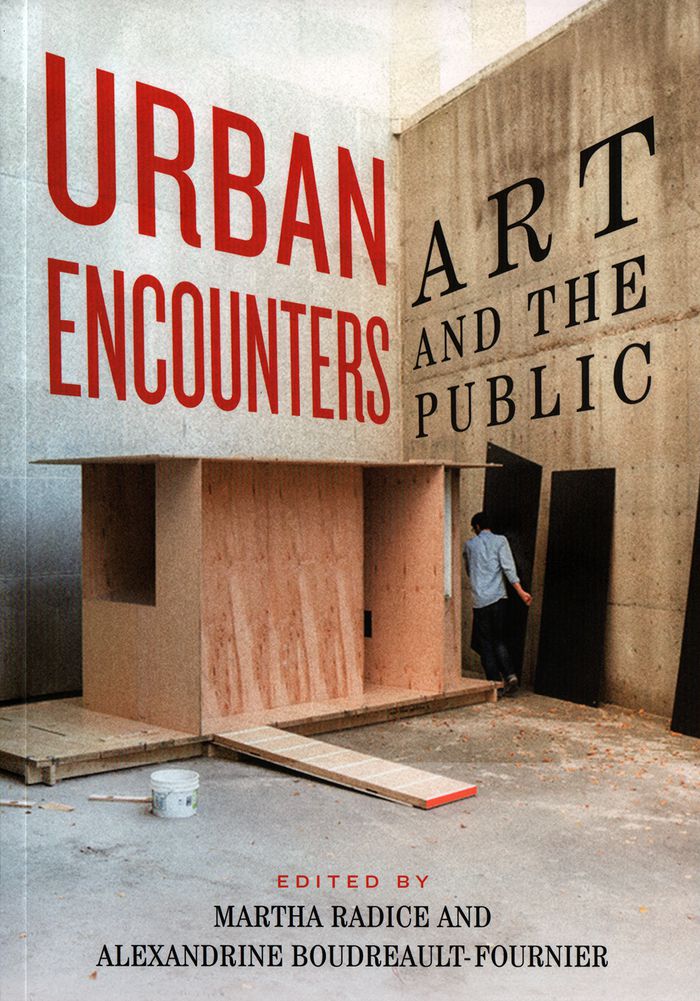
Urban encounters: art and the public
Actions:
Prix:
$39.95
(disponible en magasin)
Résumé:
Exploring the interaction between art and the public in Canadian cities, Urban Encounters features writing by artists, architects, curators, anthropologists, geographers, and urban studies specialists. They show how people and places affect the structure and content of public artworks, what kinds of urban spaces and socialities are generated through art, and how to investigate and interpret encounters between art and its viewers in the city. Discussing a variety of art forms, including mobile cinemas, street improvisation, audiovisual investigations, and assembled objects, the contributors treat public artworks not just as aesthetic installations, but as agents that participate in the social and cultural evolution of cities. Using original, hands-on approaches, Urban Encounters reveals how art in the urban public space generates encounters that can transform both the city itself and the ways that people relate to it.
Urban encounters: art and the public
Actions:
Prix:
$39.95
(disponible en magasin)
Résumé:
Exploring the interaction between art and the public in Canadian cities, Urban Encounters features writing by artists, architects, curators, anthropologists, geographers, and urban studies specialists. They show how people and places affect the structure and content of public artworks, what kinds of urban spaces and socialities are generated through art, and how to investigate and interpret encounters between art and its viewers in the city. Discussing a variety of art forms, including mobile cinemas, street improvisation, audiovisual investigations, and assembled objects, the contributors treat public artworks not just as aesthetic installations, but as agents that participate in the social and cultural evolution of cities. Using original, hands-on approaches, Urban Encounters reveals how art in the urban public space generates encounters that can transform both the city itself and the ways that people relate to it.
Classification:
livres
livres
Publication:
mai 2017
mai 2017
Sujet:
Théorie de l’art
Théorie de l’art
Classification:
livres
livres
Actions:
Prix:
$55.00
(disponible sur commande)
Résumé:
Values such as 'access' and 'inclusion' are unquestioned in the contemporary educational landscape. But many methods of addressing these issues - installing signs, ramps, and accessible washrooms - frame disability only as a problem to be 'fixed.' The Question of Access investigates the social meanings of access in contemporary university life from the perspective of(...)
$55.00
(disponible sur commande)
Résumé:
Values such as 'access' and 'inclusion' are unquestioned in the contemporary educational landscape. But many methods of addressing these issues - installing signs, ramps, and accessible washrooms - frame disability only as a problem to be 'fixed.' The Question of Access investigates the social meanings of access in contemporary university life from the perspective of(...)
Titre:
The question of access: disability, space, meaning
Actions:
Prix:
$55.00
(disponible sur commande)
Résumé:
Values such as 'access' and 'inclusion' are unquestioned in the contemporary educational landscape. But many methods of addressing these issues - installing signs, ramps, and accessible washrooms - frame disability only as a problem to be 'fixed.' The Question of Access investigates the social meanings of access in contemporary university life from the perspective of Cultural Disability Studies.Through narratives of struggle and analyses of policy and everyday practices, Tanya Titchkosky shows how interpretations of access reproduce conceptions of who belongs, where and when. Titchkosky examines how the bureaucratization of access issues has affected understandings of our lives together in social space. Representing 'access' as a beginning point for how disability can be rethought, rather than as a mere synonym for justice, The Question of Access allows readers to critically question their own implicit conceptions of disability, non-disability, and access.
The question of access: disability, space, meaning
Actions:
Prix:
$55.00
(disponible sur commande)
Résumé:
Values such as 'access' and 'inclusion' are unquestioned in the contemporary educational landscape. But many methods of addressing these issues - installing signs, ramps, and accessible washrooms - frame disability only as a problem to be 'fixed.' The Question of Access investigates the social meanings of access in contemporary university life from the perspective of Cultural Disability Studies.Through narratives of struggle and analyses of policy and everyday practices, Tanya Titchkosky shows how interpretations of access reproduce conceptions of who belongs, where and when. Titchkosky examines how the bureaucratization of access issues has affected understandings of our lives together in social space. Representing 'access' as a beginning point for how disability can be rethought, rather than as a mere synonym for justice, The Question of Access allows readers to critically question their own implicit conceptions of disability, non-disability, and access.
Classification:
livres
livres
Publication:
août 2011
août 2011


