


4081 Résultats
Classification:
expositions
expositions
Actions:
Description:
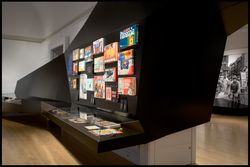
1973 : Désolé, plus d’essence analyse l’innovation architecturale à laquelle a donné naissance la crise énergétique de 1973, alors que la valeur du baril de pétrole augmentait de façon exponentielle, donnant lieu à des bouleversements économiques, politiques et sociaux dans de nombreux pays. Présentant plus de 350 objets – dessins d’architecture, photographies,(...)
1973 : Désolé, plus d’essence analyse l’innovation architecturale à laquelle a donné naissance la crise énergétique de 1973, alors que la valeur du baril de pétrole augmentait de façon exponentielle, donnant lieu à des bouleversements économiques, politiques et sociaux dans de nombreux pays. Présentant plus de 350 objets – dessins d’architecture, photographies,(...)
Localisation:
Salles principales Mot(s)-clé(s):
1973, désolé plus d'essence, crise du pétrole, énergie, environnement
Salles principales Mot(s)-clé(s):
1973, désolé plus d'essence, crise du pétrole, énergie, environnement
Date:
7 novembre 2007 au 20 avril 2008
7 novembre 2007 au 20 avril 2008
Titre:
1973 : désolé, plus d’essence
Actions:
Description:
1973 : Désolé, plus d’essence analyse l’innovation architecturale à laquelle a donné naissance la crise énergétique de 1973, alors que la valeur du baril de pétrole augmentait de façon exponentielle, donnant lieu à des bouleversements économiques, politiques et sociaux dans de nombreux pays. Présentant plus de 350 objets – dessins d’architecture, photographies,(...)
1973 : désolé, plus d’essence
Actions:
Description:
1973 : Désolé, plus d’essence analyse l’innovation architecturale à laquelle a donné naissance la crise énergétique de 1973, alors que la valeur du baril de pétrole augmentait de façon exponentielle, donnant lieu à des bouleversements économiques, politiques et sociaux dans de nombreux pays. Présentant plus de 350 objets – dessins d’architecture, photographies,(...)
Classification:
expositions
expositions
Date:
7 novembre 2007 au
20 avril 2008
7 novembre 2007 au
20 avril 2008
Localisation:
Salles principales Mot(s)-clé(s):
1973, désolé plus d'essence, crise du pétrole, énergie, environnement
Salles principales Mot(s)-clé(s):
1973, désolé plus d'essence, crise du pétrole, énergie, environnement
Classification:
documents textuels
documents textuels
Titre:
Filing system and job lists
Filing system and job lists
Numéro de référence:
DR2004:1462
Description:
includes filing system and job lists; boxes of reference cards (6 total) 'CP Ref & Article Ref/ Articles, Interviews X15/Cassettes tapes X16/ Videos... onwards /Negatives/ Photographs' (by project also) references (1 box); Boxes of reference cards 'Job cards' (3 boxes) by job nr, with contact info; Boxes of reference cards 'Memo references' (2 boxes) with list of memos by job nr with content;
DR2004:1462
Description:
includes filing system and job lists; boxes of reference cards (6 total) 'CP Ref & Article Ref/ Articles, Interviews X15/Cassettes tapes X16/ Videos... onwards /Negatives/ Photographs' (by project also) references (1 box); Boxes of reference cards 'Job cards' (3 boxes) by job nr, with contact info; Boxes of reference cards 'Memo references' (2 boxes) with list of memos by job nr with content;
Personnes et institutions:
Date:
1966-1996
1966-1996
Titre:
Filing system and job lists
Actions:
DR2004:1462
Description:
includes filing system and job lists; boxes of reference cards (6 total) 'CP Ref & Article Ref/ Articles, Interviews X15/Cassettes tapes X16/ Videos... onwards /Negatives/ Photographs' (by project also) references (1 box); Boxes of reference cards 'Job cards' (3 boxes) by job nr, with contact info; Boxes of reference cards 'Memo references' (2 boxes) with list of memos by job nr with content;
Filing system and job lists
Actions:
DR2004:1462
Description:
includes filing system and job lists; boxes of reference cards (6 total) 'CP Ref & Article Ref/ Articles, Interviews X15/Cassettes tapes X16/ Videos... onwards /Negatives/ Photographs' (by project also) references (1 box); Boxes of reference cards 'Job cards' (3 boxes) by job nr, with contact info; Boxes of reference cards 'Memo references' (2 boxes) with list of memos by job nr with content;
Classification:
documents textuels
documents textuels
Date:
1966-1996
1966-1996
Personnes et institutions:
Classification:
expositions
expositions
Actions:
Description:
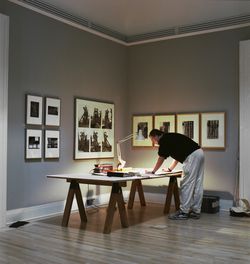
L’architecture et son image a pour thème les relations complexes existant entre l’architecture et sa représentation – c’est-à-dire entre les bâtiments, les paysages, les villes et les dessins, les photographies et certains modes de figuration. L’exposition réunit des images allant du début du 16e siècle jusqu’à la fin du 20e siècle. Elle comporte des pièces de toutes(...)
L’architecture et son image a pour thème les relations complexes existant entre l’architecture et sa représentation – c’est-à-dire entre les bâtiments, les paysages, les villes et les dessins, les photographies et certains modes de figuration. L’exposition réunit des images allant du début du 16e siècle jusqu’à la fin du 20e siècle. Elle comporte des pièces de toutes(...)
Date:
7 mai 1989 au 7 août 1989
7 mai 1989 au 7 août 1989
Titre:
L’architecture et son image
Actions:
Description:
L’architecture et son image a pour thème les relations complexes existant entre l’architecture et sa représentation – c’est-à-dire entre les bâtiments, les paysages, les villes et les dessins, les photographies et certains modes de figuration. L’exposition réunit des images allant du début du 16e siècle jusqu’à la fin du 20e siècle. Elle comporte des pièces de toutes(...)
L’architecture et son image
Actions:
Description:
L’architecture et son image a pour thème les relations complexes existant entre l’architecture et sa représentation – c’est-à-dire entre les bâtiments, les paysages, les villes et les dessins, les photographies et certains modes de figuration. L’exposition réunit des images allant du début du 16e siècle jusqu’à la fin du 20e siècle. Elle comporte des pièces de toutes(...)
Classification:
expositions
expositions
Date:
7 mai 1989 au
7 août 1989
7 mai 1989 au
7 août 1989
Niveau de description archivistique:
Série(s)
Série(s)
Numéro de référence:
AP193.S1
Description:
Series 1, Water Flux and Scrambled Flat, 2002-2010, documents the conception and evolution of a project that was originally a farm building and later became a geology and glaciology museum and research center focused on the Swiss Alps. The project was never realized. R&Sie(n) conceptualized Scrambled Flat as an experimental farm. The project goal was to reconcile European Union’s agricultural regulations, imposing a separation between animal and human living, to the community of Évolène traditional way of living, contiguously with animals, benefiting from the resources they offer. As conceived, Scrambled Flat creates an environment where fluidity between the existence of the animals and the humans is materialized. The size of the form is also adapted from a typical local rural house and exploits the heat of the animals and the insulation of the hay. For this project, R&Sie(n) approached the mayor of the community with the design proposition. The mayor then called for a competition, while also changing the program to an ecology museum and research center illustrating the local effects of global warming and the thawing of the Alps. R&Sie(n) won the competition with Water Flux, a reinterpretation of Scrambled Flat. The project was intended to uncover and exorcise the anxieties of ecological disaster, and the principle of flux related to seasonal change and, more broadly, climate change. The firm designed rooms that reproduce the geological and meteorological environment of the high mountains making it visible and experimental, offering refrigerated spaces for art installations and scientific demonstrations. The concept was also to build with the use of new technologies such as digital modelling, point scanning, and computer numerical control (CNC), combined with ancient local knowledge of knocking on trees to decide which specific pines have the best wood for construction. The building is designed to be constructed with local lamellar wood milled by nearby CNC. The resulting parts would be used for the structure, the insulation, the waterproofing and both the interior and exterior finishes. The design includes a grille wrapping the building, reproducing the profile of traditional houses and enclosure and making it possible to hold the snow inside a typo-morphological imprint. Therefore, the transformable envelope of the building reacts to the rhythm of the seasons. In the winter, the structure would appear like a solid cut-out of ice and snow, with cavities similar to those found in glaciers. In the summer, it would resemble piles of stones used in these areas to make borders. A small pool would collect rainwater and supply it to an interior artificial snowmaking system designed for the gallery. Transformation of the water is an integral part of the design. The records contain images of plans, sections, details for the structure of the façade, renderings, plans of the engineered structure, and photographs documenting the conception of the models with the CNC machinery. The Rhino 3D modelling files are also part of the records along with AutoCAD models and a video documenting the process. The records contain two physical models: a smaller polymer model at 1:20 scale representing the whole structure of the building, and a larger 1:1 latch wood fragment representing detail of the structure in its integrality.
AP193.S1
Description:
Series 1, Water Flux and Scrambled Flat, 2002-2010, documents the conception and evolution of a project that was originally a farm building and later became a geology and glaciology museum and research center focused on the Swiss Alps. The project was never realized. R&Sie(n) conceptualized Scrambled Flat as an experimental farm. The project goal was to reconcile European Union’s agricultural regulations, imposing a separation between animal and human living, to the community of Évolène traditional way of living, contiguously with animals, benefiting from the resources they offer. As conceived, Scrambled Flat creates an environment where fluidity between the existence of the animals and the humans is materialized. The size of the form is also adapted from a typical local rural house and exploits the heat of the animals and the insulation of the hay. For this project, R&Sie(n) approached the mayor of the community with the design proposition. The mayor then called for a competition, while also changing the program to an ecology museum and research center illustrating the local effects of global warming and the thawing of the Alps. R&Sie(n) won the competition with Water Flux, a reinterpretation of Scrambled Flat. The project was intended to uncover and exorcise the anxieties of ecological disaster, and the principle of flux related to seasonal change and, more broadly, climate change. The firm designed rooms that reproduce the geological and meteorological environment of the high mountains making it visible and experimental, offering refrigerated spaces for art installations and scientific demonstrations. The concept was also to build with the use of new technologies such as digital modelling, point scanning, and computer numerical control (CNC), combined with ancient local knowledge of knocking on trees to decide which specific pines have the best wood for construction. The building is designed to be constructed with local lamellar wood milled by nearby CNC. The resulting parts would be used for the structure, the insulation, the waterproofing and both the interior and exterior finishes. The design includes a grille wrapping the building, reproducing the profile of traditional houses and enclosure and making it possible to hold the snow inside a typo-morphological imprint. Therefore, the transformable envelope of the building reacts to the rhythm of the seasons. In the winter, the structure would appear like a solid cut-out of ice and snow, with cavities similar to those found in glaciers. In the summer, it would resemble piles of stones used in these areas to make borders. A small pool would collect rainwater and supply it to an interior artificial snowmaking system designed for the gallery. Transformation of the water is an integral part of the design. The records contain images of plans, sections, details for the structure of the façade, renderings, plans of the engineered structure, and photographs documenting the conception of the models with the CNC machinery. The Rhino 3D modelling files are also part of the records along with AutoCAD models and a video documenting the process. The records contain two physical models: a smaller polymer model at 1:20 scale representing the whole structure of the building, and a larger 1:1 latch wood fragment representing detail of the structure in its integrality.
Personnes et institutions:
Date:
2002-2010
2002-2010
Titre:
Water Flux and Scrambled Flat
Actions:
AP193.S1
Description:
Series 1, Water Flux and Scrambled Flat, 2002-2010, documents the conception and evolution of a project that was originally a farm building and later became a geology and glaciology museum and research center focused on the Swiss Alps. The project was never realized. R&Sie(n) conceptualized Scrambled Flat as an experimental farm. The project goal was to reconcile European Union’s agricultural regulations, imposing a separation between animal and human living, to the community of Évolène traditional way of living, contiguously with animals, benefiting from the resources they offer. As conceived, Scrambled Flat creates an environment where fluidity between the existence of the animals and the humans is materialized. The size of the form is also adapted from a typical local rural house and exploits the heat of the animals and the insulation of the hay. For this project, R&Sie(n) approached the mayor of the community with the design proposition. The mayor then called for a competition, while also changing the program to an ecology museum and research center illustrating the local effects of global warming and the thawing of the Alps. R&Sie(n) won the competition with Water Flux, a reinterpretation of Scrambled Flat. The project was intended to uncover and exorcise the anxieties of ecological disaster, and the principle of flux related to seasonal change and, more broadly, climate change. The firm designed rooms that reproduce the geological and meteorological environment of the high mountains making it visible and experimental, offering refrigerated spaces for art installations and scientific demonstrations. The concept was also to build with the use of new technologies such as digital modelling, point scanning, and computer numerical control (CNC), combined with ancient local knowledge of knocking on trees to decide which specific pines have the best wood for construction. The building is designed to be constructed with local lamellar wood milled by nearby CNC. The resulting parts would be used for the structure, the insulation, the waterproofing and both the interior and exterior finishes. The design includes a grille wrapping the building, reproducing the profile of traditional houses and enclosure and making it possible to hold the snow inside a typo-morphological imprint. Therefore, the transformable envelope of the building reacts to the rhythm of the seasons. In the winter, the structure would appear like a solid cut-out of ice and snow, with cavities similar to those found in glaciers. In the summer, it would resemble piles of stones used in these areas to make borders. A small pool would collect rainwater and supply it to an interior artificial snowmaking system designed for the gallery. Transformation of the water is an integral part of the design. The records contain images of plans, sections, details for the structure of the façade, renderings, plans of the engineered structure, and photographs documenting the conception of the models with the CNC machinery. The Rhino 3D modelling files are also part of the records along with AutoCAD models and a video documenting the process. The records contain two physical models: a smaller polymer model at 1:20 scale representing the whole structure of the building, and a larger 1:1 latch wood fragment representing detail of the structure in its integrality.
Water Flux and Scrambled Flat
Actions:
AP193.S1
Description:
Series 1, Water Flux and Scrambled Flat, 2002-2010, documents the conception and evolution of a project that was originally a farm building and later became a geology and glaciology museum and research center focused on the Swiss Alps. The project was never realized. R&Sie(n) conceptualized Scrambled Flat as an experimental farm. The project goal was to reconcile European Union’s agricultural regulations, imposing a separation between animal and human living, to the community of Évolène traditional way of living, contiguously with animals, benefiting from the resources they offer. As conceived, Scrambled Flat creates an environment where fluidity between the existence of the animals and the humans is materialized. The size of the form is also adapted from a typical local rural house and exploits the heat of the animals and the insulation of the hay. For this project, R&Sie(n) approached the mayor of the community with the design proposition. The mayor then called for a competition, while also changing the program to an ecology museum and research center illustrating the local effects of global warming and the thawing of the Alps. R&Sie(n) won the competition with Water Flux, a reinterpretation of Scrambled Flat. The project was intended to uncover and exorcise the anxieties of ecological disaster, and the principle of flux related to seasonal change and, more broadly, climate change. The firm designed rooms that reproduce the geological and meteorological environment of the high mountains making it visible and experimental, offering refrigerated spaces for art installations and scientific demonstrations. The concept was also to build with the use of new technologies such as digital modelling, point scanning, and computer numerical control (CNC), combined with ancient local knowledge of knocking on trees to decide which specific pines have the best wood for construction. The building is designed to be constructed with local lamellar wood milled by nearby CNC. The resulting parts would be used for the structure, the insulation, the waterproofing and both the interior and exterior finishes. The design includes a grille wrapping the building, reproducing the profile of traditional houses and enclosure and making it possible to hold the snow inside a typo-morphological imprint. Therefore, the transformable envelope of the building reacts to the rhythm of the seasons. In the winter, the structure would appear like a solid cut-out of ice and snow, with cavities similar to those found in glaciers. In the summer, it would resemble piles of stones used in these areas to make borders. A small pool would collect rainwater and supply it to an interior artificial snowmaking system designed for the gallery. Transformation of the water is an integral part of the design. The records contain images of plans, sections, details for the structure of the façade, renderings, plans of the engineered structure, and photographs documenting the conception of the models with the CNC machinery. The Rhino 3D modelling files are also part of the records along with AutoCAD models and a video documenting the process. The records contain two physical models: a smaller polymer model at 1:20 scale representing the whole structure of the building, and a larger 1:1 latch wood fragment representing detail of the structure in its integrality.
Niveau de description archivistique:
Series
Series
Date:
2002-2010
2002-2010
Personnes et institutions:
Classification:
né numérique
né numérique
Numéro de référence:
AP184.S2.002
Description:
This directory chiefly contains working files related to MarkeTrac and OrderTrac. This includes a large number of renderings and other image files, as well as some related presentation files, meeting notes, and documentation. Notably, there are also a number of videos which show projectors using light to manipulate a room, possibly related to Asymptote's research into virtual reality. This material was initially located on the hard drive. Most common file formats: JPEG File Interchange Format, Adobe Photoshop, Tagged Image File Format
AP184.S2.002
Description:
This directory chiefly contains working files related to MarkeTrac and OrderTrac. This includes a large number of renderings and other image files, as well as some related presentation files, meeting notes, and documentation. Notably, there are also a number of videos which show projectors using light to manipulate a room, possibly related to Asymptote's research into virtual reality. This material was initially located on the hard drive. Most common file formats: JPEG File Interchange Format, Adobe Photoshop, Tagged Image File Format
Personnes et institutions:
Date:
8 December 1995 - 17 October 2005
8 December 1995 - 17 October 2005
Titre:
Digital presentation handout files of MarkeTrac and OrderTrac
Actions:
AP184.S2.002
Description:
This directory chiefly contains working files related to MarkeTrac and OrderTrac. This includes a large number of renderings and other image files, as well as some related presentation files, meeting notes, and documentation. Notably, there are also a number of videos which show projectors using light to manipulate a room, possibly related to Asymptote's research into virtual reality. This material was initially located on the hard drive. Most common file formats: JPEG File Interchange Format, Adobe Photoshop, Tagged Image File Format
Digital presentation handout files of MarkeTrac and OrderTrac
Actions:
AP184.S2.002
Description:
This directory chiefly contains working files related to MarkeTrac and OrderTrac. This includes a large number of renderings and other image files, as well as some related presentation files, meeting notes, and documentation. Notably, there are also a number of videos which show projectors using light to manipulate a room, possibly related to Asymptote's research into virtual reality. This material was initially located on the hard drive. Most common file formats: JPEG File Interchange Format, Adobe Photoshop, Tagged Image File Format
Classification:
né numérique
né numérique
Date:
8 December 1995 - 17 October 2005
8 December 1995 - 17 October 2005
Personnes et institutions:
Classification:
archives
Niveau de description archivistique:
Fonds
archives
Niveau de description archivistique:
Fonds
Numéro de référence:
AP194
Résumé:
The Johan Bettum OCEAN North projects records, 1995-2000, consist of born-digital files and a physical drawing that document three projects by the OCEAN North collective: Synthetic Landscape (1995-2000), Jyväskylä Music and Arts Centre (competition, 1997), and Tölöö Football Stadium (competition, 1997). The archive also includes a small amount of additional born-digital reference materials on 11 projects from the collective, including the three projects mentioned above.
AP194
Résumé:
The Johan Bettum OCEAN North projects records, 1995-2000, consist of born-digital files and a physical drawing that document three projects by the OCEAN North collective: Synthetic Landscape (1995-2000), Jyväskylä Music and Arts Centre (competition, 1997), and Tölöö Football Stadium (competition, 1997). The archive also includes a small amount of additional born-digital reference materials on 11 projects from the collective, including the three projects mentioned above.
Personnes et institutions:
Date:
1995-2000
1995-2000
Titre:
Documents d’archives de Johan Bettum pour les projets de OCEAN North
Actions:
AP194
Résumé:
The Johan Bettum OCEAN North projects records, 1995-2000, consist of born-digital files and a physical drawing that document three projects by the OCEAN North collective: Synthetic Landscape (1995-2000), Jyväskylä Music and Arts Centre (competition, 1997), and Tölöö Football Stadium (competition, 1997). The archive also includes a small amount of additional born-digital reference materials on 11 projects from the collective, including the three projects mentioned above.
Documents d’archives de Johan Bettum pour les projets de OCEAN North
Actions:
AP194
Résumé:
The Johan Bettum OCEAN North projects records, 1995-2000, consist of born-digital files and a physical drawing that document three projects by the OCEAN North collective: Synthetic Landscape (1995-2000), Jyväskylä Music and Arts Centre (competition, 1997), and Tölöö Football Stadium (competition, 1997). The archive also includes a small amount of additional born-digital reference materials on 11 projects from the collective, including the three projects mentioned above.
Classification:
archives
Niveau de description archivistique:
Fonds
archives
Niveau de description archivistique:
Fonds
Date:
1995-2000
1995-2000
Personnes et institutions:
Classification:
dessins
dessins
Numéro de référence:
DR2006:0003
Description:
Le collage intitulé " Galerie de la grande architecture canadienne " a été produit dans le contexte de l'exposition " Canada-Trajectoires 1973 " présentée au Musée national d'art moderne de la ville de Paris au cours de l'été 1973. Le collage, appliqué sur papier cartonné, représente une sélection de textes et d'images d'œuvres exposées par Melvin Charney lors de cette exposition. L'objectif de l'exposition "Canada-Trajectoires 1973 " était de réunir des artistes ou des regroupements d'artistes engagés dans des discours critiques et de présenter leur travail non pas tant comme des oeuvres d'art mais plutôt " comme symptômes d'un certain climat ." (1) Selon le catalogue de l'exposition, et les divers comptes rendus qui en ont été fait dans la presse spécialisée, celle-ci était divisée en cinq sections. Quatre de ces sections étaient consacrées à des médiums spécifiques : art céramique, vidéo, peinture et sculpture, cinéma. Une cinquième section présentait des œuvres produites par des collectif d'artistes quelques soit le médium employé: galerie coopérative, coop d'artistes, workshop, banques d'images. C'est dans cette dernière section que Melvin Charney présenta trois projets créé avec l'assistance d'un groupe d'"action photographique", soit un "pavillon d'exposition" réalisé en 1969, une "monument à l'aviation" (1969) et "une galerie de la grande architecture" (1973). Dans un texte de Melvin Charney publié dans le catalogue de l'exposition, ces trois projets furent présentés sous l'intitulé "Quelques monuments nationaux". Le collage incorpore en une première strate collée obliquement par rapport au sens du carton d'œuvre, une image (en partie rognée), un texte manifeste (en partie coupée) et un intitulé. Ces trois éléments de toutes évidences se rapportent à L'ensemble des trois projets présenté par Charney. Sur une seconde strate, collée dans le sens du carton d'œuvres, Charney a collé des textes et des images se rapportant à deux des projets soit "une galerie de la grande architecture" (image et texte 25, 26 31 et 34, et monument à l'aviation, image et texte 50. Le collage est signé et daté en bas à droite. Des indications d'intercalation d'illustration au crayon graphite, - avec la mention "cut line" - détermine à même le carton d'œuvre, une zone regroupant l'ensemble des textes et des images collés. Au dos du collage figure à nouveau la signature de Charney et une numéro d'inventaire renvoyant possiblement à un catalogue constitué par Charney de son œuvre : "MC 1973 ? 02". Ce collage a servi de maquette pour la production d'une affiche publicisant l'exposition, ce qui explique la présence d'indications d'intercalation d'illustrations - une donnée signalant en règle générale que l'œuvre a été produite pour être publiée. (2) Ceci dit on ne sait pas si celle-ci fut effectivement tirée (nous n'en connaissons aucun exemplaire) avant, pendant ou après l'exposition. Cet aspect de l'historique de cette œuvre reste encore au moment où nous écrivons, à éclaircir. On peut établir toutefois avec certitude que cette œuvre, ou l'affiche qui en fut éventuellement tirée, a servi à produire la mise en page d'un article de Melvin Charney publié en avril 1974 dans la revue britannique Architectural Design. Un transparent a sans doute été pris du collage puis envoyé avec l'article de Charney à l'éditeur. Ce dernier a, à son tour, cadré l'image en fonction des indications d'intercalation d'illustrations latérales et supérieure,- on observe que le 3 de 1973 est bel et bien coupé - puis a éliminé les trois quart inférieur pour y placer le texte de l'article. La présence dans l'article publié du nom du musée d'art moderne de la ville de Paris - section arc, et son absence dans le collage est du à une perte. Un examen attentif révèle des marques sans doute de colle pour la bandelette de papier. Dans cet article publié en anglais Charney. 1- Suzanne Page, Canada trajectoires 73 : Musée d'art moderne de la ville de Paris, [Montréal?] : Publié par les Éditions Médiart pour le compte du Conseil des arts du Canada, [1973], [introduction] 2- Information fournie par l,artiste; voir aussi la légende de l'œuvre lors de sa reproduction dans un catalogue en 2000 où elle est décrite comme étant une maquette pour une affiche en offset sur papier.
DR2006:0003
Description:
Le collage intitulé " Galerie de la grande architecture canadienne " a été produit dans le contexte de l'exposition " Canada-Trajectoires 1973 " présentée au Musée national d'art moderne de la ville de Paris au cours de l'été 1973. Le collage, appliqué sur papier cartonné, représente une sélection de textes et d'images d'œuvres exposées par Melvin Charney lors de cette exposition. L'objectif de l'exposition "Canada-Trajectoires 1973 " était de réunir des artistes ou des regroupements d'artistes engagés dans des discours critiques et de présenter leur travail non pas tant comme des oeuvres d'art mais plutôt " comme symptômes d'un certain climat ." (1) Selon le catalogue de l'exposition, et les divers comptes rendus qui en ont été fait dans la presse spécialisée, celle-ci était divisée en cinq sections. Quatre de ces sections étaient consacrées à des médiums spécifiques : art céramique, vidéo, peinture et sculpture, cinéma. Une cinquième section présentait des œuvres produites par des collectif d'artistes quelques soit le médium employé: galerie coopérative, coop d'artistes, workshop, banques d'images. C'est dans cette dernière section que Melvin Charney présenta trois projets créé avec l'assistance d'un groupe d'"action photographique", soit un "pavillon d'exposition" réalisé en 1969, une "monument à l'aviation" (1969) et "une galerie de la grande architecture" (1973). Dans un texte de Melvin Charney publié dans le catalogue de l'exposition, ces trois projets furent présentés sous l'intitulé "Quelques monuments nationaux". Le collage incorpore en une première strate collée obliquement par rapport au sens du carton d'œuvre, une image (en partie rognée), un texte manifeste (en partie coupée) et un intitulé. Ces trois éléments de toutes évidences se rapportent à L'ensemble des trois projets présenté par Charney. Sur une seconde strate, collée dans le sens du carton d'œuvres, Charney a collé des textes et des images se rapportant à deux des projets soit "une galerie de la grande architecture" (image et texte 25, 26 31 et 34, et monument à l'aviation, image et texte 50. Le collage est signé et daté en bas à droite. Des indications d'intercalation d'illustration au crayon graphite, - avec la mention "cut line" - détermine à même le carton d'œuvre, une zone regroupant l'ensemble des textes et des images collés. Au dos du collage figure à nouveau la signature de Charney et une numéro d'inventaire renvoyant possiblement à un catalogue constitué par Charney de son œuvre : "MC 1973 ? 02". Ce collage a servi de maquette pour la production d'une affiche publicisant l'exposition, ce qui explique la présence d'indications d'intercalation d'illustrations - une donnée signalant en règle générale que l'œuvre a été produite pour être publiée. (2) Ceci dit on ne sait pas si celle-ci fut effectivement tirée (nous n'en connaissons aucun exemplaire) avant, pendant ou après l'exposition. Cet aspect de l'historique de cette œuvre reste encore au moment où nous écrivons, à éclaircir. On peut établir toutefois avec certitude que cette œuvre, ou l'affiche qui en fut éventuellement tirée, a servi à produire la mise en page d'un article de Melvin Charney publié en avril 1974 dans la revue britannique Architectural Design. Un transparent a sans doute été pris du collage puis envoyé avec l'article de Charney à l'éditeur. Ce dernier a, à son tour, cadré l'image en fonction des indications d'intercalation d'illustrations latérales et supérieure,- on observe que le 3 de 1973 est bel et bien coupé - puis a éliminé les trois quart inférieur pour y placer le texte de l'article. La présence dans l'article publié du nom du musée d'art moderne de la ville de Paris - section arc, et son absence dans le collage est du à une perte. Un examen attentif révèle des marques sans doute de colle pour la bandelette de papier. Dans cet article publié en anglais Charney. 1- Suzanne Page, Canada trajectoires 73 : Musée d'art moderne de la ville de Paris, [Montréal?] : Publié par les Éditions Médiart pour le compte du Conseil des arts du Canada, [1973], [introduction] 2- Information fournie par l,artiste; voir aussi la légende de l'œuvre lors de sa reproduction dans un catalogue en 2000 où elle est décrite comme étant une maquette pour une affiche en offset sur papier.
Personnes et institutions:
Date:
1973
1973
Titre:
Some national monuments, Canada trajectories
Actions:
DR2006:0003
Description:
Le collage intitulé " Galerie de la grande architecture canadienne " a été produit dans le contexte de l'exposition " Canada-Trajectoires 1973 " présentée au Musée national d'art moderne de la ville de Paris au cours de l'été 1973. Le collage, appliqué sur papier cartonné, représente une sélection de textes et d'images d'œuvres exposées par Melvin Charney lors de cette exposition. L'objectif de l'exposition "Canada-Trajectoires 1973 " était de réunir des artistes ou des regroupements d'artistes engagés dans des discours critiques et de présenter leur travail non pas tant comme des oeuvres d'art mais plutôt " comme symptômes d'un certain climat ." (1) Selon le catalogue de l'exposition, et les divers comptes rendus qui en ont été fait dans la presse spécialisée, celle-ci était divisée en cinq sections. Quatre de ces sections étaient consacrées à des médiums spécifiques : art céramique, vidéo, peinture et sculpture, cinéma. Une cinquième section présentait des œuvres produites par des collectif d'artistes quelques soit le médium employé: galerie coopérative, coop d'artistes, workshop, banques d'images. C'est dans cette dernière section que Melvin Charney présenta trois projets créé avec l'assistance d'un groupe d'"action photographique", soit un "pavillon d'exposition" réalisé en 1969, une "monument à l'aviation" (1969) et "une galerie de la grande architecture" (1973). Dans un texte de Melvin Charney publié dans le catalogue de l'exposition, ces trois projets furent présentés sous l'intitulé "Quelques monuments nationaux". Le collage incorpore en une première strate collée obliquement par rapport au sens du carton d'œuvre, une image (en partie rognée), un texte manifeste (en partie coupée) et un intitulé. Ces trois éléments de toutes évidences se rapportent à L'ensemble des trois projets présenté par Charney. Sur une seconde strate, collée dans le sens du carton d'œuvres, Charney a collé des textes et des images se rapportant à deux des projets soit "une galerie de la grande architecture" (image et texte 25, 26 31 et 34, et monument à l'aviation, image et texte 50. Le collage est signé et daté en bas à droite. Des indications d'intercalation d'illustration au crayon graphite, - avec la mention "cut line" - détermine à même le carton d'œuvre, une zone regroupant l'ensemble des textes et des images collés. Au dos du collage figure à nouveau la signature de Charney et une numéro d'inventaire renvoyant possiblement à un catalogue constitué par Charney de son œuvre : "MC 1973 ? 02". Ce collage a servi de maquette pour la production d'une affiche publicisant l'exposition, ce qui explique la présence d'indications d'intercalation d'illustrations - une donnée signalant en règle générale que l'œuvre a été produite pour être publiée. (2) Ceci dit on ne sait pas si celle-ci fut effectivement tirée (nous n'en connaissons aucun exemplaire) avant, pendant ou après l'exposition. Cet aspect de l'historique de cette œuvre reste encore au moment où nous écrivons, à éclaircir. On peut établir toutefois avec certitude que cette œuvre, ou l'affiche qui en fut éventuellement tirée, a servi à produire la mise en page d'un article de Melvin Charney publié en avril 1974 dans la revue britannique Architectural Design. Un transparent a sans doute été pris du collage puis envoyé avec l'article de Charney à l'éditeur. Ce dernier a, à son tour, cadré l'image en fonction des indications d'intercalation d'illustrations latérales et supérieure,- on observe que le 3 de 1973 est bel et bien coupé - puis a éliminé les trois quart inférieur pour y placer le texte de l'article. La présence dans l'article publié du nom du musée d'art moderne de la ville de Paris - section arc, et son absence dans le collage est du à une perte. Un examen attentif révèle des marques sans doute de colle pour la bandelette de papier. Dans cet article publié en anglais Charney. 1- Suzanne Page, Canada trajectoires 73 : Musée d'art moderne de la ville de Paris, [Montréal?] : Publié par les Éditions Médiart pour le compte du Conseil des arts du Canada, [1973], [introduction] 2- Information fournie par l,artiste; voir aussi la légende de l'œuvre lors de sa reproduction dans un catalogue en 2000 où elle est décrite comme étant une maquette pour une affiche en offset sur papier.
Some national monuments, Canada trajectories
Actions:
DR2006:0003
Description:
Le collage intitulé " Galerie de la grande architecture canadienne " a été produit dans le contexte de l'exposition " Canada-Trajectoires 1973 " présentée au Musée national d'art moderne de la ville de Paris au cours de l'été 1973. Le collage, appliqué sur papier cartonné, représente une sélection de textes et d'images d'œuvres exposées par Melvin Charney lors de cette exposition. L'objectif de l'exposition "Canada-Trajectoires 1973 " était de réunir des artistes ou des regroupements d'artistes engagés dans des discours critiques et de présenter leur travail non pas tant comme des oeuvres d'art mais plutôt " comme symptômes d'un certain climat ." (1) Selon le catalogue de l'exposition, et les divers comptes rendus qui en ont été fait dans la presse spécialisée, celle-ci était divisée en cinq sections. Quatre de ces sections étaient consacrées à des médiums spécifiques : art céramique, vidéo, peinture et sculpture, cinéma. Une cinquième section présentait des œuvres produites par des collectif d'artistes quelques soit le médium employé: galerie coopérative, coop d'artistes, workshop, banques d'images. C'est dans cette dernière section que Melvin Charney présenta trois projets créé avec l'assistance d'un groupe d'"action photographique", soit un "pavillon d'exposition" réalisé en 1969, une "monument à l'aviation" (1969) et "une galerie de la grande architecture" (1973). Dans un texte de Melvin Charney publié dans le catalogue de l'exposition, ces trois projets furent présentés sous l'intitulé "Quelques monuments nationaux". Le collage incorpore en une première strate collée obliquement par rapport au sens du carton d'œuvre, une image (en partie rognée), un texte manifeste (en partie coupée) et un intitulé. Ces trois éléments de toutes évidences se rapportent à L'ensemble des trois projets présenté par Charney. Sur une seconde strate, collée dans le sens du carton d'œuvres, Charney a collé des textes et des images se rapportant à deux des projets soit "une galerie de la grande architecture" (image et texte 25, 26 31 et 34, et monument à l'aviation, image et texte 50. Le collage est signé et daté en bas à droite. Des indications d'intercalation d'illustration au crayon graphite, - avec la mention "cut line" - détermine à même le carton d'œuvre, une zone regroupant l'ensemble des textes et des images collés. Au dos du collage figure à nouveau la signature de Charney et une numéro d'inventaire renvoyant possiblement à un catalogue constitué par Charney de son œuvre : "MC 1973 ? 02". Ce collage a servi de maquette pour la production d'une affiche publicisant l'exposition, ce qui explique la présence d'indications d'intercalation d'illustrations - une donnée signalant en règle générale que l'œuvre a été produite pour être publiée. (2) Ceci dit on ne sait pas si celle-ci fut effectivement tirée (nous n'en connaissons aucun exemplaire) avant, pendant ou après l'exposition. Cet aspect de l'historique de cette œuvre reste encore au moment où nous écrivons, à éclaircir. On peut établir toutefois avec certitude que cette œuvre, ou l'affiche qui en fut éventuellement tirée, a servi à produire la mise en page d'un article de Melvin Charney publié en avril 1974 dans la revue britannique Architectural Design. Un transparent a sans doute été pris du collage puis envoyé avec l'article de Charney à l'éditeur. Ce dernier a, à son tour, cadré l'image en fonction des indications d'intercalation d'illustrations latérales et supérieure,- on observe que le 3 de 1973 est bel et bien coupé - puis a éliminé les trois quart inférieur pour y placer le texte de l'article. La présence dans l'article publié du nom du musée d'art moderne de la ville de Paris - section arc, et son absence dans le collage est du à une perte. Un examen attentif révèle des marques sans doute de colle pour la bandelette de papier. Dans cet article publié en anglais Charney. 1- Suzanne Page, Canada trajectoires 73 : Musée d'art moderne de la ville de Paris, [Montréal?] : Publié par les Éditions Médiart pour le compte du Conseil des arts du Canada, [1973], [introduction] 2- Information fournie par l,artiste; voir aussi la légende de l'œuvre lors de sa reproduction dans un catalogue en 2000 où elle est décrite comme étant une maquette pour une affiche en offset sur papier.
Classification:
dessins
dessins
Date:
1973
1973
Personnes et institutions:
Classification:
livres
livres
Actions:
Exemplaires:
Description:
395 pages : illustrations (some color) ; 19 cm
Description:
395 pages : illustrations (some color) ; 19 cm
Auteur:
Sujet:
Publication:
Zurich : Scheidegger & Spiess, [2017]
Zurich : Scheidegger & Spiess, [2017]
Titre:
Rebel video : the video movement of the 1970s and 1980s : London, Bern, Lausanne, Basel, Zurich / Heinz Nigg.
Actions:
Exemplaires:
Description:
395 pages : illustrations (some color) ; 19 cm
Rebel video : the video movement of the 1970s and 1980s : London, Bern, Lausanne, Basel, Zurich / Heinz Nigg.
Actions:
Exemplaires:
Description:
395 pages : illustrations (some color) ; 19 cm
Classification:
livres
livres
Publication:
Zurich : Scheidegger & Spiess, [2017]
Zurich : Scheidegger & Spiess, [2017]
Auteur:
Sujet:
Classification:
périodiques
périodiques
Titre:
Journal of film and video
Journal of film and video
Actions:
Auteur:
Sujet:
Publication:
[Carbondale, IL] : University Film and Video Association, 1984-
[Carbondale, IL] : University Film and Video Association, 1984-
Classification:
périodiques
périodiques
Publication:
[Carbondale, IL] : University Film and Video Association, 1984-
[Carbondale, IL] : University Film and Video Association, 1984-
Auteur:
Sujet:
Classification:
livres
livres
Actions:
Exemplaires:
Description:
xv, 286 pages : illustrations (some color) ; 21 cm
Description:
xv, 286 pages : illustrations (some color) ; 21 cm
Auteur:
Sujet:
Publication:
Milan : Skira ; New York, NY : Distributed in North America by Rizzoli International, 2005.
Milan : Skira ; New York, NY : Distributed in North America by Rizzoli International, 2005.
Titre:
Video art : the Castello Di Rivoli collection / [texts, David A. Ross, Marcella Beccaria, Francesco Bernardelli ; edited by Ida Gianelli, Marcella Beccaria].
Actions:
Exemplaires:
Description:
xv, 286 pages : illustrations (some color) ; 21 cm
Video art : the Castello Di Rivoli collection / [texts, David A. Ross, Marcella Beccaria, Francesco Bernardelli ; edited by Ida Gianelli, Marcella Beccaria].
Actions:
Exemplaires:
Description:
xv, 286 pages : illustrations (some color) ; 21 cm
Classification:
livres
livres
Publication:
Milan : Skira ; New York, NY : Distributed in North America by Rizzoli International, 2005.
Milan : Skira ; New York, NY : Distributed in North America by Rizzoli International, 2005.
Auteur:
Sujet:


