


9272 Résultats
Classification:
livres
livres

Titre:
Movements & moments
Movements & moments
Actions:
Prix:
$34.95
(disponible sur commande)
Résumé:
In 1930s Bolivia, self-described Anarchist Cholas form a libertarian trade union. In the Northern Highlands of Vietnam, the songs of one girl’s youth lead her to a life of activism. In the Philippines, female elders from Kalinga blaze a trail when pushed into impromptu protest. Equally striking accounts from Brazil, Chile, Ecuador, India, Nepal, Peru and Thailand weave a(...)
$34.95
(disponible sur commande)
Résumé:
In 1930s Bolivia, self-described Anarchist Cholas form a libertarian trade union. In the Northern Highlands of Vietnam, the songs of one girl’s youth lead her to a life of activism. In the Philippines, female elders from Kalinga blaze a trail when pushed into impromptu protest. Equally striking accounts from Brazil, Chile, Ecuador, India, Nepal, Peru and Thailand weave a(...)
Titre:
Movements & moments
Actions:
Prix:
$34.95
(disponible sur commande)
Résumé:
In 1930s Bolivia, self-described Anarchist Cholas form a libertarian trade union. In the Northern Highlands of Vietnam, the songs of one girl’s youth lead her to a life of activism. In the Philippines, female elders from Kalinga blaze a trail when pushed into impromptu protest. Equally striking accounts from Brazil, Chile, Ecuador, India, Nepal, Peru and Thailand weave a tapestry of trauma and triumph, shedding light on not-too-distant histories otherwise overlooked. Indigenous Peoples all over the world have always had to stand their ground in the face of colonialism. While the details may differ, what these stories have in common is their commitment to resistance in a world that puts profit before respect, and western notions of progress before their own. Movements and Moments is an introductory glimpse into how Indegenous Peoples tell these stories in their own words. From Southeast Asia to South America, vibrant communities must grapple with colonial realities to assert ownership over their lands and traditions. This project was undertaken in cooperation with the Goethe-Institut Indonesien in Jakarta. These stories were selected from an open call across 42 countries to spotlight feminist movements and advocacies in the Global South.
Movements & moments
Actions:
Prix:
$34.95
(disponible sur commande)
Résumé:
In 1930s Bolivia, self-described Anarchist Cholas form a libertarian trade union. In the Northern Highlands of Vietnam, the songs of one girl’s youth lead her to a life of activism. In the Philippines, female elders from Kalinga blaze a trail when pushed into impromptu protest. Equally striking accounts from Brazil, Chile, Ecuador, India, Nepal, Peru and Thailand weave a tapestry of trauma and triumph, shedding light on not-too-distant histories otherwise overlooked. Indigenous Peoples all over the world have always had to stand their ground in the face of colonialism. While the details may differ, what these stories have in common is their commitment to resistance in a world that puts profit before respect, and western notions of progress before their own. Movements and Moments is an introductory glimpse into how Indegenous Peoples tell these stories in their own words. From Southeast Asia to South America, vibrant communities must grapple with colonial realities to assert ownership over their lands and traditions. This project was undertaken in cooperation with the Goethe-Institut Indonesien in Jakarta. These stories were selected from an open call across 42 countries to spotlight feminist movements and advocacies in the Global South.
Classification:
livres
livres
Publication:
novembre 2022
novembre 2022
Sujet:
Illustration
Illustration
Classification:
livres
livres
Titre:
Natural history of silence
Natural history of silence
Actions:
Prix:
$30.95
(disponible en magasin)
Résumé:
In our busy, noisy world, we may find ourselves longing for silence. But what is silence exactly? Is it the total absence of sound? Or is it the absence of the sound created by humans – the kind of deep stillness you might experience in a remote mountain landscape covered in snow, far away from the bustle of human life? When we listen closely, silence reveals a neglected(...)
$30.95
(disponible en magasin)
Résumé:
In our busy, noisy world, we may find ourselves longing for silence. But what is silence exactly? Is it the total absence of sound? Or is it the absence of the sound created by humans – the kind of deep stillness you might experience in a remote mountain landscape covered in snow, far away from the bustle of human life? When we listen closely, silence reveals a neglected(...)
Titre:
Natural history of silence
Actions:
Prix:
$30.95
(disponible en magasin)
Résumé:
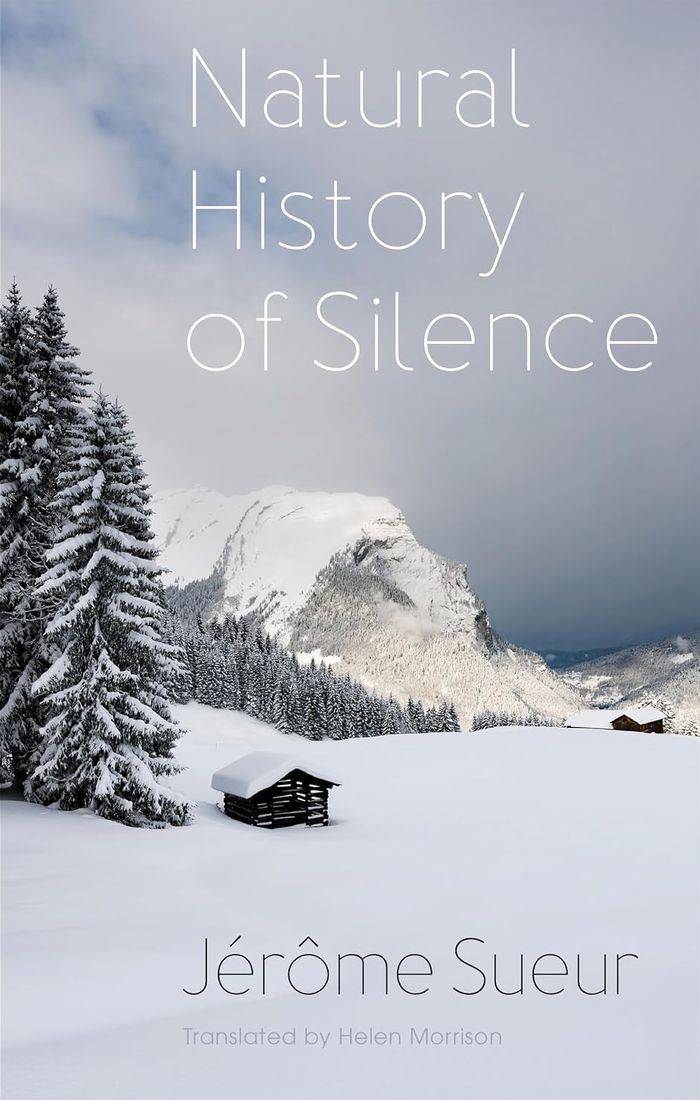
In our busy, noisy world, we may find ourselves longing for silence. But what is silence exactly? Is it the total absence of sound? Or is it the absence of the sound created by humans – the kind of deep stillness you might experience in a remote mountain landscape covered in snow, far away from the bustle of human life? When we listen closely, silence reveals a neglected reality. Neither empty nor singular, silence is instead plentiful and multiple. In this book, eco-acoustic historian Jérôme Sueur allows us to discover a vast landscape of silences which trigger the full gamut of our emotions: anxiety, awe and peace. He takes us from vistas resplendent with full and rich natural silences to the everyday silence of predators as they stalk their prey. To explore silences in animal behaviour and ecology is to discover a counterpoint to the acoustic diversity of the natural world, throwing into sharp relief the grating reverberations of the human activity which threatens it. It is to attune ourselves to a world that our human insensitivities have closed off to us, to take a moment simply to breathe and listen to the place of silence in nature.
Natural history of silence
Actions:
Prix:
$30.95
(disponible en magasin)
Résumé:
In our busy, noisy world, we may find ourselves longing for silence. But what is silence exactly? Is it the total absence of sound? Or is it the absence of the sound created by humans – the kind of deep stillness you might experience in a remote mountain landscape covered in snow, far away from the bustle of human life? When we listen closely, silence reveals a neglected reality. Neither empty nor singular, silence is instead plentiful and multiple. In this book, eco-acoustic historian Jérôme Sueur allows us to discover a vast landscape of silences which trigger the full gamut of our emotions: anxiety, awe and peace. He takes us from vistas resplendent with full and rich natural silences to the everyday silence of predators as they stalk their prey. To explore silences in animal behaviour and ecology is to discover a counterpoint to the acoustic diversity of the natural world, throwing into sharp relief the grating reverberations of the human activity which threatens it. It is to attune ourselves to a world that our human insensitivities have closed off to us, to take a moment simply to breathe and listen to the place of silence in nature.
Classification:
livres
livres
Publication:
janvier 2025
janvier 2025
Sujet:
Acoustique
Acoustique
Classification:
livres
livres
Prix:
$43.00
(disponible sur commande)
Résumé:
Rivers, on a long view, are alive. They are born; they change; they shift their channels; they forge new routes to the sea; they move both gradually and violently; they can teem (usually) with life; they may die a quasi-natural death; they are frequently maimed and even murdered. It is the annual flood pulse?the brief time when the river occupies the floodplain?that gives(...)
$43.00
(disponible sur commande)
Résumé:
Rivers, on a long view, are alive. They are born; they change; they shift their channels; they forge new routes to the sea; they move both gradually and violently; they can teem (usually) with life; they may die a quasi-natural death; they are frequently maimed and even murdered. It is the annual flood pulse?the brief time when the river occupies the floodplain?that gives(...)
Titre:
In praise of floods: The untamed river and the life it brings
Actions:
Prix:
$43.00
(disponible sur commande)
Résumé:
Rivers, on a long view, are alive. They are born; they change; they shift their channels; they forge new routes to the sea; they move both gradually and violently; they can teem (usually) with life; they may die a quasi-natural death; they are frequently maimed and even murdered. It is the annual flood pulse?the brief time when the river occupies the floodplain?that gives a river its vitality, but it is human engineering that kills it, suppressing the flood pulse with dams, irrigation, siltation, dikes, and levees. In demonstrating these threats to the riverine world, award-winning author James C. Scott examines the life history of a particular river, the Ayeyarwady (Irrawaddy) of Burma, the heartland and superhighway of Burman culture. Scott opens our understanding of rivers to encompass their entirety?tributaries, wetlands, floodplains, backwaters, eddies, periodic marshlands, and the assemblage of life forms dependent on rivers for their existence and well-being. For anyone interested in the Anthropocene and the Great Acceleration, rivers offer a striking example of the consequences of human intervention in trying to control and domesticate a natural process, the complexity and variability of which we barely understand.
In praise of floods: The untamed river and the life it brings
Actions:
Prix:
$43.00
(disponible sur commande)
Résumé:
Rivers, on a long view, are alive. They are born; they change; they shift their channels; they forge new routes to the sea; they move both gradually and violently; they can teem (usually) with life; they may die a quasi-natural death; they are frequently maimed and even murdered. It is the annual flood pulse?the brief time when the river occupies the floodplain?that gives a river its vitality, but it is human engineering that kills it, suppressing the flood pulse with dams, irrigation, siltation, dikes, and levees. In demonstrating these threats to the riverine world, award-winning author James C. Scott examines the life history of a particular river, the Ayeyarwady (Irrawaddy) of Burma, the heartland and superhighway of Burman culture. Scott opens our understanding of rivers to encompass their entirety?tributaries, wetlands, floodplains, backwaters, eddies, periodic marshlands, and the assemblage of life forms dependent on rivers for their existence and well-being. For anyone interested in the Anthropocene and the Great Acceleration, rivers offer a striking example of the consequences of human intervention in trying to control and domesticate a natural process, the complexity and variability of which we barely understand.
Classification:
livres
livres
Publication:
février 2025
février 2025
Sujet:
Théorie du paysage
Théorie du paysage
Classification:
livres
livres
Prix:
$32.50
(disponible sur commande)
Résumé:
Rivers, on a long view, are alive. They are born; they change; they shift their channels; they forge new routes to the sea; they move both gradually and violently; they can teem (usually) with life; they may die a quasi-natural death; they are frequently maimed and even murdered. It is the annual flood pulse—the brief time when the river occupies the floodplain—that(...)
$32.50
(disponible sur commande)
Résumé:
Rivers, on a long view, are alive. They are born; they change; they shift their channels; they forge new routes to the sea; they move both gradually and violently; they can teem (usually) with life; they may die a quasi-natural death; they are frequently maimed and even murdered. It is the annual flood pulse—the brief time when the river occupies the floodplain—that(...)
Titre:
In praise of floods: the untamed river and the life it brings
Actions:
Prix:
$32.50
(disponible sur commande)
Résumé:
Rivers, on a long view, are alive. They are born; they change; they shift their channels; they forge new routes to the sea; they move both gradually and violently; they can teem (usually) with life; they may die a quasi-natural death; they are frequently maimed and even murdered. It is the annual flood pulse—the brief time when the river occupies the floodplain—that gives a river its vitality, but it is human engineering that kills it, suppressing the flood pulse with dams, irrigation, siltation, dikes, and levees. In demonstrating these threats to the riverine world, award-winning author James C. Scott examines the life history of a particular river, the Ayeyarwady (Irrawaddy) of Burma, the heartland and superhighway of Burman culture. Scott opens our understanding of rivers to encompass their entirety—tributaries, wetlands, floodplains, backwaters, eddies, periodic marshlands, and the assemblage of life forms dependent on rivers for their existence and well-being. For anyone interested in the Anthropocene and the Great Acceleration, rivers offer a striking example of the consequences of human intervention in trying to control and domesticate a natural process, the complexity and variability of which we barely understand.
In praise of floods: the untamed river and the life it brings
Actions:
Prix:
$32.50
(disponible sur commande)
Résumé:
Rivers, on a long view, are alive. They are born; they change; they shift their channels; they forge new routes to the sea; they move both gradually and violently; they can teem (usually) with life; they may die a quasi-natural death; they are frequently maimed and even murdered. It is the annual flood pulse—the brief time when the river occupies the floodplain—that gives a river its vitality, but it is human engineering that kills it, suppressing the flood pulse with dams, irrigation, siltation, dikes, and levees. In demonstrating these threats to the riverine world, award-winning author James C. Scott examines the life history of a particular river, the Ayeyarwady (Irrawaddy) of Burma, the heartland and superhighway of Burman culture. Scott opens our understanding of rivers to encompass their entirety—tributaries, wetlands, floodplains, backwaters, eddies, periodic marshlands, and the assemblage of life forms dependent on rivers for their existence and well-being. For anyone interested in the Anthropocene and the Great Acceleration, rivers offer a striking example of the consequences of human intervention in trying to control and domesticate a natural process, the complexity and variability of which we barely understand.
Classification:
livres
livres
Publication:
mai 2026
mai 2026
Sujet:
Théorie du paysage
Théorie du paysage
Classification:
livres
livres
Prix:
$34.00
(disponible sur commande)
Résumé:
The second annual Alchemy Lecture was presented in November 2023 at York University to a sold out in-person audience and nearly one thousand live online viewers. Moderated by Dr. Christina Sharpe, the Alchemists—agile thinkers and practitioners working across a range of disciplines and geographies—convened to discuss their radical visions of the beautiful world, and the(...)
$34.00
(disponible sur commande)
Résumé:
The second annual Alchemy Lecture was presented in November 2023 at York University to a sold out in-person audience and nearly one thousand live online viewers. Moderated by Dr. Christina Sharpe, the Alchemists—agile thinkers and practitioners working across a range of disciplines and geographies—convened to discuss their radical visions of the beautiful world, and the(...)
Sujet:
Social
Social
Publication:
septembre 2024
septembre 2024
Titre:
Five manifestos for the beautiful world. The Alchemy lectures 2
Actions:
Prix:
$34.00
(disponible sur commande)
Résumé:
The second annual Alchemy Lecture was presented in November 2023 at York University to a sold out in-person audience and nearly one thousand live online viewers. Moderated by Dr. Christina Sharpe, the Alchemists—agile thinkers and practitioners working across a range of disciplines and geographies—convened to discuss their radical visions of the beautiful world, and the manifestos that may help to guide us there. Their treatises have been captured and luminously expanded in the pages of this book. Cherokee Nation citizen and professor Joseph M. Pierce asserts that "[f]or this decolonial future to become possible, the guiding force must no longer be capital but relations." Informed by her practice of "curation as care," Brazilian film curator Janaína Oliveira evokes music and movement as a means toward this relationality: "it's almost by falling that you live. . . . The beautiful world dances the stumbles. The beautiful world dances dancing." Kenyan-British visual artist Phoebe Boswell uses the space of a virtual gallery to ask, "If we burn down the institution, what happens next? Do we trust ourselves to know?" and gestures toward the possibility of this "as yet unlived, unexperienced thing."
Five manifestos for the beautiful world. The Alchemy lectures 2
Actions:
Prix:
$34.00
(disponible sur commande)
Résumé:
The second annual Alchemy Lecture was presented in November 2023 at York University to a sold out in-person audience and nearly one thousand live online viewers. Moderated by Dr. Christina Sharpe, the Alchemists—agile thinkers and practitioners working across a range of disciplines and geographies—convened to discuss their radical visions of the beautiful world, and the manifestos that may help to guide us there. Their treatises have been captured and luminously expanded in the pages of this book. Cherokee Nation citizen and professor Joseph M. Pierce asserts that "[f]or this decolonial future to become possible, the guiding force must no longer be capital but relations." Informed by her practice of "curation as care," Brazilian film curator Janaína Oliveira evokes music and movement as a means toward this relationality: "it's almost by falling that you live. . . . The beautiful world dances the stumbles. The beautiful world dances dancing." Kenyan-British visual artist Phoebe Boswell uses the space of a virtual gallery to ask, "If we burn down the institution, what happens next? Do we trust ourselves to know?" and gestures toward the possibility of this "as yet unlived, unexperienced thing."
Classification:
livres
livres
Publication:
septembre 2024
septembre 2024
Sujet:
Social
Social
Classification:
livres
livres
Prix:
$24.00
(disponible sur commande)
Résumé:
Strategically situated at the gateway to the Mississippi River yet standing atop a former swamp, New Orleans was from the first what geographer Peirce Lewis called an "impossible but inevitable city." How New Orleans came to be, taking shape between the mutual and often contradictory forces of nature and urban development, is the subject of "An unnatural metropolis".(...)
$24.00
(disponible sur commande)
Résumé:
Strategically situated at the gateway to the Mississippi River yet standing atop a former swamp, New Orleans was from the first what geographer Peirce Lewis called an "impossible but inevitable city." How New Orleans came to be, taking shape between the mutual and often contradictory forces of nature and urban development, is the subject of "An unnatural metropolis".(...)
Titre:
An unatural metropolis : wresting New Orleans from nature
Actions:
Prix:
$24.00
(disponible sur commande)
Résumé:
Strategically situated at the gateway to the Mississippi River yet standing atop a former swamp, New Orleans was from the first what geographer Peirce Lewis called an "impossible but inevitable city." How New Orleans came to be, taking shape between the mutual and often contradictory forces of nature and urban development, is the subject of "An unnatural metropolis". Craig E. Colten traces engineered modifications to New Orleans's natural environment from 1800 to 2000 and demonstrates that, though all cities must contend with their physical settings, New Orleans may be the city most dependent on human-induced transformations of its precarious site. In a new preface, Colten shows how Hurricane Katrina exemplifies the inability of human artifice to exclude nature from cities and he urges city planners to keep the environment in mind as they contemplate New Orleans's future. Urban geographers frequently have portrayed cities as the antithesis of nature, but in "An unnatural metropolis", Colten introduces a critical environmental perspective to the history of urban areas. His amply illustrated work offers an in-depth look at a city and society uniquely shaped by the natural forces it has sought to harness.
An unatural metropolis : wresting New Orleans from nature
Actions:
Prix:
$24.00
(disponible sur commande)
Résumé:
Strategically situated at the gateway to the Mississippi River yet standing atop a former swamp, New Orleans was from the first what geographer Peirce Lewis called an "impossible but inevitable city." How New Orleans came to be, taking shape between the mutual and often contradictory forces of nature and urban development, is the subject of "An unnatural metropolis". Craig E. Colten traces engineered modifications to New Orleans's natural environment from 1800 to 2000 and demonstrates that, though all cities must contend with their physical settings, New Orleans may be the city most dependent on human-induced transformations of its precarious site. In a new preface, Colten shows how Hurricane Katrina exemplifies the inability of human artifice to exclude nature from cities and he urges city planners to keep the environment in mind as they contemplate New Orleans's future. Urban geographers frequently have portrayed cities as the antithesis of nature, but in "An unnatural metropolis", Colten introduces a critical environmental perspective to the history of urban areas. His amply illustrated work offers an in-depth look at a city and society uniquely shaped by the natural forces it has sought to harness.
Classification:
livres
livres
Publication:
septembre 2006, Baton Rouge
septembre 2006, Baton Rouge
Sujet:
Théorie de l’urbanisme
Théorie de l’urbanisme
Classification:
livres
livres
Actions:
Prix:
$56.50
(disponible sur commande)
Résumé:
The Housing Divide examines the generational patterns in New York City's housing market and neighborhoods along the lines of race and ethnicity. The book provides an in-depth analysis of many immigrant groups in New York, especially providing an understanding of the opportunities and discriminatory practices at work from one generation to the next. Through a careful read(...)
$56.50
(disponible sur commande)
Résumé:
The Housing Divide examines the generational patterns in New York City's housing market and neighborhoods along the lines of race and ethnicity. The book provides an in-depth analysis of many immigrant groups in New York, especially providing an understanding of the opportunities and discriminatory practices at work from one generation to the next. Through a careful read(...)
Sujet:
Théorie de l’urbanisme
Théorie de l’urbanisme
Publication:
décembre 2006, New York / London
décembre 2006, New York / London
Titre:
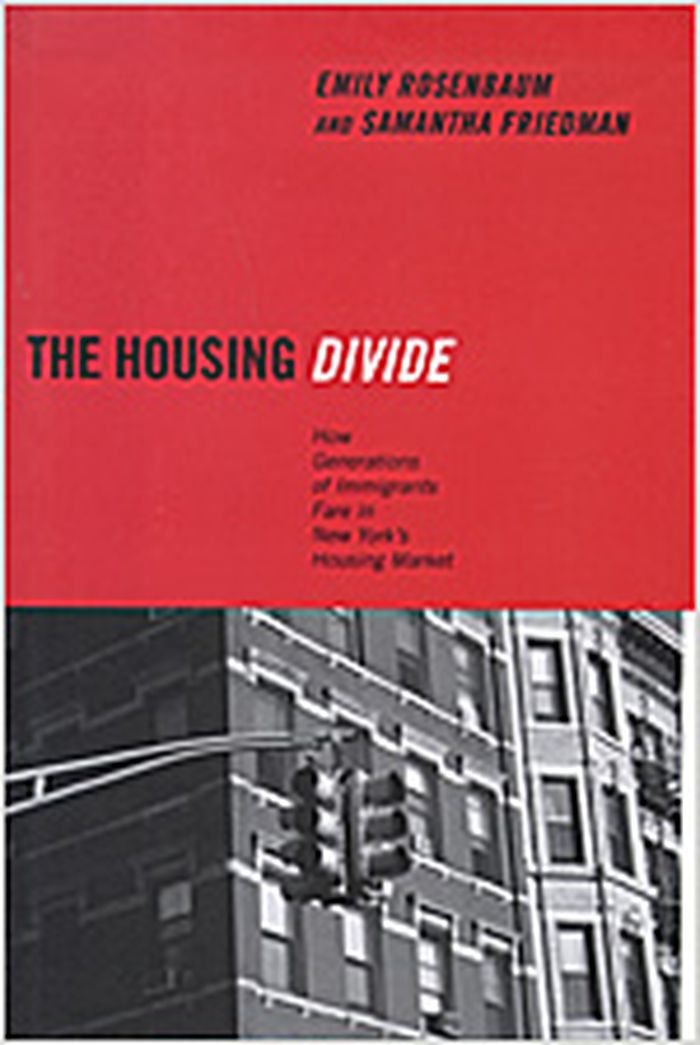
The housing divide : how generations of immigrants fare in New York's housing market
Actions:
Prix:
$56.50
(disponible sur commande)
Résumé:
The Housing Divide examines the generational patterns in New York City's housing market and neighborhoods along the lines of race and ethnicity. The book provides an in-depth analysis of many immigrant groups in New York, especially providing an understanding of the opportunities and discriminatory practices at work from one generation to the next. Through a careful read of such factors as home ownership, housing quality, and neighborhood rates of crime, welfare enrollment, teenage pregnancy, and educational achievement, Emily Rosenbaum and Samantha Friedman provide a detailed portrait of neighborhood life and socio-economic status for the immigrants of New York. The book paints an important, if disturbing, picture. The authors argue that not only are Blacks—regardless of generation—disadvantaged relative to members of other racial/ethnic groups in their ability to obtain housing in high-quality neighborhoods, but that housing and neighborhood conditions actually decline over generations. Rosenbaum and Friedman's findings suggest that the future of racial inequality in this country will increasingly isolate Blacks from all other groups. In other words, the "color line" may be shifting from a line separating Blacks from Whites to one separating Blacks from all non-Blacks.
The housing divide : how generations of immigrants fare in New York's housing market
Actions:
Prix:
$56.50
(disponible sur commande)
Résumé:
The Housing Divide examines the generational patterns in New York City's housing market and neighborhoods along the lines of race and ethnicity. The book provides an in-depth analysis of many immigrant groups in New York, especially providing an understanding of the opportunities and discriminatory practices at work from one generation to the next. Through a careful read of such factors as home ownership, housing quality, and neighborhood rates of crime, welfare enrollment, teenage pregnancy, and educational achievement, Emily Rosenbaum and Samantha Friedman provide a detailed portrait of neighborhood life and socio-economic status for the immigrants of New York. The book paints an important, if disturbing, picture. The authors argue that not only are Blacks—regardless of generation—disadvantaged relative to members of other racial/ethnic groups in their ability to obtain housing in high-quality neighborhoods, but that housing and neighborhood conditions actually decline over generations. Rosenbaum and Friedman's findings suggest that the future of racial inequality in this country will increasingly isolate Blacks from all other groups. In other words, the "color line" may be shifting from a line separating Blacks from Whites to one separating Blacks from all non-Blacks.
Classification:
livres
livres
Publication:
décembre 2006, New York / London
décembre 2006, New York / London
Sujet:
Théorie de l’urbanisme
Théorie de l’urbanisme
Classification:
livres
livres
Prix:
$26.95
(disponible sur commande)
Résumé:
This new edition of Mike Davis’s work gives an update on Los Angeles as the city hits the 21st century. No metropolis has been more loved or more hated. To its official boosters, “Los Angeles brings it all together.” To detractors, LA is a sunlit mortuary where “you can rot without feeling it.” To Mike Davis, the author of this wide-ranging work of social history, Los(...)
$26.95
(disponible sur commande)
Résumé:
This new edition of Mike Davis’s work gives an update on Los Angeles as the city hits the 21st century. No metropolis has been more loved or more hated. To its official boosters, “Los Angeles brings it all together.” To detractors, LA is a sunlit mortuary where “you can rot without feeling it.” To Mike Davis, the author of this wide-ranging work of social history, Los(...)
Titre:
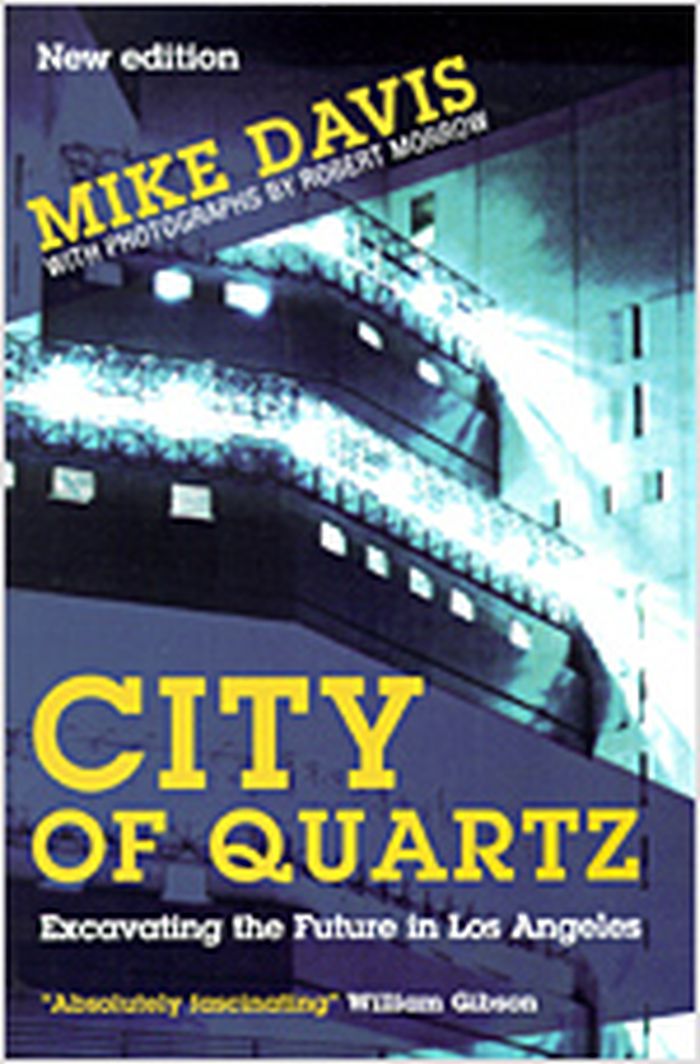
City of quartz : excavating the future in Los Angeles, new edition
Actions:
Prix:
$26.95
(disponible sur commande)
Résumé:
This new edition of Mike Davis’s work gives an update on Los Angeles as the city hits the 21st century. No metropolis has been more loved or more hated. To its official boosters, “Los Angeles brings it all together.” To detractors, LA is a sunlit mortuary where “you can rot without feeling it.” To Mike Davis, the author of this wide-ranging work of social history, Los Angeles is both utopia and dystopia, a place where the last Joshua trees are being plowed under to make room for model communities in the desert, where the rich have hired their own police to fend off street gangs, as well as armed Beirut militias. In "City of quartz", Davis reconstructs LA’s shadow history and dissects its ethereal economy. He tells us who has the power and how they hold on to it. He gives us a city of Dickensian extremes, Pynchonesque conspiracies, and a desperation straight out of Nathaniel West—a city in which we may glimpse our own future mirrored with terrifying clarity. In this new edition, Davis provides an update on the city’s current status.
City of quartz : excavating the future in Los Angeles, new edition
Actions:
Prix:
$26.95
(disponible sur commande)
Résumé:
This new edition of Mike Davis’s work gives an update on Los Angeles as the city hits the 21st century. No metropolis has been more loved or more hated. To its official boosters, “Los Angeles brings it all together.” To detractors, LA is a sunlit mortuary where “you can rot without feeling it.” To Mike Davis, the author of this wide-ranging work of social history, Los Angeles is both utopia and dystopia, a place where the last Joshua trees are being plowed under to make room for model communities in the desert, where the rich have hired their own police to fend off street gangs, as well as armed Beirut militias. In "City of quartz", Davis reconstructs LA’s shadow history and dissects its ethereal economy. He tells us who has the power and how they hold on to it. He gives us a city of Dickensian extremes, Pynchonesque conspiracies, and a desperation straight out of Nathaniel West—a city in which we may glimpse our own future mirrored with terrifying clarity. In this new edition, Davis provides an update on the city’s current status.
Classification:
livres
livres
Publication:
septembre 2006, London, New York
septembre 2006, London, New York
Sujet:
Théorie de l’urbanisme
Théorie de l’urbanisme
Classification:
livres
livres
Actions:
Prix:
$39.95
(disponible en magasin)
Résumé:
Unpublished photographs taken by Josef Albers during his travels to Mexico with Anni in the 1930s and 50s. Josef and Anni Albers began their travels to Mexico in 1935, drawn to a country very unlike the United States. They were not in search of the exotic but rather of the traces of ancient pre-Colombian civilisations (the Mayans and the Aztecs) and testimonies of the(...)
$39.95
(disponible en magasin)
Résumé:
Unpublished photographs taken by Josef Albers during his travels to Mexico with Anni in the 1930s and 50s. Josef and Anni Albers began their travels to Mexico in 1935, drawn to a country very unlike the United States. They were not in search of the exotic but rather of the traces of ancient pre-Colombian civilisations (the Mayans and the Aztecs) and testimonies of the(...)
Titre:
Messico 1935/1956: Josef Albers
Actions:
Prix:
$39.95
(disponible en magasin)
Résumé:
Unpublished photographs taken by Josef Albers during his travels to Mexico with Anni in the 1930s and 50s. Josef and Anni Albers began their travels to Mexico in 1935, drawn to a country very unlike the United States. They were not in search of the exotic but rather of the traces of ancient pre-Colombian civilisations (the Mayans and the Aztecs) and testimonies of the everyday lives of a population that was very poor yet full of vitality. Dressed in dark colours and donning a large black hat, Albers was a non-professional photographer with the gaze of an architect, as may be noted from the great sense of composition and the search for geometries which he digs out even from the millenary archaeological findings. These photographs have never previously been published in Italy, and contribute to depicting the figure of one of the greatest innovators of the art and culture of the twentieth century, who to this day still has a lot to teach us. The volume also features an introduction by Brenda Danilowitz, curator and head of the Josef and Anni Albers Foundation, as well as an essay by Luca Galofaro, architect (LSGMA) and curator (CAMPO, Rome).
Messico 1935/1956: Josef Albers
Actions:
Prix:
$39.95
(disponible en magasin)
Résumé:
Unpublished photographs taken by Josef Albers during his travels to Mexico with Anni in the 1930s and 50s. Josef and Anni Albers began their travels to Mexico in 1935, drawn to a country very unlike the United States. They were not in search of the exotic but rather of the traces of ancient pre-Colombian civilisations (the Mayans and the Aztecs) and testimonies of the everyday lives of a population that was very poor yet full of vitality. Dressed in dark colours and donning a large black hat, Albers was a non-professional photographer with the gaze of an architect, as may be noted from the great sense of composition and the search for geometries which he digs out even from the millenary archaeological findings. These photographs have never previously been published in Italy, and contribute to depicting the figure of one of the greatest innovators of the art and culture of the twentieth century, who to this day still has a lot to teach us. The volume also features an introduction by Brenda Danilowitz, curator and head of the Josef and Anni Albers Foundation, as well as an essay by Luca Galofaro, architect (LSGMA) and curator (CAMPO, Rome).
Classification:
livres
livres
Publication:
mars 2021
mars 2021
Sujet:
Monographies photo
Monographies photo
Classification:
livres
livres
Titre:
Buildings that feel good
Buildings that feel good
Actions:
Prix:
$53.95
(disponible sur commande)
Résumé:
What makes a building good? This central challenge facing architects and clients can only be answered by looking at what works well for those who know the buildings most intimately – the building's users. This book includes case studies of recent buildings that feel good. It is rooted in the physical but mediated by human experience, and may only be judged after the(...)
$53.95
(disponible sur commande)
Résumé:
What makes a building good? This central challenge facing architects and clients can only be answered by looking at what works well for those who know the buildings most intimately – the building's users. This book includes case studies of recent buildings that feel good. It is rooted in the physical but mediated by human experience, and may only be judged after the(...)
Publication:
octobre 2008
octobre 2008
Titre:
Buildings that feel good
Actions:
Prix:
$53.95
(disponible sur commande)
Résumé:
What makes a building good? This central challenge facing architects and clients can only be answered by looking at what works well for those who know the buildings most intimately – the building's users. This book includes case studies of recent buildings that feel good. It is rooted in the physical but mediated by human experience, and may only be judged after the building has been ‘lived in' and stood the test of time. The trick is to identify the relevant characteristics that will inform new buildings before they are built. Written by a briefing and design evaluation expert who specialises in optimising the experience of building users, Buildings that Feel Good distils a set of hard-won lessons synthesised from years of empirical research. It argues that a powerful key to designing good buildings is to decipher consistent principles from users' positive experience of existing buildings. The case studies include many recent highly-rated projects that cover a wide range of building types – offices, retail, industrial, infrastructure, sport and education. The lessons extracted are universal and provide valuable generic insights into the critically important briefing process.
Buildings that feel good
Actions:
Prix:
$53.95
(disponible sur commande)
Résumé:
What makes a building good? This central challenge facing architects and clients can only be answered by looking at what works well for those who know the buildings most intimately – the building's users. This book includes case studies of recent buildings that feel good. It is rooted in the physical but mediated by human experience, and may only be judged after the building has been ‘lived in' and stood the test of time. The trick is to identify the relevant characteristics that will inform new buildings before they are built. Written by a briefing and design evaluation expert who specialises in optimising the experience of building users, Buildings that Feel Good distils a set of hard-won lessons synthesised from years of empirical research. It argues that a powerful key to designing good buildings is to decipher consistent principles from users' positive experience of existing buildings. The case studies include many recent highly-rated projects that cover a wide range of building types – offices, retail, industrial, infrastructure, sport and education. The lessons extracted are universal and provide valuable generic insights into the critically important briefing process.
Classification:
livres
livres
Publication:
octobre 2008
octobre 2008


