


9272 Résultats
Classification:
livres
livres
Actions:
Prix:
$30.00
(disponible sur commande)
Résumé:
One of the twentieth century's most influential and iconoclastic protagonists, John Cage (1912-1992) may be described not so much as a composer, artist and author, as a thinker who applied his ideas equivalently to sound, visual art and writing. As with his music, the use of chance operations--in particular via the Chinese "Book of Changes," or "I Ching" - was central to(...)
$30.00
(disponible sur commande)
Résumé:
One of the twentieth century's most influential and iconoclastic protagonists, John Cage (1912-1992) may be described not so much as a composer, artist and author, as a thinker who applied his ideas equivalently to sound, visual art and writing. As with his music, the use of chance operations--in particular via the Chinese "Book of Changes," or "I Ching" - was central to(...)
Titre:
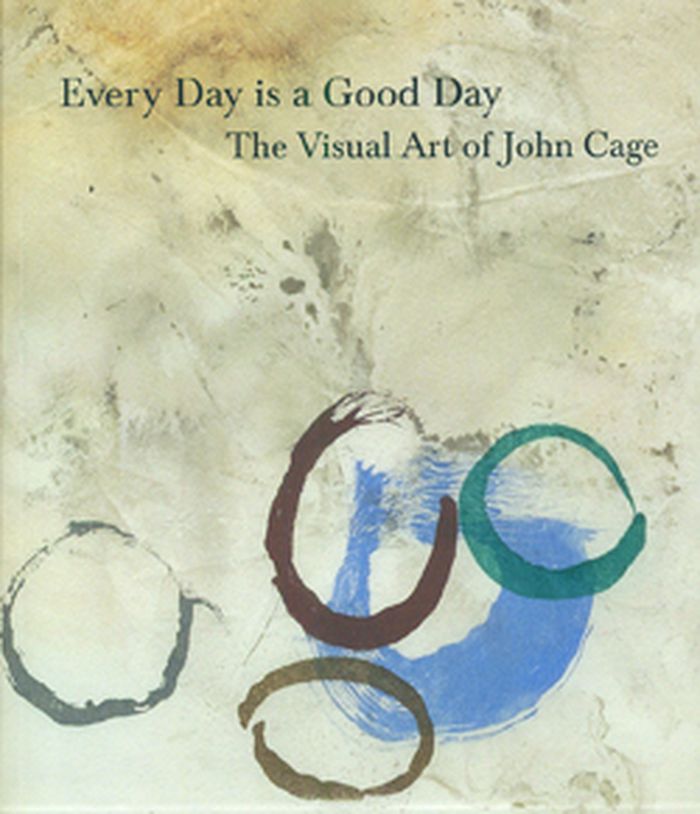
Everyday is a good day : The visual art of John Cage
Actions:
Prix:
$30.00
(disponible sur commande)
Résumé:
One of the twentieth century's most influential and iconoclastic protagonists, John Cage (1912-1992) may be described not so much as a composer, artist and author, as a thinker who applied his ideas equivalently to sound, visual art and writing. As with his music, the use of chance operations--in particular via the Chinese "Book of Changes," or "I Ching" - was central to Cage's approach to visual art, determining technique, the placement of forms and even tonal values. "Every Day is a Good Day" provides the first broad assessment of Cage's art, and is fully illustrated with plates of his drawings, watercolors and prints, including series such as "Where R=Ryoanji" (1983-92). Cage's working methods and philosophies are brought to light in new interviews with key collaborators: printmaker and writer Kathan Brown, founder of Crown Point Press; Laura Kuhn, Director of the John Cage Trust; artist Ray Kass; and Julie Lazar, curator of Cage's composition for a museum, "Rolywholyover: A Circus." Extracts from a 1966 interview between John Cage and critic Irving Sandler are also reproduced. At the heart of the book is a "Companion to John Cage," a selection of quotes by Cage and notes on key themes and influences, all of which make it essential reading on this important figure of the twentieth-century avant garde.
Everyday is a good day : The visual art of John Cage
Actions:
Prix:
$30.00
(disponible sur commande)
Résumé:
One of the twentieth century's most influential and iconoclastic protagonists, John Cage (1912-1992) may be described not so much as a composer, artist and author, as a thinker who applied his ideas equivalently to sound, visual art and writing. As with his music, the use of chance operations--in particular via the Chinese "Book of Changes," or "I Ching" - was central to Cage's approach to visual art, determining technique, the placement of forms and even tonal values. "Every Day is a Good Day" provides the first broad assessment of Cage's art, and is fully illustrated with plates of his drawings, watercolors and prints, including series such as "Where R=Ryoanji" (1983-92). Cage's working methods and philosophies are brought to light in new interviews with key collaborators: printmaker and writer Kathan Brown, founder of Crown Point Press; Laura Kuhn, Director of the John Cage Trust; artist Ray Kass; and Julie Lazar, curator of Cage's composition for a museum, "Rolywholyover: A Circus." Extracts from a 1966 interview between John Cage and critic Irving Sandler are also reproduced. At the heart of the book is a "Companion to John Cage," a selection of quotes by Cage and notes on key themes and influences, all of which make it essential reading on this important figure of the twentieth-century avant garde.
Classification:
livres
livres
Publication:
juillet 2011
juillet 2011
Classification:
livres
livres
Titre:
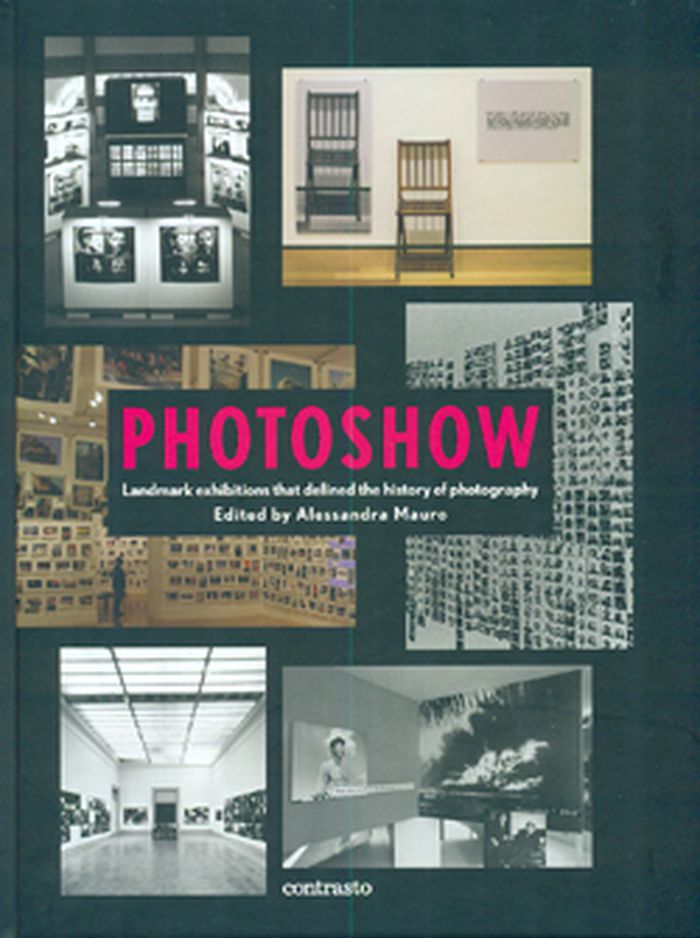
Photoshow
Photoshow
Actions:
Prix:
$61.50
(disponible sur commande)
Résumé:
Even before being printed in a book to narrate true life (as much as it may seem brutal or idillyc), or to recall the features of a face, since its early years photography has been “exhibited” to audiences. An history of photography narrated through exhibitions and the theory that has accompanied it has never been carried out yet. It would be very interesting,(...)
$61.50
(disponible sur commande)
Résumé:
Even before being printed in a book to narrate true life (as much as it may seem brutal or idillyc), or to recall the features of a face, since its early years photography has been “exhibited” to audiences. An history of photography narrated through exhibitions and the theory that has accompanied it has never been carried out yet. It would be very interesting,(...)
Titre:
Photoshow
Actions:
Prix:
$61.50
(disponible sur commande)
Résumé:
Even before being printed in a book to narrate true life (as much as it may seem brutal or idillyc), or to recall the features of a face, since its early years photography has been “exhibited” to audiences. An history of photography narrated through exhibitions and the theory that has accompanied it has never been carried out yet. It would be very interesting, furthermore, to trace back the different aesthetic schools and communication theories that have pointed out the evolution of the history of photography and its public moments par excellence: exhibitions. Installations manifest values, ideologies, politics and aesthetics. An history of photography exhibitions would represent a different and original way of studying photography as a means of expression and contemporary communication. Nowadays photography plays its role on the art and collection market with an unexpected strength and vigour. The discovery and success of a new talent on the market depends on the common work of private galleries, public spaces and the international limelight. The activity of American and European Photography Museums, the numerous great art events and festivals – especially dedicated to the world and market of photography, art galleries that discover new talents and new ways of exhibiting them, all this contributes to a system that works perfectly well presenting new ways of expression for photography, actually widely recognized as heritage of humanity.
Photoshow
Actions:
Prix:
$61.50
(disponible sur commande)
Résumé:
Even before being printed in a book to narrate true life (as much as it may seem brutal or idillyc), or to recall the features of a face, since its early years photography has been “exhibited” to audiences. An history of photography narrated through exhibitions and the theory that has accompanied it has never been carried out yet. It would be very interesting, furthermore, to trace back the different aesthetic schools and communication theories that have pointed out the evolution of the history of photography and its public moments par excellence: exhibitions. Installations manifest values, ideologies, politics and aesthetics. An history of photography exhibitions would represent a different and original way of studying photography as a means of expression and contemporary communication. Nowadays photography plays its role on the art and collection market with an unexpected strength and vigour. The discovery and success of a new talent on the market depends on the common work of private galleries, public spaces and the international limelight. The activity of American and European Photography Museums, the numerous great art events and festivals – especially dedicated to the world and market of photography, art galleries that discover new talents and new ways of exhibiting them, all this contributes to a system that works perfectly well presenting new ways of expression for photography, actually widely recognized as heritage of humanity.
Classification:
livres
livres
Publication:
novembre 2014
novembre 2014
Sujet:
Théorie de la photographie
Théorie de la photographie
Classification:
livres
livres
Actions:
Prix:
$45.00
(disponible sur commande)
Résumé:
From 1967 to 1969, Vito Acconci & Bernadette Mayer collected the works of the some of the most exciting artists and writers for their mimeographed magazine, 0 TO 9. Robert Barry, Ted Berrigan, Clark Coolidge, John Giorno, Dan Graham, Michael Heizer, Kenneth Koch, Sol LeWitt, Jackson Mac Low, Harry Mathews, Adrian Piper, Bern Porter, Yvonne Rainer, Jerome Rothenberg, Aram(...)
$45.00
(disponible sur commande)
Résumé:
From 1967 to 1969, Vito Acconci & Bernadette Mayer collected the works of the some of the most exciting artists and writers for their mimeographed magazine, 0 TO 9. Robert Barry, Ted Berrigan, Clark Coolidge, John Giorno, Dan Graham, Michael Heizer, Kenneth Koch, Sol LeWitt, Jackson Mac Low, Harry Mathews, Adrian Piper, Bern Porter, Yvonne Rainer, Jerome Rothenberg, Aram(...)
Sujet:
Revues, anciens numéros
Revues, anciens numéros
Publication:
octobre 2008, New York
octobre 2008, New York
Titre:
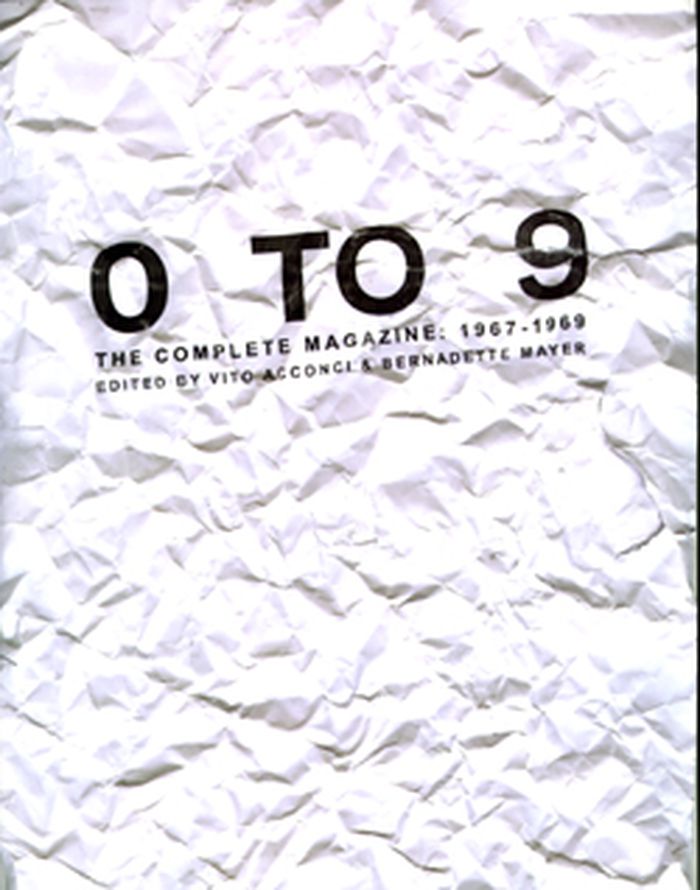
0 to 9 the complete magazine: 1967-1969
Actions:
Prix:
$45.00
(disponible sur commande)
Résumé:
From 1967 to 1969, Vito Acconci & Bernadette Mayer collected the works of the some of the most exciting artists and writers for their mimeographed magazine, 0 TO 9. Robert Barry, Ted Berrigan, Clark Coolidge, John Giorno, Dan Graham, Michael Heizer, Kenneth Koch, Sol LeWitt, Jackson Mac Low, Harry Mathews, Adrian Piper, Bern Porter, Yvonne Rainer, Jerome Rothenberg, Aram Saroyan, Robert Smithson, Alan Sondheim, Hannah Weiner, and Emmett Williams, among others, were contributors.
0 to 9 the complete magazine: 1967-1969
Actions:
Prix:
$45.00
(disponible sur commande)
Résumé:
From 1967 to 1969, Vito Acconci & Bernadette Mayer collected the works of the some of the most exciting artists and writers for their mimeographed magazine, 0 TO 9. Robert Barry, Ted Berrigan, Clark Coolidge, John Giorno, Dan Graham, Michael Heizer, Kenneth Koch, Sol LeWitt, Jackson Mac Low, Harry Mathews, Adrian Piper, Bern Porter, Yvonne Rainer, Jerome Rothenberg, Aram Saroyan, Robert Smithson, Alan Sondheim, Hannah Weiner, and Emmett Williams, among others, were contributors.
Classification:
livres
livres
Publication:
octobre 2008, New York
octobre 2008, New York
Sujet:
Revues, anciens numéros
Revues, anciens numéros
Classification:
livres
livres
Actions:
Prix:
$68.95
(disponible sur commande)
Résumé:
This collection contains studies written by art historian James Ackerman over the past decade. Whereas Ackerman’s earlier work assumed a development of the arts as they responded to social, economic, political, and cultural change, his recent work reflects the poststructural critique of the presumption of progress that characterized Renaissance and modernist history and(...)
$68.95
(disponible sur commande)
Résumé:
This collection contains studies written by art historian James Ackerman over the past decade. Whereas Ackerman’s earlier work assumed a development of the arts as they responded to social, economic, political, and cultural change, his recent work reflects the poststructural critique of the presumption of progress that characterized Renaissance and modernist history and(...)
Sujet:
Théorie de l’architecture
Théorie de l’architecture
Publication:
novembre 2001, Cambridge, Mass.
novembre 2001, Cambridge, Mass.
Titre:
Origins, imitation, conventions : representation in the visual arts
Actions:
Prix:
$68.95
(disponible sur commande)
Résumé:
This collection contains studies written by art historian James Ackerman over the past decade. Whereas Ackerman’s earlier work assumed a development of the arts as they responded to social, economic, political, and cultural change, his recent work reflects the poststructural critique of the presumption of progress that characterized Renaissance and modernist history and criticism. In this book he explores the tension between the authority of the past--which may act not only as a restraint but as a challenge and stimulus--and the potentially liberating gift of invention. He examines the ways in which artists and writers on art have related to ancestors and to established modes of representation, as well as to contemporary experiences. The "origins" studied here include the earliest art history and criticism; the beginnings of architectural drawing in the Middle Ages and Renaissance; Leonardo Da Vinci’s sketches for churches, the first in the Renaissance to propose supporting domes on sculpted walls and piers; and the first architectural photographs. "Imitation" refers to artistic achievements that in part depended on the imitation of forms established in practices outside the fine arts, such as ancient Roman rhetoric and print media. "Conventions," like language, facilitate communication between the artist and viewer, but are both more universal (understood across cultures) and more fixed (resisting variation that might diminish their clarity). The three categories are closely linked throughout the book, as most acts of representation partake to some degree of all three.
Origins, imitation, conventions : representation in the visual arts
Actions:
Prix:
$68.95
(disponible sur commande)
Résumé:
This collection contains studies written by art historian James Ackerman over the past decade. Whereas Ackerman’s earlier work assumed a development of the arts as they responded to social, economic, political, and cultural change, his recent work reflects the poststructural critique of the presumption of progress that characterized Renaissance and modernist history and criticism. In this book he explores the tension between the authority of the past--which may act not only as a restraint but as a challenge and stimulus--and the potentially liberating gift of invention. He examines the ways in which artists and writers on art have related to ancestors and to established modes of representation, as well as to contemporary experiences. The "origins" studied here include the earliest art history and criticism; the beginnings of architectural drawing in the Middle Ages and Renaissance; Leonardo Da Vinci’s sketches for churches, the first in the Renaissance to propose supporting domes on sculpted walls and piers; and the first architectural photographs. "Imitation" refers to artistic achievements that in part depended on the imitation of forms established in practices outside the fine arts, such as ancient Roman rhetoric and print media. "Conventions," like language, facilitate communication between the artist and viewer, but are both more universal (understood across cultures) and more fixed (resisting variation that might diminish their clarity). The three categories are closely linked throughout the book, as most acts of representation partake to some degree of all three.
Classification:
livres
livres
Publication:
novembre 2001, Cambridge, Mass.
novembre 2001, Cambridge, Mass.
Sujet:
Théorie de l’architecture
Théorie de l’architecture
Classification:
livres
livres
Prix:
$38.95
(disponible sur commande)
Résumé:
In the middle of the night they quickly build houses and seize land before the police destroy their fragile homes. They're squatters, families that risk the wrath of governments and property owners by building dwellings on land they don't own, and they represent one out of every ten people on the planet. Investigative journalist Robert Neuwirth lived among squatter(...)
$38.95
(disponible sur commande)
Résumé:
In the middle of the night they quickly build houses and seize land before the police destroy their fragile homes. They're squatters, families that risk the wrath of governments and property owners by building dwellings on land they don't own, and they represent one out of every ten people on the planet. Investigative journalist Robert Neuwirth lived among squatter(...)
Titre:
Shadow cities: a billion squatters, a new urban world
Actions:
Prix:
$38.95
(disponible sur commande)
Résumé:
In the middle of the night they quickly build houses and seize land before the police destroy their fragile homes. They're squatters, families that risk the wrath of governments and property owners by building dwellings on land they don't own, and they represent one out of every ten people on the planet. Investigative journalist Robert Neuwirth lived among squatter communities from Rio to Bombay to Nairobi to Istanbul to give us an impassioned, inside view of squatter life and a glimpse into the urban future. He met people in Nairobi who built homes with their bare hands, Turkish families who plot land invasions, and children in Rio whose parents justify outfoxing the authorities as the only path to a better life. And he shows us that in cities like Rio, squatter settlements have become decent places to live for formerly landless people. Tracing the notion of private property from the enclosure movement in Europe to the settlement of the U.S., Neuwirth shows how squatting rights may actually be seen as more "natural" than the current laws practiced in the U.S. In almost every country of the developing world, the most active builders are squatters, creating complex local economies with high rises, shopping strips, banks, and self-government. As they invent new social structures, Neuwirth argues, squatters are at the forefront of the worldwide movement to develop new visions of what constitutes property and community.
Shadow cities: a billion squatters, a new urban world
Actions:
Prix:
$38.95
(disponible sur commande)
Résumé:
In the middle of the night they quickly build houses and seize land before the police destroy their fragile homes. They're squatters, families that risk the wrath of governments and property owners by building dwellings on land they don't own, and they represent one out of every ten people on the planet. Investigative journalist Robert Neuwirth lived among squatter communities from Rio to Bombay to Nairobi to Istanbul to give us an impassioned, inside view of squatter life and a glimpse into the urban future. He met people in Nairobi who built homes with their bare hands, Turkish families who plot land invasions, and children in Rio whose parents justify outfoxing the authorities as the only path to a better life. And he shows us that in cities like Rio, squatter settlements have become decent places to live for formerly landless people. Tracing the notion of private property from the enclosure movement in Europe to the settlement of the U.S., Neuwirth shows how squatting rights may actually be seen as more "natural" than the current laws practiced in the U.S. In almost every country of the developing world, the most active builders are squatters, creating complex local economies with high rises, shopping strips, banks, and self-government. As they invent new social structures, Neuwirth argues, squatters are at the forefront of the worldwide movement to develop new visions of what constitutes property and community.
Classification:
livres
livres
Publication:
décembre 2004, New York
décembre 2004, New York
Sujet:
Théorie de l’urbanisme
Théorie de l’urbanisme
Classification:
livres
livres

Actions:
Prix:
$52.00
(disponible sur commande)
Résumé:
Romare Bearden (1911-1988) had a true Renaissance sensibility. He was a fine artist who also successfully turned his hand to printmaking, writing, costume and set design, as well as composing jazz music. In addition, he helped to found the Studio Museum in Harlem, New York's Cinque Gallery and the Black Academy of Arts and Letters, and was once even offered an opportunity(...)
$52.00
(disponible sur commande)
Résumé:
Romare Bearden (1911-1988) had a true Renaissance sensibility. He was a fine artist who also successfully turned his hand to printmaking, writing, costume and set design, as well as composing jazz music. In addition, he helped to found the Studio Museum in Harlem, New York's Cinque Gallery and the Black Academy of Arts and Letters, and was once even offered an opportunity(...)
Publication:
février 2008, New York
février 2008, New York
Titre:
Romare Bearden a black odyssey
Actions:
Prix:
$52.00
(disponible sur commande)
Résumé:
Romare Bearden (1911-1988) had a true Renaissance sensibility. He was a fine artist who also successfully turned his hand to printmaking, writing, costume and set design, as well as composing jazz music. In addition, he helped to found the Studio Museum in Harlem, New York's Cinque Gallery and the Black Academy of Arts and Letters, and was once even offered an opportunity to play professional baseball for the Philadelphia Athletics. But it is for his rich and textured collages that Bearden is best known today. In 1977, Bearden created a sequence of 20 collages based on episodes from Homer's Odyssey. It may come as a surprise to even his most avid followers that this devoted chronicler of African American culture and the Harlem Renaissance would gravitate to such a canonical text. But in the essay accompanying Romare Bearden: A Black Odyssey, scholar Robert G. O'Meally argues for their thematic consistency and suggests that, in the figures of Odysseus, Penelope, Poseidon, Nausicca and others, Bearden found themes sympathetic to the African American experience. These motifs of wandering, mourning and the questing for home--considering Bearden's scores of interiors and exteriors, country and city life and depictions of family love--emerge as the central themes of all his art. Romare Bearden: A Black Odyssey, the first in-depth consideration of these collages since they were originally exhibited 30 years ago, will prove a surprise to Bearden fans and newcomers alike.
Romare Bearden a black odyssey
Actions:
Prix:
$52.00
(disponible sur commande)
Résumé:
Romare Bearden (1911-1988) had a true Renaissance sensibility. He was a fine artist who also successfully turned his hand to printmaking, writing, costume and set design, as well as composing jazz music. In addition, he helped to found the Studio Museum in Harlem, New York's Cinque Gallery and the Black Academy of Arts and Letters, and was once even offered an opportunity to play professional baseball for the Philadelphia Athletics. But it is for his rich and textured collages that Bearden is best known today. In 1977, Bearden created a sequence of 20 collages based on episodes from Homer's Odyssey. It may come as a surprise to even his most avid followers that this devoted chronicler of African American culture and the Harlem Renaissance would gravitate to such a canonical text. But in the essay accompanying Romare Bearden: A Black Odyssey, scholar Robert G. O'Meally argues for their thematic consistency and suggests that, in the figures of Odysseus, Penelope, Poseidon, Nausicca and others, Bearden found themes sympathetic to the African American experience. These motifs of wandering, mourning and the questing for home--considering Bearden's scores of interiors and exteriors, country and city life and depictions of family love--emerge as the central themes of all his art. Romare Bearden: A Black Odyssey, the first in-depth consideration of these collages since they were originally exhibited 30 years ago, will prove a surprise to Bearden fans and newcomers alike.
Classification:
livres
livres
Publication:
février 2008, New York
février 2008, New York
Classification:
livres
livres
Actions:
Prix:
$34.99
(disponible sur commande)
Résumé:
This compendium of projects, writings and interviews focuses on how the field of drawing expands synchronously alongside technological and computational developments. Despite numerous developments in technological manufacture and computational design that provide new grounds for designers, the act of drawing still plays a central role as a vehicle for speculation. In(...)
$34.99
(disponible sur commande)
Résumé:
This compendium of projects, writings and interviews focuses on how the field of drawing expands synchronously alongside technological and computational developments. Despite numerous developments in technological manufacture and computational design that provide new grounds for designers, the act of drawing still plays a central role as a vehicle for speculation. In(...)
Titre:
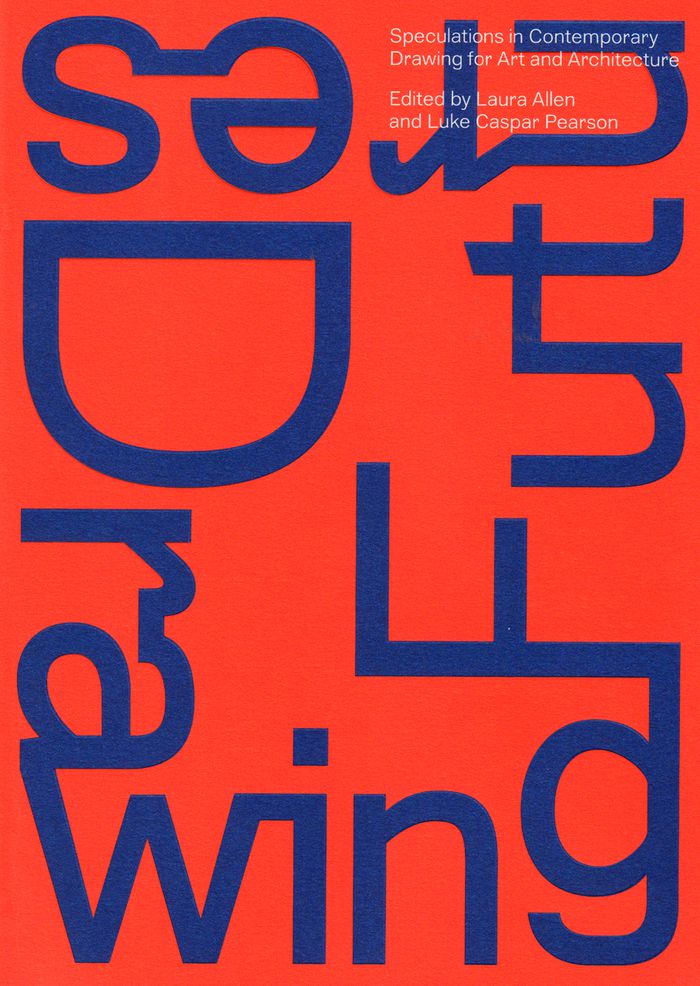
Drawing futures: speculations in contemporary drawing for art and architecture
Actions:
Prix:
$34.99
(disponible sur commande)
Résumé:
This compendium of projects, writings and interviews focuses on how the field of drawing expands synchronously alongside technological and computational developments. Despite numerous developments in technological manufacture and computational design that provide new grounds for designers, the act of drawing still plays a central role as a vehicle for speculation. In reflection of a society now underpinned by computational networks and interfaces allowing hitherto unprecedented views of the world, the changing status of the drawing and its representation as a political act demands a platform for reflection and innovation. "Drawing futures" critically reassess the act of drawing and where its future may lie. Bringing together practitioners from many creative fields, the book discusses how drawing is changing in relation to new technologies for the production and dissemination of ideas. Drawings seduce, and the drawings in this book are tantalising evidence of this. Yet the aim of Drawing Futures is to illustrate how drawing works as an abundantly rich, diverse, inventive, critical and serious research domain. In this regard, it is a ground-breaking study of the point and promise of drawing; a first of its kind, which both explores the microscopic detail of the craft and envisions the radical possibilities inherent in its expression. The academics, artists and architects whose work lies within conceive of drawing as a rigorous, liberating form of expression. Their contributions work together as a manifesto for the future of an artform that is capable of both utter simplicity and infinite complexity.
Drawing futures: speculations in contemporary drawing for art and architecture
Actions:
Prix:
$34.99
(disponible sur commande)
Résumé:
This compendium of projects, writings and interviews focuses on how the field of drawing expands synchronously alongside technological and computational developments. Despite numerous developments in technological manufacture and computational design that provide new grounds for designers, the act of drawing still plays a central role as a vehicle for speculation. In reflection of a society now underpinned by computational networks and interfaces allowing hitherto unprecedented views of the world, the changing status of the drawing and its representation as a political act demands a platform for reflection and innovation. "Drawing futures" critically reassess the act of drawing and where its future may lie. Bringing together practitioners from many creative fields, the book discusses how drawing is changing in relation to new technologies for the production and dissemination of ideas. Drawings seduce, and the drawings in this book are tantalising evidence of this. Yet the aim of Drawing Futures is to illustrate how drawing works as an abundantly rich, diverse, inventive, critical and serious research domain. In this regard, it is a ground-breaking study of the point and promise of drawing; a first of its kind, which both explores the microscopic detail of the craft and envisions the radical possibilities inherent in its expression. The academics, artists and architects whose work lies within conceive of drawing as a rigorous, liberating form of expression. Their contributions work together as a manifesto for the future of an artform that is capable of both utter simplicity and infinite complexity.
Classification:
livres
livres
Publication:
décembre 2016
décembre 2016
Sujet:
Dessin d’architecture
Dessin d’architecture
Classification:
livres
livres
Actions:
Prix:
$40.00
(disponible sur commande)
Résumé:
One of the delights of life is the discovery and rediscovery of patterns of order and beauty in nature—designs revealed by slicing through a head of cabbage or an orange, the forms of shells and butterfly wings. These images are awesome not just for their beauty alone, but because they suggest an order underlying their growth, a harmony existing in nature. What does it(...)
$40.00
(disponible sur commande)
Résumé:
One of the delights of life is the discovery and rediscovery of patterns of order and beauty in nature—designs revealed by slicing through a head of cabbage or an orange, the forms of shells and butterfly wings. These images are awesome not just for their beauty alone, but because they suggest an order underlying their growth, a harmony existing in nature. What does it(...)
Publication:
janvier 1900, Boston, London
janvier 1900, Boston, London
Titre:
Power of limits: Proportional harmonies in nature, art and architecture
Actions:
Prix:
$40.00
(disponible sur commande)
Résumé:
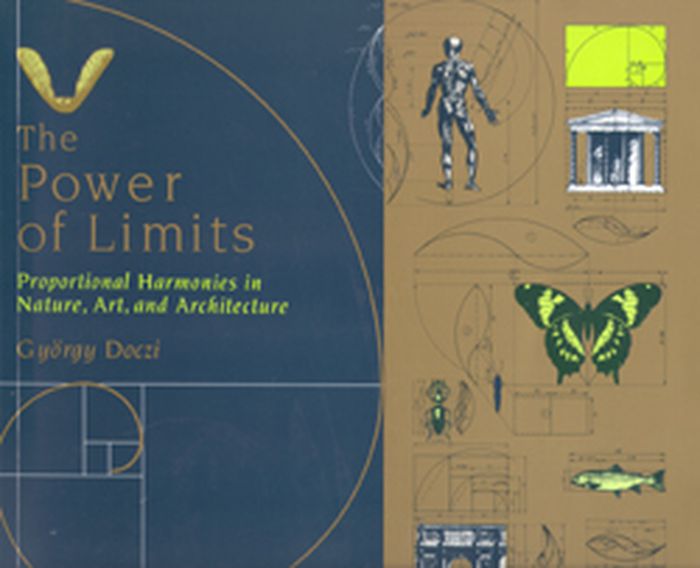
One of the delights of life is the discovery and rediscovery of patterns of order and beauty in nature—designs revealed by slicing through a head of cabbage or an orange, the forms of shells and butterfly wings. These images are awesome not just for their beauty alone, but because they suggest an order underlying their growth, a harmony existing in nature. What does it mean that such an order exists; how far does it extend? The Power of Limits was inspired by those simple discoveries of harmony. The author went on to investigate and measure hundreds of patterns—ancient and modern, minute and vast. His discovery, vividly illustrated here, is that certain proportions occur over and over again in all these forms. Patterns are also repeated in how things grow and are made—by the dynamic union of opposites—as demonstrated by the spirals that move in opposite directions in the growth of a plant. The joining of unity and diversity in the discipline of proportional limitations creates forms that are beautiful to us because they embody the principles of the cosmic order of which we are a part; conversely, the limitlessness of that order is revealed by the strictness of its forms. The author shows how we, as humans, are included in the universal harmony of form, and suggests that the union of complementary opposites may be a way to extend that harmony to the psychological and social realms as well.
Power of limits: Proportional harmonies in nature, art and architecture
Actions:
Prix:
$40.00
(disponible sur commande)
Résumé:
One of the delights of life is the discovery and rediscovery of patterns of order and beauty in nature—designs revealed by slicing through a head of cabbage or an orange, the forms of shells and butterfly wings. These images are awesome not just for their beauty alone, but because they suggest an order underlying their growth, a harmony existing in nature. What does it mean that such an order exists; how far does it extend? The Power of Limits was inspired by those simple discoveries of harmony. The author went on to investigate and measure hundreds of patterns—ancient and modern, minute and vast. His discovery, vividly illustrated here, is that certain proportions occur over and over again in all these forms. Patterns are also repeated in how things grow and are made—by the dynamic union of opposites—as demonstrated by the spirals that move in opposite directions in the growth of a plant. The joining of unity and diversity in the discipline of proportional limitations creates forms that are beautiful to us because they embody the principles of the cosmic order of which we are a part; conversely, the limitlessness of that order is revealed by the strictness of its forms. The author shows how we, as humans, are included in the universal harmony of form, and suggests that the union of complementary opposites may be a way to extend that harmony to the psychological and social realms as well.
Classification:
livres
livres
Publication:
janvier 1900, Boston, London
janvier 1900, Boston, London
Classification:
livres
livres
Titre:
Zero yen houses
Zero yen houses
Actions:
Prix:
$75.00
(disponible sur commande)
Résumé:
A lean-to in an urban park, featuring a blue tarpaulin roof, a hinged door, and a bamboo blind. A car-shaped cardboard hut, lashed together with rope and sitting on a dolly. Temporary lodging under a bridge, incorporating a piece of playground equipment into its design. Each of these structures is an example of what Japanese artist and architect Kyohei Sakaguchi calls a(...)
$75.00
(disponible sur commande)
Résumé:
A lean-to in an urban park, featuring a blue tarpaulin roof, a hinged door, and a bamboo blind. A car-shaped cardboard hut, lashed together with rope and sitting on a dolly. Temporary lodging under a bridge, incorporating a piece of playground equipment into its design. Each of these structures is an example of what Japanese artist and architect Kyohei Sakaguchi calls a(...)
Titre:
Zero yen houses
Actions:
Prix:
$75.00
(disponible sur commande)
Résumé:
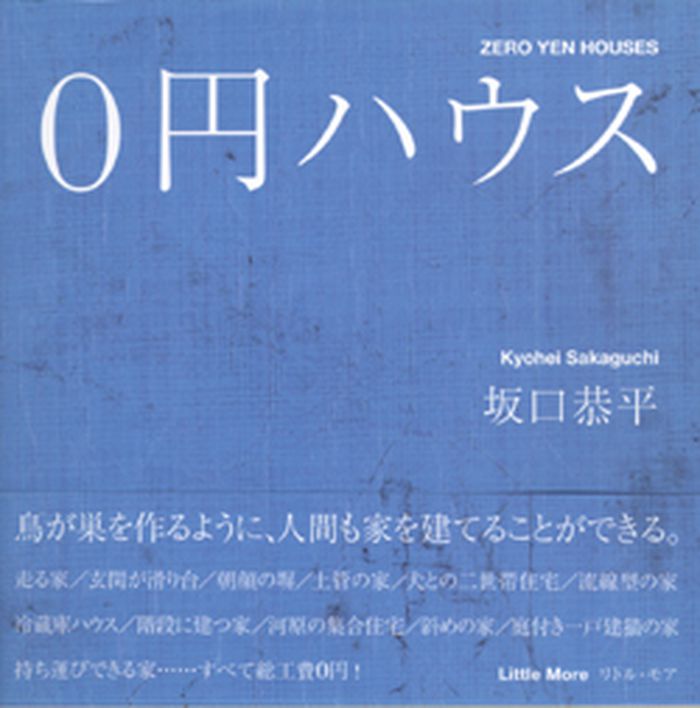
A lean-to in an urban park, featuring a blue tarpaulin roof, a hinged door, and a bamboo blind. A car-shaped cardboard hut, lashed together with rope and sitting on a dolly. Temporary lodging under a bridge, incorporating a piece of playground equipment into its design. Each of these structures is an example of what Japanese artist and architect Kyohei Sakaguchi calls a "zero-yen house".Built by the homeless of Tokyo, Osaka, and Nagoya, zero-yen houses employ discarded and found materials, including pieces of wood and corrugated roofing, temple ornaments, blankets, shipping pallets, an umbrella, and those ubiquitous blue tarps. They also incorporate into their assembly the imminence of their disassembly: at any moment, they may have to be taken apart and moved.Since his days as a university student at the turn of the millennium, Sakaguchi has been studying the kinds of shelters that street people have created for themselves in Japan's three largest cities. Based in Tokyo, he appears to be obsessed with this peculiar and transient form of "vernacular architecture". Sakaguchi uses images, descriptions, and even facsimiles of the improvised homes of the homeless as a way of celebrating human resourcefulness and ingenuity. These dwellings, he tells us, are worthy of our interest and admiration rather than our indifference, our scorn, or even our pity. They can instruct us on an approach to architecture that is the reverse of overconsumption and resource depletion.
Zero yen houses
Actions:
Prix:
$75.00
(disponible sur commande)
Résumé:
A lean-to in an urban park, featuring a blue tarpaulin roof, a hinged door, and a bamboo blind. A car-shaped cardboard hut, lashed together with rope and sitting on a dolly. Temporary lodging under a bridge, incorporating a piece of playground equipment into its design. Each of these structures is an example of what Japanese artist and architect Kyohei Sakaguchi calls a "zero-yen house".Built by the homeless of Tokyo, Osaka, and Nagoya, zero-yen houses employ discarded and found materials, including pieces of wood and corrugated roofing, temple ornaments, blankets, shipping pallets, an umbrella, and those ubiquitous blue tarps. They also incorporate into their assembly the imminence of their disassembly: at any moment, they may have to be taken apart and moved.Since his days as a university student at the turn of the millennium, Sakaguchi has been studying the kinds of shelters that street people have created for themselves in Japan's three largest cities. Based in Tokyo, he appears to be obsessed with this peculiar and transient form of "vernacular architecture". Sakaguchi uses images, descriptions, and even facsimiles of the improvised homes of the homeless as a way of celebrating human resourcefulness and ingenuity. These dwellings, he tells us, are worthy of our interest and admiration rather than our indifference, our scorn, or even our pity. They can instruct us on an approach to architecture that is the reverse of overconsumption and resource depletion.
Classification:
livres
livres
Publication:
janvier 2004, Tokyo
janvier 2004, Tokyo
Sujet:
Architecture résidentielle
Architecture résidentielle
Classification:
livres
livres
Actions:
Prix:
$15.95
(disponible en magasin)
Résumé:
This volume contains work, both built and unbuilt, both large-scale and small, designed in the 1990s by the firm of Philip Johnson/Alan Ritchie Architects. Alan Ritchie has worked with Johnson since 1969; the firm was established in 1994. The projects shown may be divided into two groups. Johnson’s interest in the past decade in sculptural form - or the way in which(...)
$15.95
(disponible en magasin)
Résumé:
This volume contains work, both built and unbuilt, both large-scale and small, designed in the 1990s by the firm of Philip Johnson/Alan Ritchie Architects. Alan Ritchie has worked with Johnson since 1969; the firm was established in 1994. The projects shown may be divided into two groups. Johnson’s interest in the past decade in sculptural form - or the way in which(...)
Sujet:
Architecture, monographies
Architecture, monographies
Publication:
janvier 2003, New York
janvier 2003, New York
Titre:
Philip Johnson / Alan Ritchie architects
Actions:
Prix:
$15.95
(disponible en magasin)
Résumé:
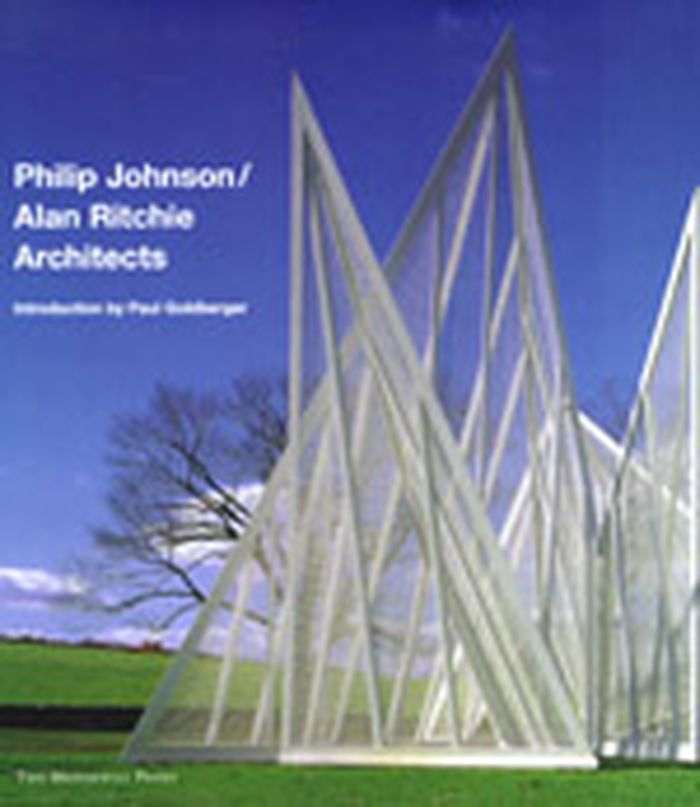
This volume contains work, both built and unbuilt, both large-scale and small, designed in the 1990s by the firm of Philip Johnson/Alan Ritchie Architects. Alan Ritchie has worked with Johnson since 1969; the firm was established in 1994. The projects shown may be divided into two groups. Johnson’s interest in the past decade in sculptural form - or the way in which sculptural form translates into architectural presence - has led to designs that involve both new kinds of shapes and new ways of using classic architectural form to make entirely new works of architecture. Such sculptural works, for the most part small in scale, include Da Monsta, the new visitors pavilion at Johnson’s famed Glass House in New Canaan, Connecticut, and a spectacular folly consisting of four pyramids made of chain-link fencing at an estate in New York State. Simultaneously, the firm has continued its ongoing work with larger projects, such as a 27-story apartment tower for Tribeca, in lower Manhattan; the Cathedral of Hope in Dallas; an addition to the Amon Carter Museum, originally designed by Johnson in 1961, in Forth Worth, Texas; and a proposal for the architecture school at Texas A University in College Station. Also included are a pair of proposals for La Défense in Paris; three large houses; a new china design for the Four Seasons restaurant in New York; and a new public clock, sponsored by Movado, for Lincoln Center. Introduction by Paul Goldberger.
Philip Johnson / Alan Ritchie architects
Actions:
Prix:
$15.95
(disponible en magasin)
Résumé:
This volume contains work, both built and unbuilt, both large-scale and small, designed in the 1990s by the firm of Philip Johnson/Alan Ritchie Architects. Alan Ritchie has worked with Johnson since 1969; the firm was established in 1994. The projects shown may be divided into two groups. Johnson’s interest in the past decade in sculptural form - or the way in which sculptural form translates into architectural presence - has led to designs that involve both new kinds of shapes and new ways of using classic architectural form to make entirely new works of architecture. Such sculptural works, for the most part small in scale, include Da Monsta, the new visitors pavilion at Johnson’s famed Glass House in New Canaan, Connecticut, and a spectacular folly consisting of four pyramids made of chain-link fencing at an estate in New York State. Simultaneously, the firm has continued its ongoing work with larger projects, such as a 27-story apartment tower for Tribeca, in lower Manhattan; the Cathedral of Hope in Dallas; an addition to the Amon Carter Museum, originally designed by Johnson in 1961, in Forth Worth, Texas; and a proposal for the architecture school at Texas A University in College Station. Also included are a pair of proposals for La Défense in Paris; three large houses; a new china design for the Four Seasons restaurant in New York; and a new public clock, sponsored by Movado, for Lincoln Center. Introduction by Paul Goldberger.
Classification:
livres
livres
Publication:
janvier 2003, New York
janvier 2003, New York
Sujet:
Architecture, monographies
Architecture, monographies


