


10597 Résultats
Classification:
livres
livres
Prix:
$75.00
(disponible sur commande)
Résumé:
Accompanying the British Army during its decisive foray into China in 1860, Felice Beato was the first photographer to document a military campaign in progress. He captured not only the immediacy of war, the aftermath of battle, and strategic military positions, but also the sumptuous new Summer Palace before its destruction by the British. His(...)
$75.00
(disponible sur commande)
Résumé:
Accompanying the British Army during its decisive foray into China in 1860, Felice Beato was the first photographer to document a military campaign in progress. He captured not only the immediacy of war, the aftermath of battle, and strategic military positions, but also the sumptuous new Summer Palace before its destruction by the British. His(...)
Titre:
Of battle and beauty : Felice Beato's photographs of China
Actions:
Prix:
$75.00
(disponible sur commande)
Résumé:
Accompanying the British Army during its decisive foray into China in 1860, Felice Beato was the first photographer to document a military campaign in progress. He captured not only the immediacy of war, the aftermath of battle, and strategic military positions, but also the sumptuous new Summer Palace before its destruction by the British. His photographic record of the Second Opium War consisted of approximately 100 images, including a number of panoramic views, which survive in the form of private albums orignally compiled by British officers as a record of their victorious campaign. In addition to providing a strikingly beautiful glimpse of nineteenth-century China, these images also reveal how photography functioned as an integral component of British imperialism by shaping perceptions about a distant country and its culture. This publication accompanies a major exhibition of Beato's work in China.
Of battle and beauty : Felice Beato's photographs of China
Actions:
Prix:
$75.00
(disponible sur commande)
Résumé:
Accompanying the British Army during its decisive foray into China in 1860, Felice Beato was the first photographer to document a military campaign in progress. He captured not only the immediacy of war, the aftermath of battle, and strategic military positions, but also the sumptuous new Summer Palace before its destruction by the British. His photographic record of the Second Opium War consisted of approximately 100 images, including a number of panoramic views, which survive in the form of private albums orignally compiled by British officers as a record of their victorious campaign. In addition to providing a strikingly beautiful glimpse of nineteenth-century China, these images also reveal how photography functioned as an integral component of British imperialism by shaping perceptions about a distant country and its culture. This publication accompanies a major exhibition of Beato's work in China.
Classification:
livres
livres
Publication:
novembre 1999, Santa Barbara
novembre 1999, Santa Barbara
Sujet:
Théorie de la photographie
Théorie de la photographie
Classification:
livres
livres
Actions:
Prix:
$44.95
(disponible sur commande)
Résumé:
Focusing on early nineteenth-century England, and on the works and texts of the inventor of paper photography, William Henry Fox Talbot, Singular Images, Failed Copies historicizes the conceptualization of photography in that era as part of a major historical change. Treating photography not merely as a medium or a system of representation but also as an epistemology,(...)
$44.95
(disponible sur commande)
Résumé:
Focusing on early nineteenth-century England, and on the works and texts of the inventor of paper photography, William Henry Fox Talbot, Singular Images, Failed Copies historicizes the conceptualization of photography in that era as part of a major historical change. Treating photography not merely as a medium or a system of representation but also as an epistemology,(...)
Titre:
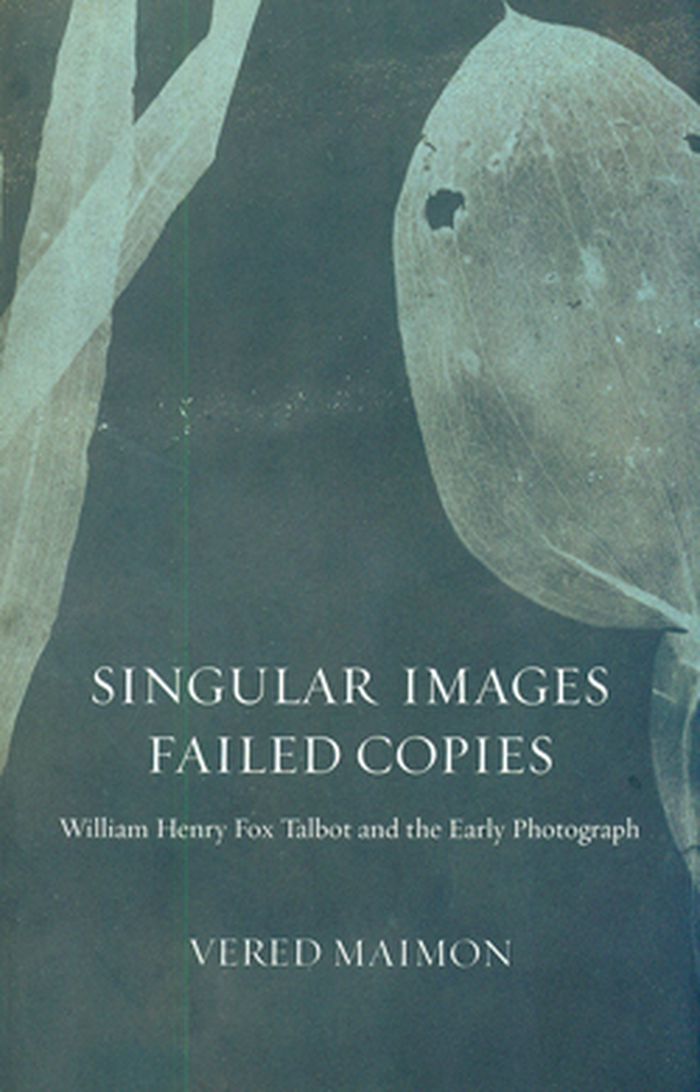
Singular images, failed copies: William Henry Fox Talbot and the early photograph
Actions:
Prix:
$44.95
(disponible sur commande)
Résumé:
Focusing on early nineteenth-century England, and on the works and texts of the inventor of paper photography, William Henry Fox Talbot, Singular Images, Failed Copies historicizes the conceptualization of photography in that era as part of a major historical change. Treating photography not merely as a medium or a system of representation but also as an epistemology, Vered Maimon challenges today's prevalent association of the early photograph with the camera obscura. Instead, she points to material, formal, and conceptual differences between those two types of images by considering the philosophical and aesthetic premises linked with early photography. Through this analysis she argues that the emphasis in Talbot's accounts on the removal of the artist's hand in favor of the pencil of nature did not mark a shift from manual to mechanical and more accurate or objective systems of representation. In Singular Images, Failed Copies, Maimon shows that the perception of the photographic image in the 1830s and 1840s was in fact symptomatic of a crisis in the epistemological framework that had informed philosophical, scientific, and aesthetic thought for two centuries.
Singular images, failed copies: William Henry Fox Talbot and the early photograph
Actions:
Prix:
$44.95
(disponible sur commande)
Résumé:
Focusing on early nineteenth-century England, and on the works and texts of the inventor of paper photography, William Henry Fox Talbot, Singular Images, Failed Copies historicizes the conceptualization of photography in that era as part of a major historical change. Treating photography not merely as a medium or a system of representation but also as an epistemology, Vered Maimon challenges today's prevalent association of the early photograph with the camera obscura. Instead, she points to material, formal, and conceptual differences between those two types of images by considering the philosophical and aesthetic premises linked with early photography. Through this analysis she argues that the emphasis in Talbot's accounts on the removal of the artist's hand in favor of the pencil of nature did not mark a shift from manual to mechanical and more accurate or objective systems of representation. In Singular Images, Failed Copies, Maimon shows that the perception of the photographic image in the 1830s and 1840s was in fact symptomatic of a crisis in the epistemological framework that had informed philosophical, scientific, and aesthetic thought for two centuries.
Classification:
livres
livres
Publication:
décembre 2015
décembre 2015
Sujet:
Théorie de la photographie
Théorie de la photographie
Classification:
livres
livres
Actions:
Prix:
$32.50
(disponible en magasin)
Résumé:
In the spring of 2010, the Brooklyn-based quarterly magazine Cabinet invited poet and cultural critic Wayne Koestenbaum to begin writing a regular column. Entitled "Legend," the column had a highly unusual premise. Every three months, the editors of the magazine would ask Koestenbaum to write one or more extended captions for a single photograph with which they had(...)
$32.50
(disponible en magasin)
Résumé:
In the spring of 2010, the Brooklyn-based quarterly magazine Cabinet invited poet and cultural critic Wayne Koestenbaum to begin writing a regular column. Entitled "Legend," the column had a highly unusual premise. Every three months, the editors of the magazine would ask Koestenbaum to write one or more extended captions for a single photograph with which they had(...)
Titre:
Notes on glaze: 18 photographic investigations
Actions:
Prix:
$32.50
(disponible en magasin)
Résumé:
In the spring of 2010, the Brooklyn-based quarterly magazine Cabinet invited poet and cultural critic Wayne Koestenbaum to begin writing a regular column. Entitled "Legend," the column had a highly unusual premise. Every three months, the editors of the magazine would ask Koestenbaum to write one or more extended captions for a single photograph with which they had provided him; drawn from obscure vernacular, commercial and scientific sources, all of the images were unfamiliar to the author. After 18 installments, Koestenbaum concluded his column in the winter of 2015. 'Notes on Glaze', featuring an introductory essay by the author, collects all the "Legend" columns, as well as their accompanying photographs. Refusing the distancing language of critical disinterest, Koestenbaum’s columns always locate the author in intimate proximity to the subjects portrayed in the photographs and to the impossibly variegated cast of characters—ranging from Debbie Reynolds to Duccio, the Dalai Lama to Barbra Streisand; from Hegel to Pee-wee Herman, and Emily Dickinson to Cicciolina—that pass through these texts.
Notes on glaze: 18 photographic investigations
Actions:
Prix:
$32.50
(disponible en magasin)
Résumé:
In the spring of 2010, the Brooklyn-based quarterly magazine Cabinet invited poet and cultural critic Wayne Koestenbaum to begin writing a regular column. Entitled "Legend," the column had a highly unusual premise. Every three months, the editors of the magazine would ask Koestenbaum to write one or more extended captions for a single photograph with which they had provided him; drawn from obscure vernacular, commercial and scientific sources, all of the images were unfamiliar to the author. After 18 installments, Koestenbaum concluded his column in the winter of 2015. 'Notes on Glaze', featuring an introductory essay by the author, collects all the "Legend" columns, as well as their accompanying photographs. Refusing the distancing language of critical disinterest, Koestenbaum’s columns always locate the author in intimate proximity to the subjects portrayed in the photographs and to the impossibly variegated cast of characters—ranging from Debbie Reynolds to Duccio, the Dalai Lama to Barbra Streisand; from Hegel to Pee-wee Herman, and Emily Dickinson to Cicciolina—that pass through these texts.
Classification:
livres
livres
Publication:
avril 2016
avril 2016
Sujet:
Théorie de la photographie
Théorie de la photographie
Classification:
livres
livres
Prix:
$39.95
(disponible sur commande)
Résumé:
"The critical eye" provides a comprehensive approach to the critical understanding of photography through an in-depth discussion of fifteen photographs and their contexts—historical, generic, biographical, and aesthetic. Lyle Rexer argues that by concentrating on just a few carefully chosen works it is possible to understand the history, development, and contemporary(...)
$39.95
(disponible sur commande)
Résumé:
"The critical eye" provides a comprehensive approach to the critical understanding of photography through an in-depth discussion of fifteen photographs and their contexts—historical, generic, biographical, and aesthetic. Lyle Rexer argues that by concentrating on just a few carefully chosen works it is possible to understand the history, development, and contemporary(...)
Titre:
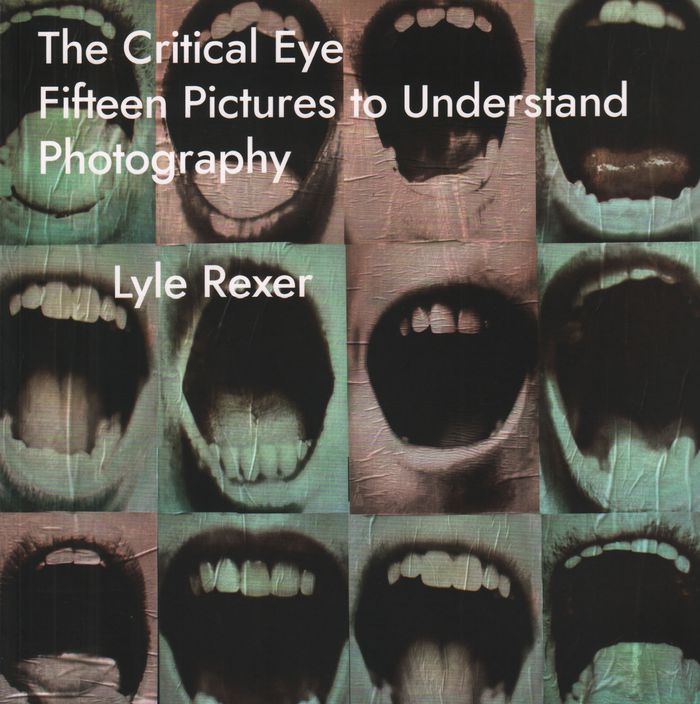
The critical eye: fifteen pictures to understand photography
Actions:
Prix:
$39.95
(disponible sur commande)
Résumé:
"The critical eye" provides a comprehensive approach to the critical understanding of photography through an in-depth discussion of fifteen photographs and their contexts—historical, generic, biographical, and aesthetic. Lyle Rexer argues that by concentrating on just a few carefully chosen works it is possible to understand the history, development, and contemporary situation of photography. Looking at images by photographers such as Roland Fischer, Myoung Ho Lee, Zanele Muholi, and Ernest Cole, "The critical eye" addresses a wide range of issues involved in photography, from authorial self-consciousness to the role of the audience, and with every chapter it seeks to link the history of photography to current practice.
The critical eye: fifteen pictures to understand photography
Actions:
Prix:
$39.95
(disponible sur commande)
Résumé:
"The critical eye" provides a comprehensive approach to the critical understanding of photography through an in-depth discussion of fifteen photographs and their contexts—historical, generic, biographical, and aesthetic. Lyle Rexer argues that by concentrating on just a few carefully chosen works it is possible to understand the history, development, and contemporary situation of photography. Looking at images by photographers such as Roland Fischer, Myoung Ho Lee, Zanele Muholi, and Ernest Cole, "The critical eye" addresses a wide range of issues involved in photography, from authorial self-consciousness to the role of the audience, and with every chapter it seeks to link the history of photography to current practice.
Classification:
livres
livres
Publication:
décembre 2019
décembre 2019
Sujet:
Théorie de la photographie
Théorie de la photographie
Classification:
livres
livres

Actions:
Prix:
$49.95
(disponible sur commande)
Résumé:
Showing how the still life has been renewed by recent developments in photography, ''Obstinacy of things'' includes work by Moyra Davey, Tacita Dean, Harun Farocki, Hans-Peter Feldmann, Annette Kelm, Elad Lassry, Zoe Leonard, Laura Letinsky, Sharon Lockhart, Barbara Probst, Lucie Stahl, Andrzej Steinbach, Ingeborg Strobl, James Welling and Christopher Williams, among others.
$49.95
(disponible sur commande)
Résumé:
Showing how the still life has been renewed by recent developments in photography, ''Obstinacy of things'' includes work by Moyra Davey, Tacita Dean, Harun Farocki, Hans-Peter Feldmann, Annette Kelm, Elad Lassry, Zoe Leonard, Laura Letinsky, Sharon Lockhart, Barbara Probst, Lucie Stahl, Andrzej Steinbach, Ingeborg Strobl, James Welling and Christopher Williams, among others.
Titre:
Obstinacy of things: still life in photographic concepts of the present
Actions:
Prix:
$49.95
(disponible sur commande)
Résumé:
Showing how the still life has been renewed by recent developments in photography, ''Obstinacy of things'' includes work by Moyra Davey, Tacita Dean, Harun Farocki, Hans-Peter Feldmann, Annette Kelm, Elad Lassry, Zoe Leonard, Laura Letinsky, Sharon Lockhart, Barbara Probst, Lucie Stahl, Andrzej Steinbach, Ingeborg Strobl, James Welling and Christopher Williams, among others.
Obstinacy of things: still life in photographic concepts of the present
Actions:
Prix:
$49.95
(disponible sur commande)
Résumé:
Showing how the still life has been renewed by recent developments in photography, ''Obstinacy of things'' includes work by Moyra Davey, Tacita Dean, Harun Farocki, Hans-Peter Feldmann, Annette Kelm, Elad Lassry, Zoe Leonard, Laura Letinsky, Sharon Lockhart, Barbara Probst, Lucie Stahl, Andrzej Steinbach, Ingeborg Strobl, James Welling and Christopher Williams, among others.
Classification:
livres
livres
Publication:
février 2019
février 2019
Sujet:
Théorie de la photographie
Théorie de la photographie
Classification:
livres
livres

Actions:
Prix:
$34.95
(disponible en magasin)
Résumé:
Accompanied by a selection of some of David Goldblatt’s (1930–2018) lesser-known photographs, this distilled dialogue is drawn directly from the recordings of a roving conversation with the photographer conducted three months before his death in June 2018. Goldblatt was born in Randfontein—a mining town on the Witwatersrand gold reef—in 1930, the grandson of(...)
$34.95
(disponible en magasin)
Résumé:
Accompanied by a selection of some of David Goldblatt’s (1930–2018) lesser-known photographs, this distilled dialogue is drawn directly from the recordings of a roving conversation with the photographer conducted three months before his death in June 2018. Goldblatt was born in Randfontein—a mining town on the Witwatersrand gold reef—in 1930, the grandson of(...)
Titre:
David Goldblatt: the last interview
Actions:
Prix:
$34.95
(disponible en magasin)
Résumé:
Accompanied by a selection of some of David Goldblatt’s (1930–2018) lesser-known photographs, this distilled dialogue is drawn directly from the recordings of a roving conversation with the photographer conducted three months before his death in June 2018. Goldblatt was born in Randfontein—a mining town on the Witwatersrand gold reef—in 1930, the grandson of Lithuanian-Jewish migrants who settled in South Africa after escaping persecution in Europe. After the death of his father in 1962, Goldblatt sold the family clothing business to become a full-time photographer. In this candid conversation with writer Alexandra Dodd, Goldblatt shares his views about land and landscape, the dangerous lure of repetition in portrait photography, Johannesburg, the solipsism of life as a photographer, staying sharp, his visceral intolerance of censorship, his abiding interest in structures and his observation of instances of dominion under democracy, among other key themes.
David Goldblatt: the last interview
Actions:
Prix:
$34.95
(disponible en magasin)
Résumé:
Accompanied by a selection of some of David Goldblatt’s (1930–2018) lesser-known photographs, this distilled dialogue is drawn directly from the recordings of a roving conversation with the photographer conducted three months before his death in June 2018. Goldblatt was born in Randfontein—a mining town on the Witwatersrand gold reef—in 1930, the grandson of Lithuanian-Jewish migrants who settled in South Africa after escaping persecution in Europe. After the death of his father in 1962, Goldblatt sold the family clothing business to become a full-time photographer. In this candid conversation with writer Alexandra Dodd, Goldblatt shares his views about land and landscape, the dangerous lure of repetition in portrait photography, Johannesburg, the solipsism of life as a photographer, staying sharp, his visceral intolerance of censorship, his abiding interest in structures and his observation of instances of dominion under democracy, among other key themes.
Classification:
livres
livres
Publication:
novembre 2019
novembre 2019
Sujet:
Théorie de la photographie
Théorie de la photographie
Classification:
livres
livres
Titre:
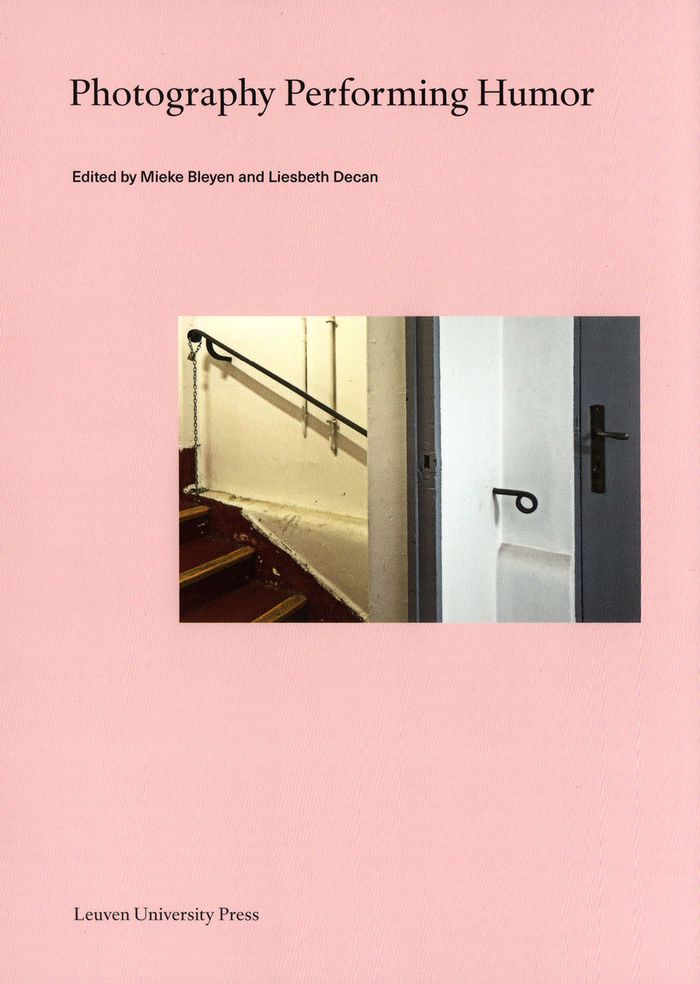
Photography performing humor
Photography performing humor
Actions:
Prix:
$82.50
(disponible en magasin)
Résumé:
Despite the ubiquitous presence of photographic humor in art and popular media, the phenomenon has as yet received very little scholarly attention. Focusing on staged humor rather than on comic effects of snapshot photography, this volume brings together leading scholars in the field addressing humor preformed in front of the camera, often specifically created for the(...)
$82.50
(disponible en magasin)
Résumé:
Despite the ubiquitous presence of photographic humor in art and popular media, the phenomenon has as yet received very little scholarly attention. Focusing on staged humor rather than on comic effects of snapshot photography, this volume brings together leading scholars in the field addressing humor preformed in front of the camera, often specifically created for the(...)
Titre:
Photography performing humor
Actions:
Prix:
$82.50
(disponible en magasin)
Résumé:
Despite the ubiquitous presence of photographic humor in art and popular media, the phenomenon has as yet received very little scholarly attention. Focusing on staged humor rather than on comic effects of snapshot photography, this volume brings together leading scholars in the field addressing humor preformed in front of the camera, often specifically created for the camera, and the preformative joke-work done by the medium itself. A first section explores how photography, due to its 'shattering' qualities, turns into a privileged medium for eliciting humorous effects and how humor can be discerned within the photographic event. A second section discusses the toolbox of photographic trickery (photomontage, double exposure and cinematic movement) that allows photography to mock itself. The book closes with a section on photographic wit in conceptual art, both in canonized and more locally distinct practices.
Photography performing humor
Actions:
Prix:
$82.50
(disponible en magasin)
Résumé:
Despite the ubiquitous presence of photographic humor in art and popular media, the phenomenon has as yet received very little scholarly attention. Focusing on staged humor rather than on comic effects of snapshot photography, this volume brings together leading scholars in the field addressing humor preformed in front of the camera, often specifically created for the camera, and the preformative joke-work done by the medium itself. A first section explores how photography, due to its 'shattering' qualities, turns into a privileged medium for eliciting humorous effects and how humor can be discerned within the photographic event. A second section discusses the toolbox of photographic trickery (photomontage, double exposure and cinematic movement) that allows photography to mock itself. The book closes with a section on photographic wit in conceptual art, both in canonized and more locally distinct practices.
Classification:
livres
livres
Publication:
juillet 2019
juillet 2019
Sujet:
Théorie de la photographie
Théorie de la photographie
Classification:
livres
livres
Actions:
Prix:
$57.95
(disponible sur commande)
Résumé:
"Transbordeur" est une revue d’histoire de la photographie. Elle s’adresse à tous ceux qui sont intéressés par les images, leur histoire, leur sociologie, leur évolution technique, leurs significations et matérialités multiples, leur rapport au temps et à l’histoire, leur circulation ; à tous ceux qui veulent comprendre le monde contemporain à travers l’histoire de la(...)
$57.95
(disponible sur commande)
Résumé:
"Transbordeur" est une revue d’histoire de la photographie. Elle s’adresse à tous ceux qui sont intéressés par les images, leur histoire, leur sociologie, leur évolution technique, leurs significations et matérialités multiples, leur rapport au temps et à l’histoire, leur circulation ; à tous ceux qui veulent comprendre le monde contemporain à travers l’histoire de la(...)
Titre:
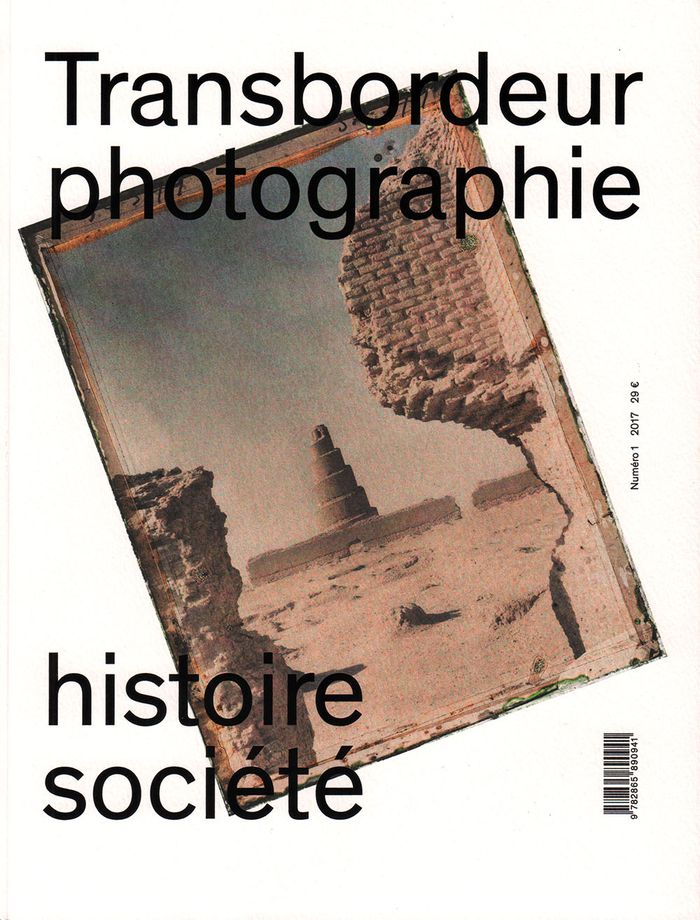
Transbordeur photographie no. 1
Actions:
Prix:
$57.95
(disponible sur commande)
Résumé:
"Transbordeur" est une revue d’histoire de la photographie. Elle s’adresse à tous ceux qui sont intéressés par les images, leur histoire, leur sociologie, leur évolution technique, leurs significations et matérialités multiples, leur rapport au temps et à l’histoire, leur circulation ; à tous ceux qui veulent comprendre le monde contemporain à travers l’histoire de la culture ; à tous ceux qui jettent un regard critique et curieux sur les phénomènes visuels qui les entourent. Plutôt que d’approcher la photographie d’un point de vue strictement esthétique, la revue "Transbordeur" a pour ambition de montrer sa place dans toutes les activités de la société, d’analyser comment elle a transformé en profondeur notre rapport au monde.
Transbordeur photographie no. 1
Actions:
Prix:
$57.95
(disponible sur commande)
Résumé:
"Transbordeur" est une revue d’histoire de la photographie. Elle s’adresse à tous ceux qui sont intéressés par les images, leur histoire, leur sociologie, leur évolution technique, leurs significations et matérialités multiples, leur rapport au temps et à l’histoire, leur circulation ; à tous ceux qui veulent comprendre le monde contemporain à travers l’histoire de la culture ; à tous ceux qui jettent un regard critique et curieux sur les phénomènes visuels qui les entourent. Plutôt que d’approcher la photographie d’un point de vue strictement esthétique, la revue "Transbordeur" a pour ambition de montrer sa place dans toutes les activités de la société, d’analyser comment elle a transformé en profondeur notre rapport au monde.
Classification:
livres
livres
Publication:
mars 2017
mars 2017
Sujet:
Théorie de la photographie
Théorie de la photographie
Classification:
livres
livres
Titre:
Transbordeur, no. 3
Transbordeur, no. 3
Actions:
Prix:
$54.95
(disponible sur commande)
Résumé:
Durant plusieurs décennies et avant l’avènement de l’électronique, la photographie a suscité les espoirs d’une relève du papier comme support d’accumulation et de diffusion du savoir. Dans ce mouvement d’accélération et d’automatisation de sa diffusion, la photographie a été amenée à dépasser l’opération élémentaire d’enregistrement mimétique du monde pour devenir un(...)
$54.95
(disponible sur commande)
Résumé:
Durant plusieurs décennies et avant l’avènement de l’électronique, la photographie a suscité les espoirs d’une relève du papier comme support d’accumulation et de diffusion du savoir. Dans ce mouvement d’accélération et d’automatisation de sa diffusion, la photographie a été amenée à dépasser l’opération élémentaire d’enregistrement mimétique du monde pour devenir un(...)
Titre:
Transbordeur, no. 3
Actions:
Prix:
$54.95
(disponible sur commande)
Résumé:
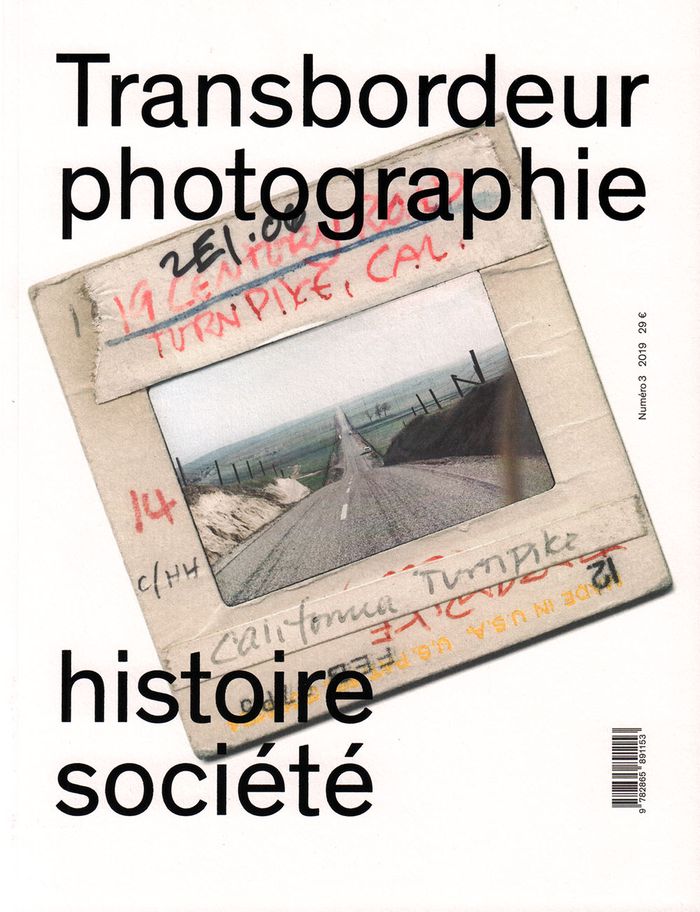
Durant plusieurs décennies et avant l’avènement de l’électronique, la photographie a suscité les espoirs d’une relève du papier comme support d’accumulation et de diffusion du savoir. Dans ce mouvement d’accélération et d’automatisation de sa diffusion, la photographie a été amenée à dépasser l’opération élémentaire d’enregistrement mimétique du monde pour devenir un médium hybride englobant à la fois l’enregistrement de l’image et le traitement des données relatives à celle-ci. Son statut s’en est trouvé profondément redéfini : de surface servant de support matériel à l’image latente, la photographie est devenue interface à travers laquelle cette même image se trouve non seulement fixée, mais encore augmentée de toutes sortes de renseignements – chronologiques, géographiques, techniques – qui lui permettent de se donner à voir comme information. Revenir sur son histoire oubliée, « chaînon manquant » entre l’ère du livre et la culture numérique, s’avère essentiel pour saisir les fondements de la « société de l’information » contemporaine et des digital humanities.
Transbordeur, no. 3
Actions:
Prix:
$54.95
(disponible sur commande)
Résumé:
Durant plusieurs décennies et avant l’avènement de l’électronique, la photographie a suscité les espoirs d’une relève du papier comme support d’accumulation et de diffusion du savoir. Dans ce mouvement d’accélération et d’automatisation de sa diffusion, la photographie a été amenée à dépasser l’opération élémentaire d’enregistrement mimétique du monde pour devenir un médium hybride englobant à la fois l’enregistrement de l’image et le traitement des données relatives à celle-ci. Son statut s’en est trouvé profondément redéfini : de surface servant de support matériel à l’image latente, la photographie est devenue interface à travers laquelle cette même image se trouve non seulement fixée, mais encore augmentée de toutes sortes de renseignements – chronologiques, géographiques, techniques – qui lui permettent de se donner à voir comme information. Revenir sur son histoire oubliée, « chaînon manquant » entre l’ère du livre et la culture numérique, s’avère essentiel pour saisir les fondements de la « société de l’information » contemporaine et des digital humanities.
Classification:
livres
livres
Publication:
mars 2019
mars 2019
Sujet:
Théorie de la photographie
Théorie de la photographie
Classification:
livres
livres

Actions:
Prix:
$49.95
(disponible sur commande)
Résumé:
The ruins of war have long held the power to stupefy and appall. Can such ruins ever be persuasively depicted and comprehended? Can images of them force us to identify with the suffering of the enemy and raise uncomfortable questions about forgiveness and revenge? Françoise Meltzer explores those questions in Dark Lens, which uses the images of war ruins in Nazi(...)
$49.95
(disponible sur commande)
Résumé:
The ruins of war have long held the power to stupefy and appall. Can such ruins ever be persuasively depicted and comprehended? Can images of them force us to identify with the suffering of the enemy and raise uncomfortable questions about forgiveness and revenge? Françoise Meltzer explores those questions in Dark Lens, which uses the images of war ruins in Nazi(...)
Titre:
Dark lens: imaging Germany, 1945
Actions:
Prix:
$49.95
(disponible sur commande)
Résumé:
The ruins of war have long held the power to stupefy and appall. Can such ruins ever be persuasively depicted and comprehended? Can images of them force us to identify with the suffering of the enemy and raise uncomfortable questions about forgiveness and revenge? Françoise Meltzer explores those questions in Dark Lens, which uses the images of war ruins in Nazi Germany to investigate problems of aestheticization, the representation of catastrophe, and the targeting of civilians in war. Through texts that give accounts of bombed-out towns in Germany in the last years of the war, painters’ attempts to depict the destruction, and her own mother’s photographs taken in Berlin and other cities in 1945, Meltzer asks if any medium offers a direct experience of war ruins for the viewer. Ultimately, she concludes that while the viewer cannot help reimaging the devastation through the lenses of history, aestheticization, or voyeurism, these images at least allow us to approach the reality of ruins and grasp the larger issue of targeting civilians in modern warfare for what it is.
Dark lens: imaging Germany, 1945
Actions:
Prix:
$49.95
(disponible sur commande)
Résumé:
The ruins of war have long held the power to stupefy and appall. Can such ruins ever be persuasively depicted and comprehended? Can images of them force us to identify with the suffering of the enemy and raise uncomfortable questions about forgiveness and revenge? Françoise Meltzer explores those questions in Dark Lens, which uses the images of war ruins in Nazi Germany to investigate problems of aestheticization, the representation of catastrophe, and the targeting of civilians in war. Through texts that give accounts of bombed-out towns in Germany in the last years of the war, painters’ attempts to depict the destruction, and her own mother’s photographs taken in Berlin and other cities in 1945, Meltzer asks if any medium offers a direct experience of war ruins for the viewer. Ultimately, she concludes that while the viewer cannot help reimaging the devastation through the lenses of history, aestheticization, or voyeurism, these images at least allow us to approach the reality of ruins and grasp the larger issue of targeting civilians in modern warfare for what it is.
Classification:
livres
livres
Publication:
septembre 2019
septembre 2019
Sujet:
Théorie de la photographie
Théorie de la photographie


