


12372 Résultats
Classification:
livres
livres
Actions:
Prix:
$34.00
(disponible sur commande)
Résumé:
Why write about buildings? Buildings are chunks of the material of the natural world, refashioned by humans and set down into place to stand as silent as the rocks and trees from which they were made. How can we describe that mute actuality? A building’s only complete description is itself. Writing often intensifies the cloud that obscures buildings rather than dissipates(...)
$34.00
(disponible sur commande)
Résumé:
Why write about buildings? Buildings are chunks of the material of the natural world, refashioned by humans and set down into place to stand as silent as the rocks and trees from which they were made. How can we describe that mute actuality? A building’s only complete description is itself. Writing often intensifies the cloud that obscures buildings rather than dissipates(...)
Titre:
Buildings: between living time and rocky space
Actions:
Prix:
$34.00
(disponible sur commande)
Résumé:
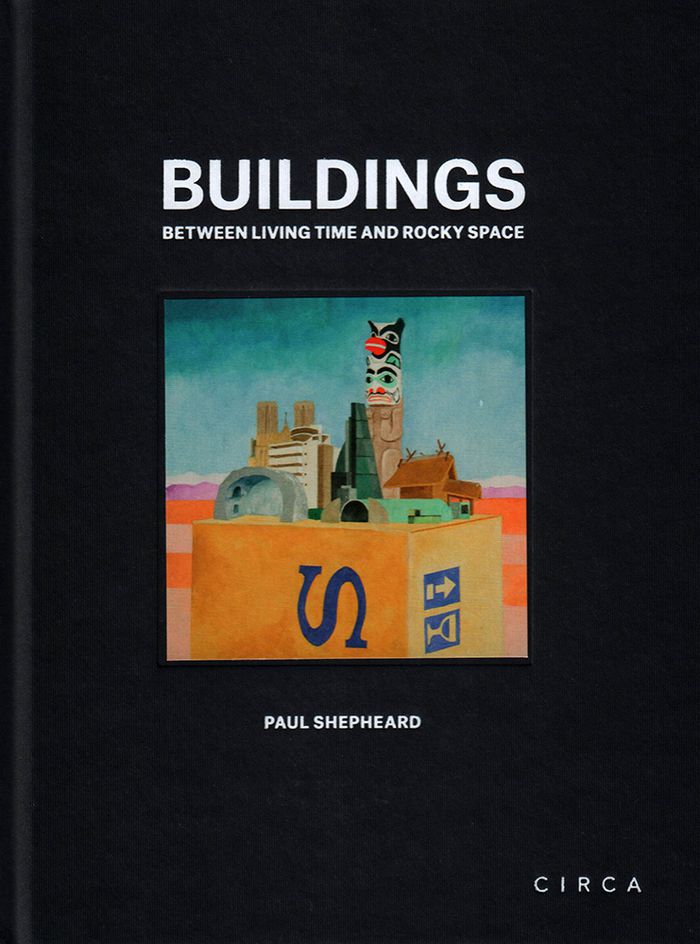
Why write about buildings? Buildings are chunks of the material of the natural world, refashioned by humans and set down into place to stand as silent as the rocks and trees from which they were made. How can we describe that mute actuality? A building’s only complete description is itself. Writing often intensifies the cloud that obscures buildings rather than dissipates it. So why do it? Two generations ago, architects had a real job to do, rebuilding cities shattered by war. It turned out to be more difficult than it looked. Now the grandchildren of those utopians have a different role, which is to rescue a world that is being turned by the media, the money men and the machines into a replica of itself. In this book Paul Shepheard takes a sideways look at this elusive task and finds himself writing an ode to buildings, which asks: What are they? When do they happen? And how are they used?
Buildings: between living time and rocky space
Actions:
Prix:
$34.00
(disponible sur commande)
Résumé:
Why write about buildings? Buildings are chunks of the material of the natural world, refashioned by humans and set down into place to stand as silent as the rocks and trees from which they were made. How can we describe that mute actuality? A building’s only complete description is itself. Writing often intensifies the cloud that obscures buildings rather than dissipates it. So why do it? Two generations ago, architects had a real job to do, rebuilding cities shattered by war. It turned out to be more difficult than it looked. Now the grandchildren of those utopians have a different role, which is to rescue a world that is being turned by the media, the money men and the machines into a replica of itself. In this book Paul Shepheard takes a sideways look at this elusive task and finds himself writing an ode to buildings, which asks: What are they? When do they happen? And how are they used?
Classification:
livres
livres
Publication:
octobre 2016
octobre 2016
Sujet:
Théorie de l’architecture
Théorie de l’architecture
Classification:
livres
livres
Titre:
Global environment history
Global environment history
Actions:
Prix:
$55.00
(disponible sur commande)
Résumé:
Examining this state of flux of both the natural environment and the living organisms that inhabit it, this book ranges from 10,000 BCE to the modern day to present an incredibly rich and deep time overview of how we have come to our current state of ecological crisis. A far-reaching approach that considers the truly global picture and recognizes the contributions of(...)
$55.00
(disponible sur commande)
Résumé:
Examining this state of flux of both the natural environment and the living organisms that inhabit it, this book ranges from 10,000 BCE to the modern day to present an incredibly rich and deep time overview of how we have come to our current state of ecological crisis. A far-reaching approach that considers the truly global picture and recognizes the contributions of(...)
Titre:
Global environment history
Actions:
Prix:
$55.00
(disponible sur commande)
Résumé:
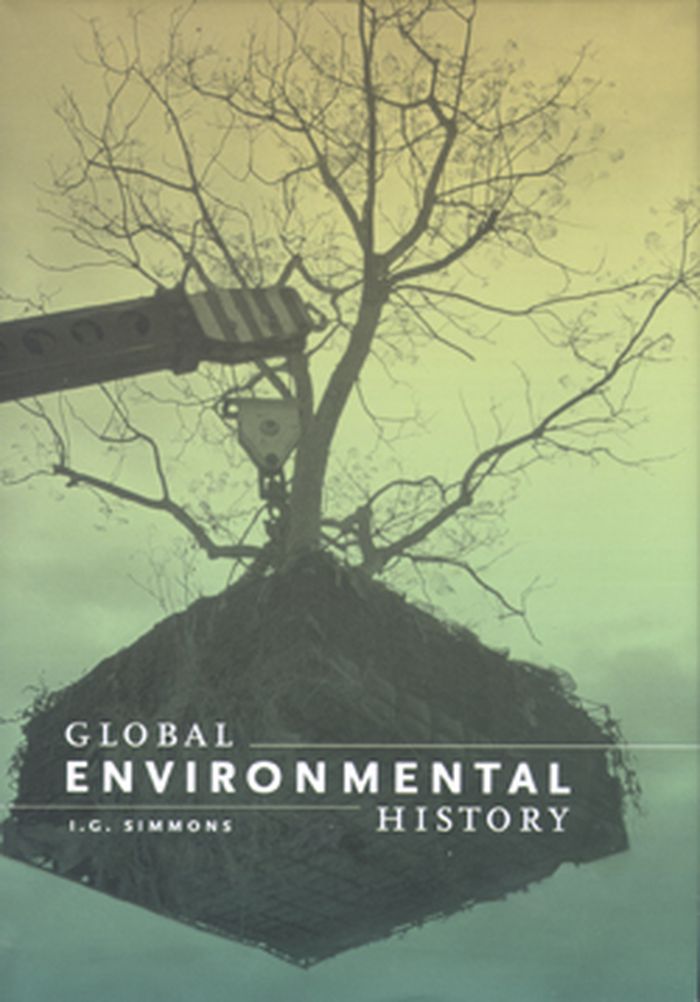
Examining this state of flux of both the natural environment and the living organisms that inhabit it, this book ranges from 10,000 BCE to the modern day to present an incredibly rich and deep time overview of how we have come to our current state of ecological crisis. A far-reaching approach that considers the truly global picture and recognizes the contributions of many disciplines — including the natural sciences, the social sciences, and increasingly, the humanities — this publication focuses not only on the material world but also on humans’ ideas about the planet and their place on it. Taking as his starting point the major phases of human technological evolution of the last 12,000 years, Simmons considers how these changes have affected the natural world and goes on to assess the response to conditions such as climate change. By putting today’s environmental preoccupations into a long-term perspective, Simmons reveals the history of some current anxieties.
Global environment history
Actions:
Prix:
$55.00
(disponible sur commande)
Résumé:
Examining this state of flux of both the natural environment and the living organisms that inhabit it, this book ranges from 10,000 BCE to the modern day to present an incredibly rich and deep time overview of how we have come to our current state of ecological crisis. A far-reaching approach that considers the truly global picture and recognizes the contributions of many disciplines — including the natural sciences, the social sciences, and increasingly, the humanities — this publication focuses not only on the material world but also on humans’ ideas about the planet and their place on it. Taking as his starting point the major phases of human technological evolution of the last 12,000 years, Simmons considers how these changes have affected the natural world and goes on to assess the response to conditions such as climate change. By putting today’s environmental preoccupations into a long-term perspective, Simmons reveals the history of some current anxieties.
Classification:
livres
livres
Publication:
août 2008, Chicago, London
août 2008, Chicago, London
Sujet:
Architecture écologique
Architecture écologique
Classification:
livres
livres
Titre:
Disordering the establishment: participatory art and institutional critique in France 1958-1981
Disordering the establishment: participatory art and institutional critique in France 1958-1981
Actions:
Prix:
$37.95
(disponible en magasin)
Résumé:
In the decades following World War II, France experienced both a period of affluence and a wave of political, artistic, and philosophical discontent that culminated in the countrywide protests of 1968. In ''Disordering the establishment'' Lily Woodruff examines the development of artistic strategies of political resistance in France in this era. Drawing on interviews with(...)
$37.95
(disponible en magasin)
Résumé:
In the decades following World War II, France experienced both a period of affluence and a wave of political, artistic, and philosophical discontent that culminated in the countrywide protests of 1968. In ''Disordering the establishment'' Lily Woodruff examines the development of artistic strategies of political resistance in France in this era. Drawing on interviews with(...)
Titre:
Disordering the establishment: participatory art and institutional critique in France 1958-1981
Actions:
Prix:
$37.95
(disponible en magasin)
Résumé:
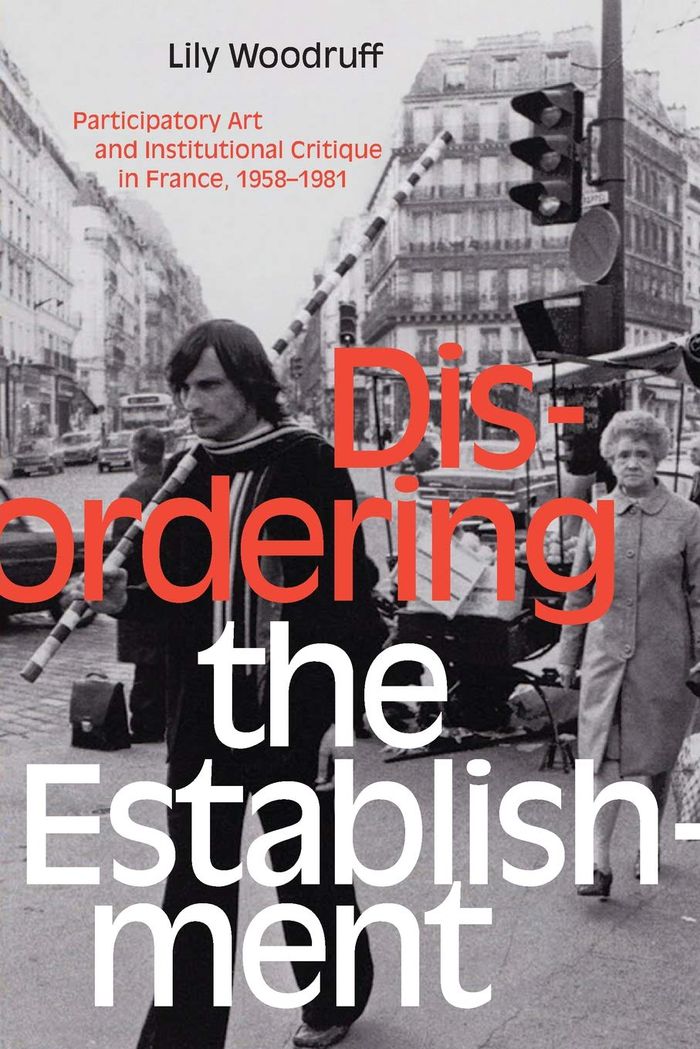
In the decades following World War II, France experienced both a period of affluence and a wave of political, artistic, and philosophical discontent that culminated in the countrywide protests of 1968. In ''Disordering the establishment'' Lily Woodruff examines the development of artistic strategies of political resistance in France in this era. Drawing on interviews with artists, curators, and cultural figures of the time, Woodruff analyzes the formal and rhetorical methods that artists used to counter establishment ideology, appeal to direct political engagement, and grapple with French intellectuals' modeling of society. Artists and collectives such as Daniel Buren, André Cadere, the Groupe de Recherche d’Art Visuel, and the Collectif d’Art Sociologique shared an opposition to institutional hegemony by adapting their works to unconventional spaces and audiences, asserting artistic autonomy from art institutions, and embracing interdisciplinarity. In showing how these artists used art to question what art should be and where it should be seen, Woodruff demonstrates how artists challenged and redefined the art establishment and their historical moment.
Disordering the establishment: participatory art and institutional critique in France 1958-1981
Actions:
Prix:
$37.95
(disponible en magasin)
Résumé:
In the decades following World War II, France experienced both a period of affluence and a wave of political, artistic, and philosophical discontent that culminated in the countrywide protests of 1968. In ''Disordering the establishment'' Lily Woodruff examines the development of artistic strategies of political resistance in France in this era. Drawing on interviews with artists, curators, and cultural figures of the time, Woodruff analyzes the formal and rhetorical methods that artists used to counter establishment ideology, appeal to direct political engagement, and grapple with French intellectuals' modeling of society. Artists and collectives such as Daniel Buren, André Cadere, the Groupe de Recherche d’Art Visuel, and the Collectif d’Art Sociologique shared an opposition to institutional hegemony by adapting their works to unconventional spaces and audiences, asserting artistic autonomy from art institutions, and embracing interdisciplinarity. In showing how these artists used art to question what art should be and where it should be seen, Woodruff demonstrates how artists challenged and redefined the art establishment and their historical moment.
Classification:
livres
livres
Publication:
juin 2020
juin 2020
Sujet:
Théorie de l’art
Théorie de l’art
Classification:
livres
livres
Actions:
Prix:
$39.95
(disponible sur commande)
Résumé:
The preservation enterprise helps fashion the physical contours of memory in public space, and thus has the power to curate a multidimensional and inclusive representation of societal values and narratives. Increasingly, the field of preservation is being challenged to consider questions of social inclusion, of how multiple publics are—or are not—represented in heritage(...)
$39.95
(disponible sur commande)
Résumé:
The preservation enterprise helps fashion the physical contours of memory in public space, and thus has the power to curate a multidimensional and inclusive representation of societal values and narratives. Increasingly, the field of preservation is being challenged to consider questions of social inclusion, of how multiple publics are—or are not—represented in heritage(...)
Titre:
Preservation and social exclusion
Actions:
Prix:
$39.95
(disponible sur commande)
Résumé:
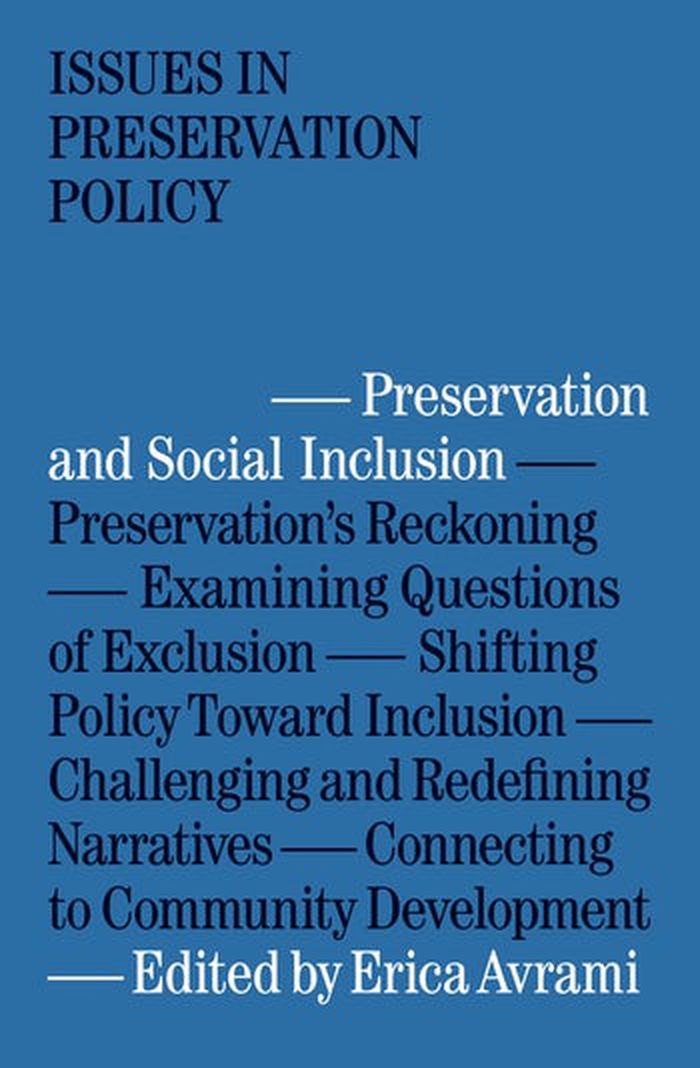
The preservation enterprise helps fashion the physical contours of memory in public space, and thus has the power to curate a multidimensional and inclusive representation of societal values and narratives. Increasingly, the field of preservation is being challenged to consider questions of social inclusion, of how multiple publics are—or are not—represented in heritage decision-making, geographies, and governance structures. Community engagement is increasingly being integrated into project-based preservation practice, but the policy toolbox has been slower to evolve. Recognizing how preservation and other land use decisions can both empower and marginalize publics compels greater reflection on preservation’s past and future and collective action beyond the project level. This requires professionals and institutions to consider systemic policy change with integrity, sensitivity, and intentionality. Bringing together a broad range of academics, historians, and practitioners, this second volume in the Issues in Preservation Policy series documents historic preservation’s progress toward inclusivity and explores further steps to be taken.
Preservation and social exclusion
Actions:
Prix:
$39.95
(disponible sur commande)
Résumé:
The preservation enterprise helps fashion the physical contours of memory in public space, and thus has the power to curate a multidimensional and inclusive representation of societal values and narratives. Increasingly, the field of preservation is being challenged to consider questions of social inclusion, of how multiple publics are—or are not—represented in heritage decision-making, geographies, and governance structures. Community engagement is increasingly being integrated into project-based preservation practice, but the policy toolbox has been slower to evolve. Recognizing how preservation and other land use decisions can both empower and marginalize publics compels greater reflection on preservation’s past and future and collective action beyond the project level. This requires professionals and institutions to consider systemic policy change with integrity, sensitivity, and intentionality. Bringing together a broad range of academics, historians, and practitioners, this second volume in the Issues in Preservation Policy series documents historic preservation’s progress toward inclusivity and explores further steps to be taken.
Classification:
livres
livres
Publication:
mars 2020
mars 2020
Sujet:
Théorie de l’architecture
Théorie de l’architecture
Classification:
livres
livres
Titre:
Archetypes: David K. Ross
Archetypes: David K. Ross
Actions:
Prix:
$64.95
(disponible sur commande)
Résumé:
Archetypes features a recent series by Canadian artist David K. Ross, who works at the interface of photography, film, and installation. His images of architectural mock-ups, staged at night with dramatic lighting that isolates structures from their surroundings, demonstrate how these objects have become a charged form of proto-architecture. They also change how we view(...)
$64.95
(disponible sur commande)
Résumé:
Archetypes features a recent series by Canadian artist David K. Ross, who works at the interface of photography, film, and installation. His images of architectural mock-ups, staged at night with dramatic lighting that isolates structures from their surroundings, demonstrate how these objects have become a charged form of proto-architecture. They also change how we view(...)
Titre:
Archetypes: David K. Ross
Actions:
Prix:
$64.95
(disponible sur commande)
Résumé:
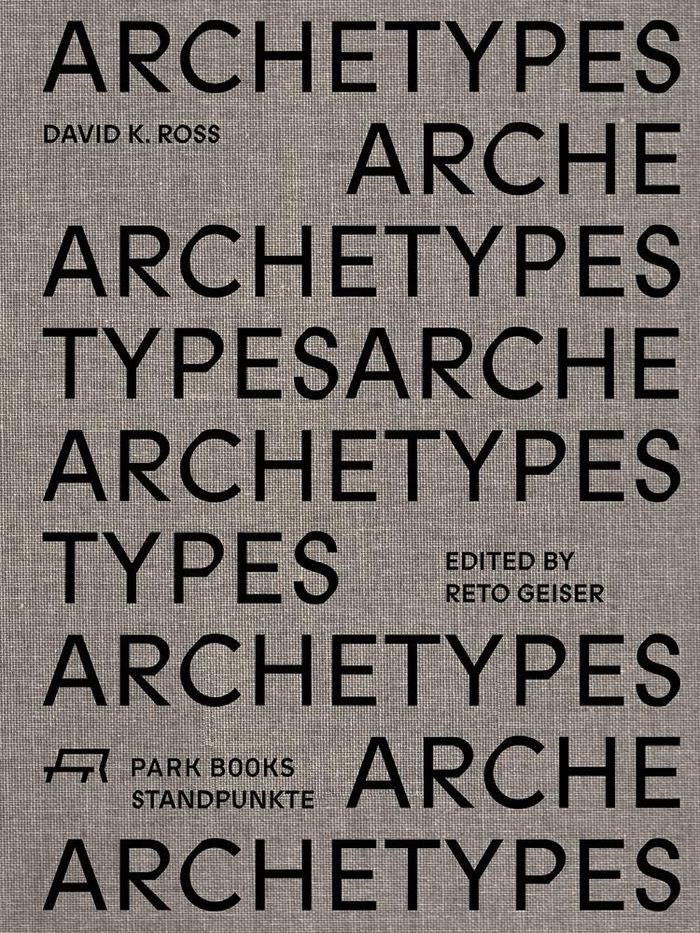
Archetypes features a recent series by Canadian artist David K. Ross, who works at the interface of photography, film, and installation. His images of architectural mock-ups, staged at night with dramatic lighting that isolates structures from their surroundings, demonstrate how these objects have become a charged form of proto-architecture. They also change how we view the practice of architecture by documenting and framing unseen aspects of its emergence. Built at full scale, these architectural fragments—to be removed from construction sites as buildings near completion—ensure that a project can be executed exactly to design, and they provide clients with a simulation of a building that leaves little space for speculation. The task of mock-up documentation is usually left to architects and contractors, who take quick snapshots for their reference during site visits.The book offers a platform to consider what it means to pre-construct fragments of buildings in all their complexity.
Archetypes: David K. Ross
Actions:
Prix:
$64.95
(disponible sur commande)
Résumé:
Archetypes features a recent series by Canadian artist David K. Ross, who works at the interface of photography, film, and installation. His images of architectural mock-ups, staged at night with dramatic lighting that isolates structures from their surroundings, demonstrate how these objects have become a charged form of proto-architecture. They also change how we view the practice of architecture by documenting and framing unseen aspects of its emergence. Built at full scale, these architectural fragments—to be removed from construction sites as buildings near completion—ensure that a project can be executed exactly to design, and they provide clients with a simulation of a building that leaves little space for speculation. The task of mock-up documentation is usually left to architects and contractors, who take quick snapshots for their reference during site visits.The book offers a platform to consider what it means to pre-construct fragments of buildings in all their complexity.
Classification:
livres
livres
Publication:
août 2021
août 2021
Sujet:
Art canadien
Art canadien
Classification:
livres
livres
Actions:
Prix:
$49.95
(disponible sur commande)
Résumé:
Modern urban planning has long promised to improve the quality of human life. But how is human life defined? "Displacing Blackness" develops a unique critique of urban planning by focusing, not on its subservience to economic or political elites, but on its efforts to improve people’s lives. While focused on twentieth-century Halifax, "Displacing Blackness" develops(...)
$49.95
(disponible sur commande)
Résumé:
Modern urban planning has long promised to improve the quality of human life. But how is human life defined? "Displacing Blackness" develops a unique critique of urban planning by focusing, not on its subservience to economic or political elites, but on its efforts to improve people’s lives. While focused on twentieth-century Halifax, "Displacing Blackness" develops(...)
Titre:
Displacing Blackness: Planning, power, and race in twentieth-century Halifax
Actions:
Prix:
$49.95
(disponible sur commande)
Résumé:
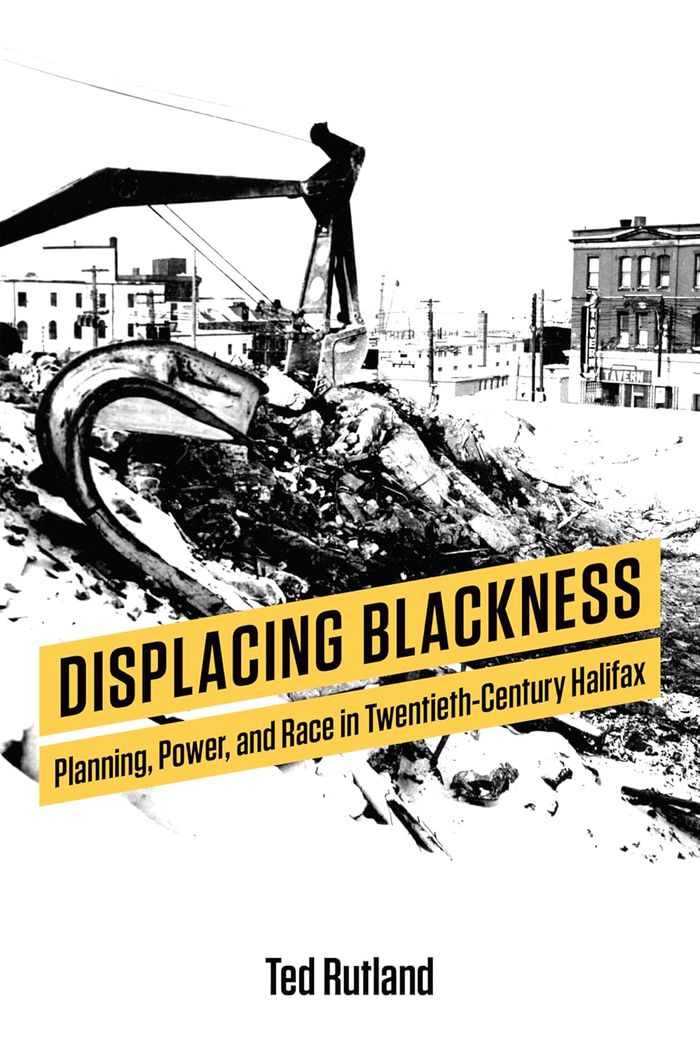
Modern urban planning has long promised to improve the quality of human life. But how is human life defined? "Displacing Blackness" develops a unique critique of urban planning by focusing, not on its subservience to economic or political elites, but on its efforts to improve people’s lives. While focused on twentieth-century Halifax, "Displacing Blackness" develops broad insights about the possibilities and limitations of modern planning. Drawing connections between the history of planning and emerging scholarship in Black Studies, Ted Rutland positions anti-blackness at the heart of contemporary city-making. Moving through a series of important planning initiatives, from a social housing project concerned with the moral and physical health of working-class residents to a sustainability-focused regional plan, Displacing Blackness shows how race – specifically blackness – has defined the boundaries of the human being and guided urban planning, with grave consequences for the city’s Black residents.
Displacing Blackness: Planning, power, and race in twentieth-century Halifax
Actions:
Prix:
$49.95
(disponible sur commande)
Résumé:
Modern urban planning has long promised to improve the quality of human life. But how is human life defined? "Displacing Blackness" develops a unique critique of urban planning by focusing, not on its subservience to economic or political elites, but on its efforts to improve people’s lives. While focused on twentieth-century Halifax, "Displacing Blackness" develops broad insights about the possibilities and limitations of modern planning. Drawing connections between the history of planning and emerging scholarship in Black Studies, Ted Rutland positions anti-blackness at the heart of contemporary city-making. Moving through a series of important planning initiatives, from a social housing project concerned with the moral and physical health of working-class residents to a sustainability-focused regional plan, Displacing Blackness shows how race – specifically blackness – has defined the boundaries of the human being and guided urban planning, with grave consequences for the city’s Black residents.
Classification:
livres
livres
Publication:
mai 2018
mai 2018
Sujet:
Architecture du Canada
Architecture du Canada
Classification:
livres
livres
Actions:
Prix:
$48.00
(disponible sur commande)
Résumé:
The anatomy of our bodies invites sitting; but do we design seats in the same way? Has our means of sitting been colonized by modern design? And how is the culturally various act of sitting itself reflected in this functional commodity? Italian artist Matteo Guarnaccia’s (born 1993) ''Cross cultural chairs'' is a research-based design project ''about the cultural context(...)
$48.00
(disponible sur commande)
Résumé:
The anatomy of our bodies invites sitting; but do we design seats in the same way? Has our means of sitting been colonized by modern design? And how is the culturally various act of sitting itself reflected in this functional commodity? Italian artist Matteo Guarnaccia’s (born 1993) ''Cross cultural chairs'' is a research-based design project ''about the cultural context(...)
Titre:
Cross cultural chairs: 8 chairs from 8 countries. Diversifying modern seating
Actions:
Prix:
$48.00
(disponible sur commande)
Résumé:
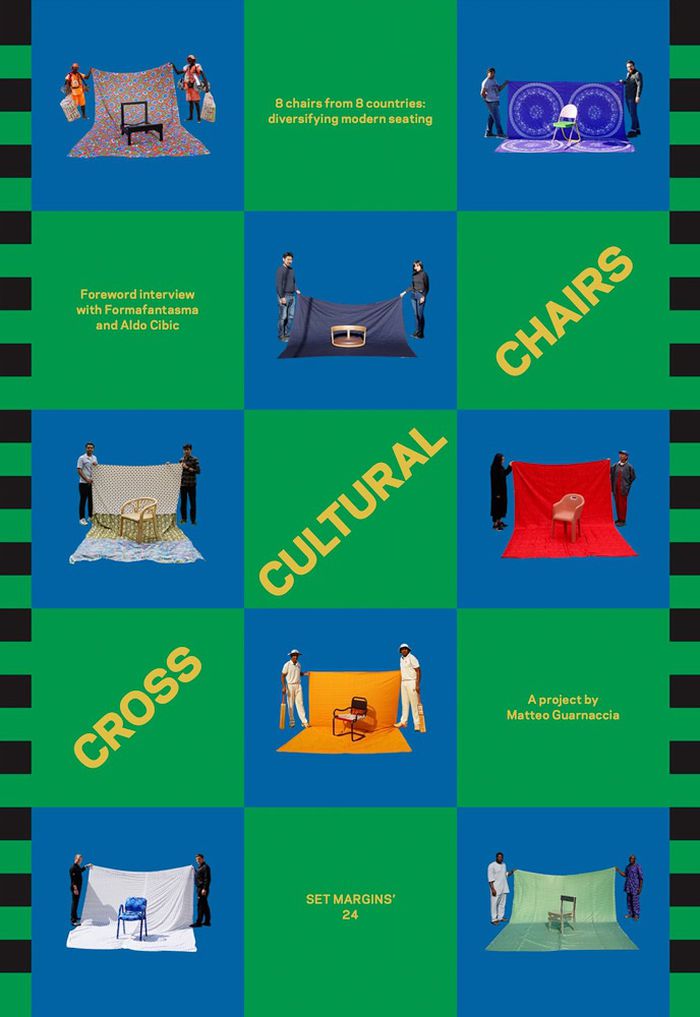
The anatomy of our bodies invites sitting; but do we design seats in the same way? Has our means of sitting been colonized by modern design? And how is the culturally various act of sitting itself reflected in this functional commodity? Italian artist Matteo Guarnaccia’s (born 1993) ''Cross cultural chairs'' is a research-based design project ''about the cultural context of furniture, understanding how globalization is shaping design around the world.'' He writes, ''it’s an exploration that lies between social and technical aspects of chairs.'' To execute this project, Guarnaccia visited eight different countries to conduct research and talk to local design studios, ultimately collaborating with them to portray each culture in the form of a chair. Cross Cultural Chairs plumbs the hidden depths of furniture design and the ways in which cultural norms assert themselves through functional commodities, opening up a conversation about identity, community and expression through chairs.
Cross cultural chairs: 8 chairs from 8 countries. Diversifying modern seating
Actions:
Prix:
$48.00
(disponible sur commande)
Résumé:
The anatomy of our bodies invites sitting; but do we design seats in the same way? Has our means of sitting been colonized by modern design? And how is the culturally various act of sitting itself reflected in this functional commodity? Italian artist Matteo Guarnaccia’s (born 1993) ''Cross cultural chairs'' is a research-based design project ''about the cultural context of furniture, understanding how globalization is shaping design around the world.'' He writes, ''it’s an exploration that lies between social and technical aspects of chairs.'' To execute this project, Guarnaccia visited eight different countries to conduct research and talk to local design studios, ultimately collaborating with them to portray each culture in the form of a chair. Cross Cultural Chairs plumbs the hidden depths of furniture design and the ways in which cultural norms assert themselves through functional commodities, opening up a conversation about identity, community and expression through chairs.
Classification:
livres
livres
Publication:
septembre 2023
septembre 2023
Sujet:
Design industriel
Design industriel
Classification:
livres
livres
Titre:
Dust (object lessons)
Dust (object lessons)
Actions:
Prix:
$21.95
(disponible en magasin)
Résumé:
No matter how much you fight against it, dust pervades everything. It gathers in even layers, adapting to the contours of things and marking the passage of time. In itself, it is also a gathering place, a random community of what has been and what is yet to be, a catalog of traces and a set of promises: dead skin cells and plant pollen, hair and paper fibers, not to(...)
$21.95
(disponible en magasin)
Résumé:
No matter how much you fight against it, dust pervades everything. It gathers in even layers, adapting to the contours of things and marking the passage of time. In itself, it is also a gathering place, a random community of what has been and what is yet to be, a catalog of traces and a set of promises: dead skin cells and plant pollen, hair and paper fibers, not to(...)
Titre:
Dust (object lessons)
Actions:
Prix:
$21.95
(disponible en magasin)
Résumé:
No matter how much you fight against it, dust pervades everything. It gathers in even layers, adapting to the contours of things and marking the passage of time. In itself, it is also a gathering place, a random community of what has been and what is yet to be, a catalog of traces and a set of promises: dead skin cells and plant pollen, hair and paper fibers, not to mention dust mites who make it their home. And so, dust blurs the boundaries between the living and the dead, plant and animal matter, the inside and the outside, you and the world (“for dust thou art, and unto dust shalt thou return”). This book treats one of the most mundane and familiar phenomena, showing how it can provide a key to thinking about existence, community, and justice today. - See more at: http://www.bloomsbury.com/us/dust-9781628925586/#sthash.ghw4gFcC.dpuf
Dust (object lessons)
Actions:
Prix:
$21.95
(disponible en magasin)
Résumé:
No matter how much you fight against it, dust pervades everything. It gathers in even layers, adapting to the contours of things and marking the passage of time. In itself, it is also a gathering place, a random community of what has been and what is yet to be, a catalog of traces and a set of promises: dead skin cells and plant pollen, hair and paper fibers, not to mention dust mites who make it their home. And so, dust blurs the boundaries between the living and the dead, plant and animal matter, the inside and the outside, you and the world (“for dust thou art, and unto dust shalt thou return”). This book treats one of the most mundane and familiar phenomena, showing how it can provide a key to thinking about existence, community, and justice today. - See more at: http://www.bloomsbury.com/us/dust-9781628925586/#sthash.ghw4gFcC.dpuf
Classification:
livres
livres
Publication:
janvier 2016
janvier 2016
Sujet:
Théorie/ philosophie
Théorie/ philosophie
Classification:
livres
livres
Actions:
Prix:
$99.95
(disponible sur commande)
Résumé:
Designers and architects have to make decisions regarding color every day. But how does one find the necessary inspiration? The appropriate color? How do other designers and artists deal with the issue? With "Chroma," the Greek word for color, as its title, this illustrated book provides answers to these questions and makes it clear that color is much more than mere(...)
$99.95
(disponible sur commande)
Résumé:
Designers and architects have to make decisions regarding color every day. But how does one find the necessary inspiration? The appropriate color? How do other designers and artists deal with the issue? With "Chroma," the Greek word for color, as its title, this illustrated book provides answers to these questions and makes it clear that color is much more than mere(...)
Publication:
décembre 2009
décembre 2009
Titre:
Chroma design architecture & art in color
Actions:
Prix:
$99.95
(disponible sur commande)
Résumé:
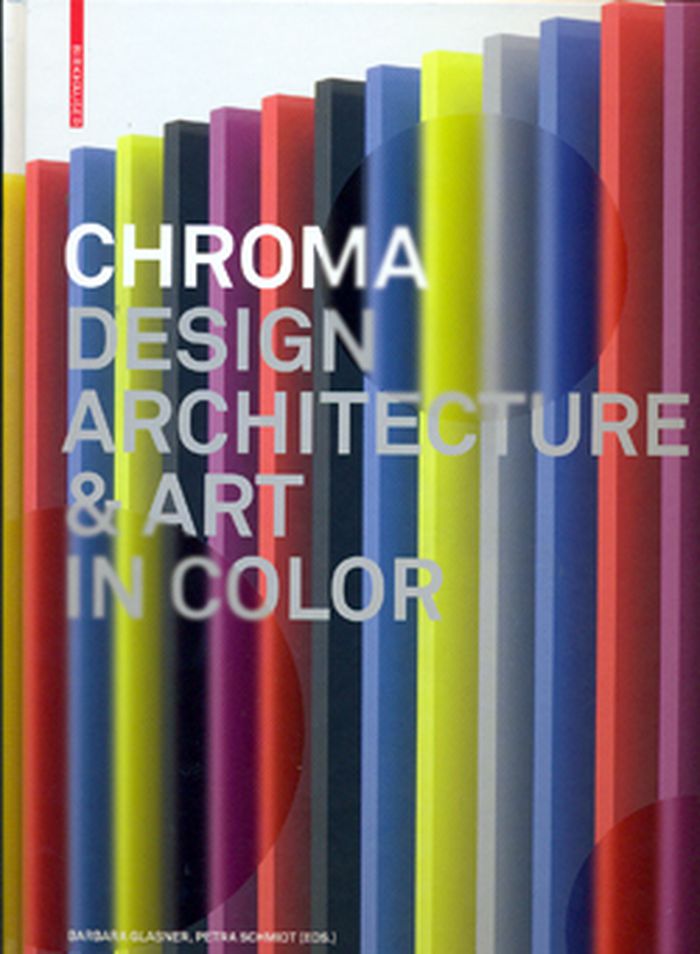
Designers and architects have to make decisions regarding color every day. But how does one find the necessary inspiration? The appropriate color? How do other designers and artists deal with the issue? With "Chroma," the Greek word for color, as its title, this illustrated book provides answers to these questions and makes it clear that color is much more than mere decoration – it is one of the central problems of creative work. In the process, "Chroma" embraces the sensuous experience of color, inspiring and seducing the reader with unusual projects, from industrial products to color field painting. The book presents works by younger designers like Stefan Diez and Arik Levy as well as famous artists like Ellsworth Kelly. All of the works are presented in large-scale reproductions and also in a kind of color gradient, in which they are assigned to the chapters "monochromatic," "multichromatic," and "achromatic."
Chroma design architecture & art in color
Actions:
Prix:
$99.95
(disponible sur commande)
Résumé:
Designers and architects have to make decisions regarding color every day. But how does one find the necessary inspiration? The appropriate color? How do other designers and artists deal with the issue? With "Chroma," the Greek word for color, as its title, this illustrated book provides answers to these questions and makes it clear that color is much more than mere decoration – it is one of the central problems of creative work. In the process, "Chroma" embraces the sensuous experience of color, inspiring and seducing the reader with unusual projects, from industrial products to color field painting. The book presents works by younger designers like Stefan Diez and Arik Levy as well as famous artists like Ellsworth Kelly. All of the works are presented in large-scale reproductions and also in a kind of color gradient, in which they are assigned to the chapters "monochromatic," "multichromatic," and "achromatic."
Classification:
livres
livres
Publication:
décembre 2009
décembre 2009
Classification:
livres
livres
Titre:
Frank Lloyd Wright
Frank Lloyd Wright
Actions:
Prix:
$21.50
(disponible sur commande)
Résumé:
The life and architecture of Frank Lloyd Wright (1867-1959) have been much-studied, yet there is a consistent division between analyses of his architecture, which exclude any discussion of his daily life, and books that tell the often sensational tale of his life, with barely a passing reference to the buildings themselves. The result is that, despite the large number of(...)
$21.50
(disponible sur commande)
Résumé:
The life and architecture of Frank Lloyd Wright (1867-1959) have been much-studied, yet there is a consistent division between analyses of his architecture, which exclude any discussion of his daily life, and books that tell the often sensational tale of his life, with barely a passing reference to the buildings themselves. The result is that, despite the large number of(...)
Titre:
Frank Lloyd Wright
Actions:
Prix:
$21.50
(disponible sur commande)
Résumé:
The life and architecture of Frank Lloyd Wright (1867-1959) have been much-studied, yet there is a consistent division between analyses of his architecture, which exclude any discussion of his daily life, and books that tell the often sensational tale of his life, with barely a passing reference to the buildings themselves. The result is that, despite the large number of volumes on Wright, the most essential part of his life – his life as an architect, working, as he said, ‘in the cause of architecture’ – remains virtually unexplored. "Frank Lloyd Wright" offers an account of Wright’s life as an architect, the ideas, beliefs and relationships that shaped his life and work, and the manner in which these affected, and are reflected in, his architecture. During a tumultuous life and extensive career which includes such hugely defining buildings as the Guggenheim Museum, Fallingwater, Taliesin, Unity Temple, and the prolific Prairie Houses, Wright endeavoured to shape the emerging and evolving American democracy, its mode of dwelling, and its relation to the traditional conception of the city. Fusing ancient construction geometries with contemporary ideals of Transcendental philosophy, Wright sought to develop an appropriate architecture for the new world of the twentieth century. In doing so, he served as the primary inspiration for the emergence of Modern architecture around the world. Robert McCarter examines how Wright’s architecture crystallized key conceptions of both private dwelling and public citizenship for American society, and relates how, through his work and writings, Wright developed relationships with key leaders of the arts, industry and society. He analyses how and why Wright maintained that architecture was the ‘background or framework’ for daily life, never the literal ‘object’ of our attention, as well as Wright’s belief that architects have the most significant ethical responsibilities to improve the larger society and culture to which they belong. In exploring Wright’s life, times and culture, Robert McCarter shows how Wright was an architect of astonishing ability, whose works continue to shape the world around us, fifty years after his death.
Frank Lloyd Wright
Actions:
Prix:
$21.50
(disponible sur commande)
Résumé:
The life and architecture of Frank Lloyd Wright (1867-1959) have been much-studied, yet there is a consistent division between analyses of his architecture, which exclude any discussion of his daily life, and books that tell the often sensational tale of his life, with barely a passing reference to the buildings themselves. The result is that, despite the large number of volumes on Wright, the most essential part of his life – his life as an architect, working, as he said, ‘in the cause of architecture’ – remains virtually unexplored. "Frank Lloyd Wright" offers an account of Wright’s life as an architect, the ideas, beliefs and relationships that shaped his life and work, and the manner in which these affected, and are reflected in, his architecture. During a tumultuous life and extensive career which includes such hugely defining buildings as the Guggenheim Museum, Fallingwater, Taliesin, Unity Temple, and the prolific Prairie Houses, Wright endeavoured to shape the emerging and evolving American democracy, its mode of dwelling, and its relation to the traditional conception of the city. Fusing ancient construction geometries with contemporary ideals of Transcendental philosophy, Wright sought to develop an appropriate architecture for the new world of the twentieth century. In doing so, he served as the primary inspiration for the emergence of Modern architecture around the world. Robert McCarter examines how Wright’s architecture crystallized key conceptions of both private dwelling and public citizenship for American society, and relates how, through his work and writings, Wright developed relationships with key leaders of the arts, industry and society. He analyses how and why Wright maintained that architecture was the ‘background or framework’ for daily life, never the literal ‘object’ of our attention, as well as Wright’s belief that architects have the most significant ethical responsibilities to improve the larger society and culture to which they belong. In exploring Wright’s life, times and culture, Robert McCarter shows how Wright was an architect of astonishing ability, whose works continue to shape the world around us, fifty years after his death.
Classification:
livres
livres
Publication:
mars 2006, London
mars 2006, London
Sujet:
Architecture, monographies
Architecture, monographies


