


9524 Résultats
Classification:
livres
livres
Actions:
Exemplaires:
Description:
833 pages, [25] folded leaves of plates : illustrations, maps, plans ; 25 cm
Description:
833 pages, [25] folded leaves of plates : illustrations, maps, plans ; 25 cm
Auteur:
Sujet:
Publication:
London : Congress Organising Committee, 1933.
London : Congress Organising Committee, 1933.
Titre:
Public Works, Roads and Transport Congress and Exhibition, 1933 : final report / reported by Thomas Hill & Co.
Actions:
Exemplaires:
Description:
833 pages, [25] folded leaves of plates : illustrations, maps, plans ; 25 cm
Public Works, Roads and Transport Congress and Exhibition, 1933 : final report / reported by Thomas Hill & Co.
Actions:
Exemplaires:
Description:
833 pages, [25] folded leaves of plates : illustrations, maps, plans ; 25 cm
Classification:
livres
livres
Publication:
London : Congress Organising Committee, 1933.
London : Congress Organising Committee, 1933.
Auteur:
Sujet:
Classification:
livres
livres
Prix:
$37.50
(disponible sur commande)
Résumé:
Drivers in the nation's capital face a host of hazards: high-speed traffic circles, presidential motorcades, jaywalking tourists, and bewildering signs that send unsuspecting motorists from the Lincoln Memorial into suburban Virginia in less than two minutes. And parking? Don't bet on it unless you're in the fast lane of the Capital Beltway during rush hour. Little(...)
$37.50
(disponible sur commande)
Résumé:
Drivers in the nation's capital face a host of hazards: high-speed traffic circles, presidential motorcades, jaywalking tourists, and bewildering signs that send unsuspecting motorists from the Lincoln Memorial into suburban Virginia in less than two minutes. And parking? Don't bet on it unless you're in the fast lane of the Capital Beltway during rush hour. Little(...)
Titre:
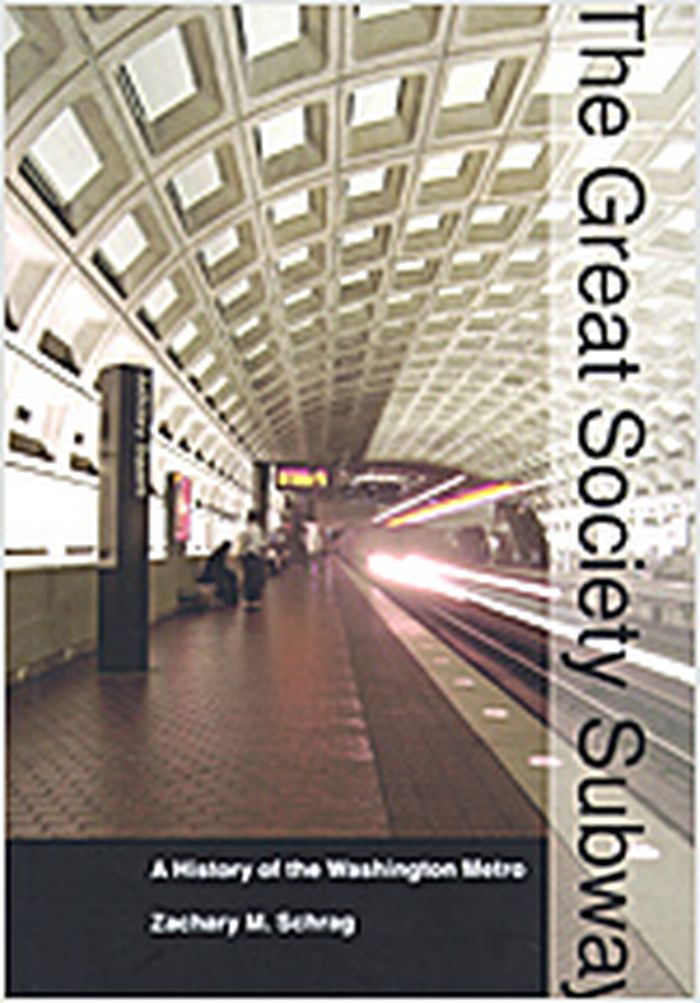
The Great Society subway : a history of the Washington Metro
Actions:
Prix:
$37.50
(disponible sur commande)
Résumé:
Drivers in the nation's capital face a host of hazards: high-speed traffic circles, presidential motorcades, jaywalking tourists, and bewildering signs that send unsuspecting motorists from the Lincoln Memorial into suburban Virginia in less than two minutes. And parking? Don't bet on it unless you're in the fast lane of the Capital Beltway during rush hour. Little wonder, then, that so many residents and visitors rely on the Washington Metro, the 106-mile rapid transit system that serves the District of Columbia and its inner suburbs. In the first comprehensive history of the Metro, Zachary M. Schrag tells the story of the Great Society subway from its earliest rumblings to the present day, from Arlington to College Park, Eisenhower to Marion Barry. Unlike the pre–World War II rail systems of New York, Chicago, and Philadelphia, the Metro was built at a time when most American families already owned cars, and when most American cities had dedicated themselves to freeways, not subways. Why did the nation's capital take a different path? What were the consequences of that decision? Using extensive archival research as well as oral history, Schrag argues that the Metro can be understood only in the political context from which it was born: the Great Society liberalism of the Kennedy, Johnson, and Nixon administrations. The Metro emerged from a period when Americans believed in public investments suited to the grandeur and dignity of the world's richest nation. The Metro was built not merely to move commuters, but in the words of Lyndon Johnson, to create "a place where the city of man serves not only the needs of the body and the demands of commerce but the desire for beauty and the hunger for community." Schrag scrutinizes the project from its earliest days, including general planning, routes, station architecture, funding decisions, land-use impacts, and the behavior of Metro riders. The story of the Great society subway sheds light on the development of metropolitan Washington, postwar urban policy, and the promises and limits of rail transit in American cities.
The Great Society subway : a history of the Washington Metro
Actions:
Prix:
$37.50
(disponible sur commande)
Résumé:
Drivers in the nation's capital face a host of hazards: high-speed traffic circles, presidential motorcades, jaywalking tourists, and bewildering signs that send unsuspecting motorists from the Lincoln Memorial into suburban Virginia in less than two minutes. And parking? Don't bet on it unless you're in the fast lane of the Capital Beltway during rush hour. Little wonder, then, that so many residents and visitors rely on the Washington Metro, the 106-mile rapid transit system that serves the District of Columbia and its inner suburbs. In the first comprehensive history of the Metro, Zachary M. Schrag tells the story of the Great Society subway from its earliest rumblings to the present day, from Arlington to College Park, Eisenhower to Marion Barry. Unlike the pre–World War II rail systems of New York, Chicago, and Philadelphia, the Metro was built at a time when most American families already owned cars, and when most American cities had dedicated themselves to freeways, not subways. Why did the nation's capital take a different path? What were the consequences of that decision? Using extensive archival research as well as oral history, Schrag argues that the Metro can be understood only in the political context from which it was born: the Great Society liberalism of the Kennedy, Johnson, and Nixon administrations. The Metro emerged from a period when Americans believed in public investments suited to the grandeur and dignity of the world's richest nation. The Metro was built not merely to move commuters, but in the words of Lyndon Johnson, to create "a place where the city of man serves not only the needs of the body and the demands of commerce but the desire for beauty and the hunger for community." Schrag scrutinizes the project from its earliest days, including general planning, routes, station architecture, funding decisions, land-use impacts, and the behavior of Metro riders. The story of the Great society subway sheds light on the development of metropolitan Washington, postwar urban policy, and the promises and limits of rail transit in American cities.
Classification:
livres
livres
Publication:
février 2006, Baltimore
février 2006, Baltimore
Sujet:
Structures d’ingénierie
Structures d’ingénierie
Classification:
livres
livres
Titre:
Alphabet city 10 : suspects
Alphabet city 10 : suspects
Actions:
Prix:
$18.95
(disponible en magasin)
Résumé:
What is the condition of the suspect in a post-9/11 world? Do perpetual detention, ubiquitous surveillance cameras, and the legal apparatus of the USA Patriot Act target suspects accurately or generate suspicion indiscriminately? "Suspect", the latest in a series from Alphabet City and the first in its new format of topical book-length magazines, gathers hard evidence(...)
$18.95
(disponible en magasin)
Résumé:
What is the condition of the suspect in a post-9/11 world? Do perpetual detention, ubiquitous surveillance cameras, and the legal apparatus of the USA Patriot Act target suspects accurately or generate suspicion indiscriminately? "Suspect", the latest in a series from Alphabet City and the first in its new format of topical book-length magazines, gathers hard evidence(...)
Titre:
Alphabet city 10 : suspects
Actions:
Prix:
$18.95
(disponible en magasin)
Résumé:
What is the condition of the suspect in a post-9/11 world? Do perpetual detention, ubiquitous surveillance cameras, and the legal apparatus of the USA Patriot Act target suspects accurately or generate suspicion indiscriminately? "Suspect", the latest in a series from Alphabet City and the first in its new format of topical book-length magazines, gathers hard evidence about the fate of the suspect in a culture of suspicion with contributions from writers, artists, and filmmakers. Their testimony takes a multiplicity of forms and formats. Among them:a 24-page color comic by graphic novelist Joey Dubuc asks the reader to make narrative choices in a web of surveillance, suspicion, and fear. Harper's contributor Mark Kingwell observes that while suspicion tries to isolate the suspect, in fact we are all the suspect. Slavoj Zizek reflects on the new cultural status of the suspect after Abu Ghraib. Philosopher George Bragues argues that even as the United Nations looks for ways to discipline "suspect nations," it simply cannot succeed under current international conditions. Alphabet City editor John Knechtel interviews Naomi Klein, author of No Logo, about the legal and political strategies of the Bush administration. Sylwia Chrostowska describes what happens, in the the 1970 Italian film Investigation of a Citizen Above Suspicion, when a corrupt official investigates himself. Screenwriter Timothy Stock and illustrator Warren Heise create a documentary in comic form about Critical Ensemble artist Steve Kurtz, charged under the bioterrorism provisions of the Patriot Act. Novelist Camilla Gibb portrays, in "Things Collapse," the terrifying effects of a "separating sickness" of unknown origin, which perhaps exists only in the fears of the population it strikes. And novelist Diana Fitzgerald Bryden follows her character Rafa Ahmed, a PFLP hijacker from the 1970s, as, many years later, she is to appear at a peace conference. Filmmaker Patricia Rozema, director of Mansfield Park and other films, contributes a 16-page film-in-a-book, "Suspect." Suspect is a non-partisan handbook on the mechanisms and machinations of suspicion for the twenty-first century national security state.
Alphabet city 10 : suspects
Actions:
Prix:
$18.95
(disponible en magasin)
Résumé:
What is the condition of the suspect in a post-9/11 world? Do perpetual detention, ubiquitous surveillance cameras, and the legal apparatus of the USA Patriot Act target suspects accurately or generate suspicion indiscriminately? "Suspect", the latest in a series from Alphabet City and the first in its new format of topical book-length magazines, gathers hard evidence about the fate of the suspect in a culture of suspicion with contributions from writers, artists, and filmmakers. Their testimony takes a multiplicity of forms and formats. Among them:a 24-page color comic by graphic novelist Joey Dubuc asks the reader to make narrative choices in a web of surveillance, suspicion, and fear. Harper's contributor Mark Kingwell observes that while suspicion tries to isolate the suspect, in fact we are all the suspect. Slavoj Zizek reflects on the new cultural status of the suspect after Abu Ghraib. Philosopher George Bragues argues that even as the United Nations looks for ways to discipline "suspect nations," it simply cannot succeed under current international conditions. Alphabet City editor John Knechtel interviews Naomi Klein, author of No Logo, about the legal and political strategies of the Bush administration. Sylwia Chrostowska describes what happens, in the the 1970 Italian film Investigation of a Citizen Above Suspicion, when a corrupt official investigates himself. Screenwriter Timothy Stock and illustrator Warren Heise create a documentary in comic form about Critical Ensemble artist Steve Kurtz, charged under the bioterrorism provisions of the Patriot Act. Novelist Camilla Gibb portrays, in "Things Collapse," the terrifying effects of a "separating sickness" of unknown origin, which perhaps exists only in the fears of the population it strikes. And novelist Diana Fitzgerald Bryden follows her character Rafa Ahmed, a PFLP hijacker from the 1970s, as, many years later, she is to appear at a peace conference. Filmmaker Patricia Rozema, director of Mansfield Park and other films, contributes a 16-page film-in-a-book, "Suspect." Suspect is a non-partisan handbook on the mechanisms and machinations of suspicion for the twenty-first century national security state.
Classification:
livres
livres
Publication:
octobre 2005, Cambridge, London
octobre 2005, Cambridge, London
Sujet:
petits formats
petits formats
Classification:
livres
livres
Actions:
Prix:
$45.00
(disponible sur commande)
Résumé:
November 2009 marks the 100th anniversary of the Grand Boulevard and Concourse, the Bronx’s crown jewel of urban planning, which stretches over four miles from 138th Street to the Mosholu Parkway. This famous roadway represents Art Deco and Art Moderne architecture at its grandest, including a cornucopia of apartment complexes, the Concourse Plaza Hotel, the Loews(...)
$45.00
(disponible sur commande)
Résumé:
November 2009 marks the 100th anniversary of the Grand Boulevard and Concourse, the Bronx’s crown jewel of urban planning, which stretches over four miles from 138th Street to the Mosholu Parkway. This famous roadway represents Art Deco and Art Moderne architecture at its grandest, including a cornucopia of apartment complexes, the Concourse Plaza Hotel, the Loews(...)
Titre:
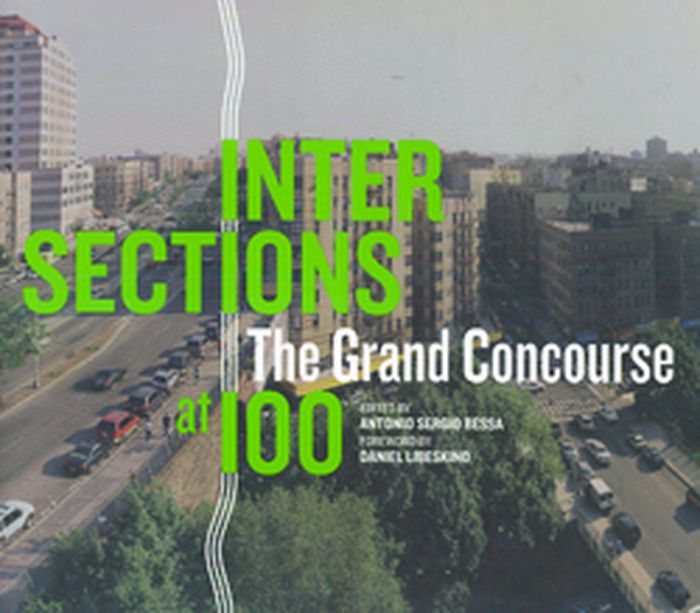
Intersections : the grand concourse at 100
Actions:
Prix:
$45.00
(disponible sur commande)
Résumé:
November 2009 marks the 100th anniversary of the Grand Boulevard and Concourse, the Bronx’s crown jewel of urban planning, which stretches over four miles from 138th Street to the Mosholu Parkway. This famous roadway represents Art Deco and Art Moderne architecture at its grandest, including a cornucopia of apartment complexes, the Concourse Plaza Hotel, the Loews Paradise Theater, the Bronx County Courthouse, and, of course, Yankee Stadium. Modeled on the Champs Élysées in Paris and described in the 1939 WPA Guide to New York as “the Park Avenue of the middle-class,” it offered residents amenities not seen before in the city, such as private bathrooms and central heating. This publication examines the rich history of the Bronx’s most famous thoroughfare through a collection of pieces — written by historians and contemporary museum curators, and accompanied by two original texts by Alsatian-born engineer Louis Risse, who designed and oversaw the construction of the Grand Concourse — on the context that informed its planning and construction, along with a vast collection of photographs that bring this period back to life. The book also features six art projects especially commissioned for the occasion : a series of large-scale color photographs by Jeff Liao; a time line by Skowmon Hastanan; The Tree Museum, a project by Katie Holten on the green spaces along the Concourse; a documentary film by Pablo Helguera on three buildings along the Concourse, namely, Poe’s cottage, the Paradise Theater, and the Freedman Home; a project by Kabir Carter about capturing sounds from different areas along the Concourse; and a special lobby installation by Acconci Studio. Traveling the Concourse today offers a lesson in architecture, history, and sociology as you see the faces and places that call it home. It is truly New York, but more important, authentically the Bronx. You can’t experience the Bronx until you travel the Grand Boulevard and Concourse. Foreword by Daniel Libeskind.
Intersections : the grand concourse at 100
Actions:
Prix:
$45.00
(disponible sur commande)
Résumé:
November 2009 marks the 100th anniversary of the Grand Boulevard and Concourse, the Bronx’s crown jewel of urban planning, which stretches over four miles from 138th Street to the Mosholu Parkway. This famous roadway represents Art Deco and Art Moderne architecture at its grandest, including a cornucopia of apartment complexes, the Concourse Plaza Hotel, the Loews Paradise Theater, the Bronx County Courthouse, and, of course, Yankee Stadium. Modeled on the Champs Élysées in Paris and described in the 1939 WPA Guide to New York as “the Park Avenue of the middle-class,” it offered residents amenities not seen before in the city, such as private bathrooms and central heating. This publication examines the rich history of the Bronx’s most famous thoroughfare through a collection of pieces — written by historians and contemporary museum curators, and accompanied by two original texts by Alsatian-born engineer Louis Risse, who designed and oversaw the construction of the Grand Concourse — on the context that informed its planning and construction, along with a vast collection of photographs that bring this period back to life. The book also features six art projects especially commissioned for the occasion : a series of large-scale color photographs by Jeff Liao; a time line by Skowmon Hastanan; The Tree Museum, a project by Katie Holten on the green spaces along the Concourse; a documentary film by Pablo Helguera on three buildings along the Concourse, namely, Poe’s cottage, the Paradise Theater, and the Freedman Home; a project by Kabir Carter about capturing sounds from different areas along the Concourse; and a special lobby installation by Acconci Studio. Traveling the Concourse today offers a lesson in architecture, history, and sociology as you see the faces and places that call it home. It is truly New York, but more important, authentically the Bronx. You can’t experience the Bronx until you travel the Grand Boulevard and Concourse. Foreword by Daniel Libeskind.
Classification:
livres
livres
Publication:
septembre 2009
septembre 2009
Sujet:
Théorie de l’urbanisme
Théorie de l’urbanisme
Classification:
livres
livres
Actions:
Exemplaires:
Description:
106 pages ; 18 cm
Description:
106 pages ; 18 cm
Auteur:
Sujet:
Publication:
Brandon, Man. : [publisher not identified], 1957.
Brandon, Man. : [publisher not identified], 1957.
Titre:
The face of yesterday : the story of Brandon, Manitoba, 1882-1957 / by MacDonald Coleman ; illustrated by Peter Parker.
Actions:
Exemplaires:
Description:
106 pages ; 18 cm
The face of yesterday : the story of Brandon, Manitoba, 1882-1957 / by MacDonald Coleman ; illustrated by Peter Parker.
Actions:
Exemplaires:
Description:
106 pages ; 18 cm
Classification:
livres
livres
Publication:
Brandon, Man. : [publisher not identified], 1957.
Brandon, Man. : [publisher not identified], 1957.
Auteur:
Sujet:
Classification:
livres
livres
Actions:
Exemplaires:
Description:
399 pages : illustrations (chiefly color) ; 25 cm
Description:
399 pages : illustrations (chiefly color) ; 25 cm
Auteur:
Sujet:
Publication:
New Haven, CT : Yale University Press, [2014], ©2014
New Haven, CT : Yale University Press, [2014], ©2014
Titre:
The World Atlas of Street Photography / Jackie Higgins ; foreword by Max Kozloff.
Actions:
Exemplaires:
Description:
399 pages : illustrations (chiefly color) ; 25 cm
The World Atlas of Street Photography / Jackie Higgins ; foreword by Max Kozloff.
Actions:
Exemplaires:
Description:
399 pages : illustrations (chiefly color) ; 25 cm
Classification:
livres
livres
Publication:
New Haven, CT : Yale University Press, [2014], ©2014
New Haven, CT : Yale University Press, [2014], ©2014
Auteur:
Sujet:
Classification:
livres
livres
Actions:
Exemplaires:
Description:
xi, 260 pages : illustrations, map ; 23 cm
Description:
xi, 260 pages : illustrations, map ; 23 cm
Auteur:
Sujet:
Publication:
Athens : University of Georgia Press, [2008], ©2008
Athens : University of Georgia Press, [2008], ©2008
Titre:
Here, George Washington was born : memory, material culture, and the public history of a national monument / Seth C. Bruggeman.
Actions:
Exemplaires:
Description:
xi, 260 pages : illustrations, map ; 23 cm
Here, George Washington was born : memory, material culture, and the public history of a national monument / Seth C. Bruggeman.
Actions:
Exemplaires:
Description:
xi, 260 pages : illustrations, map ; 23 cm
Classification:
livres
livres
Publication:
Athens : University of Georgia Press, [2008], ©2008
Athens : University of Georgia Press, [2008], ©2008
Auteur:
Sujet:
Classification:
livres
livres
Prix:
$34.95
(disponible sur commande)
Résumé:
'There is no alternative to free market liberalism and managerialism', is the orthodoxy of the twenty-first century. All too often, ordinary people across the world are being told that the problem of organization is already solved, or that it is being solved somewhere else, or that it need not concern them because they have no choices. This dictionary provides those who(...)
$34.95
(disponible sur commande)
Résumé:
'There is no alternative to free market liberalism and managerialism', is the orthodoxy of the twenty-first century. All too often, ordinary people across the world are being told that the problem of organization is already solved, or that it is being solved somewhere else, or that it need not concern them because they have no choices. This dictionary provides those who(...)
Sujet:
Théorie de l’architecture
Théorie de l’architecture
Publication:
juillet 2007, London, New York
juillet 2007, London, New York
Titre:
The dictionary of alternatives: utopianism & organization
Actions:
Prix:
$34.95
(disponible sur commande)
Résumé:
'There is no alternative to free market liberalism and managerialism', is the orthodoxy of the twenty-first century. All too often, ordinary people across the world are being told that the problem of organization is already solved, or that it is being solved somewhere else, or that it need not concern them because they have no choices. This dictionary provides those who disagree with the evidence. Using hundreds of entries and cross-references, it proves that there are many alternatives to the way that we currently organize ourselves. These alternatives could be expressed as fictional utopias, they could be excavated from the past, or they could be described in terms of the contemporary politics of anti-corporate protest, environmentalism, feminism and localism. Part reference work, part source book, and part polemic, this dictionary provides a rich understanding of the ways in which fiction, history and today's politics provide different ways of thinking about how we can and should organize for the coming century. Martin Parker is Professor of Organisation and Culture in the Management Centre at the University of Leicester. Valérie Fournier is Senior Lecturer in Organisation Studies in the Management Centre at the University of Leicester. Patrick Reedy lectures in organizational behaviour and human resource management at the Business School of the University of Newcastle upon Tyne.
The dictionary of alternatives: utopianism & organization
Actions:
Prix:
$34.95
(disponible sur commande)
Résumé:
'There is no alternative to free market liberalism and managerialism', is the orthodoxy of the twenty-first century. All too often, ordinary people across the world are being told that the problem of organization is already solved, or that it is being solved somewhere else, or that it need not concern them because they have no choices. This dictionary provides those who disagree with the evidence. Using hundreds of entries and cross-references, it proves that there are many alternatives to the way that we currently organize ourselves. These alternatives could be expressed as fictional utopias, they could be excavated from the past, or they could be described in terms of the contemporary politics of anti-corporate protest, environmentalism, feminism and localism. Part reference work, part source book, and part polemic, this dictionary provides a rich understanding of the ways in which fiction, history and today's politics provide different ways of thinking about how we can and should organize for the coming century. Martin Parker is Professor of Organisation and Culture in the Management Centre at the University of Leicester. Valérie Fournier is Senior Lecturer in Organisation Studies in the Management Centre at the University of Leicester. Patrick Reedy lectures in organizational behaviour and human resource management at the Business School of the University of Newcastle upon Tyne.
Classification:
livres
livres
Publication:
juillet 2007, London, New York
juillet 2007, London, New York
Sujet:
Théorie de l’architecture
Théorie de l’architecture
Classification:
livres
livres
Actions:
Prix:
$45.50
(disponible sur commande)
Résumé:
This volume presents focused case studies of modern architecture in three realms—political, religious, and domestic—that address our very essence as human beings. Several essays explore developments in Czechoslovakia, Romania, and Yugoslavia and document a modernist design culture that crossed political barriers, such as the Iron Curtain, more readily than previously(...)
$45.50
(disponible sur commande)
Résumé:
This volume presents focused case studies of modern architecture in three realms—political, religious, and domestic—that address our very essence as human beings. Several essays explore developments in Czechoslovakia, Romania, and Yugoslavia and document a modernist design culture that crossed political barriers, such as the Iron Curtain, more readily than previously(...)
Titre:
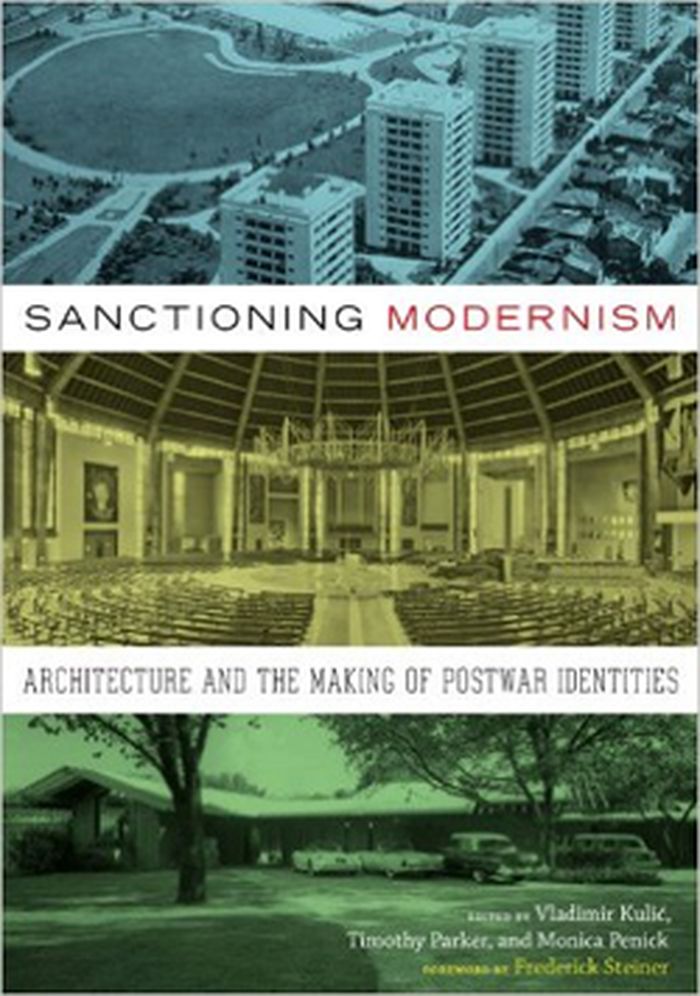
Sanctioning modernism : architecture and the makin of postwar identities
Actions:
Prix:
$45.50
(disponible sur commande)
Résumé:
This volume presents focused case studies of modern architecture in three realms—political, religious, and domestic—that address our very essence as human beings. Several essays explore developments in Czechoslovakia, Romania, and Yugoslavia and document a modernist design culture that crossed political barriers, such as the Iron Curtain, more readily than previously imagined. Other essays investigate various efforts to reconcile the concerns of modernist architects with the traditions of the Roman Catholic Church and other Christian institutions. And a final group of essays looks at postwar homebuilding in the United States and demonstrates how malleable and contested the image of the American home was in the mid-twentieth century. These inquiries show the limits of canonical views of modern architecture and reveal instead how civic institutions, ecclesiastical traditions, individual consumers, and others sought to sanction the forms and ideas of modern architecture in the service of their respective claims or desires to be modern.
Sanctioning modernism : architecture and the makin of postwar identities
Actions:
Prix:
$45.50
(disponible sur commande)
Résumé:
This volume presents focused case studies of modern architecture in three realms—political, religious, and domestic—that address our very essence as human beings. Several essays explore developments in Czechoslovakia, Romania, and Yugoslavia and document a modernist design culture that crossed political barriers, such as the Iron Curtain, more readily than previously imagined. Other essays investigate various efforts to reconcile the concerns of modernist architects with the traditions of the Roman Catholic Church and other Christian institutions. And a final group of essays looks at postwar homebuilding in the United States and demonstrates how malleable and contested the image of the American home was in the mid-twentieth century. These inquiries show the limits of canonical views of modern architecture and reveal instead how civic institutions, ecclesiastical traditions, individual consumers, and others sought to sanction the forms and ideas of modern architecture in the service of their respective claims or desires to be modern.
Classification:
livres
livres
Publication:
juillet 2015
juillet 2015
Sujet:
Théorie de l’architecture
Théorie de l’architecture
Classification:
livres
livres
Actions:
Description:
1 online resource
Auteur:
Sujet:
Publication:
[Place of publication not identified] : Koenig Books, 2017.
[Place of publication not identified] : Koenig Books, 2017.
Classification:
livres
livres
Publication:
[Place of publication not identified] : Koenig Books, 2017.
[Place of publication not identified] : Koenig Books, 2017.
Auteur:
Sujet:


