


3249 Résultats
Classification:
expositions
expositions
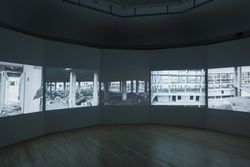
Localisation:
Salle octogonale
Salle octogonale
Date:
7 février 2020 au 4 octobre 2020
7 février 2020 au 4 octobre 2020
Classification:
expositions
expositions
Date:
7 février 2020 au
4 octobre 2020
7 février 2020 au
4 octobre 2020
Localisation:
Salle octogonale
Salle octogonale
Classification:
expositions
expositions
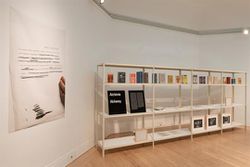
Localisation:
Salle octogonale
Salle octogonale
Date:
7 juin 2019 au 8 septembre 2019
7 juin 2019 au 8 septembre 2019
Classification:
expositions
expositions
Date:
7 juin 2019 au
8 septembre 2019
7 juin 2019 au
8 septembre 2019
Localisation:
Salle octogonale
Salle octogonale
Niveau de description archivistique:
Projet
Projet
Numéro de référence:
AP018.S1.1974.PR25
Description:
This project series documents the design and construction of the Royal Ottawa Regional Rehabilitation Centre in Ottawa, Ontario from 1974-1981. The office identified the project number as 7432. The Ottawa Heath Sciences Complex, a vast hospital network encompassing institutions across the city, hired Parkin Architects Planners in 1971 to design and construct University of Ottawa buildings within the network. These campus buildings were located in the Alta Vista neighbourhood and referred to as the Health Sciences Centre. This project consists of one building in that complex, the Royal Ottawa Regional Rehabilitation Centre. The distinction between these names should be noted when viewing the materials. The two-storey rehabilitation centre was constructed directly beside the Ottawa Health Sciences Building, another hospital in the network built by Parkin (see project series AP018.S1.1974.PR01 in this fonds). The proposal conceived a 145,000 square foot hospital with 77 in-patient beds. The design included space for patient accommodation, teaching, research, administrative activities, patient care and treatment, and a concession area. Patients at the hospital would range from those with severe brain injuries, to amputees, to those with rheumatic diseases. The building was carefully designed to accommodate the specialized needs of the patients. The hospital design also included a swimming pool, sports areas, and spaces for other leisure activities thought to aid in the rehabilitation process. The project is recorded through construction photographs, drawings, and textual materials dating from 1971-1983. The textual records include correspondence, specifications, schedules, contract data, conference reports and minutes, inspection reports, predesign notes, consultancy records, financial documents, change orders, supplementary instructions, research, and deficiency lists. The majority of these textual records deal with the hospital's construction, rather than design. Most drawings are reprographic copies of detail drawings and can be found within the textual records. Box AP018.S1.1974.PR25.002 contains an index to the textual records, which was created by the office.
AP018.S1.1974.PR25
Description:
This project series documents the design and construction of the Royal Ottawa Regional Rehabilitation Centre in Ottawa, Ontario from 1974-1981. The office identified the project number as 7432. The Ottawa Heath Sciences Complex, a vast hospital network encompassing institutions across the city, hired Parkin Architects Planners in 1971 to design and construct University of Ottawa buildings within the network. These campus buildings were located in the Alta Vista neighbourhood and referred to as the Health Sciences Centre. This project consists of one building in that complex, the Royal Ottawa Regional Rehabilitation Centre. The distinction between these names should be noted when viewing the materials. The two-storey rehabilitation centre was constructed directly beside the Ottawa Health Sciences Building, another hospital in the network built by Parkin (see project series AP018.S1.1974.PR01 in this fonds). The proposal conceived a 145,000 square foot hospital with 77 in-patient beds. The design included space for patient accommodation, teaching, research, administrative activities, patient care and treatment, and a concession area. Patients at the hospital would range from those with severe brain injuries, to amputees, to those with rheumatic diseases. The building was carefully designed to accommodate the specialized needs of the patients. The hospital design also included a swimming pool, sports areas, and spaces for other leisure activities thought to aid in the rehabilitation process. The project is recorded through construction photographs, drawings, and textual materials dating from 1971-1983. The textual records include correspondence, specifications, schedules, contract data, conference reports and minutes, inspection reports, predesign notes, consultancy records, financial documents, change orders, supplementary instructions, research, and deficiency lists. The majority of these textual records deal with the hospital's construction, rather than design. Most drawings are reprographic copies of detail drawings and can be found within the textual records. Box AP018.S1.1974.PR25.002 contains an index to the textual records, which was created by the office.
Personnes et institutions:
Date:
1971-1983
1971-1983
Titre:
Royal Ottawa Regional Rehabilitation Centre, Ottawa Health Sciences Centre, Ottawa, Ontario (1974)
Actions:
AP018.S1.1974.PR25
Description:
This project series documents the design and construction of the Royal Ottawa Regional Rehabilitation Centre in Ottawa, Ontario from 1974-1981. The office identified the project number as 7432. The Ottawa Heath Sciences Complex, a vast hospital network encompassing institutions across the city, hired Parkin Architects Planners in 1971 to design and construct University of Ottawa buildings within the network. These campus buildings were located in the Alta Vista neighbourhood and referred to as the Health Sciences Centre. This project consists of one building in that complex, the Royal Ottawa Regional Rehabilitation Centre. The distinction between these names should be noted when viewing the materials. The two-storey rehabilitation centre was constructed directly beside the Ottawa Health Sciences Building, another hospital in the network built by Parkin (see project series AP018.S1.1974.PR01 in this fonds). The proposal conceived a 145,000 square foot hospital with 77 in-patient beds. The design included space for patient accommodation, teaching, research, administrative activities, patient care and treatment, and a concession area. Patients at the hospital would range from those with severe brain injuries, to amputees, to those with rheumatic diseases. The building was carefully designed to accommodate the specialized needs of the patients. The hospital design also included a swimming pool, sports areas, and spaces for other leisure activities thought to aid in the rehabilitation process. The project is recorded through construction photographs, drawings, and textual materials dating from 1971-1983. The textual records include correspondence, specifications, schedules, contract data, conference reports and minutes, inspection reports, predesign notes, consultancy records, financial documents, change orders, supplementary instructions, research, and deficiency lists. The majority of these textual records deal with the hospital's construction, rather than design. Most drawings are reprographic copies of detail drawings and can be found within the textual records. Box AP018.S1.1974.PR25.002 contains an index to the textual records, which was created by the office.
Royal Ottawa Regional Rehabilitation Centre, Ottawa Health Sciences Centre, Ottawa, Ontario (1974)
Actions:
AP018.S1.1974.PR25
Description:
This project series documents the design and construction of the Royal Ottawa Regional Rehabilitation Centre in Ottawa, Ontario from 1974-1981. The office identified the project number as 7432. The Ottawa Heath Sciences Complex, a vast hospital network encompassing institutions across the city, hired Parkin Architects Planners in 1971 to design and construct University of Ottawa buildings within the network. These campus buildings were located in the Alta Vista neighbourhood and referred to as the Health Sciences Centre. This project consists of one building in that complex, the Royal Ottawa Regional Rehabilitation Centre. The distinction between these names should be noted when viewing the materials. The two-storey rehabilitation centre was constructed directly beside the Ottawa Health Sciences Building, another hospital in the network built by Parkin (see project series AP018.S1.1974.PR01 in this fonds). The proposal conceived a 145,000 square foot hospital with 77 in-patient beds. The design included space for patient accommodation, teaching, research, administrative activities, patient care and treatment, and a concession area. Patients at the hospital would range from those with severe brain injuries, to amputees, to those with rheumatic diseases. The building was carefully designed to accommodate the specialized needs of the patients. The hospital design also included a swimming pool, sports areas, and spaces for other leisure activities thought to aid in the rehabilitation process. The project is recorded through construction photographs, drawings, and textual materials dating from 1971-1983. The textual records include correspondence, specifications, schedules, contract data, conference reports and minutes, inspection reports, predesign notes, consultancy records, financial documents, change orders, supplementary instructions, research, and deficiency lists. The majority of these textual records deal with the hospital's construction, rather than design. Most drawings are reprographic copies of detail drawings and can be found within the textual records. Box AP018.S1.1974.PR25.002 contains an index to the textual records, which was created by the office.
Niveau de description archivistique:
Project
Project
Date:
1971-1983
1971-1983
Personnes et institutions:
Niveau de description archivistique:
Projet
Projet
Numéro de référence:
AP018.S1.1971.PR07
Description:
This project series documents the design and construction of the Health Sciences Complex at Memorial University (MUN) in St. John’s, Newfoundland from 1971-1976. The office identified the project number as 7111. The Health Sciences Complex was built to replace the St. John’s General Hospital. Constructed on MUN’s north campus, the hospital would integrate the university’s medical school to create a teaching hospital. The design included classrooms, labs, and a library for the students. The St. John’s General Hospital and MUN medical school would retain their independence and authority while sharing the space. The proposed design called for a banal building that was always unfinished so that future expansions and changes could be easily accommodated. The project also included the construction of the Utilities Annex building, a separate building to house heating and cooling plants, generators and electrical distribution. Having these facilities in a separate building would allow them to expand the hospital without crucial systems getting in the way. The main expansion envisioned in the scope of this project was the Life Sciences Complex, a university building and hospital connected to the Health Sciences Complex. In the project materials, the project is often referred to as The Health and Life Sciences Complex, although only the Health Sciences Complex was constructed under this project number. The original budget for the project was $60 million, a figure which included the Life Sciences Complex. The project is recorded through drawings, photographic materials, boards of material samples, a painting and textual records dating from 1971-1978. The textual records include correspondence with the client and consultants, meeting minutes and reports, consultancy records, a systems report, food facilities planning records, outline specifications, product catalogues for hospital equipment, research, project proposals, financial documentation and schedules. All of the drawings issued for tender are arranged within the textual materials. There are also two presentation boards, one of a project painting and the other of a photograph of the site model. Box AP018.S1.1971.PR07.049 contains an index to the textual records, which was created by the office.
AP018.S1.1971.PR07
Description:
This project series documents the design and construction of the Health Sciences Complex at Memorial University (MUN) in St. John’s, Newfoundland from 1971-1976. The office identified the project number as 7111. The Health Sciences Complex was built to replace the St. John’s General Hospital. Constructed on MUN’s north campus, the hospital would integrate the university’s medical school to create a teaching hospital. The design included classrooms, labs, and a library for the students. The St. John’s General Hospital and MUN medical school would retain their independence and authority while sharing the space. The proposed design called for a banal building that was always unfinished so that future expansions and changes could be easily accommodated. The project also included the construction of the Utilities Annex building, a separate building to house heating and cooling plants, generators and electrical distribution. Having these facilities in a separate building would allow them to expand the hospital without crucial systems getting in the way. The main expansion envisioned in the scope of this project was the Life Sciences Complex, a university building and hospital connected to the Health Sciences Complex. In the project materials, the project is often referred to as The Health and Life Sciences Complex, although only the Health Sciences Complex was constructed under this project number. The original budget for the project was $60 million, a figure which included the Life Sciences Complex. The project is recorded through drawings, photographic materials, boards of material samples, a painting and textual records dating from 1971-1978. The textual records include correspondence with the client and consultants, meeting minutes and reports, consultancy records, a systems report, food facilities planning records, outline specifications, product catalogues for hospital equipment, research, project proposals, financial documentation and schedules. All of the drawings issued for tender are arranged within the textual materials. There are also two presentation boards, one of a project painting and the other of a photograph of the site model. Box AP018.S1.1971.PR07.049 contains an index to the textual records, which was created by the office.
Personnes et institutions:
Date:
1970-1978
1970-1978
Titre:
Memorial University of Newfoundland, Health Sciences Complex, St. Johns, Newfoundland (1971-1976)
Actions:
AP018.S1.1971.PR07
Description:
This project series documents the design and construction of the Health Sciences Complex at Memorial University (MUN) in St. John’s, Newfoundland from 1971-1976. The office identified the project number as 7111. The Health Sciences Complex was built to replace the St. John’s General Hospital. Constructed on MUN’s north campus, the hospital would integrate the university’s medical school to create a teaching hospital. The design included classrooms, labs, and a library for the students. The St. John’s General Hospital and MUN medical school would retain their independence and authority while sharing the space. The proposed design called for a banal building that was always unfinished so that future expansions and changes could be easily accommodated. The project also included the construction of the Utilities Annex building, a separate building to house heating and cooling plants, generators and electrical distribution. Having these facilities in a separate building would allow them to expand the hospital without crucial systems getting in the way. The main expansion envisioned in the scope of this project was the Life Sciences Complex, a university building and hospital connected to the Health Sciences Complex. In the project materials, the project is often referred to as The Health and Life Sciences Complex, although only the Health Sciences Complex was constructed under this project number. The original budget for the project was $60 million, a figure which included the Life Sciences Complex. The project is recorded through drawings, photographic materials, boards of material samples, a painting and textual records dating from 1971-1978. The textual records include correspondence with the client and consultants, meeting minutes and reports, consultancy records, a systems report, food facilities planning records, outline specifications, product catalogues for hospital equipment, research, project proposals, financial documentation and schedules. All of the drawings issued for tender are arranged within the textual materials. There are also two presentation boards, one of a project painting and the other of a photograph of the site model. Box AP018.S1.1971.PR07.049 contains an index to the textual records, which was created by the office.
Memorial University of Newfoundland, Health Sciences Complex, St. Johns, Newfoundland (1971-1976)
Actions:
AP018.S1.1971.PR07
Description:
This project series documents the design and construction of the Health Sciences Complex at Memorial University (MUN) in St. John’s, Newfoundland from 1971-1976. The office identified the project number as 7111. The Health Sciences Complex was built to replace the St. John’s General Hospital. Constructed on MUN’s north campus, the hospital would integrate the university’s medical school to create a teaching hospital. The design included classrooms, labs, and a library for the students. The St. John’s General Hospital and MUN medical school would retain their independence and authority while sharing the space. The proposed design called for a banal building that was always unfinished so that future expansions and changes could be easily accommodated. The project also included the construction of the Utilities Annex building, a separate building to house heating and cooling plants, generators and electrical distribution. Having these facilities in a separate building would allow them to expand the hospital without crucial systems getting in the way. The main expansion envisioned in the scope of this project was the Life Sciences Complex, a university building and hospital connected to the Health Sciences Complex. In the project materials, the project is often referred to as The Health and Life Sciences Complex, although only the Health Sciences Complex was constructed under this project number. The original budget for the project was $60 million, a figure which included the Life Sciences Complex. The project is recorded through drawings, photographic materials, boards of material samples, a painting and textual records dating from 1971-1978. The textual records include correspondence with the client and consultants, meeting minutes and reports, consultancy records, a systems report, food facilities planning records, outline specifications, product catalogues for hospital equipment, research, project proposals, financial documentation and schedules. All of the drawings issued for tender are arranged within the textual materials. There are also two presentation boards, one of a project painting and the other of a photograph of the site model. Box AP018.S1.1971.PR07.049 contains an index to the textual records, which was created by the office.
Niveau de description archivistique:
Project
Project
Date:
1970-1978
1970-1978
Personnes et institutions:
Niveau de description archivistique:
Projet
Projet
Numéro de référence:
AP018.S1.1982.PR19
Description:
This project series documents the design and construction of the Hôtel de la Délégation in Algiers, Algeria from 1982-1985. The office identified the project number as 8220. This hotel was designed with inspiration from traditional Maghrebian and Middle Eastern architecture but made in the modern style. The site for the project consisted of the hotel, a neighbouring villa, a separate office complex, a roundabout at the entrance, two pools, tennis courts, gardens and, an arcade. The project proposed several variations on the design for the hotel, including an eight-level option and a ten-level option, the latter adding two levels of parking to the bottom of the building. The hotel was built into a hill so floors that were subterranean on one side of the building were above ground on the other. This latter side had terraced pergolas at every level with views over the pool. The hotel had a multi-level atrium that contained elaborate indoor gardens and trees. While the ground floor was made up of conference rooms, banquet halls and the reception area, the other levels mostly contained hotel rooms. This project was commissioned by Lavalin International Inc. for the Algerian government, who are referred to in the records as the Présidence de la République, République Algérienne, Démocratique et Populaire. The project is also referred to as Hôtel Alger in the project documentation. The project is recorded through drawings, photographic materials and textual records dating from 1982-1985. Almost all of the records are in French, with the exception of a few interoffice communications. While there are construction drawings in the project materials, there are also a large number of design drawings showing different schemes and ideas for the hotel. The photographic materials include construction progress photos of the hotel. The textual records consist of correspondence, meeting reports, pre-design records and the project scope, financial documentation, schedules, interoffice letters, construction and detail planning records, specifications and progress reports. Box AP018.S1.1982.PR19.041 in this project series includes an index to the textual materials, which was created by the office.
AP018.S1.1982.PR19
Description:
This project series documents the design and construction of the Hôtel de la Délégation in Algiers, Algeria from 1982-1985. The office identified the project number as 8220. This hotel was designed with inspiration from traditional Maghrebian and Middle Eastern architecture but made in the modern style. The site for the project consisted of the hotel, a neighbouring villa, a separate office complex, a roundabout at the entrance, two pools, tennis courts, gardens and, an arcade. The project proposed several variations on the design for the hotel, including an eight-level option and a ten-level option, the latter adding two levels of parking to the bottom of the building. The hotel was built into a hill so floors that were subterranean on one side of the building were above ground on the other. This latter side had terraced pergolas at every level with views over the pool. The hotel had a multi-level atrium that contained elaborate indoor gardens and trees. While the ground floor was made up of conference rooms, banquet halls and the reception area, the other levels mostly contained hotel rooms. This project was commissioned by Lavalin International Inc. for the Algerian government, who are referred to in the records as the Présidence de la République, République Algérienne, Démocratique et Populaire. The project is also referred to as Hôtel Alger in the project documentation. The project is recorded through drawings, photographic materials and textual records dating from 1982-1985. Almost all of the records are in French, with the exception of a few interoffice communications. While there are construction drawings in the project materials, there are also a large number of design drawings showing different schemes and ideas for the hotel. The photographic materials include construction progress photos of the hotel. The textual records consist of correspondence, meeting reports, pre-design records and the project scope, financial documentation, schedules, interoffice letters, construction and detail planning records, specifications and progress reports. Box AP018.S1.1982.PR19.041 in this project series includes an index to the textual materials, which was created by the office.
Personnes et institutions:
Date:
1982-1985
1982-1985
Titre:
Hôtel de la Délégation, Algiers, Algeria (1982-1985)
Actions:
AP018.S1.1982.PR19
Description:
This project series documents the design and construction of the Hôtel de la Délégation in Algiers, Algeria from 1982-1985. The office identified the project number as 8220. This hotel was designed with inspiration from traditional Maghrebian and Middle Eastern architecture but made in the modern style. The site for the project consisted of the hotel, a neighbouring villa, a separate office complex, a roundabout at the entrance, two pools, tennis courts, gardens and, an arcade. The project proposed several variations on the design for the hotel, including an eight-level option and a ten-level option, the latter adding two levels of parking to the bottom of the building. The hotel was built into a hill so floors that were subterranean on one side of the building were above ground on the other. This latter side had terraced pergolas at every level with views over the pool. The hotel had a multi-level atrium that contained elaborate indoor gardens and trees. While the ground floor was made up of conference rooms, banquet halls and the reception area, the other levels mostly contained hotel rooms. This project was commissioned by Lavalin International Inc. for the Algerian government, who are referred to in the records as the Présidence de la République, République Algérienne, Démocratique et Populaire. The project is also referred to as Hôtel Alger in the project documentation. The project is recorded through drawings, photographic materials and textual records dating from 1982-1985. Almost all of the records are in French, with the exception of a few interoffice communications. While there are construction drawings in the project materials, there are also a large number of design drawings showing different schemes and ideas for the hotel. The photographic materials include construction progress photos of the hotel. The textual records consist of correspondence, meeting reports, pre-design records and the project scope, financial documentation, schedules, interoffice letters, construction and detail planning records, specifications and progress reports. Box AP018.S1.1982.PR19.041 in this project series includes an index to the textual materials, which was created by the office.
Hôtel de la Délégation, Algiers, Algeria (1982-1985)
Actions:
AP018.S1.1982.PR19
Description:
This project series documents the design and construction of the Hôtel de la Délégation in Algiers, Algeria from 1982-1985. The office identified the project number as 8220. This hotel was designed with inspiration from traditional Maghrebian and Middle Eastern architecture but made in the modern style. The site for the project consisted of the hotel, a neighbouring villa, a separate office complex, a roundabout at the entrance, two pools, tennis courts, gardens and, an arcade. The project proposed several variations on the design for the hotel, including an eight-level option and a ten-level option, the latter adding two levels of parking to the bottom of the building. The hotel was built into a hill so floors that were subterranean on one side of the building were above ground on the other. This latter side had terraced pergolas at every level with views over the pool. The hotel had a multi-level atrium that contained elaborate indoor gardens and trees. While the ground floor was made up of conference rooms, banquet halls and the reception area, the other levels mostly contained hotel rooms. This project was commissioned by Lavalin International Inc. for the Algerian government, who are referred to in the records as the Présidence de la République, République Algérienne, Démocratique et Populaire. The project is also referred to as Hôtel Alger in the project documentation. The project is recorded through drawings, photographic materials and textual records dating from 1982-1985. Almost all of the records are in French, with the exception of a few interoffice communications. While there are construction drawings in the project materials, there are also a large number of design drawings showing different schemes and ideas for the hotel. The photographic materials include construction progress photos of the hotel. The textual records consist of correspondence, meeting reports, pre-design records and the project scope, financial documentation, schedules, interoffice letters, construction and detail planning records, specifications and progress reports. Box AP018.S1.1982.PR19.041 in this project series includes an index to the textual materials, which was created by the office.
Niveau de description archivistique:
Project
Project
Date:
1982-1985
1982-1985
Personnes et institutions:
Classification:
documents textuels
documents textuels
Numéro de référence:
AP197.S2.019
Description:
The box includes writings about Kundera and Tschumi, the poetics of performance, realism and nationalism, medieval Japanese thought, Francesco Rosi, Gustav Mahler, and theatre/cinema. Also included are copies of various publications such as the ARUP Journal (1981), the Granda catalogue (1990), History and Truth by Paul Ricoeur (1965), the Pecularities of English by E.P. Thompson, and German art and German politics by Richard Wagner.
AP197.S2.019
Description:
The box includes writings about Kundera and Tschumi, the poetics of performance, realism and nationalism, medieval Japanese thought, Francesco Rosi, Gustav Mahler, and theatre/cinema. Also included are copies of various publications such as the ARUP Journal (1981), the Granda catalogue (1990), History and Truth by Paul Ricoeur (1965), the Pecularities of English by E.P. Thompson, and German art and German politics by Richard Wagner.
Personnes et institutions:
Date:
circa 1961- 1990
circa 1961- 1990
Titre:
Various research files about theory, history, art, and the avant-garde
Actions:
AP197.S2.019
Description:
The box includes writings about Kundera and Tschumi, the poetics of performance, realism and nationalism, medieval Japanese thought, Francesco Rosi, Gustav Mahler, and theatre/cinema. Also included are copies of various publications such as the ARUP Journal (1981), the Granda catalogue (1990), History and Truth by Paul Ricoeur (1965), the Pecularities of English by E.P. Thompson, and German art and German politics by Richard Wagner.
Various research files about theory, history, art, and the avant-garde
Actions:
AP197.S2.019
Description:
The box includes writings about Kundera and Tschumi, the poetics of performance, realism and nationalism, medieval Japanese thought, Francesco Rosi, Gustav Mahler, and theatre/cinema. Also included are copies of various publications such as the ARUP Journal (1981), the Granda catalogue (1990), History and Truth by Paul Ricoeur (1965), the Pecularities of English by E.P. Thompson, and German art and German politics by Richard Wagner.
Classification:
documents textuels
documents textuels
Date:
circa 1961- 1990
circa 1961- 1990
Personnes et institutions:
Niveau de description archivistique:
Projet
Projet
Numéro de référence:
AP143.S4.D72
Description:
File documents the unexecuted project for the Carnegie Mellon Research Institute, Pittsburgh, Pennsylvania. Material in this file was produced between 1987 and 1989. File contains design development drawings, photographic material, presentation drawings, record drawings, working drawings, reference drawings, models and design schematics that may have been used for presentations and possibly for publication. Drawings include reprographic copies, ink, graphite, and coloured pencil on translucent paper works, and negatives. Textual records include contracts, correspondence, memos, file index, zoning, schematics, 3 computer disks, 31 photographs, 1 artifact, program, costs, copies of presentation drawings, agreements, project description, estimates, preliminary plan, design criteria, meeting minutes. The models include a presentation model in 5 pieces, 10 boxes of study models, and 2 Oxford Office Complex study models in 1 piece and in 8 pieces.
AP143.S4.D72
Description:
File documents the unexecuted project for the Carnegie Mellon Research Institute, Pittsburgh, Pennsylvania. Material in this file was produced between 1987 and 1989. File contains design development drawings, photographic material, presentation drawings, record drawings, working drawings, reference drawings, models and design schematics that may have been used for presentations and possibly for publication. Drawings include reprographic copies, ink, graphite, and coloured pencil on translucent paper works, and negatives. Textual records include contracts, correspondence, memos, file index, zoning, schematics, 3 computer disks, 31 photographs, 1 artifact, program, costs, copies of presentation drawings, agreements, project description, estimates, preliminary plan, design criteria, meeting minutes. The models include a presentation model in 5 pieces, 10 boxes of study models, and 2 Oxford Office Complex study models in 1 piece and in 8 pieces.
Personnes et institutions:
Date:
1987-1989
1987-1989
Titre:
Carnegie Mellon Research Institute (CMRI)
Actions:
AP143.S4.D72
Description:
File documents the unexecuted project for the Carnegie Mellon Research Institute, Pittsburgh, Pennsylvania. Material in this file was produced between 1987 and 1989. File contains design development drawings, photographic material, presentation drawings, record drawings, working drawings, reference drawings, models and design schematics that may have been used for presentations and possibly for publication. Drawings include reprographic copies, ink, graphite, and coloured pencil on translucent paper works, and negatives. Textual records include contracts, correspondence, memos, file index, zoning, schematics, 3 computer disks, 31 photographs, 1 artifact, program, costs, copies of presentation drawings, agreements, project description, estimates, preliminary plan, design criteria, meeting minutes. The models include a presentation model in 5 pieces, 10 boxes of study models, and 2 Oxford Office Complex study models in 1 piece and in 8 pieces.
Carnegie Mellon Research Institute (CMRI)
Actions:
AP143.S4.D72
Description:
File documents the unexecuted project for the Carnegie Mellon Research Institute, Pittsburgh, Pennsylvania. Material in this file was produced between 1987 and 1989. File contains design development drawings, photographic material, presentation drawings, record drawings, working drawings, reference drawings, models and design schematics that may have been used for presentations and possibly for publication. Drawings include reprographic copies, ink, graphite, and coloured pencil on translucent paper works, and negatives. Textual records include contracts, correspondence, memos, file index, zoning, schematics, 3 computer disks, 31 photographs, 1 artifact, program, costs, copies of presentation drawings, agreements, project description, estimates, preliminary plan, design criteria, meeting minutes. The models include a presentation model in 5 pieces, 10 boxes of study models, and 2 Oxford Office Complex study models in 1 piece and in 8 pieces.
Niveau de description archivistique:
File 72
File 72
Date:
1987-1989
1987-1989
Personnes et institutions:
Classification:
documents textuels
documents textuels
Numéro de référence:
CD042.S1.001
Description:
Box contains a spiral bound volume of texts for the exhibition "Money Matters: A Critical Look at Bank Architecture" by the Museum of Fine Arts, Houston, various slides of bank buildings in Canada and in the United States, research materials on Canadian bank building, including photocopies of publications, press clippings, and publications. Also contains a first spiral bound volume of press clippings on American bank buildings.
CD042.S1.001
Description:
Box contains a spiral bound volume of texts for the exhibition "Money Matters: A Critical Look at Bank Architecture" by the Museum of Fine Arts, Houston, various slides of bank buildings in Canada and in the United States, research materials on Canadian bank building, including photocopies of publications, press clippings, and publications. Also contains a first spiral bound volume of press clippings on American bank buildings.
Personnes et institutions:
Date:
1980-1990
1980-1990
Titre:
Research material on Canadian bank buildings
Actions:
CD042.S1.001
Description:
Box contains a spiral bound volume of texts for the exhibition "Money Matters: A Critical Look at Bank Architecture" by the Museum of Fine Arts, Houston, various slides of bank buildings in Canada and in the United States, research materials on Canadian bank building, including photocopies of publications, press clippings, and publications. Also contains a first spiral bound volume of press clippings on American bank buildings.
Research material on Canadian bank buildings
Actions:
CD042.S1.001
Description:
Box contains a spiral bound volume of texts for the exhibition "Money Matters: A Critical Look at Bank Architecture" by the Museum of Fine Arts, Houston, various slides of bank buildings in Canada and in the United States, research materials on Canadian bank building, including photocopies of publications, press clippings, and publications. Also contains a first spiral bound volume of press clippings on American bank buildings.
Classification:
documents textuels
documents textuels
Date:
1980-1990
1980-1990
Personnes et institutions:
Classification:
documents textuels
documents textuels
Numéro de référence:
AP018.S2.005
Description:
This box contains folders of correspondence, memos, and agreements related to various projects including correpondence with Marathon Realty and correspondence related to the Toronto Sun, National Gallery, University of Ottawa, Caribbean Financial Services, and Art Gallery of Ontario. Also included is correspondence related to two withdrawals from Parkin Partnership and a folder on proposed light, air, view privacy standards for the City of Toronto Planning Board.
AP018.S2.005
Description:
This box contains folders of correspondence, memos, and agreements related to various projects including correpondence with Marathon Realty and correspondence related to the Toronto Sun, National Gallery, University of Ottawa, Caribbean Financial Services, and Art Gallery of Ontario. Also included is correspondence related to two withdrawals from Parkin Partnership and a folder on proposed light, air, view privacy standards for the City of Toronto Planning Board.
Personnes et institutions:
Date:
1977-1988
1977-1988
Titre:
Correspondence, memos, and agreements related to projects
Actions:
AP018.S2.005
Description:
This box contains folders of correspondence, memos, and agreements related to various projects including correpondence with Marathon Realty and correspondence related to the Toronto Sun, National Gallery, University of Ottawa, Caribbean Financial Services, and Art Gallery of Ontario. Also included is correspondence related to two withdrawals from Parkin Partnership and a folder on proposed light, air, view privacy standards for the City of Toronto Planning Board.
Correspondence, memos, and agreements related to projects
Actions:
AP018.S2.005
Description:
This box contains folders of correspondence, memos, and agreements related to various projects including correpondence with Marathon Realty and correspondence related to the Toronto Sun, National Gallery, University of Ottawa, Caribbean Financial Services, and Art Gallery of Ontario. Also included is correspondence related to two withdrawals from Parkin Partnership and a folder on proposed light, air, view privacy standards for the City of Toronto Planning Board.
Classification:
documents textuels
documents textuels
Date:
1977-1988
1977-1988
Personnes et institutions:
Classification:
documents textuels
documents textuels
Numéro de référence:
AP197.S2.005
Description:
The box is comprised of writings on modern architecture, which are divided by country and organized alphabetically. The sections are divided as follows: Sweden, Swiss, Turkey, and the United States. The next set of files are comprised of transcripts of interviews with various architects and theorists such as Jürgen Habermas, Oscar Nitzchke, Mario Botta, and Patricia Patkau. The last set of files include two articles concerning architectural preservation.
AP197.S2.005
Description:
The box is comprised of writings on modern architecture, which are divided by country and organized alphabetically. The sections are divided as follows: Sweden, Swiss, Turkey, and the United States. The next set of files are comprised of transcripts of interviews with various architects and theorists such as Jürgen Habermas, Oscar Nitzchke, Mario Botta, and Patricia Patkau. The last set of files include two articles concerning architectural preservation.
Personnes et institutions:
Date:
circa 1970-1996
circa 1970-1996
Titre:
Research files on modern architecture organized by geographic location (S-U), transcripts of interviews with various architects, and writings on architecture preservation
Actions:
AP197.S2.005
Description:
The box is comprised of writings on modern architecture, which are divided by country and organized alphabetically. The sections are divided as follows: Sweden, Swiss, Turkey, and the United States. The next set of files are comprised of transcripts of interviews with various architects and theorists such as Jürgen Habermas, Oscar Nitzchke, Mario Botta, and Patricia Patkau. The last set of files include two articles concerning architectural preservation.
Research files on modern architecture organized by geographic location (S-U), transcripts of interviews with various architects, and writings on architecture preservation
Actions:
AP197.S2.005
Description:
The box is comprised of writings on modern architecture, which are divided by country and organized alphabetically. The sections are divided as follows: Sweden, Swiss, Turkey, and the United States. The next set of files are comprised of transcripts of interviews with various architects and theorists such as Jürgen Habermas, Oscar Nitzchke, Mario Botta, and Patricia Patkau. The last set of files include two articles concerning architectural preservation.
Classification:
documents textuels
documents textuels
Date:
circa 1970-1996
circa 1970-1996
Personnes et institutions:


