


12372 Résultats
Classification:
livres
livres

Actions:
Prix:
$50.95
(disponible sur commande)
Résumé:
Drawing on a broad range of disciplinary perspectives and illustrated, Early Modern Things supplies fresh and provocative insights into how objects – ordinary and extraordinary, secular and sacred, natural and man-made – came to define some of the key developments of the early modern world.
$50.95
(disponible sur commande)
Résumé:
Drawing on a broad range of disciplinary perspectives and illustrated, Early Modern Things supplies fresh and provocative insights into how objects – ordinary and extraordinary, secular and sacred, natural and man-made – came to define some of the key developments of the early modern world.
Titre:
Early modern things : objects and their histories
Actions:
Prix:
$50.95
(disponible sur commande)
Résumé:
Drawing on a broad range of disciplinary perspectives and illustrated, Early Modern Things supplies fresh and provocative insights into how objects – ordinary and extraordinary, secular and sacred, natural and man-made – came to define some of the key developments of the early modern world.
Early modern things : objects and their histories
Actions:
Prix:
$50.95
(disponible sur commande)
Résumé:
Drawing on a broad range of disciplinary perspectives and illustrated, Early Modern Things supplies fresh and provocative insights into how objects – ordinary and extraordinary, secular and sacred, natural and man-made – came to define some of the key developments of the early modern world.
Classification:
livres
livres
Publication:
avril 2013
avril 2013
Sujet:
Théorie/ philosophie
Théorie/ philosophie
Classification:
livres
livres

Actions:
Prix:
$48.95
(disponible sur commande)
Résumé:
Shortly after the Wall came down in 1989, subculture blossomed in Berlin's Mitte district. Featuring previously unknow images and commentary from key protagonists, this volume brings back to life an almost forgotten era while showing how Berlin's Wonderland years made the city what is today.
$48.95
(disponible sur commande)
Résumé:
Shortly after the Wall came down in 1989, subculture blossomed in Berlin's Mitte district. Featuring previously unknow images and commentary from key protagonists, this volume brings back to life an almost forgotten era while showing how Berlin's Wonderland years made the city what is today.
Titre:
Berlin wonderland: wild years revisited 1990-1996
Actions:
Prix:
$48.95
(disponible sur commande)
Résumé:
Shortly after the Wall came down in 1989, subculture blossomed in Berlin's Mitte district. Featuring previously unknow images and commentary from key protagonists, this volume brings back to life an almost forgotten era while showing how Berlin's Wonderland years made the city what is today.
Berlin wonderland: wild years revisited 1990-1996
Actions:
Prix:
$48.95
(disponible sur commande)
Résumé:
Shortly after the Wall came down in 1989, subculture blossomed in Berlin's Mitte district. Featuring previously unknow images and commentary from key protagonists, this volume brings back to life an almost forgotten era while showing how Berlin's Wonderland years made the city what is today.
Classification:
livres
livres
Publication:
mars 2014
mars 2014
Sujet:
Photographie- collections
Photographie- collections
Classification:
livres
livres
Prix:
$29.95
(disponible en magasin)
Résumé:
Media theory has long overlooked the built environment and its communicative capacity: how built structures and spaces convey meaning through material embodiment and symbolization. "Architecture as communication" advances the idea that built environments function as media of communication. Using practice theory in conjunction with the concept of style, this book is(...)
$29.95
(disponible en magasin)
Résumé:
Media theory has long overlooked the built environment and its communicative capacity: how built structures and spaces convey meaning through material embodiment and symbolization. "Architecture as communication" advances the idea that built environments function as media of communication. Using practice theory in conjunction with the concept of style, this book is(...)
Titre:
Architecture as communication: A medium like no other
Actions:
Prix:
$29.95
(disponible en magasin)
Résumé:
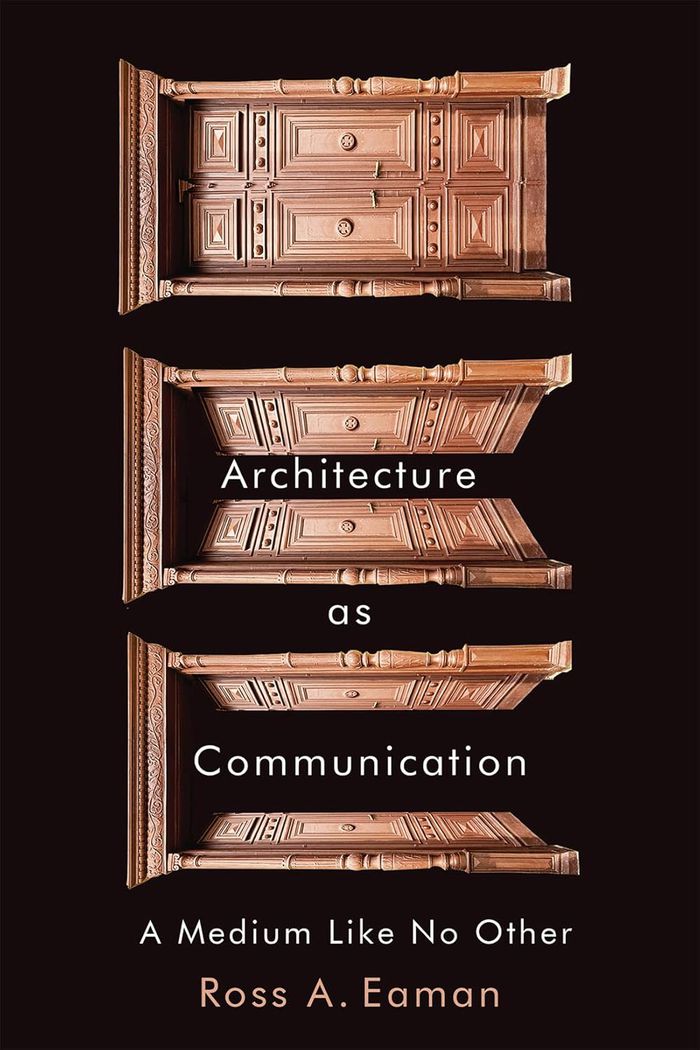
Media theory has long overlooked the built environment and its communicative capacity: how built structures and spaces convey meaning through material embodiment and symbolization. "Architecture as communication" advances the idea that built environments function as media of communication. Using practice theory in conjunction with the concept of style, this book is anchored in three historical determinants: the quest for perfect proportion in buildings, the belief in architectural determinism, and the ongoing efforts within other media to influence how those who experience built environments understand them. Ross Eaman explores how houses, schools, places of worship, factories, office buildings, stores, malls, opera houses, plazas, and parks have meaning for people as subjective life-worlds. "Architecture as communication" proposes media theory that articulates the social construction of meaning as a unique way of understanding the built environment – one in which the users and observers of structures and spaces participate along with architects and designers.
Architecture as communication: A medium like no other
Actions:
Prix:
$29.95
(disponible en magasin)
Résumé:
Media theory has long overlooked the built environment and its communicative capacity: how built structures and spaces convey meaning through material embodiment and symbolization. "Architecture as communication" advances the idea that built environments function as media of communication. Using practice theory in conjunction with the concept of style, this book is anchored in three historical determinants: the quest for perfect proportion in buildings, the belief in architectural determinism, and the ongoing efforts within other media to influence how those who experience built environments understand them. Ross Eaman explores how houses, schools, places of worship, factories, office buildings, stores, malls, opera houses, plazas, and parks have meaning for people as subjective life-worlds. "Architecture as communication" proposes media theory that articulates the social construction of meaning as a unique way of understanding the built environment – one in which the users and observers of structures and spaces participate along with architects and designers.
Classification:
livres
livres
Publication:
avril 2025
avril 2025
Sujet:
Théorie de l’architecture
Théorie de l’architecture
Classification:
livres
livres
Titre:
The industrious city
The industrious city
Actions:
Prix:
$56.00
(disponible sur commande)
Résumé:
Cities have always been places where commerce and production, working and living, are physically and functionally integrated. Only with the rise of industry have zoning regulations been introduced to separate these functions. But what role do these regulations play when industry is digitized, increasingly emission-free and shifting away from mass production What will the(...)
$56.00
(disponible sur commande)
Résumé:
Cities have always been places where commerce and production, working and living, are physically and functionally integrated. Only with the rise of industry have zoning regulations been introduced to separate these functions. But what role do these regulations play when industry is digitized, increasingly emission-free and shifting away from mass production What will the(...)
Titre:
The industrious city
Actions:
Prix:
$56.00
(disponible sur commande)
Résumé:
Cities have always been places where commerce and production, working and living, are physically and functionally integrated. Only with the rise of industry have zoning regulations been introduced to separate these functions. But what role do these regulations play when industry is digitized, increasingly emission-free and shifting away from mass production What will the ideal mix of working and living be in the future In a world characterized by digital disruption, migration and demographic shifts, how do we build cities based on social equity and resilience. Based on interdisciplinary urban design research undertaken at Harvard University’s Graduate School of Design, the Zurich-based architecture studio Hosoya Schaefer presents ''The industrious city: urban industry in the digital age''. Investigating how production can be reintroduced into the urban fabric, this book explores how production, services, leisure and living might come together in a future integrated city.
The industrious city
Actions:
Prix:
$56.00
(disponible sur commande)
Résumé:
Cities have always been places where commerce and production, working and living, are physically and functionally integrated. Only with the rise of industry have zoning regulations been introduced to separate these functions. But what role do these regulations play when industry is digitized, increasingly emission-free and shifting away from mass production What will the ideal mix of working and living be in the future In a world characterized by digital disruption, migration and demographic shifts, how do we build cities based on social equity and resilience. Based on interdisciplinary urban design research undertaken at Harvard University’s Graduate School of Design, the Zurich-based architecture studio Hosoya Schaefer presents ''The industrious city: urban industry in the digital age''. Investigating how production can be reintroduced into the urban fabric, this book explores how production, services, leisure and living might come together in a future integrated city.
Classification:
livres
livres
Publication:
avril 2021
avril 2021
Sujet:
Théorie de l’urbanisme
Théorie de l’urbanisme
Classification:
livres
livres
Prix:
$59.95
(disponible en magasin)
Résumé:
After World War II, America’s religious denominations spent billions on church architecture as they spread into the suburbs. In this illustrated history of midcentury modern churches in the Midwest, Gretchen Buggeln shows how architects and suburban congregations joined forces to work out a vision of how modernist churches might help reinvigorate Protestant worship and(...)
$59.95
(disponible en magasin)
Résumé:
After World War II, America’s religious denominations spent billions on church architecture as they spread into the suburbs. In this illustrated history of midcentury modern churches in the Midwest, Gretchen Buggeln shows how architects and suburban congregations joined forces to work out a vision of how modernist churches might help reinvigorate Protestant worship and(...)
Titre:
The suburban church: modernism and community in postwar America
Actions:
Prix:
$59.95
(disponible en magasin)
Résumé:
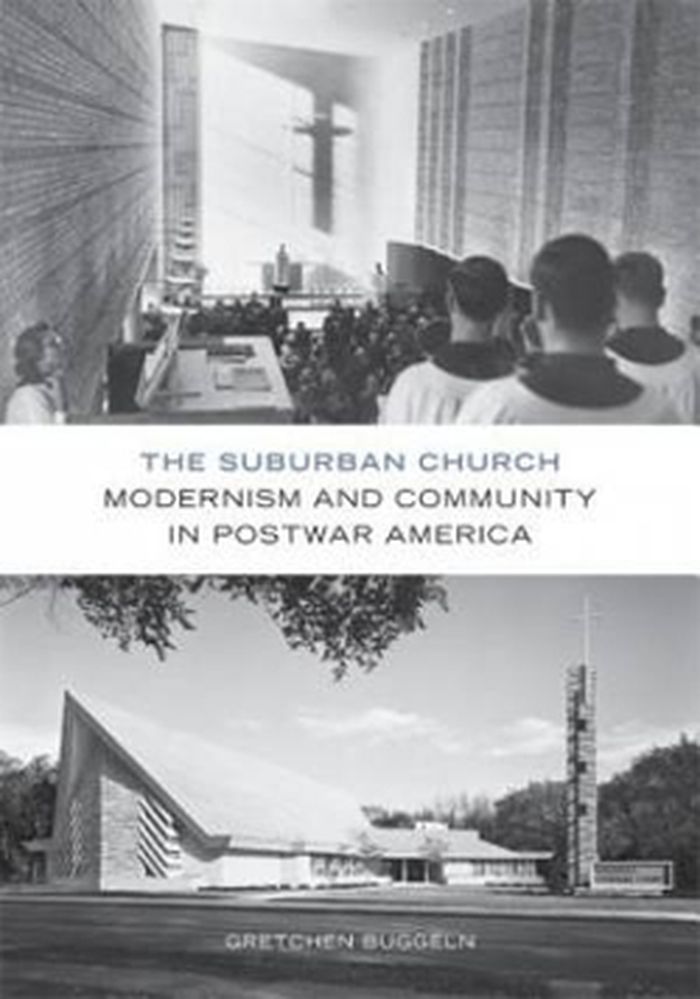
After World War II, America’s religious denominations spent billions on church architecture as they spread into the suburbs. In this illustrated history of midcentury modern churches in the Midwest, Gretchen Buggeln shows how architects and suburban congregations joined forces to work out a vision of how modernist churches might help reinvigorate Protestant worship and community. The result offers a new perspective on postwar architecture, religion, and society. Drawing on the architectural record, church archives, and oral histories, The Suburban Church focuses on collaborations between architects Edward D. Dart, Edward A. Sövik, Charles E. Stade, and seventy-five congregations. By telling the stories behind their modernist churches, the book describes how the buildings both reflected and shaped developments in postwar religion—its ecumenism, optimism, and liturgical innovation, as well as its fears about staying relevant during a time of vast cultural, social, and demographic change.
The suburban church: modernism and community in postwar America
Actions:
Prix:
$59.95
(disponible en magasin)
Résumé:
After World War II, America’s religious denominations spent billions on church architecture as they spread into the suburbs. In this illustrated history of midcentury modern churches in the Midwest, Gretchen Buggeln shows how architects and suburban congregations joined forces to work out a vision of how modernist churches might help reinvigorate Protestant worship and community. The result offers a new perspective on postwar architecture, religion, and society. Drawing on the architectural record, church archives, and oral histories, The Suburban Church focuses on collaborations between architects Edward D. Dart, Edward A. Sövik, Charles E. Stade, and seventy-five congregations. By telling the stories behind their modernist churches, the book describes how the buildings both reflected and shaped developments in postwar religion—its ecumenism, optimism, and liturgical innovation, as well as its fears about staying relevant during a time of vast cultural, social, and demographic change.
Classification:
livres
livres
Publication:
décembre 2015
décembre 2015
Sujet:
Théorie de l’architecture
Théorie de l’architecture
Classification:
livres
livres
Actions:
Prix:
$30.95
(disponible sur commande)
Résumé:
In a world of disruptions and seemingly endless complexity, cities have become central to thinking about the future of humanity. Yet the study of cities is fragmented among different silos of expertise, diverse genres of scholarship, and widening chasms between theory and practice. How can we do better? ''Cities Rethought'' suggests that we need to remake the way we see(...)
$30.95
(disponible sur commande)
Résumé:
In a world of disruptions and seemingly endless complexity, cities have become central to thinking about the future of humanity. Yet the study of cities is fragmented among different silos of expertise, diverse genres of scholarship, and widening chasms between theory and practice. How can we do better? ''Cities Rethought'' suggests that we need to remake the way we see(...)
Sujet:
Théorie de l’urbanisme
Théorie de l’urbanisme
Publication:
janvier 2025
janvier 2025
Titre:
Cities rethought: A new urban disposition
Actions:
Prix:
$30.95
(disponible sur commande)
Résumé:
In a world of disruptions and seemingly endless complexity, cities have become central to thinking about the future of humanity. Yet the study of cities is fragmented among different silos of expertise, diverse genres of scholarship, and widening chasms between theory and practice. How can we do better? ''Cities Rethought'' suggests that we need to remake the way we see and know cities in order to rethink how we act and intervene within them. To this end, it offers the contours of a new urban disposition. Its normative, analytical, and operational elements offer an opportunity for scholars, practitioners, and citizens alike to approach the complexity of cities anew. Written collectively for a wide audience, the text draws from cities across the global north and south, speaks across diverse genres of ideas, and reflects on the lived experience of the authors as both researchers and practitioners. It is an essential text for anyone committed to knowing their own cities as well as finding ways to meaningfully intervene in them.
Cities rethought: A new urban disposition
Actions:
Prix:
$30.95
(disponible sur commande)
Résumé:
In a world of disruptions and seemingly endless complexity, cities have become central to thinking about the future of humanity. Yet the study of cities is fragmented among different silos of expertise, diverse genres of scholarship, and widening chasms between theory and practice. How can we do better? ''Cities Rethought'' suggests that we need to remake the way we see and know cities in order to rethink how we act and intervene within them. To this end, it offers the contours of a new urban disposition. Its normative, analytical, and operational elements offer an opportunity for scholars, practitioners, and citizens alike to approach the complexity of cities anew. Written collectively for a wide audience, the text draws from cities across the global north and south, speaks across diverse genres of ideas, and reflects on the lived experience of the authors as both researchers and practitioners. It is an essential text for anyone committed to knowing their own cities as well as finding ways to meaningfully intervene in them.
Classification:
livres
livres
Publication:
janvier 2025
janvier 2025
Sujet:
Théorie de l’urbanisme
Théorie de l’urbanisme
Classification:
livres
livres

Titre:
The Black geographic
The Black geographic
Actions:
Prix:
$38.95
(disponible sur commande)
Résumé:
The contributors to ''The Black geographic'' explore the theoretical innovations of Black Geographies scholarship and how it approaches Blackness as historically and spatially situated. In studies that span from Oakland to the Alabama Black Belt to Senegal to Brazil, the contributors draw on ethnography, archival records, digital humanities, literary criticism, and art to(...)
$38.95
(disponible sur commande)
Résumé:
The contributors to ''The Black geographic'' explore the theoretical innovations of Black Geographies scholarship and how it approaches Blackness as historically and spatially situated. In studies that span from Oakland to the Alabama Black Belt to Senegal to Brazil, the contributors draw on ethnography, archival records, digital humanities, literary criticism, and art to(...)
Titre:
The Black geographic
Actions:
Prix:
$38.95
(disponible sur commande)
Résumé:
The contributors to ''The Black geographic'' explore the theoretical innovations of Black Geographies scholarship and how it approaches Blackness as historically and spatially situated. In studies that span from Oakland to the Alabama Black Belt to Senegal to Brazil, the contributors draw on ethnography, archival records, digital humanities, literary criticism, and art to show how understanding the spatial dimensions of Black life contributes to a broader understanding of race and space. They examine key sites of inquiry: Black spatial imaginaries, resistance to racial violence, the geographies of racial capitalism, and struggles over urban space. Throughout, the contributors demonstrate that Blackness is itself a situating and place-making force, even as it is shaped by spatial processes and diasporic routes. Whether discussing eighteenth- and nineteenth-century abolitionist print records or migration and surveillance in Niger, this volume demonstrates that Black Geographies is a mode of analyzing Blackness that fundamentally challenges the very foundations of the field of geography and its historical entwinement with colonialism, enslavement, and imperialism. In short, it marks a new step in the evolution of the field.
The Black geographic
Actions:
Prix:
$38.95
(disponible sur commande)
Résumé:
The contributors to ''The Black geographic'' explore the theoretical innovations of Black Geographies scholarship and how it approaches Blackness as historically and spatially situated. In studies that span from Oakland to the Alabama Black Belt to Senegal to Brazil, the contributors draw on ethnography, archival records, digital humanities, literary criticism, and art to show how understanding the spatial dimensions of Black life contributes to a broader understanding of race and space. They examine key sites of inquiry: Black spatial imaginaries, resistance to racial violence, the geographies of racial capitalism, and struggles over urban space. Throughout, the contributors demonstrate that Blackness is itself a situating and place-making force, even as it is shaped by spatial processes and diasporic routes. Whether discussing eighteenth- and nineteenth-century abolitionist print records or migration and surveillance in Niger, this volume demonstrates that Black Geographies is a mode of analyzing Blackness that fundamentally challenges the very foundations of the field of geography and its historical entwinement with colonialism, enslavement, and imperialism. In short, it marks a new step in the evolution of the field.
Classification:
livres
livres
Publication:
octobre 2023
octobre 2023
Sujet:
Social
Social
Classification:
livres
livres

Actions:
Prix:
$33.95
(disponible sur commande)
Résumé:
''Tree by tree'' is a warning and a toolkit for the future of forest recovery. Scott J. Meiners investigates the critical biological threats endangering tree species native to the forests of eastern North America, providing a needed focus on this plight. Meiners suggests that if we are to save our forests, the first step is to recognize the threats in front of(...)
$33.95
(disponible sur commande)
Résumé:
''Tree by tree'' is a warning and a toolkit for the future of forest recovery. Scott J. Meiners investigates the critical biological threats endangering tree species native to the forests of eastern North America, providing a needed focus on this plight. Meiners suggests that if we are to save our forests, the first step is to recognize the threats in front of(...)
Titre:
Tree by tree: Saving North America's eastern forests
Actions:
Prix:
$33.95
(disponible sur commande)
Résumé:
''Tree by tree'' is a warning and a toolkit for the future of forest recovery. Scott J. Meiners investigates the critical biological threats endangering tree species native to the forests of eastern North America, providing a needed focus on this plight. Meiners suggests that if we are to save our forests, the first step is to recognize the threats in front of us. Meiners focuses on five familiar trees—the American elm, the American chestnut, the eastern hemlock, the white ash, and the sugar maple—and shares why they matter economically, ecologically, and culturally. From outbreaks of Dutch elm disease to infestations of emerald ash borers, Meiners highlights the challenges that have led or will lead to the disappearance of these trees from forests. In doing so, he shows us how diversity loss often disrupts intricately balanced ecosystems and how vital it is that we pay more attention to massive changes in forest composition. With practical steps for the conservation of native tree species, ''Tree by tree'' offers the inspiration and insights we need to begin saving our forests.
Tree by tree: Saving North America's eastern forests
Actions:
Prix:
$33.95
(disponible sur commande)
Résumé:
''Tree by tree'' is a warning and a toolkit for the future of forest recovery. Scott J. Meiners investigates the critical biological threats endangering tree species native to the forests of eastern North America, providing a needed focus on this plight. Meiners suggests that if we are to save our forests, the first step is to recognize the threats in front of us. Meiners focuses on five familiar trees—the American elm, the American chestnut, the eastern hemlock, the white ash, and the sugar maple—and shares why they matter economically, ecologically, and culturally. From outbreaks of Dutch elm disease to infestations of emerald ash borers, Meiners highlights the challenges that have led or will lead to the disappearance of these trees from forests. In doing so, he shows us how diversity loss often disrupts intricately balanced ecosystems and how vital it is that we pay more attention to massive changes in forest composition. With practical steps for the conservation of native tree species, ''Tree by tree'' offers the inspiration and insights we need to begin saving our forests.
Classification:
livres
livres
Publication:
septembre 2023
septembre 2023
Sujet:
Théorie du paysage
Théorie du paysage
Classification:
livres
livres
Titre:
Objectivity
Objectivity
Actions:
Prix:
$42.00
(disponible sur commande)
Résumé:
Objectivity has a history, and it is full of surprises. In Objectivity, Lorraine Daston and Peter Galison chart the emergence of objectivity in the mid-nineteenth-century sciences—and show how the concept differs from its alternatives, truth-to-nature and trained judgment. This is a story of lofty epistemic ideals fused with workaday practices in the making of scientific(...)
$42.00
(disponible sur commande)
Résumé:
Objectivity has a history, and it is full of surprises. In Objectivity, Lorraine Daston and Peter Galison chart the emergence of objectivity in the mid-nineteenth-century sciences—and show how the concept differs from its alternatives, truth-to-nature and trained judgment. This is a story of lofty epistemic ideals fused with workaday practices in the making of scientific(...)
Titre:
Objectivity
Actions:
Prix:
$42.00
(disponible sur commande)
Résumé:
Objectivity has a history, and it is full of surprises. In Objectivity, Lorraine Daston and Peter Galison chart the emergence of objectivity in the mid-nineteenth-century sciences—and show how the concept differs from its alternatives, truth-to-nature and trained judgment. This is a story of lofty epistemic ideals fused with workaday practices in the making of scientific images. From the eighteenth through the early twenty-first centuries, the images that reveal the deepest commitments of the empirical sciences—from anatomy to crystallography—are those featured in scientific atlases, the compendia that teach practitioners what is worth looking at and how to look at it. Galison and Daston use atlas images to uncover a hidden history of scientific objectivity and its rivals. Whether an atlas maker idealizes an image to capture the essentials in the name of truth-to-nature or refuses to erase even the most incidental detail in the name of objectivity or highlights patterns in the name of trained judgment is a decision enforced by an ethos as well as by an epistemology.
Objectivity
Actions:
Prix:
$42.00
(disponible sur commande)
Résumé:
Objectivity has a history, and it is full of surprises. In Objectivity, Lorraine Daston and Peter Galison chart the emergence of objectivity in the mid-nineteenth-century sciences—and show how the concept differs from its alternatives, truth-to-nature and trained judgment. This is a story of lofty epistemic ideals fused with workaday practices in the making of scientific images. From the eighteenth through the early twenty-first centuries, the images that reveal the deepest commitments of the empirical sciences—from anatomy to crystallography—are those featured in scientific atlases, the compendia that teach practitioners what is worth looking at and how to look at it. Galison and Daston use atlas images to uncover a hidden history of scientific objectivity and its rivals. Whether an atlas maker idealizes an image to capture the essentials in the name of truth-to-nature or refuses to erase even the most incidental detail in the name of objectivity or highlights patterns in the name of trained judgment is a decision enforced by an ethos as well as by an epistemology.
Classification:
livres
livres
Publication:
janvier 2007
janvier 2007
Sujet:
Théorie de l’architecture
Théorie de l’architecture
Classification:
livres
livres
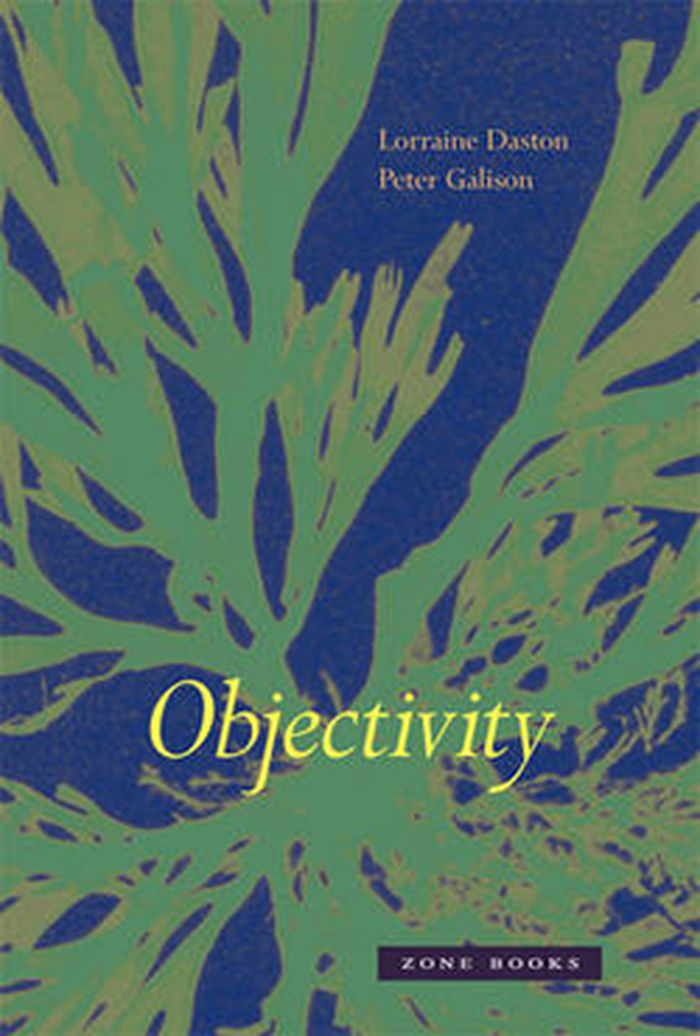
Titre:
Objectivity
Objectivity
Actions:
Prix:
$38.00
(disponible sur commande)
Résumé:
Objectivity has a history, and it is full of surprises. In Objectivity, Lorraine Daston and Peter Galison chart the emergence of objectivity in the mid-nineteenth-century sciences—and show how the concept differs from its alternatives, truth-to-nature and trained judgment. This is a story of lofty epistemic ideals fused with workaday practices in the making of scientific(...)
$38.00
(disponible sur commande)
Résumé:
Objectivity has a history, and it is full of surprises. In Objectivity, Lorraine Daston and Peter Galison chart the emergence of objectivity in the mid-nineteenth-century sciences—and show how the concept differs from its alternatives, truth-to-nature and trained judgment. This is a story of lofty epistemic ideals fused with workaday practices in the making of scientific(...)
Publication:
octobre 2010
octobre 2010
Titre:
Objectivity
Actions:
Prix:
$38.00
(disponible sur commande)
Résumé:
Objectivity has a history, and it is full of surprises. In Objectivity, Lorraine Daston and Peter Galison chart the emergence of objectivity in the mid-nineteenth-century sciences—and show how the concept differs from its alternatives, truth-to-nature and trained judgment. This is a story of lofty epistemic ideals fused with workaday practices in the making of scientific images. From the eighteenth through the early twenty-first centuries, the images that reveal the deepest commitments of the empirical sciences—from anatomy to crystallography—are those featured in scientific atlases, the compendia that teach practitioners what is worth looking at and how to look at it. Galison and Daston use atlas images to uncover a hidden history of scientific objectivity and its rivals. Whether an atlas maker idealizes an image to capture the essentials in the name of truth-to-nature or refuses to erase even the most incidental detail in the name of objectivity or highlights patterns in the name of trained judgment is a decision enforced by an ethos as well as by an epistemology.
Objectivity
Actions:
Prix:
$38.00
(disponible sur commande)
Résumé:
Objectivity has a history, and it is full of surprises. In Objectivity, Lorraine Daston and Peter Galison chart the emergence of objectivity in the mid-nineteenth-century sciences—and show how the concept differs from its alternatives, truth-to-nature and trained judgment. This is a story of lofty epistemic ideals fused with workaday practices in the making of scientific images. From the eighteenth through the early twenty-first centuries, the images that reveal the deepest commitments of the empirical sciences—from anatomy to crystallography—are those featured in scientific atlases, the compendia that teach practitioners what is worth looking at and how to look at it. Galison and Daston use atlas images to uncover a hidden history of scientific objectivity and its rivals. Whether an atlas maker idealizes an image to capture the essentials in the name of truth-to-nature or refuses to erase even the most incidental detail in the name of objectivity or highlights patterns in the name of trained judgment is a decision enforced by an ethos as well as by an epistemology.
Classification:
livres
livres
Publication:
octobre 2010
octobre 2010


