


1067 Résultats
Classification:
livres
livres
Titre:
Is landscape...?
Is landscape...?
Actions:
Prix:
$97.90
(disponible sur commande)
Résumé:
Is Landscape . . . ? surveys multiple and myriad definitions of landscape. Rather than seeking a singular or essential understanding of the term, the collection postulates that landscape might be better read in relation to its cognate terms across expanded disciplinary and professional fields. The publication pursues the potential of multiple provisional working(...)
$97.90
(disponible sur commande)
Résumé:
Is Landscape . . . ? surveys multiple and myriad definitions of landscape. Rather than seeking a singular or essential understanding of the term, the collection postulates that landscape might be better read in relation to its cognate terms across expanded disciplinary and professional fields. The publication pursues the potential of multiple provisional working(...)
Titre:
Is landscape...?
Actions:
Prix:
$97.90
(disponible sur commande)
Résumé:
Is Landscape . . . ? surveys multiple and myriad definitions of landscape. Rather than seeking a singular or essential understanding of the term, the collection postulates that landscape might be better read in relation to its cognate terms across expanded disciplinary and professional fields. The publication pursues the potential of multiple provisional working definitions of landscape to both disturb and develop received understandings of landscape architecture. These definitions distinguish between landscape as representational medium, academic discipline, and professional identity. Beginning with an inquiry into the origins of the term itself, Is Landscape . . . ? features essays by a dozen leading voices shaping the contemporary reading of landscape as architecture and beyond.
Is landscape...?
Actions:
Prix:
$97.90
(disponible sur commande)
Résumé:
Is Landscape . . . ? surveys multiple and myriad definitions of landscape. Rather than seeking a singular or essential understanding of the term, the collection postulates that landscape might be better read in relation to its cognate terms across expanded disciplinary and professional fields. The publication pursues the potential of multiple provisional working definitions of landscape to both disturb and develop received understandings of landscape architecture. These definitions distinguish between landscape as representational medium, academic discipline, and professional identity. Beginning with an inquiry into the origins of the term itself, Is Landscape . . . ? features essays by a dozen leading voices shaping the contemporary reading of landscape as architecture and beyond.
Classification:
livres
livres
Publication:
mai 2015
mai 2015
Sujet:
Théorie du paysage
Théorie du paysage
Classification:
livres
livres
Prix:
$19.95
(disponible en magasin)
Résumé:
Western thinking has long been dominated by essence, by a preoccupation with that which dwells in itself and delimits itself from the other. By contrast, Far Eastern thought is centred not on essence but on absence. The fundamental topos of Far Eastern thinking is not being but ‘the way’ (dao), which lacks the solidity and fixedness of essence. The difference between(...)
$19.95
(disponible en magasin)
Résumé:
Western thinking has long been dominated by essence, by a preoccupation with that which dwells in itself and delimits itself from the other. By contrast, Far Eastern thought is centred not on essence but on absence. The fundamental topos of Far Eastern thinking is not being but ‘the way’ (dao), which lacks the solidity and fixedness of essence. The difference between(...)
Titre:
Absence: On the culture and philosophy of the Far East
Actions:
Prix:
$19.95
(disponible en magasin)
Résumé:
Western thinking has long been dominated by essence, by a preoccupation with that which dwells in itself and delimits itself from the other. By contrast, Far Eastern thought is centred not on essence but on absence. The fundamental topos of Far Eastern thinking is not being but ‘the way’ (dao), which lacks the solidity and fixedness of essence. The difference between essence and absence is the difference between being and path, between dwelling and wandering. '‘A Zen monk should be without fixed abode, like the clouds, and without fixed support, like water’', said the Japanese Zen master Dogen. Drawing on this fundamental distinction between essence and absence, Byung-Chul Han explores the differences between Western and Far Eastern philosophy, aesthetics, architecture and art, shedding fresh light on a culture of absence that may at first sight appear strange and unfamiliar to those in the West whose ways of thinking have been shaped for centuries by the preoccupation with essence.
Absence: On the culture and philosophy of the Far East
Actions:
Prix:
$19.95
(disponible en magasin)
Résumé:
Western thinking has long been dominated by essence, by a preoccupation with that which dwells in itself and delimits itself from the other. By contrast, Far Eastern thought is centred not on essence but on absence. The fundamental topos of Far Eastern thinking is not being but ‘the way’ (dao), which lacks the solidity and fixedness of essence. The difference between essence and absence is the difference between being and path, between dwelling and wandering. '‘A Zen monk should be without fixed abode, like the clouds, and without fixed support, like water’', said the Japanese Zen master Dogen. Drawing on this fundamental distinction between essence and absence, Byung-Chul Han explores the differences between Western and Far Eastern philosophy, aesthetics, architecture and art, shedding fresh light on a culture of absence that may at first sight appear strange and unfamiliar to those in the West whose ways of thinking have been shaped for centuries by the preoccupation with essence.
Classification:
livres
livres
Publication:
juin 2023
juin 2023
Sujet:
Théorie/ philosophie
Théorie/ philosophie
Classification:
livres
livres
Titre:
Space as membrane
Space as membrane
Actions:
Prix:
$35.00
(disponible en magasin)
Résumé:
What if architecture was no longer 3D or 2D, mass or surface, object or space? And what if the architectural environment was envisioned not as an abstract continuum, but as a material envelope that grows organically from the human body, uniting its skin with the periphery of a city, a region or a continent, and even the entire earthly atmosphere? Such a sprawling(...)
$35.00
(disponible en magasin)
Résumé:
What if architecture was no longer 3D or 2D, mass or surface, object or space? And what if the architectural environment was envisioned not as an abstract continuum, but as a material envelope that grows organically from the human body, uniting its skin with the periphery of a city, a region or a continent, and even the entire earthly atmosphere? Such a sprawling(...)
Titre:
Space as membrane
Actions:
Prix:
$35.00
(disponible en magasin)
Résumé:
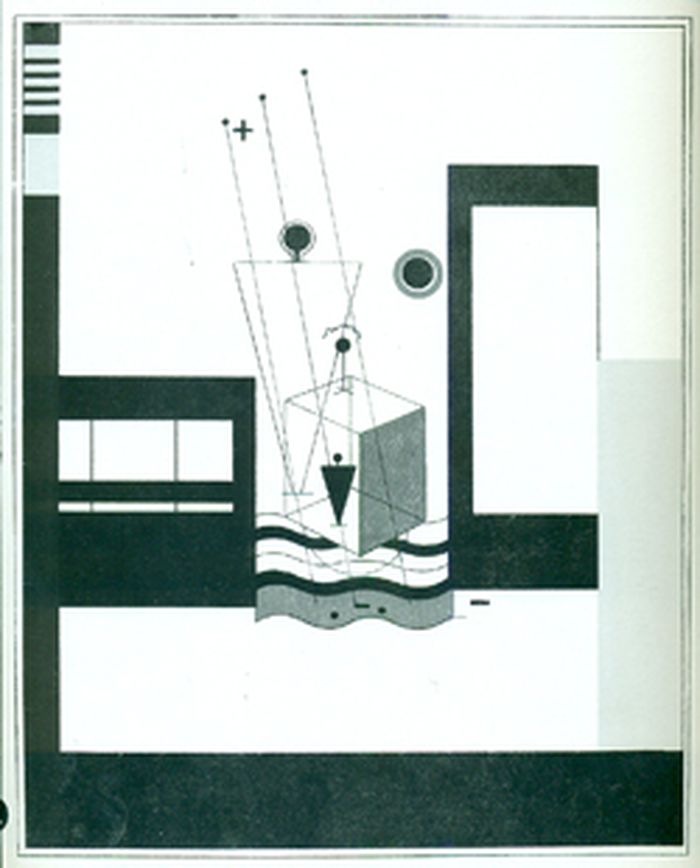
What if architecture was no longer 3D or 2D, mass or surface, object or space? And what if the architectural environment was envisioned not as an abstract continuum, but as a material envelope that grows organically from the human body, uniting its skin with the periphery of a city, a region or a continent, and even the entire earthly atmosphere? Such a sprawling hypothesis informs the theoretical premise of the 1926 essay Space as Membrane, written by former Bauhaus student, architect and cosmological theorist Siegfried Ebeling. Read and praised by Mies van der Rohe, denounced by Walter Gropius and presaging some of the technological innovations introduced across the Atlantic by Buckminster Fuller, Ebeling's treatise has been the subject of a number of recent commentaries, yet the text itself remains unread, due mainly to the scarcity of the original publication. This is the first English translation of Ebeling's original treatise, as well as the first contemporary edition of the text in any language.
Space as membrane
Actions:
Prix:
$35.00
(disponible en magasin)
Résumé:
What if architecture was no longer 3D or 2D, mass or surface, object or space? And what if the architectural environment was envisioned not as an abstract continuum, but as a material envelope that grows organically from the human body, uniting its skin with the periphery of a city, a region or a continent, and even the entire earthly atmosphere? Such a sprawling hypothesis informs the theoretical premise of the 1926 essay Space as Membrane, written by former Bauhaus student, architect and cosmological theorist Siegfried Ebeling. Read and praised by Mies van der Rohe, denounced by Walter Gropius and presaging some of the technological innovations introduced across the Atlantic by Buckminster Fuller, Ebeling's treatise has been the subject of a number of recent commentaries, yet the text itself remains unread, due mainly to the scarcity of the original publication. This is the first English translation of Ebeling's original treatise, as well as the first contemporary edition of the text in any language.
Classification:
livres
livres
Publication:
juin 2010
juin 2010
Sujet:
Théorie de l’architecture
Théorie de l’architecture
Classification:
livres
livres
Titre:
PIN-UP interviews
PIN-UP interviews
Actions:
Prix:
$29.95
(disponible sur commande)
Résumé:
PIN-UP Interviews is a compilation of over 50 of the most fascinating interviews from PIN-UP magazine since its first issue was published in October 2006. Serious, yet accessible, featuring the elegant and modern aesthetic PIN-UP’s readers have come to expect, there is no comparable source available for such an array of contemporary design talent collected in one place.(...)
$29.95
(disponible sur commande)
Résumé:
PIN-UP Interviews is a compilation of over 50 of the most fascinating interviews from PIN-UP magazine since its first issue was published in October 2006. Serious, yet accessible, featuring the elegant and modern aesthetic PIN-UP’s readers have come to expect, there is no comparable source available for such an array of contemporary design talent collected in one place.(...)
Titre:
PIN-UP interviews
Actions:
Prix:
$29.95
(disponible sur commande)
Résumé:
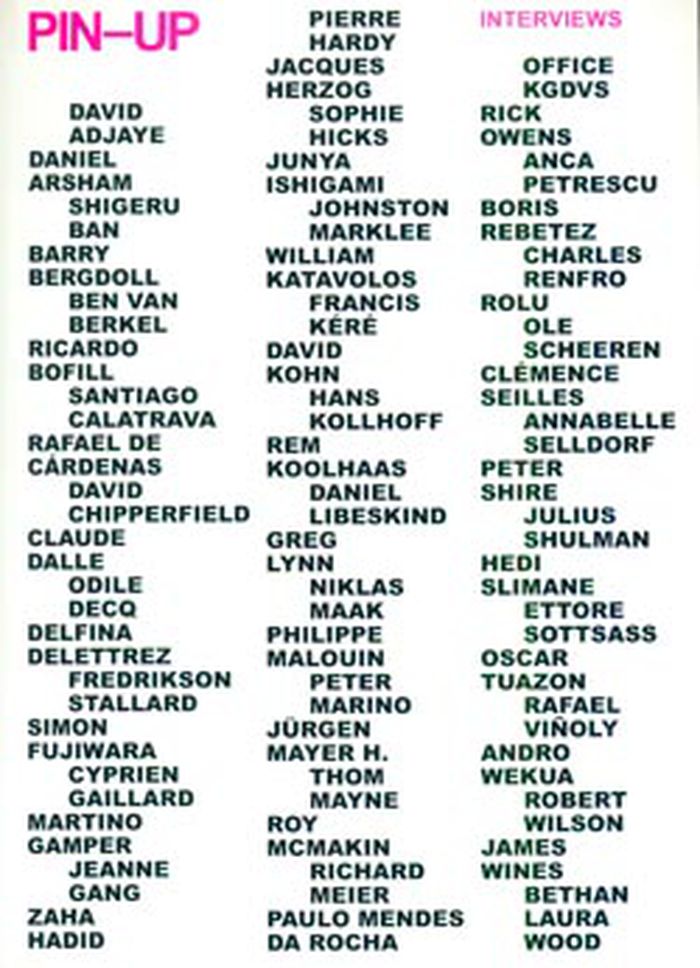
PIN-UP Interviews is a compilation of over 50 of the most fascinating interviews from PIN-UP magazine since its first issue was published in October 2006. Serious, yet accessible, featuring the elegant and modern aesthetic PIN-UP’s readers have come to expect, there is no comparable source available for such an array of contemporary design talent collected in one place. It is indispensable to all lovers of today’s brightest architectural and design ideas. PIN-UP Interviews is the first book produced by PIN-UP, the award-winning, New York-based, biannual architecture and design magazine. Cheekily dubbing itself the “Magazine for Architectural Entertainment,” PIN-UP features interviews with architects, designers, and artists, and presents their work informally—as a fun assembly of ideas, stories, and conversations, all paired with cutting-edge photography and artwork. Included in PIN-UP Interviews are architects such as David Adjaye, Shigeru Ban, David Chipperfield, Zaha Hadid, Junya Ishigami, and Rem Koolhaas.
PIN-UP interviews
Actions:
Prix:
$29.95
(disponible sur commande)
Résumé:
PIN-UP Interviews is a compilation of over 50 of the most fascinating interviews from PIN-UP magazine since its first issue was published in October 2006. Serious, yet accessible, featuring the elegant and modern aesthetic PIN-UP’s readers have come to expect, there is no comparable source available for such an array of contemporary design talent collected in one place. It is indispensable to all lovers of today’s brightest architectural and design ideas. PIN-UP Interviews is the first book produced by PIN-UP, the award-winning, New York-based, biannual architecture and design magazine. Cheekily dubbing itself the “Magazine for Architectural Entertainment,” PIN-UP features interviews with architects, designers, and artists, and presents their work informally—as a fun assembly of ideas, stories, and conversations, all paired with cutting-edge photography and artwork. Included in PIN-UP Interviews are architects such as David Adjaye, Shigeru Ban, David Chipperfield, Zaha Hadid, Junya Ishigami, and Rem Koolhaas.
Classification:
livres
livres
Publication:
septembre 2013
septembre 2013
Sujet:
Théorie de l’architecture
Théorie de l’architecture
Classification:
livres
livres
Titre:
Why architects still draw
Why architects still draw
Actions:
Prix:
$26.95
(disponible sur commande)
Résumé:
Why would an architect reach for a pencil when drawing software and AutoCAD are a click away? Use a ruler when 3D-scanners and GPS devices are close at hand? In Why Architects Still Draw, Paolo Belardi offers an elegant and ardent defense of drawing by hand as a way of thinking. Belardi is no Luddite; he doesn't urge architects to give up digital devices for watercolors(...)
$26.95
(disponible sur commande)
Résumé:
Why would an architect reach for a pencil when drawing software and AutoCAD are a click away? Use a ruler when 3D-scanners and GPS devices are close at hand? In Why Architects Still Draw, Paolo Belardi offers an elegant and ardent defense of drawing by hand as a way of thinking. Belardi is no Luddite; he doesn't urge architects to give up digital devices for watercolors(...)
Titre:
Why architects still draw
Actions:
Prix:
$26.95
(disponible sur commande)
Résumé:
Why would an architect reach for a pencil when drawing software and AutoCAD are a click away? Use a ruler when 3D-scanners and GPS devices are close at hand? In Why Architects Still Draw, Paolo Belardi offers an elegant and ardent defense of drawing by hand as a way of thinking. Belardi is no Luddite; he doesn't urge architects to give up digital devices for watercolors and a measuring tape. Rather, he makes a case for drawing as the interface between the idea and the work itself. A drawing, Belardi argues, holds within it the entire final design. It is the paradox of the acorn: a project emerges from a drawing-even from a sketch, rough and inchoate-just as an oak tree emerges from an acorn. Citing examples not just from architecture but also from literature, chemistry, music, archaeology, and art, Belardi shows how drawing is not a passive recording but a moment of invention pregnant with creative possibilities.
Why architects still draw
Actions:
Prix:
$26.95
(disponible sur commande)
Résumé:
Why would an architect reach for a pencil when drawing software and AutoCAD are a click away? Use a ruler when 3D-scanners and GPS devices are close at hand? In Why Architects Still Draw, Paolo Belardi offers an elegant and ardent defense of drawing by hand as a way of thinking. Belardi is no Luddite; he doesn't urge architects to give up digital devices for watercolors and a measuring tape. Rather, he makes a case for drawing as the interface between the idea and the work itself. A drawing, Belardi argues, holds within it the entire final design. It is the paradox of the acorn: a project emerges from a drawing-even from a sketch, rough and inchoate-just as an oak tree emerges from an acorn. Citing examples not just from architecture but also from literature, chemistry, music, archaeology, and art, Belardi shows how drawing is not a passive recording but a moment of invention pregnant with creative possibilities.
Classification:
livres
livres
Publication:
mars 2014
mars 2014
Sujet:
Théorie de l’architecture
Théorie de l’architecture
Classification:
livres
livres
Titre:
Bauhaus World Heritage Site
Bauhaus World Heritage Site
Actions:
Prix:
$21.00
(disponible sur commande)
Résumé:
Between 1919 and 1933, the Bauhaus revolutionized prevailing ideas about architecture and design, and the construction methods associated with them. The architecture of the Bauhaus itself was equally innovative; the buildings conceived by Walter Gropius and Hannes Meyer had a lasting influence on the architecture of the 20th century. To celebrate and preserve this legacy,(...)
$21.00
(disponible sur commande)
Résumé:
Between 1919 and 1933, the Bauhaus revolutionized prevailing ideas about architecture and design, and the construction methods associated with them. The architecture of the Bauhaus itself was equally innovative; the buildings conceived by Walter Gropius and Hannes Meyer had a lasting influence on the architecture of the 20th century. To celebrate and preserve this legacy,(...)
Titre:
Bauhaus World Heritage Site
Actions:
Prix:
$21.00
(disponible sur commande)
Résumé:
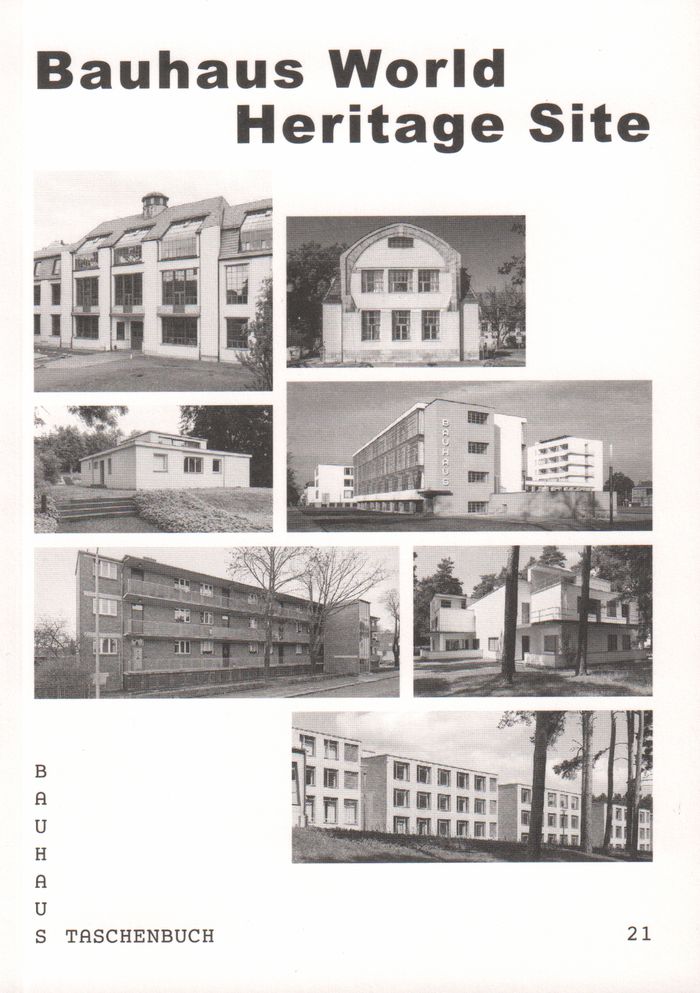
Between 1919 and 1933, the Bauhaus revolutionized prevailing ideas about architecture and design, and the construction methods associated with them. The architecture of the Bauhaus itself was equally innovative; the buildings conceived by Walter Gropius and Hannes Meyer had a lasting influence on the architecture of the 20th century. To celebrate and preserve this legacy, the Bauhaus buildings in Weimar and Dessau were named UNESCO World Heritage Sites in 1996. More recently, UNESCO added several other Bauhaus buildings to the list, including the houses with balcony access in Dessau, the ADGB Trades Union School in Bernau, the Haus am Horn and the old Art School and the old School of Arts and Crafts in Weimar. Bauhaus World Heritage Site documents the Bauhaus buildings protected by UNESCO, exploring the architectural legacy of the Bauhaus through a close look at the school’s own architecture.
Bauhaus World Heritage Site
Actions:
Prix:
$21.00
(disponible sur commande)
Résumé:
Between 1919 and 1933, the Bauhaus revolutionized prevailing ideas about architecture and design, and the construction methods associated with them. The architecture of the Bauhaus itself was equally innovative; the buildings conceived by Walter Gropius and Hannes Meyer had a lasting influence on the architecture of the 20th century. To celebrate and preserve this legacy, the Bauhaus buildings in Weimar and Dessau were named UNESCO World Heritage Sites in 1996. More recently, UNESCO added several other Bauhaus buildings to the list, including the houses with balcony access in Dessau, the ADGB Trades Union School in Bernau, the Haus am Horn and the old Art School and the old School of Arts and Crafts in Weimar. Bauhaus World Heritage Site documents the Bauhaus buildings protected by UNESCO, exploring the architectural legacy of the Bauhaus through a close look at the school’s own architecture.
Classification:
livres
livres
Publication:
juin 2018
juin 2018
Sujet:
Modernisme
Modernisme
Classification:
périodiques
périodiques
Titre:
AV Monographs 246: Snohetta
AV Monographs 246: Snohetta
Actions:
Prix:
$70.00
(disponible sur commande)
Résumé:
From their seven studios around the world, Snøhetta has established itself as one of the key offices on a global scale. Without a predetermined language, their work efficiently and poetically addresses the demands of the different social, economic, and urban contexts it faces. This commitment to sustainability and to architecture as a profession is reflected in the(...)
$70.00
(disponible sur commande)
Résumé:
From their seven studios around the world, Snøhetta has established itself as one of the key offices on a global scale. Without a predetermined language, their work efficiently and poetically addresses the demands of the different social, economic, and urban contexts it faces. This commitment to sustainability and to architecture as a profession is reflected in the(...)
Titre:
AV Monographs 246: Snohetta
Actions:
Prix:
$70.00
(disponible sur commande)
Résumé:
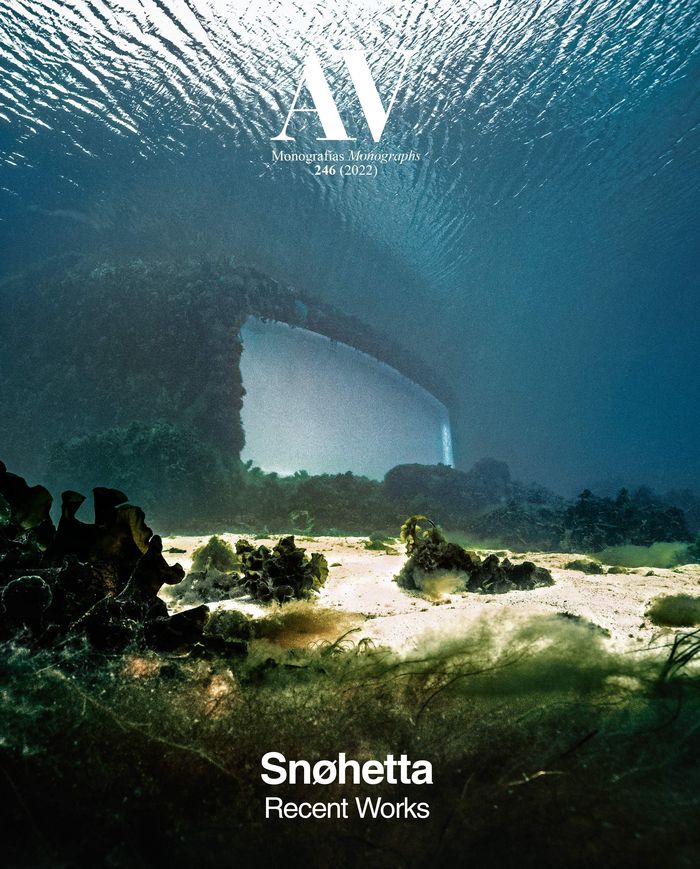
From their seven studios around the world, Snøhetta has established itself as one of the key offices on a global scale. Without a predetermined language, their work efficiently and poetically addresses the demands of the different social, economic, and urban contexts it faces. This commitment to sustainability and to architecture as a profession is reflected in the selection of 21 recent works and projects collected in 'AV Monographs 246', organized into three groups of seven elements each: ‘Urban Models’, ‘Built Geographies’, and ‘Future Visions’.
AV Monographs 246: Snohetta
Actions:
Prix:
$70.00
(disponible sur commande)
Résumé:
From their seven studios around the world, Snøhetta has established itself as one of the key offices on a global scale. Without a predetermined language, their work efficiently and poetically addresses the demands of the different social, economic, and urban contexts it faces. This commitment to sustainability and to architecture as a profession is reflected in the selection of 21 recent works and projects collected in 'AV Monographs 246', organized into three groups of seven elements each: ‘Urban Models’, ‘Built Geographies’, and ‘Future Visions’.
Classification:
périodiques
périodiques
Publication:
octobre 2022
octobre 2022
Sujet:
Revues
Revues
Classification:
livres
livres
Actions:
Prix:
$60.95
(disponible en magasin)
Résumé:
In eleven pointed and sometimes provocative conversations, architect and professor of architecture, Vittorio Magnago Lampugnani uses a critique of contemporary urban planning to develop principles for reestablishing the discipline. In seven projects designed with these principles in mind, he shows how his vigorous reinterpretation of the field can be implemented and what(...)
$60.95
(disponible en magasin)
Résumé:
In eleven pointed and sometimes provocative conversations, architect and professor of architecture, Vittorio Magnago Lampugnani uses a critique of contemporary urban planning to develop principles for reestablishing the discipline. In seven projects designed with these principles in mind, he shows how his vigorous reinterpretation of the field can be implemented and what(...)
Titre:
Urban design as craft : eleven conversations and seven projects, 1999-2011
Actions:
Prix:
$60.95
(disponible en magasin)
Résumé:
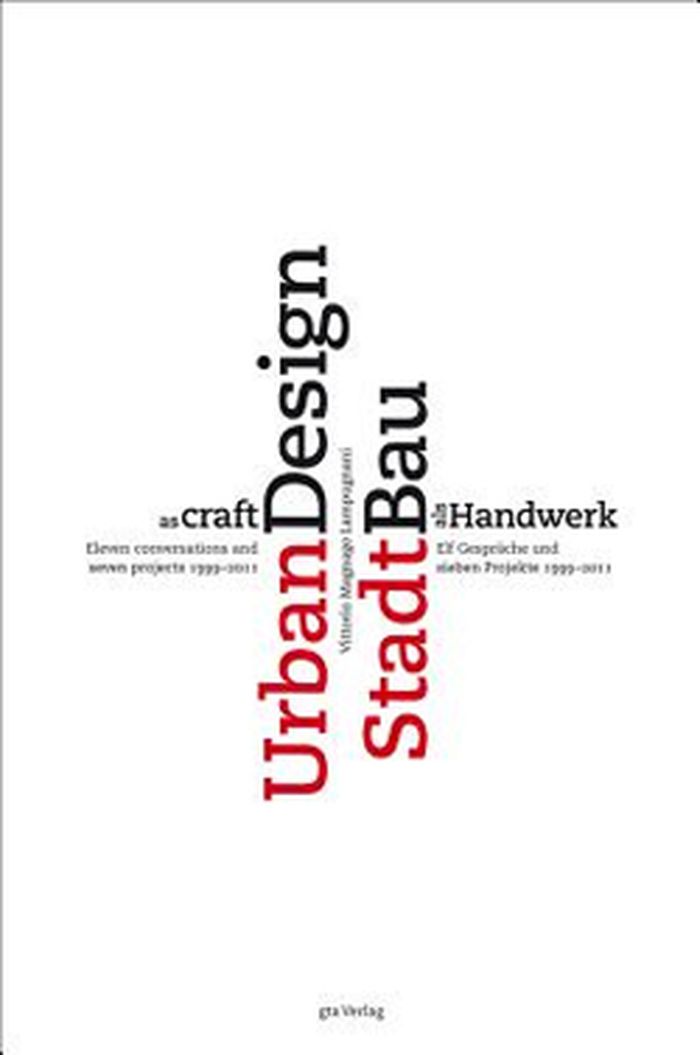
In eleven pointed and sometimes provocative conversations, architect and professor of architecture, Vittorio Magnago Lampugnani uses a critique of contemporary urban planning to develop principles for reestablishing the discipline. In seven projects designed with these principles in mind, he shows how his vigorous reinterpretation of the field can be implemented and what a fresh start can look like. Magnago Lampugnani envisages a calm modern city that can measure itself against the historic city, while emphasizing sustainability and providing a home for a multifaceted and continually changing society.
Urban design as craft : eleven conversations and seven projects, 1999-2011
Actions:
Prix:
$60.95
(disponible en magasin)
Résumé:
In eleven pointed and sometimes provocative conversations, architect and professor of architecture, Vittorio Magnago Lampugnani uses a critique of contemporary urban planning to develop principles for reestablishing the discipline. In seven projects designed with these principles in mind, he shows how his vigorous reinterpretation of the field can be implemented and what a fresh start can look like. Magnago Lampugnani envisages a calm modern city that can measure itself against the historic city, while emphasizing sustainability and providing a home for a multifaceted and continually changing society.
Classification:
livres
livres
Publication:
juin 2012
juin 2012
Sujet:
Théorie de l’urbanisme
Théorie de l’urbanisme
Classification:
livres
livres
Titre:
Audi Forum Ingolstadt
Audi Forum Ingolstadt
Actions:
Prix:
$43.95
(disponible sur commande)
Résumé:
With the creation of the Audi Forum, the Audi automobile plant in Ingolstadt--which formerly consisted largely of car production halls--has been given a new focus and become an extension of public space. For many years, the steadily expanding plant was virtually isolated from the outside world. Now, with the urban restructuring of the site, the ensemble may be seen as a(...)
$43.95
(disponible sur commande)
Résumé:
With the creation of the Audi Forum, the Audi automobile plant in Ingolstadt--which formerly consisted largely of car production halls--has been given a new focus and become an extension of public space. For many years, the steadily expanding plant was virtually isolated from the outside world. Now, with the urban restructuring of the site, the ensemble may be seen as a(...)
Titre:
Audi Forum Ingolstadt
Actions:
Prix:
$43.95
(disponible sur commande)
Résumé:
With the creation of the Audi Forum, the Audi automobile plant in Ingolstadt--which formerly consisted largely of car production halls--has been given a new focus and become an extension of public space. For many years, the steadily expanding plant was virtually isolated from the outside world. Now, with the urban restructuring of the site, the ensemble may be seen as a convincing translation into spatial form of the company's policy of opening itself to the public. The lively Forum, with its light-filled and spacious architecture, conveys a sense of urbanity.
Audi Forum Ingolstadt
Actions:
Prix:
$43.95
(disponible sur commande)
Résumé:
With the creation of the Audi Forum, the Audi automobile plant in Ingolstadt--which formerly consisted largely of car production halls--has been given a new focus and become an extension of public space. For many years, the steadily expanding plant was virtually isolated from the outside world. Now, with the urban restructuring of the site, the ensemble may be seen as a convincing translation into spatial form of the company's policy of opening itself to the public. The lively Forum, with its light-filled and spacious architecture, conveys a sense of urbanity.
Classification:
livres
livres
Publication:
décembre 2001, Munich
décembre 2001, Munich
Sujet:
Structures d’ingénierie
Structures d’ingénierie
Classification:
livres
livres
Prix:
$73.00
(disponible sur commande)
Résumé:
Addressing the life and work of a major figure of the Modern Movement in architecture and city planning, about whom very little is known, this first full study of Werner Hegemann (1881–1936) recounts his contribution to the emerging discipline of international city planning and his influential position within the movement. The foremost scholar on Hegemann, Collins(...)
$73.00
(disponible sur commande)
Résumé:
Addressing the life and work of a major figure of the Modern Movement in architecture and city planning, about whom very little is known, this first full study of Werner Hegemann (1881–1936) recounts his contribution to the emerging discipline of international city planning and his influential position within the movement. The foremost scholar on Hegemann, Collins(...)
Titre:
Werner Hegemann and the search for Universal Urbanism
Actions:
Prix:
$73.00
(disponible sur commande)
Résumé:
Addressing the life and work of a major figure of the Modern Movement in architecture and city planning, about whom very little is known, this first full study of Werner Hegemann (1881–1936) recounts his contribution to the emerging discipline of international city planning and his influential position within the movement. The foremost scholar on Hegemann, Collins examines the theoretical and ideological basis of his belief in an urban universality to benefit humanity and discusses the criticism he encountered to present a comprehensive analysis of a leader in a field just beginning to define itself.
Werner Hegemann and the search for Universal Urbanism
Actions:
Prix:
$73.00
(disponible sur commande)
Résumé:
Addressing the life and work of a major figure of the Modern Movement in architecture and city planning, about whom very little is known, this first full study of Werner Hegemann (1881–1936) recounts his contribution to the emerging discipline of international city planning and his influential position within the movement. The foremost scholar on Hegemann, Collins examines the theoretical and ideological basis of his belief in an urban universality to benefit humanity and discusses the criticism he encountered to present a comprehensive analysis of a leader in a field just beginning to define itself.
Classification:
livres
livres
Publication:
mars 2005, New York
mars 2005, New York
Sujet:
Théorie de l’urbanisme
Théorie de l’urbanisme


