


992 Résultats
Classification:
livres
livres
Actions:
Prix:
$85.00
(disponible en magasin)
Résumé:
Reconnu en Europe comme un créateur d’avant-garde dès les années 1970, l’architecte catalan Ricardo Bofill fut appelé sur la sce`ne franc¸aise à la suite de la destruction des Halles de Baltard, au centre de la capitale, en 1971. Invité a` concourir en 1974, l’architecte proposait de renouer avec les formes historiques de l’urbanisme parisien. Au coeur d’une rivalité(...)
$85.00
(disponible en magasin)
Résumé:
Reconnu en Europe comme un créateur d’avant-garde dès les années 1970, l’architecte catalan Ricardo Bofill fut appelé sur la sce`ne franc¸aise à la suite de la destruction des Halles de Baltard, au centre de la capitale, en 1971. Invité a` concourir en 1974, l’architecte proposait de renouer avec les formes historiques de l’urbanisme parisien. Au coeur d’une rivalité(...)
Titre:
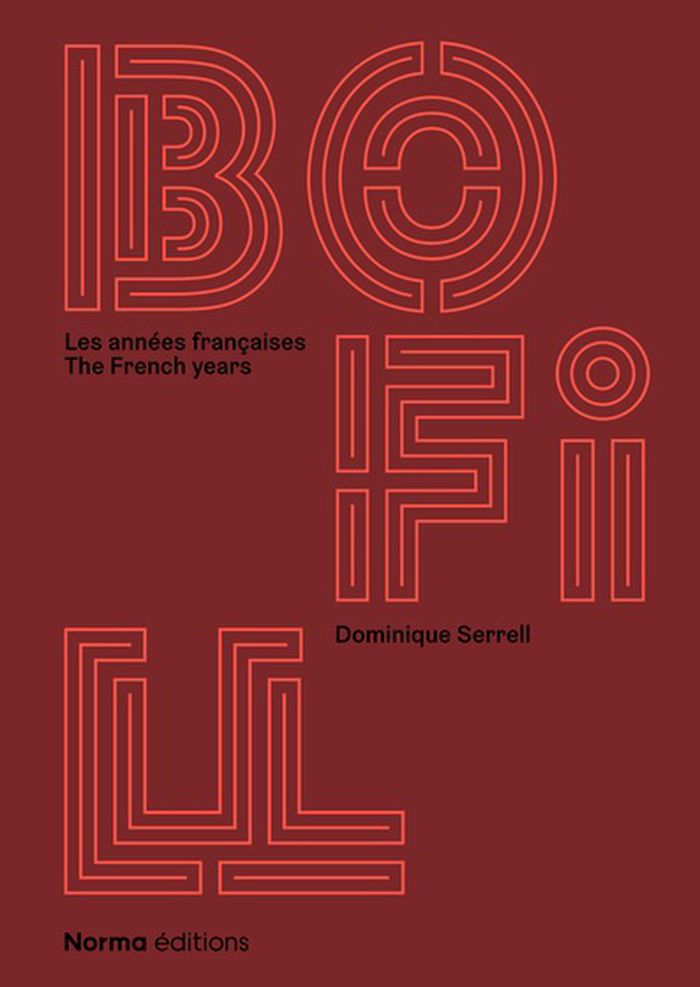
Bofill : Les années françaises / The French years
Actions:
Prix:
$85.00
(disponible en magasin)
Résumé:
Reconnu en Europe comme un créateur d’avant-garde dès les années 1970, l’architecte catalan Ricardo Bofill fut appelé sur la sce`ne franc¸aise à la suite de la destruction des Halles de Baltard, au centre de la capitale, en 1971. Invité a` concourir en 1974, l’architecte proposait de renouer avec les formes historiques de l’urbanisme parisien. Au coeur d’une rivalité politique, il fut écarte´ en octobre 1978, apre`s plus de trois ans de projets, par Jacques Chirac, premier maire élu de Paris, qui se déclara alors « l’architecte en chef des Halles ». Bofill et le Taller de Arquitectura joueront ne´anmoins un ro^le de premier plan dans l’e´laboration des villes nouvelles en France, de 1972 a` 1985, avec des projets aussi marquants que controversés : Abraxas a` Marne-la-Valle´e, le Lac a` Saint-Quentin-en-Yvelines, ou encore le quartier Antigone au centre de Montpellier. Véritable journal de bord, largement illustre´, cet ouvrage de´crit les relations e´troites entre l’architecture et la politique sous les présidences de Vale´ry Giscard d’Estaing et de Franc¸ois Mitterrand, et constitue un dossier inédit sur les Halles, un chantier emble´matique, couvert par une clause de confidentialite´ jusqu’au de´ce`s de l’architecte, en 2022.
Bofill : Les années françaises / The French years
Actions:
Prix:
$85.00
(disponible en magasin)
Résumé:
Reconnu en Europe comme un créateur d’avant-garde dès les années 1970, l’architecte catalan Ricardo Bofill fut appelé sur la sce`ne franc¸aise à la suite de la destruction des Halles de Baltard, au centre de la capitale, en 1971. Invité a` concourir en 1974, l’architecte proposait de renouer avec les formes historiques de l’urbanisme parisien. Au coeur d’une rivalité politique, il fut écarte´ en octobre 1978, apre`s plus de trois ans de projets, par Jacques Chirac, premier maire élu de Paris, qui se déclara alors « l’architecte en chef des Halles ». Bofill et le Taller de Arquitectura joueront ne´anmoins un ro^le de premier plan dans l’e´laboration des villes nouvelles en France, de 1972 a` 1985, avec des projets aussi marquants que controversés : Abraxas a` Marne-la-Valle´e, le Lac a` Saint-Quentin-en-Yvelines, ou encore le quartier Antigone au centre de Montpellier. Véritable journal de bord, largement illustre´, cet ouvrage de´crit les relations e´troites entre l’architecture et la politique sous les présidences de Vale´ry Giscard d’Estaing et de Franc¸ois Mitterrand, et constitue un dossier inédit sur les Halles, un chantier emble´matique, couvert par une clause de confidentialite´ jusqu’au de´ce`s de l’architecte, en 2022.
Classification:
livres
livres
Publication:
décembre 2023
décembre 2023
Sujet:
Architecture, monographies
Architecture, monographies
Classification:
livres
livres
Actions:
Prix:
$34.95
(disponible sur commande)
Résumé:
Présentation d'une cinquantaine de projets architecturaux dessinés à l'occasion des expositions universelles de Paris. Véritables laboratoires, vivants recueils d'architectures et d'ornements, les expositions universelles rythment la vie des grandes capitales, à partir de 1851. L'idée d'une confrontation pacifique, internationale, qui rassemble commerce, industrie et(...)
$34.95
(disponible sur commande)
Résumé:
Présentation d'une cinquantaine de projets architecturaux dessinés à l'occasion des expositions universelles de Paris. Véritables laboratoires, vivants recueils d'architectures et d'ornements, les expositions universelles rythment la vie des grandes capitales, à partir de 1851. L'idée d'une confrontation pacifique, internationale, qui rassemble commerce, industrie et(...)
Titre:
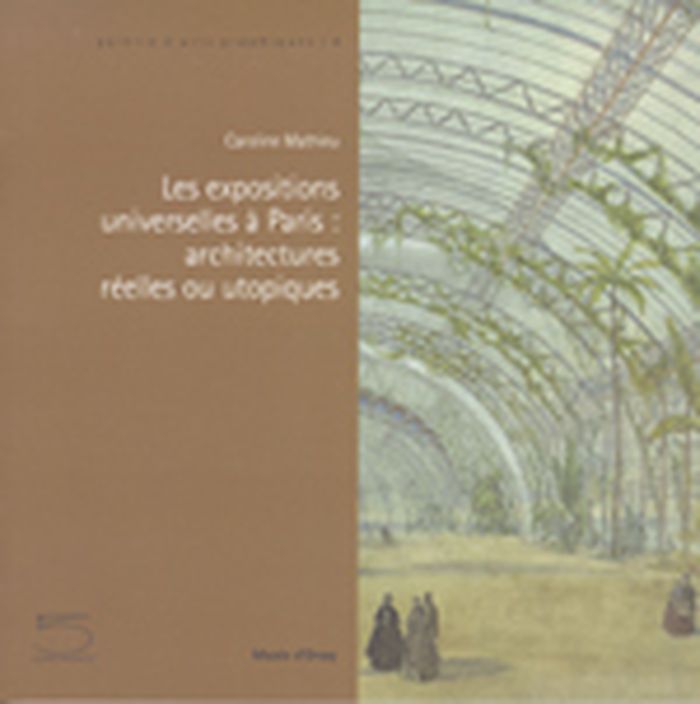
Les expositions universelles à Paris : architectures réelles ou utopiques
Actions:
Prix:
$34.95
(disponible sur commande)
Résumé:
Présentation d'une cinquantaine de projets architecturaux dessinés à l'occasion des expositions universelles de Paris. Véritables laboratoires, vivants recueils d'architectures et d'ornements, les expositions universelles rythment la vie des grandes capitales, à partir de 1851. L'idée d'une confrontation pacifique, internationale, qui rassemble commerce, industrie et beaux-arts se concrétise avec la première Exposition universelle de Londres : Le Crystal Palace, élevé par Joseph Paxton, devient un monument symbolique et novateur par sa transparence, ses dimensions grandioses, le modernisme de sa réalisation. Lors de la première Exposition universelle parisienne de 1855, l'éblouissante réalisation londonienne suscite le vif désir de donner une expression monumentale à un bâtiment conçu pour durer : le Palais de l'industrie, situé au bas des Champs-Elysées. Il accueille les expositions du Salon jusqu'à sa destruction, pour faire place aux Grand et Petit Palais de l'Exposition de 1900. D'abord peu étendues, centrées autour d'un unique palais, les expositions prennent, à partir de 1867, le visage de véritables cités de l'éphémère, bariolées et colorées, qui, lorsqu'elles sont situées au coeur même de la ville, entrent en totale contradiction avec elle. Grâce à la riche collection de dessins d'architecture du musée d'Orsay et du Fonds Eiffel, cet ouvrage permet d'illustrer l'imagination des architectes, la diversité des édifices et ressuscite d'extraordinaires réalisations aujourd'hui disparues.
Les expositions universelles à Paris : architectures réelles ou utopiques
Actions:
Prix:
$34.95
(disponible sur commande)
Résumé:
Présentation d'une cinquantaine de projets architecturaux dessinés à l'occasion des expositions universelles de Paris. Véritables laboratoires, vivants recueils d'architectures et d'ornements, les expositions universelles rythment la vie des grandes capitales, à partir de 1851. L'idée d'une confrontation pacifique, internationale, qui rassemble commerce, industrie et beaux-arts se concrétise avec la première Exposition universelle de Londres : Le Crystal Palace, élevé par Joseph Paxton, devient un monument symbolique et novateur par sa transparence, ses dimensions grandioses, le modernisme de sa réalisation. Lors de la première Exposition universelle parisienne de 1855, l'éblouissante réalisation londonienne suscite le vif désir de donner une expression monumentale à un bâtiment conçu pour durer : le Palais de l'industrie, situé au bas des Champs-Elysées. Il accueille les expositions du Salon jusqu'à sa destruction, pour faire place aux Grand et Petit Palais de l'Exposition de 1900. D'abord peu étendues, centrées autour d'un unique palais, les expositions prennent, à partir de 1867, le visage de véritables cités de l'éphémère, bariolées et colorées, qui, lorsqu'elles sont situées au coeur même de la ville, entrent en totale contradiction avec elle. Grâce à la riche collection de dessins d'architecture du musée d'Orsay et du Fonds Eiffel, cet ouvrage permet d'illustrer l'imagination des architectes, la diversité des édifices et ressuscite d'extraordinaires réalisations aujourd'hui disparues.
Classification:
livres
livres
Publication:
mai 2007, Paris
mai 2007, Paris
Classification:
livres
livres
Titre:
Campo Santo
Campo Santo
Actions:
Prix:
$8.95
(disponible sur commande)
Résumé:
This brief volume is the latest and reportedly last collection of essays by German novelist and critic Sebald, who has seemed more prolific since his death in 2001 than in life. Despite the masterful translation, these essays fail to cohere, though they contain elements common to most of Sebald's work: an integration of art, politics and memory, framed by the writer's own(...)
$8.95
(disponible sur commande)
Résumé:
This brief volume is the latest and reportedly last collection of essays by German novelist and critic Sebald, who has seemed more prolific since his death in 2001 than in life. Despite the masterful translation, these essays fail to cohere, though they contain elements common to most of Sebald's work: an integration of art, politics and memory, framed by the writer's own(...)
Titre:
Campo Santo
Actions:
Prix:
$8.95
(disponible sur commande)
Résumé:
This brief volume is the latest and reportedly last collection of essays by German novelist and critic Sebald, who has seemed more prolific since his death in 2001 than in life. Despite the masterful translation, these essays fail to cohere, though they contain elements common to most of Sebald's work: an integration of art, politics and memory, framed by the writer's own curmudgeonly presence. The essays, however, feel unfinished, lacking polish and structural integrity. The collection is split into two parts, "Prose" and "Essays," with the first—a series of considerations of the landscape, history and social milieu of the island of Corsica—by far the more successful. The second, longer section contains an assortment of literary critical pieces, some detailed, such as a long essay about novelists writing about the destruction of German cities during WWII; others discursive, such as an apparently unfinished review of a book about Kafka's relationship with film that wanders from films Sebald himself viewed to films Kafka may or may not have seen. Although Sebald was a beautiful and intelligent writer, it's hard to see how these essays will appeal to anyone outside of scholars and already committed Sebald fans eager to read every word he ever set to paper.
Campo Santo
Actions:
Prix:
$8.95
(disponible sur commande)
Résumé:
This brief volume is the latest and reportedly last collection of essays by German novelist and critic Sebald, who has seemed more prolific since his death in 2001 than in life. Despite the masterful translation, these essays fail to cohere, though they contain elements common to most of Sebald's work: an integration of art, politics and memory, framed by the writer's own curmudgeonly presence. The essays, however, feel unfinished, lacking polish and structural integrity. The collection is split into two parts, "Prose" and "Essays," with the first—a series of considerations of the landscape, history and social milieu of the island of Corsica—by far the more successful. The second, longer section contains an assortment of literary critical pieces, some detailed, such as a long essay about novelists writing about the destruction of German cities during WWII; others discursive, such as an apparently unfinished review of a book about Kafka's relationship with film that wanders from films Sebald himself viewed to films Kafka may or may not have seen. Although Sebald was a beautiful and intelligent writer, it's hard to see how these essays will appeal to anyone outside of scholars and already committed Sebald fans eager to read every word he ever set to paper.
Classification:
livres
livres
Publication:
janvier 1900, New York
janvier 1900, New York
Sujet:
livres soldés
livres soldés
Classification:
livres
livres
Titre:
Chantier public
Chantier public
Actions:
Prix:
$26.95
(disponible en magasin)
Résumé:
Ces expositions ont pour point d’impulsion la récurrence de l’esthétique du chantier dans le travail d’artistes contemporains - tractopelles d’Ange Leccia, bétonneuses de Wim Delvoye, sculptures d’échafaudages de Buren. Pour ces deux expositions, les artistes invités par Anne Langlois et Patrice Goasduff produisaient une nouvelle œuvre dont ils définissaient eux-mêmes(...)
$26.95
(disponible en magasin)
Résumé:
Ces expositions ont pour point d’impulsion la récurrence de l’esthétique du chantier dans le travail d’artistes contemporains - tractopelles d’Ange Leccia, bétonneuses de Wim Delvoye, sculptures d’échafaudages de Buren. Pour ces deux expositions, les artistes invités par Anne Langlois et Patrice Goasduff produisaient une nouvelle œuvre dont ils définissaient eux-mêmes(...)
Titre:
Chantier public
Actions:
Prix:
$26.95
(disponible en magasin)
Résumé:
Ces expositions ont pour point d’impulsion la récurrence de l’esthétique du chantier dans le travail d’artistes contemporains - tractopelles d’Ange Leccia, bétonneuses de Wim Delvoye, sculptures d’échafaudages de Buren. Pour ces deux expositions, les artistes invités par Anne Langlois et Patrice Goasduff produisaient une nouvelle œuvre dont ils définissaient eux-mêmes la forme et le lieu d’apparition autour de cette esthétique du chantier et de leur fascination respective pour la machinerie, la possibilité d’intervention à l’échelle d’un espace, d’un bâtiment, voir d’une ville. Chantier public rend compte des deux expositions, du travail des artistes invités et plus particulièrement des œuvres qui y ont été produites. Chaque œuvre est représentée et commentée, analysée par un auteur. Rassemblant le travail de Lara Almarcegui, Matthieu Appriou, Yves Gendrea, Patrice Goasduff et Stakler, le premier Chantier Public pointe les relations arts plastiques et architecture qui dépassent largement la conception réductrice selon laquelle l’architecture contient les arts plastiques. Cette première interprétation de chantier public donne lieu à des œuvres performatives et documentaires parlant de construction et de destruction. Avec Chantier publics #2, les créations d’atelier mobile, de Simona Denoclai et d’Ivo Provoost, de Daniel Dewar et Grégory Gicquel, de Le gentil garçon, de Nicolas Milhé, de Benoît-Marie Moriceau et de Bénédicte Olivier parlent recherches, fabrication, techniques, modes de construction.
Chantier public
Actions:
Prix:
$26.95
(disponible en magasin)
Résumé:
Ces expositions ont pour point d’impulsion la récurrence de l’esthétique du chantier dans le travail d’artistes contemporains - tractopelles d’Ange Leccia, bétonneuses de Wim Delvoye, sculptures d’échafaudages de Buren. Pour ces deux expositions, les artistes invités par Anne Langlois et Patrice Goasduff produisaient une nouvelle œuvre dont ils définissaient eux-mêmes la forme et le lieu d’apparition autour de cette esthétique du chantier et de leur fascination respective pour la machinerie, la possibilité d’intervention à l’échelle d’un espace, d’un bâtiment, voir d’une ville. Chantier public rend compte des deux expositions, du travail des artistes invités et plus particulièrement des œuvres qui y ont été produites. Chaque œuvre est représentée et commentée, analysée par un auteur. Rassemblant le travail de Lara Almarcegui, Matthieu Appriou, Yves Gendrea, Patrice Goasduff et Stakler, le premier Chantier Public pointe les relations arts plastiques et architecture qui dépassent largement la conception réductrice selon laquelle l’architecture contient les arts plastiques. Cette première interprétation de chantier public donne lieu à des œuvres performatives et documentaires parlant de construction et de destruction. Avec Chantier publics #2, les créations d’atelier mobile, de Simona Denoclai et d’Ivo Provoost, de Daniel Dewar et Grégory Gicquel, de Le gentil garçon, de Nicolas Milhé, de Benoît-Marie Moriceau et de Bénédicte Olivier parlent recherches, fabrication, techniques, modes de construction.
Classification:
livres
livres
Publication:
mars 2006, Rennes / Paris
mars 2006, Rennes / Paris
Sujet:
Espaces Public
Espaces Public
Classification:
livres
livres
Prix:
$67.95
(disponible sur commande)
Résumé:
In the mid-nineteenth century, Napoleon III and his prefect, Georges-Eugène Haussmann, adapted Paris to the requirements of industrial capitalism, endowing the old city with elegant boulevards, an enhanced water supply, modern sewers, and public greenery. Esther da Costa Meyer provides a major reassessment of this ambitious project, which resulted in widespread(...)
$67.95
(disponible sur commande)
Résumé:
In the mid-nineteenth century, Napoleon III and his prefect, Georges-Eugène Haussmann, adapted Paris to the requirements of industrial capitalism, endowing the old city with elegant boulevards, an enhanced water supply, modern sewers, and public greenery. Esther da Costa Meyer provides a major reassessment of this ambitious project, which resulted in widespread(...)
Titre:
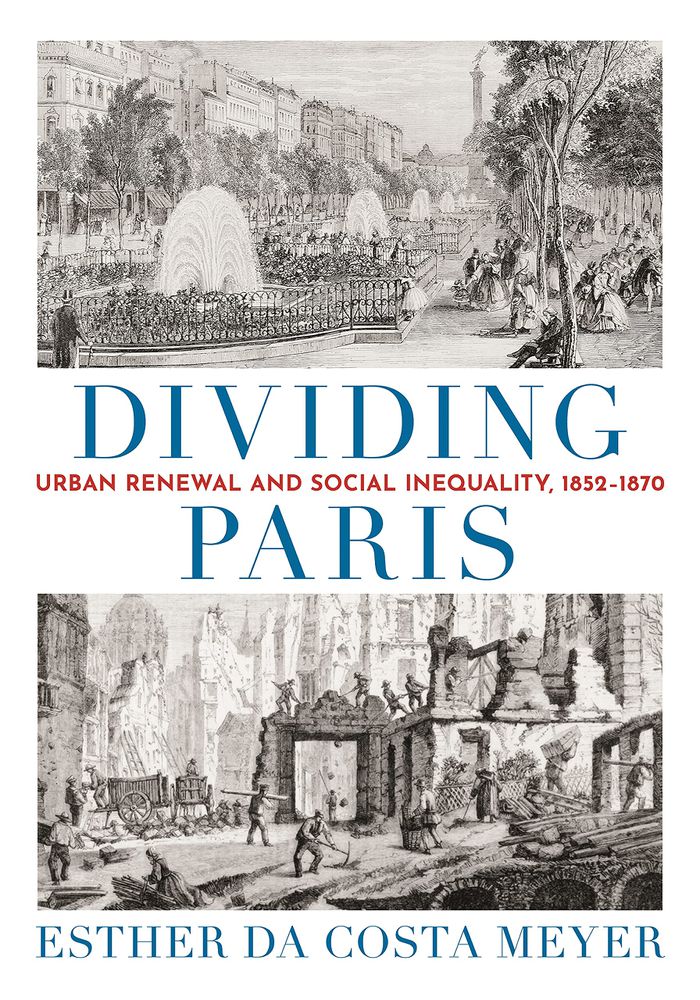
Dividing Paris: Urban renewal and social inequality 1852-1870
Actions:
Prix:
$67.95
(disponible sur commande)
Résumé:
In the mid-nineteenth century, Napoleon III and his prefect, Georges-Eugène Haussmann, adapted Paris to the requirements of industrial capitalism, endowing the old city with elegant boulevards, an enhanced water supply, modern sewers, and public greenery. Esther da Costa Meyer provides a major reassessment of this ambitious project, which resulted in widespread destruction in the historic center, displacing thousands of poor residents and polarizing the urban fabric. Drawing on newspapers, memoirs, and other archival materials, da Costa Meyer explores how people from different social strata?both women and men?experienced the urban reforms implemented by the Second Empire. As hundreds of tenements were destroyed to make way for upscale apartment buildings, thousands of impoverished residents were forced to the periphery, which lacked the services enjoyed by wealthier parts of the city. Challenging the idea of Paris as the capital of modernity, da Costa Meyer shows how the city was the hub of a sprawling colonial empire extending from the Caribbean to Asia, and exposes the underlying violence that enriched it at the expense of overseas territories. This book brings to light the contributions of those who actually built and maintained the impressive infrastructure of Paris, and reveals the consequences of colonial practices for the city's cultural, economic, and political life.
Dividing Paris: Urban renewal and social inequality 1852-1870
Actions:
Prix:
$67.95
(disponible sur commande)
Résumé:
In the mid-nineteenth century, Napoleon III and his prefect, Georges-Eugène Haussmann, adapted Paris to the requirements of industrial capitalism, endowing the old city with elegant boulevards, an enhanced water supply, modern sewers, and public greenery. Esther da Costa Meyer provides a major reassessment of this ambitious project, which resulted in widespread destruction in the historic center, displacing thousands of poor residents and polarizing the urban fabric. Drawing on newspapers, memoirs, and other archival materials, da Costa Meyer explores how people from different social strata?both women and men?experienced the urban reforms implemented by the Second Empire. As hundreds of tenements were destroyed to make way for upscale apartment buildings, thousands of impoverished residents were forced to the periphery, which lacked the services enjoyed by wealthier parts of the city. Challenging the idea of Paris as the capital of modernity, da Costa Meyer shows how the city was the hub of a sprawling colonial empire extending from the Caribbean to Asia, and exposes the underlying violence that enriched it at the expense of overseas territories. This book brings to light the contributions of those who actually built and maintained the impressive infrastructure of Paris, and reveals the consequences of colonial practices for the city's cultural, economic, and political life.
Classification:
livres
livres
Publication:
février 2022
février 2022
Sujet:
Théorie de l’urbanisme
Théorie de l’urbanisme
Classification:
livres
livres
Actions:
Prix:
$46.95
(disponible sur commande)
Résumé:
La « Zone », c’est d’abord une bande de terre large de quelques centaines de mètres qui entoure Paris. Logée entre les fortifications de la ville, édifiées dans les années 1840, et sa banlieue, elle sert aux manœuvres militaires. Là, s’installe progressivement une population interlope – chiffonniers, mendiants, pauvres de toutes sortes – dans un fatras de roulottes, de(...)
$46.95
(disponible sur commande)
Résumé:
La « Zone », c’est d’abord une bande de terre large de quelques centaines de mètres qui entoure Paris. Logée entre les fortifications de la ville, édifiées dans les années 1840, et sa banlieue, elle sert aux manœuvres militaires. Là, s’installe progressivement une population interlope – chiffonniers, mendiants, pauvres de toutes sortes – dans un fatras de roulottes, de(...)
Titre:
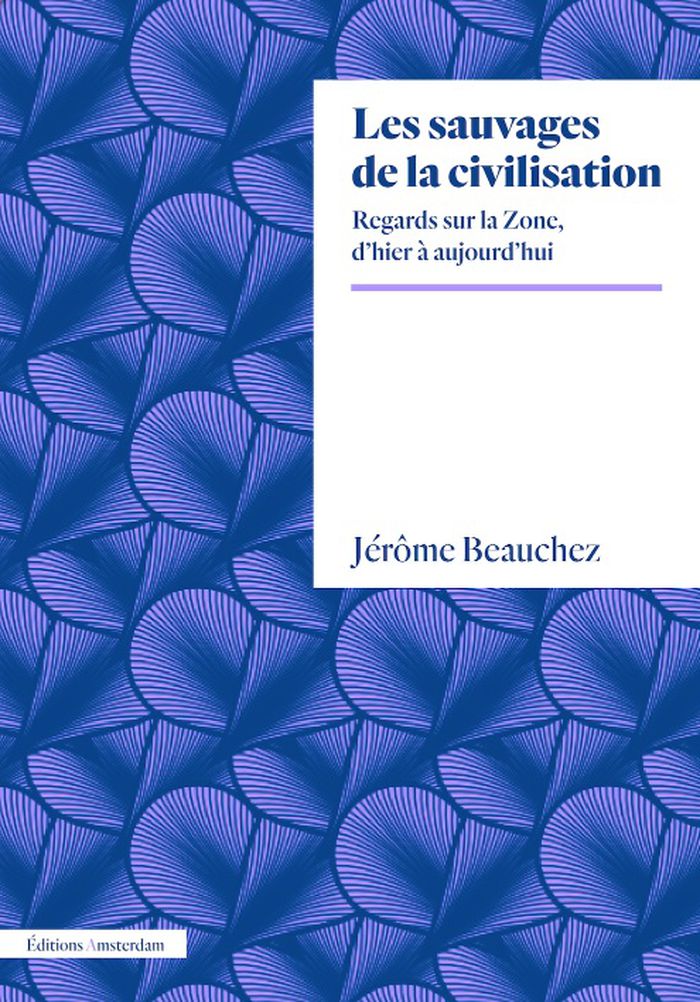
Les sauvages de la civilisation : regards sur la Zone, d'hier à aujourd'hui
Actions:
Prix:
$46.95
(disponible sur commande)
Résumé:
La « Zone », c’est d’abord une bande de terre large de quelques centaines de mètres qui entoure Paris. Logée entre les fortifications de la ville, édifiées dans les années 1840, et sa banlieue, elle sert aux manœuvres militaires. Là, s’installe progressivement une population interlope – chiffonniers, mendiants, pauvres de toutes sortes – dans un fatras de roulottes, de tissus et de métaux. À la fin du siècle, chez ceux de l’extérieur, la Zone devient un objet : objet de curiosité, de fantasmes, d’angoisse, de commisération, de littérature et d’images. Bref, l’objet de perceptions hétérogènes les unes aux autres mais unies par une même tendance à regarder de haut cette population, à la dominer avec plus ou moins de bienveillance. De la Zone, aujourd’hui devenue, par extension, la désignation de toute forme de marginalité, Jérôme Beauchez propose une « archéographie » subtile et sensible, c’est-à-dire l’histoire des regards – ceux de la bohème artistique et des photographes, des chansonniers et des journalistes, des élus et des hygiénistes – qui, en la constituant en objet, ont fabriqué une catégorie d’étrangers de l’intérieur, de « sauvages de la civilisation », dont on perçoit encore la prégnance, bien longtemps après la destruction de cet espace. Des zoniers aux zonards et au-delà, ce livre raconte l’histoire des marges.
Les sauvages de la civilisation : regards sur la Zone, d'hier à aujourd'hui
Actions:
Prix:
$46.95
(disponible sur commande)
Résumé:
La « Zone », c’est d’abord une bande de terre large de quelques centaines de mètres qui entoure Paris. Logée entre les fortifications de la ville, édifiées dans les années 1840, et sa banlieue, elle sert aux manœuvres militaires. Là, s’installe progressivement une population interlope – chiffonniers, mendiants, pauvres de toutes sortes – dans un fatras de roulottes, de tissus et de métaux. À la fin du siècle, chez ceux de l’extérieur, la Zone devient un objet : objet de curiosité, de fantasmes, d’angoisse, de commisération, de littérature et d’images. Bref, l’objet de perceptions hétérogènes les unes aux autres mais unies par une même tendance à regarder de haut cette population, à la dominer avec plus ou moins de bienveillance. De la Zone, aujourd’hui devenue, par extension, la désignation de toute forme de marginalité, Jérôme Beauchez propose une « archéographie » subtile et sensible, c’est-à-dire l’histoire des regards – ceux de la bohème artistique et des photographes, des chansonniers et des journalistes, des élus et des hygiénistes – qui, en la constituant en objet, ont fabriqué une catégorie d’étrangers de l’intérieur, de « sauvages de la civilisation », dont on perçoit encore la prégnance, bien longtemps après la destruction de cet espace. Des zoniers aux zonards et au-delà, ce livre raconte l’histoire des marges.
Classification:
livres
livres
Publication:
juillet 2022
juillet 2022
Sujet:
Théorie de l’urbanisme
Théorie de l’urbanisme
Classification:
livres
livres
Titre:
Paris quand même
Paris quand même
Actions:
Prix:
$24.75
(disponible sur commande)
Résumé:
Le sujet de ce livre, ce sont les atteintes dont Paris et notamment son cœur ont été victimes ces derniers temps. A la destruction systématique de quartiers entiers qui a été la marque des années 60 à 90 du siècle dernier a succédé une forme plus subtile mais qui étend son emprise au point de rendre méconnaissables des pans entiers de la ville, littéralement offerts à(...)
$24.75
(disponible sur commande)
Résumé:
Le sujet de ce livre, ce sont les atteintes dont Paris et notamment son cœur ont été victimes ces derniers temps. A la destruction systématique de quartiers entiers qui a été la marque des années 60 à 90 du siècle dernier a succédé une forme plus subtile mais qui étend son emprise au point de rendre méconnaissables des pans entiers de la ville, littéralement offerts à(...)
Titre:
Paris quand même
Actions:
Prix:
$24.75
(disponible sur commande)
Résumé:
Le sujet de ce livre, ce sont les atteintes dont Paris et notamment son cœur ont été victimes ces derniers temps. A la destruction systématique de quartiers entiers qui a été la marque des années 60 à 90 du siècle dernier a succédé une forme plus subtile mais qui étend son emprise au point de rendre méconnaissables des pans entiers de la ville, littéralement offerts à l’exhibition capitaliste et à la servilité qu’elle appelle. Mais à cette ville qui est à la fois celle du pouvoir et celle qui se vend continue de s’en opposer une autre, indifférente aux formes réifiées du patrimoine, qui continue de se vivre comme le champ d’une expérimentation quotidienne. Cette lutte entre une ville prête à réciter la leçon que les « décideurs » lui imposent et une ville consciente de ce qu’elle a porté dans l’histoire et qui se réinvente à partir de ses traces, Paris quand même la décrit à travers trente-sept courts chapitres qui sont autant de promenades où, d’un quartier à un autre, d’un désastre à un miracle, l’on passe de l’effarement à la joie, de la colère à l’émerveillement, et du ton du pamphlet à la logique filée de la glissade.
Paris quand même
Actions:
Prix:
$24.75
(disponible sur commande)
Résumé:
Le sujet de ce livre, ce sont les atteintes dont Paris et notamment son cœur ont été victimes ces derniers temps. A la destruction systématique de quartiers entiers qui a été la marque des années 60 à 90 du siècle dernier a succédé une forme plus subtile mais qui étend son emprise au point de rendre méconnaissables des pans entiers de la ville, littéralement offerts à l’exhibition capitaliste et à la servilité qu’elle appelle. Mais à cette ville qui est à la fois celle du pouvoir et celle qui se vend continue de s’en opposer une autre, indifférente aux formes réifiées du patrimoine, qui continue de se vivre comme le champ d’une expérimentation quotidienne. Cette lutte entre une ville prête à réciter la leçon que les « décideurs » lui imposent et une ville consciente de ce qu’elle a porté dans l’histoire et qui se réinvente à partir de ses traces, Paris quand même la décrit à travers trente-sept courts chapitres qui sont autant de promenades où, d’un quartier à un autre, d’un désastre à un miracle, l’on passe de l’effarement à la joie, de la colère à l’émerveillement, et du ton du pamphlet à la logique filée de la glissade.
Classification:
livres
livres
Publication:
octobre 2022
octobre 2022
Sujet:
Théorie de l’urbanisme
Théorie de l’urbanisme
Classification:
périodiques
périodiques
Actions:
Prix:
$23.50
(disponible sur commande)
Résumé:
Fifty years ago, in 1964, Minoru Yamasaki’s proposed design for the World Trade Center was first revealed to the public. Rising far above the Lower Manhattan skyline, the Twin Towers—centerpieces of the original World Trade Center complex—were intended, in the words of their architect, to “become a living representation of man’s belief in humanity.” From the beginning,(...)
$23.50
(disponible sur commande)
Résumé:
Fifty years ago, in 1964, Minoru Yamasaki’s proposed design for the World Trade Center was first revealed to the public. Rising far above the Lower Manhattan skyline, the Twin Towers—centerpieces of the original World Trade Center complex—were intended, in the words of their architect, to “become a living representation of man’s belief in humanity.” From the beginning,(...)
Titre:
CLOG 12 2014: World Trade Center
Actions:
Prix:
$23.50
(disponible sur commande)
Résumé:
Fifty years ago, in 1964, Minoru Yamasaki’s proposed design for the World Trade Center was first revealed to the public. Rising far above the Lower Manhattan skyline, the Twin Towers—centerpieces of the original World Trade Center complex—were intended, in the words of their architect, to “become a living representation of man’s belief in humanity.” From the beginning, the project was not without controversy. Positioned at the confluence of several transportation routes, an entire district known as “Radio Row” would be claimed through eminent domain and demolished to make way for the new center of commerce. The abstract—arguably overpowering—design invited fierce criticism. Nevertheless, Yamasaki and associate architects Emery Roth & Sons would devote over a decade to the design and construction of the World Trade Center, which proved significant not only as an urban renewal project, but also as an architectural and engineering marvel. By the time of their destruction, the Twin Towers were one of New York City’s most prominent icons. With the new World Trade Center slowly approaching completion, the importance and irreplaceability of the original becomes more evident. CLOG will therefore critically examine that which has forever been lost: the World Trade Center, Dedicated April 4, 1973.
CLOG 12 2014: World Trade Center
Actions:
Prix:
$23.50
(disponible sur commande)
Résumé:
Fifty years ago, in 1964, Minoru Yamasaki’s proposed design for the World Trade Center was first revealed to the public. Rising far above the Lower Manhattan skyline, the Twin Towers—centerpieces of the original World Trade Center complex—were intended, in the words of their architect, to “become a living representation of man’s belief in humanity.” From the beginning, the project was not without controversy. Positioned at the confluence of several transportation routes, an entire district known as “Radio Row” would be claimed through eminent domain and demolished to make way for the new center of commerce. The abstract—arguably overpowering—design invited fierce criticism. Nevertheless, Yamasaki and associate architects Emery Roth & Sons would devote over a decade to the design and construction of the World Trade Center, which proved significant not only as an urban renewal project, but also as an architectural and engineering marvel. By the time of their destruction, the Twin Towers were one of New York City’s most prominent icons. With the new World Trade Center slowly approaching completion, the importance and irreplaceability of the original becomes more evident. CLOG will therefore critically examine that which has forever been lost: the World Trade Center, Dedicated April 4, 1973.
Classification:
périodiques
périodiques
Publication:
janvier 2015
janvier 2015
Sujet:
Revues
Revues
Classification:
livres
livres
Titre:
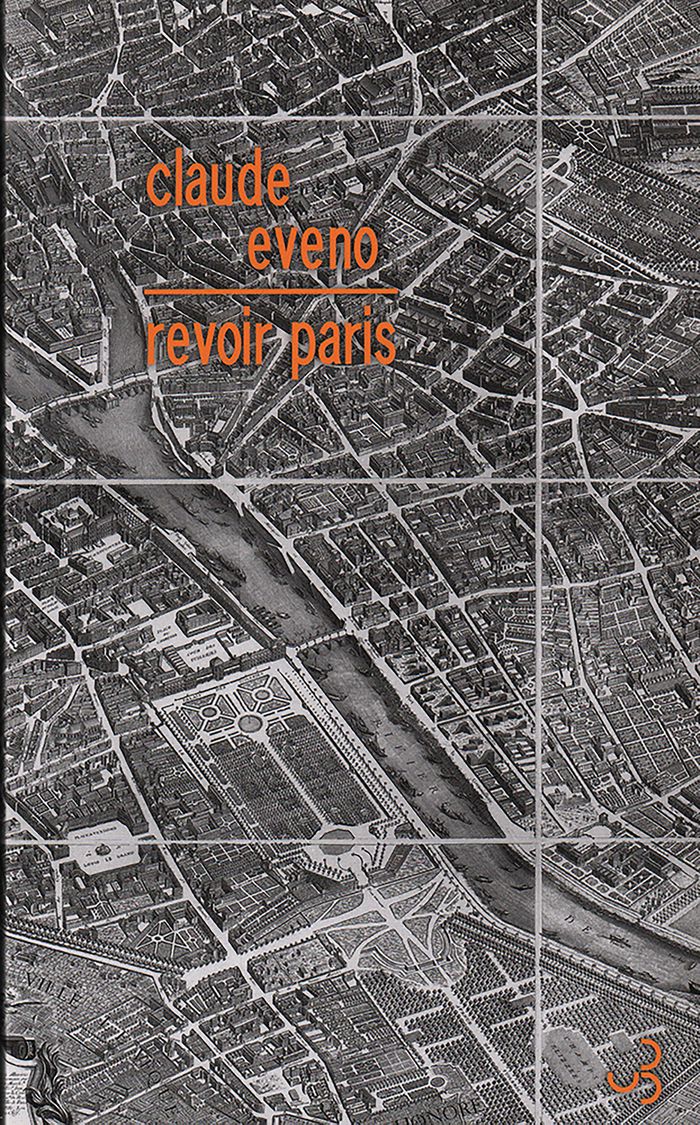
Revoir Paris
Revoir Paris
Actions:
Prix:
$33.95
(disponible sur commande)
Résumé:
Composé de quinze voyages à travers la ville, "Revoir Paris" entremêle la marche et l'écriture, chaque journée de marche entraînant son écriture et celle-ci entraînant la marche suivante. Alternant descriptions architecturales détaillées et remarques plus subjectives – notamment politiques –, Claude Eveno remet sa vie dans le contexte de la ville qu'il habite, mêlant(...)
$33.95
(disponible sur commande)
Résumé:
Composé de quinze voyages à travers la ville, "Revoir Paris" entremêle la marche et l'écriture, chaque journée de marche entraînant son écriture et celle-ci entraînant la marche suivante. Alternant descriptions architecturales détaillées et remarques plus subjectives – notamment politiques –, Claude Eveno remet sa vie dans le contexte de la ville qu'il habite, mêlant(...)
Publication:
janvier 2017
janvier 2017
Titre:
Revoir Paris
Actions:
Prix:
$33.95
(disponible sur commande)
Résumé:
Composé de quinze voyages à travers la ville, "Revoir Paris" entremêle la marche et l'écriture, chaque journée de marche entraînant son écriture et celle-ci entraînant la marche suivante. Alternant descriptions architecturales détaillées et remarques plus subjectives – notamment politiques –, Claude Eveno remet sa vie dans le contexte de la ville qu'il habite, mêlant habilement complexité et proximité. Les nombreuses références picturales, cinématographiques, littéraires ou encore musicales, qui font l'objet d'un index, ancrent le récit dans une réalité toute personnelle et guident le lecteur, sans aucune prétention, à travers Paris. L'humour qui imprègne le texte, en plus d'atténuer l'intensité du changement, de la disparition, de la destruction, inhérents à l'évolution de toute grande ville aujourd'hui, crée une complicité avec le lecteur. De cette façon, Revoir Paris peut être aussi considéré comme un guide de la ville. Celui-ci traduit les sensibilités de son auteur et il donne à celui qui le lit l'envie de déambuler dans les rues de Paris. Ainsi, de la place Vendôme aux Halles, du funiculaire de Montmartre à la place des Abbesses, l'auteur dresse, à travers ce livre, le portrait d'une ville et d'une époque, le portrait d'une espèce d'atmosphère qui fut non seulement celle de la vie de Claude Eveno à Paris mais celle de sa génération dans une ville qui leur a offert la révolte, l'art subversif et l'action politique, l'enthousiasme et la perte des illusions.
Revoir Paris
Actions:
Prix:
$33.95
(disponible sur commande)
Résumé:
Composé de quinze voyages à travers la ville, "Revoir Paris" entremêle la marche et l'écriture, chaque journée de marche entraînant son écriture et celle-ci entraînant la marche suivante. Alternant descriptions architecturales détaillées et remarques plus subjectives – notamment politiques –, Claude Eveno remet sa vie dans le contexte de la ville qu'il habite, mêlant habilement complexité et proximité. Les nombreuses références picturales, cinématographiques, littéraires ou encore musicales, qui font l'objet d'un index, ancrent le récit dans une réalité toute personnelle et guident le lecteur, sans aucune prétention, à travers Paris. L'humour qui imprègne le texte, en plus d'atténuer l'intensité du changement, de la disparition, de la destruction, inhérents à l'évolution de toute grande ville aujourd'hui, crée une complicité avec le lecteur. De cette façon, Revoir Paris peut être aussi considéré comme un guide de la ville. Celui-ci traduit les sensibilités de son auteur et il donne à celui qui le lit l'envie de déambuler dans les rues de Paris. Ainsi, de la place Vendôme aux Halles, du funiculaire de Montmartre à la place des Abbesses, l'auteur dresse, à travers ce livre, le portrait d'une ville et d'une époque, le portrait d'une espèce d'atmosphère qui fut non seulement celle de la vie de Claude Eveno à Paris mais celle de sa génération dans une ville qui leur a offert la révolte, l'art subversif et l'action politique, l'enthousiasme et la perte des illusions.
Classification:
livres
livres
Publication:
janvier 2017
janvier 2017
Classification:
livres
livres
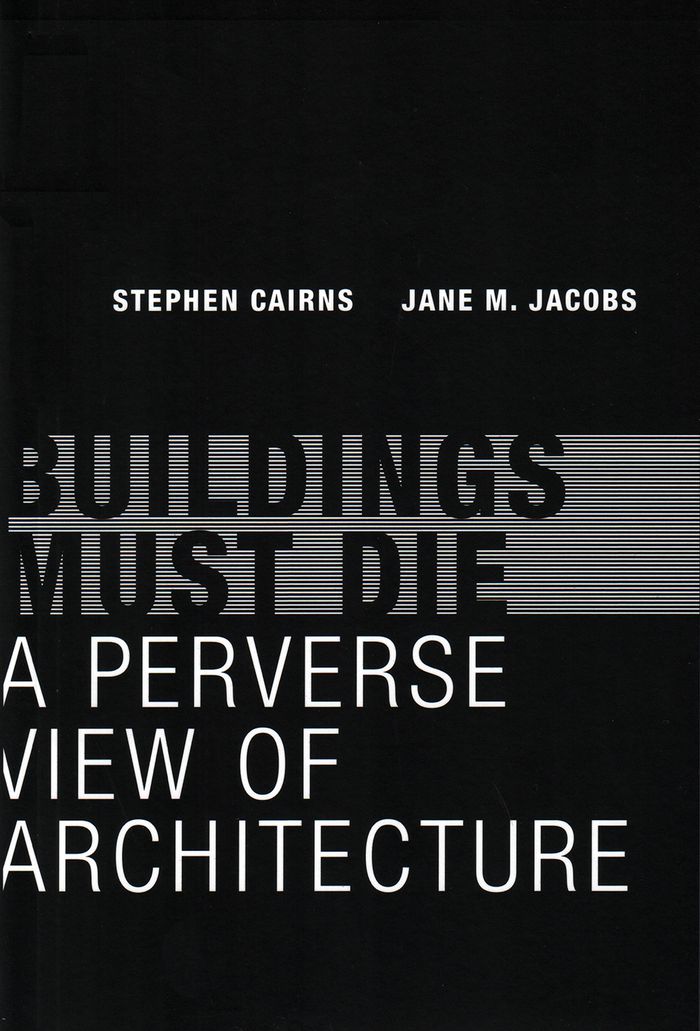
Titre:
Buildings must die
Buildings must die
Actions:
Prix:
$38.95
(disponible sur commande)
Résumé:
Buildings, although inanimate, are often assumed to have “life.” And the architect, through the act of design, is assumed to be their conceiver and creator. But what of the “death” of buildings? What of the decay, deterioration, and destruction to which they are inevitably subject? And what might such endings mean for architecture’s sense of itself? In Buildings Must Die,(...)
$38.95
(disponible sur commande)
Résumé:
Buildings, although inanimate, are often assumed to have “life.” And the architect, through the act of design, is assumed to be their conceiver and creator. But what of the “death” of buildings? What of the decay, deterioration, and destruction to which they are inevitably subject? And what might such endings mean for architecture’s sense of itself? In Buildings Must Die,(...)
Titre:
Buildings must die
Actions:
Prix:
$38.95
(disponible sur commande)
Résumé:
Buildings, although inanimate, are often assumed to have “life.” And the architect, through the act of design, is assumed to be their conceiver and creator. But what of the “death” of buildings? What of the decay, deterioration, and destruction to which they are inevitably subject? And what might such endings mean for architecture’s sense of itself? In Buildings Must Die, Stephen Cairns and Jane Jacobs look awry at core architectural concerns. They examine spalling concrete and creeping rust, contemplate ruins old and new, and pick through the rubble of earthquake-shattered churches, imploded housing projects, and demolished Brutalist office buildings. Their investigation of the death of buildings reorders architectural notions of creativity, reshapes architecture’s preoccupation with good form, loosens its vanities of durability, and expands its sense of value. It does so not to kill off architecture as we know it, but to rethink its agency and its capacity to make worlds differently. Cairns and Jacobs offer an original contemplation of architecture that draws on theories of waste and value. Their richly illustrated case studies of building “deaths” include the planned and the unintended, the lamented and the celebrated. They take us from Moline to Christchurch, from London to Bangkok, from Tokyo to Paris. And they feature the work of such architects as Eero Saarinen, Carlo Scarpa, Cedric Price, Arata Isozaki, Rem Koolhaas and François Roche.
Buildings must die
Actions:
Prix:
$38.95
(disponible sur commande)
Résumé:
Buildings, although inanimate, are often assumed to have “life.” And the architect, through the act of design, is assumed to be their conceiver and creator. But what of the “death” of buildings? What of the decay, deterioration, and destruction to which they are inevitably subject? And what might such endings mean for architecture’s sense of itself? In Buildings Must Die, Stephen Cairns and Jane Jacobs look awry at core architectural concerns. They examine spalling concrete and creeping rust, contemplate ruins old and new, and pick through the rubble of earthquake-shattered churches, imploded housing projects, and demolished Brutalist office buildings. Their investigation of the death of buildings reorders architectural notions of creativity, reshapes architecture’s preoccupation with good form, loosens its vanities of durability, and expands its sense of value. It does so not to kill off architecture as we know it, but to rethink its agency and its capacity to make worlds differently. Cairns and Jacobs offer an original contemplation of architecture that draws on theories of waste and value. Their richly illustrated case studies of building “deaths” include the planned and the unintended, the lamented and the celebrated. They take us from Moline to Christchurch, from London to Bangkok, from Tokyo to Paris. And they feature the work of such architects as Eero Saarinen, Carlo Scarpa, Cedric Price, Arata Isozaki, Rem Koolhaas and François Roche.
Classification:
livres
livres
Publication:
août 2017
août 2017
Sujet:
Théorie de l’architecture
Théorie de l’architecture


