


12372 Résultats
Classification:
livres
livres
Prix:
$35.95
(disponible sur commande)
Résumé:
In this publication, Marcus Boon explores music as a material practice of vibration. Focusing on the work of three contemporary musicians—Hindustani classical vocalist Pandit Pran Nath, Swedish drone composer and philosopher Catherine Christer Hennix, and Houston-based hip-hop musician DJ Screw—Boon outlines how music constructs a vibrational space of individual and(...)
$35.95
(disponible sur commande)
Résumé:
In this publication, Marcus Boon explores music as a material practice of vibration. Focusing on the work of three contemporary musicians—Hindustani classical vocalist Pandit Pran Nath, Swedish drone composer and philosopher Catherine Christer Hennix, and Houston-based hip-hop musician DJ Screw—Boon outlines how music constructs a vibrational space of individual and(...)
Titre:
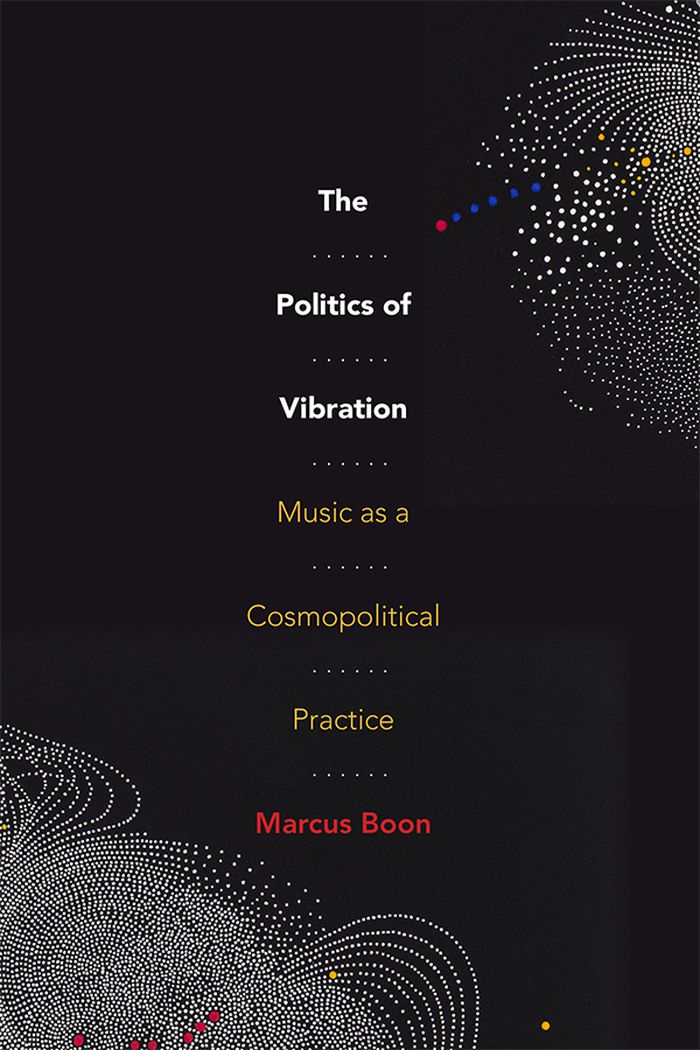
The politics of vibration: Music as cosmopolitical practice
Actions:
Prix:
$35.95
(disponible sur commande)
Résumé:
In this publication, Marcus Boon explores music as a material practice of vibration. Focusing on the work of three contemporary musicians—Hindustani classical vocalist Pandit Pran Nath, Swedish drone composer and philosopher Catherine Christer Hennix, and Houston-based hip-hop musician DJ Screw—Boon outlines how music constructs a vibrational space of individual and collective transformation. Contributing to a new interdisciplinary field of vibration studies, he understands vibration as a mathematical and a physical concept, as a religious or ontological force, and as a psychological determinant of subjectivity. Boon contends that music, as a shaping of vibration, needs to be recognized as a cosmopolitical practice—in the sense introduced by Isabelle Stengers—in which what music is within a society depends on what kinds of access to vibration are permitted, and to whom. This politics of vibration constitutes the hidden ontology of contemporary music because the organization of vibration shapes individual music scenes as well as the ethical choices that participants in these scenes make about how they want to live in the world.
The politics of vibration: Music as cosmopolitical practice
Actions:
Prix:
$35.95
(disponible sur commande)
Résumé:
In this publication, Marcus Boon explores music as a material practice of vibration. Focusing on the work of three contemporary musicians—Hindustani classical vocalist Pandit Pran Nath, Swedish drone composer and philosopher Catherine Christer Hennix, and Houston-based hip-hop musician DJ Screw—Boon outlines how music constructs a vibrational space of individual and collective transformation. Contributing to a new interdisciplinary field of vibration studies, he understands vibration as a mathematical and a physical concept, as a religious or ontological force, and as a psychological determinant of subjectivity. Boon contends that music, as a shaping of vibration, needs to be recognized as a cosmopolitical practice—in the sense introduced by Isabelle Stengers—in which what music is within a society depends on what kinds of access to vibration are permitted, and to whom. This politics of vibration constitutes the hidden ontology of contemporary music because the organization of vibration shapes individual music scenes as well as the ethical choices that participants in these scenes make about how they want to live in the world.
Classification:
livres
livres
Publication:
août 2022
août 2022
Sujet:
Acoustique
Acoustique
Classification:
livres
livres
Actions:
Prix:
$23.95
(disponible sur commande)
Résumé:
First published in 1967, Guy Debord's stinging revolutionary critique of contemporary society, The Society of the Spectacle has since acquired a cult status. Credited by many as being the inspiration for the ideas generated by the events of May 1968 in France, Debord's pitiless attack on commodity fetishism and its incrustation in the practices of everyday life continues(...)
$23.95
(disponible sur commande)
Résumé:
First published in 1967, Guy Debord's stinging revolutionary critique of contemporary society, The Society of the Spectacle has since acquired a cult status. Credited by many as being the inspiration for the ideas generated by the events of May 1968 in France, Debord's pitiless attack on commodity fetishism and its incrustation in the practices of everyday life continues(...)
Titre:
Comments on the society of the spectacle
Actions:
Prix:
$23.95
(disponible sur commande)
Résumé:
First published in 1967, Guy Debord's stinging revolutionary critique of contemporary society, The Society of the Spectacle has since acquired a cult status. Credited by many as being the inspiration for the ideas generated by the events of May 1968 in France, Debord's pitiless attack on commodity fetishism and its incrustation in the practices of everyday life continues to burn brightly in today's age of satellite television and the soundbite. In Comments on the Society of the Spectacle, published twenty years later, Debord returned to the themes of his previous analysis and demonstrated how they were all the more relevant in a period when the integrated spectacle was dominant. Resolutely refusing to be reconciled to the system, Debord trenchantly slices through the doxa and mystification offered tip by journalists and pundits to show how aspects of reality as diverse as terrorism and the environment, the Mafia and the media, were caught up in the logic of the spectacular society. Pointing the finger clearly at those who benefit from the logic of domination, Debord's comments convey the revolutionary impulse at the heart of situationism.
Comments on the society of the spectacle
Actions:
Prix:
$23.95
(disponible sur commande)
Résumé:
First published in 1967, Guy Debord's stinging revolutionary critique of contemporary society, The Society of the Spectacle has since acquired a cult status. Credited by many as being the inspiration for the ideas generated by the events of May 1968 in France, Debord's pitiless attack on commodity fetishism and its incrustation in the practices of everyday life continues to burn brightly in today's age of satellite television and the soundbite. In Comments on the Society of the Spectacle, published twenty years later, Debord returned to the themes of his previous analysis and demonstrated how they were all the more relevant in a period when the integrated spectacle was dominant. Resolutely refusing to be reconciled to the system, Debord trenchantly slices through the doxa and mystification offered tip by journalists and pundits to show how aspects of reality as diverse as terrorism and the environment, the Mafia and the media, were caught up in the logic of the spectacular society. Pointing the finger clearly at those who benefit from the logic of domination, Debord's comments convey the revolutionary impulse at the heart of situationism.
Classification:
livres
livres
Publication:
janvier 2011
janvier 2011
Sujet:
Théorie/ philosophie
Théorie/ philosophie
Classification:
livres
livres
Actions:
Prix:
$25.00
(disponible sur commande)
Résumé:
New York City is home to some of the most recognizable places in the world. As familiar as the sight of New Year’s Eve in Times Square or a protest in front of City Hall may be to us, do we understand who controls what happens there? Kristine Miller delves into six of New York’s most important public spaces to trace how design influences their complicated lives. Miller(...)
$25.00
(disponible sur commande)
Résumé:
New York City is home to some of the most recognizable places in the world. As familiar as the sight of New Year’s Eve in Times Square or a protest in front of City Hall may be to us, do we understand who controls what happens there? Kristine Miller delves into six of New York’s most important public spaces to trace how design influences their complicated lives. Miller(...)
Titre:
Designs on the Public : The private lives of New York's public spaces
Actions:
Prix:
$25.00
(disponible sur commande)
Résumé:
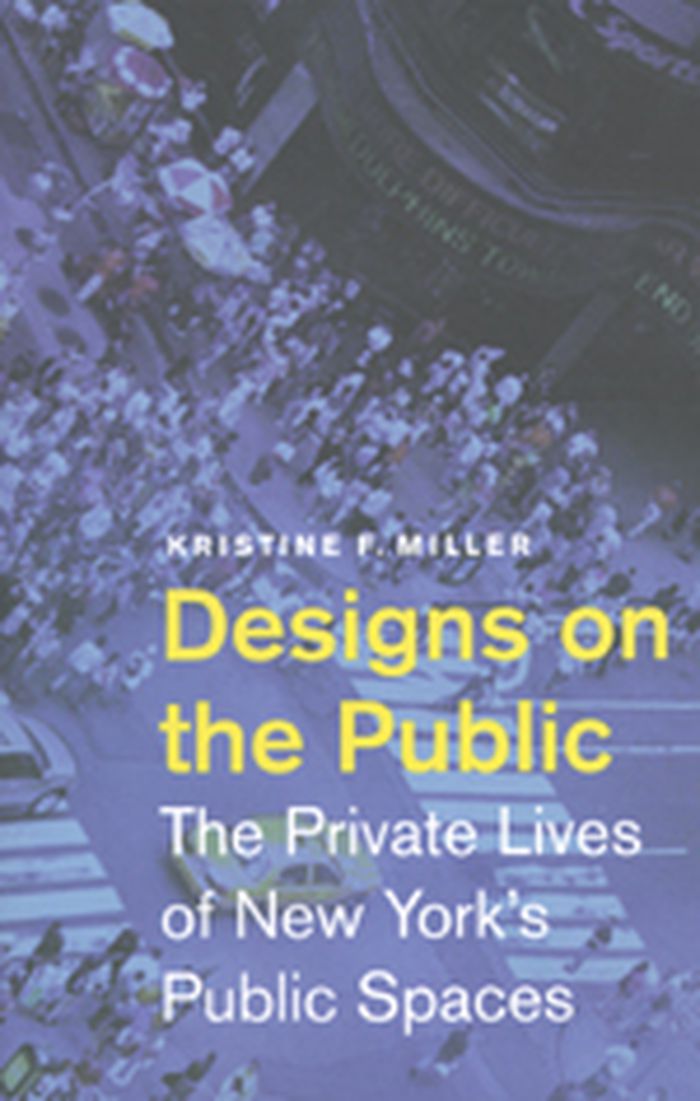
New York City is home to some of the most recognizable places in the world. As familiar as the sight of New Year’s Eve in Times Square or a protest in front of City Hall may be to us, do we understand who controls what happens there? Kristine Miller delves into six of New York’s most important public spaces to trace how design influences their complicated lives. Miller chronicles controversies in the histories of New York locations including Times Square, Trump Tower, the IBM Atrium, and Sony Plaza. The story of each location reveals that public space is not a concrete or fixed reality, but rather a constantly changing situation open to the forces of law, corporations, bureaucracy, and government. The qualities of public spaces we consider essential, including accessibility, public ownership, and ties to democratic life, are, at best, temporary conditions and often completely absent. Design is, in Miller’s view, complicit in regulation of public spaces in New York City to exclude undesirables, restrict activities, and privilege commercial interests, and in this work she shows how design can reactivate public space and public life.
Designs on the Public : The private lives of New York's public spaces
Actions:
Prix:
$25.00
(disponible sur commande)
Résumé:
New York City is home to some of the most recognizable places in the world. As familiar as the sight of New Year’s Eve in Times Square or a protest in front of City Hall may be to us, do we understand who controls what happens there? Kristine Miller delves into six of New York’s most important public spaces to trace how design influences their complicated lives. Miller chronicles controversies in the histories of New York locations including Times Square, Trump Tower, the IBM Atrium, and Sony Plaza. The story of each location reveals that public space is not a concrete or fixed reality, but rather a constantly changing situation open to the forces of law, corporations, bureaucracy, and government. The qualities of public spaces we consider essential, including accessibility, public ownership, and ties to democratic life, are, at best, temporary conditions and often completely absent. Design is, in Miller’s view, complicit in regulation of public spaces in New York City to exclude undesirables, restrict activities, and privilege commercial interests, and in this work she shows how design can reactivate public space and public life.
Classification:
livres
livres
Publication:
décembre 2007, Minneapolis
décembre 2007, Minneapolis
Sujet:
Théorie de l’urbanisme
Théorie de l’urbanisme
Classification:
livres
livres
Actions:
Prix:
$40.00
(disponible sur commande)
Résumé:
One of the delights of life is the discovery and rediscovery of patterns of order and beauty in nature—designs revealed by slicing through a head of cabbage or an orange, the forms of shells and butterfly wings. These images are awesome not just for their beauty alone, but because they suggest an order underlying their growth, a harmony existing in nature. What does it(...)
$40.00
(disponible sur commande)
Résumé:
One of the delights of life is the discovery and rediscovery of patterns of order and beauty in nature—designs revealed by slicing through a head of cabbage or an orange, the forms of shells and butterfly wings. These images are awesome not just for their beauty alone, but because they suggest an order underlying their growth, a harmony existing in nature. What does it(...)
Publication:
janvier 1900, Boston, London
janvier 1900, Boston, London
Titre:
Power of limits: Proportional harmonies in nature, art and architecture
Actions:
Prix:
$40.00
(disponible sur commande)
Résumé:
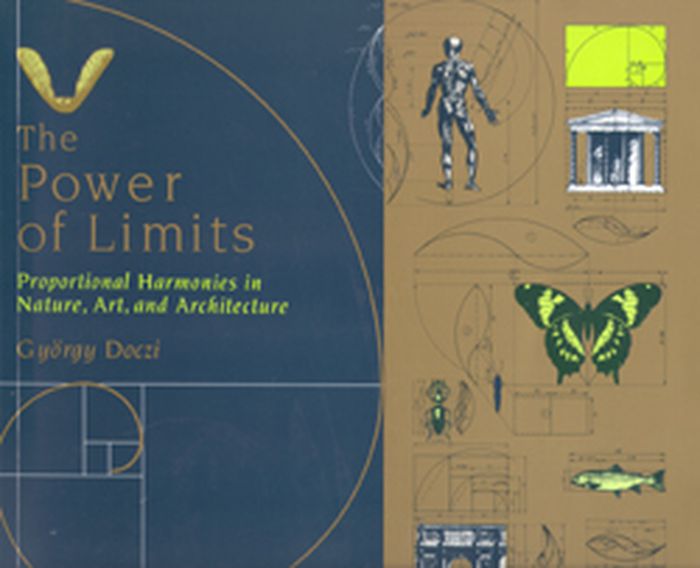
One of the delights of life is the discovery and rediscovery of patterns of order and beauty in nature—designs revealed by slicing through a head of cabbage or an orange, the forms of shells and butterfly wings. These images are awesome not just for their beauty alone, but because they suggest an order underlying their growth, a harmony existing in nature. What does it mean that such an order exists; how far does it extend? The Power of Limits was inspired by those simple discoveries of harmony. The author went on to investigate and measure hundreds of patterns—ancient and modern, minute and vast. His discovery, vividly illustrated here, is that certain proportions occur over and over again in all these forms. Patterns are also repeated in how things grow and are made—by the dynamic union of opposites—as demonstrated by the spirals that move in opposite directions in the growth of a plant. The joining of unity and diversity in the discipline of proportional limitations creates forms that are beautiful to us because they embody the principles of the cosmic order of which we are a part; conversely, the limitlessness of that order is revealed by the strictness of its forms. The author shows how we, as humans, are included in the universal harmony of form, and suggests that the union of complementary opposites may be a way to extend that harmony to the psychological and social realms as well.
Power of limits: Proportional harmonies in nature, art and architecture
Actions:
Prix:
$40.00
(disponible sur commande)
Résumé:
One of the delights of life is the discovery and rediscovery of patterns of order and beauty in nature—designs revealed by slicing through a head of cabbage or an orange, the forms of shells and butterfly wings. These images are awesome not just for their beauty alone, but because they suggest an order underlying their growth, a harmony existing in nature. What does it mean that such an order exists; how far does it extend? The Power of Limits was inspired by those simple discoveries of harmony. The author went on to investigate and measure hundreds of patterns—ancient and modern, minute and vast. His discovery, vividly illustrated here, is that certain proportions occur over and over again in all these forms. Patterns are also repeated in how things grow and are made—by the dynamic union of opposites—as demonstrated by the spirals that move in opposite directions in the growth of a plant. The joining of unity and diversity in the discipline of proportional limitations creates forms that are beautiful to us because they embody the principles of the cosmic order of which we are a part; conversely, the limitlessness of that order is revealed by the strictness of its forms. The author shows how we, as humans, are included in the universal harmony of form, and suggests that the union of complementary opposites may be a way to extend that harmony to the psychological and social realms as well.
Classification:
livres
livres
Publication:
janvier 1900, Boston, London
janvier 1900, Boston, London
Classification:
périodiques
périodiques

Titre:
San Rocco 12: clients
San Rocco 12: clients
Actions:
Prix:
$33.00
(disponible en magasin)
Résumé:
The issue with the client is that the reasons why clients should pay for architecture (i.e., the reasons why rich or powerful individuals could become clients) seem to be disappearing. In fact, architecture corresponds to a singular mixture of exhibitionism and shame that leads people to try to acquire public renown (and at the same time erase the memory of how they used(...)
$33.00
(disponible en magasin)
Résumé:
The issue with the client is that the reasons why clients should pay for architecture (i.e., the reasons why rich or powerful individuals could become clients) seem to be disappearing. In fact, architecture corresponds to a singular mixture of exhibitionism and shame that leads people to try to acquire public renown (and at the same time erase the memory of how they used(...)
Titre:
San Rocco 12: clients
Actions:
Prix:
$33.00
(disponible en magasin)
Résumé:
The issue with the client is that the reasons why clients should pay for architecture (i.e., the reasons why rich or powerful individuals could become clients) seem to be disappearing. In fact, architecture corresponds to a singular mixture of exhibitionism and shame that leads people to try to acquire public renown (and at the same time erase the memory of how they used to make money) by contributing to the construction of the spaces of public life. And while there is no shortage of exhibitionism nowadays...
San Rocco 12: clients
Actions:
Prix:
$33.00
(disponible en magasin)
Résumé:
The issue with the client is that the reasons why clients should pay for architecture (i.e., the reasons why rich or powerful individuals could become clients) seem to be disappearing. In fact, architecture corresponds to a singular mixture of exhibitionism and shame that leads people to try to acquire public renown (and at the same time erase the memory of how they used to make money) by contributing to the construction of the spaces of public life. And while there is no shortage of exhibitionism nowadays...
Classification:
périodiques
périodiques
Publication:
avril 2016
avril 2016
Sujet:
Revues
Revues
Classification:
livres
livres
Prix:
$24.50
(disponible sur commande)
Résumé:
From Google reviews to YouTube tutorials, and from online service desks to real-life ‘may I speak to the manager’ requests - we are all critics of our designed environment. It seems therefore strange, if not outrageous, that design criticism is a practice considered to be a haute-for-few instead of a low-for-all. Design belongs to all of us and, therefore, its criticism(...)
$24.50
(disponible sur commande)
Résumé:
From Google reviews to YouTube tutorials, and from online service desks to real-life ‘may I speak to the manager’ requests - we are all critics of our designed environment. It seems therefore strange, if not outrageous, that design criticism is a practice considered to be a haute-for-few instead of a low-for-all. Design belongs to all of us and, therefore, its criticism(...)
Titre:
CriticAll!: (Un)professional everyday design criticism
Actions:
Prix:
$24.50
(disponible sur commande)
Résumé:
From Google reviews to YouTube tutorials, and from online service desks to real-life ‘may I speak to the manager’ requests - we are all critics of our designed environment. It seems therefore strange, if not outrageous, that design criticism is a practice considered to be a haute-for-few instead of a low-for-all. Design belongs to all of us and, therefore, its criticism as well. How can we activate more people to become actively aware of and critical towards their designed environments?
CriticAll!: (Un)professional everyday design criticism
Actions:
Prix:
$24.50
(disponible sur commande)
Résumé:
From Google reviews to YouTube tutorials, and from online service desks to real-life ‘may I speak to the manager’ requests - we are all critics of our designed environment. It seems therefore strange, if not outrageous, that design criticism is a practice considered to be a haute-for-few instead of a low-for-all. Design belongs to all of us and, therefore, its criticism as well. How can we activate more people to become actively aware of and critical towards their designed environments?
Classification:
livres
livres
Publication:
septembre 2021
septembre 2021
Sujet:
Théorie du design
Théorie du design
Classification:
livres
livres
Actions:
Prix:
$39.95
(disponible sur commande)
Résumé:
In "The Geography of Nowhere", James Howard Kunstler declared suburbia "a tragic landscape of cartoon architecture, junked cities, and ravaged countryside" and put himself at the heart of a fierce debate over how we will live in twenty-first century America. Now, Kunstler turns his eye on urban life both in America and across the world. From classical Rome to the(...)
$39.95
(disponible sur commande)
Résumé:
In "The Geography of Nowhere", James Howard Kunstler declared suburbia "a tragic landscape of cartoon architecture, junked cities, and ravaged countryside" and put himself at the heart of a fierce debate over how we will live in twenty-first century America. Now, Kunstler turns his eye on urban life both in America and across the world. From classical Rome to the(...)
Titre:
The city in mind : notes on the urban condition
Actions:
Prix:
$39.95
(disponible sur commande)
Résumé:
In "The Geography of Nowhere", James Howard Kunstler declared suburbia "a tragic landscape of cartoon architecture, junked cities, and ravaged countryside" and put himself at the heart of a fierce debate over how we will live in twenty-first century America. Now, Kunstler turns his eye on urban life both in America and across the world. From classical Rome to the "gigantic hairball" of contemporary Atlanta, he offers a far-reaching discourse on the history and current state of urban life. "The City in Mind" tells the story of urban design and how the architectural makeup of a city directly influences its culture as well as its success. From the ingenious architectural design of Louis-Napoleon's renovation of Paris to the bloody collision of cultures that occurred when Cortés conquered the Aztec capital Tenochtitlan, from the grandiose architectural schemes of Hitler and Albert Speer to the meanings behind the ludicrous spectacle of Las Vegas, Kunstler opens up a new dialogue on the development and effects of urban construction. In his investigations, he discovers American communities in the Sunbelt and Southwest alienated from each other and themselves, Northeastern cities caught between their initial civic construction and our current car-obsessed society, and a disparate Europe with its mix of pre-industrial creativity, and war-marked reminders of the twentieth century. Expanding on ideas first discussed in Jane Jacobs' seminal work, "The Death and Life of Great American Cities", Kunstler looks to Europe to discover what is constant and enduring in cities at their greatest, and at the same time, how a city's design can be directly linked to its decline. In these excursions he finds the reasons that America got lost in its suburban wilderness and locates the pathways in culture that might lead to a civic revival here. Kunstler's examination of these cities is at once a concise history of their urban lives and a detailed criticism of how those histories have either aided or hindered the social and civil progress of the cities' occupants. By turns dramatic and comic, and always authoritative, "The City in Mind", is an exceptional glimpse into the urban condition.
The city in mind : notes on the urban condition
Actions:
Prix:
$39.95
(disponible sur commande)
Résumé:
In "The Geography of Nowhere", James Howard Kunstler declared suburbia "a tragic landscape of cartoon architecture, junked cities, and ravaged countryside" and put himself at the heart of a fierce debate over how we will live in twenty-first century America. Now, Kunstler turns his eye on urban life both in America and across the world. From classical Rome to the "gigantic hairball" of contemporary Atlanta, he offers a far-reaching discourse on the history and current state of urban life. "The City in Mind" tells the story of urban design and how the architectural makeup of a city directly influences its culture as well as its success. From the ingenious architectural design of Louis-Napoleon's renovation of Paris to the bloody collision of cultures that occurred when Cortés conquered the Aztec capital Tenochtitlan, from the grandiose architectural schemes of Hitler and Albert Speer to the meanings behind the ludicrous spectacle of Las Vegas, Kunstler opens up a new dialogue on the development and effects of urban construction. In his investigations, he discovers American communities in the Sunbelt and Southwest alienated from each other and themselves, Northeastern cities caught between their initial civic construction and our current car-obsessed society, and a disparate Europe with its mix of pre-industrial creativity, and war-marked reminders of the twentieth century. Expanding on ideas first discussed in Jane Jacobs' seminal work, "The Death and Life of Great American Cities", Kunstler looks to Europe to discover what is constant and enduring in cities at their greatest, and at the same time, how a city's design can be directly linked to its decline. In these excursions he finds the reasons that America got lost in its suburban wilderness and locates the pathways in culture that might lead to a civic revival here. Kunstler's examination of these cities is at once a concise history of their urban lives and a detailed criticism of how those histories have either aided or hindered the social and civil progress of the cities' occupants. By turns dramatic and comic, and always authoritative, "The City in Mind", is an exceptional glimpse into the urban condition.
Classification:
livres
livres
Publication:
janvier 2002, New York
janvier 2002, New York
Sujet:
Théorie de l’urbanisme
Théorie de l’urbanisme
Classification:
livres
livres
Prix:
$39.95
(disponible sur commande)
Résumé:
How do cities plan for the unplanned? Do cities plan for recovery from every possible sudden shock? How does one prepare a plan for the recovery after a tragedy, like the September 11, 2001 terrorist attacks on New York? The book discovers the systematic features that contribute to the success of planning institutions. In cities filled with uncertainty and complexity,(...)
$39.95
(disponible sur commande)
Résumé:
How do cities plan for the unplanned? Do cities plan for recovery from every possible sudden shock? How does one prepare a plan for the recovery after a tragedy, like the September 11, 2001 terrorist attacks on New York? The book discovers the systematic features that contribute to the success of planning institutions. In cities filled with uncertainty and complexity,(...)
Titre:
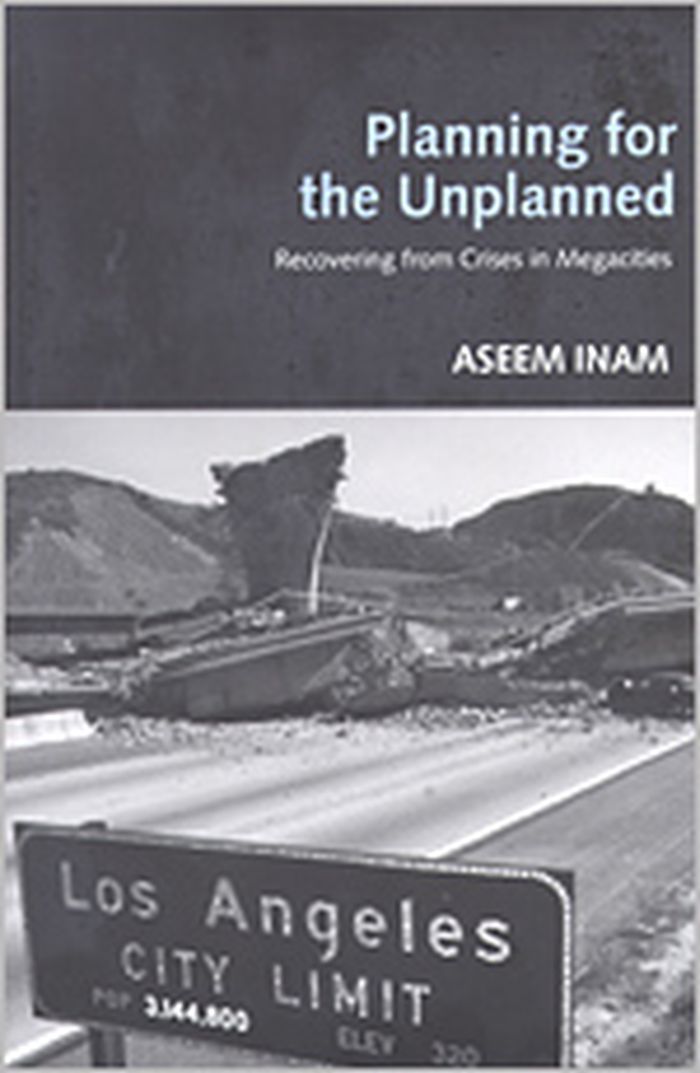
Planning for the unplanned : recovering from crises in megacities
Actions:
Prix:
$39.95
(disponible sur commande)
Résumé:
How do cities plan for the unplanned? Do cities plan for recovery from every possible sudden shock? How does one prepare a plan for the recovery after a tragedy, like the September 11, 2001 terrorist attacks on New York? The book discovers the systematic features that contribute to the success of planning institutions. In cities filled with uncertainty and complexity, planning institutions effectively tackle unexpected and sudden change by relying on the old and the familiar, rather than the new and the innovative. The author argues that planning programs institutions were successful because they were bureaucratic, and relied on standardized routines, rigorous sets of established regimes, familiar programs, and institutionalized hierarchies. Also contrary to popular perception, neither the leaders at the top of the institutions nor those workers at the grassroots level were the most important in the implementation of such routines. The key actors were middle managers, because they knew the institutional structures inside out, what the routines were and how to use them, and were successful go-betweens between national governments and grassroots community groups. Case studies from Mexico City, Los Angeles and New York provide a deeper understanding of urban planning processes. The case studies reveal that systematic institutional analysis helps us understand what works in planning, and why. They also demonstrate the manner in which institutional routines serve as powerful and effective tools for addressing novel situations.
Planning for the unplanned : recovering from crises in megacities
Actions:
Prix:
$39.95
(disponible sur commande)
Résumé:
How do cities plan for the unplanned? Do cities plan for recovery from every possible sudden shock? How does one prepare a plan for the recovery after a tragedy, like the September 11, 2001 terrorist attacks on New York? The book discovers the systematic features that contribute to the success of planning institutions. In cities filled with uncertainty and complexity, planning institutions effectively tackle unexpected and sudden change by relying on the old and the familiar, rather than the new and the innovative. The author argues that planning programs institutions were successful because they were bureaucratic, and relied on standardized routines, rigorous sets of established regimes, familiar programs, and institutionalized hierarchies. Also contrary to popular perception, neither the leaders at the top of the institutions nor those workers at the grassroots level were the most important in the implementation of such routines. The key actors were middle managers, because they knew the institutional structures inside out, what the routines were and how to use them, and were successful go-betweens between national governments and grassroots community groups. Case studies from Mexico City, Los Angeles and New York provide a deeper understanding of urban planning processes. The case studies reveal that systematic institutional analysis helps us understand what works in planning, and why. They also demonstrate the manner in which institutional routines serve as powerful and effective tools for addressing novel situations.
Classification:
livres
livres
Publication:
avril 2005, New York
avril 2005, New York
Sujet:
Théorie de l’urbanisme
Théorie de l’urbanisme
Classification:
livres
livres

Actions:
Prix:
$55.95
(disponible en magasin)
Résumé:
Recognizing that buildings are a major contributor to global warming and the critical role of embodied versus operational carbon, the book focuses on houses built from materials that either sequester carbon (plants), use materials with very low embodied carbon (earth and stone) or reuse substantial amounts of existing materials. Organized by those materials (wood,(...)
$55.95
(disponible en magasin)
Résumé:
Recognizing that buildings are a major contributor to global warming and the critical role of embodied versus operational carbon, the book focuses on houses built from materials that either sequester carbon (plants), use materials with very low embodied carbon (earth and stone) or reuse substantial amounts of existing materials. Organized by those materials (wood,(...)
Publication:
janvier 2023
janvier 2023
Titre:
Manual of biogenic house sections
Actions:
Prix:
$55.95
(disponible en magasin)
Résumé:
Recognizing that buildings are a major contributor to global warming and the critical role of embodied versus operational carbon, the book focuses on houses built from materials that either sequester carbon (plants), use materials with very low embodied carbon (earth and stone) or reuse substantial amounts of existing materials. Organized by those materials (wood, bamboo, straw, hemp, cork, earth, brick, stone and re-use), and incorporating life cycle diagrams demonstrating how the raw material is processed into building components, the book shows how the unique properties of each material can transform the ways architects conceive the sections of houses. The house was selected as the vehicle for these investigations due to its scale, its role as a site of architectural experimentation, and its ubiquity. Building on the techniques of the "Manual of section," the book is comprised of newly generated cross-sectional drawings of fifty-five recent, modestly sized houses from around the world, making legible the tectonics and materials used in their construction. Each house is also shown through exploded axonometric, construction photographs and color photographs of the exterior and interior. Introductory essays set up the importance of embodied carbon, the role of vernacular plant-based construction and the problems of contemporary house construction. Drawing connections between the architecture of the house, environmental systems and material economies, the book seeks to change how we build now and for the future.
Manual of biogenic house sections
Actions:
Prix:
$55.95
(disponible en magasin)
Résumé:
Recognizing that buildings are a major contributor to global warming and the critical role of embodied versus operational carbon, the book focuses on houses built from materials that either sequester carbon (plants), use materials with very low embodied carbon (earth and stone) or reuse substantial amounts of existing materials. Organized by those materials (wood, bamboo, straw, hemp, cork, earth, brick, stone and re-use), and incorporating life cycle diagrams demonstrating how the raw material is processed into building components, the book shows how the unique properties of each material can transform the ways architects conceive the sections of houses. The house was selected as the vehicle for these investigations due to its scale, its role as a site of architectural experimentation, and its ubiquity. Building on the techniques of the "Manual of section," the book is comprised of newly generated cross-sectional drawings of fifty-five recent, modestly sized houses from around the world, making legible the tectonics and materials used in their construction. Each house is also shown through exploded axonometric, construction photographs and color photographs of the exterior and interior. Introductory essays set up the importance of embodied carbon, the role of vernacular plant-based construction and the problems of contemporary house construction. Drawing connections between the architecture of the house, environmental systems and material economies, the book seeks to change how we build now and for the future.
Classification:
livres
livres
Publication:
janvier 2023
janvier 2023
Classification:
livres
livres

Actions:
Prix:
$85.00
(disponible en magasin)
Résumé:
From early reports of the invention to its wide application during World War I, the idea of photography created anticipation and participation in the modern world. The first volume of ''A History of Photography in Canada'' captures this phenomenon by looking at hundreds of photographs generated in and about Canada-in-the-making and by listening to the chords they struck(...)
$85.00
(disponible en magasin)
Résumé:
From early reports of the invention to its wide application during World War I, the idea of photography created anticipation and participation in the modern world. The first volume of ''A History of Photography in Canada'' captures this phenomenon by looking at hundreds of photographs generated in and about Canada-in-the-making and by listening to the chords they struck(...)
Titre:
History of photography in Canada, Volume 1
Actions:
Prix:
$85.00
(disponible en magasin)
Résumé:
From early reports of the invention to its wide application during World War I, the idea of photography created anticipation and participation in the modern world. The first volume of ''A History of Photography in Canada'' captures this phenomenon by looking at hundreds of photographs generated in and about Canada-in-the-making and by listening to the chords they struck in the collective imagination. Emphasizing technological readiness and cultural eagerness for the medium, Martha Langford shows how photography served ideals of progress and improvement as Canada’s settler society looked to master the world by seizing its visible traces. The imposition of these programs on Indigenous Peoples and indentured labourers is confronted throughout this volume, which offers both narratives and counternarratives of subjectification. Reproducing images of people, places, events, and objects from the unceded territories of the First Nations, Inuit, and Métis, from British North America, and from the Dominion of Canada and the Dominion of Newfoundland, Langford asks where and when photographs were taken, why, and by whom. How did the making and preservation of a photograph alter the circumstances in which it was produced, and how did this affect individual and collective consciousness? Alongside accomplished portraits, landscapes, still lifes, and their vernacular counterparts, the book draws glimmers of photographic experience from treatises and doggerel, official reports and personal diaries, newspapers, magazines, letters, and travelogues.
History of photography in Canada, Volume 1
Actions:
Prix:
$85.00
(disponible en magasin)
Résumé:
From early reports of the invention to its wide application during World War I, the idea of photography created anticipation and participation in the modern world. The first volume of ''A History of Photography in Canada'' captures this phenomenon by looking at hundreds of photographs generated in and about Canada-in-the-making and by listening to the chords they struck in the collective imagination. Emphasizing technological readiness and cultural eagerness for the medium, Martha Langford shows how photography served ideals of progress and improvement as Canada’s settler society looked to master the world by seizing its visible traces. The imposition of these programs on Indigenous Peoples and indentured labourers is confronted throughout this volume, which offers both narratives and counternarratives of subjectification. Reproducing images of people, places, events, and objects from the unceded territories of the First Nations, Inuit, and Métis, from British North America, and from the Dominion of Canada and the Dominion of Newfoundland, Langford asks where and when photographs were taken, why, and by whom. How did the making and preservation of a photograph alter the circumstances in which it was produced, and how did this affect individual and collective consciousness? Alongside accomplished portraits, landscapes, still lifes, and their vernacular counterparts, the book draws glimmers of photographic experience from treatises and doggerel, official reports and personal diaries, newspapers, magazines, letters, and travelogues.
Classification:
livres
livres
Publication:
juillet 2025
juillet 2025
Sujet:
Photographie- collections
Photographie- collections


