


10597 Résultats
Classification:
livres
livres

Actions:
Prix:
$25.95
(disponible sur commande)
Résumé:
Feminist scholars from around the world on key debates and concerns ranging from motherhood, home, and family to media, technology, and medicine. This book is written by prominent feminist scholars from around the world. It is engaging and accessible, distilling the highest level of knowledge into fascinating but concise entries. ''This is not a feminism textbook''(...)
$25.95
(disponible sur commande)
Résumé:
Feminist scholars from around the world on key debates and concerns ranging from motherhood, home, and family to media, technology, and medicine. This book is written by prominent feminist scholars from around the world. It is engaging and accessible, distilling the highest level of knowledge into fascinating but concise entries. ''This is not a feminism textbook''(...)
Titre:
This is not a feminism textbook
Actions:
Prix:
$25.95
(disponible sur commande)
Résumé:
Feminist scholars from around the world on key debates and concerns ranging from motherhood, home, and family to media, technology, and medicine. This book is written by prominent feminist scholars from around the world. It is engaging and accessible, distilling the highest level of knowledge into fascinating but concise entries. ''This is not a feminism textbook'' offers a clear, straightforward overview of key feminist debates and concerns ranging from motherhood, home, work and family to media, technology, and medicine. This book is a must-read for everyone who is curious about the sex/gender distinction, and the relation between gender and other aspects of identity; and it tackles plenty more questions along the way. Are smart homes really smart? Will technology save the world? What does class have to do with feminism? And what does ''intersectionality'' actually mean? The work of feminism to help create a more just and equal society is not yet done. This book provides a roadmap to inspire each and every reader to continue exploring, thinking about, discussing, and ''doing'' feminism.
This is not a feminism textbook
Actions:
Prix:
$25.95
(disponible sur commande)
Résumé:
Feminist scholars from around the world on key debates and concerns ranging from motherhood, home, and family to media, technology, and medicine. This book is written by prominent feminist scholars from around the world. It is engaging and accessible, distilling the highest level of knowledge into fascinating but concise entries. ''This is not a feminism textbook'' offers a clear, straightforward overview of key feminist debates and concerns ranging from motherhood, home, work and family to media, technology, and medicine. This book is a must-read for everyone who is curious about the sex/gender distinction, and the relation between gender and other aspects of identity; and it tackles plenty more questions along the way. Are smart homes really smart? Will technology save the world? What does class have to do with feminism? And what does ''intersectionality'' actually mean? The work of feminism to help create a more just and equal society is not yet done. This book provides a roadmap to inspire each and every reader to continue exploring, thinking about, discussing, and ''doing'' feminism.
Classification:
livres
livres
Publication:
novembre 2023
novembre 2023
Classification:
livres
livres
Actions:
Prix:
$37.95
(disponible sur commande)
Résumé:
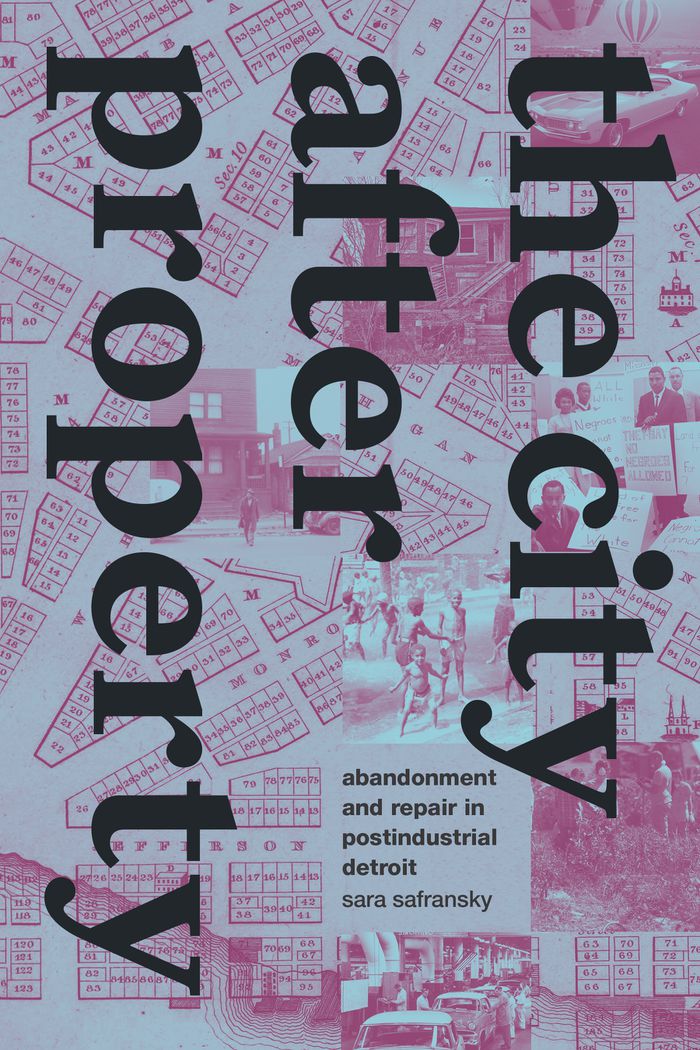
In The City after Property, Sara Safransky examines how postindustrial decline generates new forms of urban land politics. In the 2010s, Detroit government officials classified a staggering 150,000 lots—more than a third of the city—as “vacant” or “abandoned.” Analyzing subsequent efforts to shrink the Motor City’s footprint and budget, Safransky presents a new way of(...)
$37.95
(disponible sur commande)
Résumé:
In The City after Property, Sara Safransky examines how postindustrial decline generates new forms of urban land politics. In the 2010s, Detroit government officials classified a staggering 150,000 lots—more than a third of the city—as “vacant” or “abandoned.” Analyzing subsequent efforts to shrink the Motor City’s footprint and budget, Safransky presents a new way of(...)
Titre:
The city after property: Abandonment and repair in postindustrial Detroit
Actions:
Prix:
$37.95
(disponible sur commande)
Résumé:
In The City after Property, Sara Safransky examines how postindustrial decline generates new forms of urban land politics. In the 2010s, Detroit government officials classified a staggering 150,000 lots—more than a third of the city—as “vacant” or “abandoned.” Analyzing subsequent efforts to shrink the Motor City’s footprint and budget, Safransky presents a new way of conceptualizing urban abandonment. She challenges popular myths that cast Detroit as empty along with narratives that reduce its historical decline to capital and white flight. In connecting contemporary debates over neoliberal urbanism to Cold War histories and the lasting political legacies of global movements for decolonization and Black liberation, she foregrounds how the making of—and challenges to—modern property regimes have shaped urban policy and politics. Drawing on critical geographical theory and community-based ethnography, Safransky shows how private property functions as a racialized construct, an ideology, and a moral force that shapes selves and worlds. By thinking the city “after property,” Safransky illuminates alternative ways of imagining and organizing urban life.
The city after property: Abandonment and repair in postindustrial Detroit
Actions:
Prix:
$37.95
(disponible sur commande)
Résumé:
In The City after Property, Sara Safransky examines how postindustrial decline generates new forms of urban land politics. In the 2010s, Detroit government officials classified a staggering 150,000 lots—more than a third of the city—as “vacant” or “abandoned.” Analyzing subsequent efforts to shrink the Motor City’s footprint and budget, Safransky presents a new way of conceptualizing urban abandonment. She challenges popular myths that cast Detroit as empty along with narratives that reduce its historical decline to capital and white flight. In connecting contemporary debates over neoliberal urbanism to Cold War histories and the lasting political legacies of global movements for decolonization and Black liberation, she foregrounds how the making of—and challenges to—modern property regimes have shaped urban policy and politics. Drawing on critical geographical theory and community-based ethnography, Safransky shows how private property functions as a racialized construct, an ideology, and a moral force that shapes selves and worlds. By thinking the city “after property,” Safransky illuminates alternative ways of imagining and organizing urban life.
Classification:
livres
livres
Publication:
août 2023
août 2023
Classification:
livres
livres
Titre:
In a human voice
In a human voice
Actions:
Prix:
$17.95
(disponible sur commande)
Résumé:
Carol Gilligan’s landmark book ''In a different voice'' – the ''little book that started a revolution'' – brought women’s voices to the fore in work on the self and moral development, enabling women to be heard in their own right, and with their own integrity, for the first time. Forty years later, Gilligan returns to the subject matter of her classic book,(...)
$17.95
(disponible sur commande)
Résumé:
Carol Gilligan’s landmark book ''In a different voice'' – the ''little book that started a revolution'' – brought women’s voices to the fore in work on the self and moral development, enabling women to be heard in their own right, and with their own integrity, for the first time. Forty years later, Gilligan returns to the subject matter of her classic book,(...)
Titre:
In a human voice
Actions:
Prix:
$17.95
(disponible sur commande)
Résumé:
Carol Gilligan’s landmark book ''In a different voice'' – the ''little book that started a revolution'' – brought women’s voices to the fore in work on the self and moral development, enabling women to be heard in their own right, and with their own integrity, for the first time. Forty years later, Gilligan returns to the subject matter of her classic book, re-examining its central arguments and concerns from the vantage point of the present. Thanks to the work that she and others have done in recent decades, it is now possible to clarify and articulate what couldn’t quite be seen or said at the time of the original publication: that the ''different voice'' (of care ethics), although initially heard as a ''feminine'' voice, is in fact a human voice; that the voice it differs from is a patriarchal voice (bound to gender binaries and hierarchies); and that where patriarchy is in force or enforced, the human voice is a voice of resistance, and care ethics is an ethics of liberation. While gender is central to the story Gilligan tells, this is not a story about gender: it is a human story. With this clarification, it becomes evident why ''In a different voice'' continues to resonate strongly with people’s experience and, perhaps more crucially, why the different voice is a voice for the 21st century.
In a human voice
Actions:
Prix:
$17.95
(disponible sur commande)
Résumé:
Carol Gilligan’s landmark book ''In a different voice'' – the ''little book that started a revolution'' – brought women’s voices to the fore in work on the self and moral development, enabling women to be heard in their own right, and with their own integrity, for the first time. Forty years later, Gilligan returns to the subject matter of her classic book, re-examining its central arguments and concerns from the vantage point of the present. Thanks to the work that she and others have done in recent decades, it is now possible to clarify and articulate what couldn’t quite be seen or said at the time of the original publication: that the ''different voice'' (of care ethics), although initially heard as a ''feminine'' voice, is in fact a human voice; that the voice it differs from is a patriarchal voice (bound to gender binaries and hierarchies); and that where patriarchy is in force or enforced, the human voice is a voice of resistance, and care ethics is an ethics of liberation. While gender is central to the story Gilligan tells, this is not a story about gender: it is a human story. With this clarification, it becomes evident why ''In a different voice'' continues to resonate strongly with people’s experience and, perhaps more crucially, why the different voice is a voice for the 21st century.
Classification:
livres
livres
Publication:
septembre 2023
septembre 2023
Classification:
périodiques
périodiques
Actions:
Prix:
$50.00
(disponible sur commande)
Résumé:
For centuries, architectural theory, discourse and agency have been based on diurnal and solar paradigms. References to night in Vitruvius’s De architectura are few, and the same absence is notable in Renaissance treatises by Alberti or Palladio. It was not until the 19th and 20th centuries that the invention and institutionalization of artificial light in private and(...)
$50.00
(disponible sur commande)
Résumé:
For centuries, architectural theory, discourse and agency have been based on diurnal and solar paradigms. References to night in Vitruvius’s De architectura are few, and the same absence is notable in Renaissance treatises by Alberti or Palladio. It was not until the 19th and 20th centuries that the invention and institutionalization of artificial light in private and(...)
Publication:
juillet 2024
juillet 2024
Titre:
Nocturnal history of architecture. Column issue 2
Actions:
Prix:
$50.00
(disponible sur commande)
Résumé:
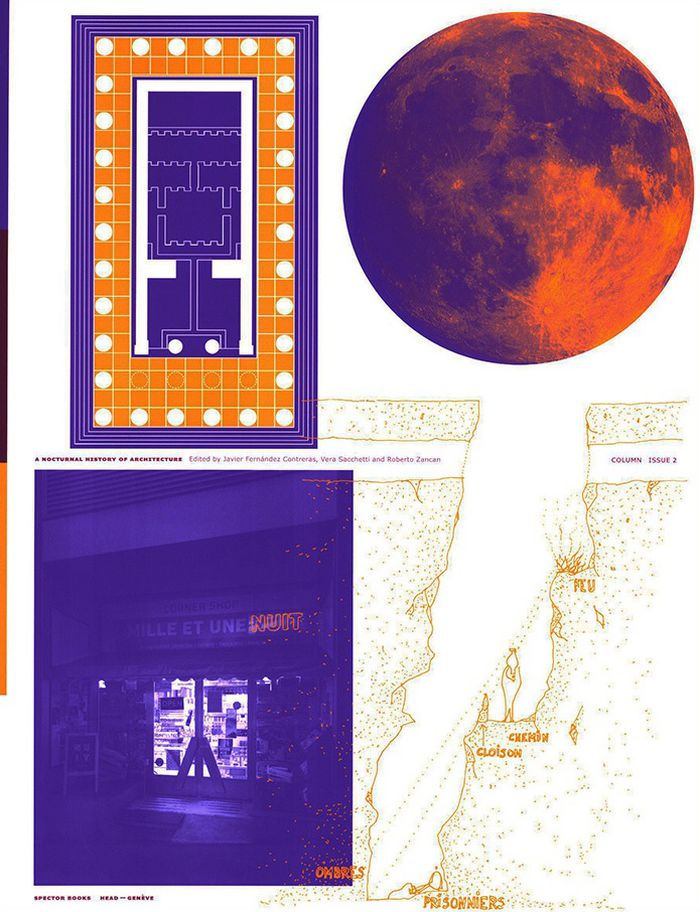
For centuries, architectural theory, discourse and agency have been based on diurnal and solar paradigms. References to night in Vitruvius’s De architectura are few, and the same absence is notable in Renaissance treatises by Alberti or Palladio. It was not until the 19th and 20th centuries that the invention and institutionalization of artificial light in private and public spaces gradually transformed conceptions of night in the architectural discipline. This volume offers the first attempt at a nocturnal history of architecture. What emerges from the studies is the thesis that the identity of human beings—across time and their domestic, professional and cultural spaces—is powerfully determined by the parameters of nighttime. By analyzing and studying "night scenes," this book reveals how the night is a laboratory for the development of new forms of conceptualizing space and, ultimately, of living.
Nocturnal history of architecture. Column issue 2
Actions:
Prix:
$50.00
(disponible sur commande)
Résumé:
For centuries, architectural theory, discourse and agency have been based on diurnal and solar paradigms. References to night in Vitruvius’s De architectura are few, and the same absence is notable in Renaissance treatises by Alberti or Palladio. It was not until the 19th and 20th centuries that the invention and institutionalization of artificial light in private and public spaces gradually transformed conceptions of night in the architectural discipline. This volume offers the first attempt at a nocturnal history of architecture. What emerges from the studies is the thesis that the identity of human beings—across time and their domestic, professional and cultural spaces—is powerfully determined by the parameters of nighttime. By analyzing and studying "night scenes," this book reveals how the night is a laboratory for the development of new forms of conceptualizing space and, ultimately, of living.
Classification:
périodiques
périodiques
Publication:
juillet 2024
juillet 2024
Classification:
livres
livres
Titre:
Décor n° 03 : Trans
Décor n° 03 : Trans
Actions:
Prix:
$45.00
(disponible en magasin)
Résumé:
La troisième livraison de la revue annuelle de l'École des Arts Décoratifs, placée sous le signe complexe et ambivalent de « TRANS », recouvrant les diverses manières de transgresser (l'identité, la textualité, le codage, la formation, etc.). Après un nom, DÉCOR en 2021, et un adjectif, VULGAIRE en 2022, c'est sous le préfixe TRANS, dans tous ses états, que se place la(...)
$45.00
(disponible en magasin)
Résumé:
La troisième livraison de la revue annuelle de l'École des Arts Décoratifs, placée sous le signe complexe et ambivalent de « TRANS », recouvrant les diverses manières de transgresser (l'identité, la textualité, le codage, la formation, etc.). Après un nom, DÉCOR en 2021, et un adjectif, VULGAIRE en 2022, c'est sous le préfixe TRANS, dans tous ses états, que se place la(...)
Titre:
Décor n° 03 : Trans
Actions:
Prix:
$45.00
(disponible en magasin)
Résumé:
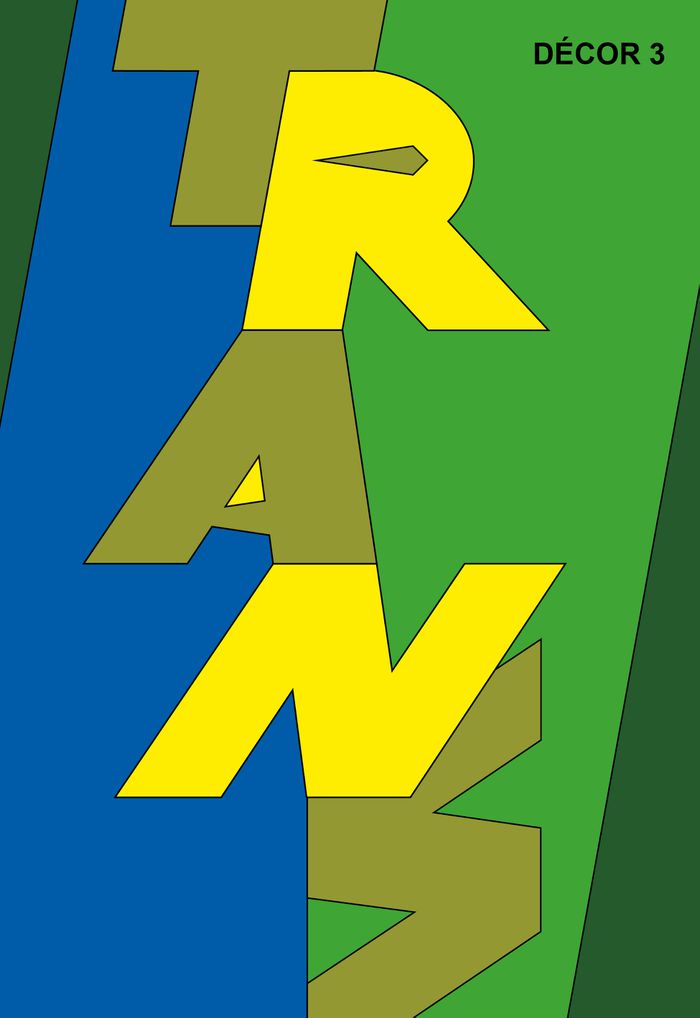
La troisième livraison de la revue annuelle de l'École des Arts Décoratifs, placée sous le signe complexe et ambivalent de « TRANS », recouvrant les diverses manières de transgresser (l'identité, la textualité, le codage, la formation, etc.). Après un nom, DÉCOR en 2021, et un adjectif, VULGAIRE en 2022, c'est sous le préfixe TRANS, dans tous ses états, que se place la troisième revue de l'École des Arts Décoratifs. Si depuis quelques dizaines d'années, TRANS bénéficie d'un usage absolu désignant une personne dont le sexe biologique, assigné à la naissance de façon binaire, ne correspond pas à son identité de genre ; DÉCOR propose d'explorer ce sujet tout en ne lui étant pas pour autant exclusivement consacrée. Signifiant originairement, dans ses emplois latins, « par-delà » ou « au-delà », TRANS touche à la fois aux notions fondamentales d'identité, de limite et de mouvement et convoque le processus inhérent en chaque chose. C'est ce niveau d'ambivalence, de complexité et de stratification qui se joue dans le préfixe et se retrouve décliné au travers des contributions de la revue. De transcodage à transtextualité, en passant par transformation, transidentité, transmission, transport, transversalité, TRANS se joue des formes, des définitions et des tentatives de stabilisation, en autant d'entrées.
Décor n° 03 : Trans
Actions:
Prix:
$45.00
(disponible en magasin)
Résumé:
La troisième livraison de la revue annuelle de l'École des Arts Décoratifs, placée sous le signe complexe et ambivalent de « TRANS », recouvrant les diverses manières de transgresser (l'identité, la textualité, le codage, la formation, etc.). Après un nom, DÉCOR en 2021, et un adjectif, VULGAIRE en 2022, c'est sous le préfixe TRANS, dans tous ses états, que se place la troisième revue de l'École des Arts Décoratifs. Si depuis quelques dizaines d'années, TRANS bénéficie d'un usage absolu désignant une personne dont le sexe biologique, assigné à la naissance de façon binaire, ne correspond pas à son identité de genre ; DÉCOR propose d'explorer ce sujet tout en ne lui étant pas pour autant exclusivement consacrée. Signifiant originairement, dans ses emplois latins, « par-delà » ou « au-delà », TRANS touche à la fois aux notions fondamentales d'identité, de limite et de mouvement et convoque le processus inhérent en chaque chose. C'est ce niveau d'ambivalence, de complexité et de stratification qui se joue dans le préfixe et se retrouve décliné au travers des contributions de la revue. De transcodage à transtextualité, en passant par transformation, transidentité, transmission, transport, transversalité, TRANS se joue des formes, des définitions et des tentatives de stabilisation, en autant d'entrées.
Classification:
livres
livres
Publication:
octobre 2023
octobre 2023
Classification:
livres
livres

Actions:
Prix:
$54.95
(disponible en magasin)
Résumé:
Ce livre dresse une histoire de l’architecture féministe en revenant sur les théories de plusieurs penseuses étasuniennes qui postulaient, dès le XIXe siècle, que la prise en charge intégrale du travail domestique par les femmes constituait une des causes fondamentales des inégalités de genre. La Grande Révolution domestique donne à voir les stratégies ayant contribué à(...)
$54.95
(disponible en magasin)
Résumé:
Ce livre dresse une histoire de l’architecture féministe en revenant sur les théories de plusieurs penseuses étasuniennes qui postulaient, dès le XIXe siècle, que la prise en charge intégrale du travail domestique par les femmes constituait une des causes fondamentales des inégalités de genre. La Grande Révolution domestique donne à voir les stratégies ayant contribué à(...)
Titre:
La grande révolution domestique : Une histoire de l'architecture féministe
Actions:
Prix:
$54.95
(disponible en magasin)
Résumé:
Ce livre dresse une histoire de l’architecture féministe en revenant sur les théories de plusieurs penseuses étasuniennes qui postulaient, dès le XIXe siècle, que la prise en charge intégrale du travail domestique par les femmes constituait une des causes fondamentales des inégalités de genre. La Grande Révolution domestique donne à voir les stratégies ayant contribué à remettre en question notre manière de concevoir les logements et les villes modernes afin d’accompagner les femmes vers une plus grande indépendance économique et permettre ainsi l’égalité sociale.
La grande révolution domestique : Une histoire de l'architecture féministe
Actions:
Prix:
$54.95
(disponible en magasin)
Résumé:
Ce livre dresse une histoire de l’architecture féministe en revenant sur les théories de plusieurs penseuses étasuniennes qui postulaient, dès le XIXe siècle, que la prise en charge intégrale du travail domestique par les femmes constituait une des causes fondamentales des inégalités de genre. La Grande Révolution domestique donne à voir les stratégies ayant contribué à remettre en question notre manière de concevoir les logements et les villes modernes afin d’accompagner les femmes vers une plus grande indépendance économique et permettre ainsi l’égalité sociale.
Classification:
livres
livres
Publication:
janvier 2024
janvier 2024
Classification:
livres
livres

Actions:
Prix:
$36.95
(disponible en magasin)
Résumé:
Ice animates the look and feel of climate change. It is melting faster than ever before, causing social upheaval among northern coastal communities and disrupting a more southern, temperate world as sea levels rise. Economic, academic, and activist stakeholders are increasingly focused on the unsettling potential of ice as they plan for a future shaped by rapid(...)
$36.95
(disponible en magasin)
Résumé:
Ice animates the look and feel of climate change. It is melting faster than ever before, causing social upheaval among northern coastal communities and disrupting a more southern, temperate world as sea levels rise. Economic, academic, and activist stakeholders are increasingly focused on the unsettling potential of ice as they plan for a future shaped by rapid(...)
Titre:
Ice geographies: The colonial politics of race and indigeneity in the Arctic
Actions:
Prix:
$36.95
(disponible en magasin)
Résumé:
Ice animates the look and feel of climate change. It is melting faster than ever before, causing social upheaval among northern coastal communities and disrupting a more southern, temperate world as sea levels rise. Economic, academic, and activist stakeholders are increasingly focused on the unsettling potential of ice as they plan for a future shaped by rapid transformation. Yet, in "Ice geographies," Jen Rose Smith demonstrates that ice has always been at the center of making sense of the world. Ice as homeland is often at the heart of Arctic and sub-Arctic ontologies, cosmologies, and Native politics. Reflections on ice have also long been a constitutive element of Western political thought, but it often privileges a pristine or empty "nature" stripped of power relations. Smith centers ice to study race and indigeneity by investigating ice relations as sites and sources of analysis that are bound up with colonial and racial formations as well as ice geographies beyond those formations. Smith asks, How is ice a racialized geography and imaginary, and how does it also exceed those frameworks?
Ice geographies: The colonial politics of race and indigeneity in the Arctic
Actions:
Prix:
$36.95
(disponible en magasin)
Résumé:
Ice animates the look and feel of climate change. It is melting faster than ever before, causing social upheaval among northern coastal communities and disrupting a more southern, temperate world as sea levels rise. Economic, academic, and activist stakeholders are increasingly focused on the unsettling potential of ice as they plan for a future shaped by rapid transformation. Yet, in "Ice geographies," Jen Rose Smith demonstrates that ice has always been at the center of making sense of the world. Ice as homeland is often at the heart of Arctic and sub-Arctic ontologies, cosmologies, and Native politics. Reflections on ice have also long been a constitutive element of Western political thought, but it often privileges a pristine or empty "nature" stripped of power relations. Smith centers ice to study race and indigeneity by investigating ice relations as sites and sources of analysis that are bound up with colonial and racial formations as well as ice geographies beyond those formations. Smith asks, How is ice a racialized geography and imaginary, and how does it also exceed those frameworks?
Classification:
livres
livres
Publication:
mai 2025
mai 2025
Classification:
livres
livres

Actions:
Prix:
$62.00
(disponible en magasin)
Résumé:
In 1991, poet, author, and professor June Jordan encouraged radical alterations of the built environment as crucial to a new politics of sexuality, eliciting her audience’s imagination to conceive a place for living and showing affection openly without fear, what that space would look and feel like, and what else it would make possible. This book takes up Jordan’s(...)
$62.00
(disponible en magasin)
Résumé:
In 1991, poet, author, and professor June Jordan encouraged radical alterations of the built environment as crucial to a new politics of sexuality, eliciting her audience’s imagination to conceive a place for living and showing affection openly without fear, what that space would look and feel like, and what else it would make possible. This book takes up Jordan’s(...)
Titre:
In the daylight of our existence: Architectural history and the promise of queer theory
Actions:
Prix:
$62.00
(disponible en magasin)
Résumé:
In 1991, poet, author, and professor June Jordan encouraged radical alterations of the built environment as crucial to a new politics of sexuality, eliciting her audience’s imagination to conceive a place for living and showing affection openly without fear, what that space would look and feel like, and what else it would make possible. This book takes up Jordan’s theoretical premise to work against normative ideas about gender and sexuality through environmental transformation. It present methodologies of writing feminist and queer histories of architecture by investigating planning and urbanism, refusal and resistance, and women’s health and communal life in various cities.
In the daylight of our existence: Architectural history and the promise of queer theory
Actions:
Prix:
$62.00
(disponible en magasin)
Résumé:
In 1991, poet, author, and professor June Jordan encouraged radical alterations of the built environment as crucial to a new politics of sexuality, eliciting her audience’s imagination to conceive a place for living and showing affection openly without fear, what that space would look and feel like, and what else it would make possible. This book takes up Jordan’s theoretical premise to work against normative ideas about gender and sexuality through environmental transformation. It present methodologies of writing feminist and queer histories of architecture by investigating planning and urbanism, refusal and resistance, and women’s health and communal life in various cities.
Classification:
livres
livres
Publication:
août 2025
août 2025
Classification:
périodiques
périodiques
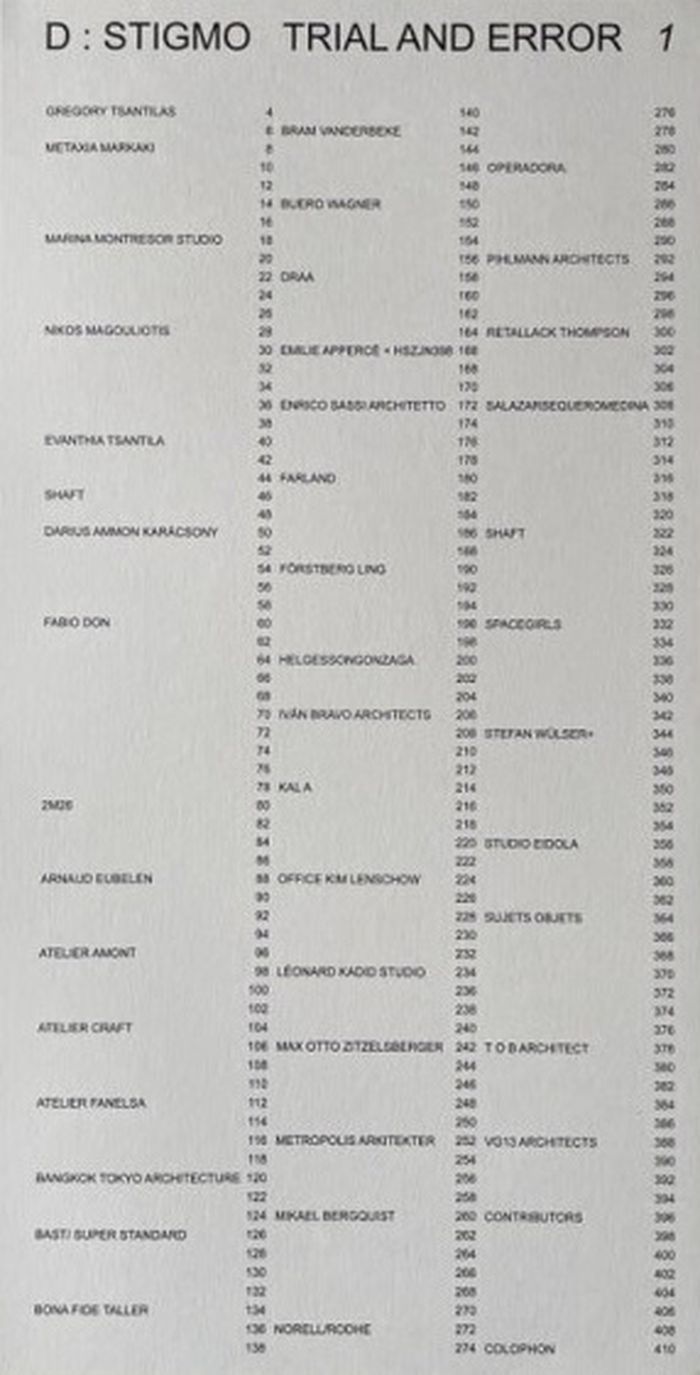
Titre:
Distigmo: Trial and error 1
Distigmo: Trial and error 1
Actions:
Prix:
$87.00
(disponible en magasin)
Résumé:
DISTIGMO is an independent magazine and publisher that emerged through a method of trial and error—also the title and theme of its inaugural issue. Trial and Error focuses on early design stages, experiments, mistakes, and unexpected turns, aligning with the magazine's core purpose: to adopt an open and non-linear process in the development of its issues. Each issue(...)
$87.00
(disponible en magasin)
Résumé:
DISTIGMO is an independent magazine and publisher that emerged through a method of trial and error—also the title and theme of its inaugural issue. Trial and Error focuses on early design stages, experiments, mistakes, and unexpected turns, aligning with the magazine's core purpose: to adopt an open and non-linear process in the development of its issues. Each issue(...)
Titre:
Distigmo: Trial and error 1
Actions:
Prix:
$87.00
(disponible en magasin)
Résumé:
DISTIGMO is an independent magazine and publisher that emerged through a method of trial and error—also the title and theme of its inaugural issue. Trial and Error focuses on early design stages, experiments, mistakes, and unexpected turns, aligning with the magazine's core purpose: to adopt an open and non-linear process in the development of its issues. Each issue reinforces our central concept through a circular approach and the identity of the magazine is evolving with the publication of each issue. Therefore, contributors are essential to DISTIGMO's identity and voice. The articles, essays, sketches and photographs that compose each issue enrich and guide the magazine's direction and overall narrative.
Distigmo: Trial and error 1
Actions:
Prix:
$87.00
(disponible en magasin)
Résumé:
DISTIGMO is an independent magazine and publisher that emerged through a method of trial and error—also the title and theme of its inaugural issue. Trial and Error focuses on early design stages, experiments, mistakes, and unexpected turns, aligning with the magazine's core purpose: to adopt an open and non-linear process in the development of its issues. Each issue reinforces our central concept through a circular approach and the identity of the magazine is evolving with the publication of each issue. Therefore, contributors are essential to DISTIGMO's identity and voice. The articles, essays, sketches and photographs that compose each issue enrich and guide the magazine's direction and overall narrative.
Classification:
périodiques
périodiques
Publication:
septembre 2025
septembre 2025
Classification:
livres
livres

Prix:
$25.00
(disponible en magasin)
Résumé:
François Chaslin nous restitue l'étonnante destinée d'Antonin Carême (1783-1833), as du pastillage, du mastic et de la pâte – brisée ou feuilletée, sucrée ou salée, d'amande ou de fruits. Apprenti rue Vivienne, le jeune tourier se prend de passion pour l'architecture à l'ancienne Bibliothèque royale. Pâtissier rue de la Paix, repéré pour les banquets de Talleyrand, il est(...)
$25.00
(disponible en magasin)
Résumé:
François Chaslin nous restitue l'étonnante destinée d'Antonin Carême (1783-1833), as du pastillage, du mastic et de la pâte – brisée ou feuilletée, sucrée ou salée, d'amande ou de fruits. Apprenti rue Vivienne, le jeune tourier se prend de passion pour l'architecture à l'ancienne Bibliothèque royale. Pâtissier rue de la Paix, repéré pour les banquets de Talleyrand, il est(...)
Titre:
Beauté comestible: Les architectures du pâtissier carême
Actions:
Prix:
$25.00
(disponible en magasin)
Résumé:
François Chaslin nous restitue l'étonnante destinée d'Antonin Carême (1783-1833), as du pastillage, du mastic et de la pâte – brisée ou feuilletée, sucrée ou salée, d'amande ou de fruits. Apprenti rue Vivienne, le jeune tourier se prend de passion pour l'architecture à l'ancienne Bibliothèque royale. Pâtissier rue de la Paix, repéré pour les banquets de Talleyrand, il est vite surnommé « le roi des chefs et le chef des rois ». La réputation de ses spectaculaires pièces montées le fait publier de véritables traités d'architectures pâtissières tour à tour « pittoresques », « royales » ou « parisiennes » (1815). Au point même de prescrire des projets urbains pour Saint-Pétersbourg et Paris et, à titre posthume, se voir élevé au rang de « pâtissier national ».
Beauté comestible: Les architectures du pâtissier carême
Actions:
Prix:
$25.00
(disponible en magasin)
Résumé:
François Chaslin nous restitue l'étonnante destinée d'Antonin Carême (1783-1833), as du pastillage, du mastic et de la pâte – brisée ou feuilletée, sucrée ou salée, d'amande ou de fruits. Apprenti rue Vivienne, le jeune tourier se prend de passion pour l'architecture à l'ancienne Bibliothèque royale. Pâtissier rue de la Paix, repéré pour les banquets de Talleyrand, il est vite surnommé « le roi des chefs et le chef des rois ». La réputation de ses spectaculaires pièces montées le fait publier de véritables traités d'architectures pâtissières tour à tour « pittoresques », « royales » ou « parisiennes » (1815). Au point même de prescrire des projets urbains pour Saint-Pétersbourg et Paris et, à titre posthume, se voir élevé au rang de « pâtissier national ».
Classification:
livres
livres
Publication:
juin 2025
juin 2025


