


35831 Résultats
Niveau de description archivistique:
Série(s)
Série(s)
Titre:
Housings
Housings
Numéro de référence:
AP185.S1
Description:
This project, 1998-2000, documents the conception and design of Housings, mass-customized prefabricated residences, by the architecture firm KOL/MAC. KOL/MAC began by digitally blending a typical 3 bedroom, 2.5 bathroom colonial house with a range of other objects or use cases. The result was six related houses that explored the relationship between customization and mass prefabrication. Housings relates to KOL/MAC’s exploration of what they call chimerical projects, where form and function are combined to create uniquely hybridized structures. The project records are largely in CAD formats, including Alias Wire, Maya, and IGES files; there are a number of raster image formats, including TIF, Alias pix, Mac Pict images, and JPEG. The materials include renderings, wireframe drawings, and still images of the various Housings structures. There is also a body of material from and related to the concrete manufacturer, YTONG, as well as a small amount of video material, which is only partially accessible due to format obsolescence. Source: “Kolatan / MacDonald Studio.” Archilab. Published in 2000. Accessed 21 November 2017. http://www.archilab.org/public/2000/catalog/kolata/kolataen.htm.
AP185.S1
Description:
This project, 1998-2000, documents the conception and design of Housings, mass-customized prefabricated residences, by the architecture firm KOL/MAC. KOL/MAC began by digitally blending a typical 3 bedroom, 2.5 bathroom colonial house with a range of other objects or use cases. The result was six related houses that explored the relationship between customization and mass prefabrication. Housings relates to KOL/MAC’s exploration of what they call chimerical projects, where form and function are combined to create uniquely hybridized structures. The project records are largely in CAD formats, including Alias Wire, Maya, and IGES files; there are a number of raster image formats, including TIF, Alias pix, Mac Pict images, and JPEG. The materials include renderings, wireframe drawings, and still images of the various Housings structures. There is also a body of material from and related to the concrete manufacturer, YTONG, as well as a small amount of video material, which is only partially accessible due to format obsolescence. Source: “Kolatan / MacDonald Studio.” Archilab. Published in 2000. Accessed 21 November 2017. http://www.archilab.org/public/2000/catalog/kolata/kolataen.htm.
Personnes et institutions:
Date:
1998-2000
1998-2000
Titre:
Housings
Actions:
AP185.S1
Description:
This project, 1998-2000, documents the conception and design of Housings, mass-customized prefabricated residences, by the architecture firm KOL/MAC. KOL/MAC began by digitally blending a typical 3 bedroom, 2.5 bathroom colonial house with a range of other objects or use cases. The result was six related houses that explored the relationship between customization and mass prefabrication. Housings relates to KOL/MAC’s exploration of what they call chimerical projects, where form and function are combined to create uniquely hybridized structures. The project records are largely in CAD formats, including Alias Wire, Maya, and IGES files; there are a number of raster image formats, including TIF, Alias pix, Mac Pict images, and JPEG. The materials include renderings, wireframe drawings, and still images of the various Housings structures. There is also a body of material from and related to the concrete manufacturer, YTONG, as well as a small amount of video material, which is only partially accessible due to format obsolescence. Source: “Kolatan / MacDonald Studio.” Archilab. Published in 2000. Accessed 21 November 2017. http://www.archilab.org/public/2000/catalog/kolata/kolataen.htm.
Housings
Actions:
AP185.S1
Description:
This project, 1998-2000, documents the conception and design of Housings, mass-customized prefabricated residences, by the architecture firm KOL/MAC. KOL/MAC began by digitally blending a typical 3 bedroom, 2.5 bathroom colonial house with a range of other objects or use cases. The result was six related houses that explored the relationship between customization and mass prefabrication. Housings relates to KOL/MAC’s exploration of what they call chimerical projects, where form and function are combined to create uniquely hybridized structures. The project records are largely in CAD formats, including Alias Wire, Maya, and IGES files; there are a number of raster image formats, including TIF, Alias pix, Mac Pict images, and JPEG. The materials include renderings, wireframe drawings, and still images of the various Housings structures. There is also a body of material from and related to the concrete manufacturer, YTONG, as well as a small amount of video material, which is only partially accessible due to format obsolescence. Source: “Kolatan / MacDonald Studio.” Archilab. Published in 2000. Accessed 21 November 2017. http://www.archilab.org/public/2000/catalog/kolata/kolataen.htm.
Niveau de description archivistique:
Series
Series
Date:
1998-2000
1998-2000
Personnes et institutions:
Classification:
documents textuels
documents textuels
Numéro de référence:
ARCH267612
Description:
This group consists of minutes of meetings, memorandums, and correspondence with the ministère des Travaux publics du Québec.
ARCH267612
Description:
This group consists of minutes of meetings, memorandums, and correspondence with the ministère des Travaux publics du Québec.
Personnes et institutions:
Date:
1979-1983
1979-1983
Titre:
PCM / Approbation du MHPC / D.I.B/D.A.P / Dossier VP
Actions:
ARCH267612
Description:
This group consists of minutes of meetings, memorandums, and correspondence with the ministère des Travaux publics du Québec.
PCM / Approbation du MHPC / D.I.B/D.A.P / Dossier VP
Actions:
ARCH267612
Description:
This group consists of minutes of meetings, memorandums, and correspondence with the ministère des Travaux publics du Québec.
Classification:
documents textuels
documents textuels
Date:
1979-1983
1979-1983
Personnes et institutions:
Classification:
expositions
expositions
Actions:
Description:
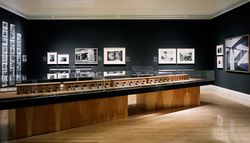
L’exposition, qui marque le 10e anniversaire de l’inauguration du CCA au public, met en valeur et en interaction les acquisitions dans ses dix premières années. En chantier propose plus de 350 estampes, dessins, photographies, livres rares, manuscrits, jouets et maquettes qui démontrent comment l’architecture a été imaginée, conçue, observée et perçue pendant cinq siècles(...)
L’exposition, qui marque le 10e anniversaire de l’inauguration du CCA au public, met en valeur et en interaction les acquisitions dans ses dix premières années. En chantier propose plus de 350 estampes, dessins, photographies, livres rares, manuscrits, jouets et maquettes qui démontrent comment l’architecture a été imaginée, conçue, observée et perçue pendant cinq siècles(...)
Localisation:
Salles principales et vitrines
Salles principales et vitrines
Date:
24 novembre 1999 au 30 avril 2000
24 novembre 1999 au 30 avril 2000
Titre:
En chantier : les collections du CCA, 1989-1999
Actions:
Description:
L’exposition, qui marque le 10e anniversaire de l’inauguration du CCA au public, met en valeur et en interaction les acquisitions dans ses dix premières années. En chantier propose plus de 350 estampes, dessins, photographies, livres rares, manuscrits, jouets et maquettes qui démontrent comment l’architecture a été imaginée, conçue, observée et perçue pendant cinq siècles(...)
En chantier : les collections du CCA, 1989-1999
Actions:
Description:
L’exposition, qui marque le 10e anniversaire de l’inauguration du CCA au public, met en valeur et en interaction les acquisitions dans ses dix premières années. En chantier propose plus de 350 estampes, dessins, photographies, livres rares, manuscrits, jouets et maquettes qui démontrent comment l’architecture a été imaginée, conçue, observée et perçue pendant cinq siècles(...)
Classification:
expositions
expositions
Date:
24 novembre 1999 au
30 avril 2000
24 novembre 1999 au
30 avril 2000
Localisation:
Salles principales et vitrines
Salles principales et vitrines
Classification:
archives
Niveau de description archivistique:
Fonds
archives
Niveau de description archivistique:
Fonds
Titre:
Fonds Robert Duchesnay
Fonds Robert Duchesnay
Numéro de référence:
AP115
Résumé:
Le Fonds Robert Duchesnay consiste en une série de photographies montrant les divers structure (principalement des dômes géodésiques) conçus ou influencée par R. Buckminster Fuller. Les photographies, prises par l'artiste et photographe montréalais Robert Duchesnay, ont été créées entre 1985 et 1992.
AP115
Résumé:
Le Fonds Robert Duchesnay consiste en une série de photographies montrant les divers structure (principalement des dômes géodésiques) conçus ou influencée par R. Buckminster Fuller. Les photographies, prises par l'artiste et photographe montréalais Robert Duchesnay, ont été créées entre 1985 et 1992.
Personnes et institutions:
Date:
1985-1992
1985-1992
Titre:
Fonds Robert Duchesnay
Actions:
AP115
Résumé:
Le Fonds Robert Duchesnay consiste en une série de photographies montrant les divers structure (principalement des dômes géodésiques) conçus ou influencée par R. Buckminster Fuller. Les photographies, prises par l'artiste et photographe montréalais Robert Duchesnay, ont été créées entre 1985 et 1992.
Fonds Robert Duchesnay
Actions:
AP115
Résumé:
Le Fonds Robert Duchesnay consiste en une série de photographies montrant les divers structure (principalement des dômes géodésiques) conçus ou influencée par R. Buckminster Fuller. Les photographies, prises par l'artiste et photographe montréalais Robert Duchesnay, ont été créées entre 1985 et 1992.
Classification:
archives
Niveau de description archivistique:
Fonds
archives
Niveau de description archivistique:
Fonds
Date:
1985-1992
1985-1992
Personnes et institutions:
Classification:
expositions
expositions
Actions:
Description:
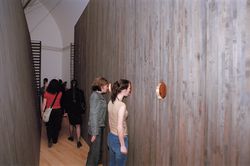
L’exposition Laboratoires explore comment l’architecture peut réagir au monde incertain de l’après 11 septembre et construire un nouveau cadre de réflexion. Six jeunes agences présentent des environnements ou des installations qui examinent le langage fondamental de la pensée architecturale et réaffirment les pouvoirs civilisateurs de l’imagination. Ont participé à cette(...)
L’exposition Laboratoires explore comment l’architecture peut réagir au monde incertain de l’après 11 septembre et construire un nouveau cadre de réflexion. Six jeunes agences présentent des environnements ou des installations qui examinent le langage fondamental de la pensée architecturale et réaffirment les pouvoirs civilisateurs de l’imagination. Ont participé à cette(...)
Localisation:
Salles principales
Salles principales
Date:
18 avril 2002 au 15 septembre 2002
18 avril 2002 au 15 septembre 2002
Titre:
Laboratoires : Six agences de jeunes architectes dans les salles du CCA
Actions:
Description:
L’exposition Laboratoires explore comment l’architecture peut réagir au monde incertain de l’après 11 septembre et construire un nouveau cadre de réflexion. Six jeunes agences présentent des environnements ou des installations qui examinent le langage fondamental de la pensée architecturale et réaffirment les pouvoirs civilisateurs de l’imagination. Ont participé à cette(...)
Laboratoires : Six agences de jeunes architectes dans les salles du CCA
Actions:
Description:
L’exposition Laboratoires explore comment l’architecture peut réagir au monde incertain de l’après 11 septembre et construire un nouveau cadre de réflexion. Six jeunes agences présentent des environnements ou des installations qui examinent le langage fondamental de la pensée architecturale et réaffirment les pouvoirs civilisateurs de l’imagination. Ont participé à cette(...)
Classification:
expositions
expositions
Date:
18 avril 2002 au
15 septembre 2002
18 avril 2002 au
15 septembre 2002
Localisation:
Salles principales
Salles principales
Niveau de description archivistique:
Projet
Projet
Numéro de référence:
AP018.S1.1968.PR01
Description:
This project series documents St. John's City Hall and Civic Centre in Newfoundland from 1968-1970. The office identified the project number as 68002. This project consisted of three phases of development, with phase I being city hall, phase II being a commercial redevelopment, and phase III being additional public buildings. The master program included plans for a library, department store, supermarket, retail stores, a movie theatre, a hotel with a restaurant and banquet hall, a bus terminal and 160 residential units. It is not clear from the project materials whether these buildings were realized. The city hall site consisted of a concrete building on New Grower Street, which sat atop a concrete podium with parking below. A system of diagonal terraces with pedestrian areas also made up the podium. City hall, which was approximately four-storeys at its maximum height, included council chambers, offices, a great hall with artifacts and memorials, and municipal departments, among others. This project won an Award of Excellence for The Canadian Architect in 1968. The project is recorded through reprographic copies of mechanical and electrical drawings dating from 1970.
AP018.S1.1968.PR01
Description:
This project series documents St. John's City Hall and Civic Centre in Newfoundland from 1968-1970. The office identified the project number as 68002. This project consisted of three phases of development, with phase I being city hall, phase II being a commercial redevelopment, and phase III being additional public buildings. The master program included plans for a library, department store, supermarket, retail stores, a movie theatre, a hotel with a restaurant and banquet hall, a bus terminal and 160 residential units. It is not clear from the project materials whether these buildings were realized. The city hall site consisted of a concrete building on New Grower Street, which sat atop a concrete podium with parking below. A system of diagonal terraces with pedestrian areas also made up the podium. City hall, which was approximately four-storeys at its maximum height, included council chambers, offices, a great hall with artifacts and memorials, and municipal departments, among others. This project won an Award of Excellence for The Canadian Architect in 1968. The project is recorded through reprographic copies of mechanical and electrical drawings dating from 1970.
Personnes et institutions:
Date:
1970
1970
Titre:
City Hall and Civic Centre, St. John's, Newfoundland (1968-1970)
Actions:
AP018.S1.1968.PR01
Description:
This project series documents St. John's City Hall and Civic Centre in Newfoundland from 1968-1970. The office identified the project number as 68002. This project consisted of three phases of development, with phase I being city hall, phase II being a commercial redevelopment, and phase III being additional public buildings. The master program included plans for a library, department store, supermarket, retail stores, a movie theatre, a hotel with a restaurant and banquet hall, a bus terminal and 160 residential units. It is not clear from the project materials whether these buildings were realized. The city hall site consisted of a concrete building on New Grower Street, which sat atop a concrete podium with parking below. A system of diagonal terraces with pedestrian areas also made up the podium. City hall, which was approximately four-storeys at its maximum height, included council chambers, offices, a great hall with artifacts and memorials, and municipal departments, among others. This project won an Award of Excellence for The Canadian Architect in 1968. The project is recorded through reprographic copies of mechanical and electrical drawings dating from 1970.
City Hall and Civic Centre, St. John's, Newfoundland (1968-1970)
Actions:
AP018.S1.1968.PR01
Description:
This project series documents St. John's City Hall and Civic Centre in Newfoundland from 1968-1970. The office identified the project number as 68002. This project consisted of three phases of development, with phase I being city hall, phase II being a commercial redevelopment, and phase III being additional public buildings. The master program included plans for a library, department store, supermarket, retail stores, a movie theatre, a hotel with a restaurant and banquet hall, a bus terminal and 160 residential units. It is not clear from the project materials whether these buildings were realized. The city hall site consisted of a concrete building on New Grower Street, which sat atop a concrete podium with parking below. A system of diagonal terraces with pedestrian areas also made up the podium. City hall, which was approximately four-storeys at its maximum height, included council chambers, offices, a great hall with artifacts and memorials, and municipal departments, among others. This project won an Award of Excellence for The Canadian Architect in 1968. The project is recorded through reprographic copies of mechanical and electrical drawings dating from 1970.
Niveau de description archivistique:
Project
Project
Date:
1970
1970
Personnes et institutions:
Niveau de description archivistique:
Projet
Projet
Numéro de référence:
AP056.S1.1987.PR03
Description:
This project series documents renovations and expansions to the Dorchester Corporation offices in Chicago from 1987-1988. The office identified the project number as 8736. This project primarily consisted of the expansion and renovation of the offices located on the 23rd and 24th floor of the historic Jeweler's Building located at 35 East Wacker Drive. The client, Marex Properties Limited, requested the interior modernization of the terracotta-faced building, without compromising its historical character. This included the general update of public spaces, the redesign of typical office corridors, washrooms, windows and signage. The 23rd floor was gutted and rebuilt with a new glass façade, exterior deck and interior layout. An additional 4,000 square feet of space was added to the 24th floor by pushing the exterior walls outward. A complete upgrade of life safety, HVAC, mechanical and electrical systems was also implemented. Led by Marianne McKenna and Thomas Payne, this project won the 1990 Modernization Award of Excellence from Buildings Magazine. The project is recorded through drawings and photographic materials dating from 1987-1989. The drawings are mostly originals and include sketches, presentation drawings, plans and elevations.
AP056.S1.1987.PR03
Description:
This project series documents renovations and expansions to the Dorchester Corporation offices in Chicago from 1987-1988. The office identified the project number as 8736. This project primarily consisted of the expansion and renovation of the offices located on the 23rd and 24th floor of the historic Jeweler's Building located at 35 East Wacker Drive. The client, Marex Properties Limited, requested the interior modernization of the terracotta-faced building, without compromising its historical character. This included the general update of public spaces, the redesign of typical office corridors, washrooms, windows and signage. The 23rd floor was gutted and rebuilt with a new glass façade, exterior deck and interior layout. An additional 4,000 square feet of space was added to the 24th floor by pushing the exterior walls outward. A complete upgrade of life safety, HVAC, mechanical and electrical systems was also implemented. Led by Marianne McKenna and Thomas Payne, this project won the 1990 Modernization Award of Excellence from Buildings Magazine. The project is recorded through drawings and photographic materials dating from 1987-1989. The drawings are mostly originals and include sketches, presentation drawings, plans and elevations.
Personnes et institutions:
Date:
1987-1989
1987-1989
Titre:
The Dorchester Corporation, Chicago (1987-1988)
Actions:
AP056.S1.1987.PR03
Description:
This project series documents renovations and expansions to the Dorchester Corporation offices in Chicago from 1987-1988. The office identified the project number as 8736. This project primarily consisted of the expansion and renovation of the offices located on the 23rd and 24th floor of the historic Jeweler's Building located at 35 East Wacker Drive. The client, Marex Properties Limited, requested the interior modernization of the terracotta-faced building, without compromising its historical character. This included the general update of public spaces, the redesign of typical office corridors, washrooms, windows and signage. The 23rd floor was gutted and rebuilt with a new glass façade, exterior deck and interior layout. An additional 4,000 square feet of space was added to the 24th floor by pushing the exterior walls outward. A complete upgrade of life safety, HVAC, mechanical and electrical systems was also implemented. Led by Marianne McKenna and Thomas Payne, this project won the 1990 Modernization Award of Excellence from Buildings Magazine. The project is recorded through drawings and photographic materials dating from 1987-1989. The drawings are mostly originals and include sketches, presentation drawings, plans and elevations.
The Dorchester Corporation, Chicago (1987-1988)
Actions:
AP056.S1.1987.PR03
Description:
This project series documents renovations and expansions to the Dorchester Corporation offices in Chicago from 1987-1988. The office identified the project number as 8736. This project primarily consisted of the expansion and renovation of the offices located on the 23rd and 24th floor of the historic Jeweler's Building located at 35 East Wacker Drive. The client, Marex Properties Limited, requested the interior modernization of the terracotta-faced building, without compromising its historical character. This included the general update of public spaces, the redesign of typical office corridors, washrooms, windows and signage. The 23rd floor was gutted and rebuilt with a new glass façade, exterior deck and interior layout. An additional 4,000 square feet of space was added to the 24th floor by pushing the exterior walls outward. A complete upgrade of life safety, HVAC, mechanical and electrical systems was also implemented. Led by Marianne McKenna and Thomas Payne, this project won the 1990 Modernization Award of Excellence from Buildings Magazine. The project is recorded through drawings and photographic materials dating from 1987-1989. The drawings are mostly originals and include sketches, presentation drawings, plans and elevations.
Niveau de description archivistique:
Project
Project
Date:
1987-1989
1987-1989
Personnes et institutions:
Classification:
documents textuels
documents textuels
Numéro de référence:
DR1995:0188:1057-1177
Description:
several folders that include, correspondence including some from Philip Johnson, reports on Fun Palace and on Pilot Project, notes, draft article, building programme, architect's statement, minutes of meeting, notes, list drawings, memoranda, clippings, draft appeal, appeal withdrawal, preliminary quantity survey, list of drawings for Camden Town proposal, project notes, calculations, publications, invoices, brochure, poster, site analysis for South Bank and for Liverpool, sketches, pamphlet, promotional material, public relations report, planning applications, trade catalogue, price list, auction document, drawing, time table, cost estimate for Camden Town Pilot Project, draft film sequence, site analysis for Glasgow, schedule, and notice of planning inquiry
DR1995:0188:1057-1177
Description:
several folders that include, correspondence including some from Philip Johnson, reports on Fun Palace and on Pilot Project, notes, draft article, building programme, architect's statement, minutes of meeting, notes, list drawings, memoranda, clippings, draft appeal, appeal withdrawal, preliminary quantity survey, list of drawings for Camden Town proposal, project notes, calculations, publications, invoices, brochure, poster, site analysis for South Bank and for Liverpool, sketches, pamphlet, promotional material, public relations report, planning applications, trade catalogue, price list, auction document, drawing, time table, cost estimate for Camden Town Pilot Project, draft film sequence, site analysis for Glasgow, schedule, and notice of planning inquiry
Personnes et institutions:
Titre:
Several folders that include, correspondence including some from Philip Johnson
Actions:
DR1995:0188:1057-1177
Description:
several folders that include, correspondence including some from Philip Johnson, reports on Fun Palace and on Pilot Project, notes, draft article, building programme, architect's statement, minutes of meeting, notes, list drawings, memoranda, clippings, draft appeal, appeal withdrawal, preliminary quantity survey, list of drawings for Camden Town proposal, project notes, calculations, publications, invoices, brochure, poster, site analysis for South Bank and for Liverpool, sketches, pamphlet, promotional material, public relations report, planning applications, trade catalogue, price list, auction document, drawing, time table, cost estimate for Camden Town Pilot Project, draft film sequence, site analysis for Glasgow, schedule, and notice of planning inquiry
Several folders that include, correspondence including some from Philip Johnson
Actions:
DR1995:0188:1057-1177
Description:
several folders that include, correspondence including some from Philip Johnson, reports on Fun Palace and on Pilot Project, notes, draft article, building programme, architect's statement, minutes of meeting, notes, list drawings, memoranda, clippings, draft appeal, appeal withdrawal, preliminary quantity survey, list of drawings for Camden Town proposal, project notes, calculations, publications, invoices, brochure, poster, site analysis for South Bank and for Liverpool, sketches, pamphlet, promotional material, public relations report, planning applications, trade catalogue, price list, auction document, drawing, time table, cost estimate for Camden Town Pilot Project, draft film sequence, site analysis for Glasgow, schedule, and notice of planning inquiry
Classification:
documents textuels
documents textuels
Personnes et institutions:
Niveau de description archivistique:
Projet
Projet
Numéro de référence:
AP056.S1.1993.PR01
Description:
This project series documents the Scarborough Community Complex in Scarborough, Ontario from 1993-1996. The office identified the project number as 9311. This project, headed by Bruce Kuwabara in joint-venture with Patrick T. Chan, consisted of a multi-building complex on the corner of Progress and Sheppard Avenues. The project was formerly known as the Chinese Community Centre, which was the prominent building on the site. The Complex's main entrance, located on the site's interior, was highlighted by the Festival Plaza and Festival Court, whose octagonal shape was a nod to the eight essential strokes of Chinese calligraphy. The Festival Court led both to the Chinese Community Centre and a building with a public library and multi-purpose spaces (commonly referred to in the drawings as the Scarborough Community Complex). The Chinese Community Centre had a Festival Hall at it's entrance with wood and custom light fixtures that referred to Chinese craft techniques. This project also planned for vast Chinese gardens around the buildings, a large theatre building and a school at the south-end of the site. The project is recorded through drawings and a magazine publication on the finished project dating from 1992-1996. The drawings are mostly originals and include sketches, presentation drawings, plans, elevations, sections, perspectives and construction drawings. At least eleven schemes were investigated through these drawings.
AP056.S1.1993.PR01
Description:
This project series documents the Scarborough Community Complex in Scarborough, Ontario from 1993-1996. The office identified the project number as 9311. This project, headed by Bruce Kuwabara in joint-venture with Patrick T. Chan, consisted of a multi-building complex on the corner of Progress and Sheppard Avenues. The project was formerly known as the Chinese Community Centre, which was the prominent building on the site. The Complex's main entrance, located on the site's interior, was highlighted by the Festival Plaza and Festival Court, whose octagonal shape was a nod to the eight essential strokes of Chinese calligraphy. The Festival Court led both to the Chinese Community Centre and a building with a public library and multi-purpose spaces (commonly referred to in the drawings as the Scarborough Community Complex). The Chinese Community Centre had a Festival Hall at it's entrance with wood and custom light fixtures that referred to Chinese craft techniques. This project also planned for vast Chinese gardens around the buildings, a large theatre building and a school at the south-end of the site. The project is recorded through drawings and a magazine publication on the finished project dating from 1992-1996. The drawings are mostly originals and include sketches, presentation drawings, plans, elevations, sections, perspectives and construction drawings. At least eleven schemes were investigated through these drawings.
Personnes et institutions:
Date:
1992-1996
1992-1996
Titre:
Scarborough Community Complex, Scarborough, Ontario (1993-1996)
Actions:
AP056.S1.1993.PR01
Description:
This project series documents the Scarborough Community Complex in Scarborough, Ontario from 1993-1996. The office identified the project number as 9311. This project, headed by Bruce Kuwabara in joint-venture with Patrick T. Chan, consisted of a multi-building complex on the corner of Progress and Sheppard Avenues. The project was formerly known as the Chinese Community Centre, which was the prominent building on the site. The Complex's main entrance, located on the site's interior, was highlighted by the Festival Plaza and Festival Court, whose octagonal shape was a nod to the eight essential strokes of Chinese calligraphy. The Festival Court led both to the Chinese Community Centre and a building with a public library and multi-purpose spaces (commonly referred to in the drawings as the Scarborough Community Complex). The Chinese Community Centre had a Festival Hall at it's entrance with wood and custom light fixtures that referred to Chinese craft techniques. This project also planned for vast Chinese gardens around the buildings, a large theatre building and a school at the south-end of the site. The project is recorded through drawings and a magazine publication on the finished project dating from 1992-1996. The drawings are mostly originals and include sketches, presentation drawings, plans, elevations, sections, perspectives and construction drawings. At least eleven schemes were investigated through these drawings.
Scarborough Community Complex, Scarborough, Ontario (1993-1996)
Actions:
AP056.S1.1993.PR01
Description:
This project series documents the Scarborough Community Complex in Scarborough, Ontario from 1993-1996. The office identified the project number as 9311. This project, headed by Bruce Kuwabara in joint-venture with Patrick T. Chan, consisted of a multi-building complex on the corner of Progress and Sheppard Avenues. The project was formerly known as the Chinese Community Centre, which was the prominent building on the site. The Complex's main entrance, located on the site's interior, was highlighted by the Festival Plaza and Festival Court, whose octagonal shape was a nod to the eight essential strokes of Chinese calligraphy. The Festival Court led both to the Chinese Community Centre and a building with a public library and multi-purpose spaces (commonly referred to in the drawings as the Scarborough Community Complex). The Chinese Community Centre had a Festival Hall at it's entrance with wood and custom light fixtures that referred to Chinese craft techniques. This project also planned for vast Chinese gardens around the buildings, a large theatre building and a school at the south-end of the site. The project is recorded through drawings and a magazine publication on the finished project dating from 1992-1996. The drawings are mostly originals and include sketches, presentation drawings, plans, elevations, sections, perspectives and construction drawings. At least eleven schemes were investigated through these drawings.
Niveau de description archivistique:
Project
Project
Date:
1992-1996
1992-1996
Personnes et institutions:
Niveau de description archivistique:
Projet
Projet
Titre:
Quinta da Bela Flor, Lisboa
Quinta da Bela Flor, Lisboa
Numéro de référence:
CD034.S1.1976.PR01
Description:
This project series contains one reproduction of a photograph displayed in the exhibit to document the Quinta da Bela Flor neighbourhood, in Lisbon, Portugal. The exhibit text explained that: Artur Rosa's project in the neighbourhood grew out of a shanty town, built on a difficult site, dating back to the 19th century, with reports of families living in hillside caves that today flank the entrance to a nearby highway. The process was based on voluntary work, and its ending presented a huge disappointment to the local brigade. In 1976 and 1977, Artur Rosa, also a practicing artist, produced three works that reflected on SAAL, its failure and the subsequent sense of persecution felt by many brigade leaders. The decision not to present the project but rather the artistic interventions aims at revealing the performative nature of the process, its poetic intensity and the way it related to its protagonists. In 1977 the architect presented a performance at the Fine Arts Society in Lisbon in which he closed the documentation of the project in a darkened room. The following year, he presented a structure with the documentation closed inside, and finally he used the project drawings in a collage with photographs on the occasion of the first public tap in Quinta da Bela-Flor. Those poetic artistic interventions are his form of publicly mourning the end of the SAAL process. (The SAAL Process, Housing in Portugal 1974–76) Artur Rosa worked for SAAL/Lisbon and Central South with Etelvina José, Hélio Oliveira, José Luís Teles Rebolo, José Miguel Fonseca, Luís Pereira, Manuel Coutinho Raposo, Maria Fernanda Carvalho, Maria Isabel Rodrigues Lobo, Nuno Blanco Bártolo, Nuno Martins and the residents' association Cooperativa de Habitação Económica Bela Flor, that was founded on February 13th, 1976. The project included 288 dwellings. The operation began in September 1976, with a construction date in December 1976. This project series contains a reproduction of a photograph of a model. The original photograph was produced around 1976 and was reproduced in 2015 for the exhibit.
CD034.S1.1976.PR01
Description:
This project series contains one reproduction of a photograph displayed in the exhibit to document the Quinta da Bela Flor neighbourhood, in Lisbon, Portugal. The exhibit text explained that: Artur Rosa's project in the neighbourhood grew out of a shanty town, built on a difficult site, dating back to the 19th century, with reports of families living in hillside caves that today flank the entrance to a nearby highway. The process was based on voluntary work, and its ending presented a huge disappointment to the local brigade. In 1976 and 1977, Artur Rosa, also a practicing artist, produced three works that reflected on SAAL, its failure and the subsequent sense of persecution felt by many brigade leaders. The decision not to present the project but rather the artistic interventions aims at revealing the performative nature of the process, its poetic intensity and the way it related to its protagonists. In 1977 the architect presented a performance at the Fine Arts Society in Lisbon in which he closed the documentation of the project in a darkened room. The following year, he presented a structure with the documentation closed inside, and finally he used the project drawings in a collage with photographs on the occasion of the first public tap in Quinta da Bela-Flor. Those poetic artistic interventions are his form of publicly mourning the end of the SAAL process. (The SAAL Process, Housing in Portugal 1974–76) Artur Rosa worked for SAAL/Lisbon and Central South with Etelvina José, Hélio Oliveira, José Luís Teles Rebolo, José Miguel Fonseca, Luís Pereira, Manuel Coutinho Raposo, Maria Fernanda Carvalho, Maria Isabel Rodrigues Lobo, Nuno Blanco Bártolo, Nuno Martins and the residents' association Cooperativa de Habitação Económica Bela Flor, that was founded on February 13th, 1976. The project included 288 dwellings. The operation began in September 1976, with a construction date in December 1976. This project series contains a reproduction of a photograph of a model. The original photograph was produced around 1976 and was reproduced in 2015 for the exhibit.
Personnes et institutions:
Date:
circa 1976
circa 1976
Titre:
Quinta da Bela Flor, Lisboa
Actions:
CD034.S1.1976.PR01
Description:
This project series contains one reproduction of a photograph displayed in the exhibit to document the Quinta da Bela Flor neighbourhood, in Lisbon, Portugal. The exhibit text explained that: Artur Rosa's project in the neighbourhood grew out of a shanty town, built on a difficult site, dating back to the 19th century, with reports of families living in hillside caves that today flank the entrance to a nearby highway. The process was based on voluntary work, and its ending presented a huge disappointment to the local brigade. In 1976 and 1977, Artur Rosa, also a practicing artist, produced three works that reflected on SAAL, its failure and the subsequent sense of persecution felt by many brigade leaders. The decision not to present the project but rather the artistic interventions aims at revealing the performative nature of the process, its poetic intensity and the way it related to its protagonists. In 1977 the architect presented a performance at the Fine Arts Society in Lisbon in which he closed the documentation of the project in a darkened room. The following year, he presented a structure with the documentation closed inside, and finally he used the project drawings in a collage with photographs on the occasion of the first public tap in Quinta da Bela-Flor. Those poetic artistic interventions are his form of publicly mourning the end of the SAAL process. (The SAAL Process, Housing in Portugal 1974–76) Artur Rosa worked for SAAL/Lisbon and Central South with Etelvina José, Hélio Oliveira, José Luís Teles Rebolo, José Miguel Fonseca, Luís Pereira, Manuel Coutinho Raposo, Maria Fernanda Carvalho, Maria Isabel Rodrigues Lobo, Nuno Blanco Bártolo, Nuno Martins and the residents' association Cooperativa de Habitação Económica Bela Flor, that was founded on February 13th, 1976. The project included 288 dwellings. The operation began in September 1976, with a construction date in December 1976. This project series contains a reproduction of a photograph of a model. The original photograph was produced around 1976 and was reproduced in 2015 for the exhibit.
Quinta da Bela Flor, Lisboa
Actions:
CD034.S1.1976.PR01
Description:
This project series contains one reproduction of a photograph displayed in the exhibit to document the Quinta da Bela Flor neighbourhood, in Lisbon, Portugal. The exhibit text explained that: Artur Rosa's project in the neighbourhood grew out of a shanty town, built on a difficult site, dating back to the 19th century, with reports of families living in hillside caves that today flank the entrance to a nearby highway. The process was based on voluntary work, and its ending presented a huge disappointment to the local brigade. In 1976 and 1977, Artur Rosa, also a practicing artist, produced three works that reflected on SAAL, its failure and the subsequent sense of persecution felt by many brigade leaders. The decision not to present the project but rather the artistic interventions aims at revealing the performative nature of the process, its poetic intensity and the way it related to its protagonists. In 1977 the architect presented a performance at the Fine Arts Society in Lisbon in which he closed the documentation of the project in a darkened room. The following year, he presented a structure with the documentation closed inside, and finally he used the project drawings in a collage with photographs on the occasion of the first public tap in Quinta da Bela-Flor. Those poetic artistic interventions are his form of publicly mourning the end of the SAAL process. (The SAAL Process, Housing in Portugal 1974–76) Artur Rosa worked for SAAL/Lisbon and Central South with Etelvina José, Hélio Oliveira, José Luís Teles Rebolo, José Miguel Fonseca, Luís Pereira, Manuel Coutinho Raposo, Maria Fernanda Carvalho, Maria Isabel Rodrigues Lobo, Nuno Blanco Bártolo, Nuno Martins and the residents' association Cooperativa de Habitação Económica Bela Flor, that was founded on February 13th, 1976. The project included 288 dwellings. The operation began in September 1976, with a construction date in December 1976. This project series contains a reproduction of a photograph of a model. The original photograph was produced around 1976 and was reproduced in 2015 for the exhibit.
Niveau de description archivistique:
Project
Project
Date:
circa 1976
circa 1976
Personnes et institutions:


