


1046 Résultats
Classification:
livres
livres
Prix:
$60.00
(disponible sur commande)
Résumé:
The English architects Alison Smithson (1928–1993) and Peter Smithson (1923–2003) were ringleaders of the New Brutalism, active in CIAM and Team 10, and influential in English Pop Art. The Smithsons, who met as architecture students, built only a few buildings but wrote prolifically throughout their career, leaving a body of writings that consider issues in architecture(...)
$60.00
(disponible sur commande)
Résumé:
The English architects Alison Smithson (1928–1993) and Peter Smithson (1923–2003) were ringleaders of the New Brutalism, active in CIAM and Team 10, and influential in English Pop Art. The Smithsons, who met as architecture students, built only a few buildings but wrote prolifically throughout their career, leaving a body of writings that consider issues in architecture(...)
Titre:
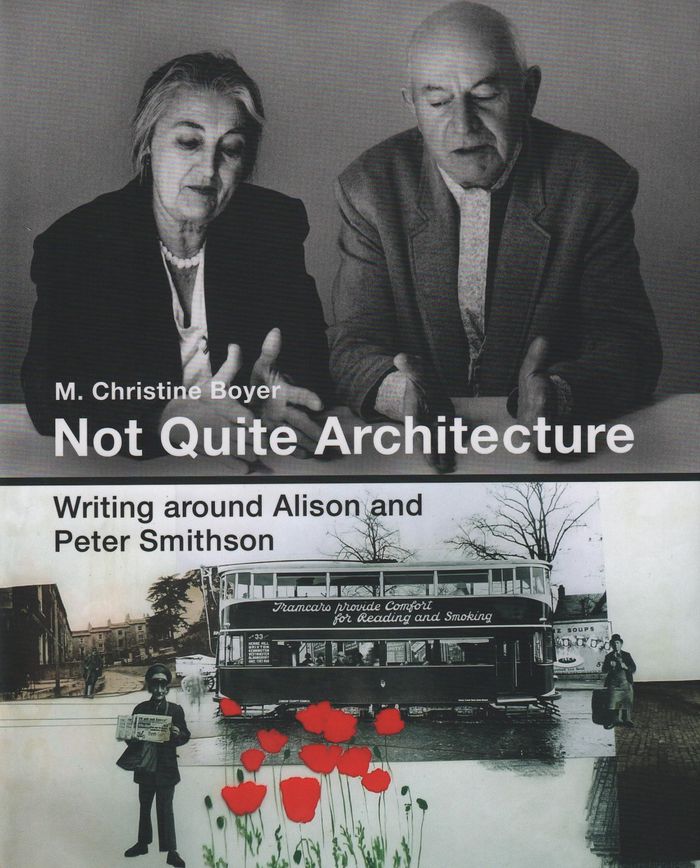
Not quite architecture: writing around Alison and Peter Smithson
Actions:
Prix:
$60.00
(disponible sur commande)
Résumé:
The English architects Alison Smithson (1928–1993) and Peter Smithson (1923–2003) were ringleaders of the New Brutalism, active in CIAM and Team 10, and influential in English Pop Art. The Smithsons, who met as architecture students, built only a few buildings but wrote prolifically throughout their career, leaving a body of writings that consider issues in architecture and urbanism and also take up subjects that are “not quite architecture” (the name of a series of articles written by Alison Smithson for the Architects’ Journal)—including fashion design, graphic communication, and children’s tales. In this book, M. Christine Boyer explores the Smithsons’ writings—books, articles, lectures, unpublished manuscripts, and private papers. She focuses on unpublished material, reading the letter, the scribbled note, the undelivered lecture, the scrapbook, the “magic box,” as words in the language of modern architectural history—especially that of postwar England, where the Smithsons and other architects were at the center of the richest possible range of cultural encounters. Boyer is “writing around” the Smithsons’ work by considering the cultural contexts in which they formed and wrote about their ideas.
Not quite architecture: writing around Alison and Peter Smithson
Actions:
Prix:
$60.00
(disponible sur commande)
Résumé:
The English architects Alison Smithson (1928–1993) and Peter Smithson (1923–2003) were ringleaders of the New Brutalism, active in CIAM and Team 10, and influential in English Pop Art. The Smithsons, who met as architecture students, built only a few buildings but wrote prolifically throughout their career, leaving a body of writings that consider issues in architecture and urbanism and also take up subjects that are “not quite architecture” (the name of a series of articles written by Alison Smithson for the Architects’ Journal)—including fashion design, graphic communication, and children’s tales. In this book, M. Christine Boyer explores the Smithsons’ writings—books, articles, lectures, unpublished manuscripts, and private papers. She focuses on unpublished material, reading the letter, the scribbled note, the undelivered lecture, the scrapbook, the “magic box,” as words in the language of modern architectural history—especially that of postwar England, where the Smithsons and other architects were at the center of the richest possible range of cultural encounters. Boyer is “writing around” the Smithsons’ work by considering the cultural contexts in which they formed and wrote about their ideas.
Classification:
livres
livres
Publication:
mars 2017
mars 2017
Sujet:
Théorie de l’architecture
Théorie de l’architecture
Classification:
livres
livres
Actions:
Prix:
$69.50
(disponible sur commande)
Résumé:
Real estate developers are integral to understanding the split narratives of twentieth-century American urban history. Rather than divide the decline of downtowns and the rise of suburbs into separate tales, Sara Stevens uses the figure of the real estate developer to explore how cities found new urban and architectural forms through both suburbanization and urban(...)
$69.50
(disponible sur commande)
Résumé:
Real estate developers are integral to understanding the split narratives of twentieth-century American urban history. Rather than divide the decline of downtowns and the rise of suburbs into separate tales, Sara Stevens uses the figure of the real estate developer to explore how cities found new urban and architectural forms through both suburbanization and urban(...)
Titre:
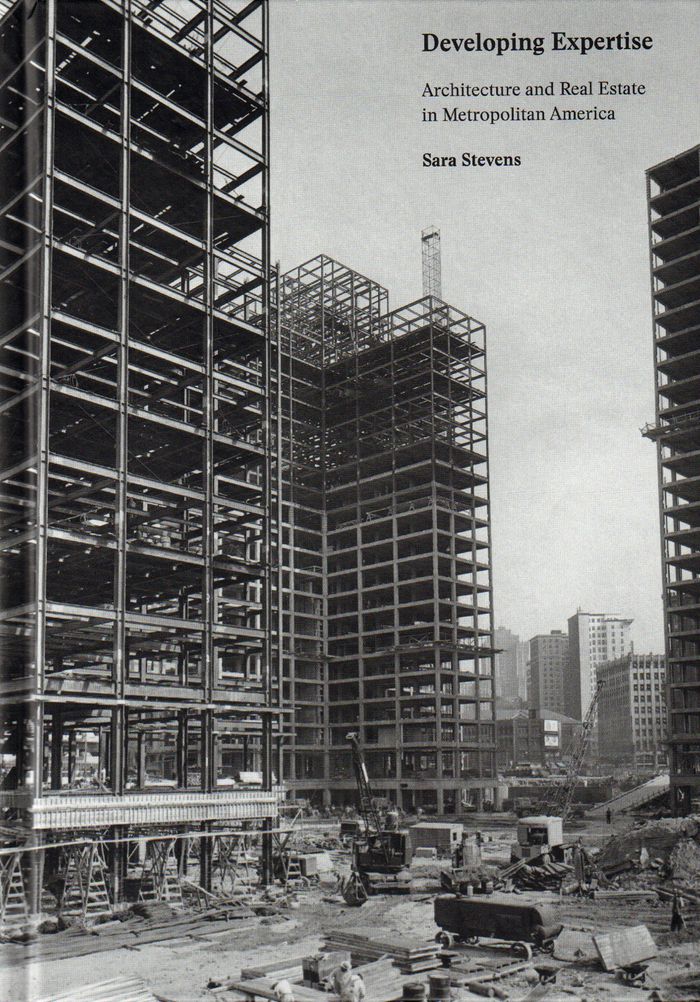
Developing expertise: architecture and real estate in metropolitan america
Actions:
Prix:
$69.50
(disponible sur commande)
Résumé:
Real estate developers are integral to understanding the split narratives of twentieth-century American urban history. Rather than divide the decline of downtowns and the rise of suburbs into separate tales, Sara Stevens uses the figure of the real estate developer to explore how cities found new urban and architectural forms through both suburbanization and urban renewal. Through nuanced discussions of Chicago, Kansas City, Detroit, Pittsburgh, Denver, Washington, D.C., and New York, Stevens explains how real estate developers, though often maligned, have shaped public policy through professional organizations, promoted investment security through design, and brought suburban models to downtowns. In this timely book, she considers how developers partnered with prominent architects, including Ludwig Mies van der Rohe and I. M. Pei, to sell their modern urban visions to the public. By viewing real estate developers as a critical link between capital and construction in prewar suburban development and postwar urban renewal, Stevens offers an original and enlightening look at the complex connections among suburbs and downtowns, policy, finance, and architectural history.
Developing expertise: architecture and real estate in metropolitan america
Actions:
Prix:
$69.50
(disponible sur commande)
Résumé:
Real estate developers are integral to understanding the split narratives of twentieth-century American urban history. Rather than divide the decline of downtowns and the rise of suburbs into separate tales, Sara Stevens uses the figure of the real estate developer to explore how cities found new urban and architectural forms through both suburbanization and urban renewal. Through nuanced discussions of Chicago, Kansas City, Detroit, Pittsburgh, Denver, Washington, D.C., and New York, Stevens explains how real estate developers, though often maligned, have shaped public policy through professional organizations, promoted investment security through design, and brought suburban models to downtowns. In this timely book, she considers how developers partnered with prominent architects, including Ludwig Mies van der Rohe and I. M. Pei, to sell their modern urban visions to the public. By viewing real estate developers as a critical link between capital and construction in prewar suburban development and postwar urban renewal, Stevens offers an original and enlightening look at the complex connections among suburbs and downtowns, policy, finance, and architectural history.
Classification:
livres
livres
Publication:
novembre 2016
novembre 2016
Sujet:
Théorie de l’architecture
Théorie de l’architecture
Classification:
livres
livres

Actions:
Prix:
$99.95
(disponible sur commande)
Résumé:
Craig Ellwood was one of the finest California architects of the postwar era. By the time he was thirty he had already contributed three of the seminal Case Study Houses and received the São Paulo Award for his Courtyard Apartments. Subsequently influenced by Mies, he went on to design a lengthy series of stark minimalist structures, peaking with the Pasadena Art Center.(...)
$99.95
(disponible sur commande)
Résumé:
Craig Ellwood was one of the finest California architects of the postwar era. By the time he was thirty he had already contributed three of the seminal Case Study Houses and received the São Paulo Award for his Courtyard Apartments. Subsequently influenced by Mies, he went on to design a lengthy series of stark minimalist structures, peaking with the Pasadena Art Center.(...)
Titre:
Craig Ellwood : in the spirit of the time
Actions:
Prix:
$99.95
(disponible sur commande)
Résumé:
Craig Ellwood was one of the finest California architects of the postwar era. By the time he was thirty he had already contributed three of the seminal Case Study Houses and received the São Paulo Award for his Courtyard Apartments. Subsequently influenced by Mies, he went on to design a lengthy series of stark minimalist structures, peaking with the Pasadena Art Center. With the support of John Entenza, editor of the influential magazine Arts & Architecture, Ellwood was, until the late 1960s, widely considered to be one of the most innovative American architects of the period. This book documents all the Ellwood buildings that remain on the records, a total of some ninety structures. Its 600 illustrations include comprehensive archival photography (including Ellwood’s own pictures and others by Julius Shulman), original drawings, and, for those buildings that remain in good condition, recent images. Due to the loss of most of the original drawings, 80 floor plans have been redrawn for this publication, making this book as close a record of Ellwood’s complete works as is possible today.
Craig Ellwood : in the spirit of the time
Actions:
Prix:
$99.95
(disponible sur commande)
Résumé:
Craig Ellwood was one of the finest California architects of the postwar era. By the time he was thirty he had already contributed three of the seminal Case Study Houses and received the São Paulo Award for his Courtyard Apartments. Subsequently influenced by Mies, he went on to design a lengthy series of stark minimalist structures, peaking with the Pasadena Art Center. With the support of John Entenza, editor of the influential magazine Arts & Architecture, Ellwood was, until the late 1960s, widely considered to be one of the most innovative American architects of the period. This book documents all the Ellwood buildings that remain on the records, a total of some ninety structures. Its 600 illustrations include comprehensive archival photography (including Ellwood’s own pictures and others by Julius Shulman), original drawings, and, for those buildings that remain in good condition, recent images. Due to the loss of most of the original drawings, 80 floor plans have been redrawn for this publication, making this book as close a record of Ellwood’s complete works as is possible today.
Classification:
livres
livres
Publication:
octobre 1999, Barcelona
octobre 1999, Barcelona
Sujet:
Architecture, monographies
Architecture, monographies
Classification:
livres
livres

Actions:
Prix:
$102.00
(disponible sur commande)
Résumé:
Thomas Demand provokes confrontations between photography's poles of fact and fiction. True-to-size paper models are photographed and then scaled down, while traces of event and person are systematically removed, leaving phantom images of the proposed "crime scene" that seem at once familiar and dreamlike. Demand's 2009 Nationalgalerie (Berlin) exhibition and catalogue(...)
$102.00
(disponible sur commande)
Résumé:
Thomas Demand provokes confrontations between photography's poles of fact and fiction. True-to-size paper models are photographed and then scaled down, while traces of event and person are systematically removed, leaving phantom images of the proposed "crime scene" that seem at once familiar and dreamlike. Demand's 2009 Nationalgalerie (Berlin) exhibition and catalogue(...)
Sujet:
Monographies photo
Monographies photo
Publication:
janvier 2010
janvier 2010
Titre:
Thomas Demand, Nationalgalerie
Actions:
Prix:
$102.00
(disponible sur commande)
Résumé:
Thomas Demand provokes confrontations between photography's poles of fact and fiction. True-to-size paper models are photographed and then scaled down, while traces of event and person are systematically removed, leaving phantom images of the proposed "crime scene" that seem at once familiar and dreamlike. Demand's 2009 Nationalgalerie (Berlin) exhibition and catalogue bring together his work on German history since 1945--a scrutiny of the "Deutschlandbild," the "German image." These reflections, reconstructed in photographs from a variety of scenarios in the postwar period, encourage the viewer to consider the complexity of the photographic document. Demand's representations of the social and historical are introduced not as monoliths but as places of multiple possibility, halls of mirrors in which the viewer is forced to confront--rather than be fed--potential distortions. His concern for the pliability of human memory and the play between the central and peripheral image contributes to the vibrancy of his art. For Demand, the photographer's accomplishment lies in "re-privatisating that which is constructed as a public opinion."
Thomas Demand, Nationalgalerie
Actions:
Prix:
$102.00
(disponible sur commande)
Résumé:
Thomas Demand provokes confrontations between photography's poles of fact and fiction. True-to-size paper models are photographed and then scaled down, while traces of event and person are systematically removed, leaving phantom images of the proposed "crime scene" that seem at once familiar and dreamlike. Demand's 2009 Nationalgalerie (Berlin) exhibition and catalogue bring together his work on German history since 1945--a scrutiny of the "Deutschlandbild," the "German image." These reflections, reconstructed in photographs from a variety of scenarios in the postwar period, encourage the viewer to consider the complexity of the photographic document. Demand's representations of the social and historical are introduced not as monoliths but as places of multiple possibility, halls of mirrors in which the viewer is forced to confront--rather than be fed--potential distortions. His concern for the pliability of human memory and the play between the central and peripheral image contributes to the vibrancy of his art. For Demand, the photographer's accomplishment lies in "re-privatisating that which is constructed as a public opinion."
Classification:
livres
livres
Publication:
janvier 2010
janvier 2010
Sujet:
Monographies photo
Monographies photo
Classification:
livres
livres
Prix:
$38.95
(disponible sur commande)
Résumé:
Beautiful Data is both a history of big data and interactivity, and a sophisticated meditation on ideas about vision and cognition in the second half of the twentieth century. Contending that our forms of attention, observation, and truth are contingent and contested, Orit Halpern historicizes the ways that we are trained, and train ourselves, to observe and analyze the(...)
$38.95
(disponible sur commande)
Résumé:
Beautiful Data is both a history of big data and interactivity, and a sophisticated meditation on ideas about vision and cognition in the second half of the twentieth century. Contending that our forms of attention, observation, and truth are contingent and contested, Orit Halpern historicizes the ways that we are trained, and train ourselves, to observe and analyze the(...)
Titre:
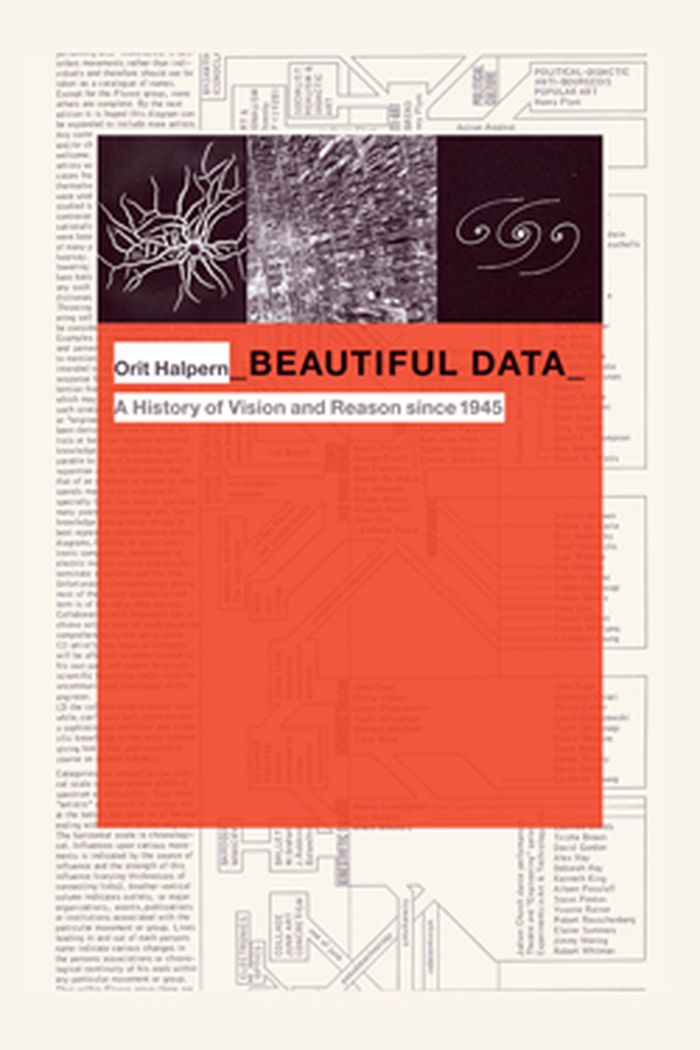
Beautiful data: a history of vision and reason since 1945
Actions:
Prix:
$38.95
(disponible sur commande)
Résumé:
Beautiful Data is both a history of big data and interactivity, and a sophisticated meditation on ideas about vision and cognition in the second half of the twentieth century. Contending that our forms of attention, observation, and truth are contingent and contested, Orit Halpern historicizes the ways that we are trained, and train ourselves, to observe and analyze the world. Tracing the postwar impact of cybernetics and the communication sciences on the social and human sciences, design, arts, and urban planning, she finds a radical shift in attitudes toward recording and displaying information. These changed attitudes produced what she calls communicative objectivity: new forms of observation, rationality, and economy based on the management and analysis of data. Halpern complicates assumptions about the value of data and visualization, arguing that changes in how we manage and train perception, and define reason and intelligence, are also transformations in governmentality. She also challenges the paradoxical belief that we are experiencing a crisis of attention caused by digital media, a crisis that can be resolved only through intensified media consumption.
Beautiful data: a history of vision and reason since 1945
Actions:
Prix:
$38.95
(disponible sur commande)
Résumé:
Beautiful Data is both a history of big data and interactivity, and a sophisticated meditation on ideas about vision and cognition in the second half of the twentieth century. Contending that our forms of attention, observation, and truth are contingent and contested, Orit Halpern historicizes the ways that we are trained, and train ourselves, to observe and analyze the world. Tracing the postwar impact of cybernetics and the communication sciences on the social and human sciences, design, arts, and urban planning, she finds a radical shift in attitudes toward recording and displaying information. These changed attitudes produced what she calls communicative objectivity: new forms of observation, rationality, and economy based on the management and analysis of data. Halpern complicates assumptions about the value of data and visualization, arguing that changes in how we manage and train perception, and define reason and intelligence, are also transformations in governmentality. She also challenges the paradoxical belief that we are experiencing a crisis of attention caused by digital media, a crisis that can be resolved only through intensified media consumption.
Classification:
livres
livres
Publication:
août 2014
août 2014
Sujet:
Théorie de l’architecture
Théorie de l’architecture
Classification:
livres
livres
Prix:
$95.00
(disponible sur commande)
Résumé:
Built between 1954 and 1959, Stuttgart’s Romeo and Julia tower blocks defied the staggering banality of postwar German housing with bold colors and jagged triangular balconies. Designed by Hans Scharoun (1893–1972) toward the end of a career dedicated to experimentation and the development of a new and democratic style of architecture, Romeo and Julia constitute the most(...)
$95.00
(disponible sur commande)
Résumé:
Built between 1954 and 1959, Stuttgart’s Romeo and Julia tower blocks defied the staggering banality of postwar German housing with bold colors and jagged triangular balconies. Designed by Hans Scharoun (1893–1972) toward the end of a career dedicated to experimentation and the development of a new and democratic style of architecture, Romeo and Julia constitute the most(...)
Titre:
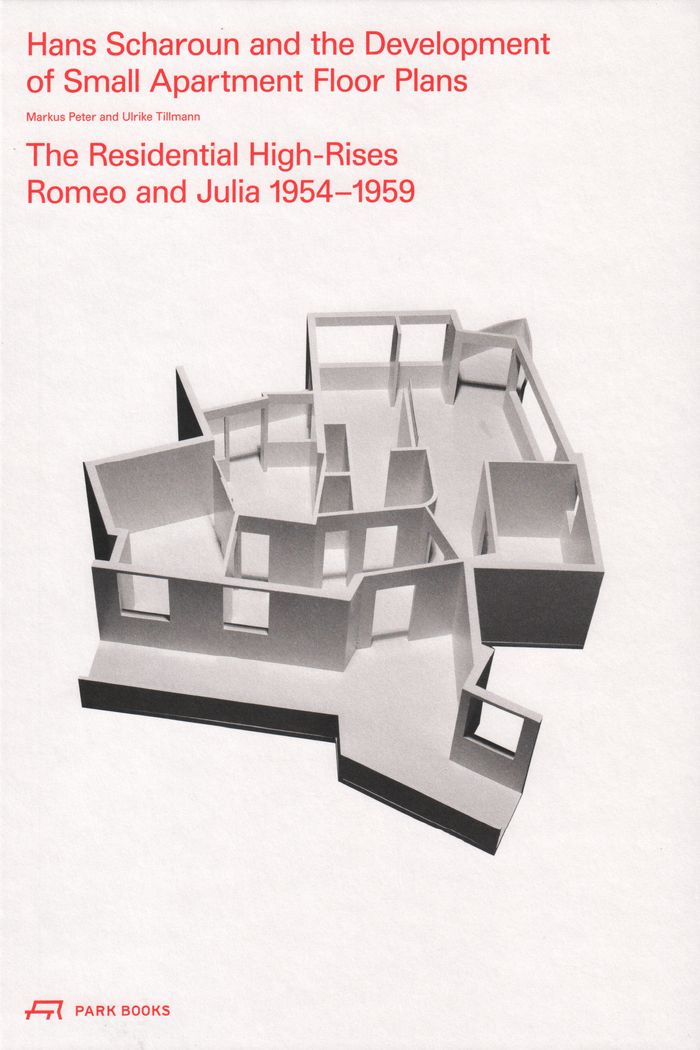
Hans Scharoun and the development of small apartment floor plans
Actions:
Prix:
$95.00
(disponible sur commande)
Résumé:
Built between 1954 and 1959, Stuttgart’s Romeo and Julia tower blocks defied the staggering banality of postwar German housing with bold colors and jagged triangular balconies. Designed by Hans Scharoun (1893–1972) toward the end of a career dedicated to experimentation and the development of a new and democratic style of architecture, Romeo and Julia constitute the most daring and original attempts to recalibrate the ''dwelling process.'' Drawing on a vast trove of previously unpublished materials held in the archives of the Akademie der Künste in Berlin, Markus Peter and Ulrike Tillmann offer unprecedented insight into Scharoun’s design process. His writings and lectures of several decades show him weaving together the diverse strands of research that were to form the basis for his floor plans. Inherently curious and undeterred by contradictions and complexity, Scharoun was unflagging in his efforts to build on his understanding of what housing is about. Romeo and Julia, with their innovative and socially responsive organization of space, thus mark the culmination of the architect’s profound and long-standing engagement with a fundamental human need.
Hans Scharoun and the development of small apartment floor plans
Actions:
Prix:
$95.00
(disponible sur commande)
Résumé:
Built between 1954 and 1959, Stuttgart’s Romeo and Julia tower blocks defied the staggering banality of postwar German housing with bold colors and jagged triangular balconies. Designed by Hans Scharoun (1893–1972) toward the end of a career dedicated to experimentation and the development of a new and democratic style of architecture, Romeo and Julia constitute the most daring and original attempts to recalibrate the ''dwelling process.'' Drawing on a vast trove of previously unpublished materials held in the archives of the Akademie der Künste in Berlin, Markus Peter and Ulrike Tillmann offer unprecedented insight into Scharoun’s design process. His writings and lectures of several decades show him weaving together the diverse strands of research that were to form the basis for his floor plans. Inherently curious and undeterred by contradictions and complexity, Scharoun was unflagging in his efforts to build on his understanding of what housing is about. Romeo and Julia, with their innovative and socially responsive organization of space, thus mark the culmination of the architect’s profound and long-standing engagement with a fundamental human need.
Classification:
livres
livres
Publication:
février 2020
février 2020
Sujet:
Architecture, monographies
Architecture, monographies
Classification:
livres
livres
Actions:
Prix:
$56.95
(disponible en magasin)
Résumé:
With its emphasis on permanence and stability, architecture at first resists an easy pairing with live performance, usually considered ephemeral and elusive. But architecture and performance share a core concern: the interplay of bodies and space. 'Bodybuilding' examines the use of live performance by architects. Looking past the unbuilt, utopian projects of the early(...)
$56.95
(disponible en magasin)
Résumé:
With its emphasis on permanence and stability, architecture at first resists an easy pairing with live performance, usually considered ephemeral and elusive. But architecture and performance share a core concern: the interplay of bodies and space. 'Bodybuilding' examines the use of live performance by architects. Looking past the unbuilt, utopian projects of the early(...)
Sujet:
Théorie de l’architecture
Théorie de l’architecture
Publication:
janvier 2019
janvier 2019
Titre:
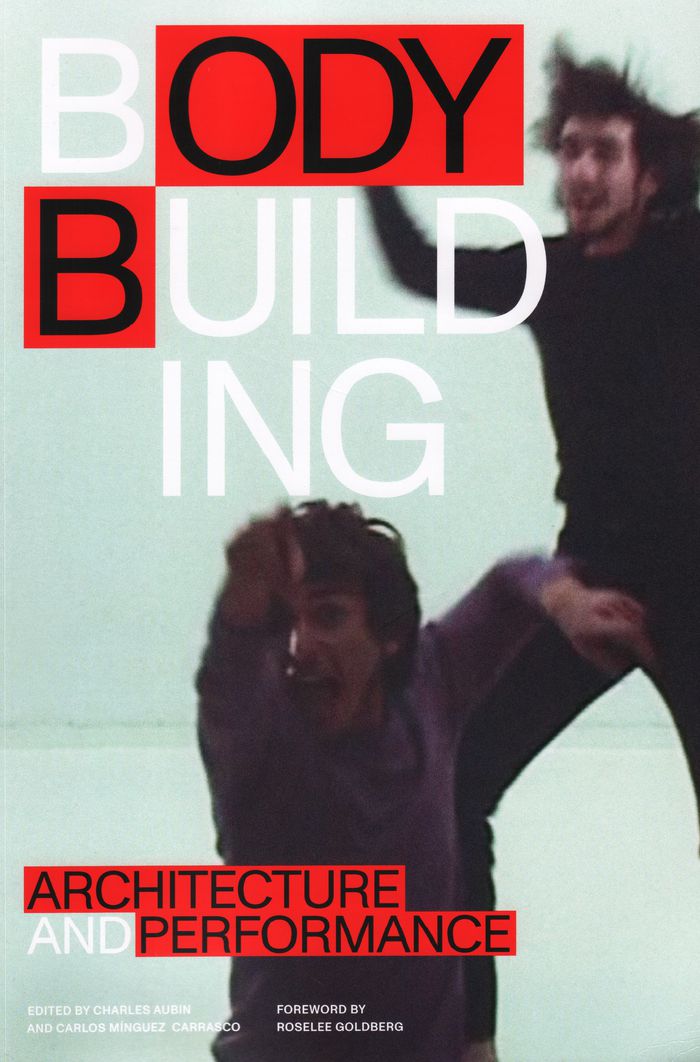
Bodybuilding: architecture and performance
Actions:
Prix:
$56.95
(disponible en magasin)
Résumé:
With its emphasis on permanence and stability, architecture at first resists an easy pairing with live performance, usually considered ephemeral and elusive. But architecture and performance share a core concern: the interplay of bodies and space. 'Bodybuilding' examines the use of live performance by architects. Looking past the unbuilt, utopian projects of the early modernists or the postwar avant-garde, the authors unearth an alternative canon of architects who actually employ performance to fortify the process of building, or else to explore architecture’s enmeshment with labor, security, race, migration, the environment, gentrification, and public assembly. For these architects, performance can be a tool, a method, or a heuristic device; in every case, performance is a blade that cuts into the matter of architecture. With rates of construction plummeting after the financial crisis of 2007–08, newly minted architects have had to find alternative ways to continue working within the field. 'Bodybuilding' grounds these new practices within a century of precedents, and insists that performance is a critical tool to rethink architecture’s agency, goals, and aesthetics.
Bodybuilding: architecture and performance
Actions:
Prix:
$56.95
(disponible en magasin)
Résumé:
With its emphasis on permanence and stability, architecture at first resists an easy pairing with live performance, usually considered ephemeral and elusive. But architecture and performance share a core concern: the interplay of bodies and space. 'Bodybuilding' examines the use of live performance by architects. Looking past the unbuilt, utopian projects of the early modernists or the postwar avant-garde, the authors unearth an alternative canon of architects who actually employ performance to fortify the process of building, or else to explore architecture’s enmeshment with labor, security, race, migration, the environment, gentrification, and public assembly. For these architects, performance can be a tool, a method, or a heuristic device; in every case, performance is a blade that cuts into the matter of architecture. With rates of construction plummeting after the financial crisis of 2007–08, newly minted architects have had to find alternative ways to continue working within the field. 'Bodybuilding' grounds these new practices within a century of precedents, and insists that performance is a critical tool to rethink architecture’s agency, goals, and aesthetics.
Classification:
livres
livres
Publication:
janvier 2019
janvier 2019
Sujet:
Théorie de l’architecture
Théorie de l’architecture
Classification:
livres
livres
Prix:
$42.00
(disponible sur commande)
Résumé:
This book contextualizes the Creativity Exercises–an amateur art course led by neo-avant-garde artists Miklós Erdély and Dóra Maurer in Budapest from 1975 to 1977– within the postwar intellectual networks that connected artists, architects, educators, sociologists, and other socially engaged professionals, fostering the exchange of ideas and concepts and making(...)
$42.00
(disponible sur commande)
Résumé:
This book contextualizes the Creativity Exercises–an amateur art course led by neo-avant-garde artists Miklós Erdély and Dóra Maurer in Budapest from 1975 to 1977– within the postwar intellectual networks that connected artists, architects, educators, sociologists, and other socially engaged professionals, fostering the exchange of ideas and concepts and making(...)
Titre:
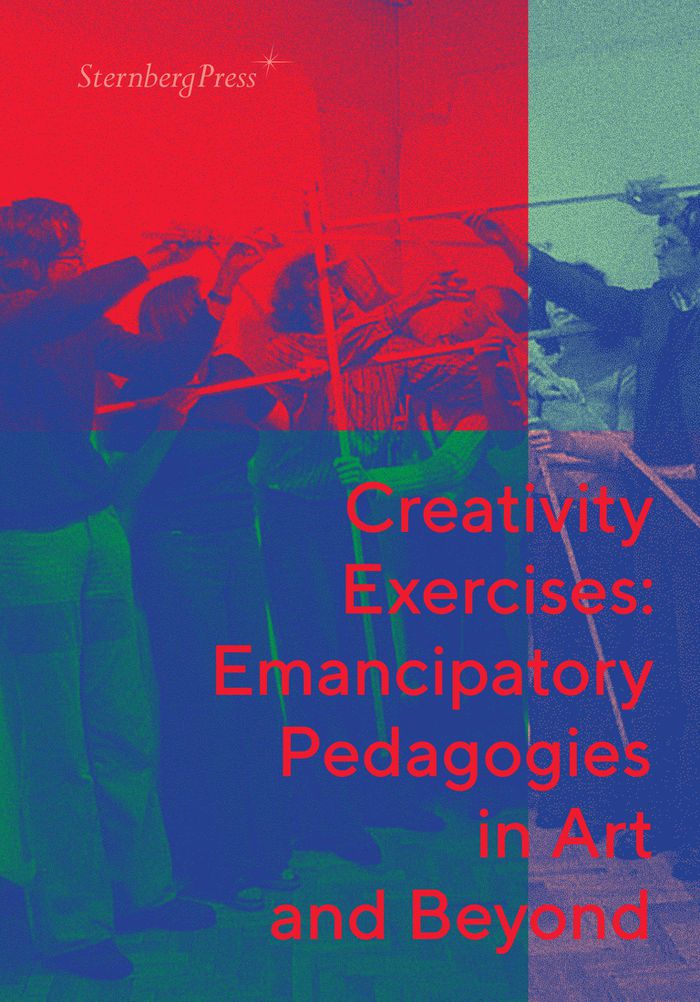
Creativity exercises: emancipatory pedagogies in art and beyond
Actions:
Prix:
$42.00
(disponible sur commande)
Résumé:
This book contextualizes the Creativity Exercises–an amateur art course led by neo-avant-garde artists Miklós Erdély and Dóra Maurer in Budapest from 1975 to 1977– within the postwar intellectual networks that connected artists, architects, educators, sociologists, and other socially engaged professionals, fostering the exchange of ideas and concepts and making connections between different fields of knowledge. The first part of the publication consists of historical texts translated into English for the first time, including the exercise descriptions that functioned as the curriculum for the Creativity Exercises, studies written on the methods employed in the Creativity Exercises course, and parallel models for progressive pedagogies and art education. In the second part of the book, newly commissioned essays offer historical and transnational context for the ''case study'' of the Creativity Exercises course. The impact that such ''creativity exercises'' had on aesthetic, educational and institutional concepts, and the impulses for participation, co-creation, knowledge production and exchange that they continue to give–even beyond the realm of art– are the central themes of the book.
Creativity exercises: emancipatory pedagogies in art and beyond
Actions:
Prix:
$42.00
(disponible sur commande)
Résumé:
This book contextualizes the Creativity Exercises–an amateur art course led by neo-avant-garde artists Miklós Erdély and Dóra Maurer in Budapest from 1975 to 1977– within the postwar intellectual networks that connected artists, architects, educators, sociologists, and other socially engaged professionals, fostering the exchange of ideas and concepts and making connections between different fields of knowledge. The first part of the publication consists of historical texts translated into English for the first time, including the exercise descriptions that functioned as the curriculum for the Creativity Exercises, studies written on the methods employed in the Creativity Exercises course, and parallel models for progressive pedagogies and art education. In the second part of the book, newly commissioned essays offer historical and transnational context for the ''case study'' of the Creativity Exercises course. The impact that such ''creativity exercises'' had on aesthetic, educational and institutional concepts, and the impulses for participation, co-creation, knowledge production and exchange that they continue to give–even beyond the realm of art– are the central themes of the book.
Classification:
livres
livres
Publication:
février 2021
février 2021
Sujet:
Théorie de l’art
Théorie de l’art
Classification:
livres
livres
Actions:
Prix:
$80.00
(disponible sur commande)
Résumé:
In this radical rethinking of the art of Louise Nevelson (1899–1988), Julia Bryan-Wilson provides a long-overdue critical account of a signature figure in postwar sculpture. A Ukraine-born Jewish immigrant, Nevelson persevered in the male-dominated New York art world. Nonetheless, her careful procedures of construction—in which she assembled found pieces of wood into(...)
$80.00
(disponible sur commande)
Résumé:
In this radical rethinking of the art of Louise Nevelson (1899–1988), Julia Bryan-Wilson provides a long-overdue critical account of a signature figure in postwar sculpture. A Ukraine-born Jewish immigrant, Nevelson persevered in the male-dominated New York art world. Nonetheless, her careful procedures of construction—in which she assembled found pieces of wood into(...)
Titre:
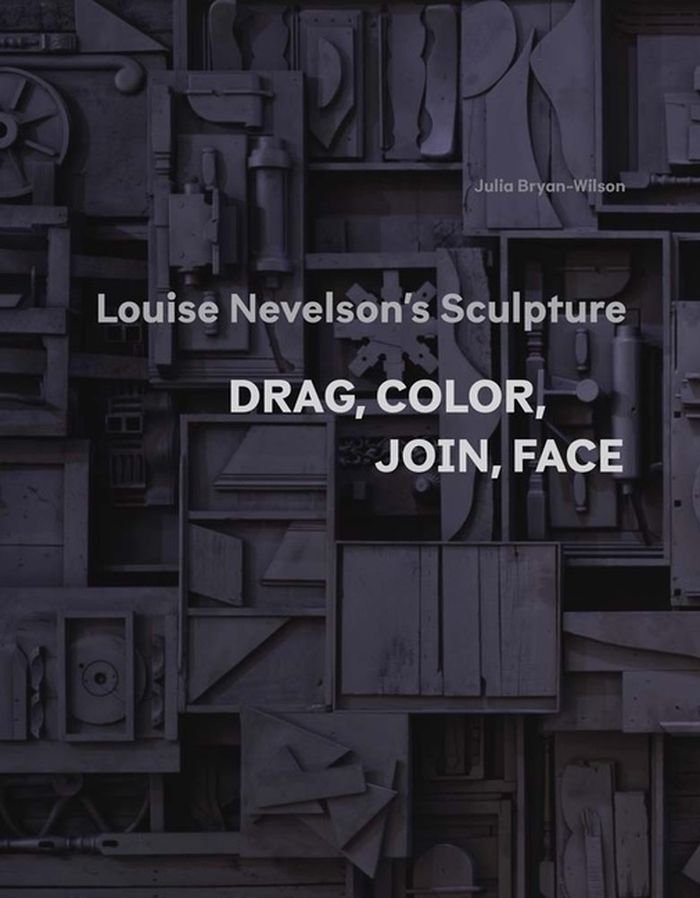
Louise Nevelson Sculpture: Drag, color, join, face
Actions:
Prix:
$80.00
(disponible sur commande)
Résumé:
In this radical rethinking of the art of Louise Nevelson (1899–1988), Julia Bryan-Wilson provides a long-overdue critical account of a signature figure in postwar sculpture. A Ukraine-born Jewish immigrant, Nevelson persevered in the male-dominated New York art world. Nonetheless, her careful procedures of construction—in which she assembled found pieces of wood into elaborate structures, usually painted black—have been little studied. Organized around a series of key operations in Nevelson’s own process (dragging, coloring, joining, and facing), the book comprises four slipcased, individually bound volumes that can be read in any order. Both form and content thus echo Nevelson’s own modular sculptures, the gridded boxes of which the artist herself rearranged. Exploring how Nevelson’s making relates to domesticity, racialized matter, gendered labor, and the environment, Bryan-Wilson offers a sustained examination of the social and political implications of Nevelson’s art. The author also approaches Nevelson’s sculptures from her own embodied subjectivity as a queer feminist scholar. She forges an expansive art history that places Nevelson’s assemblages in dialogue with a wide array of marginalized worldmaking and underlines the artist’s proclamation of allegiance to blackness.
Louise Nevelson Sculpture: Drag, color, join, face
Actions:
Prix:
$80.00
(disponible sur commande)
Résumé:
In this radical rethinking of the art of Louise Nevelson (1899–1988), Julia Bryan-Wilson provides a long-overdue critical account of a signature figure in postwar sculpture. A Ukraine-born Jewish immigrant, Nevelson persevered in the male-dominated New York art world. Nonetheless, her careful procedures of construction—in which she assembled found pieces of wood into elaborate structures, usually painted black—have been little studied. Organized around a series of key operations in Nevelson’s own process (dragging, coloring, joining, and facing), the book comprises four slipcased, individually bound volumes that can be read in any order. Both form and content thus echo Nevelson’s own modular sculptures, the gridded boxes of which the artist herself rearranged. Exploring how Nevelson’s making relates to domesticity, racialized matter, gendered labor, and the environment, Bryan-Wilson offers a sustained examination of the social and political implications of Nevelson’s art. The author also approaches Nevelson’s sculptures from her own embodied subjectivity as a queer feminist scholar. She forges an expansive art history that places Nevelson’s assemblages in dialogue with a wide array of marginalized worldmaking and underlines the artist’s proclamation of allegiance to blackness.
Classification:
livres
livres
Publication:
juin 2023
juin 2023
Classification:
livres
livres
Actions:
Prix:
$49.95
(disponible sur commande)
Résumé:
"Ground-up city : play as a design tool" maps the continuing history of an urban design strategy for play in the city. Liane Lefaivre has developed a theoretical model for tackling playgrounds as an urban strategy. She steps off from a historical overview of play and the ludic in art, architecture and urban design, focusing particularly on the post-war playgrounds(...)
$49.95
(disponible sur commande)
Résumé:
"Ground-up city : play as a design tool" maps the continuing history of an urban design strategy for play in the city. Liane Lefaivre has developed a theoretical model for tackling playgrounds as an urban strategy. She steps off from a historical overview of play and the ludic in art, architecture and urban design, focusing particularly on the post-war playgrounds(...)
Titre:
Ground-up city : play as a design tool
Actions:
Prix:
$49.95
(disponible sur commande)
Résumé:
"Ground-up city : play as a design tool" maps the continuing history of an urban design strategy for play in the city. Liane Lefaivre has developed a theoretical model for tackling playgrounds as an urban strategy. She steps off from a historical overview of play and the ludic in art, architecture and urban design, focusing particularly on the post-war playgrounds realized in Amsterdam as joint ventures between Aldo van Eyck, Cornelis van Eesteren and Jakoba Mulder. The architecture firm Döll - Atelier voor Bouwkunst explored the possibility of applying the model in two urban redevelopment areas in Rotterdam, Oude Westen in the inner city and Meeuwenplaat in Hoogvliet, an outlying postwar district, refining it into a practical design strategy. A second layer in the book gives an inspirational and refreshing new look at play in a picture essay with a welter of reference images illustrating play as an urban phenomenon. "Ground-up city" places the playground high on the agenda as an urban design challenge. It also shows how specifying a generic, academic model for a particular situation can lead to a practically applicable design resource.
Ground-up city : play as a design tool
Actions:
Prix:
$49.95
(disponible sur commande)
Résumé:
"Ground-up city : play as a design tool" maps the continuing history of an urban design strategy for play in the city. Liane Lefaivre has developed a theoretical model for tackling playgrounds as an urban strategy. She steps off from a historical overview of play and the ludic in art, architecture and urban design, focusing particularly on the post-war playgrounds realized in Amsterdam as joint ventures between Aldo van Eyck, Cornelis van Eesteren and Jakoba Mulder. The architecture firm Döll - Atelier voor Bouwkunst explored the possibility of applying the model in two urban redevelopment areas in Rotterdam, Oude Westen in the inner city and Meeuwenplaat in Hoogvliet, an outlying postwar district, refining it into a practical design strategy. A second layer in the book gives an inspirational and refreshing new look at play in a picture essay with a welter of reference images illustrating play as an urban phenomenon. "Ground-up city" places the playground high on the agenda as an urban design challenge. It also shows how specifying a generic, academic model for a particular situation can lead to a practically applicable design resource.
Classification:
livres
livres
Publication:
janvier 2007, Rotterdam
janvier 2007, Rotterdam
Sujet:
Théorie de l’urbanisme
Théorie de l’urbanisme


