


3682 Résultats
Classification:
événements
événements

Description:
À la suite de la révolution du 25 avril 1974 au Portugal, larchitecte Alexandre Alves Costa est devenu membre du comité de coordination du SAAL pour le secteur nord, responsable de la planification et du soutien de projet. Avec José António Bandeirinha, architecte et professeur agrégé titulaire à lUniversité de Coimbra, il abordera lors de cette conférence le rôle nouveau(...)
À la suite de la révolution du 25 avril 1974 au Portugal, larchitecte Alexandre Alves Costa est devenu membre du comité de coordination du SAAL pour le secteur nord, responsable de la planification et du soutien de projet. Avec José António Bandeirinha, architecte et professeur agrégé titulaire à lUniversité de Coimbra, il abordera lors de cette conférence le rôle nouveau(...)
Localisation:
Théâtre Paul-Desmarais
Théâtre Paul-Desmarais
Date:
17 septembre 2015, 18h
17 septembre 2015, 18h
Titre:
SAAL 1974 : l'architecture portugaise s'ouvre au monde
Actions:
Description:
À la suite de la révolution du 25 avril 1974 au Portugal, larchitecte Alexandre Alves Costa est devenu membre du comité de coordination du SAAL pour le secteur nord, responsable de la planification et du soutien de projet. Avec José António Bandeirinha, architecte et professeur agrégé titulaire à lUniversité de Coimbra, il abordera lors de cette conférence le rôle nouveau(...)
SAAL 1974 : l'architecture portugaise s'ouvre au monde
Actions:
Description:
À la suite de la révolution du 25 avril 1974 au Portugal, larchitecte Alexandre Alves Costa est devenu membre du comité de coordination du SAAL pour le secteur nord, responsable de la planification et du soutien de projet. Avec José António Bandeirinha, architecte et professeur agrégé titulaire à lUniversité de Coimbra, il abordera lors de cette conférence le rôle nouveau(...)
Classification:
événements
événements
Date:
17 septembre 2015
18h
17 septembre 2015
18h
Localisation:
Théâtre Paul-Desmarais
Théâtre Paul-Desmarais
Classification:
expositions
expositions
Description:
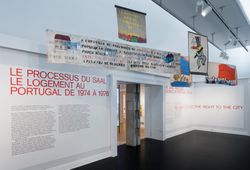
Issu de la révolution portugaise du 25 avril 1974, le SAAL ― Serviço Ambulatório de Apoio Local (Service ambulant de soutien local) ― fut une expérience architecturale et politique pionnière conçue afin d’adresser le manque de logement et les conditions de vie pauvres de nombreuses villes portugaises. On ne peut pas parler d’un seul SAAL : ses initiatives et résultats(...)
Issu de la révolution portugaise du 25 avril 1974, le SAAL ― Serviço Ambulatório de Apoio Local (Service ambulant de soutien local) ― fut une expérience architecturale et politique pionnière conçue afin d’adresser le manque de logement et les conditions de vie pauvres de nombreuses villes portugaises. On ne peut pas parler d’un seul SAAL : ses initiatives et résultats(...)
Localisation:
Salles principales
Salles principales
Date:
12 mai 2015 au 4 octobre 2015
12 mai 2015 au 4 octobre 2015
Titre:
Le processus du SAAL : Le logement au Portugal de 1974 à 1976-
Actions:
Description:
Issu de la révolution portugaise du 25 avril 1974, le SAAL ― Serviço Ambulatório de Apoio Local (Service ambulant de soutien local) ― fut une expérience architecturale et politique pionnière conçue afin d’adresser le manque de logement et les conditions de vie pauvres de nombreuses villes portugaises. On ne peut pas parler d’un seul SAAL : ses initiatives et résultats(...)
Le processus du SAAL : Le logement au Portugal de 1974 à 1976-
Actions:
Description:
Issu de la révolution portugaise du 25 avril 1974, le SAAL ― Serviço Ambulatório de Apoio Local (Service ambulant de soutien local) ― fut une expérience architecturale et politique pionnière conçue afin d’adresser le manque de logement et les conditions de vie pauvres de nombreuses villes portugaises. On ne peut pas parler d’un seul SAAL : ses initiatives et résultats(...)
Classification:
expositions
expositions
Date:
12 mai 2015 au
4 octobre 2015
12 mai 2015 au
4 octobre 2015
Localisation:
Salles principales
Salles principales
Classification:
photographies
photographies
Titre:
Cloisters, Batalha, Portugal
Cloisters, Batalha, Portugal
Actions:
Numéro de référence:
PH1991:0071
PH1991:0071
Personnes et institutions:
Date:
1990
1990
Classification:
photographies
photographies
Date:
1990
1990
Personnes et institutions:
Classification:
photographies
photographies
Titre:
Pavillon du Portugal
Pavillon du Portugal
Actions:
Numéro de référence:
PH1983:0042.01:035
PH1983:0042.01:035
Personnes et institutions:
Date:
ca. 1900
ca. 1900
Classification:
photographies
photographies
Date:
ca. 1900
ca. 1900
Personnes et institutions:
Classification:
photographies
photographies
Titre:
Pavillon du Portugal
Pavillon du Portugal
Actions:
Numéro de référence:
PH1983:0042.01:036
PH1983:0042.01:036
Personnes et institutions:
Date:
ca. 1900
ca. 1900
Classification:
photographies
photographies
Date:
ca. 1900
ca. 1900
Personnes et institutions:
Niveau de description archivistique:
Projet
Projet
Numéro de référence:
AP178.S1.1973.PR03
Description:
This project series documents a house in Porto, Portugal. While the records were held in the office’s archives this project was assigned the number 20/70. The office assigned the date 1973 to this project. This project was not in the initial project list provided the office. The office assembled documentation and added it to the list of projects. The project was not realized. Documenting this project are one sketch and one slide of a sketch.
AP178.S1.1973.PR03
Description:
This project series documents a house in Porto, Portugal. While the records were held in the office’s archives this project was assigned the number 20/70. The office assigned the date 1973 to this project. This project was not in the initial project list provided the office. The office assembled documentation and added it to the list of projects. The project was not realized. Documenting this project are one sketch and one slide of a sketch.
Personnes et institutions:
Date:
1973
1973
Titre:
Casa [House], Porto, Portugal (1973)
Actions:
AP178.S1.1973.PR03
Description:
This project series documents a house in Porto, Portugal. While the records were held in the office’s archives this project was assigned the number 20/70. The office assigned the date 1973 to this project. This project was not in the initial project list provided the office. The office assembled documentation and added it to the list of projects. The project was not realized. Documenting this project are one sketch and one slide of a sketch.
Casa [House], Porto, Portugal (1973)
Actions:
AP178.S1.1973.PR03
Description:
This project series documents a house in Porto, Portugal. While the records were held in the office’s archives this project was assigned the number 20/70. The office assigned the date 1973 to this project. This project was not in the initial project list provided the office. The office assembled documentation and added it to the list of projects. The project was not realized. Documenting this project are one sketch and one slide of a sketch.
Niveau de description archivistique:
Project
Project
Date:
1973
1973
Personnes et institutions:
Classification:
photographies
photographies
Numéro de référence:
CD034.S1.1974.PR03.002
CD034.S1.1974.PR03.002
Personnes et institutions:
Date:
1975-1976
1975-1976
Classification:
photographies
photographies
Date:
1975-1976
1975-1976
Personnes et institutions:
Niveau de description archivistique:
Projet
Projet
Titre:
Bouça II, Porto, Portugal
Bouça II, Porto, Portugal
Numéro de référence:
AP178.S1.1976.PR04
Description:
Materials documenting this project have not yet been processed by the archivists and therefore may not be available for consultation. Please contact CCA reference staff to inquire (ref@cca.qc.ca).
AP178.S1.1976.PR04
Description:
Materials documenting this project have not yet been processed by the archivists and therefore may not be available for consultation. Please contact CCA reference staff to inquire (ref@cca.qc.ca).
Personnes et institutions:
Titre:
Bouça II, Porto, Portugal
Actions:
AP178.S1.1976.PR04
Description:
Materials documenting this project have not yet been processed by the archivists and therefore may not be available for consultation. Please contact CCA reference staff to inquire (ref@cca.qc.ca).
Bouça II, Porto, Portugal
Actions:
AP178.S1.1976.PR04
Description:
Materials documenting this project have not yet been processed by the archivists and therefore may not be available for consultation. Please contact CCA reference staff to inquire (ref@cca.qc.ca).
Niveau de description archivistique:
Project
Project
Personnes et institutions:
Niveau de description archivistique:
Projet
Projet
Numéro de référence:
AP178.S1.1999.PR01
Description:
Materials documenting this project have not yet been processed by the archivists and therefore may not be available for consultation. Please contact CCA reference staff to inquire (ref@cca.qc.ca).
AP178.S1.1999.PR01
Description:
Materials documenting this project have not yet been processed by the archivists and therefore may not be available for consultation. Please contact CCA reference staff to inquire (ref@cca.qc.ca).
Personnes et institutions:
Titre:
Adaptaçao do Pavilhao do Portugal a Conselho dos Minis. [Modifications to the Portugal Pavilion of the Council of Ministers], Lisbon, Portugal (1999)
Actions:
AP178.S1.1999.PR01
Description:
Materials documenting this project have not yet been processed by the archivists and therefore may not be available for consultation. Please contact CCA reference staff to inquire (ref@cca.qc.ca).
Adaptaçao do Pavilhao do Portugal a Conselho dos Minis. [Modifications to the Portugal Pavilion of the Council of Ministers], Lisbon, Portugal (1999)
Actions:
AP178.S1.1999.PR01
Description:
Materials documenting this project have not yet been processed by the archivists and therefore may not be available for consultation. Please contact CCA reference staff to inquire (ref@cca.qc.ca).
Niveau de description archivistique:
Project
Project
Personnes et institutions:
Niveau de description archivistique:
Projet
Projet
Numéro de référence:
AP178.S1.1983.PR05
Description:
The project series documents the Boutique Nina in Porto, Portugal. While the records were held in the office’s archives this project was assigned the number 20/80. The office assigned the date 1983 for this project. This project consisted of a 50 square metre fashion boutique located on Rua Firmeza. The shop's focal point was a curved marble staircase that led to a balcony, visable through the shop's large windows from the street. The project is recorded through drawings, photographic materials and some textual records dating from 1983. The drawings are mostly originals and consist of sketches, plans, sections, perspectives, details and axonometric drawings. The textual records consist of invoices, correspondence, material schedules and notes, while photographs and slides show plans and the built project.
AP178.S1.1983.PR05
Description:
The project series documents the Boutique Nina in Porto, Portugal. While the records were held in the office’s archives this project was assigned the number 20/80. The office assigned the date 1983 for this project. This project consisted of a 50 square metre fashion boutique located on Rua Firmeza. The shop's focal point was a curved marble staircase that led to a balcony, visable through the shop's large windows from the street. The project is recorded through drawings, photographic materials and some textual records dating from 1983. The drawings are mostly originals and consist of sketches, plans, sections, perspectives, details and axonometric drawings. The textual records consist of invoices, correspondence, material schedules and notes, while photographs and slides show plans and the built project.
Personnes et institutions:
Date:
1983
1983
Titre:
Boutique Nina, Porto, Portugal (1983)
Actions:
AP178.S1.1983.PR05
Description:
The project series documents the Boutique Nina in Porto, Portugal. While the records were held in the office’s archives this project was assigned the number 20/80. The office assigned the date 1983 for this project. This project consisted of a 50 square metre fashion boutique located on Rua Firmeza. The shop's focal point was a curved marble staircase that led to a balcony, visable through the shop's large windows from the street. The project is recorded through drawings, photographic materials and some textual records dating from 1983. The drawings are mostly originals and consist of sketches, plans, sections, perspectives, details and axonometric drawings. The textual records consist of invoices, correspondence, material schedules and notes, while photographs and slides show plans and the built project.
Boutique Nina, Porto, Portugal (1983)
Actions:
AP178.S1.1983.PR05
Description:
The project series documents the Boutique Nina in Porto, Portugal. While the records were held in the office’s archives this project was assigned the number 20/80. The office assigned the date 1983 for this project. This project consisted of a 50 square metre fashion boutique located on Rua Firmeza. The shop's focal point was a curved marble staircase that led to a balcony, visable through the shop's large windows from the street. The project is recorded through drawings, photographic materials and some textual records dating from 1983. The drawings are mostly originals and consist of sketches, plans, sections, perspectives, details and axonometric drawings. The textual records consist of invoices, correspondence, material schedules and notes, while photographs and slides show plans and the built project.
Niveau de description archivistique:
Project
Project
Date:
1983
1983
Personnes et institutions:


