


427 Résultats
Classification:
événements
événements
Actions:
Description:
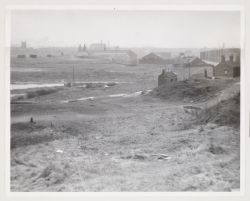
Face aux bouleversements économiques des années 1970, les architectes britanniques, qui travaillaient alors principalement au service de l’État providence, gagnèrent en autonomie.
Face aux bouleversements économiques des années 1970, les architectes britanniques, qui travaillaient alors principalement au service de l’État providence, gagnèrent en autonomie.
Localisation:
la salle d’étude Mot(s)-clé(s):
les architectes britanniques, 1970, autonomie, périphérique
la salle d’étude Mot(s)-clé(s):
les architectes britanniques, 1970, autonomie, périphérique
Date:
6 août 2026, 18h à 19h30
6 août 2026, 18h à 19h30
Titre:
Une architecture de la flexibilité
Actions:
Description:
Face aux bouleversements économiques des années 1970, les architectes britanniques, qui travaillaient alors principalement au service de l’État providence, gagnèrent en autonomie.
Une architecture de la flexibilité
Actions:
Description:
Face aux bouleversements économiques des années 1970, les architectes britanniques, qui travaillaient alors principalement au service de l’État providence, gagnèrent en autonomie.
Classification:
événements
événements
Date:
6 août 2026
18h à 19h30
6 août 2026
18h à 19h30
Localisation:
la salle d’étude Mot(s)-clé(s):
les architectes britanniques, 1970, autonomie, périphérique
la salle d’étude Mot(s)-clé(s):
les architectes britanniques, 1970, autonomie, périphérique
Classification:
documents textuels
documents textuels
Numéro de référence:
DR2012:0012:102:033
Description:
File containing documents in Engish, including magazine clippings of Melvin Charney's article, "Learning environments: planning beyond flexibility", which appeared in the March 1968 edition of Architecture Canada. Original folder inscribed in graphite: REPRINTS: Planning Beyond Flexibility Arch. Can. 3/68
DR2012:0012:102:033
Description:
File containing documents in Engish, including magazine clippings of Melvin Charney's article, "Learning environments: planning beyond flexibility", which appeared in the March 1968 edition of Architecture Canada. Original folder inscribed in graphite: REPRINTS: Planning Beyond Flexibility Arch. Can. 3/68
Personnes et institutions:
Date:
1968
1968
Titre:
Magazine clippings of article "Learning environments: planning beyond flexibility"
Actions:
DR2012:0012:102:033
Description:
File containing documents in Engish, including magazine clippings of Melvin Charney's article, "Learning environments: planning beyond flexibility", which appeared in the March 1968 edition of Architecture Canada. Original folder inscribed in graphite: REPRINTS: Planning Beyond Flexibility Arch. Can. 3/68
Magazine clippings of article "Learning environments: planning beyond flexibility"
Actions:
DR2012:0012:102:033
Description:
File containing documents in Engish, including magazine clippings of Melvin Charney's article, "Learning environments: planning beyond flexibility", which appeared in the March 1968 edition of Architecture Canada. Original folder inscribed in graphite: REPRINTS: Planning Beyond Flexibility Arch. Can. 3/68
Classification:
documents textuels
documents textuels
Date:
1968
1968
Personnes et institutions:
Classification:
documents textuels
documents textuels
Numéro de référence:
DR2012:0012:102:030
Description:
File containing documents in English, including drafts and notes of Melvin Charney's article, Learning environments: planning beyond flexibility. Original folder inscribed in graphite: 1967 LEARNING ENVIRONMENTS
DR2012:0012:102:030
Description:
File containing documents in English, including drafts and notes of Melvin Charney's article, Learning environments: planning beyond flexibility. Original folder inscribed in graphite: 1967 LEARNING ENVIRONMENTS
Personnes et institutions:
Date:
1967
1967
Titre:
Drafts and notes of article "Learning environments: planning beyond flexibility"
Actions:
DR2012:0012:102:030
Description:
File containing documents in English, including drafts and notes of Melvin Charney's article, Learning environments: planning beyond flexibility. Original folder inscribed in graphite: 1967 LEARNING ENVIRONMENTS
Drafts and notes of article "Learning environments: planning beyond flexibility"
Actions:
DR2012:0012:102:030
Description:
File containing documents in English, including drafts and notes of Melvin Charney's article, Learning environments: planning beyond flexibility. Original folder inscribed in graphite: 1967 LEARNING ENVIRONMENTS
Classification:
documents textuels
documents textuels
Date:
1967
1967
Personnes et institutions:
Classification:
archives
Niveau de description archivistique:
Fonds
archives
Niveau de description archivistique:
Fonds
Titre:
Fonds Cedric Price
Fonds Cedric Price
Numéro de référence:
AP144
Résumé:
The Cedric Price fonds documents the personal activities and professional practice of architect Cedric Price, and includes his student work and architectural and urban planning projects. The fonds also contains records that document Cedric Price's teaching, publication, and exhibition activities. The archive comprises over 200 projects, from Price's student work in the 1950s at the University of Cambridge and the Architectural Association to projects he undertook as late as 2000. Key projects that are represented include New Aviary (1960-1966), Fun Palace (1961-1974), Potteries Thinkbelt (1963-1967), Inter-Action Centre (1971-1979), Generator (1976-1980), and Magnet (1995-1996).
AP144
Résumé:
The Cedric Price fonds documents the personal activities and professional practice of architect Cedric Price, and includes his student work and architectural and urban planning projects. The fonds also contains records that document Cedric Price's teaching, publication, and exhibition activities. The archive comprises over 200 projects, from Price's student work in the 1950s at the University of Cambridge and the Architectural Association to projects he undertook as late as 2000. Key projects that are represented include New Aviary (1960-1966), Fun Palace (1961-1974), Potteries Thinkbelt (1963-1967), Inter-Action Centre (1971-1979), Generator (1976-1980), and Magnet (1995-1996).
Personnes et institutions:
Date:
1903-2006, predominant 1953-2000
1903-2006, predominant 1953-2000
Titre:
Fonds Cedric Price
Actions:
AP144
Résumé:
The Cedric Price fonds documents the personal activities and professional practice of architect Cedric Price, and includes his student work and architectural and urban planning projects. The fonds also contains records that document Cedric Price's teaching, publication, and exhibition activities. The archive comprises over 200 projects, from Price's student work in the 1950s at the University of Cambridge and the Architectural Association to projects he undertook as late as 2000. Key projects that are represented include New Aviary (1960-1966), Fun Palace (1961-1974), Potteries Thinkbelt (1963-1967), Inter-Action Centre (1971-1979), Generator (1976-1980), and Magnet (1995-1996).
Fonds Cedric Price
Actions:
AP144
Résumé:
The Cedric Price fonds documents the personal activities and professional practice of architect Cedric Price, and includes his student work and architectural and urban planning projects. The fonds also contains records that document Cedric Price's teaching, publication, and exhibition activities. The archive comprises over 200 projects, from Price's student work in the 1950s at the University of Cambridge and the Architectural Association to projects he undertook as late as 2000. Key projects that are represented include New Aviary (1960-1966), Fun Palace (1961-1974), Potteries Thinkbelt (1963-1967), Inter-Action Centre (1971-1979), Generator (1976-1980), and Magnet (1995-1996).
Classification:
archives
Niveau de description archivistique:
Fonds
archives
Niveau de description archivistique:
Fonds
Date:
1903-2006, predominant 1953-2000
1903-2006, predominant 1953-2000
Personnes et institutions:
Niveau de description archivistique:
Projet
Projet
Numéro de référence:
AP144.S2.D22
Description:
File documents alterations to the showroom and offices of Thomas Green & Son Limited, at New Surrey Works, on Southwark Street, in London, England. The proposal reflects Prices’ objective "to provide maximum flexibility for the display of product", by the use of movable screens, stands, canopies, and a lighting system of adjustable spotlights. The project includes a new reception room and office, and renovations to existing offices. Future construction phases for this project include work on the entrance façade and door, and company signage. A preliminary sketch for an illuminated mural on a showroom wall is fabricated from wheels manufactured by the company. Material in this file was produced between 1958 and 1959. File contains design development drawings and textual records.
AP144.S2.D22
Description:
File documents alterations to the showroom and offices of Thomas Green & Son Limited, at New Surrey Works, on Southwark Street, in London, England. The proposal reflects Prices’ objective "to provide maximum flexibility for the display of product", by the use of movable screens, stands, canopies, and a lighting system of adjustable spotlights. The project includes a new reception room and office, and renovations to existing offices. Future construction phases for this project include work on the entrance façade and door, and company signage. A preliminary sketch for an illuminated mural on a showroom wall is fabricated from wheels manufactured by the company. Material in this file was produced between 1958 and 1959. File contains design development drawings and textual records.
Personnes et institutions:
Date:
1958-1959
1958-1959
Titre:
Showroom for Thomas Green & Son Limited
Actions:
AP144.S2.D22
Description:
File documents alterations to the showroom and offices of Thomas Green & Son Limited, at New Surrey Works, on Southwark Street, in London, England. The proposal reflects Prices’ objective "to provide maximum flexibility for the display of product", by the use of movable screens, stands, canopies, and a lighting system of adjustable spotlights. The project includes a new reception room and office, and renovations to existing offices. Future construction phases for this project include work on the entrance façade and door, and company signage. A preliminary sketch for an illuminated mural on a showroom wall is fabricated from wheels manufactured by the company. Material in this file was produced between 1958 and 1959. File contains design development drawings and textual records.
Showroom for Thomas Green & Son Limited
Actions:
AP144.S2.D22
Description:
File documents alterations to the showroom and offices of Thomas Green & Son Limited, at New Surrey Works, on Southwark Street, in London, England. The proposal reflects Prices’ objective "to provide maximum flexibility for the display of product", by the use of movable screens, stands, canopies, and a lighting system of adjustable spotlights. The project includes a new reception room and office, and renovations to existing offices. Future construction phases for this project include work on the entrance façade and door, and company signage. A preliminary sketch for an illuminated mural on a showroom wall is fabricated from wheels manufactured by the company. Material in this file was produced between 1958 and 1959. File contains design development drawings and textual records.
Niveau de description archivistique:
File 22
File 22
Date:
1958-1959
1958-1959
Personnes et institutions:
Niveau de description archivistique:
Projet
Projet
Numéro de référence:
AP178.S1.1985.PR02
Description:
This project series documents the Recuperação da Área do Campo di Marte in Giudecca, Italy. While the records were held in the office’s archives this project was assigned the number 34/80. The office assigned the date 1985 to this project. In 1983, the IACP (Istituto Autonomo Case Popolari) initiated an architectural competition to modernize the existing housing and rehabilitate the urban space of Giudecca. The criteria were undefined in order to give the architect flexibility but insisted on respecting Venetian heritage. Álvaro Siza won the competition and selected Aldo Rossi (building completed in 2004), Carlo Aymonino (building completed in 2004), Rafael Moneo (not built) to collaborate on individual buildings. Siza's building was completed in 2016.
AP178.S1.1985.PR02
Description:
This project series documents the Recuperação da Área do Campo di Marte in Giudecca, Italy. While the records were held in the office’s archives this project was assigned the number 34/80. The office assigned the date 1985 to this project. In 1983, the IACP (Istituto Autonomo Case Popolari) initiated an architectural competition to modernize the existing housing and rehabilitate the urban space of Giudecca. The criteria were undefined in order to give the architect flexibility but insisted on respecting Venetian heritage. Álvaro Siza won the competition and selected Aldo Rossi (building completed in 2004), Carlo Aymonino (building completed in 2004), Rafael Moneo (not built) to collaborate on individual buildings. Siza's building was completed in 2016.
Personnes et institutions:
Date:
1984-2012
1984-2012
Titre:
Recuperação da Área do Campo di Marte [Restoration of Campo di Marte], Giudecca, Venice, Italy (1985)
Actions:
AP178.S1.1985.PR02
Description:
This project series documents the Recuperação da Área do Campo di Marte in Giudecca, Italy. While the records were held in the office’s archives this project was assigned the number 34/80. The office assigned the date 1985 to this project. In 1983, the IACP (Istituto Autonomo Case Popolari) initiated an architectural competition to modernize the existing housing and rehabilitate the urban space of Giudecca. The criteria were undefined in order to give the architect flexibility but insisted on respecting Venetian heritage. Álvaro Siza won the competition and selected Aldo Rossi (building completed in 2004), Carlo Aymonino (building completed in 2004), Rafael Moneo (not built) to collaborate on individual buildings. Siza's building was completed in 2016.
Recuperação da Área do Campo di Marte [Restoration of Campo di Marte], Giudecca, Venice, Italy (1985)
Actions:
AP178.S1.1985.PR02
Description:
This project series documents the Recuperação da Área do Campo di Marte in Giudecca, Italy. While the records were held in the office’s archives this project was assigned the number 34/80. The office assigned the date 1985 to this project. In 1983, the IACP (Istituto Autonomo Case Popolari) initiated an architectural competition to modernize the existing housing and rehabilitate the urban space of Giudecca. The criteria were undefined in order to give the architect flexibility but insisted on respecting Venetian heritage. Álvaro Siza won the competition and selected Aldo Rossi (building completed in 2004), Carlo Aymonino (building completed in 2004), Rafael Moneo (not built) to collaborate on individual buildings. Siza's building was completed in 2016.
Niveau de description archivistique:
Project
Project
Date:
1984-2012
1984-2012
Personnes et institutions:
Niveau de description archivistique:
Projet
Projet
Titre:
Pop-Up Parliament, London
Pop-Up Parliament, London
Numéro de référence:
AP144.S2.D9
Description:
File documents a proposal to replace the existing Palace of Westminster with new Parliament buildings in London, England. Conceptual sketches and thumbnails, some with annotations, show preliminary proposals for a multi-functional and flexible building. Diagrammatic sections, plans and site plans show the relationship between the various building zones and functions within the context of Parliament Square. Material in this file was produced in 1965. File contains conceptual drawings and a presentation drawing.
AP144.S2.D9
Description:
File documents a proposal to replace the existing Palace of Westminster with new Parliament buildings in London, England. Conceptual sketches and thumbnails, some with annotations, show preliminary proposals for a multi-functional and flexible building. Diagrammatic sections, plans and site plans show the relationship between the various building zones and functions within the context of Parliament Square. Material in this file was produced in 1965. File contains conceptual drawings and a presentation drawing.
Personnes et institutions:
Date:
[1965]
[1965]
Titre:
Pop-Up Parliament, London
Actions:
AP144.S2.D9
Description:
File documents a proposal to replace the existing Palace of Westminster with new Parliament buildings in London, England. Conceptual sketches and thumbnails, some with annotations, show preliminary proposals for a multi-functional and flexible building. Diagrammatic sections, plans and site plans show the relationship between the various building zones and functions within the context of Parliament Square. Material in this file was produced in 1965. File contains conceptual drawings and a presentation drawing.
Pop-Up Parliament, London
Actions:
AP144.S2.D9
Description:
File documents a proposal to replace the existing Palace of Westminster with new Parliament buildings in London, England. Conceptual sketches and thumbnails, some with annotations, show preliminary proposals for a multi-functional and flexible building. Diagrammatic sections, plans and site plans show the relationship between the various building zones and functions within the context of Parliament Square. Material in this file was produced in 1965. File contains conceptual drawings and a presentation drawing.
Niveau de description archivistique:
File 9
File 9
Date:
[1965]
[1965]
Personnes et institutions:
Niveau de description archivistique:
Projet
Projet
Titre:
Establishment Club
Establishment Club
Numéro de référence:
AP144.S2.D44
Description:
File documents an unexecuted renovation project for the basement of the Establishment Club, for Cook & Luard Productions Ltd, in London, England, United Kingdom. The alterations provide various activity areas for dancing, drinking, and conversation, and new flexible lighting. An important feature of the alterations is a "seating mound" composed of padded wooden boxes of various heights which is located in a corner of the club. Material in this file was produced between 1962 and 1964. File contains design development drawings and textual records.
AP144.S2.D44
Description:
File documents an unexecuted renovation project for the basement of the Establishment Club, for Cook & Luard Productions Ltd, in London, England, United Kingdom. The alterations provide various activity areas for dancing, drinking, and conversation, and new flexible lighting. An important feature of the alterations is a "seating mound" composed of padded wooden boxes of various heights which is located in a corner of the club. Material in this file was produced between 1962 and 1964. File contains design development drawings and textual records.
Personnes et institutions:
Date:
1962-1964
1962-1964
Titre:
Establishment Club
Actions:
AP144.S2.D44
Description:
File documents an unexecuted renovation project for the basement of the Establishment Club, for Cook & Luard Productions Ltd, in London, England, United Kingdom. The alterations provide various activity areas for dancing, drinking, and conversation, and new flexible lighting. An important feature of the alterations is a "seating mound" composed of padded wooden boxes of various heights which is located in a corner of the club. Material in this file was produced between 1962 and 1964. File contains design development drawings and textual records.
Establishment Club
Actions:
AP144.S2.D44
Description:
File documents an unexecuted renovation project for the basement of the Establishment Club, for Cook & Luard Productions Ltd, in London, England, United Kingdom. The alterations provide various activity areas for dancing, drinking, and conversation, and new flexible lighting. An important feature of the alterations is a "seating mound" composed of padded wooden boxes of various heights which is located in a corner of the club. Material in this file was produced between 1962 and 1964. File contains design development drawings and textual records.
Niveau de description archivistique:
File 44
File 44
Date:
1962-1964
1962-1964
Personnes et institutions:
Niveau de description archivistique:
Projet
Projet
Titre:
I.C.A. Building
I.C.A. Building
Numéro de référence:
AP144.S2.D24
Description:
File documents an unexecuted proposal for new Headquarters for the Institute of Contemporary Arts on a site in South Kensington, London, England. File contains annotated conceptual drawings for a multi-functional building which includes an administration area, library, auditorium, lecture halls and galleries. Design proposal includes flexible and incomplete areas and an extensible open deck on top floor for future vertical expansion. Some material in this file was published in 'Architectural Design'. vol. 40, (October 1970), 518. Material in this file was produced in 1963. File contains conceptual drawings and photographic material.
AP144.S2.D24
Description:
File documents an unexecuted proposal for new Headquarters for the Institute of Contemporary Arts on a site in South Kensington, London, England. File contains annotated conceptual drawings for a multi-functional building which includes an administration area, library, auditorium, lecture halls and galleries. Design proposal includes flexible and incomplete areas and an extensible open deck on top floor for future vertical expansion. Some material in this file was published in 'Architectural Design'. vol. 40, (October 1970), 518. Material in this file was produced in 1963. File contains conceptual drawings and photographic material.
Personnes et institutions:
Date:
[1963]
[1963]
Titre:
I.C.A. Building
Actions:
AP144.S2.D24
Description:
File documents an unexecuted proposal for new Headquarters for the Institute of Contemporary Arts on a site in South Kensington, London, England. File contains annotated conceptual drawings for a multi-functional building which includes an administration area, library, auditorium, lecture halls and galleries. Design proposal includes flexible and incomplete areas and an extensible open deck on top floor for future vertical expansion. Some material in this file was published in 'Architectural Design'. vol. 40, (October 1970), 518. Material in this file was produced in 1963. File contains conceptual drawings and photographic material.
I.C.A. Building
Actions:
AP144.S2.D24
Description:
File documents an unexecuted proposal for new Headquarters for the Institute of Contemporary Arts on a site in South Kensington, London, England. File contains annotated conceptual drawings for a multi-functional building which includes an administration area, library, auditorium, lecture halls and galleries. Design proposal includes flexible and incomplete areas and an extensible open deck on top floor for future vertical expansion. Some material in this file was published in 'Architectural Design'. vol. 40, (October 1970), 518. Material in this file was produced in 1963. File contains conceptual drawings and photographic material.
Niveau de description archivistique:
File 24
File 24
Date:
[1963]
[1963]
Personnes et institutions:
Niveau de description archivistique:
Projet
Projet
Titre:
Carbon Tower (2001)
Carbon Tower (2001)
Numéro de référence:
AP174.S1.2001.D1
Description:
This project file documents an unbuilt design by Testa & Weiser for Carbon Tower (2001), a forty-storey building made almost entirely of carbon fibre. The project was developed in parallel with scripting software designed while Peter Testa and Devyn Weiser co-directed the Emergent Design Group at MIT. "The tower consists of an interdependent set of parts: floor plates hang from a diagrid structure of bundled fibres reinforced by two double-helix covered ramps, which are run in and out of the structure and are themselves made of strands woven at a finer scale. A thin composite skin—glass would be too heavy—wraps the tower’s parts together. A collaboration with Arup in 2002 allowed Testa & Weiser to simplify the scheme even further, by moving all core elements, from elevators to structural supports, to the tower’s perimeter. To take full advantage of the flexibility and energy efficiency of composite materials, Testa & Weiser also imagined that the carbon fibre structures would be formed on site through a process called pultrusion."[1] The file contains a large number of digital files documenting the conceptual and design development of the project; consultation with Arup Consulting Engineers, New York; research on composite materials; fabrication of 3D printed physical models by 3D Systems and Windform; and exhibition of the project at several museums and galleries, including the Museum of Contemporary Art, Los Angeles and the Cooper-Hewitt Smithsonian Design Museum, New York. Also contained in the file are 56 paper drawings (including some sketches done on top of printed computer-aided designs) and two 3D printed physical models produced by 3D Systems. Sources: [1] Canadian Centre for Architecture. Archaeology of the Digital 12: Testa & Weiser, Carbon Tower, ed. Greg Lynn (2015), ISBN 978-1-927071-25-0.
AP174.S1.2001.D1
Description:
This project file documents an unbuilt design by Testa & Weiser for Carbon Tower (2001), a forty-storey building made almost entirely of carbon fibre. The project was developed in parallel with scripting software designed while Peter Testa and Devyn Weiser co-directed the Emergent Design Group at MIT. "The tower consists of an interdependent set of parts: floor plates hang from a diagrid structure of bundled fibres reinforced by two double-helix covered ramps, which are run in and out of the structure and are themselves made of strands woven at a finer scale. A thin composite skin—glass would be too heavy—wraps the tower’s parts together. A collaboration with Arup in 2002 allowed Testa & Weiser to simplify the scheme even further, by moving all core elements, from elevators to structural supports, to the tower’s perimeter. To take full advantage of the flexibility and energy efficiency of composite materials, Testa & Weiser also imagined that the carbon fibre structures would be formed on site through a process called pultrusion."[1] The file contains a large number of digital files documenting the conceptual and design development of the project; consultation with Arup Consulting Engineers, New York; research on composite materials; fabrication of 3D printed physical models by 3D Systems and Windform; and exhibition of the project at several museums and galleries, including the Museum of Contemporary Art, Los Angeles and the Cooper-Hewitt Smithsonian Design Museum, New York. Also contained in the file are 56 paper drawings (including some sketches done on top of printed computer-aided designs) and two 3D printed physical models produced by 3D Systems. Sources: [1] Canadian Centre for Architecture. Archaeology of the Digital 12: Testa & Weiser, Carbon Tower, ed. Greg Lynn (2015), ISBN 978-1-927071-25-0.
Personnes et institutions:
Date:
2002-2014
2002-2014
Titre:
Carbon Tower (2001)
Actions:
AP174.S1.2001.D1
Description:
This project file documents an unbuilt design by Testa & Weiser for Carbon Tower (2001), a forty-storey building made almost entirely of carbon fibre. The project was developed in parallel with scripting software designed while Peter Testa and Devyn Weiser co-directed the Emergent Design Group at MIT. "The tower consists of an interdependent set of parts: floor plates hang from a diagrid structure of bundled fibres reinforced by two double-helix covered ramps, which are run in and out of the structure and are themselves made of strands woven at a finer scale. A thin composite skin—glass would be too heavy—wraps the tower’s parts together. A collaboration with Arup in 2002 allowed Testa & Weiser to simplify the scheme even further, by moving all core elements, from elevators to structural supports, to the tower’s perimeter. To take full advantage of the flexibility and energy efficiency of composite materials, Testa & Weiser also imagined that the carbon fibre structures would be formed on site through a process called pultrusion."[1] The file contains a large number of digital files documenting the conceptual and design development of the project; consultation with Arup Consulting Engineers, New York; research on composite materials; fabrication of 3D printed physical models by 3D Systems and Windform; and exhibition of the project at several museums and galleries, including the Museum of Contemporary Art, Los Angeles and the Cooper-Hewitt Smithsonian Design Museum, New York. Also contained in the file are 56 paper drawings (including some sketches done on top of printed computer-aided designs) and two 3D printed physical models produced by 3D Systems. Sources: [1] Canadian Centre for Architecture. Archaeology of the Digital 12: Testa & Weiser, Carbon Tower, ed. Greg Lynn (2015), ISBN 978-1-927071-25-0.
Carbon Tower (2001)
Actions:
AP174.S1.2001.D1
Description:
This project file documents an unbuilt design by Testa & Weiser for Carbon Tower (2001), a forty-storey building made almost entirely of carbon fibre. The project was developed in parallel with scripting software designed while Peter Testa and Devyn Weiser co-directed the Emergent Design Group at MIT. "The tower consists of an interdependent set of parts: floor plates hang from a diagrid structure of bundled fibres reinforced by two double-helix covered ramps, which are run in and out of the structure and are themselves made of strands woven at a finer scale. A thin composite skin—glass would be too heavy—wraps the tower’s parts together. A collaboration with Arup in 2002 allowed Testa & Weiser to simplify the scheme even further, by moving all core elements, from elevators to structural supports, to the tower’s perimeter. To take full advantage of the flexibility and energy efficiency of composite materials, Testa & Weiser also imagined that the carbon fibre structures would be formed on site through a process called pultrusion."[1] The file contains a large number of digital files documenting the conceptual and design development of the project; consultation with Arup Consulting Engineers, New York; research on composite materials; fabrication of 3D printed physical models by 3D Systems and Windform; and exhibition of the project at several museums and galleries, including the Museum of Contemporary Art, Los Angeles and the Cooper-Hewitt Smithsonian Design Museum, New York. Also contained in the file are 56 paper drawings (including some sketches done on top of printed computer-aided designs) and two 3D printed physical models produced by 3D Systems. Sources: [1] Canadian Centre for Architecture. Archaeology of the Digital 12: Testa & Weiser, Carbon Tower, ed. Greg Lynn (2015), ISBN 978-1-927071-25-0.
Niveau de description archivistique:
Project
Project
Date:
2002-2014
2002-2014
Personnes et institutions:


