


1650 Résultats
Classification:
livres
livres
Titre:
Robot futures
Robot futures
Actions:
Prix:
$27.00
(disponible sur commande)
Résumé:
With robots, we are inventing a new species that is part material and part digital. The ambition of modern robotics goes beyond copying humans, beyond the effort to make walking, talking androids that are indistinguishable from people. Future robots will have superhuman abilities in both the physical and digital realms. They will be embedded in our physical spaces, with(...)
$27.00
(disponible sur commande)
Résumé:
With robots, we are inventing a new species that is part material and part digital. The ambition of modern robotics goes beyond copying humans, beyond the effort to make walking, talking androids that are indistinguishable from people. Future robots will have superhuman abilities in both the physical and digital realms. They will be embedded in our physical spaces, with(...)
Titre:
Robot futures
Actions:
Prix:
$27.00
(disponible sur commande)
Résumé:
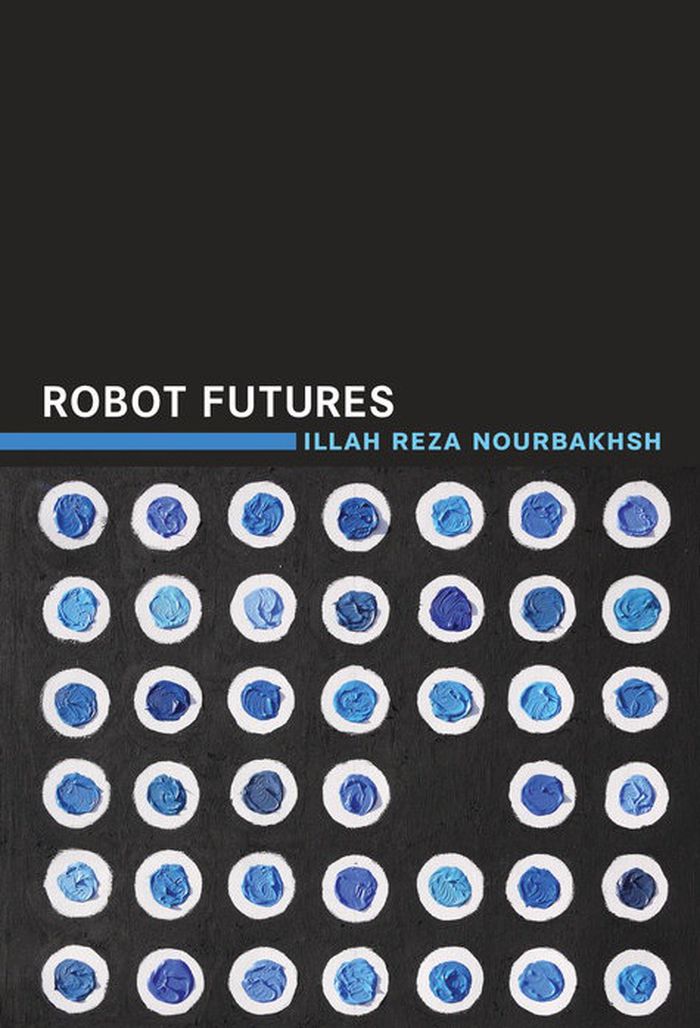
With robots, we are inventing a new species that is part material and part digital. The ambition of modern robotics goes beyond copying humans, beyond the effort to make walking, talking androids that are indistinguishable from people. Future robots will have superhuman abilities in both the physical and digital realms. They will be embedded in our physical spaces, with the ability to go where we cannot, and will have minds of their own, thanks to artificial intelligence. In ''Robot futures,'' the roboticist Illah Reza Nourbakhsh considers how we will share our world with these creatures, and how our society could change as it incorporates a race of stronger, smarter beings. Nourbakhsh imagines a future that includes adbots offering interactive custom messaging; robotic flying toys that operate by means of “gaze tracking”; robot-enabled multimodal, multicontinental telepresence; and even a way that nanorobots could allow us to assume different physical forms. Nourbakhsh examines the underlying technology and the social consequences of each scenario. He also offers a counter-vision: a robotics designed to create civic and community empowerment. His book helps us understand why that is the robot future we should try to bring about.
Robot futures
Actions:
Prix:
$27.00
(disponible sur commande)
Résumé:
With robots, we are inventing a new species that is part material and part digital. The ambition of modern robotics goes beyond copying humans, beyond the effort to make walking, talking androids that are indistinguishable from people. Future robots will have superhuman abilities in both the physical and digital realms. They will be embedded in our physical spaces, with the ability to go where we cannot, and will have minds of their own, thanks to artificial intelligence. In ''Robot futures,'' the roboticist Illah Reza Nourbakhsh considers how we will share our world with these creatures, and how our society could change as it incorporates a race of stronger, smarter beings. Nourbakhsh imagines a future that includes adbots offering interactive custom messaging; robotic flying toys that operate by means of “gaze tracking”; robot-enabled multimodal, multicontinental telepresence; and even a way that nanorobots could allow us to assume different physical forms. Nourbakhsh examines the underlying technology and the social consequences of each scenario. He also offers a counter-vision: a robotics designed to create civic and community empowerment. His book helps us understand why that is the robot future we should try to bring about.
Classification:
livres
livres
Publication:
août 2015
août 2015
Sujet:
Social
Social
Classification:
livres
livres
Titre:
Murakami Takashi
Murakami Takashi
Actions:
Prix:
$84.00
(disponible sur commande)
Résumé:
Takashi Murakami is one of contemporary art’s most innovative and important figures. Drawing from street culture, high art, and traditional Japanese painting, Murakami takes the contemporary art trend of mixing high and low to an unprecedented level (critics call him the new Warhol), producing original paintings and sculptures as well as mass-produced consumer objects(...)
$84.00
(disponible sur commande)
Résumé:
Takashi Murakami is one of contemporary art’s most innovative and important figures. Drawing from street culture, high art, and traditional Japanese painting, Murakami takes the contemporary art trend of mixing high and low to an unprecedented level (critics call him the new Warhol), producing original paintings and sculptures as well as mass-produced consumer objects(...)
Publication:
octobre 2007, Los Angeles, New York
octobre 2007, Los Angeles, New York
Titre:
Murakami Takashi
Actions:
Prix:
$84.00
(disponible sur commande)
Résumé:
Takashi Murakami is one of contemporary art’s most innovative and important figures. Drawing from street culture, high art, and traditional Japanese painting, Murakami takes the contemporary art trend of mixing high and low to an unprecedented level (critics call him the new Warhol), producing original paintings and sculptures as well as mass-produced consumer objects such as toys, books, and most famously, a line of handbags for Louis Vuitton. A committed supporter and spokesperson for Japanese artists and a powerful commentator on postwar culture and society, Murakami has organized influential exhibitions of Japanese art as well as a biannual art fair in Tokyo. Murakami has positioned himself as a new type of artist for the twenty-first century: a hybrid of creator, entrepreneur, and cultural ambassador.In conjunction with the first major retrospective of his work, Murakami traces Murakami’s global impact socially, culturally, and art historically. Essays focus on Murakami’s early works, which were based on a social critique of Japan’s rampant consumerism; the development of his characters; his work with anime, fantasy; otaku culture; and his engagement with global pop culture. Representing output from original works of art to mass-produced multiples, the catalogue also considers the implications of Murakami’s working methods within the tradition of the Western avant-garde.
Murakami Takashi
Actions:
Prix:
$84.00
(disponible sur commande)
Résumé:
Takashi Murakami is one of contemporary art’s most innovative and important figures. Drawing from street culture, high art, and traditional Japanese painting, Murakami takes the contemporary art trend of mixing high and low to an unprecedented level (critics call him the new Warhol), producing original paintings and sculptures as well as mass-produced consumer objects such as toys, books, and most famously, a line of handbags for Louis Vuitton. A committed supporter and spokesperson for Japanese artists and a powerful commentator on postwar culture and society, Murakami has organized influential exhibitions of Japanese art as well as a biannual art fair in Tokyo. Murakami has positioned himself as a new type of artist for the twenty-first century: a hybrid of creator, entrepreneur, and cultural ambassador.In conjunction with the first major retrospective of his work, Murakami traces Murakami’s global impact socially, culturally, and art historically. Essays focus on Murakami’s early works, which were based on a social critique of Japan’s rampant consumerism; the development of his characters; his work with anime, fantasy; otaku culture; and his engagement with global pop culture. Representing output from original works of art to mass-produced multiples, the catalogue also considers the implications of Murakami’s working methods within the tradition of the Western avant-garde.
Classification:
livres
livres
Publication:
octobre 2007, Los Angeles, New York
octobre 2007, Los Angeles, New York
Classification:
livres
livres
Actions:
Prix:
$47.95
(disponible sur commande)
Résumé:
For thousands of years, architects have used models to invent, experiment and communicate. A world in miniature, such models are even more varied in their purposes and materials than their full-scale counterparts. This elegant book explores the fascinating nature of the architectural model through 26 illustrated essays, one for each letter of the alphabet. Unbound by the(...)
$47.95
(disponible sur commande)
Résumé:
For thousands of years, architects have used models to invent, experiment and communicate. A world in miniature, such models are even more varied in their purposes and materials than their full-scale counterparts. This elegant book explores the fascinating nature of the architectural model through 26 illustrated essays, one for each letter of the alphabet. Unbound by the(...)
Titre:
An alphabet of architectural models
Actions:
Prix:
$47.95
(disponible sur commande)
Résumé:
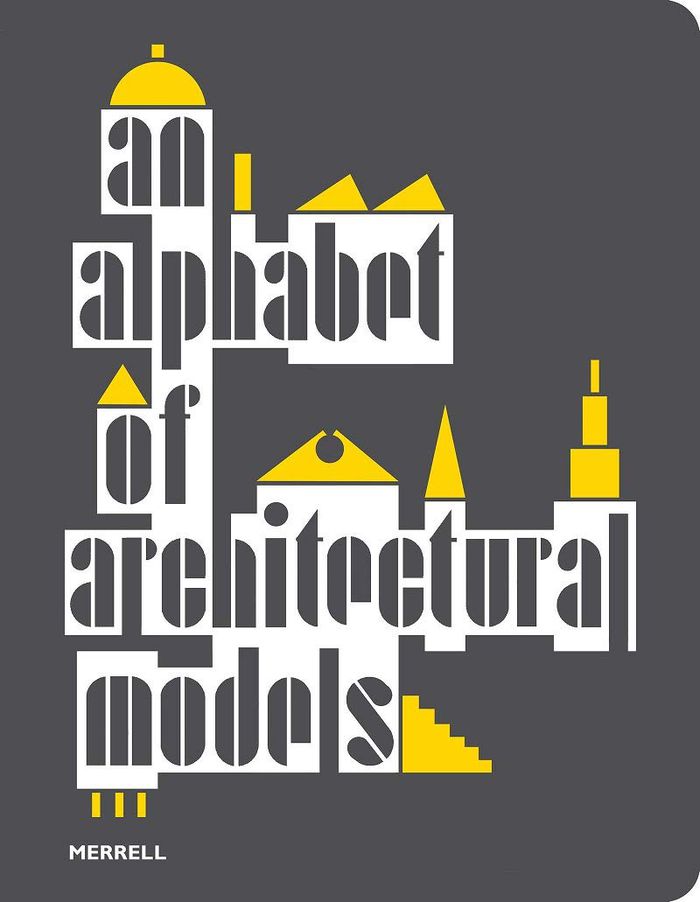
For thousands of years, architects have used models to invent, experiment and communicate. A world in miniature, such models are even more varied in their purposes and materials than their full-scale counterparts. This elegant book explores the fascinating nature of the architectural model through 26 illustrated essays, one for each letter of the alphabet. Unbound by the practicalities of life-size construction, models allow architects the flexibility and freedom to think in three dimensions. Whether made for purely speculative exercises or to solve a specific problem, they are aids to the imagination. Equally, they can be used as detailed representations of particular places, either built or as yet unrealized, in order to convey information to patrons or the public. Models also have a vibrant life outside the architect’s office, including as souvenirs, architectural fragments displayed in museums, and toys for children and adults alike. Written by architects, model-makers, curators, conservators and scholars, the texts in this absorbing ''Alphabet'' explore such fundamental issues as modelling materials and techniques, scale, and the role of the model in the design process. They also go beyond conventional accounts to look at models under the X-ray machine, their use in film, and edible models. The result is a wide-ranging, original account of the multiple lives of the architectural model.
An alphabet of architectural models
Actions:
Prix:
$47.95
(disponible sur commande)
Résumé:
For thousands of years, architects have used models to invent, experiment and communicate. A world in miniature, such models are even more varied in their purposes and materials than their full-scale counterparts. This elegant book explores the fascinating nature of the architectural model through 26 illustrated essays, one for each letter of the alphabet. Unbound by the practicalities of life-size construction, models allow architects the flexibility and freedom to think in three dimensions. Whether made for purely speculative exercises or to solve a specific problem, they are aids to the imagination. Equally, they can be used as detailed representations of particular places, either built or as yet unrealized, in order to convey information to patrons or the public. Models also have a vibrant life outside the architect’s office, including as souvenirs, architectural fragments displayed in museums, and toys for children and adults alike. Written by architects, model-makers, curators, conservators and scholars, the texts in this absorbing ''Alphabet'' explore such fundamental issues as modelling materials and techniques, scale, and the role of the model in the design process. They also go beyond conventional accounts to look at models under the X-ray machine, their use in film, and edible models. The result is a wide-ranging, original account of the multiple lives of the architectural model.
Classification:
livres
livres
Publication:
octobre 2019
octobre 2019
Sujet:
Maquettes
Maquettes
Classification:
livres
livres
Titre:
Photography by the book : Wall, Matta-Clark and the photobook after Ruscha / by Gregory J. Harris.
Photography by the book : Wall, Matta-Clark and the photobook after Ruscha / by Gregory J. Harris.
Actions:
Exemplaires:
Description:
1 online resource (iii, 83 leaves) : illustrations (chiefly color), facsimiles
Description:
1 online resource (iii, 83 leaves) : illustrations (chiefly color), facsimiles
Auteur:
Sujet:
Publication:
2010.
2010.
Titre:
Photography by the book : Wall, Matta-Clark and the photobook after Ruscha / by Gregory J. Harris.
Actions:
Exemplaires:
Description:
1 online resource (iii, 83 leaves) : illustrations (chiefly color), facsimiles
Photography by the book : Wall, Matta-Clark and the photobook after Ruscha / by Gregory J. Harris.
Actions:
Exemplaires:
Description:
1 online resource (iii, 83 leaves) : illustrations (chiefly color), facsimiles
Classification:
livres
livres
Publication:
2010.
2010.
Auteur:
Sujet:
Classification:
livres
livres
Titre:
It's a matter of packaging
It's a matter of packaging
Actions:
Prix:
$42.95
(disponible sur commande)
Résumé:
We may encounter different types of packaging everyday, but how many of us truly appreciate the art of packaging? From food packaging to beverage containers, tissue boxes to CD covers, packaging is hard to be missed in our daily lives. Yet not many of us see packaging as a form of art. Are we taking it for granted because it is around us at all times? Or perhaps we see it(...)
$42.95
(disponible sur commande)
Résumé:
We may encounter different types of packaging everyday, but how many of us truly appreciate the art of packaging? From food packaging to beverage containers, tissue boxes to CD covers, packaging is hard to be missed in our daily lives. Yet not many of us see packaging as a form of art. Are we taking it for granted because it is around us at all times? Or perhaps we see it(...)
Titre:
It's a matter of packaging
Actions:
Prix:
$42.95
(disponible sur commande)
Résumé:
We may encounter different types of packaging everyday, but how many of us truly appreciate the art of packaging? From food packaging to beverage containers, tissue boxes to CD covers, packaging is hard to be missed in our daily lives. Yet not many of us see packaging as a form of art. Are we taking it for granted because it is around us at all times? Or perhaps we see it simply as a marketing tool to sell products? When was the last time you were excited by the packaging of a product? Did it persuade you to buy the product? Packaging is not only a powerful selling tool, it is also an effective method of communication that can stimulate the viewers’ senses. Good packaging can break through the language barrier and can stand the test of time. Like the three previous books in the series, the fourth book ‘It’s a matter of Packaging’ showcases some of the most creative and interesting work produced by designers from all over the world. The book is divided into three main sections: Visual, Touch and Idea, featuring work from almost sixty designers/ companies around the globe. The work ranges from shopping bags to music, food to beverages, books to catalogues, toys to fashion. There are interviews from three established packaging designers, Giannis Kouroudis from K2 design, Sayuri Shoji from Sayuri Studio and Tom Lancaster from Stylo Design. With the diverse collection of work, this book will arouse your senses, inspire your mind and encourage you to appreciate the art of packaging.
It's a matter of packaging
Actions:
Prix:
$42.95
(disponible sur commande)
Résumé:
We may encounter different types of packaging everyday, but how many of us truly appreciate the art of packaging? From food packaging to beverage containers, tissue boxes to CD covers, packaging is hard to be missed in our daily lives. Yet not many of us see packaging as a form of art. Are we taking it for granted because it is around us at all times? Or perhaps we see it simply as a marketing tool to sell products? When was the last time you were excited by the packaging of a product? Did it persuade you to buy the product? Packaging is not only a powerful selling tool, it is also an effective method of communication that can stimulate the viewers’ senses. Good packaging can break through the language barrier and can stand the test of time. Like the three previous books in the series, the fourth book ‘It’s a matter of Packaging’ showcases some of the most creative and interesting work produced by designers from all over the world. The book is divided into three main sections: Visual, Touch and Idea, featuring work from almost sixty designers/ companies around the globe. The work ranges from shopping bags to music, food to beverages, books to catalogues, toys to fashion. There are interviews from three established packaging designers, Giannis Kouroudis from K2 design, Sayuri Shoji from Sayuri Studio and Tom Lancaster from Stylo Design. With the diverse collection of work, this book will arouse your senses, inspire your mind and encourage you to appreciate the art of packaging.
Classification:
livres
livres
Publication:
janvier 1900, Hong Kong
janvier 1900, Hong Kong
Classification:
livres
livres
Actions:
Prix:
$37.50
(disponible sur commande)
Résumé:
In the spring of 2000, a man in Oregon hid a box of toys in the woods, posted the geographic coordinates of its location on a Web site, and issued a challenge for others to find it. People used their GPS receivers to find his treasure, and a new game was born. Today over a million people worldwide participate in geocaching, hiding stashes of trinkets in a variety of(...)
$37.50
(disponible sur commande)
Résumé:
In the spring of 2000, a man in Oregon hid a box of toys in the woods, posted the geographic coordinates of its location on a Web site, and issued a challenge for others to find it. People used their GPS receivers to find his treasure, and a new game was born. Today over a million people worldwide participate in geocaching, hiding stashes of trinkets in a variety of(...)
Titre:
Local treasures : geocaching across America
Actions:
Prix:
$37.50
(disponible sur commande)
Résumé:
In the spring of 2000, a man in Oregon hid a box of toys in the woods, posted the geographic coordinates of its location on a Web site, and issued a challenge for others to find it. People used their GPS receivers to find his treasure, and a new game was born. Today over a million people worldwide participate in geocaching, hiding stashes of trinkets in a variety of locations - from a grove of trees to a cliff ledge to the depths of a riverbed - and then inviting others to find them, leave a note, and swap a treasure of their own. In "Local Treasures" Margot Anne Kelley offers one of the first books on "geocaching," exploring what compels ordinary people across the world to take part in these extraordinary treasure hunts. Kelley traveled throughout the U.S. to chronicle the sites and stories of geocaching adventures, from the rocky coasts of Maine to the deserts surrounding Las Vegas to the starting point of the Mason-Dixon Line. Each full-color photograph exposes a vision of America quite unlike that presented in a traditional guidebook : truly off the beaten path, these are non-idealized landscapes, often places with special meaning for the players alone. Kelley's accompanying writings explore the world of geocaching communities, their rare ability to integrate new technologies with the natural world, and their complex and often ambivalent relationships to the surveillance technologies that sustain the game. Kelley's text is an examination of a new and creative diversion emerging from the intersection of the virtual world with the real. With a foreword by Frank Gohlke.
Local treasures : geocaching across America
Actions:
Prix:
$37.50
(disponible sur commande)
Résumé:
In the spring of 2000, a man in Oregon hid a box of toys in the woods, posted the geographic coordinates of its location on a Web site, and issued a challenge for others to find it. People used their GPS receivers to find his treasure, and a new game was born. Today over a million people worldwide participate in geocaching, hiding stashes of trinkets in a variety of locations - from a grove of trees to a cliff ledge to the depths of a riverbed - and then inviting others to find them, leave a note, and swap a treasure of their own. In "Local Treasures" Margot Anne Kelley offers one of the first books on "geocaching," exploring what compels ordinary people across the world to take part in these extraordinary treasure hunts. Kelley traveled throughout the U.S. to chronicle the sites and stories of geocaching adventures, from the rocky coasts of Maine to the deserts surrounding Las Vegas to the starting point of the Mason-Dixon Line. Each full-color photograph exposes a vision of America quite unlike that presented in a traditional guidebook : truly off the beaten path, these are non-idealized landscapes, often places with special meaning for the players alone. Kelley's accompanying writings explore the world of geocaching communities, their rare ability to integrate new technologies with the natural world, and their complex and often ambivalent relationships to the surveillance technologies that sustain the game. Kelley's text is an examination of a new and creative diversion emerging from the intersection of the virtual world with the real. With a foreword by Frank Gohlke.
Classification:
livres
livres
Publication:
octobre 2005, Santa Fe
octobre 2005, Santa Fe
Sujet:
Monographies photo
Monographies photo
Classification:
livres
livres
Actions:
Prix:
$65.99
(disponible sur commande)
Résumé:
Today, the physical scale model is a centrepiece for design education, celebrated practices and architecture’s public relations. The development of digital fabrication devices has made model manufacture even more pervasive. The physical model is the most accessible form of architectural communication. Clients and the general public seem to immediately respond to and(...)
$65.99
(disponible sur commande)
Résumé:
Today, the physical scale model is a centrepiece for design education, celebrated practices and architecture’s public relations. The development of digital fabrication devices has made model manufacture even more pervasive. The physical model is the most accessible form of architectural communication. Clients and the general public seem to immediately respond to and(...)
Titre:
Architecture and the miniature : models
Actions:
Prix:
$65.99
(disponible sur commande)
Résumé:
Today, the physical scale model is a centrepiece for design education, celebrated practices and architecture’s public relations. The development of digital fabrication devices has made model manufacture even more pervasive. The physical model is the most accessible form of architectural communication. Clients and the general public seem to immediately respond to and understand the model, over blueprints and computer simulations. Many architects use finished models for presentations, competitions and exhibitions. Others also embrace sketch models as quick, economic and flexible generative tools. It is only with the rise of the virtual that the advantages and disadvantages of more traditional models can be fully evaluated. As attested by this book, we are now at an important watershed for the model in architecture. Practitioners and educators alike are seeking to fully understand the multiplicity of model types and how they might be strategically deployed at appropriate stages in the design process. The historic role that the model has played is outlined with attention paid to Alberti, John Soane, the Bauhaus and education reforms. A cultural history is offered by examining models in the guise of toys, food, cinema, product design, souvenirs, narrative and art. Model theories are considered and tied to specific examples in the field. New technologies and creative combinations of traditional model-making techniques are evaluated. Kinetic, multi-media, nightscape and interdisciplinary models reveal the broad scope and exceptional versatility offered by this important tool. Models: Architecture and the Miniature focuses on current model use and experimentation by architects across the globe including David Chipperfield, Peter Eisenman, Frank Gehry, Zaha Hadid, Coop Himmelb(l)au, Daniel Libeskind, Greg Lynn and UN Studio.
Architecture and the miniature : models
Actions:
Prix:
$65.99
(disponible sur commande)
Résumé:
Today, the physical scale model is a centrepiece for design education, celebrated practices and architecture’s public relations. The development of digital fabrication devices has made model manufacture even more pervasive. The physical model is the most accessible form of architectural communication. Clients and the general public seem to immediately respond to and understand the model, over blueprints and computer simulations. Many architects use finished models for presentations, competitions and exhibitions. Others also embrace sketch models as quick, economic and flexible generative tools. It is only with the rise of the virtual that the advantages and disadvantages of more traditional models can be fully evaluated. As attested by this book, we are now at an important watershed for the model in architecture. Practitioners and educators alike are seeking to fully understand the multiplicity of model types and how they might be strategically deployed at appropriate stages in the design process. The historic role that the model has played is outlined with attention paid to Alberti, John Soane, the Bauhaus and education reforms. A cultural history is offered by examining models in the guise of toys, food, cinema, product design, souvenirs, narrative and art. Model theories are considered and tied to specific examples in the field. New technologies and creative combinations of traditional model-making techniques are evaluated. Kinetic, multi-media, nightscape and interdisciplinary models reveal the broad scope and exceptional versatility offered by this important tool. Models: Architecture and the Miniature focuses on current model use and experimentation by architects across the globe including David Chipperfield, Peter Eisenman, Frank Gehry, Zaha Hadid, Coop Himmelb(l)au, Daniel Libeskind, Greg Lynn and UN Studio.
Classification:
livres
livres
Publication:
octobre 2005, Chichester
octobre 2005, Chichester
Sujet:
Maquettes
Maquettes
Classification:
livres
livres
Actions:
Prix:
$85.00
(disponible sur commande)
Résumé:
De nombreux décorateurs ont revisité le minimalisme en enrichissant son vocabulaire, en lui donnant des orientations nouvelles adaptées aux réalités de la vie quotidienne.
$85.00
(disponible sur commande)
Résumé:
De nombreux décorateurs ont revisité le minimalisme en enrichissant son vocabulaire, en lui donnant des orientations nouvelles adaptées aux réalités de la vie quotidienne.
Titre:
Maison design : un art de vivre pour le XXIè siècle
Actions:
Prix:
$85.00
(disponible sur commande)
Résumé:
De nombreux décorateurs ont revisité le minimalisme en enrichissant son vocabulaire, en lui donnant des orientations nouvelles adaptées aux réalités de la vie quotidienne.
Maison design : un art de vivre pour le XXIè siècle
Actions:
Prix:
$85.00
(disponible sur commande)
Résumé:
De nombreux décorateurs ont revisité le minimalisme en enrichissant son vocabulaire, en lui donnant des orientations nouvelles adaptées aux réalités de la vie quotidienne.
Classification:
livres
livres
Publication:
avril 2002, Paris
avril 2002, Paris
Classification:
livres
livres
Titre:
Abelardo Morell
Abelardo Morell
Actions:
Prix:
$29.95
(disponible sur commande)
Résumé:
Born in Havana, Abelardo Morell emigrated to the United States in 1962, where he took his first photography course after winning a scholarship to Bowdoin College - a small liberal arts college in Maine. There, Morell experimented with a variety of photographic techniques to create surreal effects that reflected his feelings of alienation as a Cuban living abroad. He(...)
$29.95
(disponible sur commande)
Résumé:
Born in Havana, Abelardo Morell emigrated to the United States in 1962, where he took his first photography course after winning a scholarship to Bowdoin College - a small liberal arts college in Maine. There, Morell experimented with a variety of photographic techniques to create surreal effects that reflected his feelings of alienation as a Cuban living abroad. He(...)
Titre:
Abelardo Morell
Actions:
Prix:
$29.95
(disponible sur commande)
Résumé:
Born in Havana, Abelardo Morell emigrated to the United States in 1962, where he took his first photography course after winning a scholarship to Bowdoin College - a small liberal arts college in Maine. There, Morell experimented with a variety of photographic techniques to create surreal effects that reflected his feelings of alienation as a Cuban living abroad. He proceeded to complete the graduate programme at Yale University, where he worked within the framework of Robert Frank and Garry Winogrand’s tradition of black-and-white street photography. In 1983, he began teaching at the Massachusetts College of Art in Boston, where he remains a professor. In 1986, Morell began a family and his fascination with his son engaged a new interest in this domestic environment as a subject. Morell began exploring the world from a child’s perspective – approaching mundane household objects in a new way that challenges the viewer’s perception of reality and how we see it. Morell transforms everyday objects by distorting angles and using extreme close-ups, and by exploiting perspectives that confuse and jar with our expectations. For instance, viewed from below a stack of toys blocks tower over the viewer; and a close-up of liquid pouring from a jar seems ominous and dramatic rather than an everyday occurrence. Similarly, Morell continued to transform the familiar into the surprising in his series of photographs of books, maps, American money and, more recently, a series that illustrates a new edition of Lewis Carroll’s Alice’s Adventures in Wonderland. This preoccupation with reality and illusion is most clearly realised in Morell’s series of camera obscura images. He takes an ordinary room and tapes black plastic over the windows, leaving only a 3/8" hole for the light. After setting up a large-format camera in the room and pointing it at the opposite wall, Morell leaves - a single exposure takes 8 hours. In the resulting images a scene of Brooklyn floats upside-down along the walls of his son’s bedroom; global landmarks like the Uffizi and the Eiffel Tower are projected across hotel rooms. In this, Morell’s best known and most ambitious series, the distinction between the outside and the domestic world is merged and his preoccupation with the mechanics of human vision and the principles of photography is illuminated.
Abelardo Morell
Actions:
Prix:
$29.95
(disponible sur commande)
Résumé:
Born in Havana, Abelardo Morell emigrated to the United States in 1962, where he took his first photography course after winning a scholarship to Bowdoin College - a small liberal arts college in Maine. There, Morell experimented with a variety of photographic techniques to create surreal effects that reflected his feelings of alienation as a Cuban living abroad. He proceeded to complete the graduate programme at Yale University, where he worked within the framework of Robert Frank and Garry Winogrand’s tradition of black-and-white street photography. In 1983, he began teaching at the Massachusetts College of Art in Boston, where he remains a professor. In 1986, Morell began a family and his fascination with his son engaged a new interest in this domestic environment as a subject. Morell began exploring the world from a child’s perspective – approaching mundane household objects in a new way that challenges the viewer’s perception of reality and how we see it. Morell transforms everyday objects by distorting angles and using extreme close-ups, and by exploiting perspectives that confuse and jar with our expectations. For instance, viewed from below a stack of toys blocks tower over the viewer; and a close-up of liquid pouring from a jar seems ominous and dramatic rather than an everyday occurrence. Similarly, Morell continued to transform the familiar into the surprising in his series of photographs of books, maps, American money and, more recently, a series that illustrates a new edition of Lewis Carroll’s Alice’s Adventures in Wonderland. This preoccupation with reality and illusion is most clearly realised in Morell’s series of camera obscura images. He takes an ordinary room and tapes black plastic over the windows, leaving only a 3/8" hole for the light. After setting up a large-format camera in the room and pointing it at the opposite wall, Morell leaves - a single exposure takes 8 hours. In the resulting images a scene of Brooklyn floats upside-down along the walls of his son’s bedroom; global landmarks like the Uffizi and the Eiffel Tower are projected across hotel rooms. In this, Morell’s best known and most ambitious series, the distinction between the outside and the domestic world is merged and his preoccupation with the mechanics of human vision and the principles of photography is illuminated.
Classification:
livres
livres
Publication:
septembre 2005, London, New York
septembre 2005, London, New York
Sujet:
Monographies photo
Monographies photo
Classification:
périodiques
périodiques
Titre:
African economic history.
African economic history.
Actions:
Auteur:
Sujet:
Publication:
Madison, Wis. : African Studies Program, University of Wisconsin, 1976-
Madison, Wis. : African Studies Program, University of Wisconsin, 1976-
Classification:
périodiques
périodiques
Publication:
Madison, Wis. : African Studies Program, University of Wisconsin, 1976-
Madison, Wis. : African Studies Program, University of Wisconsin, 1976-
Auteur:
Sujet:


