


Placekeeping
Brooke Rice, Autumn Godwin, Marnie Jacobs, and Amanda Lickers reflect on acts of reciprocity and land-based knowledge teachings


Transcribed excerpts
Amanda Lickers
Brooke Rice, Autumn Godwin, and Marnie Jacobs are my colleagues and the film Everlasting wouldn’t have been possible without their words, the work that they’re doing in the community, and the practices we engage in together. It’s an exciting opportunity to talk about the idea of placekeeping with them from the perspective of land stewardship and Indigenous sovereignty, which is where I think that term has the most value.
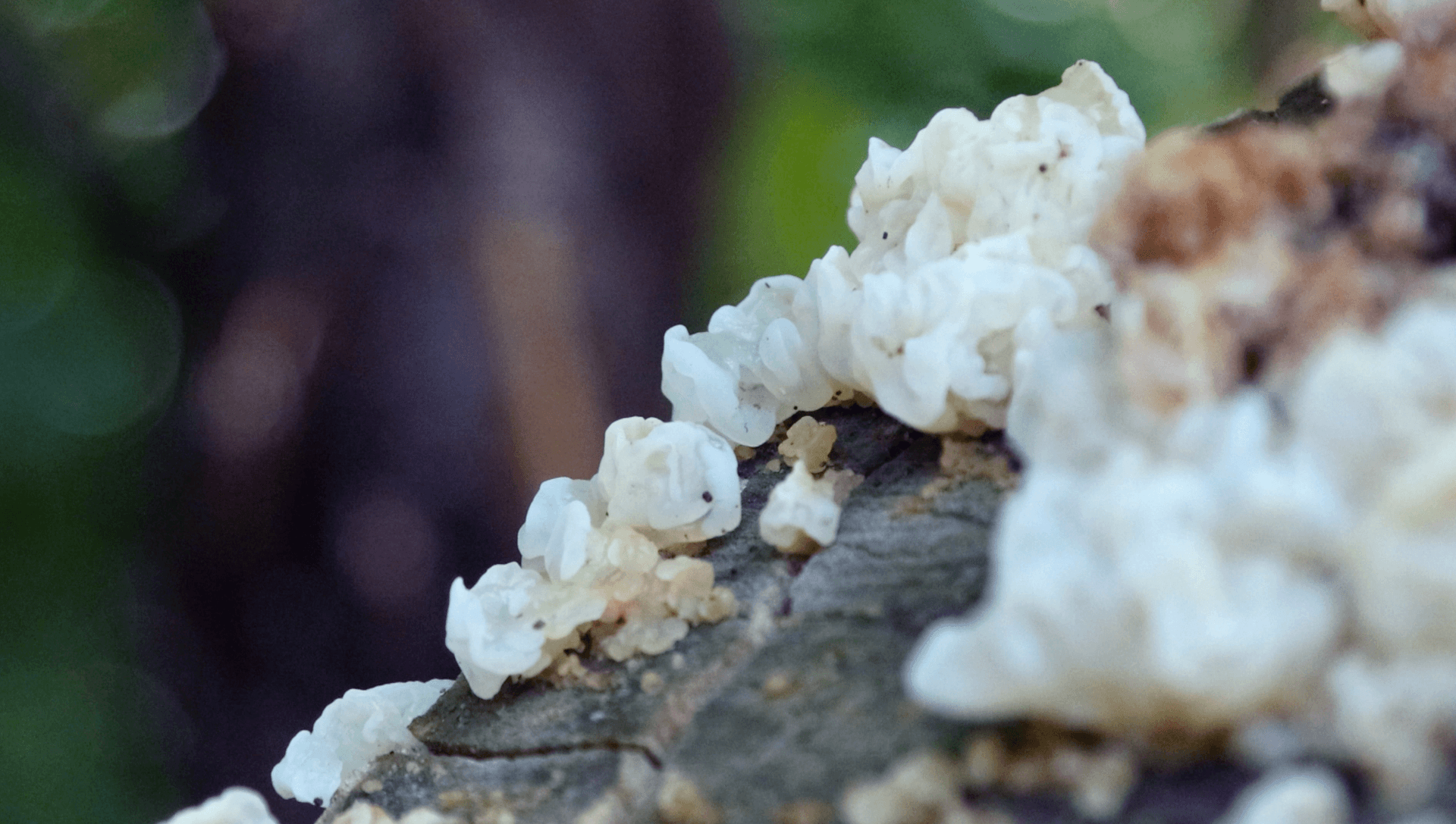
Fungus. Still from the film Everlasting by Amanda Lickers, 2025. © Amanda Lickers
Marnie Jacobs
I work at the All Nations Gathering in Kahnawà:ke and run a program called the Kahnawà:ke Community Cultural Homestead where we grow and preserve food, cook over an open fire, and hold workshops and classes on how to do that. Our place is open to other Indigenous communities and Indigenous groups within the city to come have their workshops or gatherings, and to cook there over an open fire.
I started preserving food over twenty years ago. My oldest child at the time was a baby and he loved applesauce. I thought, “I could do that,” and instead of making batch after batch, I read up on how to preserve it so he would have his supply of applesauce. And this just morphed into a passion: I could plant carrots in my garden and, come harvest season, pull them out and preserve them. Or make my raspberry jam for my French toast. I have a year-long supply for my household and it feels good to know that I can do all this to keep my family healthy and happy with food.
The price of produce and food in general is insane, and if you can grow it yourself from seeds that I trade it with my friend down the road… You love your plant, you sing to it, and then it comes time to harvest, That’s nourishment for your family. It’s just such a good feeling knowing that I could do that and that I could share with people in my community how to do that. I like to call it “from dirt to fork,” because it’s just the way it works.
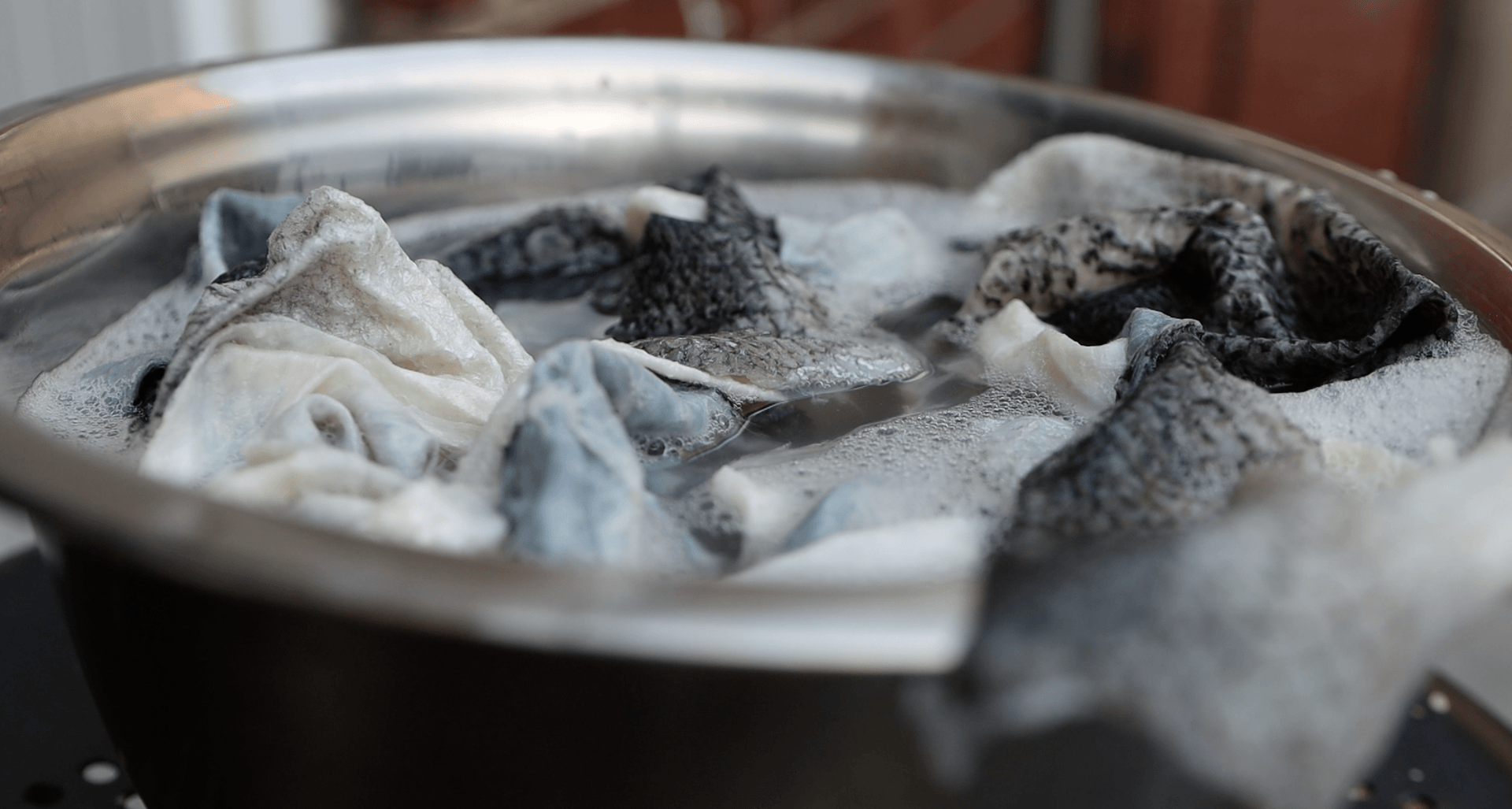
Fish skin processing. Still from the film Everlasting by Amanda Lickers, 2025. © Amanda Lickers
Autumn Godwin
I’m one of the co-founders of the Buckskin Babes, a journey we started about five or six years ago as an urban land-based camp where we tan hides. When we first started it was about connection and access to practices, and bringing the bush to the city was really important for us. Many of us have been displaced from our communities, so part of our process has been connecting with each other and honouring the Elders.
Hide tanning for me started when I began university. I was struggling with identity in the sense of reading my history and reading who I was through academic books—our stories being told but not being told by our people. My mom and family members all attended residential schools, so while I understood what I was reading, I felt heavily disconnected, even wondering why I was in school. My supervisor came to me and she said, “you need to go back home, you need to connect to your community, connect with your family and start the healing process.”
I went home and worked with my aunt, a recognized elder in her community who has been living off the land. When she came off of residential school, she made it her job to speak her language, to work with youth, and to learn the local plants and how to make recipes to heal people with them. I had never been home to learn land-based practices, but just to visit family. So this was a different experience of going home and wanting to learn how to net fish or how to tan hides. We focused just on medicines, hides, and fishing and it turned out to be an amazing experience. And when I came back into the city, it was that crazy, fast-paced life again, and the rebel in me thought “we need to bring the bush here.”
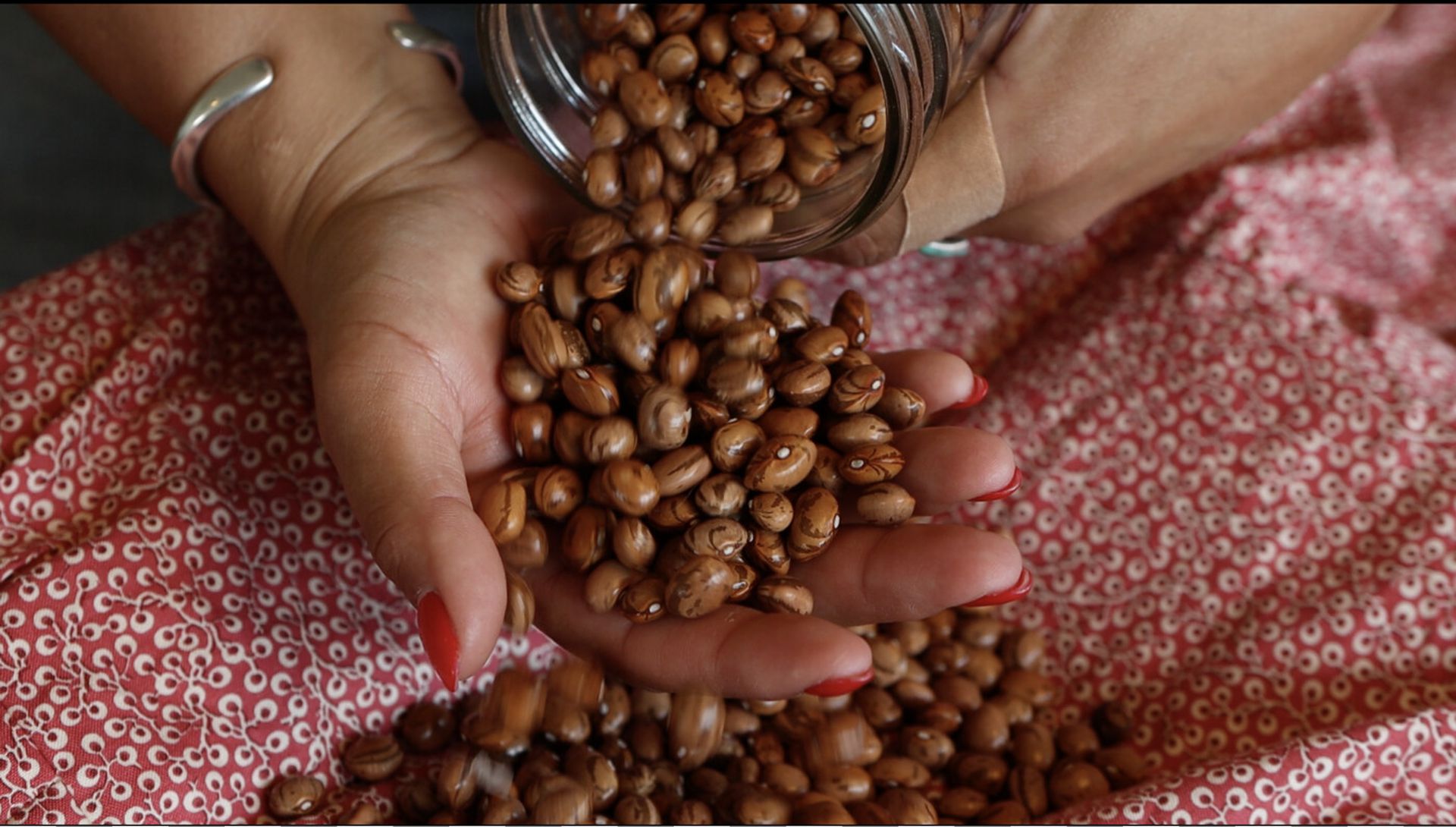
Still from the film Everlasting by Amanda Lickers, 2025. © Amanda Lickers
Brooke Rice
I’m the founder of Tkà:nios, a grassroots initiative to reconnect back to ourselves, to each other, and to the land by slowing down and honouring the cycles, the seasons. We do a lot of land-based learning to connect back to our food ways, our original foods. We have a lot of ancestral heirloom Haudenosaunee varieties of beans, squash, corn, tobacco… So we’re really trying to build up our seed library and we are rematriating the land with our seeds. We also do a lot of workshops, hands-on learning, intergenerational knowledge transmission by bringing in elders, local knowledge keepers, and creating a safe space to connect back to culture and breathe new life into old ways, keeping those traditions alive for future generations.
Tonight I brought corn. Corn has been such a beautiful teacher, an ancestor, medicine. It’s not just sustenance. This corn has come from many, many hands—grandmothers. Sky Woman, our creation story… Each little kernel has so much genetic knowledge and remembrance that when we plant these seeds, when we cook these foods, it’s feeding our spirit and it unlocks an ancestral memory.
My corn journey started when I started learning Kanien’kéha in a Mohawk immersion program in our community and part of the curriculum was going back to ceremony. In younger days I went through the motions, singing and dancing, without any idea of what they were saying. So having to go back to ceremony awoke a little ember of fire inside of me, knowing what they were saying and learning how much responsibility we have to the land.
It’s not just take, take, take. We have to give back to our Mother Earth. And by putting these seeds back into the earth, we are continuing our responsibility to our foodways, to our ancestors, to the land, to our babies… Before we plant, we acknowledge all of creation—the birds, the animals, the thunder beings, the rain, the stars, the dew that will come in the morning and help nourish these seeds, weaving the past, the present, and the future in an Indigenous continuum.
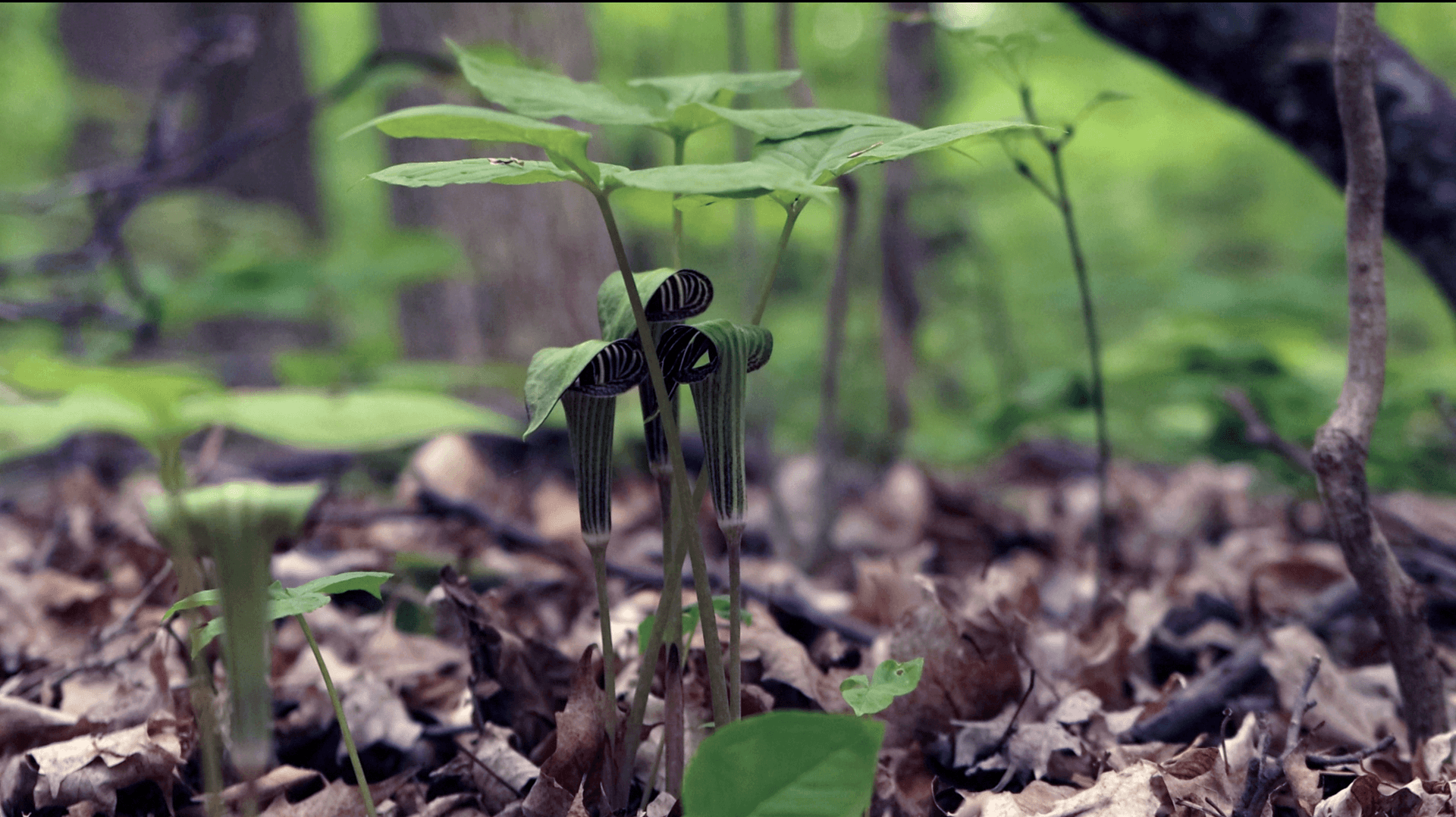
Still from Everlasting, 2025. © Amanda Lickers
Amanda Lickers
In the Western art world there’s a lot of gatekeeping over skills and knowledge in order to professionalize and turn culture into something highly commercialized. And I thought that the practice of sharing and openly mentoring shows the difference in Indigenous community approaches to art. This connection with art is a connection with our worldviews, our relationships, our governance, science, and technology.
Many food forests existed on our territories before colonization. Overharvesting and turning these forests into “resources” of the so-called New World meant taking something that’s a familial relationship and turning it into an object, taking it away from being something that’s living and animate into something that’s dead. It’s a hierarchical relationship where humans are thought as being greater than nature.
These are the things that we’re combating all the time. And it’s all interconnected—our worldviews, our governance, our art, our science, our technology—and it’s a reciprocal relationship with the territories. These are some of the issues that Everlasting tries to address, confronting colonial legacies and how we relate to an urban environment that is still unceded territory and that we’re going to occupy to continue our practices.
This event was organized in conjunction with the exhibition and film Everlasting, produced by Amanda Lickers as the 2023–2024 Indigenous Land Restitution Research Creation Fellow.


