


398 Results
Level of archival description:
Project
Project
Reference number:
AP164.S1.1999.D2
Description:
The project series documents an open competition. Abalos & Herreros, in collaboration with Queca Ortiz and Empty, S.L., won second place for their design. The firm identified this project as number 115. The intention of their entry was to “[…] answer to the task with an authentic installation, a mellowed and independent equipment independent of the container, which absolutely never provokes a conflict or pretends to improve it, which accepts the value of its configuration and extracts the maximum possibilities of the spatial qualities that the intervention has pretended to enhance. Therefore, it is pretended to develop a program which adds an offer of pedagogic-cultural piece of the town to the basic spaces of the museum. The challenge is to make people live together with the scientific aspects, which interests the cultivated popular-pedagogy visitor, connoisseurs of, and which acts with the intention of excinting, surprising and attracting attention of a mostly youthful and infantile audience. […] The museum’s basic program is completed with temporary exhibition halls, library, lecture room and didactic workshops, assembly hall, café, gift shop and offices.” (ARCH270975) Documenting this project are digital and reference materials, project descriptions, and specifications.
AP164.S1.1999.D2
Description:
The project series documents an open competition. Abalos & Herreros, in collaboration with Queca Ortiz and Empty, S.L., won second place for their design. The firm identified this project as number 115. The intention of their entry was to “[…] answer to the task with an authentic installation, a mellowed and independent equipment independent of the container, which absolutely never provokes a conflict or pretends to improve it, which accepts the value of its configuration and extracts the maximum possibilities of the spatial qualities that the intervention has pretended to enhance. Therefore, it is pretended to develop a program which adds an offer of pedagogic-cultural piece of the town to the basic spaces of the museum. The challenge is to make people live together with the scientific aspects, which interests the cultivated popular-pedagogy visitor, connoisseurs of, and which acts with the intention of excinting, surprising and attracting attention of a mostly youthful and infantile audience. […] The museum’s basic program is completed with temporary exhibition halls, library, lecture room and didactic workshops, assembly hall, café, gift shop and offices.” (ARCH270975) Documenting this project are digital and reference materials, project descriptions, and specifications.
People:
Date:
1996-2009, predominant 1999
1996-2009, predominant 1999
Title:
Museo arqueológico Alicante, Spain (1999)
Actions:
AP164.S1.1999.D2
Description:
The project series documents an open competition. Abalos & Herreros, in collaboration with Queca Ortiz and Empty, S.L., won second place for their design. The firm identified this project as number 115. The intention of their entry was to “[…] answer to the task with an authentic installation, a mellowed and independent equipment independent of the container, which absolutely never provokes a conflict or pretends to improve it, which accepts the value of its configuration and extracts the maximum possibilities of the spatial qualities that the intervention has pretended to enhance. Therefore, it is pretended to develop a program which adds an offer of pedagogic-cultural piece of the town to the basic spaces of the museum. The challenge is to make people live together with the scientific aspects, which interests the cultivated popular-pedagogy visitor, connoisseurs of, and which acts with the intention of excinting, surprising and attracting attention of a mostly youthful and infantile audience. […] The museum’s basic program is completed with temporary exhibition halls, library, lecture room and didactic workshops, assembly hall, café, gift shop and offices.” (ARCH270975) Documenting this project are digital and reference materials, project descriptions, and specifications.
Museo arqueológico Alicante, Spain (1999)
Actions:
AP164.S1.1999.D2
Description:
The project series documents an open competition. Abalos & Herreros, in collaboration with Queca Ortiz and Empty, S.L., won second place for their design. The firm identified this project as number 115. The intention of their entry was to “[…] answer to the task with an authentic installation, a mellowed and independent equipment independent of the container, which absolutely never provokes a conflict or pretends to improve it, which accepts the value of its configuration and extracts the maximum possibilities of the spatial qualities that the intervention has pretended to enhance. Therefore, it is pretended to develop a program which adds an offer of pedagogic-cultural piece of the town to the basic spaces of the museum. The challenge is to make people live together with the scientific aspects, which interests the cultivated popular-pedagogy visitor, connoisseurs of, and which acts with the intention of excinting, surprising and attracting attention of a mostly youthful and infantile audience. […] The museum’s basic program is completed with temporary exhibition halls, library, lecture room and didactic workshops, assembly hall, café, gift shop and offices.” (ARCH270975) Documenting this project are digital and reference materials, project descriptions, and specifications.
Level of archival description:
Project
Project
Date:
1996-2009, predominant 1999
1996-2009, predominant 1999
People:
Level of archival description:
Project
Project
Reference number:
AP145.S2.D9
Description:
File documents a project for the exploration of architectural elements using a pedagogical exercise. Material in this file was produced between 1954 and 1963, with additional material produced in 1985 or before. File contains conceptual drawings.
AP145.S2.D9
Description:
File documents a project for the exploration of architectural elements using a pedagogical exercise. Material in this file was produced between 1954 and 1963, with additional material produced in 1985 or before. File contains conceptual drawings.
People:
Date:
[1954-1963]; [before 1985]
[1954-1963]; [before 1985]
Title:
The Nine Square Problem
Actions:
AP145.S2.D9
Description:
File documents a project for the exploration of architectural elements using a pedagogical exercise. Material in this file was produced between 1954 and 1963, with additional material produced in 1985 or before. File contains conceptual drawings.
The Nine Square Problem
Actions:
AP145.S2.D9
Description:
File documents a project for the exploration of architectural elements using a pedagogical exercise. Material in this file was produced between 1954 and 1963, with additional material produced in 1985 or before. File contains conceptual drawings.
Level of archival description:
File 9
File 9
Date:
[1954-1963]; [before 1985]
[1954-1963]; [before 1985]
People:
Form:
exhibitions
exhibitions
Title:
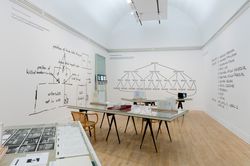
The Other Architect
The Other Architect
Actions:
Description:
For as long as architecture has been reduced to a service to society or an “industry” whose ultimate goal is only to build, there have been others who imagine it instead as a field of intellectual research: energetic, critical, and radical. From a set of varied approaches drawn from many people, places, and times, the other architect emerges: searching for different(...)
For as long as architecture has been reduced to a service to society or an “industry” whose ultimate goal is only to build, there have been others who imagine it instead as a field of intellectual research: energetic, critical, and radical. From a set of varied approaches drawn from many people, places, and times, the other architect emerges: searching for different(...)
Date:
28 October 2015 to 10 April 2016
28 October 2015 to 10 April 2016
Title:
The Other Architect
Actions:
Description:
For as long as architecture has been reduced to a service to society or an “industry” whose ultimate goal is only to build, there have been others who imagine it instead as a field of intellectual research: energetic, critical, and radical. From a set of varied approaches drawn from many people, places, and times, the other architect emerges: searching for different(...)
The Other Architect
Actions:
Description:
For as long as architecture has been reduced to a service to society or an “industry” whose ultimate goal is only to build, there have been others who imagine it instead as a field of intellectual research: energetic, critical, and radical. From a set of varied approaches drawn from many people, places, and times, the other architect emerges: searching for different(...)
Form:
exhibitions
exhibitions
Date:
28 October 2015 to
10 April 2016
28 October 2015 to
10 April 2016
Form:
archives
Level of archival description:
Fonds
archives
Level of archival description:
Fonds
Reference number:
AP057
Synopsis:
The Institute for Architecture and Urban Studies (IAUS) fonds is composed primarily of textual and photographic material which document the activities of the IAUS from its inception in 1967 until its dissolution in 1983. Those activities include the publication of three periodicals (Oppositions, October and Skyline), as well as numerous books, conferences, lectures, exhibitions and educational programming. In addition, the IAUS fonds documents the activities of the IAUS' director, architect Peter Eisenman.
AP057
Synopsis:
The Institute for Architecture and Urban Studies (IAUS) fonds is composed primarily of textual and photographic material which document the activities of the IAUS from its inception in 1967 until its dissolution in 1983. Those activities include the publication of three periodicals (Oppositions, October and Skyline), as well as numerous books, conferences, lectures, exhibitions and educational programming. In addition, the IAUS fonds documents the activities of the IAUS' director, architect Peter Eisenman.
People:
Date:
1965-1984
1965-1984
Title:
Institute for Architecture and Urban Studies fonds
Actions:
AP057
Synopsis:
The Institute for Architecture and Urban Studies (IAUS) fonds is composed primarily of textual and photographic material which document the activities of the IAUS from its inception in 1967 until its dissolution in 1983. Those activities include the publication of three periodicals (Oppositions, October and Skyline), as well as numerous books, conferences, lectures, exhibitions and educational programming. In addition, the IAUS fonds documents the activities of the IAUS' director, architect Peter Eisenman.
Institute for Architecture and Urban Studies fonds
Actions:
AP057
Synopsis:
The Institute for Architecture and Urban Studies (IAUS) fonds is composed primarily of textual and photographic material which document the activities of the IAUS from its inception in 1967 until its dissolution in 1983. Those activities include the publication of three periodicals (Oppositions, October and Skyline), as well as numerous books, conferences, lectures, exhibitions and educational programming. In addition, the IAUS fonds documents the activities of the IAUS' director, architect Peter Eisenman.
Form:
archives
Level of archival description:
Fonds
archives
Level of archival description:
Fonds
Date:
1965-1984
1965-1984
People:
Level of archival description:
Project
Project
Title:
Laundry (1969)
Laundry (1969)
Actions:
Reference number:
AP207.S1.1969.PR02
Description:
This project series documents Pettena's installation "Laundry" realized in the context of the Campo Urbano, a series of artistic events staged during a day at the Piazza del Duomo, in the historic centre of Como, in Italy, on the 21st of September 1969. Pettena was one of the forty artists, musicians, architects and art critics invited to the event [2]. For his installation, "Pettena chose to hang out washing on clothes lines, with the aim of underlining the difference between the appearance of a city and the experience of living in it." [2]. The project series contains photographs of the installation at the Piazza del Duomo, in Como, sketches of the installation, and a project description in English and Italian. Sources: [1] Radical Pedagogies, https://radical-pedagogies.com/search-cases/i05-campo-urbano/ (last accessed 4 November 2019) [2] Gianni Pettena website, https://www.giannipettena.it/italiano/opere-1/inst-laundry-1969-1/ (last accessed 4 November 2019)
AP207.S1.1969.PR02
Description:
This project series documents Pettena's installation "Laundry" realized in the context of the Campo Urbano, a series of artistic events staged during a day at the Piazza del Duomo, in the historic centre of Como, in Italy, on the 21st of September 1969. Pettena was one of the forty artists, musicians, architects and art critics invited to the event [2]. For his installation, "Pettena chose to hang out washing on clothes lines, with the aim of underlining the difference between the appearance of a city and the experience of living in it." [2]. The project series contains photographs of the installation at the Piazza del Duomo, in Como, sketches of the installation, and a project description in English and Italian. Sources: [1] Radical Pedagogies, https://radical-pedagogies.com/search-cases/i05-campo-urbano/ (last accessed 4 November 2019) [2] Gianni Pettena website, https://www.giannipettena.it/italiano/opere-1/inst-laundry-1969-1/ (last accessed 4 November 2019)
People:
Date:
circa 1969-2017
circa 1969-2017
Title:
Laundry (1969)
Actions:
AP207.S1.1969.PR02
Description:
This project series documents Pettena's installation "Laundry" realized in the context of the Campo Urbano, a series of artistic events staged during a day at the Piazza del Duomo, in the historic centre of Como, in Italy, on the 21st of September 1969. Pettena was one of the forty artists, musicians, architects and art critics invited to the event [2]. For his installation, "Pettena chose to hang out washing on clothes lines, with the aim of underlining the difference between the appearance of a city and the experience of living in it." [2]. The project series contains photographs of the installation at the Piazza del Duomo, in Como, sketches of the installation, and a project description in English and Italian. Sources: [1] Radical Pedagogies, https://radical-pedagogies.com/search-cases/i05-campo-urbano/ (last accessed 4 November 2019) [2] Gianni Pettena website, https://www.giannipettena.it/italiano/opere-1/inst-laundry-1969-1/ (last accessed 4 November 2019)
Laundry (1969)
Actions:
AP207.S1.1969.PR02
Description:
This project series documents Pettena's installation "Laundry" realized in the context of the Campo Urbano, a series of artistic events staged during a day at the Piazza del Duomo, in the historic centre of Como, in Italy, on the 21st of September 1969. Pettena was one of the forty artists, musicians, architects and art critics invited to the event [2]. For his installation, "Pettena chose to hang out washing on clothes lines, with the aim of underlining the difference between the appearance of a city and the experience of living in it." [2]. The project series contains photographs of the installation at the Piazza del Duomo, in Como, sketches of the installation, and a project description in English and Italian. Sources: [1] Radical Pedagogies, https://radical-pedagogies.com/search-cases/i05-campo-urbano/ (last accessed 4 November 2019) [2] Gianni Pettena website, https://www.giannipettena.it/italiano/opere-1/inst-laundry-1969-1/ (last accessed 4 November 2019)
Level of archival description:
Project
Project
Date:
circa 1969-2017
circa 1969-2017
People:
Form:
archives
Level of archival description:
Collection
archives
Level of archival description:
Collection
Title:
Rohault de Fleury collection
Rohault de Fleury collection
Reference number:
CI001
Synopsis:
The Rohault de Fleury collection documents the work of three generations of French architects, Hubert, his son Charles, and his grandson Georges, spanning from the early 18th to late 19th century. The collection is extremely varied encompassing both private and government commissions and including domestic work, institutional buildings, commercial buildings, urban planning, and student work from both the École des beaux-arts and the École polytechnique, and archaeological studies. Stylistically, the projects incorporate the two dominant contemporary directions in French architecture - functionalism as advocated by Jean-Nicolas-Louis Durand and the classicism of the École des beaux-arts.
CI001
Synopsis:
The Rohault de Fleury collection documents the work of three generations of French architects, Hubert, his son Charles, and his grandson Georges, spanning from the early 18th to late 19th century. The collection is extremely varied encompassing both private and government commissions and including domestic work, institutional buildings, commercial buildings, urban planning, and student work from both the École des beaux-arts and the École polytechnique, and archaeological studies. Stylistically, the projects incorporate the two dominant contemporary directions in French architecture - functionalism as advocated by Jean-Nicolas-Louis Durand and the classicism of the École des beaux-arts.
People:
Date:
1717-[1884]
1717-[1884]
Title:
Rohault de Fleury collection
CI001
Synopsis:
The Rohault de Fleury collection documents the work of three generations of French architects, Hubert, his son Charles, and his grandson Georges, spanning from the early 18th to late 19th century. The collection is extremely varied encompassing both private and government commissions and including domestic work, institutional buildings, commercial buildings, urban planning, and student work from both the École des beaux-arts and the École polytechnique, and archaeological studies. Stylistically, the projects incorporate the two dominant contemporary directions in French architecture - functionalism as advocated by Jean-Nicolas-Louis Durand and the classicism of the École des beaux-arts.
Rohault de Fleury collection
CI001
Synopsis:
The Rohault de Fleury collection documents the work of three generations of French architects, Hubert, his son Charles, and his grandson Georges, spanning from the early 18th to late 19th century. The collection is extremely varied encompassing both private and government commissions and including domestic work, institutional buildings, commercial buildings, urban planning, and student work from both the École des beaux-arts and the École polytechnique, and archaeological studies. Stylistically, the projects incorporate the two dominant contemporary directions in French architecture - functionalism as advocated by Jean-Nicolas-Louis Durand and the classicism of the École des beaux-arts.
Form:
archives
Level of archival description:
Collection 1
archives
Level of archival description:
Collection 1
Date:
1717-[1884]
1717-[1884]
People:
Form:
events
events

Actions:
Location:
Shaughnessy House, CCA Keyword(s):
Indigenous-led design, place-based practices, place-based knowledges, pedagogy, environment, climate crisis, on-the-land learning
Shaughnessy House, CCA Keyword(s):
Indigenous-led design, place-based practices, place-based knowledges, pedagogy, environment, climate crisis, on-the-land learning
Date:
24 February 2024, 2pm to 3:30pm
24 February 2024, 2pm to 3:30pm
Form:
events
events
Date:
24 February 2024
2pm to 3:30pm
24 February 2024
2pm to 3:30pm
Location:
Shaughnessy House, CCA Keyword(s):
Indigenous-led design, place-based practices, place-based knowledges, pedagogy, environment, climate crisis, on-the-land learning
Shaughnessy House, CCA Keyword(s):
Indigenous-led design, place-based practices, place-based knowledges, pedagogy, environment, climate crisis, on-the-land learning
Form:
events
events
Date:
5 April 2018
5 April 2018
Form:
events
events
Date:
5 April 2018
5 April 2018
Form:
archives
Level of archival description:
Fonds
archives
Level of archival description:
Fonds
Title:
Bernard Tschumi fonds
Bernard Tschumi fonds
Actions:
Reference number:
AP214
Synopsis:
The Bernard Tschumi fonds, dating from approximately 1965-2015, documents the professional activities of Bernard Tschumi including Tschumi’s career in academia and his professional practice as an architect through approximately 75 projects dating from the late 1980s to 2012.
AP214
Synopsis:
The Bernard Tschumi fonds, dating from approximately 1965-2015, documents the professional activities of Bernard Tschumi including Tschumi’s career in academia and his professional practice as an architect through approximately 75 projects dating from the late 1980s to 2012.
People:
Date:
circa 1964-2015
circa 1964-2015
Title:
Bernard Tschumi fonds
Actions:
AP214
Synopsis:
The Bernard Tschumi fonds, dating from approximately 1965-2015, documents the professional activities of Bernard Tschumi including Tschumi’s career in academia and his professional practice as an architect through approximately 75 projects dating from the late 1980s to 2012.
Bernard Tschumi fonds
Actions:
AP214
Synopsis:
The Bernard Tschumi fonds, dating from approximately 1965-2015, documents the professional activities of Bernard Tschumi including Tschumi’s career in academia and his professional practice as an architect through approximately 75 projects dating from the late 1980s to 2012.
Form:
archives
Level of archival description:
Fonds
archives
Level of archival description:
Fonds
Date:
circa 1964-2015
circa 1964-2015
People:
Form:
archives
Level of archival description:
Fonds
archives
Level of archival description:
Fonds
Title:
Joseph Rykwert fonds
Joseph Rykwert fonds
Reference number:
AP209
Synopsis:
The Joseph Rykwert fonds, 1928-2022, documents Joseph Rykwert’s career as an architectural historian, author and professor. The fonds includes the records for over a dozen monographs written between the mid-1960s and the mid-2010s as well as edited works and articles, and details his teaching and lecturing activities from the 1960s onwards in universities in Europe and the United States. The records highlight Joseph Rykwert’s multidisciplinary approach, which involved archaeology, anthropology and psychoanalysis in his study of the history and theory of architecture and of the urban form. The fonds is composed of textual records, publications and ephemera, and of photographs including multiple albums and a large number of slides; the fonds also documents Joseph Rykwert’s career as an independent designer through drawings realized between the late 1940s and the late 1970s.
AP209
Synopsis:
The Joseph Rykwert fonds, 1928-2022, documents Joseph Rykwert’s career as an architectural historian, author and professor. The fonds includes the records for over a dozen monographs written between the mid-1960s and the mid-2010s as well as edited works and articles, and details his teaching and lecturing activities from the 1960s onwards in universities in Europe and the United States. The records highlight Joseph Rykwert’s multidisciplinary approach, which involved archaeology, anthropology and psychoanalysis in his study of the history and theory of architecture and of the urban form. The fonds is composed of textual records, publications and ephemera, and of photographs including multiple albums and a large number of slides; the fonds also documents Joseph Rykwert’s career as an independent designer through drawings realized between the late 1940s and the late 1970s.
People:
Date:
1928-2022
1928-2022
Title:
Joseph Rykwert fonds
Actions:
AP209
Synopsis:
The Joseph Rykwert fonds, 1928-2022, documents Joseph Rykwert’s career as an architectural historian, author and professor. The fonds includes the records for over a dozen monographs written between the mid-1960s and the mid-2010s as well as edited works and articles, and details his teaching and lecturing activities from the 1960s onwards in universities in Europe and the United States. The records highlight Joseph Rykwert’s multidisciplinary approach, which involved archaeology, anthropology and psychoanalysis in his study of the history and theory of architecture and of the urban form. The fonds is composed of textual records, publications and ephemera, and of photographs including multiple albums and a large number of slides; the fonds also documents Joseph Rykwert’s career as an independent designer through drawings realized between the late 1940s and the late 1970s.
Joseph Rykwert fonds
Actions:
AP209
Synopsis:
The Joseph Rykwert fonds, 1928-2022, documents Joseph Rykwert’s career as an architectural historian, author and professor. The fonds includes the records for over a dozen monographs written between the mid-1960s and the mid-2010s as well as edited works and articles, and details his teaching and lecturing activities from the 1960s onwards in universities in Europe and the United States. The records highlight Joseph Rykwert’s multidisciplinary approach, which involved archaeology, anthropology and psychoanalysis in his study of the history and theory of architecture and of the urban form. The fonds is composed of textual records, publications and ephemera, and of photographs including multiple albums and a large number of slides; the fonds also documents Joseph Rykwert’s career as an independent designer through drawings realized between the late 1940s and the late 1970s.
Form:
archives
Level of archival description:
Fonds
archives
Level of archival description:
Fonds
Date:
1928-2022
1928-2022
People:


