


3779 Results
Form:
drawings
Quantity:
17 drawing(s)
drawings
Quantity:
17 drawing(s)
Actions:
Reference number:
ARCH270002
Description:
Group consists of plans and site plans reproducing various existing urban spaces in Europe, United-States and South America including shopping centres, gardens, parks, squares, crescents and public buildings.
ARCH270002
Description:
Group consists of plans and site plans reproducing various existing urban spaces in Europe, United-States and South America including shopping centres, gardens, parks, squares, crescents and public buildings.
People:
Date:
n.d.
n.d.
Title:
Plans and site plans reproducing various existing urban spaces in Europe
Actions:
ARCH270002
Description:
Group consists of plans and site plans reproducing various existing urban spaces in Europe, United-States and South America including shopping centres, gardens, parks, squares, crescents and public buildings.
Plans and site plans reproducing various existing urban spaces in Europe
Actions:
ARCH270002
Description:
Group consists of plans and site plans reproducing various existing urban spaces in Europe, United-States and South America including shopping centres, gardens, parks, squares, crescents and public buildings.
Form:
drawings
Quantity:
17 drawing(s)
drawings
Quantity:
17 drawing(s)
Date:
n.d.
n.d.
People:
Form:
photographs
photographs
Actions:
Reference number:
ARCH255345
Description:
"Research (general)" binder of 530 slides of urban spaces in Toronto, Ottawa, Montreal, and Osaka; interiors; miscellaneous fountains
ARCH255345
Description:
"Research (general)" binder of 530 slides of urban spaces in Toronto, Ottawa, Montreal, and Osaka; interiors; miscellaneous fountains
People:
Date:
1971, 1973-1974
1971, 1973-1974
Title:
Photographs of urban spaces in Toronto, Ottawa, Montreal, and Osaka, of interiors, and miscellaneous fountains
Actions:
ARCH255345
Description:
"Research (general)" binder of 530 slides of urban spaces in Toronto, Ottawa, Montreal, and Osaka; interiors; miscellaneous fountains
Photographs of urban spaces in Toronto, Ottawa, Montreal, and Osaka, of interiors, and miscellaneous fountains
Actions:
ARCH255345
Description:
"Research (general)" binder of 530 slides of urban spaces in Toronto, Ottawa, Montreal, and Osaka; interiors; miscellaneous fountains
Form:
photographs
photographs
Date:
1971, 1973-1974
1971, 1973-1974
People:
Level of archival description:
Sub-series
Sub-series
Reference number:
CI001.S1.D3
Description:
The urban and public architecture of Hubert Rohault de Fleury is insightful concerning both the stylistic directions of utilitarian architecture in France and the structure and role of the government architectural services (1) in the Empire and the Restoration. The drawings in the CCA collection depict built and unbuilt projects undertaken in the context of Hubert's positions in the government architectural services as well as private commissions. Hubert's principal official positions related to three branches of the French government: the Préfecture de la police, the Conseil général des hospices and the Conseil des Bâtiments Civils, a "division" of the Ministère de l'interieur. Hubert's work for the Préfecture de la police (which was also responsible for the gendarmerie and the sapeurs-pompiers barracks) is represented in the CCA collection by projects for four gendarmerie barracks (1821-1830) and alterations to the Préfecture de la Police (1833 ?) and nearby prison in Paris (1819)(DR1974:0002:016:001-070 / DR1974:0002:011:001-089 and DR1974:0002: 015:001-070). The drawings in these albums emphasize the planning (or re-arrangement) of the interior spaces. The album for the Préfecture de la police also includes record drawings for prisons in England and France as background material for Hubert's work and/or related to reports for the Conseil des Bâtiments Civils, which had an active role in the design of prisons throughout France during the early years of the nineteenth century (2). Although the CCA collection has no drawings directly related to Hubert's position as the architecte des hospices (3), drawings and prints are included for his earlier ideal hospitals (ca. 1810) (DR1974:0002:008:001-077). These projects continue the late 17th and 18th century tradition of monumental geometrically laid-out ideal hospitals. This album also contains prints and drawings of medical buildings by other architects (probably reference material), and drawings of Hubert's unexecuted proposal for the re-development of the École de médecine (Paris) and the surrounding buildings and urban spaces. Hubert was the architecte de l'École de medicine (4); a position that probably related to his work for the Ministère d'Interieur, which would have been responsible for this building. In general, Hubert's role and responsibilities within the Ministère de l'interieur and the associated Conseil de Bâtiment Civils (especially prior to his appointment to the position of inspecteur gènèral in 1830) are the least clear of his government positions. In addition to the École de medicine album, two other albums contain projects relating to the Ministère de l'Interieur: two proposals for Place Louis XV commissioned by the Ministre de l'interieur, Duc Decazes in 1821 (DR1974:0002:037:001-031), and drawings for the conversion or renovation of several Parisian hôtel particuliers (probably between 1810 and ca. 1820) including those used by the Ministère de l'interieur, Ministère de la Guerre and the Ministère des affaires étrangères (DR1974:0002;011:001-089). On other government commission of significance is represented in the CCA collection. In 1819, Hubert Rohault de Fleury in collaboration with Etienne Hyppolite Godde was commissioned to direct the restoration of the Thermes de Julien located under the Hôtel de Cluny. The CCA collection includes several letters and drawings, and a report related to this commission (DR1974:0002 :037:001-031). Hubert's private urban projects, mostly commissioned by private entrepreneurs or societies, were concerned with the expansion of the infrastructure of Paris and the surrounding communities as well as, to some extent, larger issues of urban development. One album contains projects dating from between 1819 and 1836 related horses - an essential part of 19th century urban life (5): a stud-farm (Haras de Madrid, Bois de Boulogne), an auction house and an infirmary (Clos St. Charles, Clos d'équarrissage, fôret de Bondy) and three slaughterhouses (Plaine de Grenelle, an unnamed project and La Villete (6))(DR1974:0002:014:001-104). These album also includes developmental studies for a new quartier of Paris - Nouveau Quartier Poissonière (the site of today's 10e arrondissement). A second album (ca. 1825) includes designs for a "maison de blanchisseur", an "entrepot de vins" with adjacent "guingette" and designs for structures at Parc de Clichy - a reservoir, a washhouse and a manège (DR1974:0002:009:001-079) (7). The drawings in these albums are particularly informative regarding the materials, structures and mechanical systems utilized. As with most of his government commissions, for these buildings, Hubert adopted a sparse architectural syntax of pared-down classical motifs and regimented plans grounded in the ideas of Durand and commonly used in utilitarian buildings during the 19th century. (1) These are discussed in some detail in Chapter 2 of David Van Zanten, 'Building Paris' (Cambridge: Cambridge University Press, 1994). (2) Van Zanten, 'Building Paris', 51-52. (3) The Cabinet des Estampes at the Musée Carnavalet in Paris has drawings related to Hubert's work for the Conseil général des hospices. (4) Evidence of this position is based on inscriptions on drawings in album, DR1974:0002:008:001-77. (5) Bergdoll, 4. (6) The La Villete slaughterhouse was designed by Charles Rohault de Fleury. (7) The source(s) of these commissions is unknown.
CI001.S1.D3
Description:
The urban and public architecture of Hubert Rohault de Fleury is insightful concerning both the stylistic directions of utilitarian architecture in France and the structure and role of the government architectural services (1) in the Empire and the Restoration. The drawings in the CCA collection depict built and unbuilt projects undertaken in the context of Hubert's positions in the government architectural services as well as private commissions. Hubert's principal official positions related to three branches of the French government: the Préfecture de la police, the Conseil général des hospices and the Conseil des Bâtiments Civils, a "division" of the Ministère de l'interieur. Hubert's work for the Préfecture de la police (which was also responsible for the gendarmerie and the sapeurs-pompiers barracks) is represented in the CCA collection by projects for four gendarmerie barracks (1821-1830) and alterations to the Préfecture de la Police (1833 ?) and nearby prison in Paris (1819)(DR1974:0002:016:001-070 / DR1974:0002:011:001-089 and DR1974:0002: 015:001-070). The drawings in these albums emphasize the planning (or re-arrangement) of the interior spaces. The album for the Préfecture de la police also includes record drawings for prisons in England and France as background material for Hubert's work and/or related to reports for the Conseil des Bâtiments Civils, which had an active role in the design of prisons throughout France during the early years of the nineteenth century (2). Although the CCA collection has no drawings directly related to Hubert's position as the architecte des hospices (3), drawings and prints are included for his earlier ideal hospitals (ca. 1810) (DR1974:0002:008:001-077). These projects continue the late 17th and 18th century tradition of monumental geometrically laid-out ideal hospitals. This album also contains prints and drawings of medical buildings by other architects (probably reference material), and drawings of Hubert's unexecuted proposal for the re-development of the École de médecine (Paris) and the surrounding buildings and urban spaces. Hubert was the architecte de l'École de medicine (4); a position that probably related to his work for the Ministère d'Interieur, which would have been responsible for this building. In general, Hubert's role and responsibilities within the Ministère de l'interieur and the associated Conseil de Bâtiment Civils (especially prior to his appointment to the position of inspecteur gènèral in 1830) are the least clear of his government positions. In addition to the École de medicine album, two other albums contain projects relating to the Ministère de l'Interieur: two proposals for Place Louis XV commissioned by the Ministre de l'interieur, Duc Decazes in 1821 (DR1974:0002:037:001-031), and drawings for the conversion or renovation of several Parisian hôtel particuliers (probably between 1810 and ca. 1820) including those used by the Ministère de l'interieur, Ministère de la Guerre and the Ministère des affaires étrangères (DR1974:0002;011:001-089). On other government commission of significance is represented in the CCA collection. In 1819, Hubert Rohault de Fleury in collaboration with Etienne Hyppolite Godde was commissioned to direct the restoration of the Thermes de Julien located under the Hôtel de Cluny. The CCA collection includes several letters and drawings, and a report related to this commission (DR1974:0002 :037:001-031). Hubert's private urban projects, mostly commissioned by private entrepreneurs or societies, were concerned with the expansion of the infrastructure of Paris and the surrounding communities as well as, to some extent, larger issues of urban development. One album contains projects dating from between 1819 and 1836 related horses - an essential part of 19th century urban life (5): a stud-farm (Haras de Madrid, Bois de Boulogne), an auction house and an infirmary (Clos St. Charles, Clos d'équarrissage, fôret de Bondy) and three slaughterhouses (Plaine de Grenelle, an unnamed project and La Villete (6))(DR1974:0002:014:001-104). These album also includes developmental studies for a new quartier of Paris - Nouveau Quartier Poissonière (the site of today's 10e arrondissement). A second album (ca. 1825) includes designs for a "maison de blanchisseur", an "entrepot de vins" with adjacent "guingette" and designs for structures at Parc de Clichy - a reservoir, a washhouse and a manège (DR1974:0002:009:001-079) (7). The drawings in these albums are particularly informative regarding the materials, structures and mechanical systems utilized. As with most of his government commissions, for these buildings, Hubert adopted a sparse architectural syntax of pared-down classical motifs and regimented plans grounded in the ideas of Durand and commonly used in utilitarian buildings during the 19th century. (1) These are discussed in some detail in Chapter 2 of David Van Zanten, 'Building Paris' (Cambridge: Cambridge University Press, 1994). (2) Van Zanten, 'Building Paris', 51-52. (3) The Cabinet des Estampes at the Musée Carnavalet in Paris has drawings related to Hubert's work for the Conseil général des hospices. (4) Evidence of this position is based on inscriptions on drawings in album, DR1974:0002:008:001-77. (5) Bergdoll, 4. (6) The La Villete slaughterhouse was designed by Charles Rohault de Fleury. (7) The source(s) of these commissions is unknown.
People:
Date:
1754-1875
1754-1875
Title:
Public and Urban architecture
CI001.S1.D3
Description:
The urban and public architecture of Hubert Rohault de Fleury is insightful concerning both the stylistic directions of utilitarian architecture in France and the structure and role of the government architectural services (1) in the Empire and the Restoration. The drawings in the CCA collection depict built and unbuilt projects undertaken in the context of Hubert's positions in the government architectural services as well as private commissions. Hubert's principal official positions related to three branches of the French government: the Préfecture de la police, the Conseil général des hospices and the Conseil des Bâtiments Civils, a "division" of the Ministère de l'interieur. Hubert's work for the Préfecture de la police (which was also responsible for the gendarmerie and the sapeurs-pompiers barracks) is represented in the CCA collection by projects for four gendarmerie barracks (1821-1830) and alterations to the Préfecture de la Police (1833 ?) and nearby prison in Paris (1819)(DR1974:0002:016:001-070 / DR1974:0002:011:001-089 and DR1974:0002: 015:001-070). The drawings in these albums emphasize the planning (or re-arrangement) of the interior spaces. The album for the Préfecture de la police also includes record drawings for prisons in England and France as background material for Hubert's work and/or related to reports for the Conseil des Bâtiments Civils, which had an active role in the design of prisons throughout France during the early years of the nineteenth century (2). Although the CCA collection has no drawings directly related to Hubert's position as the architecte des hospices (3), drawings and prints are included for his earlier ideal hospitals (ca. 1810) (DR1974:0002:008:001-077). These projects continue the late 17th and 18th century tradition of monumental geometrically laid-out ideal hospitals. This album also contains prints and drawings of medical buildings by other architects (probably reference material), and drawings of Hubert's unexecuted proposal for the re-development of the École de médecine (Paris) and the surrounding buildings and urban spaces. Hubert was the architecte de l'École de medicine (4); a position that probably related to his work for the Ministère d'Interieur, which would have been responsible for this building. In general, Hubert's role and responsibilities within the Ministère de l'interieur and the associated Conseil de Bâtiment Civils (especially prior to his appointment to the position of inspecteur gènèral in 1830) are the least clear of his government positions. In addition to the École de medicine album, two other albums contain projects relating to the Ministère de l'Interieur: two proposals for Place Louis XV commissioned by the Ministre de l'interieur, Duc Decazes in 1821 (DR1974:0002:037:001-031), and drawings for the conversion or renovation of several Parisian hôtel particuliers (probably between 1810 and ca. 1820) including those used by the Ministère de l'interieur, Ministère de la Guerre and the Ministère des affaires étrangères (DR1974:0002;011:001-089). On other government commission of significance is represented in the CCA collection. In 1819, Hubert Rohault de Fleury in collaboration with Etienne Hyppolite Godde was commissioned to direct the restoration of the Thermes de Julien located under the Hôtel de Cluny. The CCA collection includes several letters and drawings, and a report related to this commission (DR1974:0002 :037:001-031). Hubert's private urban projects, mostly commissioned by private entrepreneurs or societies, were concerned with the expansion of the infrastructure of Paris and the surrounding communities as well as, to some extent, larger issues of urban development. One album contains projects dating from between 1819 and 1836 related horses - an essential part of 19th century urban life (5): a stud-farm (Haras de Madrid, Bois de Boulogne), an auction house and an infirmary (Clos St. Charles, Clos d'équarrissage, fôret de Bondy) and three slaughterhouses (Plaine de Grenelle, an unnamed project and La Villete (6))(DR1974:0002:014:001-104). These album also includes developmental studies for a new quartier of Paris - Nouveau Quartier Poissonière (the site of today's 10e arrondissement). A second album (ca. 1825) includes designs for a "maison de blanchisseur", an "entrepot de vins" with adjacent "guingette" and designs for structures at Parc de Clichy - a reservoir, a washhouse and a manège (DR1974:0002:009:001-079) (7). The drawings in these albums are particularly informative regarding the materials, structures and mechanical systems utilized. As with most of his government commissions, for these buildings, Hubert adopted a sparse architectural syntax of pared-down classical motifs and regimented plans grounded in the ideas of Durand and commonly used in utilitarian buildings during the 19th century. (1) These are discussed in some detail in Chapter 2 of David Van Zanten, 'Building Paris' (Cambridge: Cambridge University Press, 1994). (2) Van Zanten, 'Building Paris', 51-52. (3) The Cabinet des Estampes at the Musée Carnavalet in Paris has drawings related to Hubert's work for the Conseil général des hospices. (4) Evidence of this position is based on inscriptions on drawings in album, DR1974:0002:008:001-77. (5) Bergdoll, 4. (6) The La Villete slaughterhouse was designed by Charles Rohault de Fleury. (7) The source(s) of these commissions is unknown.
Public and Urban architecture
CI001.S1.D3
Description:
The urban and public architecture of Hubert Rohault de Fleury is insightful concerning both the stylistic directions of utilitarian architecture in France and the structure and role of the government architectural services (1) in the Empire and the Restoration. The drawings in the CCA collection depict built and unbuilt projects undertaken in the context of Hubert's positions in the government architectural services as well as private commissions. Hubert's principal official positions related to three branches of the French government: the Préfecture de la police, the Conseil général des hospices and the Conseil des Bâtiments Civils, a "division" of the Ministère de l'interieur. Hubert's work for the Préfecture de la police (which was also responsible for the gendarmerie and the sapeurs-pompiers barracks) is represented in the CCA collection by projects for four gendarmerie barracks (1821-1830) and alterations to the Préfecture de la Police (1833 ?) and nearby prison in Paris (1819)(DR1974:0002:016:001-070 / DR1974:0002:011:001-089 and DR1974:0002: 015:001-070). The drawings in these albums emphasize the planning (or re-arrangement) of the interior spaces. The album for the Préfecture de la police also includes record drawings for prisons in England and France as background material for Hubert's work and/or related to reports for the Conseil des Bâtiments Civils, which had an active role in the design of prisons throughout France during the early years of the nineteenth century (2). Although the CCA collection has no drawings directly related to Hubert's position as the architecte des hospices (3), drawings and prints are included for his earlier ideal hospitals (ca. 1810) (DR1974:0002:008:001-077). These projects continue the late 17th and 18th century tradition of monumental geometrically laid-out ideal hospitals. This album also contains prints and drawings of medical buildings by other architects (probably reference material), and drawings of Hubert's unexecuted proposal for the re-development of the École de médecine (Paris) and the surrounding buildings and urban spaces. Hubert was the architecte de l'École de medicine (4); a position that probably related to his work for the Ministère d'Interieur, which would have been responsible for this building. In general, Hubert's role and responsibilities within the Ministère de l'interieur and the associated Conseil de Bâtiment Civils (especially prior to his appointment to the position of inspecteur gènèral in 1830) are the least clear of his government positions. In addition to the École de medicine album, two other albums contain projects relating to the Ministère de l'Interieur: two proposals for Place Louis XV commissioned by the Ministre de l'interieur, Duc Decazes in 1821 (DR1974:0002:037:001-031), and drawings for the conversion or renovation of several Parisian hôtel particuliers (probably between 1810 and ca. 1820) including those used by the Ministère de l'interieur, Ministère de la Guerre and the Ministère des affaires étrangères (DR1974:0002;011:001-089). On other government commission of significance is represented in the CCA collection. In 1819, Hubert Rohault de Fleury in collaboration with Etienne Hyppolite Godde was commissioned to direct the restoration of the Thermes de Julien located under the Hôtel de Cluny. The CCA collection includes several letters and drawings, and a report related to this commission (DR1974:0002 :037:001-031). Hubert's private urban projects, mostly commissioned by private entrepreneurs or societies, were concerned with the expansion of the infrastructure of Paris and the surrounding communities as well as, to some extent, larger issues of urban development. One album contains projects dating from between 1819 and 1836 related horses - an essential part of 19th century urban life (5): a stud-farm (Haras de Madrid, Bois de Boulogne), an auction house and an infirmary (Clos St. Charles, Clos d'équarrissage, fôret de Bondy) and three slaughterhouses (Plaine de Grenelle, an unnamed project and La Villete (6))(DR1974:0002:014:001-104). These album also includes developmental studies for a new quartier of Paris - Nouveau Quartier Poissonière (the site of today's 10e arrondissement). A second album (ca. 1825) includes designs for a "maison de blanchisseur", an "entrepot de vins" with adjacent "guingette" and designs for structures at Parc de Clichy - a reservoir, a washhouse and a manège (DR1974:0002:009:001-079) (7). The drawings in these albums are particularly informative regarding the materials, structures and mechanical systems utilized. As with most of his government commissions, for these buildings, Hubert adopted a sparse architectural syntax of pared-down classical motifs and regimented plans grounded in the ideas of Durand and commonly used in utilitarian buildings during the 19th century. (1) These are discussed in some detail in Chapter 2 of David Van Zanten, 'Building Paris' (Cambridge: Cambridge University Press, 1994). (2) Van Zanten, 'Building Paris', 51-52. (3) The Cabinet des Estampes at the Musée Carnavalet in Paris has drawings related to Hubert's work for the Conseil général des hospices. (4) Evidence of this position is based on inscriptions on drawings in album, DR1974:0002:008:001-77. (5) Bergdoll, 4. (6) The La Villete slaughterhouse was designed by Charles Rohault de Fleury. (7) The source(s) of these commissions is unknown.
Level of archival description:
File 3
File 3
Date:
1754-1875
1754-1875
People:
Form:
textual records
textual records
Actions:
Reference number:
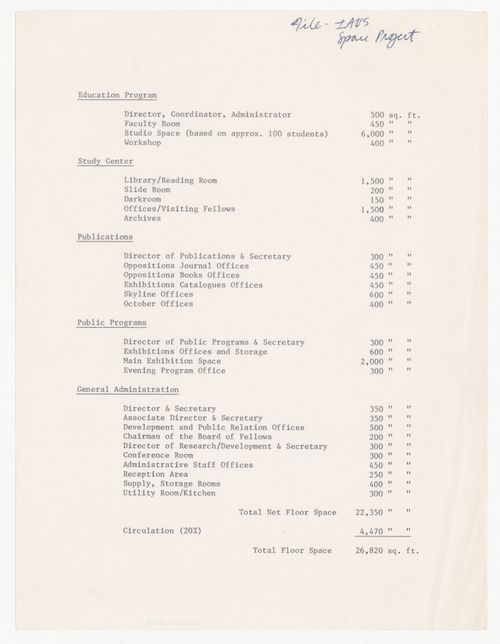
ARCH401378
ARCH401378
People:
Date:
circa 1980
circa 1980
Form:
textual records
textual records
Date:
circa 1980
circa 1980
People:
Form:
textual records
textual records
Actions:
Reference number:
DR2012:0012:082:021
Description:
File containing documents in English, including drafts with annotations in graphite throughout, related to the following reports: - Public urban space: resources, innovation and policy: opportunities in the use of public open space in neighbourhood improvement programs; - The street: urban structures, innovation and policy; - Innovation in the design and management of streets: urban resources and the quality of urban life. Original folder inscribed in graphite: STREETWORK / GOV'T CAN. PROJECT 1973
DR2012:0012:082:021
Description:
File containing documents in English, including drafts with annotations in graphite throughout, related to the following reports: - Public urban space: resources, innovation and policy: opportunities in the use of public open space in neighbourhood improvement programs; - The street: urban structures, innovation and policy; - Innovation in the design and management of streets: urban resources and the quality of urban life. Original folder inscribed in graphite: STREETWORK / GOV'T CAN. PROJECT 1973
People:
Date:
1973-1974
1973-1974
Title:
Drafts for various public spaces and streets space development writings
Actions:
DR2012:0012:082:021
Description:
File containing documents in English, including drafts with annotations in graphite throughout, related to the following reports: - Public urban space: resources, innovation and policy: opportunities in the use of public open space in neighbourhood improvement programs; - The street: urban structures, innovation and policy; - Innovation in the design and management of streets: urban resources and the quality of urban life. Original folder inscribed in graphite: STREETWORK / GOV'T CAN. PROJECT 1973
Drafts for various public spaces and streets space development writings
Actions:
DR2012:0012:082:021
Description:
File containing documents in English, including drafts with annotations in graphite throughout, related to the following reports: - Public urban space: resources, innovation and policy: opportunities in the use of public open space in neighbourhood improvement programs; - The street: urban structures, innovation and policy; - Innovation in the design and management of streets: urban resources and the quality of urban life. Original folder inscribed in graphite: STREETWORK / GOV'T CAN. PROJECT 1973
Form:
textual records
textual records
Date:
1973-1974
1973-1974
People:
Form:
textual records
textual records
Title:
Out of Time and into Space
Out of Time and into Space
Reference number:
ARCH153659
Description:
essay by John Hejduk rejected for publication by editorial board of Oppositions magazine; 3 versions
ARCH153659
Description:
essay by John Hejduk rejected for publication by editorial board of Oppositions magazine; 3 versions
People:
Date:
circa 1970-1981
circa 1970-1981
Title:
Out of Time and into Space
Actions:
ARCH153659
Description:
essay by John Hejduk rejected for publication by editorial board of Oppositions magazine; 3 versions
Out of Time and into Space
Actions:
ARCH153659
Description:
essay by John Hejduk rejected for publication by editorial board of Oppositions magazine; 3 versions
Form:
textual records
textual records
Date:
circa 1970-1981
circa 1970-1981
People:
Form:
textual records
textual records
Actions:
Reference number:
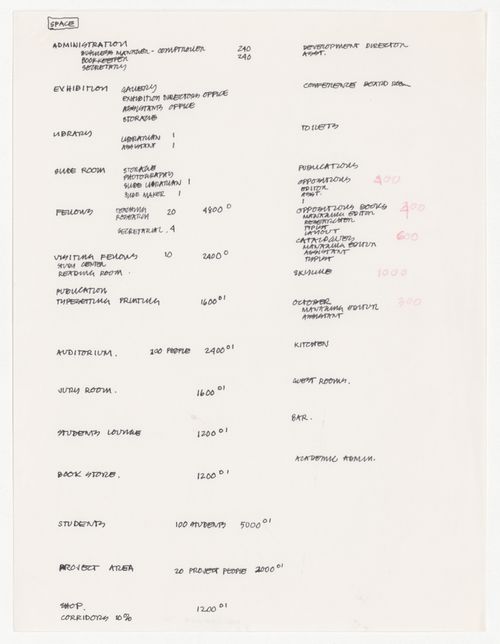
ARCH401379
ARCH401379
People:
Date:
circa 1980
circa 1980
Form:
textual records
textual records
Date:
circa 1980
circa 1980
People:
Form:
textual records
textual records
Actions:
Reference number:
AP206.S4.086
AP206.S4.086
People:
Date:
2005
2005
Form:
textual records
textual records
Date:
2005
2005
People:
Level of archival description:
Project
Project
Actions:
Reference number:
AP144.S2.D54
Description:
File documents an exploration of use and circulation of open spaces and natural areas throughout the Borough of Hackney just outside London: Hackney Marsh, Springfield Park, London Fields, and Victoria Park. Price felt that the "[i]ncrease in the amount of leisure time combined with increased personal mobility ma[d]e it essential that available P.O.S. be considered in relation to each other and together with all other urban facilities available." Regional plans include a partially enlarged plan of an unidentified area (DR1995:0206:001, DR1995:0206:003, and DR1995:0206:004). Two marked-up drawings which indicate circulation systems. Material in this file was produced in 1962. File contains conceptual drawings.
AP144.S2.D54
Description:
File documents an exploration of use and circulation of open spaces and natural areas throughout the Borough of Hackney just outside London: Hackney Marsh, Springfield Park, London Fields, and Victoria Park. Price felt that the "[i]ncrease in the amount of leisure time combined with increased personal mobility ma[d]e it essential that available P.O.S. be considered in relation to each other and together with all other urban facilities available." Regional plans include a partially enlarged plan of an unidentified area (DR1995:0206:001, DR1995:0206:003, and DR1995:0206:004). Two marked-up drawings which indicate circulation systems. Material in this file was produced in 1962. File contains conceptual drawings.
People:
Date:
[1962]
[1962]
Title:
Borough of Hackney, Public Open Space
Actions:
AP144.S2.D54
Description:
File documents an exploration of use and circulation of open spaces and natural areas throughout the Borough of Hackney just outside London: Hackney Marsh, Springfield Park, London Fields, and Victoria Park. Price felt that the "[i]ncrease in the amount of leisure time combined with increased personal mobility ma[d]e it essential that available P.O.S. be considered in relation to each other and together with all other urban facilities available." Regional plans include a partially enlarged plan of an unidentified area (DR1995:0206:001, DR1995:0206:003, and DR1995:0206:004). Two marked-up drawings which indicate circulation systems. Material in this file was produced in 1962. File contains conceptual drawings.
Borough of Hackney, Public Open Space
Actions:
AP144.S2.D54
Description:
File documents an exploration of use and circulation of open spaces and natural areas throughout the Borough of Hackney just outside London: Hackney Marsh, Springfield Park, London Fields, and Victoria Park. Price felt that the "[i]ncrease in the amount of leisure time combined with increased personal mobility ma[d]e it essential that available P.O.S. be considered in relation to each other and together with all other urban facilities available." Regional plans include a partially enlarged plan of an unidentified area (DR1995:0206:001, DR1995:0206:003, and DR1995:0206:004). Two marked-up drawings which indicate circulation systems. Material in this file was produced in 1962. File contains conceptual drawings.
Level of archival description:
File 54
File 54
Date:
[1962]
[1962]
People:
Level of archival description:
Sub-series
Sub-series
Reference number:
AP197.S1.SS3
Description:
This subseries documents Frampton's activities as Graham Foundation Fellow at the Institute for Architecture and Urban Studies (IAUS), including the development and design of IAUS’s only built project, the Low-Rise High-Density (LRHD) housing project in Brooklyn, New York. Also documented in this series are some of Frampton's other activities for IAUS. Frampton was not only co-founding editor of IAUS's magazine, "Oppositions" (1973), but also served as an editor for all of IAUS's publications; their journal, book series, and catalogue series. IAUS also served as a cultural space that held lectures for highschool and undergraduate students. Materials in this subseries consist of elevation and site drawings for the LRHD housing project and photographic materials for MoMA’s exhibition on the LRHD. Textual documentation is comprised of IAUS’s original application to the Ford Foundation and drafts of Frampton’s writings on the LRHD as well as IAUS meeting minutes, IAUS by-laws, announcement pamphlets, booklets, IAUS research programs and outlines of seminar sessions, correspondence, postcards, and posters. The subseries also includes an IAUS watch.
AP197.S1.SS3
Description:
This subseries documents Frampton's activities as Graham Foundation Fellow at the Institute for Architecture and Urban Studies (IAUS), including the development and design of IAUS’s only built project, the Low-Rise High-Density (LRHD) housing project in Brooklyn, New York. Also documented in this series are some of Frampton's other activities for IAUS. Frampton was not only co-founding editor of IAUS's magazine, "Oppositions" (1973), but also served as an editor for all of IAUS's publications; their journal, book series, and catalogue series. IAUS also served as a cultural space that held lectures for highschool and undergraduate students. Materials in this subseries consist of elevation and site drawings for the LRHD housing project and photographic materials for MoMA’s exhibition on the LRHD. Textual documentation is comprised of IAUS’s original application to the Ford Foundation and drafts of Frampton’s writings on the LRHD as well as IAUS meeting minutes, IAUS by-laws, announcement pamphlets, booklets, IAUS research programs and outlines of seminar sessions, correspondence, postcards, and posters. The subseries also includes an IAUS watch.
People:
Date:
1970-2015
1970-2015
Title:
Institute for Architecture and Urban Studies (IAUS) (1970-1982)
Actions:
AP197.S1.SS3
Description:
This subseries documents Frampton's activities as Graham Foundation Fellow at the Institute for Architecture and Urban Studies (IAUS), including the development and design of IAUS’s only built project, the Low-Rise High-Density (LRHD) housing project in Brooklyn, New York. Also documented in this series are some of Frampton's other activities for IAUS. Frampton was not only co-founding editor of IAUS's magazine, "Oppositions" (1973), but also served as an editor for all of IAUS's publications; their journal, book series, and catalogue series. IAUS also served as a cultural space that held lectures for highschool and undergraduate students. Materials in this subseries consist of elevation and site drawings for the LRHD housing project and photographic materials for MoMA’s exhibition on the LRHD. Textual documentation is comprised of IAUS’s original application to the Ford Foundation and drafts of Frampton’s writings on the LRHD as well as IAUS meeting minutes, IAUS by-laws, announcement pamphlets, booklets, IAUS research programs and outlines of seminar sessions, correspondence, postcards, and posters. The subseries also includes an IAUS watch.
Institute for Architecture and Urban Studies (IAUS) (1970-1982)
Actions:
AP197.S1.SS3
Description:
This subseries documents Frampton's activities as Graham Foundation Fellow at the Institute for Architecture and Urban Studies (IAUS), including the development and design of IAUS’s only built project, the Low-Rise High-Density (LRHD) housing project in Brooklyn, New York. Also documented in this series are some of Frampton's other activities for IAUS. Frampton was not only co-founding editor of IAUS's magazine, "Oppositions" (1973), but also served as an editor for all of IAUS's publications; their journal, book series, and catalogue series. IAUS also served as a cultural space that held lectures for highschool and undergraduate students. Materials in this subseries consist of elevation and site drawings for the LRHD housing project and photographic materials for MoMA’s exhibition on the LRHD. Textual documentation is comprised of IAUS’s original application to the Ford Foundation and drafts of Frampton’s writings on the LRHD as well as IAUS meeting minutes, IAUS by-laws, announcement pamphlets, booklets, IAUS research programs and outlines of seminar sessions, correspondence, postcards, and posters. The subseries also includes an IAUS watch.
Level of archival description:
Subseries
Subseries
Date:
1970-2015
1970-2015
People:


