


7432 Results
Form:
archives
Level of archival description:
Fonds
archives
Level of archival description:
Fonds
Actions:
Reference number:
AP226
Synopsis:
The Toyo Ito & Associates, Architects fonds, 1970 – 2011, documents the studio’s architectural work and involvement in selected exhibitions in the 1970s and 1980s. The records in this fonds represent 34 architectural projects, including built, unbuilt, and conceptual projects. The majority of the projects are located in Japan and are mostly documented through drawings as well as a limited number of videos, models, panels, textual records, and photographs. The fonds also contains records related to Toyo Ito & Associates, Architects’ participation in three exhibitions in the USA and the UK in 1978 and 1986.
AP226
Synopsis:
The Toyo Ito & Associates, Architects fonds, 1970 – 2011, documents the studio’s architectural work and involvement in selected exhibitions in the 1970s and 1980s. The records in this fonds represent 34 architectural projects, including built, unbuilt, and conceptual projects. The majority of the projects are located in Japan and are mostly documented through drawings as well as a limited number of videos, models, panels, textual records, and photographs. The fonds also contains records related to Toyo Ito & Associates, Architects’ participation in three exhibitions in the USA and the UK in 1978 and 1986.
People:
Date:
1970 - 2011
1970 - 2011
Title:
Toyo Ito & Associates, Architects fonds
Actions:
AP226
Synopsis:
The Toyo Ito & Associates, Architects fonds, 1970 – 2011, documents the studio’s architectural work and involvement in selected exhibitions in the 1970s and 1980s. The records in this fonds represent 34 architectural projects, including built, unbuilt, and conceptual projects. The majority of the projects are located in Japan and are mostly documented through drawings as well as a limited number of videos, models, panels, textual records, and photographs. The fonds also contains records related to Toyo Ito & Associates, Architects’ participation in three exhibitions in the USA and the UK in 1978 and 1986.
Toyo Ito & Associates, Architects fonds
Actions:
AP226
Synopsis:
The Toyo Ito & Associates, Architects fonds, 1970 – 2011, documents the studio’s architectural work and involvement in selected exhibitions in the 1970s and 1980s. The records in this fonds represent 34 architectural projects, including built, unbuilt, and conceptual projects. The majority of the projects are located in Japan and are mostly documented through drawings as well as a limited number of videos, models, panels, textual records, and photographs. The fonds also contains records related to Toyo Ito & Associates, Architects’ participation in three exhibitions in the USA and the UK in 1978 and 1986.
Form:
archives
Level of archival description:
Fonds
archives
Level of archival description:
Fonds
Date:
1970 - 2011
1970 - 2011
People:
Form:
events
events
Description:
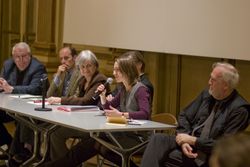
Front to Rear: Architecture and Planning during World War II, held at the Institute of Fine Arts, New York University, brings together research investigating a wide range of architectural activities, taking place in diverse geographical locations, and occurring between the bombings of Guernica in 1937 and Hiroshima in 1945. World War II was a key moment in the process of(...)
Front to Rear: Architecture and Planning during World War II, held at the Institute of Fine Arts, New York University, brings together research investigating a wide range of architectural activities, taking place in diverse geographical locations, and occurring between the bombings of Guernica in 1937 and Hiroshima in 1945. World War II was a key moment in the process of(...)
Location:
Institute of Fine Arts, New York University
Institute of Fine Arts, New York University
Date:
7 March 2009 to 8 March 2009
7 March 2009 to 8 March 2009
Title:
Front to Rear: Architecture and Planning during World War II
Actions:
Description:
Front to Rear: Architecture and Planning during World War II, held at the Institute of Fine Arts, New York University, brings together research investigating a wide range of architectural activities, taking place in diverse geographical locations, and occurring between the bombings of Guernica in 1937 and Hiroshima in 1945. World War II was a key moment in the process of(...)
Front to Rear: Architecture and Planning during World War II
Actions:
Description:
Front to Rear: Architecture and Planning during World War II, held at the Institute of Fine Arts, New York University, brings together research investigating a wide range of architectural activities, taking place in diverse geographical locations, and occurring between the bombings of Guernica in 1937 and Hiroshima in 1945. World War II was a key moment in the process of(...)
Form:
events
events
Date:
7 March 2009 to
8 March 2009
7 March 2009 to
8 March 2009
Location:
Institute of Fine Arts, New York University
Institute of Fine Arts, New York University
Form:
photographs
Quantity:
76 photograph(s)
photographs
Quantity:
76 photograph(s)
Reference number:
ARCH197170
Description:
Portraits of Gene Summers and others, including pictures from events surrounding the Illinois Institute of Technology's 100th anniversary (inscription on verso of 2 of the colour prints: “Oct 18 '91 ACSA").
ARCH197170
Description:
Portraits of Gene Summers and others, including pictures from events surrounding the Illinois Institute of Technology's 100th anniversary (inscription on verso of 2 of the colour prints: “Oct 18 '91 ACSA").
People:
Date:
18 October 1981
18 October 1981
Title:
Portraits of Gene Summers and others
Actions:
ARCH197170
Description:
Portraits of Gene Summers and others, including pictures from events surrounding the Illinois Institute of Technology's 100th anniversary (inscription on verso of 2 of the colour prints: “Oct 18 '91 ACSA").
Portraits of Gene Summers and others
Actions:
ARCH197170
Description:
Portraits of Gene Summers and others, including pictures from events surrounding the Illinois Institute of Technology's 100th anniversary (inscription on verso of 2 of the colour prints: “Oct 18 '91 ACSA").
Form:
photographs
Quantity:
76 photograph(s)
photographs
Quantity:
76 photograph(s)
Date:
18 October 1981
18 October 1981
People:
Form:
exhibitions
exhibitions
Actions:
Description:
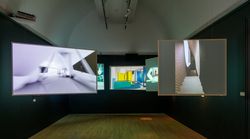
Archaeology of the Digital: Complexity and Convention is the third exhibition related to the development of a strategy for collecting and preserving digital archives at the CCA. The Archaeology of the Digital program comprises twenty-five projects for which digital materials are integral to an understanding of the design process. For projects included in the first two(...)
Archaeology of the Digital: Complexity and Convention is the third exhibition related to the development of a strategy for collecting and preserving digital archives at the CCA. The Archaeology of the Digital program comprises twenty-five projects for which digital materials are integral to an understanding of the design process. For projects included in the first two(...)
Date:
11 May 2016 to 16 October 2016
11 May 2016 to 16 October 2016
Title:
Archaeology of the Digital: Complexity and Convention
Actions:
Description:
Archaeology of the Digital: Complexity and Convention is the third exhibition related to the development of a strategy for collecting and preserving digital archives at the CCA. The Archaeology of the Digital program comprises twenty-five projects for which digital materials are integral to an understanding of the design process. For projects included in the first two(...)
Archaeology of the Digital: Complexity and Convention
Actions:
Description:
Archaeology of the Digital: Complexity and Convention is the third exhibition related to the development of a strategy for collecting and preserving digital archives at the CCA. The Archaeology of the Digital program comprises twenty-five projects for which digital materials are integral to an understanding of the design process. For projects included in the first two(...)
Form:
exhibitions
exhibitions
Date:
11 May 2016 to
16 October 2016
11 May 2016 to
16 October 2016
Level of archival description:
Series
Series
Title:
Une architecture des humeurs
Une architecture des humeurs
Actions:
Reference number:
AP193.S4
Description:
Series 4, Une architecture des humeurs, 2008-2011, documents the conception and the presentation of exhibition and project Une architecture des humeurs. Presented at Le laboratoire art gallery in Paris between January and May 2010, Une architecture des humeurs is a conceptual, unbuilt, residential urban structure based on a potential future in which contemporary science reads human physiology and chemical balance. The idea is to acquire a chemistry of the “humors”, or the moods and temperament, of future purchasers. Taken as input, the information generates a diversity of habitable morphologies and relationships between them. With this process, the project attempts to make palpable and graspable, through technologies, the emotions of the participants captured via the chemistry of their body. The goal is to gather information on their capacity of adaptation, their level of sympathy and empathy while confronted to a situation or an environment. This information is then analyzed by computational, mathematical, and machinist procedures. This leads to the design and production of an urban structure submitted to the improbable and uncertain protocols produced by emotions, also creating aggregations and layouts that rearticulate the links between the individual and the collective. These structures are calculated following simultaneously incremental and recursive structural optimization protocols resulting in the physicality and morphology of architecture. The layout of the residential units and the structural trajectories are conceived and developed as posterior to the constructs supporting social life and not as an a priori. The structure of each components of the urban structure is generated by a secretion and weaving machine called Viab02. The machine is the second prototype of VIAB which was developed with Robotics Research Lab of the University of Southern California and takes its name from the terms viability and variability. With a process similar to contour crafting, the machine produces bio-cement, a mix between cement and bio-resin, giving form to the adapted residential structures. The records consist largely of images detailing the creative process of the firm, photographs of the exhibition, and 3D models. It also contains animated renderings representing the machine in action and sequences of the construction of the building or the structure. The records include a video orienting the project into François Roche theoretical stance, research as speculation, that can be summarize as the use of technological tools to take a critical and political position through esthetic in order to open new lines of thoughts. AP193.S2 contains updated previous version of the VIAB machine
AP193.S4
Description:
Series 4, Une architecture des humeurs, 2008-2011, documents the conception and the presentation of exhibition and project Une architecture des humeurs. Presented at Le laboratoire art gallery in Paris between January and May 2010, Une architecture des humeurs is a conceptual, unbuilt, residential urban structure based on a potential future in which contemporary science reads human physiology and chemical balance. The idea is to acquire a chemistry of the “humors”, or the moods and temperament, of future purchasers. Taken as input, the information generates a diversity of habitable morphologies and relationships between them. With this process, the project attempts to make palpable and graspable, through technologies, the emotions of the participants captured via the chemistry of their body. The goal is to gather information on their capacity of adaptation, their level of sympathy and empathy while confronted to a situation or an environment. This information is then analyzed by computational, mathematical, and machinist procedures. This leads to the design and production of an urban structure submitted to the improbable and uncertain protocols produced by emotions, also creating aggregations and layouts that rearticulate the links between the individual and the collective. These structures are calculated following simultaneously incremental and recursive structural optimization protocols resulting in the physicality and morphology of architecture. The layout of the residential units and the structural trajectories are conceived and developed as posterior to the constructs supporting social life and not as an a priori. The structure of each components of the urban structure is generated by a secretion and weaving machine called Viab02. The machine is the second prototype of VIAB which was developed with Robotics Research Lab of the University of Southern California and takes its name from the terms viability and variability. With a process similar to contour crafting, the machine produces bio-cement, a mix between cement and bio-resin, giving form to the adapted residential structures. The records consist largely of images detailing the creative process of the firm, photographs of the exhibition, and 3D models. It also contains animated renderings representing the machine in action and sequences of the construction of the building or the structure. The records include a video orienting the project into François Roche theoretical stance, research as speculation, that can be summarize as the use of technological tools to take a critical and political position through esthetic in order to open new lines of thoughts. AP193.S2 contains updated previous version of the VIAB machine
People:
Date:
2008-2011
2008-2011
Title:
Une architecture des humeurs
Actions:
AP193.S4
Description:
Series 4, Une architecture des humeurs, 2008-2011, documents the conception and the presentation of exhibition and project Une architecture des humeurs. Presented at Le laboratoire art gallery in Paris between January and May 2010, Une architecture des humeurs is a conceptual, unbuilt, residential urban structure based on a potential future in which contemporary science reads human physiology and chemical balance. The idea is to acquire a chemistry of the “humors”, or the moods and temperament, of future purchasers. Taken as input, the information generates a diversity of habitable morphologies and relationships between them. With this process, the project attempts to make palpable and graspable, through technologies, the emotions of the participants captured via the chemistry of their body. The goal is to gather information on their capacity of adaptation, their level of sympathy and empathy while confronted to a situation or an environment. This information is then analyzed by computational, mathematical, and machinist procedures. This leads to the design and production of an urban structure submitted to the improbable and uncertain protocols produced by emotions, also creating aggregations and layouts that rearticulate the links between the individual and the collective. These structures are calculated following simultaneously incremental and recursive structural optimization protocols resulting in the physicality and morphology of architecture. The layout of the residential units and the structural trajectories are conceived and developed as posterior to the constructs supporting social life and not as an a priori. The structure of each components of the urban structure is generated by a secretion and weaving machine called Viab02. The machine is the second prototype of VIAB which was developed with Robotics Research Lab of the University of Southern California and takes its name from the terms viability and variability. With a process similar to contour crafting, the machine produces bio-cement, a mix between cement and bio-resin, giving form to the adapted residential structures. The records consist largely of images detailing the creative process of the firm, photographs of the exhibition, and 3D models. It also contains animated renderings representing the machine in action and sequences of the construction of the building or the structure. The records include a video orienting the project into François Roche theoretical stance, research as speculation, that can be summarize as the use of technological tools to take a critical and political position through esthetic in order to open new lines of thoughts. AP193.S2 contains updated previous version of the VIAB machine
Une architecture des humeurs
Actions:
AP193.S4
Description:
Series 4, Une architecture des humeurs, 2008-2011, documents the conception and the presentation of exhibition and project Une architecture des humeurs. Presented at Le laboratoire art gallery in Paris between January and May 2010, Une architecture des humeurs is a conceptual, unbuilt, residential urban structure based on a potential future in which contemporary science reads human physiology and chemical balance. The idea is to acquire a chemistry of the “humors”, or the moods and temperament, of future purchasers. Taken as input, the information generates a diversity of habitable morphologies and relationships between them. With this process, the project attempts to make palpable and graspable, through technologies, the emotions of the participants captured via the chemistry of their body. The goal is to gather information on their capacity of adaptation, their level of sympathy and empathy while confronted to a situation or an environment. This information is then analyzed by computational, mathematical, and machinist procedures. This leads to the design and production of an urban structure submitted to the improbable and uncertain protocols produced by emotions, also creating aggregations and layouts that rearticulate the links between the individual and the collective. These structures are calculated following simultaneously incremental and recursive structural optimization protocols resulting in the physicality and morphology of architecture. The layout of the residential units and the structural trajectories are conceived and developed as posterior to the constructs supporting social life and not as an a priori. The structure of each components of the urban structure is generated by a secretion and weaving machine called Viab02. The machine is the second prototype of VIAB which was developed with Robotics Research Lab of the University of Southern California and takes its name from the terms viability and variability. With a process similar to contour crafting, the machine produces bio-cement, a mix between cement and bio-resin, giving form to the adapted residential structures. The records consist largely of images detailing the creative process of the firm, photographs of the exhibition, and 3D models. It also contains animated renderings representing the machine in action and sequences of the construction of the building or the structure. The records include a video orienting the project into François Roche theoretical stance, research as speculation, that can be summarize as the use of technological tools to take a critical and political position through esthetic in order to open new lines of thoughts. AP193.S2 contains updated previous version of the VIAB machine
Level of archival description:
Series
Series
Date:
2008-2011
2008-2011
People:
Form:
events
events
Actions:
Description:
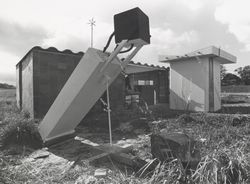
In the Yesterday Today lecture series, Canadian architect and author Witold Rybczynski discusses the roots of Ecol House, a prototype for an autonomous dwelling for use in developing countries. The project was created in Montréal in 1972 by Ecol Operation, a group of architects and students of which he was a member that became an international point of reference for(...)
In the Yesterday Today lecture series, Canadian architect and author Witold Rybczynski discusses the roots of Ecol House, a prototype for an autonomous dwelling for use in developing countries. The project was created in Montréal in 1972 by Ecol Operation, a group of architects and students of which he was a member that became an international point of reference for(...)
Location:
Paul-Desmarais Theatre
Paul-Desmarais Theatre
Date:
29 November 2007
29 November 2007
Title:
Witold Rybczynski: Green Before Green
Actions:
Description:
In the Yesterday Today lecture series, Canadian architect and author Witold Rybczynski discusses the roots of Ecol House, a prototype for an autonomous dwelling for use in developing countries. The project was created in Montréal in 1972 by Ecol Operation, a group of architects and students of which he was a member that became an international point of reference for(...)
Witold Rybczynski: Green Before Green
Actions:
Description:
In the Yesterday Today lecture series, Canadian architect and author Witold Rybczynski discusses the roots of Ecol House, a prototype for an autonomous dwelling for use in developing countries. The project was created in Montréal in 1972 by Ecol Operation, a group of architects and students of which he was a member that became an international point of reference for(...)
Form:
events
events
Date:
29 November 2007
29 November 2007
Location:
Paul-Desmarais Theatre
Paul-Desmarais Theatre
Form:
textual records
textual records
Actions:
Reference number:
DR2001:0030
Description:
documents include lectures, 1989-1992; travel files, 1991-1992; letters of recommendation, 1991-1992. Lecture file schedule: Ching (Chinese community lectures) 11/29 - 11/30, lecture requests rejected.File folder "lectures 1989 - finished": miscellaneous papers concerning planning, contacts, travel, etc. File folder "lectures 1991":Wiesbaden 1991, Seton Hill / Philip Johnson, 09/14/91 lecture, santander (University) Barcelona 8/19 lecture honorarium, Western Mountain Region (AIA) Salt Lake (City) 09/21/91, Mississippi State Lecture Honorarium 09/16/91, Central States Regional AIA Convention, Des Moines, 10/10-11, University of Michigan Lecture Honorarium 11/22/91, San Francisco Museum of Modern Art, Lecture Honoraria, University of Minnesota Lecture Honoraria, College of Architecture, Clemson, S.C. (1990), Museum of Contemporary Art (Chicago, 1990), The Savannah College (of Art and Design, 1990), The University of Michigan, Clemson University, Atlanta ADAC (Decorative Arts Center) July 22-23/91. PDE - Keynote Speaker. Contact Susan Fite, Ando - Century Club, Oct. 1/91. RSVP and Invitations: Georgia Tech. 01/14/92. File Folder - "Travel", 1991-1992:Naples, Germany Trip 12/15-12/18, Atlanta > Frankfurt > Berlin, Frankfurt Trip, Spain 1992, Japan Trip, Frankfurt Trip with Schwan & kreis(berg), Berlin Frank(furt) Trip. PDE, CCD, SCE, 05/20/92 Germany France Trip, Germany 6/29-30, Germany 3/24, memorabilia. File Folder - "letters of recommendation / reference," 1991-1992: Robert Montray Thesis, Georgia Institute of Technology, Raphael Mone, David Niland, Office for Metro. Arch., Sarah Whiting, Recommendation - Milanini, letter of Reference - J. Ben Gianni, letters of Reference, reference letters and Friedrich K.M. Bohm.
DR2001:0030
Description:
documents include lectures, 1989-1992; travel files, 1991-1992; letters of recommendation, 1991-1992. Lecture file schedule: Ching (Chinese community lectures) 11/29 - 11/30, lecture requests rejected.File folder "lectures 1989 - finished": miscellaneous papers concerning planning, contacts, travel, etc. File folder "lectures 1991":Wiesbaden 1991, Seton Hill / Philip Johnson, 09/14/91 lecture, santander (University) Barcelona 8/19 lecture honorarium, Western Mountain Region (AIA) Salt Lake (City) 09/21/91, Mississippi State Lecture Honorarium 09/16/91, Central States Regional AIA Convention, Des Moines, 10/10-11, University of Michigan Lecture Honorarium 11/22/91, San Francisco Museum of Modern Art, Lecture Honoraria, University of Minnesota Lecture Honoraria, College of Architecture, Clemson, S.C. (1990), Museum of Contemporary Art (Chicago, 1990), The Savannah College (of Art and Design, 1990), The University of Michigan, Clemson University, Atlanta ADAC (Decorative Arts Center) July 22-23/91. PDE - Keynote Speaker. Contact Susan Fite, Ando - Century Club, Oct. 1/91. RSVP and Invitations: Georgia Tech. 01/14/92. File Folder - "Travel", 1991-1992:Naples, Germany Trip 12/15-12/18, Atlanta > Frankfurt > Berlin, Frankfurt Trip, Spain 1992, Japan Trip, Frankfurt Trip with Schwan & kreis(berg), Berlin Frank(furt) Trip. PDE, CCD, SCE, 05/20/92 Germany France Trip, Germany 6/29-30, Germany 3/24, memorabilia. File Folder - "letters of recommendation / reference," 1991-1992: Robert Montray Thesis, Georgia Institute of Technology, Raphael Mone, David Niland, Office for Metro. Arch., Sarah Whiting, Recommendation - Milanini, letter of Reference - J. Ben Gianni, letters of Reference, reference letters and Friedrich K.M. Bohm.
People:
Title:
Documents include lectures, 1989-1992
Actions:
DR2001:0030
Description:
documents include lectures, 1989-1992; travel files, 1991-1992; letters of recommendation, 1991-1992. Lecture file schedule: Ching (Chinese community lectures) 11/29 - 11/30, lecture requests rejected.File folder "lectures 1989 - finished": miscellaneous papers concerning planning, contacts, travel, etc. File folder "lectures 1991":Wiesbaden 1991, Seton Hill / Philip Johnson, 09/14/91 lecture, santander (University) Barcelona 8/19 lecture honorarium, Western Mountain Region (AIA) Salt Lake (City) 09/21/91, Mississippi State Lecture Honorarium 09/16/91, Central States Regional AIA Convention, Des Moines, 10/10-11, University of Michigan Lecture Honorarium 11/22/91, San Francisco Museum of Modern Art, Lecture Honoraria, University of Minnesota Lecture Honoraria, College of Architecture, Clemson, S.C. (1990), Museum of Contemporary Art (Chicago, 1990), The Savannah College (of Art and Design, 1990), The University of Michigan, Clemson University, Atlanta ADAC (Decorative Arts Center) July 22-23/91. PDE - Keynote Speaker. Contact Susan Fite, Ando - Century Club, Oct. 1/91. RSVP and Invitations: Georgia Tech. 01/14/92. File Folder - "Travel", 1991-1992:Naples, Germany Trip 12/15-12/18, Atlanta > Frankfurt > Berlin, Frankfurt Trip, Spain 1992, Japan Trip, Frankfurt Trip with Schwan & kreis(berg), Berlin Frank(furt) Trip. PDE, CCD, SCE, 05/20/92 Germany France Trip, Germany 6/29-30, Germany 3/24, memorabilia. File Folder - "letters of recommendation / reference," 1991-1992: Robert Montray Thesis, Georgia Institute of Technology, Raphael Mone, David Niland, Office for Metro. Arch., Sarah Whiting, Recommendation - Milanini, letter of Reference - J. Ben Gianni, letters of Reference, reference letters and Friedrich K.M. Bohm.
Documents include lectures, 1989-1992
Actions:
DR2001:0030
Description:
documents include lectures, 1989-1992; travel files, 1991-1992; letters of recommendation, 1991-1992. Lecture file schedule: Ching (Chinese community lectures) 11/29 - 11/30, lecture requests rejected.File folder "lectures 1989 - finished": miscellaneous papers concerning planning, contacts, travel, etc. File folder "lectures 1991":Wiesbaden 1991, Seton Hill / Philip Johnson, 09/14/91 lecture, santander (University) Barcelona 8/19 lecture honorarium, Western Mountain Region (AIA) Salt Lake (City) 09/21/91, Mississippi State Lecture Honorarium 09/16/91, Central States Regional AIA Convention, Des Moines, 10/10-11, University of Michigan Lecture Honorarium 11/22/91, San Francisco Museum of Modern Art, Lecture Honoraria, University of Minnesota Lecture Honoraria, College of Architecture, Clemson, S.C. (1990), Museum of Contemporary Art (Chicago, 1990), The Savannah College (of Art and Design, 1990), The University of Michigan, Clemson University, Atlanta ADAC (Decorative Arts Center) July 22-23/91. PDE - Keynote Speaker. Contact Susan Fite, Ando - Century Club, Oct. 1/91. RSVP and Invitations: Georgia Tech. 01/14/92. File Folder - "Travel", 1991-1992:Naples, Germany Trip 12/15-12/18, Atlanta > Frankfurt > Berlin, Frankfurt Trip, Spain 1992, Japan Trip, Frankfurt Trip with Schwan & kreis(berg), Berlin Frank(furt) Trip. PDE, CCD, SCE, 05/20/92 Germany France Trip, Germany 6/29-30, Germany 3/24, memorabilia. File Folder - "letters of recommendation / reference," 1991-1992: Robert Montray Thesis, Georgia Institute of Technology, Raphael Mone, David Niland, Office for Metro. Arch., Sarah Whiting, Recommendation - Milanini, letter of Reference - J. Ben Gianni, letters of Reference, reference letters and Friedrich K.M. Bohm.
Form:
textual records
textual records
People:
Form:
exhibitions
exhibitions
Actions:
Description:
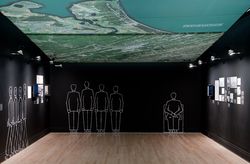
The armies of World War Two represented only the tips of colliding icebergs, the belligerent nations which had mobilized and transformed themselves for a global “war of production” of unprecedented scale. Architecture in Uniform: Designing and Building for the Second World War documents the extensive contribution of architecture to the war between the bombings of Guernica(...)
The armies of World War Two represented only the tips of colliding icebergs, the belligerent nations which had mobilized and transformed themselves for a global “war of production” of unprecedented scale. Architecture in Uniform: Designing and Building for the Second World War documents the extensive contribution of architecture to the war between the bombings of Guernica(...)
Location:
Main galleries
Main galleries
Date:
13 April 2011 to 18 September 2011
13 April 2011 to 18 September 2011
Title:
Architecture in Uniform: Designing and Building for the Second World War
Actions:
Description:
The armies of World War Two represented only the tips of colliding icebergs, the belligerent nations which had mobilized and transformed themselves for a global “war of production” of unprecedented scale. Architecture in Uniform: Designing and Building for the Second World War documents the extensive contribution of architecture to the war between the bombings of Guernica(...)
Architecture in Uniform: Designing and Building for the Second World War
Actions:
Description:
The armies of World War Two represented only the tips of colliding icebergs, the belligerent nations which had mobilized and transformed themselves for a global “war of production” of unprecedented scale. Architecture in Uniform: Designing and Building for the Second World War documents the extensive contribution of architecture to the war between the bombings of Guernica(...)
Form:
exhibitions
exhibitions
Date:
13 April 2011 to
18 September 2011
13 April 2011 to
18 September 2011
Location:
Main galleries
Main galleries
Form:
events
events
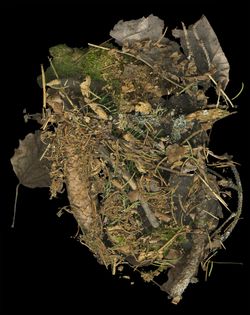
Title:
The Dark Edge of a Clear-cut
The Dark Edge of a Clear-cut
Actions:
Description:
In a conversation moderated by Louise Désy, CCA Curator, Photographs, Lorraine Gilbert presents her work: The documentation of landscapes I have lived and worked in has resulted in a body of work that questions our place within nature and within our built environments. The seemingly objective nature of the way I have pictured these natural and urban spaces, has given way(...)
In a conversation moderated by Louise Désy, CCA Curator, Photographs, Lorraine Gilbert presents her work: The documentation of landscapes I have lived and worked in has resulted in a body of work that questions our place within nature and within our built environments. The seemingly objective nature of the way I have pictured these natural and urban spaces, has given way(...)
Location:
Main galleries Keyword(s):
The Dark Edge of a Clear-cut, Canada, It's all happening so fast, conversation
Main galleries Keyword(s):
The Dark Edge of a Clear-cut, Canada, It's all happening so fast, conversation
Date:
4 February 2017, 3pm
4 February 2017, 3pm
Title:
The Dark Edge of a Clear-cut
Actions:
Description:
In a conversation moderated by Louise Désy, CCA Curator, Photographs, Lorraine Gilbert presents her work: The documentation of landscapes I have lived and worked in has resulted in a body of work that questions our place within nature and within our built environments. The seemingly objective nature of the way I have pictured these natural and urban spaces, has given way(...)
The Dark Edge of a Clear-cut
Actions:
Description:
In a conversation moderated by Louise Désy, CCA Curator, Photographs, Lorraine Gilbert presents her work: The documentation of landscapes I have lived and worked in has resulted in a body of work that questions our place within nature and within our built environments. The seemingly objective nature of the way I have pictured these natural and urban spaces, has given way(...)
Form:
events
events
Date:
4 February 2017
3pm
4 February 2017
3pm
Location:
Main galleries Keyword(s):
The Dark Edge of a Clear-cut, Canada, It's all happening so fast, conversation
Main galleries Keyword(s):
The Dark Edge of a Clear-cut, Canada, It's all happening so fast, conversation
Form:
events
events
Description:
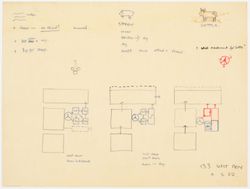
Meat and dairy products are ubiquitous ingredients in the globe’s diet. However, the buildings that transform living beings into commodities are usually hidden from the public eye. The architecture of factory farming may seem anonymous and banal, and yet it is made possible by sophisticated technologies and practices of biosecurity. How was the design of intensive animal(...)
Meat and dairy products are ubiquitous ingredients in the globe’s diet. However, the buildings that transform living beings into commodities are usually hidden from the public eye. The architecture of factory farming may seem anonymous and banal, and yet it is made possible by sophisticated technologies and practices of biosecurity. How was the design of intensive animal(...)
Date:
20 July 2023, 6pm to 7:30pm
20 July 2023, 6pm to 7:30pm
Title:
Cages for non-humans: An architectural history of animal farming
Actions:
Description:
Meat and dairy products are ubiquitous ingredients in the globe’s diet. However, the buildings that transform living beings into commodities are usually hidden from the public eye. The architecture of factory farming may seem anonymous and banal, and yet it is made possible by sophisticated technologies and practices of biosecurity. How was the design of intensive animal(...)
Cages for non-humans: An architectural history of animal farming
Actions:
Description:
Meat and dairy products are ubiquitous ingredients in the globe’s diet. However, the buildings that transform living beings into commodities are usually hidden from the public eye. The architecture of factory farming may seem anonymous and banal, and yet it is made possible by sophisticated technologies and practices of biosecurity. How was the design of intensive animal(...)
Form:
events
events
Date:
20 July 2023
6pm to 7:30pm
20 July 2023
6pm to 7:30pm


