


5369 Results
Form:
exhibitions
exhibitions
Description:
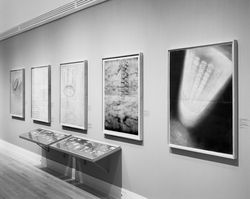
The exhibition explores one of the most adventurous and influential moments in the history of architecture: the explosion of invention and ideas that followed the October Revolution in Russia. The Soviet avant-garde architects were productivist as much as aesthetic in their concerns; they saw architecture and the arts as one, and they were committed to bringing design(...)
The exhibition explores one of the most adventurous and influential moments in the history of architecture: the explosion of invention and ideas that followed the October Revolution in Russia. The Soviet avant-garde architects were productivist as much as aesthetic in their concerns; they saw architecture and the arts as one, and they were committed to bringing design(...)
Location:
Main galleries
Main galleries
Date:
19 June 1991 to 8 September 1991
19 June 1991 to 8 September 1991
Title:
Architectural Drawings of the Russian Avant-Garde, 1917-1935
Actions:
Description:
The exhibition explores one of the most adventurous and influential moments in the history of architecture: the explosion of invention and ideas that followed the October Revolution in Russia. The Soviet avant-garde architects were productivist as much as aesthetic in their concerns; they saw architecture and the arts as one, and they were committed to bringing design(...)
Architectural Drawings of the Russian Avant-Garde, 1917-1935
Actions:
Description:
The exhibition explores one of the most adventurous and influential moments in the history of architecture: the explosion of invention and ideas that followed the October Revolution in Russia. The Soviet avant-garde architects were productivist as much as aesthetic in their concerns; they saw architecture and the arts as one, and they were committed to bringing design(...)
Form:
exhibitions
exhibitions
Date:
19 June 1991 to
8 September 1991
19 June 1991 to
8 September 1991
Location:
Main galleries
Main galleries
Form:
events
events
Title:
Learning from... Shanghai
Learning from... Shanghai
Actions:
Description:
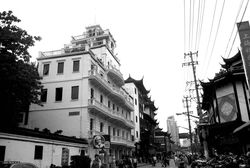
In 2001, Shanghai announced the development plan of “One City Nine Towns,” a series of towns each built around a theme inspired by a different Western tradition. Chinese urban theorist Xiangning Li examines the themed spaces in the city’s post-colonial context, relating them to Shanghai’s contemporary urban culture and situating them within the changing dynamics between(...)
In 2001, Shanghai announced the development plan of “One City Nine Towns,” a series of towns each built around a theme inspired by a different Western tradition. Chinese urban theorist Xiangning Li examines the themed spaces in the city’s post-colonial context, relating them to Shanghai’s contemporary urban culture and situating them within the changing dynamics between(...)
Location:
Paul Desmarais Theatre
Paul Desmarais Theatre
Date:
7 May 2009
7 May 2009
Title:
Learning from... Shanghai
Actions:
Description:
In 2001, Shanghai announced the development plan of “One City Nine Towns,” a series of towns each built around a theme inspired by a different Western tradition. Chinese urban theorist Xiangning Li examines the themed spaces in the city’s post-colonial context, relating them to Shanghai’s contemporary urban culture and situating them within the changing dynamics between(...)
Learning from... Shanghai
Actions:
Description:
In 2001, Shanghai announced the development plan of “One City Nine Towns,” a series of towns each built around a theme inspired by a different Western tradition. Chinese urban theorist Xiangning Li examines the themed spaces in the city’s post-colonial context, relating them to Shanghai’s contemporary urban culture and situating them within the changing dynamics between(...)
Form:
events
events
Date:
7 May 2009
7 May 2009
Location:
Paul Desmarais Theatre
Paul Desmarais Theatre
Form:
exhibitions
exhibitions
Description:
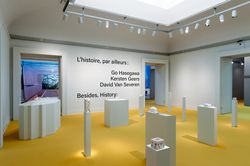
What role can history play in contemporary architecture practice? Rather than adopting a postmodern attitude or evoking past discussions and historical architectural forms, Go Hasegawa, Kersten Geers, and David Van Severen address contemporary issues in their work while remaining in dialogue with history. Even with distinct pasts and contexts, affinities emerge in shared(...)
What role can history play in contemporary architecture practice? Rather than adopting a postmodern attitude or evoking past discussions and historical architectural forms, Go Hasegawa, Kersten Geers, and David Van Severen address contemporary issues in their work while remaining in dialogue with history. Even with distinct pasts and contexts, affinities emerge in shared(...)
Location:
Main galleries Keyword(s):
Besides, History, Go Hasegawa, Kersten Geers, David Van Severen, Office, KGDVS, Bas Princen
Main galleries Keyword(s):
Besides, History, Go Hasegawa, Kersten Geers, David Van Severen, Office, KGDVS, Bas Princen
Date:
10 May 2017 to 15 October 2017
10 May 2017 to 15 October 2017
Title:
Besides, History: Go Hasegawa, Kersten Geers, David Van Severen
Actions:
Description:
What role can history play in contemporary architecture practice? Rather than adopting a postmodern attitude or evoking past discussions and historical architectural forms, Go Hasegawa, Kersten Geers, and David Van Severen address contemporary issues in their work while remaining in dialogue with history. Even with distinct pasts and contexts, affinities emerge in shared(...)
Besides, History: Go Hasegawa, Kersten Geers, David Van Severen
Actions:
Description:
What role can history play in contemporary architecture practice? Rather than adopting a postmodern attitude or evoking past discussions and historical architectural forms, Go Hasegawa, Kersten Geers, and David Van Severen address contemporary issues in their work while remaining in dialogue with history. Even with distinct pasts and contexts, affinities emerge in shared(...)
Form:
exhibitions
exhibitions
Date:
10 May 2017 to
15 October 2017
10 May 2017 to
15 October 2017
Location:
Main galleries Keyword(s):
Besides, History, Go Hasegawa, Kersten Geers, David Van Severen, Office, KGDVS, Bas Princen
Main galleries Keyword(s):
Besides, History, Go Hasegawa, Kersten Geers, David Van Severen, Office, KGDVS, Bas Princen
Form:
events
events
Actions:
Description:
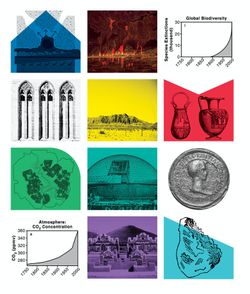
Since 2006, the Aggregate Architectural History Collaborative has engaged in numerous shared projects from collected volumes and joint authorship to peer review workshopping and website publishing, alongside conferences, symposia, and public presentations. Operated as a self-funded, non-profit corporation, Aggregate continues to evolve its means and outputs of production(...)
Since 2006, the Aggregate Architectural History Collaborative has engaged in numerous shared projects from collected volumes and joint authorship to peer review workshopping and website publishing, alongside conferences, symposia, and public presentations. Operated as a self-funded, non-profit corporation, Aggregate continues to evolve its means and outputs of production(...)
Date:
13 July 2023, 2pm to 4pm (EST)
13 July 2023, 2pm to 4pm (EST)
Title:
Modes and Bounds of Collaboration
Actions:
Description:
Since 2006, the Aggregate Architectural History Collaborative has engaged in numerous shared projects from collected volumes and joint authorship to peer review workshopping and website publishing, alongside conferences, symposia, and public presentations. Operated as a self-funded, non-profit corporation, Aggregate continues to evolve its means and outputs of production(...)
Modes and Bounds of Collaboration
Actions:
Description:
Since 2006, the Aggregate Architectural History Collaborative has engaged in numerous shared projects from collected volumes and joint authorship to peer review workshopping and website publishing, alongside conferences, symposia, and public presentations. Operated as a self-funded, non-profit corporation, Aggregate continues to evolve its means and outputs of production(...)
Form:
events
events
Date:
13 July 2023
2pm to 4pm (EST)
13 July 2023
2pm to 4pm (EST)
Form:
archives
Level of archival description:
Fonds
archives
Level of archival description:
Fonds
Title:
Álvaro Siza fonds
Álvaro Siza fonds
Reference number:
AP178
Description:
The Álvaro Siza fonds documents the architectural work of Portuguese architect Álvaro Siza. Records in this fonds document Siza’s projects from 1958-2012, including built and unbuilt designs. A collaborative project was established between the Canadian Centre for Architecture (CCA), Fundação de Serralves, and Fundação Calouste Gulbenkian to allow for international research and access to the archive. The archive is shared by the three institutions with each institution holding different projects while collaborating on the descriptive work and increasing the visibility of the archive. The holdings at both the Fundação de Serralves and Fundação Calouste Gulbenkian focus on Siza’s Portuguese projects, while the portion of the archive held by the CCA mainly includes Siza’s projects abroad. All three institutions are committed to describing the archive and making it accessible for scholarly research. The processing of the Siza archive held by the CCA has been divided into four phases to allow for access to parts of the archive while still in process. For the first, second, and third phases, the processing archivist has described the projects from the fifties, sixties, and seventies, as well as projects for the IBA competition in Berlin, urban renewal projects in The Hague from the eighties, urban plans, museums, and individual houses between 1980 and 2000. The processing archivist has also described approximately 203 sketchbooks. Many of these sketchbooks include sketches related to architectural projects which were processed. The complete list of projects processed by the CCA to date can be found in series AP178.S1. The bulk of the Álvaro Siza fonds is arranged in Series AP178.S1, which contains documentation for over 200 of Siza’s architectural projects. Records in this archive are predominantly from 1970 to 2000. Series AP178.S1 mainly contains conceptual, design development, presentation, and working drawings. Also included are photographic materials, models, born digital records, and textual documentation, which include correspondence, project proposals, and notes. The architect’s creative process is captured in 282 sketchbooks arranged in Series AP178.S2. In all there are approximately 60 000 drawings, 3000 folders of textual documentation, 9.46 linear meters of photographs and negatives, 6,545 slides, 250 CD-ROMS, 101 floppy disks, and 371 models that document the architectural activities of Siza and his office. Among the drawings are sketches by Siza on various items, such as napkins, receipts, envelopes, or on the back of working drawings. The fonds contains several types of architectural projects including residential buildings, museums, universities, urban plans, offices, and city restorations. Of particular significance are the sketchbooks, comprised of sketches for architectural projects, Siza’s travels, people, and animals as well as notes and draft letters. The sketchbooks are organized in chronological order, starting in the late 1970’s to the beginning of the 2000’s. Locations, notes, and dates have also been identified on the front of each sketchbook along with the sketchbook number. The sketchbooks provide a unique perspective of Siza’s use of drawing as part of his work process.
AP178
Description:
The Álvaro Siza fonds documents the architectural work of Portuguese architect Álvaro Siza. Records in this fonds document Siza’s projects from 1958-2012, including built and unbuilt designs. A collaborative project was established between the Canadian Centre for Architecture (CCA), Fundação de Serralves, and Fundação Calouste Gulbenkian to allow for international research and access to the archive. The archive is shared by the three institutions with each institution holding different projects while collaborating on the descriptive work and increasing the visibility of the archive. The holdings at both the Fundação de Serralves and Fundação Calouste Gulbenkian focus on Siza’s Portuguese projects, while the portion of the archive held by the CCA mainly includes Siza’s projects abroad. All three institutions are committed to describing the archive and making it accessible for scholarly research. The processing of the Siza archive held by the CCA has been divided into four phases to allow for access to parts of the archive while still in process. For the first, second, and third phases, the processing archivist has described the projects from the fifties, sixties, and seventies, as well as projects for the IBA competition in Berlin, urban renewal projects in The Hague from the eighties, urban plans, museums, and individual houses between 1980 and 2000. The processing archivist has also described approximately 203 sketchbooks. Many of these sketchbooks include sketches related to architectural projects which were processed. The complete list of projects processed by the CCA to date can be found in series AP178.S1. The bulk of the Álvaro Siza fonds is arranged in Series AP178.S1, which contains documentation for over 200 of Siza’s architectural projects. Records in this archive are predominantly from 1970 to 2000. Series AP178.S1 mainly contains conceptual, design development, presentation, and working drawings. Also included are photographic materials, models, born digital records, and textual documentation, which include correspondence, project proposals, and notes. The architect’s creative process is captured in 282 sketchbooks arranged in Series AP178.S2. In all there are approximately 60 000 drawings, 3000 folders of textual documentation, 9.46 linear meters of photographs and negatives, 6,545 slides, 250 CD-ROMS, 101 floppy disks, and 371 models that document the architectural activities of Siza and his office. Among the drawings are sketches by Siza on various items, such as napkins, receipts, envelopes, or on the back of working drawings. The fonds contains several types of architectural projects including residential buildings, museums, universities, urban plans, offices, and city restorations. Of particular significance are the sketchbooks, comprised of sketches for architectural projects, Siza’s travels, people, and animals as well as notes and draft letters. The sketchbooks are organized in chronological order, starting in the late 1970’s to the beginning of the 2000’s. Locations, notes, and dates have also been identified on the front of each sketchbook along with the sketchbook number. The sketchbooks provide a unique perspective of Siza’s use of drawing as part of his work process.
People:
Date:
1958-2002
1958-2002
Title:
Álvaro Siza fonds
Actions:
AP178
Description:
The Álvaro Siza fonds documents the architectural work of Portuguese architect Álvaro Siza. Records in this fonds document Siza’s projects from 1958-2012, including built and unbuilt designs. A collaborative project was established between the Canadian Centre for Architecture (CCA), Fundação de Serralves, and Fundação Calouste Gulbenkian to allow for international research and access to the archive. The archive is shared by the three institutions with each institution holding different projects while collaborating on the descriptive work and increasing the visibility of the archive. The holdings at both the Fundação de Serralves and Fundação Calouste Gulbenkian focus on Siza’s Portuguese projects, while the portion of the archive held by the CCA mainly includes Siza’s projects abroad. All three institutions are committed to describing the archive and making it accessible for scholarly research. The processing of the Siza archive held by the CCA has been divided into four phases to allow for access to parts of the archive while still in process. For the first, second, and third phases, the processing archivist has described the projects from the fifties, sixties, and seventies, as well as projects for the IBA competition in Berlin, urban renewal projects in The Hague from the eighties, urban plans, museums, and individual houses between 1980 and 2000. The processing archivist has also described approximately 203 sketchbooks. Many of these sketchbooks include sketches related to architectural projects which were processed. The complete list of projects processed by the CCA to date can be found in series AP178.S1. The bulk of the Álvaro Siza fonds is arranged in Series AP178.S1, which contains documentation for over 200 of Siza’s architectural projects. Records in this archive are predominantly from 1970 to 2000. Series AP178.S1 mainly contains conceptual, design development, presentation, and working drawings. Also included are photographic materials, models, born digital records, and textual documentation, which include correspondence, project proposals, and notes. The architect’s creative process is captured in 282 sketchbooks arranged in Series AP178.S2. In all there are approximately 60 000 drawings, 3000 folders of textual documentation, 9.46 linear meters of photographs and negatives, 6,545 slides, 250 CD-ROMS, 101 floppy disks, and 371 models that document the architectural activities of Siza and his office. Among the drawings are sketches by Siza on various items, such as napkins, receipts, envelopes, or on the back of working drawings. The fonds contains several types of architectural projects including residential buildings, museums, universities, urban plans, offices, and city restorations. Of particular significance are the sketchbooks, comprised of sketches for architectural projects, Siza’s travels, people, and animals as well as notes and draft letters. The sketchbooks are organized in chronological order, starting in the late 1970’s to the beginning of the 2000’s. Locations, notes, and dates have also been identified on the front of each sketchbook along with the sketchbook number. The sketchbooks provide a unique perspective of Siza’s use of drawing as part of his work process.
Álvaro Siza fonds
Actions:
AP178
Description:
The Álvaro Siza fonds documents the architectural work of Portuguese architect Álvaro Siza. Records in this fonds document Siza’s projects from 1958-2012, including built and unbuilt designs. A collaborative project was established between the Canadian Centre for Architecture (CCA), Fundação de Serralves, and Fundação Calouste Gulbenkian to allow for international research and access to the archive. The archive is shared by the three institutions with each institution holding different projects while collaborating on the descriptive work and increasing the visibility of the archive. The holdings at both the Fundação de Serralves and Fundação Calouste Gulbenkian focus on Siza’s Portuguese projects, while the portion of the archive held by the CCA mainly includes Siza’s projects abroad. All three institutions are committed to describing the archive and making it accessible for scholarly research. The processing of the Siza archive held by the CCA has been divided into four phases to allow for access to parts of the archive while still in process. For the first, second, and third phases, the processing archivist has described the projects from the fifties, sixties, and seventies, as well as projects for the IBA competition in Berlin, urban renewal projects in The Hague from the eighties, urban plans, museums, and individual houses between 1980 and 2000. The processing archivist has also described approximately 203 sketchbooks. Many of these sketchbooks include sketches related to architectural projects which were processed. The complete list of projects processed by the CCA to date can be found in series AP178.S1. The bulk of the Álvaro Siza fonds is arranged in Series AP178.S1, which contains documentation for over 200 of Siza’s architectural projects. Records in this archive are predominantly from 1970 to 2000. Series AP178.S1 mainly contains conceptual, design development, presentation, and working drawings. Also included are photographic materials, models, born digital records, and textual documentation, which include correspondence, project proposals, and notes. The architect’s creative process is captured in 282 sketchbooks arranged in Series AP178.S2. In all there are approximately 60 000 drawings, 3000 folders of textual documentation, 9.46 linear meters of photographs and negatives, 6,545 slides, 250 CD-ROMS, 101 floppy disks, and 371 models that document the architectural activities of Siza and his office. Among the drawings are sketches by Siza on various items, such as napkins, receipts, envelopes, or on the back of working drawings. The fonds contains several types of architectural projects including residential buildings, museums, universities, urban plans, offices, and city restorations. Of particular significance are the sketchbooks, comprised of sketches for architectural projects, Siza’s travels, people, and animals as well as notes and draft letters. The sketchbooks are organized in chronological order, starting in the late 1970’s to the beginning of the 2000’s. Locations, notes, and dates have also been identified on the front of each sketchbook along with the sketchbook number. The sketchbooks provide a unique perspective of Siza’s use of drawing as part of his work process.
Form:
archives
Level of archival description:
Fonds
archives
Level of archival description:
Fonds
Date:
1958-2002
1958-2002
People:
Form:
events
events
Title:
Learning from... Mexico City
Learning from... Mexico City
Actions:
Description:
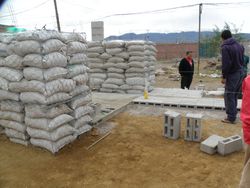
Arturo Ortiz Struck describes the boundaries of formal and legal building in the context of Mexico:“In order to build a critical view of the production of space and architecture in this environment, we should start from two fundamental premises. The first considers that spaces reflect who we are, and they express our cultural ways and how we unfold in everyday life. The(...)
Arturo Ortiz Struck describes the boundaries of formal and legal building in the context of Mexico:“In order to build a critical view of the production of space and architecture in this environment, we should start from two fundamental premises. The first considers that spaces reflect who we are, and they express our cultural ways and how we unfold in everyday life. The(...)
Location:
Paul-Desmarais Theatre
Paul-Desmarais Theatre
Date:
10 May 2012 , 7pm
10 May 2012 , 7pm
Title:
Learning from... Mexico City
Actions:
Description:
Arturo Ortiz Struck describes the boundaries of formal and legal building in the context of Mexico:“In order to build a critical view of the production of space and architecture in this environment, we should start from two fundamental premises. The first considers that spaces reflect who we are, and they express our cultural ways and how we unfold in everyday life. The(...)
Learning from... Mexico City
Actions:
Description:
Arturo Ortiz Struck describes the boundaries of formal and legal building in the context of Mexico:“In order to build a critical view of the production of space and architecture in this environment, we should start from two fundamental premises. The first considers that spaces reflect who we are, and they express our cultural ways and how we unfold in everyday life. The(...)
Form:
events
events
Date:
10 May 2012
7pm
10 May 2012
7pm
Location:
Paul-Desmarais Theatre
Paul-Desmarais Theatre
Form:
articles
articles
Actions:
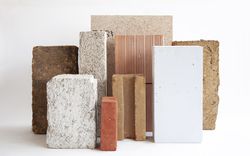
Nzinga B. Mboup discusses non-standard building materials with Stephanie Idongesit Ete, Cyan Cheng, and George Massoud
Published:
27 April 2026
27 April 2026
Title:
Ecosystems, Building Materials, and Building Cultures
Nzinga B. Mboup discusses non-standard building materials with Stephanie Idongesit Ete, Cyan Cheng, and George Massoud
Actions:
Ecosystems, Building Materials, and Building Cultures
Nzinga B. Mboup discusses non-standard building materials with Stephanie Idongesit Ete, Cyan Cheng, and George Massoud
Actions:
Form:
exhibitions
exhibitions
Actions:
Description:
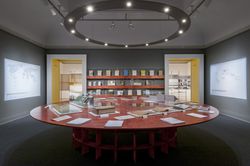
The beginning of the 1950s was a moment of global upheaval. From India to Morocco, from Guatemala to Indochina, the process of decolonization gained momentum and the Cold War began. Architects working or acting as experts in the non-Western areas of the globe could no longer plan as if sites were terrains vague and people were mute subjects. The end of colonial(...)
The beginning of the 1950s was a moment of global upheaval. From India to Morocco, from Guatemala to Indochina, the process of decolonization gained momentum and the Cold War began. Architects working or acting as experts in the non-Western areas of the globe could no longer plan as if sites were terrains vague and people were mute subjects. The end of colonial(...)
Location:
Main galleries Keyword(s):
Casablanca, Chandigarh, Le Corbusier, Jeanneret, Morocco, Punjab, India, Morocco, modernism, Africa, Takashi Homma, Yto Barrada
Main galleries Keyword(s):
Casablanca, Chandigarh, Le Corbusier, Jeanneret, Morocco, Punjab, India, Morocco, modernism, Africa, Takashi Homma, Yto Barrada
Date:
26 November 2013 to 20 April 2014
26 November 2013 to 20 April 2014
Title:
How architects, experts, politicians, international agencies and citizens negotiate modern planning: Casablanca Chandigarh
Actions:
Description:
The beginning of the 1950s was a moment of global upheaval. From India to Morocco, from Guatemala to Indochina, the process of decolonization gained momentum and the Cold War began. Architects working or acting as experts in the non-Western areas of the globe could no longer plan as if sites were terrains vague and people were mute subjects. The end of colonial(...)
How architects, experts, politicians, international agencies and citizens negotiate modern planning: Casablanca Chandigarh
Actions:
Description:
The beginning of the 1950s was a moment of global upheaval. From India to Morocco, from Guatemala to Indochina, the process of decolonization gained momentum and the Cold War began. Architects working or acting as experts in the non-Western areas of the globe could no longer plan as if sites were terrains vague and people were mute subjects. The end of colonial(...)
Form:
exhibitions
exhibitions
Date:
26 November 2013 to
20 April 2014
26 November 2013 to
20 April 2014
Location:
Main galleries Keyword(s):
Casablanca, Chandigarh, Le Corbusier, Jeanneret, Morocco, Punjab, India, Morocco, modernism, Africa, Takashi Homma, Yto Barrada
Main galleries Keyword(s):
Casablanca, Chandigarh, Le Corbusier, Jeanneret, Morocco, Punjab, India, Morocco, modernism, Africa, Takashi Homma, Yto Barrada
Form:
events
events
Description:
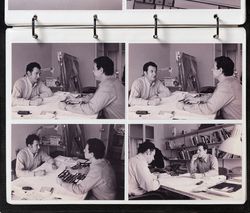
Join us in Madrid for a conversation with Iñaki Ábalos and Juan Herreros, with the participation of Ángel Borrego, Enrique Encabo, Albert Ferré (Associate Director, CCA Publications), María Auxiliadora Gálvez, and Moisés Puente. “Is there such a thing as an architecture of conversation?” ask Iñaki Ábalos and Juan Herreros in their text “A Conversation,” published in CIRCO(...)
Join us in Madrid for a conversation with Iñaki Ábalos and Juan Herreros, with the participation of Ángel Borrego, Enrique Encabo, Albert Ferré (Associate Director, CCA Publications), María Auxiliadora Gálvez, and Moisés Puente. “Is there such a thing as an architecture of conversation?” ask Iñaki Ábalos and Juan Herreros in their text “A Conversation,” published in CIRCO(...)
Date:
7 February 2017, 7pm
7 February 2017, 7pm
Title:
AP164: A Conversation with Iñaki Ábalos and Juan Herreros
Actions:
Description:
Join us in Madrid for a conversation with Iñaki Ábalos and Juan Herreros, with the participation of Ángel Borrego, Enrique Encabo, Albert Ferré (Associate Director, CCA Publications), María Auxiliadora Gálvez, and Moisés Puente. “Is there such a thing as an architecture of conversation?” ask Iñaki Ábalos and Juan Herreros in their text “A Conversation,” published in CIRCO(...)
AP164: A Conversation with Iñaki Ábalos and Juan Herreros
Actions:
Description:
Join us in Madrid for a conversation with Iñaki Ábalos and Juan Herreros, with the participation of Ángel Borrego, Enrique Encabo, Albert Ferré (Associate Director, CCA Publications), María Auxiliadora Gálvez, and Moisés Puente. “Is there such a thing as an architecture of conversation?” ask Iñaki Ábalos and Juan Herreros in their text “A Conversation,” published in CIRCO(...)
Form:
events
events
Date:
7 February 2017
7pm
7 February 2017
7pm
Form:
events
events
Actions:
Description:
On New Year’s Eve 1987, the people of Gonaïves, an impoverished port town on Haiti’s west coast, awoke to 4,000 tons of toxic ash. Amidst political turmoil in Haiti, officials had approved the import of toxic waste from the United States classified as “fertilizer.” In this case, the ash came from Philadelphia, which was facing a waste management crisis brought on by the(...)
On New Year’s Eve 1987, the people of Gonaïves, an impoverished port town on Haiti’s west coast, awoke to 4,000 tons of toxic ash. Amidst political turmoil in Haiti, officials had approved the import of toxic waste from the United States classified as “fertilizer.” In this case, the ash came from Philadelphia, which was facing a waste management crisis brought on by the(...)
Keyword(s):
Canada, environment, Jodoin, Müller, It's all happening so fast, toxic, Haiti, voluntary exchange, garbage imperialism, Gonaives
Canada, environment, Jodoin, Müller, It's all happening so fast, toxic, Haiti, voluntary exchange, garbage imperialism, Gonaives
Date:
16 March 2017
16 March 2017
Title:
Here It Is Toxic, There It Is Not
Actions:
Description:
On New Year’s Eve 1987, the people of Gonaïves, an impoverished port town on Haiti’s west coast, awoke to 4,000 tons of toxic ash. Amidst political turmoil in Haiti, officials had approved the import of toxic waste from the United States classified as “fertilizer.” In this case, the ash came from Philadelphia, which was facing a waste management crisis brought on by the(...)
Here It Is Toxic, There It Is Not
Actions:
Description:
On New Year’s Eve 1987, the people of Gonaïves, an impoverished port town on Haiti’s west coast, awoke to 4,000 tons of toxic ash. Amidst political turmoil in Haiti, officials had approved the import of toxic waste from the United States classified as “fertilizer.” In this case, the ash came from Philadelphia, which was facing a waste management crisis brought on by the(...)
Form:
events
events
Date:
16 March 2017
16 March 2017
Keyword(s):
Canada, environment, Jodoin, Müller, It's all happening so fast, toxic, Haiti, voluntary exchange, garbage imperialism, Gonaives
Canada, environment, Jodoin, Müller, It's all happening so fast, toxic, Haiti, voluntary exchange, garbage imperialism, Gonaives


