


26977 Results
Level of archival description:
Series
Series
Title:
Architectural projects
Architectural projects
Reference number:
AP164.S1
Description:
This series documents the architectural projects of Ábalos&Herreros from 1986 to 2006 and represents over 150 projects, including exhibitions. The firm worked on a wide variety of projects from commercial and residential structures to libraries and sewage treatment plants. The firm's design process was research oriented and involved conversations between Ábalos and Herreros, office collaborators, artists who partook in the projects, as well as other architects. Several projects found in this series were developed in collaboration with other architects including: José Manuel Ábalos; Salvador Pérez Arroyo; Filippo Costi; Ángel Jaramillo Esteban; Javier Fresneda; Eduardo Horta; Martín Marciano; Ángel Jaramillo Sánchez; Renata Sentkiewicz; and Héctor Vigliecca. Most projects were designed for the city of Madrid and the Community of Madrid. Projects were also developed for other sites in Spain, including the Canary Islands, as well as for sites in Portugal, Germany, the United States, and Brazil. Ábalos & Herreros often created new projects from the firm's existing work. The firm also identified their projects numerically. These identification numbers are documented at the project series level for each project. Among the materials documenting the firm's projects are conceptual, design development, presentation, and working drawings, as well as panels. There are also several CAD drawings and prints of born digital drawings. Documenting the firms conceptual process are collages and photomontages. Photographic materials included in this series depict project sites and built projects. Also included are a variety of research reference materials, correspondence, project documentation, and project submissions. Although creating models was not a common practice for the firm, there are a few project series which include models.
AP164.S1
Description:
This series documents the architectural projects of Ábalos&Herreros from 1986 to 2006 and represents over 150 projects, including exhibitions. The firm worked on a wide variety of projects from commercial and residential structures to libraries and sewage treatment plants. The firm's design process was research oriented and involved conversations between Ábalos and Herreros, office collaborators, artists who partook in the projects, as well as other architects. Several projects found in this series were developed in collaboration with other architects including: José Manuel Ábalos; Salvador Pérez Arroyo; Filippo Costi; Ángel Jaramillo Esteban; Javier Fresneda; Eduardo Horta; Martín Marciano; Ángel Jaramillo Sánchez; Renata Sentkiewicz; and Héctor Vigliecca. Most projects were designed for the city of Madrid and the Community of Madrid. Projects were also developed for other sites in Spain, including the Canary Islands, as well as for sites in Portugal, Germany, the United States, and Brazil. Ábalos & Herreros often created new projects from the firm's existing work. The firm also identified their projects numerically. These identification numbers are documented at the project series level for each project. Among the materials documenting the firm's projects are conceptual, design development, presentation, and working drawings, as well as panels. There are also several CAD drawings and prints of born digital drawings. Documenting the firms conceptual process are collages and photomontages. Photographic materials included in this series depict project sites and built projects. Also included are a variety of research reference materials, correspondence, project documentation, and project submissions. Although creating models was not a common practice for the firm, there are a few project series which include models.
People:
Date:
1953-2009
1953-2009
Title:
Architectural projects
Actions:
AP164.S1
Description:
This series documents the architectural projects of Ábalos&Herreros from 1986 to 2006 and represents over 150 projects, including exhibitions. The firm worked on a wide variety of projects from commercial and residential structures to libraries and sewage treatment plants. The firm's design process was research oriented and involved conversations between Ábalos and Herreros, office collaborators, artists who partook in the projects, as well as other architects. Several projects found in this series were developed in collaboration with other architects including: José Manuel Ábalos; Salvador Pérez Arroyo; Filippo Costi; Ángel Jaramillo Esteban; Javier Fresneda; Eduardo Horta; Martín Marciano; Ángel Jaramillo Sánchez; Renata Sentkiewicz; and Héctor Vigliecca. Most projects were designed for the city of Madrid and the Community of Madrid. Projects were also developed for other sites in Spain, including the Canary Islands, as well as for sites in Portugal, Germany, the United States, and Brazil. Ábalos & Herreros often created new projects from the firm's existing work. The firm also identified their projects numerically. These identification numbers are documented at the project series level for each project. Among the materials documenting the firm's projects are conceptual, design development, presentation, and working drawings, as well as panels. There are also several CAD drawings and prints of born digital drawings. Documenting the firms conceptual process are collages and photomontages. Photographic materials included in this series depict project sites and built projects. Also included are a variety of research reference materials, correspondence, project documentation, and project submissions. Although creating models was not a common practice for the firm, there are a few project series which include models.
Architectural projects
Actions:
AP164.S1
Description:
This series documents the architectural projects of Ábalos&Herreros from 1986 to 2006 and represents over 150 projects, including exhibitions. The firm worked on a wide variety of projects from commercial and residential structures to libraries and sewage treatment plants. The firm's design process was research oriented and involved conversations between Ábalos and Herreros, office collaborators, artists who partook in the projects, as well as other architects. Several projects found in this series were developed in collaboration with other architects including: José Manuel Ábalos; Salvador Pérez Arroyo; Filippo Costi; Ángel Jaramillo Esteban; Javier Fresneda; Eduardo Horta; Martín Marciano; Ángel Jaramillo Sánchez; Renata Sentkiewicz; and Héctor Vigliecca. Most projects were designed for the city of Madrid and the Community of Madrid. Projects were also developed for other sites in Spain, including the Canary Islands, as well as for sites in Portugal, Germany, the United States, and Brazil. Ábalos & Herreros often created new projects from the firm's existing work. The firm also identified their projects numerically. These identification numbers are documented at the project series level for each project. Among the materials documenting the firm's projects are conceptual, design development, presentation, and working drawings, as well as panels. There are also several CAD drawings and prints of born digital drawings. Documenting the firms conceptual process are collages and photomontages. Photographic materials included in this series depict project sites and built projects. Also included are a variety of research reference materials, correspondence, project documentation, and project submissions. Although creating models was not a common practice for the firm, there are a few project series which include models.
Level of archival description:
Series
Series
Date:
1953-2009
1953-2009
People:
Level of archival description:
Series
Series
Title:
George Rohault de Fleury
George Rohault de Fleury
Reference number:
CI001.S3
Description:
The CCA's Rohault de Fleury collection includes two of Georges' historical and archeological studies of medieval Italian architecture: 'Les Monuments de Pise au Moyen', 1866 (DR1974:028:001:066) and 'La Toscane au Moyen Age Lettres sur L' Architecture Civile et Militaire en 1400' 2 vols.,1874 (DR1974:0002:039 and DR1974:0002:040). 'Monuments de Pise au Moyen Age' is an atlas consisting solely of 66 prints of Pisan architecture, sculpture, and painting. The section on architecture is the largest, and is divided into three sections for the Lombard, Roman, and Gothic periods. The accompanying text, and an identical atlas of prints, is located in the CCA library. 'La Toscane au Moyen Age Lettres...' is a history of Tuscan civil and military architecture to 1400. The text is in the form of a fictitious correspondence between Raimond du Temple, a famous architect of the Louvre under Charles V, and his son Charles who is traveling through Tuscany. The text is accompanied by photomechanical illustrations, mostly sketches of scenes from bas-reliefs and manuscripts, and a few of built structures. The CCA library has two sets of a related publication entitled 'La Toscane au Moyen Age architecture civile et militaire' 2 vols. These earlier and larger publications are probably the source for some of the text and plates of 'La Toscane au Moyen Age Lettres...'. The introductory remarks, to 'La Toscane au Moyen Age Lettres..' and to the text (CCA library) of the 'Monuments de Pise au Moyen Age' are particularly informative as they provide an insight into Georges Rohault de Fleury's interpretation of historical periods of artistic renewal, decline, and decadence, and their didactic relationship to contemporary architectural and religious concerns.
CI001.S3
Description:
The CCA's Rohault de Fleury collection includes two of Georges' historical and archeological studies of medieval Italian architecture: 'Les Monuments de Pise au Moyen', 1866 (DR1974:028:001:066) and 'La Toscane au Moyen Age Lettres sur L' Architecture Civile et Militaire en 1400' 2 vols.,1874 (DR1974:0002:039 and DR1974:0002:040). 'Monuments de Pise au Moyen Age' is an atlas consisting solely of 66 prints of Pisan architecture, sculpture, and painting. The section on architecture is the largest, and is divided into three sections for the Lombard, Roman, and Gothic periods. The accompanying text, and an identical atlas of prints, is located in the CCA library. 'La Toscane au Moyen Age Lettres...' is a history of Tuscan civil and military architecture to 1400. The text is in the form of a fictitious correspondence between Raimond du Temple, a famous architect of the Louvre under Charles V, and his son Charles who is traveling through Tuscany. The text is accompanied by photomechanical illustrations, mostly sketches of scenes from bas-reliefs and manuscripts, and a few of built structures. The CCA library has two sets of a related publication entitled 'La Toscane au Moyen Age architecture civile et militaire' 2 vols. These earlier and larger publications are probably the source for some of the text and plates of 'La Toscane au Moyen Age Lettres...'. The introductory remarks, to 'La Toscane au Moyen Age Lettres..' and to the text (CCA library) of the 'Monuments de Pise au Moyen Age' are particularly informative as they provide an insight into Georges Rohault de Fleury's interpretation of historical periods of artistic renewal, decline, and decadence, and their didactic relationship to contemporary architectural and religious concerns.
People:
Date:
1866, 1874
1866, 1874
Title:
George Rohault de Fleury
CI001.S3
Description:
The CCA's Rohault de Fleury collection includes two of Georges' historical and archeological studies of medieval Italian architecture: 'Les Monuments de Pise au Moyen', 1866 (DR1974:028:001:066) and 'La Toscane au Moyen Age Lettres sur L' Architecture Civile et Militaire en 1400' 2 vols.,1874 (DR1974:0002:039 and DR1974:0002:040). 'Monuments de Pise au Moyen Age' is an atlas consisting solely of 66 prints of Pisan architecture, sculpture, and painting. The section on architecture is the largest, and is divided into three sections for the Lombard, Roman, and Gothic periods. The accompanying text, and an identical atlas of prints, is located in the CCA library. 'La Toscane au Moyen Age Lettres...' is a history of Tuscan civil and military architecture to 1400. The text is in the form of a fictitious correspondence between Raimond du Temple, a famous architect of the Louvre under Charles V, and his son Charles who is traveling through Tuscany. The text is accompanied by photomechanical illustrations, mostly sketches of scenes from bas-reliefs and manuscripts, and a few of built structures. The CCA library has two sets of a related publication entitled 'La Toscane au Moyen Age architecture civile et militaire' 2 vols. These earlier and larger publications are probably the source for some of the text and plates of 'La Toscane au Moyen Age Lettres...'. The introductory remarks, to 'La Toscane au Moyen Age Lettres..' and to the text (CCA library) of the 'Monuments de Pise au Moyen Age' are particularly informative as they provide an insight into Georges Rohault de Fleury's interpretation of historical periods of artistic renewal, decline, and decadence, and their didactic relationship to contemporary architectural and religious concerns.
George Rohault de Fleury
CI001.S3
Description:
The CCA's Rohault de Fleury collection includes two of Georges' historical and archeological studies of medieval Italian architecture: 'Les Monuments de Pise au Moyen', 1866 (DR1974:028:001:066) and 'La Toscane au Moyen Age Lettres sur L' Architecture Civile et Militaire en 1400' 2 vols.,1874 (DR1974:0002:039 and DR1974:0002:040). 'Monuments de Pise au Moyen Age' is an atlas consisting solely of 66 prints of Pisan architecture, sculpture, and painting. The section on architecture is the largest, and is divided into three sections for the Lombard, Roman, and Gothic periods. The accompanying text, and an identical atlas of prints, is located in the CCA library. 'La Toscane au Moyen Age Lettres...' is a history of Tuscan civil and military architecture to 1400. The text is in the form of a fictitious correspondence between Raimond du Temple, a famous architect of the Louvre under Charles V, and his son Charles who is traveling through Tuscany. The text is accompanied by photomechanical illustrations, mostly sketches of scenes from bas-reliefs and manuscripts, and a few of built structures. The CCA library has two sets of a related publication entitled 'La Toscane au Moyen Age architecture civile et militaire' 2 vols. These earlier and larger publications are probably the source for some of the text and plates of 'La Toscane au Moyen Age Lettres...'. The introductory remarks, to 'La Toscane au Moyen Age Lettres..' and to the text (CCA library) of the 'Monuments de Pise au Moyen Age' are particularly informative as they provide an insight into Georges Rohault de Fleury's interpretation of historical periods of artistic renewal, decline, and decadence, and their didactic relationship to contemporary architectural and religious concerns.
Level of archival description:
Series 3
Series 3
Date:
1866, 1874
1866, 1874
People:
Form:
drawings
Quantity:
14 presentation drawing(s)
drawings
Quantity:
14 presentation drawing(s)
Reference number:
DR1995:0213:001-014
Description:
diagrams, some for surface oil containment, sections, progress chart of draft program, plans section, sketches and axonometric drawings of inflatable furniture, presentation sheet with graph and text, elevations and plans of various air structures, collaged layout possibly for publication, and drawings with annotations for publication
DR1995:0213:001-014
Description:
diagrams, some for surface oil containment, sections, progress chart of draft program, plans section, sketches and axonometric drawings of inflatable furniture, presentation sheet with graph and text, elevations and plans of various air structures, collaged layout possibly for publication, and drawings with annotations for publication
People:
Title:
Diagrams, some for surface oil containment, sections
Actions:
DR1995:0213:001-014
Description:
diagrams, some for surface oil containment, sections, progress chart of draft program, plans section, sketches and axonometric drawings of inflatable furniture, presentation sheet with graph and text, elevations and plans of various air structures, collaged layout possibly for publication, and drawings with annotations for publication
Diagrams, some for surface oil containment, sections
Actions:
DR1995:0213:001-014
Description:
diagrams, some for surface oil containment, sections, progress chart of draft program, plans section, sketches and axonometric drawings of inflatable furniture, presentation sheet with graph and text, elevations and plans of various air structures, collaged layout possibly for publication, and drawings with annotations for publication
Form:
drawings
Quantity:
14 presentation drawing(s)
drawings
Quantity:
14 presentation drawing(s)
People:
Form:
drawings
drawings
Actions:
Reference number:
DR2004:0901
Description:
maps, conceptual drawings, sketches, reference drawings, sections, perspectives, presentation drawings, views of structures, cutouts, site plans, axonometrics, details, plans, diagrams, clippings, keys (texts), views of drawings possibly from an exhibition, notes, programme documents, material from past projects, photomontages, schedule, and memorandum
DR2004:0901
Description:
maps, conceptual drawings, sketches, reference drawings, sections, perspectives, presentation drawings, views of structures, cutouts, site plans, axonometrics, details, plans, diagrams, clippings, keys (texts), views of drawings possibly from an exhibition, notes, programme documents, material from past projects, photomontages, schedule, and memorandum
People:
Title:
Maps, conceptual drawings, sketches, reference drawings
Actions:
DR2004:0901
Description:
maps, conceptual drawings, sketches, reference drawings, sections, perspectives, presentation drawings, views of structures, cutouts, site plans, axonometrics, details, plans, diagrams, clippings, keys (texts), views of drawings possibly from an exhibition, notes, programme documents, material from past projects, photomontages, schedule, and memorandum
Maps, conceptual drawings, sketches, reference drawings
Actions:
DR2004:0901
Description:
maps, conceptual drawings, sketches, reference drawings, sections, perspectives, presentation drawings, views of structures, cutouts, site plans, axonometrics, details, plans, diagrams, clippings, keys (texts), views of drawings possibly from an exhibition, notes, programme documents, material from past projects, photomontages, schedule, and memorandum
Form:
drawings
drawings
People:
Form:
drawings
drawings
Reference number:
DR1981:0024
Description:
- DR1981:0024 shows a design for what appears to be an ornamental footbridge. No dimensions are given and materials are not indicated, but the structure could not have been erected at a very large scale. The road bed consists of three sections: a central flat section supported on a broad flat arch; and two gently-sloped side sections, each supported on seven small, round-headed arches. The span of the bridge is braced between two sets of double piers. Each of these four piers carries an octagonal kiosk consisting of closed panels below and an open framework above. At the centre of the bridge rises a pavilion formed of sixteen columns on a rectangular plan (six columns on each of the two long sides) supporting a curved gable roof. Above the road bed, the superstructure is decorated with banners, lanterns, fretwork, and inscriptions, all in a style of Chinese derivation.
DR1981:0024
Description:
- DR1981:0024 shows a design for what appears to be an ornamental footbridge. No dimensions are given and materials are not indicated, but the structure could not have been erected at a very large scale. The road bed consists of three sections: a central flat section supported on a broad flat arch; and two gently-sloped side sections, each supported on seven small, round-headed arches. The span of the bridge is braced between two sets of double piers. Each of these four piers carries an octagonal kiosk consisting of closed panels below and an open framework above. At the centre of the bridge rises a pavilion formed of sixteen columns on a rectangular plan (six columns on each of the two long sides) supporting a curved gable roof. Above the road bed, the superstructure is decorated with banners, lanterns, fretwork, and inscriptions, all in a style of Chinese derivation.
People:
Subject:
architecture, landscape architecture
architecture, landscape architecture
Date:
ca. 1763
ca. 1763
Title:
Design for a bridge in the Chinese style to be erected at Sanssouci
Actions:
DR1981:0024
Description:
- DR1981:0024 shows a design for what appears to be an ornamental footbridge. No dimensions are given and materials are not indicated, but the structure could not have been erected at a very large scale. The road bed consists of three sections: a central flat section supported on a broad flat arch; and two gently-sloped side sections, each supported on seven small, round-headed arches. The span of the bridge is braced between two sets of double piers. Each of these four piers carries an octagonal kiosk consisting of closed panels below and an open framework above. At the centre of the bridge rises a pavilion formed of sixteen columns on a rectangular plan (six columns on each of the two long sides) supporting a curved gable roof. Above the road bed, the superstructure is decorated with banners, lanterns, fretwork, and inscriptions, all in a style of Chinese derivation.
Design for a bridge in the Chinese style to be erected at Sanssouci
Actions:
DR1981:0024
Description:
- DR1981:0024 shows a design for what appears to be an ornamental footbridge. No dimensions are given and materials are not indicated, but the structure could not have been erected at a very large scale. The road bed consists of three sections: a central flat section supported on a broad flat arch; and two gently-sloped side sections, each supported on seven small, round-headed arches. The span of the bridge is braced between two sets of double piers. Each of these four piers carries an octagonal kiosk consisting of closed panels below and an open framework above. At the centre of the bridge rises a pavilion formed of sixteen columns on a rectangular plan (six columns on each of the two long sides) supporting a curved gable roof. Above the road bed, the superstructure is decorated with banners, lanterns, fretwork, and inscriptions, all in a style of Chinese derivation.
Form:
drawings
drawings
Date:
ca. 1763
ca. 1763
People:
Subject:
architecture, landscape architecture
architecture, landscape architecture
Form:
drawings, textual records
drawings, textual records
Actions:
Reference number:
DR1974:0002:025:001-059
Description:
- This album contains drawings of the Domaine de La Vallée and for extensive renovations proposed by Hubert Rohault de Fleury to the house and its outbuildings, including the demolition of some portions the existing structures. The drawings vary from rough sketches to line drawings, some coloured with wash. Nine site plans for the estate depict the proposed placement of buildings, the layout of roads, and the landscaping. The original house and outbuildings are documented in five rough sketches with dimensioning, possibly measured drawings executed on site, (DR1974:0002:025:039 - DR1974:0002:025:043) and several more finished plans and elevations (DR1974:0002:025:021 R/V, DR1974:0002:025:025, and DR1974:0002:025:031). These five rough sketches include a number of thumbnail sketches, possibly preliminary ideas for the renovation. The renovation proposals for the house and outbuildings include plans, exterior and interior elevations, an axonometric sketch as well as more complete designs for a portico and a porch. Also included are Rohault de Fleury's designs for new outbuildings and other structures: a bridge, possibly with several alternate designs, a levee planted with trees, a granary, a stable, a combined stable and cowshed, a sheepfold, two schemes for a garden temple and two gates. Many of the inscriptions and written documents are illegible, but they apparently relate to construction methods, building materials, proposed alterations to existing structures, and cost calculations. There are several drawings for unidentified buildings in the album having no apparent link to the Domaine de La Vallée structures.
DR1974:0002:025:001-059
Description:
- This album contains drawings of the Domaine de La Vallée and for extensive renovations proposed by Hubert Rohault de Fleury to the house and its outbuildings, including the demolition of some portions the existing structures. The drawings vary from rough sketches to line drawings, some coloured with wash. Nine site plans for the estate depict the proposed placement of buildings, the layout of roads, and the landscaping. The original house and outbuildings are documented in five rough sketches with dimensioning, possibly measured drawings executed on site, (DR1974:0002:025:039 - DR1974:0002:025:043) and several more finished plans and elevations (DR1974:0002:025:021 R/V, DR1974:0002:025:025, and DR1974:0002:025:031). These five rough sketches include a number of thumbnail sketches, possibly preliminary ideas for the renovation. The renovation proposals for the house and outbuildings include plans, exterior and interior elevations, an axonometric sketch as well as more complete designs for a portico and a porch. Also included are Rohault de Fleury's designs for new outbuildings and other structures: a bridge, possibly with several alternate designs, a levee planted with trees, a granary, a stable, a combined stable and cowshed, a sheepfold, two schemes for a garden temple and two gates. Many of the inscriptions and written documents are illegible, but they apparently relate to construction methods, building materials, proposed alterations to existing structures, and cost calculations. There are several drawings for unidentified buildings in the album having no apparent link to the Domaine de La Vallée structures.
People:
Subject:
architecture, landscape architecture, interior design, engineering
architecture, landscape architecture, interior design, engineering
Date:
ca. 1815
ca. 1815
Title:
Album of drawings for proposed renovations to the house and outbuildings, Domaine de La Vallée, Loir-et-Cher, France
Actions:
DR1974:0002:025:001-059
Description:
- This album contains drawings of the Domaine de La Vallée and for extensive renovations proposed by Hubert Rohault de Fleury to the house and its outbuildings, including the demolition of some portions the existing structures. The drawings vary from rough sketches to line drawings, some coloured with wash. Nine site plans for the estate depict the proposed placement of buildings, the layout of roads, and the landscaping. The original house and outbuildings are documented in five rough sketches with dimensioning, possibly measured drawings executed on site, (DR1974:0002:025:039 - DR1974:0002:025:043) and several more finished plans and elevations (DR1974:0002:025:021 R/V, DR1974:0002:025:025, and DR1974:0002:025:031). These five rough sketches include a number of thumbnail sketches, possibly preliminary ideas for the renovation. The renovation proposals for the house and outbuildings include plans, exterior and interior elevations, an axonometric sketch as well as more complete designs for a portico and a porch. Also included are Rohault de Fleury's designs for new outbuildings and other structures: a bridge, possibly with several alternate designs, a levee planted with trees, a granary, a stable, a combined stable and cowshed, a sheepfold, two schemes for a garden temple and two gates. Many of the inscriptions and written documents are illegible, but they apparently relate to construction methods, building materials, proposed alterations to existing structures, and cost calculations. There are several drawings for unidentified buildings in the album having no apparent link to the Domaine de La Vallée structures.
Album of drawings for proposed renovations to the house and outbuildings, Domaine de La Vallée, Loir-et-Cher, France
Actions:
DR1974:0002:025:001-059
Description:
- This album contains drawings of the Domaine de La Vallée and for extensive renovations proposed by Hubert Rohault de Fleury to the house and its outbuildings, including the demolition of some portions the existing structures. The drawings vary from rough sketches to line drawings, some coloured with wash. Nine site plans for the estate depict the proposed placement of buildings, the layout of roads, and the landscaping. The original house and outbuildings are documented in five rough sketches with dimensioning, possibly measured drawings executed on site, (DR1974:0002:025:039 - DR1974:0002:025:043) and several more finished plans and elevations (DR1974:0002:025:021 R/V, DR1974:0002:025:025, and DR1974:0002:025:031). These five rough sketches include a number of thumbnail sketches, possibly preliminary ideas for the renovation. The renovation proposals for the house and outbuildings include plans, exterior and interior elevations, an axonometric sketch as well as more complete designs for a portico and a porch. Also included are Rohault de Fleury's designs for new outbuildings and other structures: a bridge, possibly with several alternate designs, a levee planted with trees, a granary, a stable, a combined stable and cowshed, a sheepfold, two schemes for a garden temple and two gates. Many of the inscriptions and written documents are illegible, but they apparently relate to construction methods, building materials, proposed alterations to existing structures, and cost calculations. There are several drawings for unidentified buildings in the album having no apparent link to the Domaine de La Vallée structures.
Form:
drawings, textual records
drawings, textual records
Date:
ca. 1815
ca. 1815
People:
Subject:
architecture, landscape architecture, interior design, engineering
architecture, landscape architecture, interior design, engineering
Form:
exhibitions
exhibitions
Description:
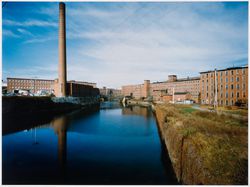
Commissioned by the CCA, for three years, French photographer Serge Hambourg recorded over four hundred historic mills and factories throughout New England. By capturing their surroundings as well as by focusing on the stark beauty of their interiors and exteriors, the images trace the evolution of this building type. The photographs included in the exhibition range from(...)
Commissioned by the CCA, for three years, French photographer Serge Hambourg recorded over four hundred historic mills and factories throughout New England. By capturing their surroundings as well as by focusing on the stark beauty of their interiors and exteriors, the images trace the evolution of this building type. The photographs included in the exhibition range from(...)
Location:
Octagonal gallery ante-room
Octagonal gallery ante-room
Date:
6 December 1989 to 11 February 1990
6 December 1989 to 11 February 1990
Title:
Mills and Factories of New England: Photographs by Serge Hambourg
Actions:
Description:
Commissioned by the CCA, for three years, French photographer Serge Hambourg recorded over four hundred historic mills and factories throughout New England. By capturing their surroundings as well as by focusing on the stark beauty of their interiors and exteriors, the images trace the evolution of this building type. The photographs included in the exhibition range from(...)
Mills and Factories of New England: Photographs by Serge Hambourg
Actions:
Description:
Commissioned by the CCA, for three years, French photographer Serge Hambourg recorded over four hundred historic mills and factories throughout New England. By capturing their surroundings as well as by focusing on the stark beauty of their interiors and exteriors, the images trace the evolution of this building type. The photographs included in the exhibition range from(...)
Form:
exhibitions
exhibitions
Date:
6 December 1989 to
11 February 1990
6 December 1989 to
11 February 1990
Location:
Octagonal gallery ante-room
Octagonal gallery ante-room
Form:
textual records
textual records
Actions:
Reference number:
ARCH270159
Description:
Photocopies of patents issued between 1972 and 1984, chiefly for retractable structures; typescript essay by Robert P. Merges entitled "On the Origins of Patent Law" ([9] stapled leaves); presentation about patents by Thomas A. Penn given at the Cooper Union for the advancement of Science and Art on Jan. 22, 1991 ([11] leaves).
ARCH270159
Description:
Photocopies of patents issued between 1972 and 1984, chiefly for retractable structures; typescript essay by Robert P. Merges entitled "On the Origins of Patent Law" ([9] stapled leaves); presentation about patents by Thomas A. Penn given at the Cooper Union for the advancement of Science and Art on Jan. 22, 1991 ([11] leaves).
People:
Date:
1991
1991
Title:
Patents (Zeigler) (deployable trusses)
Actions:
ARCH270159
Description:
Photocopies of patents issued between 1972 and 1984, chiefly for retractable structures; typescript essay by Robert P. Merges entitled "On the Origins of Patent Law" ([9] stapled leaves); presentation about patents by Thomas A. Penn given at the Cooper Union for the advancement of Science and Art on Jan. 22, 1991 ([11] leaves).
Patents (Zeigler) (deployable trusses)
Actions:
ARCH270159
Description:
Photocopies of patents issued between 1972 and 1984, chiefly for retractable structures; typescript essay by Robert P. Merges entitled "On the Origins of Patent Law" ([9] stapled leaves); presentation about patents by Thomas A. Penn given at the Cooper Union for the advancement of Science and Art on Jan. 22, 1991 ([11] leaves).
Form:
textual records
textual records
Date:
1991
1991
People:
Level of archival description:
Series
Series
Reference number:
AP175.S1
Description:
Series 1, Erasmus Bridge, Rotterdam, Netherlands, 1990-1996, documents the design, conception and construction of a third bridge for Rotterdam over the Nieuwe Maas River. The bridge connects the Kop van Zuid neighborhood, located on the south side of the river, to Willemsplein, located on the north side. The bridge is considered as a landmark in Rotterdam’s landscape. The Erasmus Bridge was a formative project in the thinking of UNStudio. It was originally supposed to be designed by architect Maarten Struijs who was the city of Rotterdam principal architect and who is responsible for the concept of the neighboring Willem Bridge. Ben van Berkel came later into the project and was hired as a designing consultant along with architect Wim Quist. Ben van Berkel proposed design was selected allowing him and his firm, which was called Van Berkel & Bos Architectuurbureau at that time, to supervise the conception and construction of the project, from the original concept to piers design to the selection of every item of bridge furniture such as traffic lights, bridge camera and handrails. The bridge was designed to fit the distinct character and industrial past of Rotterdam. The construction of this landmark was one component of a larger redevelopment project, coinciding with other major developments in the city of Rotterdam. The goal was to develop a dense urban intervention on the southern shore of the Nieuwe Maas, in the Kop van Zuid neighborhood. This explains the implication of UNStudio in the planning of urban configuration of the neighborhoods on both sides of the river and their work for Spido, a ferry company operating on the Nieuwe Maas, work spaces and parking garage. This commercial building was designed by the firm and also hosts The Grand Café and Jazz Café. This commercial building is integrated to one of the bridge pillar on the north shore of the river. For the design the firm used AutoCAD to work along with engineers and to conceptualize 3D models. They also used the software to evaluate the circulation flow of drivers, pedestrians and streetcars, measuring its impact on the structure and the urban configuration of the neighborhoods on both sides of the river. The records contain sketches for bridge and pier design, plans and sections for pier, Spido and bridge, architectural and construction details created by engineering companies for every component of the bridge, from drawbridge, to cable car system, to bridge furnitures such as traffic light, handrails and cameras and photographs documenting the research for precedent and the original configuration of the neighborhoods on both sides of the river. The record contains AutoCAD plans, details and sections for both the bridge and Spido parking garage. The records also contain one physical model: a small scale plastic, glass and metal model of the bridge.
AP175.S1
Description:
Series 1, Erasmus Bridge, Rotterdam, Netherlands, 1990-1996, documents the design, conception and construction of a third bridge for Rotterdam over the Nieuwe Maas River. The bridge connects the Kop van Zuid neighborhood, located on the south side of the river, to Willemsplein, located on the north side. The bridge is considered as a landmark in Rotterdam’s landscape. The Erasmus Bridge was a formative project in the thinking of UNStudio. It was originally supposed to be designed by architect Maarten Struijs who was the city of Rotterdam principal architect and who is responsible for the concept of the neighboring Willem Bridge. Ben van Berkel came later into the project and was hired as a designing consultant along with architect Wim Quist. Ben van Berkel proposed design was selected allowing him and his firm, which was called Van Berkel & Bos Architectuurbureau at that time, to supervise the conception and construction of the project, from the original concept to piers design to the selection of every item of bridge furniture such as traffic lights, bridge camera and handrails. The bridge was designed to fit the distinct character and industrial past of Rotterdam. The construction of this landmark was one component of a larger redevelopment project, coinciding with other major developments in the city of Rotterdam. The goal was to develop a dense urban intervention on the southern shore of the Nieuwe Maas, in the Kop van Zuid neighborhood. This explains the implication of UNStudio in the planning of urban configuration of the neighborhoods on both sides of the river and their work for Spido, a ferry company operating on the Nieuwe Maas, work spaces and parking garage. This commercial building was designed by the firm and also hosts The Grand Café and Jazz Café. This commercial building is integrated to one of the bridge pillar on the north shore of the river. For the design the firm used AutoCAD to work along with engineers and to conceptualize 3D models. They also used the software to evaluate the circulation flow of drivers, pedestrians and streetcars, measuring its impact on the structure and the urban configuration of the neighborhoods on both sides of the river. The records contain sketches for bridge and pier design, plans and sections for pier, Spido and bridge, architectural and construction details created by engineering companies for every component of the bridge, from drawbridge, to cable car system, to bridge furnitures such as traffic light, handrails and cameras and photographs documenting the research for precedent and the original configuration of the neighborhoods on both sides of the river. The record contains AutoCAD plans, details and sections for both the bridge and Spido parking garage. The records also contain one physical model: a small scale plastic, glass and metal model of the bridge.
People:
Date:
1990-1996
1990-1996
Title:
Erasmus Bridge, Rotterdam, Netherlands, 1990-1996
Actions:
AP175.S1
Description:
Series 1, Erasmus Bridge, Rotterdam, Netherlands, 1990-1996, documents the design, conception and construction of a third bridge for Rotterdam over the Nieuwe Maas River. The bridge connects the Kop van Zuid neighborhood, located on the south side of the river, to Willemsplein, located on the north side. The bridge is considered as a landmark in Rotterdam’s landscape. The Erasmus Bridge was a formative project in the thinking of UNStudio. It was originally supposed to be designed by architect Maarten Struijs who was the city of Rotterdam principal architect and who is responsible for the concept of the neighboring Willem Bridge. Ben van Berkel came later into the project and was hired as a designing consultant along with architect Wim Quist. Ben van Berkel proposed design was selected allowing him and his firm, which was called Van Berkel & Bos Architectuurbureau at that time, to supervise the conception and construction of the project, from the original concept to piers design to the selection of every item of bridge furniture such as traffic lights, bridge camera and handrails. The bridge was designed to fit the distinct character and industrial past of Rotterdam. The construction of this landmark was one component of a larger redevelopment project, coinciding with other major developments in the city of Rotterdam. The goal was to develop a dense urban intervention on the southern shore of the Nieuwe Maas, in the Kop van Zuid neighborhood. This explains the implication of UNStudio in the planning of urban configuration of the neighborhoods on both sides of the river and their work for Spido, a ferry company operating on the Nieuwe Maas, work spaces and parking garage. This commercial building was designed by the firm and also hosts The Grand Café and Jazz Café. This commercial building is integrated to one of the bridge pillar on the north shore of the river. For the design the firm used AutoCAD to work along with engineers and to conceptualize 3D models. They also used the software to evaluate the circulation flow of drivers, pedestrians and streetcars, measuring its impact on the structure and the urban configuration of the neighborhoods on both sides of the river. The records contain sketches for bridge and pier design, plans and sections for pier, Spido and bridge, architectural and construction details created by engineering companies for every component of the bridge, from drawbridge, to cable car system, to bridge furnitures such as traffic light, handrails and cameras and photographs documenting the research for precedent and the original configuration of the neighborhoods on both sides of the river. The record contains AutoCAD plans, details and sections for both the bridge and Spido parking garage. The records also contain one physical model: a small scale plastic, glass and metal model of the bridge.
Erasmus Bridge, Rotterdam, Netherlands, 1990-1996
Actions:
AP175.S1
Description:
Series 1, Erasmus Bridge, Rotterdam, Netherlands, 1990-1996, documents the design, conception and construction of a third bridge for Rotterdam over the Nieuwe Maas River. The bridge connects the Kop van Zuid neighborhood, located on the south side of the river, to Willemsplein, located on the north side. The bridge is considered as a landmark in Rotterdam’s landscape. The Erasmus Bridge was a formative project in the thinking of UNStudio. It was originally supposed to be designed by architect Maarten Struijs who was the city of Rotterdam principal architect and who is responsible for the concept of the neighboring Willem Bridge. Ben van Berkel came later into the project and was hired as a designing consultant along with architect Wim Quist. Ben van Berkel proposed design was selected allowing him and his firm, which was called Van Berkel & Bos Architectuurbureau at that time, to supervise the conception and construction of the project, from the original concept to piers design to the selection of every item of bridge furniture such as traffic lights, bridge camera and handrails. The bridge was designed to fit the distinct character and industrial past of Rotterdam. The construction of this landmark was one component of a larger redevelopment project, coinciding with other major developments in the city of Rotterdam. The goal was to develop a dense urban intervention on the southern shore of the Nieuwe Maas, in the Kop van Zuid neighborhood. This explains the implication of UNStudio in the planning of urban configuration of the neighborhoods on both sides of the river and their work for Spido, a ferry company operating on the Nieuwe Maas, work spaces and parking garage. This commercial building was designed by the firm and also hosts The Grand Café and Jazz Café. This commercial building is integrated to one of the bridge pillar on the north shore of the river. For the design the firm used AutoCAD to work along with engineers and to conceptualize 3D models. They also used the software to evaluate the circulation flow of drivers, pedestrians and streetcars, measuring its impact on the structure and the urban configuration of the neighborhoods on both sides of the river. The records contain sketches for bridge and pier design, plans and sections for pier, Spido and bridge, architectural and construction details created by engineering companies for every component of the bridge, from drawbridge, to cable car system, to bridge furnitures such as traffic light, handrails and cameras and photographs documenting the research for precedent and the original configuration of the neighborhoods on both sides of the river. The record contains AutoCAD plans, details and sections for both the bridge and Spido parking garage. The records also contain one physical model: a small scale plastic, glass and metal model of the bridge.
Level of archival description:
Series
Series
Date:
1990-1996
1990-1996
People:
Form:
textual records
textual records
Title:
Files of correspondence, meeting memos, and offers of services from a consortium of architects
Files of correspondence, meeting memos, and offers of services from a consortium of architects
Actions:
Reference number:
ARCH255154
Description:
3 files of correspondence, meeting memos, and offers of services from a consortium of architects, engineers and planners concerning three related projects: Large Assembly Structures (in Toronto, Montreal, Edmonton); including Montreal Olympic Dome Stadium Study; Toronto Domed Stadium. Includes a brochure from David Geiger - Horst Berger consulting engineers (with photographs)
ARCH255154
Description:
3 files of correspondence, meeting memos, and offers of services from a consortium of architects, engineers and planners concerning three related projects: Large Assembly Structures (in Toronto, Montreal, Edmonton); including Montreal Olympic Dome Stadium Study; Toronto Domed Stadium. Includes a brochure from David Geiger - Horst Berger consulting engineers (with photographs)
People:
Date:
1970-1972
1970-1972
Title:
Files of correspondence, meeting memos, and offers of services from a consortium of architects
Actions:
ARCH255154
Description:
3 files of correspondence, meeting memos, and offers of services from a consortium of architects, engineers and planners concerning three related projects: Large Assembly Structures (in Toronto, Montreal, Edmonton); including Montreal Olympic Dome Stadium Study; Toronto Domed Stadium. Includes a brochure from David Geiger - Horst Berger consulting engineers (with photographs)
Files of correspondence, meeting memos, and offers of services from a consortium of architects
Actions:
ARCH255154
Description:
3 files of correspondence, meeting memos, and offers of services from a consortium of architects, engineers and planners concerning three related projects: Large Assembly Structures (in Toronto, Montreal, Edmonton); including Montreal Olympic Dome Stadium Study; Toronto Domed Stadium. Includes a brochure from David Geiger - Horst Berger consulting engineers (with photographs)
Form:
textual records
textual records
Date:
1970-1972
1970-1972
People:


