


33491 Results
Level of archival description:
Project
Project
Actions:
Reference number:
AP018.S1.1972.PR11
Description:
This project series documents the study of a parking garage for the Ottawa Health Sciences Centre at the University of Ottawa in 1972. The office identified the project number as 7808. The Ottawa Heath Sciences Complex, a vast hospital network encompassing institutions across the city, hired Parkin Architects Planners in 1971 to design and construct University of Ottawa buildings within the network. These campus buildings were located in the Alta Vista neighbourhood and labelled as the Health Sciences Centre. This project consists of the study for a parking garage on that site. The project is recorded through correspondence and a drawing dating from 1972.
AP018.S1.1972.PR11
Description:
This project series documents the study of a parking garage for the Ottawa Health Sciences Centre at the University of Ottawa in 1972. The office identified the project number as 7808. The Ottawa Heath Sciences Complex, a vast hospital network encompassing institutions across the city, hired Parkin Architects Planners in 1971 to design and construct University of Ottawa buildings within the network. These campus buildings were located in the Alta Vista neighbourhood and labelled as the Health Sciences Centre. This project consists of the study for a parking garage on that site. The project is recorded through correspondence and a drawing dating from 1972.
People:
Date:
1972
1972
Title:
Ottawa Health Sciences Centre, Parking Garage PS2, Ottawa, Ontario (1972)
Actions:
AP018.S1.1972.PR11
Description:
This project series documents the study of a parking garage for the Ottawa Health Sciences Centre at the University of Ottawa in 1972. The office identified the project number as 7808. The Ottawa Heath Sciences Complex, a vast hospital network encompassing institutions across the city, hired Parkin Architects Planners in 1971 to design and construct University of Ottawa buildings within the network. These campus buildings were located in the Alta Vista neighbourhood and labelled as the Health Sciences Centre. This project consists of the study for a parking garage on that site. The project is recorded through correspondence and a drawing dating from 1972.
Ottawa Health Sciences Centre, Parking Garage PS2, Ottawa, Ontario (1972)
Actions:
AP018.S1.1972.PR11
Description:
This project series documents the study of a parking garage for the Ottawa Health Sciences Centre at the University of Ottawa in 1972. The office identified the project number as 7808. The Ottawa Heath Sciences Complex, a vast hospital network encompassing institutions across the city, hired Parkin Architects Planners in 1971 to design and construct University of Ottawa buildings within the network. These campus buildings were located in the Alta Vista neighbourhood and labelled as the Health Sciences Centre. This project consists of the study for a parking garage on that site. The project is recorded through correspondence and a drawing dating from 1972.
Level of archival description:
Project
Project
Date:
1972
1972
People:
Level of archival description:
Project
Project
Actions:
Reference number:
AP018.S1.1977.PR10
Description:
This project series documents interior refurbishments to the Ontario Association of Architects headquarters in Toronto from 1977-1978. The office identified the project number as 7711. This project consisted of changes to the carpeting, drapes and furniture in the building's lounge. However, this project was cancelled by the client due to the possibility of expanding the lounge in the near future. The headquarters had been designed by John C. Parkin's previous firm, John B. Parkin Associates, in the 1950s and was located at 50 Park Road. The project is recorded through correspondence and cost planning records dating from 1977-1978.
AP018.S1.1977.PR10
Description:
This project series documents interior refurbishments to the Ontario Association of Architects headquarters in Toronto from 1977-1978. The office identified the project number as 7711. This project consisted of changes to the carpeting, drapes and furniture in the building's lounge. However, this project was cancelled by the client due to the possibility of expanding the lounge in the near future. The headquarters had been designed by John C. Parkin's previous firm, John B. Parkin Associates, in the 1950s and was located at 50 Park Road. The project is recorded through correspondence and cost planning records dating from 1977-1978.
People:
Date:
1977-1978
1977-1978
Title:
Ontario Association of Architects, Interior Refurbishment, Toronto (1977-1978)
Actions:
AP018.S1.1977.PR10
Description:
This project series documents interior refurbishments to the Ontario Association of Architects headquarters in Toronto from 1977-1978. The office identified the project number as 7711. This project consisted of changes to the carpeting, drapes and furniture in the building's lounge. However, this project was cancelled by the client due to the possibility of expanding the lounge in the near future. The headquarters had been designed by John C. Parkin's previous firm, John B. Parkin Associates, in the 1950s and was located at 50 Park Road. The project is recorded through correspondence and cost planning records dating from 1977-1978.
Ontario Association of Architects, Interior Refurbishment, Toronto (1977-1978)
Actions:
AP018.S1.1977.PR10
Description:
This project series documents interior refurbishments to the Ontario Association of Architects headquarters in Toronto from 1977-1978. The office identified the project number as 7711. This project consisted of changes to the carpeting, drapes and furniture in the building's lounge. However, this project was cancelled by the client due to the possibility of expanding the lounge in the near future. The headquarters had been designed by John C. Parkin's previous firm, John B. Parkin Associates, in the 1950s and was located at 50 Park Road. The project is recorded through correspondence and cost planning records dating from 1977-1978.
Level of archival description:
Project
Project
Date:
1977-1978
1977-1978
People:
Level of archival description:
Project
Project
Actions:
Reference number:
AP018.S1.1971.PR09
Description:
This project series documents the site planning for the University of Ottawa Health Sciences Centre in 1971. The office identified the project number as 7113. The Ottawa Heath Sciences Complex, a vast hospital network encompassing institutions across the city, hired Parkin Architects Planners in 1971 to design and construct University of Ottawa buildings within the network. These campus buildings were located in the Alta Vista neighbourhood and are reffered to as the Ottawa Health Sciences Centre. This project consists of the site planning for the Centre. The project is documented by preliminary design drawings and site drawings dating from around 1971.
AP018.S1.1971.PR09
Description:
This project series documents the site planning for the University of Ottawa Health Sciences Centre in 1971. The office identified the project number as 7113. The Ottawa Heath Sciences Complex, a vast hospital network encompassing institutions across the city, hired Parkin Architects Planners in 1971 to design and construct University of Ottawa buildings within the network. These campus buildings were located in the Alta Vista neighbourhood and are reffered to as the Ottawa Health Sciences Centre. This project consists of the site planning for the Centre. The project is documented by preliminary design drawings and site drawings dating from around 1971.
People:
Date:
circa 1971
circa 1971
Title:
University of Ottawa Health Sciences Centre, Ottawa, Ontario (1971)
Actions:
AP018.S1.1971.PR09
Description:
This project series documents the site planning for the University of Ottawa Health Sciences Centre in 1971. The office identified the project number as 7113. The Ottawa Heath Sciences Complex, a vast hospital network encompassing institutions across the city, hired Parkin Architects Planners in 1971 to design and construct University of Ottawa buildings within the network. These campus buildings were located in the Alta Vista neighbourhood and are reffered to as the Ottawa Health Sciences Centre. This project consists of the site planning for the Centre. The project is documented by preliminary design drawings and site drawings dating from around 1971.
University of Ottawa Health Sciences Centre, Ottawa, Ontario (1971)
Actions:
AP018.S1.1971.PR09
Description:
This project series documents the site planning for the University of Ottawa Health Sciences Centre in 1971. The office identified the project number as 7113. The Ottawa Heath Sciences Complex, a vast hospital network encompassing institutions across the city, hired Parkin Architects Planners in 1971 to design and construct University of Ottawa buildings within the network. These campus buildings were located in the Alta Vista neighbourhood and are reffered to as the Ottawa Health Sciences Centre. This project consists of the site planning for the Centre. The project is documented by preliminary design drawings and site drawings dating from around 1971.
Level of archival description:
Project
Project
Date:
circa 1971
circa 1971
People:
Level of archival description:
Sub-series
Sub-series
Actions:
Reference number:
AP058.S1.SS7
Description:
This subseries documents Blanche Lemco van Ginkel’s participation in various other professional committees and associations, like the Canadian Housing Design Council (1980-1982), the Canadian Friend of Finland (1981-1990), the Association for Advancement of Scandinavian Studies (1982-1983), the Canadian Institute of Planners (1982), the Canada Museums Corporation (1982-1983), the Ontario Association of Architects (1983), the Canadian Council of University Schools of Architecture (1986-1989), the National Council of Architecture Registration Boards (1987), the University of Miami Visiting Committee (1988), etc. The subseries contains correspondence, programmes, publications, schedules, information packages, notes, minutes, posters, papers, and reports, dating from 1976 to 1990.
AP058.S1.SS7
Description:
This subseries documents Blanche Lemco van Ginkel’s participation in various other professional committees and associations, like the Canadian Housing Design Council (1980-1982), the Canadian Friend of Finland (1981-1990), the Association for Advancement of Scandinavian Studies (1982-1983), the Canadian Institute of Planners (1982), the Canada Museums Corporation (1982-1983), the Ontario Association of Architects (1983), the Canadian Council of University Schools of Architecture (1986-1989), the National Council of Architecture Registration Boards (1987), the University of Miami Visiting Committee (1988), etc. The subseries contains correspondence, programmes, publications, schedules, information packages, notes, minutes, posters, papers, and reports, dating from 1976 to 1990.
People:
Date:
1976-1990
1976-1990
Title:
Other professional committees and associations
Actions:
AP058.S1.SS7
Description:
This subseries documents Blanche Lemco van Ginkel’s participation in various other professional committees and associations, like the Canadian Housing Design Council (1980-1982), the Canadian Friend of Finland (1981-1990), the Association for Advancement of Scandinavian Studies (1982-1983), the Canadian Institute of Planners (1982), the Canada Museums Corporation (1982-1983), the Ontario Association of Architects (1983), the Canadian Council of University Schools of Architecture (1986-1989), the National Council of Architecture Registration Boards (1987), the University of Miami Visiting Committee (1988), etc. The subseries contains correspondence, programmes, publications, schedules, information packages, notes, minutes, posters, papers, and reports, dating from 1976 to 1990.
Other professional committees and associations
Actions:
AP058.S1.SS7
Description:
This subseries documents Blanche Lemco van Ginkel’s participation in various other professional committees and associations, like the Canadian Housing Design Council (1980-1982), the Canadian Friend of Finland (1981-1990), the Association for Advancement of Scandinavian Studies (1982-1983), the Canadian Institute of Planners (1982), the Canada Museums Corporation (1982-1983), the Ontario Association of Architects (1983), the Canadian Council of University Schools of Architecture (1986-1989), the National Council of Architecture Registration Boards (1987), the University of Miami Visiting Committee (1988), etc. The subseries contains correspondence, programmes, publications, schedules, information packages, notes, minutes, posters, papers, and reports, dating from 1976 to 1990.
Level of archival description:
Subseries
Subseries
Date:
1976-1990
1976-1990
People:
Level of archival description:
Project
Project
Actions:
Reference number:
AP018.S1.1976.PR07
Description:
This project series documents alterations done to the Safeco Insurance Company of America office building in Mississauga, Ontario from 1976-1977. The office identified the project number as 7611. Beginning in 1973, Parkin Architects Planners began work on the construction of the Safeco office building. This project consists of alterations made to the original building. Alterations include mechanical and electrical work and changes to the computer room and conference room. The project is recorded through textual records dating from 1976-1977 including correspondence, conference reports and certificates of payment. Arranged with these records is an index, which was created by the office.
AP018.S1.1976.PR07
Description:
This project series documents alterations done to the Safeco Insurance Company of America office building in Mississauga, Ontario from 1976-1977. The office identified the project number as 7611. Beginning in 1973, Parkin Architects Planners began work on the construction of the Safeco office building. This project consists of alterations made to the original building. Alterations include mechanical and electrical work and changes to the computer room and conference room. The project is recorded through textual records dating from 1976-1977 including correspondence, conference reports and certificates of payment. Arranged with these records is an index, which was created by the office.
People:
Date:
1976-1977
1976-1977
Title:
Safeco Insurance Company of Ontario, Toronto Office Building, Alterations, Mississauga, Ontario (1976-1977)
Actions:
AP018.S1.1976.PR07
Description:
This project series documents alterations done to the Safeco Insurance Company of America office building in Mississauga, Ontario from 1976-1977. The office identified the project number as 7611. Beginning in 1973, Parkin Architects Planners began work on the construction of the Safeco office building. This project consists of alterations made to the original building. Alterations include mechanical and electrical work and changes to the computer room and conference room. The project is recorded through textual records dating from 1976-1977 including correspondence, conference reports and certificates of payment. Arranged with these records is an index, which was created by the office.
Safeco Insurance Company of Ontario, Toronto Office Building, Alterations, Mississauga, Ontario (1976-1977)
Actions:
AP018.S1.1976.PR07
Description:
This project series documents alterations done to the Safeco Insurance Company of America office building in Mississauga, Ontario from 1976-1977. The office identified the project number as 7611. Beginning in 1973, Parkin Architects Planners began work on the construction of the Safeco office building. This project consists of alterations made to the original building. Alterations include mechanical and electrical work and changes to the computer room and conference room. The project is recorded through textual records dating from 1976-1977 including correspondence, conference reports and certificates of payment. Arranged with these records is an index, which was created by the office.
Level of archival description:
Project
Project
Date:
1976-1977
1976-1977
People:
Level of archival description:
Series
Series
Title:
Architectural projects
Architectural projects
Reference number:
AP206.S1
Description:
The Architectural projects series, 1957-2007, records 82 architectural projects of Aditya Prakash throughout his career as an architect in Chandigarh, India. Most of these projects were completed with his daughter, Chetna Prakash, through his private practice, Arcon Architects, from 1982-2007. These projects include private residences, housing complexes, university campuses, schools, factories, theatres, sport and yoga centres, offices and furniture, among others. The projects include built work, competition entries and proposals, though it is not always clear which projects were realized. While many projects were located in Chandigarh, the series documents projects across northern India, particularly in Jammu and Kashmir, Punjab, Haryana, Himachal Pradesh and Uttar Pradesh. The projects in this series were identified based on their unique locations and dates. Some projects, located at the same site, consisted of multiple buildings and were designed and/or constructed over long periods of time. The materials for projects like this are described together in one project series, instead of being separated out by building or time period. These projects are recorded largely through original drawings, which include sketches, plans, elevations, sections, perspectives, details, axonometric views and working drawings. However, materials for each project are sparse, often consisting of only 1-10 drawings. Textual records and photographs are also included in the materials for a few projects. The photographs show completed work, while the textual records primarily consist of client correspondence.
AP206.S1
Description:
The Architectural projects series, 1957-2007, records 82 architectural projects of Aditya Prakash throughout his career as an architect in Chandigarh, India. Most of these projects were completed with his daughter, Chetna Prakash, through his private practice, Arcon Architects, from 1982-2007. These projects include private residences, housing complexes, university campuses, schools, factories, theatres, sport and yoga centres, offices and furniture, among others. The projects include built work, competition entries and proposals, though it is not always clear which projects were realized. While many projects were located in Chandigarh, the series documents projects across northern India, particularly in Jammu and Kashmir, Punjab, Haryana, Himachal Pradesh and Uttar Pradesh. The projects in this series were identified based on their unique locations and dates. Some projects, located at the same site, consisted of multiple buildings and were designed and/or constructed over long periods of time. The materials for projects like this are described together in one project series, instead of being separated out by building or time period. These projects are recorded largely through original drawings, which include sketches, plans, elevations, sections, perspectives, details, axonometric views and working drawings. However, materials for each project are sparse, often consisting of only 1-10 drawings. Textual records and photographs are also included in the materials for a few projects. The photographs show completed work, while the textual records primarily consist of client correspondence.
People:
Date:
1957-2007
1957-2007
Title:
Architectural projects
Actions:
AP206.S1
Description:
The Architectural projects series, 1957-2007, records 82 architectural projects of Aditya Prakash throughout his career as an architect in Chandigarh, India. Most of these projects were completed with his daughter, Chetna Prakash, through his private practice, Arcon Architects, from 1982-2007. These projects include private residences, housing complexes, university campuses, schools, factories, theatres, sport and yoga centres, offices and furniture, among others. The projects include built work, competition entries and proposals, though it is not always clear which projects were realized. While many projects were located in Chandigarh, the series documents projects across northern India, particularly in Jammu and Kashmir, Punjab, Haryana, Himachal Pradesh and Uttar Pradesh. The projects in this series were identified based on their unique locations and dates. Some projects, located at the same site, consisted of multiple buildings and were designed and/or constructed over long periods of time. The materials for projects like this are described together in one project series, instead of being separated out by building or time period. These projects are recorded largely through original drawings, which include sketches, plans, elevations, sections, perspectives, details, axonometric views and working drawings. However, materials for each project are sparse, often consisting of only 1-10 drawings. Textual records and photographs are also included in the materials for a few projects. The photographs show completed work, while the textual records primarily consist of client correspondence.
Architectural projects
Actions:
AP206.S1
Description:
The Architectural projects series, 1957-2007, records 82 architectural projects of Aditya Prakash throughout his career as an architect in Chandigarh, India. Most of these projects were completed with his daughter, Chetna Prakash, through his private practice, Arcon Architects, from 1982-2007. These projects include private residences, housing complexes, university campuses, schools, factories, theatres, sport and yoga centres, offices and furniture, among others. The projects include built work, competition entries and proposals, though it is not always clear which projects were realized. While many projects were located in Chandigarh, the series documents projects across northern India, particularly in Jammu and Kashmir, Punjab, Haryana, Himachal Pradesh and Uttar Pradesh. The projects in this series were identified based on their unique locations and dates. Some projects, located at the same site, consisted of multiple buildings and were designed and/or constructed over long periods of time. The materials for projects like this are described together in one project series, instead of being separated out by building or time period. These projects are recorded largely through original drawings, which include sketches, plans, elevations, sections, perspectives, details, axonometric views and working drawings. However, materials for each project are sparse, often consisting of only 1-10 drawings. Textual records and photographs are also included in the materials for a few projects. The photographs show completed work, while the textual records primarily consist of client correspondence.
Level of archival description:
Series
Series
Date:
1957-2007
1957-2007
People:
Level of archival description:
Series
Series
Title:
Exhibitions
Exhibitions
Reference number:
AP207.S2
Description:
The series documents Pettena’s activities as a curator and exhibition designer from 1980 to 2004 and includes materials for most of the related publications. The material in this series relates to fifteen out of the over twenty-five exhibitions designed by Pettena, which were presented in various galleries in Italy. Pettena’s exhibitions include installations on contemporary architecture, such as an exhibition on avant-garde architects from London, exhibitions on Hans Hollein, on Richard Meier, on Ettore Sottsass and on Ettore Sottsass Jr. He also designed many exhibitions on architects of the Radical movement and the evolution of their work from the beginning of the movement to more recent years. The series also contains material for Pettena’s work on exhibitions on contemporary landscape architecture and the evolution of urban parks. Also included are a few documents related to exhibitions on Pettena’s work, either group exhibitions or solo ones, and curated by others. The series contains research materials, such as publications and reference photographs, correspondence related to exhibition planning and the accompanying publications, exhibition proposals, and some installation designs and concept development notes. The series also contains draft texts, and documents related to the image selection process for the exhibition catalogues. Finally, the series contains installation views, photographs of exhibition openings and some draft exhibition and publication texts for exhibitions on Pettena’s work but that were not curated by him.
AP207.S2
Description:
The series documents Pettena’s activities as a curator and exhibition designer from 1980 to 2004 and includes materials for most of the related publications. The material in this series relates to fifteen out of the over twenty-five exhibitions designed by Pettena, which were presented in various galleries in Italy. Pettena’s exhibitions include installations on contemporary architecture, such as an exhibition on avant-garde architects from London, exhibitions on Hans Hollein, on Richard Meier, on Ettore Sottsass and on Ettore Sottsass Jr. He also designed many exhibitions on architects of the Radical movement and the evolution of their work from the beginning of the movement to more recent years. The series also contains material for Pettena’s work on exhibitions on contemporary landscape architecture and the evolution of urban parks. Also included are a few documents related to exhibitions on Pettena’s work, either group exhibitions or solo ones, and curated by others. The series contains research materials, such as publications and reference photographs, correspondence related to exhibition planning and the accompanying publications, exhibition proposals, and some installation designs and concept development notes. The series also contains draft texts, and documents related to the image selection process for the exhibition catalogues. Finally, the series contains installation views, photographs of exhibition openings and some draft exhibition and publication texts for exhibitions on Pettena’s work but that were not curated by him.
People:
Date:
circa 1980--2019
circa 1980--2019
Title:
Exhibitions
Actions:
AP207.S2
Description:
The series documents Pettena’s activities as a curator and exhibition designer from 1980 to 2004 and includes materials for most of the related publications. The material in this series relates to fifteen out of the over twenty-five exhibitions designed by Pettena, which were presented in various galleries in Italy. Pettena’s exhibitions include installations on contemporary architecture, such as an exhibition on avant-garde architects from London, exhibitions on Hans Hollein, on Richard Meier, on Ettore Sottsass and on Ettore Sottsass Jr. He also designed many exhibitions on architects of the Radical movement and the evolution of their work from the beginning of the movement to more recent years. The series also contains material for Pettena’s work on exhibitions on contemporary landscape architecture and the evolution of urban parks. Also included are a few documents related to exhibitions on Pettena’s work, either group exhibitions or solo ones, and curated by others. The series contains research materials, such as publications and reference photographs, correspondence related to exhibition planning and the accompanying publications, exhibition proposals, and some installation designs and concept development notes. The series also contains draft texts, and documents related to the image selection process for the exhibition catalogues. Finally, the series contains installation views, photographs of exhibition openings and some draft exhibition and publication texts for exhibitions on Pettena’s work but that were not curated by him.
Exhibitions
Actions:
AP207.S2
Description:
The series documents Pettena’s activities as a curator and exhibition designer from 1980 to 2004 and includes materials for most of the related publications. The material in this series relates to fifteen out of the over twenty-five exhibitions designed by Pettena, which were presented in various galleries in Italy. Pettena’s exhibitions include installations on contemporary architecture, such as an exhibition on avant-garde architects from London, exhibitions on Hans Hollein, on Richard Meier, on Ettore Sottsass and on Ettore Sottsass Jr. He also designed many exhibitions on architects of the Radical movement and the evolution of their work from the beginning of the movement to more recent years. The series also contains material for Pettena’s work on exhibitions on contemporary landscape architecture and the evolution of urban parks. Also included are a few documents related to exhibitions on Pettena’s work, either group exhibitions or solo ones, and curated by others. The series contains research materials, such as publications and reference photographs, correspondence related to exhibition planning and the accompanying publications, exhibition proposals, and some installation designs and concept development notes. The series also contains draft texts, and documents related to the image selection process for the exhibition catalogues. Finally, the series contains installation views, photographs of exhibition openings and some draft exhibition and publication texts for exhibitions on Pettena’s work but that were not curated by him.
Level of archival description:
Series
Series
Date:
circa 1980--2019
circa 1980--2019
People:
Level of archival description:
Project
Project
Actions:
Reference number:
AP075.S1.1994.PR01
Description:
Project series documents Cornelia Hahn Oberlander's project of a roof garden for the New Canadian Embassy at Leipziger Platz in Berlin, Germany. Oberlander worked on this project in from 1999-2005 with architectural firm Kuwabara, Payne, McKenna, Blumberg Architects. Oberlander's work for the project included a terrace at the Ambassador's Level (6th floor) with mounded evergreen white flowering groundcover azaleas, cascading roses hanging along the Leipzigerstrasse facade, and a green roof on top of the building. The concept of the landscaping of the green roof was to represente Canada's land of the north in an abstract form, simulating the river system of the MacKenzie River in the Northwest Territories, linking Alberta to the Arctic Ocean. She used black-glass panels to represente the water. The drainage for the green roof was also connected the drainage infrastructure of the building to recycle the water collected from the roof. The project series includes sketches and design development drawings for the green roof landscaping, planting details and irrigation details, presentation drawings from KPMB and drawings of the building used as reference. The project is also documented through research material, concept notes by Oberlander, correspondence, including with architects, consultants, contractors and clients, proposal, specifications, and press clippings about the project. The project series also includes sample of glass tiles used for the landscaping.
AP075.S1.1994.PR01
Description:
Project series documents Cornelia Hahn Oberlander's project of a roof garden for the New Canadian Embassy at Leipziger Platz in Berlin, Germany. Oberlander worked on this project in from 1999-2005 with architectural firm Kuwabara, Payne, McKenna, Blumberg Architects. Oberlander's work for the project included a terrace at the Ambassador's Level (6th floor) with mounded evergreen white flowering groundcover azaleas, cascading roses hanging along the Leipzigerstrasse facade, and a green roof on top of the building. The concept of the landscaping of the green roof was to represente Canada's land of the north in an abstract form, simulating the river system of the MacKenzie River in the Northwest Territories, linking Alberta to the Arctic Ocean. She used black-glass panels to represente the water. The drainage for the green roof was also connected the drainage infrastructure of the building to recycle the water collected from the roof. The project series includes sketches and design development drawings for the green roof landscaping, planting details and irrigation details, presentation drawings from KPMB and drawings of the building used as reference. The project is also documented through research material, concept notes by Oberlander, correspondence, including with architects, consultants, contractors and clients, proposal, specifications, and press clippings about the project. The project series also includes sample of glass tiles used for the landscaping.
People:
Date:
1994-2005
1994-2005
Title:
New Canadian Embassy in Berlin, Germany (1994-2005)
Actions:
AP075.S1.1994.PR01
Description:
Project series documents Cornelia Hahn Oberlander's project of a roof garden for the New Canadian Embassy at Leipziger Platz in Berlin, Germany. Oberlander worked on this project in from 1999-2005 with architectural firm Kuwabara, Payne, McKenna, Blumberg Architects. Oberlander's work for the project included a terrace at the Ambassador's Level (6th floor) with mounded evergreen white flowering groundcover azaleas, cascading roses hanging along the Leipzigerstrasse facade, and a green roof on top of the building. The concept of the landscaping of the green roof was to represente Canada's land of the north in an abstract form, simulating the river system of the MacKenzie River in the Northwest Territories, linking Alberta to the Arctic Ocean. She used black-glass panels to represente the water. The drainage for the green roof was also connected the drainage infrastructure of the building to recycle the water collected from the roof. The project series includes sketches and design development drawings for the green roof landscaping, planting details and irrigation details, presentation drawings from KPMB and drawings of the building used as reference. The project is also documented through research material, concept notes by Oberlander, correspondence, including with architects, consultants, contractors and clients, proposal, specifications, and press clippings about the project. The project series also includes sample of glass tiles used for the landscaping.
New Canadian Embassy in Berlin, Germany (1994-2005)
Actions:
AP075.S1.1994.PR01
Description:
Project series documents Cornelia Hahn Oberlander's project of a roof garden for the New Canadian Embassy at Leipziger Platz in Berlin, Germany. Oberlander worked on this project in from 1999-2005 with architectural firm Kuwabara, Payne, McKenna, Blumberg Architects. Oberlander's work for the project included a terrace at the Ambassador's Level (6th floor) with mounded evergreen white flowering groundcover azaleas, cascading roses hanging along the Leipzigerstrasse facade, and a green roof on top of the building. The concept of the landscaping of the green roof was to represente Canada's land of the north in an abstract form, simulating the river system of the MacKenzie River in the Northwest Territories, linking Alberta to the Arctic Ocean. She used black-glass panels to represente the water. The drainage for the green roof was also connected the drainage infrastructure of the building to recycle the water collected from the roof. The project series includes sketches and design development drawings for the green roof landscaping, planting details and irrigation details, presentation drawings from KPMB and drawings of the building used as reference. The project is also documented through research material, concept notes by Oberlander, correspondence, including with architects, consultants, contractors and clients, proposal, specifications, and press clippings about the project. The project series also includes sample of glass tiles used for the landscaping.
Level of archival description:
Project
Project
Date:
1994-2005
1994-2005
People:
Form:
exhibitions
exhibitions
Description:
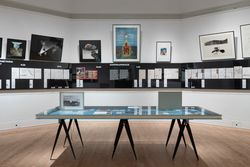
Alongside a growth in decentralized, experimental, and underground cinema at the end of the 1960s and in the early 1970s, many groups operating from inside the field of architecture such as Superstudio, Studio 9999, and Ant Farm explored the short film as a medium to expand architectural discourse, embed their projects with bold reflections and projections of society, and(...)
Alongside a growth in decentralized, experimental, and underground cinema at the end of the 1960s and in the early 1970s, many groups operating from inside the field of architecture such as Superstudio, Studio 9999, and Ant Farm explored the short film as a medium to expand architectural discourse, embed their projects with bold reflections and projections of society, and(...)
Location:
Octagonal gallery
Octagonal gallery
Date:
21 September 2018 to 19 May 2019
21 September 2018 to 19 May 2019
Title:
Scripts for a new world
Actions:
Description:
Alongside a growth in decentralized, experimental, and underground cinema at the end of the 1960s and in the early 1970s, many groups operating from inside the field of architecture such as Superstudio, Studio 9999, and Ant Farm explored the short film as a medium to expand architectural discourse, embed their projects with bold reflections and projections of society, and(...)
Scripts for a new world
Actions:
Description:
Alongside a growth in decentralized, experimental, and underground cinema at the end of the 1960s and in the early 1970s, many groups operating from inside the field of architecture such as Superstudio, Studio 9999, and Ant Farm explored the short film as a medium to expand architectural discourse, embed their projects with bold reflections and projections of society, and(...)
Form:
exhibitions
exhibitions
Date:
21 September 2018 to
19 May 2019
21 September 2018 to
19 May 2019
Location:
Octagonal gallery
Octagonal gallery
Form:
exhibitions
exhibitions
Actions:
Description:
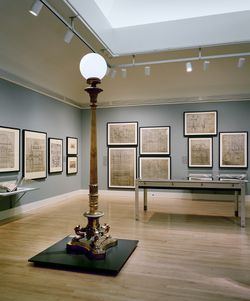
This exhibition looks at the transformation of Montréal from a nineteenth century merchant city to the metropolis of Canada. It examines the elements that made Montréal a political, social, and economic centre and explores the unique character of its architecture. The exhibition brings together some 350 objects, including drawings from the CCA collection by Montréal(...)
This exhibition looks at the transformation of Montréal from a nineteenth century merchant city to the metropolis of Canada. It examines the elements that made Montréal a political, social, and economic centre and explores the unique character of its architecture. The exhibition brings together some 350 objects, including drawings from the CCA collection by Montréal(...)
Location:
Main galleries
Main galleries
Date:
18 March 1998 to 24 May 1998
18 March 1998 to 24 May 1998
Title:
Montréal Métropole, 1880–1930
Actions:
Description:
This exhibition looks at the transformation of Montréal from a nineteenth century merchant city to the metropolis of Canada. It examines the elements that made Montréal a political, social, and economic centre and explores the unique character of its architecture. The exhibition brings together some 350 objects, including drawings from the CCA collection by Montréal(...)
Montréal Métropole, 1880–1930
Actions:
Description:
This exhibition looks at the transformation of Montréal from a nineteenth century merchant city to the metropolis of Canada. It examines the elements that made Montréal a political, social, and economic centre and explores the unique character of its architecture. The exhibition brings together some 350 objects, including drawings from the CCA collection by Montréal(...)
Form:
exhibitions
exhibitions
Date:
18 March 1998 to
24 May 1998
18 March 1998 to
24 May 1998
Location:
Main galleries
Main galleries


