Foraging in Montréal
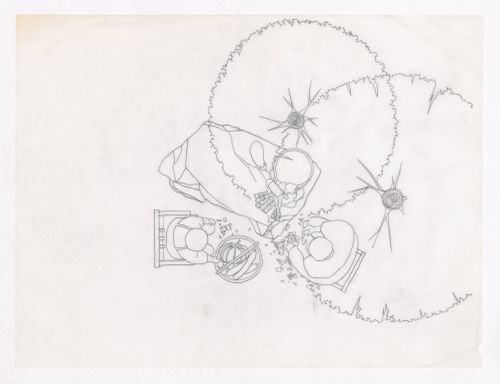
Chicago-based artist and forager Nance Klehm leads a foraging and tea-making expedition. Foraging is the practice of collecting plants that grow wild in urban and rural areas. Participants identify and collect edible plants growing in Montreal and then make tea from the foraged ingredients. Inspired by the exhibition Actions: What You Can Do With the City (2008), the CCA(...)
18 April 2009
Foraging in Montréal
Actions:
Description:
Chicago-based artist and forager Nance Klehm leads a foraging and tea-making expedition. Foraging is the practice of collecting plants that grow wild in urban and rural areas. Participants identify and collect edible plants growing in Montreal and then make tea from the foraged ingredients. Inspired by the exhibition Actions: What You Can Do With the City (2008), the CCA(...)
textual records
AP206.S2.010
Description:
File was originally housed in a binder along with content arranged in AP206.S2.011 and AP206.S2.012. This file contains the following papers: "The role of Architecture and Community Planners in the Planning, Development and Management of Urban Systems [...]," seminar talk, 1981 "Sobha Singh," 1981 "Energy Crisis and Future Pattern of Human Settlements in Developing Countries" "The Role of Architects in Urban and Rural Growth," 1984 "Chandigarh: Capital of Two States," circa 1966 “Aesthetic: Reflections on Beauty of Line, Shape and Form,” by P. Jeanneret
circa 1966-1982
Published and unpublished papers (folder 1 of 3)
Actions:
AP206.S2.010
Description:
File was originally housed in a binder along with content arranged in AP206.S2.011 and AP206.S2.012. This file contains the following papers: "The role of Architecture and Community Planners in the Planning, Development and Management of Urban Systems [...]," seminar talk, 1981 "Sobha Singh," 1981 "Energy Crisis and Future Pattern of Human Settlements in Developing Countries" "The Role of Architects in Urban and Rural Growth," 1984 "Chandigarh: Capital of Two States," circa 1966 “Aesthetic: Reflections on Beauty of Line, Shape and Form,” by P. Jeanneret
textual records
circa 1966-1982
photographs
Quantity:
10 photograph(s)
Photographs of Chandigarh
ARCH269671
Description:
Group consists of photographs of Chandigarh, India, including: - Model makers at work (2 photographs) - Portrait of Pierre Jeanneret - Pierre Jeanneret and Jawaharlal Nehru at Gandhi Bhawan inauguration - Le Corbusier, Pierre Jeanneret and Parmeshwari Lal Varma discussing in front of the Chandigarh general layout model - Pierre Jeanneret sitting on the branch of a tree with three unidentified men - Sketches by Le Corbusier - Woman standing near a rural home - Two women walking away with baskets in their hands - A man and a child plowing the ground with two oxen
between 1951 and 1965
Photographs of Chandigarh
Actions:
ARCH269671
Description:
Group consists of photographs of Chandigarh, India, including: - Model makers at work (2 photographs) - Portrait of Pierre Jeanneret - Pierre Jeanneret and Jawaharlal Nehru at Gandhi Bhawan inauguration - Le Corbusier, Pierre Jeanneret and Parmeshwari Lal Varma discussing in front of the Chandigarh general layout model - Pierre Jeanneret sitting on the branch of a tree with three unidentified men - Sketches by Le Corbusier - Woman standing near a rural home - Two women walking away with baskets in their hands - A man and a child plowing the ground with two oxen
photographs
Quantity:
10 photograph(s)
between 1951 and 1965
articles
With and Within
archives
Level of archival description:
Fonds
AP192
Synopsis:
The Morphosis Hypo Alpe-Adria Center project records, 1996 – 2016, consist of over 14,000 born-digital files that document the design and construction of the Austrian Hypo Alpe-Adria Bank group’s headquarters in Klagenfurt, Austria. Series 1, Competition and design, includes files showing early conceptualization of the project through the final design documentation. Series 2, Construction documentation, largely contains drawings and photographs which demonstrate the progress of the project in the built environment over time. Formats chiefly include CAD files (PowerCAD, PowerDraw, Microstation, DXF, AutoCAD, PLT), 3D models (Form*Z, STL), images, and text.
1996 - 2016
Morphosis Hypo Alpe-Adria Center project records
Actions:
AP192
Synopsis:
The Morphosis Hypo Alpe-Adria Center project records, 1996 – 2016, consist of over 14,000 born-digital files that document the design and construction of the Austrian Hypo Alpe-Adria Bank group’s headquarters in Klagenfurt, Austria. Series 1, Competition and design, includes files showing early conceptualization of the project through the final design documentation. Series 2, Construction documentation, largely contains drawings and photographs which demonstrate the progress of the project in the built environment over time. Formats chiefly include CAD files (PowerCAD, PowerDraw, Microstation, DXF, AutoCAD, PLT), 3D models (Form*Z, STL), images, and text.
archives
Level of archival description:
Fonds
1996 - 2016
Project
AP178.S1.2002.PR05
Description:
This project series documents the Parque de Vidago in Vidago, Portugal. While the records were held in the office’s archives this project was assigned the number 49/00. The office assigned the dates 2002-2010 to this project. This project consisted of extensive modifications to the spa resort Parque de Vidago Palace Hotel for owner VMPS - Águas & Turismo, S.A, part of Unicer (now Super Bock Group). The Palace Hotel and its surrounding nature park were originally proposed by King Carlos I at the beginning of the 20th century in order to create a luxurious resort around the famous Vidago mineral springs. In 2006, the resort was temporarily closed for the work to begin. For Siza, this primarily consisted of the construction of a new thermal spa, the conversion of rural buildings into vacation homes, and the building of a new clubhouse for the golf course. These three aspects of the project were divided as three subprojects by the office and have been arranged under AP178.S1.2002.PR05.SS1, AP178.S1.2002.PR05.SS2 and AP178.S1.2002.PR05.SS3, respectively. While the spa and clubhouse were both built, the vacation homes were not realized. The resort reopened in 2010. Several smaller buildings were also realized as part of this project including the Fonte Salus (spring), the Fonte de Vidago (spring) and the Portaria (gatehouse). Materials for these three building are arranged in AP178.S1.2002.PR05.SS1. Also included were several buildings that were not realized such as the Academia de golfe and the Edifício da manutenção (arranged in AP178.S1.2002.PR05.SS3), and the Espaço Serralves (arranged in AP178.S1.2002.PR05.SS1). This project was realized in tandem with another similar project by Siza, the Parque de Pedras Salgadas (AP178.S1.2002.PR06), also owned by Unicer. For this reason, the materials for both projects are mixed together. Files in this project series that contain materials for the Pedras Salgadas project have been identified at the file level.
2002-2012
Parque de Vidago [Vidago Palace], Vidago, Portugal (2002-2010)
Actions:
AP178.S1.2002.PR05
Description:
This project series documents the Parque de Vidago in Vidago, Portugal. While the records were held in the office’s archives this project was assigned the number 49/00. The office assigned the dates 2002-2010 to this project. This project consisted of extensive modifications to the spa resort Parque de Vidago Palace Hotel for owner VMPS - Águas & Turismo, S.A, part of Unicer (now Super Bock Group). The Palace Hotel and its surrounding nature park were originally proposed by King Carlos I at the beginning of the 20th century in order to create a luxurious resort around the famous Vidago mineral springs. In 2006, the resort was temporarily closed for the work to begin. For Siza, this primarily consisted of the construction of a new thermal spa, the conversion of rural buildings into vacation homes, and the building of a new clubhouse for the golf course. These three aspects of the project were divided as three subprojects by the office and have been arranged under AP178.S1.2002.PR05.SS1, AP178.S1.2002.PR05.SS2 and AP178.S1.2002.PR05.SS3, respectively. While the spa and clubhouse were both built, the vacation homes were not realized. The resort reopened in 2010. Several smaller buildings were also realized as part of this project including the Fonte Salus (spring), the Fonte de Vidago (spring) and the Portaria (gatehouse). Materials for these three building are arranged in AP178.S1.2002.PR05.SS1. Also included were several buildings that were not realized such as the Academia de golfe and the Edifício da manutenção (arranged in AP178.S1.2002.PR05.SS3), and the Espaço Serralves (arranged in AP178.S1.2002.PR05.SS1). This project was realized in tandem with another similar project by Siza, the Parque de Pedras Salgadas (AP178.S1.2002.PR06), also owned by Unicer. For this reason, the materials for both projects are mixed together. Files in this project series that contain materials for the Pedras Salgadas project have been identified at the file level.
Project
2002-2012
Project
AP206.S1.1975.PR01
Description:
This project series documents Aditya Prakash's proposal for an alternative plan for Chandigarh, India, which came to be known as the Linear City. Prakash began developing and advocating for this idea around the early 1970s. The Linear City had two fundamental ideas at its core. The first was to raise the roadways in Chandigarh (or any future city) 10-12 feet from ground level. This, he proposed, would separate vehicular traffic from pedestrians, eliminating all the hazardous impacts of traffic on daily life. The large part of the drawings for this project show sector plans and city blocks with evenly dispersed roundabout roadways as major transit hubs, wrapping around but high above centres of pedestrian activity that included shops, markets and green spaces. The sale of the land below the roadways would pay for the upheaval. He also recommended building this city only a few sectors deep, but endlessly expanding it length-wise, with a raised canal along one side to provide an additional transportation network and irrigation. The second fundamental idea of this city was the creation of self-sustaining sectors in the city plan, advocating that each neighbourhood should have the infrastructure to provide food and recycling for its residents. He fervently argued for the reimagination of modernist Chandigarh by incorporating sustainable, local traditions - the rural should exist in harmony with the urban. In opposition to Le Corbusier and Pierre Jeanneret, he believed areas for recycling, animal husbandry, and growing food should be incorporated into the fabric of the city.[1] This project is recorded largely through original drawings of city plans, perspectives and axonometric views detailing Prakash's new vision for the city. It seems that many of the perspectives were drawn by family friend Sandeep Virmani, after listening to Prakash's ideas.[2] The project is also recorded through photographs, negatives and slides showing plans and the project model. A small amount of notes and an article on the project are also included. [1]Vikramaditya Prakash, One Continuous Line: Art, Architecture and Urbanism of Aditya Prakash (Ahmedabad, India: Mapin Publishing Pvt. Ltd., 2019), 164-181. [2]Prakash, One Continuous Line, 169.
circa 1975-2003
Linear city, Chandigarh, India (circa 1975-1987)
Actions:
AP206.S1.1975.PR01
Description:
This project series documents Aditya Prakash's proposal for an alternative plan for Chandigarh, India, which came to be known as the Linear City. Prakash began developing and advocating for this idea around the early 1970s. The Linear City had two fundamental ideas at its core. The first was to raise the roadways in Chandigarh (or any future city) 10-12 feet from ground level. This, he proposed, would separate vehicular traffic from pedestrians, eliminating all the hazardous impacts of traffic on daily life. The large part of the drawings for this project show sector plans and city blocks with evenly dispersed roundabout roadways as major transit hubs, wrapping around but high above centres of pedestrian activity that included shops, markets and green spaces. The sale of the land below the roadways would pay for the upheaval. He also recommended building this city only a few sectors deep, but endlessly expanding it length-wise, with a raised canal along one side to provide an additional transportation network and irrigation. The second fundamental idea of this city was the creation of self-sustaining sectors in the city plan, advocating that each neighbourhood should have the infrastructure to provide food and recycling for its residents. He fervently argued for the reimagination of modernist Chandigarh by incorporating sustainable, local traditions - the rural should exist in harmony with the urban. In opposition to Le Corbusier and Pierre Jeanneret, he believed areas for recycling, animal husbandry, and growing food should be incorporated into the fabric of the city.[1] This project is recorded largely through original drawings of city plans, perspectives and axonometric views detailing Prakash's new vision for the city. It seems that many of the perspectives were drawn by family friend Sandeep Virmani, after listening to Prakash's ideas.[2] The project is also recorded through photographs, negatives and slides showing plans and the project model. A small amount of notes and an article on the project are also included. [1]Vikramaditya Prakash, One Continuous Line: Art, Architecture and Urbanism of Aditya Prakash (Ahmedabad, India: Mapin Publishing Pvt. Ltd., 2019), 164-181. [2]Prakash, One Continuous Line, 169.
Project
circa 1975-2003
DR1983:0859
Description:
The plan of the building in pen and black ink and grey wash over graphite was executed by a draughtsman in Soane's office on the basis of pin-pricks transferring the design from another sheet. Soane's changes to this initial plan concern the addition of saucer domes in the main hall, and recesses in the "Eat. Room", which resulted in a change in the position of the fireplace in "Mr. Rs Room". The front porch was widened, presumably from the Doric version shown by Dorothy Stroud (1984, pl. 150) to one which includes "trelliage", showing a concern for setting this rural building in its landscape. This change, and its reflection in drawings in the Soane Museum (Drawer 4, set 4, Items 14-24) are discussed by Pierre du Prey (1986).
architecture
3 July 1801
Plan for a villa for Norwood Green, Middlesex
Actions:
DR1983:0859
Description:
The plan of the building in pen and black ink and grey wash over graphite was executed by a draughtsman in Soane's office on the basis of pin-pricks transferring the design from another sheet. Soane's changes to this initial plan concern the addition of saucer domes in the main hall, and recesses in the "Eat. Room", which resulted in a change in the position of the fireplace in "Mr. Rs Room". The front porch was widened, presumably from the Doric version shown by Dorothy Stroud (1984, pl. 150) to one which includes "trelliage", showing a concern for setting this rural building in its landscape. This change, and its reflection in drawings in the Soane Museum (Drawer 4, set 4, Items 14-24) are discussed by Pierre du Prey (1986).
architecture
Series
AP193.S1
Description:
Series 1, Water Flux and Scrambled Flat, 2002-2010, documents the conception and evolution of a project that was originally a farm building and later became a geology and glaciology museum and research center focused on the Swiss Alps. The project was never realized. R&Sie(n) conceptualized Scrambled Flat as an experimental farm. The project goal was to reconcile European Union’s agricultural regulations, imposing a separation between animal and human living, to the community of Évolène traditional way of living, contiguously with animals, benefiting from the resources they offer. As conceived, Scrambled Flat creates an environment where fluidity between the existence of the animals and the humans is materialized. The size of the form is also adapted from a typical local rural house and exploits the heat of the animals and the insulation of the hay. For this project, R&Sie(n) approached the mayor of the community with the design proposition. The mayor then called for a competition, while also changing the program to an ecology museum and research center illustrating the local effects of global warming and the thawing of the Alps. R&Sie(n) won the competition with Water Flux, a reinterpretation of Scrambled Flat. The project was intended to uncover and exorcise the anxieties of ecological disaster, and the principle of flux related to seasonal change and, more broadly, climate change. The firm designed rooms that reproduce the geological and meteorological environment of the high mountains making it visible and experimental, offering refrigerated spaces for art installations and scientific demonstrations. The concept was also to build with the use of new technologies such as digital modelling, point scanning, and computer numerical control (CNC), combined with ancient local knowledge of knocking on trees to decide which specific pines have the best wood for construction. The building is designed to be constructed with local lamellar wood milled by nearby CNC. The resulting parts would be used for the structure, the insulation, the waterproofing and both the interior and exterior finishes. The design includes a grille wrapping the building, reproducing the profile of traditional houses and enclosure and making it possible to hold the snow inside a typo-morphological imprint. Therefore, the transformable envelope of the building reacts to the rhythm of the seasons. In the winter, the structure would appear like a solid cut-out of ice and snow, with cavities similar to those found in glaciers. In the summer, it would resemble piles of stones used in these areas to make borders. A small pool would collect rainwater and supply it to an interior artificial snowmaking system designed for the gallery. Transformation of the water is an integral part of the design. The records contain images of plans, sections, details for the structure of the façade, renderings, plans of the engineered structure, and photographs documenting the conception of the models with the CNC machinery. The Rhino 3D modelling files are also part of the records along with AutoCAD models and a video documenting the process. The records contain two physical models: a smaller polymer model at 1:20 scale representing the whole structure of the building, and a larger 1:1 latch wood fragment representing detail of the structure in its integrality.
2002-2010
Water Flux and Scrambled Flat
Actions:
AP193.S1
Description:
Series 1, Water Flux and Scrambled Flat, 2002-2010, documents the conception and evolution of a project that was originally a farm building and later became a geology and glaciology museum and research center focused on the Swiss Alps. The project was never realized. R&Sie(n) conceptualized Scrambled Flat as an experimental farm. The project goal was to reconcile European Union’s agricultural regulations, imposing a separation between animal and human living, to the community of Évolène traditional way of living, contiguously with animals, benefiting from the resources they offer. As conceived, Scrambled Flat creates an environment where fluidity between the existence of the animals and the humans is materialized. The size of the form is also adapted from a typical local rural house and exploits the heat of the animals and the insulation of the hay. For this project, R&Sie(n) approached the mayor of the community with the design proposition. The mayor then called for a competition, while also changing the program to an ecology museum and research center illustrating the local effects of global warming and the thawing of the Alps. R&Sie(n) won the competition with Water Flux, a reinterpretation of Scrambled Flat. The project was intended to uncover and exorcise the anxieties of ecological disaster, and the principle of flux related to seasonal change and, more broadly, climate change. The firm designed rooms that reproduce the geological and meteorological environment of the high mountains making it visible and experimental, offering refrigerated spaces for art installations and scientific demonstrations. The concept was also to build with the use of new technologies such as digital modelling, point scanning, and computer numerical control (CNC), combined with ancient local knowledge of knocking on trees to decide which specific pines have the best wood for construction. The building is designed to be constructed with local lamellar wood milled by nearby CNC. The resulting parts would be used for the structure, the insulation, the waterproofing and both the interior and exterior finishes. The design includes a grille wrapping the building, reproducing the profile of traditional houses and enclosure and making it possible to hold the snow inside a typo-morphological imprint. Therefore, the transformable envelope of the building reacts to the rhythm of the seasons. In the winter, the structure would appear like a solid cut-out of ice and snow, with cavities similar to those found in glaciers. In the summer, it would resemble piles of stones used in these areas to make borders. A small pool would collect rainwater and supply it to an interior artificial snowmaking system designed for the gallery. Transformation of the water is an integral part of the design. The records contain images of plans, sections, details for the structure of the façade, renderings, plans of the engineered structure, and photographs documenting the conception of the models with the CNC machinery. The Rhino 3D modelling files are also part of the records along with AutoCAD models and a video documenting the process. The records contain two physical models: a smaller polymer model at 1:20 scale representing the whole structure of the building, and a larger 1:1 latch wood fragment representing detail of the structure in its integrality.
Series
2002-2010
textual records
ARCH267991
Description:
Documents concern the following buildings in Chandigarh: the animal house and workshop at the Institute for Medical Research, the Institute for Medical Research (Sector 12), Saroop Krishan's house (Sector 8), various schools (nursery, primary and secondary), the Chandigarh Club, low-cost homes, and small office buildings. Texts also consider Pierre Jeanneret's furniture designs. Also includes: - "Social Sciences Research Journal," volume 4, number 2 (July 1979) concerning Chandigarh, India. - "An architect's plea to resolve the problems / of human settlement in South Asia / A design of composite organisation to prepare typical plans of hierarchy of human settlements in India and other parts of Suth [sic] Asia" by Jeet Malhotra, prepared for a symposium on human settlements with special reference to rural settlements in South Asia (March 18-21, 1976). - "A brief note on the conceptual man-made / environmental grid plan for Punjab / to avoid pollution of air, land, water / etc. - a preventative strategy" by Jeet Malhotra (n.d.). - "Architecture 2000 A.D. - Indian Context" by Jeet Malhotra, possibly prepared for the national convention of the Council of Architecture, New Delhi, which took place February 22-23, 1985.
Writings by Jeet Malhotra, predominantly pertaining to Chandigarh, with some concerning Talwara and Punjab, India
Actions:
ARCH267991
Description:
Documents concern the following buildings in Chandigarh: the animal house and workshop at the Institute for Medical Research, the Institute for Medical Research (Sector 12), Saroop Krishan's house (Sector 8), various schools (nursery, primary and secondary), the Chandigarh Club, low-cost homes, and small office buildings. Texts also consider Pierre Jeanneret's furniture designs. Also includes: - "Social Sciences Research Journal," volume 4, number 2 (July 1979) concerning Chandigarh, India. - "An architect's plea to resolve the problems / of human settlement in South Asia / A design of composite organisation to prepare typical plans of hierarchy of human settlements in India and other parts of Suth [sic] Asia" by Jeet Malhotra, prepared for a symposium on human settlements with special reference to rural settlements in South Asia (March 18-21, 1976). - "A brief note on the conceptual man-made / environmental grid plan for Punjab / to avoid pollution of air, land, water / etc. - a preventative strategy" by Jeet Malhotra (n.d.). - "Architecture 2000 A.D. - Indian Context" by Jeet Malhotra, possibly prepared for the national convention of the Council of Architecture, New Delhi, which took place February 22-23, 1985.
textual records