


9271 Results
Form:
photographs
photographs
Actions:
Reference number:
PH1998:0001:024
Description:
- Photographs PH1998:0001:001-058 show images of Red Square in Moscow before and during the construction of the three Lenin Mausoleums designed by A. Shchusev (before construction: PH1998:0001:001-004; the first wooden mausoleum: 25 - 27 January 1924, PH1998:0001:005-010 and PH1998:0001:012-015; the second wooden mausoleum: March - 1 May 1924, PH1998:0001:017-050; and the third stone mausoleum: June 1929 - 12 October 1930, PH1998:0001:051-058). Photographs PH1998:0001:001-058 also show images of some of the buildings in Red Square, including: the Kremlin Towers, Nikol'skaya Tower (Nicholas Tower), Spasskaia Tower, Corner Arsenal Tower, and Senate Tower; the Upper Shopping Arcades; the Historical Museum; Saint Basil Cathedral; the monument to Minin and Pozharsky; the Voskresenskie Iverskie Gates (Resurrection Gates); and the Senate Building.
PH1998:0001:024
Description:
- Photographs PH1998:0001:001-058 show images of Red Square in Moscow before and during the construction of the three Lenin Mausoleums designed by A. Shchusev (before construction: PH1998:0001:001-004; the first wooden mausoleum: 25 - 27 January 1924, PH1998:0001:005-010 and PH1998:0001:012-015; the second wooden mausoleum: March - 1 May 1924, PH1998:0001:017-050; and the third stone mausoleum: June 1929 - 12 October 1930, PH1998:0001:051-058). Photographs PH1998:0001:001-058 also show images of some of the buildings in Red Square, including: the Kremlin Towers, Nikol'skaya Tower (Nicholas Tower), Spasskaia Tower, Corner Arsenal Tower, and Senate Tower; the Upper Shopping Arcades; the Historical Museum; Saint Basil Cathedral; the monument to Minin and Pozharsky; the Voskresenskie Iverskie Gates (Resurrection Gates); and the Senate Building.
People:
Subject:
architecture
architecture
Date:
between March and 1 May 1924
between March and 1 May 1924
Title:
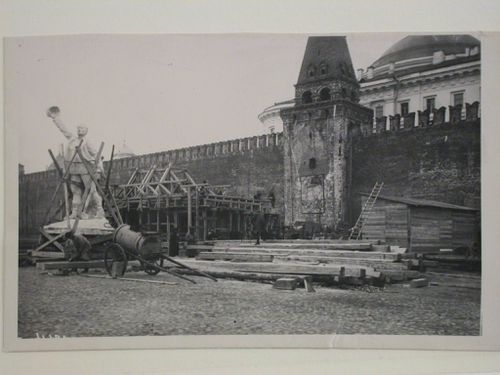
View of the second wooden Lenin Mausoleum under construction with a monument and wooden beams in the foreground, Red Square, Moscow
Actions:
PH1998:0001:024
Description:
- Photographs PH1998:0001:001-058 show images of Red Square in Moscow before and during the construction of the three Lenin Mausoleums designed by A. Shchusev (before construction: PH1998:0001:001-004; the first wooden mausoleum: 25 - 27 January 1924, PH1998:0001:005-010 and PH1998:0001:012-015; the second wooden mausoleum: March - 1 May 1924, PH1998:0001:017-050; and the third stone mausoleum: June 1929 - 12 October 1930, PH1998:0001:051-058). Photographs PH1998:0001:001-058 also show images of some of the buildings in Red Square, including: the Kremlin Towers, Nikol'skaya Tower (Nicholas Tower), Spasskaia Tower, Corner Arsenal Tower, and Senate Tower; the Upper Shopping Arcades; the Historical Museum; Saint Basil Cathedral; the monument to Minin and Pozharsky; the Voskresenskie Iverskie Gates (Resurrection Gates); and the Senate Building.
View of the second wooden Lenin Mausoleum under construction with a monument and wooden beams in the foreground, Red Square, Moscow
Actions:
PH1998:0001:024
Description:
- Photographs PH1998:0001:001-058 show images of Red Square in Moscow before and during the construction of the three Lenin Mausoleums designed by A. Shchusev (before construction: PH1998:0001:001-004; the first wooden mausoleum: 25 - 27 January 1924, PH1998:0001:005-010 and PH1998:0001:012-015; the second wooden mausoleum: March - 1 May 1924, PH1998:0001:017-050; and the third stone mausoleum: June 1929 - 12 October 1930, PH1998:0001:051-058). Photographs PH1998:0001:001-058 also show images of some of the buildings in Red Square, including: the Kremlin Towers, Nikol'skaya Tower (Nicholas Tower), Spasskaia Tower, Corner Arsenal Tower, and Senate Tower; the Upper Shopping Arcades; the Historical Museum; Saint Basil Cathedral; the monument to Minin and Pozharsky; the Voskresenskie Iverskie Gates (Resurrection Gates); and the Senate Building.
Form:
photographs
photographs
Date:
between March and 1 May 1924
between March and 1 May 1924
People:
Subject:
architecture
architecture
Form:
photographs
photographs
Actions:
Reference number:
PH1998:0001:025
Description:
- Photographs PH1998:0001:001-058 show images of Red Square in Moscow before and during the construction of the three Lenin Mausoleums designed by A. Shchusev (before construction: PH1998:0001:001-004; the first wooden mausoleum: 25 - 27 January 1924, PH1998:0001:005-010 and PH1998:0001:012-015; the second wooden mausoleum: March - 1 May 1924, PH1998:0001:017-050; and the third stone mausoleum: June 1929 - 12 October 1930, PH1998:0001:051-058). Photographs PH1998:0001:001-058 also show images of some of the buildings in Red Square, including: the Kremlin Towers, Nikol'skaya Tower (Nicholas Tower), Spasskaia Tower, Corner Arsenal Tower, and Senate Tower; the Upper Shopping Arcades; the Historical Museum; Saint Basil Cathedral; the monument to Minin and Pozharsky; the Voskresenskie Iverskie Gates (Resurrection Gates); and the Senate Building.
PH1998:0001:025
Description:
- Photographs PH1998:0001:001-058 show images of Red Square in Moscow before and during the construction of the three Lenin Mausoleums designed by A. Shchusev (before construction: PH1998:0001:001-004; the first wooden mausoleum: 25 - 27 January 1924, PH1998:0001:005-010 and PH1998:0001:012-015; the second wooden mausoleum: March - 1 May 1924, PH1998:0001:017-050; and the third stone mausoleum: June 1929 - 12 October 1930, PH1998:0001:051-058). Photographs PH1998:0001:001-058 also show images of some of the buildings in Red Square, including: the Kremlin Towers, Nikol'skaya Tower (Nicholas Tower), Spasskaia Tower, Corner Arsenal Tower, and Senate Tower; the Upper Shopping Arcades; the Historical Museum; Saint Basil Cathedral; the monument to Minin and Pozharsky; the Voskresenskie Iverskie Gates (Resurrection Gates); and the Senate Building.
People:
Subject:
architecture
architecture
Date:
between March and 1 May 1924
between March and 1 May 1924
Title:
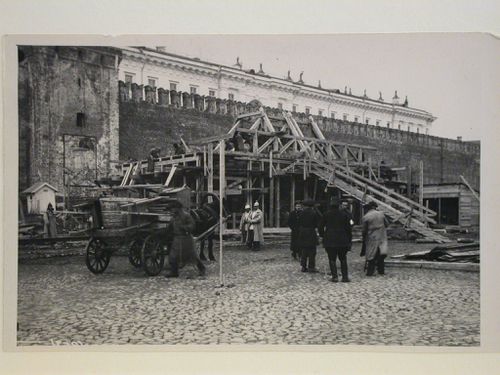
View of the second wooden Lenin Mausoleum under construction with workers, guards and a horse-driven loaded wagon in the foreground, Red Square, Moscow
Actions:
PH1998:0001:025
Description:
- Photographs PH1998:0001:001-058 show images of Red Square in Moscow before and during the construction of the three Lenin Mausoleums designed by A. Shchusev (before construction: PH1998:0001:001-004; the first wooden mausoleum: 25 - 27 January 1924, PH1998:0001:005-010 and PH1998:0001:012-015; the second wooden mausoleum: March - 1 May 1924, PH1998:0001:017-050; and the third stone mausoleum: June 1929 - 12 October 1930, PH1998:0001:051-058). Photographs PH1998:0001:001-058 also show images of some of the buildings in Red Square, including: the Kremlin Towers, Nikol'skaya Tower (Nicholas Tower), Spasskaia Tower, Corner Arsenal Tower, and Senate Tower; the Upper Shopping Arcades; the Historical Museum; Saint Basil Cathedral; the monument to Minin and Pozharsky; the Voskresenskie Iverskie Gates (Resurrection Gates); and the Senate Building.
View of the second wooden Lenin Mausoleum under construction with workers, guards and a horse-driven loaded wagon in the foreground, Red Square, Moscow
Actions:
PH1998:0001:025
Description:
- Photographs PH1998:0001:001-058 show images of Red Square in Moscow before and during the construction of the three Lenin Mausoleums designed by A. Shchusev (before construction: PH1998:0001:001-004; the first wooden mausoleum: 25 - 27 January 1924, PH1998:0001:005-010 and PH1998:0001:012-015; the second wooden mausoleum: March - 1 May 1924, PH1998:0001:017-050; and the third stone mausoleum: June 1929 - 12 October 1930, PH1998:0001:051-058). Photographs PH1998:0001:001-058 also show images of some of the buildings in Red Square, including: the Kremlin Towers, Nikol'skaya Tower (Nicholas Tower), Spasskaia Tower, Corner Arsenal Tower, and Senate Tower; the Upper Shopping Arcades; the Historical Museum; Saint Basil Cathedral; the monument to Minin and Pozharsky; the Voskresenskie Iverskie Gates (Resurrection Gates); and the Senate Building.
Form:
photographs
photographs
Date:
between March and 1 May 1924
between March and 1 May 1924
People:
Subject:
architecture
architecture
Form:
photographs
photographs
Actions:
Reference number:
PH1998:0001:026
Description:
- Photographs PH1998:0001:001-058 show images of Red Square in Moscow before and during the construction of the three Lenin Mausoleums designed by A. Shchusev (before construction: PH1998:0001:001-004; the first wooden mausoleum: 25 - 27 January 1924, PH1998:0001:005-010 and PH1998:0001:012-015; the second wooden mausoleum: March - 1 May 1924, PH1998:0001:017-050; and the third stone mausoleum: June 1929 - 12 October 1930, PH1998:0001:051-058). Photographs PH1998:0001:001-058 also show images of some of the buildings in Red Square, including: the Kremlin Towers, Nikol'skaya Tower (Nicholas Tower), Spasskaia Tower, Corner Arsenal Tower, and Senate Tower; the Upper Shopping Arcades; the Historical Museum; Saint Basil Cathedral; the monument to Minin and Pozharsky; the Voskresenskie Iverskie Gates (Resurrection Gates); and the Senate Building.
PH1998:0001:026
Description:
- Photographs PH1998:0001:001-058 show images of Red Square in Moscow before and during the construction of the three Lenin Mausoleums designed by A. Shchusev (before construction: PH1998:0001:001-004; the first wooden mausoleum: 25 - 27 January 1924, PH1998:0001:005-010 and PH1998:0001:012-015; the second wooden mausoleum: March - 1 May 1924, PH1998:0001:017-050; and the third stone mausoleum: June 1929 - 12 October 1930, PH1998:0001:051-058). Photographs PH1998:0001:001-058 also show images of some of the buildings in Red Square, including: the Kremlin Towers, Nikol'skaya Tower (Nicholas Tower), Spasskaia Tower, Corner Arsenal Tower, and Senate Tower; the Upper Shopping Arcades; the Historical Museum; Saint Basil Cathedral; the monument to Minin and Pozharsky; the Voskresenskie Iverskie Gates (Resurrection Gates); and the Senate Building.
People:
Subject:
architecture
architecture
Date:
between March and 1 May 1924
between March and 1 May 1924
Title:
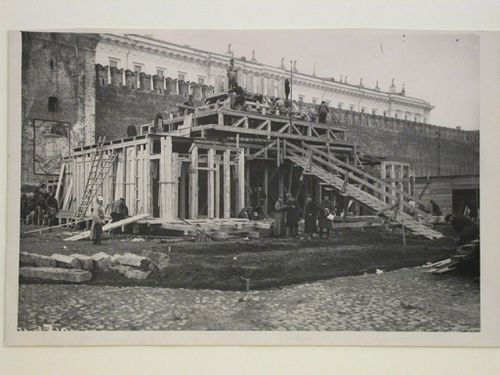
View of the second wooden Lenin Mausoleum under construction showing workers and officials, Red Square, Moscow
Actions:
PH1998:0001:026
Description:
- Photographs PH1998:0001:001-058 show images of Red Square in Moscow before and during the construction of the three Lenin Mausoleums designed by A. Shchusev (before construction: PH1998:0001:001-004; the first wooden mausoleum: 25 - 27 January 1924, PH1998:0001:005-010 and PH1998:0001:012-015; the second wooden mausoleum: March - 1 May 1924, PH1998:0001:017-050; and the third stone mausoleum: June 1929 - 12 October 1930, PH1998:0001:051-058). Photographs PH1998:0001:001-058 also show images of some of the buildings in Red Square, including: the Kremlin Towers, Nikol'skaya Tower (Nicholas Tower), Spasskaia Tower, Corner Arsenal Tower, and Senate Tower; the Upper Shopping Arcades; the Historical Museum; Saint Basil Cathedral; the monument to Minin and Pozharsky; the Voskresenskie Iverskie Gates (Resurrection Gates); and the Senate Building.
View of the second wooden Lenin Mausoleum under construction showing workers and officials, Red Square, Moscow
Actions:
PH1998:0001:026
Description:
- Photographs PH1998:0001:001-058 show images of Red Square in Moscow before and during the construction of the three Lenin Mausoleums designed by A. Shchusev (before construction: PH1998:0001:001-004; the first wooden mausoleum: 25 - 27 January 1924, PH1998:0001:005-010 and PH1998:0001:012-015; the second wooden mausoleum: March - 1 May 1924, PH1998:0001:017-050; and the third stone mausoleum: June 1929 - 12 October 1930, PH1998:0001:051-058). Photographs PH1998:0001:001-058 also show images of some of the buildings in Red Square, including: the Kremlin Towers, Nikol'skaya Tower (Nicholas Tower), Spasskaia Tower, Corner Arsenal Tower, and Senate Tower; the Upper Shopping Arcades; the Historical Museum; Saint Basil Cathedral; the monument to Minin and Pozharsky; the Voskresenskie Iverskie Gates (Resurrection Gates); and the Senate Building.
Form:
photographs
photographs
Date:
between March and 1 May 1924
between March and 1 May 1924
People:
Subject:
architecture
architecture
Form:
photographs
photographs
Actions:
Reference number:
PH1998:0001:027
Description:
- Photographs PH1998:0001:001-058 show images of Red Square in Moscow before and during the construction of the three Lenin Mausoleums designed by A. Shchusev (before construction: PH1998:0001:001-004; the first wooden mausoleum: 25 - 27 January 1924, PH1998:0001:005-010 and PH1998:0001:012-015; the second wooden mausoleum: March - 1 May 1924, PH1998:0001:017-050; and the third stone mausoleum: June 1929 - 12 October 1930, PH1998:0001:051-058). Photographs PH1998:0001:001-058 also show images of some of the buildings in Red Square, including: the Kremlin Towers, Nikol'skaya Tower (Nicholas Tower), Spasskaia Tower, Corner Arsenal Tower, and Senate Tower; the Upper Shopping Arcades; the Historical Museum; Saint Basil Cathedral; the monument to Minin and Pozharsky; the Voskresenskie Iverskie Gates (Resurrection Gates); and the Senate Building.
PH1998:0001:027
Description:
- Photographs PH1998:0001:001-058 show images of Red Square in Moscow before and during the construction of the three Lenin Mausoleums designed by A. Shchusev (before construction: PH1998:0001:001-004; the first wooden mausoleum: 25 - 27 January 1924, PH1998:0001:005-010 and PH1998:0001:012-015; the second wooden mausoleum: March - 1 May 1924, PH1998:0001:017-050; and the third stone mausoleum: June 1929 - 12 October 1930, PH1998:0001:051-058). Photographs PH1998:0001:001-058 also show images of some of the buildings in Red Square, including: the Kremlin Towers, Nikol'skaya Tower (Nicholas Tower), Spasskaia Tower, Corner Arsenal Tower, and Senate Tower; the Upper Shopping Arcades; the Historical Museum; Saint Basil Cathedral; the monument to Minin and Pozharsky; the Voskresenskie Iverskie Gates (Resurrection Gates); and the Senate Building.
People:
Subject:
architecture
architecture
Date:
between March and 1 May 1924
between March and 1 May 1924
Title:
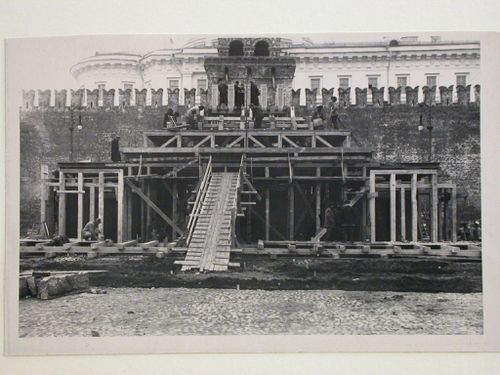
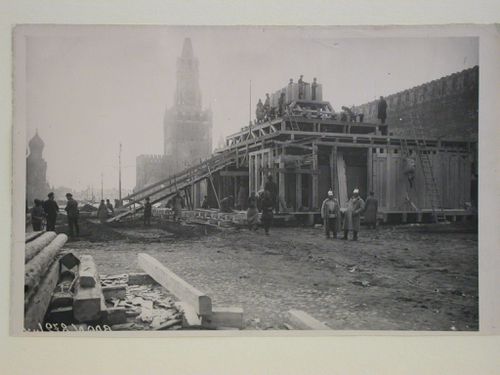
View of the principal façade of the second wooden Lenin Mausoleum under construction showing workers and officials on the roof, Red Square, Moscow
Actions:
PH1998:0001:027
Description:
- Photographs PH1998:0001:001-058 show images of Red Square in Moscow before and during the construction of the three Lenin Mausoleums designed by A. Shchusev (before construction: PH1998:0001:001-004; the first wooden mausoleum: 25 - 27 January 1924, PH1998:0001:005-010 and PH1998:0001:012-015; the second wooden mausoleum: March - 1 May 1924, PH1998:0001:017-050; and the third stone mausoleum: June 1929 - 12 October 1930, PH1998:0001:051-058). Photographs PH1998:0001:001-058 also show images of some of the buildings in Red Square, including: the Kremlin Towers, Nikol'skaya Tower (Nicholas Tower), Spasskaia Tower, Corner Arsenal Tower, and Senate Tower; the Upper Shopping Arcades; the Historical Museum; Saint Basil Cathedral; the monument to Minin and Pozharsky; the Voskresenskie Iverskie Gates (Resurrection Gates); and the Senate Building.
View of the principal façade of the second wooden Lenin Mausoleum under construction showing workers and officials on the roof, Red Square, Moscow
Actions:
PH1998:0001:027
Description:
- Photographs PH1998:0001:001-058 show images of Red Square in Moscow before and during the construction of the three Lenin Mausoleums designed by A. Shchusev (before construction: PH1998:0001:001-004; the first wooden mausoleum: 25 - 27 January 1924, PH1998:0001:005-010 and PH1998:0001:012-015; the second wooden mausoleum: March - 1 May 1924, PH1998:0001:017-050; and the third stone mausoleum: June 1929 - 12 October 1930, PH1998:0001:051-058). Photographs PH1998:0001:001-058 also show images of some of the buildings in Red Square, including: the Kremlin Towers, Nikol'skaya Tower (Nicholas Tower), Spasskaia Tower, Corner Arsenal Tower, and Senate Tower; the Upper Shopping Arcades; the Historical Museum; Saint Basil Cathedral; the monument to Minin and Pozharsky; the Voskresenskie Iverskie Gates (Resurrection Gates); and the Senate Building.
Form:
photographs
photographs
Date:
between March and 1 May 1924
between March and 1 May 1924
People:
Subject:
architecture
architecture
Form:
photographs
photographs
Actions:
Reference number:
PH1998:0001:028
Description:
- Photographs PH1998:0001:001-058 show images of Red Square in Moscow before and during the construction of the three Lenin Mausoleums designed by A. Shchusev (before construction: PH1998:0001:001-004; the first wooden mausoleum: 25 - 27 January 1924, PH1998:0001:005-010 and PH1998:0001:012-015; the second wooden mausoleum: March - 1 May 1924, PH1998:0001:017-050; and the third stone mausoleum: June 1929 - 12 October 1930, PH1998:0001:051-058). Photographs PH1998:0001:001-058 also show images of some of the buildings in Red Square, including: the Kremlin Towers, Nikol'skaya Tower (Nicholas Tower), Spasskaia Tower, Corner Arsenal Tower, and Senate Tower; the Upper Shopping Arcades; the Historical Museum; Saint Basil Cathedral; the monument to Minin and Pozharsky; the Voskresenskie Iverskie Gates (Resurrection Gates); and the Senate Building.
PH1998:0001:028
Description:
- Photographs PH1998:0001:001-058 show images of Red Square in Moscow before and during the construction of the three Lenin Mausoleums designed by A. Shchusev (before construction: PH1998:0001:001-004; the first wooden mausoleum: 25 - 27 January 1924, PH1998:0001:005-010 and PH1998:0001:012-015; the second wooden mausoleum: March - 1 May 1924, PH1998:0001:017-050; and the third stone mausoleum: June 1929 - 12 October 1930, PH1998:0001:051-058). Photographs PH1998:0001:001-058 also show images of some of the buildings in Red Square, including: the Kremlin Towers, Nikol'skaya Tower (Nicholas Tower), Spasskaia Tower, Corner Arsenal Tower, and Senate Tower; the Upper Shopping Arcades; the Historical Museum; Saint Basil Cathedral; the monument to Minin and Pozharsky; the Voskresenskie Iverskie Gates (Resurrection Gates); and the Senate Building.
People:
Subject:
architecture
architecture
Date:
between March and 1 May 1924
between March and 1 May 1924
Title:
View of the lateral façade of the second wooden Lenin Mausoleum under construction showing wooden beams in the foreground and the Saint Basil Cathedral and the Spasskaia Tower in the background, Red Square, Moscow
Actions:
PH1998:0001:028
Description:
- Photographs PH1998:0001:001-058 show images of Red Square in Moscow before and during the construction of the three Lenin Mausoleums designed by A. Shchusev (before construction: PH1998:0001:001-004; the first wooden mausoleum: 25 - 27 January 1924, PH1998:0001:005-010 and PH1998:0001:012-015; the second wooden mausoleum: March - 1 May 1924, PH1998:0001:017-050; and the third stone mausoleum: June 1929 - 12 October 1930, PH1998:0001:051-058). Photographs PH1998:0001:001-058 also show images of some of the buildings in Red Square, including: the Kremlin Towers, Nikol'skaya Tower (Nicholas Tower), Spasskaia Tower, Corner Arsenal Tower, and Senate Tower; the Upper Shopping Arcades; the Historical Museum; Saint Basil Cathedral; the monument to Minin and Pozharsky; the Voskresenskie Iverskie Gates (Resurrection Gates); and the Senate Building.
View of the lateral façade of the second wooden Lenin Mausoleum under construction showing wooden beams in the foreground and the Saint Basil Cathedral and the Spasskaia Tower in the background, Red Square, Moscow
Actions:
PH1998:0001:028
Description:
- Photographs PH1998:0001:001-058 show images of Red Square in Moscow before and during the construction of the three Lenin Mausoleums designed by A. Shchusev (before construction: PH1998:0001:001-004; the first wooden mausoleum: 25 - 27 January 1924, PH1998:0001:005-010 and PH1998:0001:012-015; the second wooden mausoleum: March - 1 May 1924, PH1998:0001:017-050; and the third stone mausoleum: June 1929 - 12 October 1930, PH1998:0001:051-058). Photographs PH1998:0001:001-058 also show images of some of the buildings in Red Square, including: the Kremlin Towers, Nikol'skaya Tower (Nicholas Tower), Spasskaia Tower, Corner Arsenal Tower, and Senate Tower; the Upper Shopping Arcades; the Historical Museum; Saint Basil Cathedral; the monument to Minin and Pozharsky; the Voskresenskie Iverskie Gates (Resurrection Gates); and the Senate Building.
Form:
photographs
photographs
Date:
between March and 1 May 1924
between March and 1 May 1924
People:
Subject:
architecture
architecture
Form:
photographs
photographs

Actions:
Reference number:
PH1998:0001:029
Description:
- Photographs PH1998:0001:001-058 show images of Red Square in Moscow before and during the construction of the three Lenin Mausoleums designed by A. Shchusev (before construction: PH1998:0001:001-004; the first wooden mausoleum: 25 - 27 January 1924, PH1998:0001:005-010 and PH1998:0001:012-015; the second wooden mausoleum: March - 1 May 1924, PH1998:0001:017-050; and the third stone mausoleum: June 1929 - 12 October 1930, PH1998:0001:051-058). Photographs PH1998:0001:001-058 also show images of some of the buildings in Red Square, including: the Kremlin Towers, Nikol'skaya Tower (Nicholas Tower), Spasskaia Tower, Corner Arsenal Tower, and Senate Tower; the Upper Shopping Arcades; the Historical Museum; Saint Basil Cathedral; the monument to Minin and Pozharsky; the Voskresenskie Iverskie Gates (Resurrection Gates); and the Senate Building.
PH1998:0001:029
Description:
- Photographs PH1998:0001:001-058 show images of Red Square in Moscow before and during the construction of the three Lenin Mausoleums designed by A. Shchusev (before construction: PH1998:0001:001-004; the first wooden mausoleum: 25 - 27 January 1924, PH1998:0001:005-010 and PH1998:0001:012-015; the second wooden mausoleum: March - 1 May 1924, PH1998:0001:017-050; and the third stone mausoleum: June 1929 - 12 October 1930, PH1998:0001:051-058). Photographs PH1998:0001:001-058 also show images of some of the buildings in Red Square, including: the Kremlin Towers, Nikol'skaya Tower (Nicholas Tower), Spasskaia Tower, Corner Arsenal Tower, and Senate Tower; the Upper Shopping Arcades; the Historical Museum; Saint Basil Cathedral; the monument to Minin and Pozharsky; the Voskresenskie Iverskie Gates (Resurrection Gates); and the Senate Building.
People:
Subject:
architecture
architecture
Date:
between March and 1 May 1924
between March and 1 May 1924
Title:
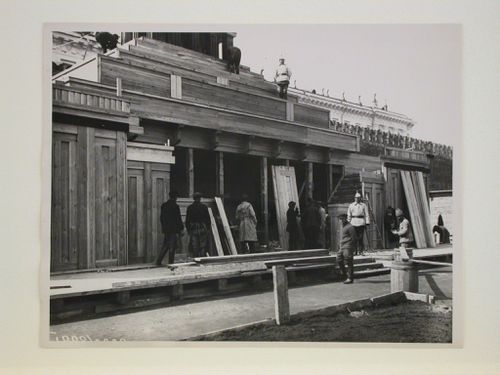
View of the second wooden Lenin Mausoleum during the latter stages of construction, Red Square, Moscow
Actions:
PH1998:0001:029
Description:
- Photographs PH1998:0001:001-058 show images of Red Square in Moscow before and during the construction of the three Lenin Mausoleums designed by A. Shchusev (before construction: PH1998:0001:001-004; the first wooden mausoleum: 25 - 27 January 1924, PH1998:0001:005-010 and PH1998:0001:012-015; the second wooden mausoleum: March - 1 May 1924, PH1998:0001:017-050; and the third stone mausoleum: June 1929 - 12 October 1930, PH1998:0001:051-058). Photographs PH1998:0001:001-058 also show images of some of the buildings in Red Square, including: the Kremlin Towers, Nikol'skaya Tower (Nicholas Tower), Spasskaia Tower, Corner Arsenal Tower, and Senate Tower; the Upper Shopping Arcades; the Historical Museum; Saint Basil Cathedral; the monument to Minin and Pozharsky; the Voskresenskie Iverskie Gates (Resurrection Gates); and the Senate Building.
View of the second wooden Lenin Mausoleum during the latter stages of construction, Red Square, Moscow
Actions:
PH1998:0001:029
Description:
- Photographs PH1998:0001:001-058 show images of Red Square in Moscow before and during the construction of the three Lenin Mausoleums designed by A. Shchusev (before construction: PH1998:0001:001-004; the first wooden mausoleum: 25 - 27 January 1924, PH1998:0001:005-010 and PH1998:0001:012-015; the second wooden mausoleum: March - 1 May 1924, PH1998:0001:017-050; and the third stone mausoleum: June 1929 - 12 October 1930, PH1998:0001:051-058). Photographs PH1998:0001:001-058 also show images of some of the buildings in Red Square, including: the Kremlin Towers, Nikol'skaya Tower (Nicholas Tower), Spasskaia Tower, Corner Arsenal Tower, and Senate Tower; the Upper Shopping Arcades; the Historical Museum; Saint Basil Cathedral; the monument to Minin and Pozharsky; the Voskresenskie Iverskie Gates (Resurrection Gates); and the Senate Building.
Form:
photographs
photographs
Date:
between March and 1 May 1924
between March and 1 May 1924
People:
Subject:
architecture
architecture
Form:
photographs
photographs
Actions:
Reference number:
PH1998:0001:030
Description:
- Photographs PH1998:0001:001-058 show images of Red Square in Moscow before and during the construction of the three Lenin Mausoleums designed by A. Shchusev (before construction: PH1998:0001:001-004; the first wooden mausoleum: 25 - 27 January 1924, PH1998:0001:005-010 and PH1998:0001:012-015; the second wooden mausoleum: March - 1 May 1924, PH1998:0001:017-050; and the third stone mausoleum: June 1929 - 12 October 1930, PH1998:0001:051-058). Photographs PH1998:0001:001-058 also show images of some of the buildings in Red Square, including: the Kremlin Towers, Nikol'skaya Tower (Nicholas Tower), Spasskaia Tower, Corner Arsenal Tower, and Senate Tower; the Upper Shopping Arcades; the Historical Museum; Saint Basil Cathedral; the monument to Minin and Pozharsky; the Voskresenskie Iverskie Gates (Resurrection Gates); and the Senate Building.
PH1998:0001:030
Description:
- Photographs PH1998:0001:001-058 show images of Red Square in Moscow before and during the construction of the three Lenin Mausoleums designed by A. Shchusev (before construction: PH1998:0001:001-004; the first wooden mausoleum: 25 - 27 January 1924, PH1998:0001:005-010 and PH1998:0001:012-015; the second wooden mausoleum: March - 1 May 1924, PH1998:0001:017-050; and the third stone mausoleum: June 1929 - 12 October 1930, PH1998:0001:051-058). Photographs PH1998:0001:001-058 also show images of some of the buildings in Red Square, including: the Kremlin Towers, Nikol'skaya Tower (Nicholas Tower), Spasskaia Tower, Corner Arsenal Tower, and Senate Tower; the Upper Shopping Arcades; the Historical Museum; Saint Basil Cathedral; the monument to Minin and Pozharsky; the Voskresenskie Iverskie Gates (Resurrection Gates); and the Senate Building.
People:
Subject:
architecture
architecture
Date:
between March and 1 May 1924
between March and 1 May 1924
Title:
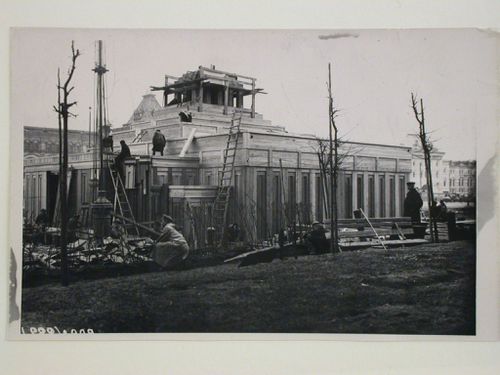
View of the principal façade of the second wooden Lenin Mausoleum, Red Square, Moscow
Actions:
PH1998:0001:030
Description:
- Photographs PH1998:0001:001-058 show images of Red Square in Moscow before and during the construction of the three Lenin Mausoleums designed by A. Shchusev (before construction: PH1998:0001:001-004; the first wooden mausoleum: 25 - 27 January 1924, PH1998:0001:005-010 and PH1998:0001:012-015; the second wooden mausoleum: March - 1 May 1924, PH1998:0001:017-050; and the third stone mausoleum: June 1929 - 12 October 1930, PH1998:0001:051-058). Photographs PH1998:0001:001-058 also show images of some of the buildings in Red Square, including: the Kremlin Towers, Nikol'skaya Tower (Nicholas Tower), Spasskaia Tower, Corner Arsenal Tower, and Senate Tower; the Upper Shopping Arcades; the Historical Museum; Saint Basil Cathedral; the monument to Minin and Pozharsky; the Voskresenskie Iverskie Gates (Resurrection Gates); and the Senate Building.
View of the principal façade of the second wooden Lenin Mausoleum, Red Square, Moscow
Actions:
PH1998:0001:030
Description:
- Photographs PH1998:0001:001-058 show images of Red Square in Moscow before and during the construction of the three Lenin Mausoleums designed by A. Shchusev (before construction: PH1998:0001:001-004; the first wooden mausoleum: 25 - 27 January 1924, PH1998:0001:005-010 and PH1998:0001:012-015; the second wooden mausoleum: March - 1 May 1924, PH1998:0001:017-050; and the third stone mausoleum: June 1929 - 12 October 1930, PH1998:0001:051-058). Photographs PH1998:0001:001-058 also show images of some of the buildings in Red Square, including: the Kremlin Towers, Nikol'skaya Tower (Nicholas Tower), Spasskaia Tower, Corner Arsenal Tower, and Senate Tower; the Upper Shopping Arcades; the Historical Museum; Saint Basil Cathedral; the monument to Minin and Pozharsky; the Voskresenskie Iverskie Gates (Resurrection Gates); and the Senate Building.
Form:
photographs
photographs
Date:
between March and 1 May 1924
between March and 1 May 1924
People:
Subject:
architecture
architecture
Form:
photographs
photographs
Actions:
Reference number:
PH1998:0001:031
Description:
- Photographs PH1998:0001:001-058 show images of Red Square in Moscow before and during the construction of the three Lenin Mausoleums designed by A. Shchusev (before construction: PH1998:0001:001-004; the first wooden mausoleum: 25 - 27 January 1924, PH1998:0001:005-010 and PH1998:0001:012-015; the second wooden mausoleum: March - 1 May 1924, PH1998:0001:017-050; and the third stone mausoleum: June 1929 - 12 October 1930, PH1998:0001:051-058). Photographs PH1998:0001:001-058 also show images of some of the buildings in Red Square, including: the Kremlin Towers, Nikol'skaya Tower (Nicholas Tower), Spasskaia Tower, Corner Arsenal Tower, and Senate Tower; the Upper Shopping Arcades; the Historical Museum; Saint Basil Cathedral; the monument to Minin and Pozharsky; the Voskresenskie Iverskie Gates (Resurrection Gates); and the Senate Building.
PH1998:0001:031
Description:
- Photographs PH1998:0001:001-058 show images of Red Square in Moscow before and during the construction of the three Lenin Mausoleums designed by A. Shchusev (before construction: PH1998:0001:001-004; the first wooden mausoleum: 25 - 27 January 1924, PH1998:0001:005-010 and PH1998:0001:012-015; the second wooden mausoleum: March - 1 May 1924, PH1998:0001:017-050; and the third stone mausoleum: June 1929 - 12 October 1930, PH1998:0001:051-058). Photographs PH1998:0001:001-058 also show images of some of the buildings in Red Square, including: the Kremlin Towers, Nikol'skaya Tower (Nicholas Tower), Spasskaia Tower, Corner Arsenal Tower, and Senate Tower; the Upper Shopping Arcades; the Historical Museum; Saint Basil Cathedral; the monument to Minin and Pozharsky; the Voskresenskie Iverskie Gates (Resurrection Gates); and the Senate Building.
People:
Subject:
architecture
architecture
Date:
between March and 1 May 1924
between March and 1 May 1924
Title:
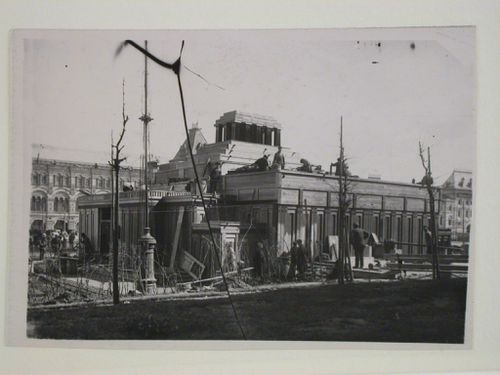
View of the lateral façade of the second wooden Lenin Mausoleum during the latter stages of construction, Red Square, Moscow
Actions:
PH1998:0001:031
Description:
- Photographs PH1998:0001:001-058 show images of Red Square in Moscow before and during the construction of the three Lenin Mausoleums designed by A. Shchusev (before construction: PH1998:0001:001-004; the first wooden mausoleum: 25 - 27 January 1924, PH1998:0001:005-010 and PH1998:0001:012-015; the second wooden mausoleum: March - 1 May 1924, PH1998:0001:017-050; and the third stone mausoleum: June 1929 - 12 October 1930, PH1998:0001:051-058). Photographs PH1998:0001:001-058 also show images of some of the buildings in Red Square, including: the Kremlin Towers, Nikol'skaya Tower (Nicholas Tower), Spasskaia Tower, Corner Arsenal Tower, and Senate Tower; the Upper Shopping Arcades; the Historical Museum; Saint Basil Cathedral; the monument to Minin and Pozharsky; the Voskresenskie Iverskie Gates (Resurrection Gates); and the Senate Building.
View of the lateral façade of the second wooden Lenin Mausoleum during the latter stages of construction, Red Square, Moscow
Actions:
PH1998:0001:031
Description:
- Photographs PH1998:0001:001-058 show images of Red Square in Moscow before and during the construction of the three Lenin Mausoleums designed by A. Shchusev (before construction: PH1998:0001:001-004; the first wooden mausoleum: 25 - 27 January 1924, PH1998:0001:005-010 and PH1998:0001:012-015; the second wooden mausoleum: March - 1 May 1924, PH1998:0001:017-050; and the third stone mausoleum: June 1929 - 12 October 1930, PH1998:0001:051-058). Photographs PH1998:0001:001-058 also show images of some of the buildings in Red Square, including: the Kremlin Towers, Nikol'skaya Tower (Nicholas Tower), Spasskaia Tower, Corner Arsenal Tower, and Senate Tower; the Upper Shopping Arcades; the Historical Museum; Saint Basil Cathedral; the monument to Minin and Pozharsky; the Voskresenskie Iverskie Gates (Resurrection Gates); and the Senate Building.
Form:
photographs
photographs
Date:
between March and 1 May 1924
between March and 1 May 1924
People:
Subject:
architecture
architecture
Form:
photographs
photographs
Actions:
Reference number:
PH1998:0001:032
Description:
- Photographs PH1998:0001:001-058 show images of Red Square in Moscow before and during the construction of the three Lenin Mausoleums designed by A. Shchusev (before construction: PH1998:0001:001-004; the first wooden mausoleum: 25 - 27 January 1924, PH1998:0001:005-010 and PH1998:0001:012-015; the second wooden mausoleum: March - 1 May 1924, PH1998:0001:017-050; and the third stone mausoleum: June 1929 - 12 October 1930, PH1998:0001:051-058). Photographs PH1998:0001:001-058 also show images of some of the buildings in Red Square, including: the Kremlin Towers, Nikol'skaya Tower (Nicholas Tower), Spasskaia Tower, Corner Arsenal Tower, and Senate Tower; the Upper Shopping Arcades; the Historical Museum; Saint Basil Cathedral; the monument to Minin and Pozharsky; the Voskresenskie Iverskie Gates (Resurrection Gates); and the Senate Building.
PH1998:0001:032
Description:
- Photographs PH1998:0001:001-058 show images of Red Square in Moscow before and during the construction of the three Lenin Mausoleums designed by A. Shchusev (before construction: PH1998:0001:001-004; the first wooden mausoleum: 25 - 27 January 1924, PH1998:0001:005-010 and PH1998:0001:012-015; the second wooden mausoleum: March - 1 May 1924, PH1998:0001:017-050; and the third stone mausoleum: June 1929 - 12 October 1930, PH1998:0001:051-058). Photographs PH1998:0001:001-058 also show images of some of the buildings in Red Square, including: the Kremlin Towers, Nikol'skaya Tower (Nicholas Tower), Spasskaia Tower, Corner Arsenal Tower, and Senate Tower; the Upper Shopping Arcades; the Historical Museum; Saint Basil Cathedral; the monument to Minin and Pozharsky; the Voskresenskie Iverskie Gates (Resurrection Gates); and the Senate Building.
People:
Subject:
architecture
architecture
Date:
between March and 1 May 1924
between March and 1 May 1924
Title:
View of the rear façade of the second wooden Lenin Mausoleum, Red Square, Moscow
Actions:
PH1998:0001:032
Description:
- Photographs PH1998:0001:001-058 show images of Red Square in Moscow before and during the construction of the three Lenin Mausoleums designed by A. Shchusev (before construction: PH1998:0001:001-004; the first wooden mausoleum: 25 - 27 January 1924, PH1998:0001:005-010 and PH1998:0001:012-015; the second wooden mausoleum: March - 1 May 1924, PH1998:0001:017-050; and the third stone mausoleum: June 1929 - 12 October 1930, PH1998:0001:051-058). Photographs PH1998:0001:001-058 also show images of some of the buildings in Red Square, including: the Kremlin Towers, Nikol'skaya Tower (Nicholas Tower), Spasskaia Tower, Corner Arsenal Tower, and Senate Tower; the Upper Shopping Arcades; the Historical Museum; Saint Basil Cathedral; the monument to Minin and Pozharsky; the Voskresenskie Iverskie Gates (Resurrection Gates); and the Senate Building.
View of the rear façade of the second wooden Lenin Mausoleum, Red Square, Moscow
Actions:
PH1998:0001:032
Description:
- Photographs PH1998:0001:001-058 show images of Red Square in Moscow before and during the construction of the three Lenin Mausoleums designed by A. Shchusev (before construction: PH1998:0001:001-004; the first wooden mausoleum: 25 - 27 January 1924, PH1998:0001:005-010 and PH1998:0001:012-015; the second wooden mausoleum: March - 1 May 1924, PH1998:0001:017-050; and the third stone mausoleum: June 1929 - 12 October 1930, PH1998:0001:051-058). Photographs PH1998:0001:001-058 also show images of some of the buildings in Red Square, including: the Kremlin Towers, Nikol'skaya Tower (Nicholas Tower), Spasskaia Tower, Corner Arsenal Tower, and Senate Tower; the Upper Shopping Arcades; the Historical Museum; Saint Basil Cathedral; the monument to Minin and Pozharsky; the Voskresenskie Iverskie Gates (Resurrection Gates); and the Senate Building.
Form:
photographs
photographs
Date:
between March and 1 May 1924
between March and 1 May 1924
People:
Subject:
architecture
architecture
Form:
photographs
photographs
Actions:
Reference number:
PH1998:0001:033
Description:
- Photographs PH1998:0001:001-058 show images of Red Square in Moscow before and during the construction of the three Lenin Mausoleums designed by A. Shchusev (before construction: PH1998:0001:001-004; the first wooden mausoleum: 25 - 27 January 1924, PH1998:0001:005-010 and PH1998:0001:012-015; the second wooden mausoleum: March - 1 May 1924, PH1998:0001:017-050; and the third stone mausoleum: June 1929 - 12 October 1930, PH1998:0001:051-058). Photographs PH1998:0001:001-058 also show images of some of the buildings in Red Square, including: the Kremlin Towers, Nikol'skaya Tower (Nicholas Tower), Spasskaia Tower, Corner Arsenal Tower, and Senate Tower; the Upper Shopping Arcades; the Historical Museum; Saint Basil Cathedral; the monument to Minin and Pozharsky; the Voskresenskie Iverskie Gates (Resurrection Gates); and the Senate Building.
PH1998:0001:033
Description:
- Photographs PH1998:0001:001-058 show images of Red Square in Moscow before and during the construction of the three Lenin Mausoleums designed by A. Shchusev (before construction: PH1998:0001:001-004; the first wooden mausoleum: 25 - 27 January 1924, PH1998:0001:005-010 and PH1998:0001:012-015; the second wooden mausoleum: March - 1 May 1924, PH1998:0001:017-050; and the third stone mausoleum: June 1929 - 12 October 1930, PH1998:0001:051-058). Photographs PH1998:0001:001-058 also show images of some of the buildings in Red Square, including: the Kremlin Towers, Nikol'skaya Tower (Nicholas Tower), Spasskaia Tower, Corner Arsenal Tower, and Senate Tower; the Upper Shopping Arcades; the Historical Museum; Saint Basil Cathedral; the monument to Minin and Pozharsky; the Voskresenskie Iverskie Gates (Resurrection Gates); and the Senate Building.
People:
Subject:
architecture
architecture
Date:
between March and 1 May 1924
between March and 1 May 1924
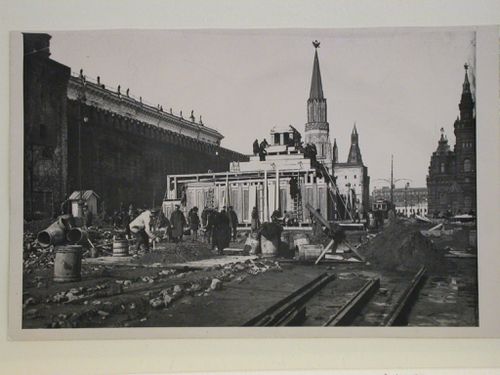
Title:
View of the lateral façade of the second wooden Lenin Mausoleum with the Nikol'skaia Tower (Nicholas Tower) and the Historical Museum in the background, Red Square, Moscow
Actions:
PH1998:0001:033
Description:
- Photographs PH1998:0001:001-058 show images of Red Square in Moscow before and during the construction of the three Lenin Mausoleums designed by A. Shchusev (before construction: PH1998:0001:001-004; the first wooden mausoleum: 25 - 27 January 1924, PH1998:0001:005-010 and PH1998:0001:012-015; the second wooden mausoleum: March - 1 May 1924, PH1998:0001:017-050; and the third stone mausoleum: June 1929 - 12 October 1930, PH1998:0001:051-058). Photographs PH1998:0001:001-058 also show images of some of the buildings in Red Square, including: the Kremlin Towers, Nikol'skaya Tower (Nicholas Tower), Spasskaia Tower, Corner Arsenal Tower, and Senate Tower; the Upper Shopping Arcades; the Historical Museum; Saint Basil Cathedral; the monument to Minin and Pozharsky; the Voskresenskie Iverskie Gates (Resurrection Gates); and the Senate Building.
View of the lateral façade of the second wooden Lenin Mausoleum with the Nikol'skaia Tower (Nicholas Tower) and the Historical Museum in the background, Red Square, Moscow
Actions:
PH1998:0001:033
Description:
- Photographs PH1998:0001:001-058 show images of Red Square in Moscow before and during the construction of the three Lenin Mausoleums designed by A. Shchusev (before construction: PH1998:0001:001-004; the first wooden mausoleum: 25 - 27 January 1924, PH1998:0001:005-010 and PH1998:0001:012-015; the second wooden mausoleum: March - 1 May 1924, PH1998:0001:017-050; and the third stone mausoleum: June 1929 - 12 October 1930, PH1998:0001:051-058). Photographs PH1998:0001:001-058 also show images of some of the buildings in Red Square, including: the Kremlin Towers, Nikol'skaya Tower (Nicholas Tower), Spasskaia Tower, Corner Arsenal Tower, and Senate Tower; the Upper Shopping Arcades; the Historical Museum; Saint Basil Cathedral; the monument to Minin and Pozharsky; the Voskresenskie Iverskie Gates (Resurrection Gates); and the Senate Building.
Form:
photographs
photographs
Date:
between March and 1 May 1924
between March and 1 May 1924
People:
Subject:
architecture
architecture


