


8423 Results
Form:
events
events
Title:
T pour Typographie
T pour Typographie
Actions:
Description:
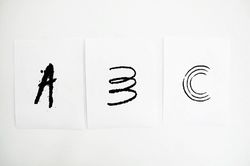
Feed is an independent graphic design studio founded in 1999 by Anouk Pennel and Raphaël Daudelin that specializes in branding, publishing and typeface design. In conjunction with the graphic design they created for the exhibition ABC: MTL, the studio invites university students to a typography drawing workshop. Each student will be assigned a letter of the alphabet and(...)
Feed is an independent graphic design studio founded in 1999 by Anouk Pennel and Raphaël Daudelin that specializes in branding, publishing and typeface design. In conjunction with the graphic design they created for the exhibition ABC: MTL, the studio invites university students to a typography drawing workshop. Each student will be assigned a letter of the alphabet and(...)
Location:
Shaughnessy House
Shaughnessy House
Date:
21 February 2013, 3pm - 5pm
21 February 2013, 3pm - 5pm
Title:
T pour Typographie
Actions:
Description:
Feed is an independent graphic design studio founded in 1999 by Anouk Pennel and Raphaël Daudelin that specializes in branding, publishing and typeface design. In conjunction with the graphic design they created for the exhibition ABC: MTL, the studio invites university students to a typography drawing workshop. Each student will be assigned a letter of the alphabet and(...)
T pour Typographie
Actions:
Description:
Feed is an independent graphic design studio founded in 1999 by Anouk Pennel and Raphaël Daudelin that specializes in branding, publishing and typeface design. In conjunction with the graphic design they created for the exhibition ABC: MTL, the studio invites university students to a typography drawing workshop. Each student will be assigned a letter of the alphabet and(...)
Form:
events
events
Date:
21 February 2013
3pm - 5pm
21 February 2013
3pm - 5pm
Location:
Shaughnessy House
Shaughnessy House
Form:
events
events
Actions:
Description:
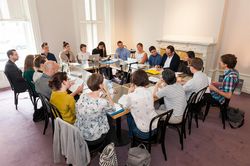
The Toolkit for Today seminar is a constitutive part of the CCA Doctoral Students Program. We invite scholars to open up their toolboxes, share methodological challenges and approaches, and discuss the key concepts they work with on contemporary issues in architecture and related disciplines. In 2016, the Toolkit for Today focuses on “Keywords for the Environment,”(...)
The Toolkit for Today seminar is a constitutive part of the CCA Doctoral Students Program. We invite scholars to open up their toolboxes, share methodological challenges and approaches, and discuss the key concepts they work with on contemporary issues in architecture and related disciplines. In 2016, the Toolkit for Today focuses on “Keywords for the Environment,”(...)
Date:
27 June 2016 to 30 June 2016
27 June 2016 to 30 June 2016
Title:
Toolkit for Today: Keywords for the Environment
Actions:
Description:
The Toolkit for Today seminar is a constitutive part of the CCA Doctoral Students Program. We invite scholars to open up their toolboxes, share methodological challenges and approaches, and discuss the key concepts they work with on contemporary issues in architecture and related disciplines. In 2016, the Toolkit for Today focuses on “Keywords for the Environment,”(...)
Toolkit for Today: Keywords for the Environment
Actions:
Description:
The Toolkit for Today seminar is a constitutive part of the CCA Doctoral Students Program. We invite scholars to open up their toolboxes, share methodological challenges and approaches, and discuss the key concepts they work with on contemporary issues in architecture and related disciplines. In 2016, the Toolkit for Today focuses on “Keywords for the Environment,”(...)
Form:
events
events
Date:
27 June 2016 to
30 June 2016
27 June 2016 to
30 June 2016
Form:
drawings
drawings
Reference number:
DR1987:0399
Description:
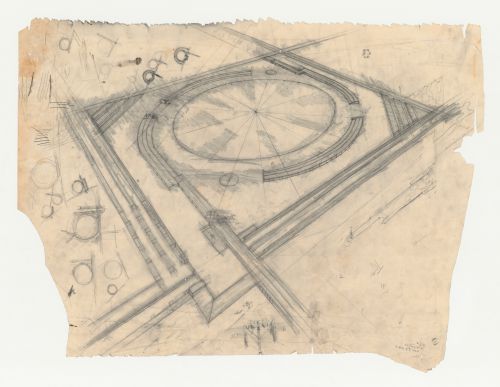
- This drawing is blackened with graphite on the verso so that the design could be transferred to another surface, in this case the submitted competition panel, DR1987:0359. There are drops of black watercolour and a series of black ink lines in the upper right corner. These media were used for the submitted panel and their presence here also suggests that this drawing was used in preparation of the submitted panel. There are a series of design sketches, along the left side and at the centre of the drawing, which appear to deal with the relationship of the airfield to hangars.
DR1987:0399
Description:
- This drawing is blackened with graphite on the verso so that the design could be transferred to another surface, in this case the submitted competition panel, DR1987:0359. There are drops of black watercolour and a series of black ink lines in the upper right corner. These media were used for the submitted panel and their presence here also suggests that this drawing was used in preparation of the submitted panel. There are a series of design sketches, along the left side and at the centre of the drawing, which appear to deal with the relationship of the airfield to hangars.
People:
Subject:
architecture
architecture
Date:
1929
1929
Title:
Lehigh Airports Competition Entry: Bird's-eye perspective
Actions:
DR1987:0399
Description:
- This drawing is blackened with graphite on the verso so that the design could be transferred to another surface, in this case the submitted competition panel, DR1987:0359. There are drops of black watercolour and a series of black ink lines in the upper right corner. These media were used for the submitted panel and their presence here also suggests that this drawing was used in preparation of the submitted panel. There are a series of design sketches, along the left side and at the centre of the drawing, which appear to deal with the relationship of the airfield to hangars.
Lehigh Airports Competition Entry: Bird's-eye perspective
Actions:
DR1987:0399
Description:
- This drawing is blackened with graphite on the verso so that the design could be transferred to another surface, in this case the submitted competition panel, DR1987:0359. There are drops of black watercolour and a series of black ink lines in the upper right corner. These media were used for the submitted panel and their presence here also suggests that this drawing was used in preparation of the submitted panel. There are a series of design sketches, along the left side and at the centre of the drawing, which appear to deal with the relationship of the airfield to hangars.
Form:
drawings
drawings
Date:
1929
1929
People:
Subject:
architecture
architecture
Form:
textual records
textual records
Actions:
Reference number:
ARCH277035
Description:
Group contains oversize "presentation folders" for several projects. Photographs and presentation plans are the originals prints from Arthur Erickson Architects for media release, publication and presentation reproduction. Projects include: Vancouver Art Gallery, Man in the Community Pavilion, Midtown Terrace, Christ Church Cathedral, Bagley Wright Residence, Napp Laboratories, Roy Thompson Hall (includes press clippings), National Gallery Competition, Abu Dhabi Office Tower United Arab Emirates, Waterfront Center, UBC Faculty Club Addition & Alterations, Ministry of Foreign Affairs Interim Headquarters, Jeddah, University of Victoria Development Plan.
ARCH277035
Description:
Group contains oversize "presentation folders" for several projects. Photographs and presentation plans are the originals prints from Arthur Erickson Architects for media release, publication and presentation reproduction. Projects include: Vancouver Art Gallery, Man in the Community Pavilion, Midtown Terrace, Christ Church Cathedral, Bagley Wright Residence, Napp Laboratories, Roy Thompson Hall (includes press clippings), National Gallery Competition, Abu Dhabi Office Tower United Arab Emirates, Waterfront Center, UBC Faculty Club Addition & Alterations, Ministry of Foreign Affairs Interim Headquarters, Jeddah, University of Victoria Development Plan.
People:
Date:
n.d.
n.d.
Title:
Photographs and presentation plans for various projects
Actions:
ARCH277035
Description:
Group contains oversize "presentation folders" for several projects. Photographs and presentation plans are the originals prints from Arthur Erickson Architects for media release, publication and presentation reproduction. Projects include: Vancouver Art Gallery, Man in the Community Pavilion, Midtown Terrace, Christ Church Cathedral, Bagley Wright Residence, Napp Laboratories, Roy Thompson Hall (includes press clippings), National Gallery Competition, Abu Dhabi Office Tower United Arab Emirates, Waterfront Center, UBC Faculty Club Addition & Alterations, Ministry of Foreign Affairs Interim Headquarters, Jeddah, University of Victoria Development Plan.
Photographs and presentation plans for various projects
Actions:
ARCH277035
Description:
Group contains oversize "presentation folders" for several projects. Photographs and presentation plans are the originals prints from Arthur Erickson Architects for media release, publication and presentation reproduction. Projects include: Vancouver Art Gallery, Man in the Community Pavilion, Midtown Terrace, Christ Church Cathedral, Bagley Wright Residence, Napp Laboratories, Roy Thompson Hall (includes press clippings), National Gallery Competition, Abu Dhabi Office Tower United Arab Emirates, Waterfront Center, UBC Faculty Club Addition & Alterations, Ministry of Foreign Affairs Interim Headquarters, Jeddah, University of Victoria Development Plan.
Form:
textual records
textual records
Date:
n.d.
n.d.
People:
Form:
born digital
Quantity:
25 digital file(s)
born digital
Quantity:
25 digital file(s)
Title:
Presentation animations
Presentation animations
Actions:
Reference number:
AP174.S1.2006.D2.002
Description:
Contains two sets of animations relating to the MMOG and Monster iterations of the Strand Tower. One set of animations dating from 2006 appears to have been created for use at the Museum of Contemporary Art, Los Angeles, and contains instructions from Devyn Wesier on how to combine the individual .mov files into a continuous loop. The second set of animations contains higher resolution renders of the digital models created by the firm in 2014. Original directory name: "ANIMATIONS". Most common file formats: Quicktime, MPEG-4 Media File, DS_store file (MAC), Plain Text File
AP174.S1.2006.D2.002
Description:
Contains two sets of animations relating to the MMOG and Monster iterations of the Strand Tower. One set of animations dating from 2006 appears to have been created for use at the Museum of Contemporary Art, Los Angeles, and contains instructions from Devyn Wesier on how to combine the individual .mov files into a continuous loop. The second set of animations contains higher resolution renders of the digital models created by the firm in 2014. Original directory name: "ANIMATIONS". Most common file formats: Quicktime, MPEG-4 Media File, DS_store file (MAC), Plain Text File
People:
Date:
2006-2014
2006-2014
Title:
Presentation animations
Actions:
AP174.S1.2006.D2.002
Description:
Contains two sets of animations relating to the MMOG and Monster iterations of the Strand Tower. One set of animations dating from 2006 appears to have been created for use at the Museum of Contemporary Art, Los Angeles, and contains instructions from Devyn Wesier on how to combine the individual .mov files into a continuous loop. The second set of animations contains higher resolution renders of the digital models created by the firm in 2014. Original directory name: "ANIMATIONS". Most common file formats: Quicktime, MPEG-4 Media File, DS_store file (MAC), Plain Text File
Presentation animations
Actions:
AP174.S1.2006.D2.002
Description:
Contains two sets of animations relating to the MMOG and Monster iterations of the Strand Tower. One set of animations dating from 2006 appears to have been created for use at the Museum of Contemporary Art, Los Angeles, and contains instructions from Devyn Wesier on how to combine the individual .mov files into a continuous loop. The second set of animations contains higher resolution renders of the digital models created by the firm in 2014. Original directory name: "ANIMATIONS". Most common file formats: Quicktime, MPEG-4 Media File, DS_store file (MAC), Plain Text File
Form:
born digital
Quantity:
25 digital file(s)
born digital
Quantity:
25 digital file(s)
Date:
2006-2014
2006-2014
People:
Form:
archives
Level of archival description:
Fonds
archives
Level of archival description:
Fonds
Title:
Marcel Parizeau fonds
Marcel Parizeau fonds
Actions:
Reference number:
AP104
Synopsis:
Le Fonds Marcel Parizeau contient des documents relatifs à la formation et à la vie de professionnel de Marcel Parizeau. Il contient aussi des œuvres d'art réalisées par ce dernier. Le fonds est composé de dessins d'architecture et de meubles, de carnets de croquis, de tableaux, de manuscrits, de correspondances, ainsi que quelques autres documents.
AP104
Synopsis:
Le Fonds Marcel Parizeau contient des documents relatifs à la formation et à la vie de professionnel de Marcel Parizeau. Il contient aussi des œuvres d'art réalisées par ce dernier. Le fonds est composé de dessins d'architecture et de meubles, de carnets de croquis, de tableaux, de manuscrits, de correspondances, ainsi que quelques autres documents.
People:
Date:
1917-1955
1917-1955
Title:
Marcel Parizeau fonds
Actions:
AP104
Synopsis:
Le Fonds Marcel Parizeau contient des documents relatifs à la formation et à la vie de professionnel de Marcel Parizeau. Il contient aussi des œuvres d'art réalisées par ce dernier. Le fonds est composé de dessins d'architecture et de meubles, de carnets de croquis, de tableaux, de manuscrits, de correspondances, ainsi que quelques autres documents.
Marcel Parizeau fonds
Actions:
AP104
Synopsis:
Le Fonds Marcel Parizeau contient des documents relatifs à la formation et à la vie de professionnel de Marcel Parizeau. Il contient aussi des œuvres d'art réalisées par ce dernier. Le fonds est composé de dessins d'architecture et de meubles, de carnets de croquis, de tableaux, de manuscrits, de correspondances, ainsi que quelques autres documents.
Form:
archives
Level of archival description:
Fonds
archives
Level of archival description:
Fonds
Date:
1917-1955
1917-1955
People:
Form:
events
events
Title:
Devices of Design
Devices of Design
Actions:
Description:
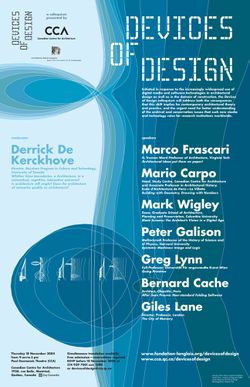
A collaboration between the CCA and the Daniel Langlois Foundation for Art, Science, and Technology, Devices of Design was initiated in response to the increasingly widespread use of digital media and software technologies in architectural design and construction. A colloquium and a subsequent roundtable discussion address both the consequences that this shift implies for(...)
A collaboration between the CCA and the Daniel Langlois Foundation for Art, Science, and Technology, Devices of Design was initiated in response to the increasingly widespread use of digital media and software technologies in architectural design and construction. A colloquium and a subsequent roundtable discussion address both the consequences that this shift implies for(...)
Location:
Paul-Desmarais Theatre
Paul-Desmarais Theatre
Date:
18 November 2004 to 19 November 2004
18 November 2004 to 19 November 2004
Title:
Devices of Design
Actions:
Description:
A collaboration between the CCA and the Daniel Langlois Foundation for Art, Science, and Technology, Devices of Design was initiated in response to the increasingly widespread use of digital media and software technologies in architectural design and construction. A colloquium and a subsequent roundtable discussion address both the consequences that this shift implies for(...)
Devices of Design
Actions:
Description:
A collaboration between the CCA and the Daniel Langlois Foundation for Art, Science, and Technology, Devices of Design was initiated in response to the increasingly widespread use of digital media and software technologies in architectural design and construction. A colloquium and a subsequent roundtable discussion address both the consequences that this shift implies for(...)
Form:
events
events
Date:
18 November 2004 to
19 November 2004
18 November 2004 to
19 November 2004
Location:
Paul-Desmarais Theatre
Paul-Desmarais Theatre
Level of archival description:
Project
Project
Reference number:
AP148.S1.1970.PR02
Description:
The project series documents Poli's work on the Interplanetary Architecture project, which was also made into a film by Superstudio directed by Alessandro Poli (the film is not included in the fonds). The project reflects Poli's deep fascination with the moon landing in 1969. Poli uses this major media event as a catalyst for thinking about a new approach to architecture and tools for design, including the idea that film and the movie camera should become part of the toolset. The project also seems to be in some way a response to Epoch magazine's challenge for a "Primo concorso di architettura nello spazio" (the first architectural competition in space), and includes much imagery and textual references to a new road or architectural links between the earth and other planets, including an earth moon highway. In his storyboard, Poli also makes reference to his earlier Piper project, and some imagery features wheels and an amusement park. The Interplanetary Architecture project was exhibited by Superstudio in Rome in 1972 and featured in "Casabella" magazine in April 1972 (no. 364). The project was also featured in the 2010 CCA exhibition "Other Space Odysseys". In the accompanying CCA publication, Poli describes this project as "a voyage off earthbound routes in quest of architecture unfettered by the urban nightmare, by induced needs or by planning as the only tool for regulating and solving the world's problems" (Poli quoted in Borasi and Zardini, 2010, 110). Poli's work on this project is deeply tied to the Zeno project, which was also featured in this exhibition and is included in this fonds (see AP148.S1.1972.PR01). For the Zeno project, Poli envisioned a dialogue between astronaut Buzz Aldrin and an Italian peasant, Zeno of Riparbella. Poli felt that these two shared a similarity in that both their homes were isolated capsules, one that provided a lens from which to see the rest of the world and understand their place in it. The material in the series includes numerous photomontages and collages of astronauts in space, as well as drawings of plantery shapes and structures. There are also texts, some of which include calculations of distances and diameters of planets, as well as notebooks and sketchbooks, many of which Poli included in a folder he entitled "Storyboard." The series also includes an unsent letter from Poli to Adolfo Natalini which describes how, after the moon landing, everything - the planet, the moon, the stars - is architecture, and that this will necessitate the need for new design tools, such as the movie camera. Some works are signed Alessandro Poli-Superstudio. Source cited: Giovanna Borasi and Mirko Zardini, eds., Other Space Odysseys, Montreal and Baden: Canadian Centre for Architecture/Lars Müller Publishers, 2010.
AP148.S1.1970.PR02
Description:
The project series documents Poli's work on the Interplanetary Architecture project, which was also made into a film by Superstudio directed by Alessandro Poli (the film is not included in the fonds). The project reflects Poli's deep fascination with the moon landing in 1969. Poli uses this major media event as a catalyst for thinking about a new approach to architecture and tools for design, including the idea that film and the movie camera should become part of the toolset. The project also seems to be in some way a response to Epoch magazine's challenge for a "Primo concorso di architettura nello spazio" (the first architectural competition in space), and includes much imagery and textual references to a new road or architectural links between the earth and other planets, including an earth moon highway. In his storyboard, Poli also makes reference to his earlier Piper project, and some imagery features wheels and an amusement park. The Interplanetary Architecture project was exhibited by Superstudio in Rome in 1972 and featured in "Casabella" magazine in April 1972 (no. 364). The project was also featured in the 2010 CCA exhibition "Other Space Odysseys". In the accompanying CCA publication, Poli describes this project as "a voyage off earthbound routes in quest of architecture unfettered by the urban nightmare, by induced needs or by planning as the only tool for regulating and solving the world's problems" (Poli quoted in Borasi and Zardini, 2010, 110). Poli's work on this project is deeply tied to the Zeno project, which was also featured in this exhibition and is included in this fonds (see AP148.S1.1972.PR01). For the Zeno project, Poli envisioned a dialogue between astronaut Buzz Aldrin and an Italian peasant, Zeno of Riparbella. Poli felt that these two shared a similarity in that both their homes were isolated capsules, one that provided a lens from which to see the rest of the world and understand their place in it. The material in the series includes numerous photomontages and collages of astronauts in space, as well as drawings of plantery shapes and structures. There are also texts, some of which include calculations of distances and diameters of planets, as well as notebooks and sketchbooks, many of which Poli included in a folder he entitled "Storyboard." The series also includes an unsent letter from Poli to Adolfo Natalini which describes how, after the moon landing, everything - the planet, the moon, the stars - is architecture, and that this will necessitate the need for new design tools, such as the movie camera. Some works are signed Alessandro Poli-Superstudio. Source cited: Giovanna Borasi and Mirko Zardini, eds., Other Space Odysseys, Montreal and Baden: Canadian Centre for Architecture/Lars Müller Publishers, 2010.
People:
Date:
1969-1971
1969-1971
Title:
Architettura Interplanetaria [Interplanetary Architecture] (1970-1971)
Actions:
AP148.S1.1970.PR02
Description:
The project series documents Poli's work on the Interplanetary Architecture project, which was also made into a film by Superstudio directed by Alessandro Poli (the film is not included in the fonds). The project reflects Poli's deep fascination with the moon landing in 1969. Poli uses this major media event as a catalyst for thinking about a new approach to architecture and tools for design, including the idea that film and the movie camera should become part of the toolset. The project also seems to be in some way a response to Epoch magazine's challenge for a "Primo concorso di architettura nello spazio" (the first architectural competition in space), and includes much imagery and textual references to a new road or architectural links between the earth and other planets, including an earth moon highway. In his storyboard, Poli also makes reference to his earlier Piper project, and some imagery features wheels and an amusement park. The Interplanetary Architecture project was exhibited by Superstudio in Rome in 1972 and featured in "Casabella" magazine in April 1972 (no. 364). The project was also featured in the 2010 CCA exhibition "Other Space Odysseys". In the accompanying CCA publication, Poli describes this project as "a voyage off earthbound routes in quest of architecture unfettered by the urban nightmare, by induced needs or by planning as the only tool for regulating and solving the world's problems" (Poli quoted in Borasi and Zardini, 2010, 110). Poli's work on this project is deeply tied to the Zeno project, which was also featured in this exhibition and is included in this fonds (see AP148.S1.1972.PR01). For the Zeno project, Poli envisioned a dialogue between astronaut Buzz Aldrin and an Italian peasant, Zeno of Riparbella. Poli felt that these two shared a similarity in that both their homes were isolated capsules, one that provided a lens from which to see the rest of the world and understand their place in it. The material in the series includes numerous photomontages and collages of astronauts in space, as well as drawings of plantery shapes and structures. There are also texts, some of which include calculations of distances and diameters of planets, as well as notebooks and sketchbooks, many of which Poli included in a folder he entitled "Storyboard." The series also includes an unsent letter from Poli to Adolfo Natalini which describes how, after the moon landing, everything - the planet, the moon, the stars - is architecture, and that this will necessitate the need for new design tools, such as the movie camera. Some works are signed Alessandro Poli-Superstudio. Source cited: Giovanna Borasi and Mirko Zardini, eds., Other Space Odysseys, Montreal and Baden: Canadian Centre for Architecture/Lars Müller Publishers, 2010.
Architettura Interplanetaria [Interplanetary Architecture] (1970-1971)
Actions:
AP148.S1.1970.PR02
Description:
The project series documents Poli's work on the Interplanetary Architecture project, which was also made into a film by Superstudio directed by Alessandro Poli (the film is not included in the fonds). The project reflects Poli's deep fascination with the moon landing in 1969. Poli uses this major media event as a catalyst for thinking about a new approach to architecture and tools for design, including the idea that film and the movie camera should become part of the toolset. The project also seems to be in some way a response to Epoch magazine's challenge for a "Primo concorso di architettura nello spazio" (the first architectural competition in space), and includes much imagery and textual references to a new road or architectural links between the earth and other planets, including an earth moon highway. In his storyboard, Poli also makes reference to his earlier Piper project, and some imagery features wheels and an amusement park. The Interplanetary Architecture project was exhibited by Superstudio in Rome in 1972 and featured in "Casabella" magazine in April 1972 (no. 364). The project was also featured in the 2010 CCA exhibition "Other Space Odysseys". In the accompanying CCA publication, Poli describes this project as "a voyage off earthbound routes in quest of architecture unfettered by the urban nightmare, by induced needs or by planning as the only tool for regulating and solving the world's problems" (Poli quoted in Borasi and Zardini, 2010, 110). Poli's work on this project is deeply tied to the Zeno project, which was also featured in this exhibition and is included in this fonds (see AP148.S1.1972.PR01). For the Zeno project, Poli envisioned a dialogue between astronaut Buzz Aldrin and an Italian peasant, Zeno of Riparbella. Poli felt that these two shared a similarity in that both their homes were isolated capsules, one that provided a lens from which to see the rest of the world and understand their place in it. The material in the series includes numerous photomontages and collages of astronauts in space, as well as drawings of plantery shapes and structures. There are also texts, some of which include calculations of distances and diameters of planets, as well as notebooks and sketchbooks, many of which Poli included in a folder he entitled "Storyboard." The series also includes an unsent letter from Poli to Adolfo Natalini which describes how, after the moon landing, everything - the planet, the moon, the stars - is architecture, and that this will necessitate the need for new design tools, such as the movie camera. Some works are signed Alessandro Poli-Superstudio. Source cited: Giovanna Borasi and Mirko Zardini, eds., Other Space Odysseys, Montreal and Baden: Canadian Centre for Architecture/Lars Müller Publishers, 2010.
Level of archival description:
Project
Project
Date:
1969-1971
1969-1971
People:
Actions:
Reference number:
ARCH276922
Description:
Group contains framed certificates and a plate award . Includes The Greater Vancouver Chapter of the Architectural Institute of British Columbia Awards of Merit for the Graham Residence (1966) and Simon Fraser University (1966); Arthur Erickson's membership certificate to the Ontario Association of Architects (1969); Governor General's Media for Robson Square (1982); Certificate from the Royal Architectural Insitute of Canada acknowledging Arthur Erickson's contribution to the Festiable of Architecture (Montreal, June 19-21, 1997); Vancouver Arts Awards honouring achievement and promise of Arthur Erickson (2004); The President's 40th Anniversary Award for Simon Fraser University Campus (June 9, 2006).
ARCH276922
Description:
Group contains framed certificates and a plate award . Includes The Greater Vancouver Chapter of the Architectural Institute of British Columbia Awards of Merit for the Graham Residence (1966) and Simon Fraser University (1966); Arthur Erickson's membership certificate to the Ontario Association of Architects (1969); Governor General's Media for Robson Square (1982); Certificate from the Royal Architectural Insitute of Canada acknowledging Arthur Erickson's contribution to the Festiable of Architecture (Montreal, June 19-21, 1997); Vancouver Arts Awards honouring achievement and promise of Arthur Erickson (2004); The President's 40th Anniversary Award for Simon Fraser University Campus (June 9, 2006).
People:
Date:
1966-2006
1966-2006
Title:
Various certificates and awards
Actions:
ARCH276922
Description:
Group contains framed certificates and a plate award . Includes The Greater Vancouver Chapter of the Architectural Institute of British Columbia Awards of Merit for the Graham Residence (1966) and Simon Fraser University (1966); Arthur Erickson's membership certificate to the Ontario Association of Architects (1969); Governor General's Media for Robson Square (1982); Certificate from the Royal Architectural Insitute of Canada acknowledging Arthur Erickson's contribution to the Festiable of Architecture (Montreal, June 19-21, 1997); Vancouver Arts Awards honouring achievement and promise of Arthur Erickson (2004); The President's 40th Anniversary Award for Simon Fraser University Campus (June 9, 2006).
Various certificates and awards
Actions:
ARCH276922
Description:
Group contains framed certificates and a plate award . Includes The Greater Vancouver Chapter of the Architectural Institute of British Columbia Awards of Merit for the Graham Residence (1966) and Simon Fraser University (1966); Arthur Erickson's membership certificate to the Ontario Association of Architects (1969); Governor General's Media for Robson Square (1982); Certificate from the Royal Architectural Insitute of Canada acknowledging Arthur Erickson's contribution to the Festiable of Architecture (Montreal, June 19-21, 1997); Vancouver Arts Awards honouring achievement and promise of Arthur Erickson (2004); The President's 40th Anniversary Award for Simon Fraser University Campus (June 9, 2006).
Date:
1966-2006
1966-2006
People:
Form:
events
events
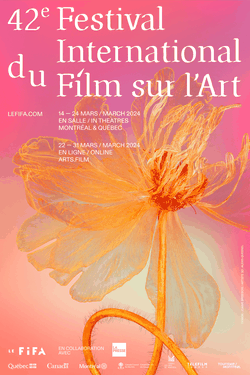
Location:
Paul-Desmarais Theatre
Paul-Desmarais Theatre
Date:
14 March 2024 to 24 March 2024
14 March 2024 to 24 March 2024
Form:
events
events
Date:
14 March 2024 to
24 March 2024
14 March 2024 to
24 March 2024
Location:
Paul-Desmarais Theatre
Paul-Desmarais Theatre


