


33507 Results
Form:
drawings
drawings
Actions:
Reference number:
DR1989:0015:028
Description:
- This drawing is part of the set of orthographic drawings for the chapel at Saint Peter's Home, Woking, DR1989:0015:021 - DR1989:0015:028, which records the agreement between the contracting firm, Luscombe and Son of Exeter, and the architect, John L. Pearson. - This work is part of a group of drawings and reprographic prints of drawings for St. Peter's Home, Woking, and St. Peter's Convent, Woking, from the offices of John Loughborough Pearson and Frank Loughborough Pearson (DR1989:0015:011 - DR1989:0015:085 R/V). Composed of contract and working drawings including plans, site plans, sections, and elevations dated between 1881 and 1936, these drawings were sold at auction by the convent along with those for the older institution of St. Peter's Home, Kilburn (DR1989:0015:001 - DR1989:0015:010). Both St. Peter's Home, Kilburn, and St. Peter's Home, Woking were commissioned from John Loughborough Pearson by Benjamin Lancaster. The alterations to the Home at Kilburn were commissioned on behalf of Lancaster's wife, who founded the home and a lay nursing order which ran it. The institution at Woking was founded by Lancaster as a home for incurables in 1882 and dedicated to the memory of his deceased wife (Quiney 67-68, 254-255, and 284). It was probably first known as St. Peter's Home, Woking, not becoming a convent until ca. 1934.
DR1989:0015:028
Description:
- This drawing is part of the set of orthographic drawings for the chapel at Saint Peter's Home, Woking, DR1989:0015:021 - DR1989:0015:028, which records the agreement between the contracting firm, Luscombe and Son of Exeter, and the architect, John L. Pearson. - This work is part of a group of drawings and reprographic prints of drawings for St. Peter's Home, Woking, and St. Peter's Convent, Woking, from the offices of John Loughborough Pearson and Frank Loughborough Pearson (DR1989:0015:011 - DR1989:0015:085 R/V). Composed of contract and working drawings including plans, site plans, sections, and elevations dated between 1881 and 1936, these drawings were sold at auction by the convent along with those for the older institution of St. Peter's Home, Kilburn (DR1989:0015:001 - DR1989:0015:010). Both St. Peter's Home, Kilburn, and St. Peter's Home, Woking were commissioned from John Loughborough Pearson by Benjamin Lancaster. The alterations to the Home at Kilburn were commissioned on behalf of Lancaster's wife, who founded the home and a lay nursing order which ran it. The institution at Woking was founded by Lancaster as a home for incurables in 1882 and dedicated to the memory of his deceased wife (Quiney 67-68, 254-255, and 284). It was probably first known as St. Peter's Home, Woking, not becoming a convent until ca. 1934.
People:
Subject:
architecture
architecture
Date:
ca. 1897
ca. 1897
Title:
St. Peter's Home, Woking: Sections for the chapel through the aisles, ambulatory and nave
Actions:
DR1989:0015:028
Description:
- This drawing is part of the set of orthographic drawings for the chapel at Saint Peter's Home, Woking, DR1989:0015:021 - DR1989:0015:028, which records the agreement between the contracting firm, Luscombe and Son of Exeter, and the architect, John L. Pearson. - This work is part of a group of drawings and reprographic prints of drawings for St. Peter's Home, Woking, and St. Peter's Convent, Woking, from the offices of John Loughborough Pearson and Frank Loughborough Pearson (DR1989:0015:011 - DR1989:0015:085 R/V). Composed of contract and working drawings including plans, site plans, sections, and elevations dated between 1881 and 1936, these drawings were sold at auction by the convent along with those for the older institution of St. Peter's Home, Kilburn (DR1989:0015:001 - DR1989:0015:010). Both St. Peter's Home, Kilburn, and St. Peter's Home, Woking were commissioned from John Loughborough Pearson by Benjamin Lancaster. The alterations to the Home at Kilburn were commissioned on behalf of Lancaster's wife, who founded the home and a lay nursing order which ran it. The institution at Woking was founded by Lancaster as a home for incurables in 1882 and dedicated to the memory of his deceased wife (Quiney 67-68, 254-255, and 284). It was probably first known as St. Peter's Home, Woking, not becoming a convent until ca. 1934.
St. Peter's Home, Woking: Sections for the chapel through the aisles, ambulatory and nave
Actions:
DR1989:0015:028
Description:
- This drawing is part of the set of orthographic drawings for the chapel at Saint Peter's Home, Woking, DR1989:0015:021 - DR1989:0015:028, which records the agreement between the contracting firm, Luscombe and Son of Exeter, and the architect, John L. Pearson. - This work is part of a group of drawings and reprographic prints of drawings for St. Peter's Home, Woking, and St. Peter's Convent, Woking, from the offices of John Loughborough Pearson and Frank Loughborough Pearson (DR1989:0015:011 - DR1989:0015:085 R/V). Composed of contract and working drawings including plans, site plans, sections, and elevations dated between 1881 and 1936, these drawings were sold at auction by the convent along with those for the older institution of St. Peter's Home, Kilburn (DR1989:0015:001 - DR1989:0015:010). Both St. Peter's Home, Kilburn, and St. Peter's Home, Woking were commissioned from John Loughborough Pearson by Benjamin Lancaster. The alterations to the Home at Kilburn were commissioned on behalf of Lancaster's wife, who founded the home and a lay nursing order which ran it. The institution at Woking was founded by Lancaster as a home for incurables in 1882 and dedicated to the memory of his deceased wife (Quiney 67-68, 254-255, and 284). It was probably first known as St. Peter's Home, Woking, not becoming a convent until ca. 1934.
Form:
drawings
drawings
Date:
ca. 1897
ca. 1897
People:
Subject:
architecture
architecture
Form:
drawings, textual records, photographs
drawings, textual records, photographs
Reference number:
DR1988:0015:001-029
Description:
Part of a miscellaneous group of visual and textual documents collected by Oswald Mathias Ungers, apparently to represent the work of artists/architects in Die gläserne Kette. Primarily formal studies and other material relating to projects for buildings but also includes biographical material. Includes 17 drawings, 12 photographs, 9 prints, and 4 sheets of text. Most of the drawings are studies of architectonic massing of forms, a few are identified by project name, such as "Das Maler Haus" (the Painter's house) and the Christian Science Cathedral. Design of the subject of the photograph, drawing, or reproduction is attributed to Carl Krayl, following Ungers's attributions, unless otherwise stated. Many of the works in this group are inscribed with the name "Krayl" in blue ball-point pen; this might be the hand-writing of Frau L. Krayl who wrote the note on DR1988:0015:026 R/V. The photographs DR1988:0015:001 to DR1988:0015:006 are of the same model. Tim Benson has suggested that the model is a competition entry for changes to Alexanderplatz, Berlin (Shubert). DR1988:0015:007 to DR1988:0015:009 illustrate different views of the same plaster model. DR1988:0015:010 appears to be a photograph of a model for "Das Maler Haus", which is represented by the prints DR1988:0015:024 and DR1988:0015:025.
DR1988:0015:001-029
Description:
Part of a miscellaneous group of visual and textual documents collected by Oswald Mathias Ungers, apparently to represent the work of artists/architects in Die gläserne Kette. Primarily formal studies and other material relating to projects for buildings but also includes biographical material. Includes 17 drawings, 12 photographs, 9 prints, and 4 sheets of text. Most of the drawings are studies of architectonic massing of forms, a few are identified by project name, such as "Das Maler Haus" (the Painter's house) and the Christian Science Cathedral. Design of the subject of the photograph, drawing, or reproduction is attributed to Carl Krayl, following Ungers's attributions, unless otherwise stated. Many of the works in this group are inscribed with the name "Krayl" in blue ball-point pen; this might be the hand-writing of Frau L. Krayl who wrote the note on DR1988:0015:026 R/V. The photographs DR1988:0015:001 to DR1988:0015:006 are of the same model. Tim Benson has suggested that the model is a competition entry for changes to Alexanderplatz, Berlin (Shubert). DR1988:0015:007 to DR1988:0015:009 illustrate different views of the same plaster model. DR1988:0015:010 appears to be a photograph of a model for "Das Maler Haus", which is represented by the prints DR1988:0015:024 and DR1988:0015:025.
People:
Date:
circa 1918-1945
circa 1918-1945
Title:
Material from Carl Krayl mostly for Die gläserne Kette
Actions:
DR1988:0015:001-029
Description:
Part of a miscellaneous group of visual and textual documents collected by Oswald Mathias Ungers, apparently to represent the work of artists/architects in Die gläserne Kette. Primarily formal studies and other material relating to projects for buildings but also includes biographical material. Includes 17 drawings, 12 photographs, 9 prints, and 4 sheets of text. Most of the drawings are studies of architectonic massing of forms, a few are identified by project name, such as "Das Maler Haus" (the Painter's house) and the Christian Science Cathedral. Design of the subject of the photograph, drawing, or reproduction is attributed to Carl Krayl, following Ungers's attributions, unless otherwise stated. Many of the works in this group are inscribed with the name "Krayl" in blue ball-point pen; this might be the hand-writing of Frau L. Krayl who wrote the note on DR1988:0015:026 R/V. The photographs DR1988:0015:001 to DR1988:0015:006 are of the same model. Tim Benson has suggested that the model is a competition entry for changes to Alexanderplatz, Berlin (Shubert). DR1988:0015:007 to DR1988:0015:009 illustrate different views of the same plaster model. DR1988:0015:010 appears to be a photograph of a model for "Das Maler Haus", which is represented by the prints DR1988:0015:024 and DR1988:0015:025.
Material from Carl Krayl mostly for Die gläserne Kette
Actions:
DR1988:0015:001-029
Description:
Part of a miscellaneous group of visual and textual documents collected by Oswald Mathias Ungers, apparently to represent the work of artists/architects in Die gläserne Kette. Primarily formal studies and other material relating to projects for buildings but also includes biographical material. Includes 17 drawings, 12 photographs, 9 prints, and 4 sheets of text. Most of the drawings are studies of architectonic massing of forms, a few are identified by project name, such as "Das Maler Haus" (the Painter's house) and the Christian Science Cathedral. Design of the subject of the photograph, drawing, or reproduction is attributed to Carl Krayl, following Ungers's attributions, unless otherwise stated. Many of the works in this group are inscribed with the name "Krayl" in blue ball-point pen; this might be the hand-writing of Frau L. Krayl who wrote the note on DR1988:0015:026 R/V. The photographs DR1988:0015:001 to DR1988:0015:006 are of the same model. Tim Benson has suggested that the model is a competition entry for changes to Alexanderplatz, Berlin (Shubert). DR1988:0015:007 to DR1988:0015:009 illustrate different views of the same plaster model. DR1988:0015:010 appears to be a photograph of a model for "Das Maler Haus", which is represented by the prints DR1988:0015:024 and DR1988:0015:025.
Form:
drawings, textual records, photographs
drawings, textual records, photographs
Date:
circa 1918-1945
circa 1918-1945
People:
Title:
Villa Weitz - Saint-François d'Assise - 1920-1924 - Salle des Fêtes - De La Croix-Rousse - 1924-1929
Villa Weitz - Saint-François d'Assise - 1920-1924 - Salle des Fêtes - De La Croix-Rousse - 1924-1929
Actions:
Reference number:
PH1986:0900.02
Description:
Album PH1986:0900.02 comprises 71 photographs of projects by architect Michel Roux-Spitz including Villa Weitz (1923), Église Saint-François d'Assise, and Salle des Fêtes De La Croix-Rousse, all in Lyon, France. Photographs of Villa Weitz show the façade, loggia, wrought iron gate, interior views with the staircase and vestibule, entrance door and hallway, living room, detail of the façade loggia and hall on the garden side, details of the mosaic, a display case, ceiling lamp in alabaster, bas-reliefs, study drawing for an interior and several views of a scale model. Photographs of the Église Saint-François d'Assise show views of the dome in glass concrete, the mosaic and iron balustrade. Several photographs show views of the Salle des Fêtes De La Croix-Rousse including the basement, ground floor, first and second floor plans, longitudinal section, main façade, the building site, rear façade, the staircase, the dome with glass by the Saint-Gobain factory in Lyon, the front lobby, the promenoir on the ground and first floors, the entrance with concrete clautras, overall views of the entrance, the gallery and rest area, entrance doors, the ventilation shield on the ceiling, views of one of the two staircases with walls made of concrete mullions and cathedral glass, concrete gutters and stairs made of massive Villebois stone, overall views of the concert hall, the orchestra and the stage.
PH1986:0900.02
Description:
Album PH1986:0900.02 comprises 71 photographs of projects by architect Michel Roux-Spitz including Villa Weitz (1923), Église Saint-François d'Assise, and Salle des Fêtes De La Croix-Rousse, all in Lyon, France. Photographs of Villa Weitz show the façade, loggia, wrought iron gate, interior views with the staircase and vestibule, entrance door and hallway, living room, detail of the façade loggia and hall on the garden side, details of the mosaic, a display case, ceiling lamp in alabaster, bas-reliefs, study drawing for an interior and several views of a scale model. Photographs of the Église Saint-François d'Assise show views of the dome in glass concrete, the mosaic and iron balustrade. Several photographs show views of the Salle des Fêtes De La Croix-Rousse including the basement, ground floor, first and second floor plans, longitudinal section, main façade, the building site, rear façade, the staircase, the dome with glass by the Saint-Gobain factory in Lyon, the front lobby, the promenoir on the ground and first floors, the entrance with concrete clautras, overall views of the entrance, the gallery and rest area, entrance doors, the ventilation shield on the ceiling, views of one of the two staircases with walls made of concrete mullions and cathedral glass, concrete gutters and stairs made of massive Villebois stone, overall views of the concert hall, the orchestra and the stage.
People:
Subject:
architecture, interior design
architecture, interior design
Date:
1920-1929
1920-1929
Title:
Villa Weitz - Saint-François d'Assise - 1920-1924 - Salle des Fêtes - De La Croix-Rousse - 1924-1929
Actions:
PH1986:0900.02
Description:
Album PH1986:0900.02 comprises 71 photographs of projects by architect Michel Roux-Spitz including Villa Weitz (1923), Église Saint-François d'Assise, and Salle des Fêtes De La Croix-Rousse, all in Lyon, France. Photographs of Villa Weitz show the façade, loggia, wrought iron gate, interior views with the staircase and vestibule, entrance door and hallway, living room, detail of the façade loggia and hall on the garden side, details of the mosaic, a display case, ceiling lamp in alabaster, bas-reliefs, study drawing for an interior and several views of a scale model. Photographs of the Église Saint-François d'Assise show views of the dome in glass concrete, the mosaic and iron balustrade. Several photographs show views of the Salle des Fêtes De La Croix-Rousse including the basement, ground floor, first and second floor plans, longitudinal section, main façade, the building site, rear façade, the staircase, the dome with glass by the Saint-Gobain factory in Lyon, the front lobby, the promenoir on the ground and first floors, the entrance with concrete clautras, overall views of the entrance, the gallery and rest area, entrance doors, the ventilation shield on the ceiling, views of one of the two staircases with walls made of concrete mullions and cathedral glass, concrete gutters and stairs made of massive Villebois stone, overall views of the concert hall, the orchestra and the stage.
Villa Weitz - Saint-François d'Assise - 1920-1924 - Salle des Fêtes - De La Croix-Rousse - 1924-1929
Actions:
PH1986:0900.02
Description:
Album PH1986:0900.02 comprises 71 photographs of projects by architect Michel Roux-Spitz including Villa Weitz (1923), Église Saint-François d'Assise, and Salle des Fêtes De La Croix-Rousse, all in Lyon, France. Photographs of Villa Weitz show the façade, loggia, wrought iron gate, interior views with the staircase and vestibule, entrance door and hallway, living room, detail of the façade loggia and hall on the garden side, details of the mosaic, a display case, ceiling lamp in alabaster, bas-reliefs, study drawing for an interior and several views of a scale model. Photographs of the Église Saint-François d'Assise show views of the dome in glass concrete, the mosaic and iron balustrade. Several photographs show views of the Salle des Fêtes De La Croix-Rousse including the basement, ground floor, first and second floor plans, longitudinal section, main façade, the building site, rear façade, the staircase, the dome with glass by the Saint-Gobain factory in Lyon, the front lobby, the promenoir on the ground and first floors, the entrance with concrete clautras, overall views of the entrance, the gallery and rest area, entrance doors, the ventilation shield on the ceiling, views of one of the two staircases with walls made of concrete mullions and cathedral glass, concrete gutters and stairs made of massive Villebois stone, overall views of the concert hall, the orchestra and the stage.
Date:
1920-1929
1920-1929
People:
Subject:
architecture, interior design
architecture, interior design
Form:
textual records
textual records
Actions:
Reference number:
AP197.S3.006
Description:
The box is comprised of correspondence for the years of 1995-1997, organized in chronological order. The box documents Frampton’s career as Ware professor at the Graduate School of Architecture, Planning and Preservation, Columbia University and his related professional activities. Correspondence in this box includes: offers of teaching positions; requests to write articles, reviews, books and recommendation letters; invitations to teach, present, or attend at lectures/symposiums/conferences; and requests to serve on juries. Throughout this period, Frampton corresponded with various architects, professors, publishers, and editors of various publications such as: Thames and Hudson Ltd.; the Berlage Institute; the Italian Cultural Institute; Yukio Futagawa of GA/ADA Edita Tokyo Co CD; and the MIT Press. Correspondence relates to his participation/involvement in: the Michael Blackwood Production “In search of Louis Kahn: Six Buildings;” the Japanese and German translations for the Studies in Tectonic Culture publication; organizing lectures on Studies in tectonic Culture; the Jerusalem Seminar in Architecture “Technology, Place & and Architecture;” teaching at the École polytechnique fédérale de Lausanne; the Aga Khan Program for Islamic Architecture; and the Architectural Society of China. Correspondence concerning the following publications and lectures is included: “the Megaform as City in Miniature;” “Critical regionalism revisited,” a lecture at the Berlage Institute; the Le Corbusier publication; “Tradition and Innovation in the Work of Christoph Mackler;” and the forward for Vittorio Gregotti`s Inside Architecture.
AP197.S3.006
Description:
The box is comprised of correspondence for the years of 1995-1997, organized in chronological order. The box documents Frampton’s career as Ware professor at the Graduate School of Architecture, Planning and Preservation, Columbia University and his related professional activities. Correspondence in this box includes: offers of teaching positions; requests to write articles, reviews, books and recommendation letters; invitations to teach, present, or attend at lectures/symposiums/conferences; and requests to serve on juries. Throughout this period, Frampton corresponded with various architects, professors, publishers, and editors of various publications such as: Thames and Hudson Ltd.; the Berlage Institute; the Italian Cultural Institute; Yukio Futagawa of GA/ADA Edita Tokyo Co CD; and the MIT Press. Correspondence relates to his participation/involvement in: the Michael Blackwood Production “In search of Louis Kahn: Six Buildings;” the Japanese and German translations for the Studies in Tectonic Culture publication; organizing lectures on Studies in tectonic Culture; the Jerusalem Seminar in Architecture “Technology, Place & and Architecture;” teaching at the École polytechnique fédérale de Lausanne; the Aga Khan Program for Islamic Architecture; and the Architectural Society of China. Correspondence concerning the following publications and lectures is included: “the Megaform as City in Miniature;” “Critical regionalism revisited,” a lecture at the Berlage Institute; the Le Corbusier publication; “Tradition and Innovation in the Work of Christoph Mackler;” and the forward for Vittorio Gregotti`s Inside Architecture.
People:
Date:
1995-1997
1995-1997
Title:
Personal and professional correspondence from 1995-1997
Actions:
AP197.S3.006
Description:
The box is comprised of correspondence for the years of 1995-1997, organized in chronological order. The box documents Frampton’s career as Ware professor at the Graduate School of Architecture, Planning and Preservation, Columbia University and his related professional activities. Correspondence in this box includes: offers of teaching positions; requests to write articles, reviews, books and recommendation letters; invitations to teach, present, or attend at lectures/symposiums/conferences; and requests to serve on juries. Throughout this period, Frampton corresponded with various architects, professors, publishers, and editors of various publications such as: Thames and Hudson Ltd.; the Berlage Institute; the Italian Cultural Institute; Yukio Futagawa of GA/ADA Edita Tokyo Co CD; and the MIT Press. Correspondence relates to his participation/involvement in: the Michael Blackwood Production “In search of Louis Kahn: Six Buildings;” the Japanese and German translations for the Studies in Tectonic Culture publication; organizing lectures on Studies in tectonic Culture; the Jerusalem Seminar in Architecture “Technology, Place & and Architecture;” teaching at the École polytechnique fédérale de Lausanne; the Aga Khan Program for Islamic Architecture; and the Architectural Society of China. Correspondence concerning the following publications and lectures is included: “the Megaform as City in Miniature;” “Critical regionalism revisited,” a lecture at the Berlage Institute; the Le Corbusier publication; “Tradition and Innovation in the Work of Christoph Mackler;” and the forward for Vittorio Gregotti`s Inside Architecture.
Personal and professional correspondence from 1995-1997
Actions:
AP197.S3.006
Description:
The box is comprised of correspondence for the years of 1995-1997, organized in chronological order. The box documents Frampton’s career as Ware professor at the Graduate School of Architecture, Planning and Preservation, Columbia University and his related professional activities. Correspondence in this box includes: offers of teaching positions; requests to write articles, reviews, books and recommendation letters; invitations to teach, present, or attend at lectures/symposiums/conferences; and requests to serve on juries. Throughout this period, Frampton corresponded with various architects, professors, publishers, and editors of various publications such as: Thames and Hudson Ltd.; the Berlage Institute; the Italian Cultural Institute; Yukio Futagawa of GA/ADA Edita Tokyo Co CD; and the MIT Press. Correspondence relates to his participation/involvement in: the Michael Blackwood Production “In search of Louis Kahn: Six Buildings;” the Japanese and German translations for the Studies in Tectonic Culture publication; organizing lectures on Studies in tectonic Culture; the Jerusalem Seminar in Architecture “Technology, Place & and Architecture;” teaching at the École polytechnique fédérale de Lausanne; the Aga Khan Program for Islamic Architecture; and the Architectural Society of China. Correspondence concerning the following publications and lectures is included: “the Megaform as City in Miniature;” “Critical regionalism revisited,” a lecture at the Berlage Institute; the Le Corbusier publication; “Tradition and Innovation in the Work of Christoph Mackler;” and the forward for Vittorio Gregotti`s Inside Architecture.
Form:
textual records
textual records
Date:
1995-1997
1995-1997
People:
Form:
archives
Level of archival description:
Fonds
archives
Level of archival description:
Fonds
Reference number:
AP177
Synopsis:
The RUR Architecture Kansai-kan of the National Diet Library project records, circa 1996, document the New York based firm’s competition entry for the Kansai Science City branch of Japan’s National Diet Library. Records show integration of landscape in the building’s design, exploration of the relationship between structure and surface, and a multimedia approach to building design. Records include 169 digital files, mostly CAD models and images; 42 drawings and printed renderings; and 5 models and casts.
AP177
Synopsis:
The RUR Architecture Kansai-kan of the National Diet Library project records, circa 1996, document the New York based firm’s competition entry for the Kansai Science City branch of Japan’s National Diet Library. Records show integration of landscape in the building’s design, exploration of the relationship between structure and surface, and a multimedia approach to building design. Records include 169 digital files, mostly CAD models and images; 42 drawings and printed renderings; and 5 models and casts.
People:
Date:
1996-2015
1996-2015
Title:
RUR Architecture Kansai-kan of the National Diet Library project records
Actions:
AP177
Synopsis:
The RUR Architecture Kansai-kan of the National Diet Library project records, circa 1996, document the New York based firm’s competition entry for the Kansai Science City branch of Japan’s National Diet Library. Records show integration of landscape in the building’s design, exploration of the relationship between structure and surface, and a multimedia approach to building design. Records include 169 digital files, mostly CAD models and images; 42 drawings and printed renderings; and 5 models and casts.
RUR Architecture Kansai-kan of the National Diet Library project records
Actions:
AP177
Synopsis:
The RUR Architecture Kansai-kan of the National Diet Library project records, circa 1996, document the New York based firm’s competition entry for the Kansai Science City branch of Japan’s National Diet Library. Records show integration of landscape in the building’s design, exploration of the relationship between structure and surface, and a multimedia approach to building design. Records include 169 digital files, mostly CAD models and images; 42 drawings and printed renderings; and 5 models and casts.
Form:
archives
Level of archival description:
Fonds
archives
Level of archival description:
Fonds
Date:
1996-2015
1996-2015
People:
Form:
archives
Level of archival description:
Fonds
archives
Level of archival description:
Fonds
Reference number:
AP167
Synopsis:
The ONL [Oosterhuis_Lénárd] NSA Muscle project records, 1995-2013, contain approximately 5,000 digital working files for the NSA Muscle, a built prototype commissioned for the Non-Standard Architecture exhibition at the Centre George Pompidou in Paris in 2003. The NSA Muscle is a programmable structure that changes its shape and content in real time. The records are entirely digital, and include administrative files, CAD files, Virtools files, publicity materials and photographs. They document the planning, design development, construction and exhibition of the NSA Muscle and related projects.
AP167
Synopsis:
The ONL [Oosterhuis_Lénárd] NSA Muscle project records, 1995-2013, contain approximately 5,000 digital working files for the NSA Muscle, a built prototype commissioned for the Non-Standard Architecture exhibition at the Centre George Pompidou in Paris in 2003. The NSA Muscle is a programmable structure that changes its shape and content in real time. The records are entirely digital, and include administrative files, CAD files, Virtools files, publicity materials and photographs. They document the planning, design development, construction and exhibition of the NSA Muscle and related projects.
People:
Date:
1995-2013
1995-2013
Title:
ONL [Oosterhuis_Lénárd] NSA Muscle project records
Actions:
AP167
Synopsis:
The ONL [Oosterhuis_Lénárd] NSA Muscle project records, 1995-2013, contain approximately 5,000 digital working files for the NSA Muscle, a built prototype commissioned for the Non-Standard Architecture exhibition at the Centre George Pompidou in Paris in 2003. The NSA Muscle is a programmable structure that changes its shape and content in real time. The records are entirely digital, and include administrative files, CAD files, Virtools files, publicity materials and photographs. They document the planning, design development, construction and exhibition of the NSA Muscle and related projects.
ONL [Oosterhuis_Lénárd] NSA Muscle project records
Actions:
AP167
Synopsis:
The ONL [Oosterhuis_Lénárd] NSA Muscle project records, 1995-2013, contain approximately 5,000 digital working files for the NSA Muscle, a built prototype commissioned for the Non-Standard Architecture exhibition at the Centre George Pompidou in Paris in 2003. The NSA Muscle is a programmable structure that changes its shape and content in real time. The records are entirely digital, and include administrative files, CAD files, Virtools files, publicity materials and photographs. They document the planning, design development, construction and exhibition of the NSA Muscle and related projects.
Form:
archives
Level of archival description:
Fonds
archives
Level of archival description:
Fonds
Date:
1995-2013
1995-2013
People:
Form:
photographs
photographs
Actions:
Reference number:
PH1979:0162.04:001
Description:
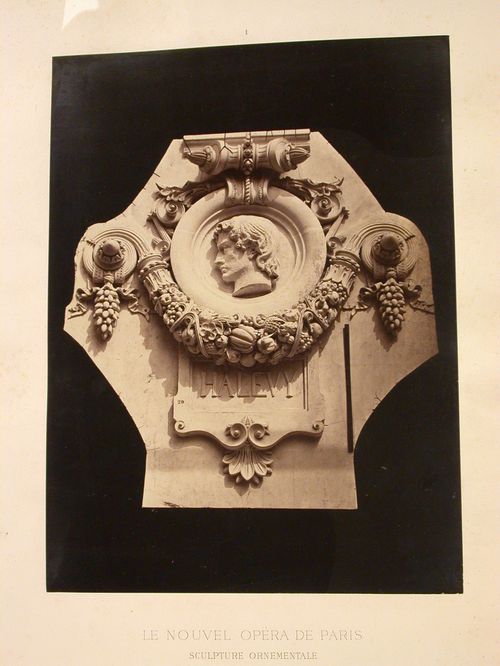
This unbound album comprises 42 plates and title pages and a list of plates (as follows): Le Nouvel Opéra de Paris. Sculpture ornementale Le Nouvel Opéra de Paris. Sculpture ornementale. Chapiteaux, tympans, panneaux, médaillons, masques, cartouches, pilastres, couronnements, clefs, frises, consoles, motifs divers d'ornementation par Charles Garnier, architecte, membre de l'Institut D et Cie, Paris, Librairie Générale de l'Architecture et des Travaux Publics, Ducher et Cie, Éditeurs, 51, rue des Écoles, 51, 1875. Table des Planches 1. - Médaillons - Tympans des arcades du rez-de-chaussée (façade principale). 2. - Cartouche couronnant les pilastres du grand vestibule. 3. - Cartouche servant d'applique sur les piliers du vestibule circulaire. 4. - Tables saillantes. - Galeries latérales du grand escalier. 5. - Table saillante. Pavillon de la descente à couvert. 6. - Table saillante. Vestibules octogones. 7. - Motifs de décoration sur les piliers du vestibule circulaire. 8. - Couronnement des grandes fenêtres. - Façade principale. 9. - Couronnement des portes du grand foyer. 10. - Couronnement desportes à l'extrémité des galeries latérales. 11. - Clef de la grande fenêtre. - Façade postérieure de la scène. 12. - Clef et tympan de la base du vestibule du contrôle. 13. - Clef des arcs dans la coupole du grand escalier. 14. - Clef de la porte. - Pavillon du chef de l'État. 15. - Consoles de chaque côté des oeils-de-boeuf au-dessus des baies de la loggia. 16. - Bas-relief de la partie supérieure de la voûte - vestibule octogone. 17. - Bas-reliefs de l'Attique. - Façade principale. 18. - Pilastres du grand foyer. - Arabesques et chapiteau. 19. - Colonnes du grand foyer. - Base et fut. (sic) 20. - Colonnes de la salle. - Base et fût. 21. - Colonnes des escaliers secondaires. - Fût et chapiteau. 22. - Chapiteau des pilastres du grand escalier. 23. - Chapiteau des colonnes du vestibule. - Pavillon du chef de l'État. 24. - Chapiteau des colonnes du vestibule circulaire. 25. - Chapiteau des colonnes du grand escalier. 26. - Chapiteau des colonnes supportant la 1re volée du grand escalier. 27. - Chapiteau des colonnes des baies de la loggia. - Façade principale. 28. - Chapiteau des colonnes du grand foyer. 29. - Chapiteau des pilastres intérieurs de la loggia. 30. - Chapiteau des colonnes et des pilastres de la salle. 31. - Amortissement des frontons des pavillons. - Façade principale. 32. - Chéneau de la grande coupole de la salle. 33. - Chéneau des façades latérales. 34. - Chéneau de la lanterne de la salle. 35. - Masques du vestibule circulaire. 36. - Masques du vestibule circulaire. 37. - Masques des consoles. - Baies de la loggia (façade principale). 38. - Masques du vestibule du contrôle. 39. - Masques des cheminées des bâtiments de l'administration. 40. - Frise et corniche de la scène. 41. - Frise de l'entablement. - Façade principale. 42. - Clef de voûte. - Galeries latérales. 43. - Clef de voûte. - Descente à couvert. 44. - Clef de voûte. - Galeries latérales. 45. - Clef de voûte. - Galeries latérales.
PH1979:0162.04:001
Description:
This unbound album comprises 42 plates and title pages and a list of plates (as follows): Le Nouvel Opéra de Paris. Sculpture ornementale Le Nouvel Opéra de Paris. Sculpture ornementale. Chapiteaux, tympans, panneaux, médaillons, masques, cartouches, pilastres, couronnements, clefs, frises, consoles, motifs divers d'ornementation par Charles Garnier, architecte, membre de l'Institut D et Cie, Paris, Librairie Générale de l'Architecture et des Travaux Publics, Ducher et Cie, Éditeurs, 51, rue des Écoles, 51, 1875. Table des Planches 1. - Médaillons - Tympans des arcades du rez-de-chaussée (façade principale). 2. - Cartouche couronnant les pilastres du grand vestibule. 3. - Cartouche servant d'applique sur les piliers du vestibule circulaire. 4. - Tables saillantes. - Galeries latérales du grand escalier. 5. - Table saillante. Pavillon de la descente à couvert. 6. - Table saillante. Vestibules octogones. 7. - Motifs de décoration sur les piliers du vestibule circulaire. 8. - Couronnement des grandes fenêtres. - Façade principale. 9. - Couronnement des portes du grand foyer. 10. - Couronnement desportes à l'extrémité des galeries latérales. 11. - Clef de la grande fenêtre. - Façade postérieure de la scène. 12. - Clef et tympan de la base du vestibule du contrôle. 13. - Clef des arcs dans la coupole du grand escalier. 14. - Clef de la porte. - Pavillon du chef de l'État. 15. - Consoles de chaque côté des oeils-de-boeuf au-dessus des baies de la loggia. 16. - Bas-relief de la partie supérieure de la voûte - vestibule octogone. 17. - Bas-reliefs de l'Attique. - Façade principale. 18. - Pilastres du grand foyer. - Arabesques et chapiteau. 19. - Colonnes du grand foyer. - Base et fut. (sic) 20. - Colonnes de la salle. - Base et fût. 21. - Colonnes des escaliers secondaires. - Fût et chapiteau. 22. - Chapiteau des pilastres du grand escalier. 23. - Chapiteau des colonnes du vestibule. - Pavillon du chef de l'État. 24. - Chapiteau des colonnes du vestibule circulaire. 25. - Chapiteau des colonnes du grand escalier. 26. - Chapiteau des colonnes supportant la 1re volée du grand escalier. 27. - Chapiteau des colonnes des baies de la loggia. - Façade principale. 28. - Chapiteau des colonnes du grand foyer. 29. - Chapiteau des pilastres intérieurs de la loggia. 30. - Chapiteau des colonnes et des pilastres de la salle. 31. - Amortissement des frontons des pavillons. - Façade principale. 32. - Chéneau de la grande coupole de la salle. 33. - Chéneau des façades latérales. 34. - Chéneau de la lanterne de la salle. 35. - Masques du vestibule circulaire. 36. - Masques du vestibule circulaire. 37. - Masques des consoles. - Baies de la loggia (façade principale). 38. - Masques du vestibule du contrôle. 39. - Masques des cheminées des bâtiments de l'administration. 40. - Frise et corniche de la scène. 41. - Frise de l'entablement. - Façade principale. 42. - Clef de voûte. - Galeries latérales. 43. - Clef de voûte. - Descente à couvert. 44. - Clef de voûte. - Galeries latérales. 45. - Clef de voûte. - Galeries latérales.
People:
Subject:
architecture, sculpture
architecture, sculpture
Date:
1875 or before
1875 or before
Title:
Médaillons. - Tympans des arcades du rez-de-chaussée (façade principale)
Actions:
PH1979:0162.04:001
Description:
This unbound album comprises 42 plates and title pages and a list of plates (as follows): Le Nouvel Opéra de Paris. Sculpture ornementale Le Nouvel Opéra de Paris. Sculpture ornementale. Chapiteaux, tympans, panneaux, médaillons, masques, cartouches, pilastres, couronnements, clefs, frises, consoles, motifs divers d'ornementation par Charles Garnier, architecte, membre de l'Institut D et Cie, Paris, Librairie Générale de l'Architecture et des Travaux Publics, Ducher et Cie, Éditeurs, 51, rue des Écoles, 51, 1875. Table des Planches 1. - Médaillons - Tympans des arcades du rez-de-chaussée (façade principale). 2. - Cartouche couronnant les pilastres du grand vestibule. 3. - Cartouche servant d'applique sur les piliers du vestibule circulaire. 4. - Tables saillantes. - Galeries latérales du grand escalier. 5. - Table saillante. Pavillon de la descente à couvert. 6. - Table saillante. Vestibules octogones. 7. - Motifs de décoration sur les piliers du vestibule circulaire. 8. - Couronnement des grandes fenêtres. - Façade principale. 9. - Couronnement des portes du grand foyer. 10. - Couronnement desportes à l'extrémité des galeries latérales. 11. - Clef de la grande fenêtre. - Façade postérieure de la scène. 12. - Clef et tympan de la base du vestibule du contrôle. 13. - Clef des arcs dans la coupole du grand escalier. 14. - Clef de la porte. - Pavillon du chef de l'État. 15. - Consoles de chaque côté des oeils-de-boeuf au-dessus des baies de la loggia. 16. - Bas-relief de la partie supérieure de la voûte - vestibule octogone. 17. - Bas-reliefs de l'Attique. - Façade principale. 18. - Pilastres du grand foyer. - Arabesques et chapiteau. 19. - Colonnes du grand foyer. - Base et fut. (sic) 20. - Colonnes de la salle. - Base et fût. 21. - Colonnes des escaliers secondaires. - Fût et chapiteau. 22. - Chapiteau des pilastres du grand escalier. 23. - Chapiteau des colonnes du vestibule. - Pavillon du chef de l'État. 24. - Chapiteau des colonnes du vestibule circulaire. 25. - Chapiteau des colonnes du grand escalier. 26. - Chapiteau des colonnes supportant la 1re volée du grand escalier. 27. - Chapiteau des colonnes des baies de la loggia. - Façade principale. 28. - Chapiteau des colonnes du grand foyer. 29. - Chapiteau des pilastres intérieurs de la loggia. 30. - Chapiteau des colonnes et des pilastres de la salle. 31. - Amortissement des frontons des pavillons. - Façade principale. 32. - Chéneau de la grande coupole de la salle. 33. - Chéneau des façades latérales. 34. - Chéneau de la lanterne de la salle. 35. - Masques du vestibule circulaire. 36. - Masques du vestibule circulaire. 37. - Masques des consoles. - Baies de la loggia (façade principale). 38. - Masques du vestibule du contrôle. 39. - Masques des cheminées des bâtiments de l'administration. 40. - Frise et corniche de la scène. 41. - Frise de l'entablement. - Façade principale. 42. - Clef de voûte. - Galeries latérales. 43. - Clef de voûte. - Descente à couvert. 44. - Clef de voûte. - Galeries latérales. 45. - Clef de voûte. - Galeries latérales.
Médaillons. - Tympans des arcades du rez-de-chaussée (façade principale)
Actions:
PH1979:0162.04:001
Description:
This unbound album comprises 42 plates and title pages and a list of plates (as follows): Le Nouvel Opéra de Paris. Sculpture ornementale Le Nouvel Opéra de Paris. Sculpture ornementale. Chapiteaux, tympans, panneaux, médaillons, masques, cartouches, pilastres, couronnements, clefs, frises, consoles, motifs divers d'ornementation par Charles Garnier, architecte, membre de l'Institut D et Cie, Paris, Librairie Générale de l'Architecture et des Travaux Publics, Ducher et Cie, Éditeurs, 51, rue des Écoles, 51, 1875. Table des Planches 1. - Médaillons - Tympans des arcades du rez-de-chaussée (façade principale). 2. - Cartouche couronnant les pilastres du grand vestibule. 3. - Cartouche servant d'applique sur les piliers du vestibule circulaire. 4. - Tables saillantes. - Galeries latérales du grand escalier. 5. - Table saillante. Pavillon de la descente à couvert. 6. - Table saillante. Vestibules octogones. 7. - Motifs de décoration sur les piliers du vestibule circulaire. 8. - Couronnement des grandes fenêtres. - Façade principale. 9. - Couronnement des portes du grand foyer. 10. - Couronnement desportes à l'extrémité des galeries latérales. 11. - Clef de la grande fenêtre. - Façade postérieure de la scène. 12. - Clef et tympan de la base du vestibule du contrôle. 13. - Clef des arcs dans la coupole du grand escalier. 14. - Clef de la porte. - Pavillon du chef de l'État. 15. - Consoles de chaque côté des oeils-de-boeuf au-dessus des baies de la loggia. 16. - Bas-relief de la partie supérieure de la voûte - vestibule octogone. 17. - Bas-reliefs de l'Attique. - Façade principale. 18. - Pilastres du grand foyer. - Arabesques et chapiteau. 19. - Colonnes du grand foyer. - Base et fut. (sic) 20. - Colonnes de la salle. - Base et fût. 21. - Colonnes des escaliers secondaires. - Fût et chapiteau. 22. - Chapiteau des pilastres du grand escalier. 23. - Chapiteau des colonnes du vestibule. - Pavillon du chef de l'État. 24. - Chapiteau des colonnes du vestibule circulaire. 25. - Chapiteau des colonnes du grand escalier. 26. - Chapiteau des colonnes supportant la 1re volée du grand escalier. 27. - Chapiteau des colonnes des baies de la loggia. - Façade principale. 28. - Chapiteau des colonnes du grand foyer. 29. - Chapiteau des pilastres intérieurs de la loggia. 30. - Chapiteau des colonnes et des pilastres de la salle. 31. - Amortissement des frontons des pavillons. - Façade principale. 32. - Chéneau de la grande coupole de la salle. 33. - Chéneau des façades latérales. 34. - Chéneau de la lanterne de la salle. 35. - Masques du vestibule circulaire. 36. - Masques du vestibule circulaire. 37. - Masques des consoles. - Baies de la loggia (façade principale). 38. - Masques du vestibule du contrôle. 39. - Masques des cheminées des bâtiments de l'administration. 40. - Frise et corniche de la scène. 41. - Frise de l'entablement. - Façade principale. 42. - Clef de voûte. - Galeries latérales. 43. - Clef de voûte. - Descente à couvert. 44. - Clef de voûte. - Galeries latérales. 45. - Clef de voûte. - Galeries latérales.
Form:
photographs
photographs
Date:
1875 or before
1875 or before
People:
Subject:
architecture, sculpture
architecture, sculpture
Level of archival description:
Series
Series
Title:
Architectural projects
Architectural projects
Reference number:
AP166.S1
Description:
Series 1, Architectural Projects (1990-2012, predominant 1990-1996) contains files for seven projects developed by Shoei Yoh and the firm Shoei Yoh + Architects. Six of these projects were developed during the period 1990-1996 in Japan. The Galaxy Toyama Gymnasium in Imizu, Toyama Prefecture, Japan, is the most voluminous project file and is related to two other projects in the series—the Odawara Municipal Sports Complex and the Prospecta Toyama ’92 Observatory Tower. The Odawara Municipal Sports Complex and the Galaxy Toyama Gymnasium were developed at approximately the same time, and, for both projects, digital technology was used to calculate the dimensions of elements in a space frame roof structure. The Galaxy Toyama Gymnasium and the Prospecta Toyama ’92 Observatory Tower were both designed by Shoei Yoh for the 1st Japan Expo Toyama ’92 (JET ‘92) and each of the two project files contains some material related to the other. The Galaxy Toyama Gymnasium project contains CAD files related to the roof design, printouts from computer simulations of the roof, design drawings, presentation material, architectural and structural working drawings, models and textual records. The project file for the Odawara Municipal Sports Complex contains some design drawings--including printouts from computer simulations of the roof, proposal documents and some photographs of the site. The other built projects—the Prospecta Toyama ’92 Observatory Tower, the Glass Station, the Naiju Community Center and Nursery School, and the Uchino Community Center for Seniors and Children—are documented through drawings, models, and photographic material. The final project file in the series--a project for a tower in Taichung, Taiwan—is composed of a few presentation documents. Drawings in the series include hand drawings and printouts or photocopies of images created using digital design software. Apart from the CAD files related to the roof design for the Galaxy Toyama Gymnasium, digital material in the series is composed of still images in .jpg format related to the projects for the Odawara Municipal Sports Complex and the Galaxy Toyama Gymnasium. Some of the documents in .jpg format are duplicates of paper documents in the series.
AP166.S1
Description:
Series 1, Architectural Projects (1990-2012, predominant 1990-1996) contains files for seven projects developed by Shoei Yoh and the firm Shoei Yoh + Architects. Six of these projects were developed during the period 1990-1996 in Japan. The Galaxy Toyama Gymnasium in Imizu, Toyama Prefecture, Japan, is the most voluminous project file and is related to two other projects in the series—the Odawara Municipal Sports Complex and the Prospecta Toyama ’92 Observatory Tower. The Odawara Municipal Sports Complex and the Galaxy Toyama Gymnasium were developed at approximately the same time, and, for both projects, digital technology was used to calculate the dimensions of elements in a space frame roof structure. The Galaxy Toyama Gymnasium and the Prospecta Toyama ’92 Observatory Tower were both designed by Shoei Yoh for the 1st Japan Expo Toyama ’92 (JET ‘92) and each of the two project files contains some material related to the other. The Galaxy Toyama Gymnasium project contains CAD files related to the roof design, printouts from computer simulations of the roof, design drawings, presentation material, architectural and structural working drawings, models and textual records. The project file for the Odawara Municipal Sports Complex contains some design drawings--including printouts from computer simulations of the roof, proposal documents and some photographs of the site. The other built projects—the Prospecta Toyama ’92 Observatory Tower, the Glass Station, the Naiju Community Center and Nursery School, and the Uchino Community Center for Seniors and Children—are documented through drawings, models, and photographic material. The final project file in the series--a project for a tower in Taichung, Taiwan—is composed of a few presentation documents. Drawings in the series include hand drawings and printouts or photocopies of images created using digital design software. Apart from the CAD files related to the roof design for the Galaxy Toyama Gymnasium, digital material in the series is composed of still images in .jpg format related to the projects for the Odawara Municipal Sports Complex and the Galaxy Toyama Gymnasium. Some of the documents in .jpg format are duplicates of paper documents in the series.
People:
Date:
1990-2012, predominant 1990-1996
1990-2012, predominant 1990-1996
Title:
Architectural projects
Actions:
AP166.S1
Description:
Series 1, Architectural Projects (1990-2012, predominant 1990-1996) contains files for seven projects developed by Shoei Yoh and the firm Shoei Yoh + Architects. Six of these projects were developed during the period 1990-1996 in Japan. The Galaxy Toyama Gymnasium in Imizu, Toyama Prefecture, Japan, is the most voluminous project file and is related to two other projects in the series—the Odawara Municipal Sports Complex and the Prospecta Toyama ’92 Observatory Tower. The Odawara Municipal Sports Complex and the Galaxy Toyama Gymnasium were developed at approximately the same time, and, for both projects, digital technology was used to calculate the dimensions of elements in a space frame roof structure. The Galaxy Toyama Gymnasium and the Prospecta Toyama ’92 Observatory Tower were both designed by Shoei Yoh for the 1st Japan Expo Toyama ’92 (JET ‘92) and each of the two project files contains some material related to the other. The Galaxy Toyama Gymnasium project contains CAD files related to the roof design, printouts from computer simulations of the roof, design drawings, presentation material, architectural and structural working drawings, models and textual records. The project file for the Odawara Municipal Sports Complex contains some design drawings--including printouts from computer simulations of the roof, proposal documents and some photographs of the site. The other built projects—the Prospecta Toyama ’92 Observatory Tower, the Glass Station, the Naiju Community Center and Nursery School, and the Uchino Community Center for Seniors and Children—are documented through drawings, models, and photographic material. The final project file in the series--a project for a tower in Taichung, Taiwan—is composed of a few presentation documents. Drawings in the series include hand drawings and printouts or photocopies of images created using digital design software. Apart from the CAD files related to the roof design for the Galaxy Toyama Gymnasium, digital material in the series is composed of still images in .jpg format related to the projects for the Odawara Municipal Sports Complex and the Galaxy Toyama Gymnasium. Some of the documents in .jpg format are duplicates of paper documents in the series.
Architectural projects
Actions:
AP166.S1
Description:
Series 1, Architectural Projects (1990-2012, predominant 1990-1996) contains files for seven projects developed by Shoei Yoh and the firm Shoei Yoh + Architects. Six of these projects were developed during the period 1990-1996 in Japan. The Galaxy Toyama Gymnasium in Imizu, Toyama Prefecture, Japan, is the most voluminous project file and is related to two other projects in the series—the Odawara Municipal Sports Complex and the Prospecta Toyama ’92 Observatory Tower. The Odawara Municipal Sports Complex and the Galaxy Toyama Gymnasium were developed at approximately the same time, and, for both projects, digital technology was used to calculate the dimensions of elements in a space frame roof structure. The Galaxy Toyama Gymnasium and the Prospecta Toyama ’92 Observatory Tower were both designed by Shoei Yoh for the 1st Japan Expo Toyama ’92 (JET ‘92) and each of the two project files contains some material related to the other. The Galaxy Toyama Gymnasium project contains CAD files related to the roof design, printouts from computer simulations of the roof, design drawings, presentation material, architectural and structural working drawings, models and textual records. The project file for the Odawara Municipal Sports Complex contains some design drawings--including printouts from computer simulations of the roof, proposal documents and some photographs of the site. The other built projects—the Prospecta Toyama ’92 Observatory Tower, the Glass Station, the Naiju Community Center and Nursery School, and the Uchino Community Center for Seniors and Children—are documented through drawings, models, and photographic material. The final project file in the series--a project for a tower in Taichung, Taiwan—is composed of a few presentation documents. Drawings in the series include hand drawings and printouts or photocopies of images created using digital design software. Apart from the CAD files related to the roof design for the Galaxy Toyama Gymnasium, digital material in the series is composed of still images in .jpg format related to the projects for the Odawara Municipal Sports Complex and the Galaxy Toyama Gymnasium. Some of the documents in .jpg format are duplicates of paper documents in the series.
Level of archival description:
series
series
Date:
1990-2012, predominant 1990-1996
1990-2012, predominant 1990-1996
People:
Form:
drawings, photographs
Quantity:
131 photograph(s) photomechanical print
drawings, photographs
Quantity:
131 photograph(s) photomechanical print
Title:
V.S. Balikhin Archive
V.S. Balikhin Archive
Actions:
Reference number:
PH1998:0020:001-131
Description:
- This archive which was collected by the Soviet architect, V.S. Balikhin (1893-1953), includes 129 views of cities, towns, and/or projects designed by various architects from 1923 through 1935, one photograph of a perspective drawing (PH11998:0020:112) and one magazine article by Balikhin (PH1998:0020:131). The photographer(s) of this archive have not been determined. -- There are 63 views of subjects in Moscow (PH1998:0020:001-028; PH1998:0020:033-067), mostly of housing, and these include: 20 views of the Dubrovka complex; 16 views of the Usachevka complex; 6 views of the Shabolovka complex; 3 views of the Dangauerovka complex; 2 views of the Serpukhovskii complex; 2 views of the Sharikopodshipnik [Bearing] plant complex; 1 view of the AMO plant complex; 2 views of the house-commune of the students of the Textile Institute; 2 views of the housing complex at 45/51 Bol'shaia Pirogovskaia Street; and 1 view of a student dormitory complex on Donskoi Val. Other subjects in Moscow include 3 views of the street decorations for the celebration of the 17th anniversary of the October Revolution, 2 views of Sverdlova Square, and one view of the Foto Insnab building, a market, and a park. -- There are 4 views of the village of Kozhukhovo near Moscow (PH1998:0020:029-032) including views of houses, barracks, a summer stage, and tents. -- The 18 views of Sverdlovsk (now Ekaterinburg, Russia) (PH1998:0020:113-130) include 7 views of 1905 Goda Square showing the various buildings around the square; 3 views of the Second House of Soviets; 2 views of the monument to Iakov Sverdlov, one with the "Chekist City" housing complex in the background (now Hotel Iset'); 2 views of the water sports station Dinamo; and one view of the Verkhne-Isetskii metalworking plant, the District Trade Union Soviet garden, the Higher Communist Agricultural School in Narodnoi Mesti Square, and a collage of views of a city square in 1914 and 1933. -- The 17 views of Magnitogorsk (PH1998:0020:096-112) include the earth-made shack constructed by the first inhabitants of the area; a city view; 14 views of the First Block showing mostly housing; and one photograph of a perspective drawing for the Second Block. -- The 10 views of Novosibirsk (PH1998:0020:086-095) include housing, government office buildings, a multipurpose building, a Palace of Labor, and the Sibir' Hotel. -- There are 14 photographs of subjects in cities and towns in Kemerovskaia oblast', a subdivision of southern Russia in Asia, and these include: 6 views of Prokopyevsk (PH1998:0020:072-077) showing clubs or palaces of culture and housing; 4 views of Kemerovo (PH1998:0020:068-071) showing the Palace of Labor, housing, and general views of the city; 3 views of Leninsk-Kuznetskiy (PH1998:0020:078-080) showing a house, clubs, and a playground; 1 view of Kuznetsk (now Novokuznetsk) (PH1998:0020:081) showing housing; and 3 views of Stalinsk (now Novokuznetsk) (PH1998:0020:082-085) showing housing and an hotel.
PH1998:0020:001-131
Description:
- This archive which was collected by the Soviet architect, V.S. Balikhin (1893-1953), includes 129 views of cities, towns, and/or projects designed by various architects from 1923 through 1935, one photograph of a perspective drawing (PH11998:0020:112) and one magazine article by Balikhin (PH1998:0020:131). The photographer(s) of this archive have not been determined. -- There are 63 views of subjects in Moscow (PH1998:0020:001-028; PH1998:0020:033-067), mostly of housing, and these include: 20 views of the Dubrovka complex; 16 views of the Usachevka complex; 6 views of the Shabolovka complex; 3 views of the Dangauerovka complex; 2 views of the Serpukhovskii complex; 2 views of the Sharikopodshipnik [Bearing] plant complex; 1 view of the AMO plant complex; 2 views of the house-commune of the students of the Textile Institute; 2 views of the housing complex at 45/51 Bol'shaia Pirogovskaia Street; and 1 view of a student dormitory complex on Donskoi Val. Other subjects in Moscow include 3 views of the street decorations for the celebration of the 17th anniversary of the October Revolution, 2 views of Sverdlova Square, and one view of the Foto Insnab building, a market, and a park. -- There are 4 views of the village of Kozhukhovo near Moscow (PH1998:0020:029-032) including views of houses, barracks, a summer stage, and tents. -- The 18 views of Sverdlovsk (now Ekaterinburg, Russia) (PH1998:0020:113-130) include 7 views of 1905 Goda Square showing the various buildings around the square; 3 views of the Second House of Soviets; 2 views of the monument to Iakov Sverdlov, one with the "Chekist City" housing complex in the background (now Hotel Iset'); 2 views of the water sports station Dinamo; and one view of the Verkhne-Isetskii metalworking plant, the District Trade Union Soviet garden, the Higher Communist Agricultural School in Narodnoi Mesti Square, and a collage of views of a city square in 1914 and 1933. -- The 17 views of Magnitogorsk (PH1998:0020:096-112) include the earth-made shack constructed by the first inhabitants of the area; a city view; 14 views of the First Block showing mostly housing; and one photograph of a perspective drawing for the Second Block. -- The 10 views of Novosibirsk (PH1998:0020:086-095) include housing, government office buildings, a multipurpose building, a Palace of Labor, and the Sibir' Hotel. -- There are 14 photographs of subjects in cities and towns in Kemerovskaia oblast', a subdivision of southern Russia in Asia, and these include: 6 views of Prokopyevsk (PH1998:0020:072-077) showing clubs or palaces of culture and housing; 4 views of Kemerovo (PH1998:0020:068-071) showing the Palace of Labor, housing, and general views of the city; 3 views of Leninsk-Kuznetskiy (PH1998:0020:078-080) showing a house, clubs, and a playground; 1 view of Kuznetsk (now Novokuznetsk) (PH1998:0020:081) showing housing; and 3 views of Stalinsk (now Novokuznetsk) (PH1998:0020:082-085) showing housing and an hotel.
People:
Subject:
architecture, portrait, sculpture
architecture, portrait, sculpture
Date:
published before 15 September 1936
published before 15 September 1936
Title:
V.S. Balikhin Archive
Actions:
PH1998:0020:001-131
Description:
- This archive which was collected by the Soviet architect, V.S. Balikhin (1893-1953), includes 129 views of cities, towns, and/or projects designed by various architects from 1923 through 1935, one photograph of a perspective drawing (PH11998:0020:112) and one magazine article by Balikhin (PH1998:0020:131). The photographer(s) of this archive have not been determined. -- There are 63 views of subjects in Moscow (PH1998:0020:001-028; PH1998:0020:033-067), mostly of housing, and these include: 20 views of the Dubrovka complex; 16 views of the Usachevka complex; 6 views of the Shabolovka complex; 3 views of the Dangauerovka complex; 2 views of the Serpukhovskii complex; 2 views of the Sharikopodshipnik [Bearing] plant complex; 1 view of the AMO plant complex; 2 views of the house-commune of the students of the Textile Institute; 2 views of the housing complex at 45/51 Bol'shaia Pirogovskaia Street; and 1 view of a student dormitory complex on Donskoi Val. Other subjects in Moscow include 3 views of the street decorations for the celebration of the 17th anniversary of the October Revolution, 2 views of Sverdlova Square, and one view of the Foto Insnab building, a market, and a park. -- There are 4 views of the village of Kozhukhovo near Moscow (PH1998:0020:029-032) including views of houses, barracks, a summer stage, and tents. -- The 18 views of Sverdlovsk (now Ekaterinburg, Russia) (PH1998:0020:113-130) include 7 views of 1905 Goda Square showing the various buildings around the square; 3 views of the Second House of Soviets; 2 views of the monument to Iakov Sverdlov, one with the "Chekist City" housing complex in the background (now Hotel Iset'); 2 views of the water sports station Dinamo; and one view of the Verkhne-Isetskii metalworking plant, the District Trade Union Soviet garden, the Higher Communist Agricultural School in Narodnoi Mesti Square, and a collage of views of a city square in 1914 and 1933. -- The 17 views of Magnitogorsk (PH1998:0020:096-112) include the earth-made shack constructed by the first inhabitants of the area; a city view; 14 views of the First Block showing mostly housing; and one photograph of a perspective drawing for the Second Block. -- The 10 views of Novosibirsk (PH1998:0020:086-095) include housing, government office buildings, a multipurpose building, a Palace of Labor, and the Sibir' Hotel. -- There are 14 photographs of subjects in cities and towns in Kemerovskaia oblast', a subdivision of southern Russia in Asia, and these include: 6 views of Prokopyevsk (PH1998:0020:072-077) showing clubs or palaces of culture and housing; 4 views of Kemerovo (PH1998:0020:068-071) showing the Palace of Labor, housing, and general views of the city; 3 views of Leninsk-Kuznetskiy (PH1998:0020:078-080) showing a house, clubs, and a playground; 1 view of Kuznetsk (now Novokuznetsk) (PH1998:0020:081) showing housing; and 3 views of Stalinsk (now Novokuznetsk) (PH1998:0020:082-085) showing housing and an hotel.
V.S. Balikhin Archive
Actions:
PH1998:0020:001-131
Description:
- This archive which was collected by the Soviet architect, V.S. Balikhin (1893-1953), includes 129 views of cities, towns, and/or projects designed by various architects from 1923 through 1935, one photograph of a perspective drawing (PH11998:0020:112) and one magazine article by Balikhin (PH1998:0020:131). The photographer(s) of this archive have not been determined. -- There are 63 views of subjects in Moscow (PH1998:0020:001-028; PH1998:0020:033-067), mostly of housing, and these include: 20 views of the Dubrovka complex; 16 views of the Usachevka complex; 6 views of the Shabolovka complex; 3 views of the Dangauerovka complex; 2 views of the Serpukhovskii complex; 2 views of the Sharikopodshipnik [Bearing] plant complex; 1 view of the AMO plant complex; 2 views of the house-commune of the students of the Textile Institute; 2 views of the housing complex at 45/51 Bol'shaia Pirogovskaia Street; and 1 view of a student dormitory complex on Donskoi Val. Other subjects in Moscow include 3 views of the street decorations for the celebration of the 17th anniversary of the October Revolution, 2 views of Sverdlova Square, and one view of the Foto Insnab building, a market, and a park. -- There are 4 views of the village of Kozhukhovo near Moscow (PH1998:0020:029-032) including views of houses, barracks, a summer stage, and tents. -- The 18 views of Sverdlovsk (now Ekaterinburg, Russia) (PH1998:0020:113-130) include 7 views of 1905 Goda Square showing the various buildings around the square; 3 views of the Second House of Soviets; 2 views of the monument to Iakov Sverdlov, one with the "Chekist City" housing complex in the background (now Hotel Iset'); 2 views of the water sports station Dinamo; and one view of the Verkhne-Isetskii metalworking plant, the District Trade Union Soviet garden, the Higher Communist Agricultural School in Narodnoi Mesti Square, and a collage of views of a city square in 1914 and 1933. -- The 17 views of Magnitogorsk (PH1998:0020:096-112) include the earth-made shack constructed by the first inhabitants of the area; a city view; 14 views of the First Block showing mostly housing; and one photograph of a perspective drawing for the Second Block. -- The 10 views of Novosibirsk (PH1998:0020:086-095) include housing, government office buildings, a multipurpose building, a Palace of Labor, and the Sibir' Hotel. -- There are 14 photographs of subjects in cities and towns in Kemerovskaia oblast', a subdivision of southern Russia in Asia, and these include: 6 views of Prokopyevsk (PH1998:0020:072-077) showing clubs or palaces of culture and housing; 4 views of Kemerovo (PH1998:0020:068-071) showing the Palace of Labor, housing, and general views of the city; 3 views of Leninsk-Kuznetskiy (PH1998:0020:078-080) showing a house, clubs, and a playground; 1 view of Kuznetsk (now Novokuznetsk) (PH1998:0020:081) showing housing; and 3 views of Stalinsk (now Novokuznetsk) (PH1998:0020:082-085) showing housing and an hotel.
Form:
drawings, photographs
Quantity:
131 photograph(s) photomechanical print
drawings, photographs
Quantity:
131 photograph(s) photomechanical print
Date:
published before 15 September 1936
published before 15 September 1936
People:
Subject:
architecture, portrait, sculpture
architecture, portrait, sculpture
Form:
drawings
drawings
Actions:
Reference number:
DR1989:0015:012
Description:
- This incomplete set of numbered contract drawings, DR1989:0015:012 - DR1989:0015:016, have the same scale, colour-coding, title format and script. With the exception of this drawing, which was probably cut down, the sheets are of similar dimensions and are signed by the architect in the l.r. corner. DR1989:0015:013 - DR1989:0015:016 are keyed to this drawing. - This work is part of a group of drawings and reprographic prints of drawings for St. Peter's Home, Woking, and St. Peter's Convent, Woking, from the offices of John Loughborough Pearson and Frank Loughborough Pearson (DR1989:0015:011 - DR1989:0015:085 R/V). Composed of contract and working drawings including plans, site plans, sections, and elevations dated between 1881 and 1936, these drawings were sold at auction by the convent along with those for the older institution of St. Peter's Home, Kilburn (DR1989:0015:001 - DR1989:0015:010). Both St. Peter's Home, Kilburn, and St. Peter's Home, Woking were commissioned from John Loughborough Pearson by Benjamin Lancaster. The alterations to the Home at Kilburn were commissioned on behalf of Lancaster's wife, who founded the home and a lay nursing order which ran it. The institution at Woking was founded by Lancaster as a home for incurables in 1882 and dedicated to the memory of his deceased wife (Quiney 67-68, 254-255, and 284). It was probably first known as St. Peter's Home, Woking, not becoming a convent until ca. 1934.
DR1989:0015:012
Description:
- This incomplete set of numbered contract drawings, DR1989:0015:012 - DR1989:0015:016, have the same scale, colour-coding, title format and script. With the exception of this drawing, which was probably cut down, the sheets are of similar dimensions and are signed by the architect in the l.r. corner. DR1989:0015:013 - DR1989:0015:016 are keyed to this drawing. - This work is part of a group of drawings and reprographic prints of drawings for St. Peter's Home, Woking, and St. Peter's Convent, Woking, from the offices of John Loughborough Pearson and Frank Loughborough Pearson (DR1989:0015:011 - DR1989:0015:085 R/V). Composed of contract and working drawings including plans, site plans, sections, and elevations dated between 1881 and 1936, these drawings were sold at auction by the convent along with those for the older institution of St. Peter's Home, Kilburn (DR1989:0015:001 - DR1989:0015:010). Both St. Peter's Home, Kilburn, and St. Peter's Home, Woking were commissioned from John Loughborough Pearson by Benjamin Lancaster. The alterations to the Home at Kilburn were commissioned on behalf of Lancaster's wife, who founded the home and a lay nursing order which ran it. The institution at Woking was founded by Lancaster as a home for incurables in 1882 and dedicated to the memory of his deceased wife (Quiney 67-68, 254-255, and 284). It was probably first known as St. Peter's Home, Woking, not becoming a convent until ca. 1934.
People:
Subject:
architecture
architecture
Date:
1882 ?
1882 ?
Title:
St. Peter's Home, Woking: Ground plan
Actions:
DR1989:0015:012
Description:
- This incomplete set of numbered contract drawings, DR1989:0015:012 - DR1989:0015:016, have the same scale, colour-coding, title format and script. With the exception of this drawing, which was probably cut down, the sheets are of similar dimensions and are signed by the architect in the l.r. corner. DR1989:0015:013 - DR1989:0015:016 are keyed to this drawing. - This work is part of a group of drawings and reprographic prints of drawings for St. Peter's Home, Woking, and St. Peter's Convent, Woking, from the offices of John Loughborough Pearson and Frank Loughborough Pearson (DR1989:0015:011 - DR1989:0015:085 R/V). Composed of contract and working drawings including plans, site plans, sections, and elevations dated between 1881 and 1936, these drawings were sold at auction by the convent along with those for the older institution of St. Peter's Home, Kilburn (DR1989:0015:001 - DR1989:0015:010). Both St. Peter's Home, Kilburn, and St. Peter's Home, Woking were commissioned from John Loughborough Pearson by Benjamin Lancaster. The alterations to the Home at Kilburn were commissioned on behalf of Lancaster's wife, who founded the home and a lay nursing order which ran it. The institution at Woking was founded by Lancaster as a home for incurables in 1882 and dedicated to the memory of his deceased wife (Quiney 67-68, 254-255, and 284). It was probably first known as St. Peter's Home, Woking, not becoming a convent until ca. 1934.
St. Peter's Home, Woking: Ground plan
Actions:
DR1989:0015:012
Description:
- This incomplete set of numbered contract drawings, DR1989:0015:012 - DR1989:0015:016, have the same scale, colour-coding, title format and script. With the exception of this drawing, which was probably cut down, the sheets are of similar dimensions and are signed by the architect in the l.r. corner. DR1989:0015:013 - DR1989:0015:016 are keyed to this drawing. - This work is part of a group of drawings and reprographic prints of drawings for St. Peter's Home, Woking, and St. Peter's Convent, Woking, from the offices of John Loughborough Pearson and Frank Loughborough Pearson (DR1989:0015:011 - DR1989:0015:085 R/V). Composed of contract and working drawings including plans, site plans, sections, and elevations dated between 1881 and 1936, these drawings were sold at auction by the convent along with those for the older institution of St. Peter's Home, Kilburn (DR1989:0015:001 - DR1989:0015:010). Both St. Peter's Home, Kilburn, and St. Peter's Home, Woking were commissioned from John Loughborough Pearson by Benjamin Lancaster. The alterations to the Home at Kilburn were commissioned on behalf of Lancaster's wife, who founded the home and a lay nursing order which ran it. The institution at Woking was founded by Lancaster as a home for incurables in 1882 and dedicated to the memory of his deceased wife (Quiney 67-68, 254-255, and 284). It was probably first known as St. Peter's Home, Woking, not becoming a convent until ca. 1934.
Form:
drawings
drawings
Date:
1882 ?
1882 ?
People:
Subject:
architecture
architecture


